



Divergence in Futures Trading: The Momentum Disagreement That Warns Before Price Moves
Overview #
Divergence is a momentum disagreement between price and an indicator — price pushes to a new extreme, but the indicator refuses to confirm. That refusal is data. Not a trade signal. Not a guaranteed reversal. A probabilistic condition that says momentum is weakening, and something might be about to change.
Most retail traders learn divergence from a textbook definition, slap RSI on a chart, and start counter-trend trading every time the lines disagree. Then they get steamrolled by a trending market that diverges for 200 ticks before finally reversing. The problem isn't divergence itself — it's treating a condition as a trigger.
Professional futures traders use divergence as one input in a multi-factor decision framework.
The Elusive Price Action: How to Trade (@Big Mike)
That's the game. Low win rate, high reward-to-risk, and the discipline to wait for confirmation. Here's everything you need to know about trading divergence in futures — what works, what doesn't, and where most traders blow up.
What Divergence Actually Measures #
Divergence measures one thing: the rate of change in price versus the rate of change in an oscillator. When price makes a new extreme but momentum doesn't follow, the implication is that the participants driving the trend are losing conviction. Fewer buyers are willing to chase at higher prices (bearish divergence), or fewer sellers are willing to press at lower prices (bullish divergence).
This doesn't mean the trend will reverse. It means the fuel driving the trend is depleting. The trend can continue on fumes longer than most accounts can survive counter-trend positions. That distinction — between "momentum weakening" and "reversal imminent" — is where most divergence traders fail.
Regular Divergence -- The Reversal Warning #
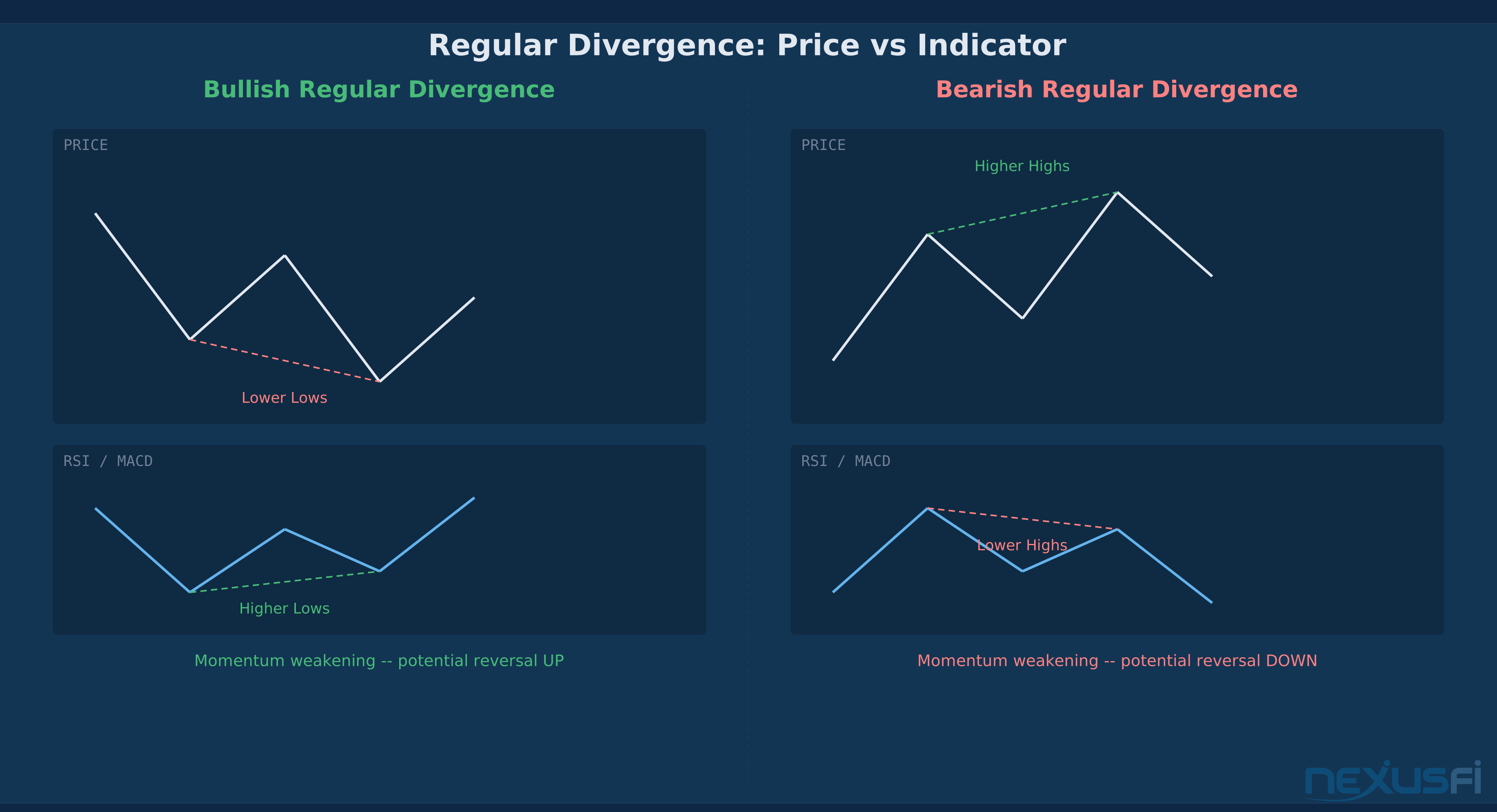
Regular divergence is the textbook setup. It signals potential trend exhaustion:
Bullish regular divergence: Price makes a lower low, but the indicator makes a higher low. Momentum is failing to confirm the new price extreme on the downside. Potential reversal toward the upside.
Bearish regular divergence: Price makes a higher high, but the indicator makes a lower high. Momentum is failing to confirm the new price extreme on the upside. Potential reversal toward the downside.
The word "potential" is doing heavy lifting in both definitions. @Fat Tails highlighted the statistical reality: in The Encyclopedia of Trading Strategies (McGraw-Hill, 2000), Jeffrey O. Katz and Donna L. McCormick tested divergence models based on RSI, Stochastics, and MACD across multiple futures markets using rigorous backtesting methodology. RSI and Stochastics models performed badly. MACD models produced positive results for a number of markets, with in-sample tests positive for both shorts and longs, but out-of-sample positive for shorts only.
The Elusive Price Action: How to Trade (@Big Mike)
That research matters. It tells you divergence isn't a universal edge — it's instrument-specific, indicator-specific, and directionally asymmetric. A strategy that works for shorting ES with MACD divergence may not work for going long CL with RSI divergence. Test your specific application.
Triple Divergence — When Failure Fails #
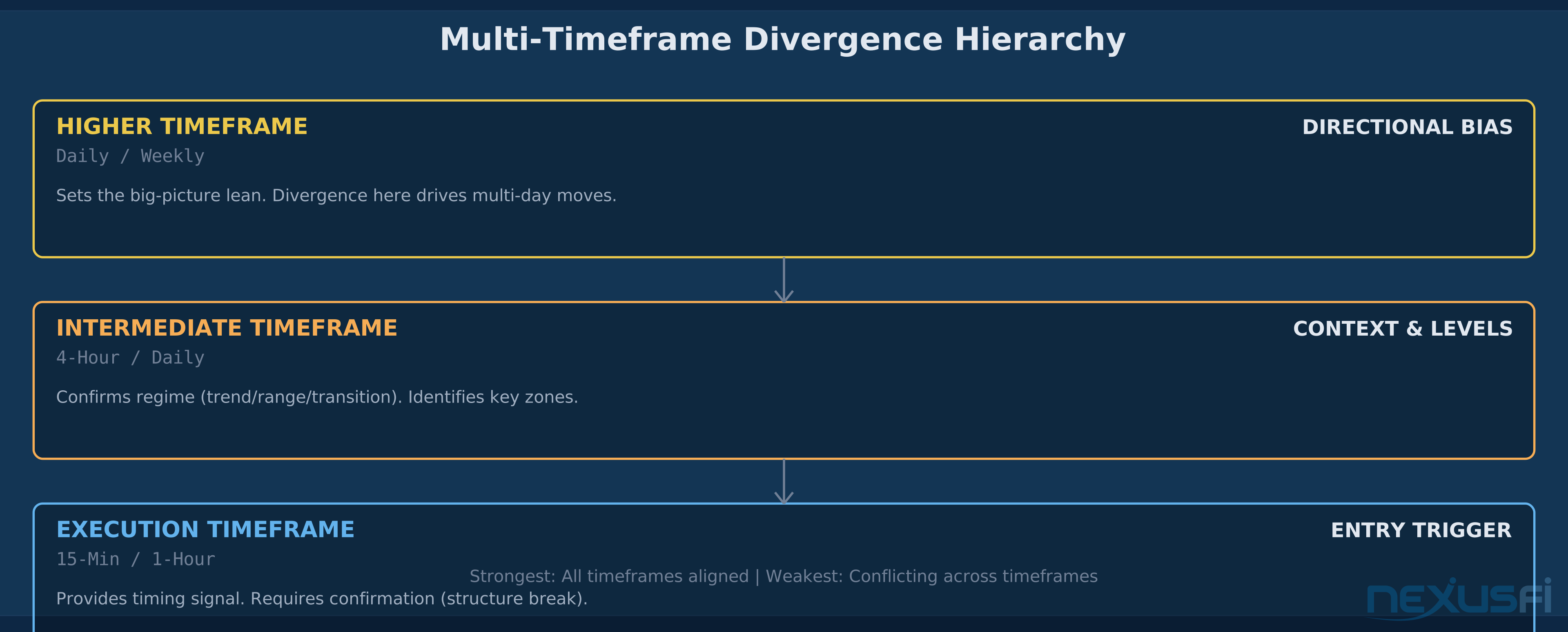
A triple divergence occurs when price makes three consecutive extremes while the indicator disagrees at each swing.
Triple divergence carries higher probability than double (simple) divergence because the market has already tried to continue the trend twice and momentum has deteriorated further each time. When you see triple divergence at a major support or resistance level, the odds of reversal increase substantially.
RSI Divergence vs MACD Divergence #
The two most common oscillators for divergence analysis are RSI and MACD. Each has distinct characteristics that make it better suited for different market conditions.
RSI (Relative Strength Index) #
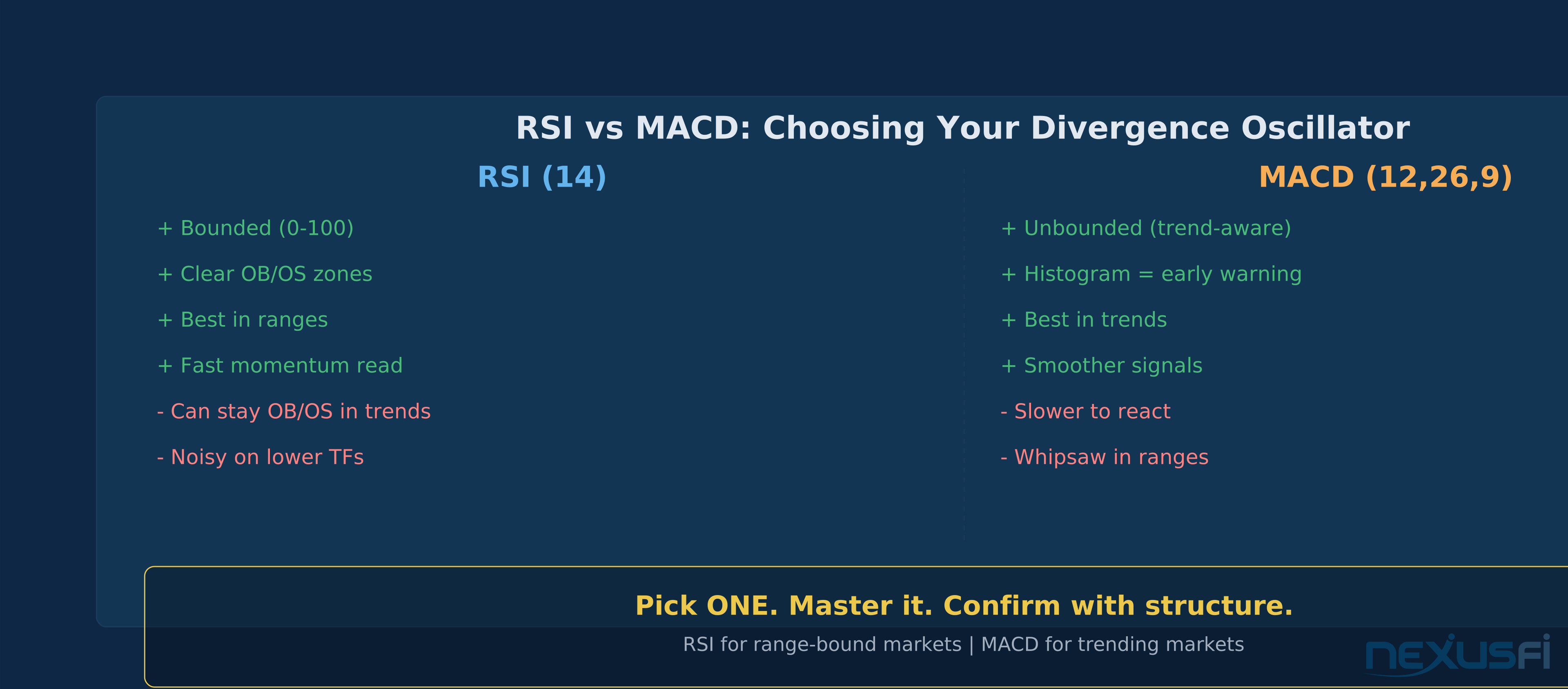
RSI is bounded between 0 and 100, making overbought (above 70) and oversold (below 30) zones easy to identify. This boundedness gives RSI a natural advantage for divergence detection in range-bound markets — when price oscillates between support and resistance, RSI divergence at the extremes can provide clean signals.
RSI divergence works best when:
- The market is ranging or transitioning between trends
- Price is at established support/resistance levels
- You're using it on 15-minute charts or higher
- The RSI swings are clearly separated (not noise)
RSI divergence struggles when:
- Strong trends persist (RSI can stay overbought/oversold for extended periods)
- Lower timeframes generate excessive phantom signals
- Default 14-period settings don't match the instrument's volatility cycle (see the Cardwell RSI Framework for an alternative approach)
MACD (Moving Average Convergence Divergence) #
MACD is unbounded and captures momentum through the relationship between two exponential moving averages. This makes it better suited for trending markets where you need to identify momentum shifts rather than overbought/oversold extremes.
MACD histogram divergence deserves special attention. The histogram measures the distance between the MACD line and signal line — when it starts compressing while price continues pushing, that's an early warning that momentum is fading before the MACD lines themselves show divergence.
MACD divergence works best when:
- Markets are trending with clear swings
- You need earlier warnings of momentum shifts
- The histogram shows compression during price extremes
- Structure confirmation follows (trendline break, level reclaim)
MACD divergence struggles when:
- Choppy, range-bound markets produce whipsaw signals
- Default 12/26/9 settings may be too slow or fast for your instrument
- Lag causes you to miss entries on fast-moving futures
John J. Murphy's Technical Analysis of the Financial Markets (New York Institute of Finance, 1999) — the standard reference text for the CMT examination — devotes particular attention to MACD histogram divergence as an early warning system. Murphy's key insight: the histogram captures the rate of change of the MACD line itself, meaning histogram divergence often precedes MACD line crossover signals, giving traders earlier entries than those who wait for the MACD lines to cross. For futures traders working fast-moving contracts, that lead time can mean the difference between a clean entry and chasing.
The professional approach: Pick one oscillator and master it. Stacking RSI and MACD on the same chart doesn't give you more confirmation — it gives you more noise. Choose RSI for range-bound analysis, MACD for trending analysis, and confirm with market structure either way.
Delta Divergence -- The NexusFi Community Edge #
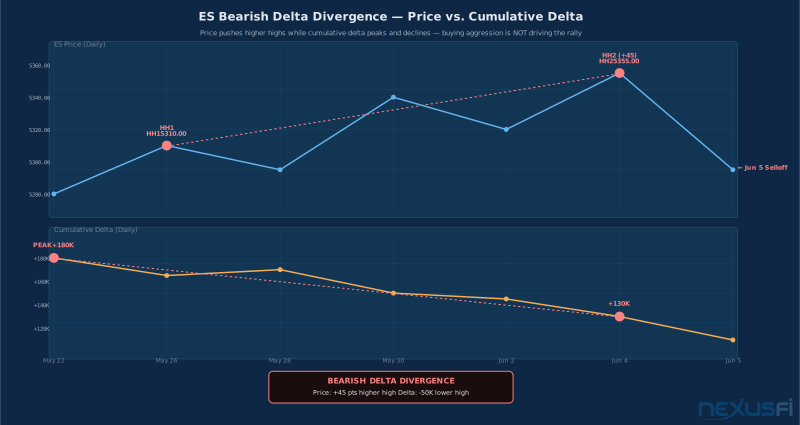
Beyond traditional oscillator divergence, cumulative delta divergence has become a core tool for order flow traders. Delta measures the difference between volume traded at the ask (aggressive buyers) versus volume traded at the bid (aggressive sellers). When price pushes higher but cumulative delta doesn't confirm — or even declines — it suggests that buying aggression isn't driving the move. The rally is running on passive fills, not conviction.
Cumulative Delta Volume Trading (@Big Mike)
He added a critical nuance: "I find the probability increases if you place trades above the value area high or below the value area low as at that point it is more likely commercials will step in and slow down the move."
Delta divergence has one major advantage over oscillator divergence — it measures actual order flow rather than a mathematical transformation of price. When cumulative delta diverges from price, you're seeing a real disagreement between aggressive participants and price direction. This is harder to dismiss as noise.
The neutralized delta setup @djkiwi described — where accumulated long or short inventory gets completely unwound — produced the most reliable signals in his tracking. "There is no doubt in my mind the smart money is watching these imbalances the same as us and acting on many occasions."
Multi-Timeframe Divergence Analysis #
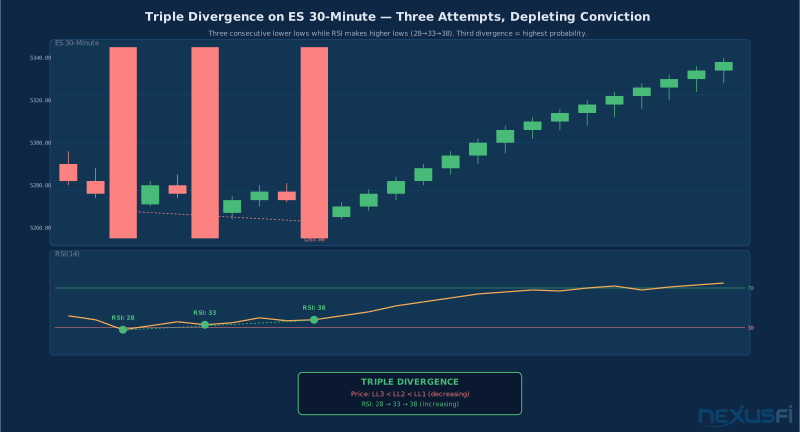
Single-timeframe divergence analysis is incomplete. The same divergence signal on a 5-minute chart and a daily chart carries vastly different weight. Professional futures traders use a hierarchical framework:
Higher timeframe (Daily/Weekly): Sets directional bias. Divergence here represents significant momentum shifts that can drive multi-day or multi-week moves. When the daily RSI diverges from price at a major weekly level, pay attention.
Intermediate timeframe (4-hour/Daily): Provides context. Confirms the higher-timeframe bias and identifies key levels where divergence would be significant. This is where you assess market regime — trending, ranging, or transitioning.
Execution timeframe (15-minute to 1-hour): The trigger. Once higher timeframes establish the bias and intermediate timeframes confirm the context, execution-timeframe divergence provides the timing for entry.
Signal Strength Hierarchy #
The probability of a successful divergence trade increases with timeframe alignment:
Strongest: Divergence appears on multiple timeframes simultaneously. Daily divergence at a weekly level with hourly divergence providing the trigger. These are the A+ setups that justify full position size.
High probability: Higher-timeframe divergence with lower-timeframe confirmation. Daily chart shows bearish divergence, and the 1-hour chart prints a bearish divergence at the same price zone with a structure break. Enter on the structure break.
Moderate: Single-timeframe divergence with strong confluence from other factors (volume spike, key level, session timing). Worth trading at reduced size with tight invalidation.
Caution: Conflicting divergence across timeframes. Daily shows bullish divergence but 4-hour shows bearish divergence. This usually signals consolidation or churn — reduce size or sit on your hands.
The Professional Workflow -- Divergence as Condition, Not Trigger #
Professional futures traders don't trade divergence. They trade structure breaks, level rejections, and order flow shifts — confirmed by divergence. The difference matters enormously.
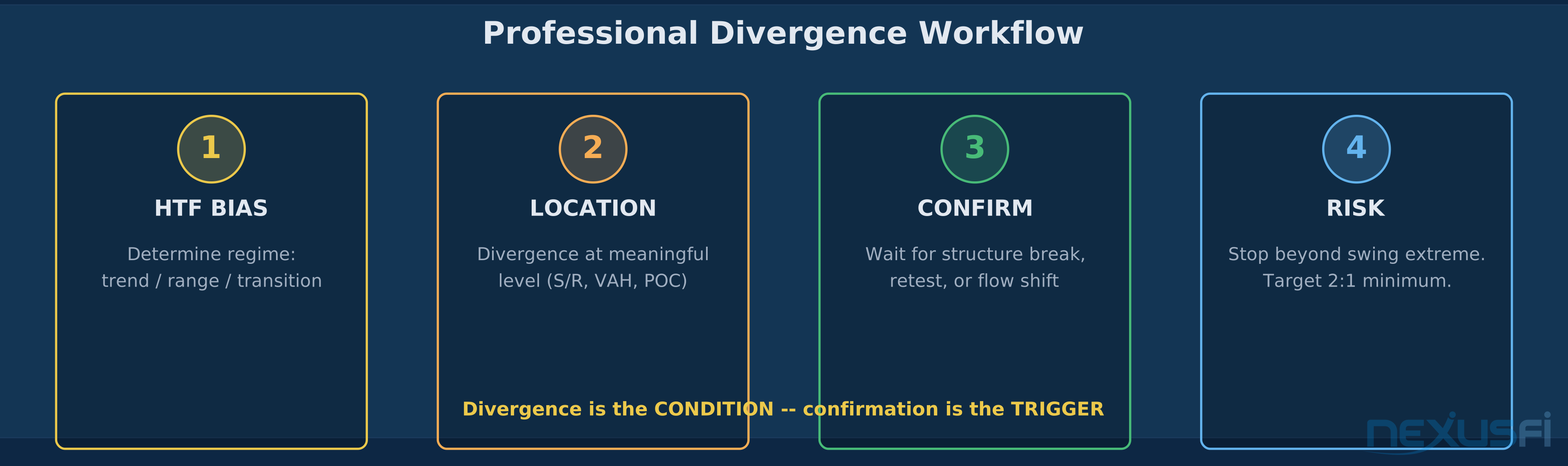
Step 1: Establish Higher-Timeframe Bias #
Before looking at any oscillator, determine the market regime. Is ES trending, ranging, or transitioning? What are the key daily/weekly levels? What's the directional lean? Divergence without context is noise.
Step 2: Identify Divergence at Meaningful Levels #
Divergence at random price points is low-probability. Divergence at the prior day's high, a weekly pivot, a naked POC, or a session boundary carries weight because those are levels where other participants are also making decisions. The confluence of divergence plus level concentrates the probability.
Step 3: Wait for Confirmation #
This is where 90% of retail divergence traders fail. They see the divergence form and enter immediately. Professionals wait for:
- A break of the local trendline connecting the divergence swings
- A retest and rejection of the extreme
- An order flow shift (delta flipping, aggressive participation drying up)
- A candlestick pattern confirming the turn (engulfing, pin bar at the level)
The confirmation step filters out the majority of false divergence signals. Yes, you'll miss some moves by waiting. You'll also avoid the 60%+ of divergences that fail.
Step 4: Define Risk Structurally #
Stops go beyond the divergence swing extreme — the price level that would invalidate the entire setup. Not a fixed number of ticks, not an ATR multiple (though ATR can validate that your stop makes sense). The level where, if price reaches it, the divergence thesis is dead.
For bullish regular divergence, the stop goes below the final lower low. For bearish regular divergence, above the final higher high. If that distance is too wide for your risk tolerance, the trade isn't for you — don't tighten the stop to fit your position size.
The sequence matters: location first, divergence second. Traders who hunt for divergence signals and then find reasons to trade are doing it backwards. The professional setup starts at a meaningful level — divergence is the confirmation that the level is likely to hold, not the reason to find a level.
Six Mistakes That Destroy Divergence Traders #
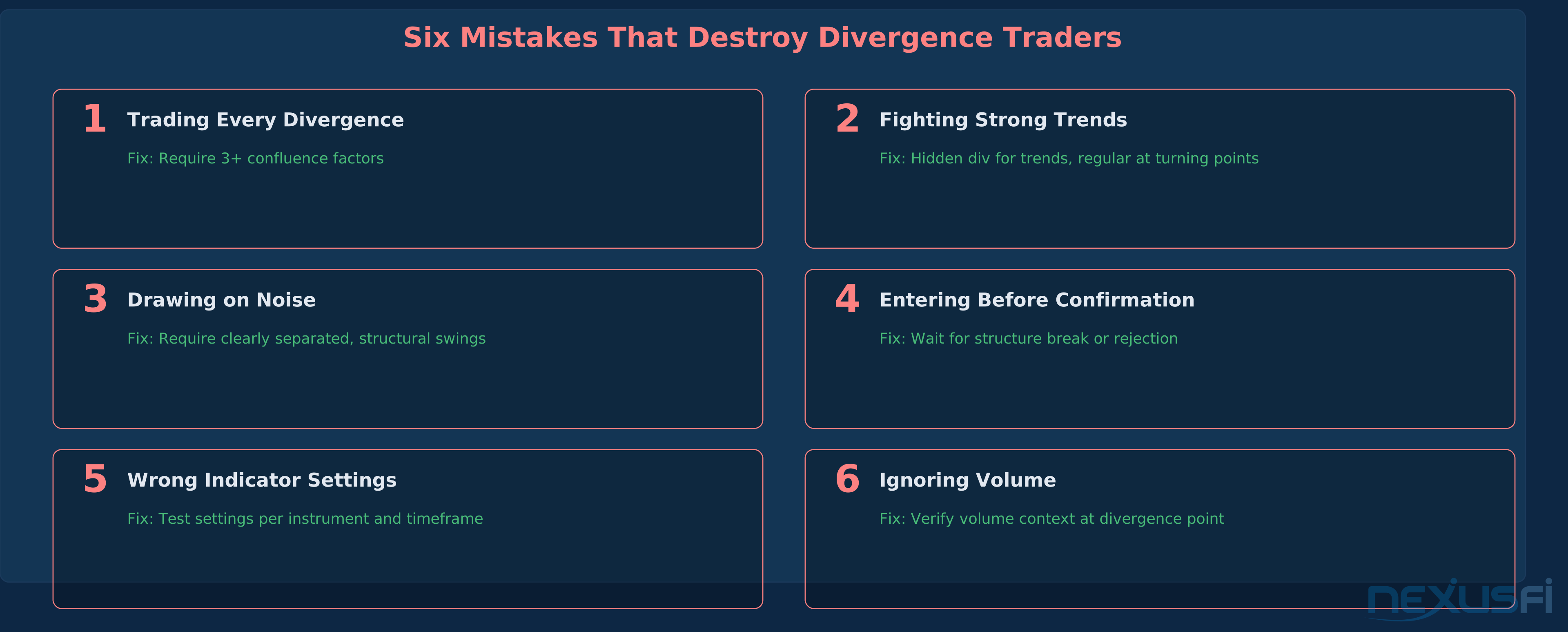
1. Trading Every Divergence #
Divergences are common. Profitable divergence trades require confluence — at a minimum, you need divergence plus a meaningful level plus confirmation. If you can't identify three supporting factors, skip the trade.
2. Fighting Strong Trends #
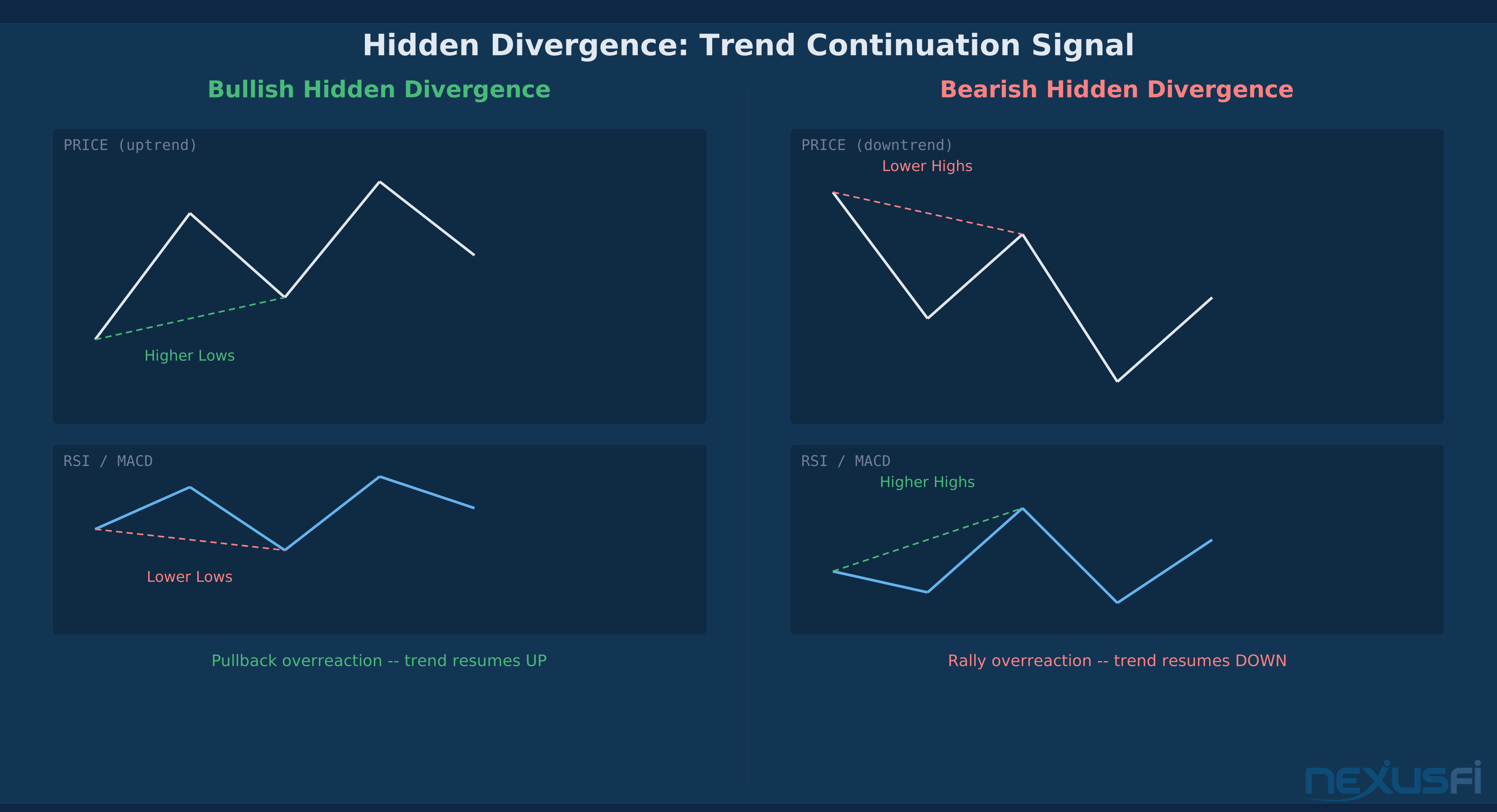
Regular divergence in a strong trend can persist for hundreds of ticks while you bleed money on counter-trend entries. The ES can print bearish RSI divergence on the 15-minute chart and grind 50 points higher over the next two sessions. Respect the trend. Use hidden divergence for trend entries. Reserve regular divergence for major turning points at weekly levels.
3. Drawing Divergence on Noise #
Two swing points three bars apart on a 1-minute chart don't constitute meaningful divergence. Professional divergence analysis requires clearly separated swings aligned with visible market structure. If you have to squint to see the divergence, it isn't there.
4. Entering Before Confirmation #
Seeing divergence and placing a limit order at the extreme is gambling, not trading. The divergence tells you to pay attention. The confirmation tells you to act. Wait for it.
5. Wrong Indicator Settings #
Default RSI(14) or MACD(12,26,9) may not suit your instrument or timeframe. Energy futures (CL) with their momentum-driven personality respond differently to divergence than index futures (ES) with their institutional order flow. Test your settings against the specific contract you trade. There's no universal "best" setting.
6. Ignoring Volume #
Divergence without volume context is incomplete. A bearish RSI divergence where volume is increasing on each new high carries different implications than one where volume is declining. Declining volume on new highs strengthens the bearish case. Increasing volume suggests the indicator might be lagging genuine demand. Always check what volume is doing at the divergence point.
Contract-Specific Considerations #
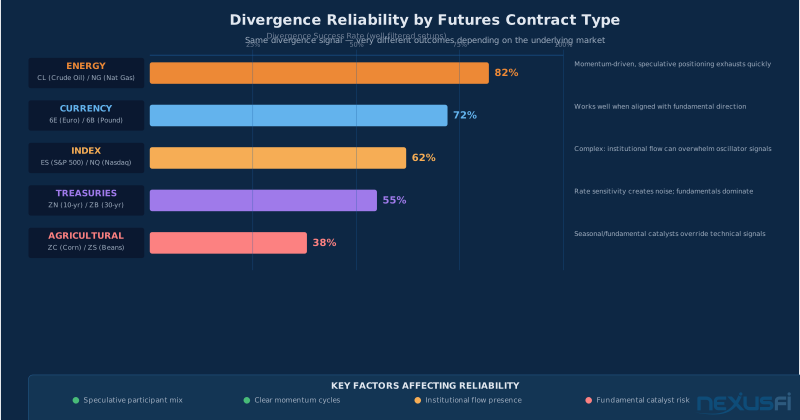
Different futures contracts respond to divergence differently due to their underlying participant mix and trading characteristics:
Energy futures (CL, NG): Momentum-driven with outsized moves. Divergence signals tend to be more responsive here because trends driven by speculative positioning exhaust quickly. CL bearish divergence at a weekly resistance level is one of the higher-probability setups across all futures contracts.
Index futures (ES, NQ): Institutional order flow, algorithmic participation, and market-maker activity create a more complex environment. Divergence needs stronger confluence because institutional flow can overwhelm oscillator signals. @tigertrader demonstrated this in an ES delta divergence study using a 2000-delta ladder chart: a triple bottom forming at 9:44am, 9:50am, and 10:04am — with the third bar failing to make a new low and generating positive delta, confirmed by CDHA and StochGom indicators — produced a clean reversal entry precisely because multiple delta signals aligned rather than relying on any single oscillator. Multi-timeframe alignment matters most in index futures.
DELTA DIVERGENCE DUET (@tigertrader) (2010, 2 thanks)
Agricultural futures (ZC, ZS, ZW): Seasonal supply/demand fundamentals can override technical divergence entirely. A bullish RSI divergence in corn futures means very little if USDA just released a bearish crop report. Technical signals take a back seat to fundamental catalysts in agricultural markets.
Currency futures (6E, 6B): Divergence works best when aligned with fundamental direction and interest rate expectations. Hidden divergence during established currency trends provides especially clean entries because institutional positioning in currencies tends to be persistent and directional.
Risk Management for Divergence Trades #
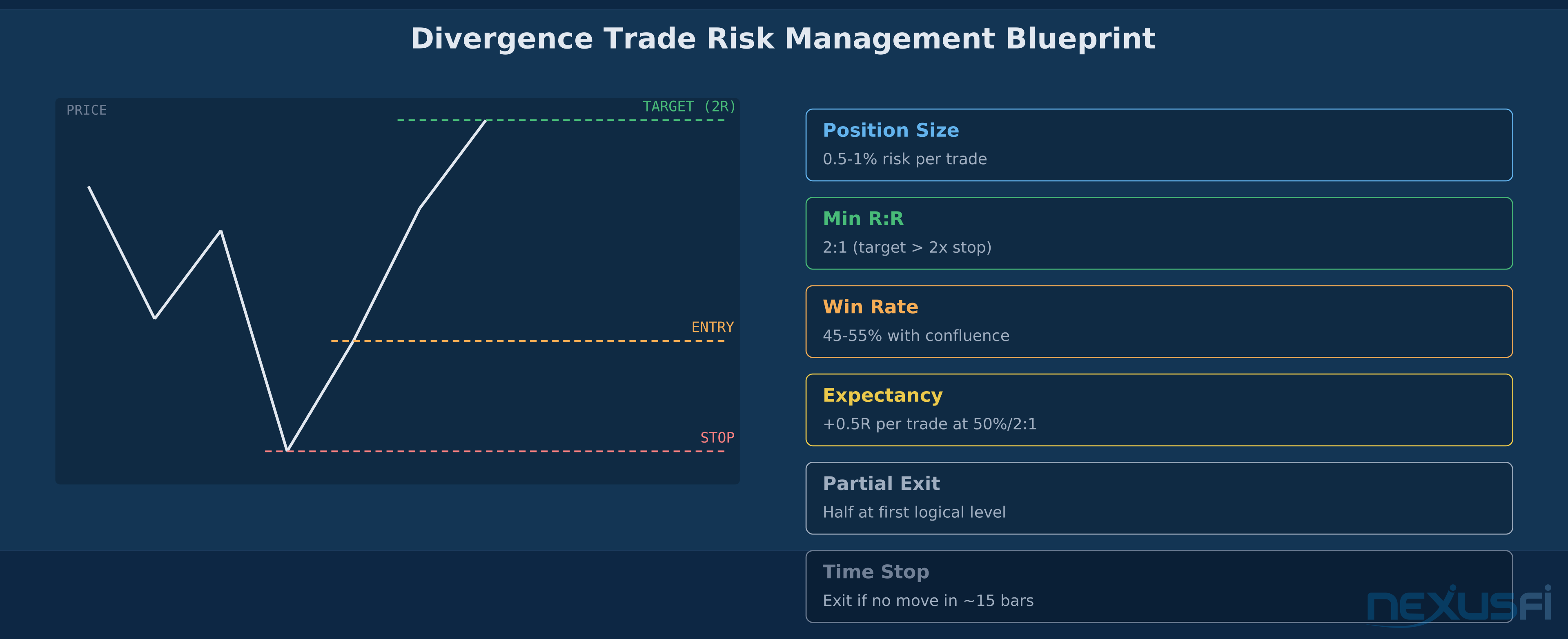
Given the 45-55% win rate that even well-filtered divergence trades produce, risk management isn't optional — it's the entire edge.
Position sizing: Risk 0.5-1% of capital per divergence trade. The lower win rate demands asymmetric reward-to-risk, which means you need staying power through the losing streaks. At a 50% win rate, a 5-trade losing streak has a 3.1% probability — it will happen.
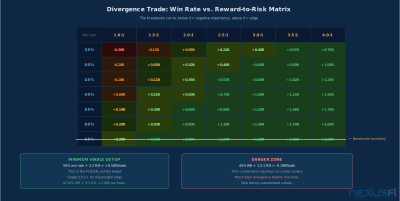
Minimum reward-to-risk: Target 2:1 or better. If your stop is 8 ticks on ES, your target should be at least 16 ticks. At 50% win rate and 2:1 R:R, the expectancy is positive: (0.50 x 2R) - (0.50 x 1R) = 0.5R per trade.
Partial targets: Take partial profits at the first logical level (prior swing, VWAP, session range boundary) and trail the remainder. This converts some losing trades into breakeven trades, which improves the effective win rate at the cost of lower average win size.
Time stops: If the divergence signal doesn't resolve within a reasonable window for your timeframe (roughly 10-15 bars on the execution chart), the thesis may be invalid. Reduce or exit. Divergence that doesn't produce movement within a few bars of confirmation is more likely to be noise than signal.
Integration with Existing Academy Concepts #
Divergence doesn't exist in isolation. It integrates with nearly every other analysis framework:
Volume Profile: Divergence at value area boundaries (VAH, VAL) or at the POC carries more weight than divergence at random price levels. A bearish divergence at yesterday's VAH with declining delta is a high-confluence setup.
Market Profile: Divergence during the initial balance formation helps identify whether the session will trend or rotate. Bullish divergence at the IB low suggests buyers are absorbing selling pressure.
Order Flow: Delta divergence and footprint chart analysis provide the institutional-grade confirmation that oscillator divergence alone can't deliver. When price makes a new high but the footprint shows heavy selling at the ask, that's real divergence — not a mathematical artifact.
Support and Resistance: Every divergence trade should align with a meaningful level. Divergence is the "how" — the level is the "where." Together, they define the setup.
The best divergence traders don't look for divergence and then find a reason to trade. They identify high-probability locations first, and then check whether divergence is present to confirm their thesis. That subtle difference in process — location first, divergence second — separates consistent traders from chronic indicator-watchers.
Knowledge Map
References This Article
Articles that build on this topicCitations
- — The Elusive Price Action: How to Trade (2010) 👍 9“Divergence definition, triple divergence, statistical significance of divergence models (Katz & McCormick research)”
- — Gradient Divergence Trading (2012) 👍 46“Gradient divergence rules for reverse and hidden divergence identification -- visual bar-gradient method that eliminates need for separate oscillator panel”
- — Cumulative Delta Volume Trading (2012) 👍 10“Cumulative delta divergence types (regular, hidden, neutralized) and inventory-based trading setups”
- — My 6E trading strategy (2011) 👍 37“Standard vs hidden divergence definitions applied to 6E currency trading”
- — mRSI divergence indicator for NinjaTrader (2012) 👍 45“mRSI divergence indicator development for NinjaTrader”
- — DELTA DIVERGENCE DUET (2010) 👍 2“ES delta divergence signals with triple bottom pattern -- triple bottom at 9:44am, 9:50am, 10:04am confirmed by CDHA and StochGomCD showing declining sell-side conviction”