Block Trades, EFPs, and Off-Exchange Transactions in Futures Markets: What Happens Outside the Order Book and Why It Matters to Your Trading
Overview #
Every futures trade you've ever placed hit the central limit order book — your buy matched against someone's sell, transparent and anonymous, settled through the exchange matching engine. But a massive chunk of futures volume never touches that order book at all. Block trades, Exchange for Physical (EFP), Exchange for Risk (EFR), and Exchange for Swap (EFS) transactions happen off-screen, negotiated privately between counterparties, and then reported to the exchange for clearing.
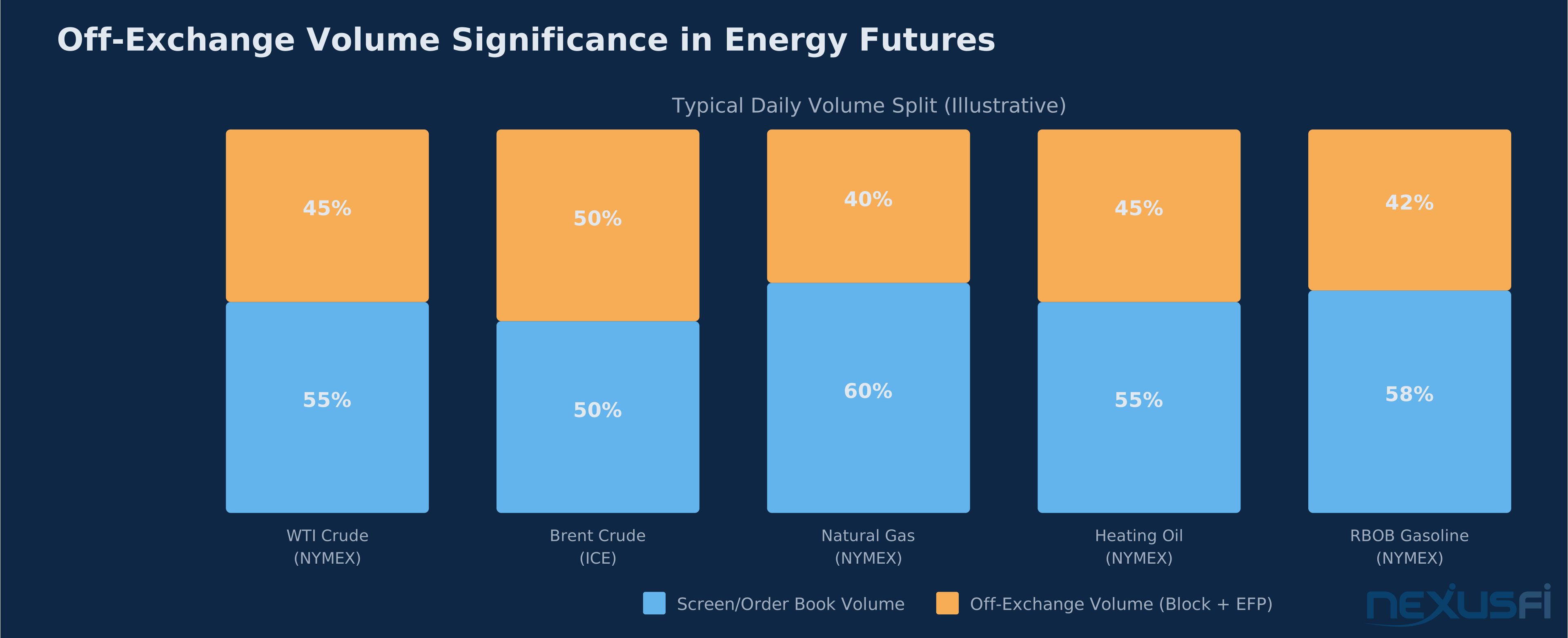
This isn't some dark corner of the market. In energy futures alone, off-exchange transactions can account for 30-50% of total daily volume on certain contracts. When you see a sudden 2,000-lot print appear in your time and sales feed tagged as a block, that trade was negotiated in a phone call or Bloomberg chat, not executed through the matching engine you're watching. Understanding how these transactions work, what rules govern them, and what they signal about institutional positioning is fundamental to reading the futures tape accurately.
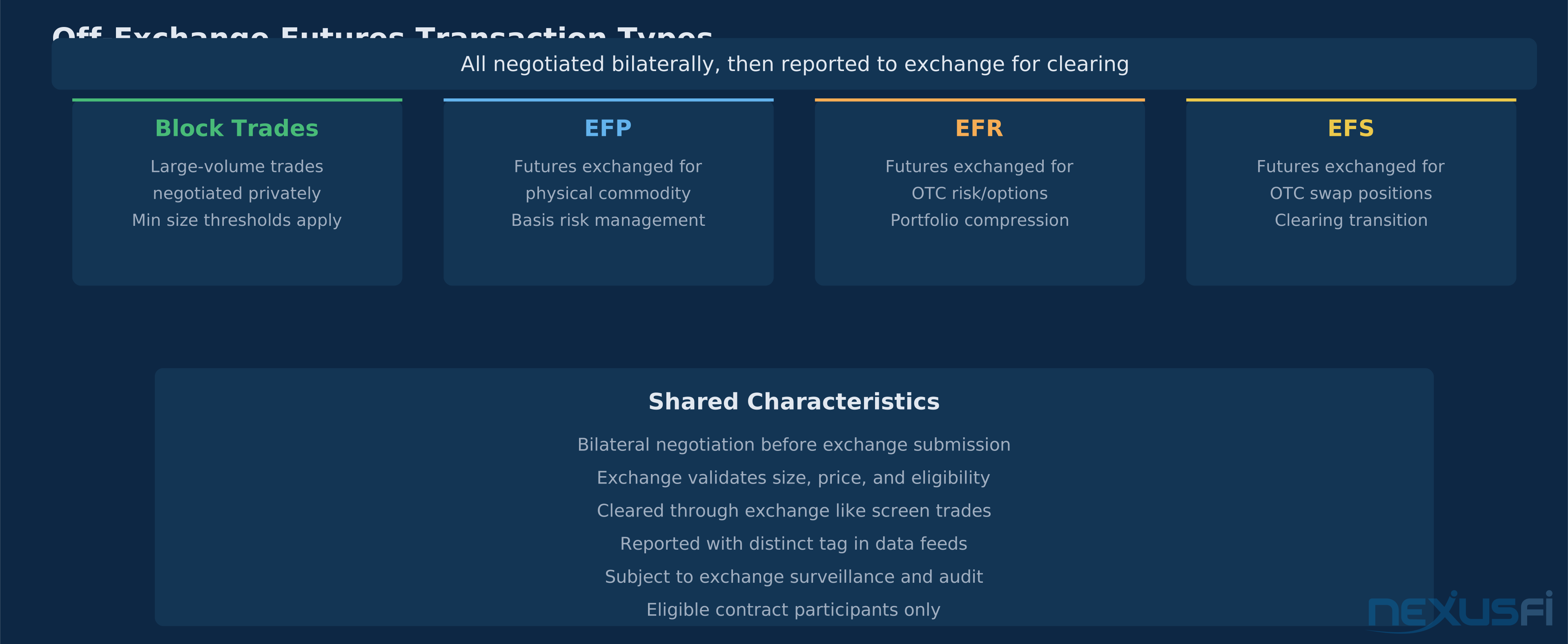
The four main types of off-exchange transactions each serve a different purpose. Block trades let institutions execute large positions without walking the book. EFPs connect physical commodity markets to futures. EFRs and EFSs bridge the gap between OTC derivatives and exchange-cleared futures. All four share the same core mechanic: bilateral negotiation first, exchange reporting and clearing second.
Key Concepts #
Block Trade — A large-volume futures trade negotiated privately between two eligible counterparties and then reported to the exchange for clearing. Block trades must meet product-specific minimum size thresholds and be reported within a defined time window (5-15 minutes on most exchanges). The negotiated price must be "fair and reasonable" relative to the current market.
Exchange for Physical (EFP) — A transaction where one party simultaneously exchanges a futures position for a corresponding physical commodity position with another party. The futures leg clears through the exchange while the physical leg is handled bilaterally. EFPs are the backbone of physical-to-financial hedging in energy, agriculture, and metals markets.
Exchange for Risk (EFR) — A transaction exchanging a futures position for an OTC derivative position (options, swaps, or other risk instruments). Used for portfolio compression and transitioning between cleared and uncleared exposures.
Exchange for Swap (EFS) — A transaction exchanging a futures position for an OTC swap position. Functionally similar to EFR but specifically involving swap contracts. Common in interest rate and energy markets where OTC swap books need to be converted to cleared futures.
Eligible Counterparties — Not everyone can participate in off-exchange transactions. Both parties must have clearing capability through a Futures Commission Merchant (FCM) and must be "eligible contract participants" as defined by the Commodity Exchange Act — meaning they meet minimum asset or activity thresholds.
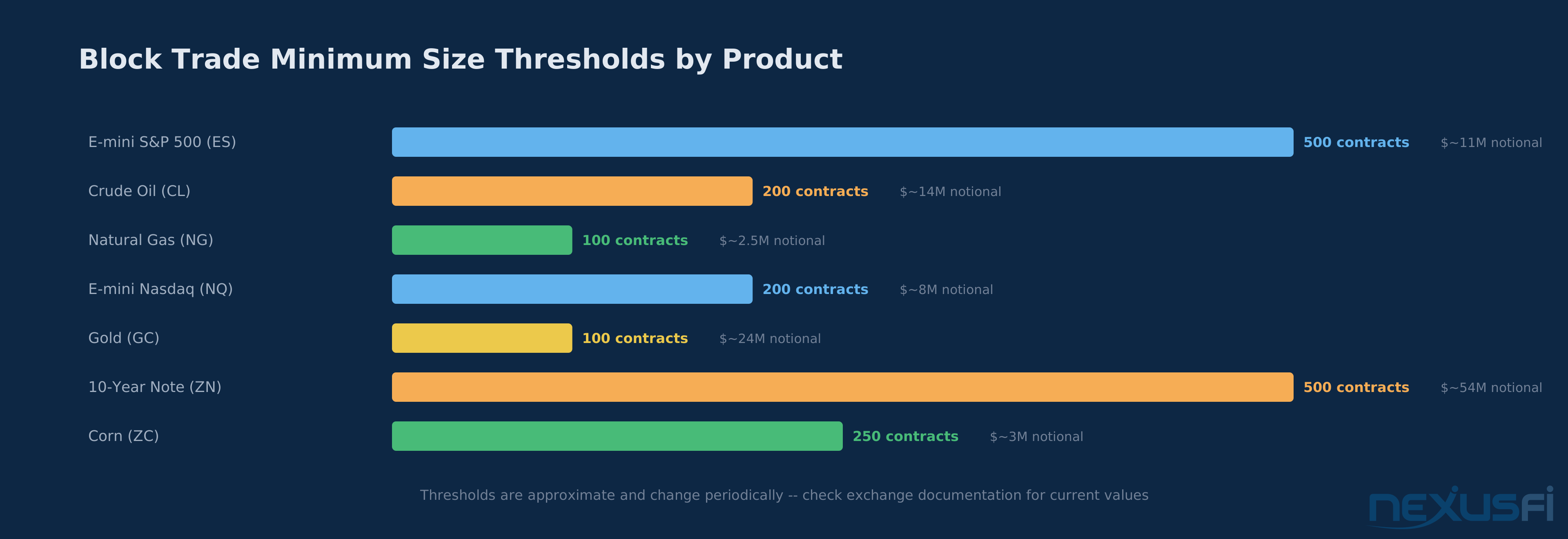
Block Trade Minimum Size — Each exchange publishes product-specific minimum contract thresholds that a trade must meet to qualify as a block. For CME energy futures, the minimum is 50 lots for many products. ICE natural gas blocks can go as low as 25 lots since ICE contracts are 2,500 MMBtu versus CME's 10,000 MMBtu. E-mini S&P 500 blocks start at 500 contracts.
Reporting Window — The time frame within which an off-exchange transaction must be reported to the exchange after execution. CME and ICE require reporting within 5-15 minutes depending on the product and trading session. Late reports can be rejected.
Fair and Reasonable Price — Exchanges require that block trade prices fall within a permissible band relative to the prevailing market. This prevents parties from creating artificial prints at extreme prices. The exact tolerance varies by product and time of day.
How Off-Exchange Transactions Work #
The Block Trade Workflow #
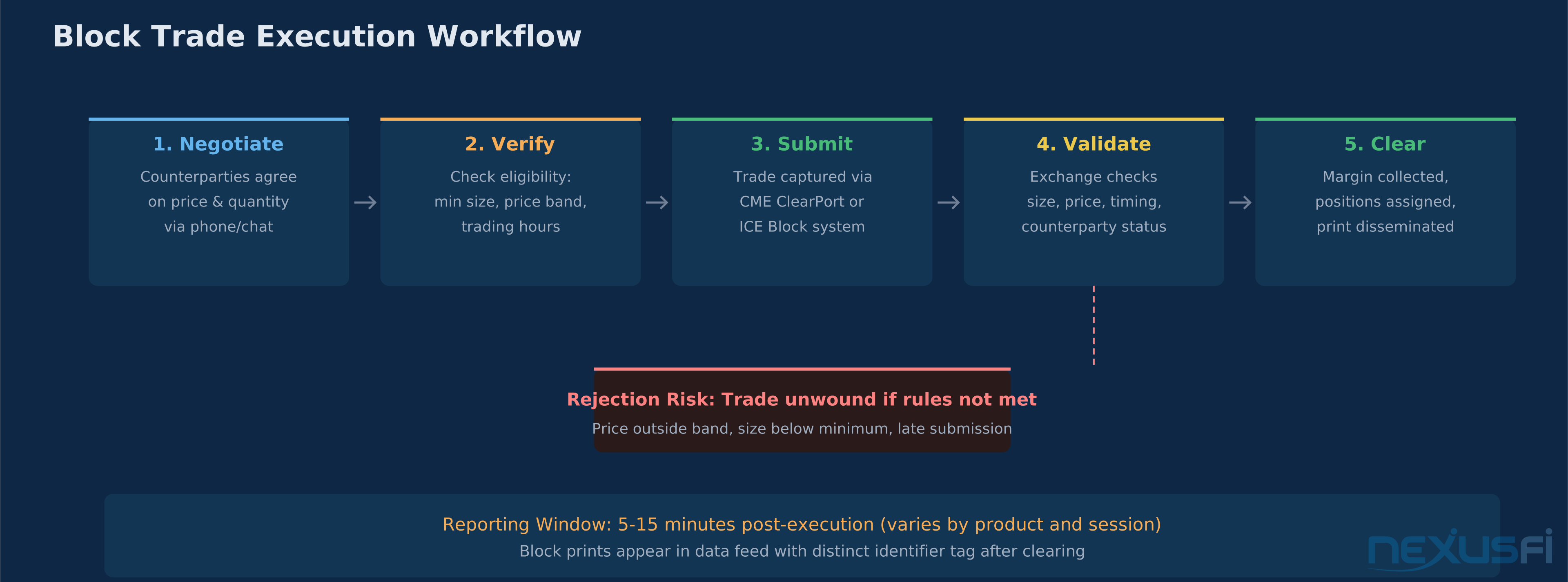
A block trade follows a specific sequence that's entirely different from clicking "buy" on your platform:
Step 1: Bilateral Negotiation. Two institutional counterparties — or more commonly, a broker intermediating between them — agree on price and quantity. This happens via phone, Bloomberg chat, or a negotiation interface. No orders hit the exchange during this phase.
Step 2: Eligibility Verification. Before submitting, both parties confirm: Does this meet the minimum block size for this contract? Is the negotiated price within the exchange's permissible band? Are we within valid block trading hours? Is each counterparty an eligible contract participant with clearing capability?
Step 3: Exchange Submission. The agreed trade is submitted to the exchange through the clearing/trade capture system. On CME, this goes through CME ClearPort or the CME Direct platform. On ICE, through ICE Block.
Step 4: Exchange Validation. The exchange's systems verify the submission against its rules — size threshold, price reasonableness, timing, and counterparty eligibility. If any check fails, the trade is rejected. This is a real operational risk that doesn't exist with screen trades.
Step 5: Clearing and Dissemination. Once accepted, the trade clears like any other futures trade — margin collected, positions assigned, daily mark-to-market applied. The trade appears in the exchange data feed with a distinct block trade indicator tag, visible to all market participants.
As NexusFi member
The vast majority of these trades involve institutional players who need size without signaling their intentions to the entire market.
How EFPs Work in Practice #
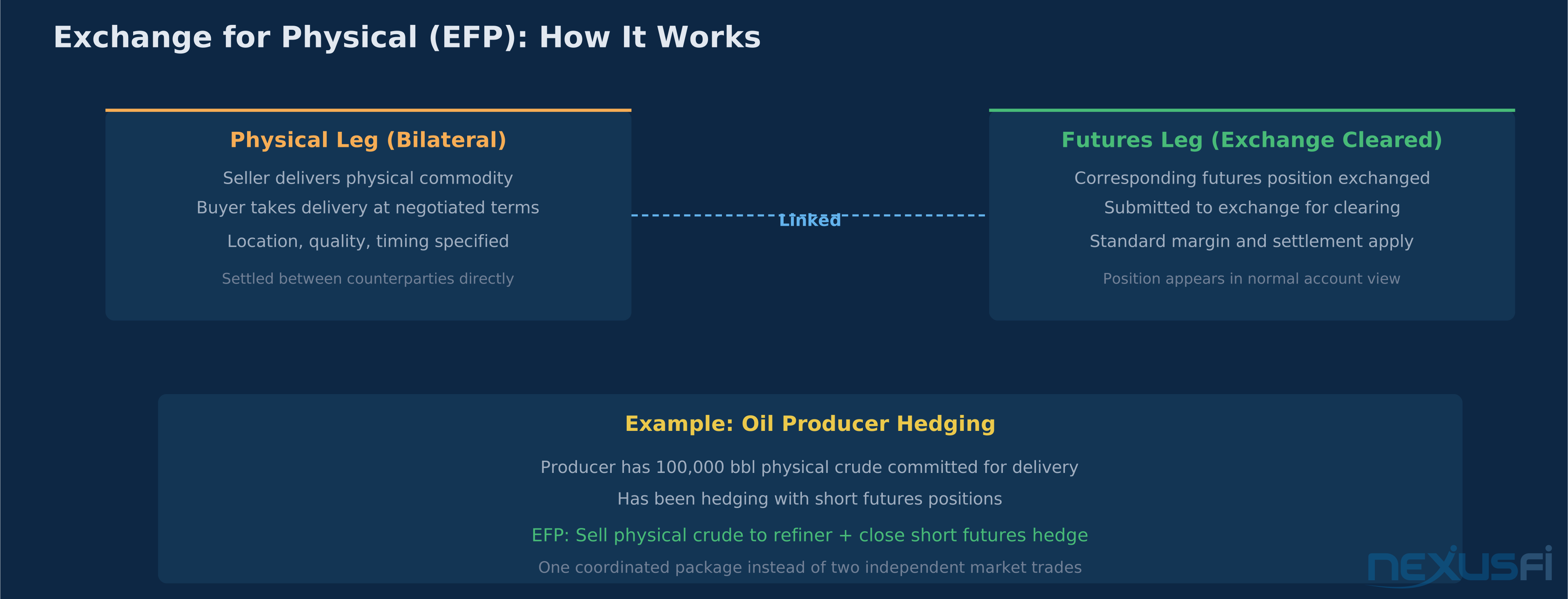
EFPs have a more complex structure because they involve two different markets simultaneously:
Step 1: Physical Agreement. Two parties agree on a physical commodity transaction — say, 50,000 barrels of crude oil at a specific delivery point and date, at a negotiated price.
Step 2: Futures Leg Determination. Simultaneously, they determine the corresponding futures position that will be exchanged. The futures contract must be related to the physical commodity, and the exchange specifies which pairings are permissible.
Step 3: Submission as Package. The EFP is submitted to the exchange as a linked transaction. The exchange verifies that the physical and futures legs represent a legitimate business relationship — not a manufactured structure designed to circumvent trading rules.
Step 4: Split Processing. The futures leg clears through the exchange. The physical leg remains bilateral but is documented in the EFP filing. This split is what makes EFPs powerful — you get the risk management benefits of exchange clearing on the futures side while maintaining flexibility on the physical side.
The oil producer example: An independent producer has 100,000 barrels of physical crude committed for delivery next month. They've been hedging with short futures. Through an EFP, they can simultaneously sell the physical crude to a refiner and close their corresponding futures hedge, all as one coordinated package. Without EFPs, they'd need to unwind the futures position in the open market (potentially moving the price against themselves) and separately negotiate the physical sale.
EFR and EFS Mechanics #
EFRs and EFSs follow the same basic pattern as EFPs but substitute OTC derivatives for the physical commodity leg:
EFR: A bank holds a portfolio of OTC options that generates exposure equivalent to a certain number of futures contracts. Through an EFR, they can convert that OTC exposure into cleared futures, reducing counterparty risk and simplifying their position management.
EFS: An energy trading firm has an OTC swap on Henry Hub natural gas. Through an EFS, they can exchange that swap exposure for an equivalent number of NYMEX natural gas futures, moving from bilateral OTC risk to centrally cleared exchange risk.
Both mechanisms serve the same essential purpose: bridging the gap between the OTC derivatives world and the exchange-cleared futures world. After the 2008 financial crisis and the implementation of Dodd-Frank, regulatory pressure to move OTC exposures onto exchanges made EFRs and EFSs increasingly important for portfolio management.
Block Trades vs. Screen Trades: The Five Key Differences #
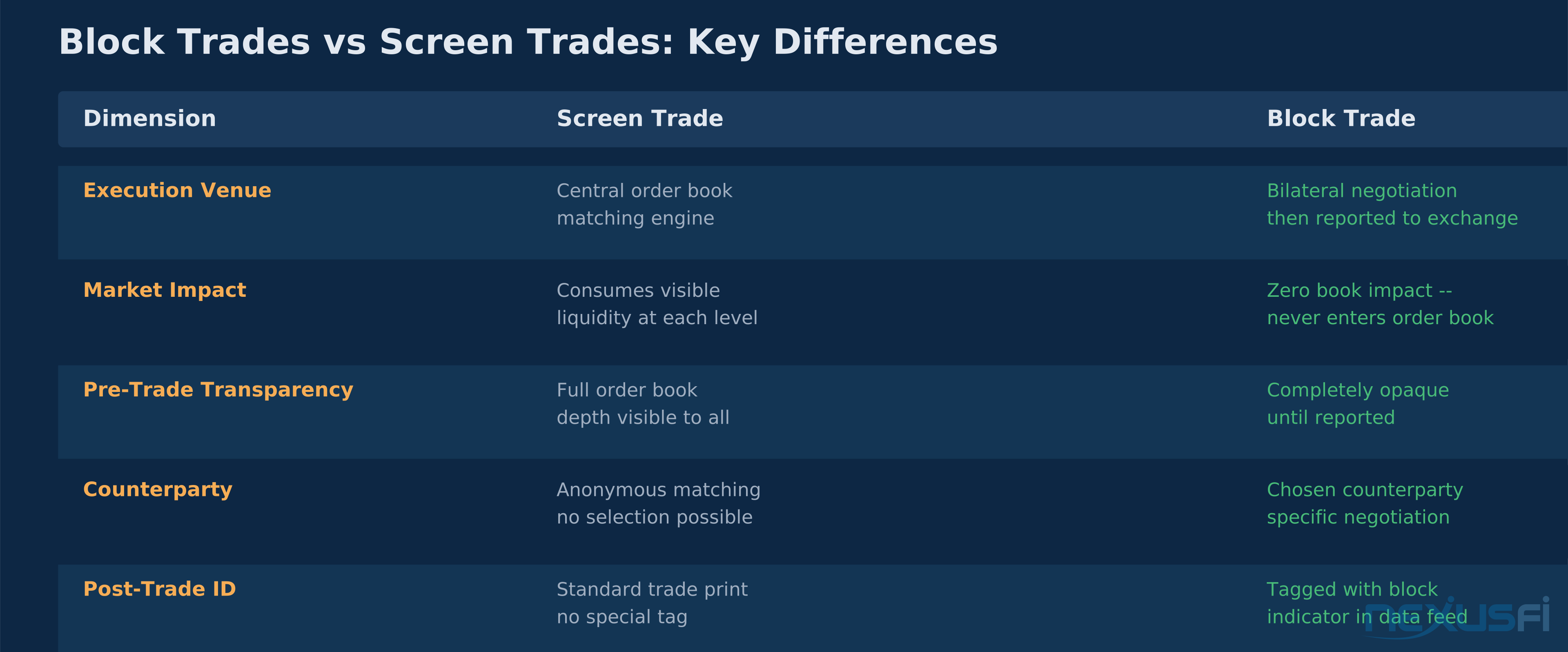
Understanding what makes block trades at the core different from the screen trades you execute daily:
1. Execution Venue. Screen trades are matched by the exchange's electronic matching engine in the central limit order book. Block trades are negotiated privately — the exchange matching engine never sees the order. You'll never compete for a fill against a block trade in the order book.
2. Market Impact. A 1,000-lot market order in E-mini S&P 500 would walk the book, consuming multiple price levels and moving the market against the executor. A 1,000-lot block trade creates zero book impact because it never enters the order book. The price information is only transmitted after the trade is reported.
3. Pre-Trade Transparency. On the screen, everyone can see the order book depth — how many contracts sit at each price level. Block trade negotiations are completely opaque until the trade is reported. This opacity is the entire point for institutional participants.
4. Counterparty Selection. Screen trades are anonymous — you don't know who's on the other side, and you can't choose. Block trades allow counterparties to select each other. A pension fund might specifically want to trade with a major bank's futures desk rather than executing against anonymous liquidity.
5. Post-Trade Identification. When a block trade hits the tape, it's tagged distinctly in the exchange data feed.
represents a practical difference in threshold sizing across venues.
Experienced tape readers watch for block trade prints because they represent committed institutional positioning. A 500-lot block buy in crude oil at 3:47 PM isn't a retail trader — it's a directional signal from an entity willing to negotiate a price and commit capital at that level.
The Role of EFPs in Energy and Commodity Markets #
EFPs aren't a niche mechanism in energy and commodities — they're infrastructure. Here's why they matter so much in these markets specifically:
Basis Risk Management #
The price differential between a futures contract and the actual physical commodity at a specific location, quality grade, and delivery date is called the basis. In energy markets, basis is everything.
A barrel of crude oil priced on the NYMEX WTI futures contract settles at Cushing, Oklahoma. But physical crude actually trades at dozens of delivery points — Houston, Midland, Louisiana Offshore, and international locations. The price difference between Cushing and any of these points can be significant and volatile.
EFPs provide the mechanism to manage basis exposure because they allow traders to link a physical transaction at a specific location to a futures hedge at the standard delivery point. Without EFPs, producers and refiners would need to execute separate transactions in the physical and futures markets, creating timing risk and potential price dislocation between the two legs.
Physical-to-Futures Conversion #
Commodity producers, refiners, and merchants constantly need to convert between physical exposure and futures-based risk management. A wheat farmer who has harvested grain sitting in a silo has physical exposure. An airline that has contracted for jet fuel delivery has physical exposure. Converting this physical exposure into a futures hedge (or vice versa) through an EFP is cleaner, faster, and cheaper than executing the legs independently.
The efficiency gain is real: one coordinated transaction instead of two independent trades in two different markets with two different counterparties and two different settlement cycles.
Volume Significance #
In many energy contracts, EFP and off-exchange volume regularly exceeds 30% of total daily volume. During physical delivery windows — the final days before contract expiration when futures and physical markets converge — EFP activity can spike dramatically as positions are rolled, deliveries are arranged, and hedges are adjusted.
This means that if you're analyzing volume data in energy futures without accounting for off-exchange transactions, you're missing a significant portion of the picture. CME and ICE both publish separate reports for block and EFP volume, and professional energy traders monitor these figures closely.
Exchange Rules: CME and ICE Frameworks #
Both major U.S. futures exchanges maintain detailed rulebooks governing off-exchange transactions. While the specific numbers change periodically, the framework is consistent:
CME Group Rules #
Block Trade Provisions:
- Minimum size thresholds published per product and updated periodically. Examples: E-mini S&P 500 at 500 contracts, crude oil at 200 contracts, natural gas at variable thresholds.
- Reporting windows depend on the product and trading session.
- Prices must be "fair and reasonable" — within a defined tolerance of the prevailing market price at the time of execution.
- Trades submitted through CME ClearPort or CME Direct.
EFP/EFR/EFS Provisions:
- The futures leg must correspond to a permissible product pairing defined by CME.
- Documentation requirements include evidence of the physical, risk, or swap leg.
- No "sham" EFPs — the exchange investigates transactions where the related leg appears manufactured or non-bona-fide.
- Contract month matching: the futures leg must be in a deliverable or active month related to the physical exposure.
ICE Rules #
Block Trade Provisions:
- Product-specific minimum sizes, which can differ from CME for equivalent products. ICE natural gas block minimums account for the different contract specifications (2,500 MMBtu vs. 10,000 MMBtu on CME).
- Reporting through ICE Block system.
- Similar price reasonableness requirements.
EFP/EFS Provisions:
- Energy products are ICE's core franchise, so EFP rules are especially detailed for Brent crude, gasoil, natural gas, and power markets.
- Eligible physical counterparts are defined per product.
- Regular audit and surveillance programs monitor EFP activity for compliance.
The Product-Specific Nature of Rules #
One critical point: there is no single set of numbers that applies across all products. Block trade minimums, price tolerances, reporting deadlines, and eligible counterpart definitions all vary by specific contract. Rather than memorizing specific thresholds (which change), the practical approach is to:
- Know the framework exists (minimum size, price band, reporting window, eligibility).
- Check the exchange's current product-specific rules before executing (CME publishes a Block Trade Eligible Contracts list, ICE publishes equivalent documentation).
- Understand that violations result in trade rejection, not just a fine — your negotiated block can be unwound after the fact if it doesn't meet the rules.
What Off-Exchange Prints Tell You About the Market #
For screen-based traders who never participate in off-exchange transactions themselves, these prints still carry valuable information:
Block Trades as Directional Signals #
When a 500-lot block prints in crude oil at $72.50 while the screen market is trading $72.48 x $72.52, someone just committed to a price and size that required bilateral negotiation. That's not a retail trader and it's not an algorithm probing for liquidity. It's a deliberate institutional commitment.
The direction and timing of block prints can indicate:
- Large hedge adjustments by physical market participants
- Portfolio rebalancing by institutional asset managers
- Basis trades where the block is one leg of a multi-market position
- Directional bets by hedge funds that want size without market impact
Volume Analysis Implications #
Professional volume analysis accounts for block and off-exchange volume separately.
Block prints appear with their own marker in the data feed, allowing traders to filter or highlight them in volume analysis tools.
Standard cumulative delta calculations and volume profile distributions include block prints by default. Some traders strip out block volume when analyzing intraday order flow, arguing that these trades represent different motivations than screen-based flow. Others include them precisely because they represent the largest, most committed positions.
The Information Timing Problem #
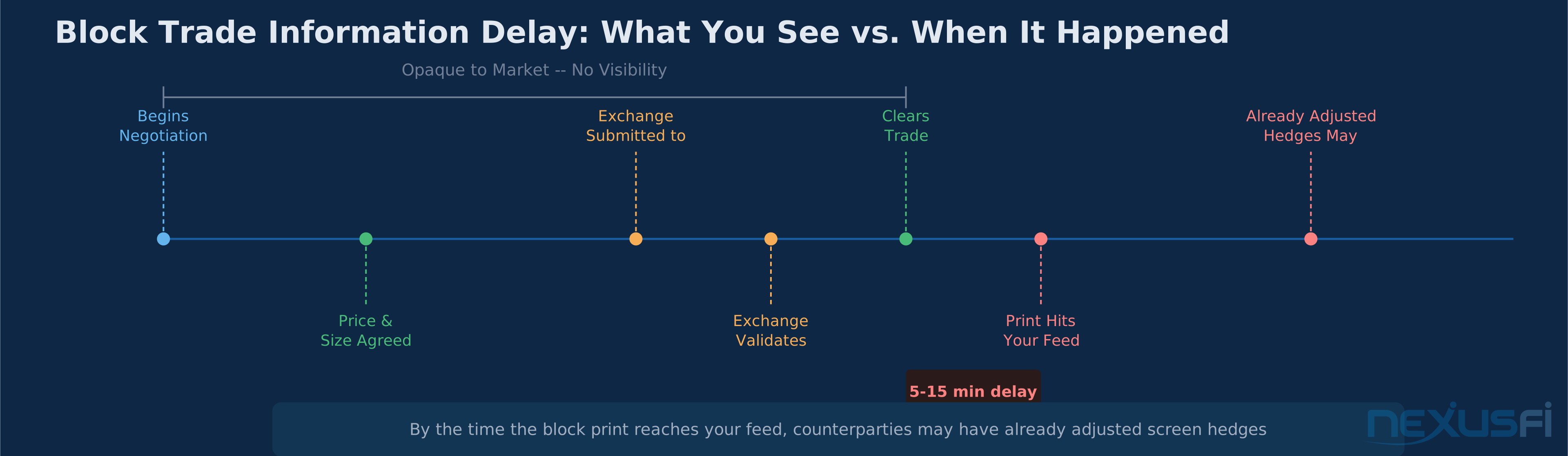
Block trades are reported after execution, not during. The market learns about a 2,000-lot crude oil block 5-15 minutes after it actually traded. During that window, the counterparties may have already adjusted their screen-traded hedges. By the time the block print hits your time and sales, some of its informational value has already been priced in.
This delay is inherent to the mechanism — it's the tradeoff for allowing institutional participants to execute without market impact.
Practical Application: What Retail Traders Should Know #
You Probably Won't Execute Block Trades #
Block trade minimums exist specifically to ensure these transactions serve their intended purpose — facilitating large institutional orders. The 500-contract minimum for E-mini S&P 500 blocks represents roughly $11 million in notional value at current prices. The minimum for crude oil blocks (200 contracts at ~$72,000 notional each) is over $14 million.
Most retail traders don't have the capital or the need for this mechanism. Screen trading with proper execution algorithms (scaling in/out, iceberg orders, limit orders at favorable levels) handles the size requirements of individual traders effectively.
Monitoring Off-Exchange Activity #
What retail traders can and should do is monitor off-exchange volume as part of their market analysis:
1. Check block volume reports. CME publishes daily block trade volume by product. Spikes in block activity can indicate institutional repositioning ahead of events.
2. Watch for block prints in your time and sales. Most professional trading platforms display block trades with a distinct indicator. Large block prints at key technical levels or ahead of major reports are worth noting.
3. Understand delivery-period dynamics. In energy and commodity futures, EFP volume spikes near contract expiration as physical market participants adjust positions. This affects open interest patterns and can create unusual price behavior around first notice day.
4. Don't confuse block prints with screen liquidity. A 1,000-lot block print at a price doesn't mean there's 1,000 lots of depth at that level. It was a negotiated transaction — the screen liquidity at that price may have been 50 lots or less.
Interpreting Large Prints #
When you see an outsized print on your time and sales:
- Tagged as block? It was negotiated off-screen. Don't assume it represents aggressive buying or selling pressure in the traditional order flow sense.
- Not tagged as block? It went through the matching engine and did consume liquidity. As @WoodyFox discusses on NexusFi, "Spikes in Volume are most always just institutions getting their limit orders (iceberg orders) filled."
- Near the session's VWAP or settlement price? Block trades near these reference prices often represent benchmark-driven institutional execution rather than directional bets.
Historical Context and Market Evolution #
Off-exchange transactions have existed in some form since futures markets began — the original EFP was literally exchanging a futures position for physical grain in a warehouse. But the modern framework crystallized over three key periods:
Pre-electronic era (before ~2000): Floor-traded futures had natural mechanisms for large orders — brokers could work size through the pit over time. The need for formal block trade procedures was less acute.
Electronic migration (2000-2010): As exchanges moved to electronic matching, large orders became immediately visible in the book, creating market impact. Block trade rules were formalized and expanded to give institutions an alternative execution venue.
Post-Dodd-Frank (2010-present): Regulatory mandates to move OTC derivatives onto exchanges dramatically increased EFR and EFS volume. The Dodd-Frank Act's clearing requirements made the bridge between OTC and exchange-cleared markets essential for regulatory compliance, not just operational convenience.
Today, CME ClearPort handles trillions of dollars in off-exchange transactions annually. What started as an accommodation for physical market participants has become integral to the plumbing of global derivatives markets.
Risk and Compliance Considerations #
Post-Trade Rejection Risk #
Screen trades are either filled or not — instant certainty. Block trades can be rejected after negotiation if eligibility criteria aren't met. If you negotiate a 200-lot crude block and the exchange determines the price was outside the permissible band, the trade is rejected. Both counterparties are now exposed — the hedge they thought they had is gone, and the market may have moved.
This rejection risk is unique to off-exchange transactions and is a real operational concern for institutional desks. Compliance checks before submission aren't optional — they're protection against position exposure.
Regulatory Reporting Under Dodd-Frank #
All off-exchange futures transactions must be reported to swap data repositories under Dodd-Frank requirements. This is an additional reporting layer beyond what the exchange requires. Institutions must maintain documentation of the physical, swap, or risk leg of EFP/EFR/EFS transactions and make it available to regulators on request.
Market Surveillance #
Exchanges actively surveil off-exchange transactions for abuse patterns: wash trading (block trades between related entities at non-market prices), painting the tape (creating artificial prints to mislead), and sham EFPs (where the "physical" leg is manufactured and never intended to be delivered).
Penalties for violations are severe — fines, trading bans, and referral to the CFTC for enforcement action. The exchange's surveillance technology has become increasingly sophisticated, using pattern detection algorithms to identify suspicious off-exchange activity.
Decision Framework #
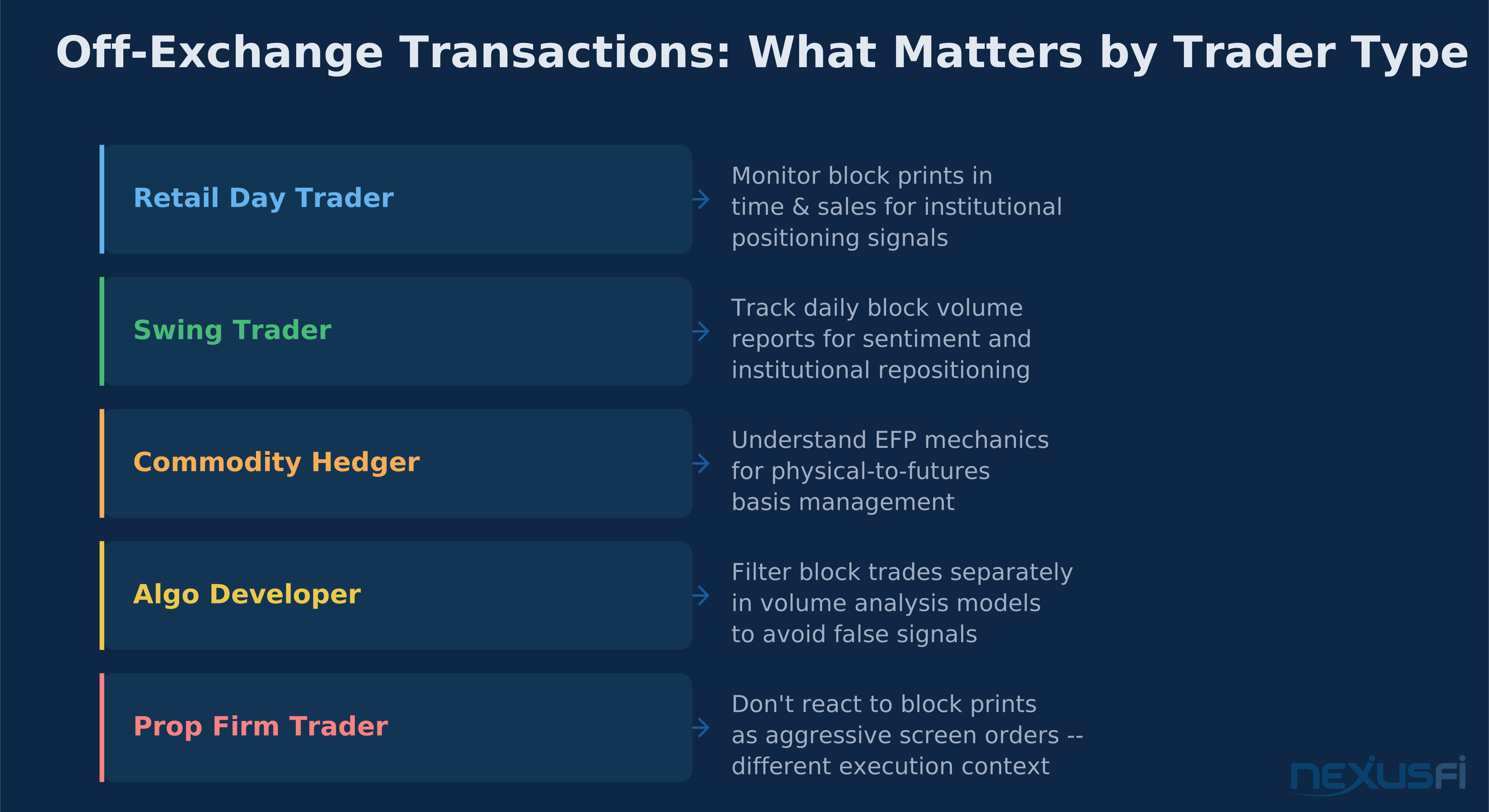
| If You're... | What Matters Most | Action |
|---|---|---|
| A retail day trader | Understanding block prints in time and sales | Learn to identify and filter block trade tags in your platform |
| A swing trader | Block volume as a sentiment indicator | Monitor daily block volume reports for institutional positioning |
| A physical commodity hedger | EFP mechanics and basis management | Work with your FCM to understand EFP execution procedures |
| An algo developer | Distinguishing block from screen flow | Filter block trades separately in your volume analysis models |
| A prop firm trader | Large print interpretation | Don't react to block prints as if they were aggressive screen orders |
The core takeaway: off-exchange transactions are a fundamental part of futures market structure. They don't compete with your screen orders — they operate in parallel, serving different participants with different needs. But the information they contain about institutional positioning, physical market dynamics, and large-scale risk transfer is available to any trader who knows where to look and how to interpret it.