



Introducing Broker vs FCM: Who Holds Your Money, Who Clears Your Trades, and Why It Matters
Overview #
Key Factors #
Every futures trader has a relationship with an FCM — a Futures Commission Merchant. Some traders also have an Introducing Broker sitting between them and the FCM. The question isn't whether one is "better" — it's understanding what each does, who's responsible for what, and which structure fits how you trade.
This distinction matters more than most traders realize. The FCM holds your money. The FCM clears your trades. The FCM is the entity that matters when something goes wrong. An IB is a service layer — sometimes a valuable one, sometimes unnecessary overhead. Knowing the difference lets you make an informed choice instead of defaulting into whatever account-opening link you clicked first.
The FCM holds your money -- always. Whether you trade through an IB or go direct, your funds sit at the Futures Commission Merchant, not the Introducing Broker. Understanding this structure is essential for managing counterparty risk.
1. Who Actually Holds Your Money
This is the single most important thing to understand. Your money is at the FCM — always. Not the IB.
An Introducing Broker does not hold customer funds. When you open an account through an IB, the IB opens that account with an FCM. You send your money to the FCM. The FCM holds it in segregated accounts as required by CFTC regulations.
This isn't a technicality — it's the fundamental architecture. If your IB goes out of business tomorrow, your money is still sitting at the FCM. If your FCM goes out of business, that's an entirely different and far more serious situation.
2. The Regulatory Framework
Both IBs and FCMs are registered with the CFTC and are NFA members, but under different categories with different obligations.
FCMs carry the heavy regulatory burden. They must:
- Maintain minimum adjusted net capital requirements
- Hold customer funds in segregated accounts separate from firm operating capital
- File daily segregation reports
- Submit to regular NFA audits and CFTC financial surveillance
- Report their financial condition publicly through CFTC filings
IBs have lighter requirements. They:
- Register as Introducing Brokers with the NFA
- Cannot hold customer funds
- Must maintain their own net capital requirements (lower than FCMs)
- Can be "guaranteed" by their FCM (the FCM assumes financial responsibility) or "independent"
The CFTC publishes FCM financial data quarterly, including each firm's adjusted net capital, excess net capital, and customer segregated funds totals. This is public information any trader can check at cftc.gov/MarketReports/financialfcmdata/index.htm. [2]
You can verify any firm's NFA registration status at nfa.futures.org/basicnet/ — search by firm name and confirm whether they're registered as an IB, FCM, or both. [9]
3. Customer Fund Segregation
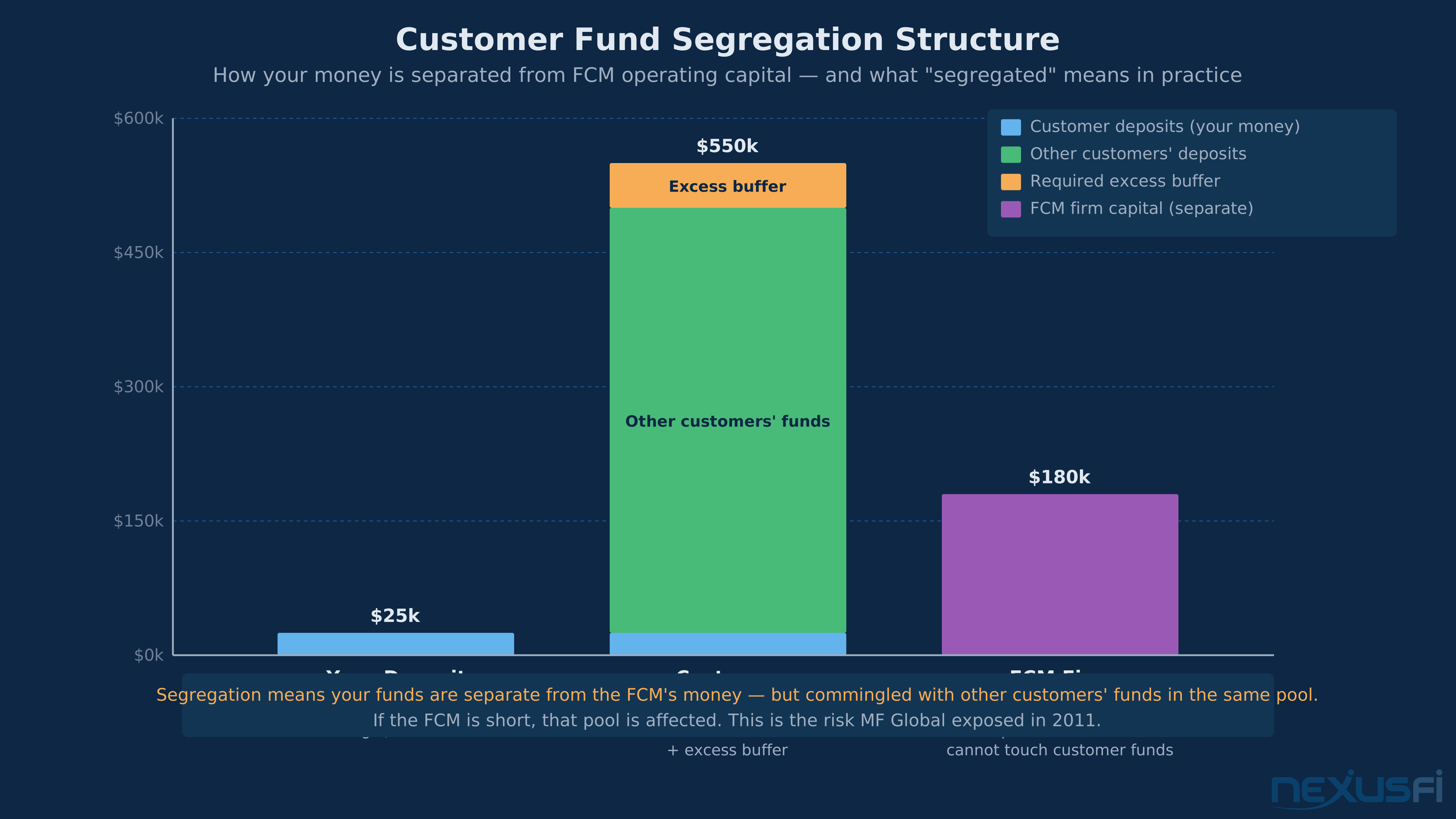
FCMs are required to keep customer funds separate from their own operating capital. These are held in "customer segregated funds" accounts at banks approved by the FCM.
@EdgeClear (an IB) explains the structure from the broker side: "As an IB, we do not hold the customer segregated funds account. FCMs are required to hold these funds in a segregated bank account that are held separate from the working capital of the FCM." [3]
Here's what the segregation rules mean in practice:
- Customer funds cannot be used for the FCM's own trading or operations
- The FCM must maintain excess segregated funds (a buffer above what customers have deposited)
- The CFTC monitors these balances through daily and monthly reports
But segregation is not an absolute guarantee. FCMs can invest customer funds in approved instruments (U.S. government securities, money market funds, certain corporate notes) and keep the interest. As the NinjaTrader risk disclosure states: "The funds you deposit with a futures commission merchant may be invested by the futures commission merchant in certain types of financial instruments that have been approved by the Commission." [4]
Customer funds are also commingled with other customers' funds in omnibus accounts — your money is segregated from the FCM's money, but not from other customers' money. If the FCM doesn't have enough capital to cover another customer's losses, that can affect the pool.
4. The Three-Layer Structure: IB, FCM, and Clearing Firm
The futures industry actually has three layers, not two — and the terminology gets deliberately loose.
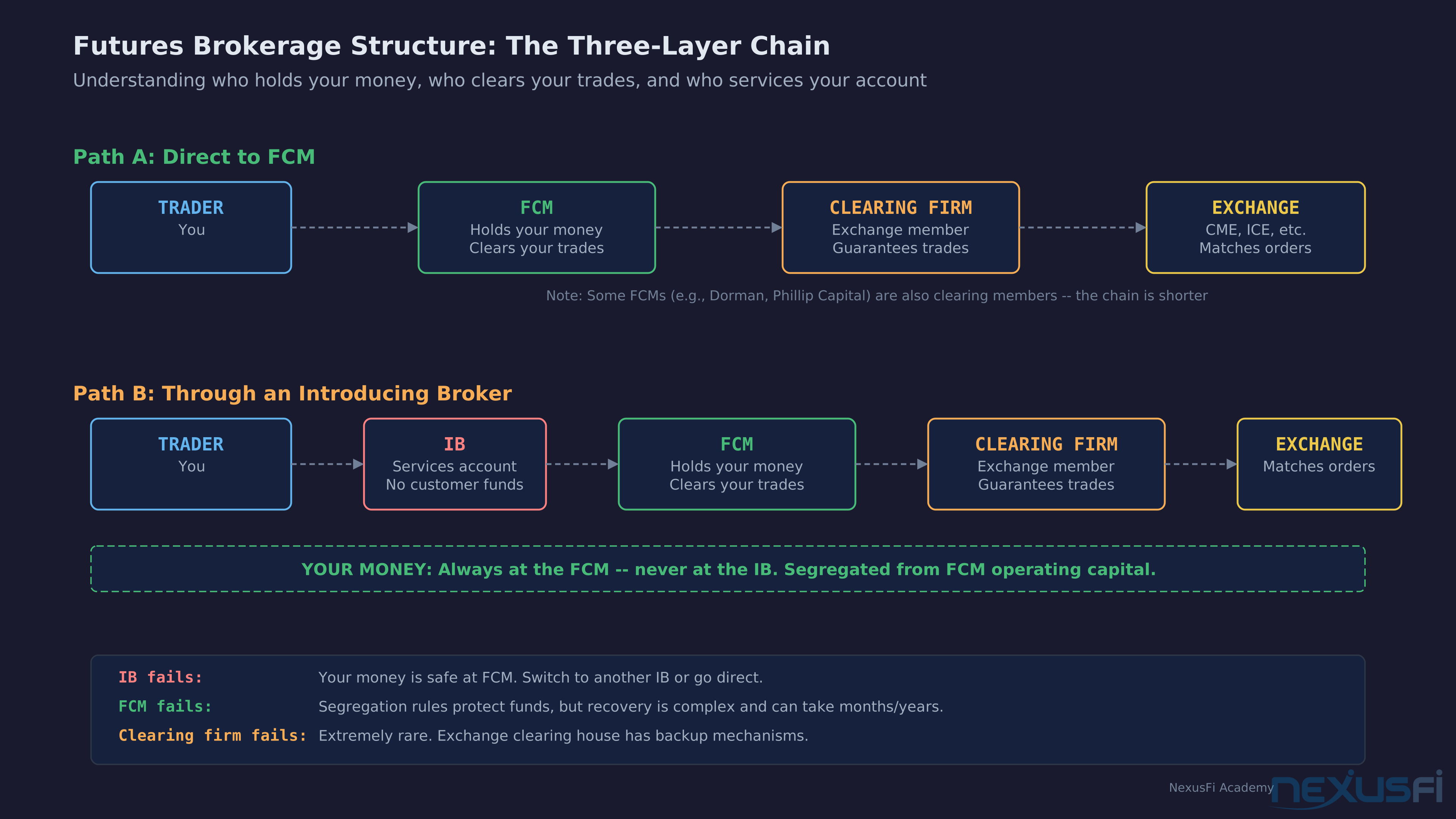
Here's the chain:
Trader → IB (optional) → FCM → Clearing Firm → Exchange/Clearing House
- Clearing firms are actual members of the exchange clearing house. They guarantee trades to the exchange. Only a handful exist -- check the CME clearing member list and you'll see mostly large banks and a few specialized firms like Dorman Trading and Phillip Capital. [10]
- FCMs may or may not be clearing firms themselves. If an FCM is not a clearing member, it uses one. For example, AMP Global (an FCM) uses a separate clearing firm.
- IBs sit at the top of the chain, handling customer acquisition and service, but none of the financial plumbing.
Many firms use "clearing" in their name without being actual clearing members. NinjaTrader Clearing and AMP Global Clearing both have "clearing" in their names but neither appears on the CME's clearing firm list. [5] This isn't deceptive — it's just how the industry names things. But you should know the difference.
5. Commission and Fee Structures
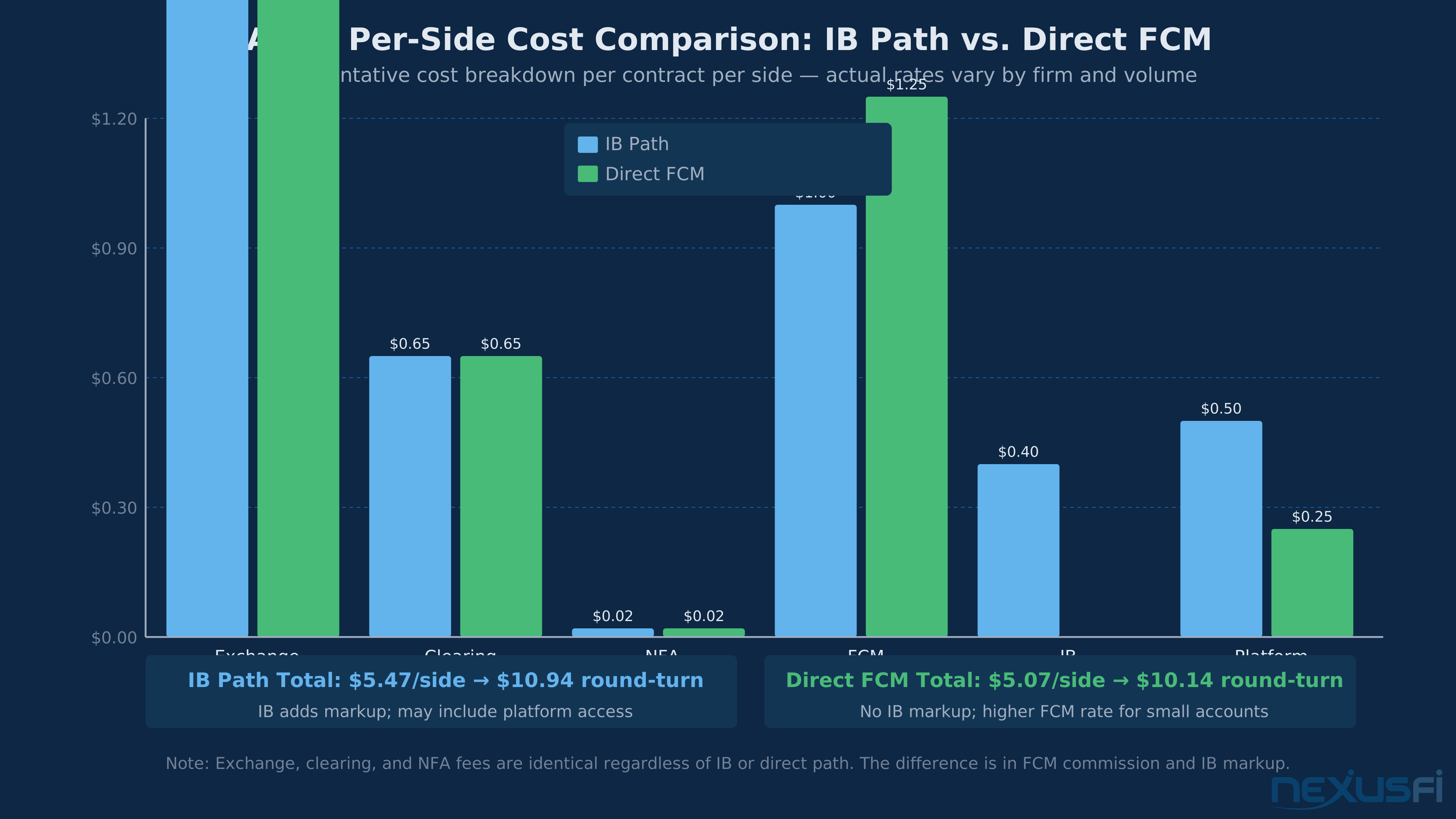
When you trade through an IB, your commission rate typically includes a markup that compensates the IB for their services. The IB receives a portion of the commission revenue, either as a fixed per-contract amount or as a revenue share with the FCM.
The all-in cost of a futures trade includes:
- Exchange fees (set by the exchange -- same regardless of IB or direct FCM)
- Clearing fees (set by the clearing firm)
- NFA fees (regulatory assessment -- same for everyone)
- Brokerage commission (the FCM's charge, plus any IB markup)
- Platform/data fees (may be separate or bundled)
Going direct to an FCM can be cheaper on the pure commission line, but not always. Some IBs negotiate volume discounts with their FCM that they pass through. Some FCMs have higher minimum commissions for small direct accounts than they charge through their IB channel. The only way to know is to compare specific quotes.
The real question isn't "which is cheaper per side?" but "what am I paying for?" An IB that charges $0.10 more per side but provides a platform you need, responsive customer support, and trade desk access during volatile sessions is money well spent. An IB that charges $0.10 more per side and does nothing but open your account is pure waste.
6. Execution and Order Routing
For electronically-traded futures, execution quality is driven almost entirely by the order routing technology — typically provided by firms like Rithmic, CQG, or TT — and the exchange matching engine itself. Whether you're coming through an IB or going direct to an FCM, your order hits the same matching engine via the same infrastructure.
Where IB vs. direct FCM can matter for execution:
- Risk controls: Both IBs and FCMs can impose pre-trade risk checks (max order size, max position, daily loss limits). These controls may differ between firms.
- Platform integration: Some IBs provide proprietary platforms with specialized order types or tools that the FCM doesn't offer directly.
- Support during outages: When something breaks at 9:31 AM on a volatile morning, who answers the phone matters. Some IBs maintain dedicated trade desks. Some FCMs handle everything through general support queues.
For most retail traders using standard electronic order entry, the execution path is functionally identical whether there's an IB in the picture or not. The routing technology (Rithmic, CQG, TT) and the exchange matching engine are the same -- the IB layer doesn't touch order flow.
7. What Happens When Things Go Wrong
This is where the IB vs. FCM distinction has real consequences.
If your IB fails: Your money is at the FCM, not the IB. Your positions remain open. You can continue trading through the FCM directly or transfer to another IB. The disruption is operational (you lose the IB's platform, service, and interface) but not financial. Your funds are safe.
If your FCM fails: This is at the core more serious. Your money is at the FCM, and the FCM is in trouble. Customer funds should be protected by segregation rules, but the recovery process is complex, can take months, and — as history has shown — doesn't always result in 100% recovery.
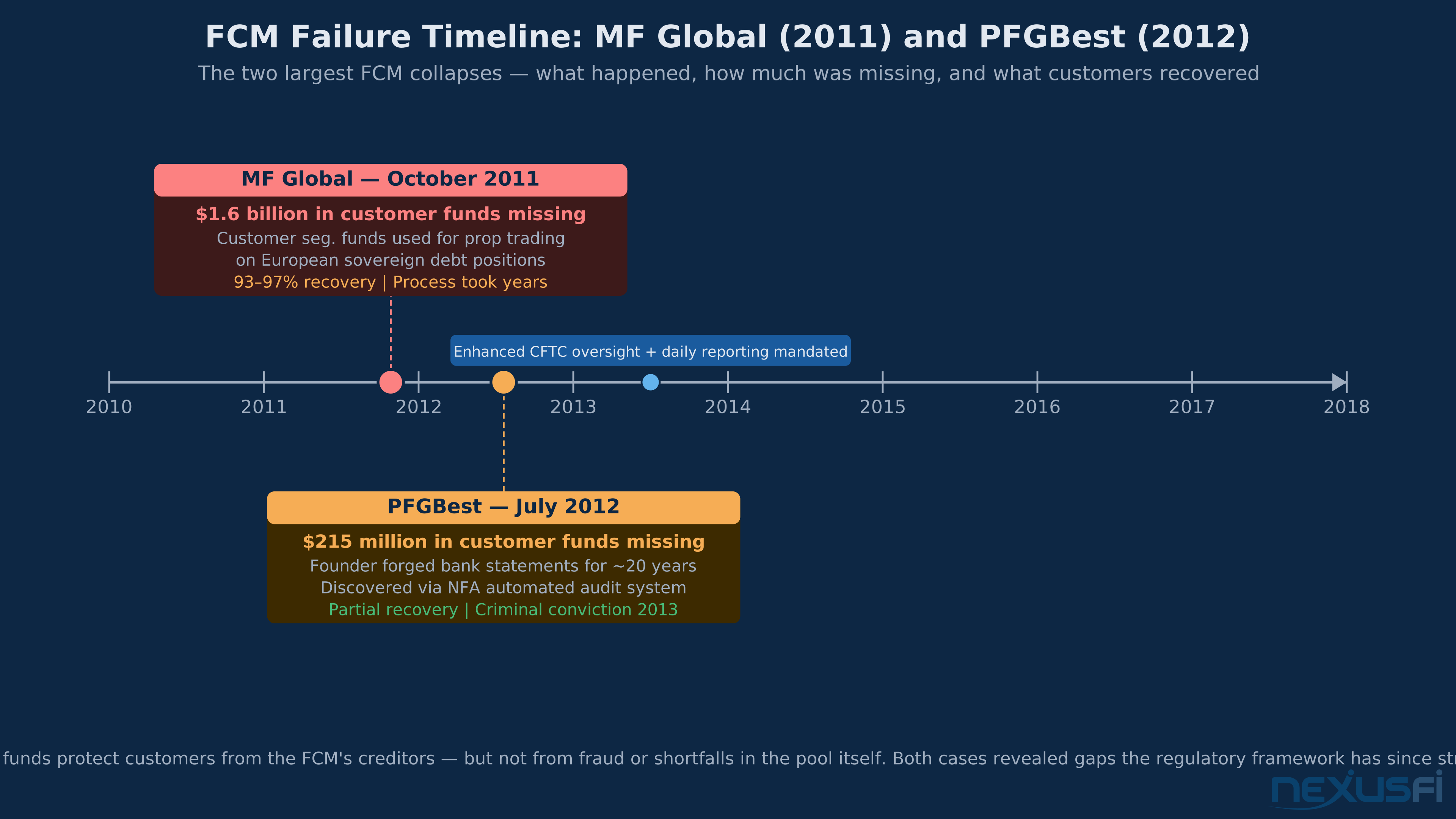
The futures industry has two major FCM failures that every trader should know about:
MF Global (2011): An FCM that used customer segregated funds to cover proprietary trading losses on European sovereign debt. Approximately $1.6 billion in customer funds were missing. The NexusFi community lived through this in real time, with hundreds of posts documenting the experience. [6] Customers eventually recovered approximately 93-97% of their funds, but the process took years.
PFGBest (2012): The founder forged bank statements for nearly 20 years to conceal that customer segregated funds had been stolen. About $215 million in customer money was missing. [7] Recovery was partial and took years.
These failures led to strengthened regulatory oversight, including enhanced daily reporting requirements for FCMs and independent verification of segregated fund balances. The system is stronger now than it was pre-2012, but no regulatory framework eliminates the risk entirely.
Head-to-Head Comparison #
| Factor | Introducing Broker (IB) | Direct-to-FCM |
|---|---|---|
| Who holds your money | The FCM (through the IB) | The FCM (directly) |
| Regulatory registration | NFA-registered as IB | NFA-registered as FCM |
| Commission structure | FCM rate + IB markup | FCM rate only |
| Platform access | May include proprietary platform | FCM's supported platforms |
| Customer service | IB's support team (first line) | FCM's support team (direct) |
| Execution path | Same routing infrastructure | Same routing infrastructure |
| Margin requirements | Set by FCM (same either way) | Set by FCM |
| Account portability | Can switch IB without moving funds | Can switch to different FCM |
| Risk if broker fails | IB failure = operational disruption only | FCM failure = funds at risk |
| Statements and reporting | From FCM (may be relayed through IB) | From FCM directly |
Decision Framework #
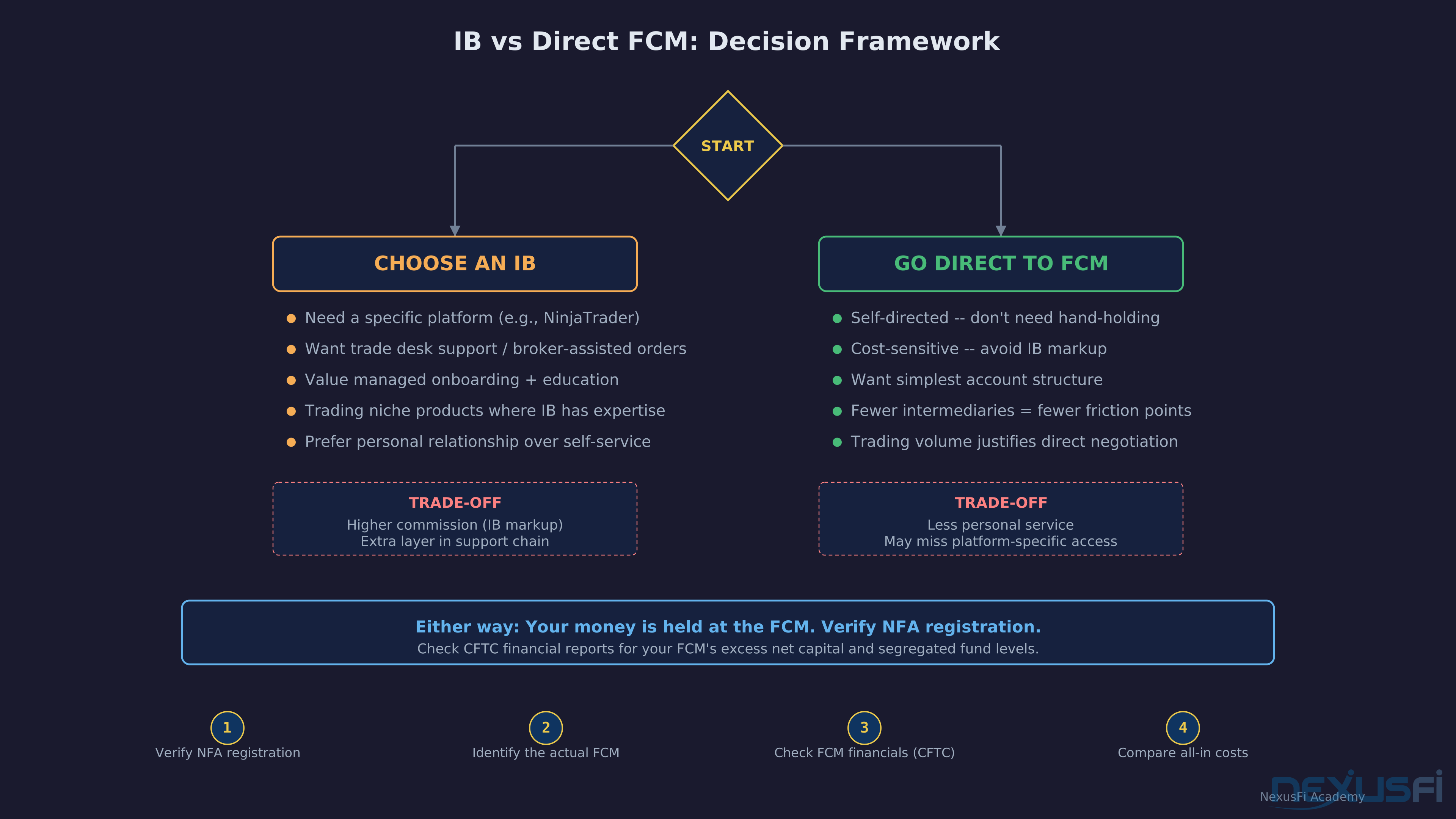
Choose an IB when:
- The IB offers a platform you want and can't get elsewhere. NinjaTrader Brokerage exists because it provides access to the NinjaTrader platform. That's the value proposition -- the IB is the gateway to specific technology. [5]
- You want specialized service. Some IBs employ people who actually trade and can provide meaningful execution support, market insight, or risk management guidance. Edge Clear, for example, was founded by FuturesTrader71 specifically to provide that kind of hands-on broker experience.
- You're newer to futures and value onboarding support. A good IB can walk you through account setup, platform configuration, and initial trade execution in ways that a large FCM's general support queue can't match.
Go direct to an FCM when:
- You're a self-directed trader who doesn't need hand-holding. As @bobwest puts it: "Nothing supplied by an introducing broker is essential to trading. Many traders do not have an IB." [8]
- You want the simplest possible relationship with the fewest intermediaries. Fewer handoffs means fewer points of friction for account issues, margin calls, and dispute resolution.
- You're cost-sensitive and trading sufficient volume to negotiate directly. Large FCMs like Dorman, Ironbeam, and Phillip Capital accept direct retail accounts and may offer competitive rates without the IB markup.
The nuance most traders miss:
Going "direct to an FCM" still doesn't bypass the clearing chain. If the FCM isn't a clearing member, there's still a clearing firm behind it. The chain is shorter, but it's never just you and the exchange. The question is how many layers you want between you and the entity that actually holds your money and manages your risk.
Getting Started #
Whether you're opening through an IB or going direct:
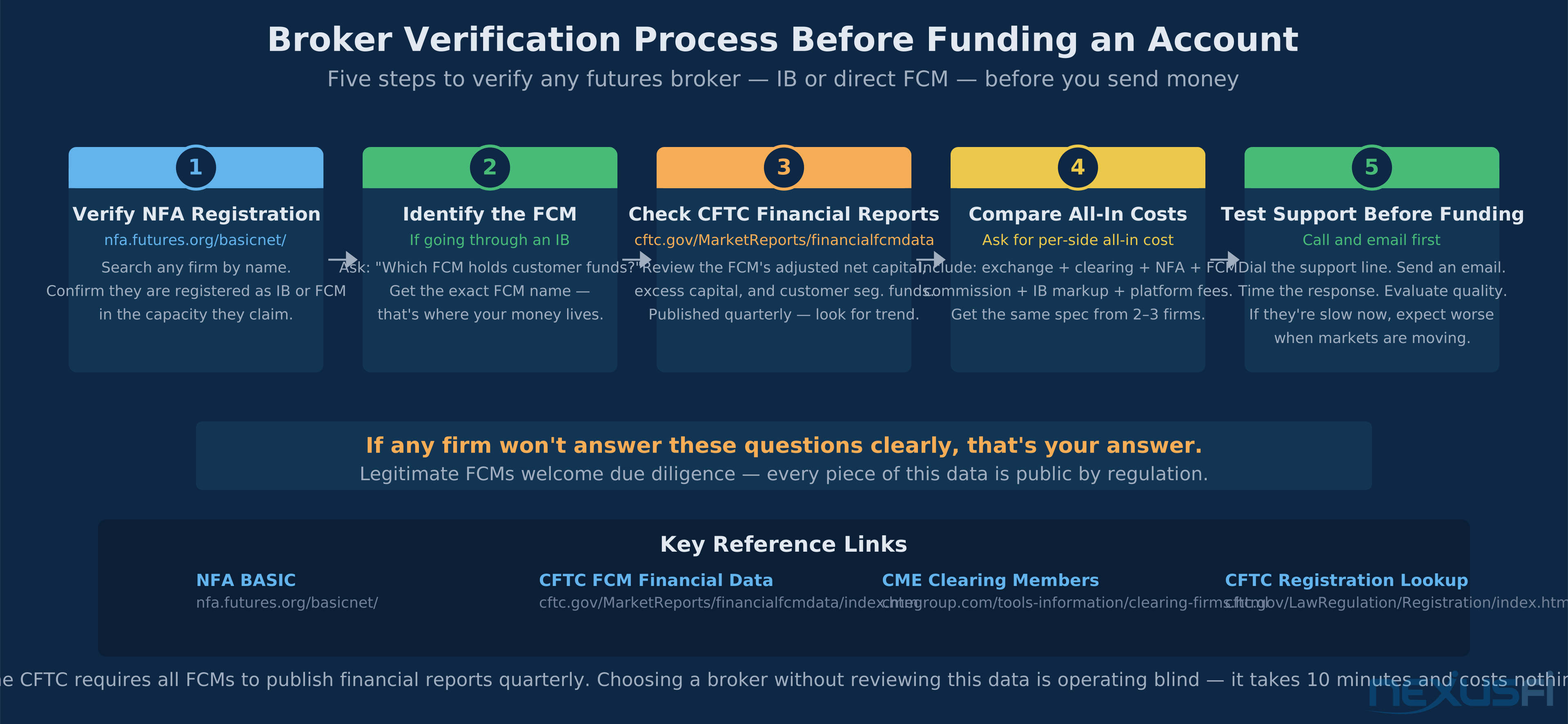
- Verify registration: Search the NFA's BASIC system (nfa.futures.org/basicnet/) for any firm you're considering. Confirm they're registered in the capacity they claim -- IB or FCM. [9]
- Identify the FCM: If going through an IB, ask which FCM(s) they use. Check that FCM's financial data in the CFTC reports. Look at excess net capital (higher is better) and customer segregated funds totals.
- Read the agreements: You'll sign a customer agreement with the FCM (and possibly a separate one with the IB). Understand who's responsible for what -- margin calls, liquidation procedures, dispute resolution.
- Compare all-in costs: Don't just look at the per-contract commission. Add exchange fees, clearing fees, NFA fees, and any platform or data charges. Ask for the all-in per-side cost on the specific products you trade.
- Test the support: Before funding an account, call the support line. Email a question. See how long it takes to get a competent response. When something goes wrong during a volatile session, response time matters more than any commission discount.
Limitations and Honest Drawbacks #
The IB model's weakness: You're adding a layer between you and the entity that controls your money. If the IB misrepresents something, if there's a communication breakdown during a margin call, or if the IB goes under and you need to transition directly to the FCM, you're dealing with friction that direct customers don't face.
The direct FCM model's weakness: Many FCMs are operations-focused firms that handle thousands of accounts with minimal personal service. If you need help — real help, not "please hold" — going direct means you're competing for attention with institutional clients who generate far more revenue. Some FCMs are better at retail service than others, and some are genuinely terrible at it.
What nobody tells you about either model: Margin requirements can change with little notice, and the FCM has broad discretion to raise house margins, liquidate positions, or restrict trading during volatile periods. This is true whether you're coming through an IB or going direct. The customer agreement gives the FCM significant power, and most traders never read it until something goes wrong.
The consolidation risk: The futures brokerage industry has been consolidating for years. Firms change hands, IBs switch FCMs, and clearing relationships evolve. NinjaTrader went from being a platform company to an IB to owning its own FCM. These transitions can affect your account, your platform access, and your cost structure — sometimes with little advance notice.
Knowledge Map
Go Deeper
Build on this knowledgeReferences This Article
Articles that build on this topicCitations
- — Agreement directly with FCM vs Introduction Broker (2021) 👍 12“Your account is held by the FCM. 'Held' means that they have the money and they are responsible for your trades.”
- CFTC — FCM Financial Data Reports (2026)
- — Edge Clear futures broker www.edgeclear.com (FT71) (2020) 👍 5“As an IB, we do not hold the customer segregated funds account. FCMs are required to hold these funds in a segregated bank account.”
- — NinjaTrader Clearing Risks (2024) 👍 5“The funds you deposit with a futures commission merchant may be invested in certain types of financial instruments approved by the Commission.”
- — Ninja Trader and Phillip Capital (2021) 👍 9“There are 'Introducing Brokers' that are in business to find customers and 'introduce' them to FCMs. Some firms are also 'clearing brokers,' a third and more fundamental layer.”
- — MF Global situation (2011) 👍 2“Brokerage funds often are used to back proprietary-trading positions. MF Global officials are still working to piece together what happened.”
- — PFGBest Accounts Frozen (PFG scandal big thread) (2012) 👍 2“U.S. futures regulators approved new regulations to shore up protection of brokerage customer funds following last year's collapse of MF Global.”
- — Brokers vs Direct (2023) 👍 7“Nothing supplied by an introducing broker is essential to trading. Many traders do not have an IB.”
- NFA — NFA BASIC Registration Search (2026)
- CME Group — CME Group Clearing Firms Directory (2026)