



VWAP Trading Strategies
Overview #
VWAP is where institutional money shows its hand. While retail traders obsess over pattern recognition, the desks running real size benchmark every fill against VWAP — and that behavioral footprint creates tradeable structure you can exploit.
This isn't about drawing a line and fading it. It's about understanding why price respects VWAP, what anchored variants reveal about market memory, and how to combine VWAP with Volume Profile for a complete picture of value acceptance.
What VWAP Actually Measures #
VWAP — Volume Weighted Average Price — is the cumulative average price weighted by volume over a specified period. The formula:
VWAP = Σ(Price × Volume) ÷ Σ(Volume)
Every bar, every tick — VWAP absorbs the volume-weighted participation and recalculates. The result is a single line that answers: where did the average dollar enter this market?
Here's why that matters for futures traders: institutional execution desks measure performance against VWAP. [101] A buy order filled below VWAP is a win. A sell above VWAP is a win. That creates real capital flows — algorithms defending their average, portfolio managers adjusting participation, hedging desks adding or pulling liquidity near VWAP. The line isn't magic. It's a self-reinforcing benchmark that attracts order flow.
Session VWAP resets at the defined session boundary (RTH open, Globex start, or custom). For ES and NQ, most traders run both an RTH VWAP and a full 24-hour VWAP. The RTH version captures cash-session institutional activity; the 24-hour version includes overnight repositioning.
Academic research confirms this institutional reliance: [Mitchell, Bialkowski & Tompaidis] [102] found that VWAP is the primary execution quality benchmark for large institutional orders, with static volume-distribution strategies outperforming dynamic approaches when properly calibrated. [Fat Tails] [17] validated this independently on NexusFi: algorithms using historical intraday volume profiles matched the current session's VWAP within 1-2 ticks across five consecutive trading days.
Anchored VWAP: Market Memory with a Purpose #
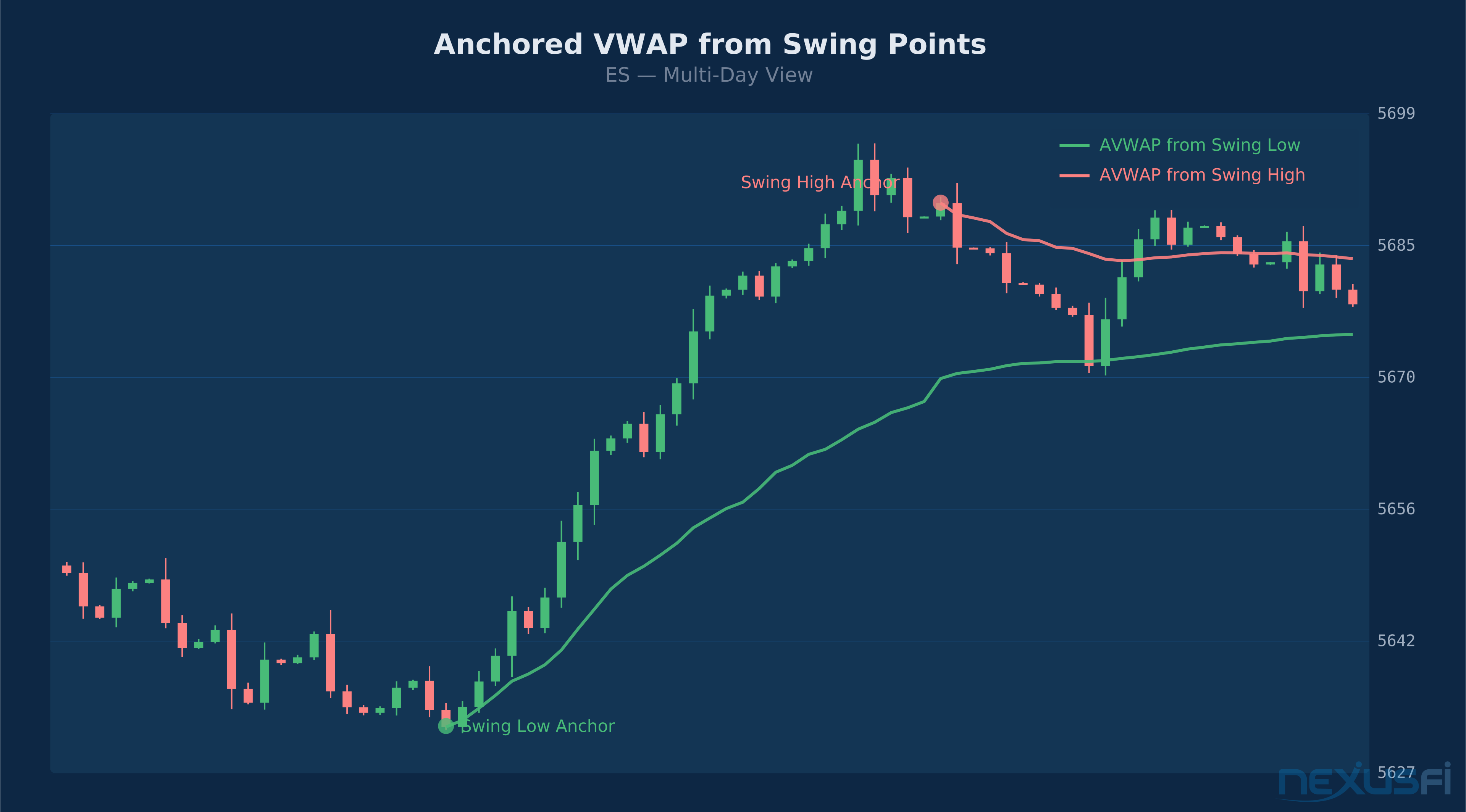
Standard session VWAP answers "where's fair value today?" Anchored VWAP asks a better question: where's fair value since that specific event?
Anchor the calculation to a swing high, FOMC announcement, gap open, contract rollover, or weekly open — and you get the volume-weighted average since that event. This reveals whether participants who entered at that reference point are in profit or pain.
Best Anchor Points #
The strongest anchors are points of visible participation:
- Major swing highs/lows — where trapped traders accumulated
- Session event extremes — overnight high/low, opening range boundaries
- News releases — CPI, NFP, FOMC candles
- Weekly and monthly opens — institutional rebalancing references
- Contract roll dates — new participation baseline
"Although anchored VWAPs are not easily discovered during the RTH session, when found they can provide information that may help your trading."
-- [JonnyBoy, VWAP for stock index futures trading] [2]
Avoid over-anchoring to arbitrary points. Three to four active anchored VWAPs from meaningful events is a practical ceiling — more than that creates noise.
Anchored VWAP Setups #
Breakout and Retest: Price breaks an event high, pulls back to the anchored VWAP from that event, and holds. The AVWAP becomes dynamic support because it represents the average entry of breakout participants. If they defend it, continuation follows. If it fails, the breakout was a trap.
Failure Below AVWAP: Price breaks above a swing point but can't sustain above the anchored VWAP. This signals failed auction — participants who bought the breakout are underwater and liquidating. Short continuation targets the origin of the move.
Mean Reversion to AVWAP: Sharp extension away from an anchored VWAP with exhaustion volume. The AVWAP becomes the gravitational center for reversion. Target: the AVWAP line itself. Stop: beyond the exhaustion extreme.
Standard Deviation Bands #
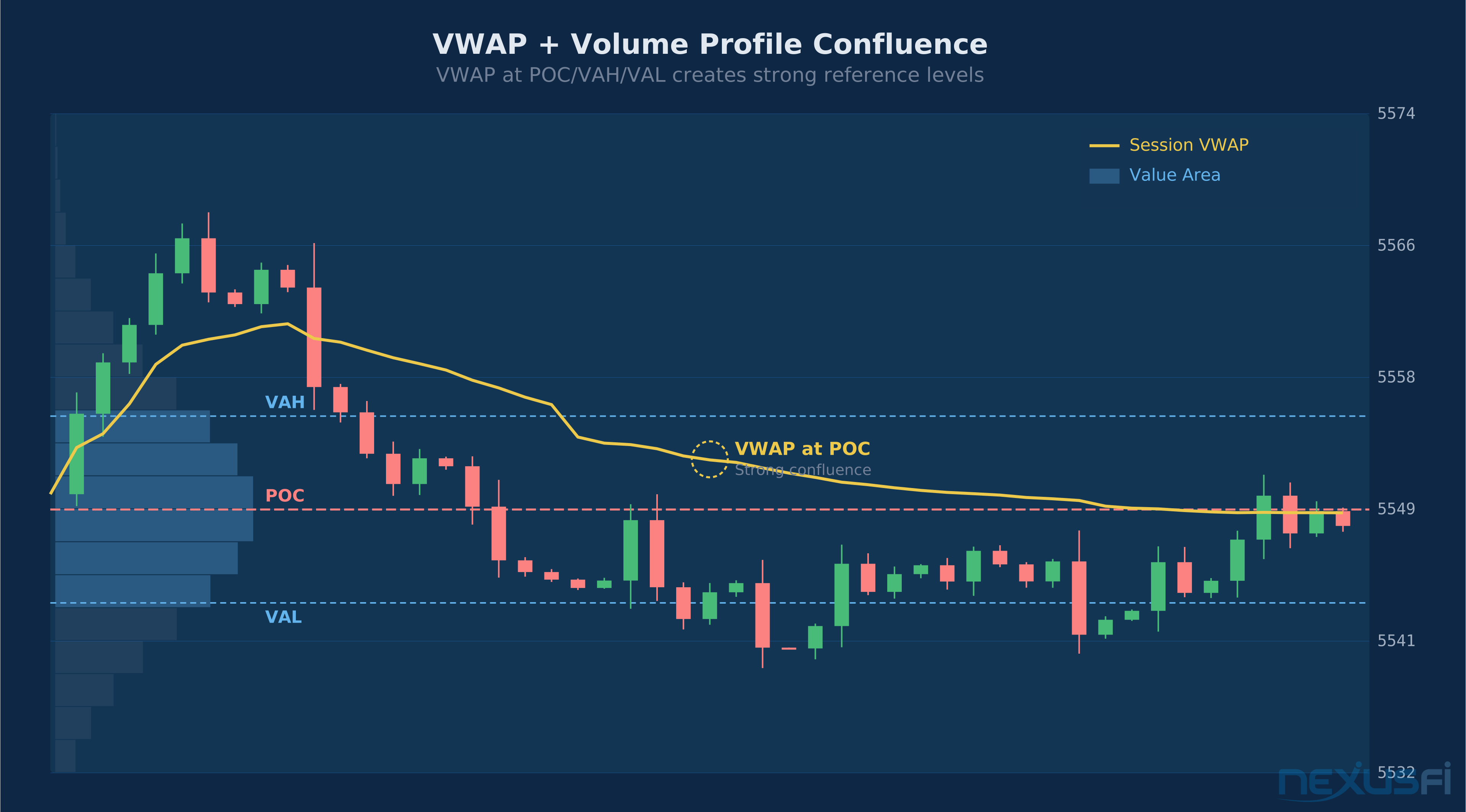
VWAP standard deviation bands plot at ±1σ, ±2σ, and sometimes ±3σ from the VWAP line, creating a probabilistic envelope around fair value.
Think of them as a dynamic Bollinger-style framework tied to volume-weighted value rather than simple moving average. In a normal distribution, ~68% of price action stays within ±1σ, ~95% within ±2σ. When price hits the outer bands, it's statistically stretched.
How to Read the Bands #
- ±1σ: Normal intraday extension. Price oscillating between VWAP and ±1σ is balanced, low-conviction trade territory.
- ±2σ: Statistically stretched. This is where mean reversion setups live — if the market is rotating. In a trend day, the ±2σ band becomes a rail that price rides. [Silvester17's chart analysis on NexusFi] [16] illustrated this regime split directly: the first SD band acts as a pullback entry in trending markets, while the second SD band provides the fade entry in rotational conditions.
- ±3σ: Potentially exhausted. Rare territory that typically marks either a trend day extreme or an emotional spike. Fat Tails' analysis in The Highest, High-Probability-Trade thread [12] identified this outer zone as the overbought/oversold boundary where buying the lower band near value under bullish conditions carries the highest probability.
The Critical Filter: Band Behavior #
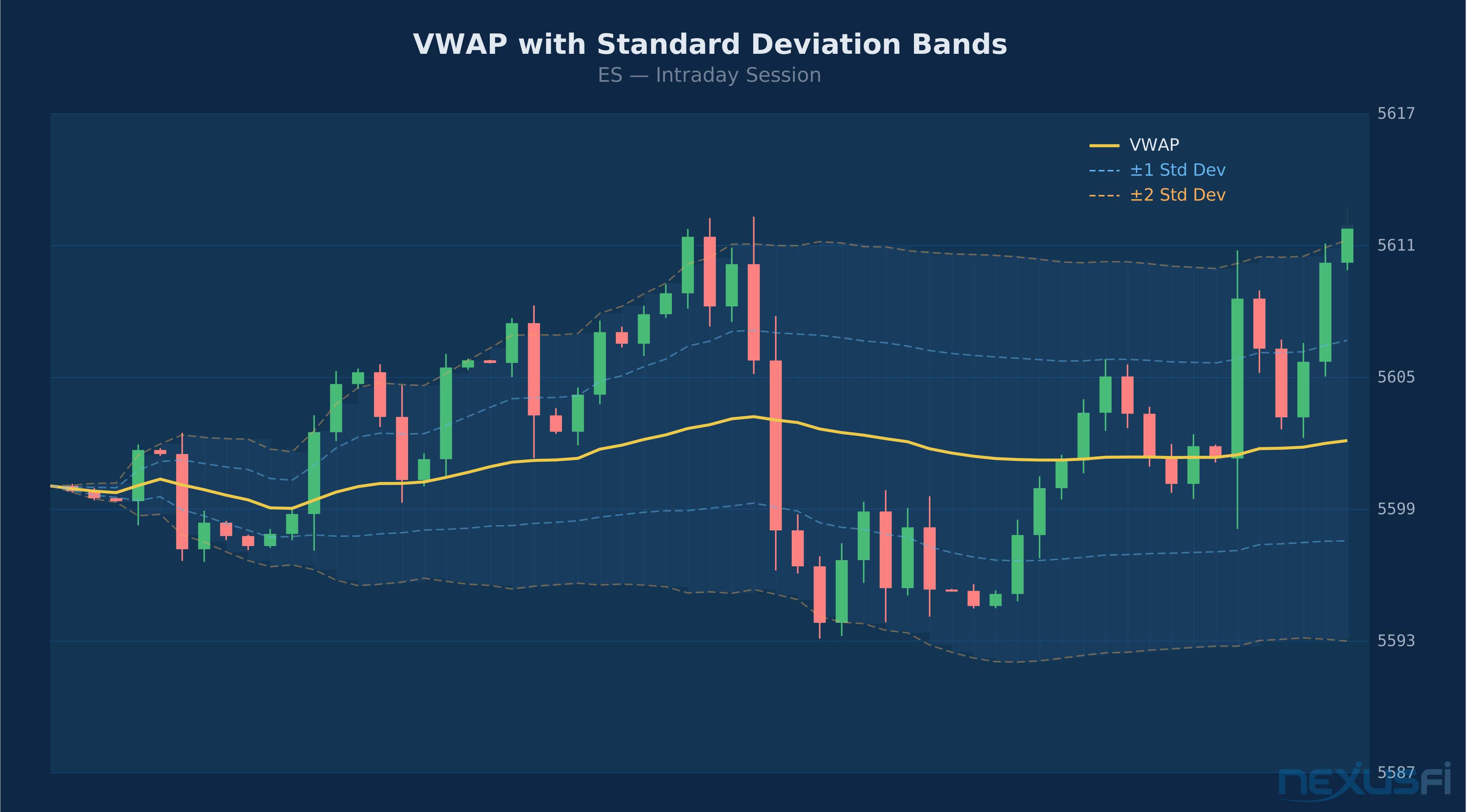
Expanding bands = trending volatility. Don't fade expanding bands — price is being repriced, not reverting.
Contracting bands = consolidation. Mean reversion between bands is viable when VWAP slope flattens and bands compress. As [tigertrader observed on NexusFi] [15]: the flatter the VWAP, the higher the probability on band-fade setups — range days produce the highest frequency of SD-to-VWAP reversal trades precisely because the horizontal VWAP creates a stable gravitational center.
"I find that trading the VWAP of futures instruments is a little more challenging but IMO it is an essential thing to be able to do."
-- [JonnyBoy, NexusFi] [3]
Band Fade Setup #
Price tags ±2σ with declining momentum. Rejection wick forms. VWAP slope is flat or opposing the extension. Entry on the rejection, target VWAP, stop beyond the band extreme with a volatility buffer. This setup has a structural edge in rotational markets but destroys accounts when applied to trend days.
Fading VWAP on a trend day is the #1 account killer. If standard deviation bands are expanding, do NOT fade. Distance from VWAP is not a mean-reversion signal when the market is repricing — it's a sign you're on the wrong side.
VWAP + Volume Profile: The Complete Picture #
VWAP and Volume Profile answer different questions and are most powerful combined:
| Tool | Question | Output |
|---|---|---|
| VWAP | Where is the volume-weighted average price right now? | Dynamic fair value line |
| Volume Profile | Where did the most volume historically transact? | POC, HVN/LVN, Value Area |
Use Volume Profile for the "where" — identifying structural levels. Use VWAP behavior at those levels for the "when" — confirming acceptance or rejection.
Confluence Logic #
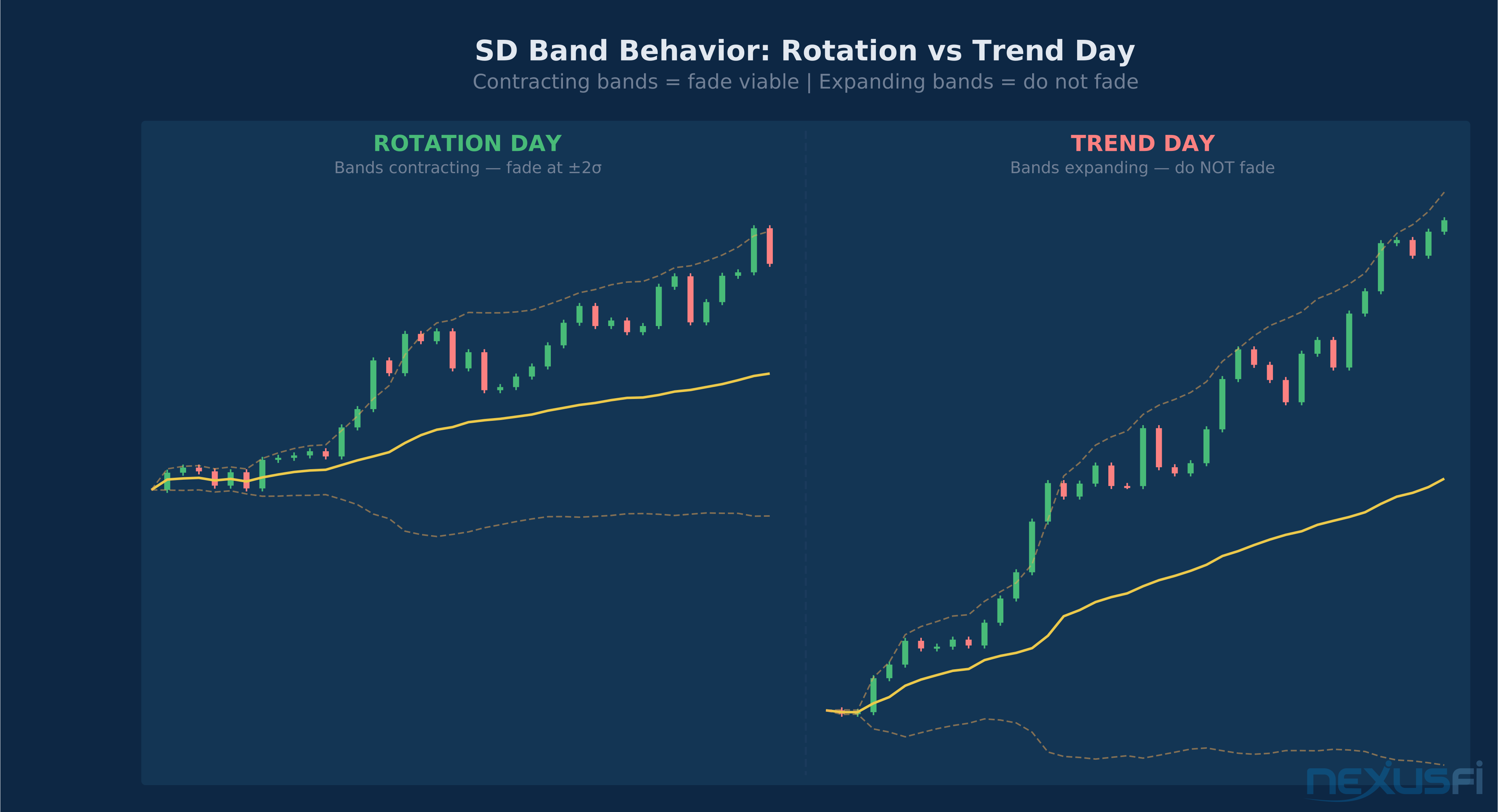
VWAP at POC or HVN: Strong confluence. When the dynamic fair value line aligns with the static highest-volume level, that's a double reference. Rejection there carries more weight. Acceptance through it signals genuine repricing.
VWAP at Value Area Boundaries: When VWAP sits near VAH or VAL, it creates a decision point. Price accepting above VAH + VWAP = bullish commitment. Price rejecting below VAL + VWAP = bearish continuation.
LVN + AVWAP: Low-volume nodes are potential acceleration zones. When an anchored VWAP aligns with an LVN, expect either rapid acceptance through it or a sharp rejection.
"I look for trading strategies based on larger moves and consider myself more of a swing trader. I compare short and long term VWAPs."
-- [WoodyFox, NexusFi] [6]
Rotation Trade: VWAP + Profile #
Price rotates between VWAP and value area extremes. Fade at VAH/VAL when VWAP confirms (rejection or stabilization at the level). Target POC or the opposite boundary. This is the bread-and-butter setup for non-trending sessions.
Developing vs. Static VWAP #
Developing VWAP updates in real time as the session accumulates volume. It's responsive early in the session and stabilizes as more data enters the calculation. Trade implication: VWAP-based entries carry higher conviction after the first 90 minutes when the developing line stabilizes.
VWAP reliability increases much after the first 90 minutes of RTH trading — a threshold identified by Fat Tails in the Session Toolbox [10]. Early session, the developing line is volatile and easily distorted by opening imbalance flows. After 90 minutes, enough volume has accumulated to give VWAP real meaning as a fair-value reference.
Static/Anchored VWAP is fixed to a completed period or event. Prior day's VWAP, anchored VWAP from a weekly swing, monthly VWAP — these don't change. They serve as structural memory for higher-timeframe context.
The practical split: Use developing VWAP for trade timing and intraday execution decisions. Use static/anchored VWAP for directional bias and planning.
Multi-Timeframe VWAP #
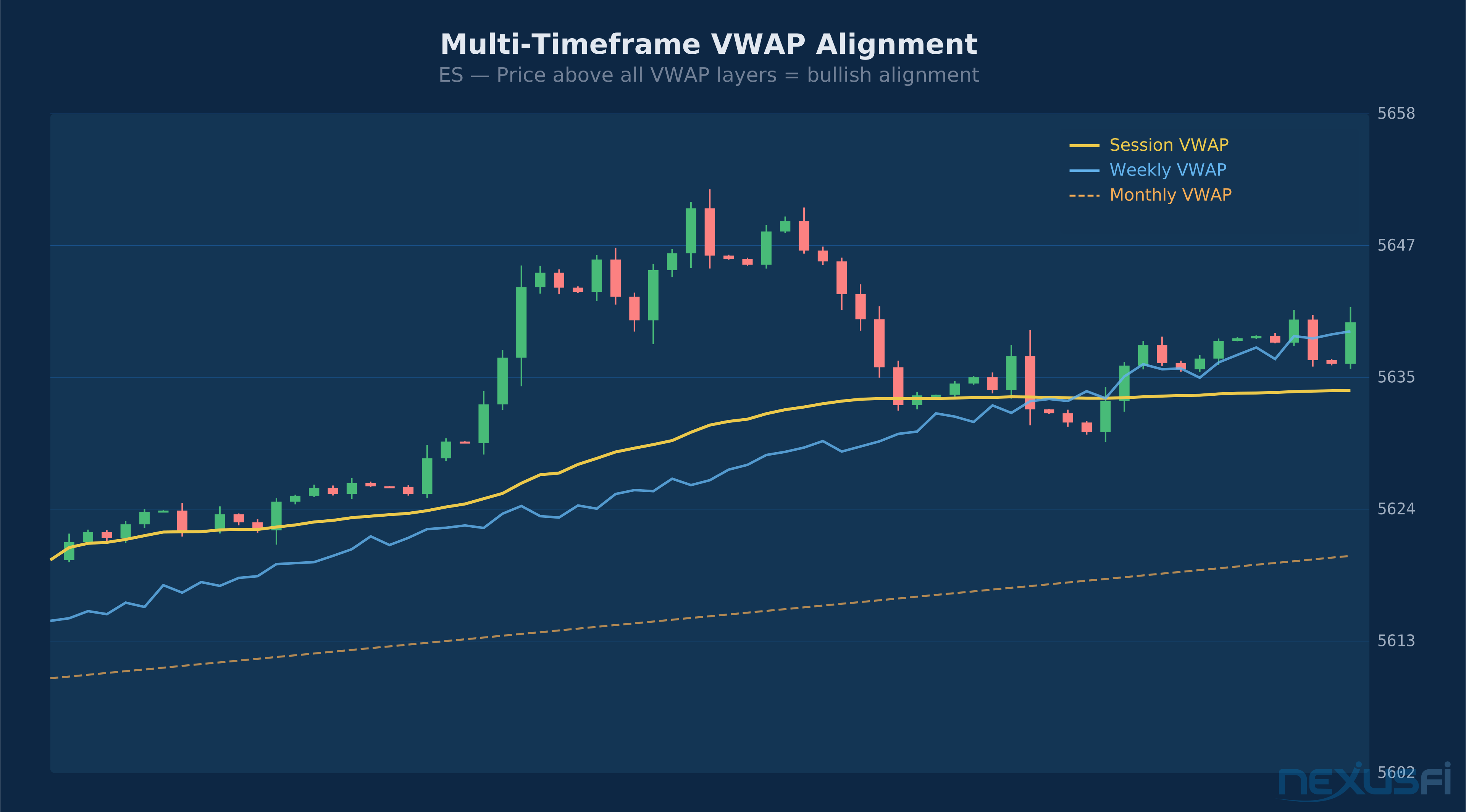
A multi-timeframe VWAP stack is one of the most practical institutional-style frameworks available to retail futures traders.
The Hierarchy #
- Session VWAP: Intraday fair value. Where are today's participants positioned?
- Anchored VWAP from recent swing: Intermediate directional bias. Are swing traders in profit or pain?
- Weekly VWAP: Broader institutional reference. Where's the weekly participation average?
- Monthly VWAP: Macro positioning. Where are the biggest players positioned?
Alignment Rules #
Bullish alignment: Price above session VWAP, above anchored swing AVWAP, above weekly VWAP. Pullbacks to session VWAP are buyable. Each VWAP layer acts as graduated support.
Bearish alignment: Price below all layers. Retests of session VWAP become short opportunities. Each VWAP layer becomes graduated resistance.
Conflict (the tricky one): Price above session VWAP but below weekly AVWAP. Intraday longs may work tactically, but swing resistance sits overhead. Reduce conviction, tighten targets, demand stronger triggers.
"A daily VWAP, weekly VWAP, monthly VWAP and Yearly VWAP, work well as reference."
-- [JonnyBoy, NexusFi] [4]
When daily and weekly VWAP converge at the same price, that's a major institutional reference level. These convergences don't happen often, but when they do, the market tends to react decisively.
Five Core VWAP Setups #
1. VWAP Reclaim Long #
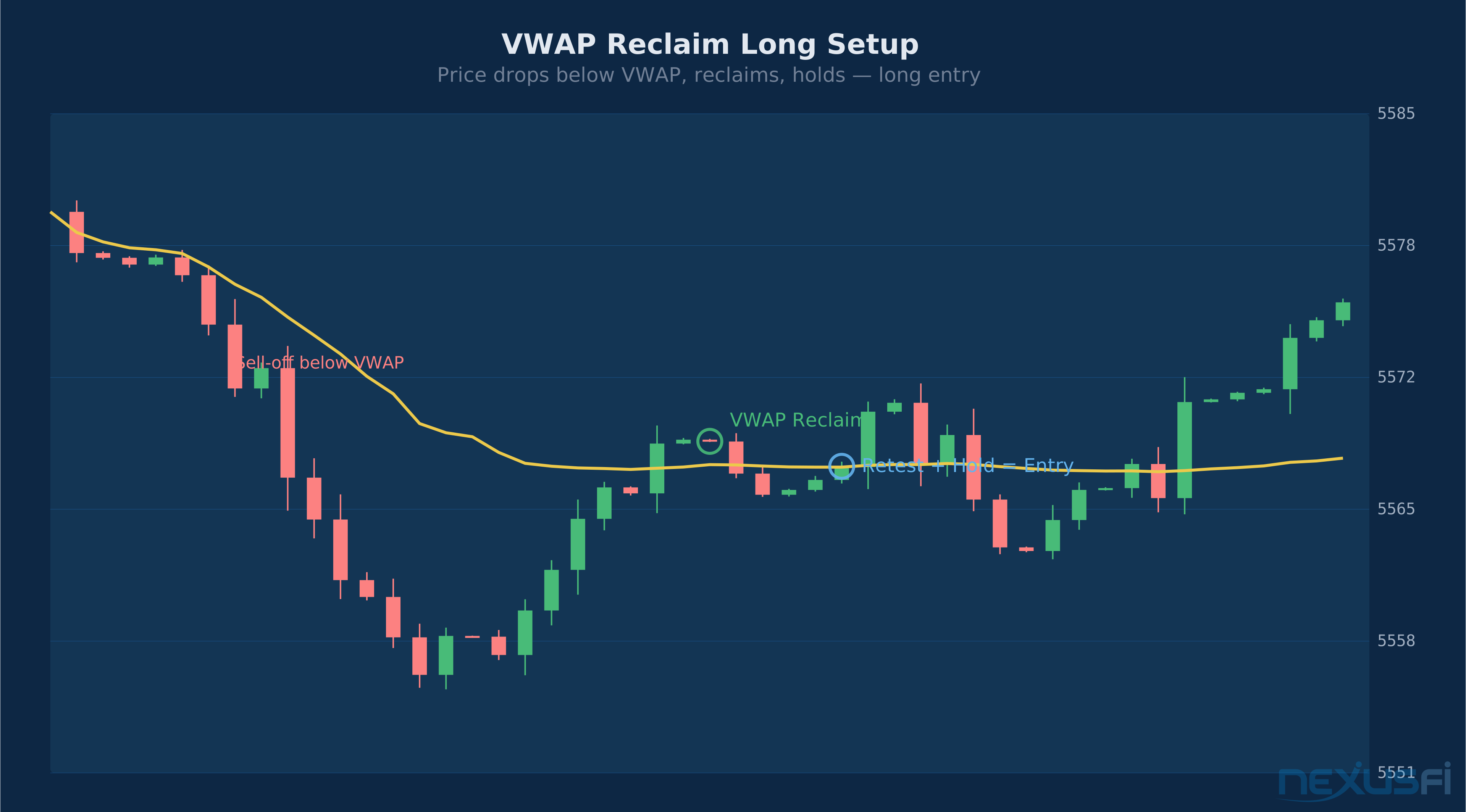
Price opens weak or sells off below VWAP. Then it reclaims — crossing back above VWAP with volume. The retest holds VWAP as support. Long entry on the hold. Stop below the reclaim low. Target: prior session high, ±1σ band, or VAH.
ES Example: VWAP sits at 7,312.50 at 10:15 AM. Price sells off to 7,304.00, stalls, then climbs back above VWAP at 7,312.50 on a volume surge. Price pulls back to 7,311.25 and holds — that's the entry. Stop at 7,306.50 (below the reclaim low, 6 points risk). First target: 7,322.00 (±1σ band, ~10 points). Extended target: 7,335.00 (prior session high). Risk/reward: 1:1.7 to first target, 1:3.8 to extended.
This works because the reclaim signals institutional buyers absorbing supply. They're defending their average, and the failed breakdown traps shorts.
2. VWAP Loss Short #
Price trades above VWAP, then loses it with conviction. Retest of VWAP from below fails — price can't get back above. Short continuation. Target: session low, -1σ band, or VAL.
ES Example: VWAP is at 7,298.75. Price breaks below at 11:00 AM, trading down to 7,293.00. Price rallies back to 7,298.00 but can't reclaim 7,298.75 — rejection at VWAP. Short entry at 7,297.00 on the failed retest. Stop at 7,302.00 (above VWAP + buffer, 5 points risk). Target: 7,286.00 (-1σ band, 11 points). Risk/reward: 1:2.2.
The mirror image of the reclaim. Sellers have taken control of fair value, and trapped longs above VWAP are liquidating.
3. Anchored VWAP Breakout Continuation #
Price breaks above an anchored event level. Pullback to the AVWAP holds with volume participation. Long continuation trade. The anchored VWAP becomes dynamic support from the event — participants who entered at the breakout are defending their position.
ES Example: Anchored VWAP from Monday's swing low sits at 7,285.00. On Wednesday, price breaks above that level and pushes to 7,302.00. Price pulls back to 7,286.50 — basically retesting the AVWAP — and holds with visible bid absorption on the DOM. Long entry at 7,287.50. Stop at 7,281.00 (below the AVWAP by ~4 points). Target: 7,310.00 (next structural resistance). Risk/reward: 1:3.5.
4. Band Fade (Rotational Markets Only) #
Price tags ±2σ. Exhaustion signs: rejection wick, declining volume, stalling momentum. Fade back toward VWAP. First target: VWAP. Extended target: opposite inner band or profile node. Stop: beyond the band extreme by one ATR.
ES Example: VWAP is at 7,310.00 with flat slope. +2σ band is at 7,324.00. Price stretches to 7,325.50, prints a 4-point rejection wick, and volume declines on the push. Short entry at 7,323.00. Stop at 7,329.00 (beyond +2σ plus ~5-point ATR buffer, 6 points risk). First target: 7,310.00 (VWAP, 13 points). Extended target: 7,298.00 (-1σ band). Risk/reward: 1:2.2 to VWAP.
Filter: VWAP slope must be flat or opposing. If slope aligns with the extension and bands are expanding, it's a trend day — don't fade.
All band fade setups require flat or opposing VWAP slope. If the slope aligns with the extension AND bands are expanding, you are in a trend day — skip the trade entirely. This single filter prevents the majority of band-fade blowups.
5. VWAP + Volume Profile Confluence Rotation #
In balanced sessions, price rotates between VWAP and value area boundaries. Fade at VAH/VAL when VWAP behavior confirms (stabilization or rejection at the level). Target POC or the opposite extreme. This is high-frequency, low-risk, low-reward — the scalper's framework in range-bound conditions.
ES Example: Rotational day. VWAP at 7,305.00, POC at 7,306.25 (strong confluence). VAH at 7,318.00, VAL at 7,292.00. Price pushes to 7,317.50 near VAH and stalls — VWAP slope is flat, confirming balance. Short at 7,317.00. Stop at 7,321.00 (above VAH, 4 points risk). Target: 7,306.25 (POC/VWAP confluence, ~11 points). Risk/reward: 1:2.7. If that hits, second rotation long at POC targeting VAH again.
Five Core Setups: Quick Reference #
| Setup | Market Condition | Entry Trigger | Stop | Target |
|---|---|---|---|---|
| 1. VWAP Reclaim Long | Post-selloff recovery | Price reclaims VWAP with volume, retest holds as support | Below reclaim low | ±1σ band, prior session high |
| 2. VWAP Loss Short | VWAP breakdown | Failed retest of VWAP from below, rejection at line | Above VWAP + buffer | -1σ band, session low, VAL |
| 3. AVWAP Breakout | Swing-level breakout | Pullback to event AVWAP holds with bid absorption | Below AVWAP by ~4 pts | Next structural resistance |
| 4. Band Fade | Rotational (flat VWAP slope) | ±2σ tag with rejection wick and declining volume | Beyond band + 1 ATR buffer | VWAP, then opposite inner band |
| 5. VWAP + Profile Rotation | Balanced/range-bound | Fade at VAH/VAL with flat VWAP confirmation | Beyond VA boundary | POC/VWAP confluence |
Institutional Behavior Around VWAP #
Understanding why VWAP works matters more than memorizing setups.
VWAP as liquidity magnet: In balanced markets, algorithmic execution clusters near VWAP to minimize market impact. This creates natural liquidity and makes VWAP act like a gravity well.
VWAP as defense line: Institutions defend their average entry. When price returns to VWAP after an institutional move, expect the side that moved the market to add liquidity.
Opening drive acceptance: The first 30 minutes above or below VWAP sets the session tone. Traders commonly cite an approximately 70% probability of the session continuing in the opening drive direction relative to VWAP — a heuristic widely attributed to LizardTrader and referenced across trading communities [4]. The exact percentage varies by instrument and market regime, but the directional bias established in the opening 30 minutes is a well-observed phenomenon among intraday futures traders.
"A trend day typically opens higher/lower above/below the VWAP accompanied by a strong/weak $TICK and good/bad breadth, and remains above/below VWAP for the entire session."
-- [tigertrader, NexusFi] [8]
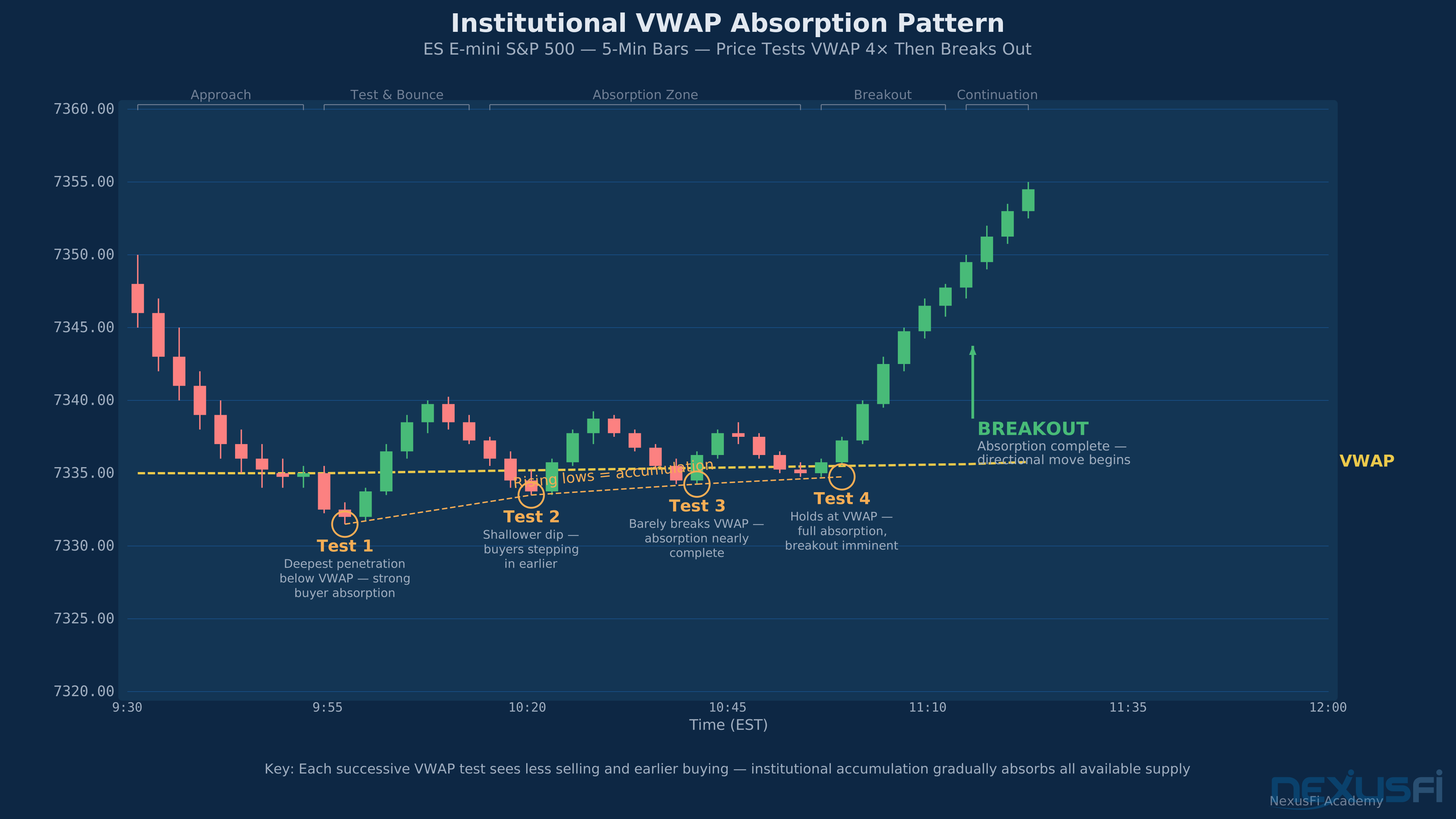
Repeated VWAP tests: When price tests VWAP multiple times without breaking through, it's an absorption pattern — one side is accumulating at fair value. The eventual breakout from this pattern tends to be directional and sustained.
"VWAP is just a tool. I certainly wouldn't fall on a sword and say that I only trade VWAP, but I have incorporated it into my trading and my algorithms."
-- [JonnyBoy, NexusFi] [5]
Risk Management with VWAP #
Structure-based stops, not line-based stops. Don't place your stop exactly at VWAP — use the nearest swing structure with a volatility buffer. VWAP is a reference, not an exact level.
Size by regime. Mean reversion setups get smaller size; trend-following setups on VWAP reclaims/losses get standard size. The regime determines the edge, not the indicator.
Instrument-specific extensions. ES typically reverts when extended 0.4% from VWAP. NQ can stretch to 0.6-0.8%. CL can extend 1-2% before reversion. These aren't exact rules — they're context for calibrating expectations.
Time-of-day awareness. VWAP is most reliable 90+ minutes after the open. Early session, the developing VWAP is volatile and prone to whipsaws. Late session, closing imbalance flows can distort the calculation. As aviat72 observed on NexusFi [11], VWAP becomes "the safest place" for institutional traders in the second half of the day — when the calculation has stabilized and volume participation patterns are well-established.
Common VWAP Mistakes #
Fading trend days. The #1 account killer with VWAP. Price is "far from VWAP" so it "must come back." Wrong. On a trend day, price can stay at ±2σ or beyond for the entire session. Distance from VWAP is not a signal — acceptance/rejection behavior is.
Treating VWAP as a signal, not context. VWAP should confirm your trade thesis, not generate it. Use it alongside price action, Volume Profile, and order flow — not in isolation.
Ignoring the session definition. RTH VWAP and 24-hour VWAP can be at very different prices. Know which one you're using and why.
Over-anchoring. Ten anchored VWAPs on a chart is analysis paralysis. Pick the three most meaningful events and anchor to those.
"You might be tempted to go long below VWAP or short above VWAP however you might find these trades often fail."
-- [mmaker, NexusFi] [7]
Platform Configuration #
Getting VWAP set up correctly matters more than most traders realize — session boundaries, calculation methods, and band settings all affect the output.
NinjaTrader 8 #
NinjaTrader includes a built-in OrderFlow VWAP indicator (OrderFlow VWAP is NinjaTrader's name for VWAP — same calculation). To add it: right-click your chart > Indicators > search "OrderFlow VWAP" > Add. Key settings:
- Session definition: Set to RTH (Regular Trading Hours) for cash-session VWAP, or "Use instrument settings" for 24-hour. Most ES traders run both on separate panels or overlaid.
- Standard deviation bands: Enable ±1σ and ±2σ in the indicator settings. NinjaTrader calculates these as rolling population standard deviations of the VWAP, which is the correct method.
- Anchored VWAP: NinjaTrader 8 does not natively support anchored VWAP from arbitrary points. Community indicators (such as those shared by @Fat Tails and @JonnyBoy in the VWAP for stock index futures trading thread) fill this gap. JonnyBoy's chart template includes preconfigured VWAP setups for ES [9].
- Multi-timeframe: Use separate instances of the indicator with different session templates for daily, weekly, and monthly VWAP layers.
Sierra Chart #
Sierra Chart has strong native VWAP support through the VWAP study (Study > Studies > VWAP):
- Session VWAP: Add the VWAP study, set "Reset at Session Start" to Yes. Sierra Chart correctly handles Globex vs. RTH boundaries.
- Standard deviation bands: In the VWAP study settings, enable "Number of Standard Deviations" and set to 2 (gives ±1σ and ±2σ). Sierra Chart's bands use population standard deviation — accurate and reliable.
- Anchored VWAP: Use the "VWAP - Fixed Date" study variation. Set the anchor date/time to any bar — FOMC announcement, swing low, weekly open. Sierra Chart handles this natively without add-ons.
- Appearance: Set VWAP to a prominent color (gold or white), ±1σ bands to dashed blue, ±2σ bands to dashed amber. Match the visual hierarchy to your interpretation hierarchy — session VWAP is primary, bands are secondary context.
General Configuration Tips #
Regardless of platform, verify these settings match your trading framework:
- Session boundary: Know whether your VWAP resets at RTH open (9:30 AM ET for equities, variable for futures) or at the Globex start. Most setups described in this article use RTH VWAP.
- Tick vs. volume calculation: VWAP should weight by actual volume, not tick count. Most platforms default to volume-weighted, but verify.
- Pre-market inclusion: If your VWAP includes pre-market/Globex data, it will diverge from RTH-only VWAP. Be intentional about which you use.
VWAP in the Broader Toolkit #
VWAP isn't a system. It's a framework for understanding institutional participation that becomes powerful when combined with:
- Volume Profile — for structural value identification
- Delta Analysis — for confirming buyer/seller commitment at VWAP levels
- Market internals — for regime classification (trend vs. rotation)
- Market Profile — for TPO-based value context alongside volume-weighted value
The best VWAP traders don't trade VWAP. They trade the market's relationship to VWAP — acceptance, rejection, defense, abandonment. The line itself is just the reference. The edge lives in the behavior around it.
Knowledge Map
Prerequisites
Understand these firstGo Deeper
Build on this knowledgeReferences This Article
Articles that build on this topicCitations
- — VWAP for stock index futures trading? (2020) 👍 32“JonnyBoy's reasonably definitive guide to VWAP - Part Six VWAP CROSS SHORT SETUP The following example is picture perfect and should be considered in a COUNTER TRENDING environment.”
- — VWAP for stock index futures trading? (2020) 👍 27“The static model approach of using anchored VWAPs can provide some very important reference points for the market. Long term anchored VWAPS IMO are significant.”
- — VWAP for stock index futures trading? (2020) 👍 9“The main advantage of VWAP is its simplicity. Because of this, the use of VWAP as a measurement tool and execution strategy is both easy to compute and understand.”
- — VWAP for stock index futures trading? (2020) 👍 9“I have actually only ever read that statistic from LizardTrader. Sure, 70% is considered fair value. I wouldn't say that anchored VWAPs are an additional VWAP model, but they can be important levels to watch.”
- — VWAP for stock index futures trading? (2019) 👍 19“I agree that VWAP is just a tool. I certainly wouldn't fall on a sword and say that I only trade VWAP (because that isn't true), but I have incorporated it into my trading and my algorithms.”
- — VWAP for stock index futures trading? (2020) 👍 15“It seems everybody has their own way of doing things, so I thought I would demonstrate how I see things. VWAP alone to me is weak at best when used like the average retail trader uses it. Sure, it tells you things, but how can you exploit it.”
- — VWAP for stock index futures trading? (2020) 👍 14“I am not sure if your question was answered in the last 21 pages but i can provide an answer for it. Try to take only longs above vwap and take only shorts below vwap. Thats all.”
- — Implementation Shortfall: One Objective, Many Algorithms (2014)
- — Volume-weighted average price tracking: A theoretical and empirical study (2020)
- — I have no "edge" - Should I throw in the towel? (2020) 👍 25“A trend day typically opens higher/lower above/below the VWAP accompanied by a strong/weak $TICK and good/bad breadth, and remains above/below VWAP for the entire session.”
- — VWAP for stock index futures trading? (2020) 👍 51“My platform of choice is NinjaTrader 8. Therefore, I am including my VWAP chart template as part of this post.”
- — Session Toolbox - Trading the Session (Fat Tails) (2013) 👍 54“The VWAP is the single most important benchmark for processing large orders. An algorithm that targets the VWAP as an average price will use the known intraday seasonality of the instrument traded. The VWAP should not be used during the first 90 minutes of the selected session.”
- — Using VWAP in your trading (2010) 👍 19“Of all averages, I consider VWAP as the most critical. Most institutional traders, especially buy side traders are evaluated in terms of how the average price of execution compared to VWAP. VWAP is the safest place for them to trade, especially when it comes to the second half of the day.”
- — The Highest, High-Probability-Trade (2011) 👍 14“The blue zone is the area between the 2SD and 3SD bands, which indicates an overbought or oversold condition. The orange line is the prior day's VWAP. Under bullish conditions you want to buy the lower 2-SD band near value.”
- — The Highest, High-Probability-Trade (2011) 👍 54“The flatter the VWAP (more horizontal), the higher the probability associated with the trade. Range days offer the most trade frequency due to the markets proclivity for trading out to the SDs, then returning to the VWAP.”
- — Simple VWAP indicator (2014) 👍 23“In a trending day, the 1st sd band can often be used as a pullback; in a ranging day, the 2nd sd bands can often be used as entry points. There are many ways a VWAP can be used for trade setup and execution.”
- — Intraday Seasonality Volatility - When to Trade and When Not to Trade (2010) 👍 11“Large brokers and institutional investors use the VWAP of the current session as a benchmark. Algorithms targeting the VWAP using the historical volume profile of the day can match the current sessions VWAP with high accuracy.”