



Options-Derived Data for Futures Traders: How Open Interest, Put/Call Ratios, and Gamma Exposure Shape Price Action
Overview #
Futures traders who ignore options data are trading with one eye closed. The options market on S&P 500 products alone trades over $1 trillion in notional value daily — and the hedging flows from that activity directly move the underlying futures. Understanding options-derived data doesn't mean you need to trade options. It means you understand the forces acting on the instrument you're already trading.
This isn't about becoming an options trader. It's about reading the data that options markets generate — open interest distributions, put/call ratios, gamma exposure profiles, and dealer positioning signals — and using that information to make better decisions in futures.
Why Options Data Matters for Futures Traders #
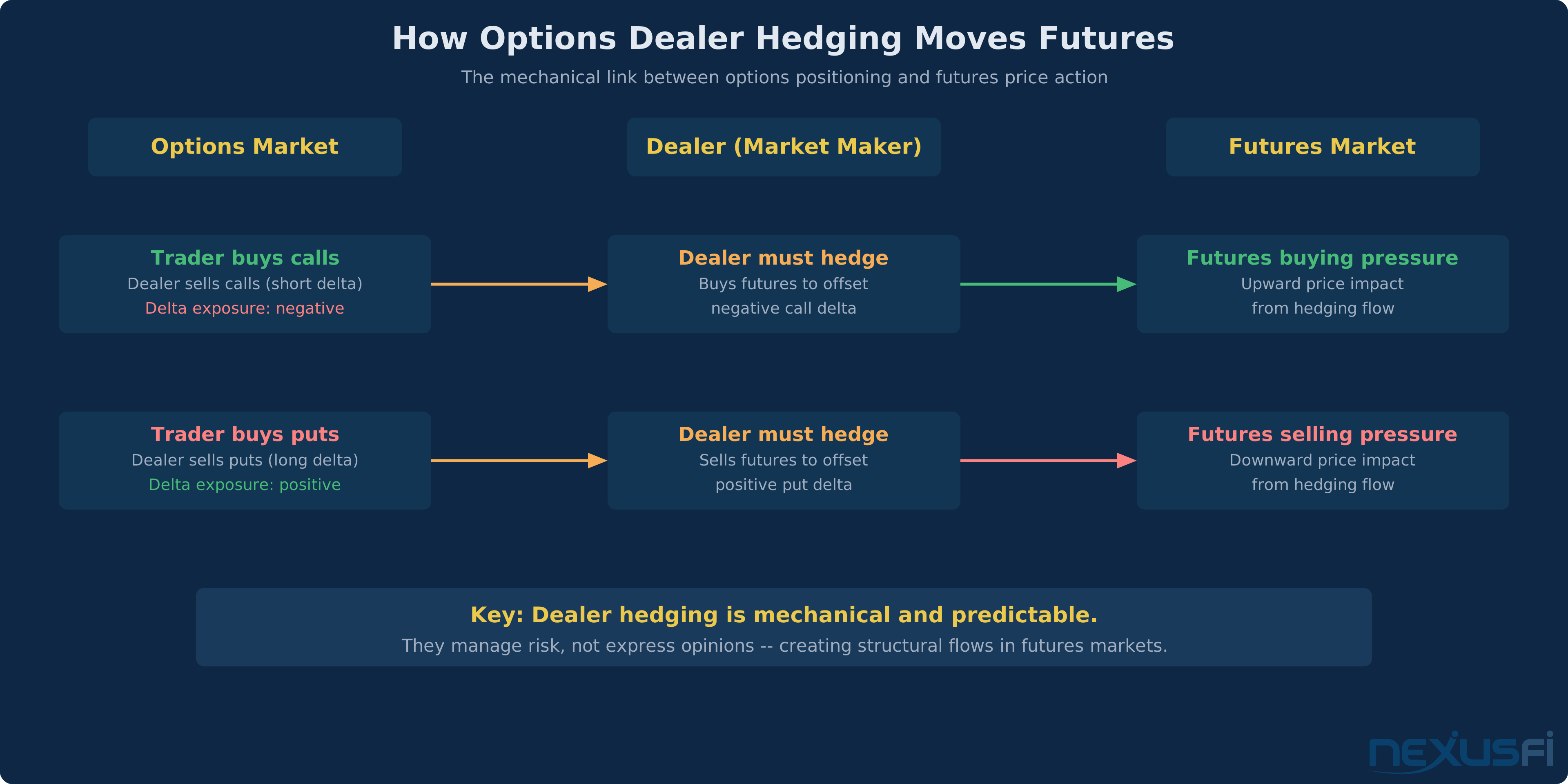
Options and futures on the same underlying are linked through arbitrage, hedging, and dealer risk management. When a market maker sells a call option, they typically buy futures to hedge their delta exposure. When put open interest concentrates at a strike, dealers holding the short side of those puts must dynamically hedge — buying futures as price falls toward the strike, selling as it rises away.
This hedging activity creates measurable, repeatable effects on futures price action:
- Gamma exposure (GEX) determines whether dealer hedging amplifies or dampens price moves
- Open interest concentrations create gravitational zones where hedging flows intensify
- Put/call ratios reveal aggregate positioning sentiment across the options market
- Unusual options activity signals informed money placing large directional bets
The key insight: options dealers don't express market opinions. They manage risk. Their hedging is mechanical, predictable, and large enough to dominate short-term price action in liquid futures markets. If you know where the hedging pressure sits, you know where the invisible hand is pushing price.
As NexusFi member tigertrader explained in the Spoo-nalysis thread, GEX "is the representation of gamma exposure" that shows where dealer hedging flows concentrate — and understanding that flow gives futures traders a structural edge in reading price behavior.
Open Interest: The Foundation of Options-Derived Analysis #
Open interest represents the total number of outstanding contracts at each strike price and expiration. Unlike volume (which measures activity), open interest measures commitment — contracts that someone is holding and someone else is short.
Reading the Open Interest Distribution #
The open interest profile across strikes tells you where the market's risk is concentrated:
High open interest at a strike means large positions exist there. As price approaches that strike, hedging activity intensifies. Dealers who are short options at that strike must adjust their futures hedges more aggressively near expiration.
Put-heavy open interest below current price creates a "put wall" — a zone where dealer hedging generates buying pressure as price declines. Dealers short those puts buy futures as price drops (negative delta hedging), creating support.
Call-heavy open interest above current price creates resistance through the same mechanism in reverse. Dealers short calls sell futures as price rises.
Open Interest Changes as a Signal #
Static open interest shows where positions exist. Changes in open interest reveal new positioning:
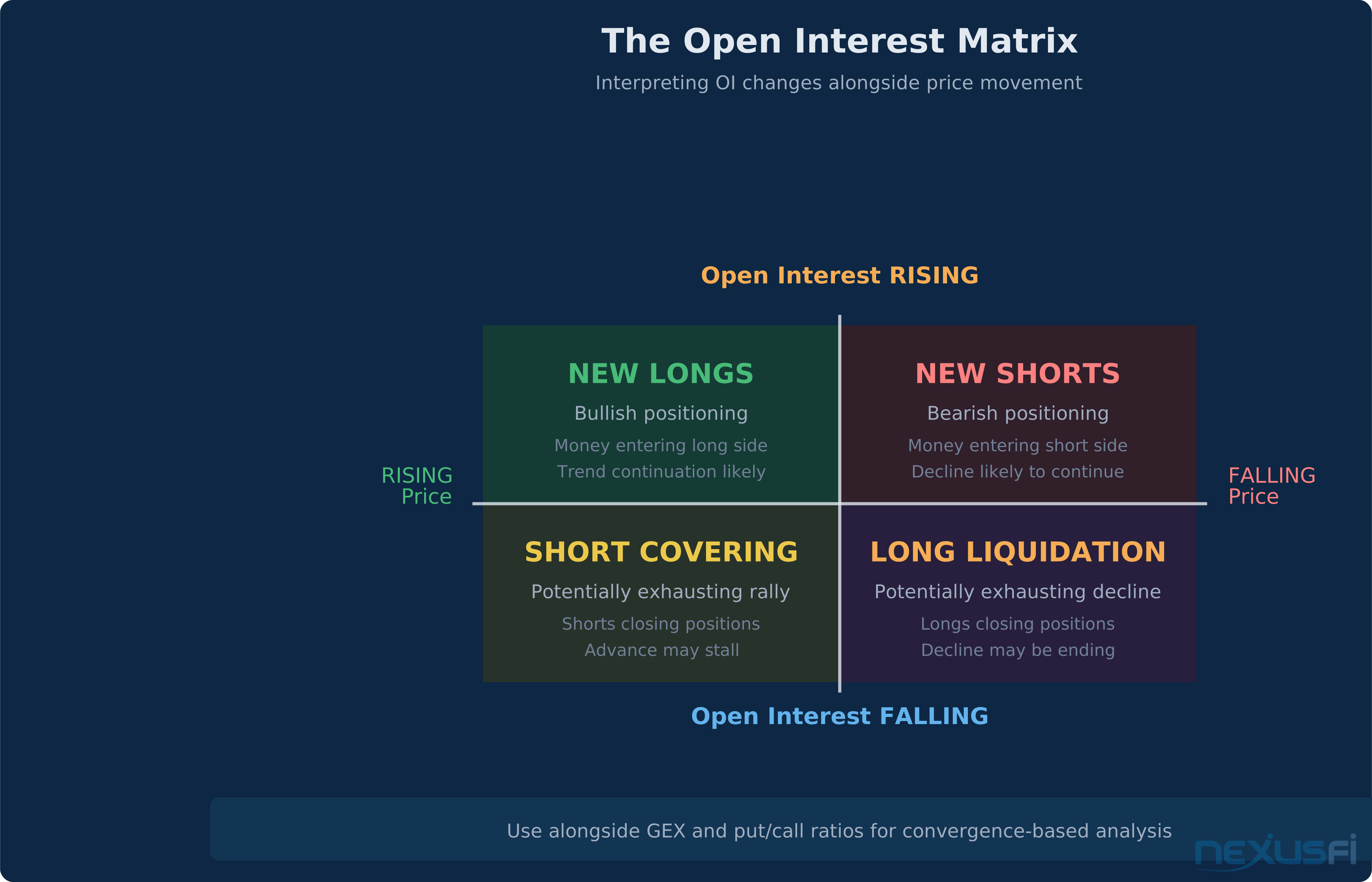
- Rising open interest + rising price = new long positions being established (bullish positioning)
- Rising open interest + falling price = new short positions being established (bearish positioning)
- Falling open interest + rising price = short covering (potentially exhausting move)
- Falling open interest + falling price = long liquidation (potentially exhausting move)
This four-quadrant framework — sometimes called the "open interest matrix" — has been a staple of commodity trading analysis for decades. In equity index futures, the same logic applies but the derivatives overlay adds the dealer hedging dimension.
The Expiration Concentration Effect #
Options expirations create predictable dynamics. As expiration approaches, gamma increases for at-the-money options (they become more sensitive to price changes), forcing dealers to hedge more aggressively. This creates:
- Pin risk: Price tends to gravitate toward strikes with the highest open interest near expiration
- Gamma squeezes: When price breaks through a heavily concentrated strike, the resulting hedging cascade can accelerate the move
- Volatility suppression: Between major strikes, dealer hedging actually reduces volatility as they buy dips and sell rallies
Monthly options expirations (especially the third Friday "OpEx") and quarterly expirations concentrate enough open interest to visibly affect ES, NQ, and other liquid index futures for days in advance.
Put/Call Ratios: Sentiment Through the Options Lens #
The put/call ratio compares the volume or open interest of puts to calls. It's one of the oldest options-derived sentiment indicators, and while simple, it captures aggregate market positioning in a single number.
Types of Put/Call Ratios #
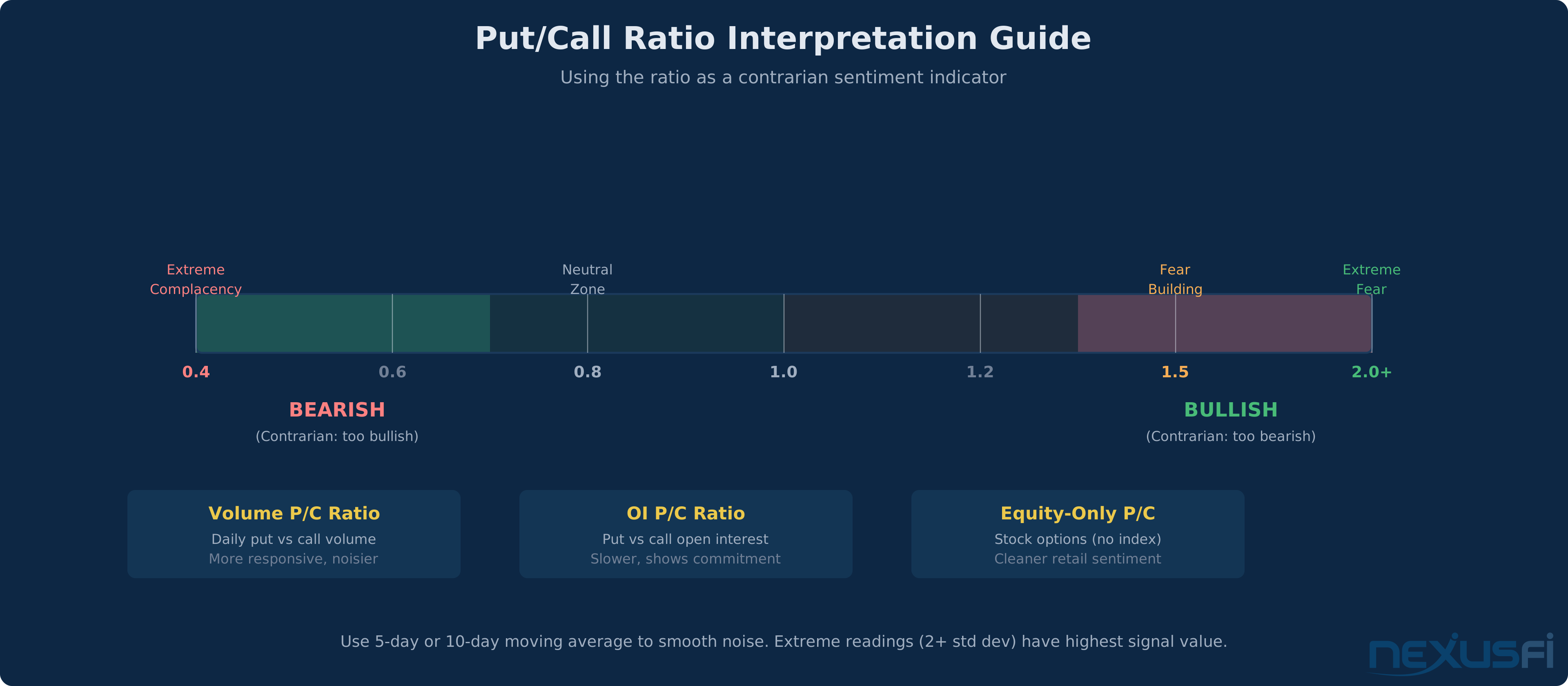
Volume-based put/call ratio: Total put volume divided by total call volume for a given period. More responsive to daily sentiment shifts but noisier.
Open interest-based put/call ratio: Total put open interest divided by total call open interest. Slower-moving but reflects committed positions rather than day-trading activity.
Equity-only put/call ratio: Filters out index options (which are heavily used for hedging) and looks only at individual stock options. Often considered a cleaner sentiment read because retail traders dominate equity options.
Index put/call ratio: SPX, SPY, and related index options only. Dominated by institutional hedging, so elevated readings can indicate either fear or simple portfolio protection — context matters.
Interpreting the Ratio #
As tigertrader noted on NexusFi, "Put/Call ratio is simply the number of puts traded vs the number of calls traded" — and the ratio serves as "a proxy for" broader market sentiment.
The standard interpretation works as a contrarian indicator:
- High put/call ratio (above 1.0-1.2): Excessive put buying suggests fear and potential bottoming. When everyone is hedged, downside fuel is exhausted.
- Low put/call ratio (below 0.6-0.7): Excessive call buying suggests complacency. When no one is hedged, the market is vulnerable to downdrafts.
- Extreme readings: The 5-day or 10-day moving average smooths noise. Readings beyond 2 standard deviations from the mean have historically preceded reversals.
Limitations of Put/Call Analysis #
The ratio's simplicity is both its strength and weakness. It doesn't account for:
- Option size: One 10,000-lot SPX put dwarfs thousands of small retail trades
- Multi-leg strategies: Spreads, collars, and straddles can inflate both sides without directional intent
- Institutional hedging cycles: Quarter-end, year-end, and event-driven hedging elevates put activity regardless of sentiment
- Market regime: In bear markets, elevated put/call ratios can persist without signaling reversals
Use the ratio as one data point in a broader analysis, not as a standalone signal. Its value increases when it confirms signals from other options-derived metrics.
Gamma Exposure (GEX): The Mechanic Behind Dealer Hedging #
Gamma exposure is the most powerful — and most misunderstood — options-derived metric for futures traders. GEX quantifies how much futures buying or selling dealers must execute per one-point move in the underlying. It translates the abstract Greek "gamma" into concrete hedging flow.
How GEX Works #
Every option has gamma — the rate of change of delta. When a dealer sells an option, they inherit negative gamma (their delta position changes against them as price moves). To stay hedged, they must:
- Buy futures when price rises (their short call deltas become more negative)
- Buy futures when price falls (their short put deltas become more positive)
- Wait — that's the same direction. When dealers are net short gamma, they buy dips and sell rallies. This dampens volatility.
The reverse applies when dealers are net long gamma (rare in equity indices, more common in specific situations): they sell into rallies and buy into dips, which also dampens moves. But when dealer gamma flips much, the hedging behavior changes.
Positive vs. Negative GEX Environments #
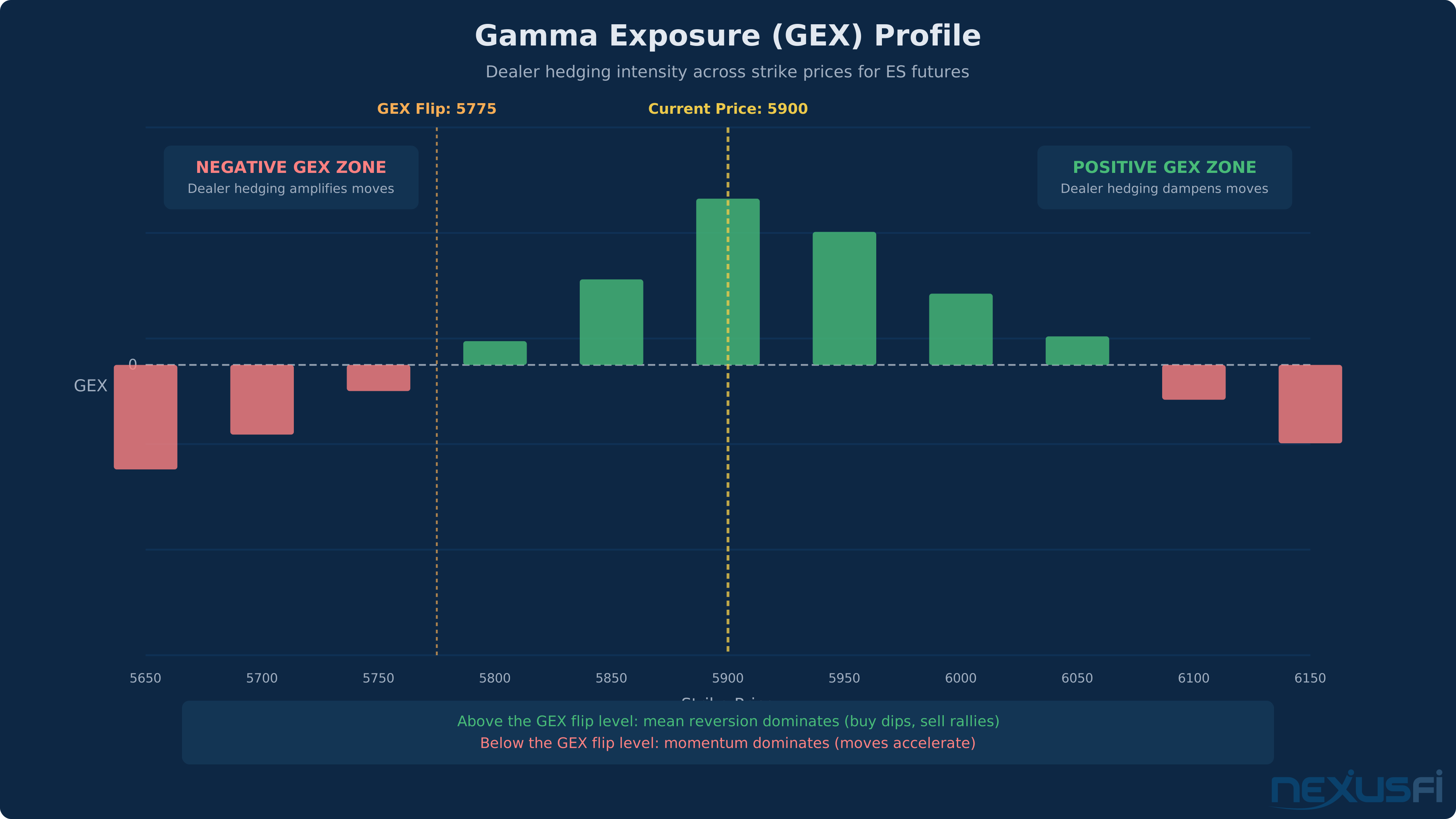
Positive GEX (dealers net short gamma at current price): Dealers must hedge against price moves by trading counter-trend. Price moves are dampened. Ranges tend to tighten. Mean reversion strategies perform better. This is the dominant regime in equity index markets — roughly 70-80% of the time.
Negative GEX (dealers net long gamma or positioned such that hedging amplifies moves): Dealers hedge with the trend, accelerating moves. Breakouts carry further. Volatility expands. Trend-following strategies outperform. This typically occurs when price is below major put strikes and dealers must sell into falling prices.
NexusFi sponsor SpotGamma explained in their AMA thread that ES and NQ futures traders should interpret GEX data by understanding "the hedging flow" mechanics — dealers hedging options positions create predictable buying and selling pressure at specific price levels.
The GEX Calculation #
Forum member MarketGoldenBalls broke down the core GEX formula on NexusFi:
GEX per strike = Options Gamma x Contract Size x Open Interest x Spot Price x (-1 if puts)
The total GEX profile sums this across all strikes and expirations, showing the net hedging pressure at each price level. The "zero gamma" or "GEX flip" level is where net dealer exposure transitions from positive to negative — often a critical inflection point for futures price behavior.
As Eubie noted in the same NexusFi thread, the exact formula varies between implementations — some include spot price in the calculation, others don't — which is why different GEX providers can show different absolute values. The relative shape of the profile matters more than exact numbers.
Practical GEX Application for Futures Traders #
Identify the GEX flip level: Below this price, dealer hedging amplifies moves (sell begets more selling). Above it, hedging dampens moves (mean reversion dominates). This level often acts as a behavioral regime switch.
Watch for GEX walls: Strikes with exceptionally high gamma exposure act as magnets. Price approaching a large positive GEX level encounters increasing resistance from dealer hedging.
Expiration dynamics: GEX intensifies as expiration approaches because at-the-money gamma explodes. The largest hedging flows occur in the 2-3 days before expiration.
Time your entries: In positive GEX environments, fade extremes. In negative GEX environments, trade with momentum and use wider stops.
Max Pain and Pinning Effects #
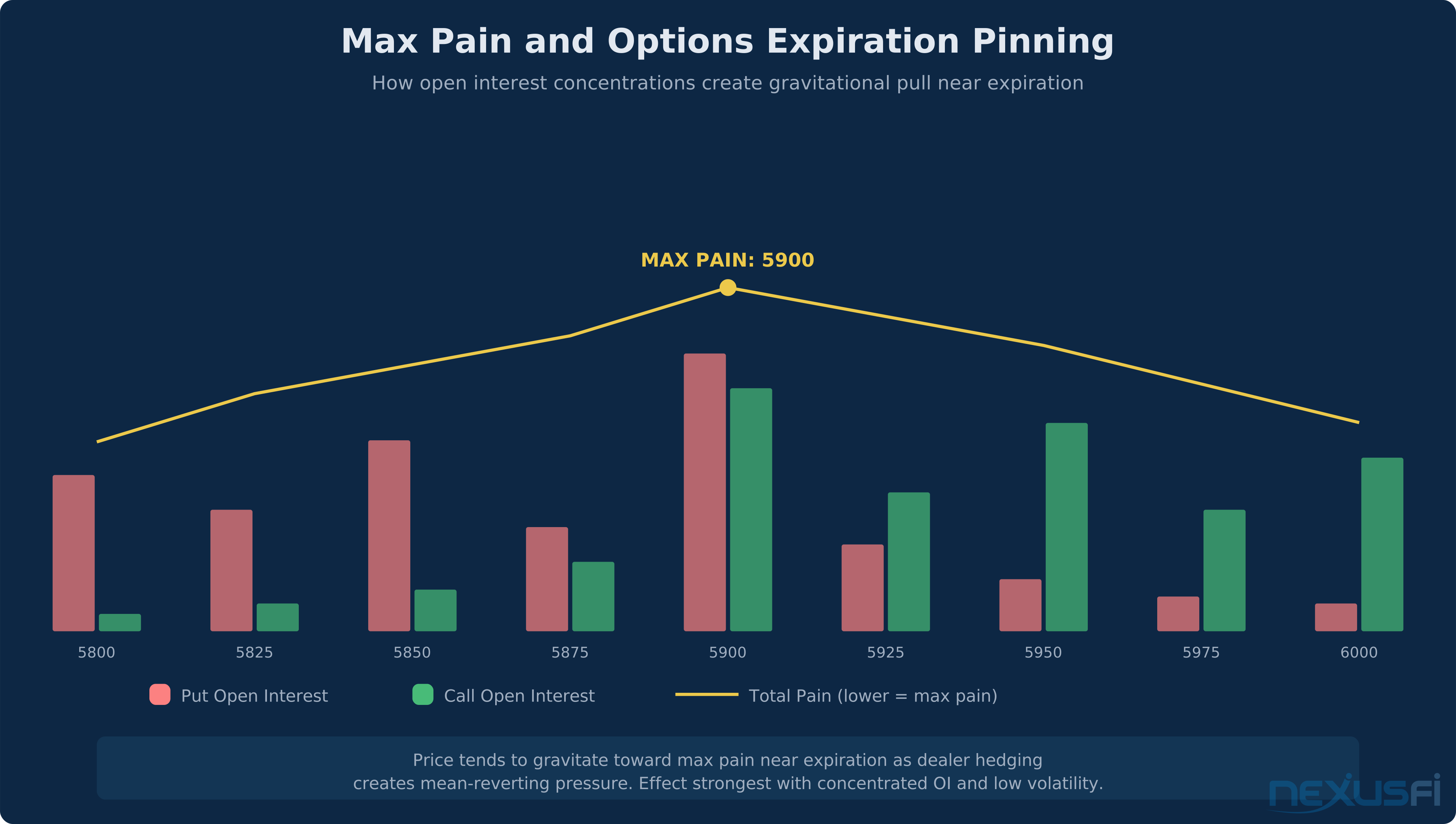
Max pain theory suggests that price tends to gravitate toward the strike where the total dollar value of all outstanding options expires worthless — the "maximum pain" point for options buyers. While not a precise prediction tool, the concept has observable effects.
The Mechanics #
The max pain strike is calculated by summing the intrinsic value loss for all outstanding puts and calls at each potential expiration price, then finding the price that minimizes total payout. Market makers and dealers, who are generally net short options, benefit when options expire worthless. Their hedging behavior — buying when price drops below concentrations, selling when it rises above — creates a gravitational pull toward this equilibrium.
When Pinning Works (and When It Doesn't) #
Pinning is strongest when:
- Large open interest concentrates at a single strike
- The expiration is monthly or quarterly (not weekly)
- Volatility is low and no major catalysts are imminent
- The max pain level aligns with other technical levels
Pinning fails when:
- External catalysts (FOMC, NFP, earnings) overwhelm hedging flows
- Open interest is distributed across many strikes (no single magnet)
- The market enters a negative GEX regime where dealer hedging accelerates rather than dampens moves
Futures traders can use max pain as a "center of gravity" estimate for the expiration week, not as a price target. It's most useful as context — if your analysis points to a range-bound week and max pain sits at the middle of that range, the convergence of evidence strengthens the thesis.
Unusual Options Activity: Reading Informed Flow #
Large, unusual options trades can signal informed positioning. When someone buys 5,000 out-of-the-money puts on ES in a single block, that's a statement — they're either hedging a massive portfolio or making a directional bet. Either way, the information content is high.
What Qualifies as Unusual #
- Size relative to average: Volume exceeding 3-5x the 20-day average at a specific strike
- Block trades: Large single-print transactions (not accumulated over time)
- Sweep orders: Aggressive orders that sweep through multiple exchanges simultaneously to fill quickly
- Out-of-the-money concentration: Large positioning in strikes far from current price suggests conviction about a large move
Interpreting Unusual Activity #
The challenge is distinguishing directional bets from hedges and multi-leg strategies. Key filters:
- Opening vs. closing: Opening trades (increasing open interest) are more meaningful than closing trades
- Price paid: Trades executed at the ask (buyer-initiated) carry different implications than trades at the bid
- Context: A large put buy the week before FOMC might be a hedge; the same trade in a quiet period is more likely directional
Unusual activity is most valuable when it aligns with other signals — if GEX is negative, put/call ratios are elevated, and you see large put blocks printing, the convergence tells a story.
Data Sources: Where to Get Options-Derived Data #
Free and Low-Cost Sources #
- CBOE data: Daily put/call ratios, VIX term structure, and skew data available from cboe.com
- CME QuikStrike: Options analytics including open interest profiles, implied volatility surfaces, and settlement data
- FRED (Federal Reserve): Historical put/call ratio data and options-derived volatility measures
- Barchart / Yahoo Finance: Basic options chains with volume and open interest
Professional-Grade Sources #
- SpotGamma: Real-time GEX, delta exposure, and hedging flow analysis for equity index products. NexusFi sponsor with proven track record of actionable gamma analytics.
- SqueezeMetrics: GEX and dark pool data, including their pioneering gamma exposure calculations
- Unusual Whales / FlowAlgo: Real-time unusual options activity alerts
- LiveVol / ORATS: Institutional-grade options analytics platforms with historical data
- Bloomberg Terminal: Complete options analytics suite (expensive but complete)
Building Your Own #
For traders comfortable with programming, raw options data from CME and CBOE can be processed to create custom GEX profiles, open interest heatmaps, and positioning indicators. The formulas are public — the edge comes from interpretation and integration with your existing futures trading framework.
Integrating Options Data Into Futures Trading #
The Daily Workflow #
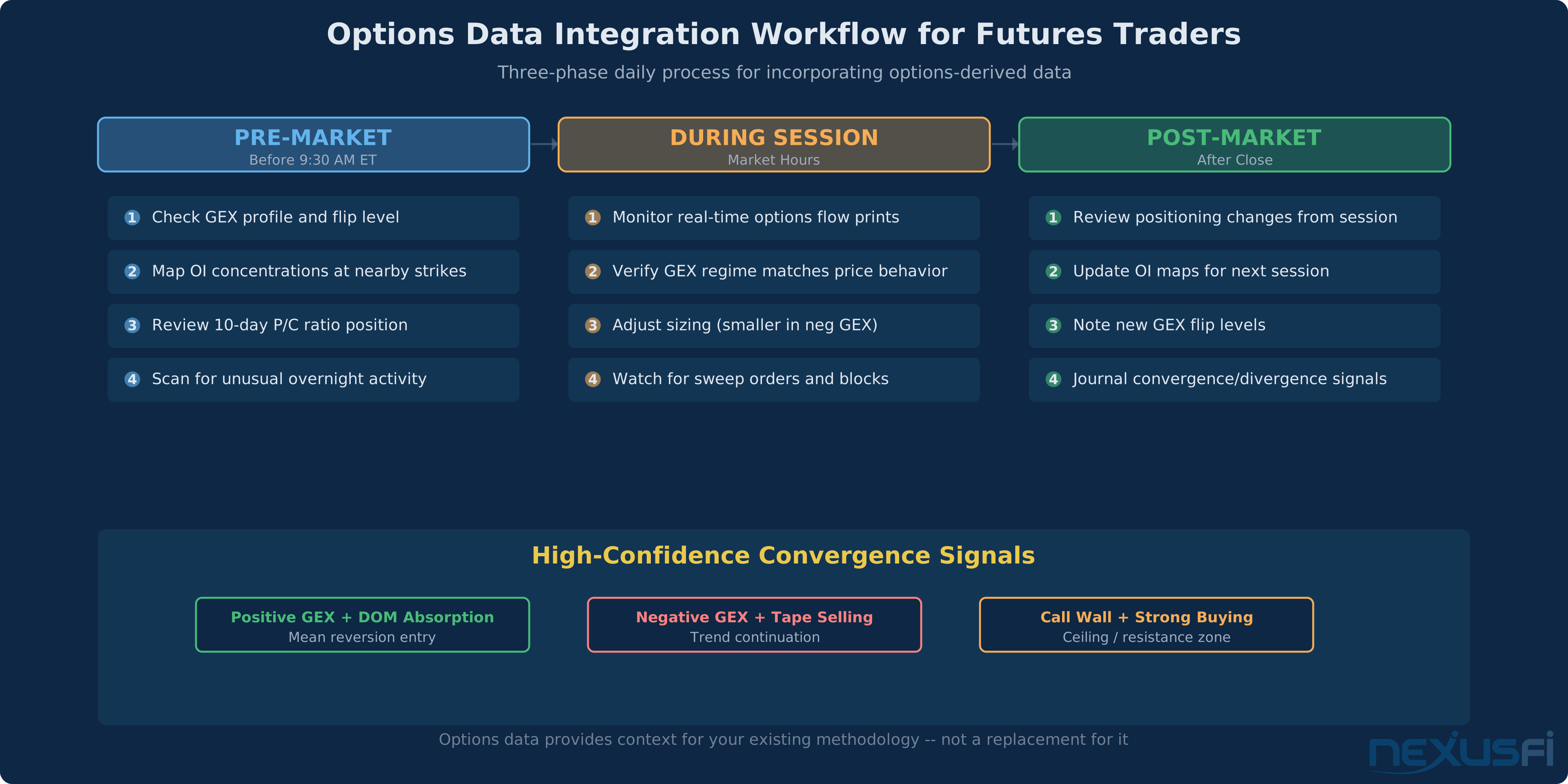
A practical options-data workflow for a futures day trader:
Pre-market (before 9:30 AM ET):
- Check the GEX profile — where is the flip level relative to overnight range?
- Review open interest concentrations at nearby strikes — these are your hedging-flow magnets
- Note the put/call ratio's position relative to its 10-day average
- Identify any unusual overnight options activity
During the session:
- Monitor real-time options flow for large prints and sweeps
- Watch whether price behavior matches the expected GEX regime (dampened or amplified)
- Adjust trade sizing: smaller in negative GEX environments (higher volatility), larger in positive GEX (more predictable ranges)
Post-market:
- Review the day's options flow for positioning changes
- Update open interest maps for the next session
- Note any new GEX flip levels for the following day
Combining Options Data with Order Flow #
The most powerful integration pairs options-derived data with traditional DOM and tape reading. For example:
- GEX says positive + DOM shows absorption at a support level = high-confidence mean reversion entry
- GEX says negative + tape shows aggressive selling through a put wall = trend continuation signal with hedging accelerant
- Large call open interest at a strike + price approaching from below + strong buying imbalance in DOM = convergence of technical resistance and hedging ceiling
NexusFi member josh noted this integration between DOM reading and options positioning: understanding where the "invisible" hedging flows sit gives your DOM analysis additional context about why liquidity appears or disappears at certain levels.
What Options Data Cannot Tell You #
Options-derived data has real limitations:
- Not predictive on its own: GEX, open interest, and put/call ratios describe positioning, not future direction
- Regime-dependent: The same GEX reading means different things in trending vs. ranging markets
- Delayed open interest: Official open interest updates once daily (T+1). Real-time estimates are approximations
- Counterparty assumptions: GEX calculations assume dealers are net short, which is usually but not always true
- Event risk: Binary events (FOMC, CPI, geopolitical) can overwhelm any positioning-based analysis
Use options data as context for your existing methodology, not as a replacement for it. The traders who extract the most value from this data use it to calibrate their approach — adjusting strategy, sizing, and expectations based on the current options positioning environment.
The Bottom Line #
Options-derived data gives futures traders a window into the structural forces acting on price. Dealer hedging flows are mechanical, large, and predictable in their direction — even if their exact timing is uncertain. Understanding where gamma exposure concentrates, what the put/call ratio signals about sentiment, and where open interest creates hedging magnets doesn't require trading a single option.
The edge isn't in the data itself — it's in knowing that the trader on the other side of your futures position might be a dealer who's mechanically forced to hedge, creating flow that has nothing to do with fundamental value or technical analysis. That's the kind of structural information that separates informed futures traders from everyone else.
Knowledge Map
Prerequisites
Understand these firstGo Deeper
Build on this knowledgeReferences This Article
Articles that build on this topicCitations
- — Spoo-nalysis ES e-mini futures S&P 500 (2022) 👍 12“Ignore the date and data in the upper left hand corner. The chart is accurate and GEX or gamma exposure (represented by the orange line) is 261,538,294. Which means the market flipped from negative gamma to positive gamma.”
- — Spoo-nalysis ES e-mini futures S&P 500 (2022) 👍 10“Put/Call ratio is simply the number of puts traded vs the number of calls traded. And, yes the ratio can be used as a proxy for investor sentiment. SKEW measure the difference or more appropriately the skew between otm calls and otm puts.”
- — SpotGamma AMA (2026) 👍 1“Hi Fi, thanks for two great questions. Question: How should an ES or NQ futures trader interpret GEX data differently than someone trading SPY options directly? Are there timing nuances around the hedging flow that matter for intraday futures? There'...”
- — GEX / VEX Use and Calculation (2024) 👍 1“Hello, Let's dive into this topic together: Understanding GEX (Gamma Exposure) and Delta is crucial because these factors influence the actions of market makers, who generally aim to remain market neutral.”
- — GEX / VEX Use and Calculation (2024) 👍 1“Hi, thanks for responding. The formula that I found in SqueezeMetrics document is only 'Option's Gamma * Contract Size * Open Interest * (-1 if puts)', i.e. no Spot Price is there, maybe that's why your values are so large.”
- — Spoo-nalysis ES e-mini futures S&P 500 (2021) 👍 9“I'm sorry I haven't replied, I just don't have a good reply for you. 1) I find this easiest to see on the ladder (DOM).”
- — Why does the market move towards the heavier side of the order book? (2011) 👍 11“Well, a lot of spoofing goes on and generally that involves stacking the order book on one side to fool people into trading in the other direction.”
- — Lady Vol's Primer: Trading Volatility Journal (2025) 👍 3“Oracle Thank you so much for your thoughtful replies. I will tackle some other answers later but this one might be interesting for now. You said: >>I'm particularly intrigued by your comment about VIX GEX charts being "illuminating.”