



E-mini Nasdaq-100 (NQ) Futures: The Complete Trading Guide
Overview #
The E-mini Nasdaq-100 — ticker NQ — is the second most actively traded equity index futures contract in the world, trailing only ES in volume. On a typical day, 500,000-700,000 NQ contracts change hands, representing roughly $400 billion in notional value. Every tech-focused fund, every growth-equity allocator, every prop desk running sector rotation — they all pass through NQ's order book.
NQ tracks the Nasdaq-100 Index, which includes the 100 largest non-financial companies listed on the Nasdaq exchange. That sounds broad until you look at the weightings: the top seven holdings (Apple, Microsoft, Nvidia, Amazon, Meta, Alphabet, Broadcom) regularly account for 45-55% of the entire index weight, per Nasdaq's official NDX index methodology. NQ isn't a diversified equity index future — it's a concentrated bet on megacap technology. As @snax observed on NexusFi, "NQ usually feels like an exaggeration of the S&P500 which I sort of like for the moves."
That concentration creates NQ's defining characteristic: higher volatility than ES, dollar-for-dollar. NQ's average true range typically runs 1.3-1.6x that of ES on a percentage basis. When tech earnings land, NQ moves. When Fed policy shifts growth expectations, NQ moves harder. When AI narratives reshape semiconductor valuations overnight, NQ is where the repricing happens first.
This is the contract for traders who want directional exposure to the growth economy — and who can handle the speed that comes with it.
Key Concepts #
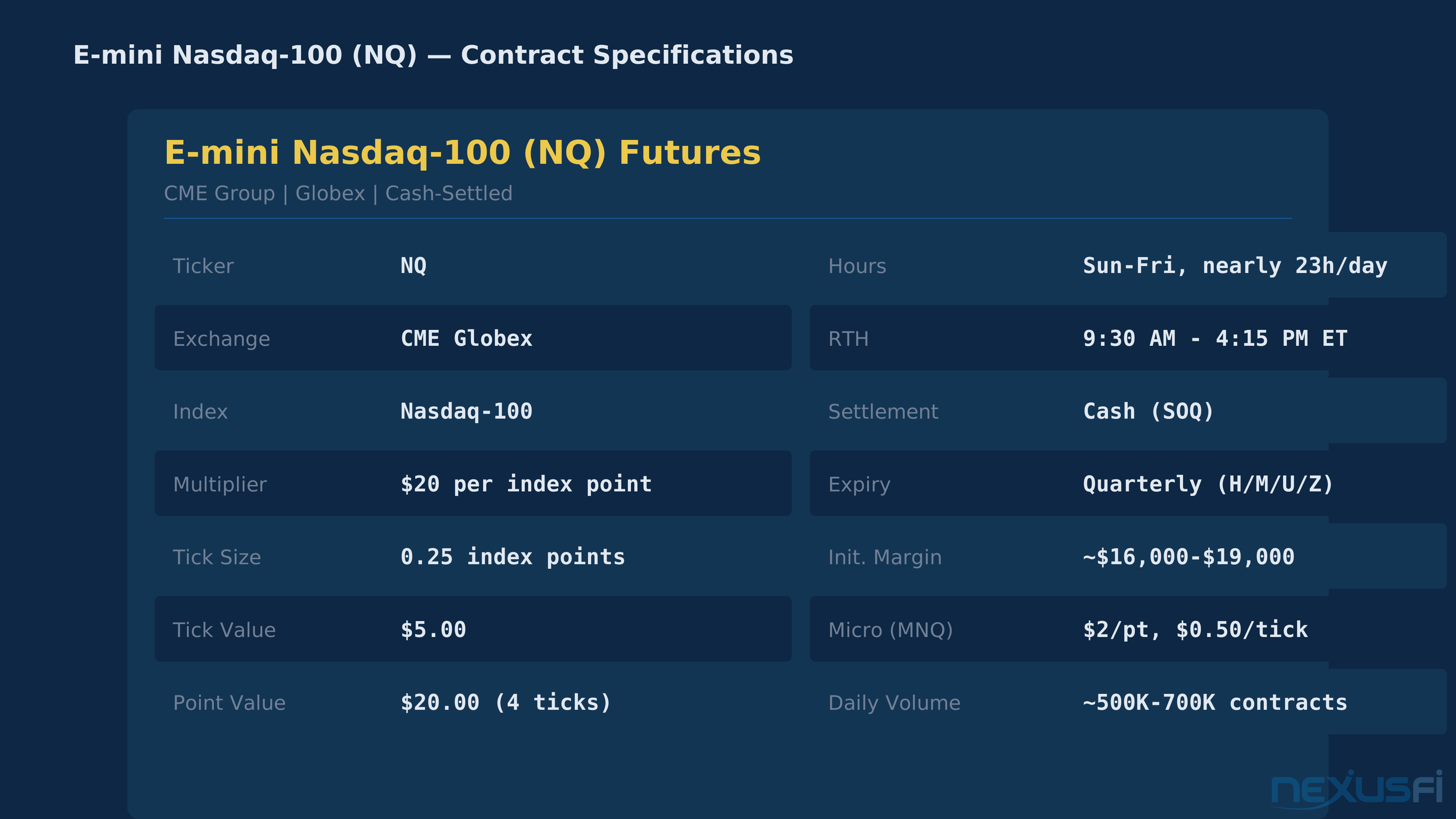
Contract Specifications — One NQ contract represents $20 times the Nasdaq-100 Index, as defined in CME Group's official NQ contract specifications. With the index at 20,000, one contract controls $400,000 in notional value. The minimum tick is 0.25 index points, worth $5.00 per tick ($20.00 per point). NQ trades on CME Globex nearly 23 hours per day, Sunday through Friday, on the same schedule as ES.
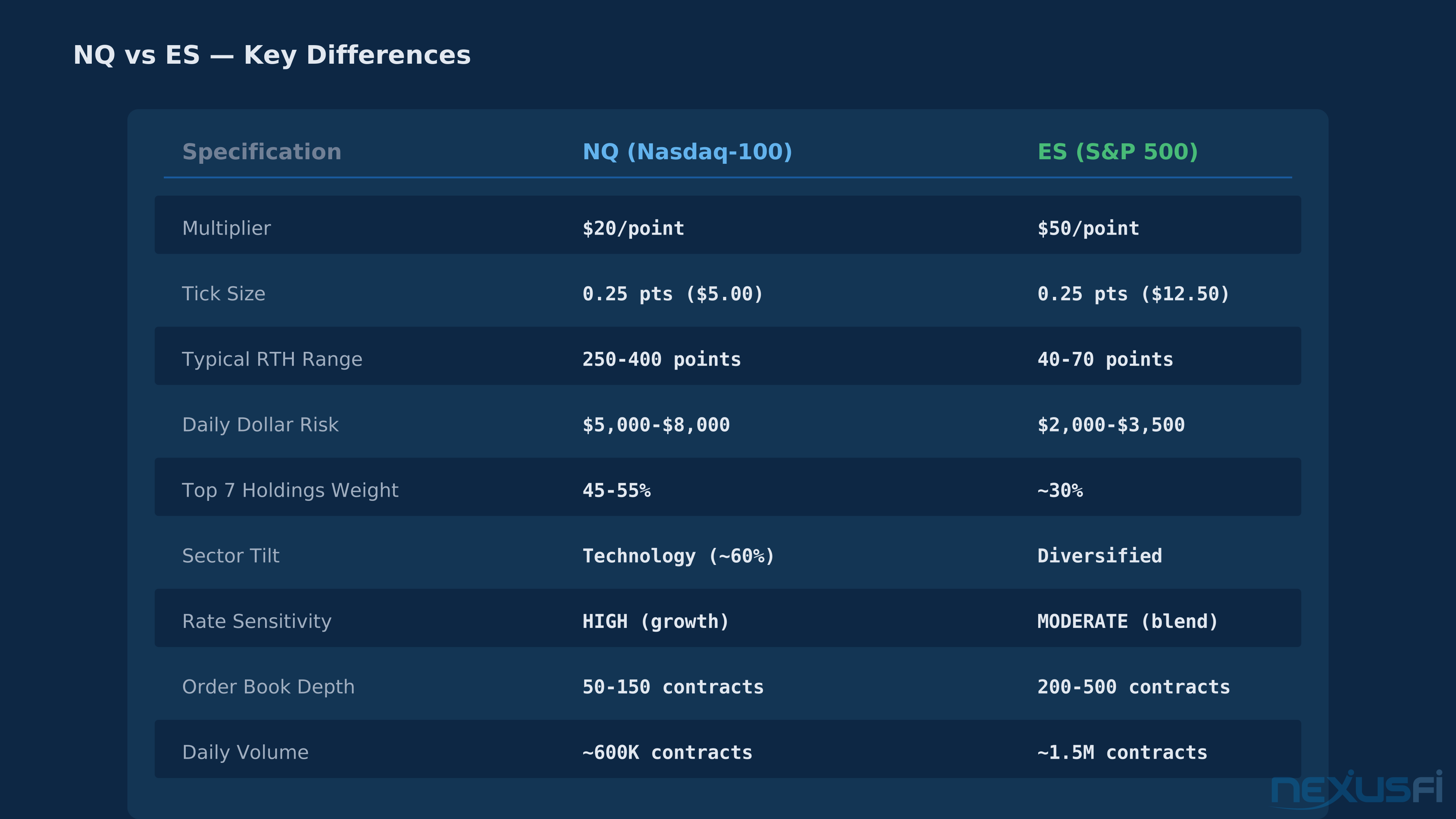
ES vs NQ: The Core Differences — ES is $12.50 per tick; NQ is $5.00 per tick. That makes NQ look cheaper per tick — but NQ moves more ticks. As @snax detailed, "different minimum tick value ($12.50 for /ES vs $5.00 for /NQ) — /NQ has a more volatile, fast-paced behavior with $5/tick." On a typical RTH session, NQ might range 250-400 points ($5,000-$8,000 per contract) while ES ranges 40-70 points ($2,000-$3,500 per contract). The dollar risk per contract on NQ is consistently higher than ES despite the smaller tick value.
Tick Size and Point Value Math — Understanding NQ's tick arithmetic is non-negotiable. One point equals four ticks. A 10-point move in NQ equals $200 per contract. A 100-point move equals $2,000 per contract. As @Keab noted, "10 points = 200 bucks while the ES sits at 12.50 per tick" — NQ rewards directional conviction with faster dollar gains, but punishes the wrong side just as fast.
Margin Requirements — CME initial margin for NQ runs around $16,000-$19,000 per contract for outright positions (higher than ES due to greater volatility). Brokers typically offer intraday margins of $500-$1,000 per NQ contract, but the same warning from ES applies here with even more force: NQ's larger ranges mean those intraday margins can evaporate in minutes, not hours.
Quarterly Rollover — Like ES, NQ contracts expire quarterly (March, June, September, December) with the roll period occurring 8-10 days before expiration. NQ roll liquidity is thinner than ES, so spread widening during the transition is more pronounced. Trade the front month until volume clearly migrates.
Micro E-mini Nasdaq-100 (MNQ) — CME launched MNQ in 2019 at one-tenth the NQ size: $2 per point, $0.50 per tick. MNQ has become the entry point for NQ trading — it lets you experience NQ's volatility profile without the full $20/point exposure. As @Blue Eagle described on NexusFi, MNQ opened the door for many traders to study "the micro moves on NQ" before sizing up. Ten MNQ contracts equal one NQ contract.
How It Works #
Sector Concentration and What Drives NQ #
NQ's price action is dominated by technology and growth stocks. The Nasdaq-100 excludes financial companies entirely and weights heavily toward tech, consumer discretionary (Amazon), and communication services (Meta, Alphabet). This isn't an accident — it's the structural reason NQ behaves differently from ES.
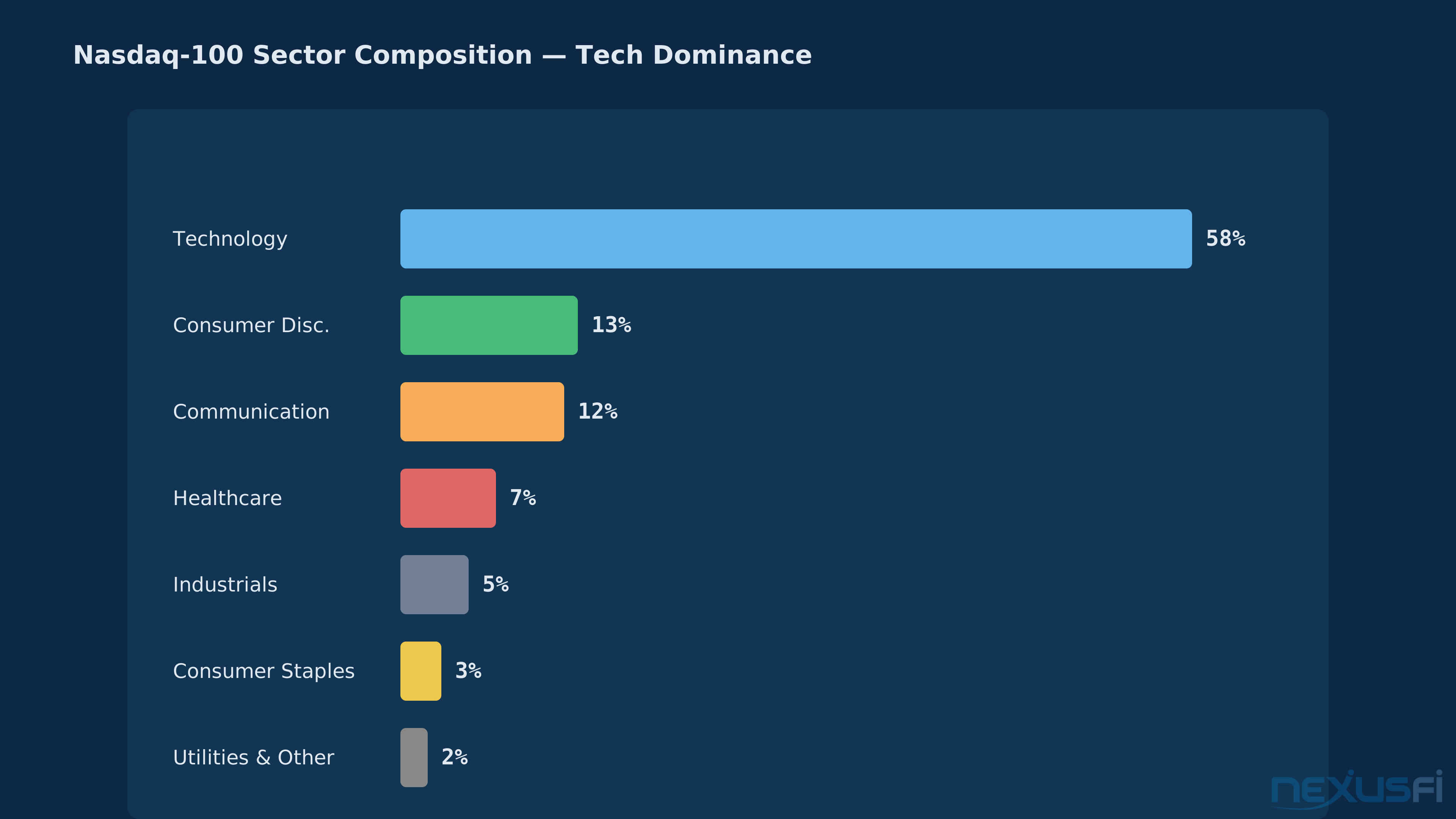
When Apple reports earnings after hours, NQ's overnight session reprices immediately. When the semiconductor index (SOX) gaps on an AI chipmaker's guidance, NQ follows. When the 10-year Treasury yield spikes, NQ sells off harder than ES because growth stock valuations are more rate-sensitive (longer-duration cash flows get discounted more aggressively).
This sector concentration means NQ traders need to monitor:
- Megacap tech earnings (AAPL, MSFT, NVDA, AMZN, META, GOOGL) — any of these reporting can move NQ 200+ points overnight
- Treasury yields — the 10-year yield is NQ's most important macro input; rising yields compress growth multiples
- Semiconductor news — AI/chip narratives have outsized NQ impact since 2023
- Fed policy expectations — rate cut expectations boost NQ disproportionately; hawkish surprises hit it harder
Liquidity Characteristics #
NQ's order book is thinner than ES. Where ES might show 200-500 contracts at the best bid/offer during RTH, NQ typically shows 50-150 contracts. As @chartmojo2 warned, "You don't want to be on the wrong side of a big quick futures move especially nq. You really have to be on your toes."
This thinner book means:
- Larger slippage on market orders during fast moves
- More frequent price gaps between ticks during high-volatility events
- Stop runs that are sharper and faster than ES equivalents
The flip side: NQ's thinner book also means aggressive limit orders can get filled more readily when price reaches your level, because there's less passive inventory absorbing the move before it gets to you.
NQ-ES Correlation and Divergence #
NQ and ES are highly correlated but not identical. As Fi noted in a NexusFi discussion, "the NQ vs ES correlation sits around 0.87-0.90 — tight enough that they move together most of the time, loose enough that divergences carry real signal." When NQ outperforms ES (the NQ/ES ratio rises), it signals risk-on sentiment and growth stock leadership. When ES outperforms NQ, it signals defensive rotation and value leadership.
This ratio is tradeable. Pairs traders use the NQ-ES spread to capture rotation without taking outright directional risk. The spread widens during tech earnings season and compresses during macro-driven selloffs when correlations spike toward 1.0.
Practical Application #
Trading NQ's Volatility #
@lancelottrader's extensive NQ journal on NexusFi documents the reality: "I have been trading Nq seriously for almost two years after having mainly traded CL before that. It has been sort of a love/hate relationship." That ambivalence captures the NQ experience — the contract rewards directional conviction with significant gains but punishes hesitation and poor entries brutally.
@WoodyFox's analysis on NexusFi confirmed: "Contract for Contract, I make more in NQ than any other market. Tech is where the volatility is." But making more per contract also means risking more per contract. NQ trading demands:
- Wider stops than ES — NQ's higher ATR means a 10-point stop that works on ES is noise on NQ. @SBtrader82 recommended establishing "volatility criteria" for NQ specifically: "I am not trading the NQ that often but one thing that helps me to trade it is to establish some 'volatility criteria.'" Scale your stop distances to NQ's actual range, not ES equivalents.
- Smaller position sizes — One NQ contract carries roughly 1.5-2x the dollar risk of one ES contract on a daily range basis. Size so. If you trade 2 ES contracts comfortably, start with 1 NQ contract.
- Session awareness — NQ's overnight session reacts sharply to Asian tech markets and European risk sentiment. The first 30 minutes of RTH frequently set the daily trend as overnight positions unwind and institutional flow enters.
Scalping NQ #
NQ scalping targets larger point moves than ES scalping because the tick value is smaller. Where an ES scalper might target 4-8 ticks (1-2 points, $50-$100), an NQ scalper typically targets 10-20 ticks (2.5-5 points, $50-$100) for equivalent dollar gains. @lancelottrader's method aimed for "40-60 ticks if there's a very strong move" — that's 10-15 NQ points, or $200-$300 per contract.
Mean reversion works on NQ but requires patience — NQ trends harder than ES on trending days, so fading early in a directional move is more dangerous.
Session Structure and the Opening Range #
The E-mini Nasdaq-100 doesn't trade uniformly across the day. Each session segment has its own volatility profile, liquidity depth, and behavior pattern. Understanding where you are in the daily cycle is as important as any individual setup.
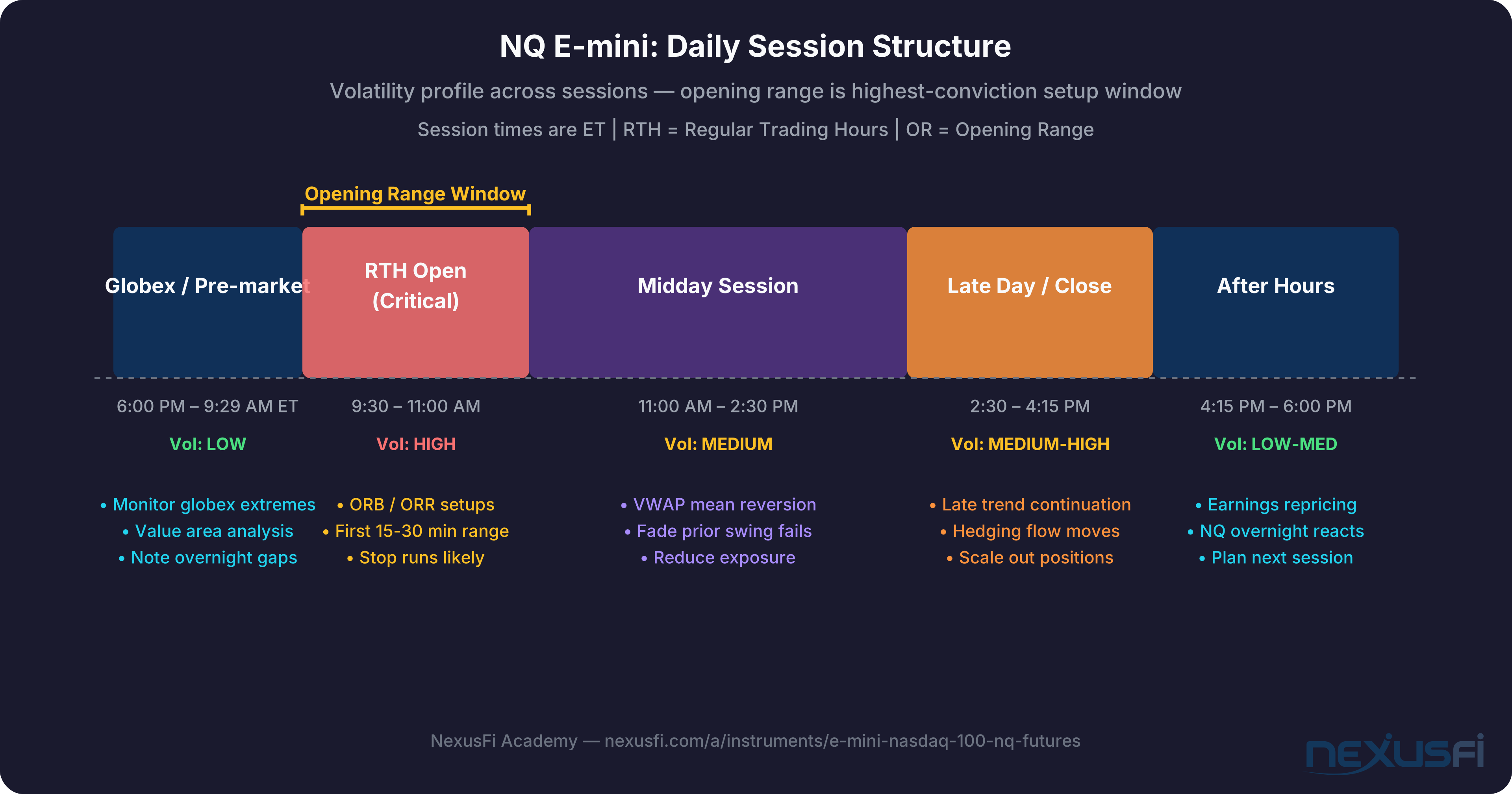
Globex / Pre-Market (6:00 PM — 9:29 AM ET) — NQ's overnight session reacts to Asian tech markets, European risk sentiment, and any after-hours earnings from US megacap stocks. Liquidity is thinner with wider spreads, but the overnight session establishes key reference levels.
(link to post). The key levels to track pre-market: overnight high and low, value area boundaries, and any gap from the prior close.
RTH Open — The Critical 30 Minutes (9:30 — 11:00 AM ET) — The regular session open is where NQ's volatility concentrates. As institutional flow enters the order book, price tests overnight reference levels, and stops cluster near obvious extremes.
(link to post). The first 15-30 minutes establish the Opening Range — the foundation for the day's primary trade setups.
Midday (11:00 AM — 2:30 PM ET) — After the opening range resolves, NQ typically enters a lower-volatility phase where prior swing levels and VWAP become the dominant reference points. Breakout setups lose effectiveness during midday consolidation. Mean reversion off VWAP extremes and fades of failed prior swing attempts tend to work better. This is when position sizing should decrease and conviction requirements should increase.
Late Day (2:30 — 4:15 PM ET) — Renewed volatility returns as index rebalancing flows, options gamma effects near market close, and institutional hedging activity resume. Late-day NQ moves can extend aggressively if they align with the day's primary trend, but they can also reverse sharply when hedge-driven flows dominate.
Opening Range Breakout (ORB) #
The Opening Range Breakout is NQ's most studied setup. After the first 15 or 30 minutes establish the session's high and low, a break of either extreme signals potential directional continuation — but only with confirmation.
The critical mistake most traders make with ORB is treating the initial breakout as the entry signal. @Fat Tails explained why this fails: the opening range itself involves multiple forms of support and resistance interacting simultaneously (link to post). NQ's thinner order book makes false breakouts common — price spikes through the OR, trips stops, and reverses.
ORB execution framework:
- Define the OR high/low from the first 15 minutes (scalpers) or 30 minutes (swing-intraday traders)
- Wait for price to break the OR level
- Confirmation requirement: price retests the broken OR boundary and holds, OR two to three consecutive closes beyond the OR with continued volume
- Entry on the retest rejection or on the acceptance confirmation
- Stop: below (or above) the OR boundary plus an ATR-based buffer
- Invalidation: price re-enters the OR within one to three bars after the break
When ORB has the highest edge: trending conditions where NQ is leading ES (NQ/ES ratio rising), macro tailwinds aligning with direction, and no high-impact economic events imminent.
Opening Range Reversal (ORR) #
NQ's thinner order book makes stop-hunting around obvious OR extremes more frequent than on ES. The ORR setup capitalizes on this institutional behavior — a sweep of the OR high or low that fails to sustain, followed by rapid reclaim of the OR boundary.
(link to post). Large displacement moves that immediately reverse are the clearest ORR signals.
ORR execution framework:
- OR is established; price sweeps beyond either extreme with a wick or displacement move
- Rapid reclaim of the OR boundary follows within a few bars
- Entry on the reclaim, with initial stop beyond the sweep extreme
- The failure to break confirms the ORR: inability to re-break the OR boundary signals that the sweep was a liquidity hunt
When ORR has the highest edge: no major scheduled trigger at the time of the sweep, heavy displacement wick that immediately reverses, and rates/macro consensus already established before the open.
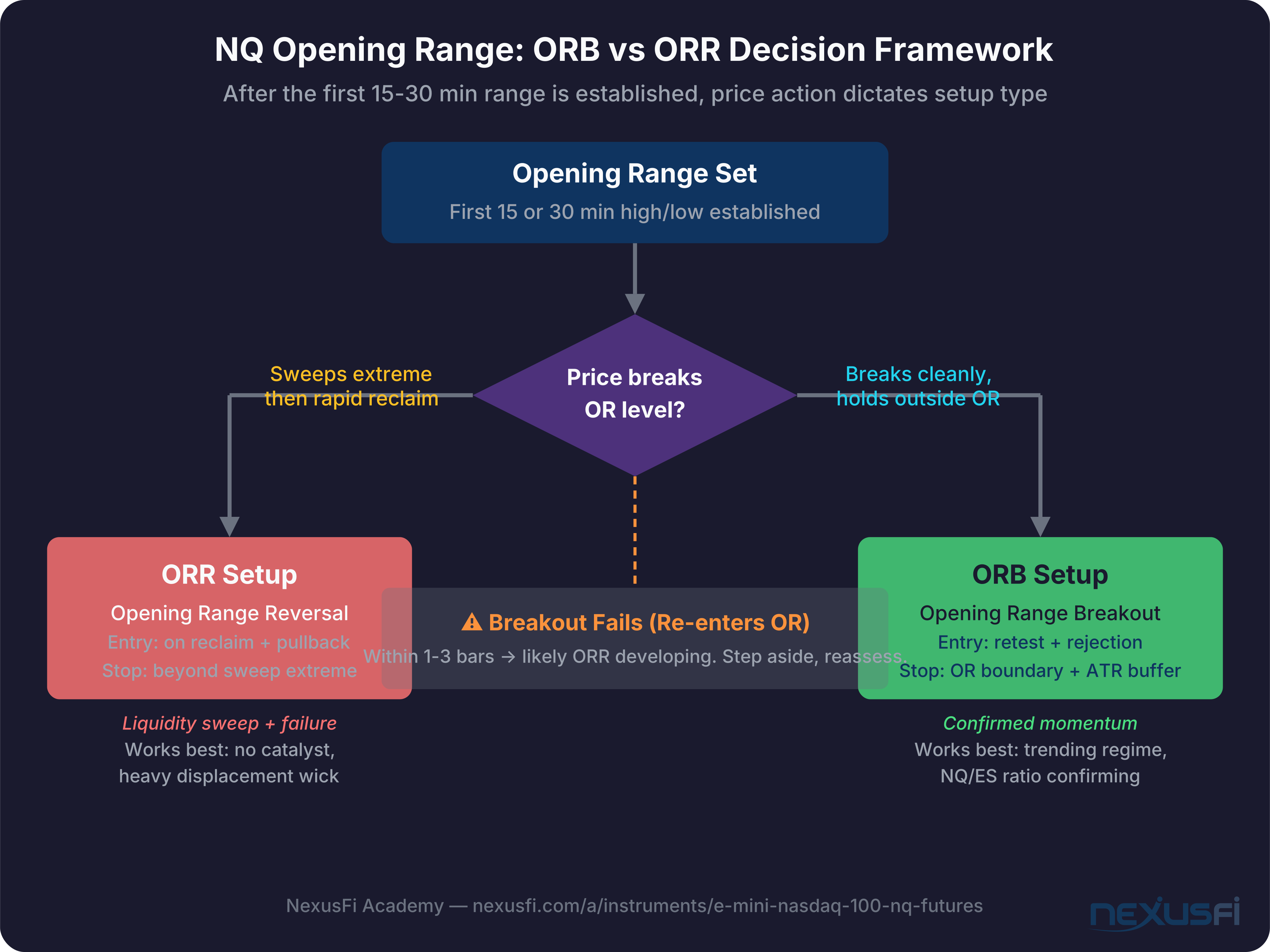
The rule of thumb: Heavy displacement with immediate re-entry = ORR edge. Slow drift beyond OR with continued volume = ORB may dominate. A failed ORB that immediately re-enters the OR is not a loss — it's the setup shifting to ORR.
Economic Calendar Impact on NQ #
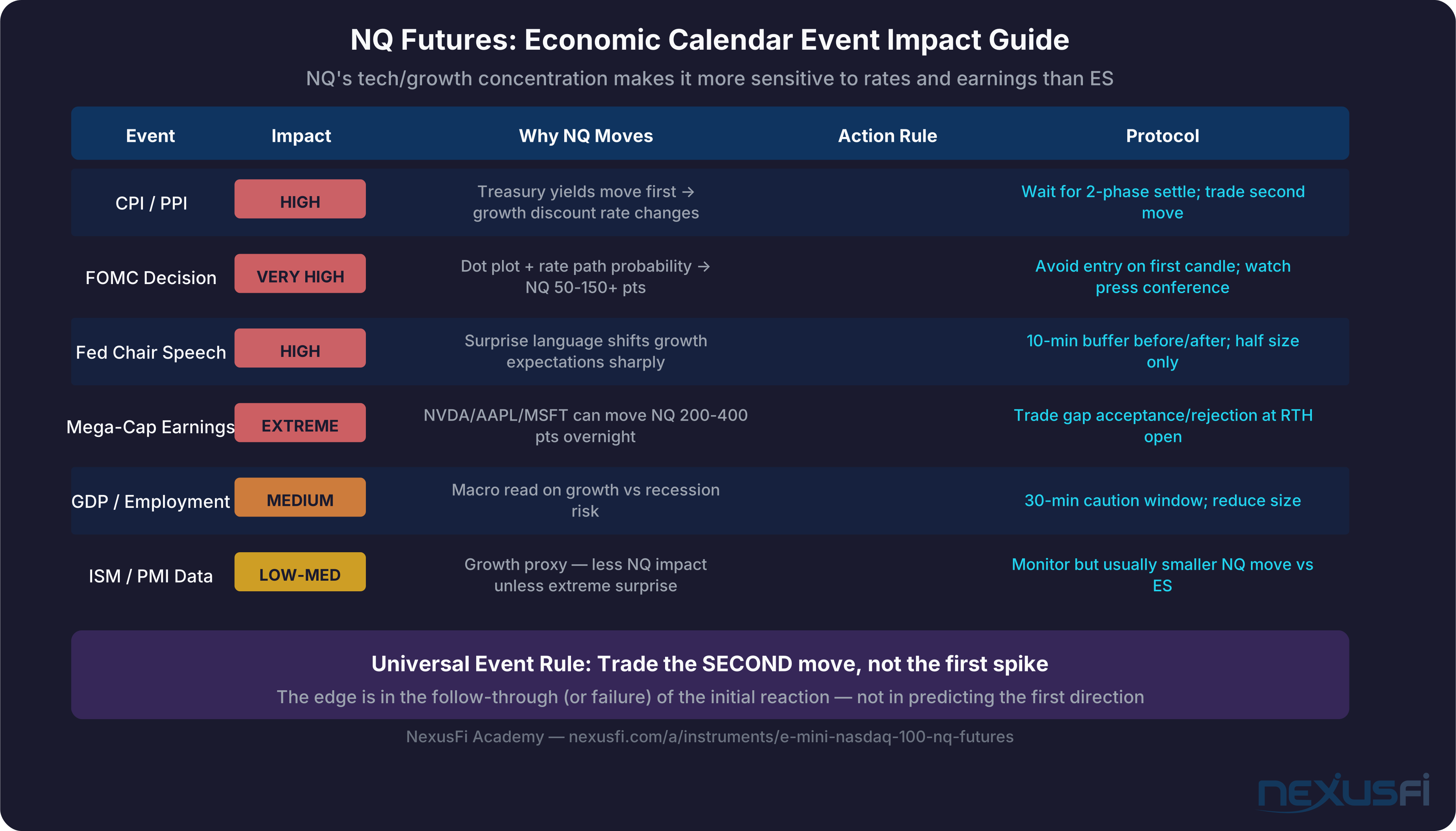
NQ's concentrated tech exposure means specific macro events move it differently than ES. Understanding how each event type affects NQ is fundamental to trading around them without getting stopped out by regime-shift volatility.
The universal event-day rule: Do not pre-position ahead of high-impact events unless you have a specific, defined edge. The edge comes from the second move — trading the follow-through after the initial reaction settles — not from predicting the first spike.
As noted in a NexusFi community discussion,
(link to post).
CPI and Inflation Data #
CPI releases produce a two-phase NQ reaction. The first phase is immediate repricing: Treasury yields move on the surprise component, and NQ responds because growth stock valuations are directly tied to the discount rate. A 10-basis-point yield spike that might barely move ES can push NQ 30-50 points.
The second phase is the story reversion — markets digest the data, revise their rate path expectations, and sometimes overshoot the initial reaction before finding equilibrium. The tradeable edge often lives in this second phase.
CPI protocol: avoid directional trades in the 30-60 minutes around the release. After the initial spike settles (usually one to five minutes), watch whether the first move holds or fails. If the move holds and volume confirms, trade the follow-through. If the spike reverses rapidly, trade the mean reversion.
Risk adjustments: Reduce size by 50-75% around CPI releases. Avoid market orders during the initial spike — slippage on NQ during fast moves can be 5-10 points in either direction. Set wider stops only if your analysis requires it; size reduction is always preferable to stop-widening.
FOMC and Federal Reserve Policy #
Fed policy is NQ's most important macro driver over multi-week timeframes. Growth stocks have longer-duration cash flows than value stocks — higher rates discount those future earnings more aggressively. When the Fed surprises hawkishly, NQ sells off harder than ES. When the Fed surprises dovishly, NQ rallies harder.
The FOMC event itself creates a three-phase structure:
- Pre-announcement consolidation — NQ often tightens its range in the two to four hours before the statement. This compression can produce explosive moves after the release.
- First reaction (statement release) — initial repricing based on the language. Dot plot changes matter more than the rate decision itself when the decision is widely expected.
- Press conference phase — Chair comments can sharply reverse the initial reaction. Some of the largest NQ moves happen during the Q&A portion.
FOMC protocol: wait for the first candle after the release before any directional commitment. Use the press conference phase to confirm or deny the initial direction. Half or quarter size only for any trades during the FOMC window.
Mega-Cap Tech Earnings #
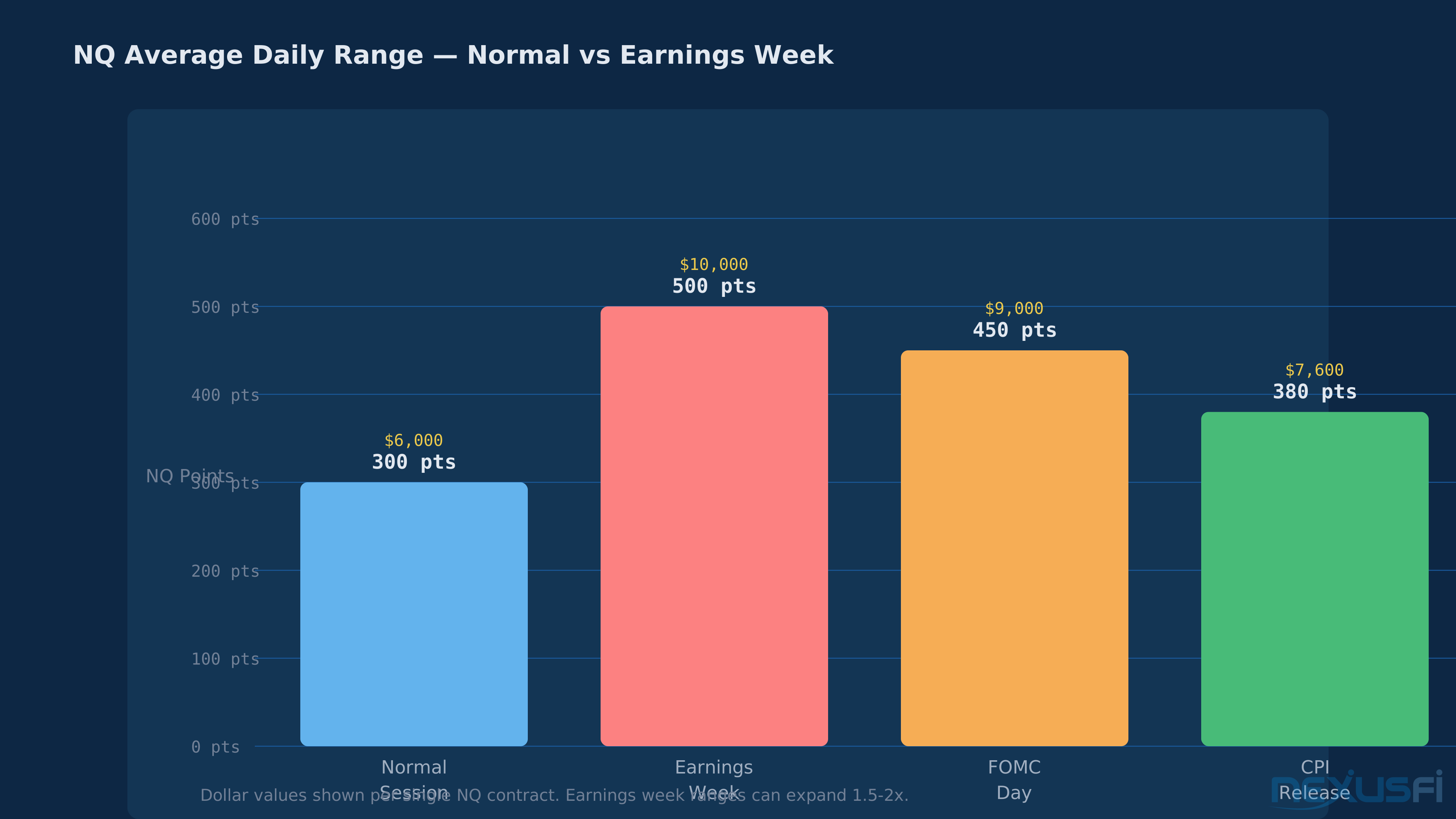
Individual stock earnings have outsized NQ impact due to the index's concentrated weighting. NVDA, AAPL, MSFT, AMZN, META, and GOOGL collectively represent 45-55% of the Nasdaq-100. When any of these names reports, NQ can move 200-400 points between the NYSE close and the next RTH open.
NQ's overnight session is fully functional during earnings — you can see the re-pricing in real time as the after-hours print absorbs into the futures book. The question for the next RTH session is whether the gap is a continuation opportunity or a fade.
NQ daily ranges expand 1.5-2x during megacap earnings weeks, demanding position sizing adjustments to match the regime change.
Traders approach earnings season through several strategies:
- Pre-earnings positioning — establishing directional bias before the report based on options implied move, sector momentum, and guidance expectations
- Post-earnings gap trading — trading the first 30 minutes after RTH opens following a major gap, focusing on gap-fill probability versus continuation
- Volatility contraction — selling options premium before earnings via NQ options, capitalizing on the volatility crush after the binary event resolves
Earnings continuation signals: stock's guidance is above consensus, analyst upgrades follow, and NQ's opening action accepts the gap rather than immediately filling it.
Earnings fade signals: the earnings miss the narrative expectations (even if above consensus on specific metrics), options flow fades the gap, and NQ re-enters the prior day's value area quickly after the RTH open.
Cross-Market Analysis: The NQ/ES Ratio #
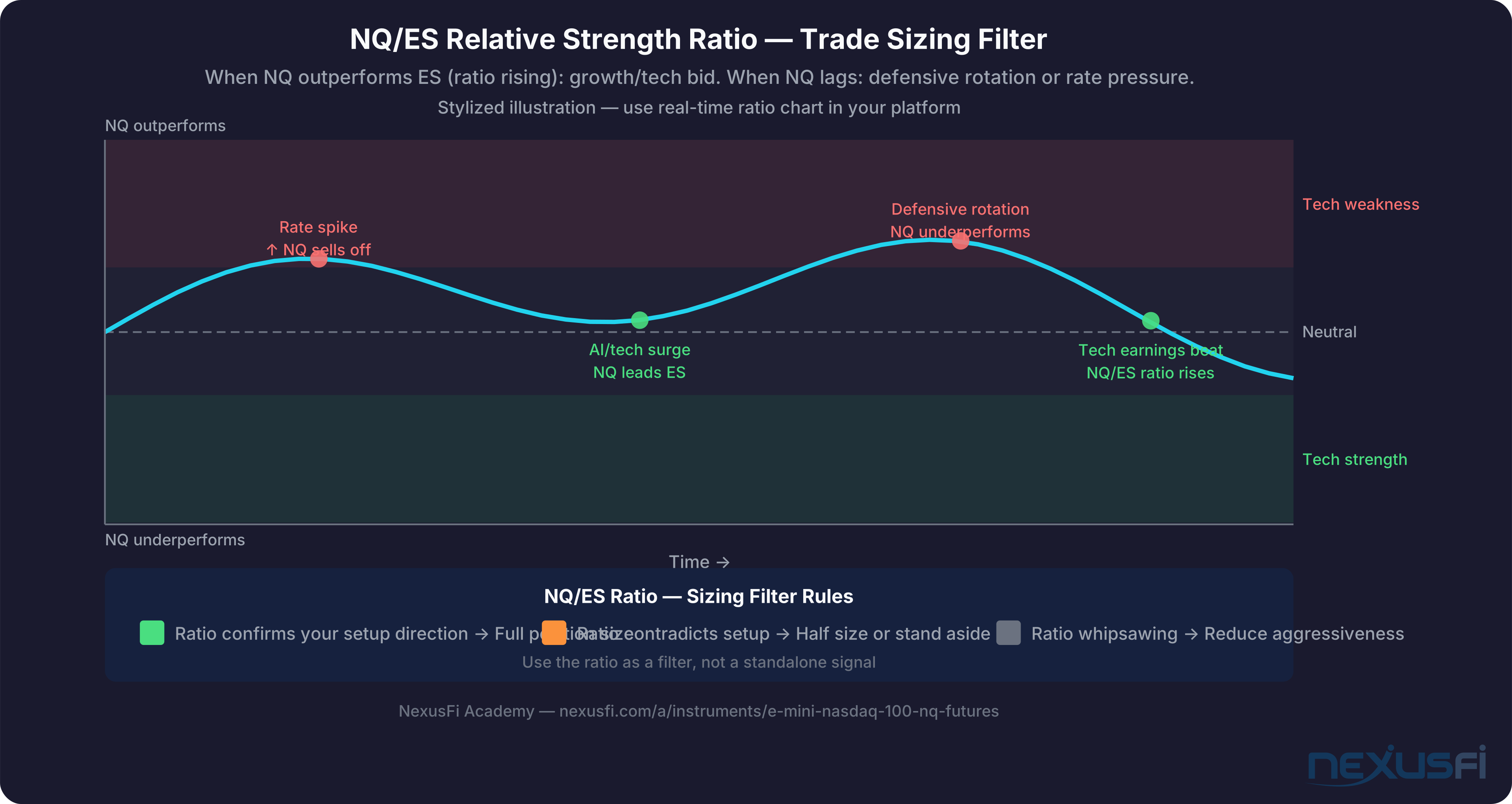
The NQ/ES ratio is the most useful cross-market filter for NQ traders. Because both contracts track equity index futures, their ratio isolates the tech/growth component from the broader equity market. When tech is driving the market, NQ leads ES and the ratio rises. When defensive rotation is occurring or rates are pressuring growth multiples, NQ lags ES and the ratio falls.
(link to post). That type of divergence — where the growth index dramatically outperforms the value index — appears before rotation reversals.
(link to post). The ATR differential means a simple 1:1 NQ:ES contract ratio doesn't create a balanced spread — you need to account for the difference in volatility and dollar value per tick.
How to Use the Ratio as a Trade Filter #
Ratio confirms your setup direction: NQ outperforming ES when you're long NQ (or underperforming when you're short) → take full position size. The macro backdrop supports the trade.
Ratio contradicts your setup: You want to go long NQ but ES is leading → reduce to half size or stand aside. Technical setup may be valid, but macro context argues against it.
Ratio whipsawing: NQ and ES oscillating relative to each other without clear leadership → likely a regime transition. Reduce aggressiveness on all NQ directional trades until a clear trend establishes.
The ratio is best applied as a filter rather than a primary signal. A breakout setup with ratio confirmation is higher-probability than the same breakout without it. But don't trade the ratio in isolation — it needs to align with session structure and setup type to have execution value.
Pre-Trade Decision Checklist #
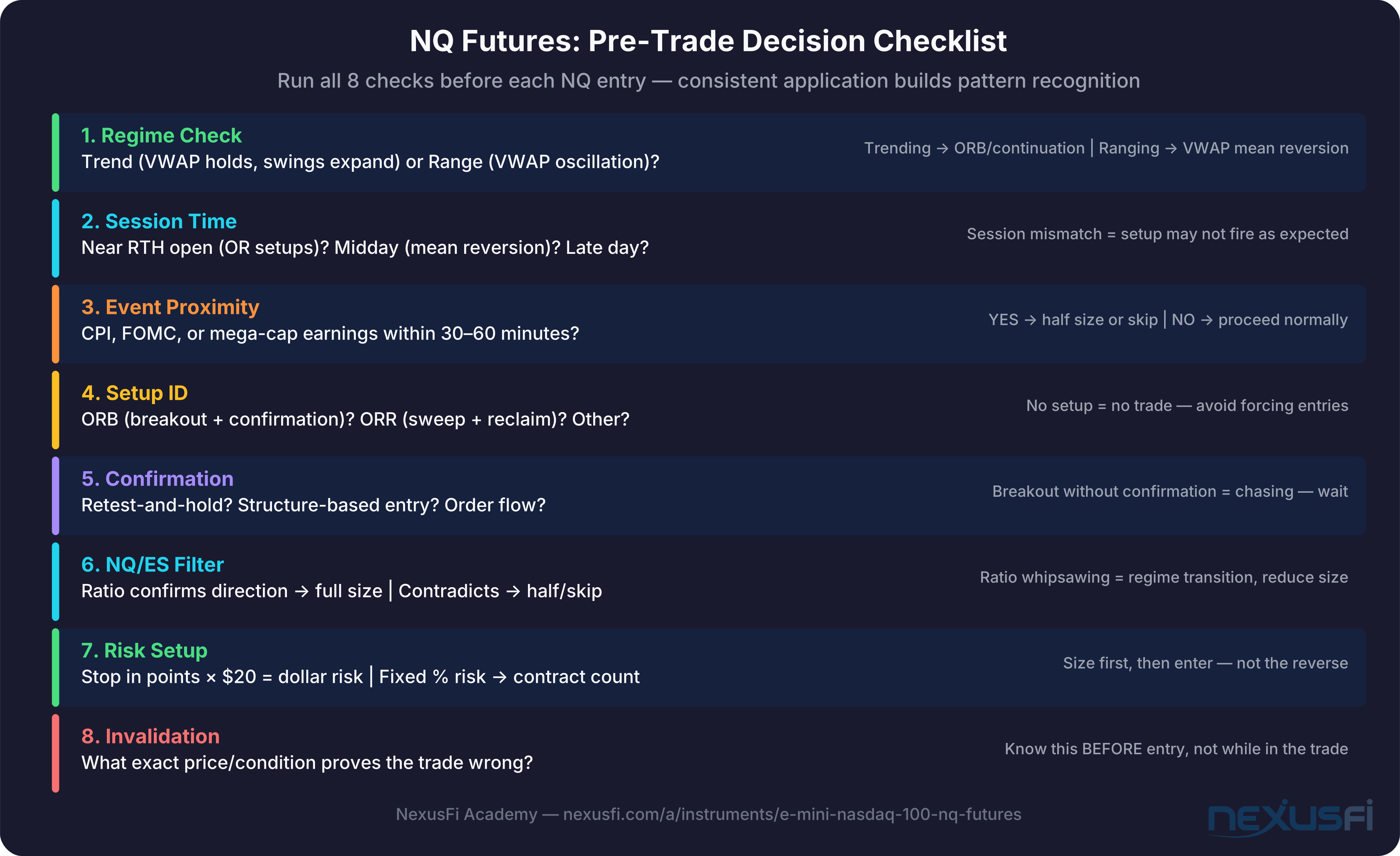
Before entering any NQ position, run through this framework:
- Regime check — Trending or range? Check VWAP slope and daily swing direction.
- Time and session — RTH open, midday, or late day? Match setup type to session phase.
- Event proximity — High-impact release within 60 minutes? Reduce size or stand aside.
- Setup identification — ORB, ORR, trend continuation, VWAP reversion, or event follow-through?
- Confirmation requirement — Confirmed acceptance only. Never enter on the first move.
- NQ/ES ratio filter — Confirming direction → full size. Contradicting → half size or pass.
- Risk definition — Stop distance in points × $20 = dollar risk. Size to fixed percentage of account.
- Invalidation condition — Define the exact price action that proves the trade wrong before entry.
As @dctrade69 documented in their extensive NQ journal on NexusFi, "Price had been above value all night and I was looking for either a push back to value" before taking any directional trade — demonstrating exactly how session awareness informs setup selection (link to post).
Running this checklist isn't bureaucracy — it's pattern recognition. After consistent application, the checklist becomes automatic, and the conditions where NQ setups have genuine edge become second nature.
Common Mistakes #
Treating NQ like a faster ES. NQ isn't just ES with more volatility — it has different sector drivers, different liquidity characteristics, and different correlation regimes. Strategies optimized for ES don't translate directly to NQ. The instruments share an index futures structure but respond to different catalysts with different magnitudes.
Ignoring the rate sensitivity. NQ's relationship with Treasury yields is its most important macro characteristic. A 10-basis-point spike in the 10-year yield might move ES 10 points but NQ 30-50 points. Traders who don't monitor yields while trading NQ are flying without instruments.
Overleveraging on MNQ. MNQ's $0.50 tick makes it feel harmless, but 10 MNQ contracts carry the same risk as 1 NQ contract. The psychological trap is sizing up on MNQ because "the ticks are small" without recognizing that 20 MNQ contracts is equivalent to 2 NQ contracts and carries $4,000+ of daily range risk.
Using ES-calibrated stops on NQ. A 20-tick stop works differently on NQ than ES. Twenty ticks on ES is 5 points ($250 risk). Twenty ticks on NQ is 5 points ($100 risk) — but NQ might blow through 20 ticks in seconds during a fast move. NQ stops need to be calibrated to NQ's ATR, not mechanically transferred from ES experience.
Fighting tech momentum. When NQ breaks out on a semiconductor narrative or AI trigger, the momentum can persist for hours. NQ trends more aggressively than ES on narrative-driven days because the concentrated tech weighting means fewer stocks are driving the move, and those stocks tend to trend when they have trigger support.
Knowledge Map
Go Deeper
Build on this knowledgeReferences This Article
Articles that build on this topicCitations
- — Is it worth tracking the ES and NQ? or CL? (2019) 👍 4“Hi xevanchan. I have been trading futures much less time than almost everyone here probably but still I want to offer what my limited experience has shown me.”
- — ES vs NQ/YM (2021) 👍 6“I really prefer NQ. It takes a lot of getting used to. It travels more price distance intraday, and faster which means more opportunity if you are a scalper or intraday trader.”
- — The Beast Slayer, Lance's NQ Trading Journal (2018) 👍 25“I have been trading Nq seriously for almost two years after having mainly traded CL before that. It has been sort of a love/hate relationship, but things have definitely improved in the last few months.”
- — What Is the Source of Your Edge?? (2020) 👍 2“Its best to look at volatility when comparing the ratios's. Either way, don't take these Ratio's so seriously...they are just a tool to help guide you. The 6E strategy is a short and long strategy? Its not a directional bias strat.”
- — ES vs NQ/YM (2023) 👍 2“I completely agree! I have them both up but trade more on the NQ than ES. Getting a fill can sometimes be frustrating as the NQ can go like a bullet but that's also the appeal-quick scalping profits that really add up (10 points =200 bucks while the...”
- — King Of The Nasdaq (2023) 👍 4“Trading Philosophy November,22,2023 5 Timeframes: 5 minute chart 1 hour chart Daily Chart Weekly Chart Monthly Chart Trading Indicators: RSI (2) Relative Strength Index ATR Average True Range 21 Period EMA Exponential Moving Average NYSE Tick Index (...”
- — Any thoughts in NQ stop losses? (2021) 👍 1“Hi, I am not trading the NQ that often but one thing that helps me to trade it is to establish some "volatility criteria".”
- — Going Toe to Toe with the MNQ... (2021) 👍 3“The last thing I am writing for is to tell you what you should do...you've been doing this a while and have your own path and way. I am just dropping a little that I see that can work with the NQ...”
- — ES vs NQ/YM (2026)“DowDaddy, You nailed it on the upside factor. NQ's daily range typically runs about 4-5x larger than ES in dollar-per-contract terms. That's exactly why momentum scalpers gravitate toward it despite the thinner book.”
- — APEX 300K+: The Journey (2023) 👍 1“price action today on NQ was crazy and yet textbook -- GAP GOT FILLED!! price moved 550+ ticks in less than 30 minutes. Opening Range Breakout -- the overnight high was about 200 points higher than yesterday's close.”
- — E-mini Nasdaq-100 Futures Contract Specifications (2026)
- — Nasdaq-100 Index Methodology (NDX) (2025)