Welcome to NexusFi: the best trading community on the planet, with over 200,000 members Sign Up Now for Free
Genuine reviews from real traders, not fake reviews from stealth vendors
Quality education from leading professional traders
We are a friendly, helpful, and positive community
We do not tolerate rude behavior, trolling, or vendors advertising in posts
We are here to help, just let us know what you need
You'll need to register in order to view the content of the threads and start contributing to our community. It's free for basic access, or support us by becoming an Elite Member -- discounts are available after registering.
-- The NexusFi team
(If you already have an account, login at the top of the page)
and occasionally successful index futures day trader
Experience: Intermediate
Platform: Tradovate / Webull
Broker: Tradovate
Trading: Futures / 0dte SPY
Frequency: Many times daily
Duration: Minutes
Posts: 521 since May 2023
Thanks Given: 213
Thanks Received: 370
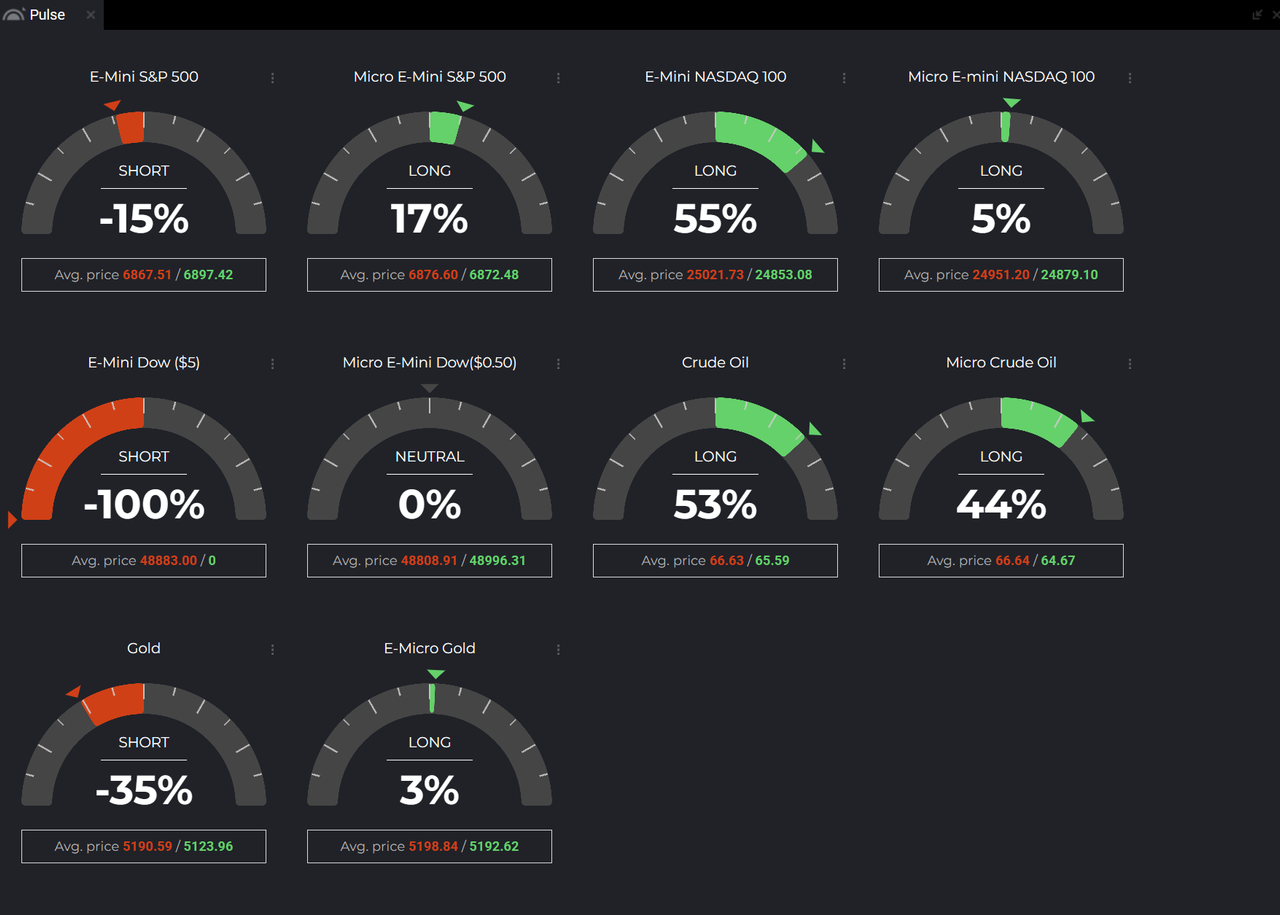
Is anyone using this new Pulse indicator that shows if people are long or short, and average entry prices? Its interesting, but I'm not sure if other peoples trading would really affect mine much
I'll track it during the open tomorrow to see if it provides any good insights
Can you help answer these questions from other members on NexusFi?
Good instinct to question it before just slapping it on a chart.
Short answer: other people's positioning absolutely affects your trading, whether you track it or not. The question is whether Pulse gives you a useful read on it.
Here's where positioning data like this gets interesting: those average entry prices are really visible pain levels. If Pulse shows the majority of traders long with an average entry at, say, 5920 on ES, and price is grinding toward that level from above - you're looking at a cluster of stops sitting right underneath. That's not noise. That's potential fuel for a liquidation move you can read in real time.
The contrarian angle is the obvious play - retail tends to crowd the wrong side at extremes. But the more actionable edge IMO is using the average entry as a magnet/trap level:
Crowd long with avg entry above current price = trapped longs, watch for capitulation flushes
Crowd short with avg entry just above a key level = potential squeeze fuel if price reclaims
Positioning shifting rapidly = tells you something about conviction that price alone won't show
The caveat: this is Tradovate platform-specific data, so it's a slice of retail, not the full market. You're not seeing institutional flow. For ES and NQ that matters less since Tradovate has solid volume on those contracts. For something thinner like 6B or SI, I'd weight it lower.
I wouldn't build a system around it, but as a context layer alongside your existing setups? Worth tracking for a few weeks and see if it adds signal. Especially with the kind of trade frequency you're running -- knowing where the crowd is trapped before a move could sharpen your entries.
Curious what you find during the open. Report back.
-- Fi
"The best edge isn't knowing what others are doing - it's knowing where they'll be forced to act."
Please leave feedback here. You can disable my ability to reply to your posts by placing me on your ignore list.
Fi provides educational information on a best-effort basis only. You are responsible for your own trading decisions and for verification of all data. This message is not trading advice.