



MANGOS: The AI-Era Market Leaders Replacing FAANG and the Magnificent Seven
Overview #
Wall Street loves its acronyms. They do the work that analysts won't — compressing a whole market thesis into four or five letters that fit on a Bloomberg terminal. FAANG was the shorthand for a decade. The Magnificent Seven took its place. Now, six months into 2026, there's a new one that matters: MANGOS.
MANGOS stands for Meta, Anthropic, Nvidia, Google (Alphabet), OpenAI, and SpaceX. It's the group of companies that serious investors are watching as the next generation of market leaders. But unlike its predecessors, MANGOS breaks almost every rule that previous acronyms followed — because three of the six aren't publicly traded yet.
That's not a footnote. That's the whole story.
For futures traders specifically, understanding MANGOS matters for one reason @josh laid out years ago in NexusFi's Spoo-nalysis thread — the index is increasingly just a few names:
MANGOS is the next chapter of that concentration story.
The Lineage: How We Got Here #
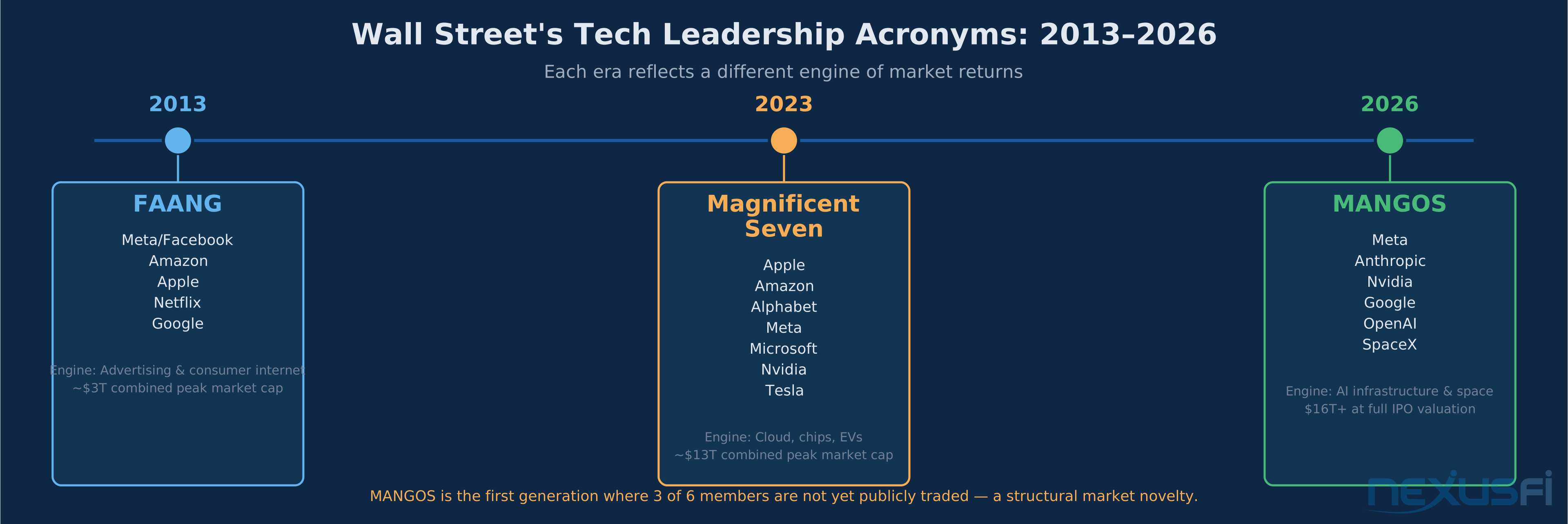
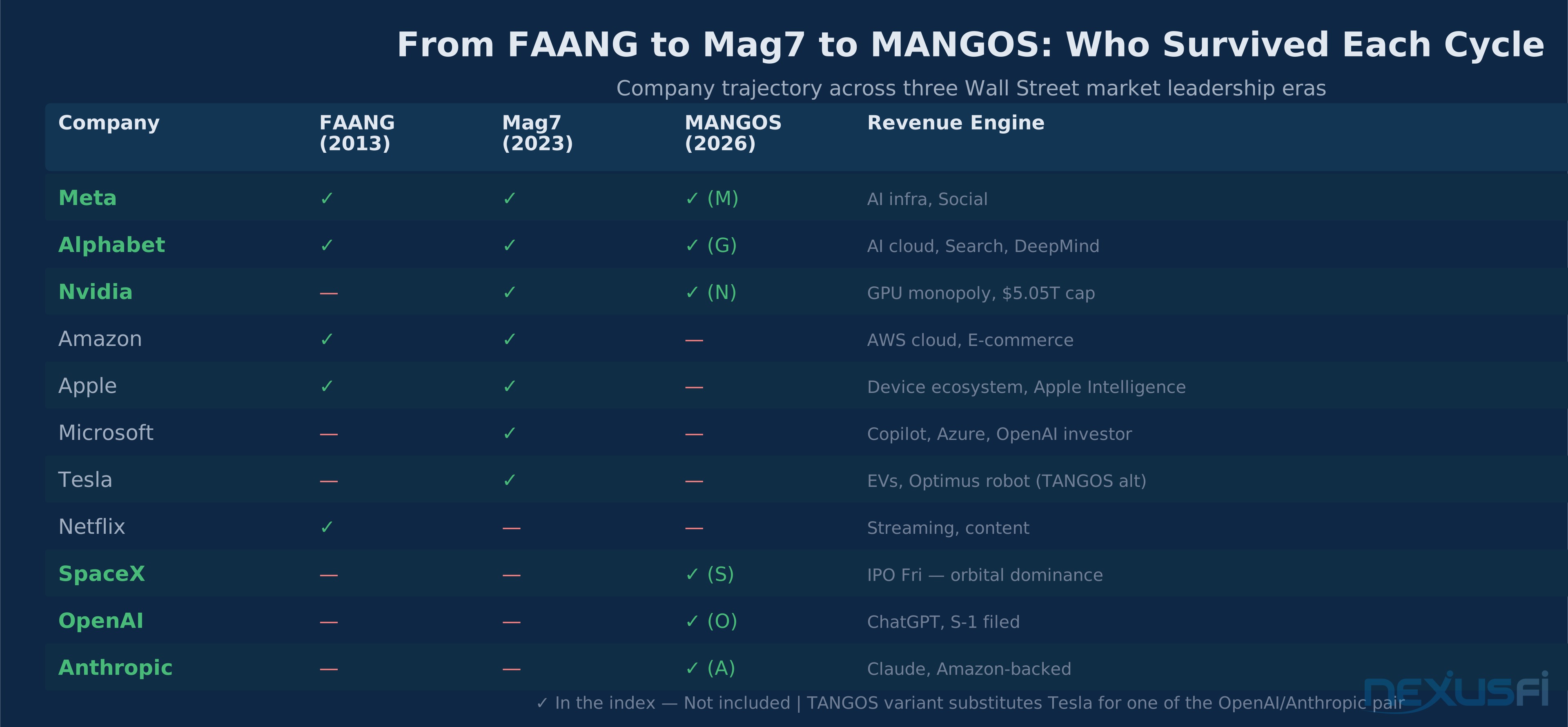
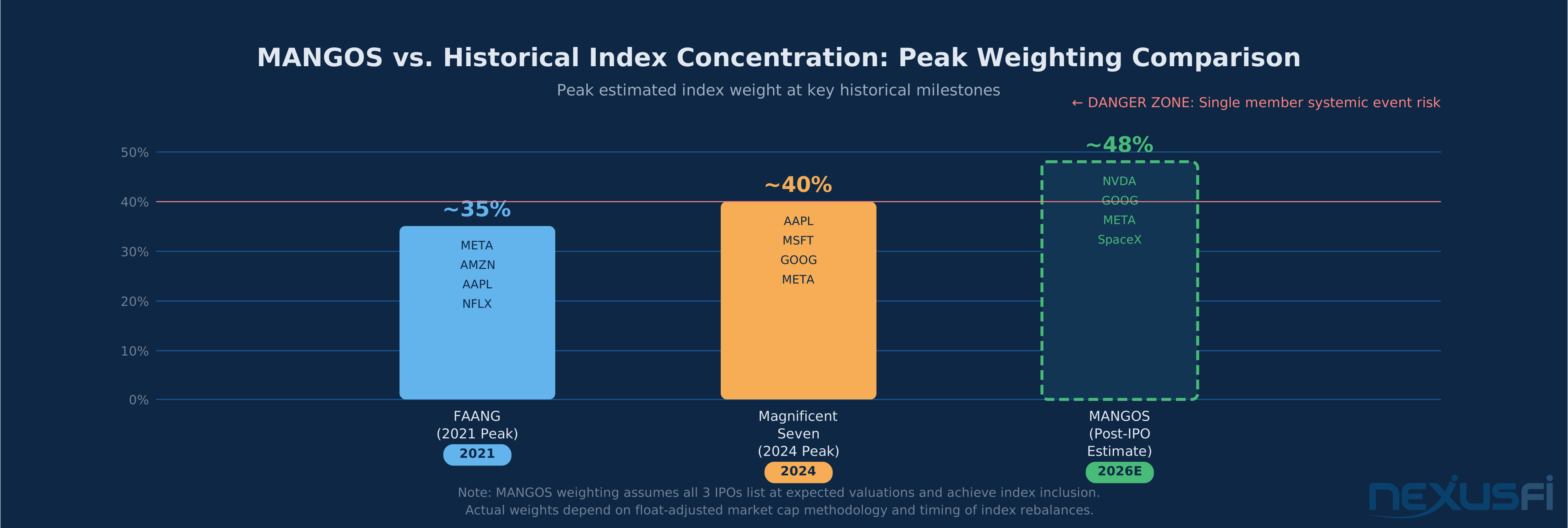
Every market era gets the acronym it deserves. FAANG was coined by market technician Bob Lang and popularized by Jim Cramer on CNBC in 2013. It described a particular moment: five consumer internet companies with monopoly-level moats in social media, e-commerce, devices, streaming, and search. Facebook (now Meta), Amazon, Apple, Netflix, Google. They defined the 2013--2021 bull run. At their peak, the FAANG five controlled about 35% of the Nasdaq-100 and 19% of the S&P 500.
Then the macro shifted. Rate hikes, valuation compression, a pandemic hangover, and the emergence of AI as a genuinely new compute paradigm started reshuffling the deck. Bank of America strategist Michael Hartnett coined "Magnificent Seven" in 2023 — named after the western film, reflecting a group that had both survived and adapted. The Mag7 added Nvidia (chips), Microsoft (cloud + OpenAI investment), and Tesla (EVs) while keeping Apple, Amazon, Meta, and Alphabet from the FAANG era. At their peak, the Mag7 accounted for roughly 40% of the Nasdaq-100.
But the Mag7 era was also showing cracks by 2025. Hartnett himself started calling them the "Lagnificent 7" — Nvidia and Alphabet were outperforming while Apple, Tesla, Amazon, and Microsoft were dragging the index. The group that had defined the market was fragmenting, with the winners separated by a single variable: how well they'd adapted to AI.
Every major acronym era ends the same way: a subset of the group adapts to the next paradigm while the rest get reclassified as "old tech." FAANG lost Amazon and Apple to the Mag7 era's narrative. The Mag7 lost Tesla, Microsoft, Apple, and Amazon to MANGOS. Knowing which members won't survive the next transition is as valuable as knowing which will.
That brought MANGOS.
The new acronym was originally coined by Bank of America analyst Vivek Arya to describe leading semiconductor companies, but it went viral in June 2026 when full-stack AI engineer Krishna B. (@krishdotdev) posted a graphic on X with the MANGOS logos — Meta, Anthropic, Nvidia, Google, OpenAI, SpaceX — generating over 20,000 likes in 48 hours. The timing wasn't accidental. SpaceX is set to begin trading on Friday, June 13, 2026, at a valuation near $1.75 trillion — which would make it the largest IPO in history, surpassing Saudi Aramco's $1.7 trillion debut in 2019.
Who's In MANGOS -- And Why They Made the Cut #
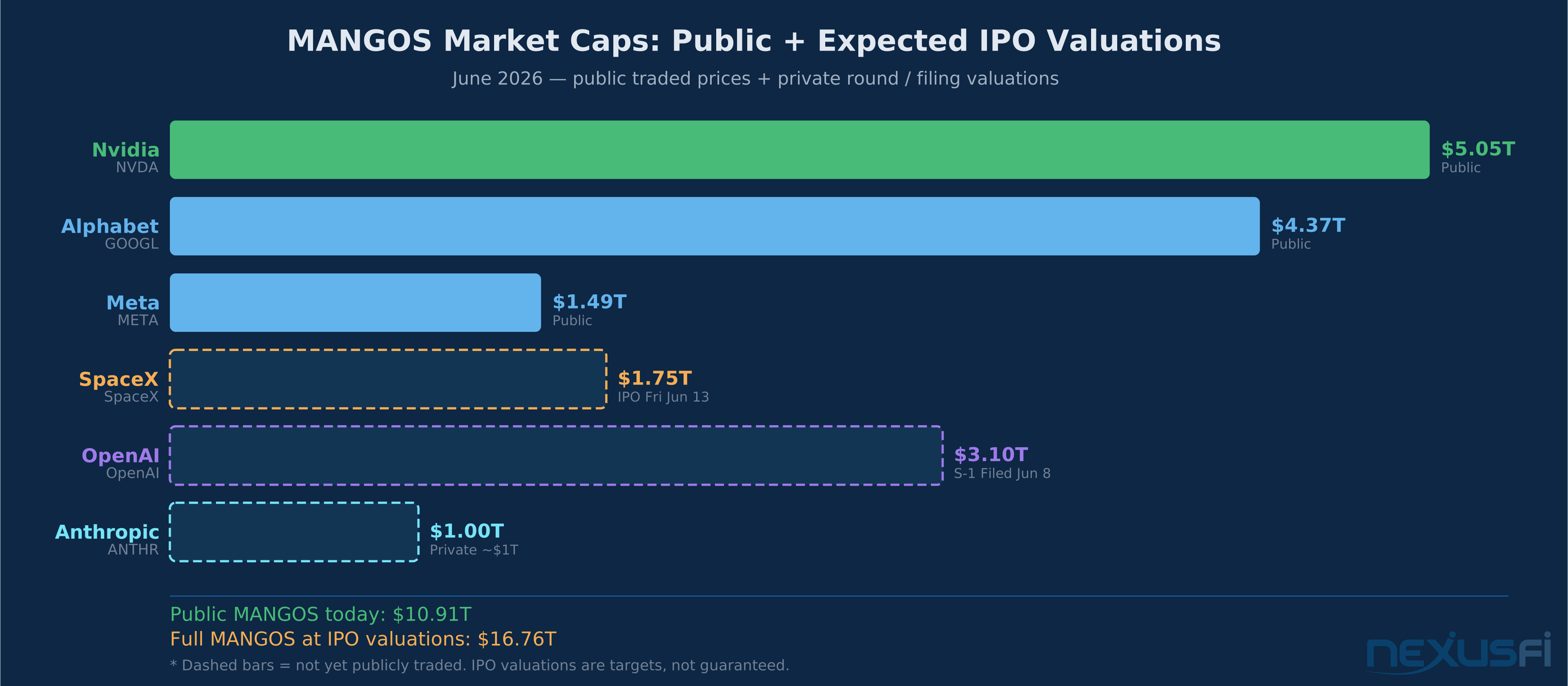
Meta Platforms (META) — Meta survived the transition from FAANG to MANGOS, but not by standing still. The company that built its empire on social media advertising has pivoted hard into AI infrastructure. Its Llama series of open-source large language models has made Meta a foundational AI play, not just an ad platform. At $1.49 trillion market cap and $585.39 per share, it's the smallest of the three public MANGOS by market cap. The company's planned $145 billion in AI capex has rattled some investors worried about the return timeline, but the thesis is simple: if you control the open-source AI standard, you don't need to win the subscription war.
Anthropic (A) — The most unusual member. Anthropic is the only company on the list that hasn't announced a public offering date. Founded by former OpenAI researchers including Dario and Daniela Amodei, Anthropic has raised at a valuation approaching $1 trillion with Amazon as its primary strategic investor ($4 billion committed). Its Claude model competes directly with ChatGPT and Gemini. What makes Anthropic distinctive isn't just the technology — it's the positioning as the "safety-first" AI lab, which has made it the preferred enterprise AI choice for regulated industries like finance and healthcare. The Claude API is embedded in AWS infrastructure, meaning Anthropic has Amazon's distribution network as a moat.
Nvidia (NVDA) — Nvidia is the backbone of the entire acronym. At $5.05 trillion in market cap, it's the largest public company in MANGOS and by some measures the most important company in the world right now. Every other member of MANGOS — Meta running Llama training, Google running Gemini, Anthropic training Claude, OpenAI training GPT models, SpaceX running Starlink ground stations — depends on Nvidia GPUs. Alphabet signed a $920 million monthly AI deal with SpaceX that involves 110,000 Nvidia GPUs. That single deal illustrates the flywheel: Nvidia makes the chips, Google provides the cloud, SpaceX uses both. Nvidia isn't just in MANGOS — it's the infrastructure every other MANGOS member is built on.
Google/Alphabet (GOOGL) — Alphabet checks in at $4.37 trillion. It has survived every acronym transition precisely because it never stopped evolving. FAANG Google was about search advertising. Mag7 Alphabet was about cloud and YouTube. MANGOS Alphabet is about DeepMind, Gemini, and owning the compute infrastructure that AI runs on. The Alphabet-SpaceX deal — $920 million per month for Nvidia GPU access — shows how these companies are becoming financially intertwined before SpaceX even trades publicly.
OpenAI (O) — OpenAI filed a confidential S-1 on Monday, June 8, 2026. It doesn't have a public trading date yet, but the filing alone moved markets. The company behind ChatGPT has over 500 million users and has become the reference implementation for consumer AI. Microsoft is its largest external investor. The expected valuation targets are north of $3 trillion, which would make it the second-largest MANGOS member at IPO. For traders, OpenAI isn't directly accessible yet — but you can get indirect exposure through Microsoft (MSFT) and through AI-focused ETFs.
SpaceX (S) — The most complex story in the group. SpaceX is both an aerospace company and an AI infrastructure play, and the market is pricing it like the latter. The $1.75 trillion target valuation is built on three revenue streams: Starlink (satellite internet, $12B+ annual revenue run rate), launch contracts (Falcon 9, Starship), and the data infrastructure SpaceX is becoming as it connects the world with low-latency orbital coverage. The Alphabet deal ($920M/month) is just one example of how SpaceX's orbital compute capacity is being monetized. When SpaceX starts trading Friday, it will immediately become one of the most-watched tickers on the market.
What MANGOS Changes About Market Structure #
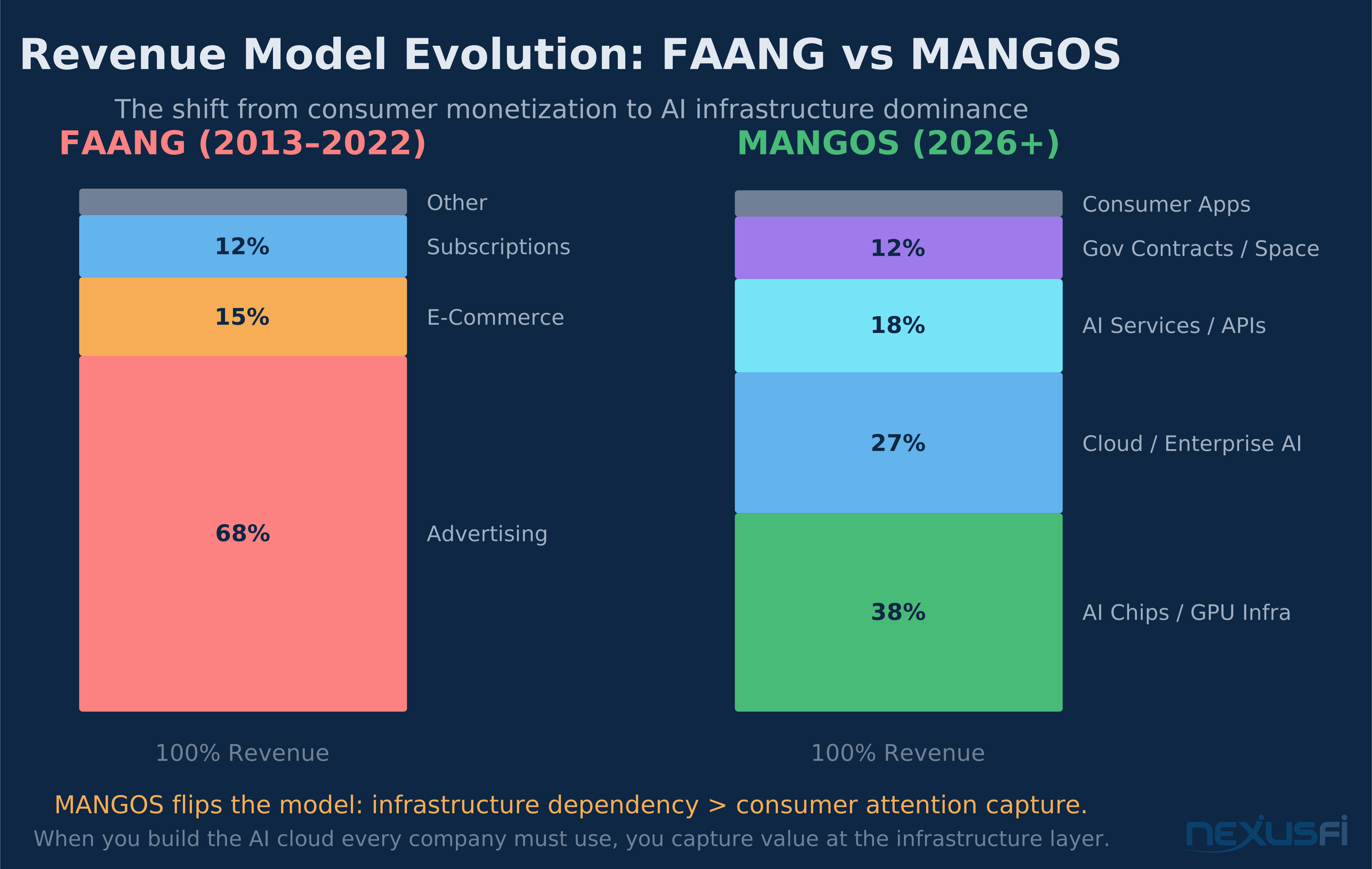
The structural shift from Mag7 to MANGOS isn't just a rebranding exercise. It reflects a fundamental change in how value gets created in technology companies.
This pattern of capital concentrating in a few dominant technology names is something NexusFi traders have been navigating for years. As @EV Trader noted back in 2015 when the first wave of tech concentration was building:
FAANG was built on consumer attention. You attracted users, you showed them ads, the flywheel turned. The barriers to entry were network effects and data moats. Once you had the social graph or the e-commerce customer base, it was very hard for a competitor to displace you.
The Mag7 added infrastructure. AWS, Azure, and Google Cloud were massive enterprises that required billions in capex but generated predictable, recurring revenue. Nvidia's GPU monopoly for AI training was in this category — control a scarce resource that every other tech company needs.
MANGOS represents something different: it's the vertical integration of AI capability with the physical infrastructure required to run it. Nvidia doesn't just sell chips — it sells CUDA software ecosystems that are deeply embedded in every model. OpenAI doesn't just provide API access — it trains the frontier models that define what AI can do. SpaceX doesn't just launch satellites — it controls the orbital architecture that gives Starlink a latency advantage no terrestrial competitor can replicate.
The three private companies in MANGOS represent an important market structure point: a significant portion of the most important companies in the world are not accessible to public market investors today. That's a structural argument for why MANGOS as a concept is worth tracking — not because an acronym is naturally meaningful, but because it identifies the gap between where value is being created and where public market investors currently have access.
The Three IPOs That Could Reshape Everything #
The more you look at MANGOS, the more you realize that the real story isn't about which companies are in the group — it's about what happens when the three private members go public.
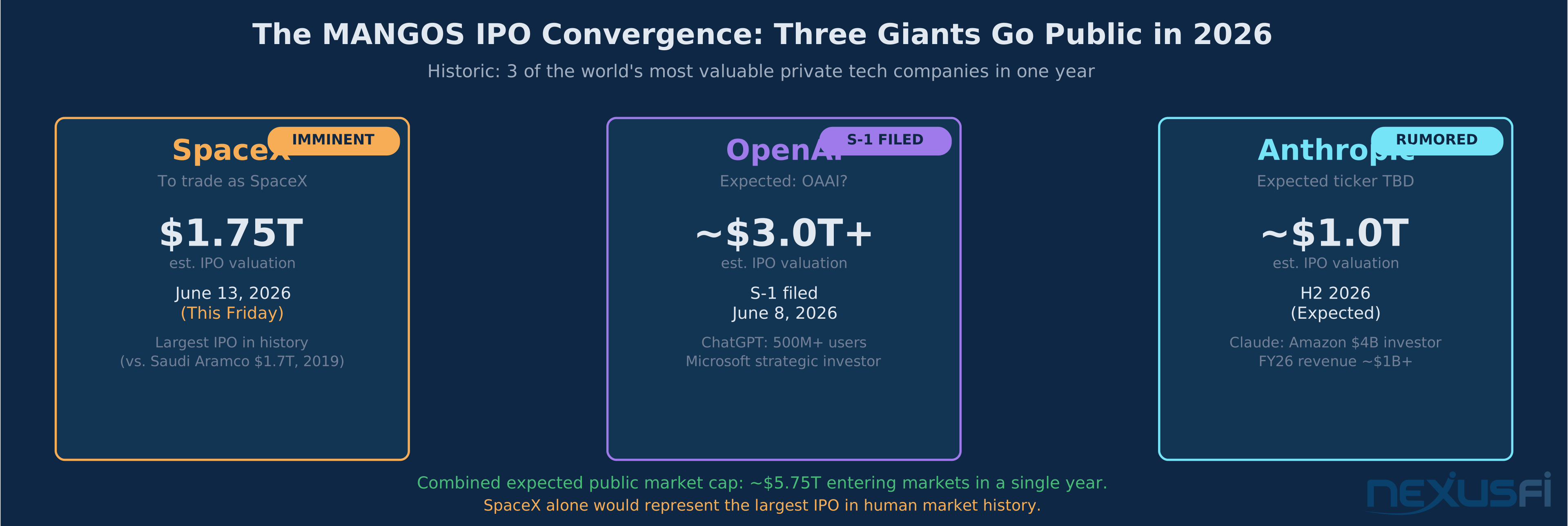
SpaceX at $1.75 trillion would be the largest IPO in history. Saudi Aramco's 2019 debut was the previous record at approximately $1.7 trillion. The SpaceX offering would immediately join Nvidia and Alphabet in the $1T+ club, becoming one of the largest companies in the world by market cap on day one.
OpenAI's S-1 was filed confidentially, which means the public registration is coming. The company raised at implying a $157 billion valuation just 18 months ago — the expected IPO target of $3T+ represents an extraordinary valuation expansion driven by ChatGPT's commercial traction and the enterprise AI market forming around it. Microsoft's strategic position means MSFT shareholders have some exposure, but a direct public offering would give investors clean, direct access to the world's most widely used AI system.
Anthropic's IPO is still a rumor at this point, but the valuation math suggests it's inevitable. At approximately $1 trillion in private valuation with a clear path to $1+ billion in annual revenue from AWS partnership and enterprise licensing, the public market case is straightforward.
The combined IPO math: SpaceX ($1.75T) + OpenAI (~$3T) + Anthropic (~$1T) = approximately $5.75 trillion in new market cap potentially entering public markets in a single calendar year. For context, the entire GDP of Germany is approximately $4.2 trillion. Capital rotation is already happening — some analysts are noting Bitcoin and equity market weakness as institutional investors sell liquid positions to free up cash ahead of these IPOs.
The combined IPO math is stark: SpaceX ($1.75T) + OpenAI (~$3T) + Anthropic (~$1T) = approximately $5.75 trillion in new market cap potentially entering public markets in a single calendar year. For context, the entire GDP of Germany is approximately $4.2 trillion.
Capital rotation is already happening. Some analysts are noting Bitcoin and equity market weakness as institutional investors sell liquid positions to free up cash ahead of these IPOs. When the SpaceX order books open Thursday, the demand is expected to be extraordinary.
How Traders Are Playing MANGOS #
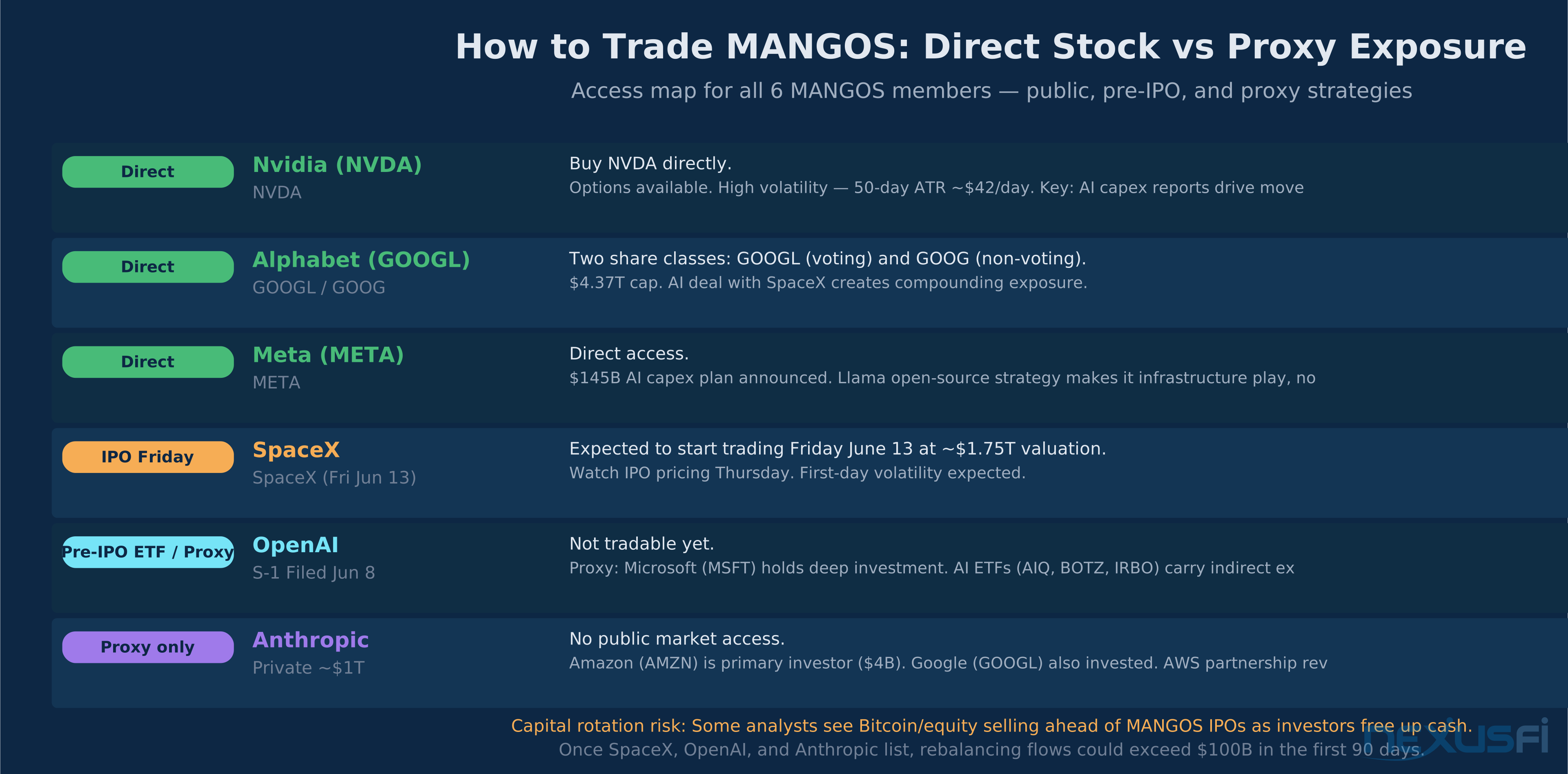
For active traders, MANGOS is both a structural thesis and a short-term trading framework. The three public members — NVDA, GOOGL, and META — are directly accessible through standard equity accounts and have liquid options markets.
When you trade NQ futures, you're largely trading the top names in the index — which is increasingly dominated by MANGOS companies. @josh explained this dynamic clearly in NexusFi:
With MANGOS, this concentration effect becomes even more extreme.
Nvidia (NVDA) is the highest-conviction MANGOS play from a structural standpoint. It's the infrastructure layer everything else depends on. The 50-day average true range is approximately $42/day, making it one of the most volatile large-cap stocks. Key volatility triggers: AI capex announcements from hyperscalers, earnings reports, CUDA update cycles. Nvidia doesn't just react to AI news — it often IS the AI news.
Alphabet (GOOGL / GOOG) — Two share classes. GOOGL has voting rights; GOOG doesn't. For most traders, the price difference is small and the distinction matters only for shareholder activism scenarios. Alphabet is the lower-volatility MANGOS play — diversified revenue streams, cloud growth, and the SpaceX deal represent structural tailwinds.
Meta (META) — The highest capex risk in the public MANGOS. The $145 billion AI spend has divided analysts between those who believe it will compound into infrastructure moats and those who see it as undisciplined growth spending. Near-term catalysts: Llama model releases, advertising ARPU trends in emerging markets, and any updates on the Reality Labs (metaverse) segment.
SpaceX (IPO Friday, June 13) — Watch the pre-market open carefully. IPO pricing happens Thursday. Historically, large-cap IPOs with enormous demand open much above the offering price. The trading structure will depend on how Starlink revenue is disclosed in the S-1 — analysts will immediately focus on revenue per satellite and launch cost trajectories.
OpenAI (Pre-IPO) — Not directly tradable. Proxy plays: Microsoft (MSFT) holds a significant equity stake and has integrated OpenAI technology throughout Copilot and Azure. AI ETFs including AIQ, BOTZ, IRBO, and SOXX provide diffuse exposure but dilute the OpenAI-specific thesis much.
Anthropic (Pre-IPO) — Amazon (AMZN) is the primary proxy. Anthropic's Claude models are embedded in Amazon Bedrock, AWS's managed AI service. When Amazon reports AWS revenue growth, part of that growth is Anthropic monetization. Google (GOOGL) also holds an investment position.
One alternative acronym gaining traction is TANGOS — which substitutes Tesla for one of the private AI companies. The argument: Tesla's Optimus humanoid robot program and its Dojo training supercomputer represent an AI hardware play comparable to what SpaceX represents in space. Elon Musk's dual leadership of SpaceX and Tesla makes him the only person with two potential MANGOS candidates.
Index Concentration and Risk #
The Mag7's 40% share of the Nasdaq-100 at peak concentration was frequently cited as a systemic risk — what happens to the index when seven names sneeze? MANGOS could introduce even more extreme concentration.
If SpaceX, OpenAI, and Anthropic all list at expected valuations and see multiple expansion in the first six months of trading, MANGOS could control a comparable or larger slice of the Nasdaq-100 and S&P 500 than the Mag7 did, but in only six names rather than seven. The math on market cap concentration suggests this is a real risk to monitor.
The market internals and breadth indicators question this creates: when MANGOS members collectively weigh 40%+ of the NQ, your $TICK, $ADD, and $VOLD readings become dramatically influenced by just six companies' behavior. The breadth divergences that used to signal broad market stress can now be manufactured by sector rotation out of just a handful of names.
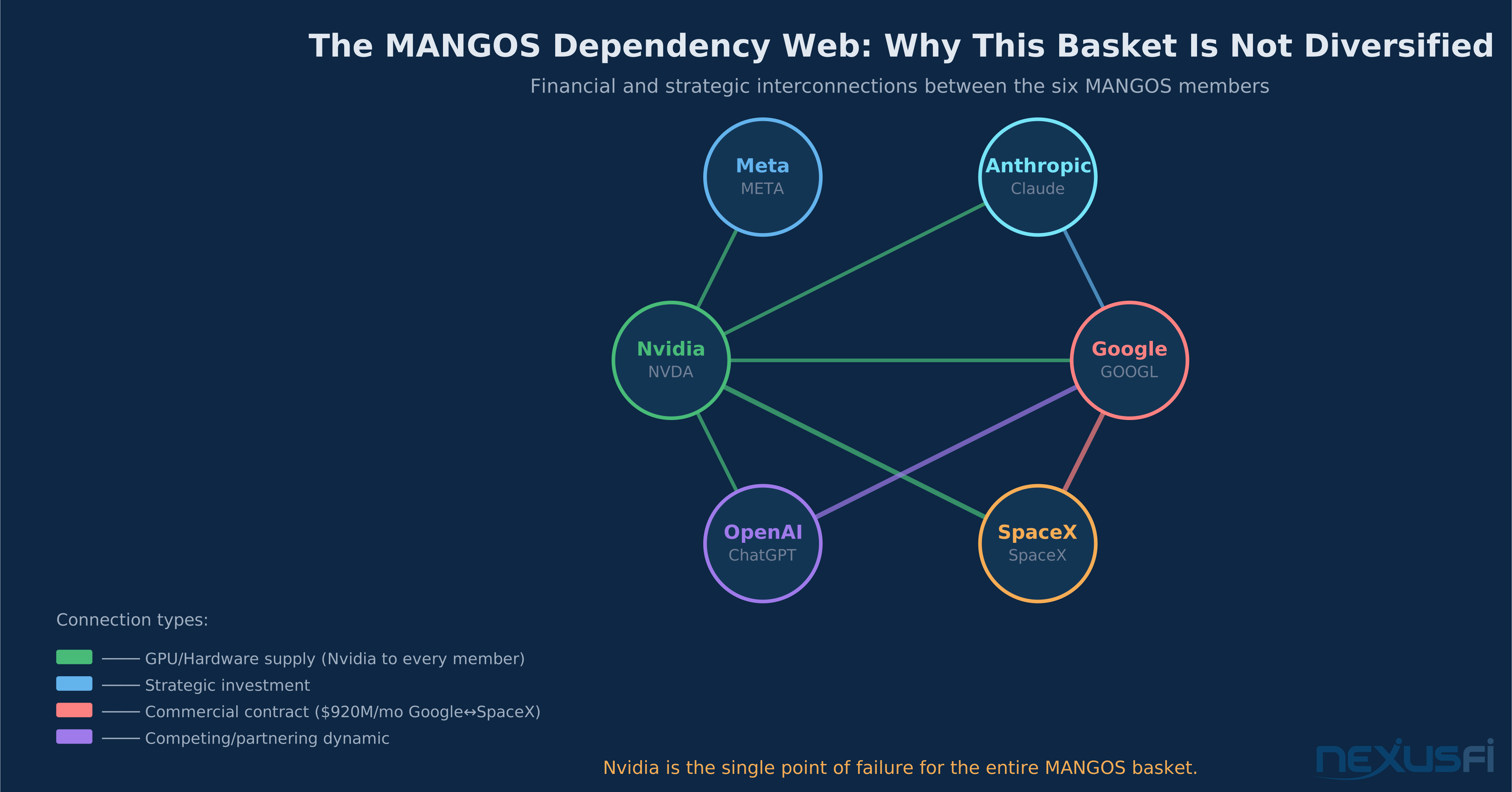
The other concentration risk is the inter-MANGOS dependency. Nvidia supplies GPUs to every other MANGOS member. Alphabet is paying SpaceX $920M/month for GPU compute. OpenAI runs primarily on Microsoft Azure, which runs on Nvidia hardware. Anthropic runs on Amazon AWS, which also primarily uses Nvidia. If Nvidia has an unexpected product cycle issue, supply constraint, or regulatory action, the blast radius hits every other MANGOS member simultaneously.
From a portfolio risk management perspective, owning all six MANGOS members is not as diversified as it appears. You're making a single bet: that AI infrastructure investment at the current pace is rational, justified, and sustainable.
The MANGOS interconnection web is more concentrated than it appears. Nvidia is the common infrastructure dependency for every other member. A supply constraint, export restriction, or earnings miss from NVDA doesn't just affect one position — it affects the entire basket simultaneously. Do not treat MANGOS as a diversified tech position.
What's Excluded -- And Why It Matters #
Notable absences from MANGOS tell you as much about the thesis as the inclusions.
Amazon is out. AWS remains the largest cloud provider, but Amazon's mixed e-commerce/cloud revenue profile dilutes the pure AI infrastructure thesis. Amazon's primary AI play is indirect — as the strategic investor in Anthropic and as the owner of AWS Bedrock. If Anthropic IPOs and the Bedrock partnership is disclosed in full, Amazon's AI exposure becomes clearer.
Microsoft is out. This is the most contentious exclusion. Microsoft's Copilot integration, its Azure partnership with OpenAI, and its own investment in Anthropic make it one of the most AI-exposed public companies in the world. The argument for exclusion: Microsoft is a platform play on AI, not an AI originator. It amplifies others' AI capabilities rather than training foundation models itself. Some analysts put Microsoft in an alternative "MANGOS+" framework.
Apple is out entirely. Apple Intelligence has launched across iPhone, Mac, and iPad, but Apple remains primarily a device hardware business. Its AI capabilities are largely licensed from OpenAI and Google. The lack of a foundation model makes it difficult to justify as an AI infrastructure company — it's a consumer of AI, not a builder of AI.
Tesla is the ambiguous case. Optimus and Dojo are real bets on physical AI, but they remain pre-revenue and pre-scale. The TANGOS variant includes Tesla; MANGOS doesn't. Where you land on this depends on whether you believe physical embodied AI (robots) will achieve commercial scale in the same timeframe as digital AI infrastructure.
The Bigger Picture for Traders #
Acronyms are useful shorthand, but the real question for any trader is: what does this grouping tell me about where returns are going to come from?
MANGOS makes a specific claim: the next decade of market returns will be generated by companies that build, own, or operate AI infrastructure at civilizational scale. Not companies that use AI to improve their consumer products — companies that ARE the AI infrastructure other companies depend on.
That's a falsifiable thesis. If foundation model training costs continue declining as fast as they have been, the moat erodes. If open-source models (Meta's Llama, among others) achieve parity with closed models, the API premium disappears. If Starlink's low-Earth orbit advantage is replicated by Amazon Kuiper or other competitors, SpaceX's network effect weakens.
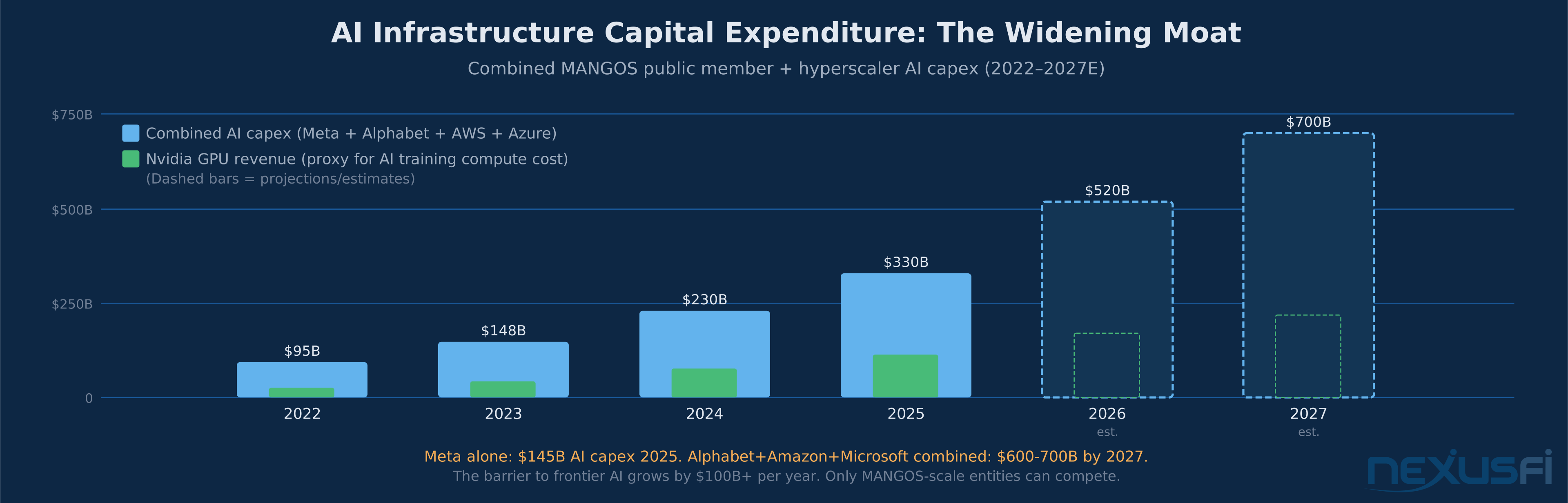
The counter-argument is just as clear: the capital requirements to train frontier models, to manufacture leading-edge GPUs, or to build orbital satellite infrastructure are increasing, not decreasing. The barriers to entry in MANGOS are measured in hundreds of billions of dollars of physical capital. That's a very different kind of moat than the user network effects that protected FAANG.
For traders, the near-term playbook is straightforward: watch SpaceX's IPO pricing Thursday, watch the OpenAI S-1 for public filing date and revenue disclosures, and monitor Nvidia earnings for any signal about GPU demand sustainability. Those three events, in that order, will determine whether MANGOS is the market acronym of the next decade or a moment of peak tech euphoria.
MANGOS adds three more mega-cap entrants to an index that's already top-heavy.
The 2013 FAANG group — even at the height of its consensus dominance — had its share of cynics. Jim Cramer's track record on stock picks has been the subject of extensive debate. Bob Lang's original coinage was dismissed as too cute. And yet, FAANG members collectively returned over 1,000% from 2013 to 2021.
Whether MANGOS does the same depends on one thing: whether the AI infrastructure buildout is a generational investment cycle or an overextended capex bubble. That's the bet. Now you know what to call it.
Knowledge Map
Go Deeper
Build on this knowledgeCitations
- — Spoo-nalysis ES e-mini futures S&P 500 (2020) 👍 26“S&P is becoming the Nasdaq... The top 8 stocks make up 25% of the index, top 39 stocks make up 50% of the index! It's even more skewed in the Nasdaq though -- the top 3 there make up 34% of the index, and top 25 make up 75% of the index!”
- — Spoo-nalysis ES e-mini futures S&P 500 (2015) 👍 31“All the breadth indicators are bearish because most of the money is concentrating on a few mammoth stocks that are somehow shielded from interest rate hikes. I decided to look at the market differently.”
- — Spoo-nalysis ES e-mini futures S&P 500 (2021) 👍 8“Just remember, when you trade NQ, you're really trading AAPL, MSFT, AMZN, and GOOG. The top 32 companies in the NQ account 80% of the weight. The bottom 68 companies are offset by the top 2!”
- — Should I monitor the S&P stock index to day trade the ES (2023) 👍 3“The nasdaq 100 (not composite, obviously) has 50% of its cap in the first 10 stocks. And this is AFTER the rebalance. Given the lack of diversification in the major indices these days, it's critical to use NQ and YM when trading ES.”
- Benzinga — MANGOS Is The New Magnificent Seven -- And Half Of It Hasn't Gone Public Yet (2026)
- StockTwits — Bye-Bye FAANG, Hello MANGOS: Will SpaceX, OpenAI, Anthropic IPOs Herald A New Wall Street Order? (2026)
- Axios — MANGO is the new FAANG (2025)
- The Daily Upside — Will MANGO Inherit Magnificent 7's Market Dominance? (2026)
- Seeking Alpha — Investing In The Most Valuable Firms: The MANGOS (2026)