



Scale In: Building Position Size Through Confirmation
Overview #
Scaling in means entering a trade in stages rather than committing full size at once. You take an initial position — a probe — then add contracts only as the market confirms your thesis. Done right, it reduces early risk, improves average entry quality, and lets you size up precisely when the probability edge is strongest.
This isn't averaging down. Averaging down adds to losers. Scaling in adds to winners — or at minimum, adds to positions where the original thesis remains valid and price action is cooperating.
The distinction matters. One is a risk-management technique used by professionals. The other is a hope-management technique used by traders who can't take a loss. Tom Hougaard captures this in Best Loser Wins: "I add when you subtract and subtract when you add" — the professionals do the opposite of what feels natural, adding size only when the trade confirms their thesis. [12]
How Scale-In Works: The Three-Phase Framework #
Professional scale-in trading follows a three-phase structure. Each phase has its own entry trigger, its own stop logic, and its own reason for existing. Skip a phase and you're gambling. Rush a phase and you're averaging into hope.
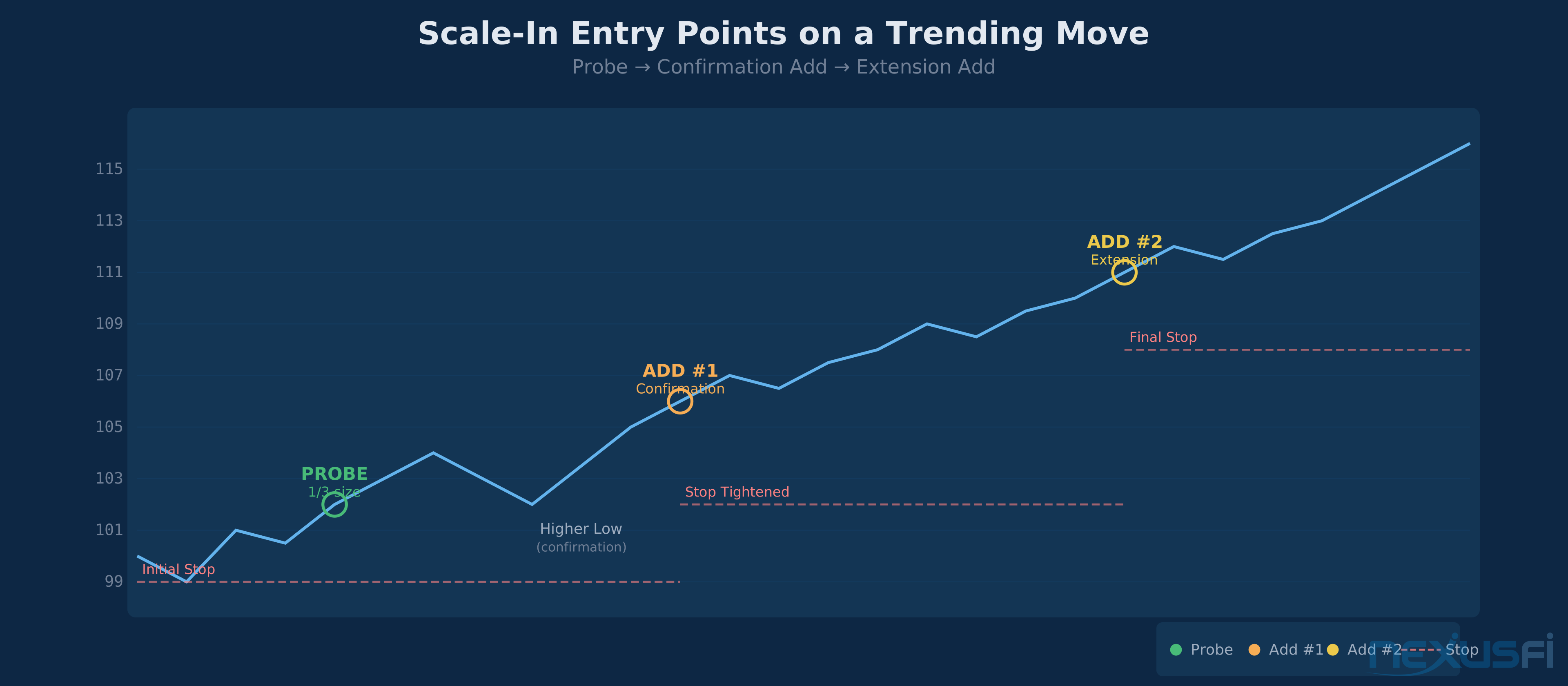
Phase 1: The Probe. You enter 25-40% of your intended position at a key level — VWAP, prior day's high/low, a volume profile node, the edge of a value area. The probe tests whether the market respects that level. Your stop is tight: 1-2 ticks beyond the invalidation point. If price blows through without hesitation, you lose small and move on.
Phase 2: The Confirmation Add. You add 30-40% of your position, but only after seeing acceptance behavior. Not "price moved X ticks" — that's not confirmation. Real confirmation means price reclaims your level and holds for multiple closes, or order flow shows sustained buying with delta imbalance above 70%, or a structural retest holds. The confirmation must be event-driven, not distance-driven.
Scale-in works because position size tracks conviction. Smallest when uncertainty is highest, largest when the market has proven your thesis. Each phase earns its size through market evidence — not hope, not time, not distance.
Phase 3: Full Position. You deploy your remaining contracts when multiple confluence factors align: structure, order flow, and time-of-day bias all support the trade. At this point, your stop has already been tightened from the probe phase, your average entry price is favorable, and the market has given you behavioral evidence that your thesis is correct.
You're smallest when you know the least, largest when the market has proven you right.
Probe Entry: Testing the Market's Thesis #
The probe answers one question: does the market care about this level? Place the probe at levels where you expect an order flow reaction: VWAP, prior session POC, value area edges, prior day high/low, or significant swing levels visible on higher timeframes. Use a limit order to minimize slippage and keep the cost of being wrong as low as possible.
The probe should be small enough that getting stopped out doesn't affect your psychology or your daily P&L in any meaningful way. If losing the probe makes you anxious, you're probing too large.
Probe sizing rules:
- 25-40% of your maximum intended position
- Stop within 1-2 ticks of the invalidation level
- Total dollar risk on the probe should be less than 30% of your per-trade risk budget
- If the probe survives its first bar without immediate adverse movement, you're watching for confirmation
The probe's purpose is information, not profit. You're paying a small premium to learn whether the market will cooperate with your thesis before you commit serious capital.
Confirmation Add: When to Size Up #
The confirmation add is where most traders fail. They either add too early (turning a probe into a full-size gamble) or never add at all (turning a winning probe into a one-lot scalp that can't cover commissions on the losing probes).
Confirmation means the market has given you behavioral evidence that your thesis is correct. Here are the signals professionals use:
Acceptance signals (add triggers):
- Price reclaims your level and holds for 3-5 consecutive one-minute closes above it
- Order flow shows absorption of selling with persistent bid support
- Delta imbalance exceeds 70% on the confirmation bar
- A structural retest of the probe level holds — price dips back, buyers step in, and the retest fails to break through
- Range expansion in your direction with shallow pullbacks
Non-signals (do NOT add on these alone):
- "Price moved 2 points in my favor" — that's distance, not behavior
- "It's been 5 minutes and I'm still in the trade" — time alone isn't confirmation
- "I feel good about this trade" — feelings aren't data
- "The market is going up" — direction without structure isn't confirmation
As NexusFi member @tigertrader noted in a discussion on adding to winners: the concept behind adding to a winner "goes directly to the point of what do I have to do to make money." [8] He observed that after he began to press and add to his winners, "the frequency of my winners went down, but the size of my winners grew by a lot, and so did my year end" results. [9] The key insight: you trade fewer but bigger winners.
When you add, your stop from the probe phase moves to break-even plus one tick. This is critical — the confirmation add should not increase your total dollar risk. You're adding size while simultaneously reducing per-contract exposure by tightening the stop.
The confirmation add paradox: you double your position size while keeping total dollar risk constant. Stop tightening makes this possible — each add is financed by reducing per-contract exposure, not by accepting more risk.
Stop Progression: Protecting the Growing Position #
Stop management during a scale-in is different from single-entry trading. You're managing a growing position where the average entry price shifts with each add, and where the risk profile must stay within your budget at every stage.
Professional stop progression protocol:
| Stage | Stop Placement | Total Risk |
|---|---|---|
| Probe entry | 1-2 ticks beyond invalidation level | 25-30% of risk budget |
| After confirmation add | Move probe stop to break-even +1 tick; new stop at structural level for combined position | 50-70% of risk budget |
| Full position | Trail using the lesser of: structure-based (below last higher low) or ATR-based (0.75 x ATR from current price) | Declining as stops tighten |
| At each profit target | Partial exit (1/3 of position), tighten stop to prior target level | Approaching risk-free |
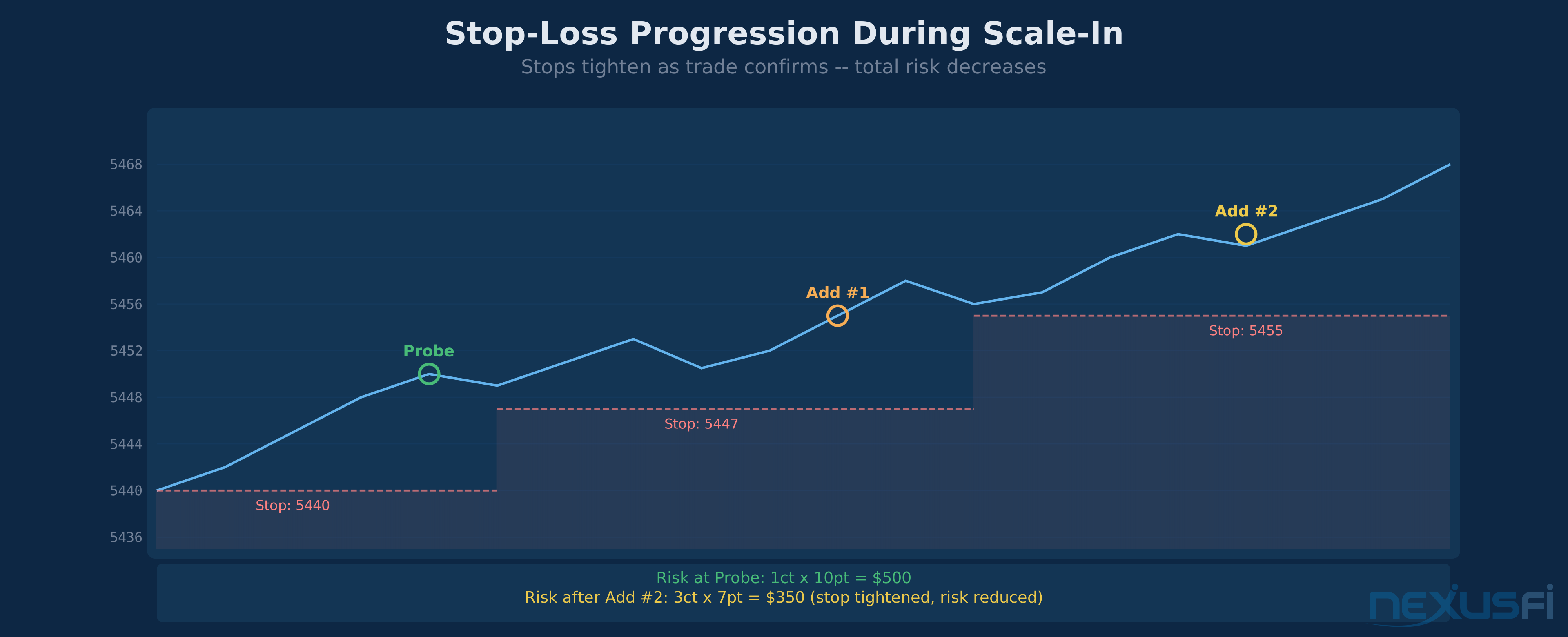
The constant-risk principle: Your total dollar risk must never increase when you add contracts. Each add comes with a stop adjustment that keeps total exposure within your predefined budget. If adding a tranche would push your total risk above budget, you either tighten the stop or skip the add.
Structure-based trailing: After the market establishes a higher low (for longs) or lower high (for shorts), trail your stop beneath or above that structure. In ES and NQ on 1-5 minute charts, structural trailing is more strong than fixed-tick trailing because it adapts to the actual market behavior rather than arbitrary distances.
Time stops: If the trade hasn't shown acceptance within a defined window after entry, exit regardless. This eliminates "dead money" positions where your capital sits tied up in a trade that isn't working but isn't stopped out either.
Position Sizing for Scale-In Trades #
The position sizing formula for scale-in trading is straightforward but non-negotiable:
Maximum contracts = floor((Account Equity x Risk%) / (Stop Distance in Ticks x $/Tick))Professional risk parameters:
- Per-trade risk: 0.5% to 1.5% of account equity
- Daily loss cap: 3% of account equity — hit this and all scaling stops for the day
- Maximum adds per trade: 2-3 (probe + 1-2 confirmation adds)
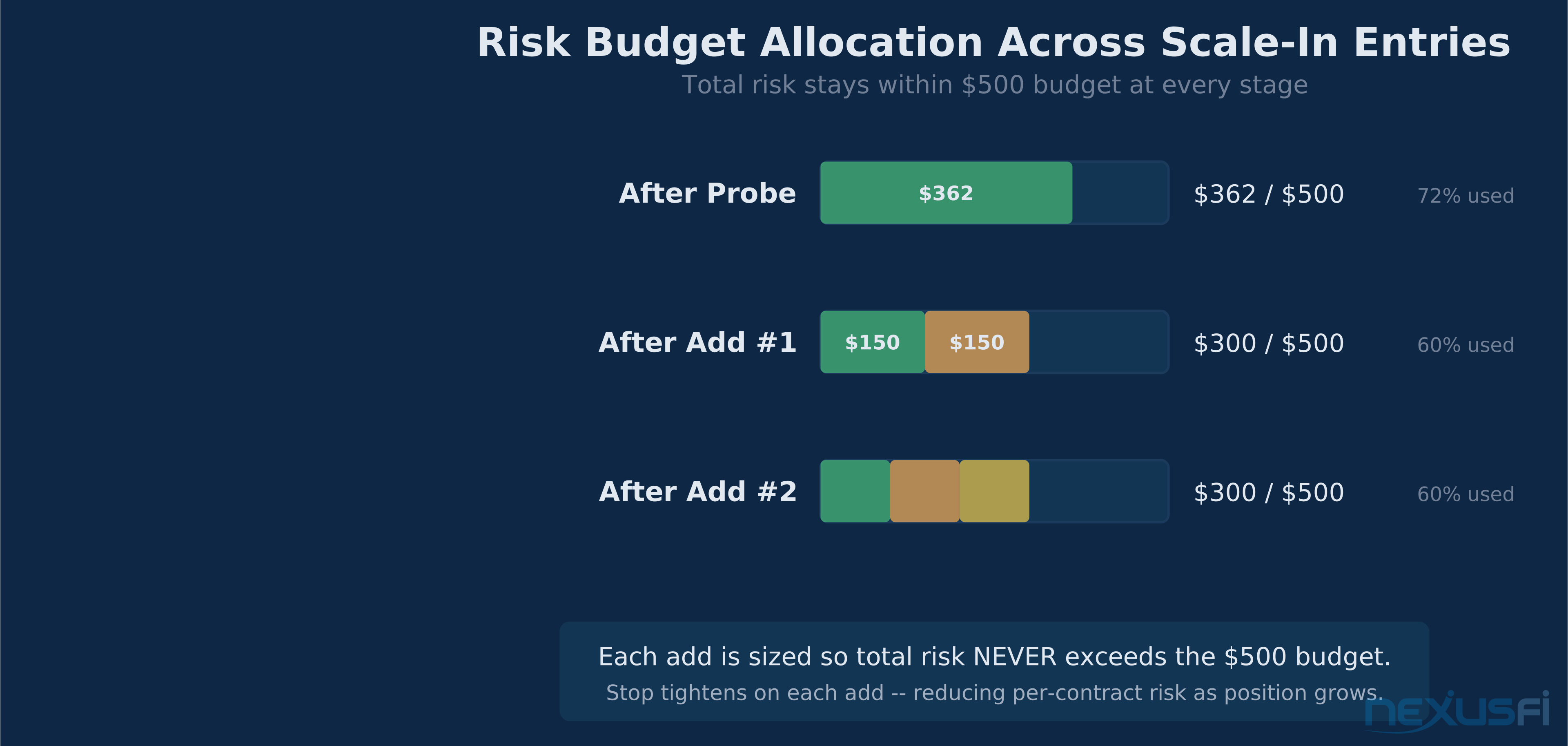
Risk budget frameworks:
Constant maximum loss: You define your max dollar loss for the entire trade (say $1,000). As you add tranches, you tighten stops so total risk stays at or below $1,000. This prevents the classic averaging-down blowup where each add increases total exposure.
Risk units per tranche: Each tranche risks a fixed amount (say $300 per tranche). You cap total risk by capping the number of adds. Three tranches at $300 = $900 maximum loss. Simple, enforceable, and prevents emotional over-commitment.
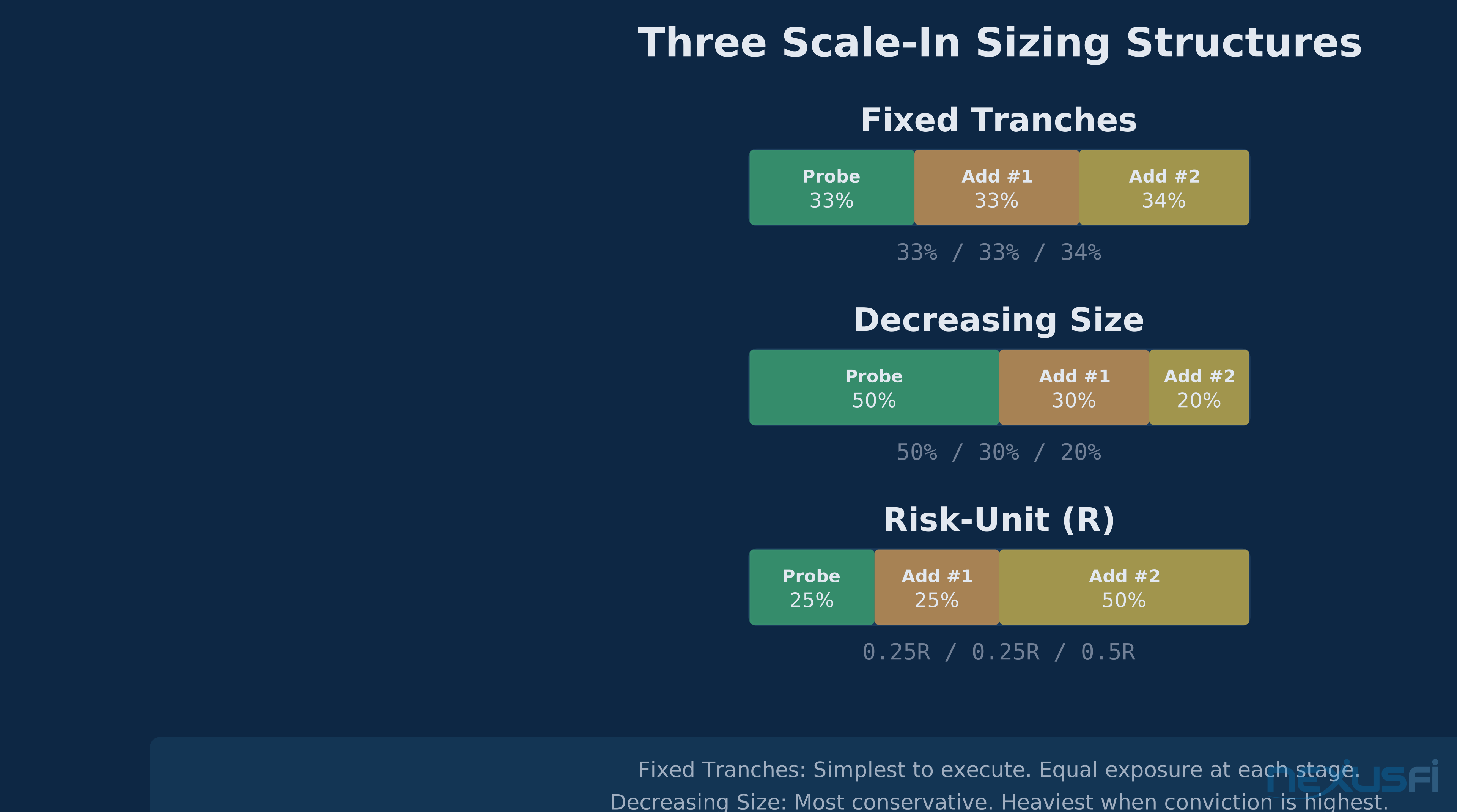
Volatility-adjusted sizing: If ATR is elevated (NQ during earnings, CL during inventory reports), size down. Your stop distance naturally widens in volatile conditions, which means the same dollar risk buys fewer contracts. This is the market telling you to trade smaller — listen.
Instrument-Specific Parameters #
Scale-in mechanics differ across instruments because tick values, volatility profiles, and liquidity characteristics are different. Here's what matters for the three most liquid US futures contracts:
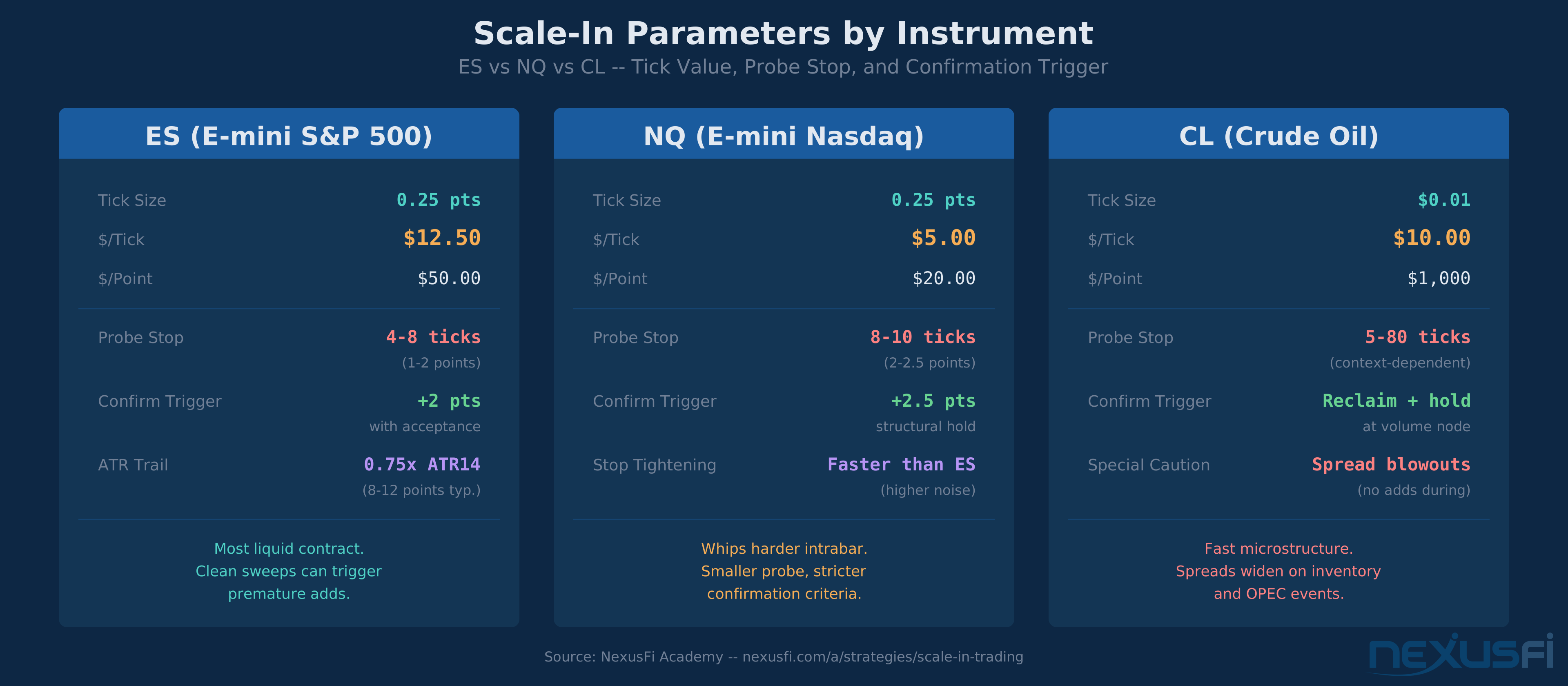
ES (E-mini S&P 500) #
| Parameter | Value |
|---|---|
| Tick size | 0.25 index points |
| Dollar per tick | $12.50 |
| Dollar per point | $50.00 |
| Typical probe stop | 4-8 ticks (1-2 points) |
| Confirmation add trigger | +2 points favorable with acceptance |
| ATR-based trailing | 0.75 x ATR14 (typically 8-12 points) |
ES is the most liquid futures contract in the world. Slippage is minimal, spreads are tight, and you can scale with precision. The challenge is that ES moves in clean sweeps that can trigger premature adds — wait for acceptance, not just movement.
NQ (E-mini Nasdaq 100) #
| Parameter | Value |
|---|---|
| Tick size | 0.25 index points |
| Dollar per tick | $5.00 |
| Dollar per point | $20.00 |
| Typical probe stop | 8-10 ticks (2-2.5 points) |
| Confirmation add trigger | +2.5 points with structural hold |
| Stop tightening | Faster than ES due to higher noise |
NQ whips harder intrabar than ES. Start with a smaller probe relative to your max position and use stricter confirmation criteria. Apply stricter confirmation criteria than ES — structural evidence, not just closes above a level.
CL (Crude Oil) #
| Parameter | Value |
|---|---|
| Tick size | $0.01 |
| Dollar per tick | $10.00 |
| Dollar per point | $1,000.00 |
| Typical probe stop | Context-dependent (5-80 ticks) |
| Confirmation add trigger | Reclaim + hold at volume node |
| Special caution | Avoid adding during spread blowouts |
CL microstructure is fast. Spreads can widen dramatically around inventory reports and OPEC announcements. Never add during spread blowouts — the slippage alone can destroy your edge. Use liquidity filters: only add when bid-ask spread is at or near normal levels and order book depth supports your position size.
When to Scale In vs. Full Position #
Scaling in is not always the right approach. Sometimes you should enter your full position immediately. The decision depends on regime, liquidity, conviction, and time.
Scale in when:
- You're trading trend continuations where the market needs to prove itself before you commit
- Market structure is unclear or messy — the probe lets you test without full exposure
- Volatility is elevated (VIX above 20% of its 30-day average) and whipsaw risk is high
- Liquidity at your entry level is thin or uncertain
- You're already carrying risk in other positions and need to manage total exposure
- You expect sweep-then-reclaim behavior at a key level
Enter full position when:
- You have high conviction at a major level with delta showing more than 70% aggressive buying or selling
- The pattern is time-sensitive — opening range breakouts that must be captured within 5-10 minutes
- Your stop placement is structurally tight regardless of position size
- The market is in a clean trend regime with stable liquidity and tight spreads
- Adding contracts later wouldn't meaningfully improve your average entry price
As NexusFi member @Fat Tails demonstrated in a detailed analysis, the Turtle Traders used scaling to increase their position size by a factor of 1.6 with the same predefined risk. The scaling approach enabled them to capture larger trend moves while keeping initial exposure controlled. [1] The original Turtle Trading rules, documented by Curtis Faith, formalized this as a core system component — adding units at half-ATR intervals in the direction of the trend, with each unit sized to normalize dollar volatility across all positions. [11]
The hybrid rule: The probe is always deployed. Full sizing occurs only after acceptance is confirmed. Default split: 25-40% starter, scale to 60-100% only on confirmation. This means even in "full position" scenarios, you're still validating before committing.
The Scale-In Decision Test #
Before adding to any position, ask yourself one question:
"Would I enter a new position here, right now, if I had no existing position?"
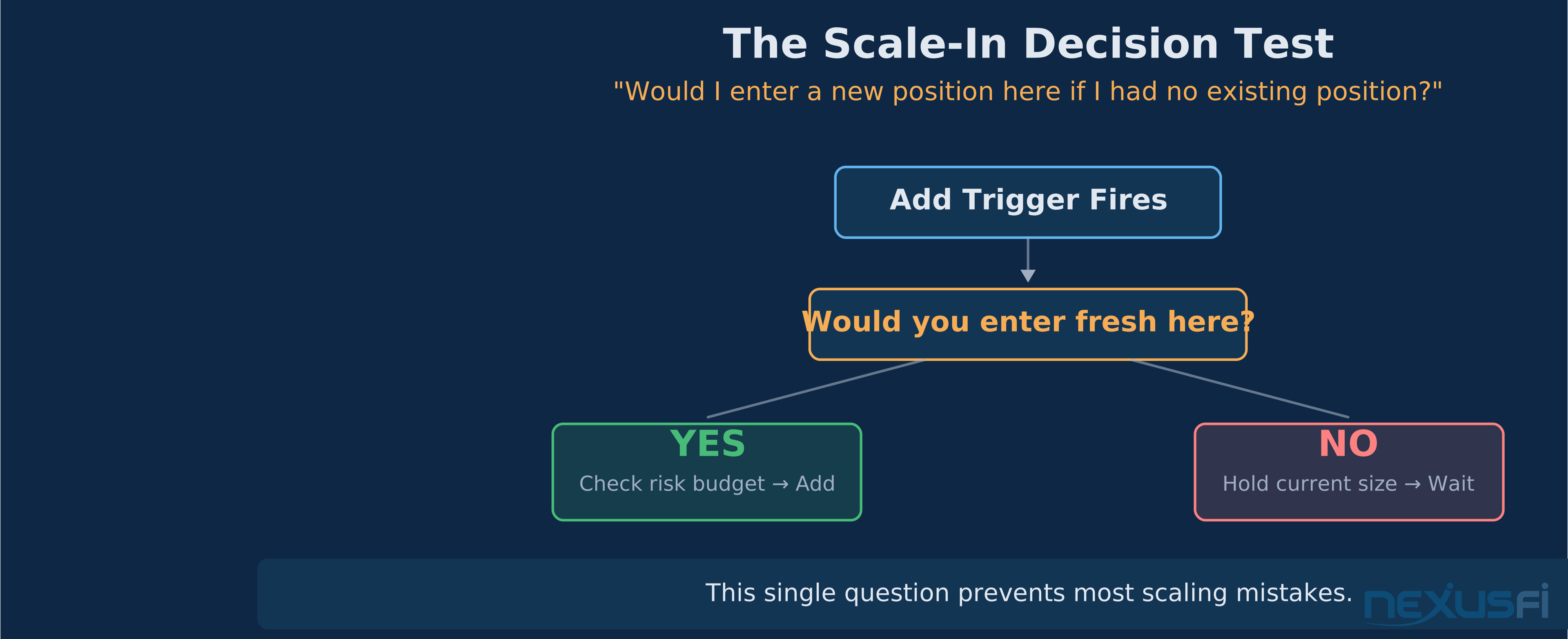
This single question eliminates the majority of bad scale-in decisions. If you wouldn't enter fresh at this price with this structure, you have no business adding to an existing position — regardless of how much you want the trade to work.
If the answer is yes — if the current price, structure, and order flow would independently justify a new trade — then adding is rational. If the answer is no — if you're only adding because you're already in the trade and want it to work — then you're averaging into hope, and hope is not a strategy.
This test was articulated by NexusFi member @tigertrader: "You should always ask yourself before adding to a position: would I initiate a trade from this point, if I didn't already have this position on?" [10]
The test strips away cognitive bias: when you're already in a trade, every piece of information gets filtered through the lens of wanting confirmation. The "new position" test forces objectivity by removing that lens.
A Worked Example: ES Scale-In at VWAP #
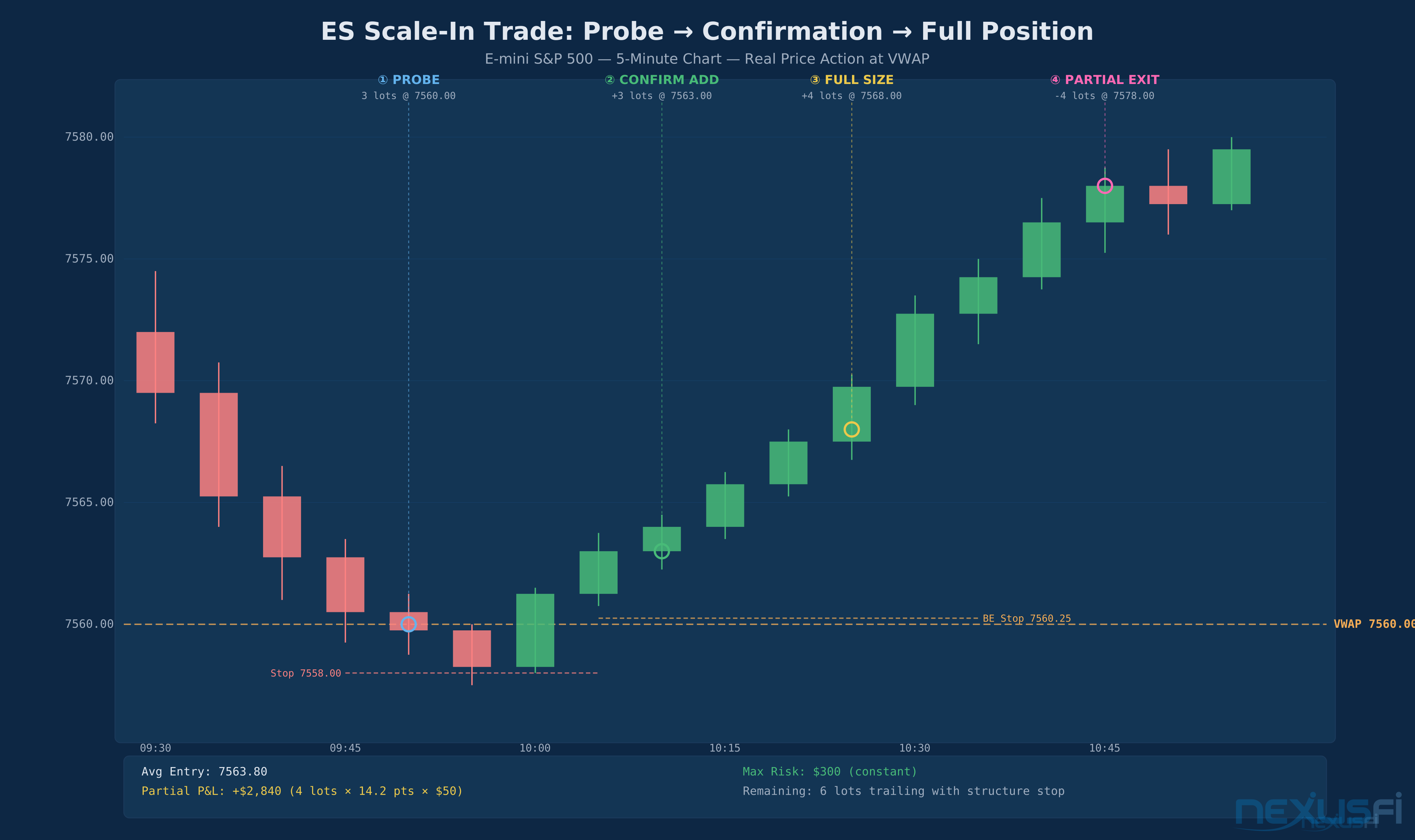
Here's a complete scale-in trade on ES to show how all the pieces fit together:
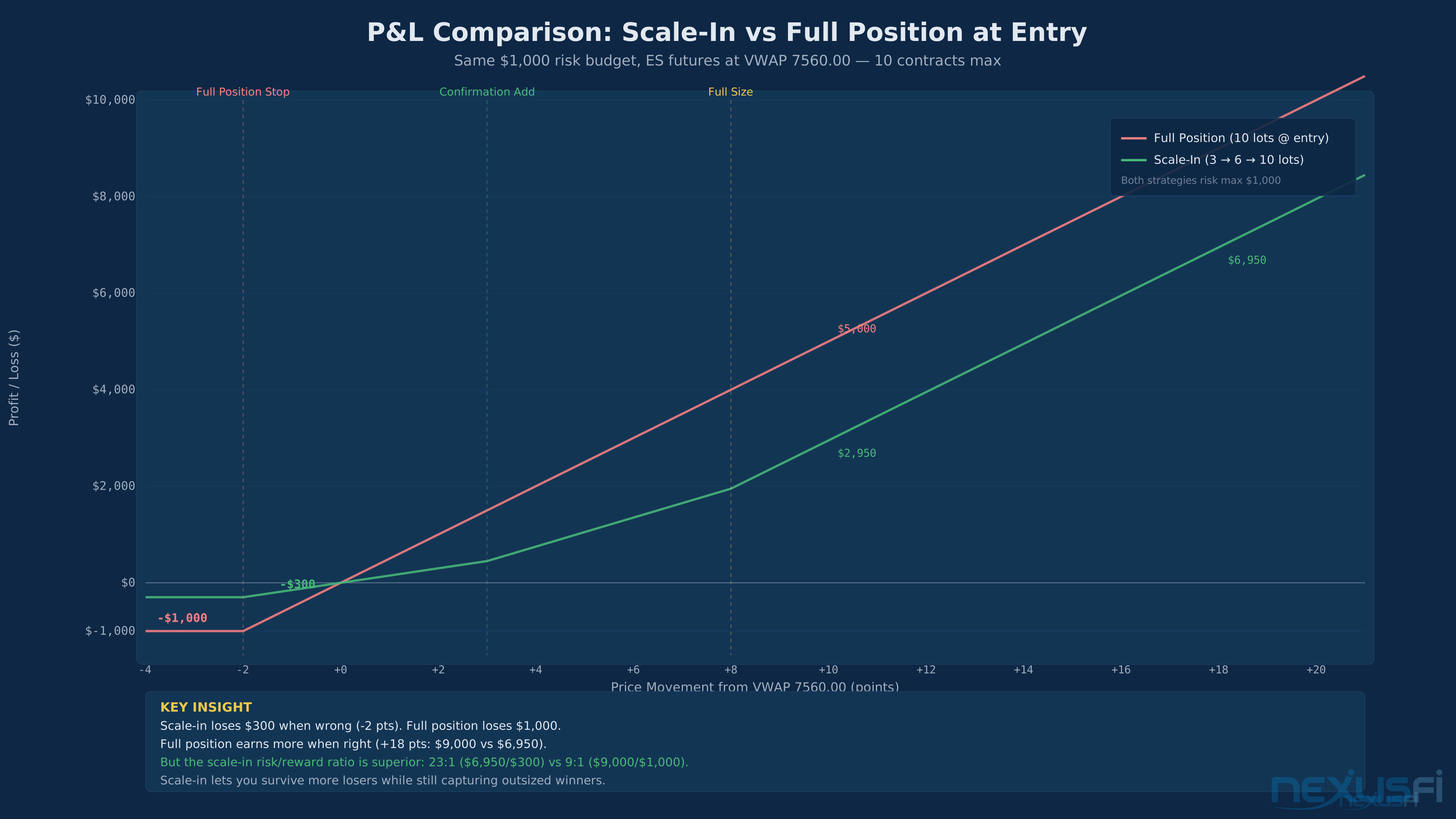
Setup: $100,000 account, 1% risk ($1,000), ES ATR14 = 10 points (40 ticks)
Step 1 — Probe: Price approaches yesterday's VWAP at 7,560.00 during the morning session. You place a limit buy for 3 contracts at 7,560.00 with a hard stop at 7,558.00 (8 ticks below). Dollar risk: 3 contracts x 8 ticks x $12.50 = $300.
Step 2 — Watch for confirmation: Price dips to 7,559.75 but doesn't trigger your stop. Over the next 4 minutes, price reclaims 7,560.00 and posts three consecutive one-minute closes above it. Delta on these bars shows 72% buying. The retest held — this is your confirmation trigger.
Step 3 — Confirmation add: You buy 3 more contracts at 7,563.00. Simultaneously, you move your original stop to 7,560.00 (break-even on the probe). Your 6 contracts have an average entry of 7,561.50 with a stop at 7,560.00. The probe is now at break-even; total risk stays well within your $1,000 budget. You just doubled your position without meaningfully increasing your dollar risk.
Step 4 — Full position: Price establishes a higher low at 7,561.50 and breaks the minor swing high at 7,563.00. You add 4 contracts at 7,568.00. Stop trails to 7,562.00 (below the higher low). Total position: 10 contracts, average entry approximately 7,563.50, stop at 7,562.00. Dollar risk: approximately $300 — you're nearly risk-free on 10 contracts.
Step 5 — Profit targets: At 7,578.00 (+1x ATR from entry), you exit 4 contracts for $50/point x 10 points x 4 = $2,000 profit. Move stop to 7,568.00. Trail the remaining 6 contracts with a 0.75 x ATR stop (7.5 points) from current price.
The result: maximum risk was $300 at any point during the trade. Potential profit on the first target alone was $2,000 — a 6:1 reward-to-risk ratio made possible by scaling in rather than entering full size at the probe.
Common Scale-In Mistakes #
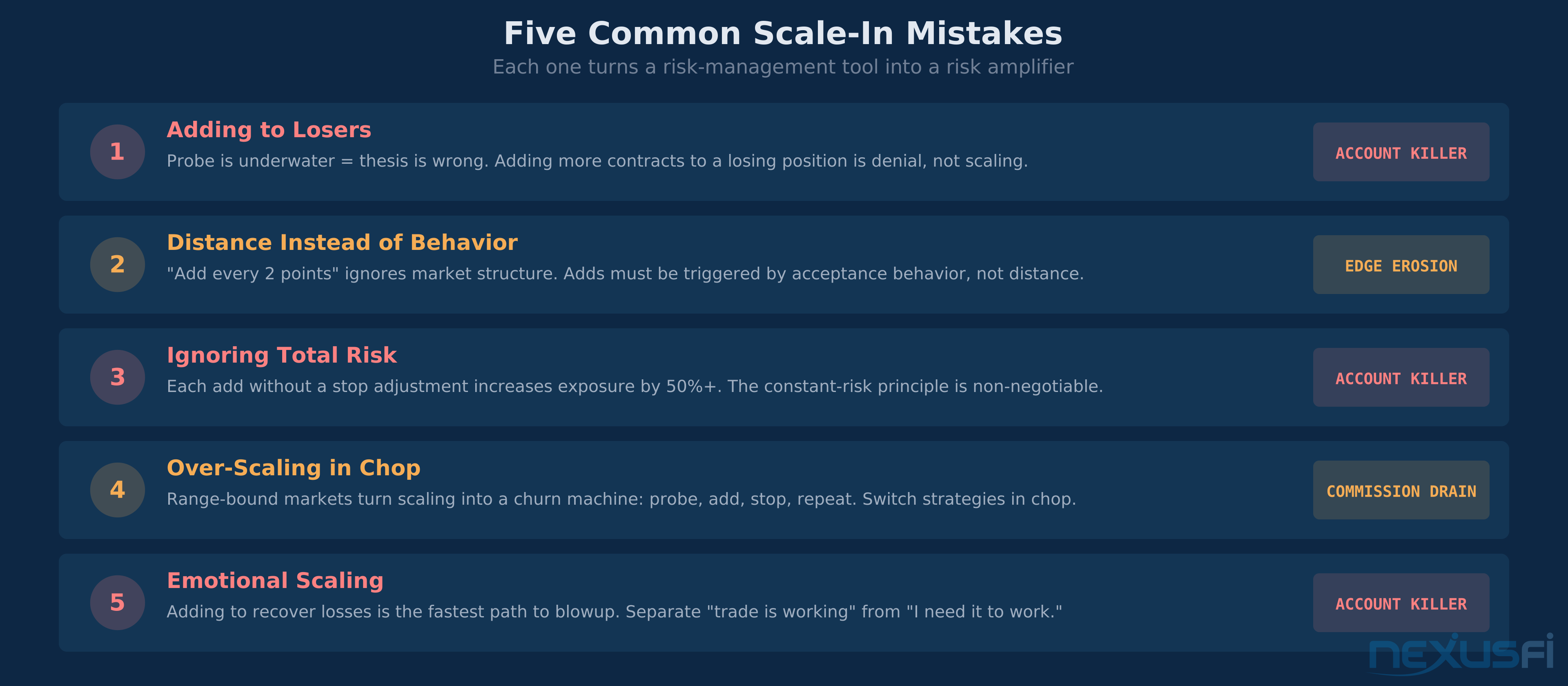
Mistake 1: Adding to losers. If your probe is underwater, the market is telling you your thesis is wrong. Adding more contracts to a losing position is not scaling in — it's doubling down on denial. The first rule of scaling is that you only add to positions that are working.
Mistake 2: Using distance instead of behavior. "Add every 2 points" is not a scale-in strategy. It's a mechanical rule that ignores what the market is actually doing. Your adds should be triggered by acceptance behavior — holds, retests, delta confirmation — not by arbitrary price distances.
Mistake 3: Ignoring total risk. Each add must include a stop adjustment that keeps total dollar risk within your budget. If you add 3 contracts without tightening your stop, you've just increased your risk by 50% or more. The constant-risk principle is non-negotiable.
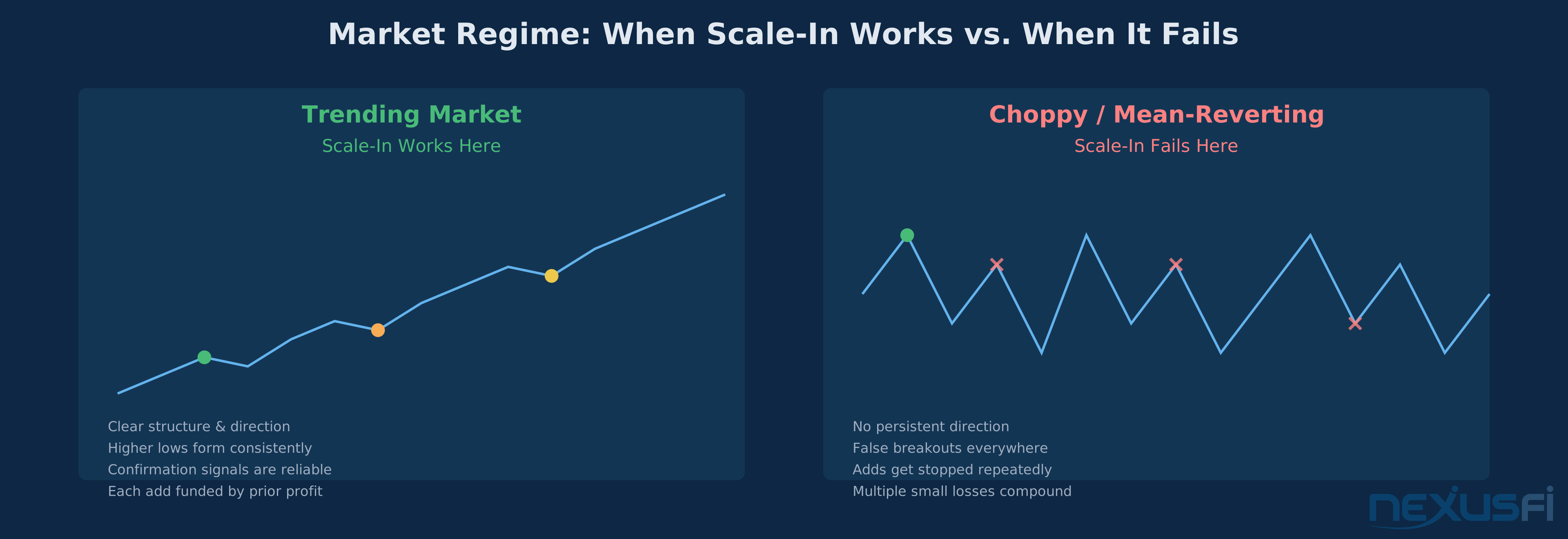
Mistake 4: Over-scaling in chop. Scaling works in trending or transitioning markets. In range-bound chop, scaling becomes a churn machine: you probe, add, get stopped, probe again, add again. If the market is chopping, reduce your adds or switch to a full-position, mean-reversion strategy.
Mistake 5: Emotional scaling. Adding to recover from losses is the fastest way to blow up a scale-in strategy. You must separate "this trade is working" from "I need this trade to work" — as @tigertrader observed, "it is important that you are adjusting your position according to the market's price action and not your P&L" — scaling amplifies your worst instincts when emotion drives the decision rather than structure. [13]
Scale-In vs. Scale-Out #
Scaling in and scaling out are related but serve different purposes. Scaling in manages entry risk. Scaling out manages exit efficiency.
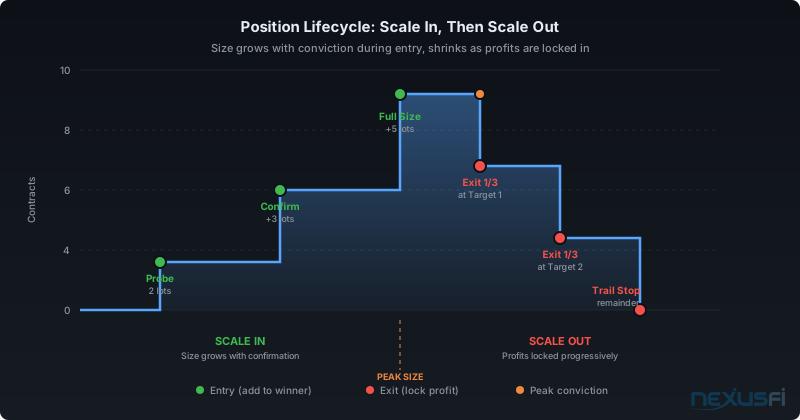
Scaling out means taking partial profits at predetermined targets while letting the remainder run with a trailing stop. The goal is to lock in gains on a portion of the position while maintaining exposure to further upside.
A common approach combines both: scale into the position using the probe-confirm-add framework, then scale out by taking 1/3 at the first target, 1/3 at the second, and letting the remainder run with a structural trailing stop.
This creates a position lifecycle where you're smallest at the beginning (when uncertainty is highest), largest in the middle (when the trade is confirmed and working), and progressively smaller at the end (as you lock in profits and reduce exposure to reversal risk).
The Bottom Line #
Scale-in trading is a professional risk-management technique that reduces initial exposure, improves average entry quality, and lets you size up when the probability edge is strongest. It works because it aligns position size with conviction — you're smallest when you know the least and largest when the market has proven your thesis.
But it demands discipline. Every add must be triggered by market behavior, not by hope. Every stop must be adjusted to keep total risk constant. Every position must pass the "would I enter fresh here?" test before adding contracts.
Done correctly, scaling in turns average setups into asymmetric trades where your risk is small and your reward potential is outsized. Done incorrectly, it turns probes into pyramids of hope that collapse under the weight of unrealized losses.
The framework is simple: probe small, confirm with behavior, add with discipline, manage with structure. The execution requires practice, objectivity, and the willingness to walk away when confirmation doesn't come.
See Also #
- Order Flow Analysis — the confirmation signals that drive professional scale-in decisions
- Pyramiding in Futures Trading — the closely related technique of building position size into trending moves
- VWAP Trading Strategies — the benchmark level most commonly used for probe entries
- Position Sizing for Futures Trading — the complete formula and framework behind per-trade risk budgets
- Stop Loss Strategies — trailing, structural, and ATR-based stops for managing growing positions
- Risk Management for Futures Trading — the broader framework that scale-in technique lives within
- Average True Range (ATR) — the volatility ruler used for trailing stops and volatility-adjusted sizing
- Delta Analysis & CVD — reading order flow confirmation through delta imbalance
- Volume Profile — the structural blueprint for identifying probe levels at high-volume nodes
- Trend Following Strategies — the market regime where scale-in trading delivers its best results
- Trade Management — the broader framework for managing live positions from entry through exit
- Scaling In and Out of Futures Trades — the complete position management playbook for entry and exit scaling
- Trading Psychology — the mental game behind maintaining discipline through the scale-in process
- Cognitive Biases — the mental shortcuts that lead to bad scaling decisions
Knowledge Map
Go Deeper
Build on this knowledgeReferences This Article
Articles that build on this topicCitations
- — All in all out vs. scaling in and out (2010) 👍 19“If you have a backtested setup, which gives you an edge, scaling in or scaling out does not make sense. You just need to follow the rules that you have backtested.”
- — Tap In's Corner (2016) 👍 9“Scaling I don't currently do anything but "all in all out," so my grasp of scaling strategies is entirely theoretical.”
- — The PandaWarrior Chronicles (2013) 👍 13“As a new trader I would always (always) freak out when I got a 6 tick ES winner (~= 15 tick CL) and would close it immediately.”
- — Scaling-in/Adding near your average MAE; why not? (2010) 👍 12“Here's my experience with this subject. Scaling into and out of trades requires real skills. Never add to a loser is absolutely correct. For me a losing trade is ONE TICK PAST my STOP. Up to my stop it is still a valid trade to enter.”
- — Big Mike's day trading method and advice (2014) 👍 16“I have a price in mind where I would be wrong about the trade. This is determined before I enter. I always start a trade with a 2 lot (almost always) and then add anywhere from minutes to hours later, depending on what happens next.”
- — Scaling in and/or out (2022) 👍 1“This is a really interesting topic. You have big names on both sides of the fence. For instance, Linda Raschke says go all in and scale out. Tom Hougaard, on the other hand, says you should build the position gradually, i.e. add to the winning trade.”
- — Scaling-in/Adding near your average MAE; why not? (2010) 👍 8“Hey all, Riddle me this.... :dontknow: Let's say my statistics tell me that on my winning trades I have an average MAE of 8 ticks. For this example, let's assume that I am using a 12 tick initial stop.”
- — Spoo-nalysis ES e-mini futures S&P 500 (2020) 👍 29“The concept or rationale behind adding(to a winner) is simple, and goes directly to the point of, what do I have to do to make money? You want to have on as little as possible when wrong, and as much size as possible when right.”
- — NYSE $TICK AND $ADD (2011) 👍 14“I began to press and add to my winners. What happened was the frequency of my winners went down, but the size of my winners grew by a lot, and so did my year ends.”
- — NYSE $TICK AND $ADD (2011) 👍 8“You should always ask yourself before adding to a position, "Would I initiate a trade from this point, if I didn't already have this position on?"”
- — The Original Turtle Trading Rules (2003)
- — Best Loser Wins (2022)
- — Killer Instinct and the Home Run Mentality (2011) 👍 8“When you are pressing a trade and adding to it, you should be scaling in a pyramid fashion, adding progressively smaller units. It is important that you are adjusting your position according to the market's price action and not your P&L.”