



Gamma Exposure (GEX) and Dealer-Driven Market Structure: How Options Flow Creates Price Magnets in Futures
Overview #
Every futures trader has experienced it: a clean breakout setup, everything lining up technically, price pushing through a level with conviction — and then it snaps back hard, as if hitting an invisible wall. Or the opposite: price drifts toward a key support level, touches it briefly, and instead of bouncing, accelerates through it like the level wasn't there at all.
In both cases, what you're often witnessing is the footprint of dealer gamma hedging.
Options market makers — the dealers who take the other side of every options trade — don't have a directional view. They hedge. Constantly. And that hedging creates structured, mechanical order flow in the ES and NQ futures markets that is predictable enough to give informed traders an edge in identifying where price will pin, where it will accelerate, and when a calm session is about to turn violent.
This is what Gamma Exposure (GEX) analysis is about: mapping where dealer hedging creates structural market forces, so you can trade with those forces rather than against them. It doesn't replace price action or volume profile analysis — it complements them by explaining why certain levels behave the way they do.
This article covers the mechanics from the ground up: how delta hedging works, why gamma matters for futures traders, what the GEX flip level and zero gamma level mean, how these flows show up in the ES and NQ tape, and how to use GEX data in a practical trading framework.
How Options Dealers Create Futures Order Flow #
To understand GEX, you need to understand what dealers are actually doing and why it affects futures prices.
When you buy an options contract, a dealer takes the other side. Dealers are not expressing a directional view — they want to collect the bid-ask spread and remain direction-neutral. But options are naturally directional instruments. If you buy a call, the dealer who sold it now has negative delta (it loses money if the underlying rises).
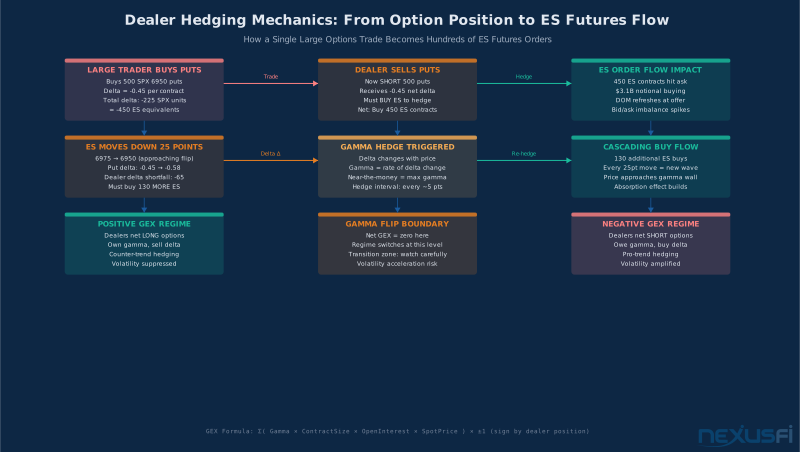
To neutralize that delta, the dealer hedges by buying the underlying. For S&P index options (SPX, SPY), the primary hedging vehicle is ES futures. For Nasdaq options (NDX, QQQ), it's NQ futures. This is the direct mechanical link: options dealer hedging flows directly into futures order flow.
Delta Hedging: The Constant Rebalancing Act
Delta measures how much an option's price changes for every $1 move in the underlying. A call option with a delta of 0.50 gains $0.50 when the underlying rises $1. The dealer who sold that call has a delta of -0.50 and needs to hedge by buying enough ES futures to offset.
But delta is not static — it changes as the underlying moves. This rate of change is gamma. When the underlying moves, delta changes by gamma, which forces dealers to rebalance their hedges.
In practice: every time ES moves, every dealer with options exposure recalculates their delta and adjusts their futures position to maintain neutrality. In liquid markets with heavy options activity, this creates a near-continuous stream of mechanical futures order flow tied directly to options delta rebalancing.
@josh, a veteran NexusFi Elite member who has deep knowledge of dealer mechanics, explained the flow dynamics clearly:
@"There is a natural dealer flow from vanna and charm. Now, the question is, when do they 'turn on' this flow? They don't want to hedge all day long (transaction costs being one factor, I suppose); rather, they prefer to do this nearer the end of the day, so that as the market closes and positions are marked, they can close their books being properly hedged (and delta neutral). ES is the primary hedging vehicle for this purpose."
What Gamma Exposure (GEX) Measures #
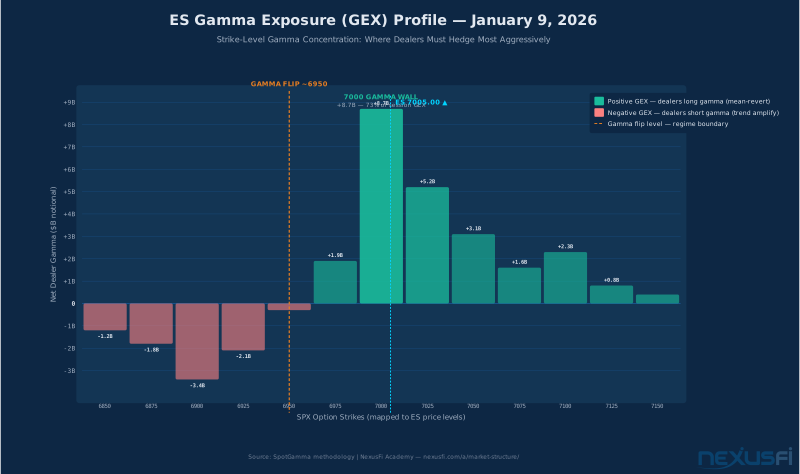
Gamma Exposure is the aggregate measure of how much an options dealer's delta will change for a given move in the underlying. It answers the question: "If ES moves 10 points, how much futures buying or selling will dealers be forced to do across their entire book?"
Mathematically, GEX is calculated by aggregating the gamma of each option contract (weighted by open interest, contract multiplier, and whether dealers are long or short that gamma) across all strikes and expiries.
Who Is Long Gamma vs. Short Gamma?
The sign of dealer gamma exposure depends on which side of the options flow dealers are sitting on:
Dealers are typically long gamma (positive GEX) when the public is predominantly long puts and short calls — which describes the normal "hedging" posture of institutional investors and portfolio managers who buy downside protection. Dealers take the other side: they're long calls and short puts, which means net long gamma.
As @josh explained on NexusFi:
@"The world is short calls and long puts. As Cem says, 'the world is long' — even if you're not actually long, you have a job, you are a consumer, etc., and that means you're part of the 'long' economic machine. That is, funds buy downside protection (puts) by selling premium (calls) on their holdings. This means dealers are long calls and short puts."
Dealers are short gamma (negative GEX) in unusual conditions where retail or speculative options buying dominates — especially during meme-stock events where call buying overwhelms. In the ES/NQ context, deep negative GEX often occurs during high-volatility events, when protective put buying surges relative to call selling.
Positive vs. Negative Gamma Regimes #
The sign of the aggregate dealer gamma exposure determines how their hedging behavior affects price:
Positive Gamma: The Dampening Regime
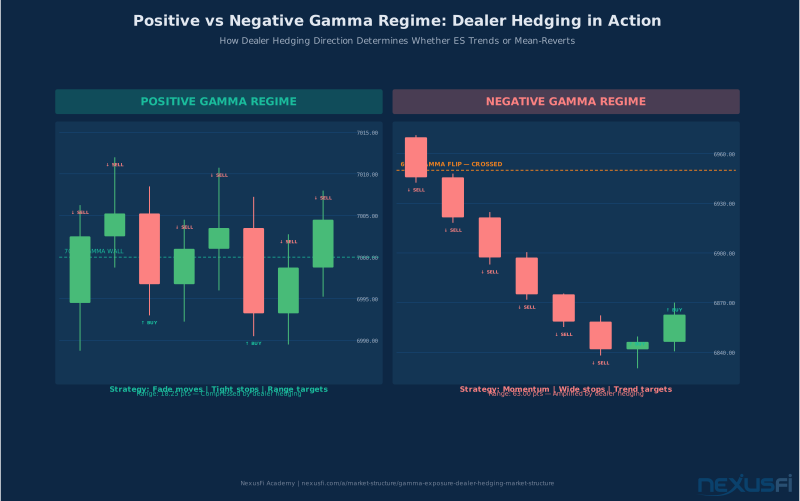
When dealers are net long gamma (positive GEX), their hedging is mean-reverting: they sell into strength and buy into weakness. This is because as price rises, their long calls gain delta faster than expected (gamma effect), and they have to sell futures to rebalance. As price falls, their short puts gain delta on the downside, forcing futures buying.
The practical effect: volatility dampening. Dealers act as natural shock absorbers. Their mechanical selling on rallies and buying on dips suppresses large directional moves. Price tends to pin near high-open-interest strikes. Breakouts fail more often. Range trading works.
@tigertrader, who has been analyzing GEX in the ES market since the concept emerged in retail circles, documented this dynamic precisely:
@"GEX or gamma exposure (represented by the orange line) is 261,538,294. Which means the market flipped from negative gamma to positive gamma. Instead of buying into rallies and selling as the market goes down, hedgers will now be selling into rallies and buying as the market goes down. This has the effect of dampening volatility, and allowing the market to breathe, so to speak."
Negative Gamma: The Amplifying Regime
When dealers are net short gamma (negative GEX), their hedging is pro-directional: they buy into strength and sell into weakness. As price rises, their short calls accumulate delta faster than expected, forcing futures buying to stay neutral. As price falls, their long puts gain delta, forcing futures selling.
The practical effect: volatility amplification. Dealer hedging reinforces directional moves rather than opposing them. What looks like normal support can be overwhelmed. Breakouts follow through. Momentum strategies work. This is the environment where @tigertrader's famous warning about "picking up pennies in front of the steam roller" applies most directly to mean-reversion traders.
As tigertrader explained in a widely-cited post about market structure:
@"The importance of who is driving price in any market is key to understanding current market structure. Retail orders from mere mortals like us have very little to do with market structure, and have very little impact on price. Flow trumps fundamentals for longer than the average leveraged speculator can tolerate. Price-insensitive flows from mechanical selling often dominate the market."
The GEX Flip Level and Zero Gamma Level #
The most actionable outputs from GEX analysis are two specific price levels that define the boundary between dampening and amplifying regimes.
The GEX Flip Level
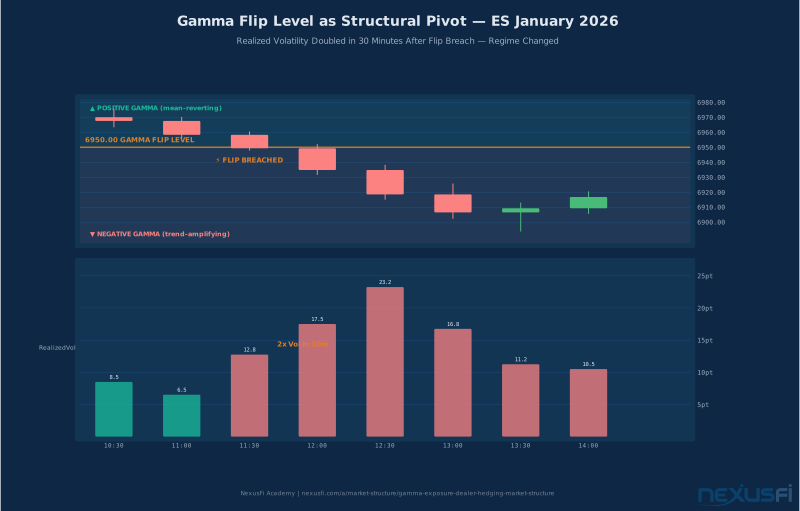
The GEX flip level is the price at which aggregate dealer gamma changes sign — from positive to negative, or negative to positive. It represents the transition from a mean-reverting to a momentum-amplifying environment.
When price crosses the GEX flip level, the character of the market tends to change. Behavior that worked below the level (range trading, fading moves) stops working. Behavior that was dangerous below the level (chasing breakouts) becomes more reliable.
This is not a signal to enter a trade. It's a regime boundary that tells you which strategy category to reach for.
The Zero Gamma Level (Gamma Zero)
The zero gamma level is the specific price where the aggregate dealer net gamma equals zero — neither dampening nor amplifying. This is often described as the equilibrium or pivot of the options market for a given expiry.
In practice, the zero gamma level and the GEX flip level are often close to each other or even the same level, depending on how they're calculated. What matters for trading is the concept: there is a price where the market character changes, and price below versus above that level tends to behave differently.
SpotGamma's commentary on the 2800 SPX level in 2020 — shared by @tigertrader on NexusFi — captures this perfectly:
@"Our zero gamma flip point is closer to 2900, but there is very little negative gamma between 2800 and 2900. Said another way, we're essentially 'gamma neutral' with action at a specific strike dominating things. Today's options volume was the lowest of the week with 2800 (of course) the highest volume strike. So, that just adds more gamma to this level, putting it in play for the foreseeable future."
The Magnet and Repellent Effects #
Experienced GEX traders describe two recurring market behaviors around high-gamma strikes:
The Pinning ("Magnet") Effect
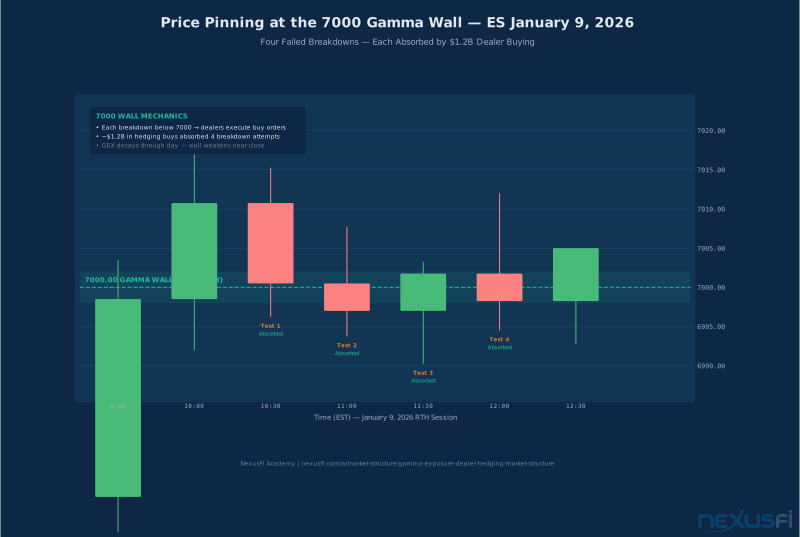
Near high-open-interest strikes in a positive gamma environment, price tends to gravitate and hold. The mechanical selling by dealers on rallies and buying on dips acts as a force pulling price back toward the strike where gamma is highest. This is most visible:
- Into options expiration (Friday/monthly), as the strike approaches maximum gamma
- After large options events (such as JPMorgan's quarterly put collar), when a single strike dominates the gamma environment
- On low-volatility days when options flows represent a significant percentage of total futures volume
@tigertrader documented the JPM collar effect precisely:
@"As mentioned above, the elephant in the room is JPM's Dec. 30 put collar spread. It has resulted in reducing volatility by limiting moves above and below the 3835 strike as dealers delta hedge their long gamma. The closer the option gets to expiration the larger the gamma grows. Just since last week, gamma exposure on the 3835 call strike grew by 50%. The effect of this growing gamma call strike is putting a floor under the market."
The Gamma Trap ("Repellent") Effect
Below a dominant gamma level in a negative gamma zone, a "gamma trap" can form: as price moves lower, put options gain value, requiring dealers to sell more futures to hedge, which pushes price lower, which causes more put value gains, which requires more futures selling. The feedback loop is self-reinforcing.
This is why negative gamma environments produce sharper, more sustained moves in either direction. The same dynamic works in reverse on rallies in negative gamma territory: buying into strength forces more buying by dealers, amplifying the upside.
@tigertrader described the trap mechanism on NexusFi:
@"No surprise the market is hanging around the 2800 level, as it is the top absolute gamma strike. Below 2800 lies mainly large put positions, and as I mentioned over the weekend, there is a possibility that a 'gamma trap' could take place below that level. As the market moves lower, put positions gain value, and dealers have to sell futures to hedge. At the same time, VIX increases in value, adding to the bid in the puts, and subsequently more dealer hedging."
0DTE and Expiration Effects #
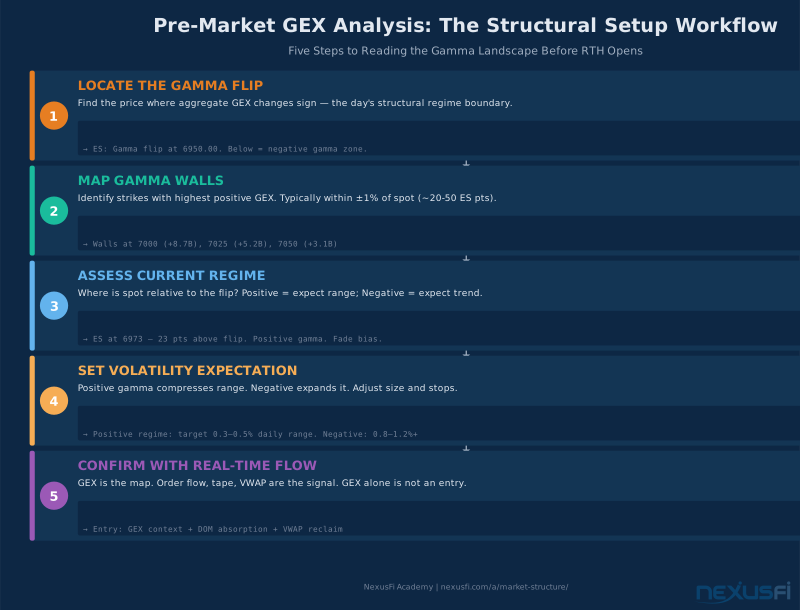
The rise of 0DTE (zero days to expiration) options has at the core changed the intraday GEX environment. 0DTE options now represent roughly half of all daily options volume, which means their gamma exposure refreshes every single trading day.
Near-expiry options have extremely high gamma near the money. A 0DTE at-the-money call can have a delta of 0.50 that changes rapidly — sometimes going from 0 to 1 across a narrow price range within hours. This creates intense, short-duration dealer hedging pressure around key strikes.
As @tigertrader noted on NexusFi:
@"Since 0DTE options average ~50% of daily options flows, it stands to reason that having a visual representation of the flows could provide an edge for trading ES. I like to chart the 0DTE call strike exhibiting the highest volume against the 0DTE put strike that has the highest volume. It provides a nice visual of the flows."
Practical implications for ES/NQ traders from the 0DTE effect:
- Intraday levels shift rapidly -- gamma levels are not static from morning to afternoon. As 0DTE strikes accumulate volume throughout the day, the most dominant gamma strike can move.
- Pinning intensifies as the close approaches -- late in the day, 0DTE gamma grows dramatically as time decay accelerates. Price often "sticks" to the highest-OI 0DTE strike in the final hour.
- Volatility expansion after 0DTE expiry -- when a dominant 0DTE expires and its gamma is removed from the market, the remaining structure shifts. Price can move more freely in the hours after a large 0DTE cluster expires.
SpotGamma's response to a direct question on NexusFi about GEX flip timing captures the urgency:
@"We would treat a flip from positive to negative GEX as a structural shift in market mechanics, rather than a leading indicator. The volatility response can begin almost immediately, particularly in high-options volume or 0DTE dominated environments where price action is trending. In practice, traders should brace for volatility expansion as soon as price heads into negative gamma territory."
How GEX Flows into ES/NQ Specifically #
The connection between index options and ES/NQ futures is direct and mechanical:
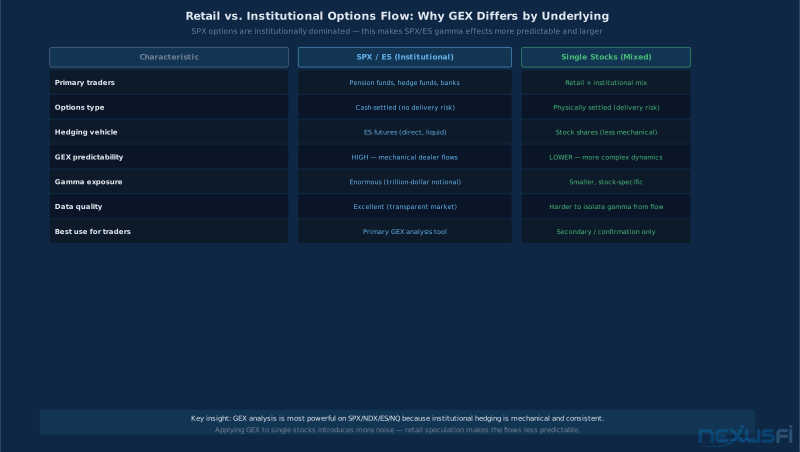
SPX options dealers hedge via ES futures — this is the primary, most liquid instrument for index delta hedging. Large dealers don't sell individual stocks to hedge SPX exposure; they hit the ES futures market. This means the aggregate delta of all SPX options dealer hedges shows up directly in ES order flow.
NDX/QQQ dealers hedge via NQ futures — the same relationship holds for Nasdaq index options. The NQ futures market absorbs NDX option dealer delta rebalancing.
For traders, this creates a specific type of order flow: price-insensitive, mechanical hedging orders. These are not orders from traders with a view on direction. They're forced flows executed to maintain delta neutrality. When the market is in negative gamma territory and moving lower, dealers are selling ES not because they think the market will continue falling, but because their hedge math requires it.
SpotGamma confirmed the direct link on NexusFi:
@"Mechanically, ES and NQ traders should be watching gamma exposure for the underlying index, since SPX and NDX options are hedged first and most directly in the futures market. That means index options trades will result in buying or selling pressure for ES and NQ."
Practical Regime Identification #
Using GEX in live trading requires being able to identify the regime each morning and adjust as conditions change throughout the day.
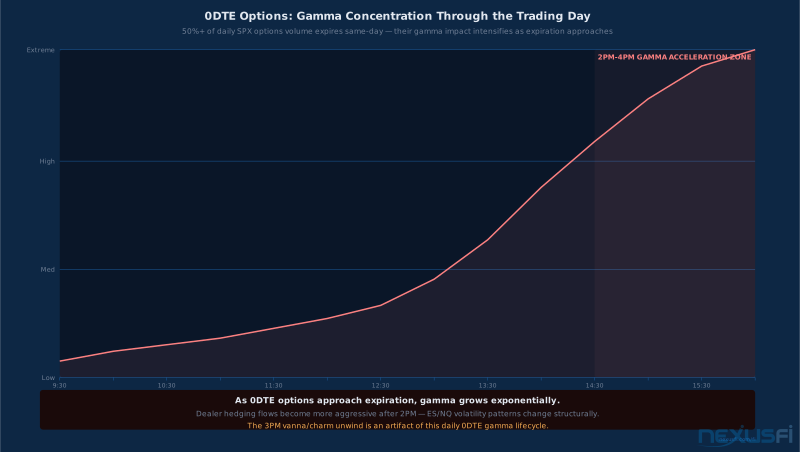
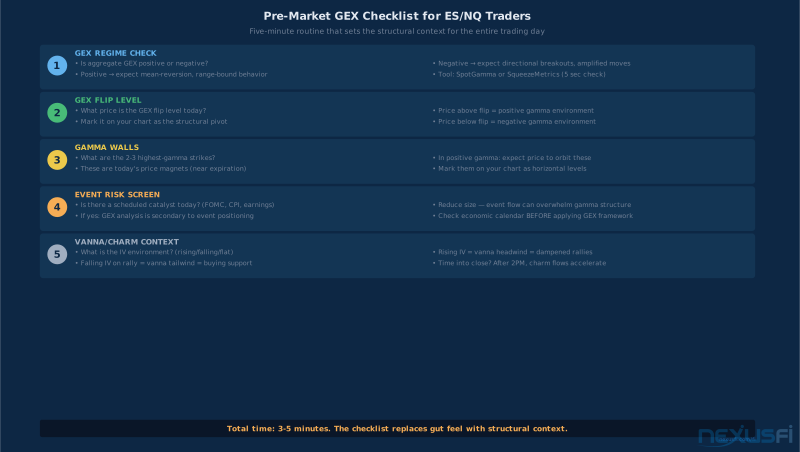
Before the Open: Morning Setup
Before the session, identify:
- Current GEX reading -- is the market in positive or negative gamma territory?
- GEX flip level for today -- at what price does the regime change?
- Dominant gamma strikes -- which specific strikes have the most open interest concentration? These are potential pinning levels.
- Expiration calendar -- is today a 0DTE-heavy day (Monday, Wednesday, Friday for SPX)? Are monthly or quarterly expirations approaching?
Intraday Regime Tracking
GEX levels are not static. As 0DTE options accumulate volume throughout the day, the dominant strike can shift. Key things to monitor:
- Is price above or below the flip level? This determines the base regime.
- Which 0DTE strike has the highest volume today? This is the day's primary pinning target if you're in positive gamma territory.
- How are dealers positioned as price approaches key strikes? Watch for tape behavior -- does the bid refresh aggressively on dips near a high-gamma strike (suggesting dealer buying support)? Or does it collapse on the first test?
Trade Setups by Regime #
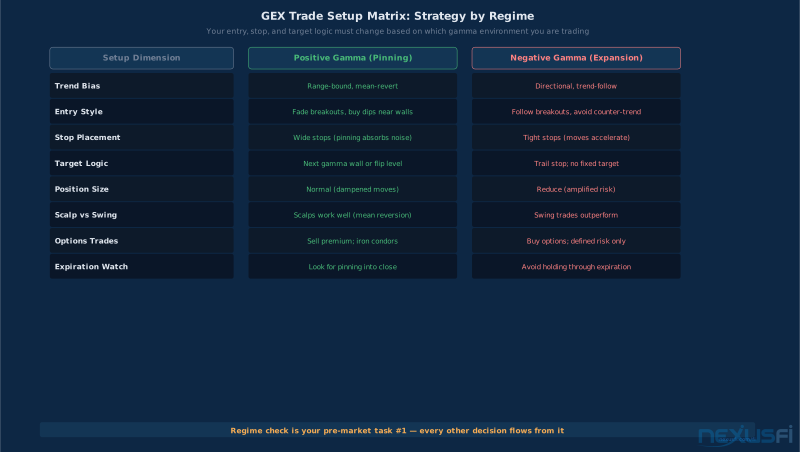
GEX doesn't generate specific entries. It tells you which type of setup to prioritize and which to avoid.
Positive Gamma Playbook
Favor: Mean reversion, range trading, fading moves away from high-gamma strikes
Avoid: Chasing breakouts; buying into rallies at high-gamma strikes where dealers are forced sellers; selling dips hard at put walls where dealer buying supports
Typical setups:
- Naked VPOC revisit with positive gamma providing the gravitational pull back toward the most-traded price
- Value area edge fades when price probes VAH or VAL in a positive gamma environment -- dealers adding selling/buying support at those levels
- High-gamma strike as price target -- if price is below the top gamma strike, use that level as your target rather than a level beyond it
Negative Gamma Playbook
Favor: Momentum, breakout continuation, trend following
Avoid: Fading moves near gamma trap zones; holding against the trend when dealer hedging is amplifying direction
Typical setups:
- Breakout with volume when price exits a positive gamma zone and enters negative gamma territory -- the regime change itself is the signal
- Pullback entries in the direction of the move after the gamma flip, as dealer hedging continues to amplify direction
- Wider stops to account for the absence of dealer mean-reversion support
Near the Flip Level: Reduced Confidence Zone
The GEX flip level itself is the most dangerous zone. Price is in transition — dealer hedging behavior is ambiguous, and a small move can dramatically change the market's character.
Avoid: Taking directional trades directly at the flip level; using tight stops near this level
Do: Wait for price to clearly establish itself above or below the flip before committing to a regime-based setup. Use the flip level as a key reference for defining breakout entries or reversal risk.
Combining GEX with Volume Profile and Order Flow #
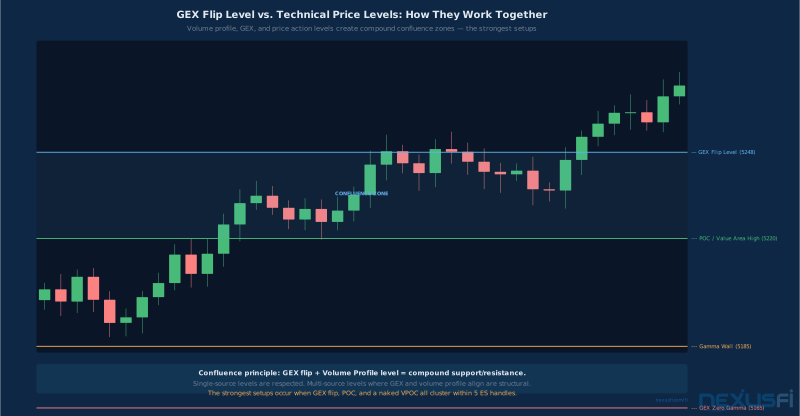
GEX works best as one layer of a multi-factor decision framework. Gamma levels tell you where structural market forces exist. Volume profile and order flow tell you whether those forces are being respected in real-time.
GEX and Volume Profile Alignment
The most reliable setups occur when GEX levels align with volume profile levels:
- A high-gamma strike that sits near the prior session's POC is a powerful dual reference level
- When the GEX flip level coincides with the developing VPOC, price interaction at that zone carries extra significance
- Value area edges that align with gamma walls see stronger rejection behavior
Confirming with Order Flow
GEX levels identify zones of structural importance. The Cumulative Volume Delta (CVD) and tape confirm whether dealers are actually executing their hedges at those levels:
- Price touches a positive gamma strike and CVD diverges (price tests the strike but delta buyers absorb the selling) -- strong reversal signal
- Price approaches a positive gamma strike but CVD shows persistent selling with no absorption -- gamma wall may fail; dealers may not be able to hold the level
- Price crosses the GEX flip level with expanding volume and CVD confirming the direction -- regime change is real; the flip is not a false break
GEX Data Sources and Tools #
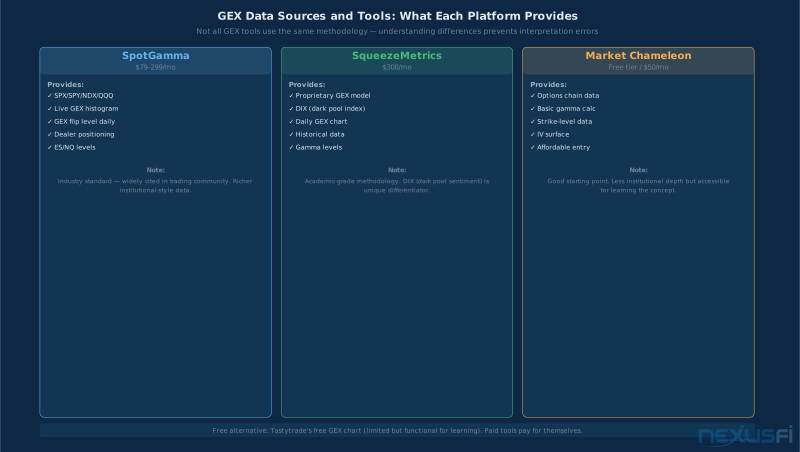
Accessing GEX data requires external tools. The data is not built into standard trading platforms.
SpotGamma
SpotGamma is the most prominent provider of GEX analysis for index futures traders. Their products include real-time GEX charts, flip level calculations, TRACE indicator (which identifies when and where SPX options flows are being hedged in futures), and key levels updated throughout the trading day. SpotGamma has been an active contributor to NexusFi discussions and participated in a dedicated AMA thread on options flow and gamma analysis.
SqueezeMetrics (The Gamma Field)
SqueezeMetrics produces the GEX metric derived from public options data. Their approach weights gamma by open interest and estimates dealer positioning using assumptions about who is typically long vs. short each option type. The "Dark Index" (DIX) is a companion measure of dark pool buying that some traders pair with GEX for a more complete picture.
Market Chameleon and CBOE Data
Raw open interest data for SPX options is publicly available from the CBOE. Market Chameleon and similar platforms provide visual tools for plotting open interest by strike, which allows for manual identification of gamma walls and dominant strike concentrations.
Important Caveats on GEX Data
GEX calculations are estimates, not perfect measurements:
- Sign convention varies -- not all providers use the same convention for positive vs. negative gamma. Know your source's convention before trading with it.
- OI snapshot timing matters -- GEX based on end-of-day OI may be outdated by midday as 0DTE options accumulate volume
- Intraday recomputation is better -- providers who update GEX throughout the day give a more accurate picture, especially after major options events
- The effect depends on dealer positioning assumptions -- GEX models assume dealers are typically short options to the public; this is generally accurate for SPX index options but less so in unusual positioning environments
Common Mistakes and Misconceptions #
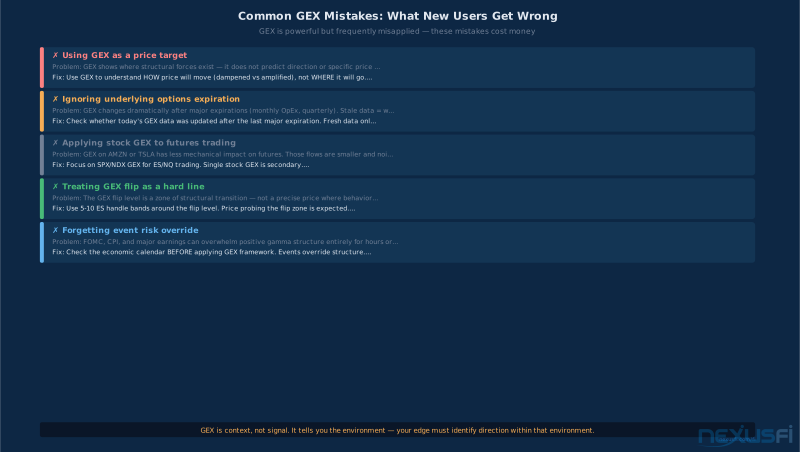
Treating GEX as a direction signal — GEX tells you about regime (dampening vs. amplifying), not direction. Positive gamma doesn't mean the market will go up; it means if it moves, dealers will resist it.
Using single-level precision — Gamma effects operate in bands, not at single ticks. A "3% OTM call wall" means the influence zone is roughly the 1-3% above and below that strike, not a specific price.
Ignoring regime transitions — The GEX flip happens fast, especially in 0DTE-heavy environments. A session that starts positive gamma can flip to negative intraday. Monitoring the flip level through the session is required, not just morning setup.
Ignoring the broader context — GEX can be overwhelmed by macro news, CTA trend-following flows, or volatility expansion events. A positive gamma environment doesn't mean the market won't move violently if a Fed decision surprises. Always integrate GEX with macro awareness.
Over-relying on one day's data — GEX snapshots from yesterday don't perfectly predict today. 0DTE flows rebuild the gamma environment fresh each day.
When Dealer Hedging Gets Overwhelmed #
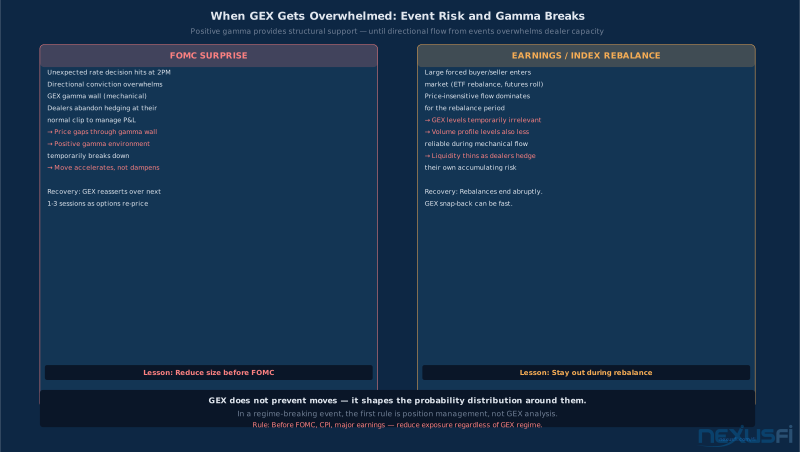
Positive gamma regimes don't always hold. Dealers have limits:
- Large macro events -- A surprise CPI print or Fed statement can generate directional order flow that overwhelms dealer mean-reversion hedging. When macro flows dominate, GEX levels become temporarily irrelevant.
- Systematic/CTA flow convergence -- When trend-following funds (CTAs) and volatility-targeting strategies all flip at the same time, the combined flow can push through gamma walls
- Options repricing -- When IV spikes, option gamma values change rapidly, potentially shifting the effective GEX level mid-session
As tigertrader noted in his influential post about market structure forces:
@"While the trading strategies for the above market participants may vary, their strategies for risk management share the common element of negative gamma. As I mentioned before, when you hedge out a portfolio's gamma exposure, you sell on the way down and buy on the way up for risk management purposes. The above players come into the market at the same time, in the same way, both when they get in the market and when they get out."
The lesson: treat GEX as a probabilistic edge, not a guarantee. When it aligns with your other signals, it strengthens the trade. When it conflicts, it adds risk.
The Charm and Vanna Dimension #
Beyond gamma, two higher-order Greeks create structured flows that futures traders should understand:
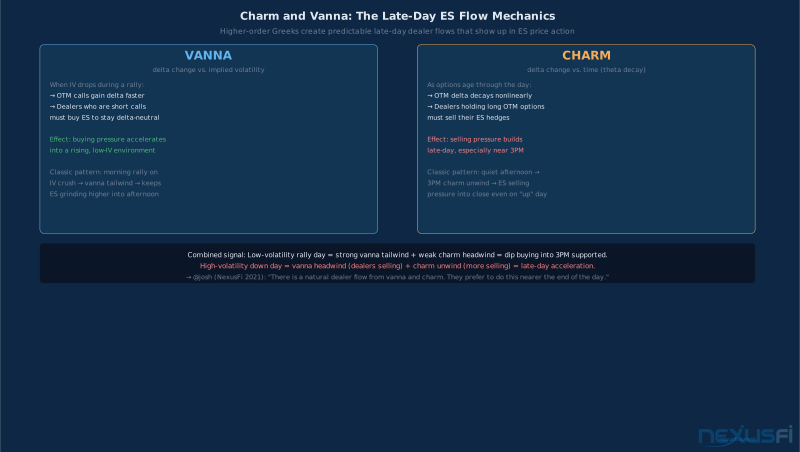
Vanna measures how delta changes as implied volatility changes (rather than as price changes). When IV spikes or collapses, vanna creates mechanical rebalancing flows independent of spot price movement. In ES/NQ, this shows up as mechanical buying when IV collapses (vanna unwind) and selling when IV spikes.
Charm measures how delta changes over time. As options approach expiration, near-the-money options' delta decays toward zero (for OTM) or toward 1 (for deep ITM). Dealers must rebalance as this time-driven delta decay unfolds.
@josh explained the practical implication of charm flows on NexusFi — the well-known tendency for ES to rally into the close:
@"The delta of an OOM call decays non-linearly with respect to time. The dealer, who is long calls and short puts, and has had to sell futures to hedge this positive delta exposure, will mechanically buy futures at an exponential rate as the options reach expiration. So the point is: there is a natural dealer flow from vanna and charm."
For practical purposes: late-day ES rallies on low-volatility days are partly mechanical — they reflect charm-driven delta unwinding as option dealers buy back the futures hedges they no longer need as options expire worthless.
The Bottom Line #
Gamma Exposure analysis doesn't replace tape reading or price action or volume profile. It completes the picture by explaining the mechanical forces behind why certain price levels hold and why others fail violently.
The framework is simple in application: identify whether you're in a positive or negative gamma environment, find the flip level, and calibrate your strategy so. Positive gamma = trade for mean reversion and accept tighter ranges. Negative gamma = trade for momentum and accept wider swings.
The GEX flip level is the market's structural pivot — the price where the dealer hedging regime changes character. Breaks above or below that level on volume, confirmed by tape and order flow, are among the most reliable regime change signals available to an intraday ES/NQ trader.
The dealers have no view. They're just hedging. And their mechanical flows create price levels that repeat session after session, offering structured traders a repeatable edge — if you know where to look.
Gamma Exposure (GEX) measures the aggregate options dealer hedging pressure in the ES/NQ futures market. Positive gamma (dealers long gamma) dampens volatility and supports range trading. Negative gamma (dealers short gamma) amplifies moves and rewards momentum. The GEX flip level is the regime boundary — the price where market character shifts. Trade the response at the level with order flow confirmation; never trade the level itself. 0DTE options now represent ~50% of daily flows and create intense intraday pinning effects near dominant strikes, especially in the final hours before expiration.
Knowledge Map
Go Deeper
Build on this knowledgeReferences This Article
Articles that build on this topicCitations
- — Spoo-nalysis ES e-mini futures S&P 500 (2022) 👍 12“GEX flipped from negative gamma to positive gamma. Instead of buying into rallies and selling as the market goes down, hedgers will now be selling into rallies and buying as the market goes down. This has the effect of dampening volatility.”
- — Spoo-nalysis ES e-mini futures S&P 500 (2022) 👍 9“The JPM Dec. 30 put collar spread has resulted in reducing volatility by limiting moves above and below the 3835 strike as dealers delta hedge their long gamma. The closer the option gets to expiration the larger the gamma grows.”
- — Spoo-nalysis ES e-mini futures S&P 500 (2020) 👍 12“No surprise the market is hanging around the 2800 level, as it is the top absolute gamma strike. Below 2800 lies mainly large put positions, and a gamma trap could take place below that level.”
- — Spoo-nalysis ES e-mini futures S&P 500 (2020) 👍 13“Our zero gamma flip point is closer to 2900, but there is very little negative gamma between 2800 and 2900. We're essentially 'gamma neutral' with action at a specific strike dominating things.”
- — SpotGamma AMA - Ask Me Anything About Options Flow & Gamma Analysis (2026) 👍 1“ES and NQ traders should be watching gamma exposure for the underlying index, since SPX and NDX options are hedged first and most directly in the futures market. A flip from positive to negative GEX is a structural shift -- volatility response can begin almost immediately.”
- — Spoo-nalysis ES e-mini futures S&P 500 (2022) 👍 6“Since 0DTE options average ~50% of daily options flows, it stands to reason that having a visual representation of the flows could provide an edge for trading ES.”
- — Spoo-nalysis ES e-mini futures S&P 500 (2021) 👍 12“There is a natural dealer flow from vanna and charm. They prefer to do this nearer the end of the day. ES is the primary hedging vehicle for this purpose. There is often a tailwind at 3pm.”
- — Webinar: The Impact of Options on Futures w/SpotGamma (2021) 👍 14“The world is short calls and long puts. This means dealers are long calls and short puts. The delta hedging of these positions is an automated, mechanical flow that drives price.”
- — Spoo-nalysis ES e-mini futures S&P 500 (2015) 👍 34“The importance of who is driving price is key to understanding current market structure. Price-insensitive flows from mechanical selling often dominate the market. Flow trumps fundamentals.”
- — Webinar: The Impact of Options on Futures w/SpotGamma (2021) 👍 14“If you bought the AMC 60 call, the dealer who is short the call now has a delta of -25. In order to hedge, the dealer will buy 25 shares of AMC. Since delta varies as underlying moves, as AMC rises the dealer has to buy more shares -- this buying is an automated, mechanical flow.”
- — Spoo-nalysis ES e-mini futures S&P 500 (2022) 👍 12“Price action still appears analogous to post June expiration, where the market experienced deep negative gamma levels that flipped after expiration and served as launching pad for the Summer rally.”