



Market Internals and Breadth Indicators for Futures Trading: TICK, ADD, VOLD, and the Data Layer That Shows What Price Can't
Overview #
Every futures trader stares at a price chart. The ES ticks higher, the NQ breaks above the overnight high, and the question is always the same — is this move real or is it garbage? Price alone can't answer that. A 20-point rally driven by three mega-cap stocks looks identical on the ES chart to a 20-point rally supported by 1,800 advancing issues. The difference between those two scenarios is everything.
Market internals — specifically $TICK, $ADD, and $VOLD — give you the participation data that price hides. These indicators measure what's happening across the entire NYSE equity tape, and because the S&P 500 is a basket of stocks, that breadth data directly reflects the health of any move in ES or NQ futures.
That's the key insight — unlike RSI, MACD, or any other price-derived indicator, market internals pull from a completely different data source. They measure the underlying equity tape, not derivatives of the same price you're already watching.
This article breaks down how each indicator works, the extreme readings that actually matter, the divergence setups that produce the highest-probability trades, and how to integrate breadth data with DOM and order flow analysis for a complete decision framework.
Key Concepts #
$TICK (NYSE TICK) — the net count of NYSE stocks trading on an uptick minus those trading on a downtick at any given moment. It's the fastest of the three breadth indicators, updating with every print across the exchange. Think of it as the market's real-time pulse — a snapshot of whether the tape is collectively lifting or pressing.
Formula: $TICK = (Number of NYSE stocks on uptick) - (Number of NYSE stocks on downtick)
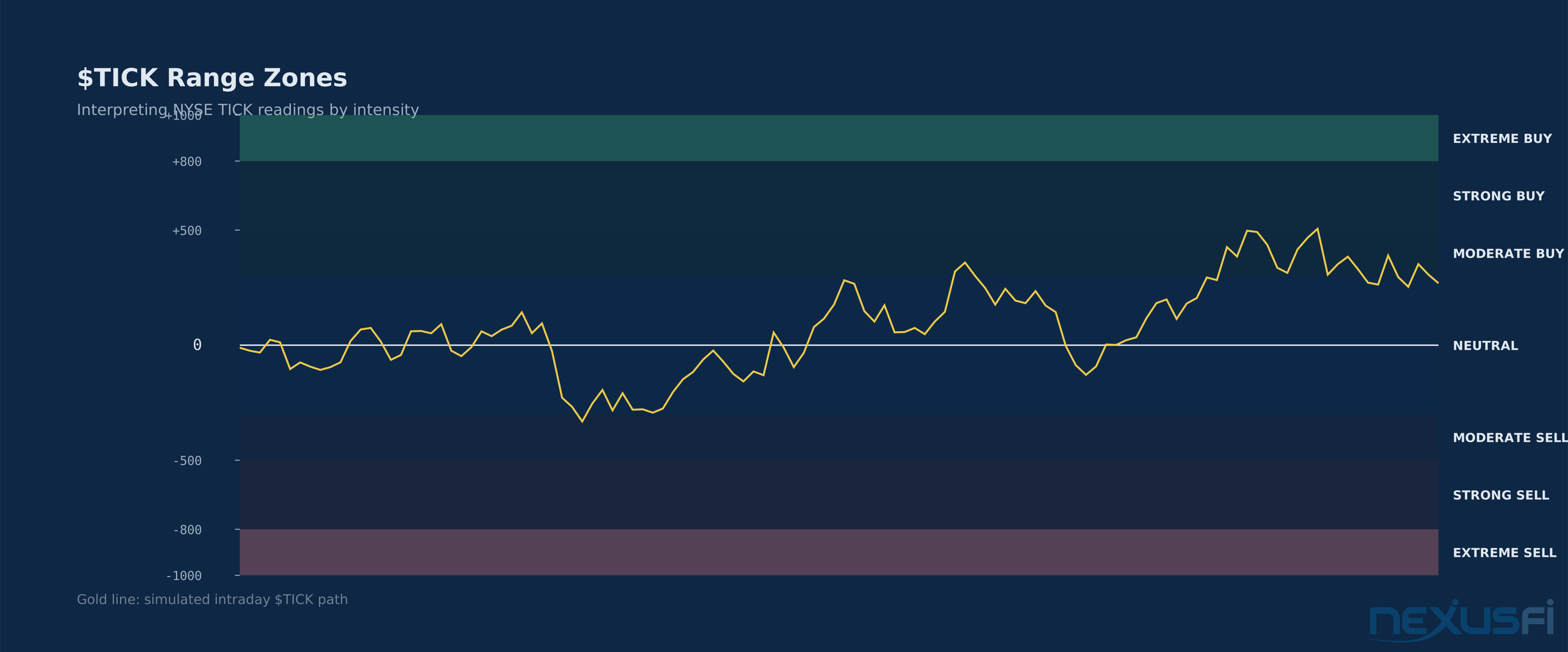
Normal range: roughly -1,000 to +1,000. Readings beyond +/-800 are considered extreme.
$ADD (Advance-Decline Difference) — the net count of NYSE stocks advancing versus declining. While TICK measures tick-by-tick pressure, ADD measures the broader participation picture — how many issues are actually winning versus losing on the session.
Formula: $ADD = (Number of advancing NYSE stocks) - (Number of declining NYSE stocks)
The cumulative version, the Advance-Decline Line (ADL), runs a rolling total throughout the session. A steeply rising ADL means buying breadth is expanding. A flat ADL during a price rally means the rally is narrow [14].
$VOLD (Volume Difference) — the total volume flowing into advancing stocks minus the volume flowing into declining stocks. This is the "force" indicator — not just how many names are winning, but how much capital is behind them.
Formula: $VOLD = (Volume of advancing NYSE stocks) - (Volume of declining NYSE stocks)
A positive $ADD with strongly positive $VOLD means real institutional capital is behind the advance. A positive $ADD with flat or negative $VOLD means lots of small-caps are ticking higher on thin volume while the real money sits on the sideline. Different story entirely.
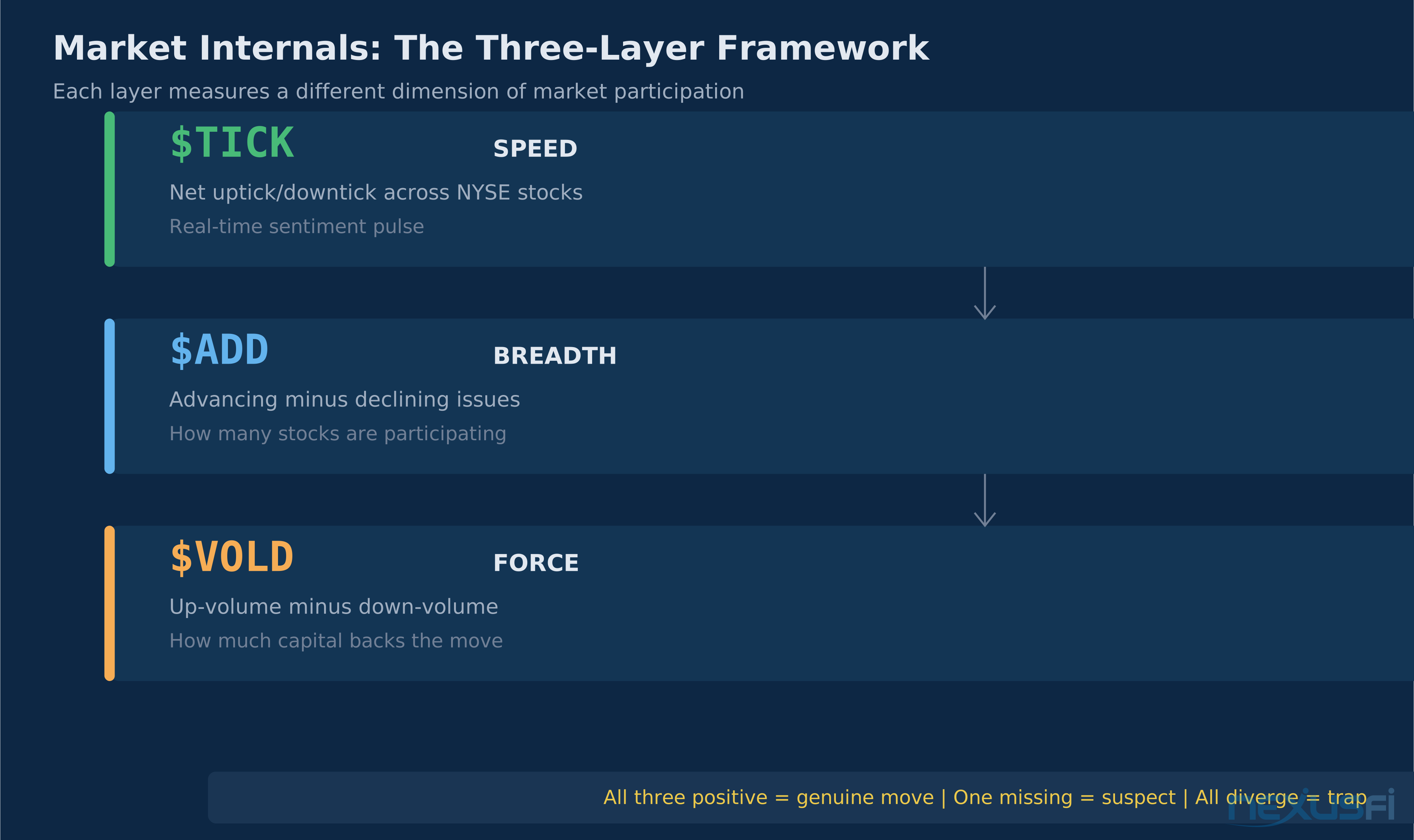
The Three-Layer Framework — the simplest way to think about breadth:
- TICK = speed. How fast is sentiment shifting right now?
- ADD = breadth. How many stocks are participating?
- VOLD = force. How much volume backs the participation?
A rally backed by all three is genuine. A rally with only one or two is suspect. Zero out of three? That's a trap.
How Market Internals Are Built #
Understanding the mechanics matters because your data feed affects what you see.
$TICK is computed by comparing each stock's latest trade to its previous trade. If the last print was higher, that's an uptick. If lower, a downtick. The exchange aggregates these across all NYSE-listed issues and publishes the net figure [13]. This updates rapidly — multiple times per second during active markets.
There's an important distinction between NYSE TICK and NYSE Composite TICK.
That different data source is what makes breadth valuable — it's not another way of looking at the same data, it's genuinely new information.
Extreme Readings -- The Numbers That Matter #
Not all $TICK readings are created equal. A +300 TICK means the tape is mildly positive. A +900 TICK means something is actually happening.
TICK Extremes #
Readings beyond +/-800 are widely considered extreme. Above +1,000 or below -1,000 represents a genuine emotional climax — nearly every stock on the exchange is simultaneously ticking in the same direction. That doesn't happen casually.
The first extreme TICK reading of the session is especially significant. It often marks a short-term sentiment peak that leads to at least a pause, if not a reversal. Traders who chase breakouts on the first TICK extreme regularly get caught. The setup that works is watching for the failure at the extreme — price can't extend further despite nearly unanimous market participation. That's exhaustion.
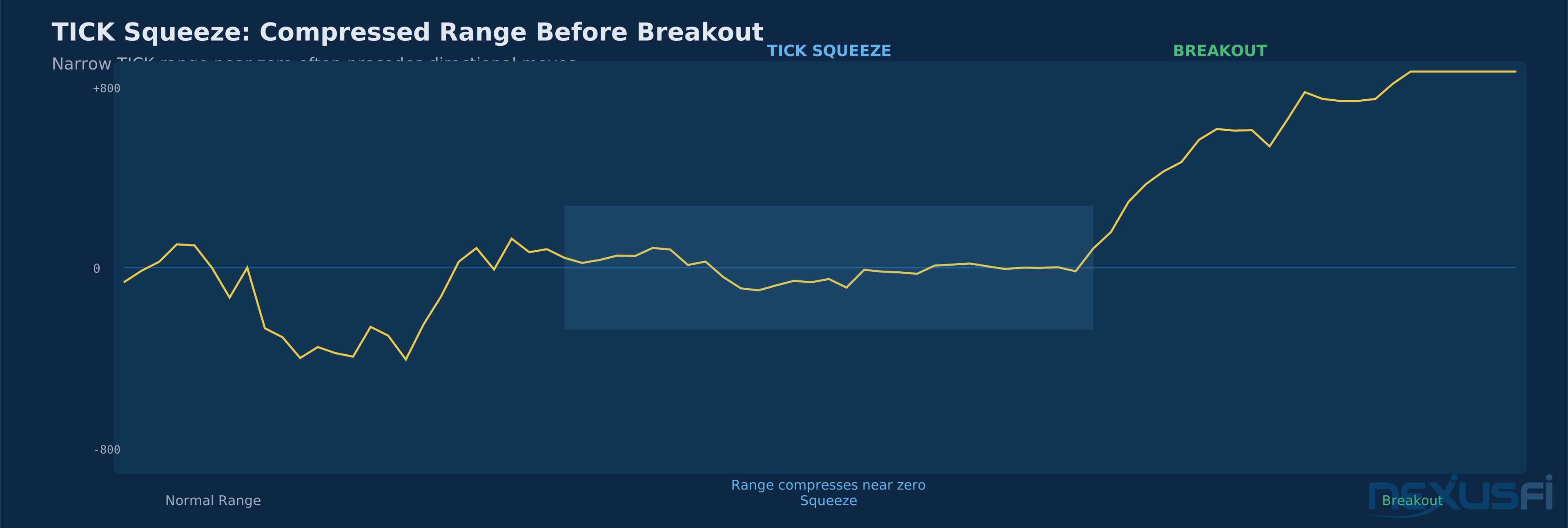
A TICK squeeze — where readings get trapped in a narrow band near zero for an extended period — often precedes a significant directional move. The direction TICK breaks out of the squeeze (sustained move above +300 or below -300) frequently signals the next short-term trend. Think of it as compressed breadth energy that eventually releases.
ADD Extremes #
@tigertrader, one of NexusFi's most respected members, explains: if you're seeing $ADD with readings of +1,500 or more, or -1,500 or more, then there is a high probability of a trend day. That's the threshold — beyond +/-1,500 on the ADD, the market is telling you breadth is so one-sided that fading the move is extremely dangerous.
The slope of the ADL matters more than absolute levels. A steeply rising ADL early in the session with price confirming means the rally has real legs. An ADL that flattens while price continues higher is a divergence warning (more on that below).
VOLD Extremes #
VOLD extremes confirm the quality of breadth. A positive ADD with strongly positive VOLD means volume is concentrated in the winners — that's institutional commitment. A positive ADD with flat VOLD means the advance is broad but shallow — lots of small-cap stocks ticking higher on minimal volume while the big names are quiet.
Add the VOLD dimension and the picture gets even sharper.
Using Relative Thresholds #
Raw threshold numbers vary by data provider and market regime. The more strong approach is tracking your own 20-60 session distribution of TICK, ADD, and VOLD readings. Mark the top and bottom 1-5% of your historical distribution as your "extreme zones." This normalizes for your specific feed and current market conditions.
High-VIX environments produce wider TICK ranges. Low-VIX periods compress the distribution. A +800 TICK in a 12 VIX environment is a bigger deal than +800 TICK when VIX is 35.
Divergences -- The Highest-Edge Application #
Every experienced breadth trader will tell you the same thing: divergences between price and market internals are the single most reliable signal these indicators produce. Not confirmations, not extremes — divergences.
Bearish Divergence #
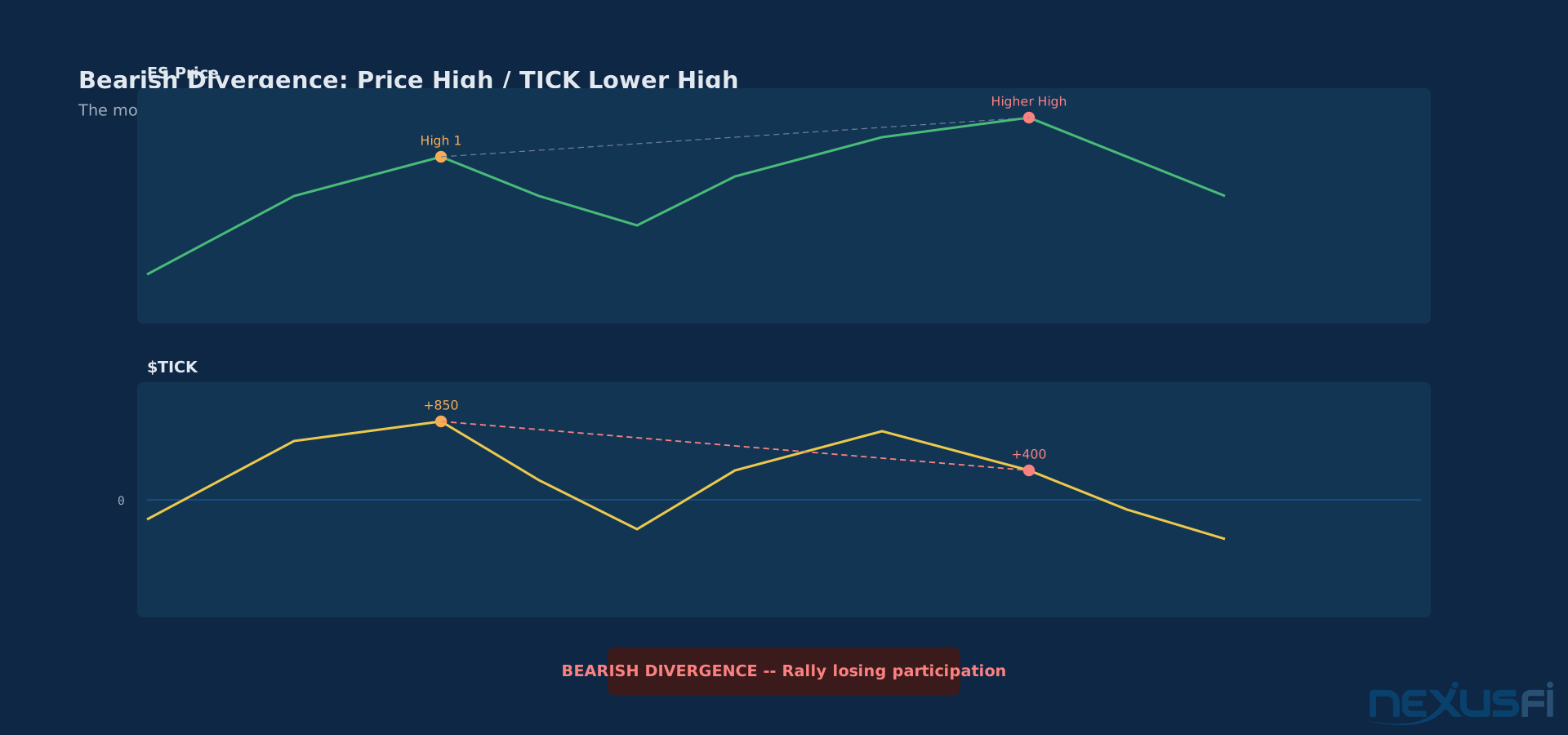
The setup: ES or NQ makes a new intraday high. But $TICK makes a lower high. The ADL flattens or starts rolling over. VOLD weakens or turns negative.
Translation: price is hitting new highs, but fewer stocks are participating and less capital is behind the move. The rally is narrowing, and narrow rallies fail.
Concrete example: ES rallies from 5800 to 5830 early in the session. During that push, TICK peaks at +850 and ADD is rising sharply. Price consolidates, then pushes to 5845 — a new high. But this time, TICK only reaches +400. The ADL is flat. VOLD ticks negative. That's a textbook bearish divergence.
When TICK bars are near zero while price is grinding higher, the tape is telling you the move has no breadth backing.
The action isn't to short immediately — it's to stop adding longs, tighten stops on existing longs, and watch for a reversal signal on the DOM (aggressive selling, offer absorption, bid withdrawal). The breadth divergence gives you the strategic warning. The DOM gives you the tactical entry.
Bullish Divergence #
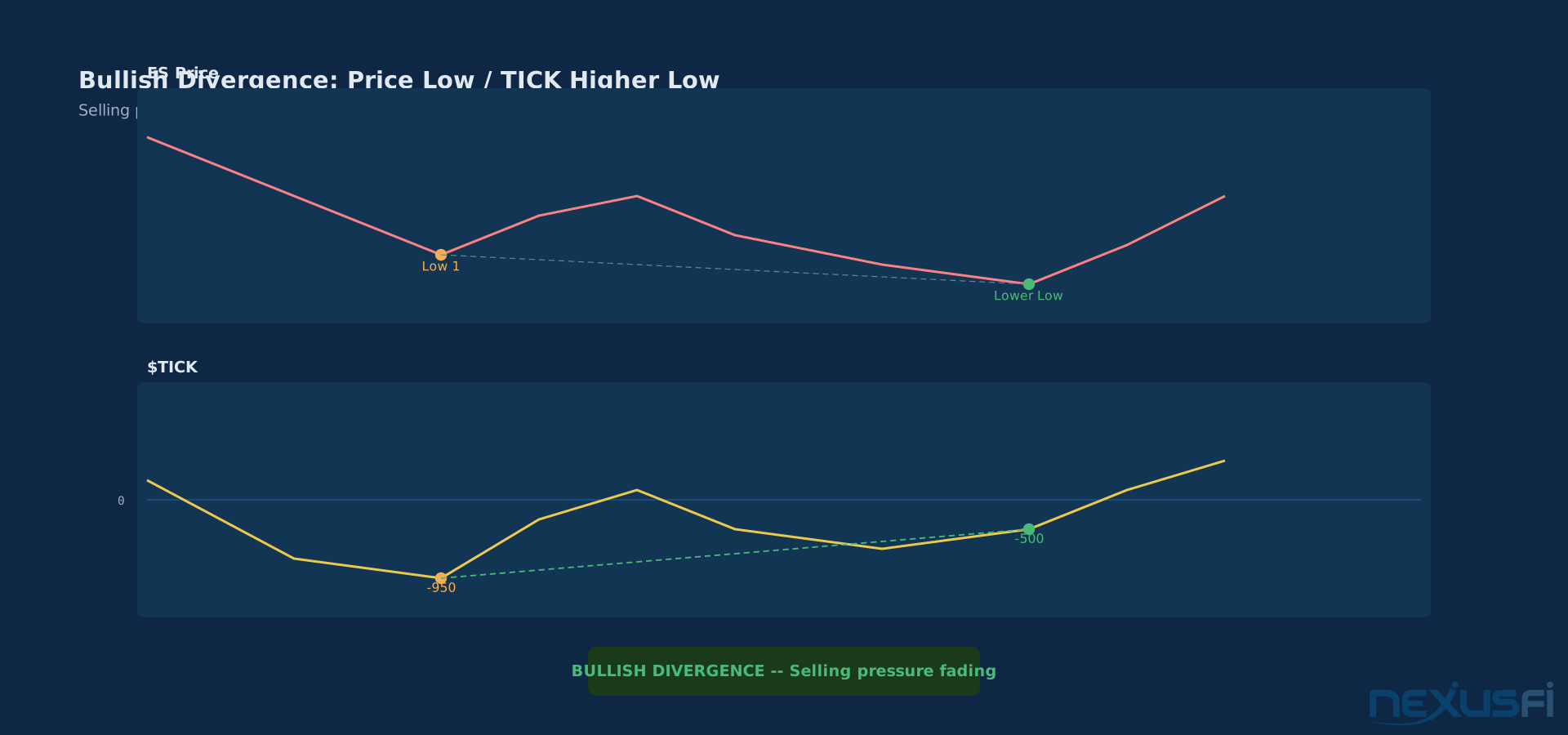
The mirror setup: ES makes a new intraday low. But $TICK makes a higher low. The ADL stops declining or starts to curl up. VOLD shows less selling intensity than the prior downwave.
Translation: price is hitting new lows, but selling pressure is weakening underneath. The selling is narrowing.
Concrete example: ES drops from 5800 to 5760 on broad selling — TICK hits -950, ADD is deeply negative, VOLD confirms. Price stabilizes, then drops again to 5745. But TICK only reaches -500 this time. ADD holds above its prior low. That's a bullish divergence, and it often precedes a sharp reversal as trapped shorts scramble to cover.
@Rrrracer again, in another NexusFi post: "I am really starting to like $ADD. For me, ES wasn't even on the radar until the micro contracts." The ADD is especially effective for divergence detection because its slower pace filters out the noise that makes TICK divergences harder to read in choppy conditions.
Volume-Quality Divergence #
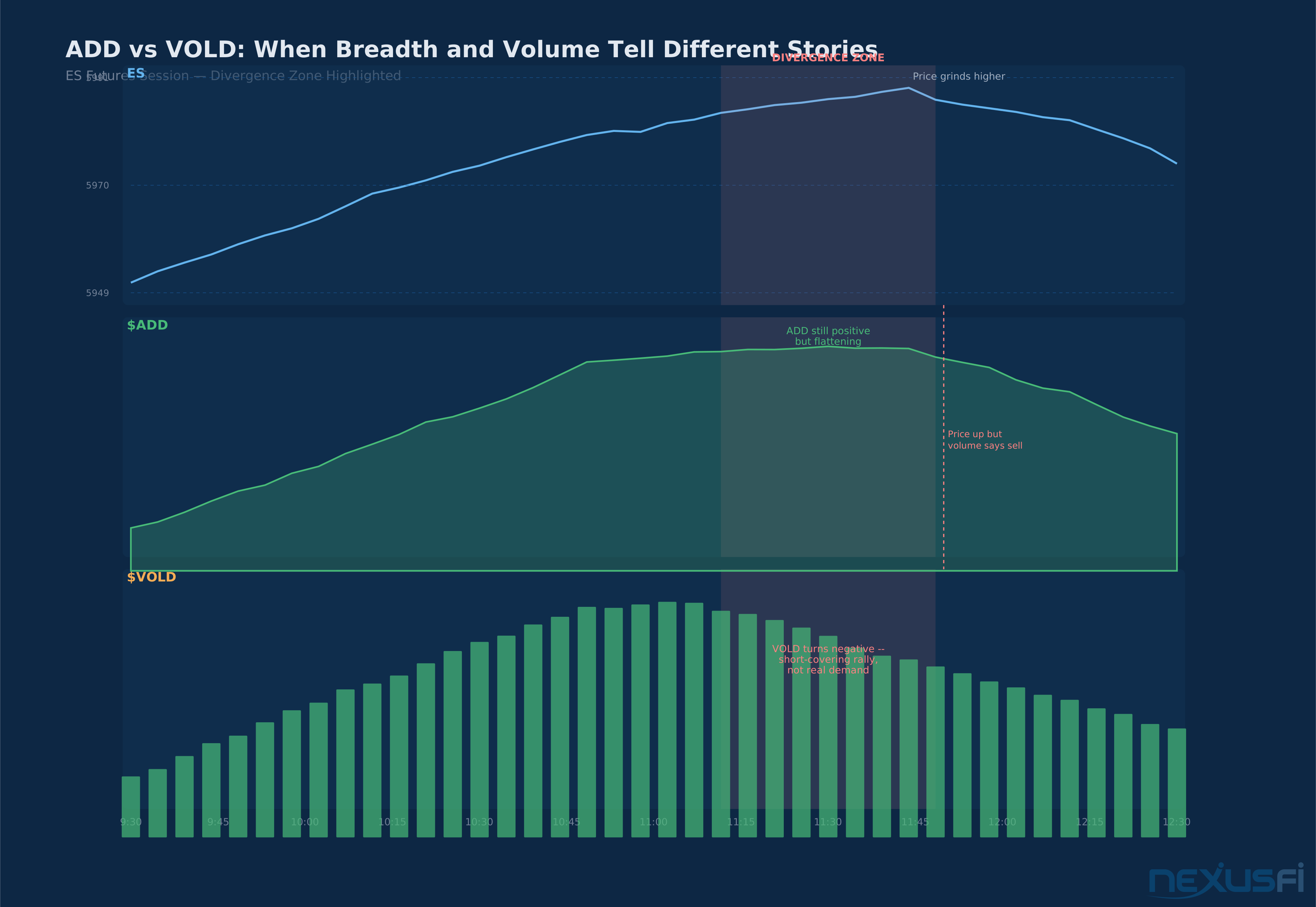
This one is subtle but powerful: price rises while $VOLD stays negative. The advance is happening in terms of price (the index is up) and even breadth (ADD might be slightly positive), but the actual volume is concentrated in declining stocks.
What does that mean? Likely short-covering or passive buying, not genuine aggressive demand. The volume — the conviction — is on the sell side. These moves tend to fail.
Practical Setups for ES/NQ #
Setup 1: Opening Range Breakout with Breadth Confirmation #
- Price trigger: ES closes above the opening range high (first 15-30 minutes).
- Breadth filter: TICK stays above +500 for 3-5 minutes after the break. ADD is rising. VOLD is positive and trending up.
- DOM confirmation: Bid absorption at the breakout level. Aggressive market-order lifts at the ask.
- Entry: First pullback to the breakout level if breadth holds positive.
- Invalidation: TICK drops below -300 or VOLD turns negative. Exit.
@josh, in the legendary Spoo-nalysis thread, demonstrates how to use TICK to confirm directional trades: "The day is clearly bullish. The divergence at the high indicates at least caution." The confirmation-then-divergence sequence is the bread and butter of internals-based trading.
Setup 2: TICK Extreme Fade #
- Price trigger: ES accelerates into a key level (resistance for longs, support for shorts).
- Breadth trigger: TICK hits an extreme (+900 or beyond / -900 or beyond).
- DOM confirmation: Aggressive buying/selling stalls. Large resting order absorbs the momentum. Prints shift from one-sided to mixed.
- Entry: First rejection candle after the extreme TICK reading. Stop beyond the extreme price.
- Target: VWAP or the prior consolidation zone.
The logic: extreme TICK means nearly every stock is simultaneously moving in one direction. That's unsustainable. When the extreme can't produce further price extension, the mean-reversion trade has a statistical edge.
Setup 3: Low Divergence Washout Long #
- Price trigger: ES sells off sharply (news, headline, or just aggressive selling). Price hits a new session low.
- Breadth filter: TICK makes a higher low compared to the prior selloff. ADD stops falling or ticks up. VOLD shows less intensity.
- DOM confirmation: Bid stacking at the new support level. Sell aggression dries up. Time and sales shows more passive selling (limit orders, not market orders).
- Entry: Long on the failed retest of the low — when price probes back toward the low but TICK stays above its prior extreme.
- Invalidation: TICK matches or exceeds the prior negative extreme. The divergence has failed — get out.
Setup 4: Trend Day Recognition #
Sometimes breadth isn't telling you to fade or enter — it's telling you to hold. When all three internals align (TICK persistently positive, ADD slope steep, VOLD confirming), you're in a trend day. The number one mistake traders make on trend days is taking profits too early.
@tigertrader's framework helps identify these: $ADD beyond +/-1,500 signals trend-day probability. When the ADL is in that territory by midmorning, your job is to be on the right side and stay there. Don't fight the breadth.
Integrating Breadth with DOM and Order Flow #
Here's where the real edge lives. Market internals alone are a warning system. DOM and order flow alone are a tactical system. Together, they're a complete decision framework.
Market internals answer "why." Why is the market moving? Is it because 1,800 stocks are simultaneously bidding up, or because three mega-caps are dragging the index? The breadth data tells you whether the move is genuine or narrow.
DOM and order flow answer "how" and "where." How is the auction unfolding at this specific price level? Where are the large resting orders? Who's being aggressive?
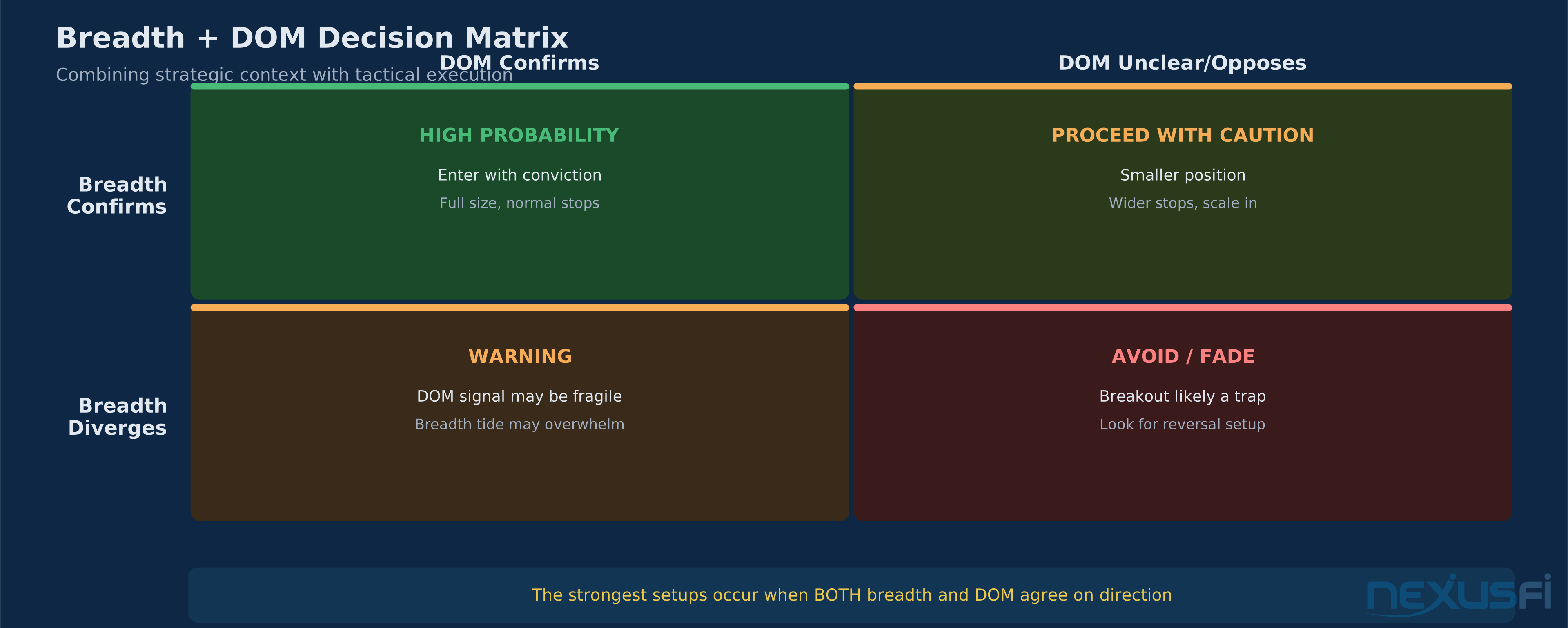
The combination creates a go/no-go decision matrix:
Both align (breadth confirms + DOM confirms): High-probability trade. Enter with full conviction and appropriate size.
Breadth confirms, DOM unclear: Proceed with caution. Smaller position, wider stop. The strategic picture is favorable but the micro-level execution evidence is ambiguous.
DOM shows signal, breadth diverges: Warning. That large bid wall you see on the DOM? If TICK is plummeting and ADD is deeply negative, that bid is likely to get overwhelmed by the broader market tide.
The point is that breadth provides context for interpreting what you see on the DOM — it's not a replacement for microstructure analysis.
Both disagree with price: Avoid entirely, or look for a fade. A breakout on thin DOM with a breadth divergence is the classic trap setup.
@rahulgopi's trading journal on NexusFi shows a practical implementation: keeping separate panels for TICK, NYSE advance/decline spreads, and volume breadth alongside price. That multi-panel layout is how experienced ES traders monitor all three layers simultaneously.
Platform and Data Feed Considerations #
Not all data feeds deliver market internals identically. The differences matter.
CQG, Rithmic, and IQFeed all provide $TICK, but the update frequency and the exact universe of stocks included can vary slightly. Most futures-focused platforms default to NYSE TICK, but some provide NYSE Composite (which includes Arca and other NYSE-family exchanges). The Composite version has a wider range because it covers more issues.
NinjaTrader users typically access TICK via a secondary data connection — your main futures feed (CQG or Rithmic) provides ES/NQ execution, while a supplementary connection handles equity breadth data. Some traders use IQFeed specifically for internals because of its reliability and complete symbol coverage.
Sierra Chart users can plot $TICK, $ADD, and $VOLD as separate charts or as study overlays. Sierra's internal referencing system allows you to access breadth data from other charts in your chartbook, making multi-chart analysis straightforward.
TradingView provides market breadth data through its library of built-in symbols (USI:TICK, USI:ADD, etc.). The web-based interface makes it easy to set up a breadth dashboard alongside your futures charts, though the data may be slightly delayed compared to direct exchange feeds.
@geez's setup on NexusFi describes placing "sound alerts on the horizontal lines, so you will be alerted when ticks hit significant levels." That's a practical tip — you don't need to stare at the TICK chart constantly. Set alerts at your extreme thresholds and let the platform notify you when breadth hits levels that demand attention.
Common Mistakes #
Trading internals as standalone signals. TICK hitting +900 doesn't mean "short." It means breadth is extreme and you should pay close attention to what happens next. The DOM and price action provide the actual entry signal.
Ignoring news-driven decoupling. A single trigger — FOMC announcement, earnings from a mega-cap, geopolitical headline — can force price while breadth temporarily lags. During these events, you may see a sharp 50-point ES move with TICK barely budging because most NYSE stocks haven't reacted yet. The breadth catches up, but the lag can trap traders who assume the divergence is tradeable.
Using fixed thresholds across different platforms. A TICK of +800 on one data feed might correspond to +650 on another due to different stock universes and calculation methods. Build your own reference distribution from 20-60 sessions of your actual data.
Front-running divergences. A divergence is a warning, not an entry. TICK making a lower high while price makes a new high tells you to be cautious. It doesn't tell you to go short. Wait for the actual rejection — confirmed by price failing and DOM showing the shift in aggression — before acting.
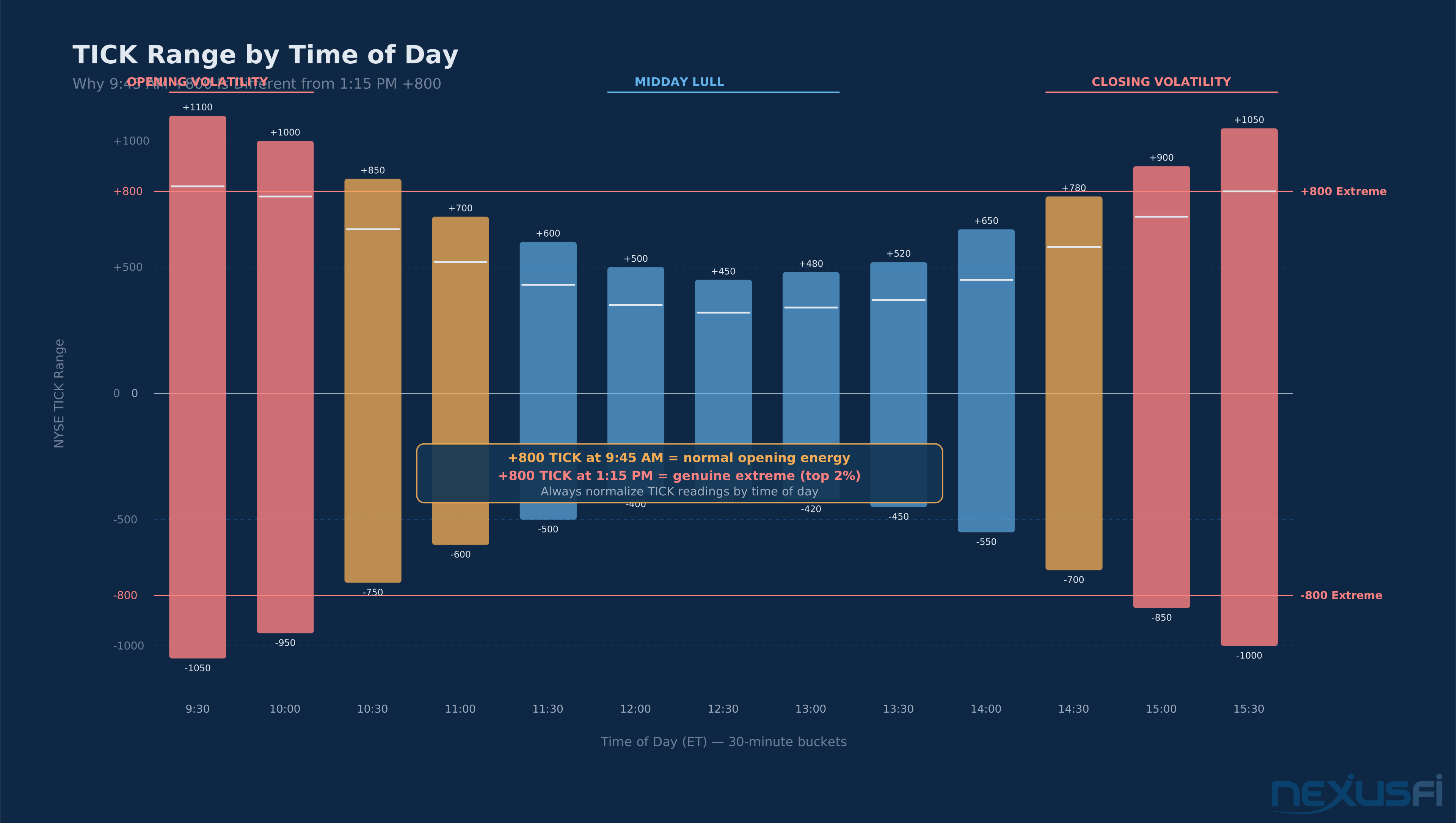
Ignoring time-of-day effects. TICK ranges are wider during the opening hour and narrower during the midday lull. A +800 TICK reading at 9:35 AM is less unusual than a +800 reading at 1:15 PM. Normalize by time of day — either mentally or by building time-bucketed percentile bands.
Sector rotation blind spots. NQ can diverge from NYSE breadth during tech-specific moves. When FANG stocks are getting hammered but industrials and financials are rallying, the NYSE TICK may look positive while NQ is selling off. ES traders are somewhat protected (broader sector representation), but NQ traders need to account for this.
Building Your Breadth-Conditioned Trade Journal #
The fastest way to internalize market internals is to log them with every trade. For each entry and exit, record:
- TICK value at the moment of entry and exit
- ADD slope (rising, flat, or falling) and approximate level
- VOLD sign (positive or negative) and whether it was expanding or contracting
- DOM observation — what the order flow looked like alongside the breadth
- Outcome — did the trade work, and did breadth correctly predict the quality of the move?
After 30-50 trades with this data, patterns emerge. You'll start to see which breadth conditions produce your best trades and which produce your worst. That's the kind of edge refinement that generic rules can't provide — it's specific to your trading style, your timeframe, and your instruments.
@Big Mike's breadth indicators discussion thread on NexusFi provides additional context on the INDU TICK (ranging from +30 to -30 for the 30 Dow stocks), the NYSE TRIN, and other secondary breadth measures. These can supplement the core TICK/ADD/VOLD framework, though for most ES/NQ day traders, the three primary indicators provide sufficient context without information overload.
The Bottom Line #
Market internals don't predict the future. They tell you what's happening right now across 3,000+ stocks, and that information is invisible on any price chart. A breakout with breadth support has materially different odds than a breakout without it. A selloff where TICK is making higher lows is a at the core different animal than a selloff where breadth is accelerating.
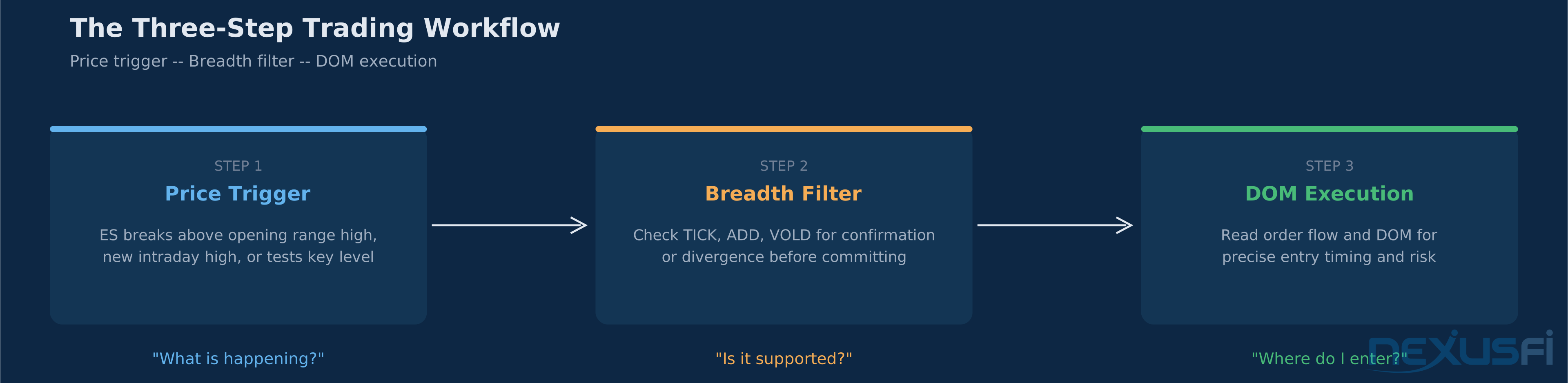
The three-step workflow is simple: price trigger, breadth filter, DOM execution. Price gives you the setup. Breadth tells you whether the setup has market-wide support. The DOM and order flow give you the precise entry.
Master that framework, and you'll stop asking whether a move is real. The breadth data will tell you.
Knowledge Map
References This Article
Articles that build on this topicCitations
- — Market Internals (2010) 👍 8“The Tick is an additional source of information, so it adds a new dimension to trading index futures. Rather I like to use the tick than other price based indicators.”
- — NYSE $TICK AND $ADD (2011) 👍 21“Thank you for this post. I think that watching market breadth indicators in parallel with index futures produces a real edge.”
- — NYSE $TICK AND $ADD (2011) 👍 47“TICK - First Panel The NYSE TICK tells us how many stocks are trading at their offer price minus those trading at their bid. It is now available on NT with a live Kinetick feed, and goes under the symbol ^TICK.”
- — My Indicators (2011) 👍 7“https://nexusfi.com/attachment.php?attachmentid=32471&stc=1&d=1299120554 These 2 charts are showing almost the same thing. Chart 1 is based on NYSE TICK and Chart 2 is based on NASDAQ 100 TICK.”
- — Help with Market internals (2020) 👍 4“I'll throw in my two cents, admittedly as an amateur trader myself. I primarily use advance-declines and tick's because what they calculate makes the most sense to me.”
- — Just another trading journal: PA, Wyckoff & Trends (2020) 👍 3“Check out the divergences on volume, $TICK and $ADD, along with the bodies of the $TICK bars near or below the zero line as price was "going up" in ES. $ADD was making LH/LL almost the entire time before the turn.”
- — Rrrracer's complete noob starting from scratch journal (2021) 👍 14“Thinking more about trading now that the big job is done... I am really starting to like $ADD. For me, ES wasn't even on the radar until the micro contract was released.”
- — Spoo-nalysis ES e-mini futures S&P 500 (2014) 👍 7“One way to use TICK: https://nexusfi.com/v/screencast/2RIfT3LGl.png The day is clearly bullish. The divergence at the high indicates at least caution. Then a pretty good sell.”
- — RG's Emini Journal (2015) 👍 7“My 2 cents I use VIX and the market internals to get an idea of broader market sentiment. I dont read too much into divergences of market internals with any single instrument.”
- — RG's Emini Journal (2016) 👍 4“This is essentially the market internals components that I follow. It has 1) TICK 2) SPREADs ( SP and NYSE adv / decline ) 3) Volume breadth ( NYSE and SP ) 4) VIX 5) Cum TICK I use a combination of internals and inter market correlations (NQ, YM, Ye...”
- — A Cowboy's Trading Journal (2015) 👍 2“Sorry for the losses you took. The biggest clue that you may have overlooked yesterday, when you say you were surprised by the grind up day, was that volume breadth was extremely bullish from open to close of RTH session.”
- — Breadth indicators for analysis (2013) 👍 8“Here is a list of IQFeed breadth symbols (from the Sierra Chart interface): https://nexusfi.com/v/screencast/z9oGzr2eSOh.”
- StockCharts ChartSchool — NYSE TICK Indicator (2024)
- Investopedia — Advance-Decline Line: Definition, Calculation, and How to Interpret (2024)