



Profit Factor: The One Ratio That Tells You If Your Winners Are Big Enough
Overview #
Overview #
Profit Factor is the simplest diagnostic ratio in your trading toolkit — and one of the most misunderstood. It answers exactly one question: are your winning trades, in aggregate, larger than your losing trades? That's it. One number. Gross profits divided by gross losses.
The reason it matters so much in futures trading is leverage. A stock trader with a marginal edge can survive on 1.1 PF for a while. A futures trader running ES at 50:1 effective leverage with 1.1 PF is one bad week from a margin call. The cost structure of futures — commissions, exchange fees, slippage on every round turn — means your raw PF needs to be meaningfully above breakeven to survive contact with reality.
Profit Factor tells you if your winners outweigh your losers in aggregate. It does NOT tell you about drawdown severity, outlier dependence, regime sensitivity, or whether your strategy is actually tradeable. Use it as a diagnostic, not a grade.
But here's where traders get into trouble: they treat profit factor as a report card instead of a diagnostic tool. A PF of 2.5 doesn't mean your strategy is "good." A PF of 1.3 doesn't mean it's "bad." Without knowing your win rate, your trade frequency, your drawdown profile, and your transaction costs, PF is just a number on a screen. This article shows you how to actually use it.
Definition and Calculation #
Profit Factor (PF) is the ratio of gross profits to gross losses over a defined set of closed trades:
PF = Gross Profits / Gross Losses
Where gross profits = the sum of all winning trade P&L, and gross losses = the absolute value of all losing trade P&L. The result is always positive (or zero if you've never won a trade).
There's an equivalent formula that's sometimes more intuitive:
PF = 1 + (Net Profit / Gross Losses)
Both give the same number. The second form makes it clear why PF = 1.0 is the breakeven line — at PF 1.0, net profit is zero.
What Counts as a "Closed Trade" in Futures
This matters more than most traders think. Platform differences in how they handle scale-ins, scale-outs, and partial fills can materially change your PF.
- Round turn vs. fill-level: If you buy 3 ES contracts and sell them at three different prices, is that one trade or three? Most platforms default to one round-trip trade. The P&L -- and so PF -- changes if you split them.
- Entry-to-exit vs. position-level: Position-level grouping lumps all entries and exits into one P&L number. Entry-to-exit splits each entry/exit pair. Same trades, different PF.
- Scratch trades: Trades closed at breakeven (zero P&L) don't affect PF at all -- they appear in neither the numerator nor denominator. Some traders exclude scratches from their metrics entirely.
Before comparing your PF to anyone else's, make sure you're measuring the same thing.
Always Calculate After Costs
In futures, your "real" PF is always lower than the raw number your platform shows. As @Big Mike notes, "Always ensure you are using 1 tick slippage per side if using market orders" and "Always enter actual commission costs." [1] That 1 tick of slippage per side on ES is $12.50 per round turn. Add $4-6 in commissions and exchange fees, and you're looking at $17-19 in friction per trade. On a 4-tick scalp ($50 gross), that's 34-38% of your gross profit consumed by costs.
[8] He typically budgets $6 per round turn for ES commissions alone — and that doesn't include slippage.
The takeaway: always calculate PF net of commissions and slippage. A gross PF of 1.8 that becomes a net PF of 1.1 after costs isn't a solid strategy — it's a fragile one.
Interpretation Framework #
PF values mean different things for different strategy types. Here's the framework experienced futures traders use:
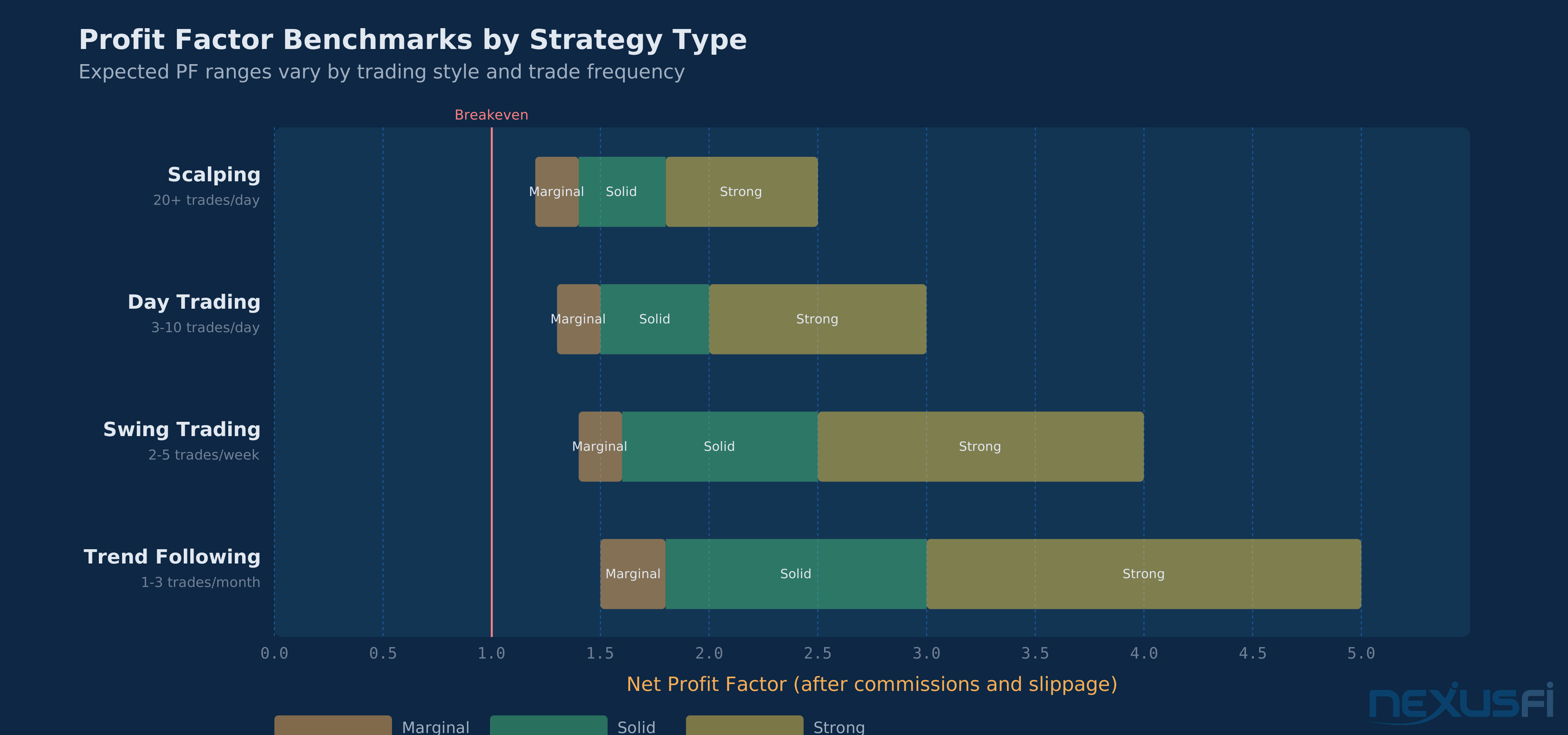
Benchmark Ranges by Strategy Type
Scalpers (20+ trades/day) can operate at lower PF — 1.4 to 1.8 is solid — because high trade frequency generates returns through volume. Day traders (3-10 trades/day) need PF in the 1.5-2.0 range for consistency. Swing traders (2-5 trades/week) and trend followers (1-3 trades/month) need higher PF — 1.6-2.5+ — to compensate for longer drawdown periods between winners.
@vmodus uses PF 1.5 as his "first criteria for success" when evaluating systematic strategies: "I incubated this system from 2010-2020, and it did not meet the profit factor (1.5) that I use as my first criteria for success." [5] That's a reasonable first filter — if your strategy can't clear 1.5 PF over a meaningful sample, the edge probably isn't strong enough to survive the transition from backtest to live.
PF Alone Tells You Almost Nothing
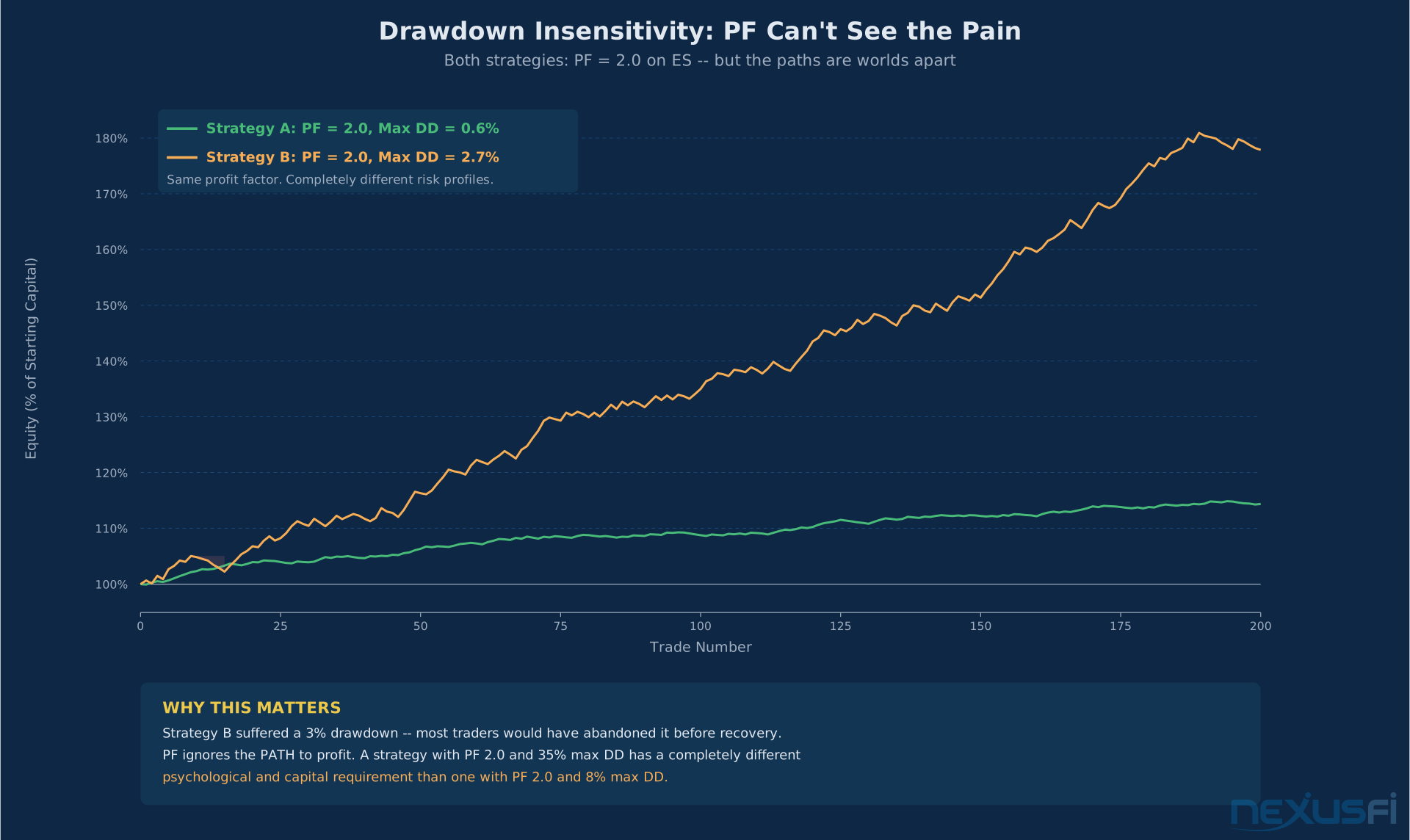
A PF of 2.0 sounds great. But consider two strategies with identical PF over 200 trades — one with an 8% max drawdown and smooth equity curve, the other with a 40% max drawdown and two catastrophic losing months. Same PF. Wildly different risk profiles.
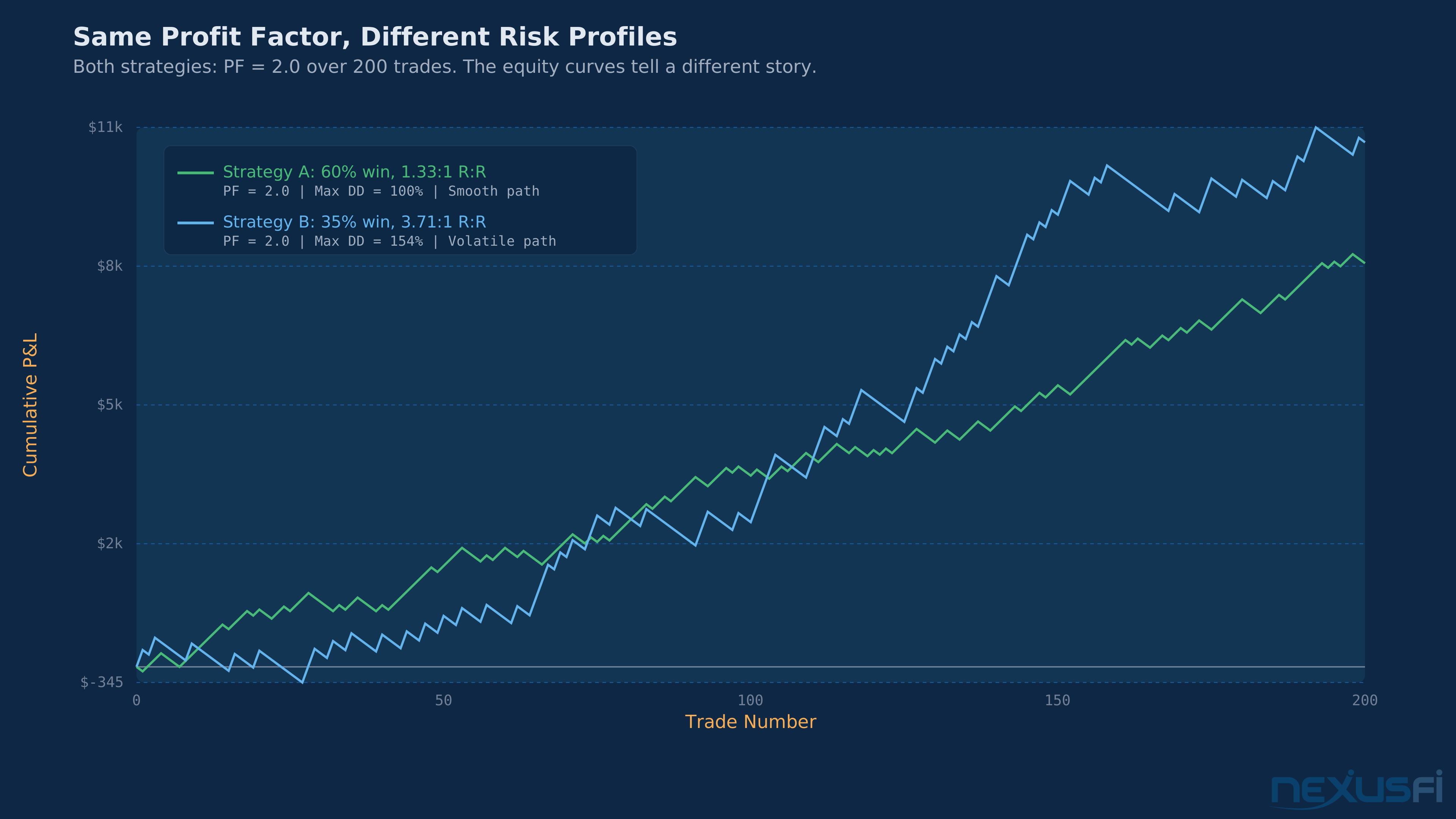
PF is blind to trade sequencing, drawdown depth, time in drawdown, and the distribution of returns. That's not a flaw — it's a feature of what it measures. But it means PF is a starting point, not a conclusion.
Win Rate and Payoff Ratio: The Math Behind Profit Factor #
This is where PF gets interesting — and where most traders start to actually understand their edge.
PF is mathematically determined by two inputs:
- Win Rate (W): percentage of trades that are winners
- Payoff Ratio (R): average winning trade / average losing trade
The relationship:
PF = (W / (1 - W)) x R
And the breakeven formula — the minimum win rate needed for a given payoff ratio to produce PF = 1.0:
Breakeven Win Rate = 1 / (1 + R)
So for a 1:1 risk/reward (R = 1), you need 50% win rate to break even. For 1:2 (R = 2), you need 33.3%. For 1:3 (R = 3), you need 25%.
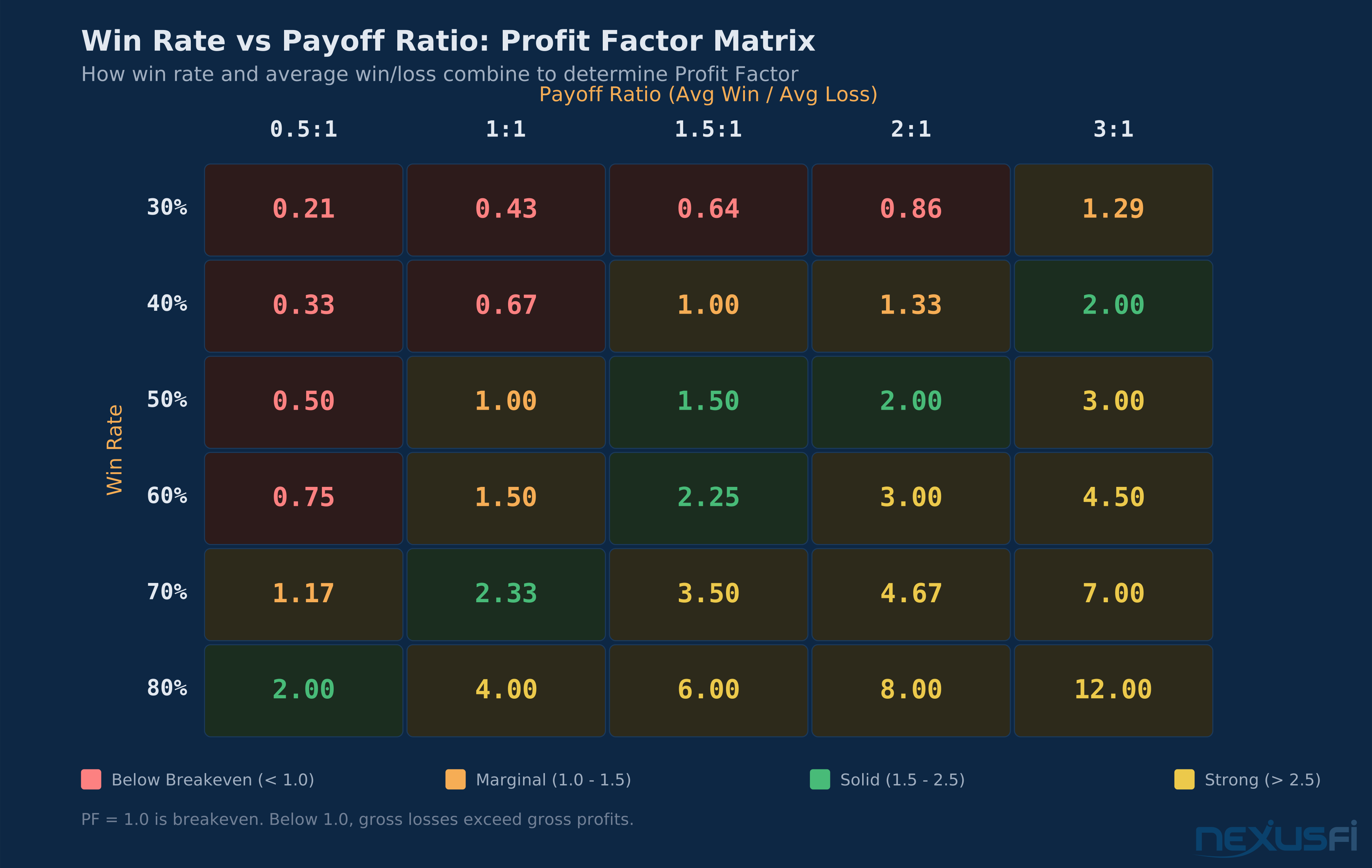
Two Roads to the Same PF
@shodson laid out this math in his trading journal, calculating PF at various combinations: "60%: (60 wins x $50/win) / (40 losses x $50/loss) = 1.5 PF" and "Having a PF of 1.2 with 60-70% win rates shows how lopsided the R:R is." [3] His insight: a high win rate with a low PF is a warning sign. It means your losers are much larger than your winners — you're winning often but giving it back in chunks.
[4] The math confirms it: 25 wins x $3 = $75 vs 75 losses x $1 = $75. Net zero before costs. A 3:1 payoff ratio sounds impressive until you realize a 25% win rate wipes out the advantage. Win rate and payoff ratio are inseparable — you must evaluate them together.
@Massive l prefers using profit factor as his primary performance metric: "If you can trade consistently at 67% with 1R you are basically profiting 2x the amount of every loser. That is the big goal." [2] At 67% win rate with 1:1 R:R, PF = (0.67 x 1) / (0.33 x 1) = 2.03. Two dollars gained for every dollar lost. That's the kind of PF profile that survives real-world friction.
@kevinkdog approaches it from the opposite end: "I have strategies with 10-20% winning percentage, and they are just fine. The key is positive expectancy." [6] His strategies work because the payoff ratio compensates for the low win rate. A system winning 15% of the time needs an average winner at least 5.67x the average loser to break even (PF = 1.0). To hit PF 1.5, those winners need to be 8.5x larger. That's the trend-following model — rare wins, but they're huge.
Which Profile Matches Your Psychology?
@Anagami ran Monte Carlo simulations comparing 1:2 RR at 40% win rate vs 1:1 RR at 60% win rate. Both produce similar PF values (~1.33 and 1.50 respectively), but the equity curves look completely different. The 1:1/60% approach produced smoother equity curves with no trial finishing below the starting point after 386 trades. [7]
The implication: two strategies with similar PF can feel completely different to trade. The high-win-rate/low-R:R path is psychologically easier — fewer drawdowns, more frequent validation — but requires precise execution and tight risk. The low-win-rate/high-R:R path is emotionally exhausting — long losing streaks — but more forgiving on individual trade execution.
Choose the profile that matches your temperament, not the one with the higher theoretical PF.
When Profit Factor Lies: Five Critical Limitations #
PF is a useful diagnostic. It's also dangerously incomplete. Here are the five ways it misleads futures traders:
1. Transaction Cost Blindness
PF computed on gross P&L ignores the cost of doing business. In futures, this isn't a rounding error — it's a strategy killer.
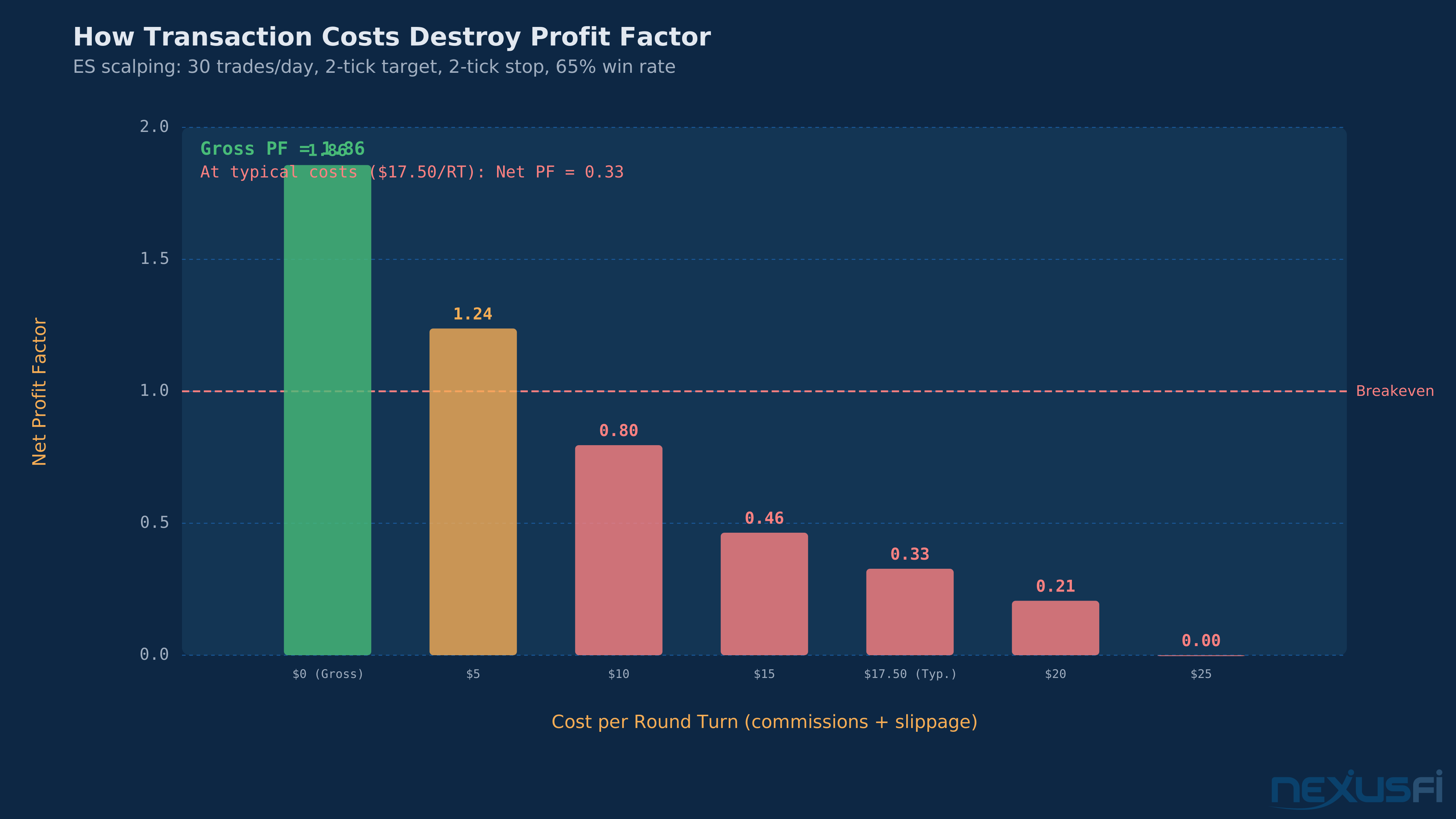
Consider an ES scalping system: 30 trades per day, targeting 2 ticks ($25) with a 2-tick stop at 65% win rate. Gross PF = 1.86 — looks solid. Now add $5 commission per round turn and 1 tick slippage per side ($12.50). At $17.50 per trade in friction, the net PF collapses. The strategy that looked profitable is actually marginal or worse. Always compute PF after all transaction costs.
2. Drawdown Insensitivity
A PF of 2.0 over 200 trades tells you the aggregate profit-to-loss ratio. It tells you nothing about the path. Did those trades produce a steady upward equity curve? Or did the strategy draw down 35% before recovering? Two traders can have identical PF values with completely different maximum drawdown, time in drawdown, and drawdown frequency. PF doesn't capture the pain of the path — that's what drawdown management metrics handle.
3. Outlier Sensitivity
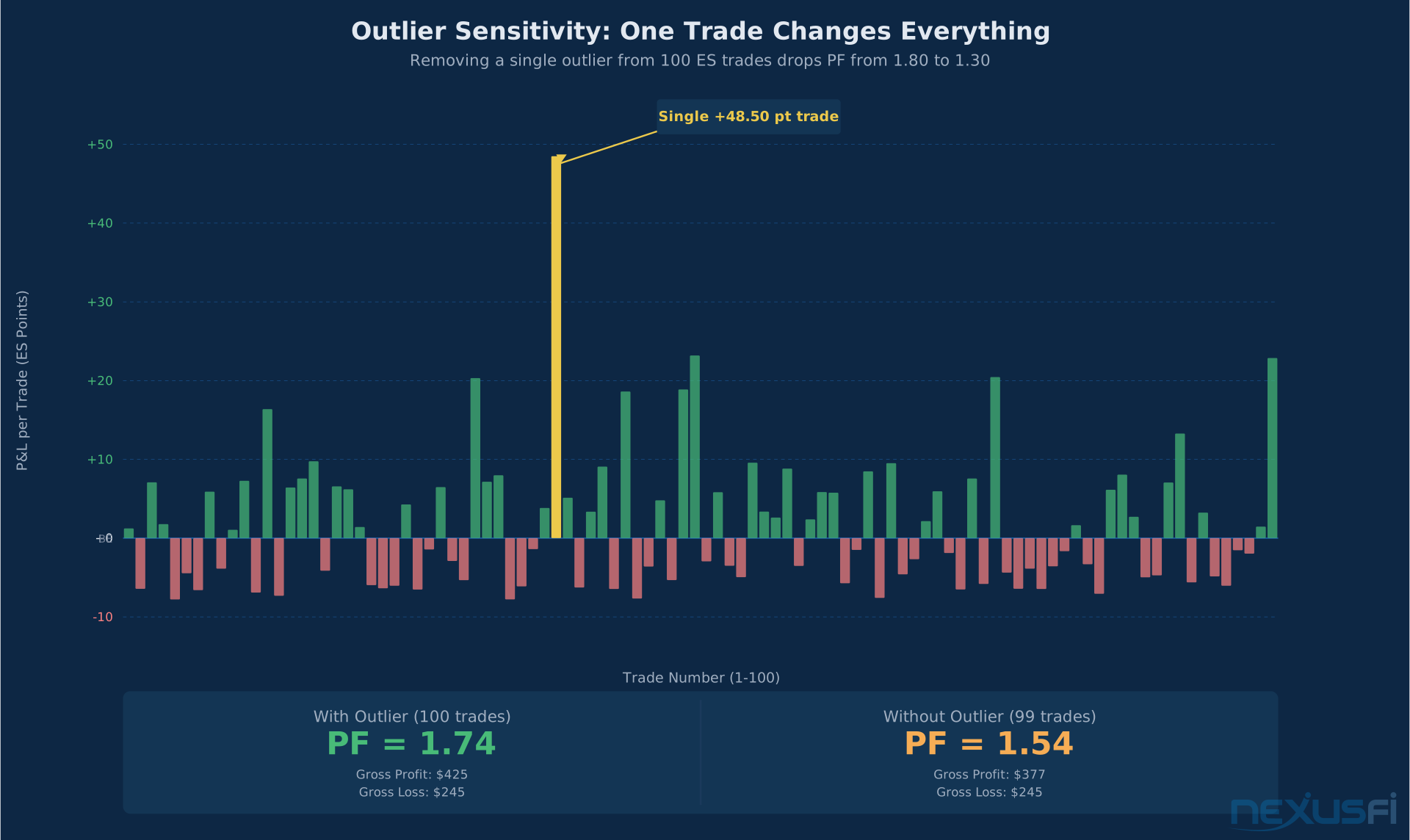
Leverage amplifies everything in futures. A single outlier trade can distort PF in either direction. Example: 99 trades with PF of 1.3 (modest edge). Then one trade catches a 50-point ES move on a news event — $2,500 on a single contract. That one trade might push your PF from 1.3 to 1.8. The "edge" didn't improve. You got lucky once. Conversely, one fat-finger error or flash crash can collapse PF from 1.8 to 1.1. Report PF with and without your top 3 and bottom 3 outliers to see how dependent your metric is on extreme trades.
4. Position Sizing Dependency
PF computed in dollar terms changes when position sizing changes. If you doubled your size on your best setups (and they worked), your PF goes up — not because the strategy improved, but because you allocated more capital to winners. This is why some traders prefer computing PF on R-multiples rather than dollars. R-based PF normalizes for position size: every trade is measured as a multiple of the initial risk, regardless of contract count.
5. Sample Size and Regime Vulnerability
A PF of 2.5 over 30 trades is meaningless. Over 300 trades across multiple market regimes, it starts to mean something. Over 3,000 trades, it's statistically strong. Robert Pardo's walk-forward methodology, detailed in The Evaluation and Optimization of Trading Strategies (Wiley, 2008), makes this concrete — rather than computing one PF over the entire dataset, partition data into rolling in-sample and out-of-sample windows and require stable performance across each. [11] If your PF looks great in aggregate but collapses in half the walk-forward windows, you don't have an edge — you have a curve fit.
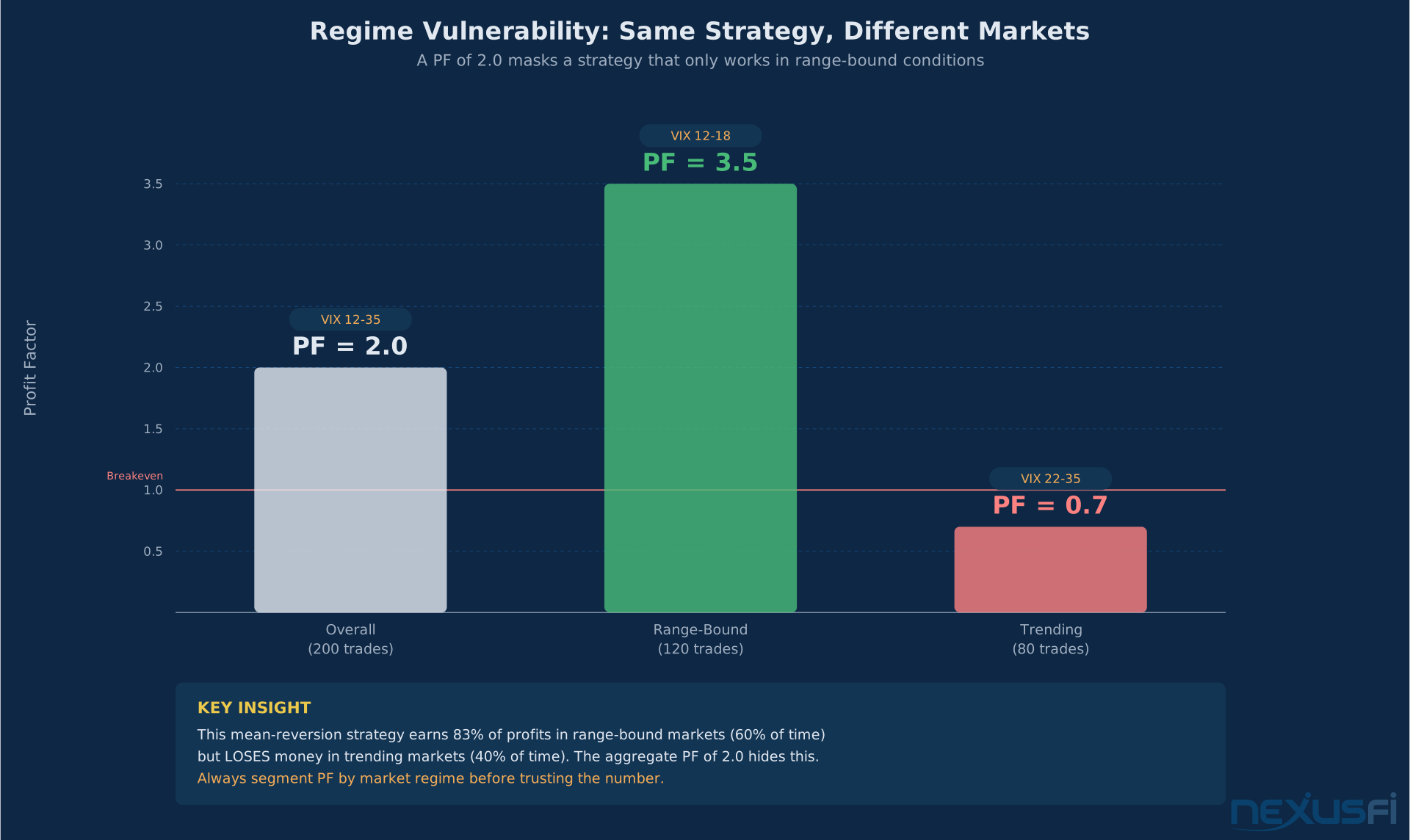
But even large samples hide regime dependency. A mean-reversion strategy might show PF 2.0 over 5 years — but decompose it by market regime and you find PF 3.5 in range-bound markets and PF 0.7 during trends. The aggregate number masks a strategy that works beautifully half the time and hemorrhages the other half. Always decompose PF by market regime (trending vs. range-bound), volatility regime (VIX below 15 vs. above 25), session type (RTH vs. Globex), and time period (rolling quarterly or monthly).
Practical Application: Using PF in Your Trading Workflow #
The Performance Triad
PF is most useful as one leg of a three-metric framework:
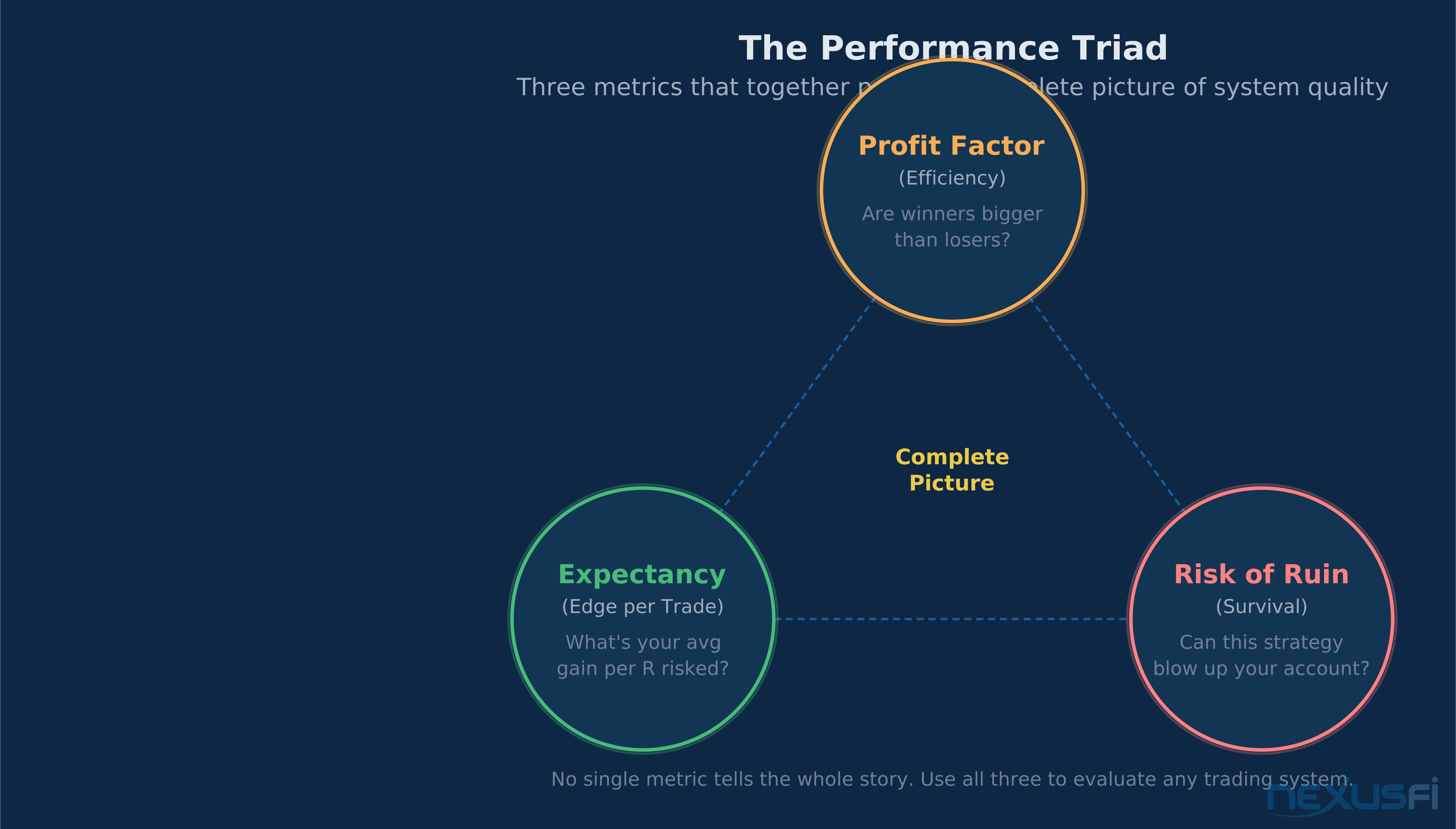
- Profit Factor -- answers "Are my winners bigger than my losers in aggregate?" (efficiency)
- Expectancy -- answers "What's my average gain per unit of risk per trade?" (edge per trade)
- Risk of Ruin -- answers "What's the probability this strategy blows up my account?" (survival)
Van Tharp's R-multiples framework, introduced in Trade Your Way to Financial Freedom (McGraw-Hill, 1998), provides the mathematical bridge between these three metrics — expressing every trade as a multiple of initial risk (1R), then computing expectancy as the mean R-multiple. [12] This normalization makes it possible to compare edge across different instruments, timeframes, and position sizes on a level playing field.
All three use similar inputs (win rate, avg win, avg loss) but answer different questions. A strategy can have solid PF (1.8) but poor expectancy (if trade frequency is too low to compound) and dangerous risk of ruin (if position sizing is aggressive relative to edge). Use all three together.
Rolling PF for Strategy Monitoring
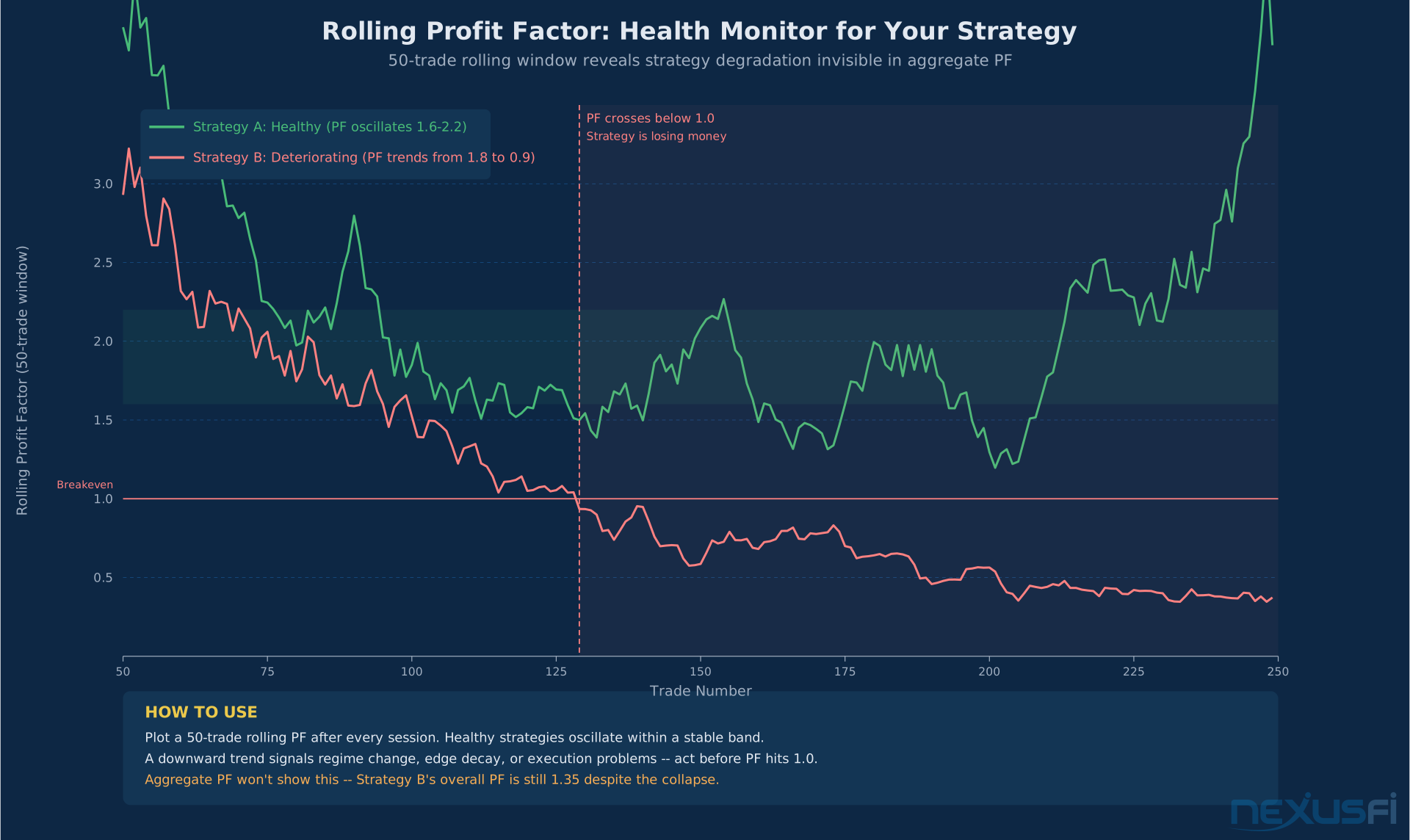
Don't just compute PF once. Track it over time with a rolling window — typically 50-100 trades. A stable strategy shows PF oscillating in a narrow range around its long-term average. A deteriorating strategy shows PF trending downward. A regime-dependent strategy shows PF cycling with market conditions.
@MWinfrey keeps it practical: his live strategy averages $63 per trade after costs, and he says "I still consider it in a forward testing mode which will continue for full life of the strategy." [9] That's the right mindset — PF isn't something you measure once and forget. It's a vital sign you monitor continuously.
When rolling PF drops below 1.0 for 30+ trades, that's not a bad streak. That's your strategy telling you something changed. Investigate before it gets worse.
PF as Strategy Filter
The right way to use PF is as a screen, not a score:
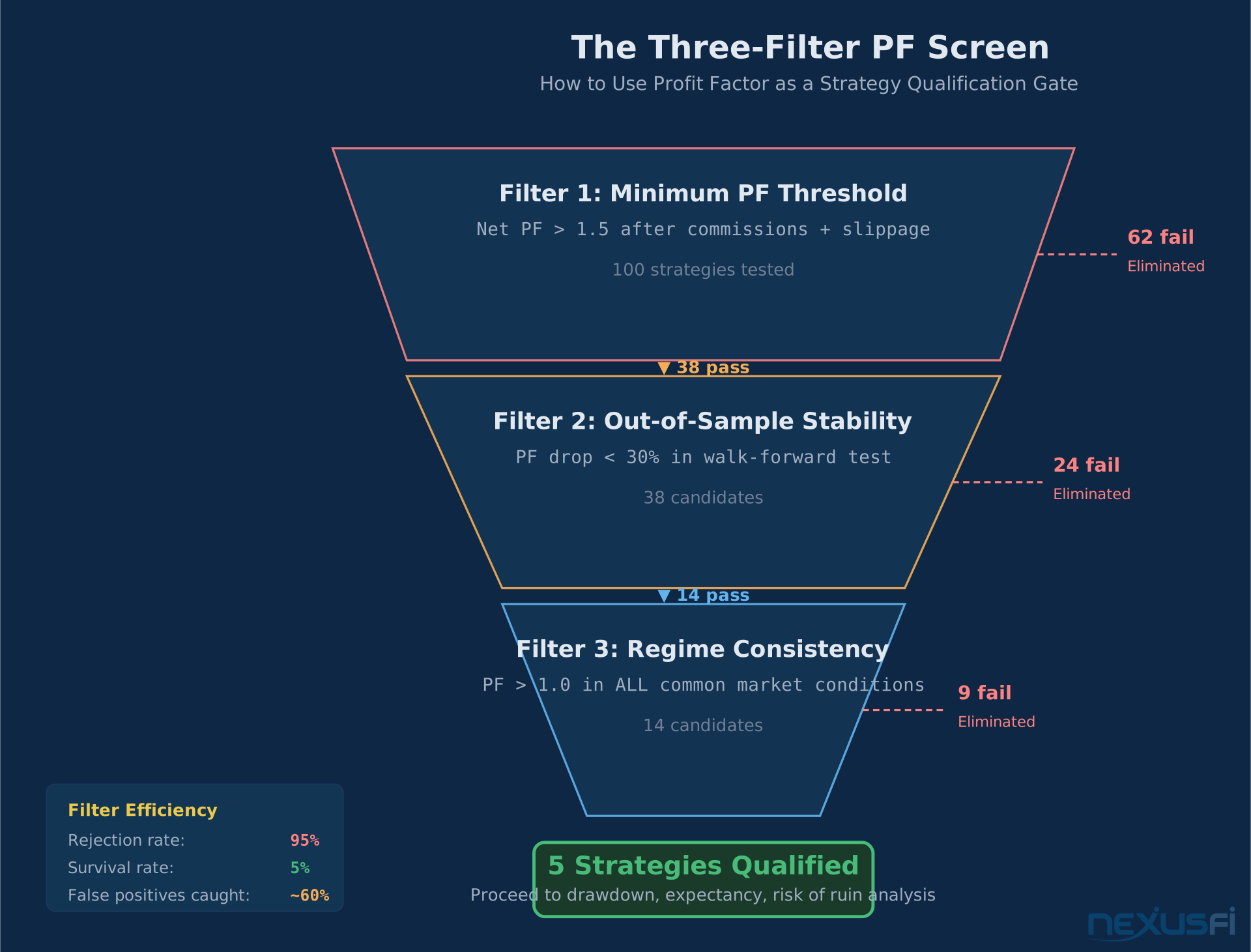
- First filter: Does PF clear 1.5 after costs? If no, the strategy probably doesn't have enough edge to survive real-world friction. Move on.
- Second filter: Is PF stable across out-of-sample data? Use walk-forward analysis to compare in-sample to out-of-sample PF. If PF drops more than 30%, the backtest is likely overfitted.
- Third filter: Is PF consistent across regimes? Decompose by volatility regime, trend vs range, and session type. If PF collapses in any common market condition, the strategy has a blind spot.
Only after passing all three filters do you move on to the real evaluation: drawdown profile, expectancy, risk of ruin, and whether you can psychologically trade the system.
Comparing PF Across Strategies
When comparing two strategies, normalize: same cost assumptions (commissions + slippage), same measurement period (or similar trade count), and same position sizing basis (R-multiples preferred over dollars). A CL trend-following strategy with PF 2.5 over 80 trades isn't necessarily "better" than an ES scalping strategy with PF 1.6 over 2,000 trades. The scalper's PF is measured over a vastly larger sample and generates returns through frequency. Compare PF within strategy types, not across them.
Reporting Best Practices #
Reporting Best Practices #
When tracking PF in your trading journal or sharing it with other traders, report it consistently:
- State whether it's gross or net -- net of commissions and slippage is the only number that matters
- Include trade count -- PF over 30 trades is noise, PF over 300 trades is signal
- Specify the period -- "PF 1.8 over Q1 2026" is more useful than "PF 1.8"
- Note the instrument -- PF on NQ behaves differently than PF on CL due to different cost structures and volatility profiles
- Decompose when possible -- PF by session type, regime, or trade type reveals more than the aggregate
@Big Mike's forward testing protocol captures this discipline: "I am looking for similar expectancy, similar win/loss ratio, similar average profit/loss, similar time in market, etc to make sure strategy performs as expected." [1] PF should be one of several metrics you compare across backtest, forward test, and live trading. When they diverge, something has changed — and you need to find out what before it costs you.
Knowledge Map
References This Article
Articles that build on this topicCitations
- — how many trades to prove it works? (2012) 👍 8“Always ensure you are using 1 tick slippage per side if using market orders...Always enter actual commission costs.”
- — IchibomB Futures Trading (2021) 👍 17“If you can trade consistently at 67% with 1R you are essentially profiting 2x the amount of every loser.”
- — shodson's Trading Journal (2011) 👍 7“Having a PF of 1.2 with 60-70% win rates shows how lopsided the R:R is.”
- — Traders with 5-10 years of experience but still not profitable (2022) 👍 8“If you risk $1 for a reward of $3, then the profit factor is 3. Now, if you lose 75% of your trades and win the rest, you are still losing.”
- — Attack of the Robots - An Algo Journal (2022) 👍 6“I incubated this system from 2010-2020, and it did not meet the profit factor (1.5) that I use as my first criteria for success.”
- — For the Traders that are Profitable (2021) 👍 4“I have strategies with 10-20% winning percentage, and they are just fine. The key is positive expectancy.”
- — Why 7% is the Difference between Failure and Success in Trading (2012) 👍 17“At 1:1 RR, at 60% Winning Rate, none of the trials finished below the starting point after 386 trades.”
- — ES strategy - looking for feedback (2020) 👍 3“I personally would not move forward with a strategy depicting a profit factor as low as what you are showing.”
- — What is a good profit factor? (2013) 👍 7“I still consider it in a forward testing mode which will continue for full life of the strategy.”
- — How Should I test/measure a winning strategy? (2013) 👍 1“Anything less than 1 is a losing plan. You would ideally like it to be 2 or greater.”