



R-Multiples
Overview #
R-multiples express every trade's outcome as a multiple of the amount you risked. Not in dollars, not in ticks, not in points — in units of risk. A +2R trade earned twice what you put at stake. A -1R trade hit your stop exactly. A -0.5R trade was cut early for half the planned loss.
The concept comes from Van Tharp's Trade Your Way to Financial Freedom [10], but the underlying logic predates him. Any trader who has compared "I risked $500 and made $1,000" to "I risked $2,000 and made $1,000" already thinks in R-multiples intuitively. The framework just puts numbers on it.
For futures traders, R-multiples solve a specific problem: futures contracts have wildly different tick values, point values, and volatility characteristics. A 10-point move in ES is $500. A 10-point move in crude oil is $10,000. Comparing raw P&L across instruments is meaningless. R-multiples normalize everything to the same scale — the risk you actually took.
This article is a component of the broader Risk Management for Futures Trading framework and connects directly to Position Sizing Methods and Risk of Ruin.
Defining 1R #
1R is the dollar amount you plan to lose if your stop is hit. It's defined before entry, based on your stop-loss placement, the contract specifications, and the number of contracts you trade.
The formula for futures:
1R = |Entry Price - Stop Price| x Value Per Point x Number of Contracts
Example — E-mini S&P 500 (ES):
- Entry: 5,000
- Stop: 4,990 (10 points away)
- ES point value: $50
- Trading 1 contract
- 1R = 10 x $50 x 1 = $500
If this trade hits a target at 5,020 (20-point gain), the profit is $1,000, which equals +2R. If the stop is hit exactly, the loss is $500, which equals -1R.
As [Big Mike framed it on NexusFi] [2]: "On Trade #1, I risk $200. $200 is 1R. On Trade #2, I risk $250. $250 is 1R. Let's say in both cases, my profit is $400 on the trade. So profit on trade #1 is 2R, and profit on trade #2 is 1.6R."
1R varies from trade to trade in dollar terms — but it's always "one unit of risk." That normalization is the whole point.
Using ATR to Define R #
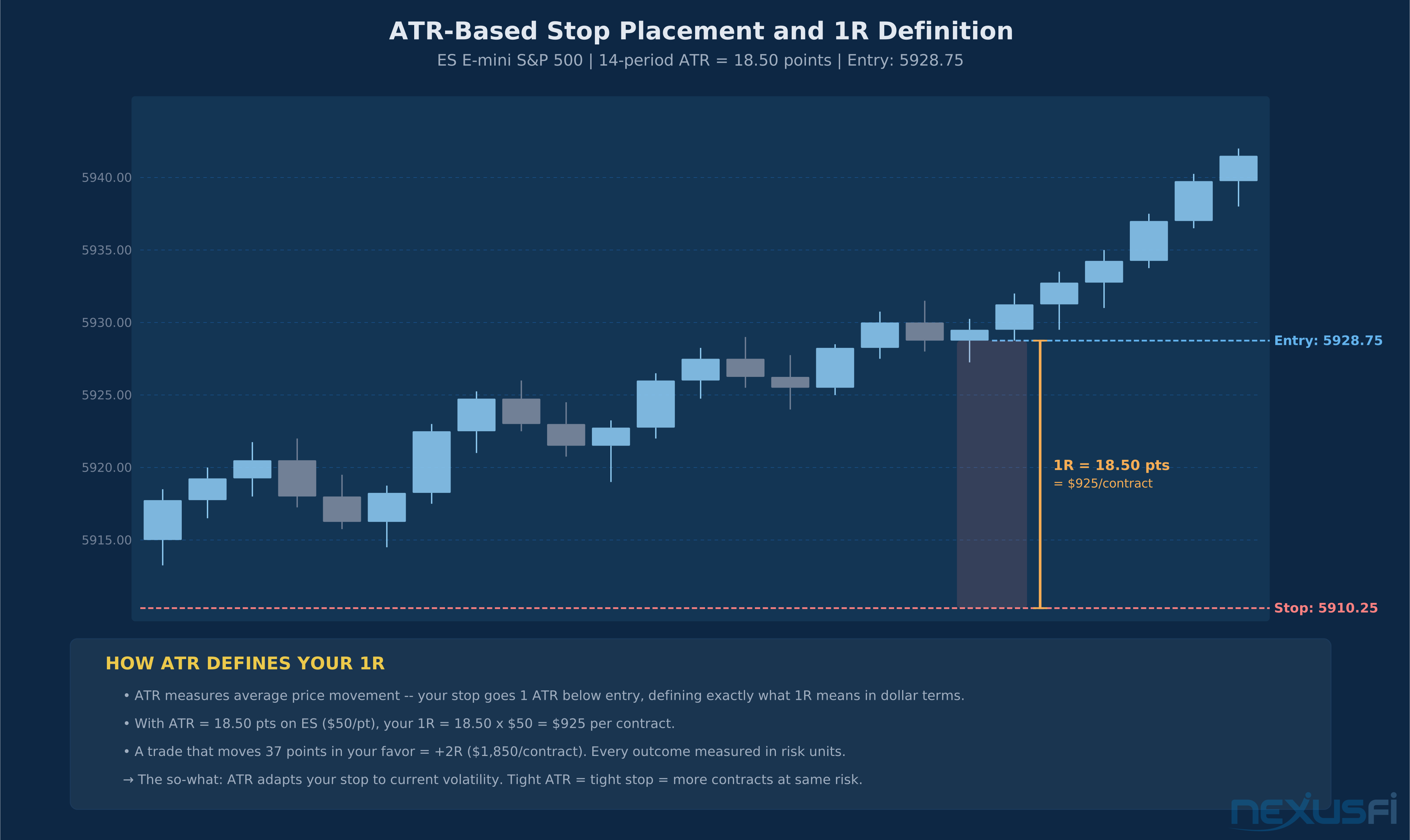
One especially effective way to set your stop — and so define R — is to base the stop distance on Average True Range (ATR). Instead of picking an arbitrary number of points or ticks, you let current volatility determine how much room the trade needs.
The approach: calculate ATR for your timeframe, then set your stop as a multiple of ATR from entry. A 2x ATR stop on ES when the 14-period daily ATR reads 30 points gives a stop distance of 60 points — making 1R = 60 x $50 = $3,000 per contract.
As [grausch explained on NexusFi] [8]: "Where ATR really shines is if you trade different instruments and want to normalise volatility across them. The Turtles used this to normalise risk across the various instruments they traded."
This approach has two key advantages:
- Automatic volatility adjustment. When markets are volatile, your stop widens and you trade fewer contracts. When markets quiet down, your stop tightens and you can size up. R stays constant as a percentage of equity regardless of conditions.
- Cross-instrument normalization. Trading ES, CL, and GC in the same account with ATR-based stops ensures each position carries roughly equivalent volatility-adjusted risk — the same principle the original Turtle Traders used across dozens of futures markets.
[Trailer Guy demonstrated this practically on NexusFi] [9]: "I use the 21n ATR rounded to the nearest even number as R. So the initial stop is R plus 1 tick above or below the entry."
ATR-based R works best when combined with market structure — confirming your ATR-derived stop sits beyond a meaningful support or resistance level, not in no-man's-land where it's likely to get clipped by noise.
Why R-Multiples Matter for Futures #
Futures contracts differ enormously in their contract specifications [11]:
| Instrument | Tick Size | Tick Value | Typical Stop (points) | R per contract |
|---|---|---|---|---|
| ES (E-mini S&P) | 0.25 | $12.50 | 8-12 | $400-$600 |
| NQ (E-mini Nasdaq) | 0.25 | $5.00 | 15-25 | $300-$500 |
| CL (Crude Oil) | 0.01 | $10.00 | 0.30-0.60 | $300-$600 |
| GC (Gold) | 0.10 | $10.00 | 3.0-6.0 | $300-$600 |
A trader who makes $500 on an ES trade and $500 on a CL trade hasn't necessarily performed equally. If the ES trade risked $250 (+2R) and the CL trade risked $1,000 (+0.5R), the ES trade was four times better on a risk-adjusted basis.
R-multiples make that visible immediately. Without them, your journal shows identical $500 profits. With them, you see that one trade was excellent and the other was mediocre.
The Psychology Behind R-Multiples #
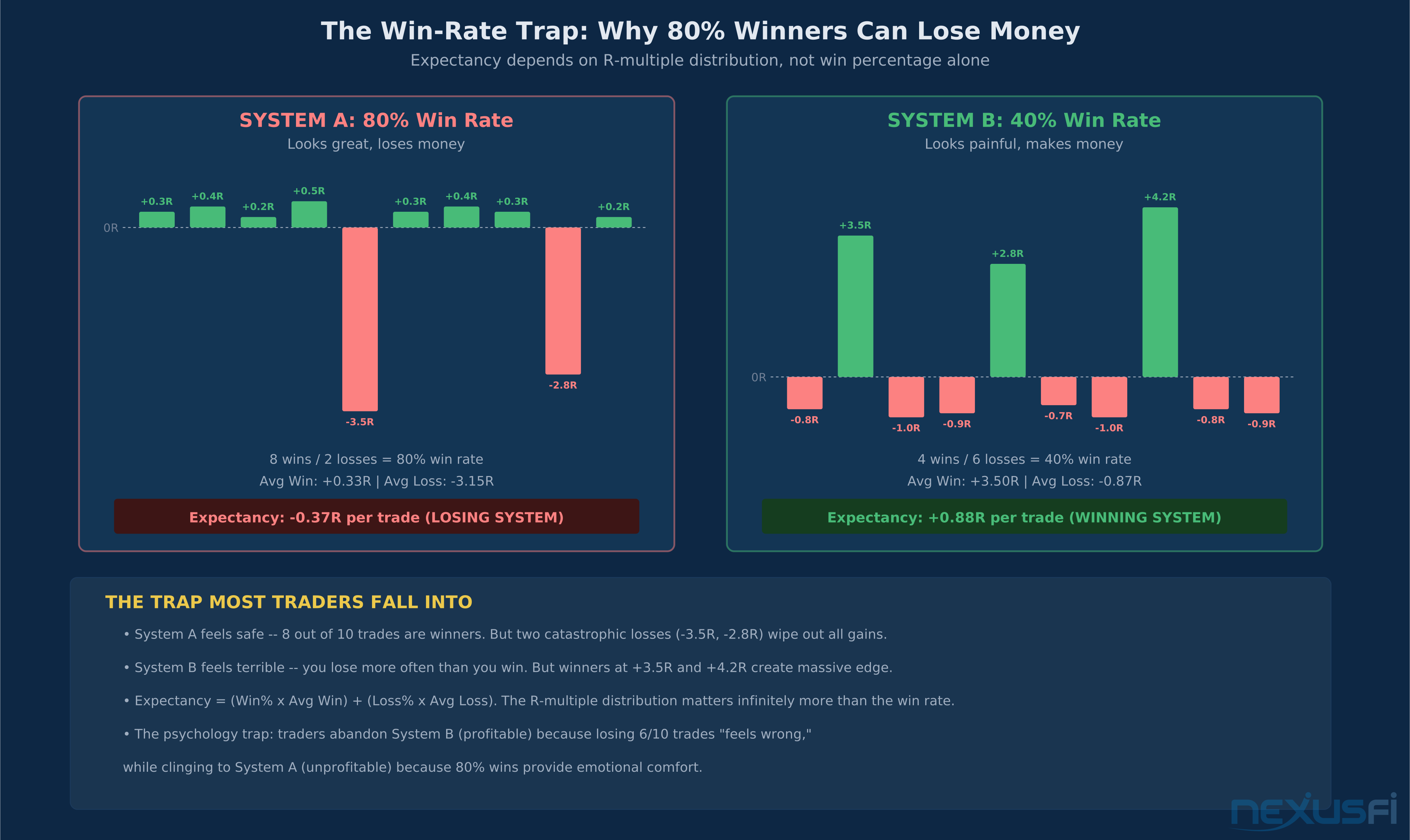
[Fat Tails explained on NexusFi] [1] why Van Tharp developed the R-multiple framework: "Most beginning traders do not let their profits run, and achieve bad R-Multiples. You will find some journals here that show R-multiples < 1. It is psychologically easy to take a quick profit, and have a large loss every 5 trades. You are emotionally rewarded with 4 successes and only 1 failure!"
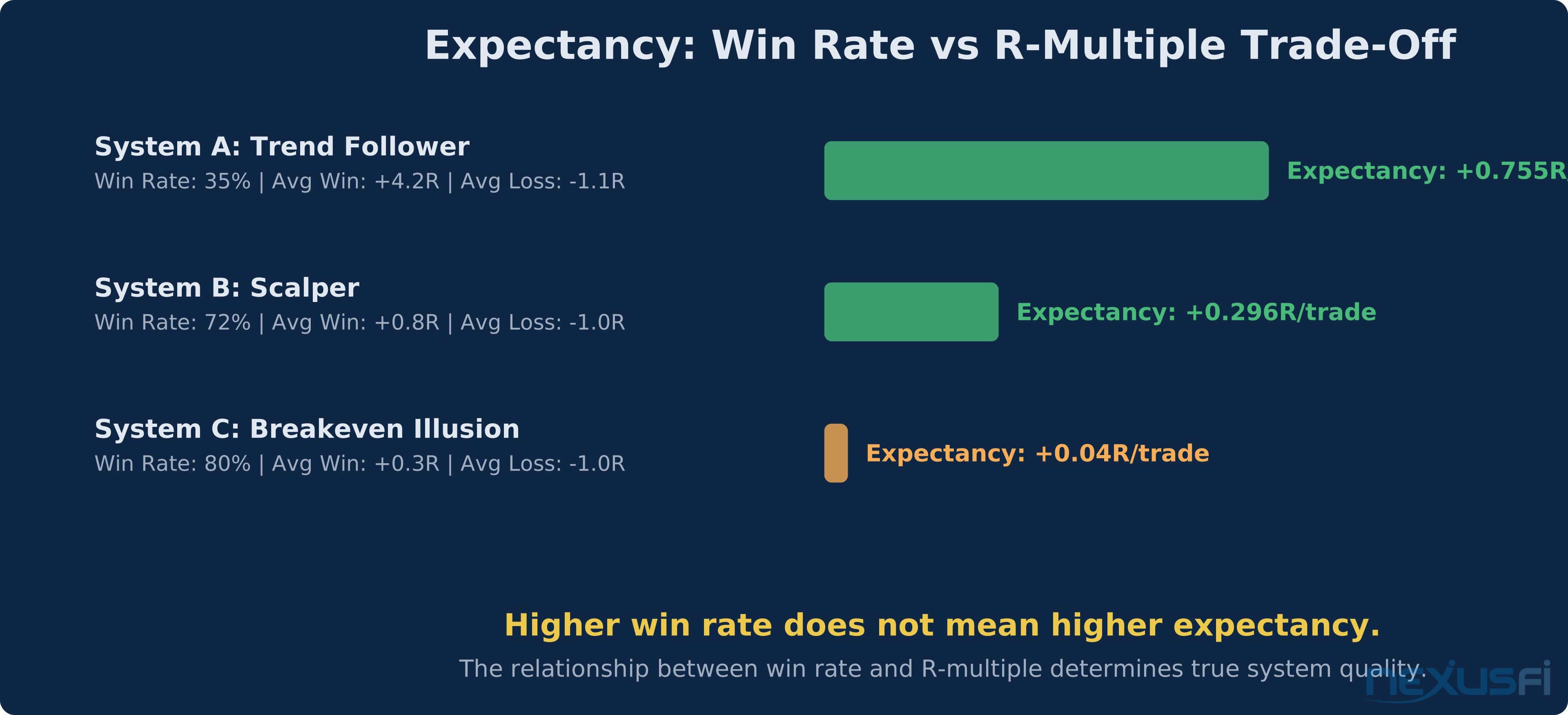
This is the core psychological trap R-multiples expose. A trader with 80% win rate and an average R-multiple of 0.3 feels successful — four wins for every loss. But the math tells a different story:
- Win: 80% x 0.3R = +0.24R
- Loss: 20% x -1R = -0.20R
- Expectancy: +0.04R per trade
That's barely breakeven before commissions. The "80% win rate" is an illusion created by taking tiny profits and full-size losses.
R-multiples strip away that illusion. They force you to ask: "How much did I make relative to what I risked?" Not: "Did I make money?"
As Fat Tails noted: "It is an educational tool. The R-Multiple can be used even after 1 trade and is significant. So it is a concept that can be used to train traders."
Calculating R in Practice #
Step 1: Define your stop placement #
The stop must be based on market structure — a swing low, an ATR band, a support level, a volume node. Not an arbitrary round number. The stop placement determines the price distance, which determines R.
Step 2: Calculate dollar risk per contract #
Risk per contract = |Entry - Stop| x (Tick Value / Tick Size)
For ES with entry at 5,000 and stop at 4,988:
- Distance: 12 points
- Tick value: $12.50 per 0.25 points = $50 per point
- Risk per contract: 12 x $50 = $600
Step 3: Size the position #
If your account is $100,000 and you risk 1% per trade:
- Maximum dollar risk: $1,000
- Contracts: floor($1,000 / $600) = 1 contract
- Actual 1R = $600
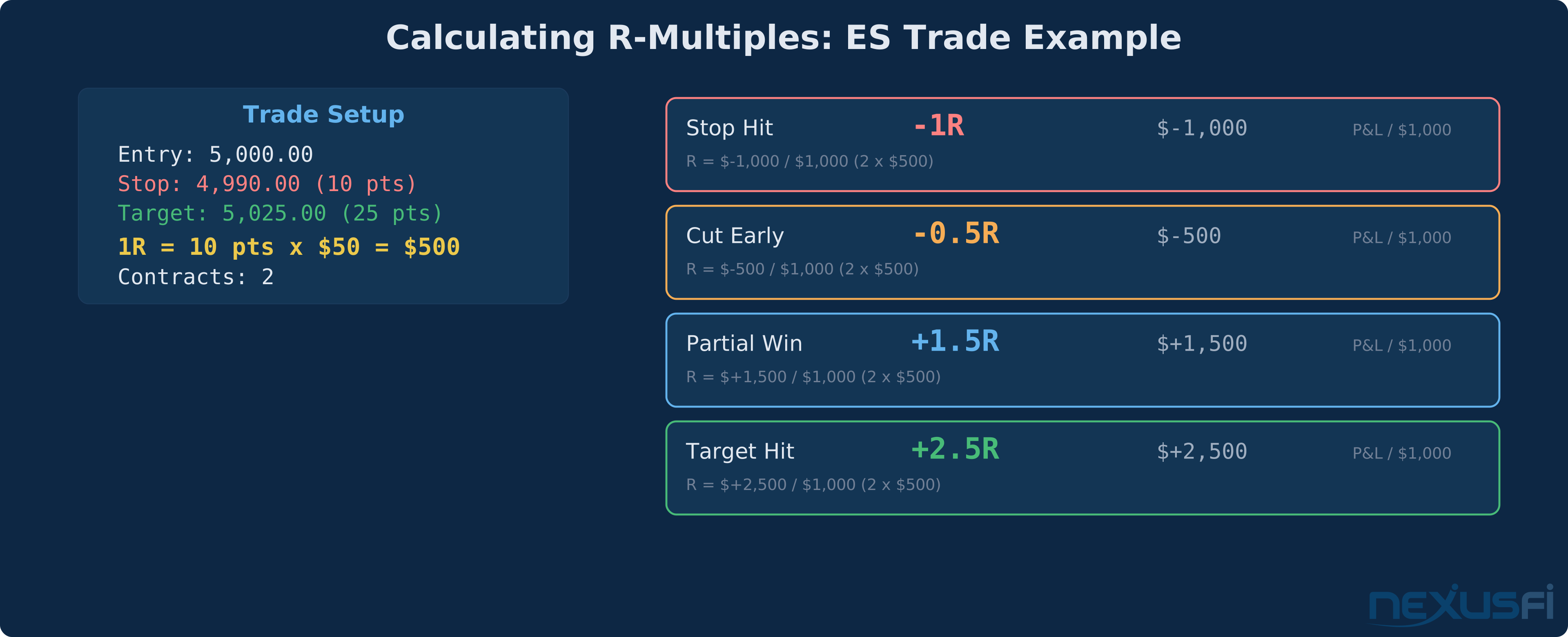
Step 4: Record the outcome in R #
After the trade closes:
R-multiple = Realized P&L / Planned 1R- If you made $1,800: R = $1,800 / $600 = +3R
- If stopped out exactly: R = -$600 / $600 = -1R
- If you cut early at -$300: R = -$300 / $600 = -0.5R
Including realistic costs #
For accurate tracking, include commissions and expected slippage in your risk calculation:
- Stop risk: $600
- Round-trip commission: $8
- Expected slippage: $12.50 (1 tick)
- Adjusted 1R: $620.50
This prevents overstating your actual expectancy.
R-Multiples and Position Sizing #
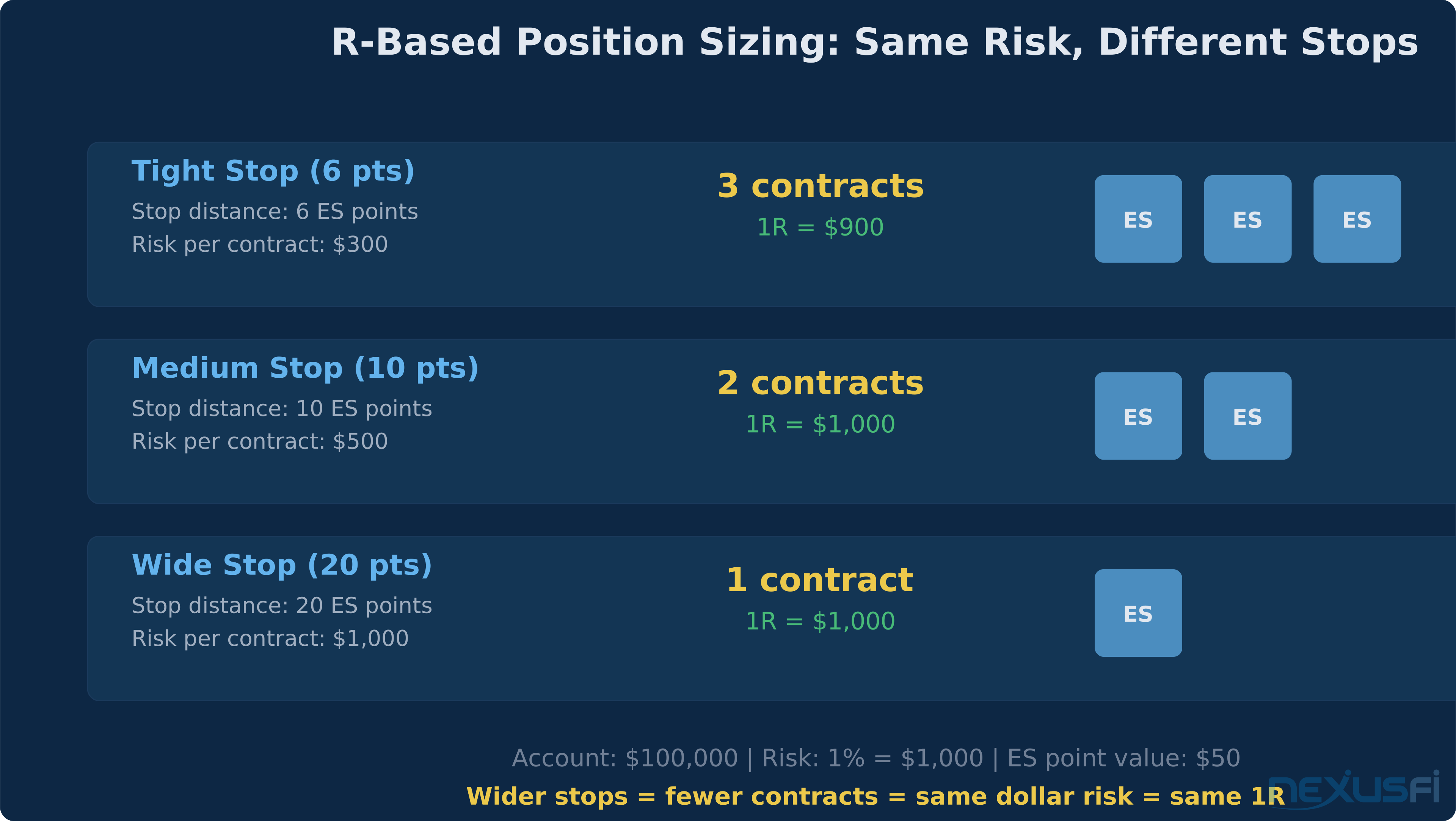
R-multiples and position sizing are two sides of the same coin. As [monpere explained on NexusFi] [4]: "You can use the Van Tharp R-Multiple position sizing. You vary the number of contracts on each trade based on how large your stop has to be."
The fixed-fractional method works like this:
Contracts = floor(Account Equity x Risk% / Risk Per Contract)
This creates automatic volatility adjustment:
- Wide stop (high volatility): fewer contracts, same dollar risk
- Tight stop (low volatility): more contracts, same dollar risk
- The R-unit stays constant regardless of market conditions
This is the mechanical advantage. You don't decide contract size based on conviction or excitement. The stop distance and your risk percentage determine it for you. Every trade risks the same fraction of your equity — one R.
Expectancy: The Key Metric #
The most important number in R-multiple analysis is expectancy — the average R you expect to earn per trade over many trades.
Expectancy = (Win% x Average Win in R) - (Loss% x Average Loss in R)
Example system A — trend follower:
- Win rate: 35%
- Average win: +4.2R
- Average loss: -1.1R
- Expectancy: (0.35 x 4.2) - (0.65 x 1.1) = 1.47 - 0.715 = +0.755R per trade
Example system B — scalper:
- Win rate: 72%
- Average win: +0.8R
- Average loss: -1.0R
- Expectancy: (0.72 x 0.8) - (0.28 x 1.0) = 0.576 - 0.28 = +0.296R per trade
System A has lower win rate but higher expectancy. System B feels better psychologically but generates less per unit of risk.
As [Fat Tails demonstrated on NexusFi] [1]: "Two systems — system 1: winning percentage 70%, R-Multiple = 2. System 2: winning percentage 42%, R-Multiple = 4. Both systems have the same expectancy of 1.1R. However, the first system has a better Sharpe Ratio, so you can actually trade it with a larger position sizing, without increasing your actual risk."
But here is the thing — expectancy alone doesn't tell you the optimal position size. The distribution of R-multiples matters too. A system with consistent small wins can be traded at larger size than one with rare large wins, even if expectancy is identical.
Van Tharp's System Quality Number (SQN) #
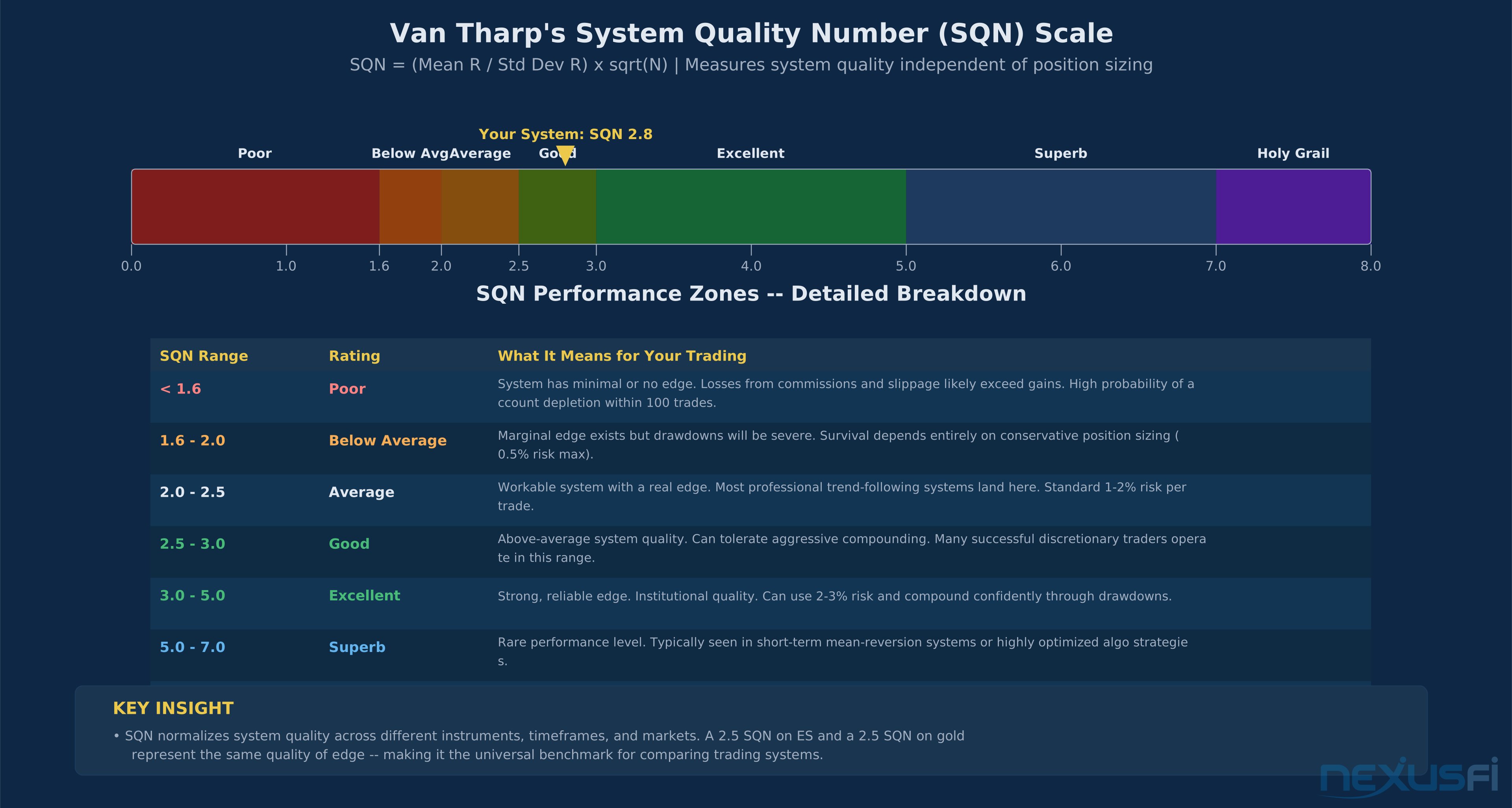
Van Tharp developed the SQN to capture both expectancy and consistency:
SQN = (Average R / Standard Deviation of R) x sqrt(min(N, 100))
Where N is the number of trades.
As [Fat Tails described on NexusFi] [5]: "Van Tharp's definition of the System Quality Number uses his own definition of the expectancy, which is based on the R-multiples."
SQN interpretation:
- 1.0-2.0: Below average — system barely has edge
- 2.0-3.0: Average — tradeable with discipline
- 3.0-5.0: Good — solid risk-adjusted performance
- 5.0-7.0: Excellent — professional-grade edge
- 7.0+: Solid — rare, verify data integrity
Performance Evaluation with R-Multiples #
Track these metrics in your trading journal:
| Metric | What It Shows |
|---|---|
| Average R per trade | Your edge in risk-adjusted terms |
| Median R per trade | Typical outcome (less affected by outliers) |
| Win rate | Percentage of positive-R trades |
| Average winning R | How much you capture on winners |
| Average losing R | How much you give back on losers |
| Max winning R | Best single trade in risk terms |
| Max losing R | Worst single trade (should be near -1R) |
| Max drawdown in R | Worst peak-to-trough in risk units |
| Expectancy | The core metric: average gain per trade in R |
| SQN | Quality-adjusted system performance |
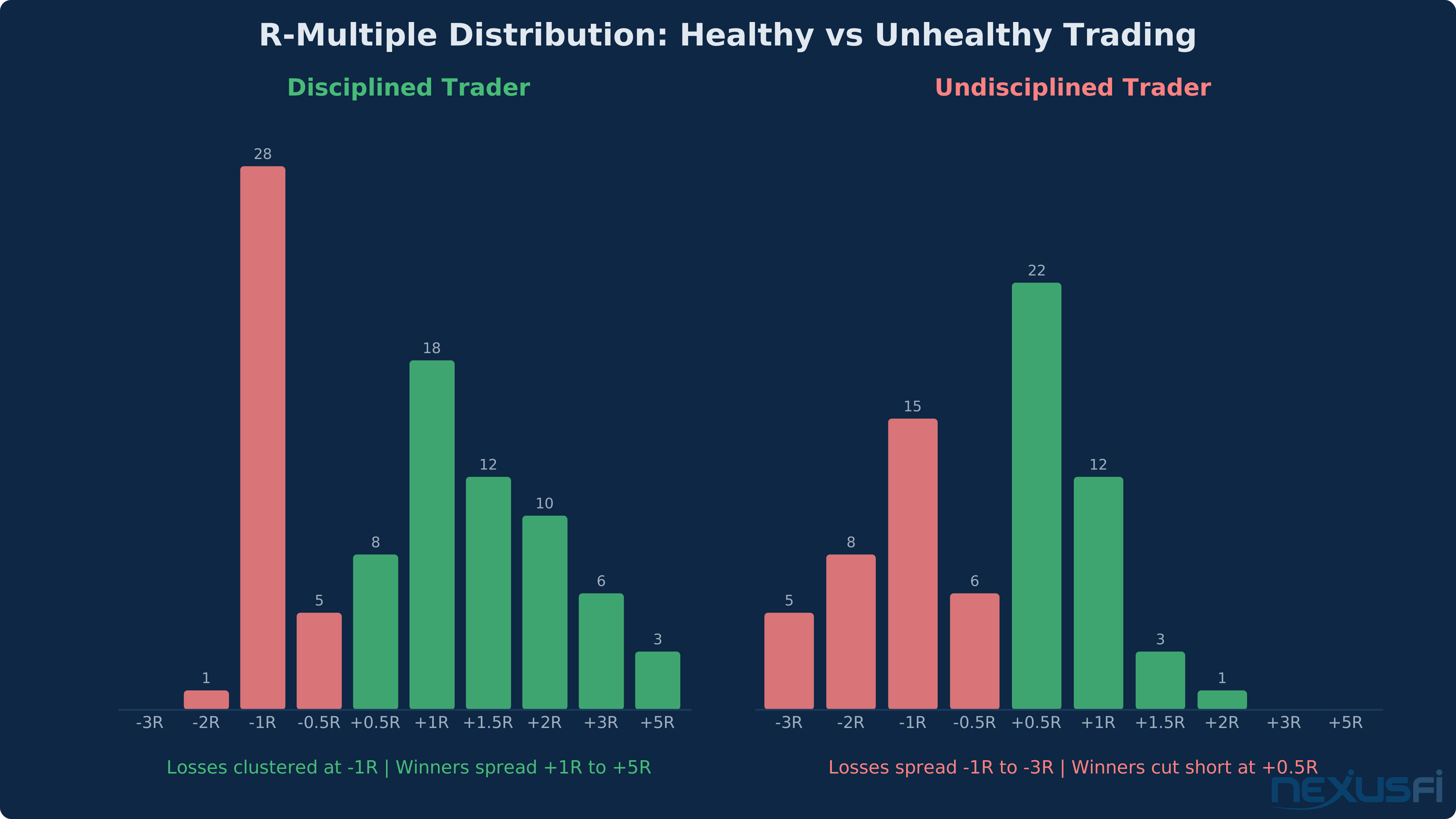
The R-multiple distribution histogram is especially revealing. A healthy distribution shows:
- A cluster of losses near -1R (disciplined stop placement)
- No losses beyond -2R (no stop-blowing events)
- Winners distributed across +1R to +3R or more
- Occasional outlier wins at +5R to +10R
If your distribution shows losses spreading from -1R to -3R, your stop discipline is breaking down. If your wins never exceed +1R, you're cutting too early.
Partial Exits and Trailing Stops #
When scaling out of positions, use the fixed initial risk denominator:
- Define 1R at entry based on the full position
- Each partial fill contributes incremental R relative to that initial risk
- Don't recalculate R when you trail your stop
Example:
- Enter 2 ES contracts at 5,000, stop at 4,990 (1R = $1,000)
- Exit 1 contract at 5,015 for +$750
- Exit 1 contract at 5,030 for +$1,500
- Total P&L: $2,250
- R-multiple: $2,250 / $1,000 = +2.25R
The alternative — recalculating R as stops trail — creates inconsistency and makes it easy to game your own statistics. Keeping the denominator fixed at initial risk produces clean, auditable results.
Common Mistakes #
Defining R after the trade. R must be set at entry, based on your stop placement. Retroactively adjusting the denominator defeats the purpose.
Ignoring contract multipliers. A "10-point stop" means $500 in ES and $100 in NQ. Always convert to dollars.
Comparing dollar P&L across instruments. This is exactly what R-multiples prevent. If you're still looking at raw dollars, you're not using the framework.
Using arbitrary stops. If your stop isn't based on market structure, your R calculation is meaningless. A random 2% stop and a structure-based stop produce very different R-multiple distributions.
Treating R as only a stop-loss concept. R is a complete framework: sizing, evaluation, portfolio management, and psychological discipline. The stop is just where R gets calculated.
Ignoring commissions and slippage. As [steveo107 noted on NexusFi] [7], practical R calculation should include all costs of the trade to avoid overstating expectancy.
The Relationship Between R-Multiples and Risk of Ruin #
R-multiples connect directly to Risk of Ruin, and the relationship runs both ways:
- R-multiples tell you the quality of individual trades
- Risk of ruin tells you whether your sizing is appropriate given that quality
- A system with favorable R-multiple distribution (high win rate or large average wins) compresses drawdown risk, allowing larger position sizes without increasing ruin probability
- Together, they answer: "Am I trading well enough, and sized correctly, to survive long-term?"
Practical Checklist #
For the mechanical steps of computing R on each trade — stop placement, dollar risk, position sizing, recording outcomes, and adjusting for costs — see the Calculating R in Practice section above. One additional discipline: never widen your stop after entry. Moving the stop wider inflates realized R losses beyond -1R and corrupts your statistics.
The real power of R-multiples shows up in periodic reviews:
- Weekly: Calculate average R, expectancy, and distribution shape across all trades that week
- Monthly: Compute SQN, compare to prior months, look for degradation in edge
- Quarterly: Assess whether your R-multiple distribution supports your current position sizing — or demands adjustment
R-multiples are the common language of risk-adjusted trading performance. By converting every trade into units of risk, you create a system where sizing is mechanical, performance is measurable, and psychological biases become visible. The math doesn't care about your feelings — it just tells you whether you're managing risk or gambling with it.
Sources & Citations #
This article draws on research and community discussion from NexusFi forums, including contributions from Fat Tails (R-multiple mathematics, expectancy formulas, SQN analysis, psychological barriers), Big Mike (R-multiple calculation examples), grausch (ATR-based risk normalization across instruments), Trailer Guy (practical ATR-based R application), and community members who have applied Van Tharp's framework to their futures trading journals. ATR-based R section added based on feedback from NexusFi Elite member Berci.
Knowledge Map
Prerequisites
Understand these firstReferences This Article
Articles that build on this topicCitations
- — Trading Metrics for journals/record keeping (2010) 👍 32“Most beginning traders do not let their profits run, and achieve bad R-Multiples. It is psychologically easy to take a quick profit, and have a large loss every 5 trades.”
- — Trading Metrics for journals/record keeping (2010) 👍 6“On Trade #1, I risk $200. $200 is 1R. On Trade #2, I risk $250. $250 is 1R.”
- — Trading Metrics for journals/record keeping (2010) 👍 7“Van Tharp recommends to trade high R-multiples.”
- — Tight Stops can give false comfort (2011) 👍 2“You can use the Van Tharp R-Multiple position sizing. You vary the number of contracts on each trade based on how large your stop has to be.”
- — How advanced mathematics and gaming theory can help you (2011) 👍 3“Van Tharp's definition of the System Quality Number uses his own definition of the expectancy, which is based on the R-multiples.”
- — Calculating trades in R (2019) 👍 4“Divide the profit/loss of a trade by the risk per trade. If a trade made $200 and the total risk was $100, the trade has an R multiple of 2R.”
- — Trading Metrics for journals/record keeping (2013) 👍 1“Determine the position size for the trade = Max Risk Amt (1R) / trade risk amt.”
- — ATR for Stop Loss (2016) 👍 1“Where ATR really shines is if you trade different instruments and want to normalise volatility across them. The Turtles used this to normalise risk across the various instruments they traded.”
- — Is scalping Emini a sustainable trading strategy? (2026) 👍 5“I use the 21n ATR rounded to the nearest even number as R. So the initial stop is R plus 1 tick above or below the entry.”
- — Trade Your Way to Financial Freedom (2nd Edition) (2006)
- — E-mini S&P 500 Futures Contract Specs (2026)