



Drawdown Management for Futures Trading
Overview #
Drawdown is the distance between your equity peak and where you are now. In futures trading, leverage makes this number move faster and hit harder than anywhere else in finance. A 10% drawdown in an equity portfolio is a bad quarter. A 10% drawdown in a leveraged futures account can happen before lunch.
This isn't about avoiding drawdowns — that's impossible. Every trader who makes money also loses money. Drawdown management is about controlling the depth, duration, and psychological damage of losing periods so they don't destroy your account or your ability to keep trading.
Here's what makes drawdown management in futures different from every other asset class: margin leverage compresses time. A stock portfolio in a 20% drawdown might take months to get there. A futures account can hit the same drawdown in hours. The management framework has to match that speed.
The Recovery Math Problem #
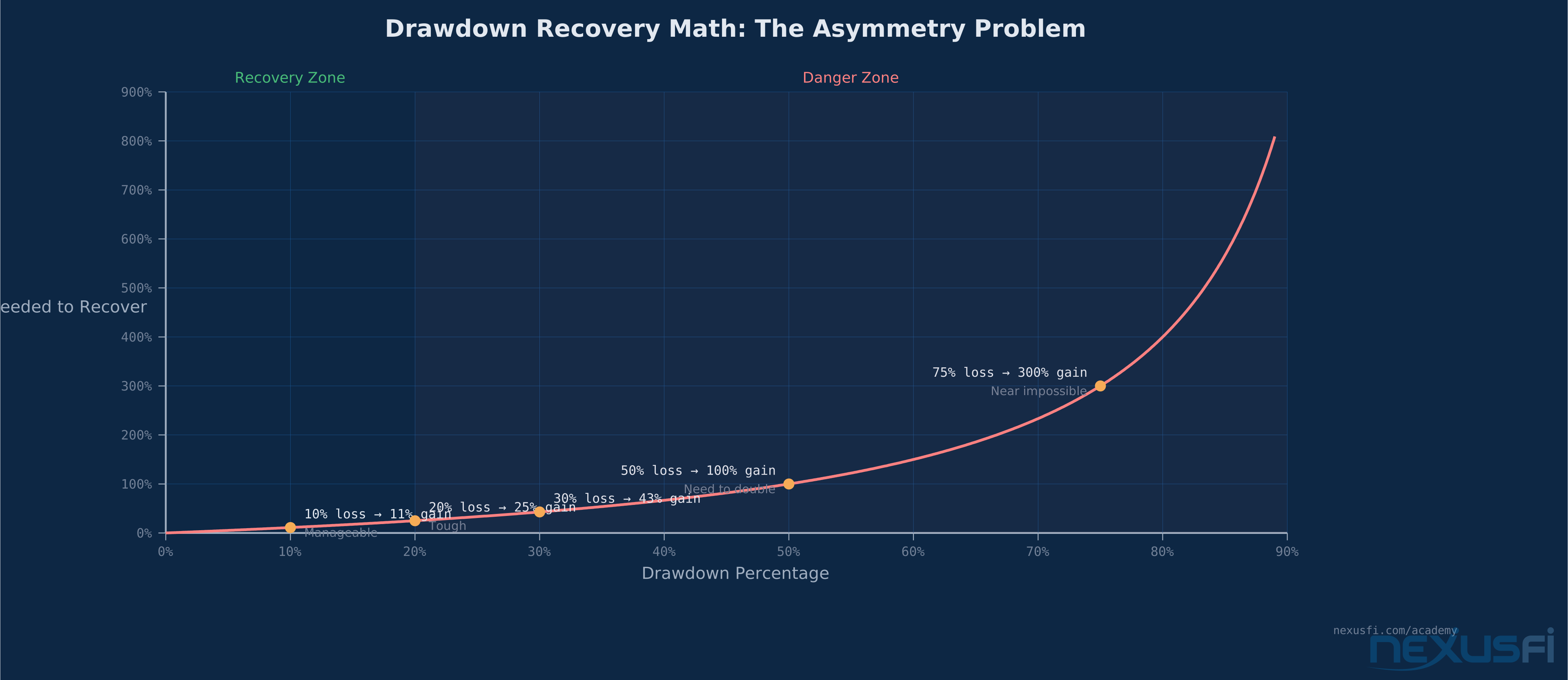
This is the single most important concept in drawdown management. Losses and gains are not symmetric:
- 10% drawdown → 11.1% gain to recover
- 20% drawdown → 25% gain to recover
- 30% drawdown → 42.9% gain to recover
- 50% drawdown → 100% gain to recover
- 75% drawdown → 300% gain to recover
The math is brutal: recovery_needed = loss / (1 - loss). At 50% down, you need to double your remaining capital. At 75% down, you need to quadruple it. This isn't a theoretical exercise — it's why drawdown management is more important than any entry signal you'll ever learn.
The practical implication: keeping drawdowns under 20% is the difference between recovery being a realistic goal (need 25% gain) and recovery being functionally impossible (need 100%+ gain at reduced position size). Every percentage point of additional drawdown makes the next percentage point of recovery harder.
Types of Drawdowns #
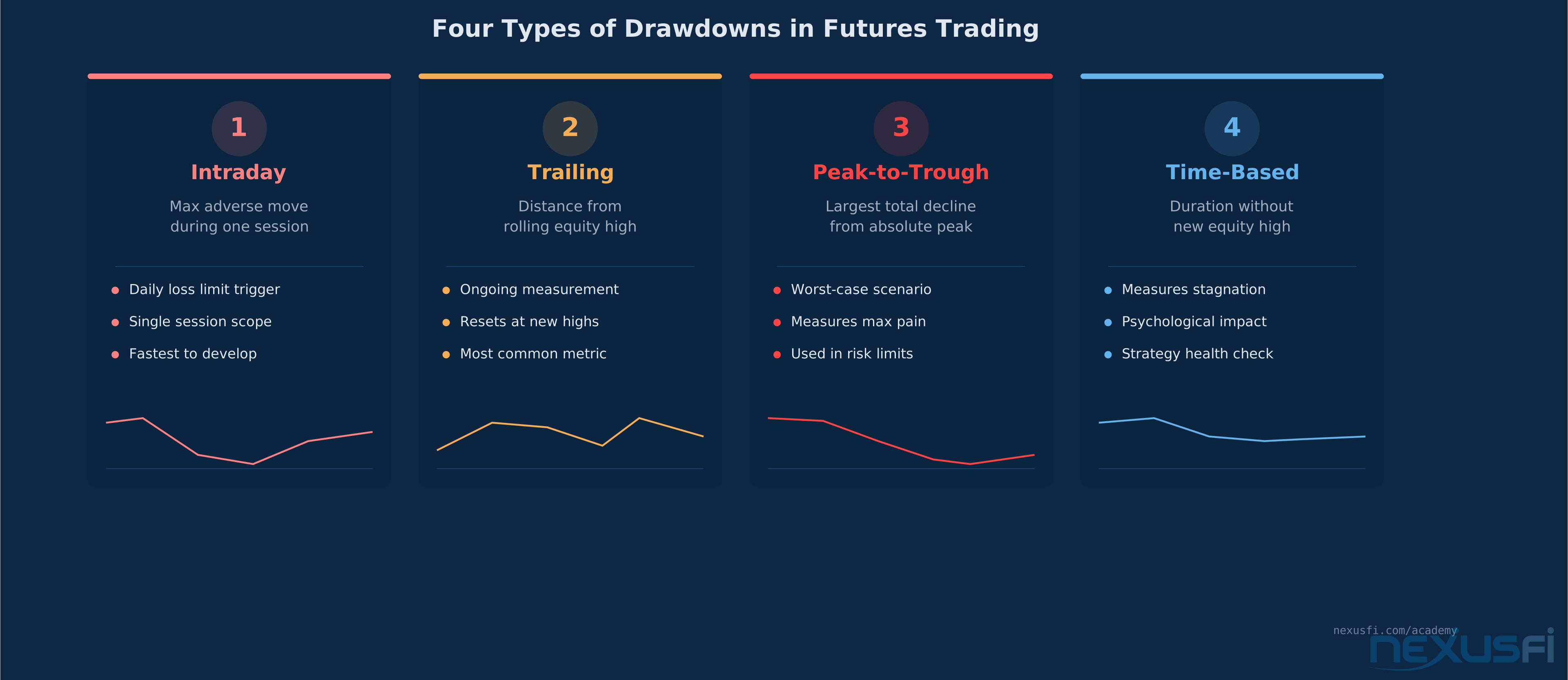
Not all drawdowns look the same, and the management response differs for each:
Intraday Drawdown #
The maximum adverse move during a single session. This is where daily loss limits live.
[1] Mechanical enforcement removes the decision from your worst moment.
Trailing Drawdown #
Used heavily by prop firms and funded trading evaluations. The drawdown threshold moves up with your equity high-water mark but never moves down. If your high-water mark is $55,000 and your trailing drawdown is $2,500, you're out at $52,500 — even if you started at $50,000. As one NexusFi trader documented: "TST Funded rules: Max daily drawdown $1,000. Personal daily loss limit $460. Max weekly drawdown (trailing drawdown)." [2] The trailing mechanism means your risk budget shrinks as you give back gains.
Peak-to-Trough (Maximum Drawdown) #
The total distance from your equity curve's highest point to its lowest before a new high is made. This is the standard industry metric and the one that determines whether your strategy is viable long-term. A strategy with 60% returns but 50% max drawdown is worse than a strategy with 20% returns and 10% max drawdown — the second one is actually tradeable.
Time-Based Drawdown #
How long you stay below your equity peak. A 15% drawdown that lasts 3 days is completely different from one that lasts 3 months. Time-based drawdowns destroy psychology — the longer you're underwater, the more pressure builds to deviate from your plan.
Daily Loss Limits: The Non-Negotiable #
A daily loss limit (DLL) is the maximum amount you're willing to lose in a single trading session. When you hit it, you stop. Not "one more trade." Not "I'll trade smaller." You stop.
Here's how to set one that actually works:
- Size it to your edge: Your DLL should be 2-3x your average daily profit. If you typically make $500/day, your DLL is $1,000-$1,500. This ensures one bad day doesn't wipe a week of profits.
- Include open position P&L: "The max drawdown is computed INTRADAY" — an unrealized loss counts. [3] Your DLL triggers on the worst point during the day, not just closed trades.
- Make it mechanical: Set it in your platform or have your broker enforce it. CME Group exchange rules require that all accounts maintain adequate equity relative to open positions at all times — your DLL is the personal equivalent of that institutional requirement. [7] The moment you're deciding whether to respect your DLL, you've already lost. As one trader struggling with this discovered: "You might see if your broker can set a daily loss limit for you and/or try to use an automated risk management system." [4]
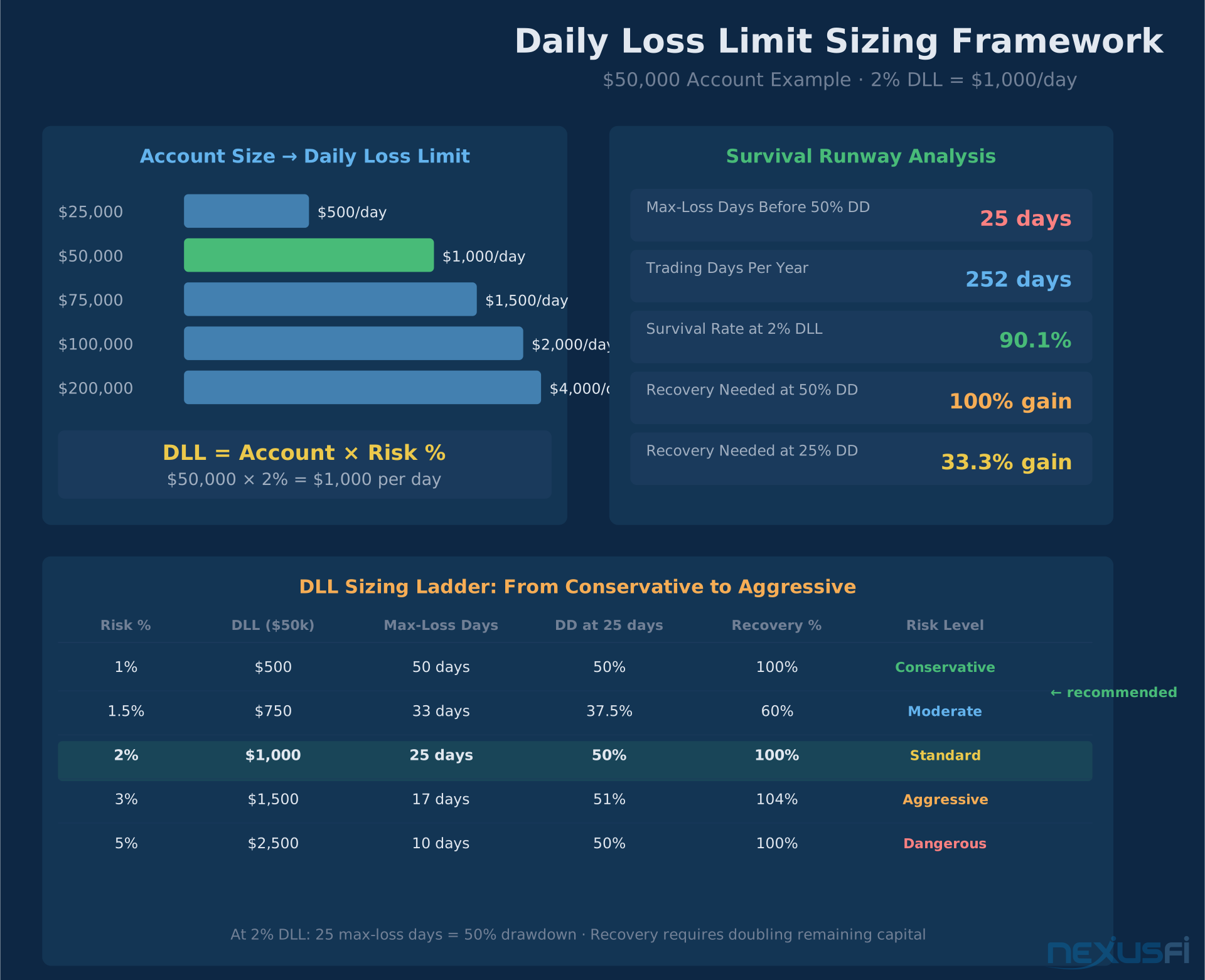
The math behind DLL sizing: if your account is $50,000 and you set a DLL of 2%, that's $1,000. At 252 trading days per year, you can survive 25 consecutive max-loss days (25 x $1,000 = $25,000 = 50% of capital) before recovery math becomes prohibitive. That's your survival runway.
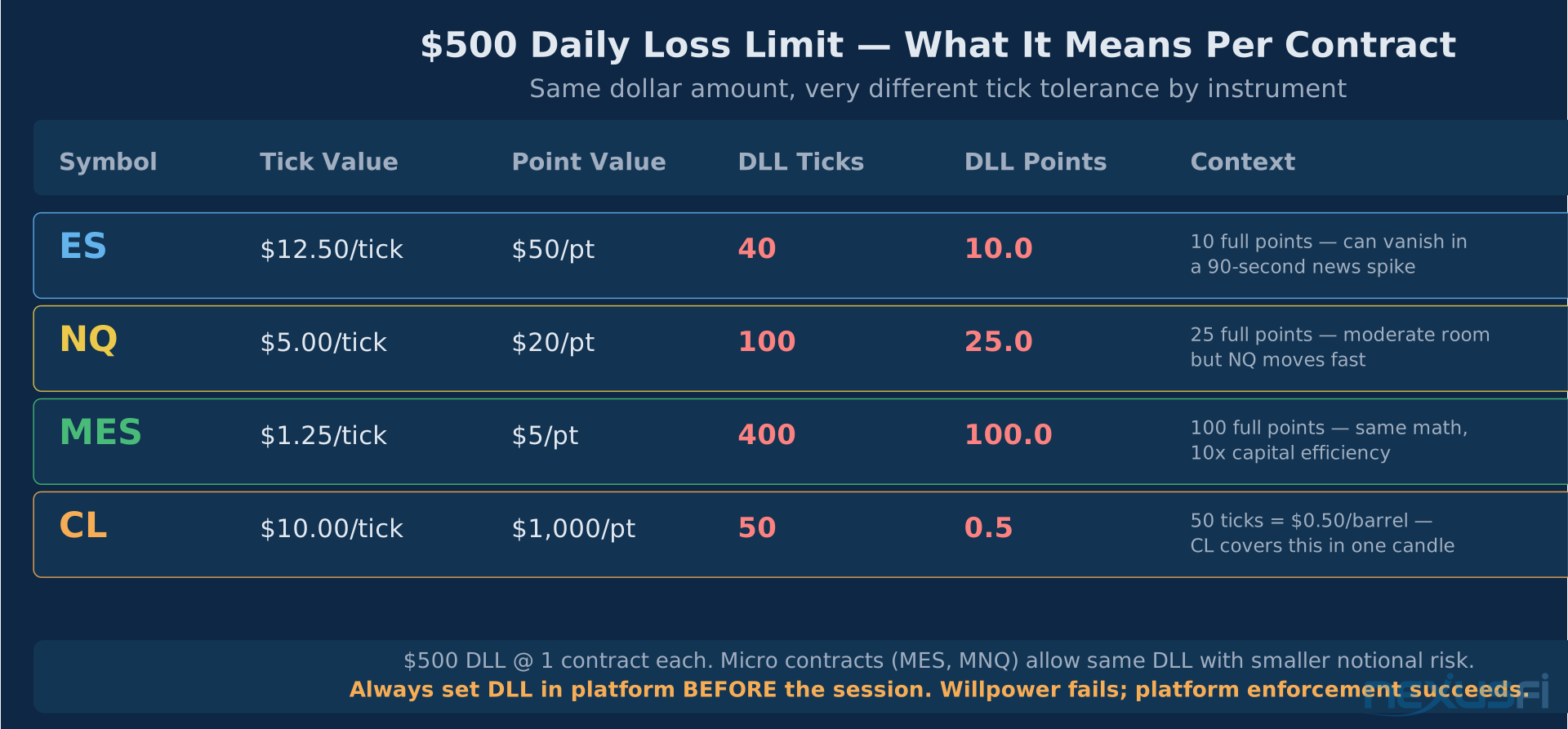
Instrument-specific DLL math: Each futures contract has different tick values, which means the same dollar DLL hits differently. For ES (E-mini S&P 500), each tick is $12.50 and each full point is $50 — a $500 DLL equals exactly 10 ES points, a distance that vanishes in minutes on a volatile open. For NQ (E-mini Nasdaq-100), each tick is $5 and each point is $20, so a $500 DLL gives 25 NQ points of room. For CL (Crude Oil futures), each tick is $10 and each full point is $1,000 — a $500 DLL is only 50 ticks, which CL routinely covers in a single candle during a supply report. Know your contract's tick value and daily range before you set your DLL or you'll calibrate it for the wrong instrument.
Set your DLL in your platform BEFORE the session starts — not during it. If you're deciding whether to respect your limit while already in a hole, the decision is already compromised. Broker-enforced limits and platform auto-flatten features beat willpower every single time. Configure it once, then take the choice out of your hands.
Equity Curve Management #
Your equity curve is a data series, and you can trade it the same way you trade price — with rules, not emotions.
The Size Reduction Protocol #
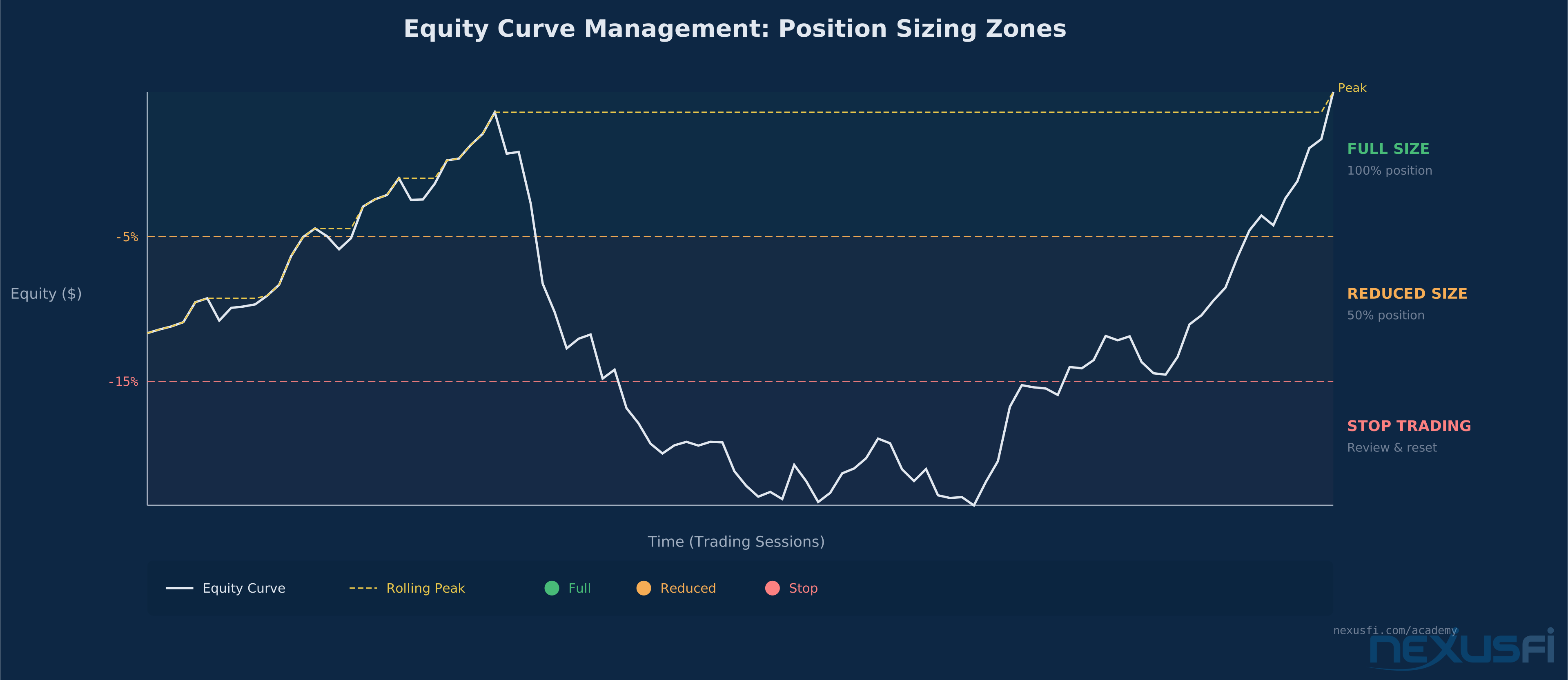
When your equity curve drops below its 20-period moving average (using daily closes), reduce position size by 50%. When it drops below its 40-period moving average, reduce by another 50% (to 25% of full size). When it crosses back above, scale back up.
This isn't a magic formula — it's risk-adjusted exposure. As one trader documented after implementing this approach: "This week I had lowered my max loss from where it was (about 10% of my drawdown), to just over a day's normal profit ($500, and I am actually going to lower it to $450), which is right around 6% of my max drawdown." [5]
How this helps: during drawdowns, your edge may be temporarily absent (regime change, volatility shift, tilt). Reducing size limits the damage while you figure out whether the drawdown is statistical variance (keep trading) or strategy degradation (stop and analyze).
The Stop-Trading Threshold #
Every account needs a hard circuit breaker — a drawdown level where you stop trading entirely, step away, and conduct a thorough review. For most futures traders, this is 20-25% of account equity.
When you hit this threshold:
- Stop trading immediately — not after the current trade, now
- Wait 48-72 hours minimum — let the emotional charge dissipate
- Review every trade in the drawdown period — were entries valid? Was sizing correct? Were you following your plan?
- Identify cause: statistical variance, regime change, execution error, or psychological tilt
- Return at reduced size — 25-50% of normal until you make a new equity high
Identifying Drawdown Cause: Variance vs. Strategy Degradation #
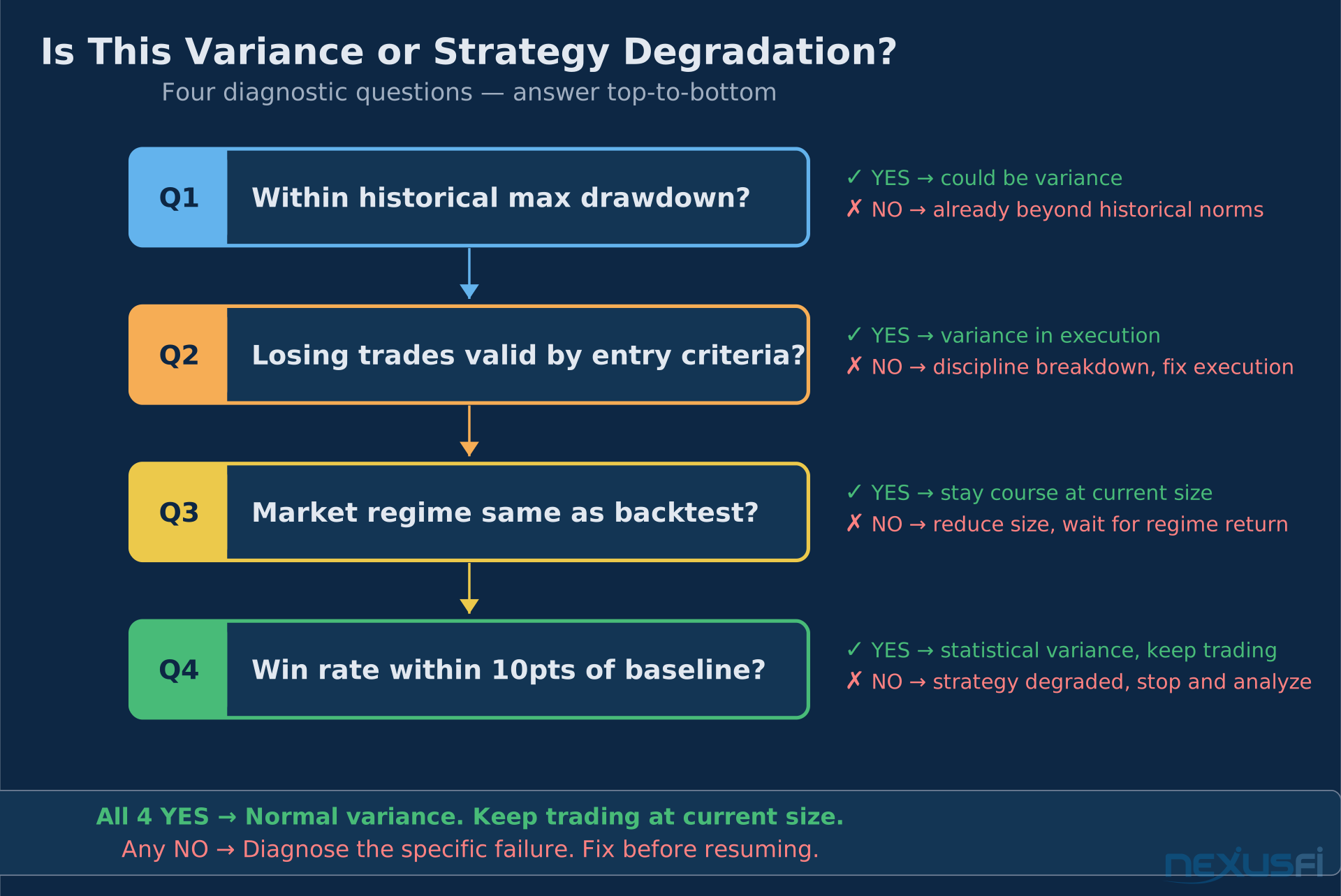
The most important diagnostic question in any drawdown: is this normal statistical variance, or has my edge stopped working? The wrong answer is costly in both directions. Treating a variance drawdown as strategy failure causes premature abandonment of a valid system — you stop trading exactly when your historical edge should mean revert. Treating a degraded strategy as normal variance means compounding losses in a broken system.
The four-question decision tree:
- Is this within my historical maximum drawdown? Your backtested strategy has a worst-case drawdown. If you're currently below that level, you're in historically expected territory. Compare your current drawdown depth to your strategy's documented maximum before assuming anything is broken.
- Are my losing trades executing valid setups? Pull the last 20 trades. By your own entry criteria, were those setups legitimate? If yes — variance. If no — you have a discipline breakdown, not a strategy failure. Fix the execution, not the system.
- Has the market regime shifted? Check your instrument's ATR over the past 20 sessions versus your backtest's ATR baseline. If current volatility is 50%+ above historical norms, your system may simply be out of regime. The fix is to reduce size to match historical ATR conditions, not to abandon the strategy.
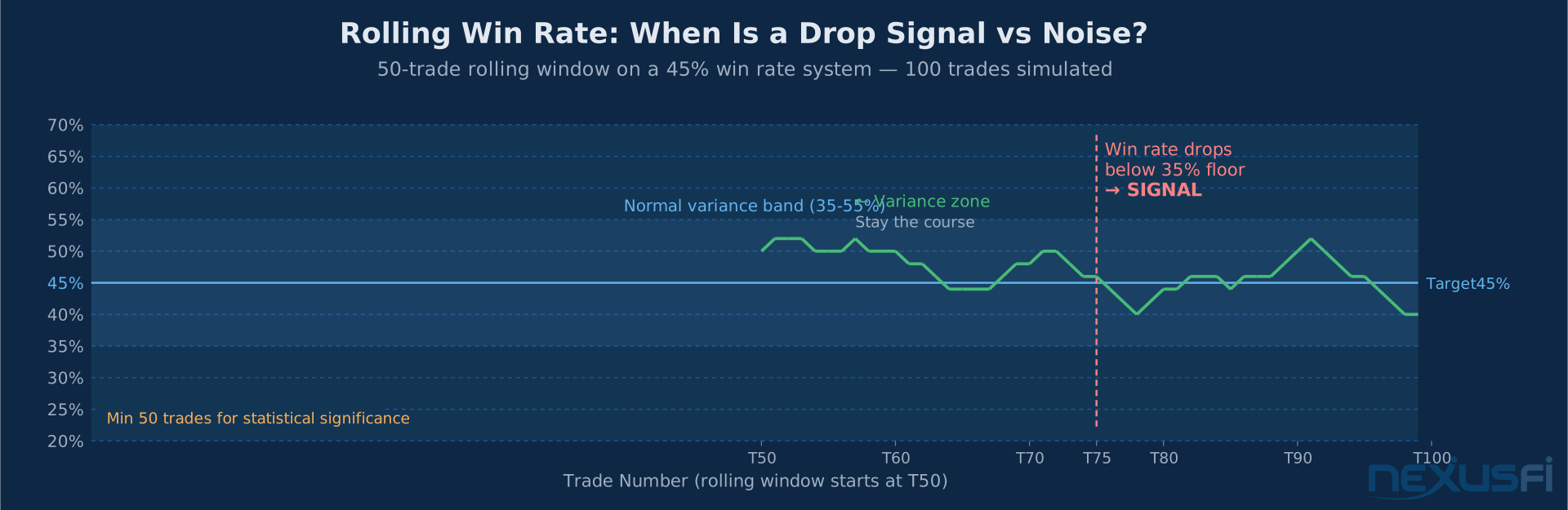
- Is my win rate statistically degraded? Track your rolling 50-trade win rate and compare it to your historical baseline. A 2-3 percentage point drop is noise below any statistical significance threshold. A 10+ point sustained drop over 50+ trades warrants a deep review. Never draw strategy conclusions from fewer than 50 trades — a 40% win rate system produces 10-15 trade losing streaks as routine variance.
Setting your max acceptable drawdown from backtesting: Compare your backtested maximum drawdown to your strategy's win rate and average R:R to calibrate a live circuit breaker. Example: a system with 45% win rate, 1.5R average win, and a backtested max drawdown of 18% should use 20-22% as the live circuit breaker — enough buffer for real-world slippage without allowing catastrophic drawdown. Apply this before trading live, not during a drawdown.
The Psychology of Drawdowns #
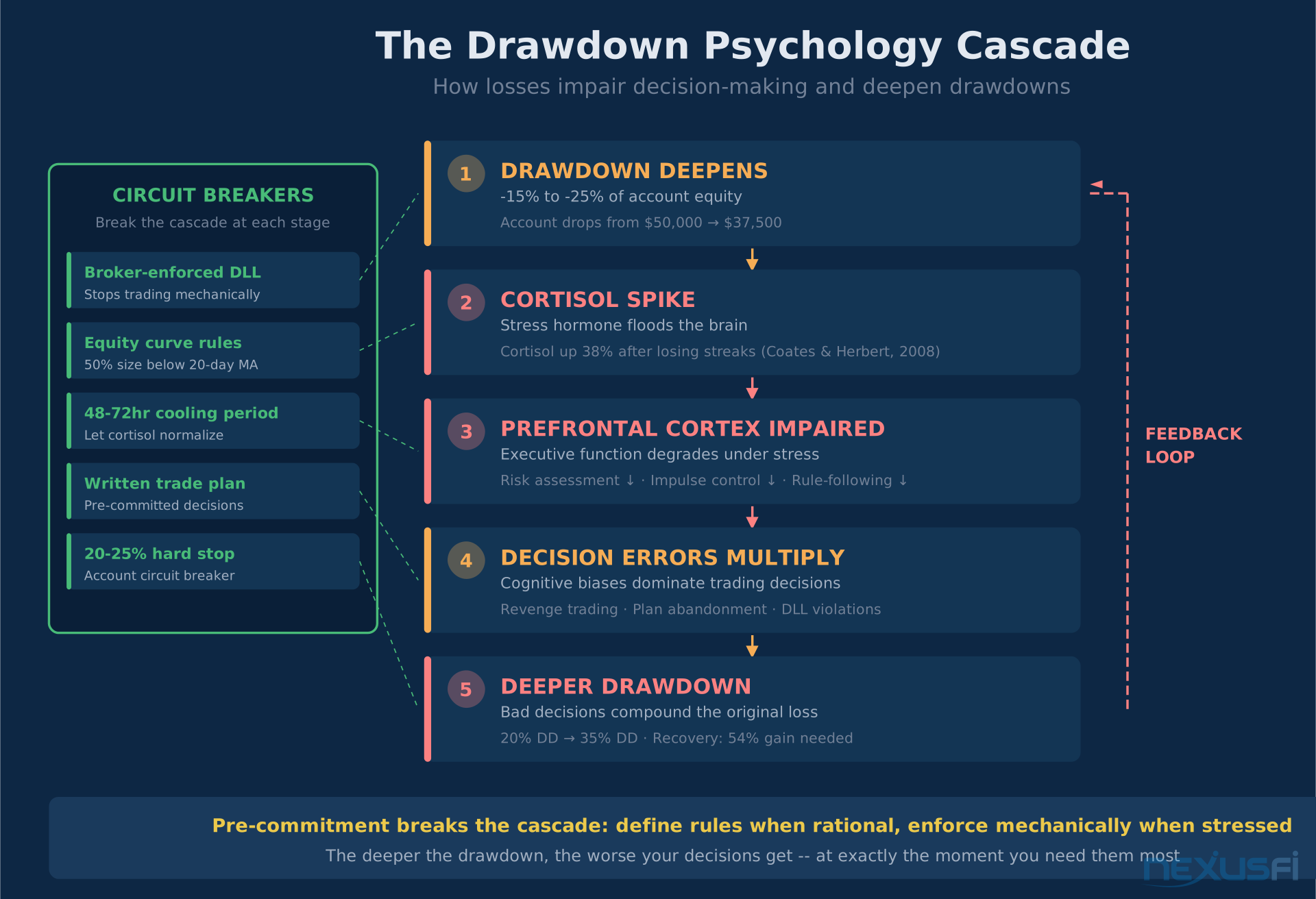
Here's the part nobody writes about in textbook terms: drawdowns make you stupid. Literally. Stress hormones impair the prefrontal cortex [8] — the part of your brain responsible for rule-following, risk assessment, and impulse control. The deeper the drawdown, the worse your decision-making gets, at exactly the moment you need it most.
Common psychological failure patterns during drawdowns:
- Revenge trading: Taking oversized positions to "make it back quickly." This is how 20% drawdowns become 50% drawdowns.
- Abandoning the plan: Switching strategies, timeframes, or instruments mid-drawdown because "this one isn't working." The drawdown may be statistical — the new strategy will have its own drawdown.
- Paralysis: Missing valid setups because you're afraid of more losses. This extends the drawdown duration and prevents recovery.
- DLL violation: "Just one more trade" after hitting your daily loss limit. One NexusFi trader shared this honestly: hitting their "drawdown limit for the day, week, and combine" in a single session — the cascading violation that happens when you break your first rule. [6]
Cognitive recovery protocols during drawdowns:
Pre-session checklist (5 minutes before the open, mandatory when in any drawdown):
- Write down your DLL for today — the exact dollar number where you stop, no renegotiating
- Cap your trade count: in a drawdown, limit yourself to 50% of your normal daily trade count
- List the only setups valid for today — exclude anything outside your defined criteria
- Confirm position size: if below your equity high-water mark, trade at 50% of normal size
Drawdown journal format: Shift your journal from P&L focus to process tracking. For every trade during a drawdown period, record just two things: "Was this setup valid by my criteria? (Y/N)" and "Did I follow my exit plan? (Y/N)." When both are yes and you still lost money, that's variance — accept it and continue. When either answer is no, that's an execution error — and execution errors during drawdowns are precisely how 20% drawdowns compound into 40% drawdowns.
The antidote is pre-commitment: define your drawdown response plan when you're rational (not in a drawdown), write it down, and make as much of it mechanical as possible. Broker-enforced DLLs, automated position liquidation, and platform-level circuit breakers remove decisions from compromised moments.
Recovery Timeline: Why Depth Matters More Than Duration #
Understanding recovery math in the abstract is one thing. Seeing the actual timeline is what changes behavior.
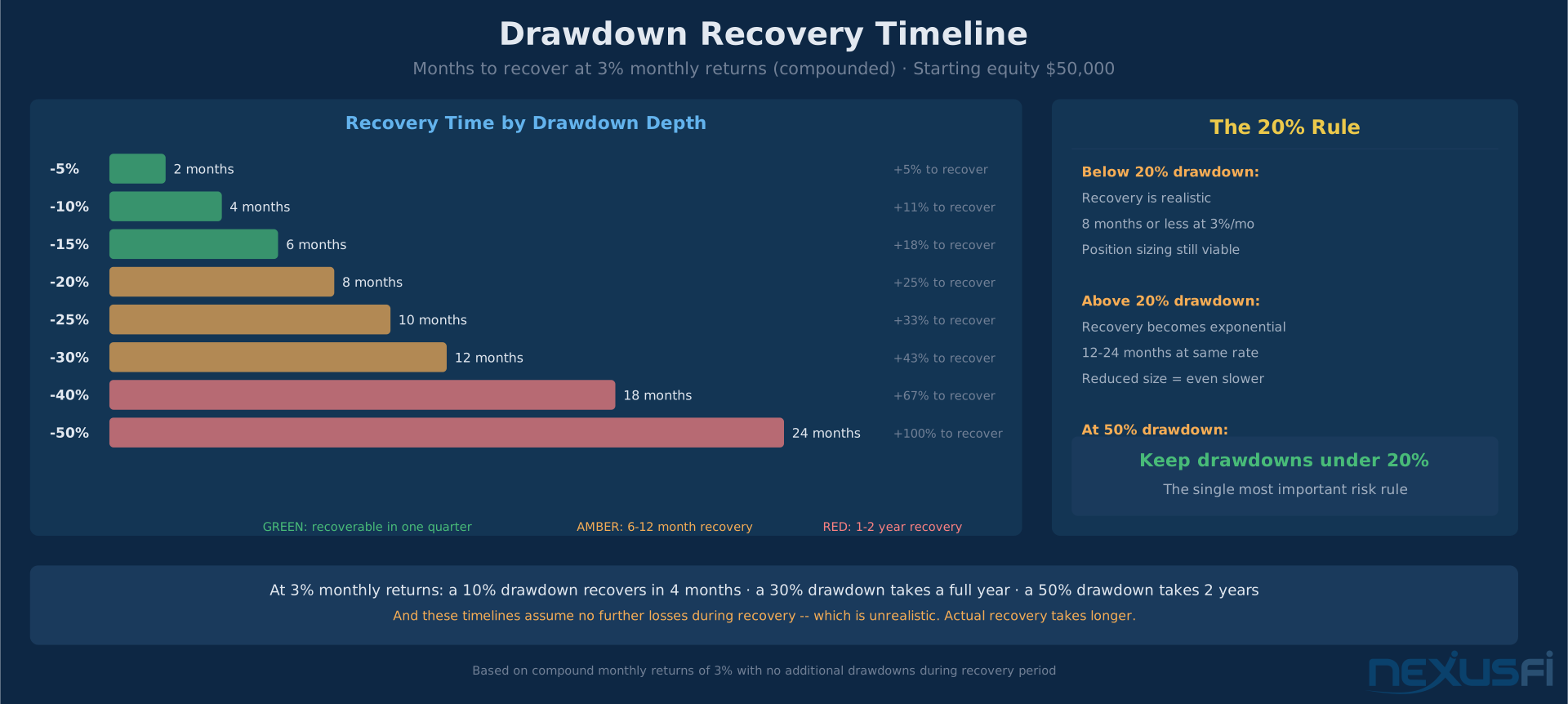
At a realistic 3% monthly return (compounded), here is what recovery actually looks like for a $50,000 account:
- 5% drawdown ($2,500 loss): 2 months to recover. A bad week. Manageable.
- 10% drawdown ($5,000 loss): 4 months. One quarter of grinding back.
- 20% drawdown ($10,000 loss): 8 months. Your entire trading year is now about recovery, not growth.
- 30% drawdown ($15,000 loss): 12 months. A full year just to get back to where you started.
- 50% drawdown ($25,000 loss): 24 months. Two years of consistent 3% monthly returns to break even.
And these timelines assume no further losses during recovery. In practice, you will have losing days and weeks during the recovery period, which extends the timeline further. A realistic recovery from a 30% drawdown at reduced size could easily take 18-24 months.
This is why the 20% threshold is the bright line in drawdown management. Below 20%, recovery is a realistic goal within a year. Above 20%, you are entering territory where the math starts working against you exponentially, and the psychological pressure of extended underwater periods compounds the problem.
Keep drawdowns under 20%. Below that line, recovery takes months. Above it, recovery takes years — and the psychological damage during those years creates a feedback loop that deepens the drawdown further. The 20% threshold is not arbitrary. It is where recovery math transitions from difficult to functionally impossible at reduced position sizes.
Integration with Risk Management Framework #
Drawdown management doesn't operate alone. It connects to your broader risk management framework through:
- Position sizing: Your position size determines your maximum per-trade drawdown contribution. Sizing at 1% risk per trade means no single trade can create more than a 1% drawdown.
- Risk of ruin: Drawdown management is risk-of-ruin prevention. Your maximum acceptable drawdown should be calibrated so that the probability of ruin (reaching it) is under 1%.
- R-multiples: Tracking performance in R (risk units) normalizes drawdowns across different instruments and position sizes, making drawdown analysis cleaner.
- Stop losses: Per-trade stop losses are the building blocks. Drawdown management is the aggregate constraint that governs what happens when multiple stops hit in sequence.
The hierarchy: per-trade risk (stop loss) → per-day risk (DLL) → per-week risk (equity curve rules) → per-account risk (max drawdown threshold). Each layer catches what the layer below it misses.
Knowledge Map
Prerequisites
Understand these firstGo Deeper
Build on this knowledgeReferences This Article
Articles that build on this topicCitations
- — Daily Loss Limit (2011) 👍 6“A user can request their own personal loss limit and the broker will liquidate all positions and not allow any new trades when the limit is hit.”
- — m28 End of Week Journal (2019) 👍 20“TST Funded rules: Max daily drawdown $1,000. Personal daily loss limit $460. Max weekly drawdown (trailing drawdown).”
- — My MES Live Account Journal (OneUp) (2019) 👍 1“The max drawdown is computed INTRADAY -- an unrealized loss counts.”
- — Daily Loss Limit supervised by Broker/Software (2020) 👍 6“You might see if your broker can set a daily loss limit for you and/or try to use an automated risk management system.”
- — bwolf's ES Daily Trading Journal (2023) 👍 3“This week I had lowered my max loss from where it was (about 10% of my drawdown), to just over a day's normal profit ($500, and I am actually going to lower it to $450), which is right around 6% of my max drawdown.”
- — Josh's TST Combine Journal (2013) 👍 32“Today I hit my drawdown limit for the day, week, and combine.”
- — CME Rulebook Chapter 9: Risk Disclosure and Position Limits (2023)
- — Are Investors Reluctant to Realize Their Losses? (1998)