



Renko Bars: The Noise-Filtering Chart Type That Thinks in Price, Not Time
Overview #
Renko Bars: The Noise-Filtering Chart Type That Thinks in Price, Not Time
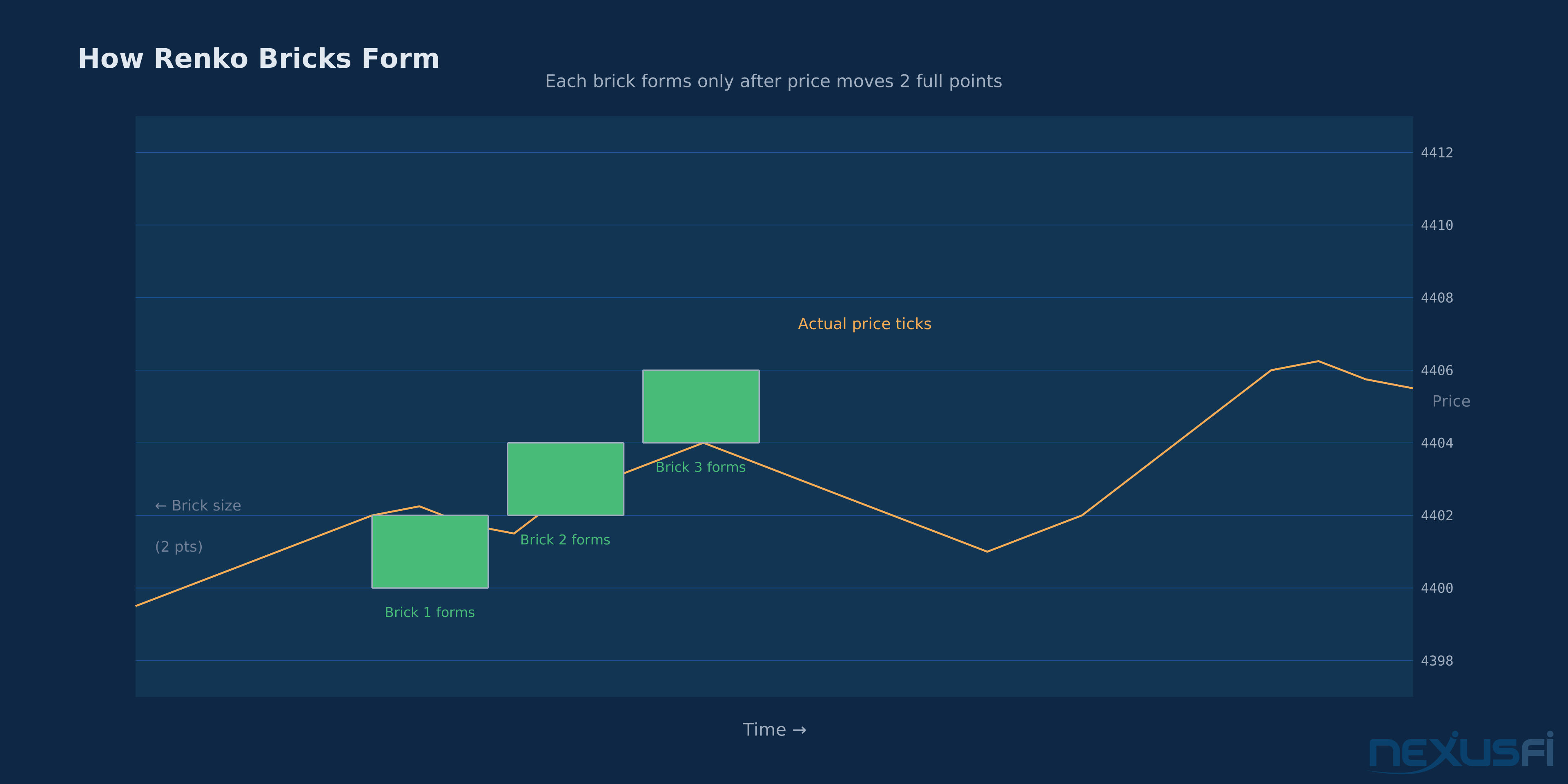
Renko charts don't care what time it is. A Renko brick forms when price moves a fixed distance — up or down. If price sits still for an hour, nothing appears. If it drops fifty points in thirty seconds, you get a cascade of bricks. This fundamental departure from time-based charting is why Renko attracts traders who are exhausted by the noise that fills every candlestick chart.
The name comes from the Japanese word renga (煉瓦), meaning "brick." The method originated in Japan alongside candlestick charting, though it received far less attention until Western traders began adapting it for electronic futures markets in the 1990s and 2000s. Today, Renko variants are among the most discussed chart types on NexusFi — with threads dedicated to specific implementations accumulating well over a million views — because they solve a real problem: how do you see the trend without drowning in the tick-by-tick noise that volatility creates?
How Renko Bars Form: The Construction Mechanics #
Understanding how Renko bars are built matters more than most chart tutorials admit, because the construction method creates properties — and limitations — that affect every analytical decision you make.
Classic Renko Construction
The traditional method works as follows. You define a brick size, measured in price units. To form a new up-brick, price must close above the top of the previous up-brick by exactly the brick size. To form a new down-brick, price must close below the bottom of the previous down-brick by the same amount.
Crucially: each brick opens at the close of the previous brick. There are no wicks or shadows in classic Renko — every brick is a clean rectangle. The open is always either the prior close (for a continuation brick) or the prior close minus the brick size (for a reversal brick).
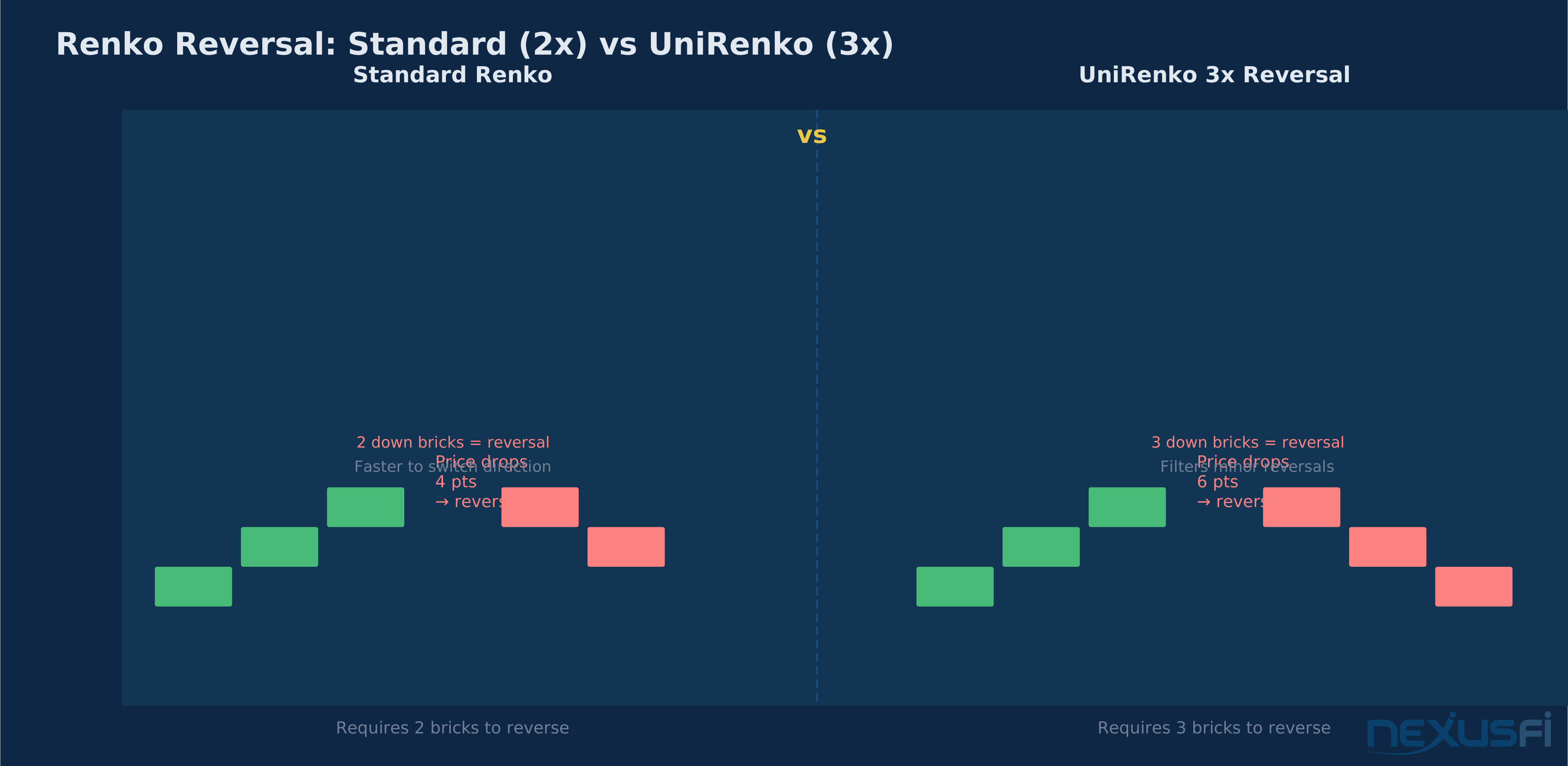
A reversal requires price to move two brick sizes from the current extreme — one to cancel the current direction, one to form a brick in the new direction. This is the filter mechanism that gives Renko its noise-reduction property.
The Fake Bar Problem
Classic Renko as implemented in most platforms fills gaps. If price jumps from 4400 to 4420 and your brick size is 4 points, the platform inserts five consecutive bricks — even though each intermediate brick never actually existed as a traded state. These are artificial bars, created by the rendering engine rather than by actual price discovery.
The implications are significant. As Fat Tails, one of NexusFi's most technically rigorous contributors, explained in the UniRenko thread:
"A Renko chart does not show the correct high of any period — a Renko chart does not show the correct low of any period. Think of Renko as a visualization of a trend. Renko bars are fake."
This isn't a criticism — it's a description of what Renko is designed to be. The bars are a simplified representation of directional movement, not a faithful record of what the market traded.
Renko Variants: Beyond Classic Construction #
The NexusFi community has been especially active in developing and discussing advanced Renko variants that address limitations of classic construction. Each variant makes different tradeoffs.
UniRenko (Universal Renko)
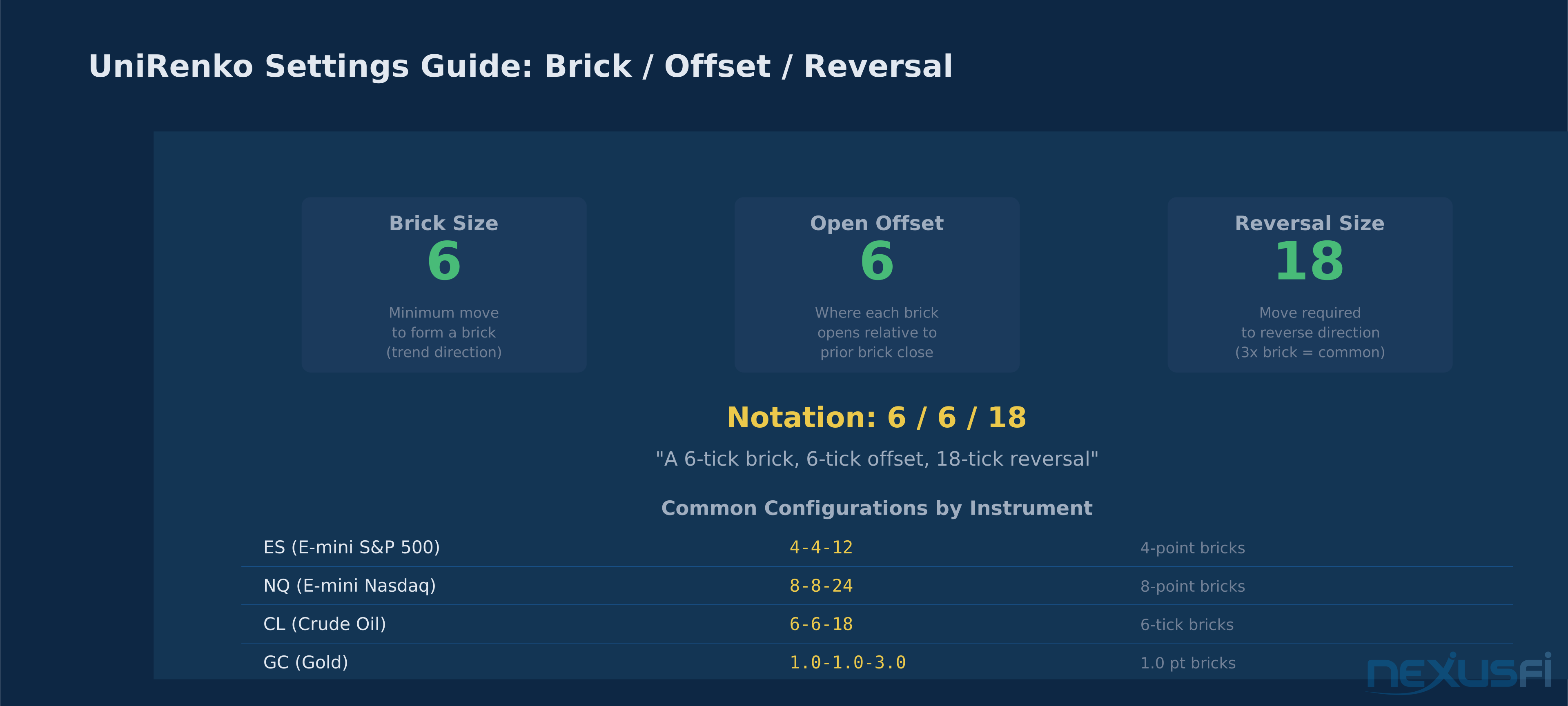
UniRenko, developed and popularized on NexusFi, extended classic Renko with three configurable parameters: brick size (trend), open offset, and reversal size. The most common notation is brick/offset/reversal — so a "6-6-18" UniRenko uses 6-tick bricks, a 6-tick offset from the prior close on each bar's open, and requires an 18-tick move to generate a reversal brick.
The offset parameter controls where each bar opens relative to the prior close. An offset of zero means the new bar opens at the prior close — creating back-to-back bricks with no gap. A positive offset means the open is set inside the prior brick, which affects how trendiness appears on the chart and how indicators calculate.
monpere, a highly regarded contributor in the UniRenko thread, described the purpose: the goal is settings that "minimize the size of reversal bars, and so minimize stop loss sizes, while still producing clean sharp indicator patterns." Source post
The tradeoff, as Fat Tails documented precisely, is that UniRenko introduces a different kind of artificial data:
"UniRenko bar insert fake bars with false volume. The cumulated volume is not correct, as gaps are filled with bars that have a fake volume — the bars cannot be correctly synchronized in multi-bar series scripts because the time stamp is not taken from the last tick."
MedianRenko
MedianRenko differs from classic Renko in its brick formation rule. Rather than measuring from close to close, MedianRenko uses midpoints. A brick forms when the midpoint of price movement reaches the threshold. This creates smaller, more frequent bricks that capture intermediate moves that classic Renko filters out.
As roonius explained in the MedianRenko thread:
"Renko is from close to close. Let me explain how MedianRenko works. Let's assume we have a 4-tick setting. With regular Renko, each brick requires the close to move 4 ticks from the prior brick's close."
MedianRenko is often preferred when the goal is to capture smaller-scale trend changes without the whipsaw that comes from using very small classic Renko bricks.
Flex Renko / Better Renko
Sierra Chart's "Flex Renko" and variants like "BetterRenko" introduced configurable wick lengths. Unlike classic Renko's completely flat rectangles, these variants show shadows — partial price excursions that didn't complete a full brick. The format for Flex Renko settings typically follows brick/trend-offset/reversal notation, similar to UniRenko.
eminimomtrader explained the Flex Renko parameter interpretation: "The first number is your bar size. The second number is your trend bar offset. The third number is how many ticks to paint a reversal bar." Source post
Brick Size Selection: The Central Decision #
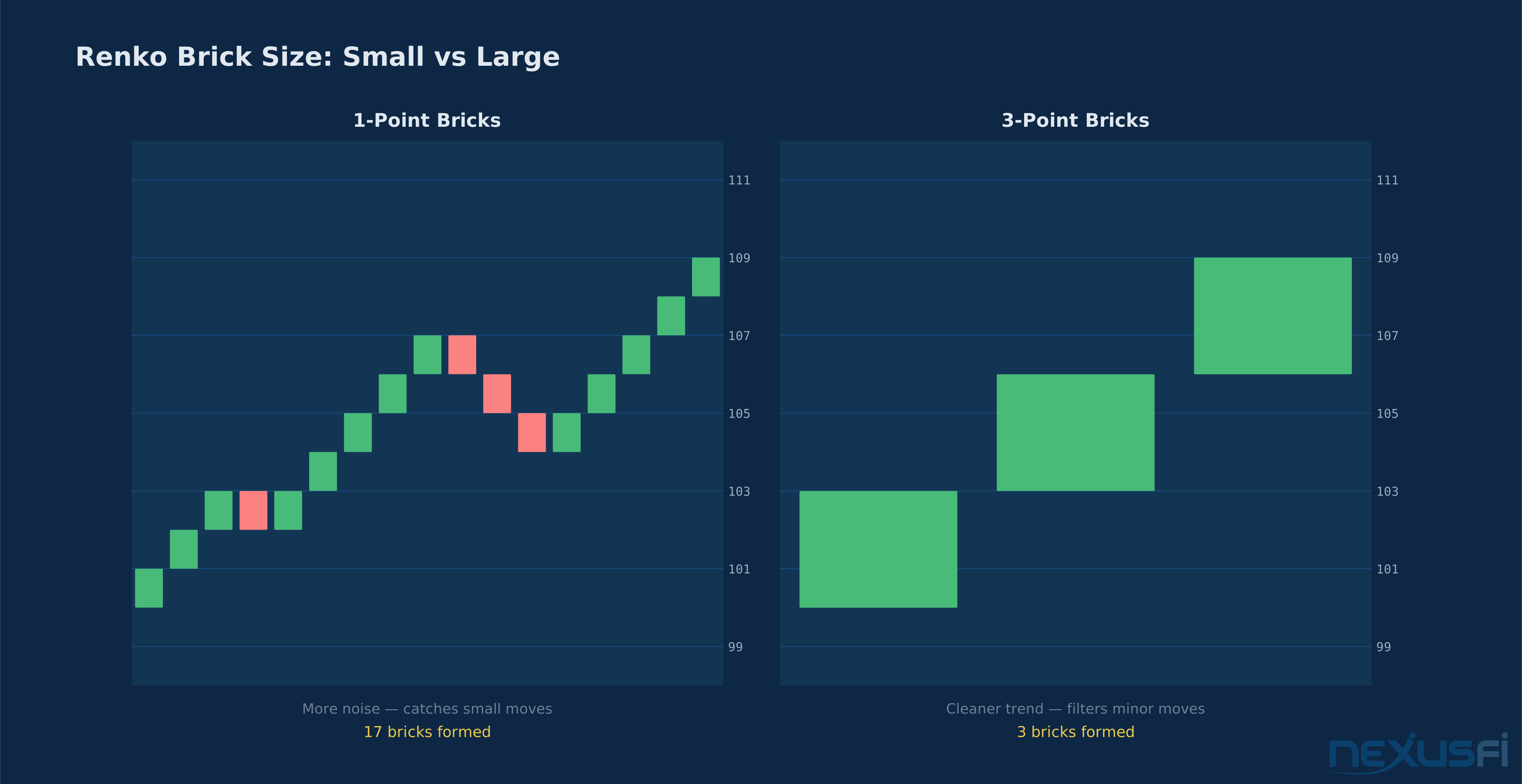
No other parameter affects Renko chart behavior as dramatically as brick size. Too small and you get nearly as much noise as candlesticks. Too large and you miss intermediate structure. The right size depends on your timeframe, the instrument's volatility, and your trading style.
Starting Points for Common Futures Instruments
ES (E-mini S&P 500): With a tick size of 0.25 points, common Renko settings range from 1--3 points (4--12 ticks) for scalpers up to 5--10 points for swing traders. The challenge is that ES volatility varies enormously — a 2-point brick on a low-volatility day shows clean structure; the same setting on a post-FOMC day creates a blur.
NQ (E-mini Nasdaq): NQ moves roughly twice as fast as ES per contract. Brick sizes proportionally larger — 3--6 points is common for intraday, 10--20 points for swing.
CL (Crude Oil): With tick size of $0.01, Renko settings of $0.10--$0.25 are typical for intraday traders, $0.50--$1.00 for swing.
Crude Renko settings example from the NexusFi community: "Crude oil UniRenko set to 6/18/6" was one widely shared configuration for CL scalping. Source post
Dynamic vs Fixed Brick Sizing
Fixed brick sizing means every brick is the same size, regardless of current volatility. This is simple and produces consistent visual output, but the same brick size can look very different depending on how volatile the market is.
Dynamic brick sizing — available in some platforms — adjusts the brick size based on ATR or other volatility measures. A 1.0x ATR Renko brick would be roughly "one day's worth of movement" across different volatility regimes. This produces more consistent visual structure but introduces complexity: the chart looks different every day, which makes pattern recognition harder.
For most futures traders starting with Renko, fixed brick sizing is recommended. The discipline of committing to a size — and not adjusting it mid-session — prevents the cognitive bias of choosing settings that "explain" recent price action after the fact.
The 3x Reversal Convention
Many experienced Renko traders use a reversal size of approximately 3x the trend brick size. This creates asymmetry: a trend continuation requires only 1 brick, but a reversal requires 3. The effect is that short-term counter-moves don't register as reversals — only sustained moves against the trend create new bricks in the opposite direction.
In UniRenko notation, this means settings like 4-4-12 (4-tick brick, 4-tick offset, 12-tick reversal) or 6-6-18. The Inletcap scalper journal noted using 2-tick Renko with custom parameters where "most bars measure 3--4 ticks in size." Source post
Reading Renko Charts: What the Bricks Tell You #
Trend Identification
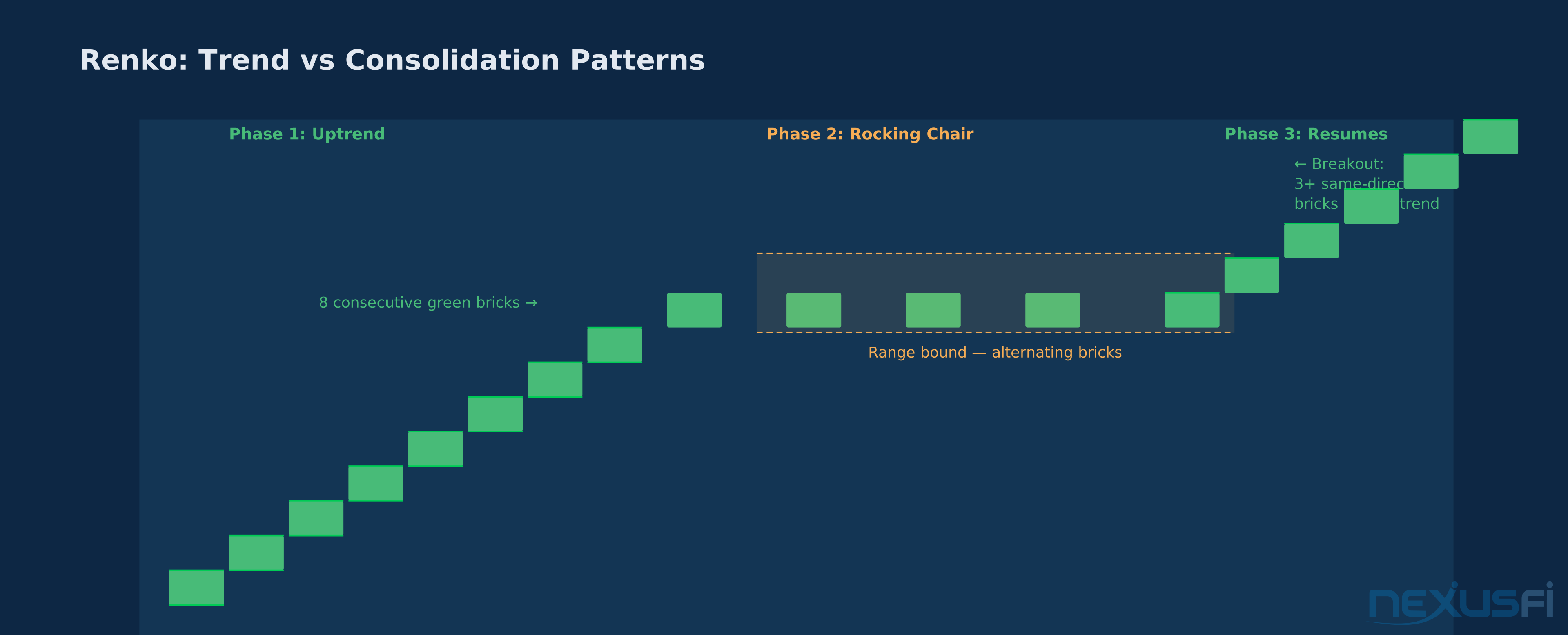
Renko's primary advantage is trend clarity. A series of same-colored bricks going in one direction, with no opposite-colored bricks interrupting, indicates strong directional momentum. The absence of reversals — not just the direction of movement — is the signal.
When you see alternating bricks (up-down-up-down), you're in a range or consolidation. The pattern is called "rocking chair" by some traders — price is moving enough to form bricks but not enough to establish clear directional dominance.
The transition from rocking-chair to a clear series of same-colored bricks often marks the start of a real trend move. This transition is cleaner on Renko than on candlesticks precisely because the time element is removed — you don't see the noise of time passing while price is "deciding."
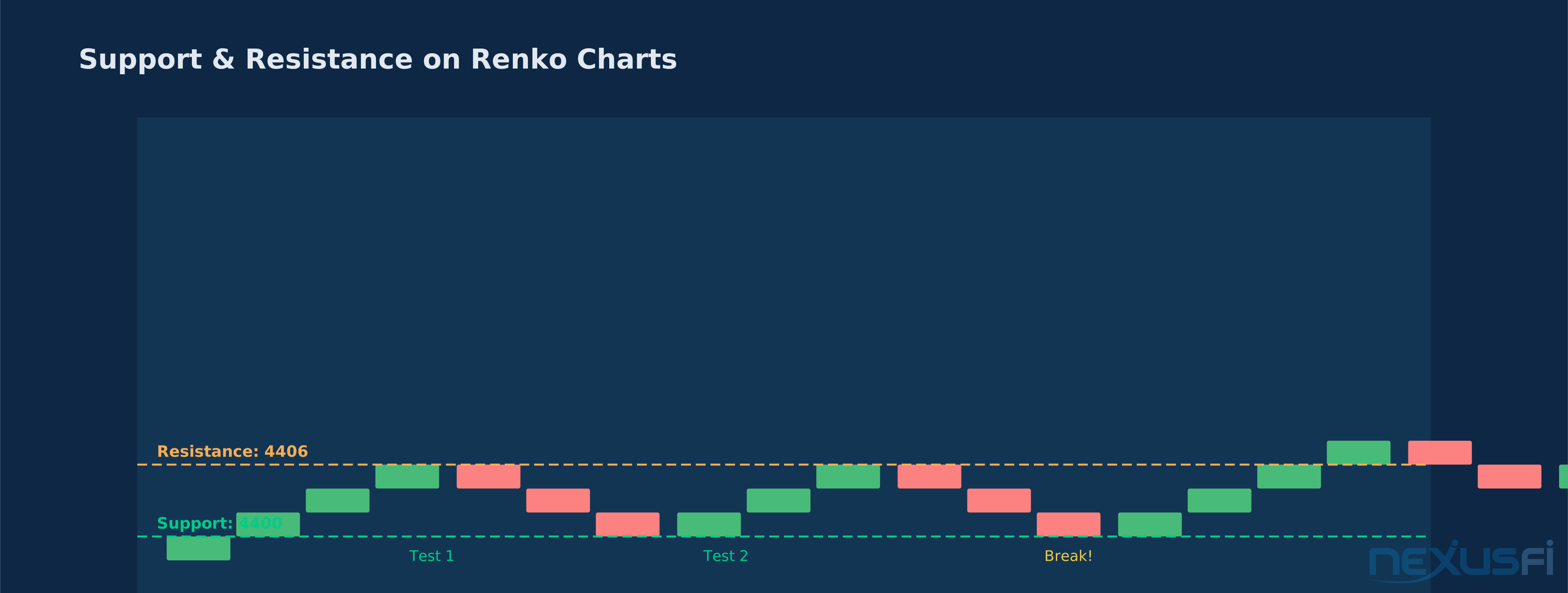
Renko turns the concept of support and resistance into something slightly different. Because each brick represents a fixed price move, key levels appear as prices where reversals repeatedly occur — where multiple sequences of same-colored bricks terminated and reversed.
A level where price made three separate reversal attempts and each time produced a counter-reversal brick in the opposite direction is functionally acting as support or resistance. The brick-based structure makes these levels obvious: they're the spots where brick sequences consistently ended.
Entry Signals
Common Renko entry signals include:
First reversal brick: The first brick that changes direction after a sustained same-direction run. This is the simplest Renko signal — the first sign that the trend may be pausing. Many traders wait for confirmation (a second brick in the new direction) before acting.
Breakout from consolidation: When a rocking-chair period resolves into a sustained series of same-colored bricks, it signals a breakout. The trigger is typically the third or fourth brick in the same direction after alternating bricks.
Level retest: When price returns to a prior Renko reversal level and holds — forming bricks in the original trend direction — it indicates the level is holding as support/resistance.
Limitations: What Renko Cannot Tell You #
Understanding Renko's limitations is not optional — they are structural properties of how the chart type works, and ignoring them leads to specific, repeatable mistakes.
Volume Data Is Unreliable
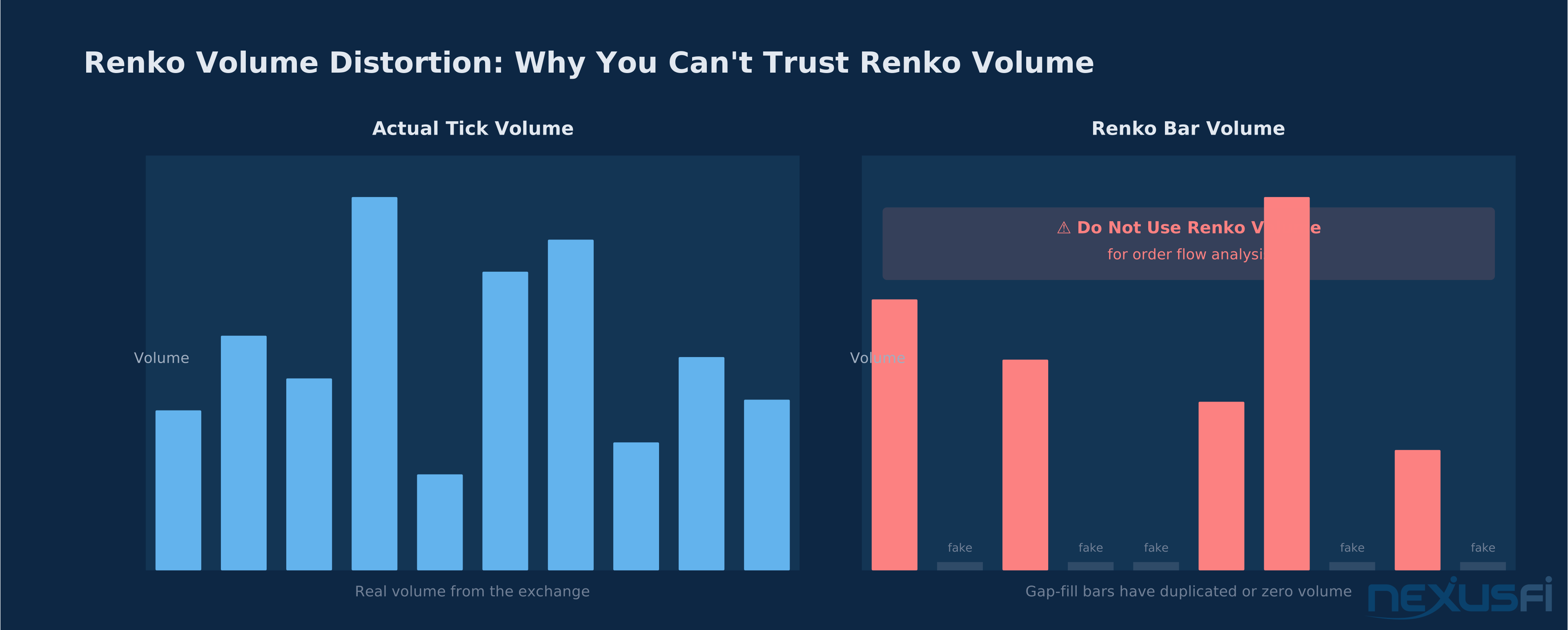
Classic Renko bricks have zero volume if they're gap-fill bricks (inserted artificially). UniRenko bricks have falsified volume — the same tick's volume gets counted multiple times across the gap-fill bars. Either way, you cannot trust volume data on any Renko chart the same way you'd trust it on a time-based or tick-based chart.
Fat Tails documented this precisely: "UniRenko bar insert fake bars with false volume. The cumulated volume is not correct." Source post
This means: Order Flow analysis on Renko charts is unreliable. Footprint charts layered onto Renko will show distorted values. CVD calculations will be wrong. If volume is part of your analytical framework, you need to run it on a separate time-based or tick-based chart and use Renko purely for directional context.
No True Highs and Lows
Renko bricks clip price action. If price briefly exceeded the top of a brick but then retreated, that high never appears on the chart. In candlestick terms, Renko has no wicks — and the real market absolutely has wicks.
This means Renko support/resistance levels are approximate. The level that looks like clean support on Renko actually may have been violated by actual price action that the chart filtered out. For stop placement, always verify against actual price data, not Renko brick boundaries.
Backtesting on Renko Is Unreliable
This is the most consequential limitation for systematic traders. Fat Tails was direct: "You cannot trust what you are seeing. UniRenko bars are not suitable for backtesting. These bars use a fake open price, and NinjaTrader uses the open price for calculation." Source post
The problem is that backtesting engines use bar open, high, low, and close for all simulation logic. When those values are artificial — either gap-fill zero-volume bars or bars with fake opens and doubled volume — the backtest results are fiction. A strategy that appears to perform well on Renko backtests may be exploiting the artificial bar construction, not actual market behavior.
If you want to test a Renko-based strategy, the correct approach is:
- Run the backtest on tick data
- Use the same entry/exit logic but calculate signals against actual tick prices, not Renko bar prices
- Compare results across multiple instruments and date ranges to check for robustness
No Synchronization Between Bar Types
Running a Renko chart alongside a time-based chart in a multi-timeframe setup is problematic. Renko bars don't have reliable timestamps because multiple bricks can form from a single time period. You cannot reliably align indicator calculations from Renko bars with indicator calculations from 5-minute bars.
This means multi-timeframe analysis using Renko as one component requires careful design — you should treat the Renko chart as a directional context tool, not as a data source for indicator synchronization.
Renko vs Other Chart Types #
Renko vs Candlestick
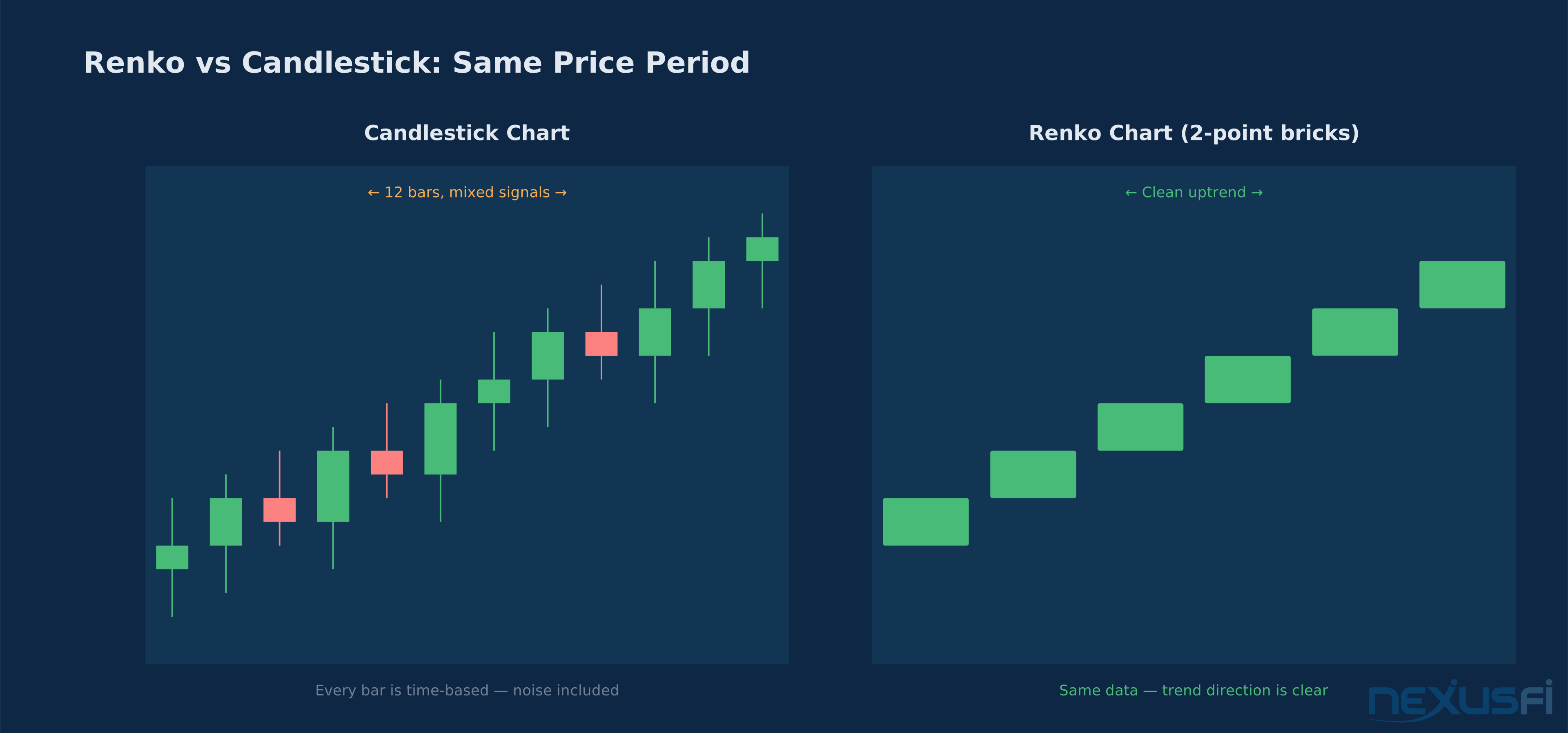
Candlesticks preserve the complete time-price information for each period. Every OHLC value is real. Volume is accurate. The chart shows gaps. The tradeoff is noise — intraday charts especially are cluttered with small bars that don't convey meaningful directional information.
Renko eliminates time as a variable, replacing it with fixed price moves. This removes noise but destroys information. There's no "right" answer — the question is what you're trying to see.
For trend identification: Renko is cleaner. For support/resistance precision: Candlesticks are more accurate (real highs/lows). For volume analysis: Candlesticks are reliable; Renko is not. For backtesting: Candlesticks are the only valid option.
Renko vs Range Bars
Range bars are similar to Renko — they form when price moves a fixed range. The key difference: range bars show the actual high and low of each bar, including wicks. A range bar closes when price has moved the specified range in one direction, and the bar's true high and low reflect real price extremes.
Range bars preserve more price information than Renko at the cost of some visual simplicity. For traders who want noise reduction but need accurate high/low data for stop placement, range bars may be preferable.
Renko vs Tick Charts
Tick charts form a bar after a specified number of transactions, regardless of price move size. They're purer representations of market activity than time-based charts, but they still include all price variation — just filtered by transaction count rather than time.
Tick charts work well in highly liquid markets like ES and NQ during high-volume sessions. They produce cleaner patterns than 1-minute charts during busy periods. But they produce nearly identical volume during quiet periods (slow tick rate) and busy periods (fast tick rate), which means a 233-tick chart at 9:30 AM looks very different from the same chart at 2:30 PM.
Renko vs Point-and-Figure
Point-and-figure (P&F) charts are Renko's closest relative. Both strip out time and track only directional moves of a fixed size. P&F uses X's for up-moves and O's for down-moves; Renko uses solid blocks. P&F is older and more heavily studied in academic literature. The analytical frameworks are similar, and traders experienced in one can adapt to the other quickly.
Platform Implementation #
NinjaTrader
NinjaTrader 8 includes built-in Renko bars, but experienced traders frequently prefer custom implementations:
- UniRenko: The most widely used advanced Renko on NinjaTrader, with configurable brick size, open offset, and reversal. Available as a free download from NexusFi. Settings are typically entered as three numbers: trend/offset/reversal.
- The UniRenko indicator ecosystem is significant — hundreds of NinjaTrader indicators have been adapted or designed to work with UniRenko chart data.
For pure volume analysis alongside Renko: keep a tick chart or footprint chart open on a separate panel. Use the Renko for direction, the footprint for order flow confirmation.
Sierra Chart
Sierra Chart offers multiple advanced chart types including Flex Renko and their own Renko implementation. The Flex Renko parameter format uses bar-size/trend-offset/reversal notation, similar to UniRenko. The settings don't directly translate between NinjaTrader and Sierra Chart even if the parameters look similar.
As Sawtooth documented: "So you must use different values to achieve an approximate replication of NT UniRenko's 5-1-5. Try this: Go to Chart Settings — set the Bar Period Type to Flex Renko — use the settings 5-4-5." Source post
TradeStation and Tradeovate
TradeStation offers Renko bars natively. Tradovate offers customizable bar types including Renko-style configurations. The key consideration on any platform: verify how the platform handles gap-fill bars and whether indicator calculations use the artificial open prices. This is platform-specific and affects all indicator-based signals.
ThinkOrSwim (TD Ameritrade/Schwab) offers Renko charts. For futures traders, the VSA (Volume Spread Analysis) community on NexusFi has posted extensive configurations for applying VSA principles to Renko charts in TOS. Source thread
Practical Trading Applications for Futures #
When Renko Works Best
Renko is most useful in trending markets. During sustained directional moves in ES, NQ, or CL, Renko filters out the intraday noise that makes candlestick charts exhausting. A strong up-trend in ES produces a clean sequence of green bricks that lets you stay in the trade without second-guessing every 1-minute red candle.
Renko is least useful in tight ranges. When price is consolidating, Renko alternates bricks constantly — the "rocking chair" pattern — which produces false signals if you're using classic Renko entry rules. In those conditions, time-based charts may serve you better.
Multi-Timeframe Renko Application
A practical approach: use a larger Renko setting for trend context and a smaller setting for entry timing.
Example for ES:
- 6-point Renko for overall directional bias (is the current move impulsive or corrective?)
- 2-point Renko for entry and exit timing
The larger chart tells you whether to be long-biased or short-biased. The smaller chart tells you when a pullback has completed and the trend appears to be resuming.
Renko With Order Flow
Because Renko volume data is unreliable, the correct way to combine Renko with order flow tools is:
- Use Renko for trend direction and key level identification
- Use a footprint chart or time-based chart for order flow confirmation
- When Renko signals a potential entry, confirm with delta, absorption, or stacked imbalances on the footprint chart
Running order flow directly on Renko bricks — using Renko-based footprint charts — will give you distorted volume data and should be treated with caution unless you've verified your platform's implementation handles gap-fill volumes correctly.
Stop Placement on Renko Charts
Because Renko highs and lows are artificial, avoid placing stops at "the bottom of the last brick." That level doesn't represent actual traded price — it's where the brick closes, which is not the same as where the market's extreme was.
Better practice: identify the Renko level as a reference point, then look at actual 1-minute or tick chart data to find the real support/resistance zone near that level. Place your stop below the real support zone, not the Renko brick boundary.
Common Mistakes With Renko #
Fitting Brick Size to Recent History
The most common error: a trader adjusts brick size until the chart "looks right" — meaning it shows clean patterns for the recent past. This is curve-fitting. The brick size that produced beautiful charts for the last week may be completely wrong for next week when volatility changes.
To guard against this: pick a brick size based on average daily range or ATR, not on how the recent chart looks. Stick with it for at least several weeks before evaluating whether it's working.
Trusting Backtests
As documented extensively in the NexusFi community, Renko backtests are not reliable because the bar data is artificial. Any backtest showing a Renko-based strategy with solid returns should be treated with extreme skepticism. Test those strategies on actual tick data before trusting the results.
Using Renko Volume for Order Flow Decisions
Running an order flow indicator directly on Renko bars — especially UniRenko bars — will give you distorted delta and volume readings. Fat Tails documented why in detail: the artificial bars count certain tick volumes multiple times. Source post Don't use Renko-derived volume for order flow analysis.
Ignoring Actual Price Levels
Renko brick boundaries often don't align with round numbers, prior highs/lows, or other real market structure levels. Don't ignore actual price structure just because it's not visible on the Renko chart. Always cross-reference key Renko levels against a candlestick chart to confirm whether they align with real market structure.
Summary #
Renko bars are a noise-filtering chart type that trades completeness for clarity. They show trend with unusual cleanliness, removing time as a variable and filtering out moves smaller than the brick size. For traders who struggle to stay in trending moves because minor pullbacks are visually alarming on candlestick charts, Renko often produces a psychological as well as analytical improvement.
The limitations are equally real: volume data is distorted, highs and lows are artificial, backtesting is unreliable, and multi-bar synchronization is problematic. These aren't flaws to be engineered away — they're structural properties of the chart type.
The NexusFi community's extensive work on Renko variants — especially UniRenko, MedianRenko, and the various "Better Renko" implementations — has addressed some of these limitations while introducing others. No single implementation is perfect. The right choice depends on what you're using Renko for: if it's purely visual trend context, the exact variant matters less; if you're building indicator-based systems on Renko bars, the construction details matter enormously.
The UniRenko thread with nearly 700 replies and over a million views remains the most complete community resource on advanced Renko construction and application. For anyone using Renko in NinjaTrader-based systems, it's essential reading.
See also: Market Structure | Footprint Charts | Volume Profile | Time & Sales
Citations
- — Does ninja trader 7 come with renko bars“A Renko chart does not show the correct high of any period -- a Renko chart does not show the correct low of any period. Think of Renko as a visualization of a trend. Renko bars are fake.”
- — UniRenko, Universal Renko Bar Type“Settings that minimize the size of reversal bars, and therefore minimize my stop loss sizes, while still producing clean sharp indicator patterns my trading method is based on. Like most of the other advanced Renko bar types, the UniRenko bar open is artificial.”
- — UniRenko, Universal Renko Bar Type“UniRenko bar insert fake bars with false volume. The cumulated volume is not correct, as gaps are filled with bars that have a fake volume -- the bars cannot be correctly synchronized in multi-bar series scripts because the time stamp is not taken from the last tick.”
- — Is this a Holy Grail Strategy? Am I ignoring something?“You cannot trust what you are seeing. UniRenko bars are not suitable for backtesting. These bars use a fake open price, and NinjaTrader uses the open price for calculation.”
- — MedianRenko Trading Technique“You are missing a point. Renko is from close to close. Let me explain how MedianRenko works. Let's assume we have a 4-tick setting. With regular Renko, each brick requires the close to move 4 ticks from the prior brick's close.”
- — UniRenko, Universal Renko Bar Type“Hi crude oil UniRenko set to 6/18/6 and MACD set to 10/22 and smoothing set to 5 or 7. Use crossover for entry and discretionary exit.”
- — BetterRenko for Sierra Charts“The first number is your bar size. The second number is your trend bar offset. The third number is how many ticks to paint a reversal bar. In the drop down menu just below (next to Gap Fill-None).”
- — Import UniRenko Chart type from NT to NinjaTrader?“So you must use different values to achieve an approximate replication of NT UniRenko's 5-1-5. Try this: Go to Chart Settings -- set the Bar Period Type to Flex Renko -- use the settings 5-4-5.”
- — The Scalper's Journey“It's a 2-tick renko that shows tails. Most bars measure 3-4 ticks in size. On TS we use a custom renko but I get rid of the bar starting at prior close.”
- — Bar Type“The cumulated volume is not correct, as gaps are filled with bars that have a fake volume. The bars cannot be correctly synchronized in multi-bar series scripts because the time stamp is not taken from the last tick of the period.”