



Absorption in Order Flow
Overview #
Every price chart shows you where the market went. Absorption shows you where the market tried to go and couldn't. It's the moment aggressive sellers slam into a level and the level doesn't move — not because nobody's trading, but because a passive participant is swallowing every contract thrown at it.
Absorption is arguably the single most important real-time signal in order flow analysis. It's the mechanical fingerprint of large participants defending a price level, and understanding it separates traders who read the tape from traders who just stare at it.
What Absorption Actually Is #
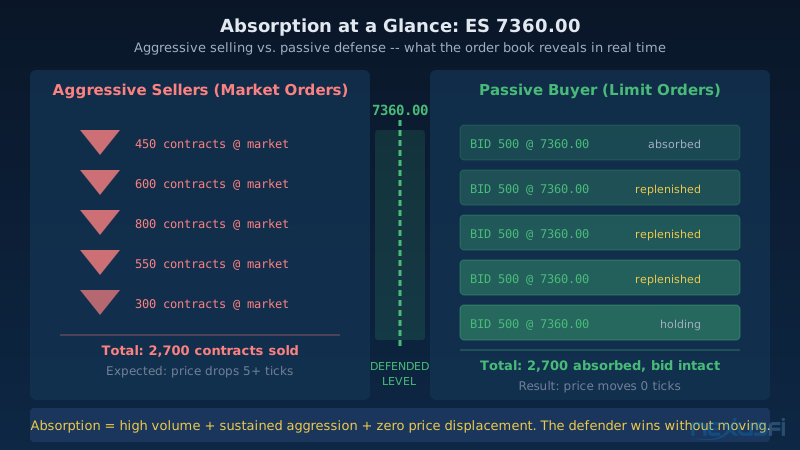
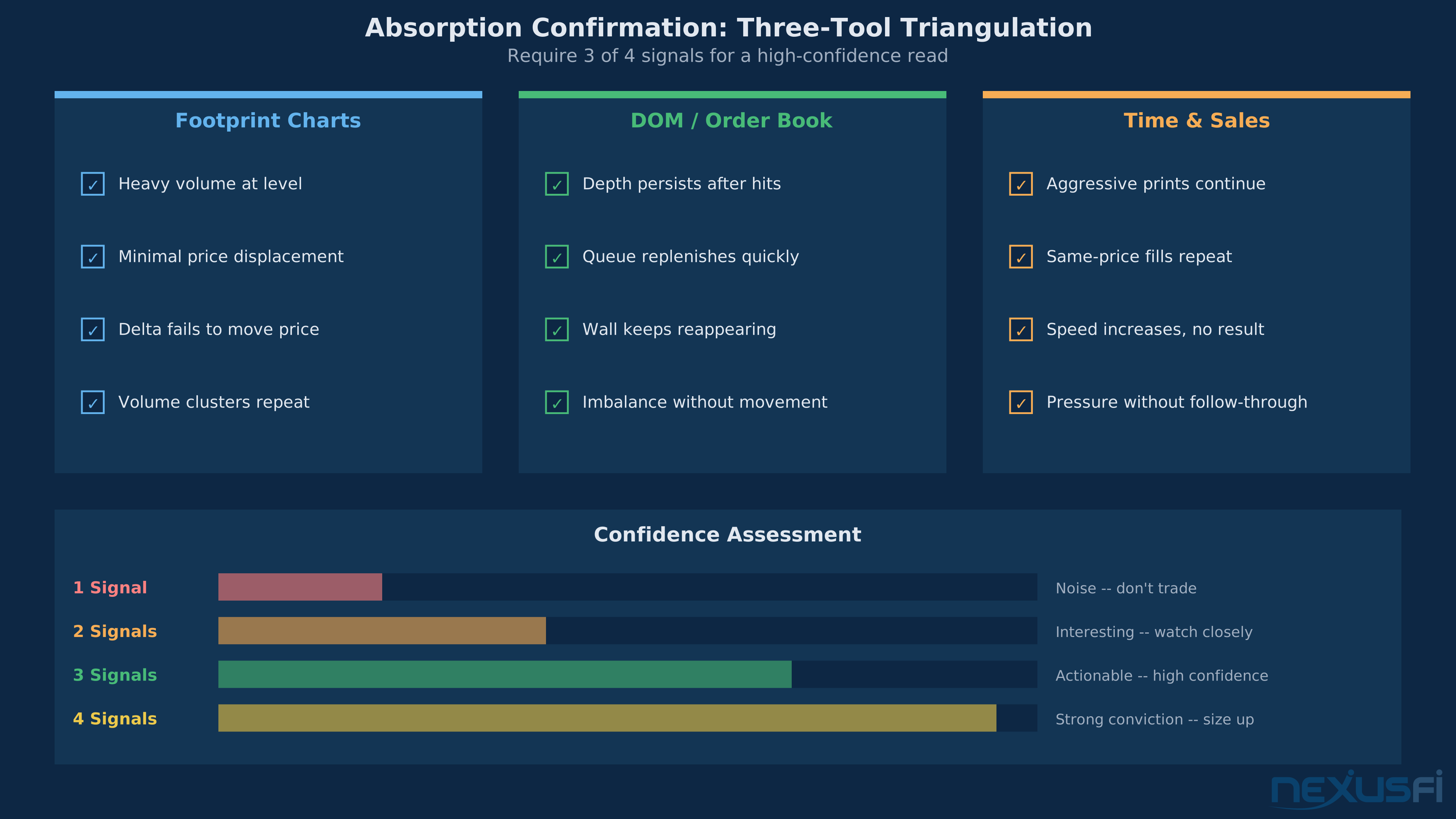
Absorption occurs when aggressive market orders hit a price level and are consumed by passive liquidity without producing expected price displacement. Sellers can fire 3,000 contracts at the bid and the bid doesn't drop. Buyers can lift offers repeatedly and the offer doesn't move up. The aggressive side keeps swinging and connecting, but the market doesn't flinch — every blow gets absorbed by a bigger player on the other side.
The mechanics are straightforward. Aggressive orders (market orders) need to consume available passive liquidity (limit orders) to move price. When passive liquidity at a level is deep enough to absorb the incoming flow without thinning out, price stays pinned. The level holds not from lack of interest but from overwhelming defensive commitment.
Maureen O'Hara laid out the theoretical framework for this in Market Microstructure Theory — passive liquidity providers aren't sitting there randomly. They're strategically positioned, and the information content of trades reveals whether they're defending or retreating. When aggressive flow can't move price, it's because the passive side has a conviction about value at that level that outweighs the momentum driving the aggressive side.
"The way I look at absorption is when you see either buyers or sellers cutting off the opposing traders. Just imagine trading in the pit and the orders coming through are aggressive sellers pushing the market down. Price then hits a level that a buyer steps in aggressively and buys/absorbs every order coming in until the sellers back off."
Three things make absorption distinct from a normal pause or consolidation:
- Volume is elevated, not diminished. Price isn't stalling because nobody's interested — it's stalling because two sides are fighting at the same price, and the defensive side is winning. Low-volume pauses are hesitation. High-volume pauses are absorption.
- Aggressive pressure is sustained. The attacking side keeps sending orders. This isn't a quiet fade where selling dries up on its own — this is active defense against sustained aggression. The sellers keep trying, and the level keeps holding.
- Price displacement fails relative to volume. The ratio of contracts traded to ticks moved is abnormal. Normally 500 contracts at the offer moves ES a tick or two. During absorption, 2,000 contracts trade at the same price and it goes nowhere.
Absorption vs. Support and Resistance #
This distinction matters because it changes how you trade.
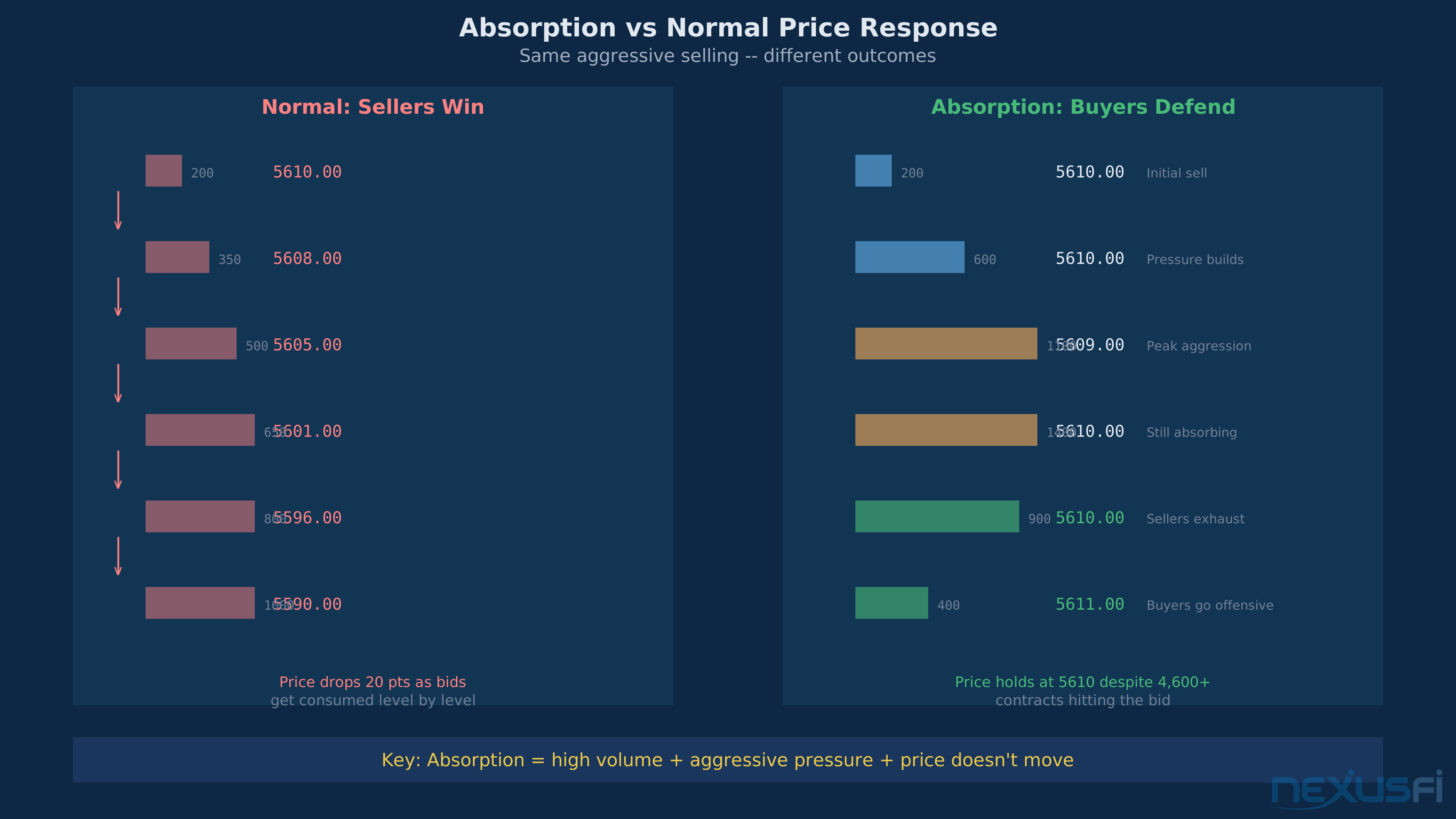
Support/resistance is a map of where price previously reacted. It's historical. It's a chart pattern. You draw a line at a prior low and say "price bounced here before."
Absorption is a real-time observation of what's happening in the order book right now. You're watching aggressive orders get consumed by passive liquidity. You're seeing the mechanism that creates support — the actual order flow that makes a level hold or break.
A textbook support level with no absorption is a level about to break. An area without any historical label but with clear absorption in real time is a level worth trading. The chart tells you where to look. The order flow tells you whether anyone's actually there.
Think of it this way: support is the address. Absorption is someone answering the door.
How to Identify Absorption: Three-Tool Triangulation #
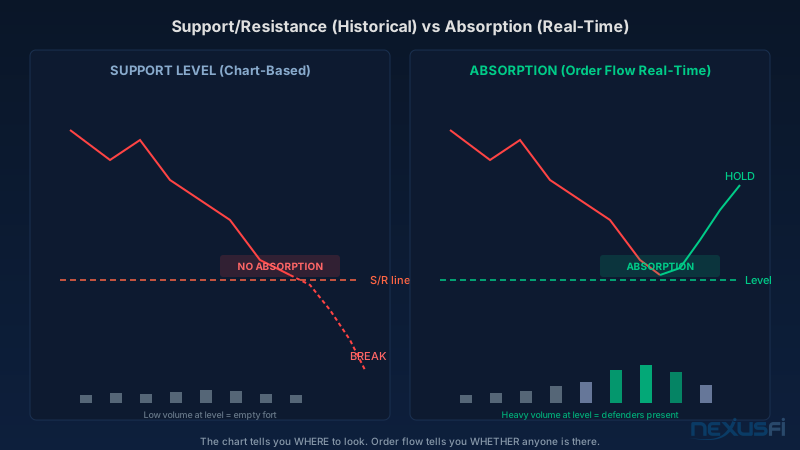
No single tool confirms absorption. The strongest reads come from confirming across footprint charts, the DOM, and time & sales simultaneously.
Footprint Charts #
The footprint is where absorption becomes visually obvious:
- High volume at a price with minimal bar expansion. You see 2,000+ contracts traded across two or three price levels, but the candle body is tiny. Volume printed heavy but price barely moved — that's the visual signature of one side absorbing the other.
- Delta that doesn't translate to displacement. Negative delta keeps building (sellers aggressing) but price holds or even ticks higher. The sellers are hitting the bid, but someone on the bid is absorbing everything.
- Repeated volume clusters across consecutive bars. Same prices printing heavy volume bar after bar. The fight is concentrated at one level, and neither side is winning ground.
DOM (Depth of Market) #
The DOM tells the absorption story from the liquidity side:
- Resting depth that persists or replenishes after being hit. A bid shows 500 contracts, gets hit with 400, and immediately refreshes back to 500. That's replenishment — someone is actively reloading passive orders to defend that price. Genuine support doesn't just sit there; it refills after taking damage.
- Queue survival. The bid-side queue keeps getting hit but reforms immediately. Price can't step through because every time depth gets consumed, it reappears.
- Bid/ask imbalance that doesn't produce movement. You see 3,000 contracts hitting the bid and only 800 hitting the offer, yet price isn't falling. That's mathematically abnormal — the sell-side aggression should be pushing price down, but hidden or replenishing liquidity is neutralizing the pressure.
"Iceberg orders will usually manifest themselves on what most traders view as the wrong side of the bid/ask. T&S window shows lots of trades at the Ask indicating buying pressure to make the price rise. But each time the orders hit the Ask, the size is refreshed and the price does not move."
Time & Sales (Tape) #
The tape confirms that aggressive pressure is real and sustained:
- Continuous aggressive prints at the same prices without follow-through. You see sell after sell hitting the bid, but the bid holds. The tape is screaming "selling pressure!" but the market isn't listening.
- High fill rate at identical ticks. Dozens of trades printing at 5600.00, then 5600.00, then 5600.00 again. In a normal move, you'd see those prints march through 5599.75, 5599.50, and lower. During absorption, they stack at the same price.
- Speed without result. The tape accelerates as more aggressive orders pile in, but price stays anchored. Fast prints at the same level — that's the tape confirming what the footprint and DOM already told you.
The Confirmation Checklist #
Absorption Confirmation Checklist
A high-confidence absorption read requires at least three of four:
- Price approaches a level and aggressive flow increases
- DOM shows depth persisting or replenishing
- Footprint shows heavy volume with limited net displacement
- Tape shows repeated fills at that price with no follow-through
One signal alone is noise. Two is interesting. Three or four is actionable. Never trade absorption off a single tool — the false positive rate is too high.
The Iceberg Connection #
Icebergs are the primary mechanical tool behind absorption. A large participant who wants to accumulate 2,000 contracts at a price level doesn't show 2,000 on the book — that would advertise their intention and cause price to move away before they're filled. Instead, they use an iceberg order that shows only a fraction of the total size. Larry Harris covers this dynamic extensively in Trading and Exchanges: Market Microstructure for Practitioners — displaying your full hand in the order book is like playing poker face-up. CME Globex natively supports iceberg orders as a standard order type, allowing traders to show only a slice of their total size while the exchange automatically replenishes the visible portion as it gets filled.
"This certain trader wants that price big time but doesn't want to advertise to the world that he wants it. So, he submits a huge Iceberg order of 2,000 contracts but only advertises a limit order amount of 100. Once that fills more orders push into the market at the bid. This goes on until all the orders are filled and it ends up absorbing all the sell orders at that level."
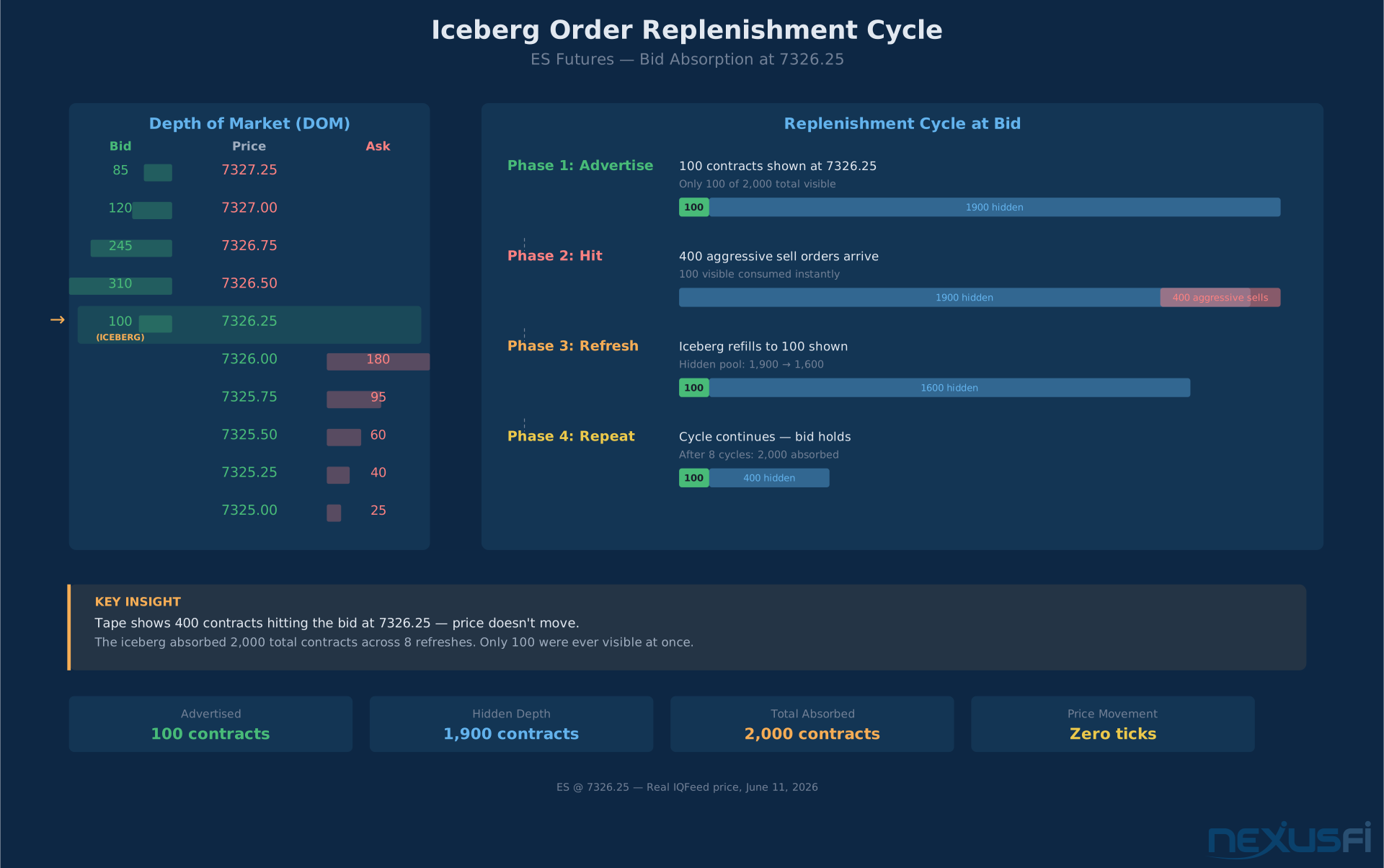
But absorption is not the same thing as an iceberg. Absorption is the observed effect — price holding despite aggressive pressure. An iceberg is one mechanism that can produce absorption. Other mechanisms include natural clusters of independent limit orders at the same level, algorithmic liquidity provision, or institutional hedging flows that happen to coincide at a price. The distinction matters because not all absorption involves icebergs, and not all icebergs produce visible absorption.
Absorption and Delta Divergence #
Absorption frequently appears alongside delta divergence. When sellers hit the bid aggressively (negative delta) but price doesn't decline, cumulative delta trends down while price holds flat or even rises. That divergence is the quantitative fingerprint of absorption — it tells you mathematically that selling pressure isn't translating to downward movement, which means something on the other side is absorbing it.
But delta divergence alone doesn't confirm absorption. It can also result from hedging flows, position adjustments, or two-sided trading with no clear aggressor. Always cross-reference delta divergence with DOM replenishment and tape behavior before calling it absorption.
When Absorption Fails #
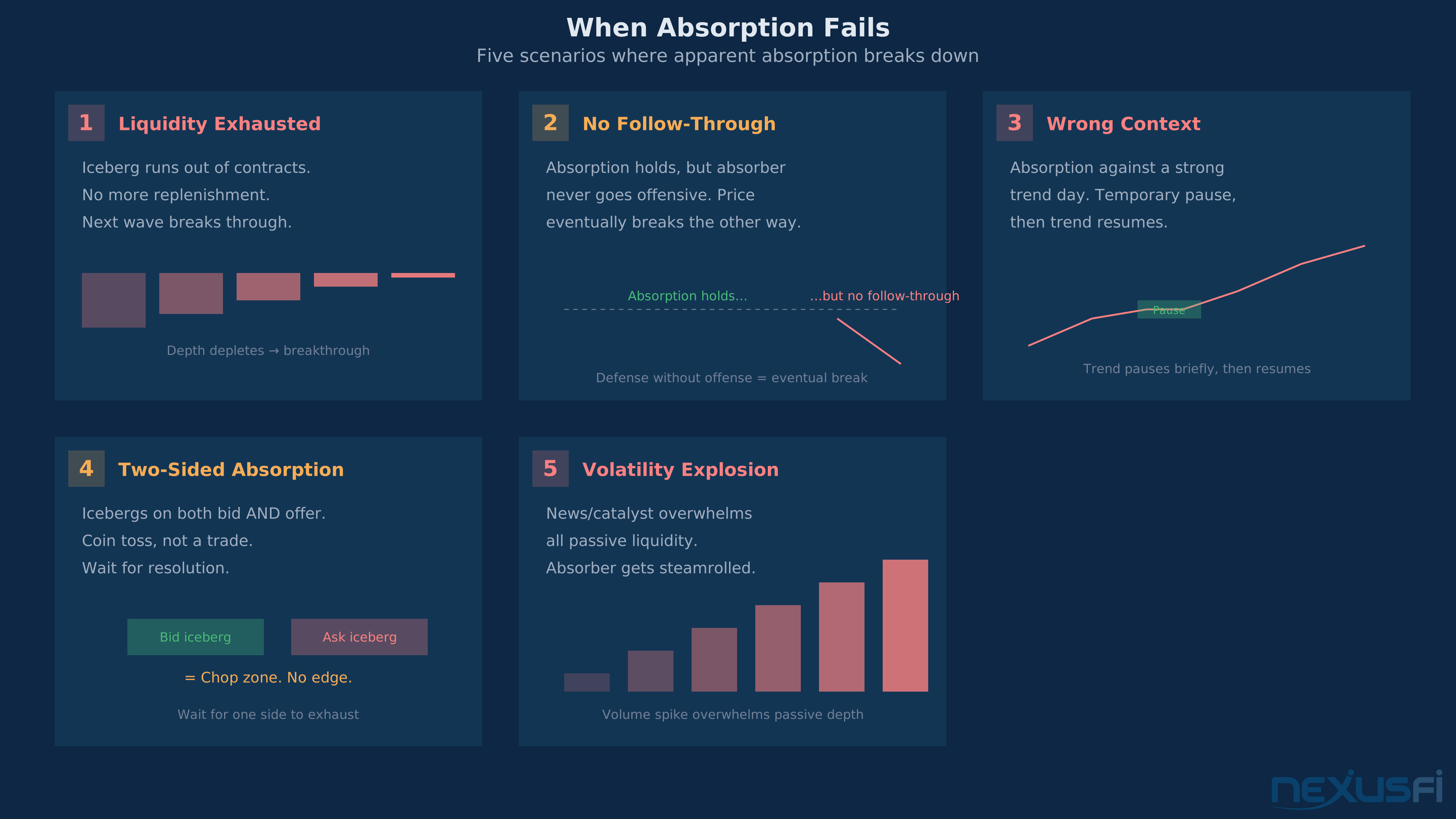
Absorption is not a magical floor or ceiling. Treating every absorption event as a guaranteed reversal is how traders give back their edge. Here's when it breaks.
Liquidity Gets Exhausted or Pulled #
The absorber runs out of ammunition. The iceberg's 2,000 contracts are filled, no more refreshes appear, and now the level is defenseless. The next wave of aggressive orders blows through.
"One of the key indicators of a short term reversal in any market is absorption. Someone steps up and starts absorbing market orders. Absorption on the bid itself isn't going to move the market back up. Usually, it is followed by pulling offers and throwing market buy orders in to get the ball rolling. If the iceberg is not part of a directional play, then there will be no follow through."
Absorption alone does not reverse the market. Absorption plus follow-through does. If the defending side absorbs all the aggression but never turns aggressive themselves — never starts lifting offers or pulling competing bids — then the level held temporarily but the market has no reason to reverse. A level that absorbs and then goes quiet is a level waiting to break on the next push.
Wrong Auction Context #
Absorption against a strong trend is often a temporary pause, not a reversal. On a trend day in ES where price is moving 40+ points, absorption at intermediate levels can slow the move for 10-15 minutes before the trend resumes. The absorber gets steamrolled once the next wave of institutional flow arrives.
Context matters enormously. Absorption at a value area edge during a balanced session is high-probability. Absorption in the middle of a range-extension day is a speed bump.
Two-Sided Absorption (Chop) #
When both sides absorb simultaneously, you get chop — a tight range where neither buyers nor sellers can make progress because both sides have deep passive liquidity defending their respective levels. This is the absorption pattern that traps the most traders, because it looks like a reversal setup in both directions at once.
"What you want is for the market to be selling off into an iceberg and get like 3-4000 contracts hitting the bid and just 1000 or so hitting the offer. Then you aren't looking at 2 sided trading, you are looking at absorption on the bid. If your premise for a long is correct, then when buyers start hitting the offers, the move up should accelerate because there's no real resistance — the selling was exhausted at the lower level."
The key diagnostic: look at the asymmetry of aggressive flow. One-sided absorption (heavy aggressive selling, passive buying) is tradable. Two-sided absorption (heavy aggression on both sides) is a warning to stay out until one side exhausts.
Volatility Expansion #
During news events, systematic rebalancing, or opening drives, the sheer volume of incoming flow can overwhelm any absorber. A 500-contract iceberg that holds during a normal session gets consumed in seconds when the Fed releases minutes. Absorption reads are most reliable during normal session hours in typical volatility.
Time Decay #
Absorption has a shelf life. A level that held for 30 minutes during active trading can become irrelevant during a session transition. The participants who were defending that level may close for the day, leaving it undefended for Globex. Don't assume morning absorption carries into the overnight.
Absorption Across Different Markets #
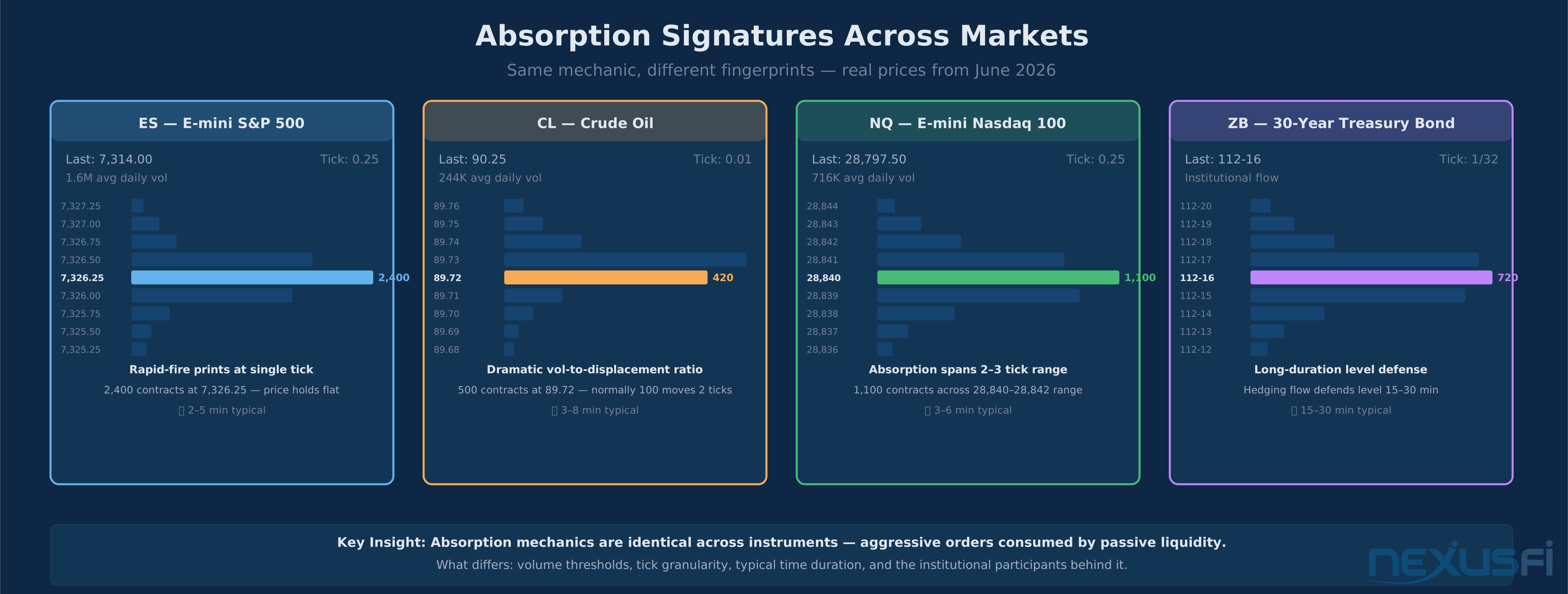
While the mechanics of absorption are universal, the visual signature varies much by instrument:
ES (E-mini S&P 500): The most liquid futures contract shows absorption as rapid-fire prints at the same tick with immediate DOM replenishment. Because ES typically trades in one-tick increments at the touch, absorption appears as a level that simply won't budge despite hundreds or thousands of contracts printing at that price.
CL (Crude Oil): Less liquid than ES, so absorption events produce more dramatic volume-to-displacement ratios. You might see 500 contracts print at a level in crude where normally 100 would push price two ticks. The thinner book makes both absorption and exhaustion more visible.
NQ (E-mini Nasdaq 100): Similar to ES but with wider typical price movement. Absorption in NQ can occur across a two to three-tick range rather than at a single tick, making it look more like a consolidation unless you're watching the delta and footprint carefully.
ZB/ZN (Treasuries): Institutional order flow dominates. Absorption here is frequently tied to hedging activity around economic releases and auction results. Treasury absorption tends to have longer time signatures — defending a level for 15-30 minutes rather than the 2-5 minutes typical in equity index futures.
Putting Absorption Into Practice #
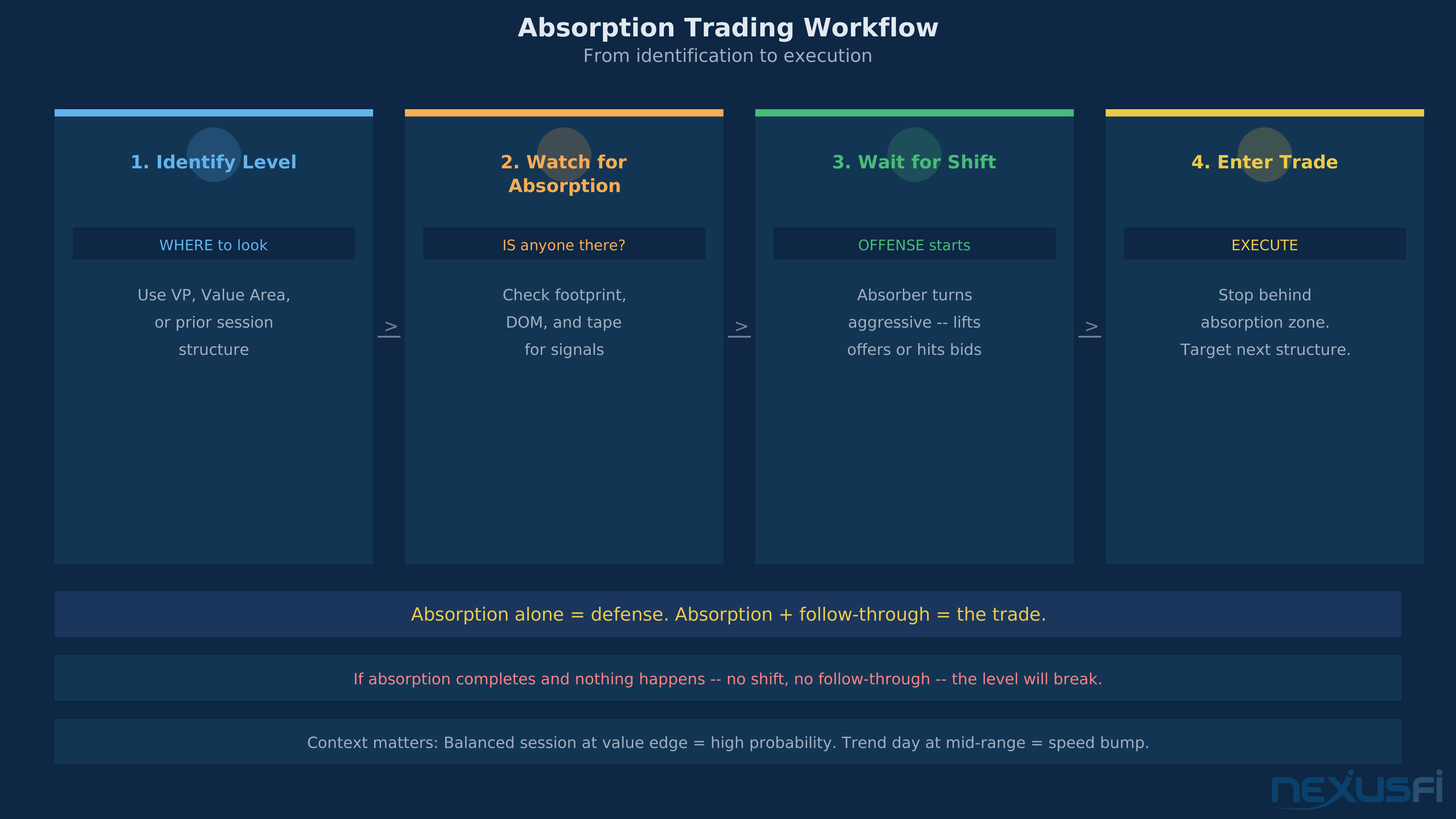
Absorption is a confirmation tool, not a setup generator. Here's how it fits into a trading workflow:
- Identify the level using volume profile, value area, or prior session structure. The structural tools tell you where to look.
- Watch for absorption as price approaches that level. Check footprint volume, DOM depth, and tape behavior. Is aggressive flow being consumed?
- Wait for the shift. Absorption alone is defense. The trade comes when the defending side goes on offense. This transition has three mechanical signatures you can confirm in real time:
- Tape flips direction. The time & sales shifts from predominantly sells-at-bid to buys-at-offer within seconds of the absorption completing. Where you were seeing red print after red print stacking at the same price, green prints start firing at the offer. That's the defending side stepping off the bid and starting to attack.
- DOM shows the flip. Bids that were sitting passively start pulling from below the absorption level, while offers above get swept. The defending side isn't just holding anymore — they're pushing. Depth on the ask thins out as resting sell orders get canceled or lifted.
- Footprint delta reverses. The first bar after the absorption zone prints positive delta (in a bullish absorption scenario). Where delta was running negative bar after bar during the absorption phase, it flips. That's the quantitative confirmation that aggression has changed hands.
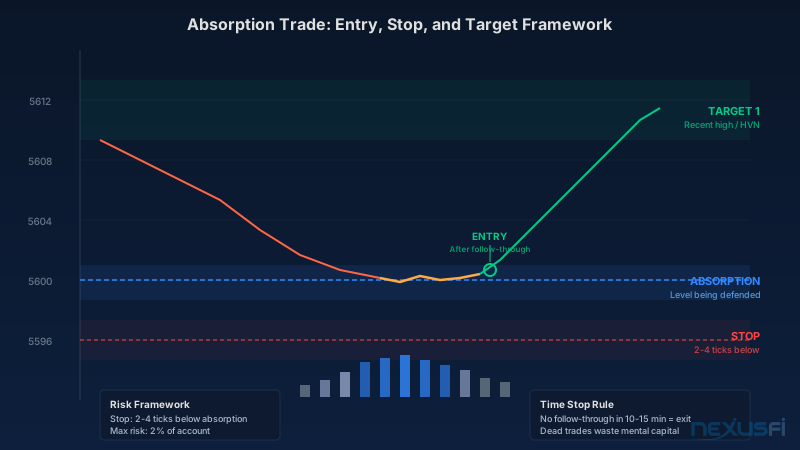
The entry is not the flip itself. Wait for the first one to two tick pullback to the absorption zone after the shift confirms. In ES, if absorption holds 5620.00 and the tape flips bullish, don't chase the initial pop — wait for price to retrace to 5620.00-5620.25 and enter there. The pullback tests whether the absorption level still has defenders. If it holds, you're entering at the best price the setup offers. If it doesn't hold on the retest, you avoided a false signal.
- Place the stop behind the absorption level. If that passive participant gets overrun, your thesis is wrong. A tight stop just below the absorption zone keeps risk controlled.
- Target the next structural level. The next HVN, value area edge, or prior session level where opposing absorption might form.
Risk Management for Absorption Trades #
Absorption setups offer a natural advantage in risk management because the invalidation point is clear: if the absorbing level breaks, the thesis is wrong. This creates a defined-risk entry with a logical stop.
However, there are nuances worth tracking:
- Stop placement: Place the stop one to two ticks below the absorption level, not at the level itself. Price can briefly trade through an absorption zone as the final wave of aggressive orders clears out remaining passive liquidity before the reversal kicks in. A stop at the exact absorption price gets you stopped on the shakeout.
- Position sizing: The tight stop that absorption provides can tempt you to oversize. Don't. The probability of absorption holding is not 100%, and overleveraged absorption trades blow up when liquidity exhausts.
- Scaling in: Experienced order flow traders sometimes scale into absorption setups — adding to the position as each confirmation signal appears (footprint confirms, then DOM replenishment, then tape shift). This increases average cost but provides higher conviction per contract.
"Concepts such as Absorption do work! BUT it is all based on context. It is based on an ability to judge a signal on its merits. It is based on knowledge of price action and market behaviour."
Common Mistakes When Trading Absorption #
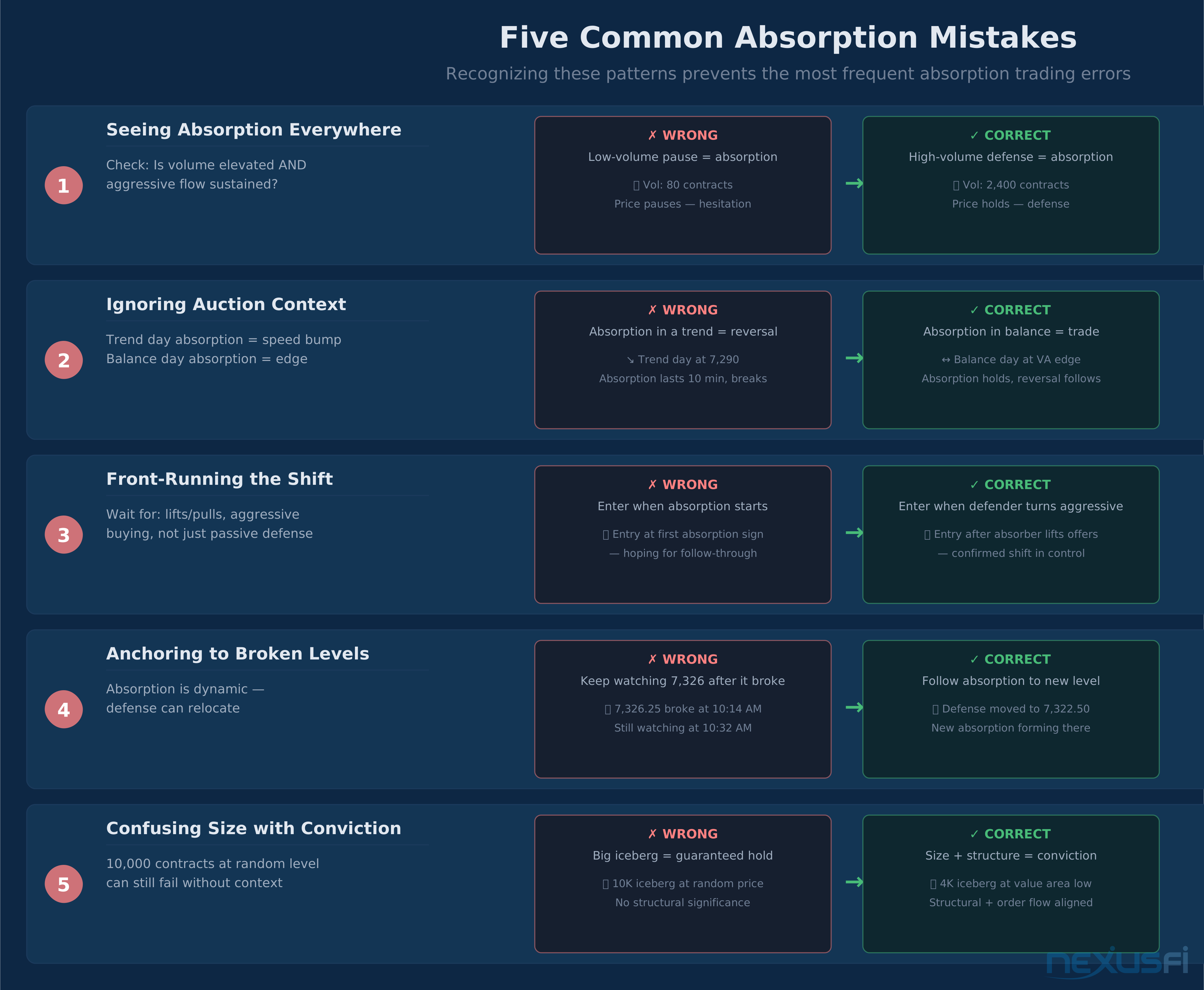
Seeing absorption everywhere. Every pause in a downtrend is not absorption. Check whether volume is actually elevated and whether aggressive flow is sustained. A natural pause in selling (low volume consolidation) looks nothing like genuine absorption (high volume defense).
Ignoring the bigger picture. Absorption at a minor level during a trend day is a speed bump, not a trade. Always check the broader auction context before trading an absorption signal.
Front-running the shift. Entering the trade the moment you see absorption, before the defending side turns aggressive, puts you into a position where you're hoping for follow-through rather than confirming it. Wait for the shift.
Anchoring to the first read. You identify absorption at 5600.00, but then the level breaks and absorption reforms at 5598.50. Don't keep looking at the old level. Absorption is dynamic — the defense can relocate, and you need to follow it, not cling to where it used to be.
Confusing size with conviction. A 10,000-contract iceberg at a random level with no structural significance can still fail. Size alone doesn't create high-probability absorption trades. The best absorption setups combine structural importance (value area edge, prior day's settlement, volume node) with real-time order flow defense.
Absorption doesn't work because it's a magic pattern. It works because it shows you the real-time mechanics of supply and demand in the order book — who's defending, who's attacking, and who's winning. When you can read that story in real time, you're making decisions based on what the market is doing, not what you hope it will do.
Knowledge Map
Prerequisites
Understand these firstReferences This Article
Articles that build on this topicCitations
- — Volume Profile and Footprint discussion (2012) 👍 21“The way I look at absorption is when you see either buyers or sellers cutting off the opposing traders.”
- — Ninja Trader Custom Order Book - 1LDom - Source Code (2013) 👍 3“Iceberg orders will usually manifest themselves on what most traders view as the wrong side of the bid/ask.”
- — Jigsaw Trading's Peter Davies - Ask Me Anything (AMA) (2013) 👍 10“One of the key indicators of a short term reversal in any market is absorption.”
- — Finessing the entry.... (2013) 👍 11“What you want is for the market to be selling off into an iceberg and get like 3-4000 contracts hitting the bid.”
- — Is Orderflow An Outdated Concept? (2020) 👍 5“Concepts such as Absorption do work! BUT it is all based on context.”
- — If an transaction occurs BELOW the bid vrs AT the bid a bullish or bearish move (2014) 👍 4“Even larger traders may use iceberg orders to inject new limit buy orders into the order book whenever the price drops.”