



Footprint Charts: Reading the Bid-Ask Volume Inside Every Price Bar
Overview #
You can watch a candlestick close green and have no idea whether buyers or sellers were in control. A 5,000-contract bar tells you volume happened — not who won. Footprint charts fix that.
Footprint charts — also called cluster charts, numbers bars, or bid-ask volume charts — decompose each price bar into its constituent bid and ask volume at every traded price level. Instead of seeing a single volume number at the bottom of a candlestick, you see exactly how many contracts traded at the bid versus the ask at each tick increment within the bar. A footprint chart showing 3,200 contracts hitting the ask and 1,800 hitting the bid at the point of control tells you the buyers were actively lifting offers — at the core different information from what any candlestick can provide.
As @Jigsaw Trading observed on NexusFi, "footprint charts are one of the few charts that are better real time than hindsight." [Post #347465] [1] This is because the real-time bid-ask imbalance at each price level reveals intent that disappears once the bar completes. The completed bar shows you what happened; the developing footprint shows you what's happening.
How Footprint Charts Work #
The Core Concept: Bid Volume vs. Ask Volume #
Every futures transaction has two sides: a passive limit order resting in the book, and an aggressive market order that crosses the spread to execute against it.
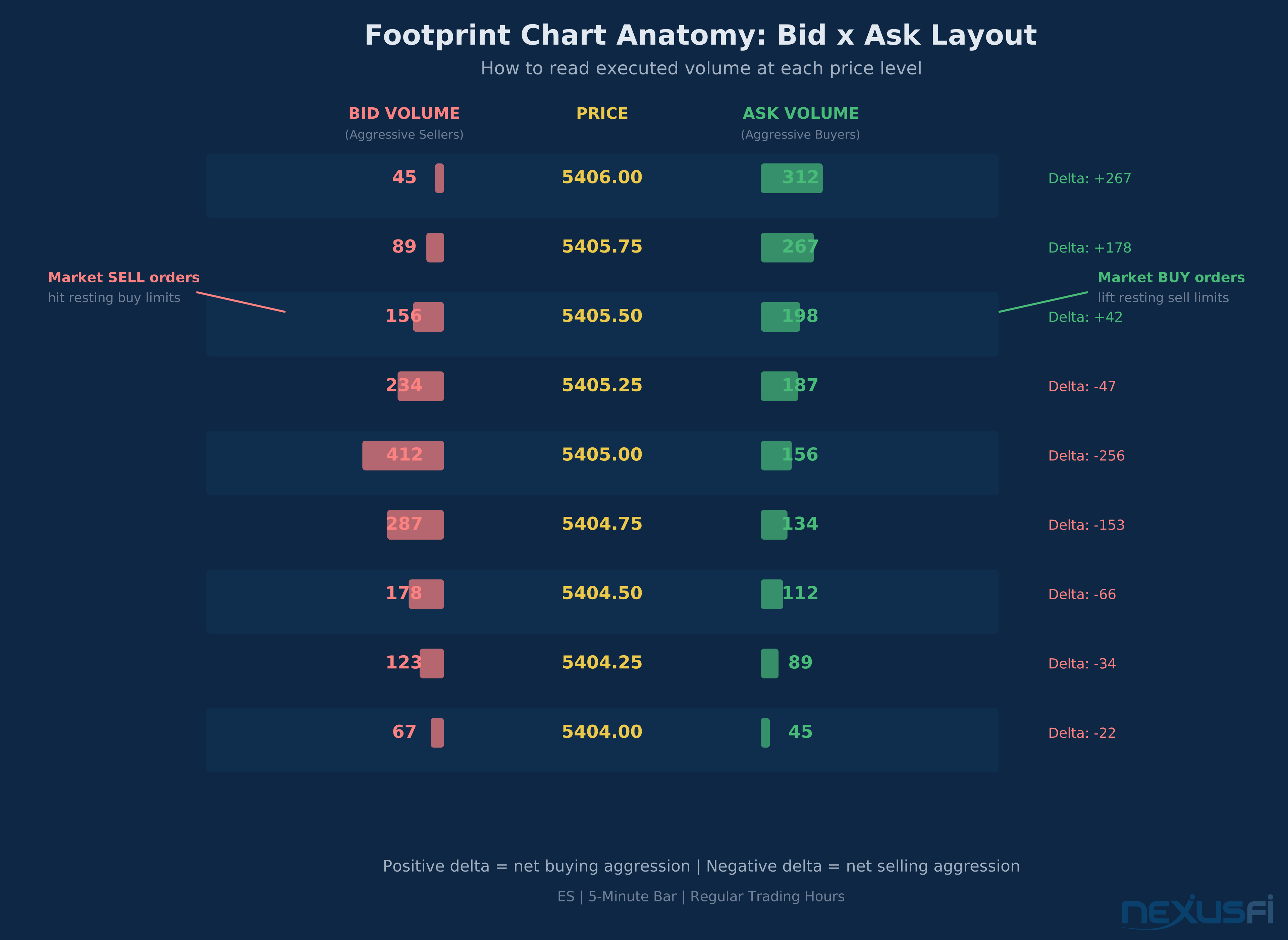
Ask volume (buying aggression): A market buy order lifts a resting sell limit order at the ask price. The transaction prints at the ask. This represents a buyer who was willing to pay the spread — a signal of urgency.
Bid volume (selling aggression): A market sell order hits a resting buy limit order at the bid price. The transaction prints at the bid. This represents a seller willing to give up the spread.
[Post #519142] [2]
This distinction between aggressive and passive order flow is foundational to market microstructure theory. In Trading and Exchanges: Market Microstructure for Practitioners (Oxford University Press, 2003), Larry Harris documented how aggressive orders that cross the spread are a central mechanism through which new information gets incorporated into prices — making the bid-ask classification in footprint charts at the core a window into the price discovery process itself. [11]
Reading the Numbers #
A standard footprint cell at a single price level displays:
   Bid Volume  x  Ask Volume
      142      x     387
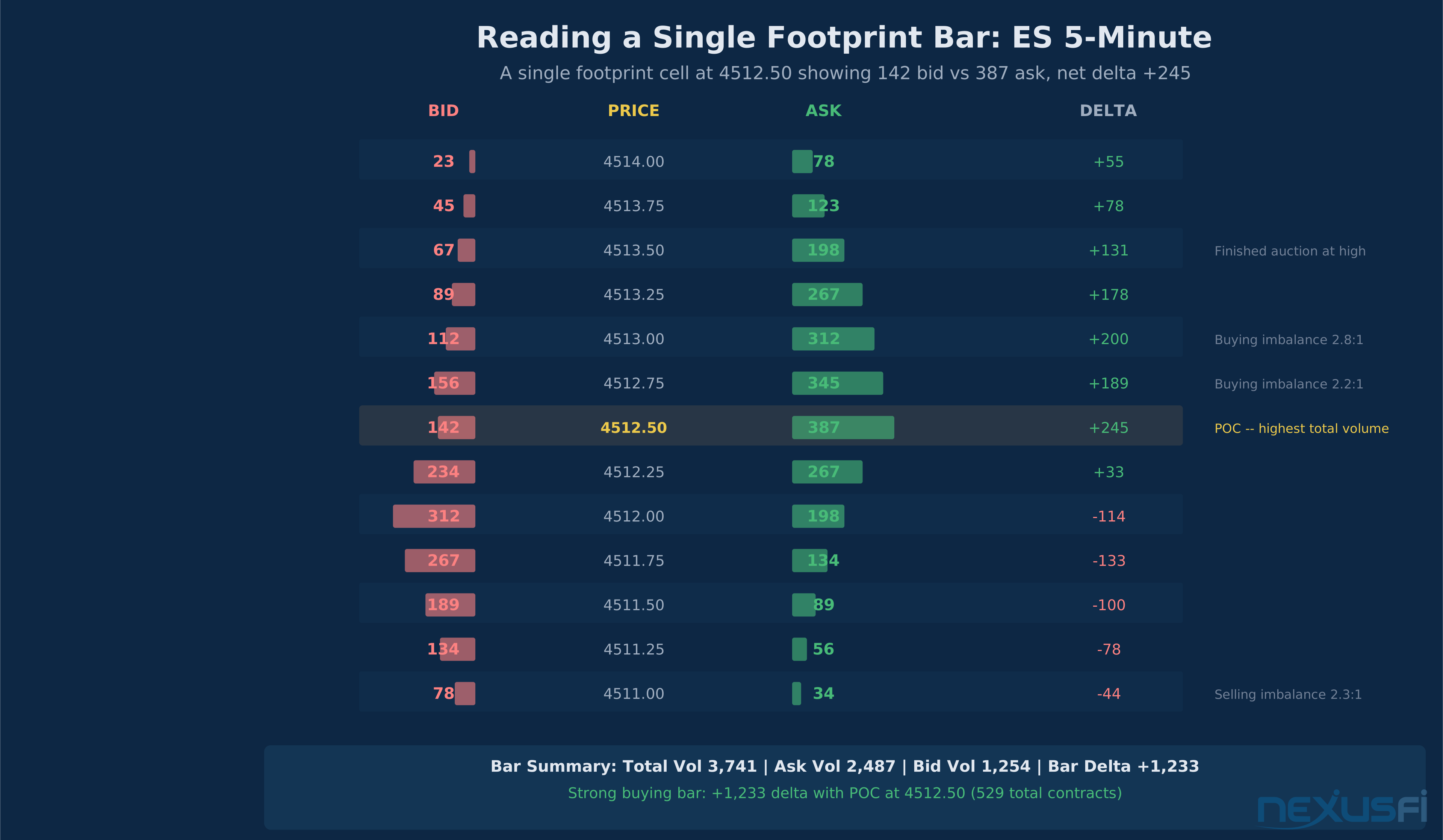
At price level 4512.50 in ES, this means 142 contracts were sold at the bid (sellers aggressing) and 387 contracts were bought at the ask (buyers aggressing). The net delta at this level is +245, indicating buyer dominance.
The footprint chart stacks these cells vertically for every price level within each time bar (1-minute, 5-minute, or whatever your chart period is). The result is a complete X-ray of the bar's internal order flow structure.
Delta: The Directional Signal #
Delta is the difference between ask volume and bid volume:
Delta = Ask Volume - Bid Volume
Positive delta means more contracts traded at the ask (net buying aggression). Negative delta means more contracts traded at the bid (net selling aggression).
[Post #781391] [3] This describes how intra-bar delta trajectory — not just the final number — reveals the balance of power between buyers and sellers.
Per-bar delta sums all bid and ask volume across every price level in the bar. A 5-minute ES bar might show: Total volume 12,450, Ask volume 7,100, Bid volume 5,350, Delta +1,750.
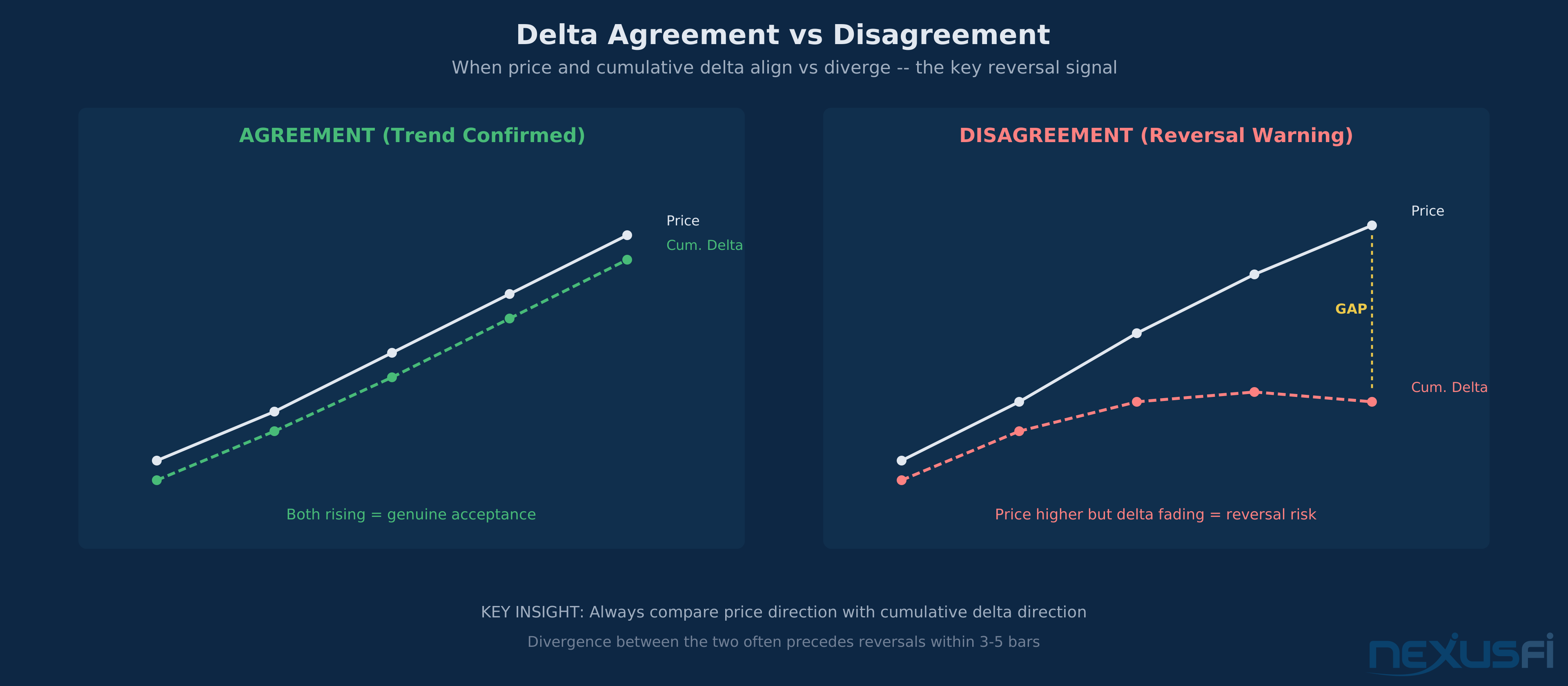
Cumulative delta tracks the running sum of per-bar delta across the session. It's the session's "scoreboard" of aggressive buying versus selling. Divergences between price and cumulative delta are one of the most-watched signals in order flow trading.
Key Footprint Patterns #
Imbalance Stacking #
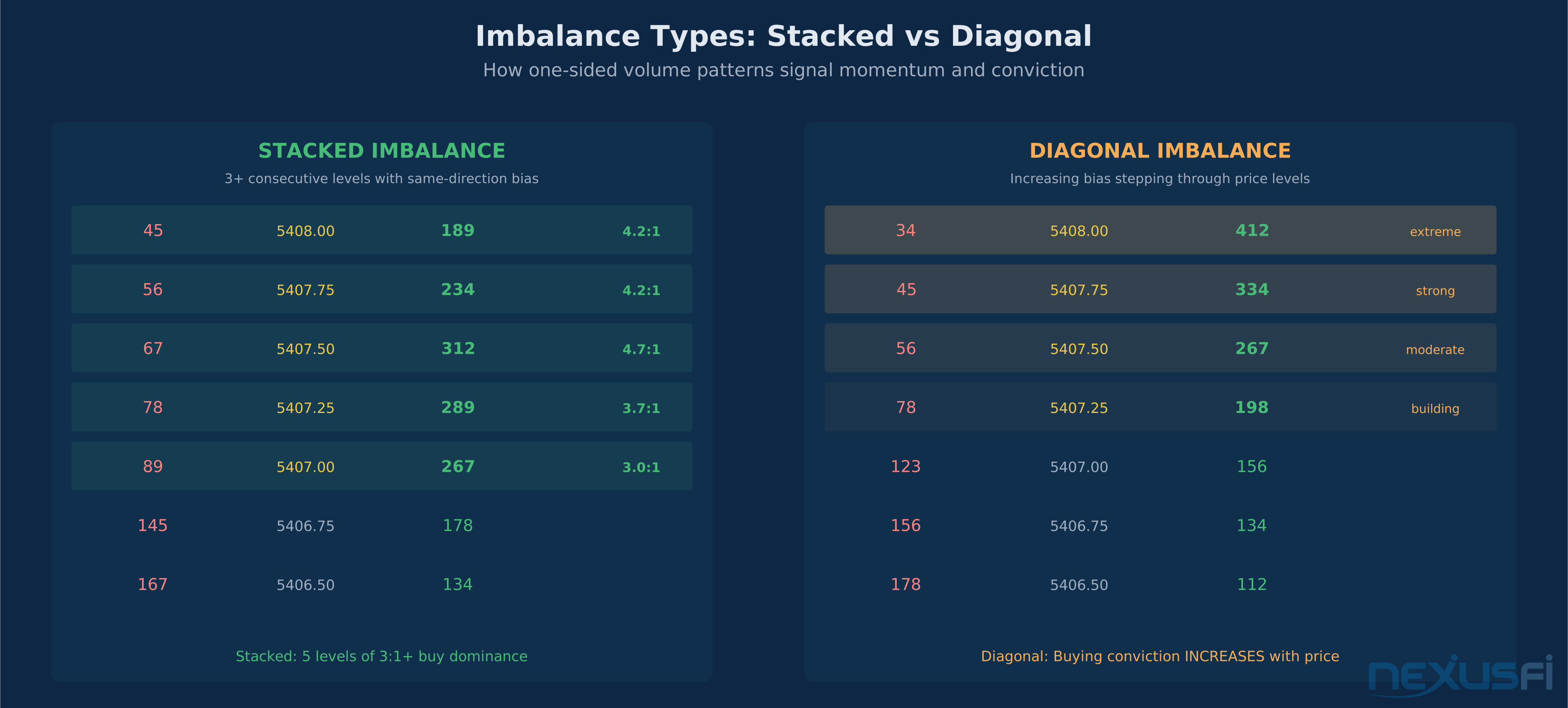
An imbalance occurs when the ask volume at one price level dramatically exceeds the bid volume at an adjacent level (or vice versa). The standard threshold is a 3:1 ratio or higher.
Buying imbalance stack: Three or more consecutive price levels where ask volume exceeds bid volume by 3:1 or more. This shows aggressive buyers methodically lifting offers up through multiple price levels — not a single print, but sustained aggression.
Selling imbalance stack: The mirror image — three or more levels where bid volume exceeds ask volume by 3:1+. Sellers are hammering through bids.
Imbalance stacks that form at the extremes of a bar (the high or low) are especially significant because they represent the point where one side overwhelmed the other to establish the range.
Finished Auction / Unfinished Auction #
Finished auction: At the high of a bar, the last price level shows selling imbalance (bid volume > ask volume). This means sellers stepped in and stopped the advance. The high is "complete" — the market found the price where sellers overwhelmed buyers.
Unfinished auction: At the high of a bar, the last price level still shows buying imbalance (ask volume > bid volume). The buyers were still in control when the bar closed — the auction was interrupted by time, not by opposing flow. Price is likely to revisit this level.
The same logic applies at bar lows (reversed).
Unfinished auctions at session highs and lows are among the highest-probability reversion targets in order flow trading. When buyers (or sellers) were still in control when the bar closed, the market has a structural tendency to revisit that level. Mark these levels on your chart — they represent pending business the market will likely complete.
Absorption #
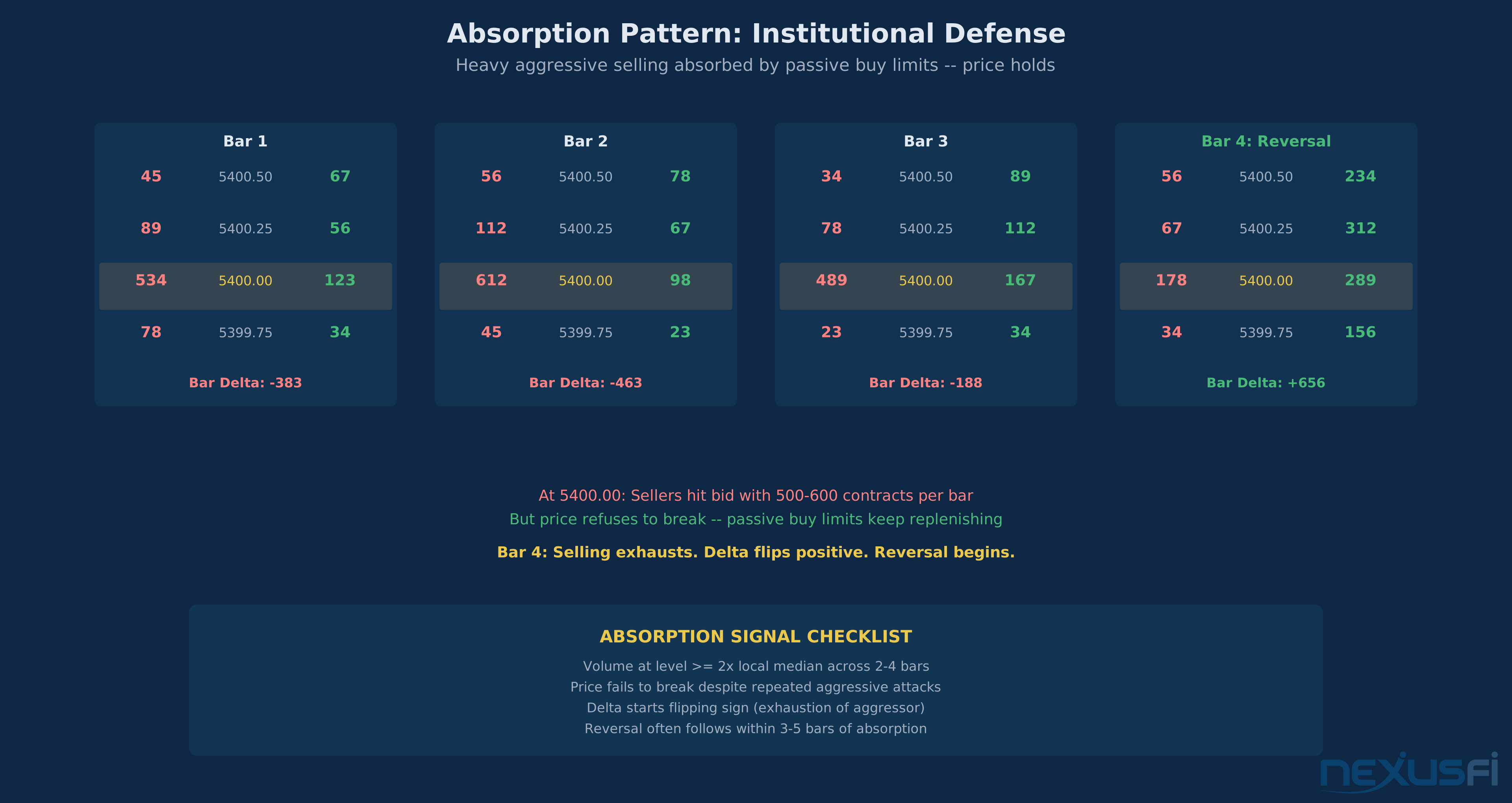
Absorption occurs when heavy volume prints at a price level without price moving through it. On the footprint:
Bid absorption: Large ask volume at a level (buyers aggressing), but price doesn't move higher. Someone is absorbing the buying by passively offering large size at that level. This is typically institutional limit selling.
Ask absorption: Large bid volume (sellers aggressing), but price doesn't move lower. A large passive buyer is absorbing the selling.
[Post #872906] [4]
Absorption is one of the highest-conviction footprint signals because it reveals the presence of large participants who don't want price to pass a level.
Delta Divergence #
When price makes a new high but delta decreases (or turns negative), it signals that the advance is losing its aggressive buying support. The price is moving on momentum and passive order withdrawal, not active demand.
[Post #787488] [5] This is wise counsel — delta divergence is a warning, not a reversal signal by itself.
Bullish delta divergence: Price makes a new low, but delta is less negative than the prior low. Sellers are losing aggression.
Bearish delta divergence: Price makes a new high, but delta is less positive than the prior high. Buyers are losing aggression.
Point of Control Shift #
The point of control (POC) on a footprint bar is the price level with the highest total volume (bid + ask combined). When the POC shifts from the top of a bar to the bottom (or vice versa) on consecutive bars, it signals a structural change in where the market is building value.
POC migrating higher across consecutive bars suggests developing uptrend acceptance. POC migrating lower suggests developing downtrend acceptance.
Footprint Chart Types #
Bid x Ask (Standard) #
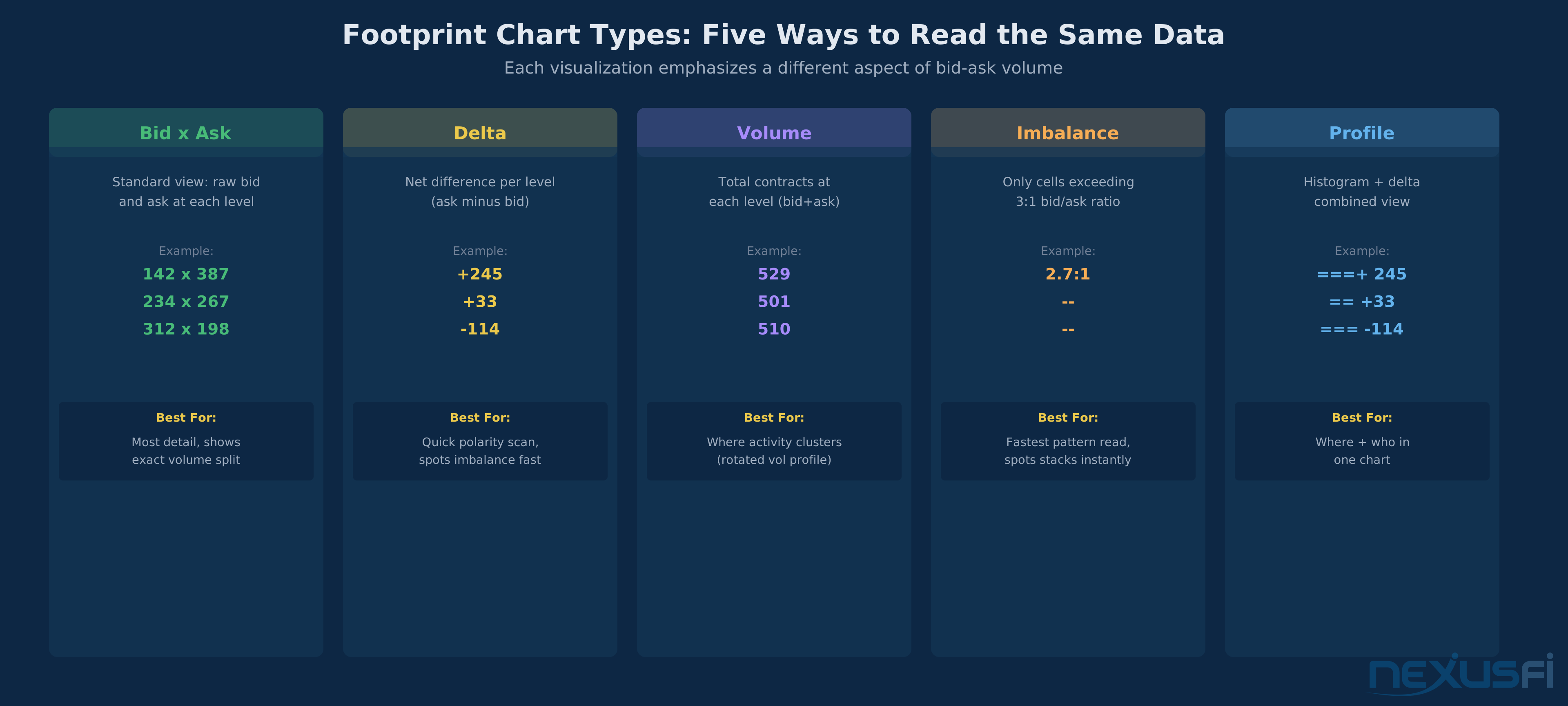
The default footprint view. Each cell shows bid volume and ask volume side by side. The most granular view and the foundation for all other interpretations.
Delta Footprint #
Shows only the delta (ask - bid) at each price level. Positive cells are colored green, negative cells red. Faster to read than bid x ask but sacrifices the raw numbers. Best for quick pattern recognition.
Volume Footprint #
Shows total volume (bid + ask) at each price level. Basically a rotated volume profile inside each bar. Useful for identifying where the most activity concentrated without the directional information.
Bid-Ask Imbalance Footprint #
Highlights only the cells where the bid-ask ratio exceeds a threshold (typically 3:1). Everything else is grayed out. The fastest way to spot imbalance stacks and absorption.
Profile Footprint #
Combines a volume profile histogram on one side with delta information on the other. Gives you both the "where" (volume concentration) and the "who" (aggressive direction) in a single view.
Setting Up Footprint Charts #
Time Period Selection #
1-minute footprints provide the most granular view but produce noise in choppy markets. Best for scalpers reading the tape in real time.
5-minute footprints balance detail with readability. The most popular period for intraday futures traders.
15-minute to 30-minute footprints smooth out noise and reveal institutional activity patterns. Better for swing traders or position sizing decisions.
Volume-based periods (e.g., every 5,000 contracts) normalize for activity level and produce cleaner footprint readings during both high and low volatility periods.
Color Coding and Thresholds #
Most platforms allow customization of:
- Imbalance threshold: The bid-ask ratio that triggers highlighting (default: 300% or 3:1)
- Delta coloring: Gradient from red (negative) through gray (neutral) to green (positive)
- Volume threshold: Minimum volume to display (filters out single-lot noise)
- POC highlighting: The price level with the most volume in each bar
Data Requirements #
Footprint charts require tick-level data — specifically, the ability to classify each trade as occurring at the bid or ask price. This means:
- Real-time tick data feed from the exchange (not delayed or aggregated)
- Bid-ask classification algorithm in the charting platform
- Sufficient processing power to handle thousands of ticks per minute on active contracts
Historical footprint data quality varies by provider. Intraday data older than 30-60 days may lose tick-level granularity depending on your data vendor's retention policy.
Platform Comparison #
Sierra Chart #
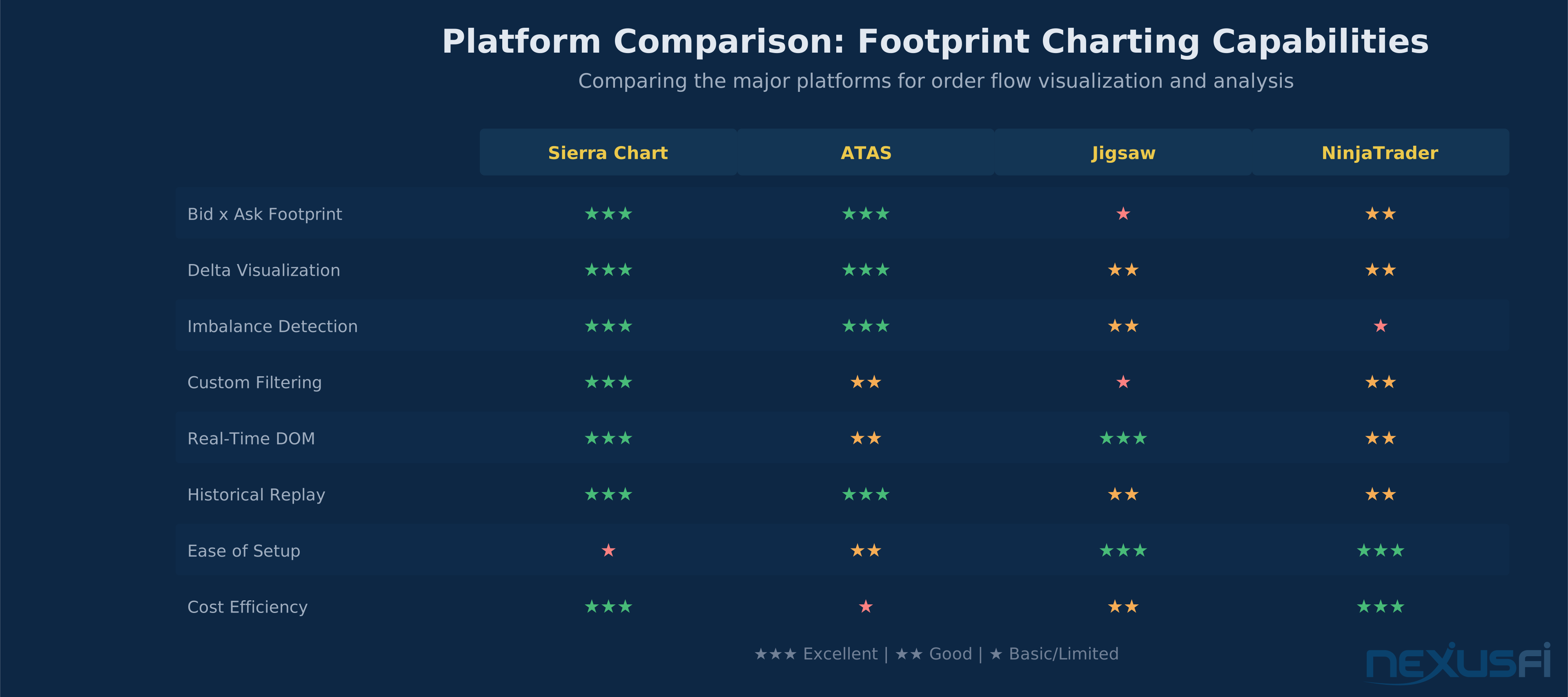
The most configurable option for footprint analysis. Sierra Chart's Numbers Bars study provides full bid x ask volume, delta, imbalance highlighting, and custom filtering. Combined with its native order flow tools (DOM, time and sales, cumulative delta), Sierra Chart is the preferred platform for dedicated order flow traders.
Strengths: Speed, low cost, extreme configurability, native data feed support Weaknesses: Steep learning curve, complex setup process, interface isn't modern
As the NexusFi community frequently discusses, Sierra Chart's data quality and processing speed are unmatched for tick-level analysis, though the configuration process demands significant time investment.
ATAS (Advanced Time and Sales) #
Purpose-built for order flow analysis. ATAS provides footprint charts alongside cluster charts, cumulative delta, and smart DOM tools. The interface is more intuitive than Sierra Chart for footprint-specific work.
Strengths: Intuitive footprint visualization, pre-built order flow indicators, active development Weaknesses: Subscription cost, Windows-only, less flexible for non-order-flow work
Jigsaw Trading #
Jigsaw approaches order flow differently — focusing on the reconstructed tape (time and sales) and DOM rather than footprint charts specifically. However, their Journalytix tool includes footprint visualization as part of a broader order flow suite.
As demonstrated in Jigsaw's webinar series on NexusFi, their philosophy emphasizes reading order flow in real time rather than chart-based pattern recognition. [Post #326470][10]
Strengths: Educational approach, journaling integration, real-time focus Weaknesses: Subscription model, less suitable for historical analysis
NinjaTrader #
NinjaTrader includes basic footprint (volumetric bars) in the platform. Third-party add-ons from providers like GOMI expand its capabilities much. As @ragic discussed on NexusFi, combining NinjaTrader's volumetric bars with a 1-minute delta chart provides "clearer and quicker" reading for ES/NQ trading around the London Open. [Post #904418] [8]
Strengths: Integrated platform, large add-on ecosystem, free tier available Weaknesses: Native footprint is basic compared to dedicated tools
Custom Solutions #
[Post #652756] [9] Building custom footprint tools is feasible for developers comfortable with tick data processing, though the effort is significant.
Common Misconceptions #
"Footprint Charts Predict Direction" #
Footprint charts reveal the current state of aggressive order flow — they don't predict the future. A buying imbalance stack shows that buyers are currently aggressive; it doesn't guarantee price will continue higher. The large passive seller absorbing those buyers might be positioned for a reversal.
"More Delta = Stronger Move" #
Delta alone without context is misleading. High positive delta in a narrow range means buying aggression is being absorbed. High positive delta with expanding range means buyers are pushing through. The price response to delta matters more than delta itself.
the dynamic can reverse. [Post #781160] [6] The interplay between aggressive and passive orders is what drives price — not aggression in isolation.
"You Need Footprint Charts to Trade Order Flow" #
Footprint charts are one way to visualize order flow, but not the only way. DOM, time and sales, cumulative delta, and volume profile all provide different lenses on the same underlying data. Many successful order flow traders use combinations rather than relying solely on footprints.
Integrating Footprint Analysis #
With Volume Profile #
Footprint charts and volume profile are natural companions. Volume profile shows you WHERE value was built across a session. Footprint shows you WHO was building that value (buyers or sellers) and HOW (aggressively or passively).
At a volume profile high volume node: Check the footprint delta at that level. Net positive delta at a high volume node means the consolidation was dominated by buying. If price pulls back to this level, those buyers become potential support.
The massive 1,079-reply "Volume Profile and Footprint discussion" thread on NexusFi demonstrates how deeply the community has explored this integration. [Post #232568] [7]
With Market Profile (TPO) #
Market Profile's time-at-price distribution identifies single prints, poor highs/lows, and value area migration. Overlay footprint analysis to determine:
- Single prints with buying imbalance — strong initiative buying pushed through
- Poor high with selling absorption — responsive sellers capped the advance but didn't generate much volume (weak rejection)
With Cumulative Delta #
Session cumulative delta plotted alongside price creates a divergence framework. When price trends up but cumulative delta flattens or declines, the advance is losing the aggressive buying that started it. This is the footprint equivalent of momentum divergence.
With DOM and Time & Sales #
DOM shows you what's resting (passive orders). Footprint shows you what's executing (aggressive orders). Time and sales shows you the sequence and speed. Together, they provide the complete picture:
- DOM: Large passive buyer resting at 4510.00
- Footprint: Heavy ask volume at 4510.25-4511.00 (sellers aggressing INTO that buyer)
- Time & Sales: Prints accelerating, size increasing
- Interpretation: Large buyer absorbing selling — potential support level
Practical Trading Approach #
Pre-Session Preparation #
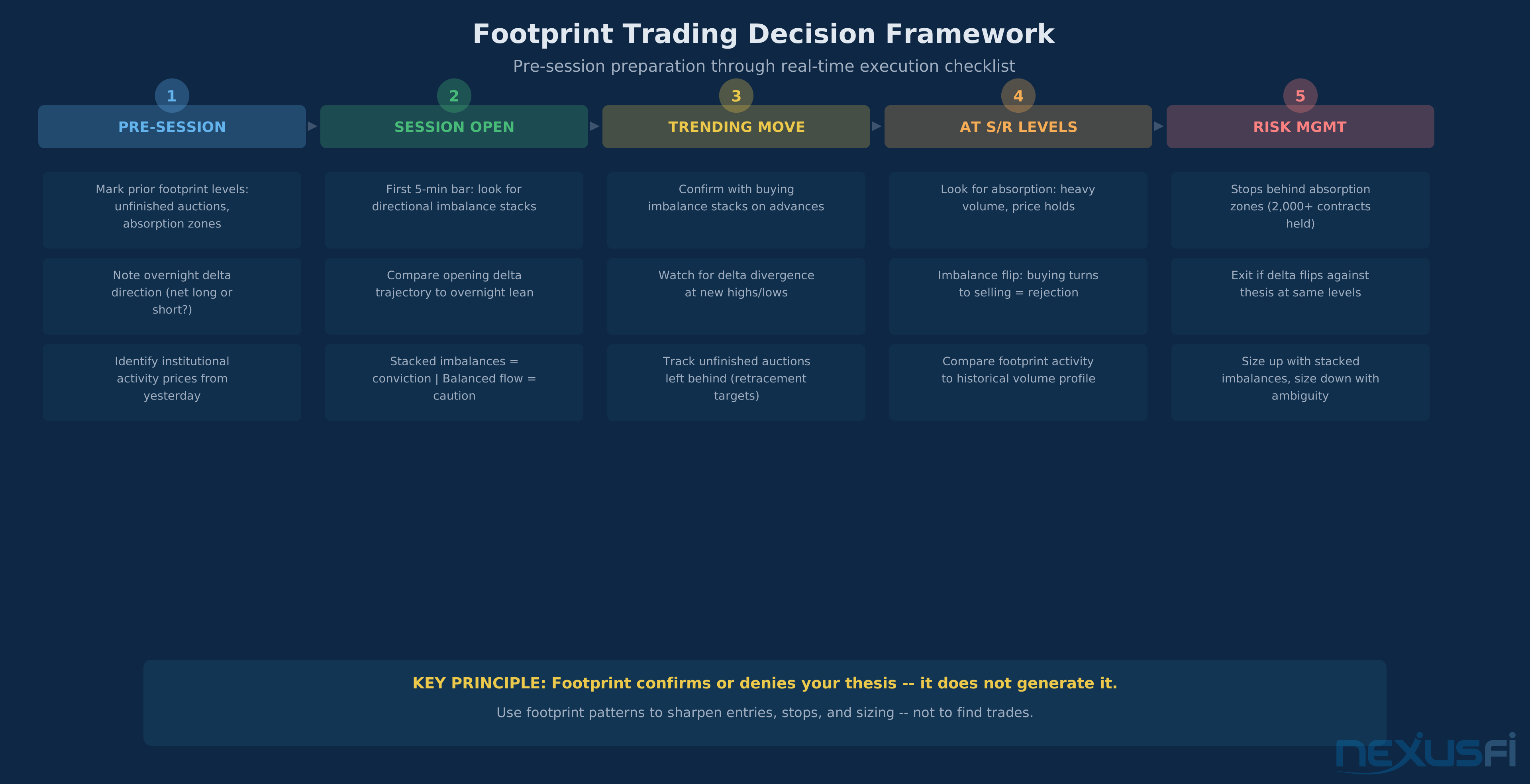
- Mark previous session's footprint-derived levels: unfinished auctions, absorption zones, imbalance stacks at extremes
- Note overnight session delta — did overnight shift lean net long or short?
- Identify the key prices where yesterday's footprint showed institutional activity
Real-Time Reading #
At session open:
- Watch the opening 5-minute footprint for directional imbalance stacks
- Compare initial delta trajectory to overnight delta
- Note whether the opening move has conviction (stacked imbalances) or is tepid (scattered, balanced flow)
During trending moves:
- Confirm trend with stacked buying imbalances on advances (or selling imbalances on declines)
- Watch for delta divergence at new highs/lows — losing conviction?
- Monitor unfinished auctions being left behind — these become targets for retracement
At support/resistance:
- Look for absorption patterns: heavy volume at the level without price penetrating
- Imbalance flip: if buying imbalances turn to selling imbalances at resistance, rejection is underway
- Volume node response: how does footprint activity compare to the historical volume profile at this price?
Risk Management Integration #
Footprint analysis can sharpen your stop placement:
- Stops behind absorption: If you see large passive buying at 4508.00 absorbing 2,000 contracts, your stop goes below that level. If 2,000 contracts couldn't push through, smaller flow probably won't either.
- Invalidation via delta flip: Enter long on buying imbalance stack; if subsequent bars show delta flipping negative at the same levels, the thesis is invalidated.
- Size adjustment: Strong footprint confirmation (stacked imbalances + favorable delta) justifies larger position size. Ambiguous footprint (balanced flow, no clear patterns) suggests smaller size or no trade.
Limitations and Edge Cases #
Spoofing and Layering #
Footprint charts show executed volume, not intended volume. Spoofed orders that are placed and cancelled don't appear in footprint data. However, the market's response to spoofed levels does appear — you'll see aggressive flow that seems to have no support in the actual executed volume.
The CFTC actively prosecutes spoofing in the same futures markets footprint traders analyze. In a 2025 enforcement action involving E-mini S&P 500 and E-mini Nasdaq 100 futures, the CFTC found a trader placed spoof orders that "constituted a large percentage of orders resting at the top price levels" with aggregate spoof contracts outnumbering legitimate orders 5-to-1 — resulting in a $200,000 penalty and 12-month trading ban (CFTC Release No. 9118-25). [12] This reinforces why footprint analysis, while powerful for reading executed flow, has a blind spot for cancelled orders that define these manipulative strategies.
Low Liquidity Instruments #
Footprint analysis works best on liquid instruments (ES, NQ, CL, ZN) where thousands of contracts trade per minute. On thinly traded contracts, individual large orders can dominate entire footprint bars, making pattern recognition unreliable.
After-Hours and Globex Session #
Overnight futures trading has lower volume, wider spreads, and different participant mix. Footprint patterns that are reliable during RTH (Regular Trading Hours) may not carry the same significance during Globex-only hours. Many footprint traders focus exclusively on RTH data.
Data Feed Quality #
Footprint accuracy depends entirely on correct bid-ask classification. Different data feeds may classify the same trade differently depending on their algorithm (last trade price vs. NBBO comparison). Ensure your data provider's classification matches your platform's expected format.
The numbers reveal the intent behind price movement. A bar that rises on selling aggression is at the core different from one that rises on buying aggression, even though the candlestick looks identical. That distinction — visible only through footprint-level analysis — is what gives order flow traders their edge.
Knowledge Map
Go Deeper
Build on this knowledgeReferences This Article
Articles that build on this topicCitations
- — ES Footprint charts at the hard right edge (2013) 👍 20“footprint charts are one of the few charts that are better real time than hindsight”
- — Understanding futures market ( delta , time and sale ) (2015) 👍 7“at that time the market was 1,922.00 (bid) to 1,922.25 (ask). A marketable order filled at 1,922.25”
- — Understanding Footprint Charts / Number bars (2020) 👍 21“delta strength: If delta last bounced off its low before completing the bar, the finish will be positive”
- — Cumulative Delta (2022) 👍 2“an astute order-flow trader watching a footprint chart might have already sensed what was going on when the market had absorbed 500 lots”
- — Understanding Footprint Charts / Number bars (2020) 👍 7“use delta as a component of your trading, an important one, but not take too clinical of an approach”
- — Understanding Footprint Charts / Number bars (2020) 👍 20“very negative delta means sellers are selling into the market and buyers have a lot of limit orders”
- — Volume Profile and Footprint discussion (2012) 👍 21“Volume Profile and Footprint discussion”
- — Ninjatrader - Orderflow (2025) 👍 2“1min chart to show volume and Delta, clearer and quicker”
- — OrderFlow - Footprint App for Tradestation (2017) 👍 10“Cumulative delta, VPOC, Running Delta, Per bar VPOC, per bar Volume”
- — Webinar: Order Flow Techniques for Day Traders, Multi-part webinar (2013) 👍 10
- Larry Harris — Trading and Exchanges: Market Microstructure for Practitioners (2003)
- CFTC — CFTC Sanctions Colorado Trader and Illinois Company to Pay $200,000 for Spoofing (2025)