



BNB (Binance Coin): Exchange Token to Blockchain Fuel
Overview #
BNB is the native token of the Binance ecosystem — the world's largest cryptocurrency exchange by trading volume. What started as a simple fee-discount token in 2017 has evolved into the backbone of a complete blockchain ecosystem that processes more daily transactions than Ethereum and supports $17 billion in DeFi TVL at its 2025 peak.
That evolution makes BNB one of the more interesting crypto assets to trade. It's not just a speculative bet on crypto broadly — it's a leveraged play on Binance's business health, BSC DeFi activity, quarterly supply burns, and the ongoing regulatory environment for the world's biggest exchange. Each of those factors moves independently sometimes. That creates complexity, but also specific trading edges.
This guide covers everything a trader needs to understand BNB: the mechanics, the price drivers, the regulatory risk, and the practical setups that have historically worked.
What BNB Is: More Than an Exchange Token #
BNB launched in July 2017 via an ICO at $0.15. It was originally an ERC-20 token on Ethereum with a single purpose: give Binance users a 50% trading fee discount (declining on a schedule over five years). That's it. Simple utility token, high velocity, moderate supply.
Then two things happened that transformed BNB into something structurally different from most crypto assets.
First, Binance launched its own blockchain. In April 2019, BNB migrated from Ethereum to become the native currency of Binance Chain (later renamed BNB Beacon Chain). This made BNB essential for operating on Binance's native infrastructure — not optional, but required for gas fees and governance.
Second, BSC launched in September 2020. BNB Smart Chain (BSC) brought EVM compatibility — meaning Ethereum smart contracts could run on BSC with minimal modifications. This was the critical unlock. Ethereum's 2020-2021 gas fee crisis made BSC's cheap alternatives attractive, and DeFi protocols rushed to deploy there. BNB went from exchange fee token to blockchain fuel.
Today, "BNB" officially stands for "Build and Build" (rebranded from "Binance Coin" in 2022). The ecosystem includes:
- BNB Smart Chain (BSC) -- EVM-compatible layer-1, primary DeFi venue, $7-17B TVL
- opBNB -- Optimistic rollup L2 built on top of BSC for even lower fees
- BNB Greenfield -- Decentralized storage network, BNB used for storage fees
- Binance Exchange -- Where BNB fee discounts still apply, 50M+ registered users
The name change matters for traders: BNB's fortunes are no longer purely tied to Binance exchange volume. They're also tied to the BSC ecosystem's health, DeFi activity, and the degree to which Binance's legal troubles spill over into chain usage.
NexusFi member @Lonhro, who trades crypto full-time, described Binance's position clearly: "If you want to trade altcoin futures or the actual real [SPOT] currencies — you will have to go through Binance Futures, who has the most volume and selection of Altcoin futures." (Multicharts trading cryptocurrency, 2020) This centrality to altcoin liquidity is precisely what makes Binance's health so relevant to BNB's price.
BNB Chain: The Blockchain Behind the Token #
BSC is one of the few blockchains that has genuinely competed with Ethereum at scale — not by being technically superior, but by being faster and dramatically cheaper when Ethereum was gasping under congestion.
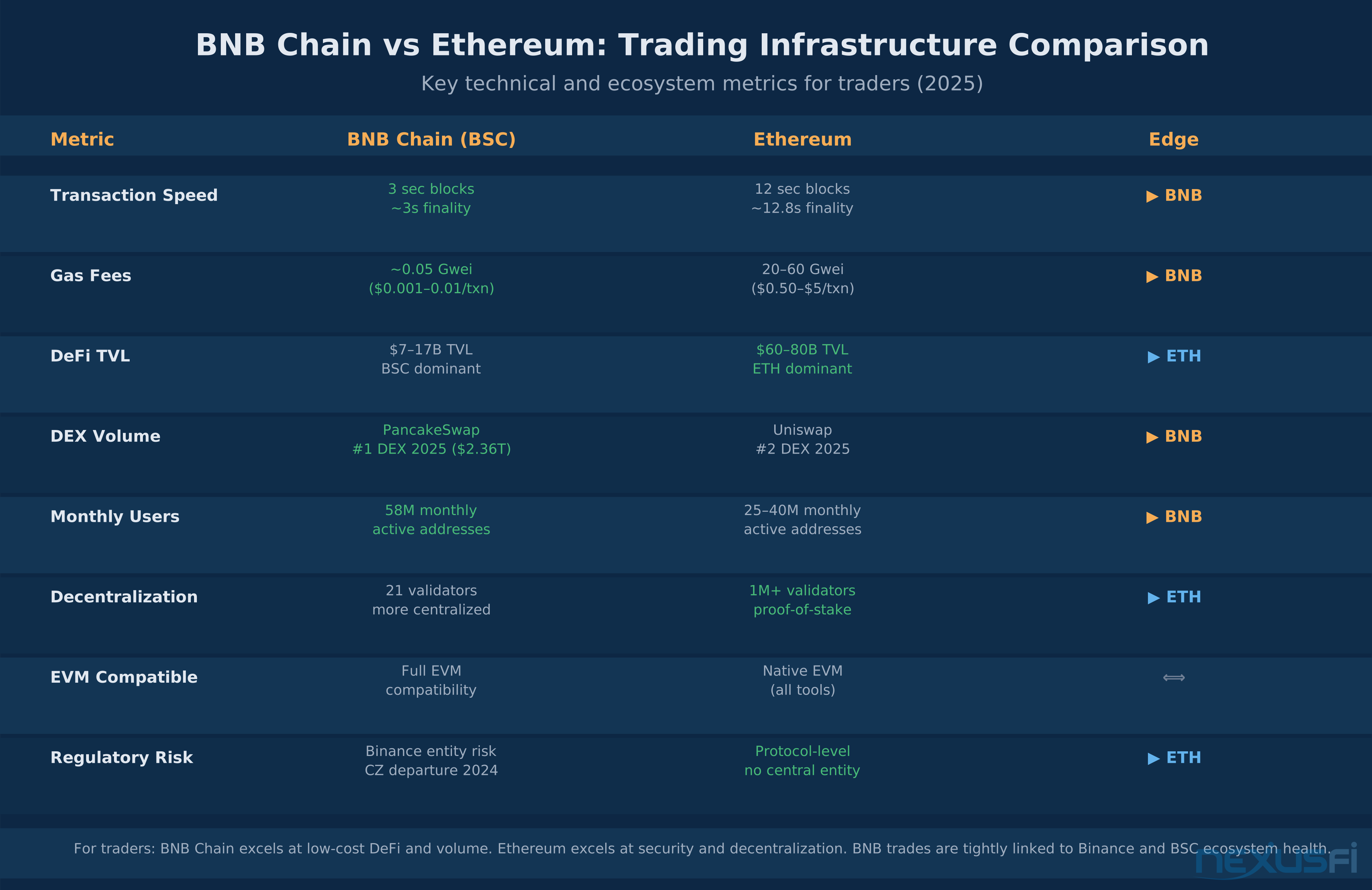
The technical specs matter for traders because they explain why BSC attracted users and why BNB gas demand is real:
- Block time: 3 seconds (Ethereum: ~12 seconds)
- Gas fees: ~0.05 Gwei ($0.001-0.01 per transaction) vs Ethereum's $0.50-$5+ typical
- Daily transactions: 12-17 million at peak (October 2025)
- Monthly active addresses: 58 million (surpassed Solana's 38.3M in September 2025)
- Validators: 21 active (elected by BNB staking)
The 21-validator model is the primary criticism of BSC. It's fast because it's centralized. Ethereum runs on 1 million+ validators — much harder to coordinate or capture. BSC's 21 are mostly Binance-affiliated or Binance-friendly entities. That's a design choice with real tradeoffs: speed and cost efficiency vs. censorship resistance and decentralization.
For traders, the validator centralization matters primarily as regulatory risk. If regulators ever forced BSC validators to block certain addresses or transactions, there would be no meaningful resistance mechanism. This is a theoretical risk that markets haven't priced heavily — but it's real.
The PancakeSwap Effect
PancakeSwap's dominance on BSC is the most important single piece of DeFi data for BNB traders. In 2025, PancakeSwap hit $2.36 trillion in annual trading volume — #1 DEX globally, surpassing Uniswap. BSC accounts for ~96% of PancakeSwap's $2.17 billion TVL.
Every swap on PancakeSwap burns gas in BNB. Every new protocol deploying on BSC drives BNB demand. PancakeSwap's growth and BSC ecosystem health are direct inputs to BNB's gas-fee demand, which feeds both burn rates and organic price pressure.
BNB Utility: Why Traders Hold It #
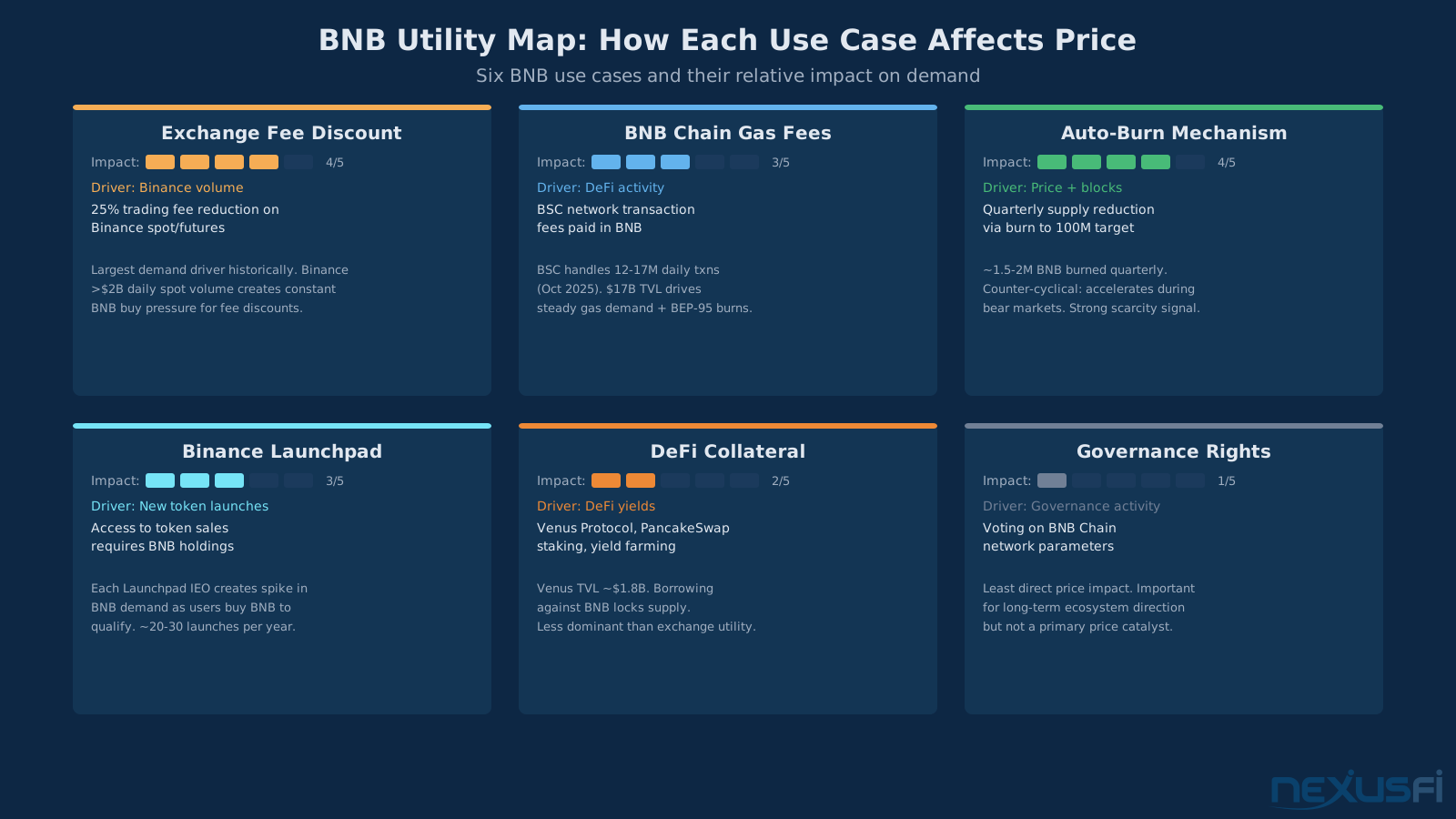
BNB has six distinct utility buckets. Not all are equally important for price. Understanding which ones move the needle — and when — is the key to having edge on BNB trades.
1. Trading Fee Discounts on Binance
The original utility, still the biggest single demand driver. Paying fees in BNB gets you a 25% discount on spot and futures trading on Binance. With Binance doing $2-5 billion in daily spot volume, that discount is worth real money at scale. Institutional traders and high-frequency algos hold BNB specifically to minimize friction costs.
This creates structural BNB buy pressure as long as Binance maintains its volume leadership. When Binance volume drops (regulatory uncertainty, competitor growth), this demand softens.
NexusFi member @Lonhro, who trades crypto full-time, put the fee structure in perspective: "Market order roundturn is about 0.08% on Binance Futures on the first volume tier. A few of the futures exchanges even pay you to create liquidity [with limit orders]. Just be aware to familiarize yourself with the concept of Funding with Cryptocurrency Perpetual Derivatives." (Cryptocurrency Trading Platforms, 2021) That fee discount from BNB holding compounds meaningfully for active traders.
2. BNB Chain Gas Fees
Every transaction on BSC, opBNB, and BNB Greenfield costs BNB. With 12-17 million daily transactions at BSC's peak (Oct 2025), gas demand is significant. BEP-95 (introduced in 2021) made this deflationary: a portion of each gas fee is burned in real time, permanently removing BNB from supply.
Since BEP-95's launch, roughly 259,000 BNB has been burned via real-time gas burns. That's smaller than the quarterly Auto-Burn amounts but it's continuous and tied directly to network usage — an honest signal of actual demand rather than scheduled supply management.
3. Binance Launchpad / Launchpool
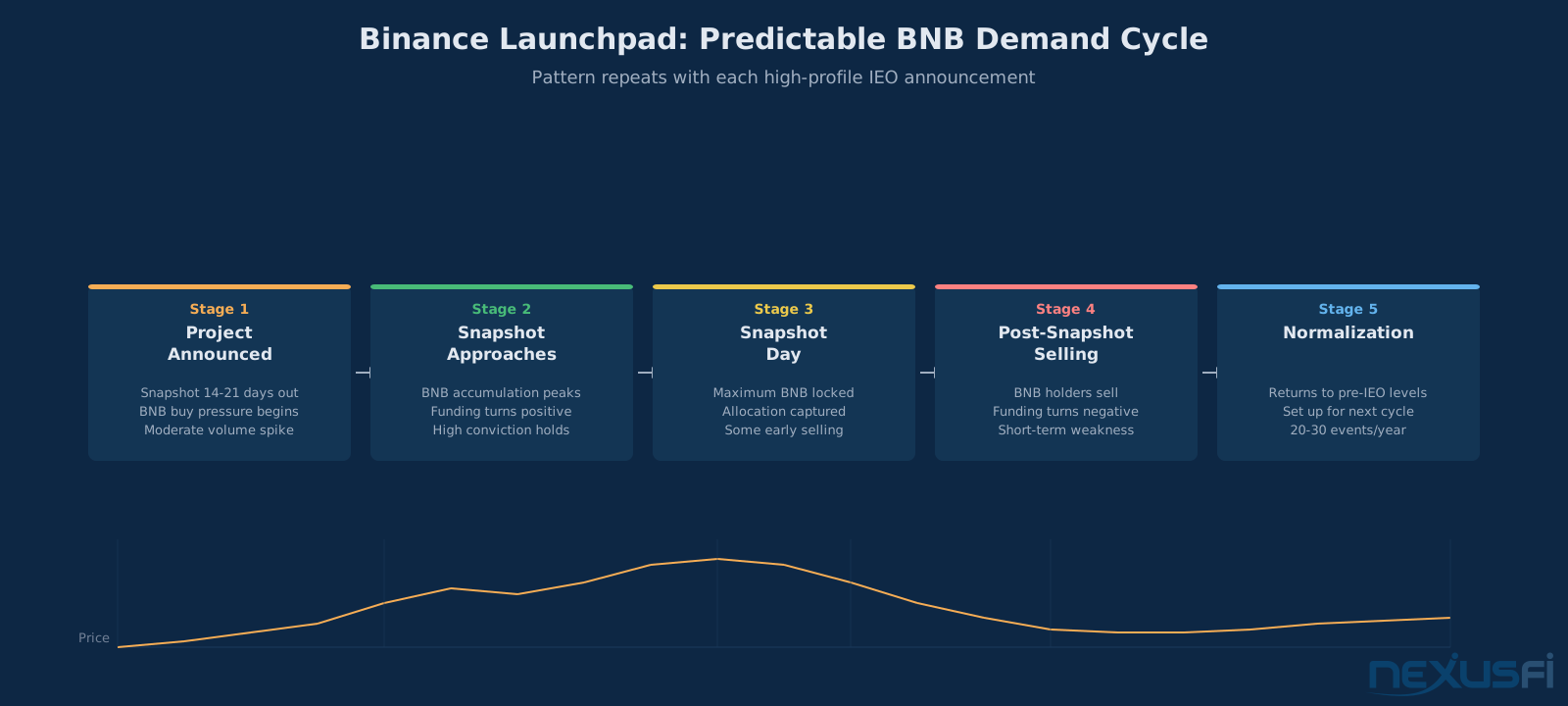
Binance Launchpad is an IEO platform where users buy newly launched tokens using BNB. To participate in Launchpad allocations, users must hold a minimum BNB balance during a snapshot period. This creates predictable, periodic demand spikes:
- Announcement of hot new project -- BNB buy pressure starts
- Snapshot date approaches -- maximum BNB accumulation
- Snapshot complete -- some holders sell (temporary BNB weakness)
Binance runs approximately 20-30 Launchpad events per year. Each one creates this demand pattern. The higher-profile the project, the larger the BNB accumulation spike.
Post-snapshot short setup: After a high-profile Launchpad snapshot captures, many holders immediately sell their BNB. This creates a predictable 5-15% correction window over the following 24-48 hours. Knowing the snapshot date in advance lets you exit long positions at the right time — or even set up a short.
4. DeFi Collateral
Venus Protocol, BSC's primary money market, held ~$1.8 billion TVL at peak. Users deposit BNB to borrow stablecoins (or vice versa). This locks supply. PancakeSwap liquidity pools also require BNB/token pairings for full participation.
DeFi collateral utility is less powerful as a price driver than fee discounts or burns — it's cyclical and can unwind quickly during market stress. But it adds to BNB's holding velocity during bull markets.
5. Governance Rights
BNB holders can vote on BEPs (BNB Evolution Proposals) — protocol changes, parameter adjustments, validator elections. In practice, governance participation is low and dominated by large holders. The governance utility doesn't move BNB's price materially, but it provides philosophical legitimacy to the "decentralized chain" narrative that Binance markets externally.
6. BNB Chain Reserve / Staking
Validators and delegators must stake BNB to participate in consensus. The ~21 active validators each stake 10,000+ BNB. This removes supply from circulation and creates alignment between validator incentives and BNB price. Validators don't want BNB to crash because their staked collateral would lose value.
The Burn Mechanism: How BNB Becomes Deflationary #
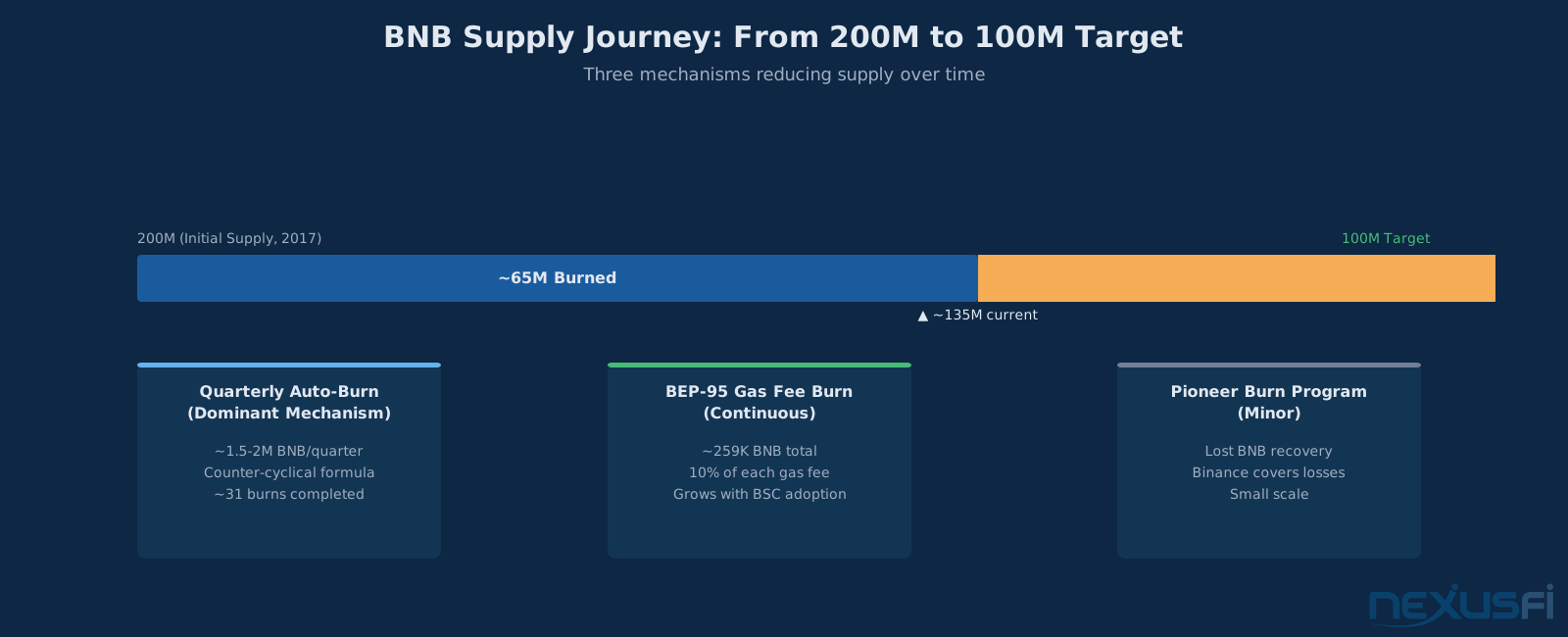
BNB launched with a maximum supply of 200 million tokens. The plan, stated since day one, was to burn 50% — 100 million BNB — over time. We're over halfway there. As of early 2025, ~135 million BNB remain, with ~40 million left to burn before reaching the 100 million target.
There are three burn mechanisms running simultaneously:
Quarterly Auto-Burn
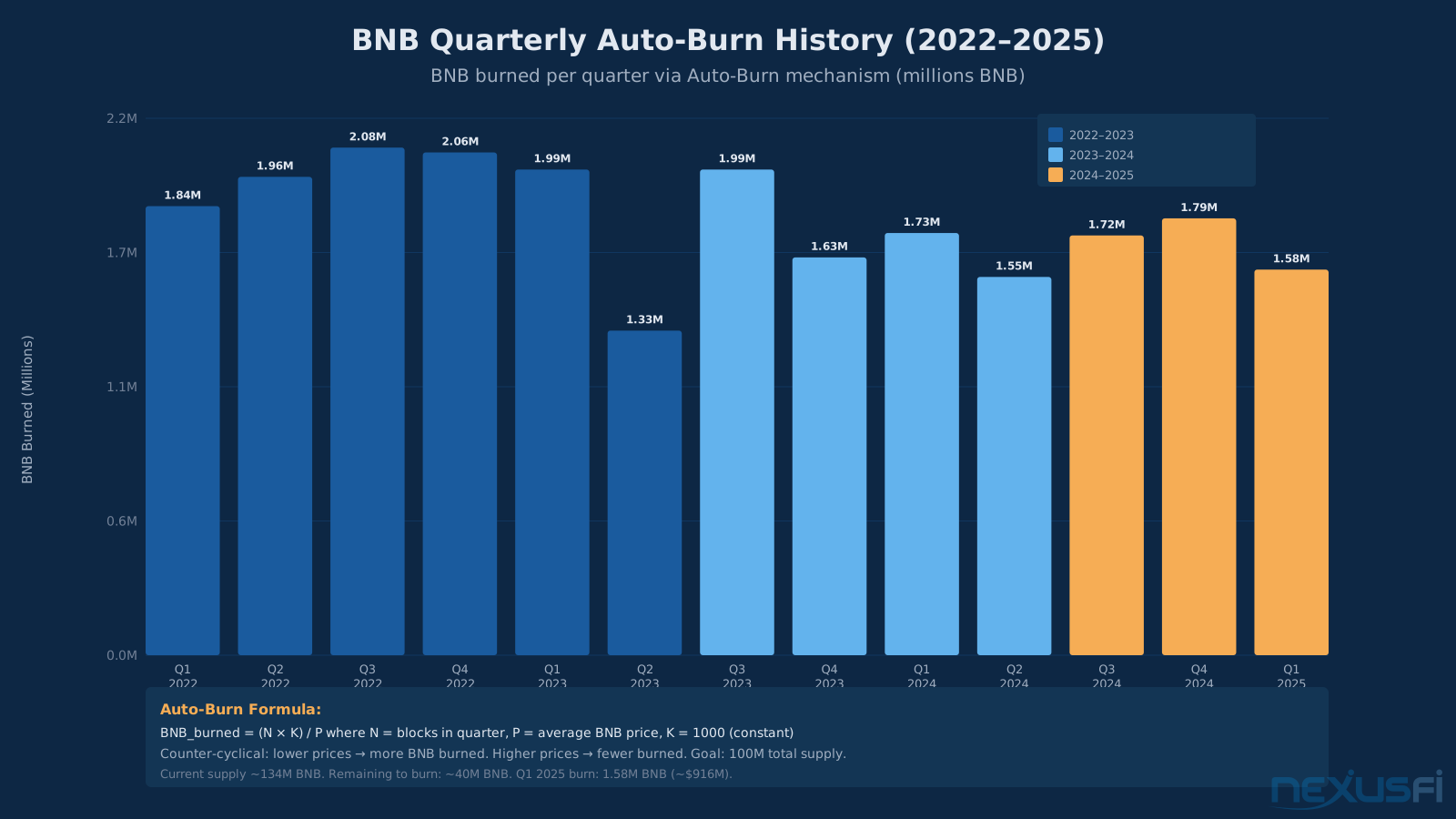
Every quarter, a formula determines how much BNB to burn:
BNB_burned = (N x 1000) / P
Where N = number of blocks generated on BSC during the quarter, and P = average BNB price during the quarter.
This formula is intentionally counter-cyclical. When BNB's price is low (bear market), P is small, so the burn amount is large. When BNB's price is high (bull market), P is large, so the burn amount is smaller. This acts as a slow-motion price stabilizer — buying support via supply reduction when price is weak.
In Q1 2025 (the 31st burn), 1,579,207 BNB was burned — worth approximately $916 million at the time. That's real supply destruction. The Auto-Burn is announced quarterly by the BNB Foundation and is independently verifiable on-chain (burns go to the "black hole" address 0x0000...dEaD).
Historical quarterly burn amounts have ranged from 1.3M to 2.1M BNB, generally running 1.5-2M per quarter under normal market conditions. At current pace, reaching the 100M target will take approximately 5-7 more years depending on price levels.
Verifying burns yourself: Every quarterly burn is permanently recorded on-chain. The dead address on BNB Chain is 0x000000000000000000000000000000000000dEaD. BscScan shows the full burn history. This isn't trust — it's verifiable on-chain data that any trader can confirm independently.
BEP-95 Real-Time Gas Fee Burn
Introduced in November 2021, BEP-95 mirrors Ethereum's EIP-1559. A fixed percentage of each gas fee (set by validator governance) is permanently burned in each block. The ratio is currently ~10% of fees burned, the rest going to validators.
This burn is continuous, automatic, and tied directly to network usage. As BSC processes more transactions, more BNB gets burned in real time. Since BEP-95 launch, ~259,000 BNB has been burned via this mechanism — modest relative to Auto-Burn amounts but growing with BSC adoption.
Pioneer Burn Program
A smaller mechanism: if users lose BNB in verifiable smart contract errors or honest mistakes, Binance reimburses them by covering the lost amount via official burn events. The lost BNB count is applied against the next burn cycle. This is minor in scale but shows Binance's commitment to maintaining user trust.
Together, these three mechanisms mean BNB's supply is genuinely shrinking. This isn't marketing — it's verifiable on-chain. The question is whether the supply reduction pace is fast enough to matter relative to selling pressure in any given market environment.
BNB Price History and Key Catalysts #
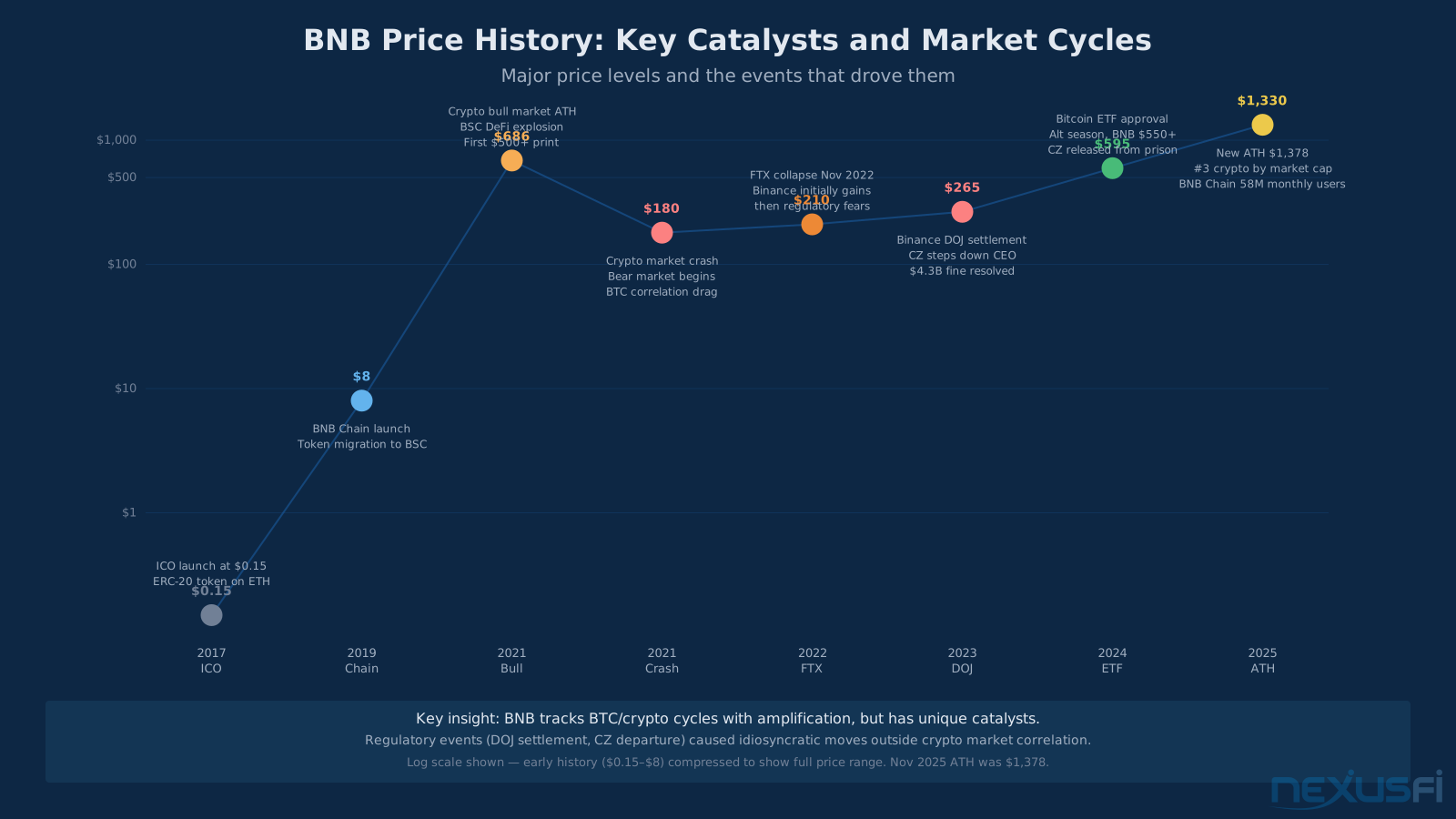
BNB's price history is a story of compounding catalysts: crypto market cycles amplified by Binance-specific events, both positive and negative.
2017-2019: Exchange Token Phase
ICO at $0.15. By end of 2017, $1.50 — 10x in a few months following the crypto bull run. Crashed with everything in 2018. In 2019, BNB outperformed the broader market as Binance launched its DEX and BNB Chain, giving it genuine blockchain utility beyond fee discounts. By end of 2019: $14.
2020-2021: BSC Explosion
The critical period. BSC launched in September 2020 with EVM compatibility. Ethereum gas fees hit $50-200+ per transaction during DeFi summer 2020. Users fled to BSC. BNB went from $30 at start of 2021 to $686 by May 2021 — a 22x move in under six months. This was BSC adoption (PancakeSwap, Venus, hundreds of DeFi clones) meeting the 2021 bull market.
The crash from $686 to $180 through the rest of 2021 tracked BTC/ETH closely — no specific BNB trigger, just the crypto bear market taking everything down.
@Fluid Fox, an Elite member trading crypto through the 2021 bull market, captured the BTC/alt rotation dynamic that drives BNB: "Alt-coin rallies happen after BTC has made a significant parabolic move higher, but during a retracement. The theory is profits are taken at BTC's top and re-allocated to the smaller cap coins." (Becoming A Better Trader, 2021) BNB's 2021 run followed this exact pattern — BTC led, then rotation to BSC-ecosystem alts.
2022: FTX Collapse and Binance's Moment
When FTX collapsed in November 2022, Binance initially appeared to benefit — it was the dominant remaining centralized exchange. But within days, questions about Binance's own solvency emerged. BNB dropped from $290 to $210 as "proof of reserves" debates consumed the industry. Binance published attestations that stabilized confidence, and BNB held around $200-280 through most of 2023.
2023: The DOJ Settlement
November 2023. Binance pled guilty to money laundering charges. CEO Changpeng Zhao (CZ) resigned and agreed to personal criminal charges (later sentenced to 4 months in prison). Binance paid $4.3 billion in fines — the largest penalty in US DOJ history against a financial entity.
The market had been pricing Binance's legal risk for a year, so the actual settlement was initially viewed as a relief — certainty is better than ongoing uncertainty. BNB was at $230 before the settlement announcement and moved to $265 afterward as traders processed "worst case is now known."
2024-2025: Bitcoin ETF and New ATH
Bitcoin ETF approval in January 2024 launched the current bull cycle. BNB tracked broadly with alt season, reaching $595 by end of 2024. CZ was released from prison in September 2024, and his return to public engagement (though not CEO) was seen positively for Binance sentiment.
In 2025, BNB hit a new ATH of approximately $1,330-1,378 (different data sources vary slightly) as BSC surpassed Solana in monthly active addresses. The #3 ranking behind Bitcoin and Ethereum reinforced BNB's position as a tier-one asset.
What Drives BNB Price: Five Factors Ranked #
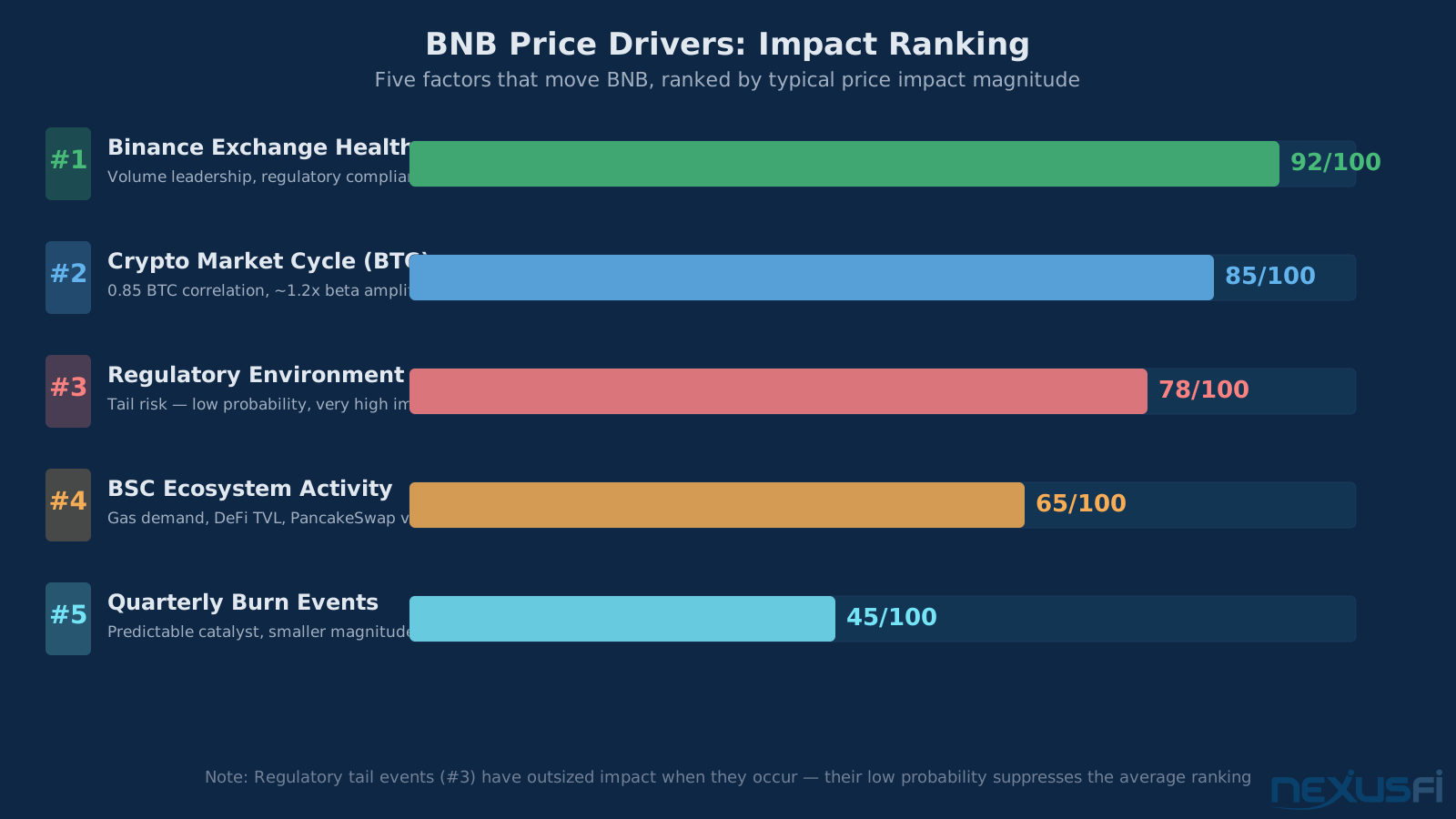
1. Binance Exchange Health (Highest Impact)
BNB's largest structural demand driver is Binance's trading volume and user base. When Binance is healthy and growing, fee-discount demand rises, Launchpad participation increases, and the overall "Binance economy" expands. When Binance faces regulatory pressure, volume temporarily drops, and BNB feels it directly.
Monitor: Binance exchange volume rankings, regulatory news from US/EU/APAC regulators, competitor exchange growth (Coinbase, OKX, Bybit).
2. Crypto Market Cycle (High Impact)
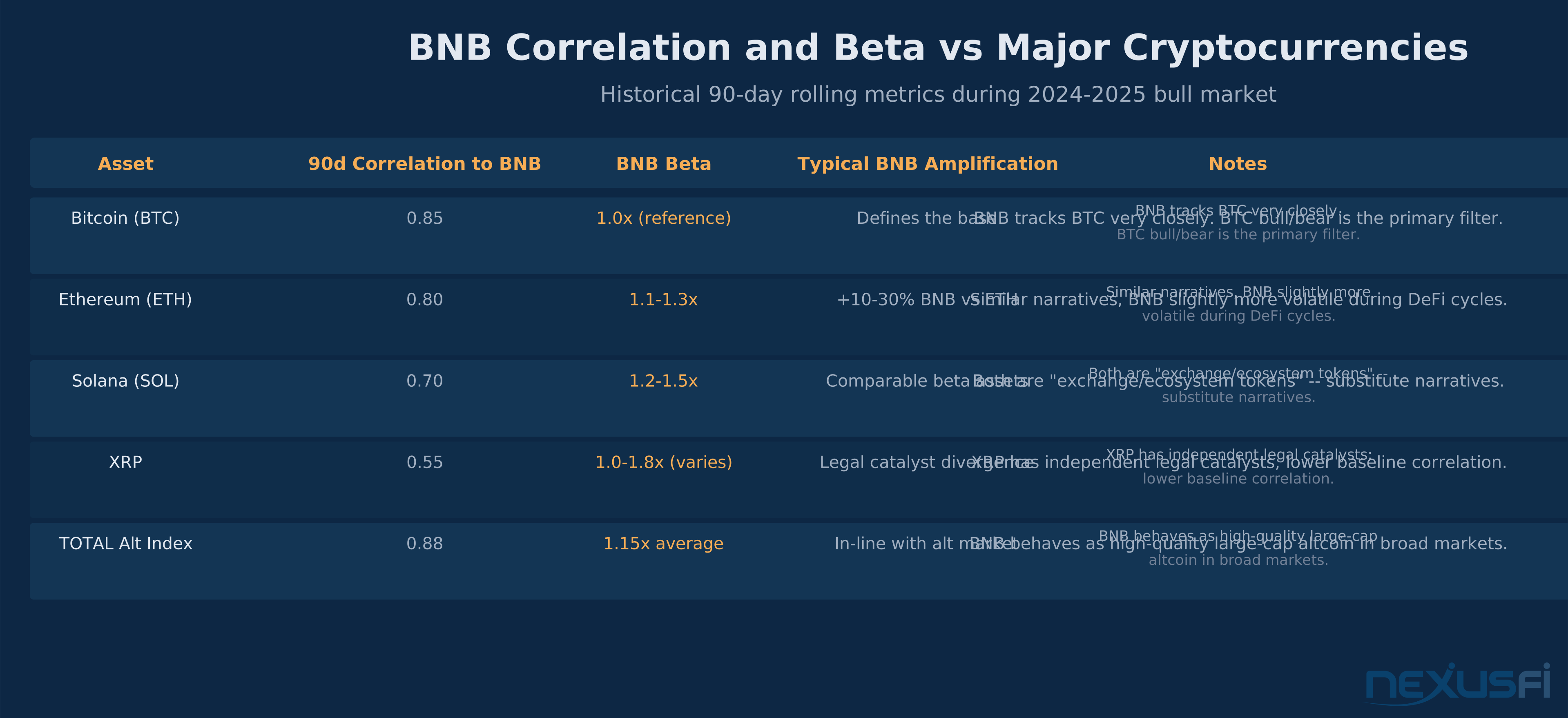
BNB has ~0.85 correlation with BTC during major trend moves. It amplifies BTC's direction: BTC +40% historically produces BNB +60-80%. BTC -30% produces BNB -45-55%. BNB is a high-beta crypto asset in broad market conditions. You can't analyze BNB without a BTC view.
The amplification varies: in 2021, BNB outperformed much (BSC narrative + bull market). In 2022-2023, BNB underperformed slightly (regulatory discount). When BNB-specific catalysts align with BTC uptrend, the moves are largest.
(Becoming A Better Trader, 2021) BNB is firmly in the alt camp — when BTC dominance falls, BNB tends to outperform.
3. BSC Ecosystem Activity (Medium-High Impact)
BSC DeFi activity drives gas demand (BEP-95 burns) and narrative. High DeFi TVL, growing PancakeSwap volume, and new protocol launches on BSC all support BNB. BSC stagnation or migration of users to competing chains (Ethereum L2s, Solana) would pressure BNB.
Monitor: BSC daily transactions, PancakeSwap TVL and volume, DeFiLlama BSC TVL rankings.
4. Quarterly Burn Events (Medium Impact)
Each quarterly burn announcement creates a predictable trigger cycle. The announcement of the burn amount (and verification on-chain) is often positive. The counter-cyclical formula means bearish periods see larger burns — a floor-supportive mechanism. Traders who know this can time medium-term entries around burn cycles.
Historical pattern: mild accumulation in weeks before burn announcement, potential relief rally after announcement, followed by normalization.
5. Regulatory Environment (Highest Tail Risk)
Normal regulatory news creates noise. But tail events — new DOJ charges, Binance user fund freezes, sanctions enforcement — can move BNB 20-40% in hours. These risks are asymmetric: positive regulatory resolution is already priced (the DOJ settlement is behind us), but new charges would not be.
Monitor: Binance regulatory filings, DOJ/CFTC enforcement calendar, global exchange licensing news.
The Binance Regulatory Saga: What Traders Need to Know #
Binance has had the most extensive regulatory history of any crypto exchange. Understanding it is essential for BNB traders because it's baked into BNB's risk premium.
The DOJ Settlement (November 2023)
Binance pled guilty to Bank Secrecy Act violations and agreed to:
- $4.3 billion in fines and forfeiture -- largest criminal penalty against a financial entity in US history at the time
- A 5-year compliance monitor with ongoing oversight
- Exit from certain business lines in the US
Changpeng Zhao (CZ) pled guilty personally, resigned as CEO, and was sentenced to 4 months in federal prison (served in 2024). He is now released.
Richard Teng replaced CZ as CEO. Binance has been operating under enhanced compliance since, with a remit to demonstrate regulatory cleanup. The exchange regained licenses in multiple jurisdictions post-settlement.
US Operations: Binance.US vs. Global Binance
Global Binance (binance.com) is blocked for US residents. Binance.US is the US-licensed entity — smaller, with more limited products. US traders use alternatives (Coinbase, Kraken, Gemini) for regulated access. This matters for BNB trading specifically: BNB's fee-discount utility is primarily accessed through global Binance, which US traders cannot legally use.
This is why NexusFi member @jokertrader noted: "From what I know, US people cannot participate in ICOs and trade perpetual contracts... to start I would look at Binance.US" (Recommended Crypto Platform/Exchange, 2021). The US regulatory restriction is a persistent headwind on BNB's fully-addressable fee-discount market.
The Post-Settlement Period
Since the November 2023 settlement, BNB has actually performed well — reaching new ATHs in 2025. Markets decided: the known bad outcome (massive fine, CZ departure) was better than the uncertainty that preceded it. Binance maintained its exchange volume dominance. The compliance monitor has not triggered public enforcement actions.
Non-diversifiable Binance entity risk: You cannot hold BNB and be hedged against Binance's operational health. If Binance faces forced shutdown or major compliance failure, BNB's primary demand driver disappears with it. This is structurally different from holding BTC or ETH, which have no equivalent single point of failure. The compliance monitor expires in 2028 — until then, this sword remains.
The remaining risk profile includes:
- Ongoing compliance monitoring failures triggering additional enforcement
- New regulatory regimes in EU (MiCA) or Asia affecting exchange operations
- CZ's personal legal status creating negative headlines
- Potential BSC validator concentration issues if regulators treat them as Binance-controlled
Traders should not dismiss these risks as resolved — they're ongoing. But they should calibrate: post-settlement BNB has outperformed, suggesting the market views the regulatory baseline as manageable for now.
How to Trade BNB: Instruments and Venues #
Spot BNB
The simplest exposure. Buy BNB on any major exchange (Binance, Coinbase, Kraken, OKX, Bybit). For US traders, Coinbase and Kraken offer BNB/USD pairs. Hold in a wallet to maintain self-custody or in exchange for convenience.
Perpetual Futures (Perps)
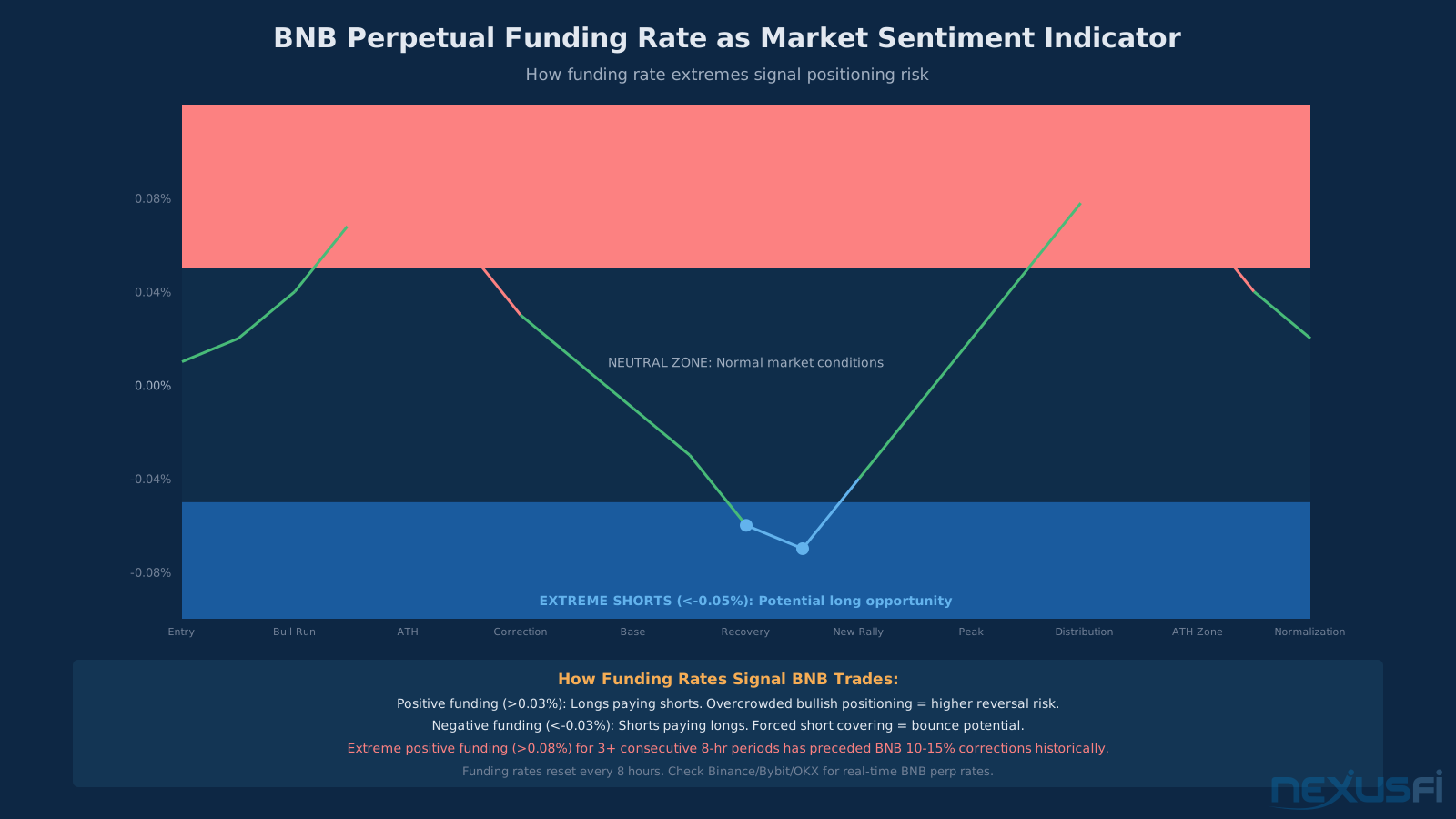
BNB perpetual futures are available on Binance (BNB/USDT perp), Bybit, OKX, and Bitget with up to 75-125x leverage (use cautiously). Perps have no expiry and track spot via funding rates. Positive funding means longs pay shorts — a signal of overleveraged bullish positioning.
Funding rates on BNB perps are worth monitoring. Extended positive funding (>0.03% per 8 hours) has historically preceded corrections as the cost of carry becomes unsustainable for long positions.
As @mattz from Optimus Futures noted on crypto transaction costs: "A low-level trader will pay 100X more on each [crypto] transaction [vs futures]. There is a significant risk of loss in futures trading." (can you scalp cryptos, 2018) While BNB perps are more liquid than 2018-era crypto, the cost differential vs. regulated futures remains relevant — especially for scalpers.
CME BNB Futures
Unlike Bitcoin and Ethereum, BNB does not currently have CME-listed futures. This means there's no regulated US futures product for institutional BNB exposure — a notable absence that limits institutional participation and potentially caps the regulatory legitimacy premium that ETH gained when CME ETH futures launched.
On-Chain via BSC
For DeFi traders: BNB is used directly on BSC for yield farming, liquidity provision on PancakeSwap, and collateral on Venus Protocol. These are more complex positions with smart contract risk, but they represent legitimate "trading" of BNB's ecosystem exposure.
Three Practical BNB Trading Setups #
Setup 1: Quarterly Burn Cycle Play
Logic: Burn announcements are quarterly catalysts. The Auto-Burn amount is announced ~2-4 weeks after quarter-end. Traders who know this can pre-position before announcement.
Entry: 2-3 weeks before expected burn announcement, confirmed BNB range-bound or mild uptrend vs BTC
Confirmation: BNB holding above its 50-day MA, no major Binance news, stable funding rates
Target: Burn announcement to announcement date + 1 week
Stop: Below recent structural support (typically 8-12% from entry)
Notes: Works best in neutral-to-bullish crypto environments. In bear markets, the burn announcement barely matters vs. broader selling pressure.
Setup 2: Launchpad Accumulation Play
Logic: Major Launchpad IEOs create predictable BNB demand. Traders buy BNB to qualify for allocations, driving temporary price appreciation.
Entry: Immediately after announcement of high-profile Launchpad project, before snapshot date
Confirmation: Project has credible team, significant pre-launch hype (social metrics), snapshot 7-14 days out
Target: Snapshot date (exit most or all position)
Stop: Project cancellation, Binance regulatory news, or BNB -10% from entry
Notes: Post-snapshot selling is predictable — many Launchpad participants sell BNB after their snapshot is captured. This creates a short setup at snapshot date if price is extended.
Setup 3: BNB vs BTC Rotation on Regulatory Resolution
Logic: BNB carries a regulatory discount relative to BTC. When regulatory news resolves positively (DOJ settlement, license approvals, court wins), BNB catches up to BTC in relative terms.
Entry: BNB/BTC ratio at multi-month lows, positive regulatory news as trigger
Confirmation: BNB/BTC showing technical reversal (higher low, break of downtrend), broader crypto market stable or bullish
Target: Prior BNB/BTC ratio levels before regulatory discount began
Stop: BNB/BTC makes new multi-month low after trigger
Notes: This is a longer-term position (weeks to months). The 2024 recovery post-DOJ settlement is the template trade.
Risk Factors: Where BNB Theses Break Down #
Binance Entity Risk
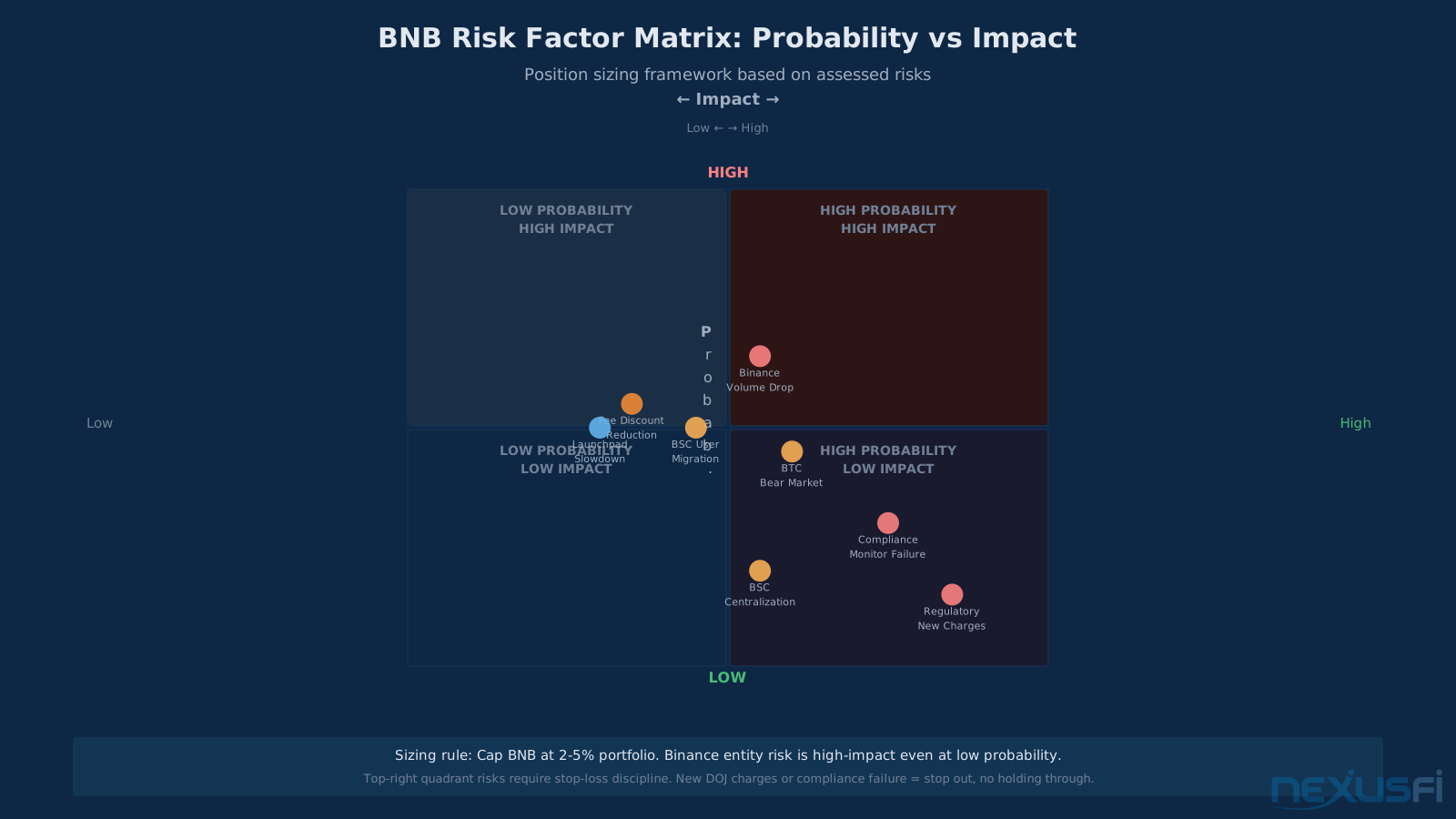
BNB's value is structurally dependent on Binance's operating status. If Binance were forced to shut down or much curtail operations by regulators, BNB's fee-discount utility would evaporate immediately. This is a low-probability but high-impact risk. The DOJ settlement with 5-year compliance monitor makes exchange closure unlikely near-term, but not impossible.
BSC Ecosystem Migration
BSC's user growth in 2024-2025 has been partly driven by memecoin activity and cheap fees — a somewhat fragile base. If Ethereum L2s (Arbitrum, Base, Optimism) continue to reduce fees while offering better security, sophisticated DeFi users may migrate back. BSC's 2025 monthly user lead over Solana is a recent development — it's not guaranteed to hold.
Centralization Risk
BSC's 21 validators are largely controlled or influenced by Binance. A coordinated attack on BSC, whether via regulation forcing validators to comply with sanctions lists, or a technical exploit, would be devastating to BNB. This risk is inherent in BSC's design — it's the tradeoff for speed and low fees.
Fee Discount Erosion
Binance has gradually reduced BNB's fee discount benefits over the years (from 50% in 2017 to 25% by 2024-2025). Any further reduction would weaken the primary demand driver. Binance occasionally discusses changes to the fee structure. Watch for announcements.
Regulatory Compliance Monitor Violations
The November 2023 DOJ settlement includes a 5-year compliance monitor. If Binance violates compliance requirements during the monitoring period, the DOJ can reopen criminal proceedings. This tail risk is unpriceable but present — it's the sword of Damocles over every BNB long position.
The Bottom Line on Trading BNB #
BNB is a legitimate crypto asset with genuine utility, real burn-based deflation, and the backing of the world's largest exchange ecosystem. It's not vaporware — it powers billions in daily trading, millions in daily BSC transactions, and a DeFi ecosystem with meaningful TVL.
But it's also not Bitcoin or Ethereum. It carries Binance entity risk, BSC centralization risk, and an ongoing US regulatory restriction that limits its institutional addressable market. These risks are real and priced — which is why BNB trades at a discount to what its pure utility would suggest.
For traders, BNB works best as:
- A high-beta alt-crypto position in bull markets (amplified BTC upside)
- A specific-trigger trade around burns, Launchpad events, or regulatory resolutions
- A BSC ecosystem proxy when DeFi on BSC is expanding
The three non-negotiable pre-trade checks for BNB: (1) Binance news calendar — any upcoming regulatory hearings, license renewals, or compliance deadlines? (2) BNB/BTC ratio — is BNB outperforming or underperforming BTC recently? Fading extreme relative moves has historically worked. (3) BSC activity metrics — is DeFiLlama BSC TVL growing or shrinking? Rising TVL means rising gas demand and burn support.
Position sizing should reflect the tail risks. Don't run 10% portfolio allocation in BNB if you'd be destroyed by a Binance regulatory shock. 2-5% is more appropriate for most portfolio frameworks.
Miss any of those three pre-trade checks and you're trading a coin without knowing the primary price drivers. BNB is tradeable with preparation. Without it, you're just buying crypto beta.
Knowledge Map
Go Deeper
Build on this knowledgeReferences This Article
Articles that build on this topicCitations
- — Multicharts trading cryptocurrency (2020) 👍 1“If you want to trade altcoin futures -- you will have to go through Binance Futures, who has the most volume and selection of Altcoin futures.”
- — Recommended Crypto Platform/Exchange (2021) 👍 1“From what I know, US people cannot participate in ICOs and trade perpetual contracts. To start I would look at Binance.US.”
- — Cryptocurrency Trading Platforms (2021) 👍 1“Market order roundturn is about 0.08% on Binance Futures. A few of the futures exchanges even pay you to create liquidity. Just be aware to familiarize yourself with the concept of Funding with Cryptocurrency Perpetual Derivatives.”
- — can you scalp cryptos (2018) 👍 5“A low-level trader will pay 100X more on each transaction vs futures. There is a substantial risk of loss in futures trading.”
- — Becoming A Better Trader (2021) 👍 7“Alt-coin rallies happen after BTC has made a substantial parabolic move higher, but during a retracement. The theory is profits are taken at BTC's top and re-allocated to the smaller cap coins.”
- — Becoming A Better Trader (2021) 👍 4“When the alt-coins rally, BTC dominance tanks. Maybe this alt-season won't be over so quick given current institutional attention.”
- BNB Chain — 31st BNB Burn Announcement (2025)
- OneKey — The BNB Burn: Analyzing the Tokenomics of a Deflationary Powerhouse (2025)
- DeFiLlama — PancakeSwap TVL, Fees, Revenue and Volume (2025)
- DropsTab — The State of the BNB Chain Ecosystem 2025 (2025)