



Dogecoin (DOGE): The Meme That Became a Market
Overview #
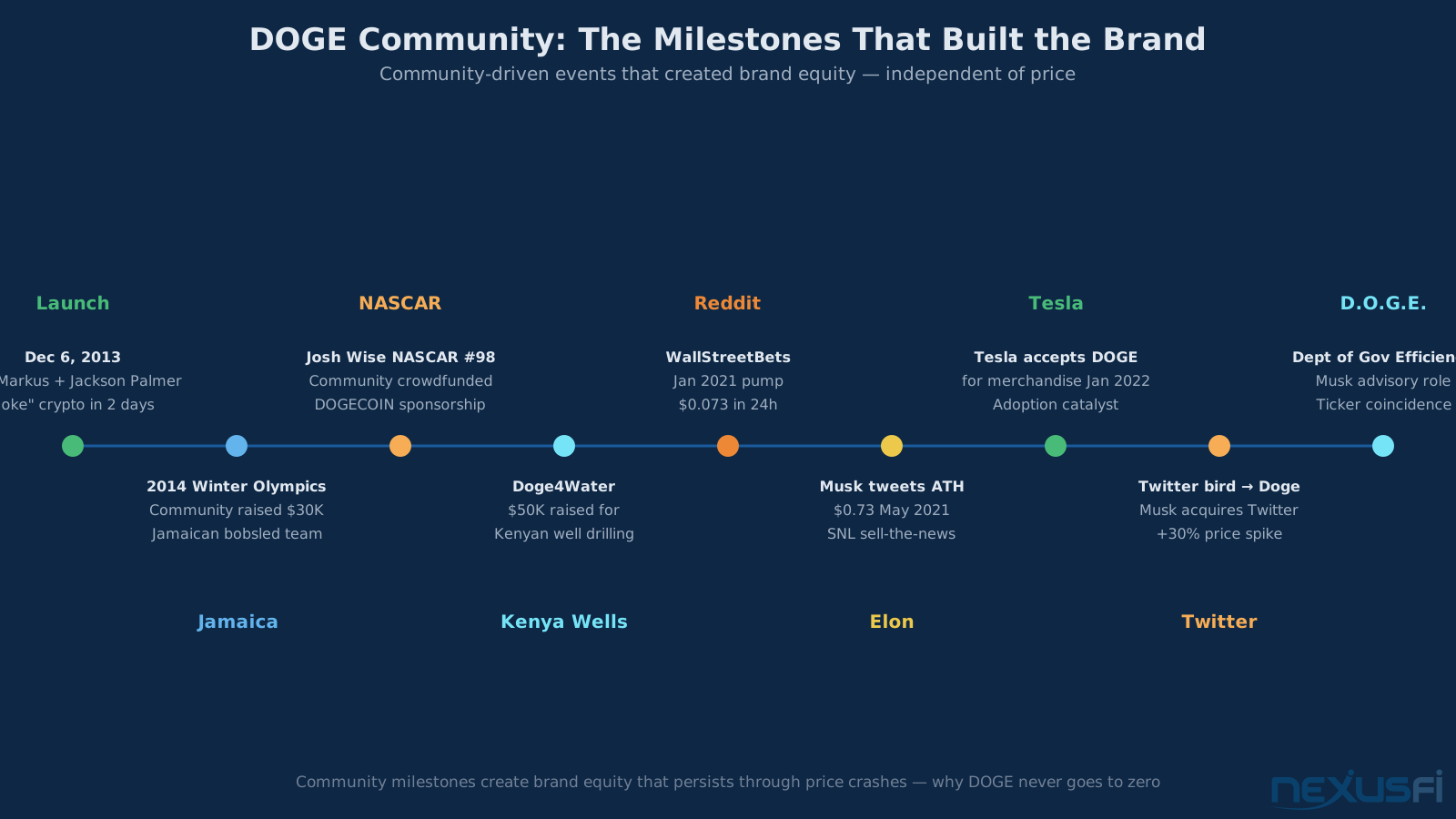
Dogecoin launched on December 6, 2013 as a joke. Two engineers — Billy Markus from IBM and Jackson Palmer from Adobe — built it in two days using the Shiba Inu "Doge" meme. They expected nothing. They had no roadmap, no whitepaper beyond a parody, no serious technical ambitions.
Twelve years later, Dogecoin has a multi-billion dollar market cap, trades on every major exchange, and has driven some of the most dramatic price moves in crypto history. It became Elon Musk's favorite crypto, briefly accepted by Tesla, and spawned a meme coin category worth hundreds of billions. It's the crypto that shouldn't work — but does, repeatedly, in unpredictable ways.
For traders, that's both the appeal and the problem. DOGE moves on sentiment signals that have no fundamental anchor. But understanding those signals gives you real edge: when DOGE runs, it runs hard. When it collapses, it collapses fast. This guide covers the mechanics, the history, the price drivers, and the practical frameworks that have worked for DOGE traders.
What Dogecoin Is: The Joke That Became Real #
Dogecoin is a peer-to-peer digital currency based on Litecoin's codebase, using Scrypt proof-of-work mining. Technically, it's unremarkable. It has 1-minute block times (vs Bitcoin's 10 minutes and Litecoin's 2.5), which makes small transactions confirm faster. It supports merged mining with Litecoin, meaning Litecoin miners can simultaneously mine DOGE for minimal additional cost — which is why DOGE has maintained consistent hash rate and network security despite its memetic origins.
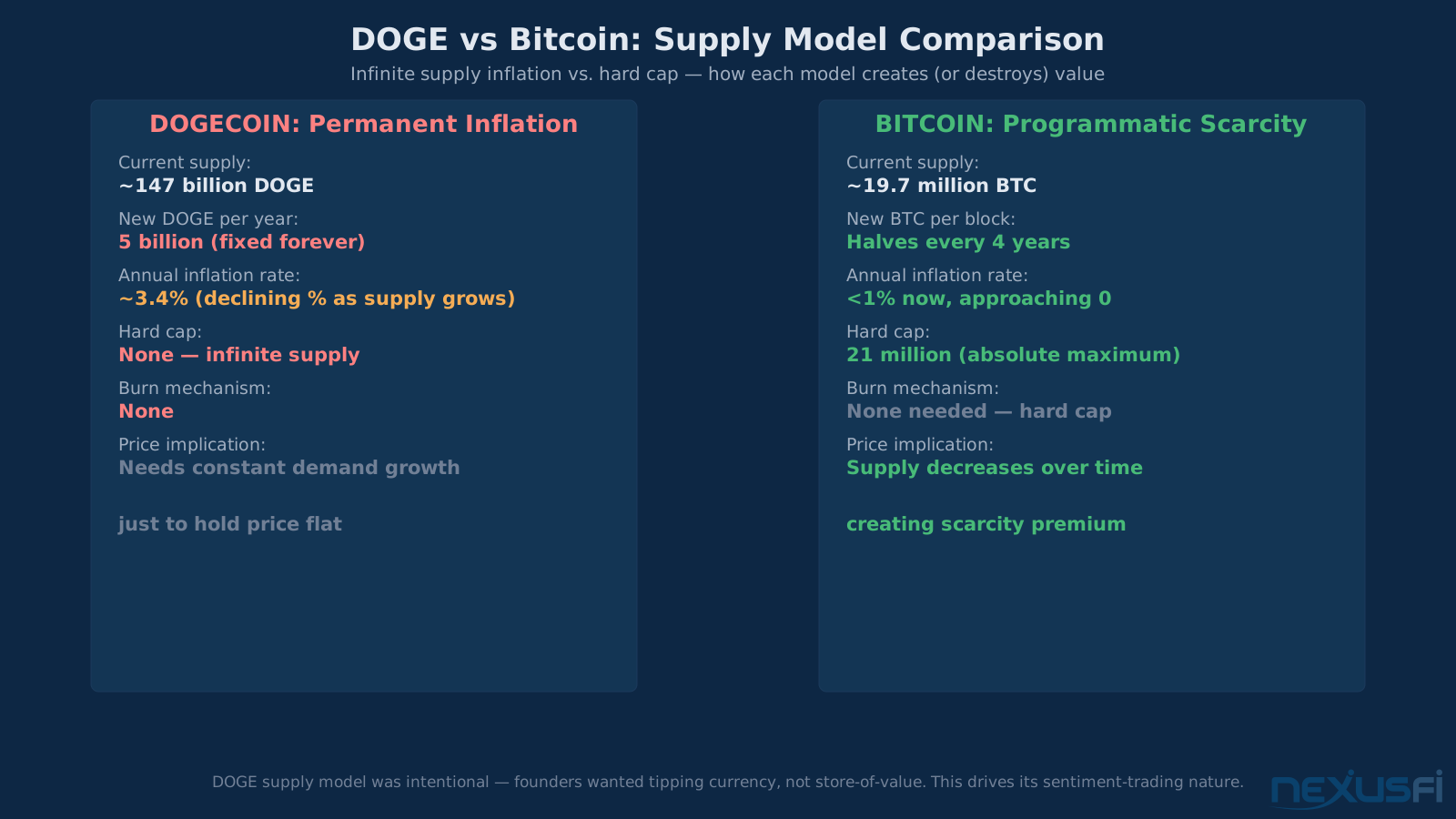
The supply model is what makes DOGE structurally unusual. It originally had a 100 billion coin hard cap, but in February 2014, the developers removed the cap entirely. Today, 5 billion new DOGE are minted annually — a fixed annual inflation in absolute terms that translates to roughly 3-4% annual supply growth as the supply grows. Current circulating supply is approximately 147 billion DOGE. There's no mechanism to reduce this inflation: no burn, no halving, no supply target. It is permanently inflationary by design.
"Be mindful of your potential ROI. Be mindful of supply in relation to current price — and really understand what you're getting into." — @Fluid Fox (Becoming A Better Trader, 2021)
This inflationary structure was originally framed as a feature: "Dogecoin is deflationary in the percentage sense as adoption grows." The founders wanted a coin suitable for tips and micro-transactions, where hoarding wasn't the goal. That philosophy shaped DOGE's community character — generous, low-stakes, accessible — which became its actual competitive advantage.
The Community That Built the Brand
The Dogecoin subreddit (r/dogecoin) became one of the most active crypto communities by 2014. The community collectively raised $30,000 for the Jamaican bobsled team to compete at the 2014 Winter Olympics, sponsored NASCAR driver Josh Wise, and raised $50,000 to build wells in Kenya. These weren't investor speculation plays — they were community members using actual DOGE for actual things. That created genuine goodwill and media coverage that outperformed any marketing budget.
The tipping culture mattered for adoption. Reddit tippers distributed DOGE to users who posted good content. Newcomers to crypto got their first coins for free, learned the mechanics, and often stayed. The gateway function was real. DOGE became many people's first crypto — easy to acquire, cheap per unit, with a community that felt welcoming rather than technical and intimidating.
Price History: The Path from $0.001 to $0.73 #
2013--2017: The Quiet Years
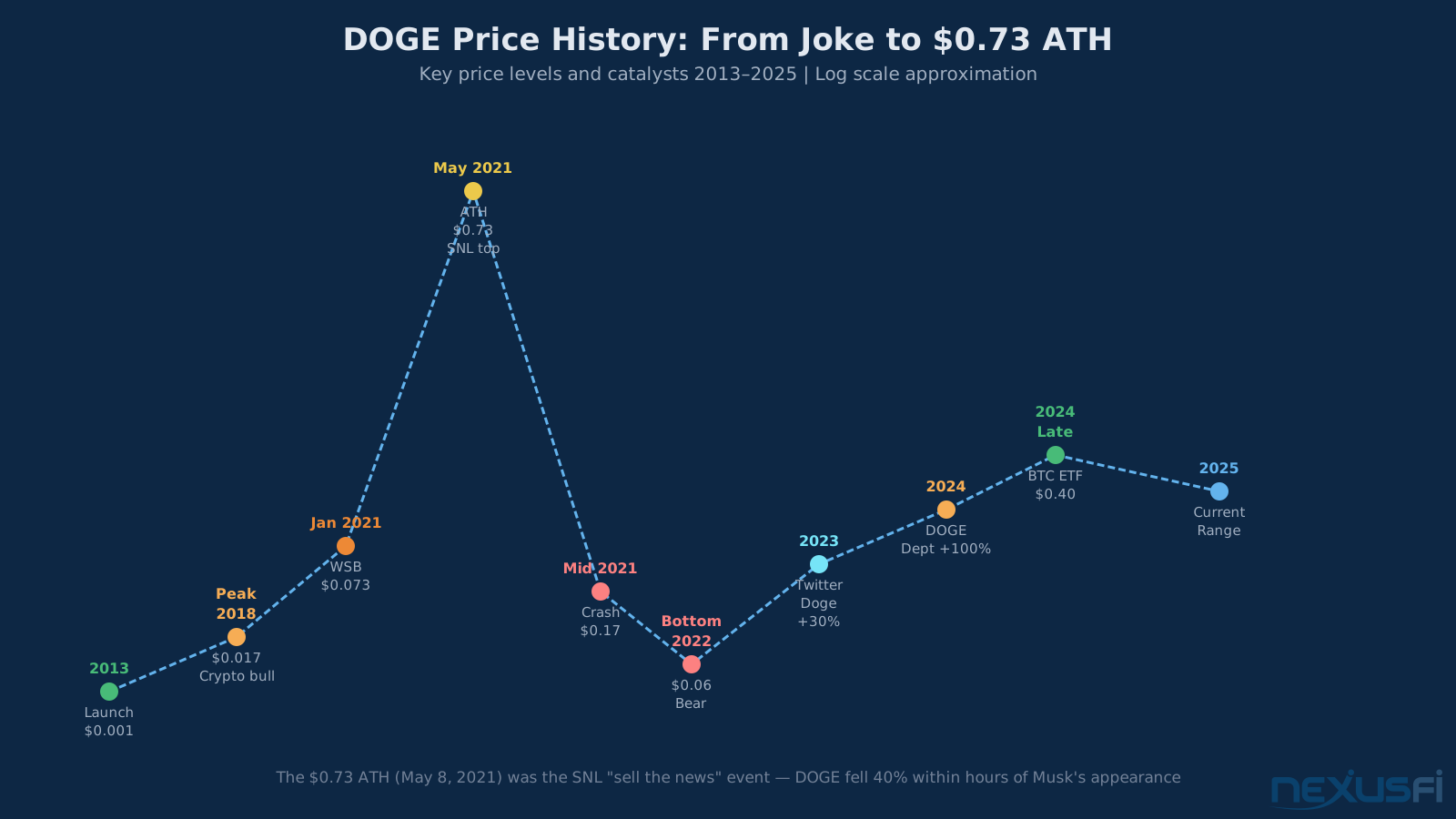
DOGE launched at fractions of a cent. The first notable price move came in December 2013--January 2014, when it briefly hit $0.002 during a crypto bull run. After the 2014 Mt. Gox collapse devastated the broader market, DOGE traded in the $0.0001--$0.001 range for years. Volume was thin, but the community stayed active. DOGE had survived its first bear market — which was more than most 2013-era altcoins managed.
In the 2017 crypto bull run, DOGE finally got attention. It peaked at approximately $0.017--$0.019 in January 2018. That's still 98% below what would come three years later, but it was a 10-20x move from prior levels that converted many casual holders into believers.
2020--2021: The Meme Stock Convergence
The critical period. Two forces converged in early 2021: the WallStreetBets retail trading phenomenon (coming off the GameStop short squeeze) and Elon Musk's growing Twitter presence as a DOGE advocate.
January 28, 2021: WallStreetBets began promoting DOGE after GameStop peaked. The sub had 9 million members and demonstrated it could move markets. DOGE jumped from $0.007 to $0.073 in 24 hours — a 10x move in a single day. That level couldn't hold, but DOGE never went back to pre-January levels. The mainstream had discovered it.
The subsequent months brought Elon Musk into consistent play. Each tweet — "Dogecoin is the people's crypto," "Who let the Doge out," the literal Doge coin emoji — moved DOGE by double-digit percentages. Musk's 50 million Twitter followers were a price-moving force unlike anything crypto had seen.
DOGE peaked at $0.73 on May 8, 2021. The trigger? Musk's appearance on Saturday Night Live, where he called DOGE "a hustle" in character. Traders had front-run the appearance expecting euphoria. The "sell the news" hit hard. DOGE fell 40% within hours of Musk's appearance and never recovered to those levels.
The peak-to-trough from $0.73 was brutal: by mid-2022, DOGE was back below $0.07 — a 90% drawdown in fourteen months. That's not unusual for meme assets in bear markets, but it's a useful calibration: DOGE can lose 90% of its value from a bubble peak and still exist, trade with volume, and recover partially. The community doesn't die with the price.
2022--2025: Elon, DOGE Department, and Bitcoin Correlation
After the 2021 peak, DOGE traded as a high-beta Bitcoin proxy. When BTC moved, DOGE moved more. The specific Musk trigger cycles continued: Twitter's blue bird logo was briefly replaced with Doge, DOGE spiked 30% in hours. Tesla accepted DOGE for merchandise purchases (announced January 2022). SpaceX's DOGE-1 lunar mission (first commercial lunar mission paid entirely in DOGE) kept the brand alive.
The DOGE Department of Government Efficiency (DOGE), Musk's advisory role under the Trump administration beginning in 2025, created one of the stranger branding coincidences in financial history. The government department's abbreviation matched the crypto ticker. DOGE the crypto saw trading volume spikes around DOGE the department's news cycles, though the connection was obviously superficial. Traders still played it.
The Elon Musk Effect: How One Account Moves Markets #
No asset in crypto history has been as consistently price-sensitive to a single individual's social media activity as DOGE is to Elon Musk. Understanding this relationship is essential for any DOGE position.
The Tweet Playbook
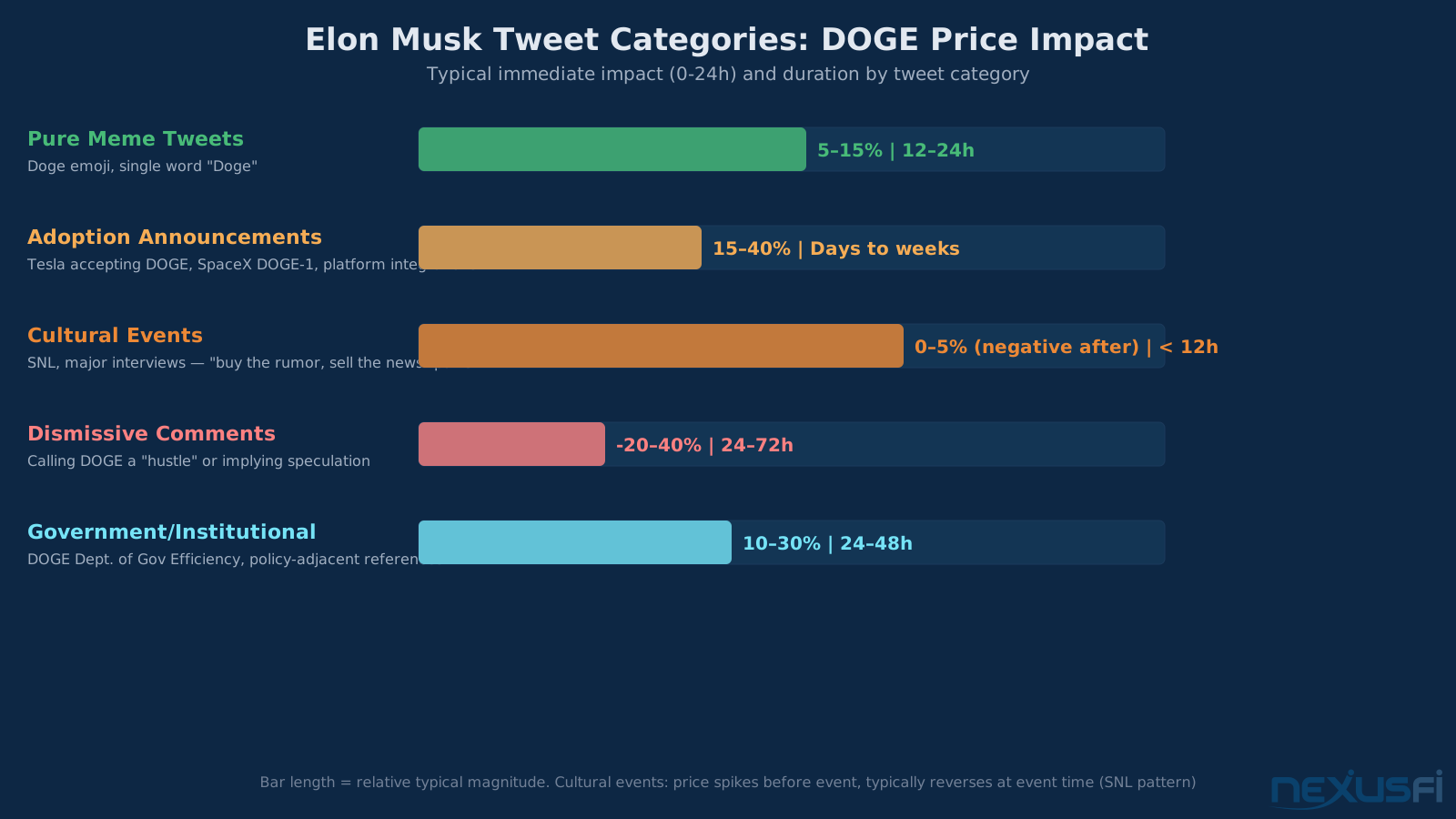
Musk's DOGE tweets fall into predictable categories with predictable market responses:
Pure meme tweets (Doge emoji, single-word "Doge"): Typically 5--15% price moves within the hour. Duration: 12--24 hours before reversal to prior support. These are the most frequent and easiest to identify — no fundamental content, pure attention signal.
Adoption announcements (Tesla accepting DOGE, SpaceX DOGE-1): 15--40% moves on announcement, sustained at 5--15% premium for weeks if the news is credible and verifiable. These are the high-quality catalysts that attract non-meme-coin traders.
Cultural events (SNL, major interviews where DOGE is mentioned): Front-run by market makers 24--48 hours pre-event. Sell-the-news at event time is the dominant pattern. The SNL $0.73 ATH is the template: maximum price directly before the mainstream event, immediate reversal after.
Dismissive tweets (calling DOGE a "hustle," implying it's speculative): Rare but severe. These create sharp 20--40% drops because the same audience that buys on positive Musk sentiment panics on negative signals.
The Risk of This Dependency
The Musk correlation is a double-edged position factor. It creates entry points (buy after non-Musk-related DOGE selloffs that have pulled price far below Musk-sentiment support), but it also creates tail risks that no chart pattern predicts: Musk could publicly distance himself from DOGE, Musk's credibility could deteriorate, or regulatory action could constrain his social media market-moving activity.
In 2022, a class action lawsuit alleged Musk manipulated DOGE through his tweets. The case was dismissed, but it illustrated the legal scrutiny around this relationship. Trading DOGE specifically around Musk trigger cycles requires understanding that this driver is both high-return and legally ambiguous.
Technical Fundamentals: What's Under the Hood #
Scrypt Mining and Merge Mining
DOGE uses Scrypt proof-of-work, the same algorithm as Litecoin. This was originally a design choice to make ASIC-resistant mining more accessible — Scrypt is more memory-intensive than Bitcoin's SHA-256, which slows specialized hardware development.
In 2014, DOGE implemented auxiliary proof-of-work (AuxPoW), enabling merged mining with Litecoin. This means Litecoin miners can include DOGE block headers in their Litecoin blocks at basically no additional cost. The result: DOGE's hash rate is effectively subsidized by Litecoin's mining economy. DOGE has never been vulnerable to a 51% attack since merge mining implementation — a non-trivial security feature for what is otherwise technically simple infrastructure.
The 1-minute block time creates faster confirmations than Bitcoin (10 minutes) or Litecoin (2.5 minutes). For small payments and tips, this matters. For traders, it's a non-factor — settlement times for exchange-traded DOGE positions are governed by exchange infrastructure, not blockchain block times.
The Supply Math
5 billion new DOGE per year. Current supply ~147 billion. Annual inflation rate: ~3.4%. Over time, this percentage declines as the denominator grows, but in absolute terms, the supply grows forever. There's no scarcity narrative for DOGE — and yet the price has proven it doesn't need one. Demand driven by sentiment can outrun supply inflation, at least in bull cycles.
The comparison to Bitcoin's 21 million cap is often made as a criticism. But Dogecoin's founders never claimed scarcity as a value driver. The permanent inflation was the point: it keeps DOGE circulating rather than being hoarded, and it keeps transaction fees low since miners don't need fee revenue to survive.
What Drives DOGE Price: Ranked Factors #
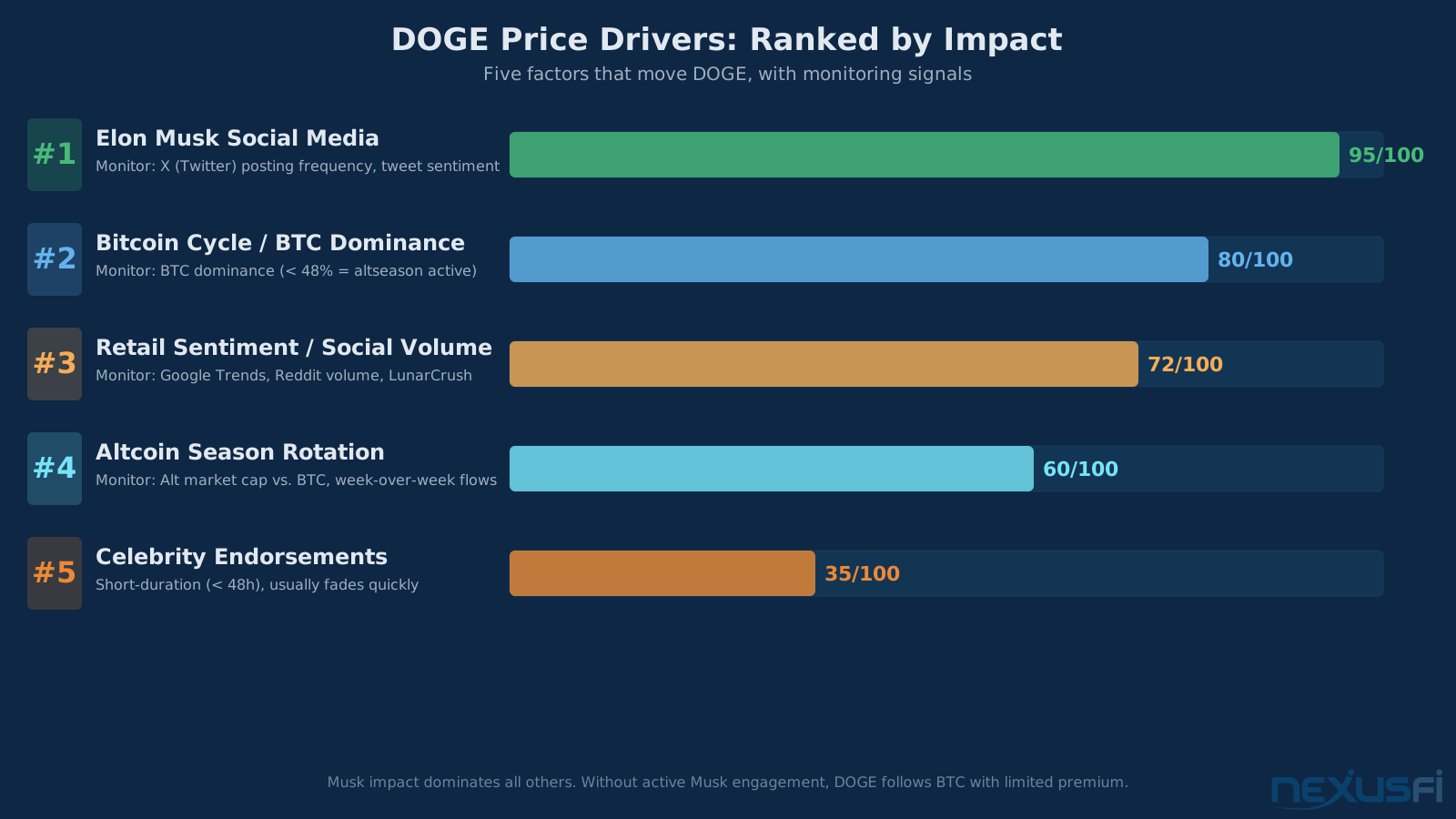
1. Elon Musk's Social Media Activity (Dominant)
Nothing else comes close. Musk's Twitter (now X) posts generate more immediate price movement per event than any fundamental factor. Monitor his posting frequency around DOGE topics as a leading sentiment indicator. Extended silence from Musk during DOGE rallies is often a warning signal — the rally is running on fumes.
2. Bitcoin Cycle Alignment (High Impact)
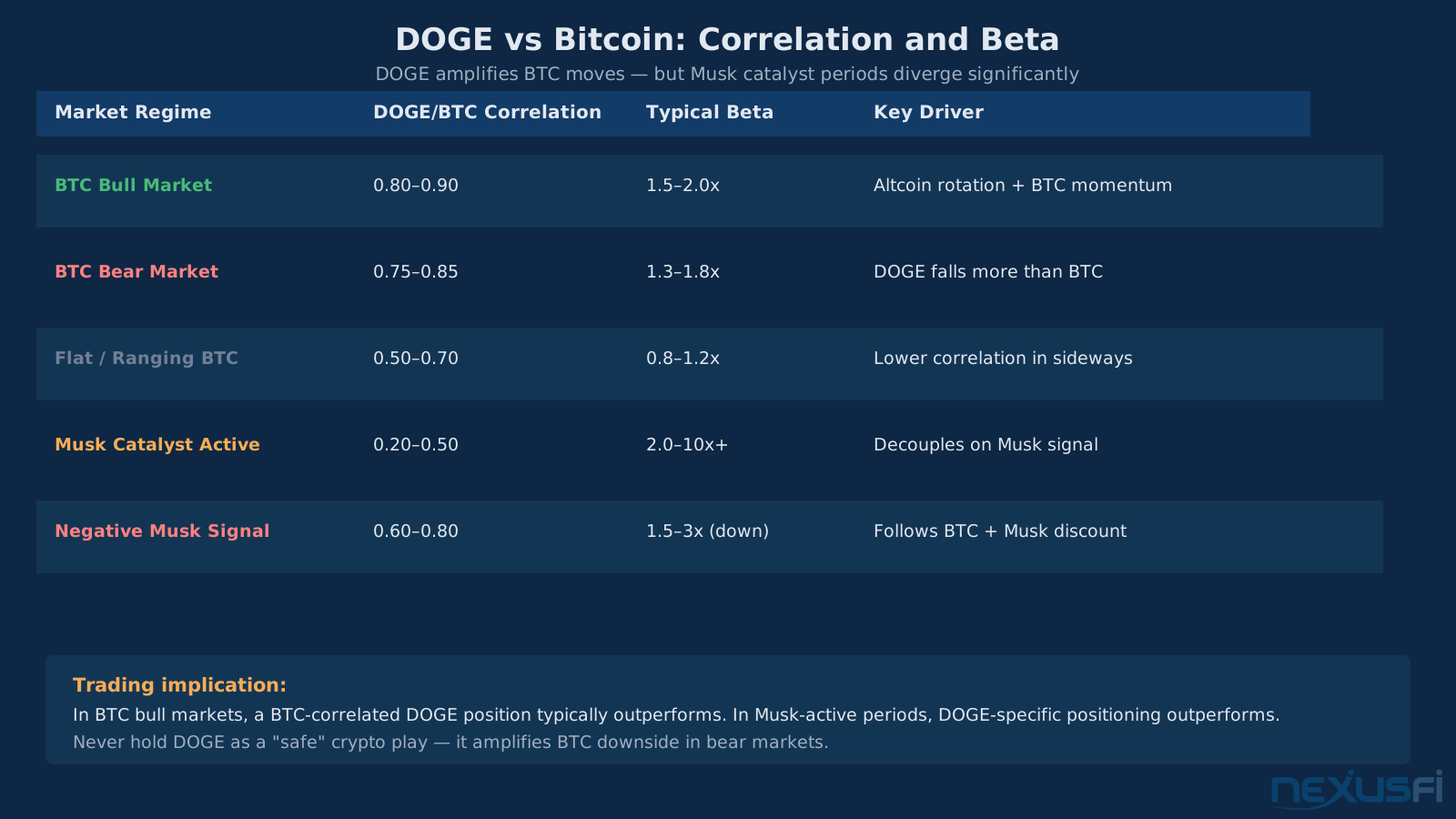
DOGE correlates with BTC at approximately 0.75--0.85 during major trend moves. When BTC enters a bull cycle, DOGE participates — typically with more leverage (1.5--2x BTC's percentage moves). When BTC sells off, DOGE sells off more. You cannot analyze DOGE without a BTC view.
The exception is Musk-driven moves, which can happen in any BTC environment. A bear market DOGE pump on Musk trigger is real but typically shorter-duration — the structural headwind of a broader crypto selloff absorbs the Musk premium within days.
3. Retail Sentiment and Social Media Volume (High Impact)
DOGE is the most retail-driven large-cap crypto. NexusFi member @Fluid Fox tracked this pattern real-time during the 2021 cycle: "Altcoin dominance is 60%... This is because it's alt season now. Altcoins 'decouple' from BTC during alt season." (Becoming A Better Trader, May 2021) WallStreetBets, Reddit, TikTok, Twitter trending — these are real price drivers. Tools like LunarCrush, Santiment social volume metrics, and Google Trends for "Dogecoin" give early signals for retail-driven accumulation phases.
When "Dogecoin" appears in Google Trends top searches globally, price is usually already moving. The early signal is subreddit subscriber growth rate (r/dogecoin) and social media volume spikes before mainstream search picks up.
4. Altcoin Season Dynamics (Medium Impact)
DOGE participates in altcoin seasons — periods where capital rotates from Bitcoin into smaller-cap assets. NexusFi member @Fluid Fox observed during the 2021 cycle: "alt-coin rallies happen after BTC has made a significant parabolic move higher, but during a retracement. The theory is profits are taken at BTC's top and re-allocated to the smaller cap coins." (Becoming A Better Trader, 2021) DOGE is consistently one of the primary beneficiaries of this rotation because of its brand recognition — retail capital entering altcoin season often defaults to the most recognizable names.
5. Celebrity and Cultural Endorsements (Variable)
Beyond Musk, other celebrity endorsements have moved DOGE: Snoop Dogg, Mark Cuban, Gene Simmons have all publicly supported it. These typically create 5--15% moves that fade within 48 hours unless accompanied by specific adoption catalysts.
How to Trade DOGE: Instruments and Approach #
Spot Trading
DOGE trades on virtually every major exchange: Binance, Coinbase, Kraken, OKX, Bybit, Robinhood. Liquidity is deep for a meme coin — DOGE consistently ranks in the top 20 crypto by daily volume. Bid-ask spreads on major pairs (DOGE/USDT, DOGE/USD) are tight. This makes DOGE one of the few meme assets where slippage is rarely a concern for retail-sized positions.
Perpetual Futures
DOGE perpetual swaps trade on Binance (up to 20x leverage), Bybit (up to 25x), OKX, and Bitget. The leverage limits are lower than major assets (BTC goes to 125x on Binance), which is a design choice reflecting higher volatility. Funding rates on DOGE perps are worth watching: extended positive funding (>0.05% per 8 hours) signals overleveraged longs and precedes corrections. The 2021 rally saw funding rates exceed 0.3% per 8 hours — an annualized 270%+ cost to hold a leveraged long position, which creates eventual capitulation pressure.
No Institutional Products
Unlike Bitcoin and Ethereum, DOGE has no CME futures. There are no spot ETF products (as of 2025). Some ETF providers have filed for DOGE ETFs, but approval is pending. This means DOGE lacks the institutional demand channel that drove BTC's 2024 ETF-linked rally — but it also means any future ETF approval would be a fresh trigger.
Entry and Exit Timing
DOGE is not a hold-and-forget asset. Its inflationary supply means long-term holders face permanent dilution while waiting for the next sentiment cycle. The optimal DOGE framework is active positioning: enter on Musk trigger setups or altcoin season momentum signals, exit before the cycle turns.
Specific timing patterns that have worked:
- Pre-Musk event positioning: Enter 24--48 hours before major events where Musk is scheduled to appear (SpaceX launches, product announcements, major interviews). Exit at event start or 10% from the event high, whichever comes first.
- Post-crash recovery entry: After 50%+ corrections from local highs, DOGE often forms multi-week bases. Entries at confirmed higher lows with volume have historically preceded recovery moves of 30--80%.
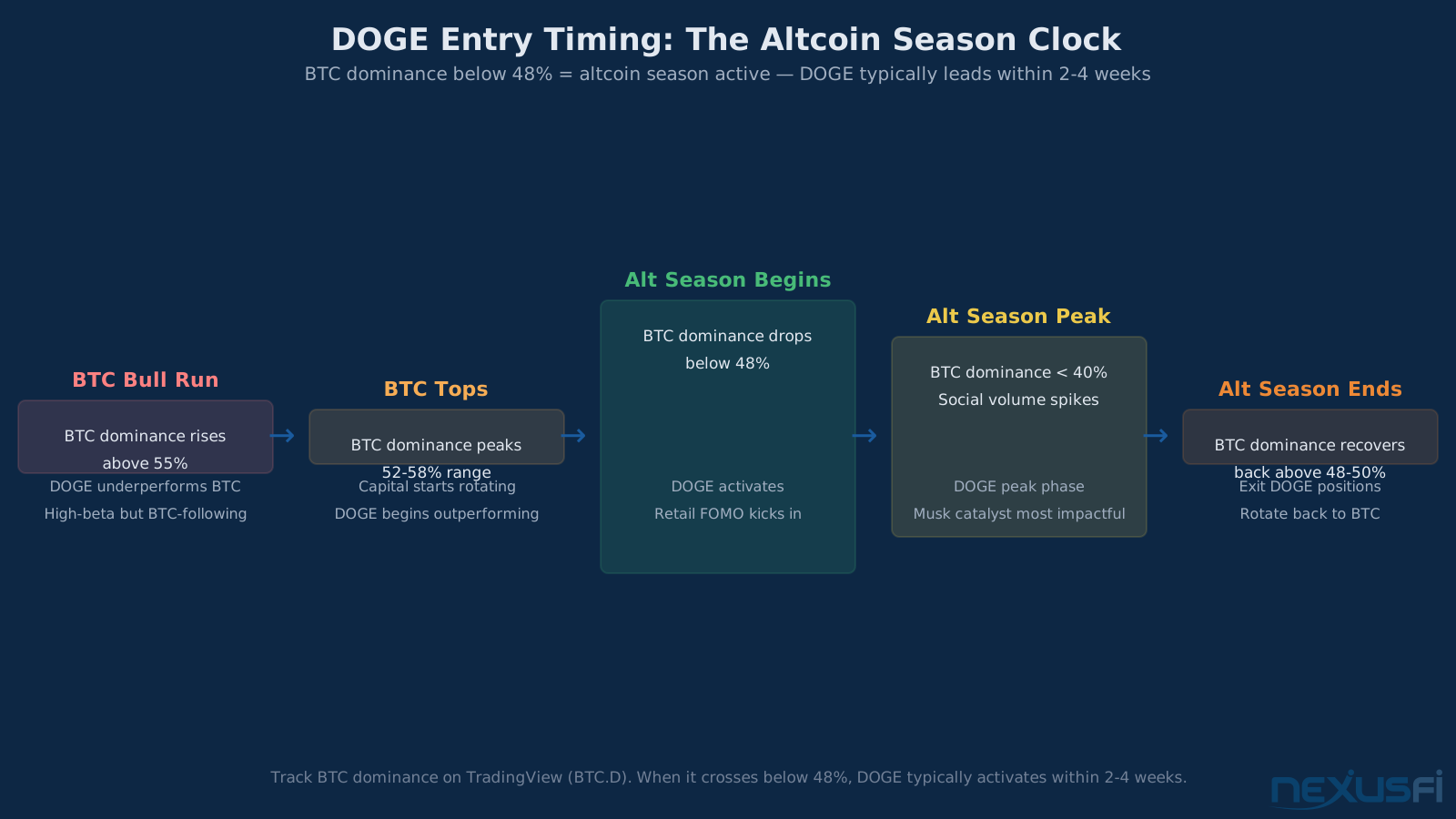
- Altcoin season rotation: Monitor BTC dominance (available on TradingView). When BTC dominance drops below 48% in a bull market, altcoin season is in effect. DOGE typically activates within 2--4 weeks of this signal.
Risk Factors: Where DOGE Theses Break Down #
Permanent Inflation
5 billion new DOGE every year means holders face perpetual dilution. In a bull market with demand growth outpacing supply, this doesn't matter. In a bear market or flat period, the supply growth is a constant headwind on price recovery. DOGE needs sustained demand increases just to hold price flat.
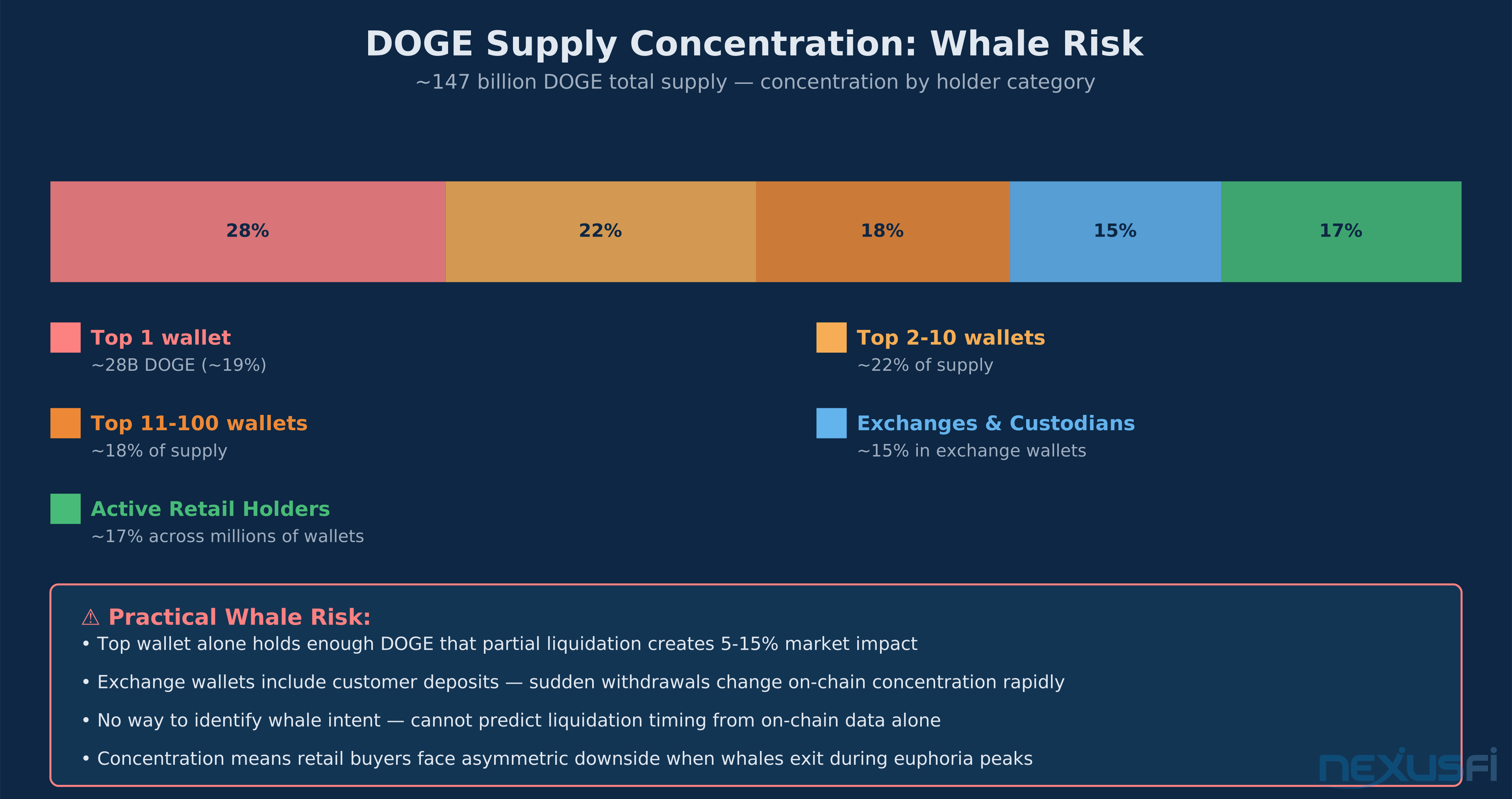
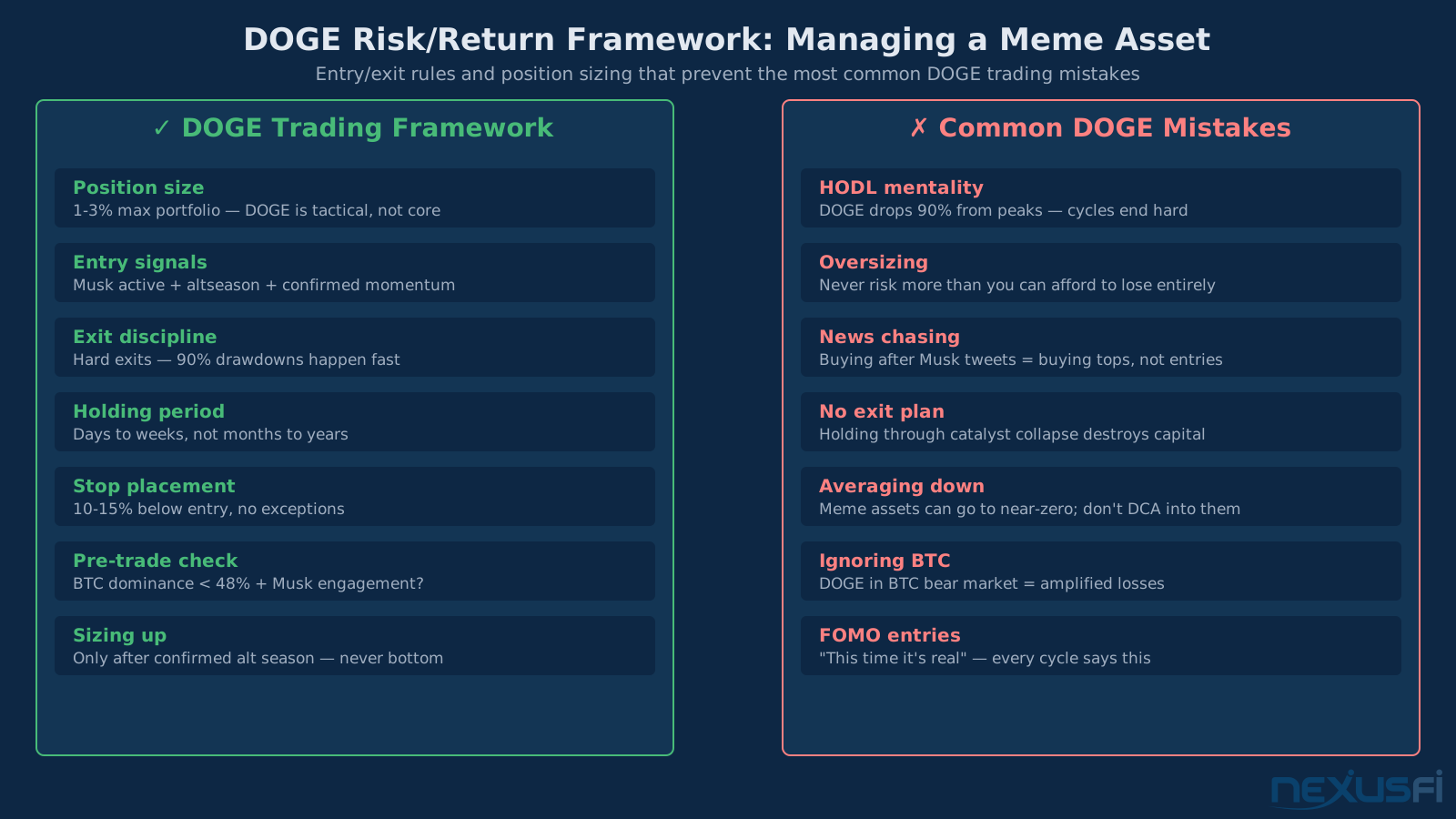
DOGE carries risks that no technical analysis can mitigate: whale concentration (top 100 wallets hold ~65-70% of supply), single-point Musk dependency, and permanent 5B/year inflation. Size positions at 1-3% of portfolio maximum. These aren't standard crypto risks — they're compounded meme coin risks. If Musk publicly distances himself from DOGE, the primary price driver disappears immediately.
Supply Concentration
The top 100 DOGE addresses hold approximately 65--70% of the total supply. The largest single wallet holds around 28 billion DOGE — roughly 19% of total supply. This concentration means any large holder liquidation creates asymmetric downward pressure. Retail buyers face whale risk that no amount of technical analysis can predict or hedge.
NexusFi member @mscholder, writing during the 2021 peak cycle, articulated the practical approach: "Accept that it could be a bubble and use only a very small percent of your portfolio (1, 2 or 3%) and prepare to lose most or all of it." (Cryptocurrencies 101, 2021) That remains the most defensible position sizing framework for DOGE.
Single-Point Dependency on Musk
If Musk's relationship with DOGE ends — whether through legal constraint, changed priorities, or reputation damage — the primary price trigger disappears. DOGE without Musk is structurally similar to any other Litecoin fork, which trade at fractions of a cent. The premium assigned to DOGE above comparable technical alternatives is almost entirely Musk-brand premium.
No Utility Floor
Unlike Bitcoin (digital gold narrative), Ethereum (smart contract platform), or even BNB (exchange utility), DOGE has no utility that would support price if sentiment collapsed. There's no DeFi ecosystem, no smart contracts, no burn mechanism, no institutional use case. When the narrative breaks, there's no fundamental floor — as the 90% crash from $0.73 to below $0.07 demonstrated.
NexusFi member @bobwest captured this dynamic: "The cruelty of these market bubbles is that people hope that they will pull them up out of their financial problems, and they don't." (My 2 cents..., 2018) He was writing about broader crypto, but it applies to DOGE with particular force — the retail hope concentration in DOGE is higher than in any other large-cap asset.
Regulatory Tail Risk
The Musk-tweet price manipulation lawsuit was dismissed, but regulatory attitudes toward market-moving social media activity are evolving. SEC or CFTC action that constrains influencer-driven crypto promotion would disproportionately impact DOGE versus assets with stronger fundamentals. This risk is currently underpriced by most DOGE holders.
DOGE as Gateway Crypto #
DOGE's most significant underappreciated role is as a retail onboarding mechanism for crypto broadly. Surveys of crypto users consistently show DOGE as one of the most common first assets acquired. The reasons are structural:
- Low unit price: A DOGE at $0.10 is accessible. Psychologically, owning "1,000 DOGE" feels better than "0.0001 BTC" -- even if the dollar value is identical.
- Brand recognition: The Shiba Inu meme has global recognition across demographics that would never otherwise engage with crypto concepts.
- Community accessibility: The DOGE community skews younger, more casual, and more welcoming than Bitcoin maximalist communities. New traders encounter less gatekeeping.
- Low stakes: The unit price makes $100 feel like a large DOGE allocation, creating comfort with crypto mechanics without major capital at risk.
This gateway function has macro implications: when retail crypto interest spikes (during bull markets or major media events), DOGE often benefits disproportionately because new crypto buyers default to familiar names. The brand value of DOGE accumulates over cycles even when the price doesn't.
Three DOGE Trading Setups That Have Worked #
Setup 1: Pre-Event Musk Trigger
Logic: Musk's scheduled appearances at major events (product launches, earnings calls, TV appearances) predictably front-run DOGE buying. Traders position before the event expecting a Musk DOGE mention.
Entry: 48--72 hours before scheduled Musk events in contexts where DOGE could be discussed
Confirmation: DOGE already showing positive momentum relative to BTC (DOGE/BTC ratio rising), no major negative crypto news
Target: Event date — exit before Musk speaks, not after. The SNL $0.73 ATH is the cautionary reference.
Stop: Below 10% from entry if no pre-event momentum develops
Notes: Works poorly when BTC is in a sharp bear trend. Don't fight structural crypto selloffs with a DOGE Musk play.
Setup 2: Post-Crash Recovery at 50--65% Fibonacci Retracement
Logic: DOGE's community doesn't give up. After major crashes, it consistently forms bases at meaningful retracement levels rather than going to zero.
Entry: After 50%+ correction from the cycle high, look for volume stabilization and 2+ weeks of consolidation above a prior support level
Confirmation: BTC stabilizing or recovering, DOGE/BTC ratio stopping its decline, social media volume recovering without price following (accumulation signal)
Target: 38.2% retracement recovery from the drop — approximately 30--50% from bottom entry
Stop: Break below the base low with volume
Notes: This is a medium-term trade (weeks to months). Requires patience to let the base form. Don't rush entries in falling knives.
Setup 3: Altcoin Season Momentum
Logic: When capital rotates from BTC into altcoins, DOGE's brand recognition makes it a default retail destination.
Entry: BTC dominance declining below 48%, DOGE showing relative strength vs BTC for 5+ consecutive days, Reddit/Twitter social volume spiking
Confirmation: Google Trends "Dogecoin" showing upward inflection, DOGE outperforming the broader altcoin index
Target: 50% gain from entry, or until BTC dominance starts recovering (altcoin season ending signal)
Stop: BTC dominance reversal to the upside with DOGE underperforming BTC for 3 consecutive days
Notes: This is the highest-probability DOGE setup because it aligns crypto market structure with DOGE's retail appeal. When altcoin season comes and DOGE is primed, it catches fire faster than most.
The Bottom Line on Trading DOGE #
DOGE is exactly what it looks like: a meme asset that has defied every prediction of its death while also delivering catastrophic losses to those who bought at sentiment peaks. The founders quit. Major critics called for its demise in 2014, 2018, and 2022. It's still here, still trading billions per day, still capable of 10x moves in months.
What keeps DOGE alive isn't fundamentals — it's the community, the brand, and Elon Musk. Those three things are harder to kill than any technical or fundamental argument against DOGE. @bobwest observed during the 2021 frenzy: "When the cautioners decide to join in, and the nay-sayers are converted to enthusiasts, it is more likely that the original negative forecast will become true. But I think it's very hard to use this for any kind of timing." (Mother of All Crashes, 2021) He was right — DOGE timing is hard, but not impossible.
The framework that works:
- Never hold through cycle peaks. DOGE doesn't have soft tops. The 90% crash from $0.73 is the template.
- Size appropriately. 1--3% of portfolio maximum. DOGE is a tactical trade, not a core holding.
- Monitor Musk. If Musk is publicly engaged with DOGE, the trigger is alive. If he's been silent for months, the premium is deflating.
- Use BTC dominance as the altcoin season clock. When the clock is running, DOGE participates. When it's stopped, move to BTC-correlated plays instead.
Four rules for trading DOGE: (1) Never hold through cycle peaks — 90% drawdowns from ATH happen fast and without warning. (2) Size at 1-3% portfolio max — it's a tactical trade, not a core position. (3) Watch Musk first, BTC second, everything else third. (4) Use BTC dominance (BTC.D on TradingView) as the altcoin season clock — when it drops below 48%, DOGE activates; when it recovers above 50%, exit.
Trading DOGE as though it's Bitcoin is a losing strategy. Trading DOGE as the sentiment proxy that it actually is — with appropriate sizing, clear catalysts, and hard exits — has produced significant returns at each cycle peak. The two are completely different approaches. One destroys capital, the other builds it.
Knowledge Map
Go Deeper
Build on this knowledgeReferences This Article
Articles that build on this topicCitations
- — My 2 cents... (2018) 👍 3“Dogecoin, a cryptocurrency created as a joke about a dog meme, has a market cap above $2 billion. Makes you just want to get in right now, before things can go up any more and leave you behind.”
- — My 2 cents... (2018) 👍 6“The cruelty of these market bubbles is that people hope that they will pull them up out of their financial problems, and they don't. You can sometimes tell it's a bubble when these hopes start to surface.”
- — Becoming A Better Trader (2021) 👍 7“Alt-coin rallies happen after BTC has made a substantial parabolic move higher, but during a retracement. The theory is profits are taken at BTC's top and re-allocated to the smaller cap coins.”
- — Becoming A Better Trader (2021) 👍 9“I bought some more alt-coins this morning and will continue buying them as long as the market is deeply red. I'm willing to take a lot of heat to be part of the next alt-coin rally.. provided it happens.”
- — Michael Burry warns the Mother of All Crashes is coming (2021) 👍 6“When the cautioners decide to join in, and the nay-sayers are converted to enthusiasts, it is more likely that the original negative forecast will become true. But I think it's very hard to use this for any kind of timing.”
- — Cryptocurrencies 101 (2021) 👍 7“Accept that it could be a bubble and use only a very small percent of your portfolio (1, 2 or 3%) and prepare to lose most or all of it.”
- — Becoming A Better Trader (2021) 👍 4“I do feel like alt-season is very close. Going by the BTC dominance chart, it's easy to notice that currently there is less volatility in BTC's dominance. My exit plans account for two possibilities: Crypto isn't here to stay, and crypto is here to stay. I'm prepared for both.”
- — Becoming A Better Trader (2021) 👍 3“Altcoin dominance is 60% and climbing. This is because it's alt season now. Altcoins 'decouple' from BTC during alt season. Alts are primed for an explosive move higher.”
- — Becoming A Better Trader (2021) 👍 5“Be mindful of your potential ROI. Be mindful of supply in relation to current price (sounds obvious but you may find yourself wanting to buy BTC or ETH at ATH) and really understand what you're getting into.”