



Cryptocurrency Trading Fundamentals
Overview #
Crypto isn't another futures market wearing different clothes. It's a completely different animal — 24/7 trading, 80%+ drawdowns that are considered normal, exchanges that can vanish overnight, and a global derivatives market where the tail wags the dog. If you're approaching this from a traditional futures background, your edge in reading markets transfers. Your assumptions about market structure, counterparty safety, and volatility regimes mostly don't.
The digital asset environment has matured substantially since Bitcoin futures launched on CME in December 2017, but it remains structurally different from anything you've traded. You can access the same Bitcoin through a CME futures contract (regulated, cash-settled, 23-hour trading), a spot Bitcoin ETF like IBIT (trades like a stock, no expiry), a perpetual swap on Binance (24/7, funding rate mechanics), or self-custodied spot on Coinbase. Same underlying asset. Completely different risk profiles, mechanics, and regulatory frameworks.
This article covers what you need to know to trade crypto competently: the instrument environment, market structure, key metrics, risk framework, and practical entry points. It assumes you understand futures contracts, margin mechanics, and basic risk management from traditional markets. If you can trade ES, you can understand CME Bitcoin futures — the mechanics are nearly identical — see Futures Contracts for a complete primer. The differences are in the market structure around them.

What Cryptocurrency Is #
Bitcoin launched in January 2009 as a peer-to-peer electronic cash system — no central authority, no intermediaries, transactions validated by a distributed network of computers running consensus software. The underlying technology, blockchain, is a distributed ledger where every transaction is recorded in chronological blocks, cryptographically linked so past records can't be altered.
For traders, the technology matters less than the economic properties: fixed supply (Bitcoin caps at 21 million coins), no central bank to inflate it, global accessibility, and permissionless transfer. These properties drove speculative demand and eventually institutional adoption. By 2024, the SEC approved spot Bitcoin ETFs; by 2025, Bitcoin futures open interest on CME routinely exceeded $9 billion notional.
The asset class: Thousands of cryptocurrencies exist, but BTC and ETH account for 55-65% of total market cap and are the only two with meaningful regulated US derivatives — CME futures, options, and spot ETFs. Everything else trades primarily on unregulated offshore exchanges.
Crypto Market Structure #
The 24/7 Problem
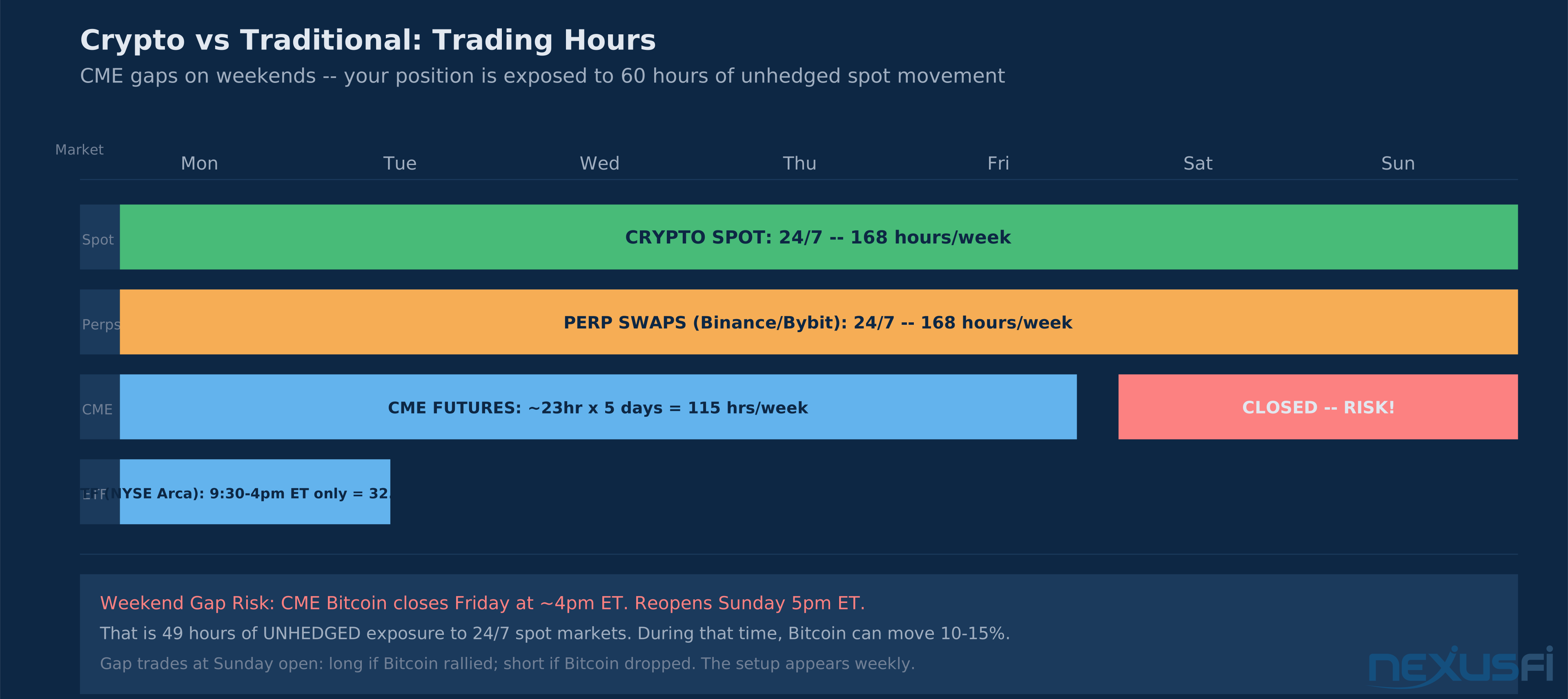
Traditional futures markets have defined sessions. ES trades 23 hours on weekdays. Crude oil has settlement windows. Even FX has weekend gaps that resolve at Sunday open. Crypto never stops.
This creates a risk management problem that traditional traders underestimate.
[1] If you're long CME Bitcoin futures and hold overnight Friday, you're exposed to the full weekend move with no ability to exit until Sunday night.
CME announced 7x24 crypto futures trading starting in 2026 — reducing this gap risk but not eliminating it for ETF and spot-market participants. Even with 7x24 CME trading, the structure will be different: no traditional daily settlement windows, continuous funding dynamics, and the question of how brokers handle margin at 3am Saturday remains unresolved. [2]
Venue Fragmentation
This is the most important structural difference from traditional markets. Bitcoin doesn't trade on one exchange — it trades simultaneously on hundreds of venues with different prices, different liquidity depths, and different regulatory frameworks.
As @Fi analyzed in February 2026: regulated US venues (CME + ETFs) represent roughly 10-15% of total global BTC trading volume. Offshore derivatives — perpetual swaps on Binance, Bybit, OKX, Deribit — dominate at an estimated $50-150B+ per day depending on volatility, versus CME + ETFs running $10-15B/day. [3]
What this means for price action: Overnight and weekend moves in CME futures are driven by offshore perpetual markets, not by US institutional flows. CME's price discovery dominates during US trading hours; offshore perps dominate everything else. You can watch CME order flow all day and still get blindsided by a liquidation cascade that started on Binance at 2am ET.

The venue environment:
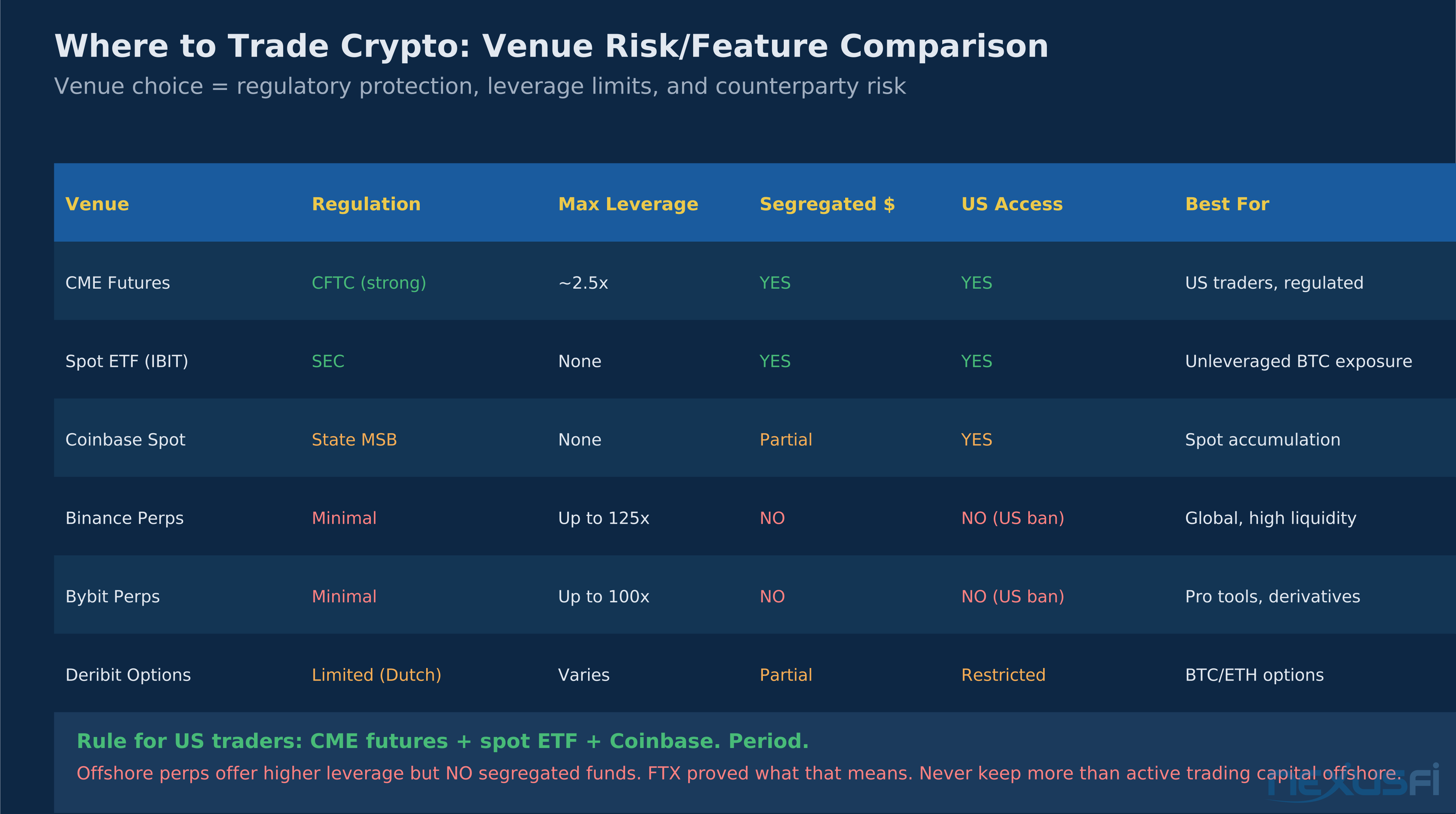
| Venue Type | Examples | Regulatory Status | Key Features |
|---|---|---|---|
| Regulated US Futures | CME (BTC, ETH futures & options) | CFTC regulated | 2x-5x leverage, cash-settled, segregated accounts |
| Spot ETFs | IBIT (BlackRock), ETHA, GBTC | SEC regulated | No leverage, no liquidation mechanics, trades like a stock |
| US Spot Exchanges | Coinbase, Kraken | State-regulated (MSB) | No leverage, actual BTC delivery, custody required |
| Offshore CEXs | Binance, Bybit, OKX | Minimal regulation | Up to 100x leverage, perpetual swaps, no segregated accounts |
| Crypto Options | Deribit | Limited regulation | BTC/ETH options, volatility trading |
Session Dynamics
Even though crypto trades 24/7, not all hours are equal: the US session (09:30-16:00 ET) drives CME price discovery and ETF flows, while Asia and offshore perpetuals dominate overnight and weekend hours.
The Instrument Environment #
CME Futures (The Regulated Baseline)
CME Bitcoin (BTC) and Micro Bitcoin (MBT) futures are the cleanest way to trade crypto from a traditional futures account. Cash-settled against the CME CF Bitcoin Reference Rate, subject to CFTC oversight, with customer funds in segregated accounts.
Contract specs:
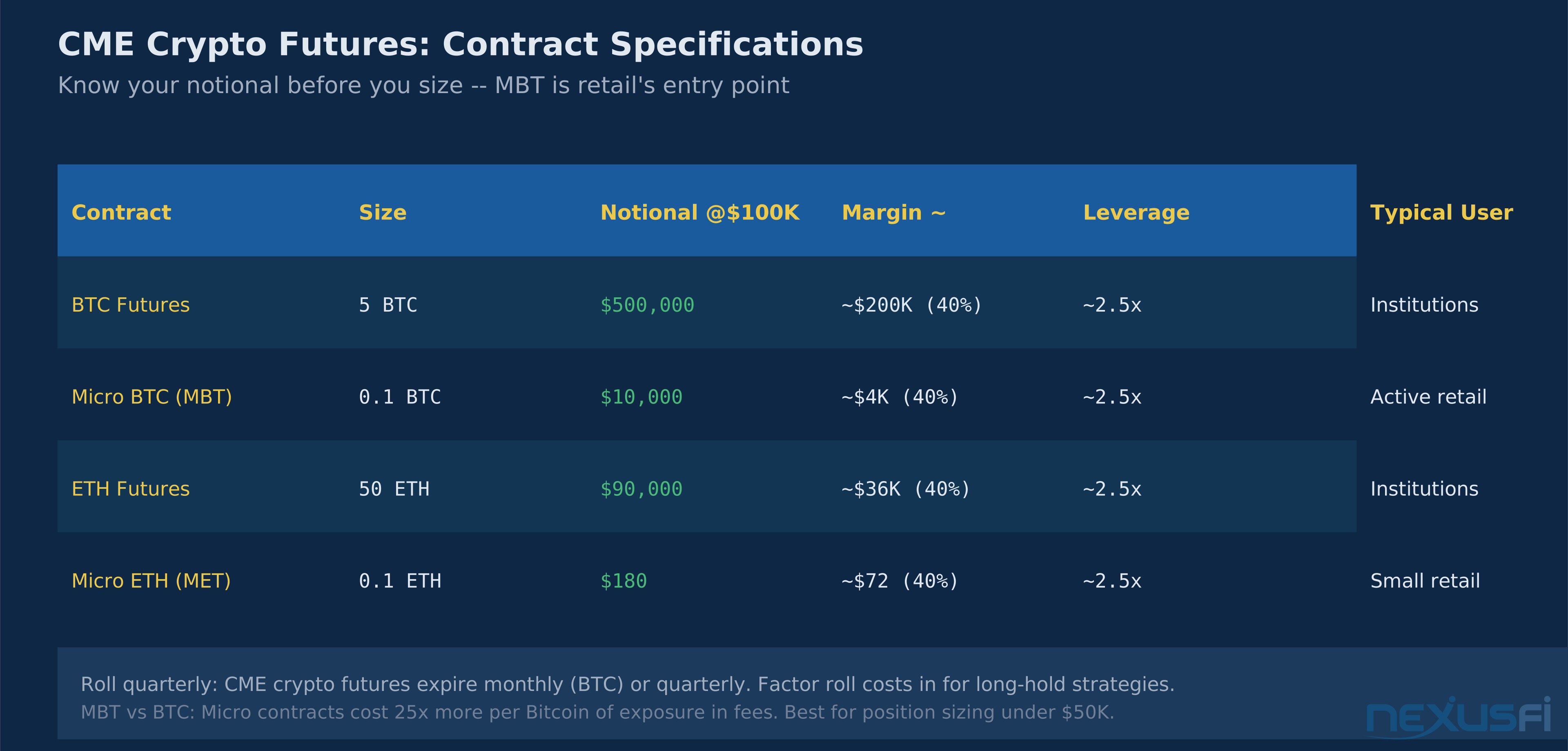
- BTC: 5 coins per contract, ~$500k notional at current prices
- Micro Bitcoin (MBT): 0.1 coin, ~$10k notional
- CME Ether (ETH): 50 ETH per contract
- Micro Ether (MET): 0.1 ETH per contract
As @SMCJB documented when Micro Ether launched: the fee structure makes small contracts expensive relative to full-size — Micro Bitcoin futures cost roughly 25x more per Bitcoin of exposure than standard BTC futures. [4] For most retail traders, Micro contracts are the practical entry point, but the roll costs add up if you're treating them as a long-term hold. [9]
Leverage: CME provides 2-5x effective leverage depending on margin requirements. The CFTC sets initial margins at 40-50% of notional for BTC. You cannot get 10x leverage on CME Bitcoin futures — this is by design.
Spot Bitcoin ETFs (Institutional On-Ramp)
The January 2024 SEC approval of spot Bitcoin ETFs changed the market structure permanently. IBIT (BlackRock) became one of the fastest ETFs to reach $10B AUM in history.
Key mechanics:
- ETFs buy and hold actual Bitcoin in custody (Coinbase Custody for most)
- Creation/redemption by authorized participants keeps price near NAV
- IBIT trades like any equity -- standard equity hours, no leverage, no liquidation
- Combined AUM of all spot BTC ETFs: ~$85.5B as of early 2026 (see Cryptocurrency Futures Data), holding ~6.4% of total BTC supply [3]
For futures traders, ETF flow data is a leading indicator worth monitoring. Net ETF inflows signal institutional accumulation; sustained outflows signal distribution. When institutions are selling ETFs while spot price holds, it means someone else is absorbing supply — that context matters for directional bias.
Perpetual Futures (The Real Crypto Market)
Perpetuals are the dominant crypto derivative — no expiry date, continuous trading, funded by a periodic payment (the funding rate) between longs and shorts. Most crypto trading volume happens here, on venues like Binance, Bybit, and OKX.
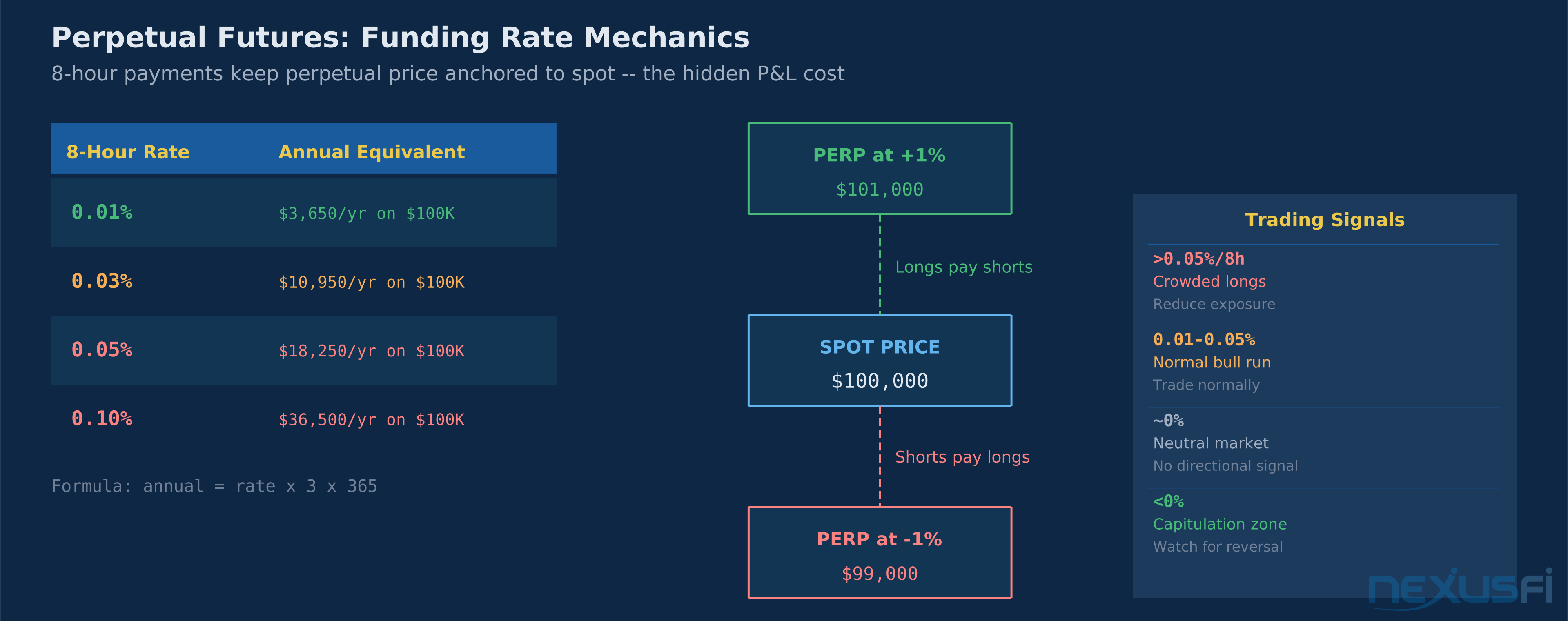
Funding rate mechanics: Every 8 hours (varies by exchange), longs pay shorts or vice versa based on the difference between the perpetual price and spot index. When perps trade above spot, longs pay — this incentivizes selling to close the gap. When perps trade below spot, shorts pay.
Why this matters to traders:
- Extreme positive funding (longs paying 0.1%+ per 8 hours = 100%+ annualized): Historically bullish momentum but unsustainable -- often precedes corrections as positions become expensive to hold
- Extreme negative funding (shorts paying): Can signal capitulation, potential bottoming
- Funding rate is a real P&L component. If you're paying 0.05% every 8 hours, that's 0.15%/day, ~4.5%/month in carry costs regardless of direction
Example: 0.03% per 8 hours = 0.09%/day = 32.85% per year in carry costs for longs
Leverage: Offshore perps offer up to 100-125x leverage with cross-margin or isolated margin modes. At 100x leverage, a 1% adverse move triggers liquidation. Even 10x — often used by sophisticated traders — means a 10% adverse move is terminal.
Liquidation cascades: When leveraged positions hit their liquidation price, exchanges automatically close them at market. This creates reflexive moves — liquidations cause price moves that trigger more liquidations. These cascades can move Bitcoin 10-20% in minutes. They originate on offshore exchanges but immediately reflect in CME futures and ETF prices.
Key Metrics for Crypto Traders #
Market Capitalization and Dominance
Total crypto market cap is the sum of every coin's price times circulating supply. It peaked around $3 trillion in 2021, fell to ~$800B in 2022, and rebounded past $2 trillion in 2024. As a macro signal, total market cap trajectory matters more than individual coin prices for understanding where we are in the cycle.
Bitcoin Dominance is BTC's percentage of total market cap, currently ranging 45-65% depending on cycle phase. A rising dominance reading generally indicates risk-off within crypto — capital flowing from altcoins to Bitcoin. Falling dominance indicates altcoin season — the "risk-on within crypto" phase where smaller coins outperform.
Funding Rates
Covered in the perpetuals section, but worth reiterating as a market signal: aggregate funding rates across all major perpetual exchanges are one of the best sentiment indicators in crypto. Consistently high positive funding signals overleveraged longs — a setup prone to violent correction. Consistently negative funding after a decline signals capitulation and potential reversal.
Track funding rates on CoinGlass or directly on exchange APIs. When BTC perpetual funding across Binance, Bybit, and OKX simultaneously exceeds 0.05% per 8 hours, the long side is crowded.
Fear & Greed Index
The Crypto Fear & Greed Index (Alternative.me) aggregates volatility, market momentum, social media sentiment, dominance, and trading volume into a 0-100 score. Not a timing tool — markets can stay in Extreme Greed for months. But extreme readings (>85 or <15) often align with cycle turning points.
On-Chain Analytics
Bitcoin and Ethereum transactions are publicly visible on the blockchain, creating a unique data source unavailable in traditional markets:
- Exchange inflows/outflows (Glassnode, CryptoQuant): Large BTC inflows signal intent to sell; large outflows signal accumulation into self-custody
On-chain data supplements traditional price analysis. It doesn't replace it. Use it to understand who's selling and at what price, not as entry/exit signals.

Risk Factors Unique to Crypto #
Volatility: Nothing Quite Like It
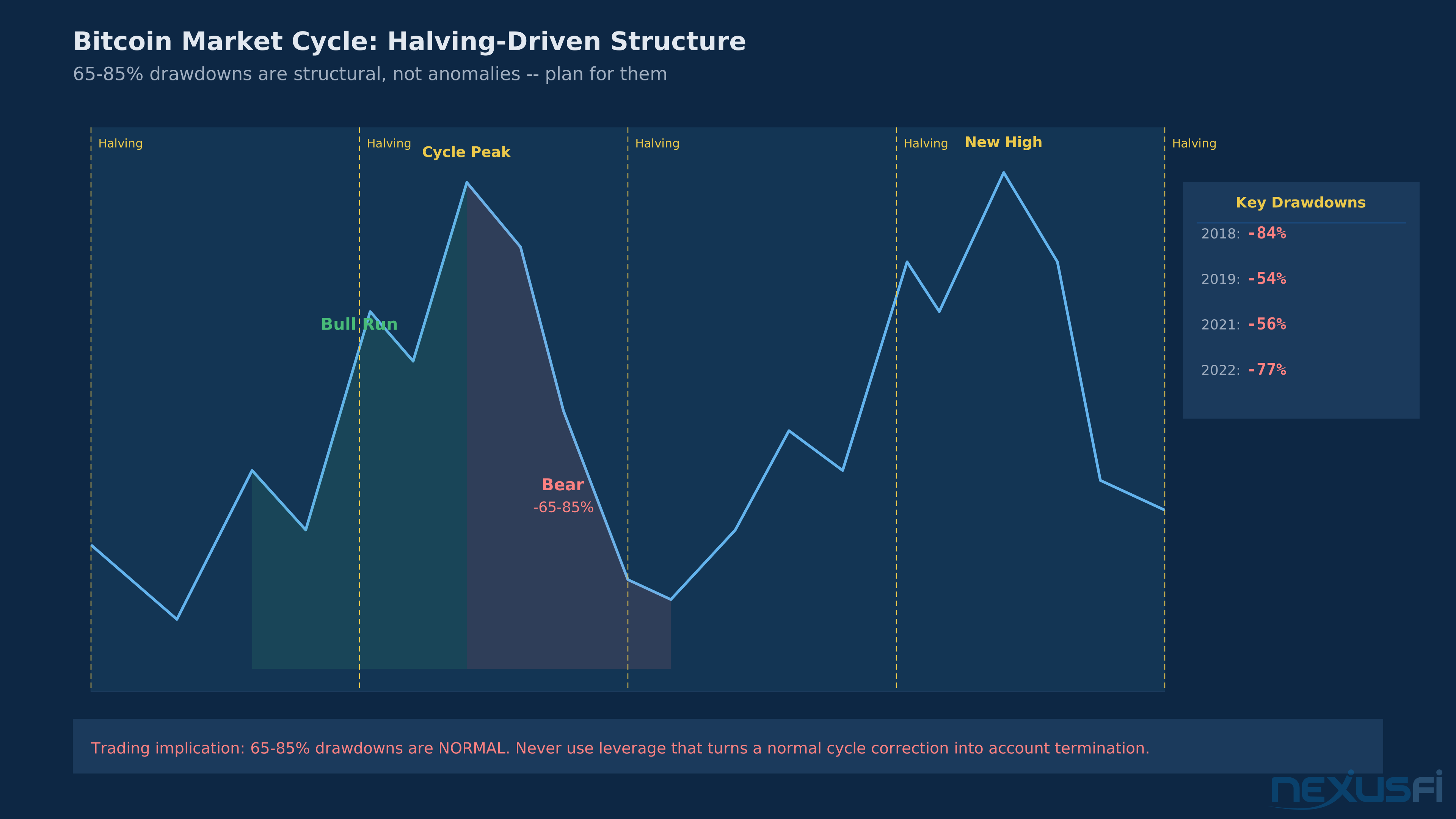
Bitcoin's annualized volatility runs 70-100% in active markets versus 15-20% for the S&P 500 and 15-25% for crude oil. The risk-reward math is different. An 80% drawdown from peak is considered a "normal" bear market in Bitcoin — it happened in 2018, 2022, and previous cycles. Ethereum drawdowns have exceeded 90%.
This isn't abstract. If you size a crypto position the way you'd size an ES trade, you will be in margin calls before the trade can play out. Standard futures position sizing formulas need to account for 2-3x typical historical volatility when applied to crypto. A 2% account risk per trade on ES might translate to 0.5-0.7% account risk per trade on BTC.
Regulatory Risk
The regulatory environment for crypto is still evolving rapidly and varies dramatically by jurisdiction:
For traders: regulatory headlines move markets much. SEC approval of spot ETFs in January 2024 drove a major rally. Chinese government bans in 2021 drove 50%+ drawdowns. News-driven moves in crypto are faster and larger than in traditional markets because the asset class is globally distributed but still heavily influenced by US/China policy.
Exchange Risk (The FTX Lesson)
This is the risk that traditional traders underestimate most severely. FTX — the second-largest crypto exchange by volume in 2022 — collapsed in November 2022, taking approximately $8 billion of customer funds. The cause: FTX's sister trading firm (Alameda Research) had been using customer deposits as collateral for its own bets.
Crypto vs Traditional Markets #
Correlation Patterns
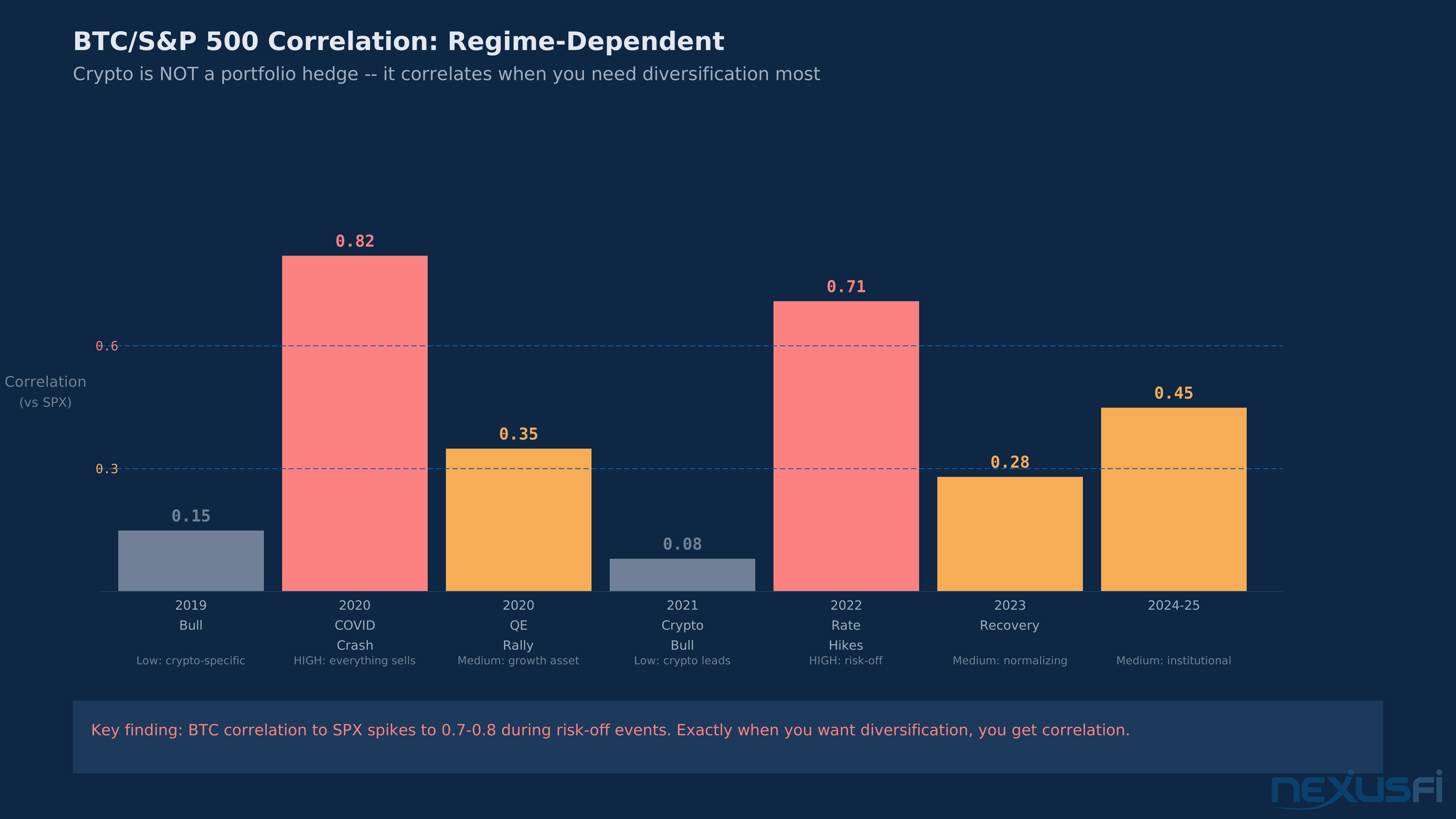
Bitcoin's correlation to the S&P 500 is unstable and regime-dependent:
- Risk-off events (2020 COVID crash, 2022 rate hikes): BTC sells off alongside equities, correlation spikes toward +0.7
- Crypto-specific bull markets: Correlation drops toward zero or negative as BTC outperforms
- Steady-state: Correlation typically runs 0.2-0.5 in non-crisis periods
The practical implication: crypto is not a portfolio hedge against equity risk. It behaves as a correlated high-beta asset during risk-off periods when you most want diversification. It diversifies when markets are benign — which is when you need it least.
Macro Sensitivity
Bitcoin increasingly trades as a macro asset: dollar strength tends to be BTC bearish, high real rates compress its appeal, and global liquidity drives multi-year cycles. FOMC decisions move Bitcoin like high-beta growth stocks — often more violently.
Weekend Gaps and Session Transitions
CME Bitcoin futures trade 23 hours on weekdays while spot crypto never stops — predictable gap patterns result:
- CME Friday close to Sunday open: The largest gap window. A 13.8% Bitcoin move over a long weekend isn't historical -- it's recent market reality (New Year's 2021) [1]
For traders using CME exclusively: always know what Bitcoin is doing on Coinbase/Binance during CME closed hours. The gap is your overnight risk.
Tools and Resources #
Essential Data Sources
Price and derivatives:
- TradingView: Best charting platform for crypto -- shows BTC, ETH perpetual basis vs futures, funding rates as indicators
- CoinGlass: Funding rates across all major exchanges, open interest data, liquidation heatmaps, long/short ratios
- Deribit: If trading options, the dominant crypto options venue; also provides real-time vol surface data free
On-chain analytics:
- Glassnode: Premium on-chain metrics -- SOPR, exchange flows, realized price, MVRV ratio
- CryptoQuant: Exchange inflows/outflows, miner selling, Korean premium (Kimchi)
- Arkham Intelligence: Wallet tracking and entity identification -- useful for tracking known whale addresses
CME-specific:
- CME Group website for margin requirements, contract specifications, COT reports
- CME Bitcoin futures daily volume/OI data available free
Exchange Selection
For US traders:
- CME Group: Standard choice for regulated futures; access through most futures brokers (Interactive Brokers, Advantage Futures, AMP Futures)
- Coinbase: Most regulated US spot exchange, institutional-grade custody
Getting Started #
Account and KYC Requirements
CME futures: Standard futures account with any CFTC-registered broker. Same documentation as opening an ES account. Most futures brokers support CME crypto products.
Spot ETFs: Standard brokerage account. IBIT, ETHA, GBTC trade on NYSE Arca like any equity. No additional documentation needed.
Position Sizing for Crypto
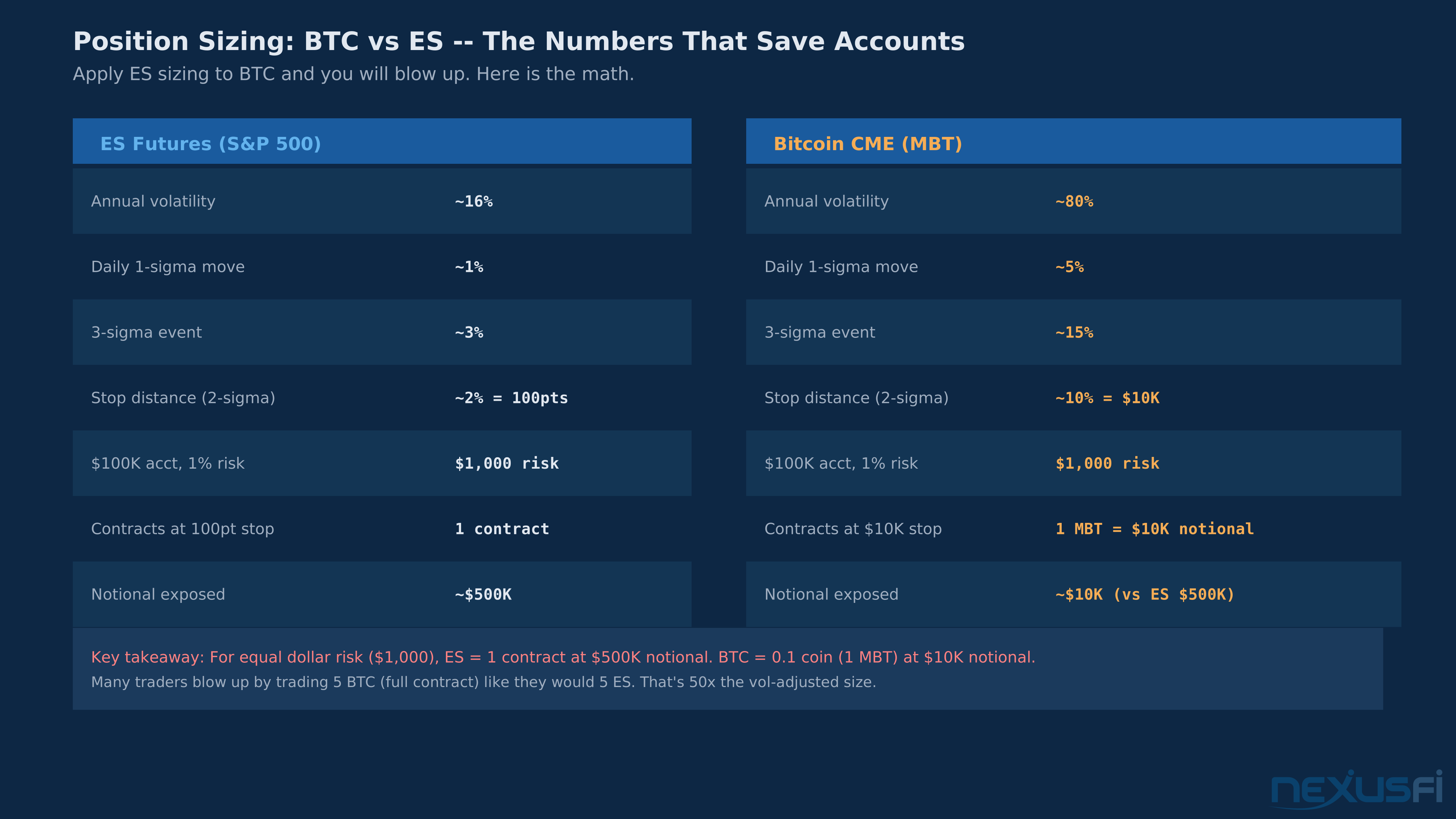
The single biggest adjustment from traditional futures trading: downsize massively and resize for actual volatility.
A rule of thumb that works for most traders:
- Calculate daily 1-sigma move: BTC at 80% annualized vol = 80%/√365 ≈ 4.2% daily 1-sigma
- Set max adverse excursion per trade: 2x 1-sigma = 8.4% is a reasonable one-day stop range
- Size for 1-2% account risk per trade using that stop distance [10]
If you'd normally risk $1,000 on an ES trade with a 5-point stop (0.08% adverse move), the crypto equivalent risks $1,000 with an 8% stop — meaning your crypto position size is 1/100th of the notional you'd trade in ES for the same dollar risk. Many experienced futures traders blow up in crypto not because they can't read the market, but because they size positions the way they'd size ES and then get stopped out by a normal Bitcoin daily range.
Starting Framework
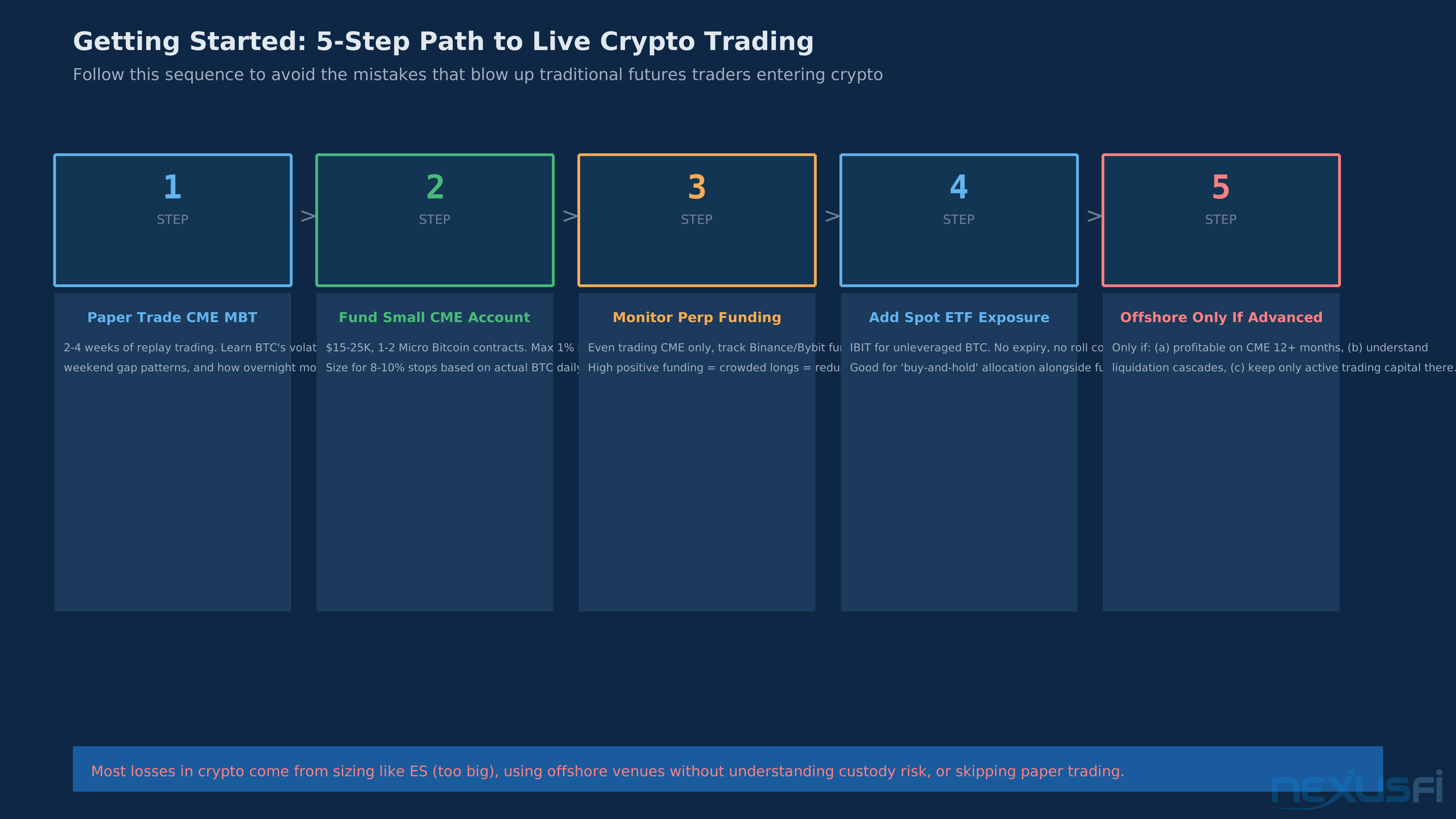
- Paper trade CME Micro Bitcoin for 2-4 weeks -- learn gap risk, monitor funding rates, use open interest data for context
- Fund small: 2-3 Micro Bitcoin contracts, account ~$15-25k
- Monitor perpetual flow: Even trading CME only, offshore perp dynamics explain overnight moves
- Add IBIT for unleveraged BTC exposure without custody concerns
- Offshore perps last: Only after 12+ profitable months on CME with solid understanding of liquidation mechanics
Knowledge Map
Go Deeper
Build on this knowledgeReferences This Article
Articles that build on this topicCitations
- — Cryptocurrency Trading Platforms (2021) 👍 2“CME's Jan Bitcoin closed at $29,385 on Thursday 31st -- Bitcoin was trading $31,544 on Coinbase, up 13.8% while CME markets were closed over a long weekend.”
- — CME announces 7x24 crypto futures trading to start in 2026 (2025) 👍 6“Do brokers and software companies now need 7x24 coverage? You will now be able to have a 71-hour day trade.”
- — Is Bitcoin done? take a look... (2026) 👍 1“Regulated US venues represent roughly 10-15% of total global BTC trading volume. The tail wags the dog.”
- — New Micro Contract: Micro Ether coming 5-Dec-21 (2021) 👍 10“Micro Bitcoin are 25x more expensive to trade than full size -- the fee structure makes buying and holding crypto expensive as your roll cost will be astronomical.”
- — What if a broker declare bankruptcy!!! Ftx first whose next? (2022) 👍 6“FTX International was not American, based in the Bahamas, and not allowed to have American customers. In the US, customer funds are required to be held in separate segregated accounts.”
- — What if a broker declare bankruptcy!!! Ftx first whose next? (2022) 👍 6“FTX was not a broker in the same sense as a broker on a regulated exchange. It was an exchange in a totally unregulated environment.”
- CME Group — Bitcoin Futures Contract Specifications (2025)
- BlackRock — iShares Bitcoin Trust (IBIT) Product Page (2025)
- — Interactive Broker - Cryptos with low transaction fees (2021) 👍 1“MBT is the CME Micro Future. Contract size is 0.1 coin and margin requirement is 42% of notional. Full BTC contract is 5 coins requiring about $100K margin.”
- — PositionSizer for ninjatrader (2010) 👍 17“Position sizing is simple: define acceptable dollar risk per trade (1% of equity), know your default stop distance, calculate contracts. Never exceed the initial stop.”
- — Is Bitcoin done? take a look... (2025)“CME Bitcoin futures trade 23 hours but spot never stops. Weekend gaps on Sunday open create predictable setups.”