



Polkadot (DOT): The Interoperability Protocol Every Crypto Trader Needs to Understand
Overview #
Polkadot isn't just another Layer-1 blockchain competing for DeFi TVL. It's an interoperability protocol — a Layer-0 designed to connect blockchains together and give them shared security. That architectural distinction matters for how you trade DOT. The token doesn't capture exchange fees or DeFi revenue directly. It captures security and governance rights over a network whose value depends on how many chains connect to it and how much compute those chains consume.
Gavin Wood co-founded Ethereum and wrote the original Ethereum Yellow Paper in 2014. He left to found Parity Technologies and the Web3 Foundation in 2016, then launched Polkadot in 2020. Wood's thesis was that the crypto ecosystem wouldn't stay on one chain — it would fragment into hundreds of specialized chains. Polkadot's job is to make those chains interoperable without requiring each one to bootstrap its own security from scratch.
That thesis has played out partially. The ecosystem now runs over 40 active parachains, from EVM-compatible platforms to DeFi hubs to identity networks. But ecosystem growth hasn't automatically translated into DOT price appreciation — a structural feature, not a bug, that traders need to understand before sizing positions. This guide covers the mechanics, the real price drivers, and how to position around DOT's unique trigger calendar.
Relay Chain, Parachains, and Shared Security #
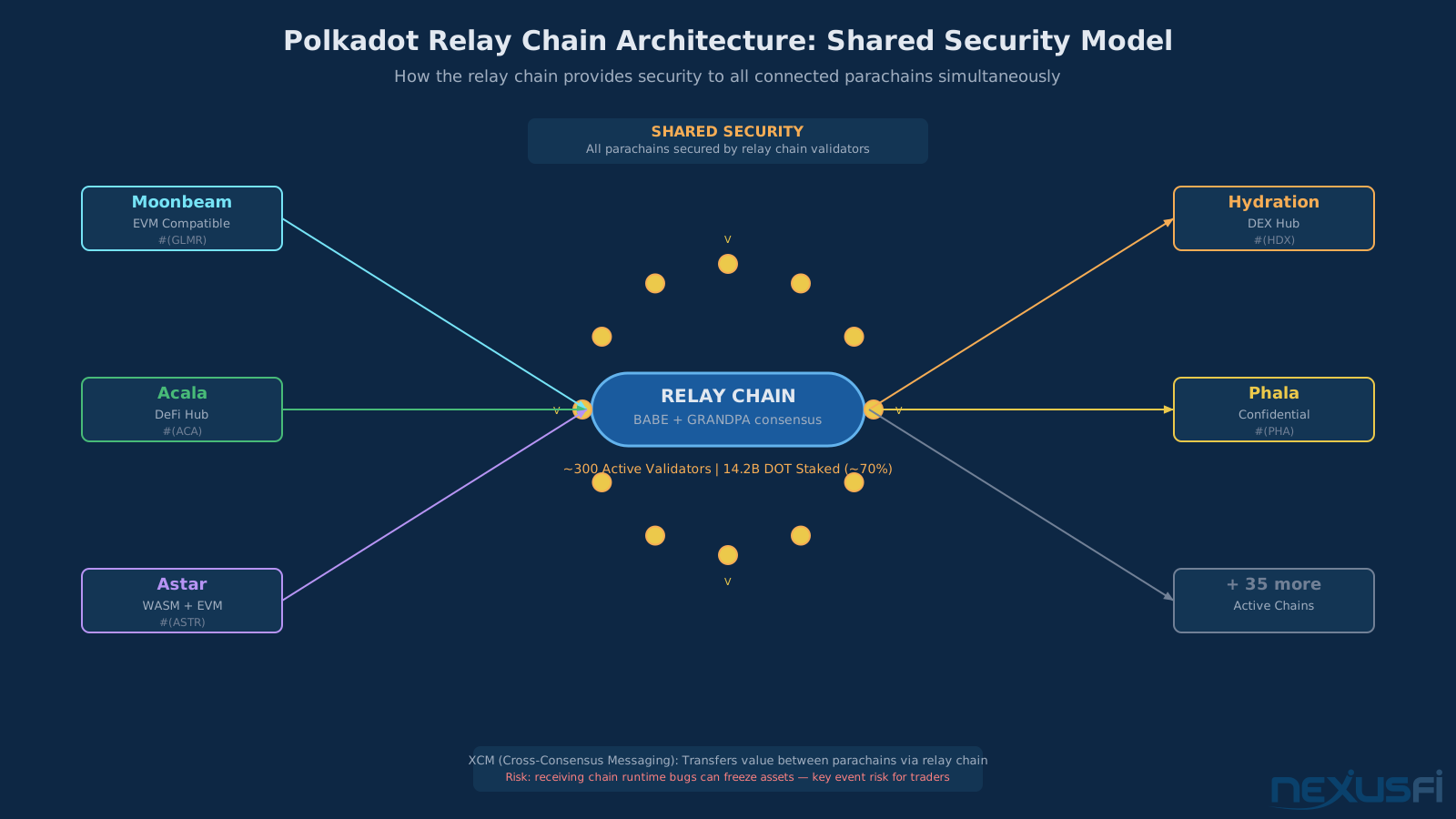
The Polkadot network has two distinct layers. The relay chain handles consensus and finality using BABE block production and GRANDPA finality protocols. It doesn't run smart contracts or DeFi — it just handles security, cross-chain messaging, and coordination. Parachains are the specialized blockchains that plug into the relay chain to borrow its security.
The shared security model is Polkadot's core differentiator. In a sovereign chain model like Cosmos, each blockchain runs its own validator set and pays its own security costs. A new Cosmos zone with $10M in TVL needs to incentivize validators to secure it — usually through token inflation. Polkadot parachains get relay chain security without that overhead. A parachain with $100M in DeFi TVL is secured by the same ~300 validators and $6B in staked DOT that secures a parachain with $1B in TVL. That shared security floor is Polkadot's value proposition to parachain developers.
For traders, the relay chain creates systemic risk in both directions. Any change to relay chain validator economics, staking parameters, or security assumptions directly reprices DOT. A major slashing event — where validators lose a percentage of their staked DOT for misbehavior — would be a network-wide event, not isolated to one chain. That's the downside. The upside is that DOT's price reflects the aggregate health of the whole ecosystem, not just one protocol's success or failure.
Cross-Chain Messaging (XCM) is the protocol that lets parachains communicate. Token transfers, contract calls, governance messages — they all move through XCM. Where the value-transfer risk lives: receiving chain runtime bugs can freeze assets, bridge adapter failures can block withdrawals, and MEV extraction happens around high-value XCM transfers. The 2023 Moonbeam XCM freeze (which temporarily halted GLMR transfers) and the 2024 Acala bridge incident are examples. When these events happen, they create sharp short-term drops in DOT and the impacted parachain token simultaneously — a useful pattern for event-driven traders who monitor Polkadot's on-chain upgrade calendar.
DOT Token Mechanics: The Real Yield Question #
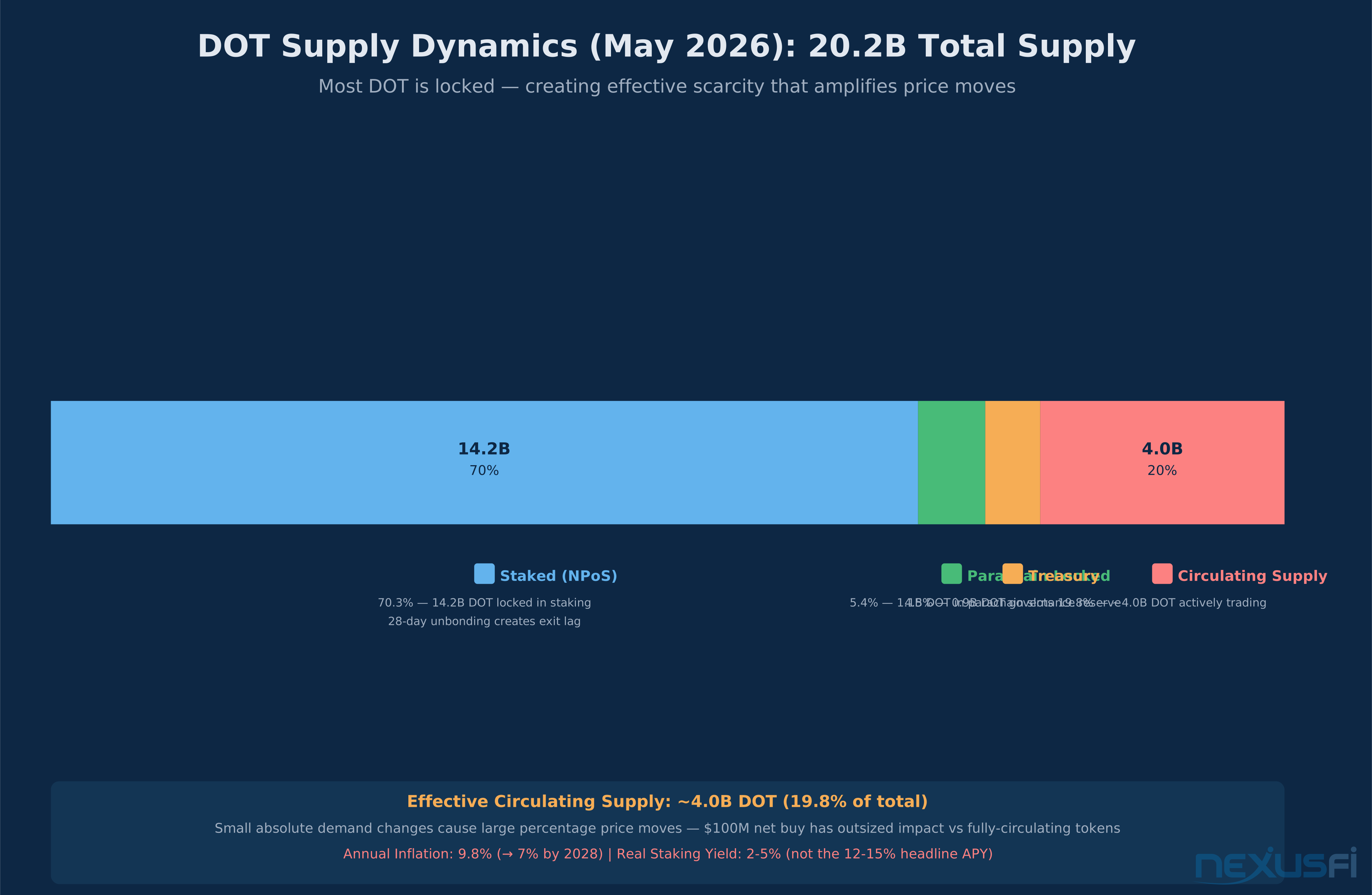
DOT has a total supply of 20.2 billion tokens. Of that, roughly 14.2 billion (70%) is staked in the Nominated Proof-of-Stake system. Another ~1.1 billion is locked in parachain slots. The treasury holds ~0.9 billion. Effective circulating supply sits around 5.6 billion DOT — meaning price moves on relatively small absolute demand changes. A $100 million net buy at current prices moves the market more than it would on a token with full liquid supply.
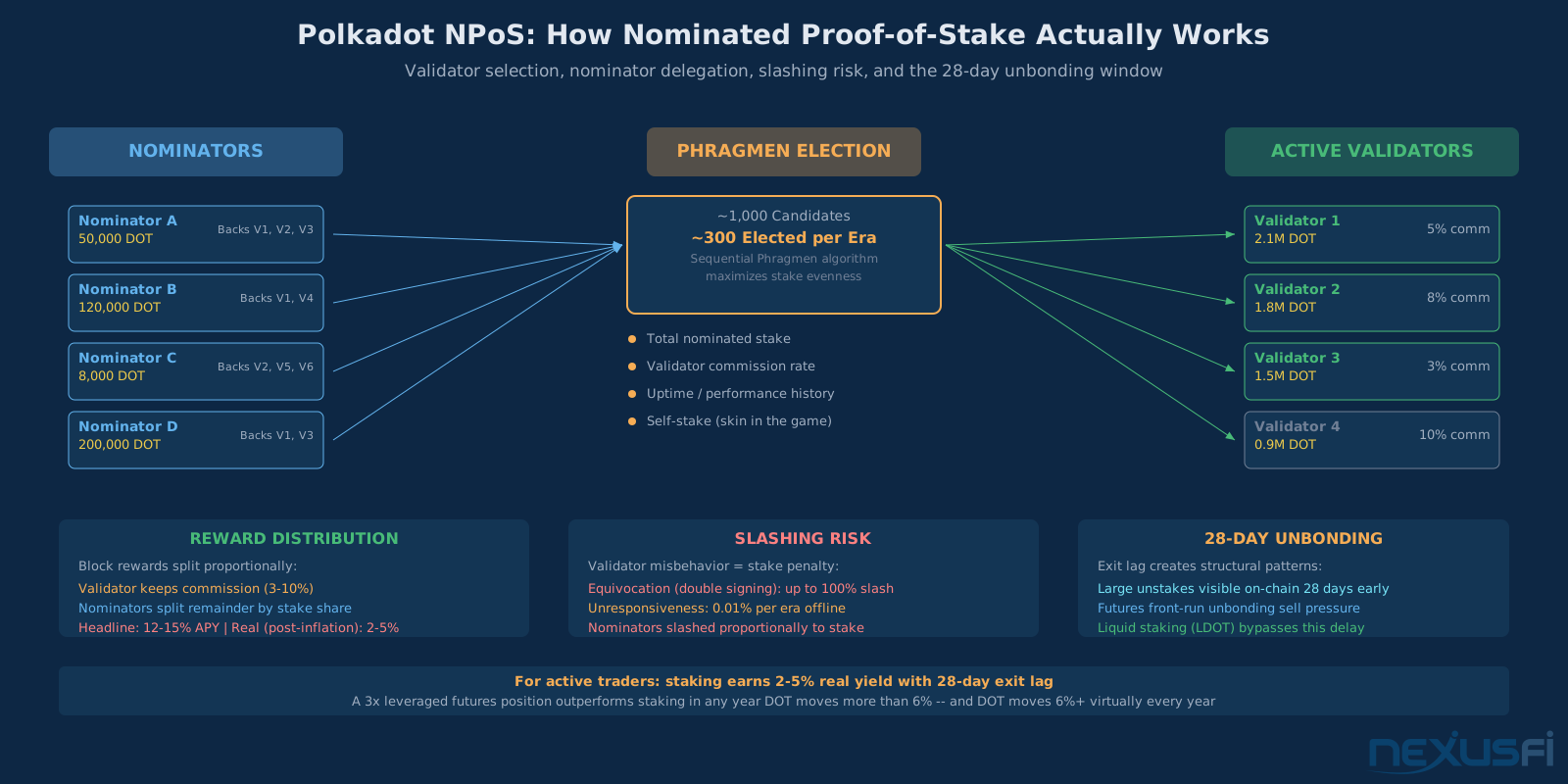
Staking mechanics use Nominated Proof-of-Stake (NPoS). Validators produce blocks and earn rewards. Nominators delegate their DOT stake to validators, sharing rewards proportional to their stake minus validator commission. ~300 validators are active in any given era (elected from ~1,000 candidates). Nominators face slashing risk if their chosen validator misbehaves — which creates re-nomination flows whenever validator performance changes.
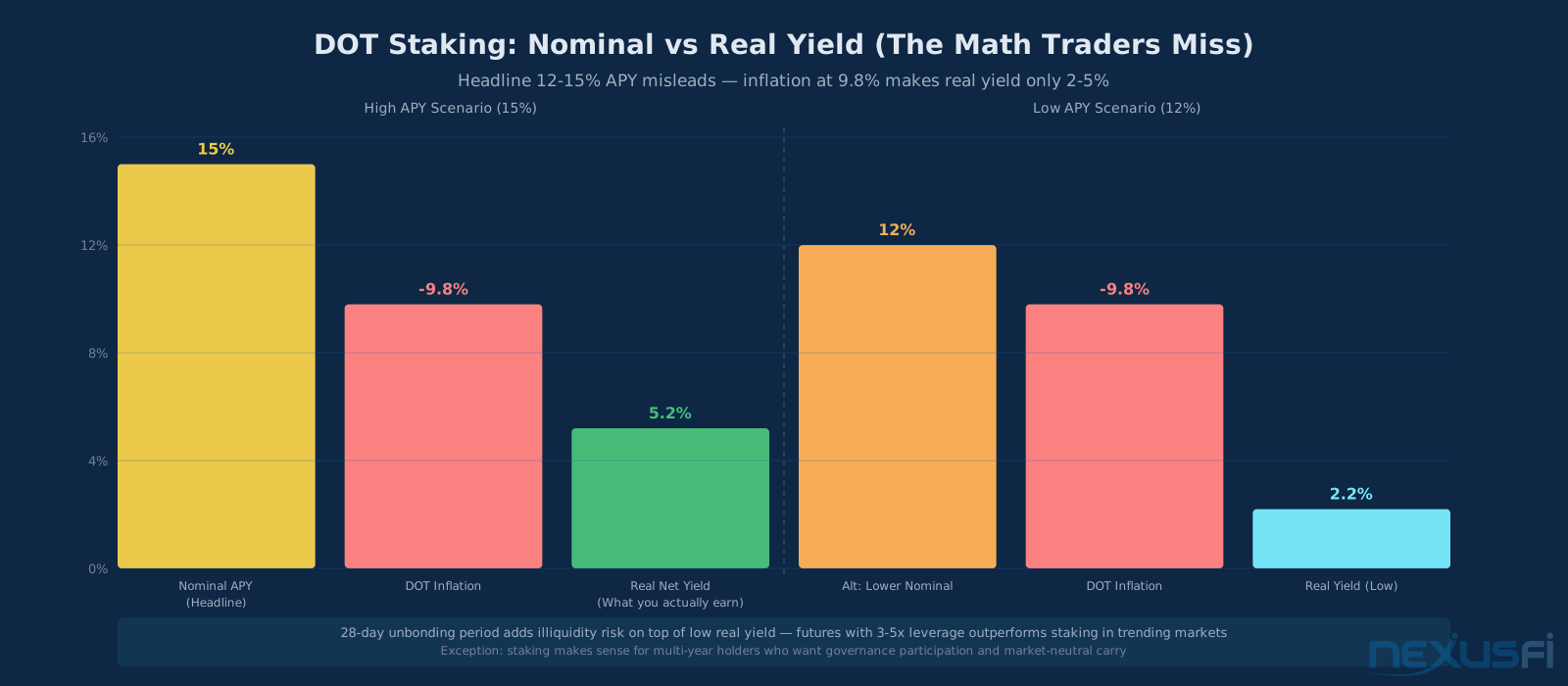
Here's where most traders get the math wrong. Dashboard staking dashboards advertise 12-15% APY. That's the nominal yield. DOT's inflation rate runs ~9.8% annually (scheduled to decline toward 7% by 2028). The real yield after inflation:
- 12% nominal - 9.8% inflation = ~2.2% real yield
- 15% nominal - 9.8% inflation = ~5.2% real yield
That's not a reason to dismiss staking — 2-5% real yield in a volatile asset class is respectable low-risk carry. But it reframes the decision. You're not earning 12% on your DOT. You're earning 2-5% in excess of inflation. A 3x leveraged futures position that avoids liquidation will outperform staking in any year DOT moves more than 6%. The 28-day unbonding period makes the comparison even clearer: native staking is illiquid. You can't pivot on news. A governance proposal that changes inflation parameters comes out while your DOT is locked and you can't exit for a month.
Nomination pools and liquid staking tokens (LDOT via Lido, vDOT via various providers) solve the illiquidity problem partially. LDOT and vDOT trade on DEXs at a discount or premium to native DOT depending on redemption demand. That spread creates arbitrage opportunities — when LDOT trades at a meaningful discount to spot DOT plus accrued yield, a cash-and-carry position captures the gap. More than 2 billion LDOT has been minted, creating a liquid market for this trade on Polkaswap and Hydration DEX.
The 28-day unbonding period also creates a structural pattern around bearish events. When large holders decide to exit, the market can often front-run the 28-day window. Futures prices weaken before the unlocking window opens, then stabilize or rebound after the expected sell pressure is absorbed — assuming macro isn't working against you simultaneously. Watch on-chain unbonding data for signals of major staker exits before they hit spot markets.
Parachain Auctions, Crowdloans, and the Lease Expiry Trade #
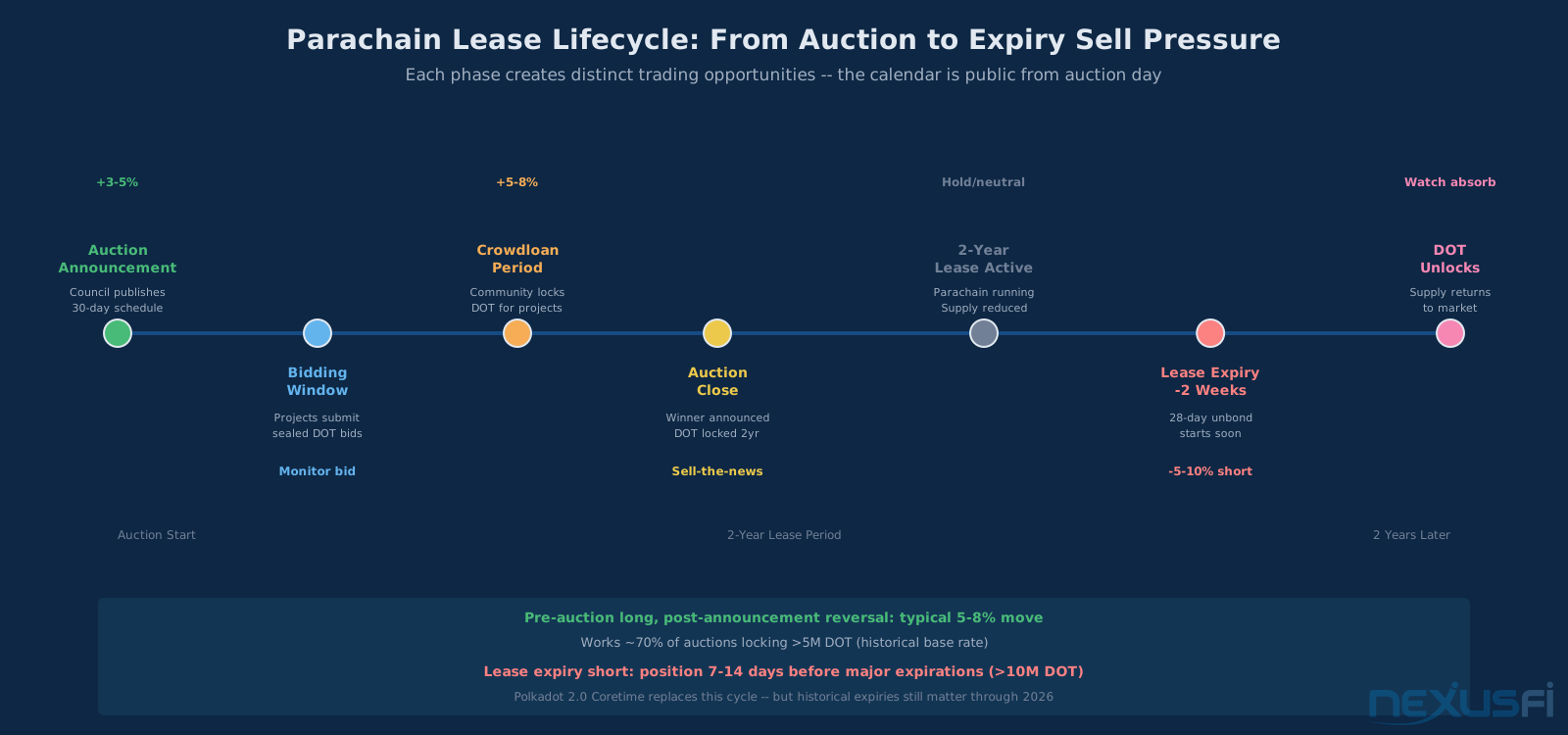
Historically, projects acquired parachain slots through two-year lease auctions. The winning project locked DOT for the lease term — creating a temporary but significant supply reduction. The largest was Moonbeam's 2021 auction, which locked 35.7 million DOT at its peak price. That's not coincidental timing with the 2021 bull market — the lock-up mechanics directly reduced circulating supply during peak demand, amplifying the upside move.
Crowdloans extended the mechanism to retail. Instead of a project self-funding its auction bid, community members locked their DOT to support the project's bid in exchange for project tokens. During the 2021 crowdloan cycle, participation reached hundreds of millions of DOT. Crowdloan participants faced two costs: the DOT was locked for up to two years (28-day unbond after lease expiry), and the opportunity cost of foregone staking yield (~12% annually). The "crowdloan yield" calculation: expected project token airdrop value minus foregone staking yield over the lock-up period.
The lease expiry event is the mirror trade. When a 2-year lease expires, the locked DOT becomes withdrawable. Across multiple concurrent expirations, that can mean 100-200 million DOT hitting the market over several weeks. Acala's lease expiry in 2024 caused 5-8% price drops within the week preceding and following the unlock window. The calendar-driven nature of these events — lease durations are public from the auction date — means traders can build positions around expiry dates months in advance.
@The regulated crypto futures landscape continues expanding. As @SMCJB documented at NexusFi when CME launched 11 new crypto reference rates: "CME crypto futures are financially settled vs the reference rates! Without more reference rates the CME can not launch more crypto futures." The same infrastructure expansion that brought BTC and ETH futures to CME could eventually bring DOT-settled products to regulated venues — a potential catalyst for institutional DOT demand.
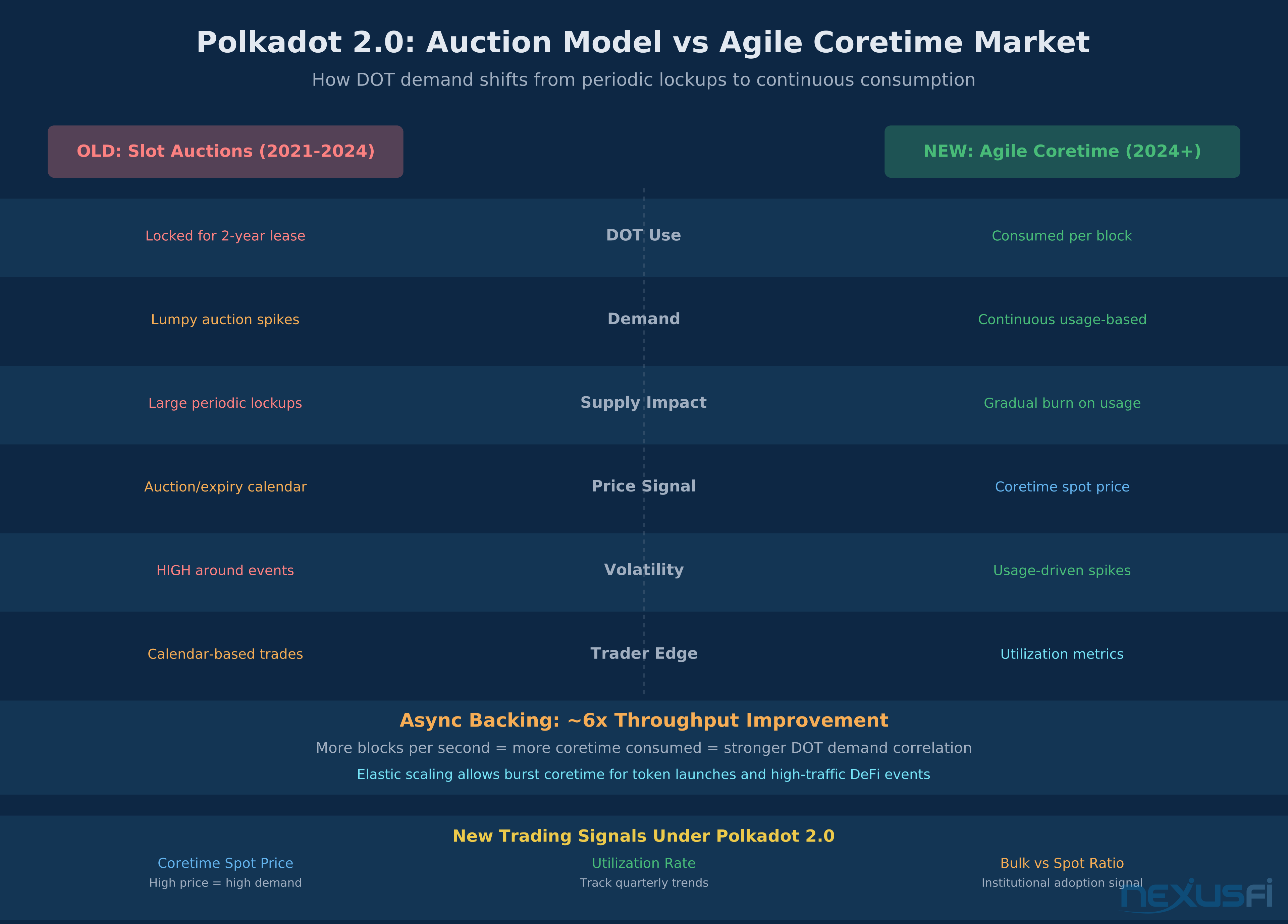
Polkadot 2.0 replaces the auction model entirely. The Coretime market (launched in phases during 2024-2025) lets projects purchase computation time on the network in spot or bulk markets, similar to buying cloud compute time. DOT is spent (partially burned or fee-paid) rather than locked. This eliminates the large lumpy lock-up cycles that defined DOT's supply dynamics from 2021-2024 — but introduces a new demand driver: actual compute usage.
Polkadot 2.0: Coretime and the New Demand Model #
The Agile Coretime transition is the single biggest structural change to DOT's economics since launch. Understanding it is non-negotiable for anyone holding DOT beyond a few weeks.
Under the old model, DOT demand came from two sources: staking (for security) and parachain slot auctions (for slot access). Both were periodic. Auctions happened on a schedule, locks were released on a schedule. DOT price tracked these rhythms in predictable patterns.
Under Polkadot 2.0, a third demand source emerges: coretime consumption. Projects and applications buy "coretime" — execution windows on the relay chain's validated infrastructure. Spot coretime is purchased block-by-block. Bulk coretime covers 28-day windows. DOT is used to pay for both. If the fee design includes meaningful burns (still being finalized in governance), high-usage periods become deflationary for DOT. That transforms DOT from a governance/security token into a commodity with consumption-based pricing.
Async backing is the technical feature enabling this. Pre-2.0, parachains submitted blocks synchronously to the relay chain. Async backing lets parachains submit candidate blocks asynchronously, dramatically increasing parallelism. The result: roughly 6x throughput improvement, enabling 150,000+ theoretical TPS across all parachains combined. Elastic scaling extends this further — parachains can request additional coretime on-demand for burst periods, like a token launch or high-traffic DeFi event.
For traders, the coretime market changes the signal set. Old signals: auction calendar, lease expiry dates, crowdloan participation rates. New signals: coretime spot price, coretime utilization rate, bulk vs spot ratio. When coretime spot price spikes, it indicates high demand for execution capacity — which should correlate with rising DOT demand. When utilization drops, the burn rate falls and net inflation rises, creating headwinds for price. On-chain dashboards tracking coretime metrics (Substrate Explorer, Polkascan) now serve as leading indicators in ways the auction calendar never could.
One important nuance: the transition created a coexistence period where both mechanisms operated simultaneously. Traders who missed this context found the price action confusing in 2024-2025 as old lease locks expired at the same time new coretime purchases began. These dynamics created cross-currents that don't resolve cleanly on simple supply/demand analysis.
Ecosystem: Moonbeam, Acala, Astar, and the Value Accrual Problem #
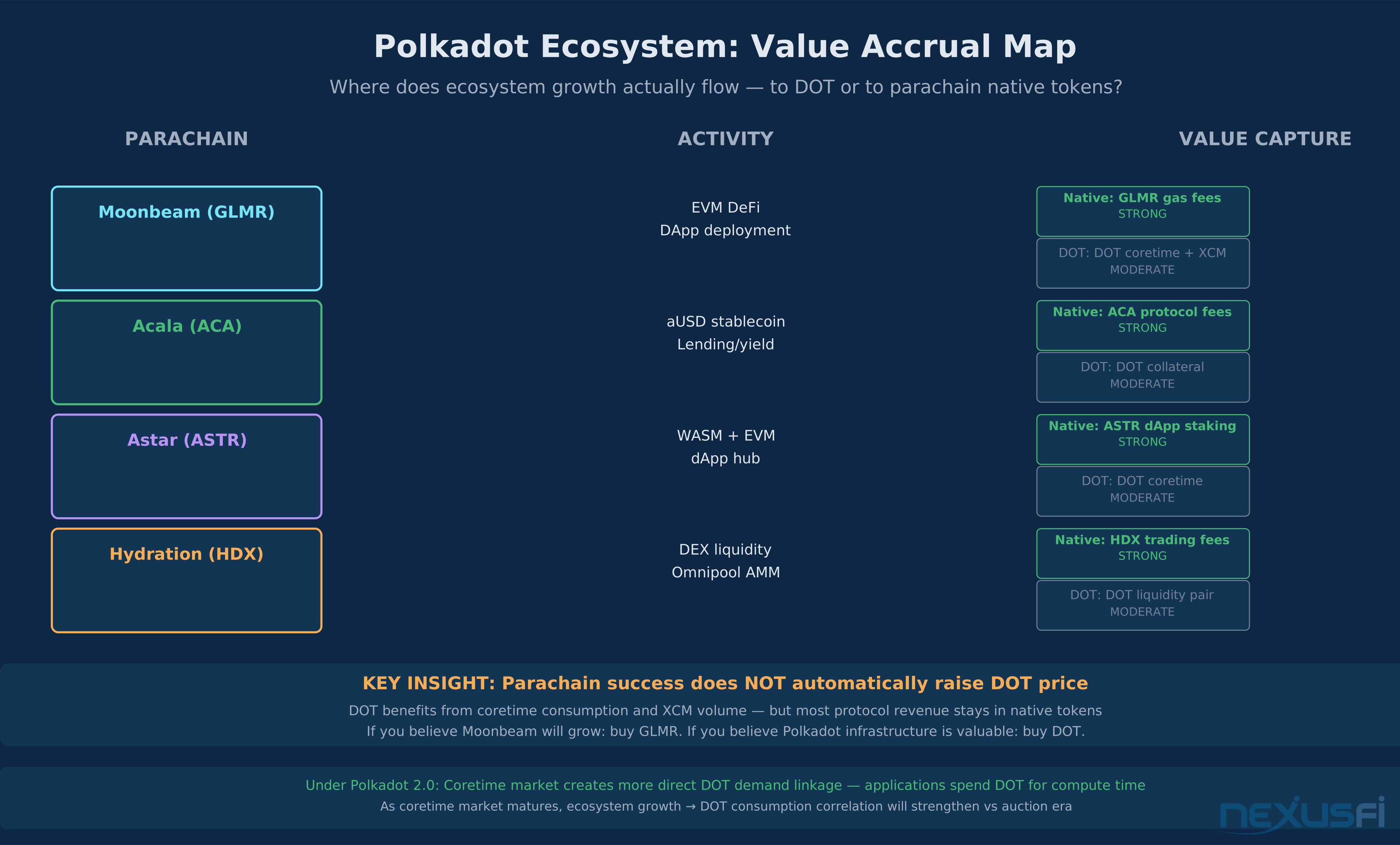
This is the part most retail traders get wrong about Polkadot. Ecosystem growth does not automatically flow to DOT. It mostly stays in parachain native tokens. Understanding why matters for how you size DOT versus ecosystem token positions.
Moonbeam (GLMR) is the primary EVM-compatible parachain. It lets Ethereum developers deploy contracts with minimal modifications, serving as Polkadot's Ethereum bridge point. Moonbeam captures value through GLMR gas fees, governance rewards, and DeFi protocol deployment. DOT benefits from Moonbeam only through coretime consumption payments and XCM volume. When Moonbeam's DeFi TVL grows from $200M to $500M, GLMR price typically moves more than DOT price.
Acala (ACA) is the DeFi hub — stablecoin (aUSD), lending, yield optimization, and liquid staking. It captures value through ACA governance fees and protocol revenue. DOT benefits from Acala's lease/coretime payments and the fact that DOT is used as collateral in Acala's lending markets, creating a demand floor. The Acala aUSD depeg incident in 2022 (where a bridge exploit minted 1.2 billion invalid aUSD) is a case study in how parachain-specific failures create correlated selling in both the native token and DOT.
Astar (ASTR) runs a dual VM approach — WASM and EVM both supported — targeting developer composability. Astar's dApp staking model lets users stake ASTR on specific dApps and earn a share of block rewards, creating developer incentives without token inflation. Coretime payments to the relay chain create indirect DOT demand as Astar's usage grows.
The value accrual reality for DOT: ecosystem success creates demand for DOT through coretime and XCM payments, but most revenue stays in native tokens. If you believe Polkadot's ecosystem will grow, the better trade is often a basket of parachain native tokens rather than DOT alone. DOT is the infrastructure play — you're betting on the success of the relay chain and the coretime market, not on individual parachain DeFi protocols. That's a valid bet, but it's a different bet than buying ETH because DeFi on Ethereum is growing.
The most productive DOT/ecosystem comparison: when parachain tokens underperform DOT during a positive ecosystem news event, it often signals capital rotation to the relay chain asset (security premium repricing). When parachain tokens outperform during ecosystem growth, it signals direct value capture. Trading these divergences requires monitoring both DOT and major parachain token prices relative to BTC simultaneously.
Trading DOT: Venues, Setups, and the Trigger Calendar #
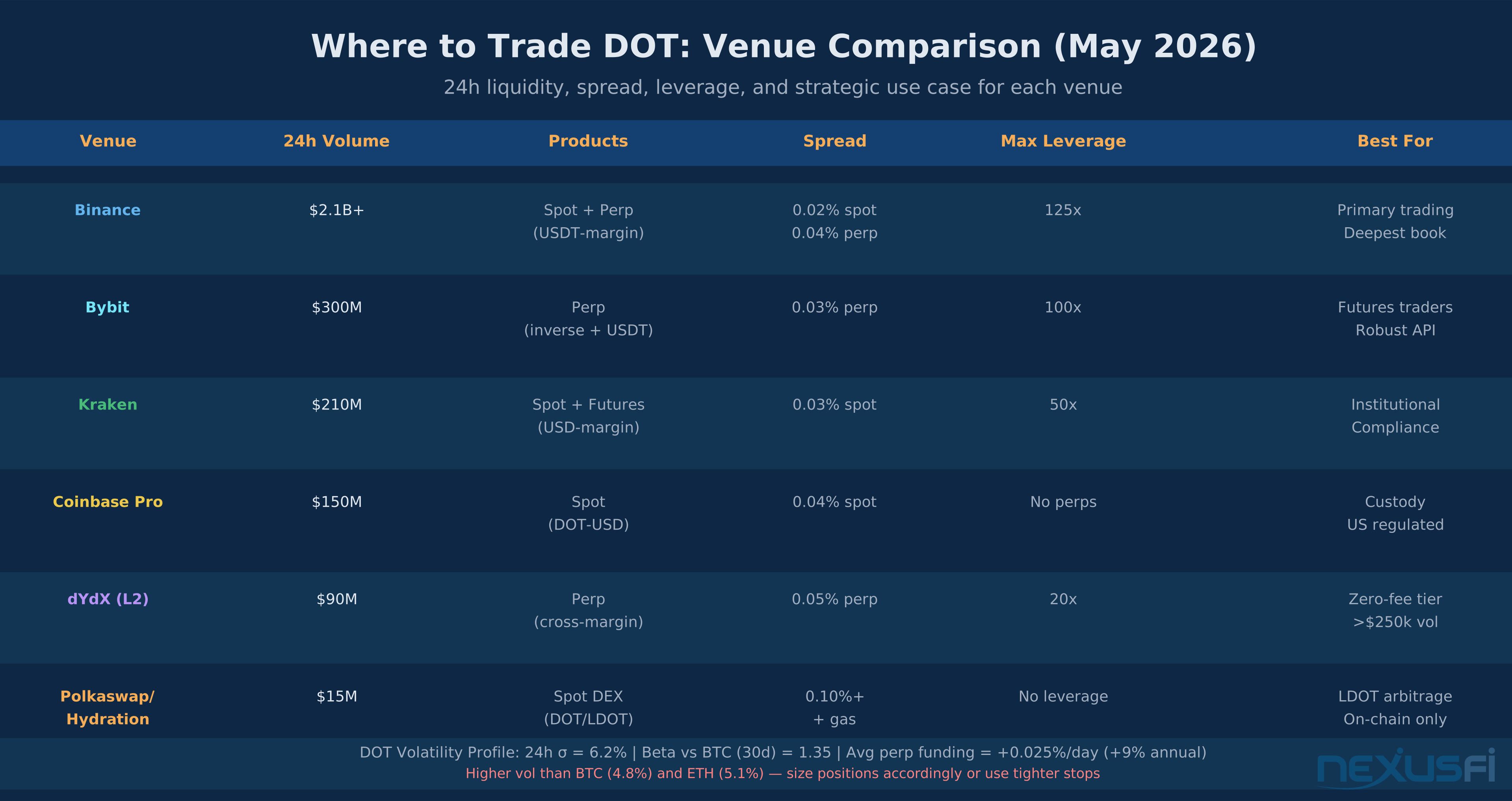
DOT trades on every major centralized exchange in spot and perpetual form. Binance is the deepest venue by far — $2.1B+ daily volume in spot and perpetuals combined. Bybit runs ~$300M, Kraken ~$210M, Coinbase ~$150M. For perpetuals, dYdX offers zero-fee tiers for high-volume traders and runs ~$90M daily in DOT.
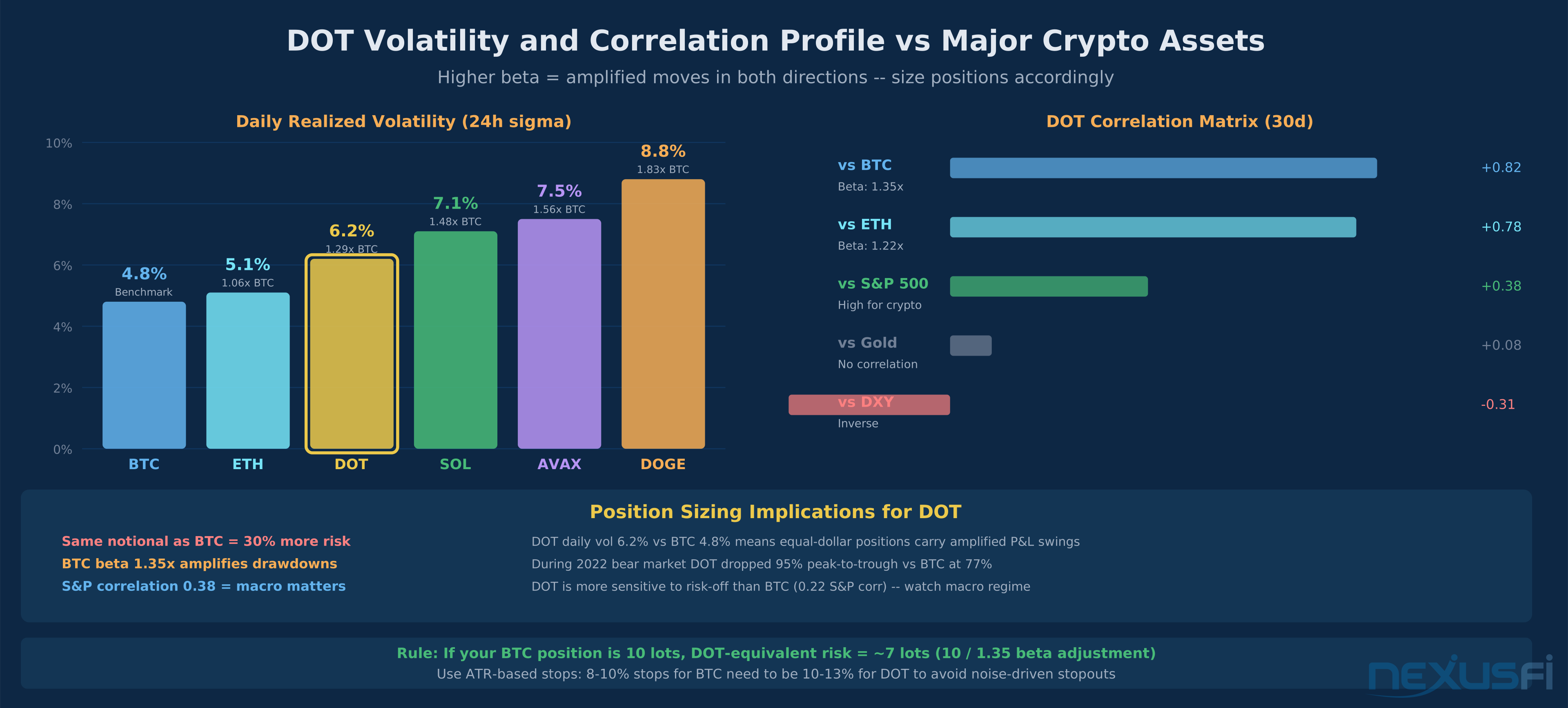
DOT's volatility profile: 24-hour realized volatility runs ~6.2% (versus BTC at 4.8%, ETH at 5.1%). Beta against BTC over 30-day windows sits around 1.35 — meaning DOT typically amplifies BTC moves by 35%. S&P 500 correlation at ~0.38 is higher than BTC's ~0.22, reflecting DOT's higher beta to risk-on sentiment broadly.
@As @jlabtrades noted in a NexusFi discussion on crypto-equity correlation: "BTC-to-SPX daily correlation sits around 0.30 under normal conditions — but during stress events, that spikes to 0.56-0.69." For DOT, the same dynamic applies with amplification — the risk-off correlation spike is stronger than in BTC.
Average perpetual funding runs +0.025%/day (long-biased). That translates to ~9% annualized cost to be long DOT perpetuals — a meaningful drag if the thesis doesn't play out quickly. During parachain events (auctions, coretime launches, governance votes), funding can spike to +0.10%/day or flip negative, signaling crowded positioning on one side.
Practical setups that work around DOT's structure:
- Pre-auction long, post-lock reversal: Enter DOT longs as an auction announcement comes out. The announcement of a large upcoming lockup creates anticipatory buying. Exit into the lock-up confirmation (sell the news). Typical move: 5-8% during announcement to lock-up window. Historical base rate: works in ~70% of material auctions (>5M DOT locked).
- Lease expiry short: Watch the public lease expiry calendar. 7-14 days before major expirations (>10M DOT), sell perpetuals or buy near-dated puts. Typical sell pressure period: 1-2 weeks surrounding the expiry date. Exit after unlock absorption if macro is neutral.
- LDOT arbitrage: When LDOT trades at a discount of >3% to spot DOT plus accrued yield, buy LDOT and short spot DOT on Binance. Capture the convergence when redemption demand normalizes. The carry is roughly staking yield for the duration.
- Coretime launch positioning: Major coretime market milestones create anticipatory buying similar to auctions. The Feb 2024 Coretime market activation drove a 12% move over two weeks as traders front-ran expected burn mechanics. Monitor Polkadot governance referendum timelines for upcoming coretime parameter votes.
The staking vs trading decision is straightforward for active traders. Native staking earns 2-5% real yield with a 28-day exit lag. If DOT moves more than 6% in either direction in a year — which it does in virtually every year — the staking yield is irrelevant compared to what a properly timed futures position earns. Staking makes sense as a strategic allocation if you want to participate in governance, if you have a multi-year holding horizon, and if you genuinely want the carry with no leverage. For active traders: keep most of your DOT exposure in liquid spot or perpetuals, not locked staking.
Risk Factors: Where DOT Theses Break Down #
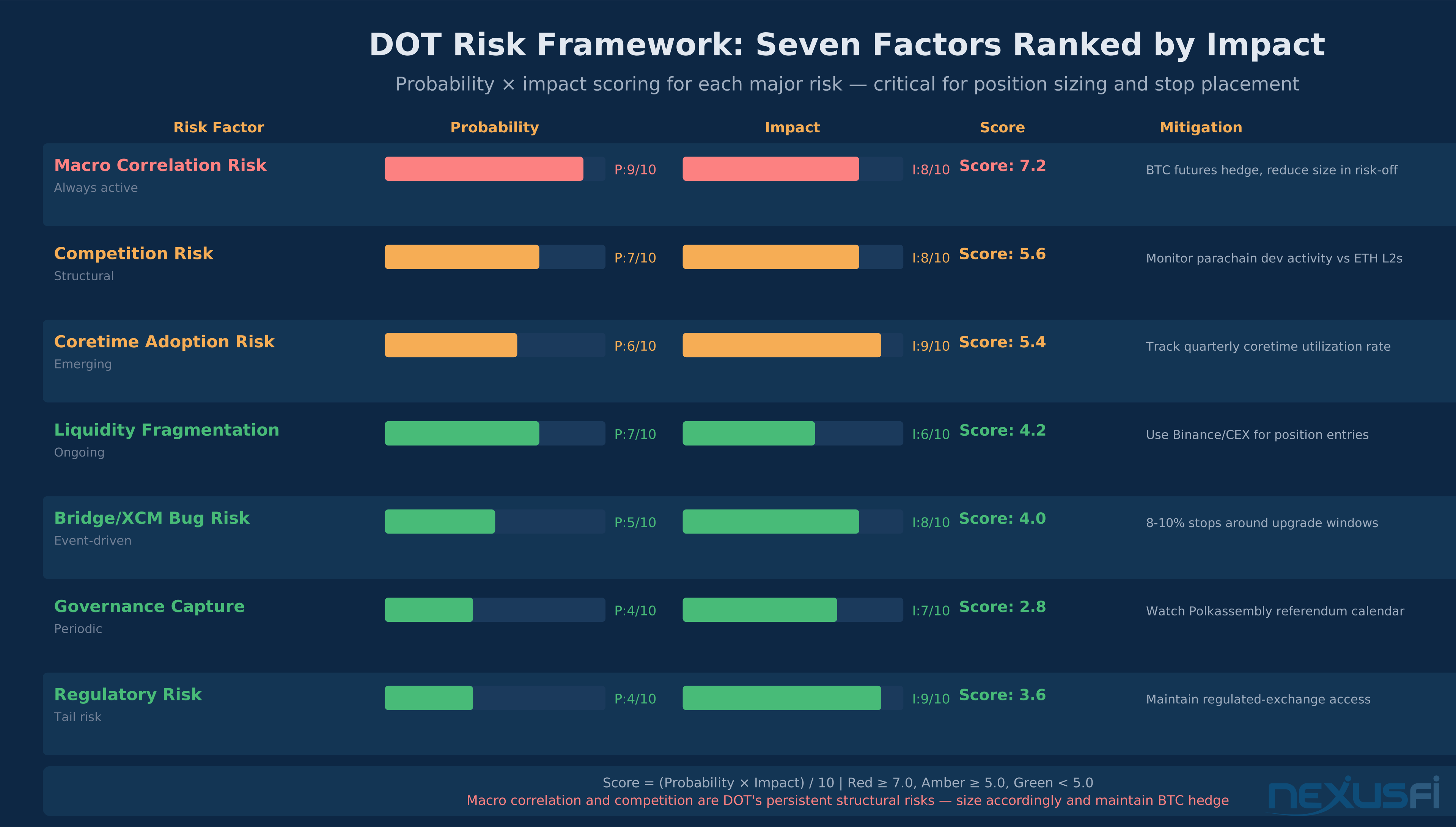
Competition is DOT's structural headwind. Cosmos (ATOM) offers interoperability via IBC with sovereign chain economics — each zone keeps its own security and fee revenue without paying DOT. That sovereignty is attractive to projects that want full economic control. LayerZero takes a different approach entirely: cross-chain messaging as a protocol layer rather than shared security. If developers don't need shared security — if they just need messages to pass between chains — LayerZero is structurally cheaper. Ethereum L2s (Arbitrum, Optimism, Base) have captured most DeFi TVL growth since 2023, making Polkadot's pitch harder to sell to DeFi developers who already have established Ethereum liquidity.
Liquidity fragmentation is DOT's second headwind. More than 40 active parachains means token liquidity is split across Moonbeam, Acala, Astar, Hydration, and other DEXs rather than concentrated on one chain. Cross-chain transfers between parachains require waiting for XCM finality. For professional capital allocators who need deep, liquid markets to enter and exit positions quickly, this fragmentation is friction. Compare to Ethereum's concentrated DEX liquidity on Uniswap, Curve, and a handful of major protocols — Polkadot's fragmented model is harder for institutional deployment.
OpenGov governance risk is real. Polkadot's governance system (OpenGov) uses DOT-weighted voting where large holders can substantially influence outcomes. The top 10 DOT holders control ~30% of voting power. Governance proposals that change inflation parameters, treasury allocation, or staking rewards create 5-10% price moves on announcement — and those moves can be sharp and hard to predict. Treasury spending at ~2% of total supply annually means ongoing sell pressure as grant recipients liquidate. Watch the governance referendum calendar (Polkassembly.io) as a trading input.
Coretime burn rate volatility is the new risk under Polkadot 2.0. If network usage drops — major parachain activity falls, coretime demand shrinks — the burn rate drops and DOT effectively becomes more inflationary. The reverse of the bull case. Monitoring coretime utilization quarterly is now part of the fundamental due diligence on DOT.
@As Fi noted during the February 2026 crypto selloff at NexusFi: "Position sizing matters most when volatility spikes. The market is reminding everyone that 50% drawdowns are part of the crypto deal." DOT's 1.35 BTC beta means these drawdowns hit harder and faster than in the majors — the 2022 bear market's 95% DOT peak-to-trough drop versus BTC's 77% is the structural proof.
Macro correlation is the last factor. DOT's 1.35 beta to BTC means it amplifies crypto drawdowns. In the 2022 bear market, DOT dropped 95% peak-to-trough. During the Q1 2024 risk-on period, it rallied 4x. If you're long DOT in a macro risk-off environment, the 1.35 BTC beta plus higher standalone volatility means you're carrying more downside than BTC exposure with less institutional support to buy the dip.
@The structural comparison @MarketT raised about crypto execution costs at NexusFi — venues that advertise zero fees often compensate with wider spreads during volatile periods — applies directly to DOT parachain DEX trading. On-chain DOT markets have visible order books, but spread behavior around XCM upgrade events and parachain governance votes can blow out in ways that make the apparent fee savings illusory.
The Polkadot Trading Framework #
DOT is a governance and security token, not a direct revenue-capture asset. Price your position so. You're not getting rich off Moonbeam's DeFi fees — you're betting on the relay chain's indispensability as Polkadot's ecosystem scales.
Build your DOT thesis around three questions:
- What's the coretime demand outlook? More parachains, higher throughput, more transaction volume on BSC-competing chains = rising coretime demand = upward pressure on DOT. Check quarterly coretime utilization data. Any reading above 70% sustained coretime utilization is bullish for DOT burn mechanics.
- What's on the supply calendar? Track lease expiry dates, coretime launch milestones, and major governance votes. Both the lock-up (bullish) and unlock (bearish) events are scheduled in advance. Use the calendar.
- Where is BTC? DOT is a 1.35-beta instrument. Trading DOT long in a broad crypto risk-off environment is fighting the tape. Wait for BTC to establish direction, then position DOT so -- with the understanding that DOT's moves will be larger in both directions.
@The principle @tigertrader outlined at NexusFi applies directly to DOT position sizing: "My stops are placed within the context of a volatility-based, position sizing algorithm, which is quite simply, 2% of equity risk, based on a 1.5 ATR stop. This allows me to have a realistic expectation of my risk/reward based on the current volatility of the market and the instrument." With DOT running 30% higher daily volatility than BTC, the same framework demands proportionally smaller position sizes.
Position sizing: DOT's higher volatility (~6.2% daily sigma vs 4.8% for BTC) means that if you use the same notional as a BTC position, you're carrying 30% more risk. Adjust size so, or use tighter stops. The 8-10% stop-loss range that works for BTC positions needs to be wider for DOT given its volatility profile — but you're also carrying more upside per dollar of exposure in trend environments.
Don't conflate ecosystem success with DOT price appreciation. If you believe Moonbeam is undervalued, buy GLMR. If you believe Acala's aUSD will become a major stablecoin, buy ACA. DOT is the bet on Polkadot as infrastructure — that the relay chain becomes as essential to multi-chain ecosystems as AWS is to the internet. That's a real thesis with real upside, but it's not the same as buying a revenue-sharing protocol token.
Knowledge Map
Go Deeper
Build on this knowledgeReferences This Article
Articles that build on this topicCitations
- — CME Goes 24/7 on May 29 -- Crypto Futures, Options, and Event Contracts (2026) 👍 2“BTC-to-SPX daily correlation sits around 0.30 under normal conditions (Jan 2023 through Apr 2025). NDX is similar. During stress events that correlation spiked to 0.56 during COVID, 0.69 during the Nov 2021-Dec 2022 drawdown, and 0.48 in early 2025.”
- — Is there any realistic non-standard path to near-zero taker cost for a live crypto order-book strategy (2026) 👍 1“Venues that advertise 0% fees often compensate with unstable or artificially widened spread conditions, which can be even worse than paying a normal explicit commission.”
- — CME Goes 24/7 on May 29 -- Crypto Futures, Options, and Event Contracts (2026) 👍 2“CME Group will launch continuous 24/7 trading for all cryptocurrency futures and options starting May 29, 2026. New Avalanche (AVAX) and Sui (SUI) futures arrive May 4.”
- — Wiki.polkadot.network (2025)
- — Web3.foundation (2024)
- — 11 New CME Crypto Reference Rates = More Futures Soon? (2022) 👍 3“CME is launching 11 new crypto reference rates. Why is this important? CME crypto futures are financially settled vs the reference rates! Without more reference rates the CME can not launch more crypto futures.”
- — Concerning risk per trade sizing (2012) 👍 4“My stops are placed within the context of a volatility-based, position sizing algorithm, which is quite simply, 2% of equity risk, based on a 1.5 ATR stop. This allows me to have a realistic expectation of my risk/reward based on the current volatility of the market and the instrument.”
- — Crypto Crossroads: Will BTC and ETH Crash 50% or Rally 50% First? (2026)“Position sizing matters most when volatility spikes. The market is reminding everyone that 50% drawdowns are part of the crypto deal.”