



Ichimoku Cloud: The Complete Regime Filter for Futures Day Trading
Overview #
Ichimoku Cloud is five lines and a shaded zone that tells you the trend, momentum, support/resistance, and future equilibrium — all on one chart. Goichi Hosoda published it in 1969 after three decades of development. The name translates to "one glance equilibrium chart," and that's exactly what it delivers: a single visual that answers the question every futures trader asks before placing a trade — which side of the market has control right now?
For futures day traders, Ichimoku eliminates chart-hopping. Instead of layering three moving averages, an oscillator, and hand-drawn support/resistance zones, you get one integrated system. The tradeoff is visual complexity — five lines plus a cloud looks intimidating until you understand what each piece represents.
Here's the core insight: Ichimoku isn't a signal generator. It's a regime filter. It tells you whether the market is trending or ranging, whether buyers or sellers have structural control, and where the next meaningful support or resistance zone sits. The signals — crossovers, cloud breaks, Chikou confirmation — are triggers that only matter within that regime context.
The Five Components #
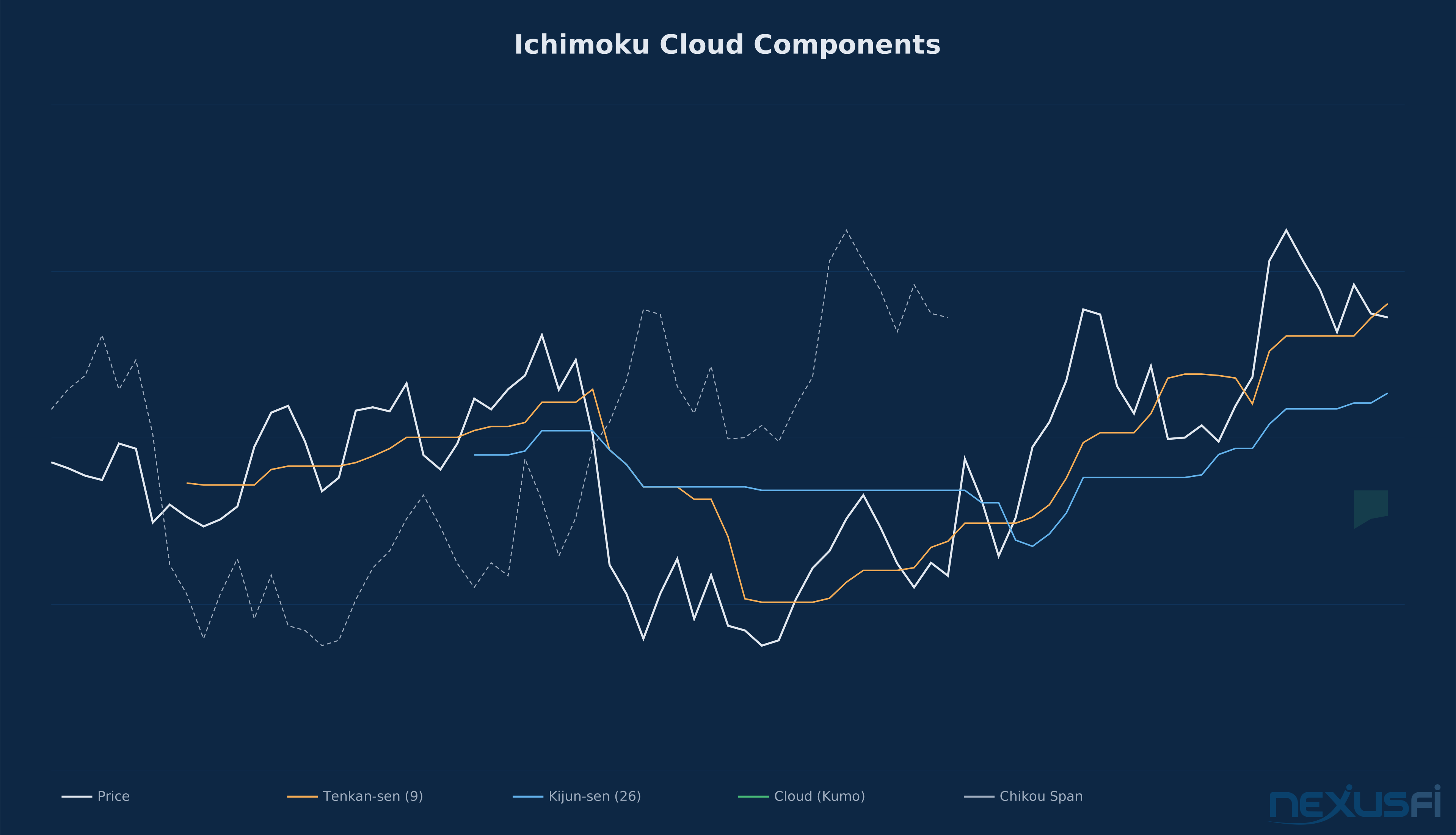
Every Ichimoku line is a midpoint of a high-low range over a specific lookback period. Not a moving average — a midpoint. That distinction matters because midpoints respond to volatility expansion and contraction differently than averages.
Tenkan-sen (Conversion Line) #
The Tenkan calculates the midpoint of the highest high and lowest low over the last 9 periods:
(Highest High of 9 periods + Lowest Low of 9 periods) / 2
Think of it as the fast baseline. It captures short-term momentum shifts before the slower components react. When the Tenkan is rising, short-term buyers are pushing price toward new highs. When it flattens, that momentum has stalled.
In practice, the Tenkan acts as the first warning system. If you're in a long trade and the Tenkan starts rolling over while the slower Kijun is still rising, short-term momentum is fading even though the broader trend remains intact.
Kijun-sen (Base Line) #
The Kijun uses the same formula over 26 periods:
(Highest High of 26 periods + Lowest Low of 26 periods) / 2
This is the equilibrium line — the market's "fair value" over a meaningful lookback window. The Kijun serves three critical functions in day trading:
First, it's the primary stop-loss anchor. As @Fat Tails [explained on NexusFi] [1], "Price vs. Kijun (price above or below a 26-period Donchian midline)" is one of the essential trend filters, comparable to how price relates to a moving average but based on the range midpoint rather than the mean.
Second, it's a pullback target. In trending markets, price regularly pulls back to the Kijun before resuming. These Kijun pullbacks are among the highest-probability Ichimoku entries.
Third, a flat Kijun tells you the 26-period range is compressing. When the Kijun goes flat, the market is coiling — and directional moves often follow.
Senkou Span A (Leading Span A) #
Senkou Span A averages the Tenkan and Kijun, then plots the result 26 periods into the future:
(Tenkan-sen + Kijun-sen) / 2, plotted 26 periods ahead
This forms the faster-moving edge of the cloud. Because it's derived from both baselines, it reflects the current momentum balance projected forward. When Span A rises above Span B, the cloud turns bullish (green). When it falls below, the cloud turns bearish (red).
Senkou Span B (Leading Span B) #
Senkou Span B takes the midpoint of the longest lookback — 52 periods — and plots it 26 periods ahead:
(Highest High of 52 periods + Lowest Low of 52 periods) / 2, plotted 26 periods ahead
This is the cloud's slower edge. It moves less frequently, making it a stronger support/resistance reference. When price tests Span B and holds, that level carries more significance than a Span A test because it represents a longer-term equilibrium boundary.
Chikou Span (Lagging Span) #
The Chikou plots the current closing price 26 periods back on the chart. That's it — no calculation, just a displacement.
Why this matters: the Chikou shows you where current price sits relative to what was happening 26 periods ago. If the Chikou is above the price bars from 26 periods back, current momentum is stronger than the recent past. If it's below, the market has weakened relative to where it was.
As @Grantx [emphasized] [3], "To eliminate false signals in a sideways market why dont you measure chikospan in relation to price which is exactly what it is intended for?" The Chikou is the most underrated component. Skipping it produces much more false entries.
The Cloud (Kumo) #
The cloud is the shaded area between Senkou Span A and Senkou Span B. It's the visual centerpiece of Ichimoku and the primary regime filter:
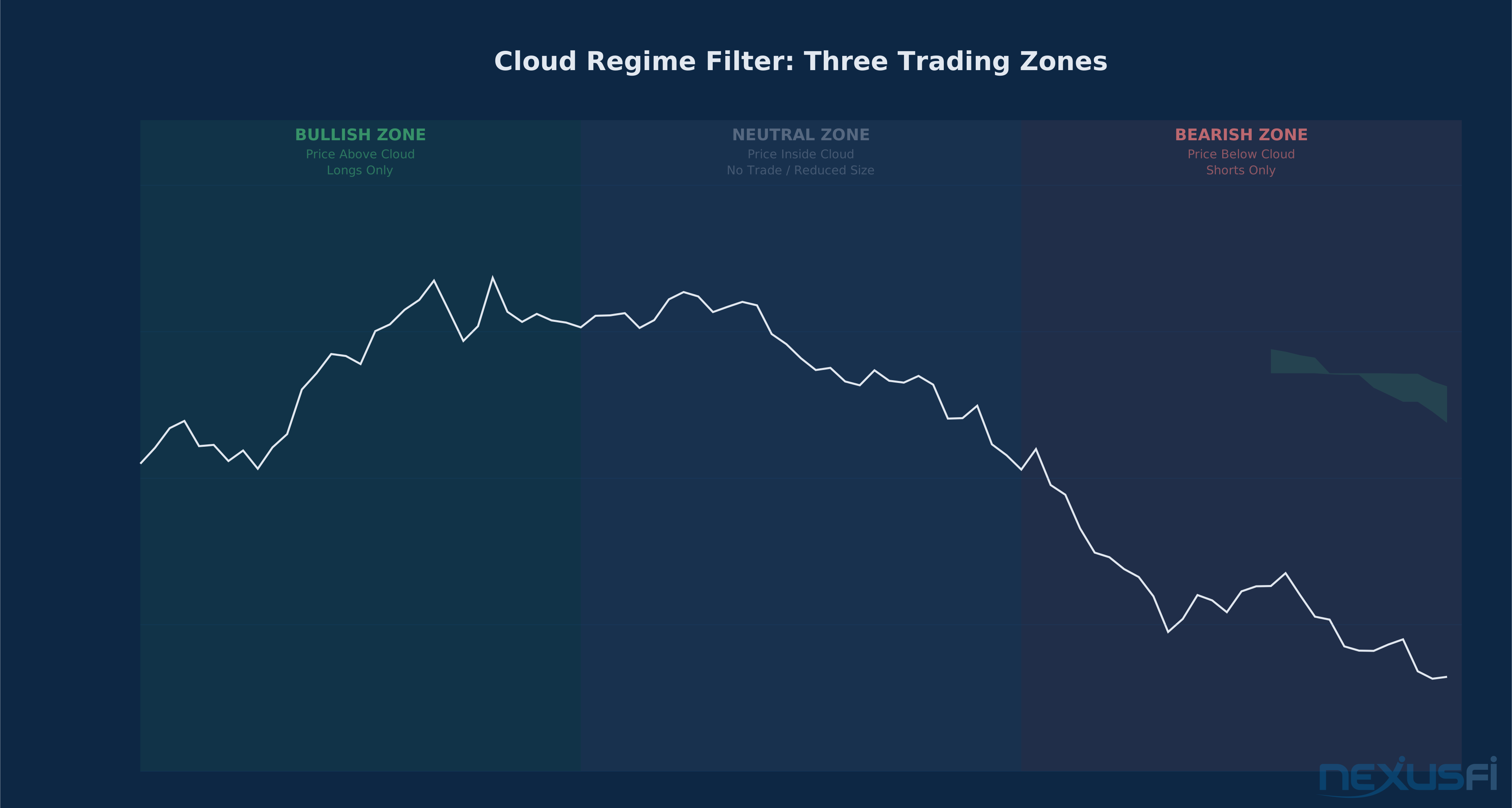
- Price above the cloud: Bullish bias. Only look for longs.
- Price below the cloud: Bearish bias. Only look for shorts.
- Price inside the cloud: No-man's-land. The market is in equilibrium, and signals inside the cloud are unreliable.
Cloud thickness matters. A thick cloud represents a strong trend with deep support/resistance. Thin clouds indicate weak trends where breakouts are more likely — but also where false breaks occur. When the cloud narrows to a pinch point (a "Kumo twist"), a regime change is often imminent.
Signal Interpretation #
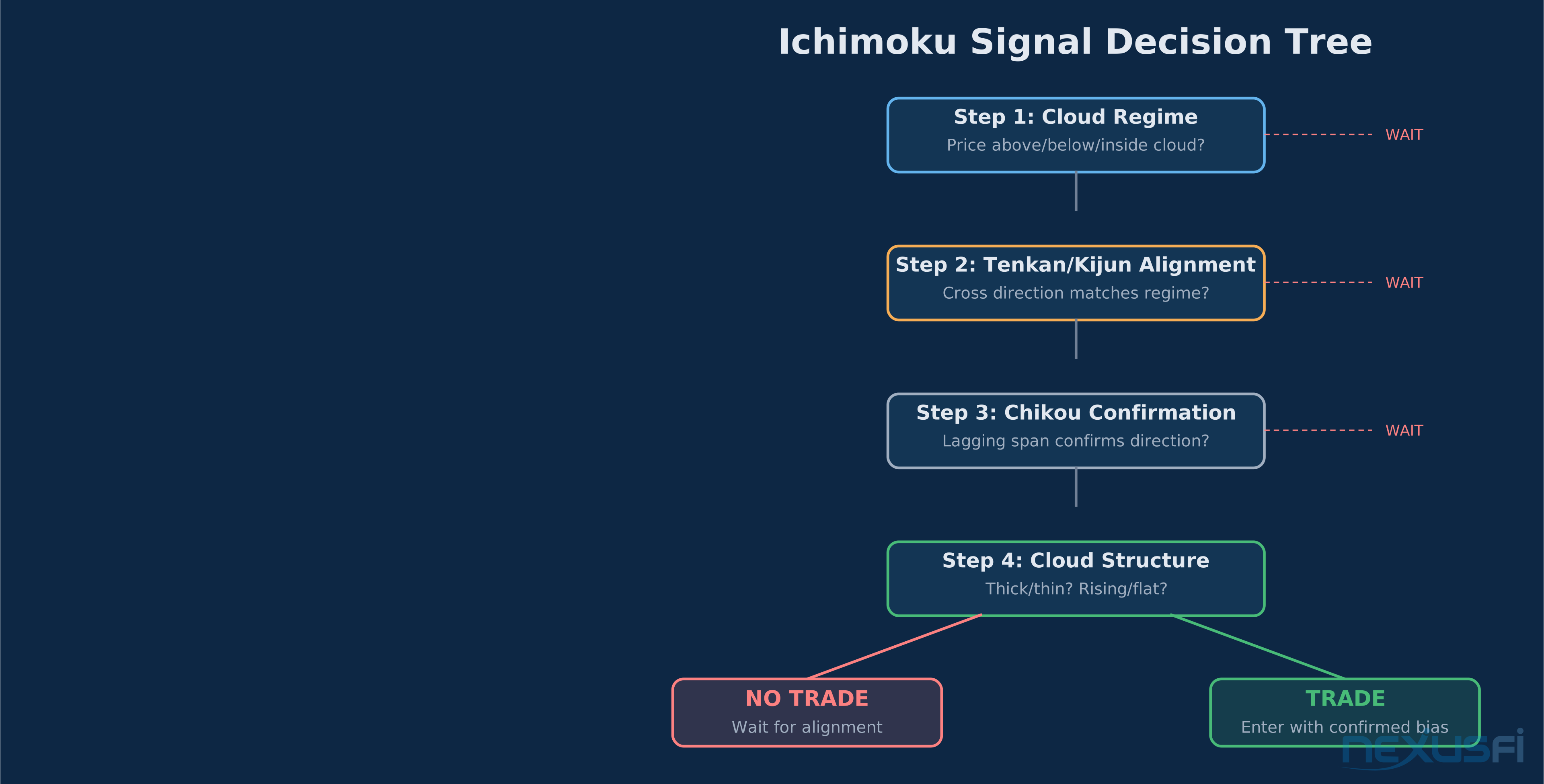
Ichimoku signals follow a hierarchy. Context first, trigger second — identical to how price action trading works.
The Decision Tree #
Step 1: Read the regime. Where is price relative to the cloud? This determines your directional bias. Above = long only. Below = short only. Inside = wait.
Step 2: Check Tenkan/Kijun alignment. Is the Tenkan above Kijun (bullish momentum) or below (bearish)? A bullish cross (Tenkan moving above Kijun) when price is above the cloud is a strong signal. The same cross inside the cloud is unreliable.
Step 3: Confirm with Chikou. Is the Chikou Span above the price bars 26 periods back? If yes, current momentum exceeds past momentum — confirmation. If no, you're potentially fighting positioning from the recent past.
Step 4: Evaluate cloud structure. Is the cloud thick or thin? Rising or flat? A thick, rising cloud supports continuation trades. A thin, flat cloud suggests the trend is exhausted and reversal risk is higher.
Signal Strength Grading #
@Grantx [laid out the grading framework] [2] that experienced Ichimoku traders use:
- Location of the Tenkan/Kijun cross (above, below, or inside the cloud)
- Gap between Tenkan and Kijun (expanding or contracting)
- Kumo twist present or absent
- Cloud slope (flat or angled)
- Cloud color
- Chikou Span location relative to price
- Price relationship to all components
"This sounds like a lot but you see it instantly after a while," Grantx notes. "It really is very easy. You want to wait for strong signals." That grading system separates high-probability setups from noise — and the discipline to wait for strong signals is what makes the difference.
Trading Strategies for Futures #
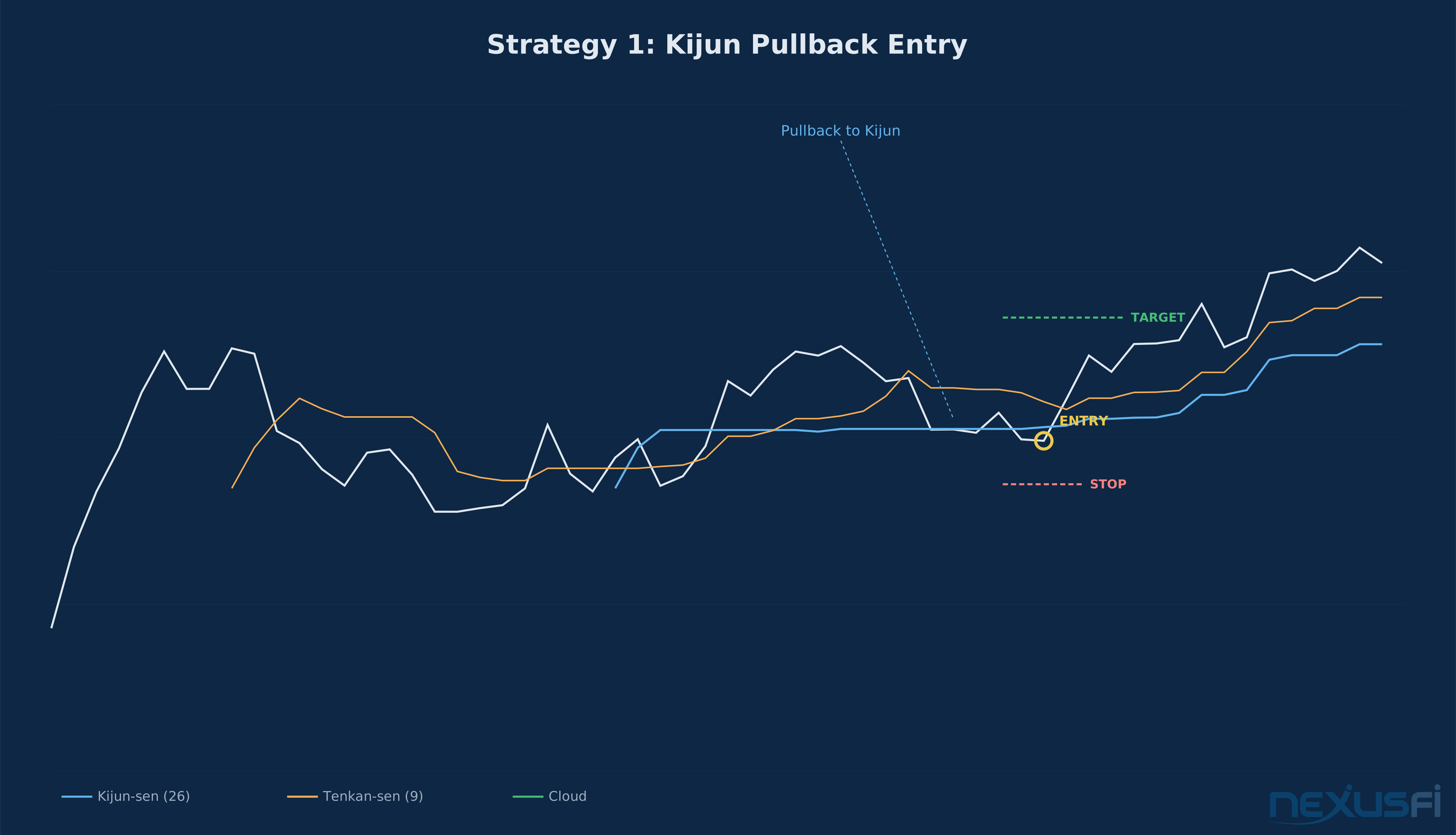
Strategy 1: Trend Continuation with Kijun Pullback #
The highest-probability Ichimoku setup. Period.
Setup: Price is above the cloud. Kijun slope is positive (or at least not declining). The trend is established.
Trigger: Price pulls back to the Kijun and holds. A rejection candle forms at or near the Kijun level. Enter long on the break of the rejection candle.
Stop: Below the retest swing low or below the Kijun, whichever provides a structural reference.
Target: Prior swing high for first target (1R). Trail the rest under the Tenkan as price advances. Exit if price closes back into the cloud.
Why it works: The Kijun is the market's equilibrium line. In a trending market, pullbacks to equilibrium are buying opportunities. The cloud confirms the trend, and the Kijun provides the entry location. This is structurally identical to the with-trend pullback — Ichimoku just gives you the levels automatically.
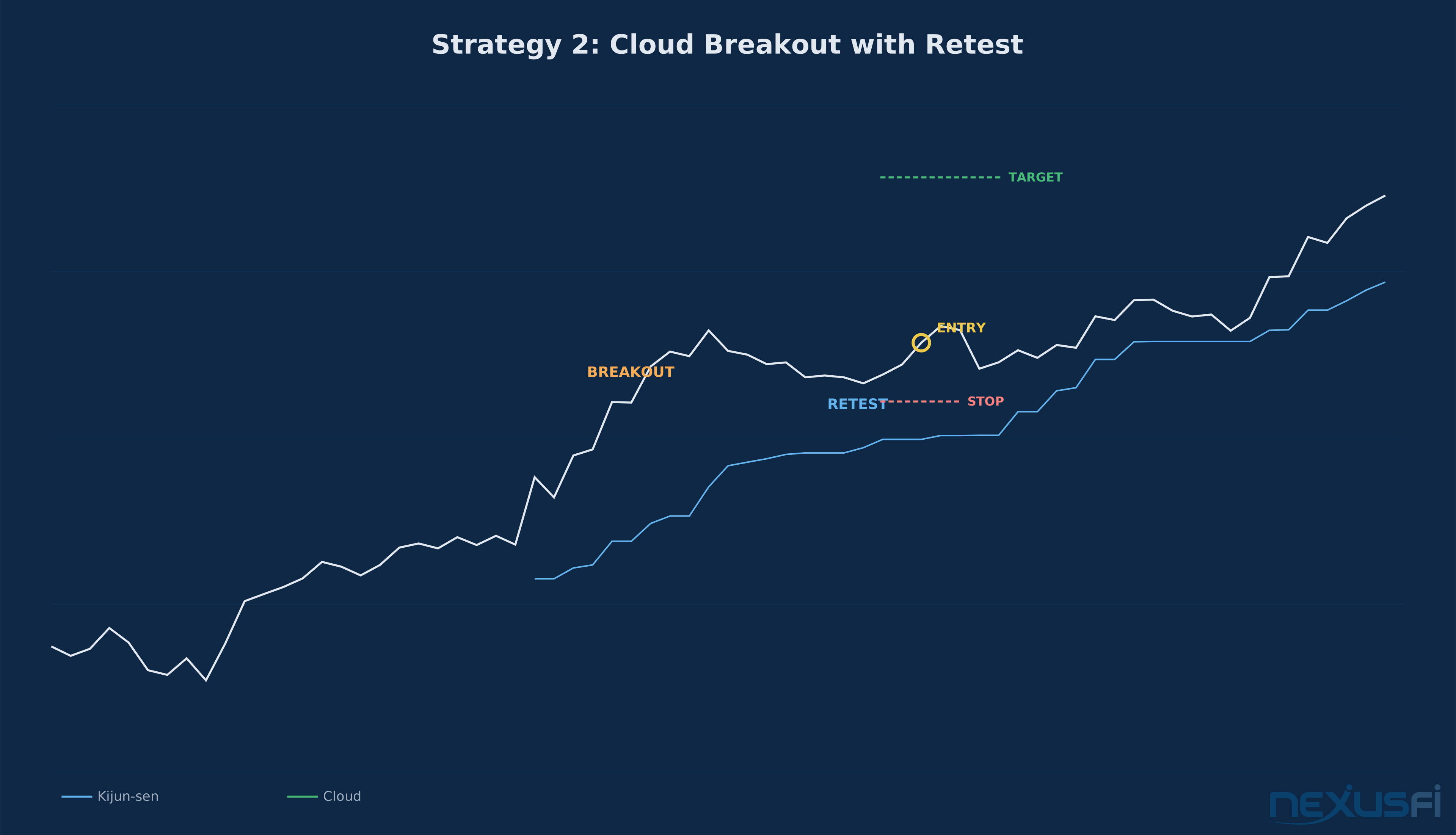
Strategy 2: Cloud Breakout with Retest #
Setup: Price breaks above (or below) the cloud boundary. Tenkan is aligned with the breakout direction (above Kijun for longs).
Trigger: After the initial break, price retests the cloud edge and holds. Enter on the rejection/hold confirmation. Don't chase the initial break.
Stop: Below the retest low or back inside the cloud.
Target: Next structural level or 1.5-2x risk.
Why the retest matters: Cloud breaks can be stop hunts, especially in NQ and CL where liquidity-driven fakeouts are common. Waiting for the retest filters out false breaks and puts your entry near the structural level rather than at the extended tip of the initial move.
As @Hifive5 [demonstrated in his Kumo breakout strategy] [5], the entry conditions require "Price above clouds... and OFFSET between cloud and price has to be above 5 ticks" — building in a buffer against marginal breaks that immediately reverse.
Strategy 3: Multi-Timeframe Confluence #
Setup: The 15-minute chart shows a clear bullish or bearish cloud regime. Use this as your directional bias.
Trigger: On the 5-minute chart, wait for a Tenkan/Kijun cross in the direction of the 15-minute bias. Enter on the cross confirmation or on the subsequent pullback to the 5-minute Kijun.
Stop: Below the 5-minute structural level (swing low, Kijun, or cloud edge).
Target: Manage on the 5-minute chart; exit if either timeframe's regime contradicts your position.
This approach aligns short-term timing with longer-term structure. The 15-minute cloud filters out the noise that plagues single-timeframe Ichimoku trading.
Strategy 4: Cloud Edge Mean Reversion (Range Days Only) #
Setup: Price is repeatedly entering the cloud but failing to break through. The Kijun is flat. Cloud is thickening — indicating congestion.
Trigger: Rejection candle at the cloud boundary. Tenkan turning in the fade direction.
Stop: Beyond the rejection extreme.
Target: Opposite cloud edge or the Kijun midpoint.
Caution: This is the weakest Ichimoku strategy. It works on genuine range days but gets demolished during trend days when the cloud break finally sticks. Use session context: if ES has been chopping for 90+ minutes with no directional commitment, range conditions are likely. If there's been a strong directional open, skip this setup entirely.
Instrument-Specific Notes #
ES (S&P 500 E-mini) #
The cleanest instrument for Ichimoku. ES respects cloud levels and Kijun pullbacks more reliably than the other index futures. Trend continuation entries (Strategy 1) work especially well on the 5-minute chart.
Best practice: Use slightly slower confirmation — require a candle close above/below the Kijun or cloud edge rather than tick-level triggers. ES moves deliberately enough that the extra confirmation bar improves hit rate without costing much in entry price.
NQ (Nasdaq 100 E-mini) #
More volatile than ES, which means faster signal generation but also more whipsaws. Tenkan/Kijun crosses fire more frequently and produce more false positives.
Best practice: Wider stops (volatility-adjusted, using ATR as a buffer). Require stronger retest confirmation — price should reject and hold the cloud edge for 1-2 bars before entry, not just touch it. The breakout + retest strategy (Strategy 2) outperforms raw crossover entries in NQ.
CL (Crude Oil) #
CL experiences frequent regime shifts that make inside-cloud trading especially dangerous. The market can oscillate between bearish and bullish cloud regimes within a single session. Liquidity dynamics around inventory reports and geopolitical news create sharp moves that Ichimoku signals can't anticipate.
Best practice: Be strict. Require cloud regime + clear rejection/hold before entry. Consider using 15-minute Ichimoku for bias and 5-minute (or even 1-minute) for entry timing. Avoid pure cloud-break entries around scheduled reports — the move often retraces before the real direction emerges.
@Fat Tails [noted on NexusFi] [1] that "the Ichimoku system is a trend following system and will generate false signals in sideways markets. However, it works very well in trending markets." For CL, which can cycle between trending and range-bound conditions within a day, pre-filtering for regime type is essential.
Period Settings: Default vs. Adjusted #
The standard Ichimoku periods — 9, 26, 52 — were designed by Hosoda for daily charts during Japan's 6-day trading week. The 9 represents roughly half a month of trading days, 26 is one month, and 52 is two months.
For intraday futures trading, these defaults can work on 5-minute and 15-minute charts where they represent roughly 45 minutes, 2+ hours, and 4+ hours of data respectively. Many traders find this reasonable for capturing intraday structure.
However, as @Tymbeline [pointed out] [4], "traditional Ichimoku settings are based on daily charts for stock trading from the 6-day-week days, and have very little to do with what many people are trying to use them to trade." She suggested adjusted settings like 4-12-24 for fast intraday charts — proportionally shortened while maintaining the relationship ratios.
The honest answer: both approaches have advocates and neither is definitively superior. Start with defaults on your timeframe. If signals are too slow (you're entering well after the move starts), test shorter periods. If signals are too noisy (frequent whipsaws), you may need longer periods or a higher timeframe chart.
What you should NOT do is improve periods until you find the "perfect" settings on historical data. That's curve-fitting, and the settings will fail forward.
When Ichimoku Fails #
Inside-cloud environments. When price is trapped in the cloud, every Tenkan/Kijun cross looks like a signal. It's not. Inside-cloud trading is the single most common Ichimoku failure mode. Unless you have strong additional confirmation (order flow, market internals), stay out when price is inside the cloud.
Low-volatility compression. When the cloud narrows to a thin band and the Kijun goes flat, Ichimoku can't tell you direction — only that a move is building. The trigger will come eventually, but premature entries during compression get stopped out by the noise.
News-driven volatility. FOMC, NFP, CPI — Ichimoku signals are meaningless in the minutes surrounding major releases. The bars don't represent normal auction behavior. Wait for new structure to form.
Extended discovery sessions. When ES is printing all-time highs or multi-month lows, there's no historical cloud structure to reference. The cloud needs prior price action to calculate its levels. In true discovery, order flow and tape reading carry more weight than Ichimoku levels.
Integration with Other Tools #
Ichimoku provides trend direction and dynamic support/resistance. It doesn't give you volume information or microstructure context. The strongest Ichimoku traders combine the cloud framework with:
- Volume Profile: Ichimoku tells you the trend. Volume Profile tells you where the acceptance and rejection levels sit. A Kijun pullback that coincides with a high-volume node is a higher-conviction entry than one in empty space.
- Moving Averages: Some traders overlay a 20 EMA or VWAP alongside Ichimoku. While redundant in some ways (the Kijun serves a similar function), VWAP anchoring provides institutional context that Ichimoku's range-based calculations don't capture.
- RSI or Stochastic: An overbought/oversold reading at a cloud boundary adds confluence. Ichimoku alone doesn't measure momentum exhaustion.
- Market Internals: For ES and NQ, checking advance/decline and $TICK confirms whether the broader market supports your Ichimoku read. A bullish cloud setup with deteriorating internals is lower conviction.
Practical Workflow #
Before the session (10-15 minutes):
- Load your Ichimoku chart (5-min or 15-min). Identify the cloud regime: price above, below, or inside.
- Note the Kijun slope. Rising, falling, or flat? This tells you trend quality.
- Mark where the cloud narrows ahead — these are potential regime-change zones.
- Check the economic calendar. If FOMC or inventory data is on deck, adjust position size or plan to wait.
During the session:
- If price is above the cloud: only look for longs. Wait for pullbacks to the Kijun or cloud edge.
- If price is below the cloud: only look for shorts. Same logic, reversed.
- If price enters the cloud: reduce or stop trading. Wait for the breakout and confirmation.
- If a cloud break occurs: don't chase. Wait for the retest.
After the session (5 minutes):
- Did you follow the regime filter? Did every entry align with the cloud direction?
- Were there pullbacks to the Kijun that you missed? What would have made you take them?
- Were there inside-cloud entries you took anyway? What was the result?
The Ichimoku Cloud is one of the most complete single-indicator frameworks available to futures traders. It won't replace depth of market analysis or order flow reading, but it provides a structural foundation that keeps you on the right side of the trend and gives you objective levels for entry, stop, and target. The discipline is in trusting the cloud — staying out when it says wait, and acting when alignment is clear.
Knowledge Map
Prerequisites
Understand these firstGo Deeper
Build on this knowledgeReferences This Article
Articles that build on this topicCitations
- — ICHIMOKU indicators for day trading ES MINI (2018) 👍 7“Price vs. Kijun and Ichimoku trend filters”
- — ICHIMOKU indicators for day trading ES MINI (2018) 👍 2“Signal quality grading framework”
- — ICHIMOKU indicators for day trading ES MINI (2018) 👍 2“Chikou span for eliminating false signals”
- — ICHIMOKU indicators for day trading ES MINI (2018) 👍 3“Adjusted settings for intraday charts”
- — Ichimoku Kumo breakout strategy ... (2011) 👍 9“Kumo breakout strategy with offset buffer”