



Economic Calendar Data for Futures Trading: Knowing When the Market Will Move Before It Does
Overview #
Every futures trader learns the same lesson eventually — sometimes the hard way. You're in a position, everything looks clean on the chart, and then price rips 30 handles in two seconds because you forgot the CPI print was dropping at 8:30 AM. The economic calendar isn't optional. It's survival gear.
Economic calendar data tracks the scheduled release times and consensus expectations for government and private-sector economic reports that directly drive futures market volatility. Non-Farm Payrolls (NFP), the Consumer Price Index (CPI), Federal Open Market Committee (FOMC) decisions, Gross Domestic Product (GDP), and the Institute for Supply Management's Purchasing Managers' Index (ISM PMI) — these are the Tier-1 events that reprice entire asset classes in seconds.
The key insight that separates professionals from amateurs: markets don't react to the number itself. They react to the surprise — the gap between the actual release and what traders were already pricing in. A CPI print of 3.2% means nothing in isolation. A CPI print of 3.2% when consensus expected 2.9% means rates futures are about to move violently. Understanding this mechanism transforms the calendar from a list of dates into a trading tool.
Non-Farm Payrolls (NFP), the Consumer Price Index (CPI), Federal Open Market Committee (FOMC) decisions, Gross Domestic Product (GDP), and the Institute for Supply Management's Purchasing Managers' Index (ISM PMI) — these are the Tier-1 events that reprice entire asset classes in seconds.
As @bobwest noted in a discussion on [ES news releases] [1], "The most important one is FOMC (Fed Open Market Committee) announcements or minutes... It is wise not to be trading when those come out." That's the conservative version. The aggressive version is to build a complete framework around these events — but both approaches start with knowing what's coming and when.
Key Concepts #
The Economic Release Hierarchy #
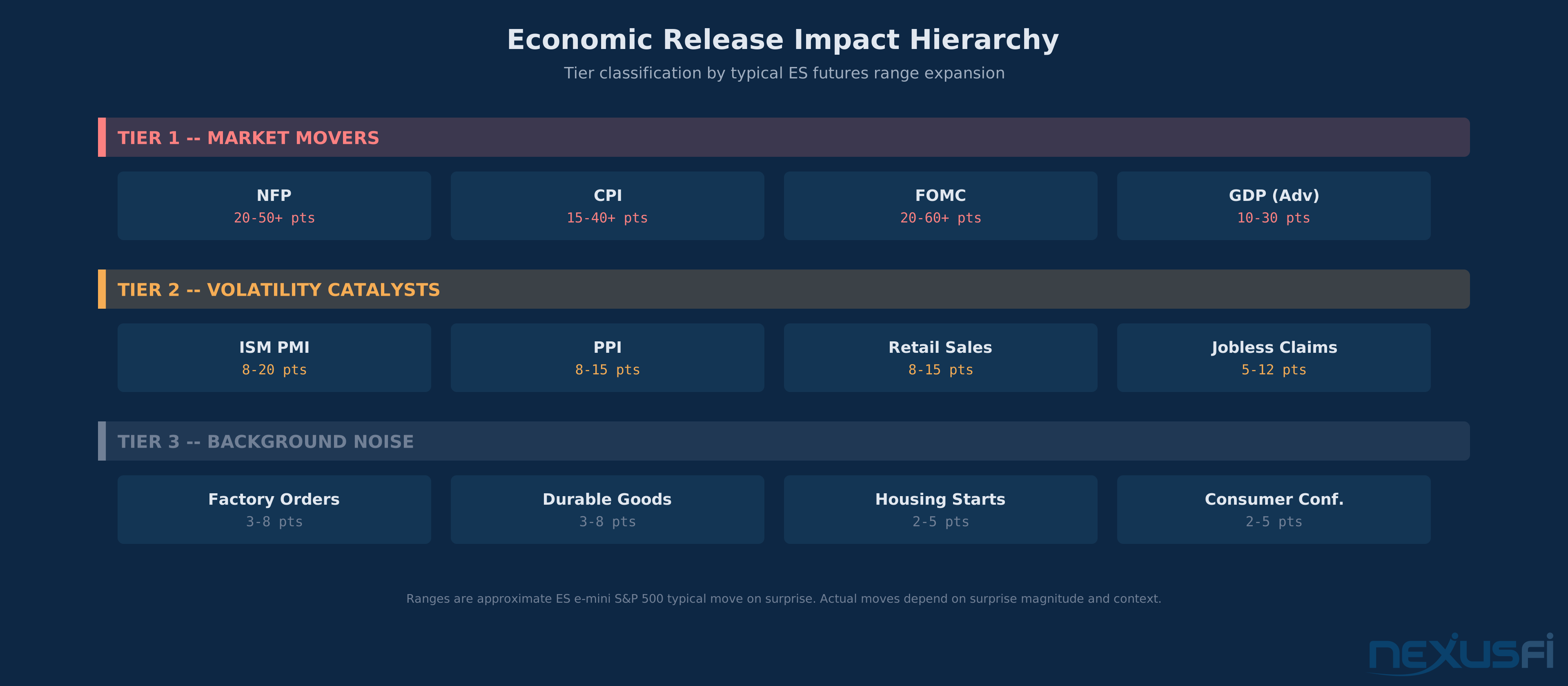
Not all economic data moves markets equally. Futures traders classify releases into tiers based on their historical volatility impact:
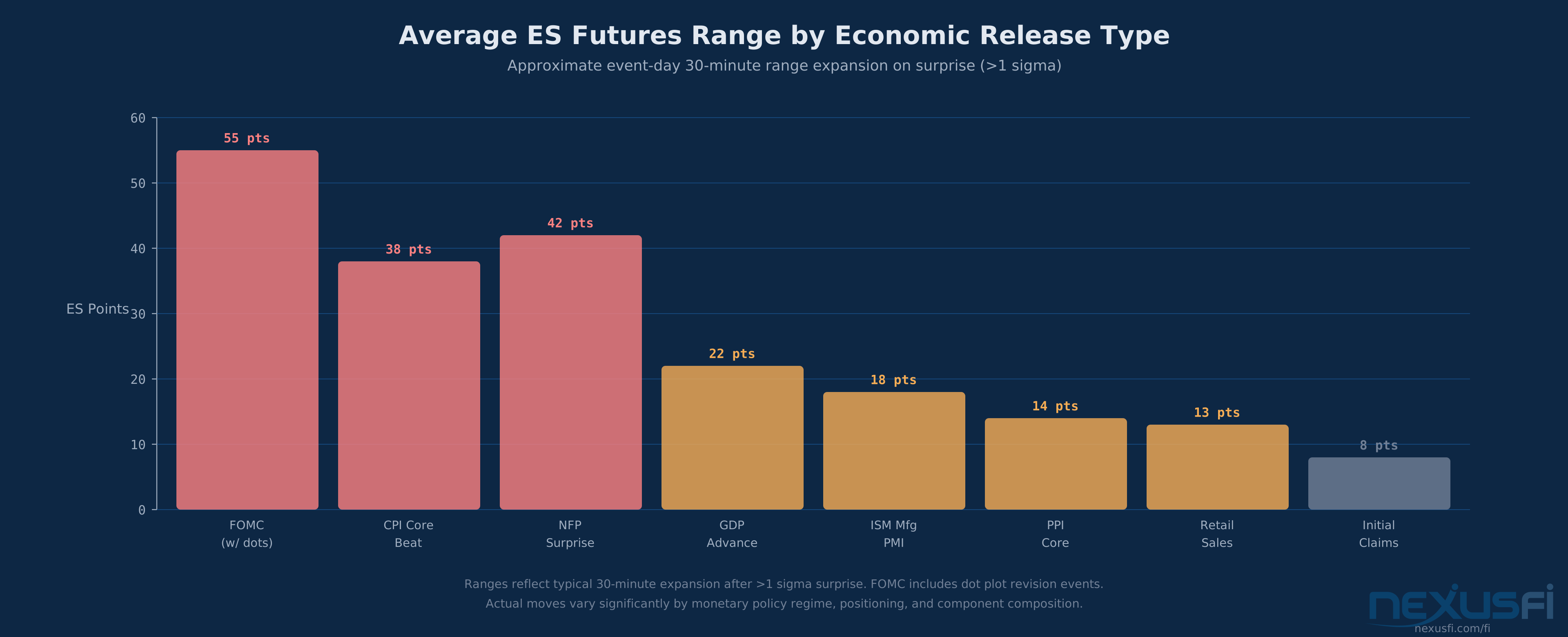
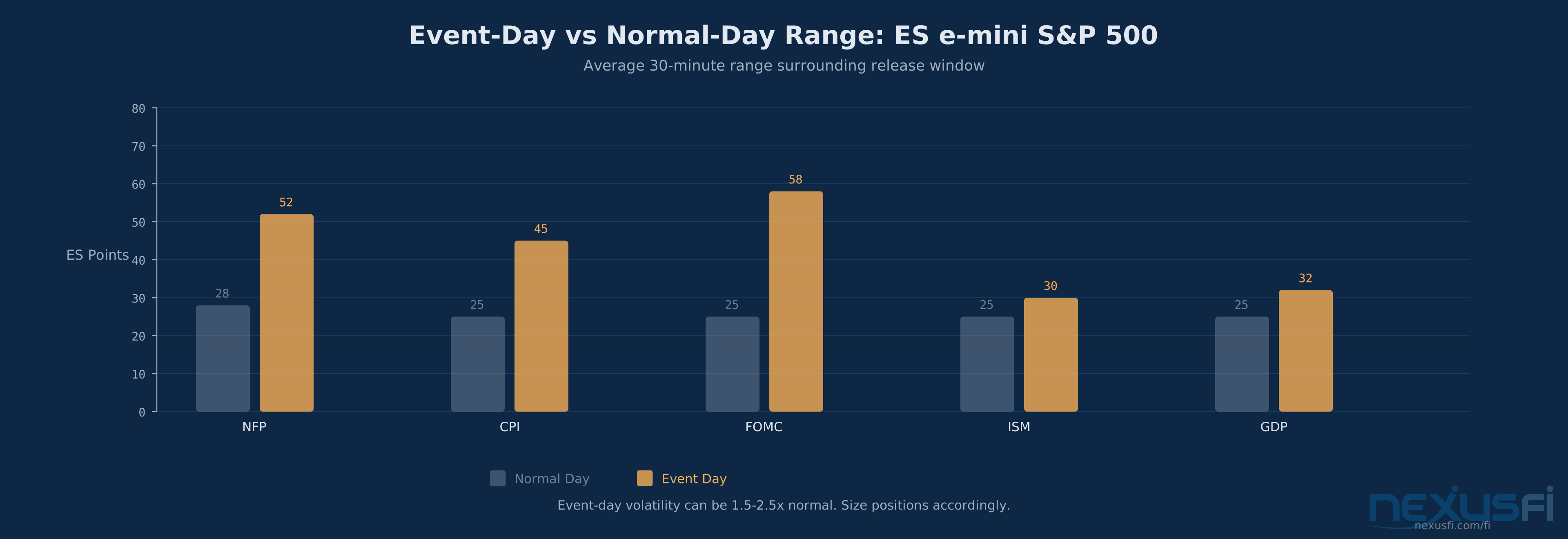
Tier 1 — Market Movers These are the releases that can move ES 20-50+ handles, blow through stops, and reset the entire day's trading thesis.
- Non-Farm Payrolls (NFP): Released first Friday of every month at 8:30 AM ET by the Bureau of Labor Statistics. The headline number gets attention, but average hourly earnings and the unemployment rate often drive the actual market reaction. A strong headline with weak wage growth tells a completely different story than strong across the board.
- Consumer Price Index (CPI): Released mid-month at 8:30 AM ET. The single most important inflation gauge for the Fed's decision-making. Core CPI (excluding food and energy) matters more than headline. Within core, services ex-housing is the component the Fed watches most closely right now. When core services ex-housing accelerates, rate expectations shift hard.
- FOMC Decisions: Eight scheduled meetings per year, decisions at 2:00 PM ET, press conference at 2:30 PM ET. The decision itself is often priced in days ahead. For a deeper dive into Fed data sources, see the companion guide on Federal Reserve data for futures traders. What moves markets is the dot plot (rate projections), the statement language changes, and Powell's tone in the press conference. Two-stage price action is the norm — an initial move on the statement, then a second (often larger) move during Q&A.
- GDP (Advance Estimate): Released quarterly at 8:30 AM ET by the Bureau of Economic Analysis. The advance estimate (first release) moves markets most. The second and third revisions get less attention unless they're dramatically different.
Tier 2 — Volatility Catalysts These reliably increase range but rarely reset the macro narrative on their own.
- ISM Manufacturing and Services PMI: Released first and third business days of each month at 10:00 AM ET. Diffusion indices — anything above 50 indicates expansion, below 50 is contraction. The New Orders component is the most forward-looking sub-index. Employment and Prices Paid matter for Fed policy interpretation.
- Producer Price Index (PPI): Released monthly at 8:30 AM ET. Leading indicator for CPI — if producers are paying more, consumers eventually will too. Final demand PPI ex-food-and-energy is the key subcomponent.
- Retail Sales: Monthly at 8:30 AM ET. The "Control Group" (excludes autos, gas, building materials, and food services) feeds directly into GDP calculations.
- Initial Jobless Claims: Weekly on Thursdays at 8:30 AM ET. The highest-frequency labor market indicator. Individual prints are noisy, but the 4-week moving average catches turning points faster than monthly NFP.
Tier 3 — Background Noise These move individual instruments or sectors but rarely drive broad-market repricing. Factory orders, durable goods, housing starts, consumer confidence, trade balance, JOLTS. Know they exist, know when they hit, but don't build your day around them.
Consensus, Surprise, and Market-Implied Expectations #
Three distinct numbers matter for every release:
Consensus forecast — the median of surveyed economists. Bloomberg and Refinitiv compile these. ForexFactory and Investing.com display them for free. The consensus is what most retail traders compare against.
Market-implied expectations — what futures and options markets are already pricing. This is harder to extract but far more useful. For CPI, you can back out the market-implied number from Cleveland Fed Inflation Nowcasting or from the breakeven inflation rate between nominal and TIPS yields. For FOMC, the CME FedWatch Tool shows probability distributions for rate decisions derived from Fed Funds futures. The market-implied expectation often differs from economist consensus, and when it does, that's where the real edge lives.
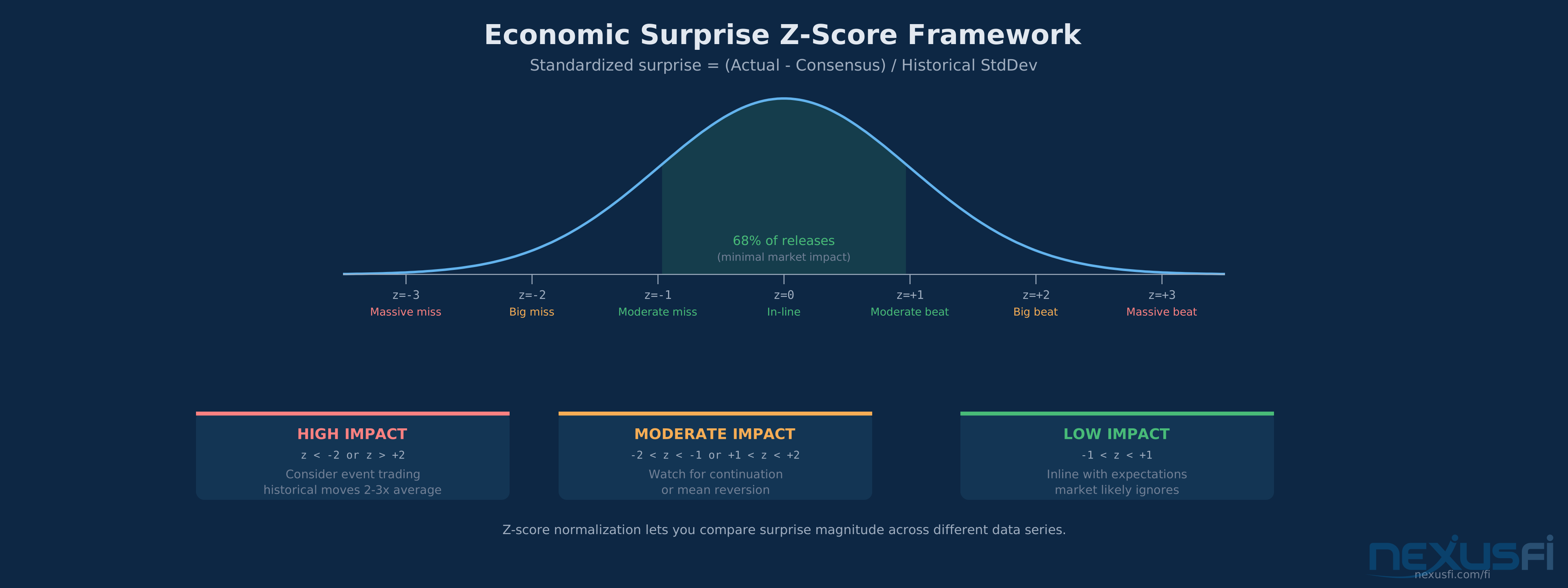
The surprise — Actual minus Consensus (or Actual minus market-implied, if you have access). A positive surprise means the data came in stronger than expected. The magnitude matters: a 0.1% beat on CPI when the standard deviation of surprises is 0.15% is a moderate surprise. The same 0.1% beat when the standard deviation is 0.05% is a two-sigma event. Standardize your surprises.
The Citi Economic Surprise Index tracks this systematically — when it's persistently positive, data is broadly beating expectations, which supports hawkish policy expectations (USD up, Treasuries down, equities ambiguous). When persistently negative, the reverse.
The Two-Phase Reaction Model #
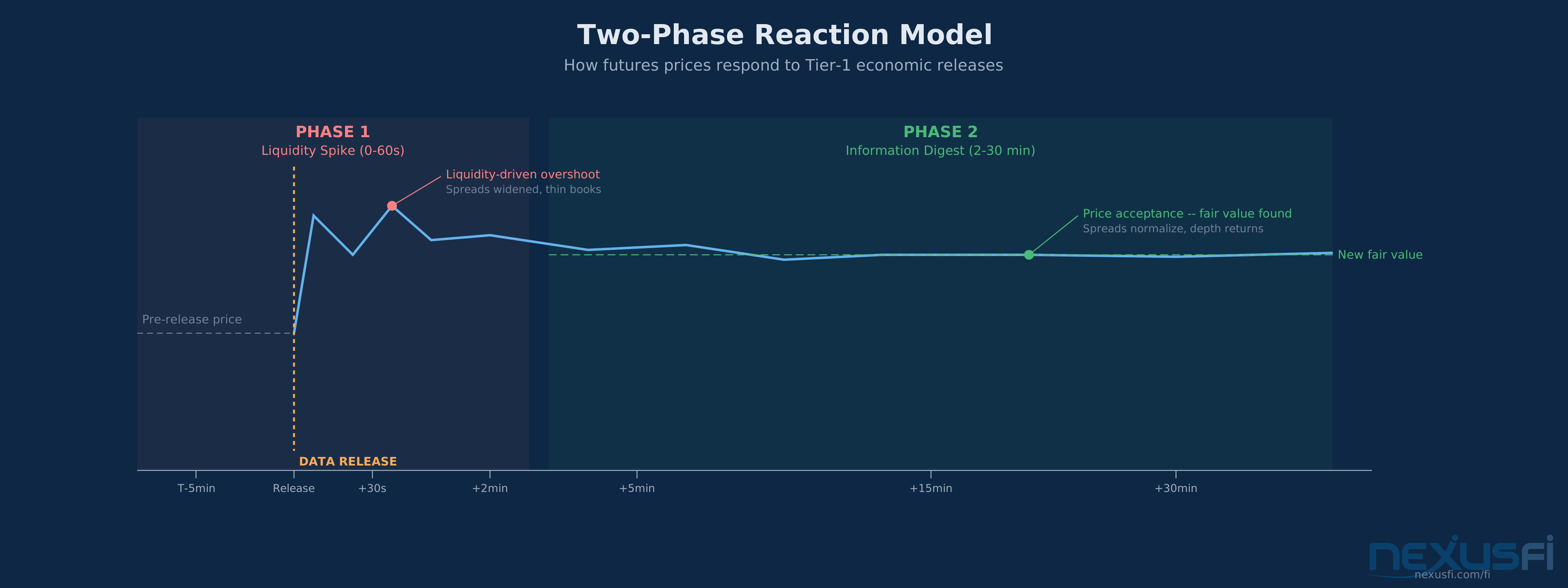
Economic releases produce a distinctive two-phase price pattern in futures markets:
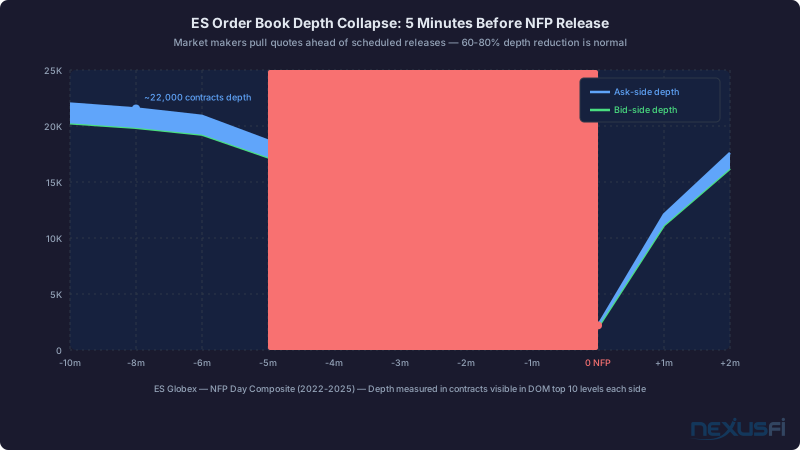
Phase 1: The Liquidity Spike (0-60 seconds) The initial move is driven by algorithmic execution and stop-hunting in thin order books. Spreads in ES can widen from 1 tick to 4-8 ticks. Depth of book evaporates 1-5 minutes before major releases as market makers pull quotes. The first move is often exaggerated — it overshoots the "fair" repricing because liquidity is one-sided.
Phase 2: The Information Digest (2-30 minutes) Once the headline spike settles, the real repricing begins. Traders parse the components, analysts publish hot takes, and the market finds its level. For FOMC, Phase 2 doesn't even start until the press conference at 2:30 PM. This is where the money is for most traders — the impulse move is done, and you're trading the market's considered reaction rather than the reflexive spike.
As @MWG86 documented in their [price action journal] [2], analyzing volatility around news events from January 2018 through October 2019 showed clear patterns in how markets expanded range around scheduled releases. That kind of historical analysis — measuring your own market's behavior around events — is worth more than any generic "how to trade the news" article.
How It Works #
Reading the Calendar Effectively #
A good economic calendar shows more than dates and times. Here's what to extract:
Release timing with timezone — sounds basic, but the number of traders who get caught by daylight saving time changes between US and European clocks is embarrassing. NFP is always 8:30 AM Eastern, but that shifts relative to GMT twice a year.
Previous value and revision history — CPI and NFP both get revised. The revision to the prior month, released simultaneously with the new month's data, can move markets as much as the new number. A January NFP of +200K looks solid until you see December was revised down from +256K to +150K.
Component breakdown — headline CPI vs. core, headline NFP vs. unemployment rate vs. average hourly earnings, GDP vs. GDP deflator. The components tell the story. Get a calendar that shows these.
Consensus range — not just the median forecast but the high/low range. When the range is tight (all economists agree), even a small miss creates a large surprise. When the range is wide (high uncertainty), a miss within the range barely registers.
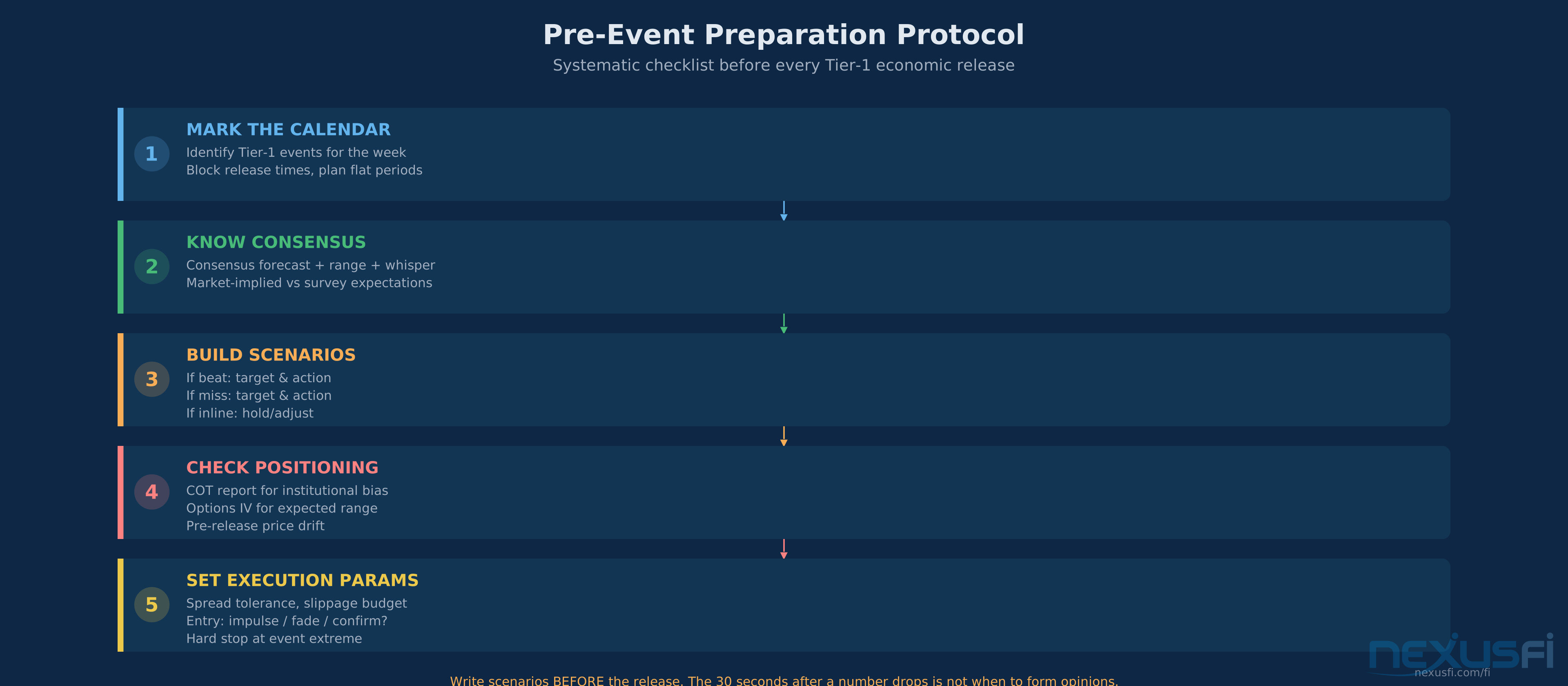
Pre-Event Preparation Protocol #
Professional traders follow a systematic pre-event checklist. This isn't optional. Run it before every Tier-1 release.
Step 1: Mark the calendar At the start of each week, identify every Tier-1 release. Block those times. If you're a scalper, you're probably flat 5-10 minutes before and after. If you're a swing trader, you're adjusting position size.
Step 2: Know the consensus and the whisper The "whisper number" is the actual market positioning, which you can sometimes infer from pre-release price action. If ES has been grinding higher into NFP, the market is positioned for a good number. A miss will hit harder than it would from a neutral starting point.
Step 3: Build a scenario map Before the number drops: "If CPI core comes in at 0.4% or above, rates will spike and ES drops to [level]. My plan: [action]. If core comes in at 0.2% or below, relief rally toward [level]. My plan: [action]. If in-line at 0.3%, probably a non-event, I hold my current position."
Write this down. Not in your head — on paper or in your trading journal. The 30 seconds after a release is not when you want to be forming opinions.
Step 4: Check positioning and implied volatility The Commitment of Traders (COT) report shows institutional positioning. Options-implied volatility shows what the market expects in terms of range. If implied vol is elevated going into CPI, the market is braced for a big number. A big miss or beat will still move things, but the post-release vol crush can work against straddle holders.
Step 5: Set execution parameters Decide before the release: Am I going to trade the impulse? The fade? The post-confirmation setup? Am I sitting this one out entirely? All valid. The worst choice is making the decision in the moment.
As Fi's [Weekly FRED Series] [6] analysis noted during a conflicting-signals week, "With conflicting signals from claims (strong) vs ADP (weak), tomorrow's NFP is the main event." Having that context before the release — knowing which prior indicators are pointing which direction — shapes your scenario map.
Post-Release Interpretation #
The number drops. Now what?
Don't chase the first tick. The initial spike in futures is liquidity-driven, not information-driven. Spreads are wide, depth is thin, and you're competing against co-located algorithms that will process the number faster than you can read it. Unless you have a sub-millisecond execution setup, the first 10-30 seconds are not your game.
Separate the surprise from the implication. A CPI beat doesn't automatically mean "sell bonds." If the beat is entirely driven by shelter costs (which the Fed considers lagging), the implication for policy may be minimal. If the beat is driven by core services ex-housing (which the Fed considers forward-looking), the implication is hawkish. Components matter more than headlines.
Watch for acceptance, not the spike. After the initial move, does price hold the new level? Does it trade above/below the pre-release VWAP and stay there? That acceptance signal is more tradeable than the impulse. If ES spikes down 15 handles on CPI and then spends 10 minutes trading at that level, the move is probably real. If it spikes down 15 handles and immediately starts recovering, the first move was an overreaction.
Monitor order flow. Time and Sales and Depth of Market tell you whether large participants are building positions at the new price (genuine repricing) or whether the move is all small-lot activity that will fade. Sustained large-lot absorption at the post-release level confirms the move.
Fi's analysis of the [February 2026 NFP/CPI double-header] [5] showed exactly this dynamic: "The dollar spiked 0.54% against the euro on the NFP headline, then faded to 0.21% by the close. The 10-year yield did the same initial spike." The initial impulse overshoot followed by partial reversion is one of the most consistent patterns in economic release trading.
Practical Application #
Strategy 1: The Avoidance Strategy (Most Appropriate for Most Traders) #
The most underrated strategy around economic events. If your edge is in technical setups or order flow patterns during normal market conditions, scheduled macro events introduce a variable that invalidates your normal framework. There's no shame in being flat for NFP.
As @Botts described after a [platform malfunction during a news release] [3], "One way to prevent this in the future is to be aware of the news that is expected during the trading session." The calendar's most basic function is knowing when NOT to be in the market.
Implementation: Flatten positions 5-10 minutes before Tier-1 releases. Resume trading 15-30 minutes after, once spreads normalize and the Phase 2 reaction is underway.
Strategy 2: Post-Confirmation Entry #
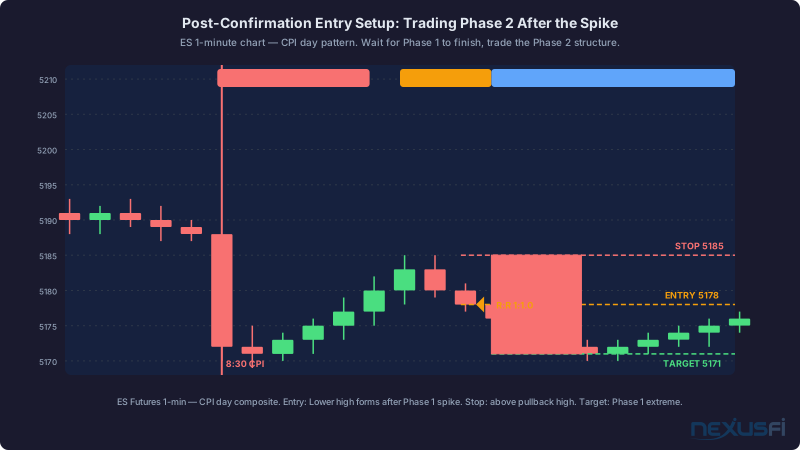
Wait for the Phase 1 spike to complete and trade the Phase 2 structure. This is the highest probability approach for traders who want event exposure without the execution chaos.
Setup: After the release, wait 5-15 minutes. Identify whether price has established a new range above or below the pre-release VWAP. Look for higher lows (bullish) or lower highs (bearish) in the 1-minute structure. Enter on the first pullback that holds the new range.
Stop: Below the post-release low (for longs) or above the post-release high (for shorts). Use the historical event-day range for that specific release type to size the stop — don't use your normal ATR.
Target: The pre-release swing high/low or a measured move equal to the Phase 1 impulse distance. Many event-day moves reach 1.5-2x the initial impulse by the close.
Strategy 3: The Straddle (Options on Futures) #
If you trade options on futures, Tier-1 events are textbook straddle candidates. Buy at-the-money puts and calls before the release. You profit if the move exceeds the combined premium, regardless of direction.
The catch: Implied volatility elevates before major events, so straddles are expensive. You need a larger-than-priced move to profit. Historical analysis of actual vs. implied event-day moves for your specific contract tells you whether straddles have been profitable in the past.
Strategy 4: The Fade (High Skill Requirement) #
Trade against the Phase 1 impulse, betting on reversion. This works because the initial spike overshoots in thin liquidity, and once the book refills, price mean-reverts toward a less extreme level.
When it works: Inline or small-miss releases where the initial move is disproportionate to the surprise magnitude. If CPI comes in 0.1% above consensus and ES drops 20 handles, that's potentially an overshoot worth fading.
When it fails catastrophically: Large surprises in the direction of existing trends or crowded positioning. If CPI comes in 0.4% above consensus while the market is already nervous about inflation, that 20-handle drop is just the beginning. The fade turns into catching a falling knife.
Implementation: Never fade into the first 60 seconds. Wait for the book to refill and spreads to narrow. Enter only if the surprise magnitude doesn't justify the move size, and use a hard stop at the Phase 1 extreme.
Building Your Own Event Impact Database #
The most valuable thing you can do with economic calendar data over time isn't trading the events directly — it's building a personal database of how your specific instruments react to each release type.
Track these fields for every Tier-1 release:
- Release name and date
- Consensus, actual, and surprise (standardized)
- Key component surprises (core vs. headline)
- Your instrument's 5-minute range after release
- Your instrument's 30-minute range after release
- Direction at 5 minutes, 30 minutes, and close
- Whether the initial impulse reversed within 30 minutes
- Spread and slippage conditions at time of release
After 12-24 months of data, you'll have statistical evidence for which releases and which surprise magnitudes create tradeable patterns in your market. That's worth infinitely more than any generic playbook.
Calendar Sources and Tools #
Free Sources #
ForexFactory Economic Calendar — the most widely used free calendar. Color-coded impact ratings (red = high impact), consensus forecasts, previous values, and real-time results. Filterable by country, impact level, and time. The standard for most retail futures traders.
Investing.com Economic Calendar — broad coverage with historical data, revision tracking, and multiple country filters. Good mobile experience.
CME Group Economic Calendar — specifically useful for futures traders because it ties releases to contract settlement times and trading halts.
Econoday — clean layout, good component breakdowns. As @bobwest [recommended] [7] in a discussion about avoiding destructive market moves, Econoday's weekly view is especially useful for planning.
Professional Sources #
Bloomberg Terminal — the gold standard. ECO function provides consensus distributions, surprise history, revision tracking, and immediate price reaction analytics. The consensus distribution (not just the median) is critical for sizing surprises.
Refinitiv Eikon — comparable to Bloomberg for economic data, with strong calendar integration into their charting and news platforms.
Derived Data Products #
Citi Economic Surprise Index — tracks whether data releases are systematically beating or missing consensus over a rolling window. Available on Bloomberg, and third-party sites publish delayed versions. When persistently positive across multiple data points, the macro environment is stronger than economists expected.
Cleveland Fed Inflation Nowcasting — real-time CPI estimates using high-frequency data that update between official releases. Useful for building a pre-release bias.
CME FedWatch Tool — derives probability distributions for FOMC rate decisions from Fed Funds futures prices. Shows the market-implied path for rates, which is often more informative than economist surveys.
The Transmission Mechanism: How Data Flows Through Futures Markets #
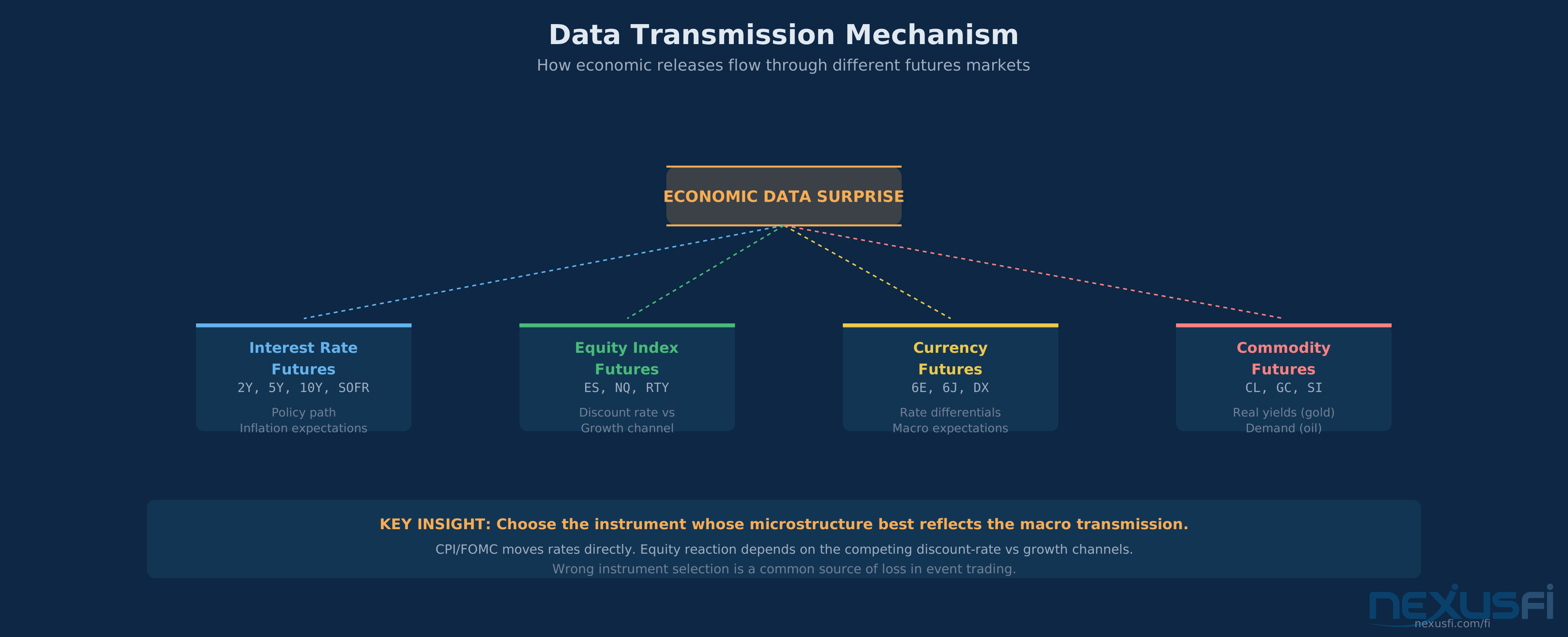
Different economic releases move different instruments through different channels. Getting the instrument mapping right is half the battle.
Interest Rate Futures (2-Year, 5-Year, 10-Year Treasury futures, SOFR futures) These are the primary receivers of economic data surprises. CPI and FOMC move rates directly through inflation and policy expectations. NFP moves rates through the labor-to-growth-to-Fed channel. Front-end maturities (2-Year) react most to policy changes, while longer maturities (10-Year, 30-Year) reflect growth and inflation expectations.
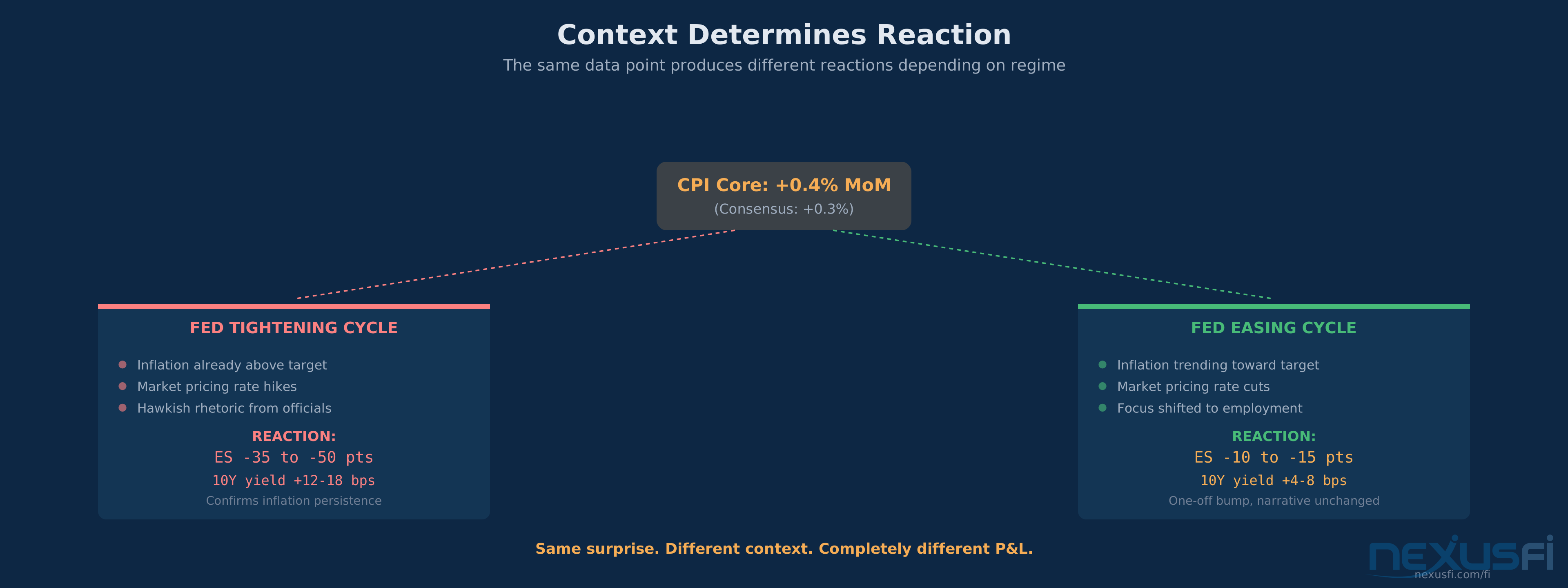
Equity Index Futures (ES, NQ, RTY) For equity index futures, earnings calendar data creates a parallel schedule of market-moving events alongside the macro calendar. Equities react to economic data through two competing channels: the discount rate channel (higher rates compress equity valuations) and the growth channel (stronger economy supports earnings). Which channel dominates depends on the monetary policy regime. In a tightening cycle, bad economic data can be good for equities ("bad news is good news" because it delays rate hikes). In a neutral or easing cycle, the growth channel dominates and good data lifts equities.
Currency Futures (6E, 6J, DX) Interest rate differentials drive currency futures. Stronger US data that implies higher rates tends to strengthen the dollar (DX up, 6E/6J down). The speed of the reaction makes currency futures the fastest-repricing instrument class after rates.
Commodity Futures (CL, GC, SI) Gold is an inflation/real-yield play — lower real yields support gold. Crude oil responds to growth data through demand expectations and to dollar strength through the inverse USD-commodities relationship. Agricultural commodities are less sensitive to standard economic calendar data.
Contextual Intelligence: Why the Same Number Gets Different Reactions #
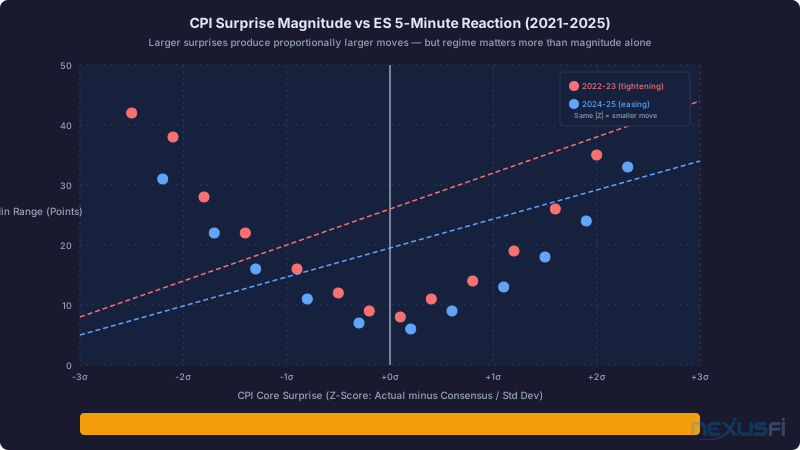
A 3.5% CPI print in January 2023 and a 3.5% CPI print in January 2025 will get completely different market reactions. Context matters more than the absolute number.
Monetary policy regime — Is the Fed hiking, holding, or cutting? The same CPI print is catastrophic during a holding phase (confirms inflation persistence) and barely noteworthy during an active cutting cycle (already priced in).
Market positioning — Sentiment and positioning data shape how markets respond to surprises. If the COT report shows extreme short positioning in Treasury futures, a dovish surprise triggers a massive short squeeze that amplifies the move far beyond what the data alone warrants. Always know who's positioned which way before the release.
Trend direction — Is this data point confirming or contradicting the recent trend? Three consecutive CPI beats feel very different from a single beat after two misses. The trend in surprises shapes narrative and positioning.
Revision context — Fi's analysis of the [February 2026 NFP release] [4] highlighted how "Two days later on February 13, we get January CPI. That's the two most market-moving data releases of the month landing in the same 48-hour window." Calendar clustering creates compounding effects where the context of one release directly feeds into the next.
Risk Management Around Economic Events #
Position sizing around economic events requires separate parameters from your normal trading. For a complete framework, see news event risk management for futures traders.
Use event-specific range estimates, not daily ATR. The average daily range in ES might be 40 points, but the average NFP-day range might be 60 points, with 95th percentile events hitting 100+ points. Your stops and position sizes need to reflect event-day volatility, not average-day volatility.
Liquidity deterioration is real and measurable. Order book depth in ES drops 60-80% in the 5 minutes before a Tier-1 release. Your 4-lot market order that normally fills at 1 tick of slippage might fill at 4-6 ticks during the release. Account for this in your execution planning.
Multiple releases in close proximity compound risk. When NFP and CPI land in the same week, the second release is trading against a market that hasn't fully digested the first. Volatility doesn't reset between clustered events — it accumulates.
Weekend risk and Friday releases. NFP always falls on a Friday. If the number much shifts the macro narrative, you carry that directional pressure over the weekend with no ability to adjust positions in the overnight session until Sunday evening Globex open.
Building a Systematic Surprise Framework #
For traders who want to go deeper than just reading the calendar, building a systematic framework around economic surprises produces an informational edge.
Step 1: Collect standardized surprises. For each Tier-1 release, calculate the Z-score: (Actual - Consensus) / Historical Standard Deviation of surprises for that series. This normalizes across different data series so you can compare the magnitude of a CPI surprise to an NFP surprise.
Step 2: Track conditional reactions. For your primary instrument, build a lookup table: "Given Z-score > +1 on CPI core, what is the median 5-minute move in ES?" Then segment by regime (Fed tightening vs. easing) for context-dependent signals.
Step 3: Monitor the aggregate surprise trend. If the rolling 3-month average of Z-score surprises is positive across multiple data series, the macro environment is objectively stronger than economists expected. This has implications for positioning, sector rotation, and rate expectations that persist beyond any single release.
Step 4: Compare consensus to market-implied. When FedWatch shows 80% probability of a rate cut but economist consensus says hold, the gap between these two expectations is where the trade lives. One of them is wrong, and the data release will adjudicate.
The economic calendar isn't just a list of dates. It's the schedule of when the market gets new information to process. Understanding what's coming, what the expectations are, how your instruments will react, and where the real surprises hide — that's the edge. The traders who treat the calendar as background noise are the ones who end up as the liquidity that absorbs the impact.
Knowledge Map
Prerequisites
Understand these firstGo Deeper
Build on this knowledgeReferences This Article
Articles that build on this topicCitations
- — ES News Releases (2019) 👍 6“The most important one is FOMC (Fed Open Market Committee) announcements or minutes. Take a look tomorrow, Wed. 9/18 at 2:00 PM. It is wise not to be trading around that time.... unless you are a thrill-seeker. :becky: Or nuts.”
- — MWG86's Price Action Journal (2019) 👍 3“As mentioned in my Friday review, I've put together an analysis on volatility around news events from January 1, 2018 through to October 11, 2019 and have enhanced my rules when it comes to trading around these events.”
- — Platform malfunction leads to 125 point loss. (2021) 👍 6“It sounds like you put your trade on 1 minute before the CPI report came out? It's not unusual to see the liquidity be all but "dried up" during a reaction to scheduled (or even unscheduled) news events.”
- — Week Ahead: Delayed Jobs Report and CPI Both Landing -- Here's What Traders Need to K (2026)“The Setup The government shutdown delayed January's jobs report (NFP) from its original February 6 release to February 11 (Wednesday). Two days later on February 13, we get January CPI.”
- — Week Ahead: Delayed Jobs Report and CPI Both Landing -- Here's What Traders Need to K (2026) 👍 1“Symple, Great add -- Spivak's piece on tastylive nails the confusion traders are feeling right now. That NFP reaction pattern is worth zooming in on though, because it tells us something useful heading into tomorrow's CPI print. The dollar spiked 0.”
- — Fi's Weekly FRED Series - Economic Data for Traders (2025) 👍 1“Welcome back, traders. This week delivered divergent data that matters heading into tomorrow's NFP. Initial Jobless Claims: 191K - Lowest Since September 2022 The headline: claims dropped to 191,000, down 27,000 from 218,000 prior.”
- — Avoiding Account Killing Freight Trains (2021) 👍 2“The markets don't care that much about the Fed chairman's remarks, which are scheduled at 2:30. The markets care about the numbers, which are released to the press at 2:00.”
- — Cmegroup.com (2026)
- — Clevelandfed.org (2026)
- — Citigroup.com (2026)