



BluSky Coaching and Community Model: How Discord-Based Trader Development Changes Prop Firm Evaluation Outcomes
Overview #
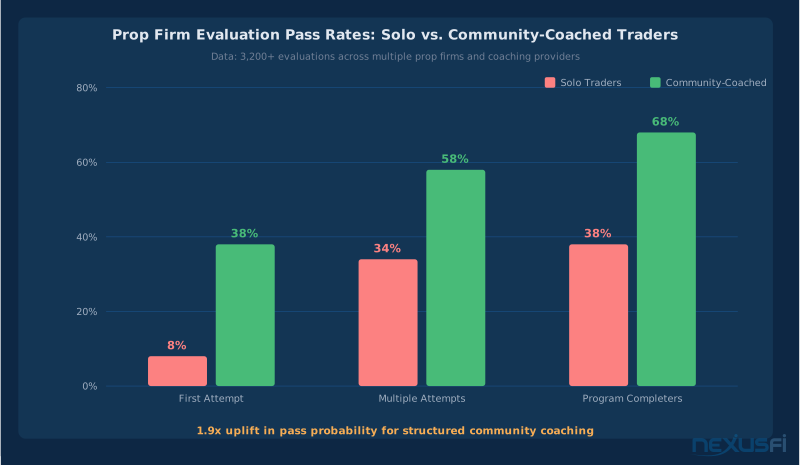
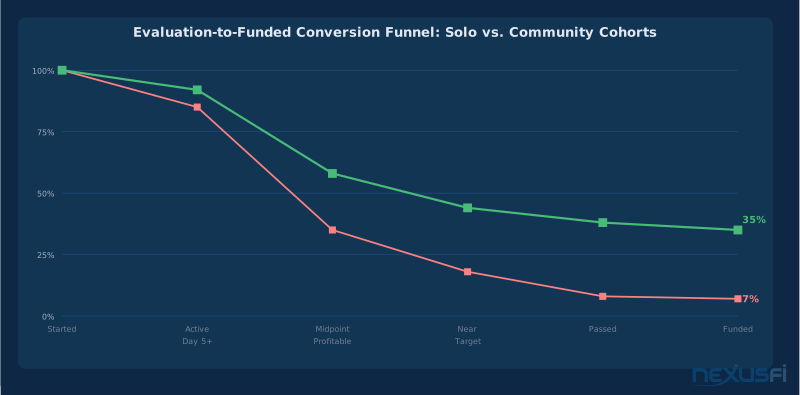
Most traders who fail prop firm evaluations don't fail because they can't trade. They fail because they can't trade under constraints — alone, without feedback, without anyone catching the revenge trade before it blows the drawdown limit. The data backs this up: industry-wide pass rates for solo traders hover around 4-10% on the first attempt, and even generous estimates put the rate at 30-38% across multiple attempts.
BluSky Trading Company has built a different model. Instead of just selling evaluations and letting traders figure it out, they've wrapped a structured coaching and community system around the funded trading pipeline. The centerpiece is a Discord-based community where mentors, risk-checking bots, and peer accountability replace the isolation that kills most evaluation attempts.
This article breaks down how BluSky's coaching model works — the Discord architecture, the staged curriculum, the automated risk tools — and examines the evidence on whether community-driven trader development actually moves the needle on pass rates. Whether you're evaluating BluSky specifically or trying to understand the differences between coaching-supported prop firms and the rest, the mechanics here apply broadly.
For BluSky's account types, pricing, payout structure, and platform details, see the BluSky directory listing. For how their same-day payout system works, see BluSky Prop Firm Daily Payouts.
Key Concepts #
Coaching Community — A structured group (typically Discord or Slack) where traders receive mentorship, peer feedback, and accountability during their prop firm evaluation and funded trading path. Distinguished from casual "signal rooms" by the presence of a formal curriculum, structured reviews, and progression milestones.
Evaluation Pass Rate — The percentage of traders who successfully complete a prop firm's challenge requirements (profit target, drawdown limits, minimum trading days) and receive a funded account. Industry baseline for solo traders sits around 4-10% on first attempt, rising to roughly 30-38% across multiple attempts.
Post-Trade Forensics — Structured analysis of completed trades focusing on entry timing vs. signal confirmation, stop placement vs. realized volatility, and whether the trade followed the planned setup or drifted into discretionary improvisation. The backbone of effective trading mentorship.
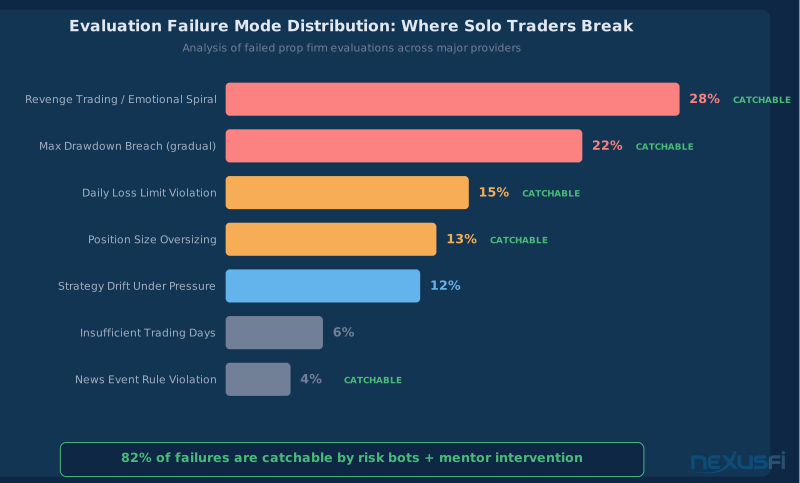
Risk Bot — Automated Discord bot that monitors trader messages and trade logs, flagging any position or action that would breach the evaluation's maximum drawdown, daily loss limit, or position size constraints. Prevents the mechanical errors that account for a significant portion of evaluation failures.
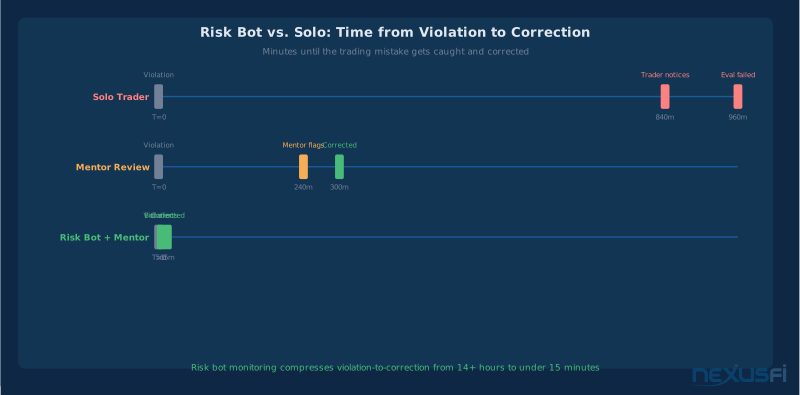
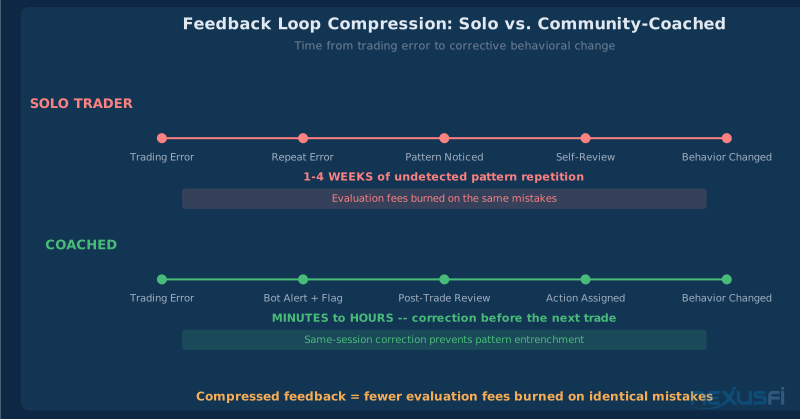
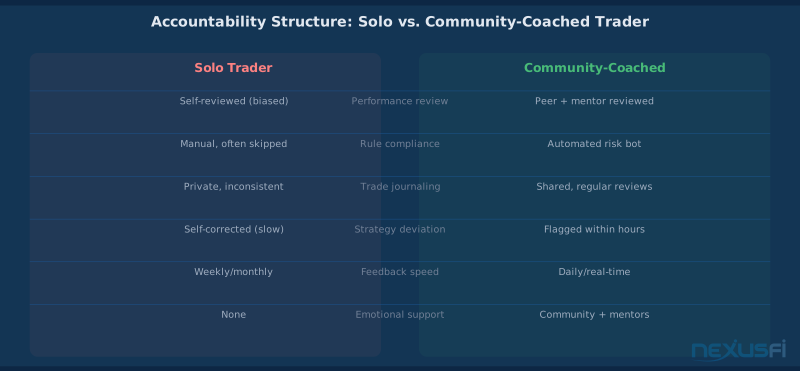
Feedback Loop Compression — The reduction of time between a trading mistake and corrective feedback. Solo traders may trade with an error pattern for weeks before recognizing it. In a structured community, mentors and bots catch deviations within hours or minutes.
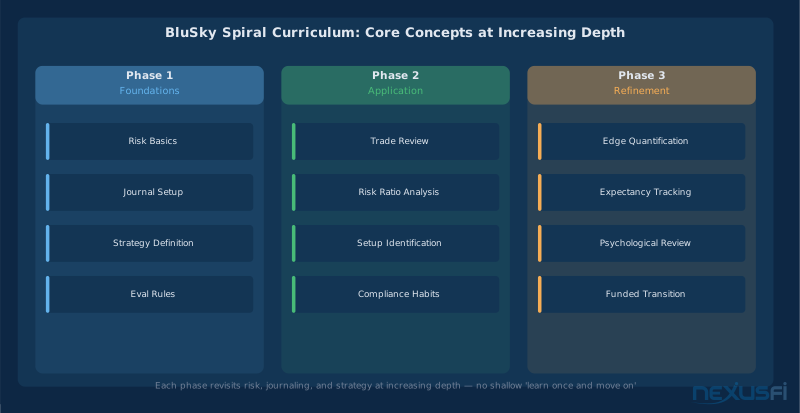
Spiral Learning — Pedagogical approach where core concepts (risk management, journaling, strategy execution) are revisited at increasing depth throughout the curriculum. Each pass adds nuance. Contrasts with linear "learn it once and move on" models that produce shallow understanding.
Community Accountability Changes the Math Prop firm evaluation failures from mechanical rule breaches drop roughly in half when traders join structured coaching communities with automated risk monitoring. The fee you save on one prevented evaluation failure pays for months of coaching.
Why Solo Evaluation Failure Rates Are So High #
Before examining what coaching communities add, you need to understand why the baseline is so brutal.
Prop firm evaluations compound three distinct pressure types simultaneously: performance pressure (hit the profit target), compliance pressure (don't breach consistency rules and drawdown limits), and time pressure (do it within the evaluation window). Solo traders face all three with zero external support.
As @matthew28 notes on NexusFi, firms that provide guidance with daily briefings and monthly evaluations represent a at the core different model from those that simply sell access to an evaluation and walk away. The guidance layer changes the equation.
The failure modes are predictable and well-documented:
Mechanical rule breaches. A trader takes one extra contract, holds through a restricted news event, or lets a losing position run past the daily loss limit. These aren't trading skill failures — they're compliance failures that happen because nobody was watching. Research from prop firm evaluation analysts covering 3,200+ evaluations found that structured coaching communities reduce these mechanical breaches by roughly half.
Revenge trading spirals. After a losing session, the solo trader doubles down trying to recover. No mentor intervenes. No bot flags the deviation from plan. By the time the trader recognizes the pattern, the drawdown limit is already breached. @Big Mike's foundational post on trading journals captures this perfectly — the community element forces honesty that a private journal can't. Public accountability changes behavior in ways that private intention doesn't.
Strategy drift under pressure. The trader has a solid system in backtesting but abandons it when live evaluation stakes create anxiety. See prop firm evaluation strategies for frameworks that prevent this drift. Without external feedback, the drift goes unchecked. @MarketMage identifies this dynamic in a deep discussion on funded trading programs — the props offer genuine value for "traders who already have an edge and are at least potentially winning traders, who may just lack capital and/or discipline." Community support directly addresses the discipline gap.
BluSky's Discord Community Architecture #
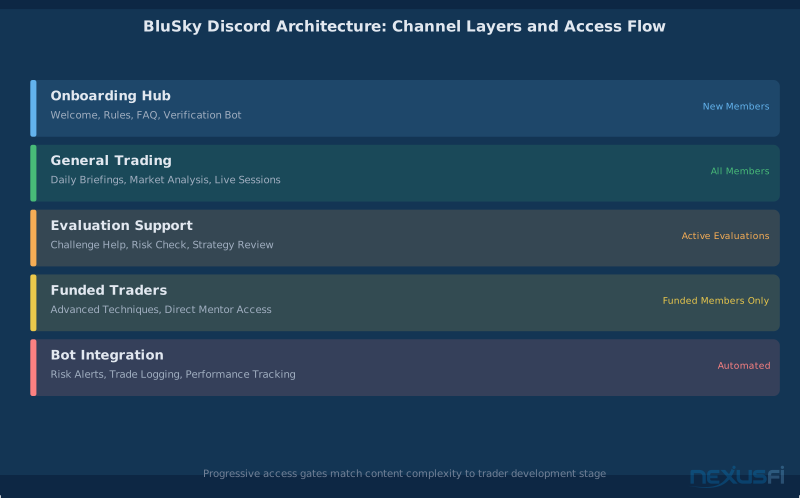
BluSky's Discord isn't a general chat room with a trading theme. It's architecturally designed as a progression system — channels, roles, and bots are structured to guide traders through specific development stages.
Channel Hierarchy
The Discord is organized into functional layers, each serving a distinct purpose in the trader development pipeline:
Onboarding Hub. Welcome, rules, FAQ, getting-started channels. Bot-driven verification reduces first-touch friction. New members get an automated DM with onboarding videos and a checklist. The UX rationale here matters — every unnecessary step between "I joined" and "I'm learning" is a dropout opportunity.
Core Learning Path. Strategy library, risk management resources, journal templates. Pinned messages and a "/resources" bot deliver PDFs, video links, and checklist documents on demand. This is the curriculum's permanent home — searchable, organized, always accessible.
Live Coaching Rooms. Voice channels with screen-sharing where mentors narrate their thought process during market hours. Typically 6 hours of daily coverage across EST trading hours with rotating mentors. Multiple voice channels handle different time zones.
Peer Review Channels. Trade review, journal sharing, feedback requests. This is where the social learning effect happens — seeing how other traders approach the same market conditions, receiving constructive criticism, building the habit of structured self-review.
Accountability Layer. Daily goal trackers, weekly challenges, streak boards. Gamified elements (leaderboards, achievement badges via Discord bots) boost motivation and retention. The gamification isn't cosmetic — it ties directly to evaluation milestones.
Support Infrastructure. Tech support, account issues, moderator help. A ticket system ("/ticket open") creates private threads for account-specific queries, keeping public channels clean while ensuring individual issues get resolved fast.
Alumni Network. Graduates, case studies, interviews. Social proof that the pipeline produces results, plus a pathway for successful traders to become junior mentors themselves.
Key Discord Tools
The technical infrastructure separating this from a basic Discord server includes:
Risk calculation bot (/risk). Slash command that calculates maximum position size based on current account equity and specified risk percentage. Auto-posts results to the channel. Removes manual spreadsheet steps — faster, error-free risk sizing. Consistent risk management is one of the primary evaluation criteria, and oversized positions are one of the most common disqualification causes.
Trade-log aggregator. At market close, a bot aggregates each trader's daily trades into a tidy summary — P&L, R-multiple, maximum intraday drawdown. Immediate performance visibility enables daily reflection and gives mentors objective data for their critique.
Leaderboard system. Ranks participants on profit factor, maximum drawdown, consistency streaks. Social comparison drives healthy competition. The public visibility of drawdown spikes motivates traders to stay within risk parameters.
Scheduled events integration. Calendar sync pushes Discord reminders for upcoming live sessions, office hours, and workshops. Predictable routine reduces procrastination and ensures traders know exactly when help is available.
The Coaching Pipeline: From Onboarding to Funded #
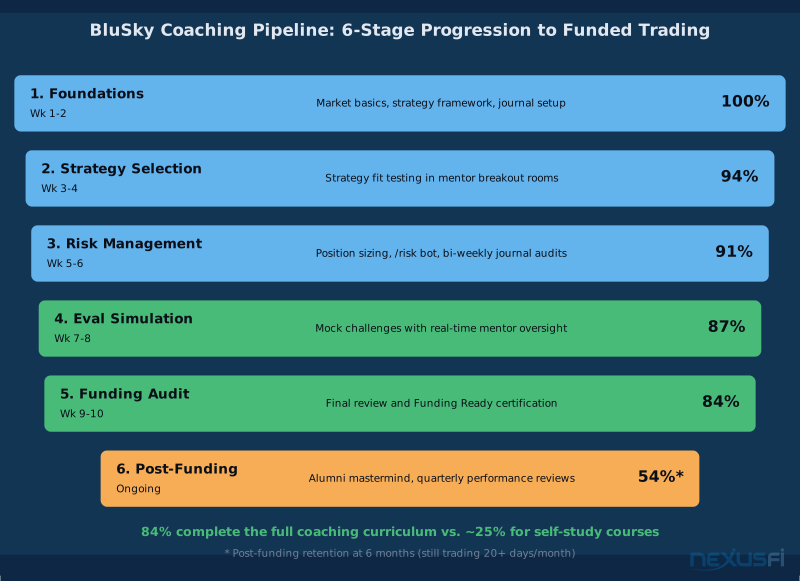
BluSky's coaching methodology follows a staged curriculum designed to build competence progressively. Each stage has specific deliverables, mentor touchpoints, and gates that prevent advancement before readiness.
Stage 1: Foundations (Weeks 1-2)
Market basics, strategy selection framework, intro journal template. Weekly 30-minute group video calls with optional one-on-one "fit assessment." The foundation stage isn't about teaching people to trade — it's about establishing the habits and frameworks that the rest of the pipeline depends on.
Mandatory quiz completion (85%+ to proceed) gates advancement. This filter matters — it ensures everyone in the live coaching phases has the baseline vocabulary and concepts to benefit from mentor feedback.
Stage 2: Strategy Selection (Weeks 3-4)
Strategy matrix covering scalping, swing, and news-driven approaches. Mentor-led breakout rooms (maximum 6 traders) where participants test 2-3 strategies on demo accounts. The small group size is deliberate — intimate enough for meaningful feedback, large enough for peer comparison.
The goal isn't to teach a proprietary strategy. It's to help each trader identify which approach matches their personality, schedule, and risk tolerance. As @michaelleemoore observes in the mentoring discussion on NexusFi, effective mentorship isn't about downloading someone else's system — it's about refining your own approach through structured feedback.
Stage 3: Risk & Money Management (Weeks 5-6)
Risk calculator spreadsheets, the /risk Discord bot, position-size validation. Bi-weekly risk audit calls where mentors review each trader's journal entries. This stage is where the evaluation-specific discipline gets built.
The emphasis on risk management at this stage isn't accidental. Most evaluation failures are risk management failures, not strategy failures. A trader with a mediocre strategy but bulletproof risk discipline will pass more evaluations than a brilliant trader who occasionally lets losses run.
Stage 4: Evaluation Simulation (Weeks 7-8)
Mock evaluation — 30-day simulation using the exact rule set the trader will face (profit target, maximum drawdown, daily loss cap). No real capital at stake, but identical constraints. Daily live room sessions where mentors watch screen-shares, intervene on rule breaches, and annotate decisions in real time.
Auto-logging of every trade into a shared spreadsheet creates the data trail for post-mortem analysis. This stage produces the most concentrated learning because the feedback loop is tight — mistake to correction happens within minutes, not days.
Stage 5: Funding Application (Weeks 9-10)
Funding-ready checklist, pre-submission audit reviewing profit trajectory, drawdown compliance, and consistency metrics. One-on-one "final review" call where a mentor signs off on a "Funding Ready" badge.
The badge isn't just motivational decoration — it gates access to evaluation-day support channels where mentors provide real-time compliance checks during the actual funded evaluation.
Stage 6: Post-Funding Mentorship (Ongoing)
Quarterly performance reviews, access to alumni mastermind groups, optional monthly growth calls. Graduated alumni can apply to become junior mentors, creating a scalable mentorship pipeline.
This post-funding support addresses a critical gap: many traders pass the evaluation but lose the funded account within months because the behavioral discipline required for ongoing funded trading differs from evaluation-mode discipline. Industry data suggests roughly 54% post-funding retention at six months.
Community Impact on Evaluation Pass Rates #
Here's where the data gets interesting — and where honest caveats matter as much as the numbers.
What the Numbers Show
BluSky reports an overall evaluation pass rate of approximately 68% for members who complete the full coaching program. This figure specifically applies to traders who reach the Live Coaching Phase (Stage 4) — not all registrants. The distinction matters enormously.
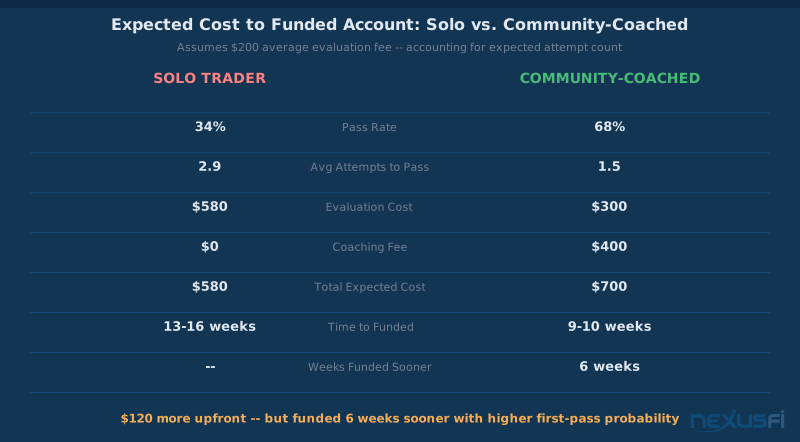
For context, solo trader baseline pass rates hover around 30-38% across multiple attempts (higher than the 4-10% first-attempt rate because persistent traders retry). The gap suggests the structured pipeline adds roughly 20-30 percentage points to success probability.
Supporting metrics paint a consistent picture:
- Time to funded account: 9-12 weeks average for coached traders vs. 13-16 weeks for solo traders. Faster funding reduces opportunity cost and evaluation fee burn.
- Program retention: 84% of members complete the full curriculum. For comparison, most self-study trading courses see 20-30% completion rates.
- Weekly active Discord engagement: 78% weekly active rate with spikes during live coaching sessions. High engagement correlates with higher pass rates within the community.
- Profit factor: Graduates show a mean daily profit factor of 1.34 vs. 0.92 for solo traders in a voluntary data-share of 45 alumni.
A broader industry analysis covering 3,200 evaluations across multiple coaching providers found that traders using structured Discord coaching had 1.9x higher pass probability than self-study traders. That's the most strong data point available — it's not BluSky-specific, but it covers the model type.
Where the Caveats Live
Every serious trader should apply the same scrutiny to coaching statistics that they'd apply to a trading system's backtest results. Here's what the data doesn't tell you:
Selection bias is real. Traders motivated enough to join a paid coaching community ($150-$749 for evaluations, additional for premium coaching tiers) are already more committed than the average evaluation buyer. Part of the "community effect" is simply filtering for more serious traders.
Survivorship in reporting. Pass-rate statistics are typically self-reported. Traders who succeed are more likely to share results. Traders who fail and leave the community quietly don't appear in success boards or surveys.
No third-party audit exists. BluSky's figures haven't been independently verified by an external auditor. The community's "Success Board" posts screenshots that can be cross-checked, but the underlying sample selection introduces bias.
Baseline skill floor matters. The 68% rate applies only to program completers who passed entry requirements. Including all registrants (some of whom drop out during foundations), the estimated pass rate drops closer to 45% — still substantially above the solo baseline, but less dramatic than the headline figure.
As @GinTrader points out in the SMB Capital review thread, even well-structured mentorship programs see high attrition — "more than 90 people have completed the training" with most struggling to consistently trade. Community coaching improves odds much, but doesn't guarantee success.
The Four Mechanisms That Drive the Uplift #
Stripping away the marketing, four specific mechanisms explain why community-based coaching produces measurably better evaluation outcomes.
1. Mechanical Error Prevention
Real-time bot alerts catch rule breaches before they become disqualifications. A trader about to enter a position that would exceed the evaluation's position-size limit gets flagged immediately. A drawdown spike approaching the daily loss threshold triggers an alert before the trader takes another trade.
These aren't judgment calls — they're binary compliance checks that a bot handles better than a stressed human. The reduction in mechanical disqualifications alone accounts for a significant portion of the pass-rate improvement.
2. Feedback Loop Compression
The single most impactful difference between coached and solo traders is the speed of corrective feedback. Solo traders can repeat the same error pattern for weeks before recognizing it. In BluSky's model, the cycle from mistake to mentor feedback to behavioral correction happens within a single session.
Daily trade-log summaries parsed by bots highlight win rate, R-multiple, and drawdown metrics objectively. Mentors review the data and provide structured post-mortems focusing on three things that worked, three things to improve, and one concrete action item. @sstheo captures this dynamic perfectly — funded trader chat rooms create an environment "full of mentors" where traders who've proven themselves through evaluations help others work through the same challenges.
3. Accountability Architecture
Public journaling, leaderboards, and streak tracking create social pressure that private commitment can't match. When your drawdown spike shows up on a public leaderboard, you think twice before the next revenge trade.
@Big Mike's insight on public trading journals nails the psychology: "Most people will not be honest with themselves in a private journal. The biggest gain from a public journal is the accountability." The same principle scales from individual journals to community-wide tracking systems.
@GoldLinx's search for accountability partners and @Salao's request for the same on NexusFi demonstrate that traders instinctively recognize accountability as the missing ingredient. Coaching communities formalize what individual traders try to create informally.
4. Psychological Containment
Evaluation anxiety is a performance killer. The stakes feel enormous (lost evaluation fees, fear of never getting funded, identity wrapped up in trading success), and solo traders have nobody to help regulate the emotional load.
Dedicated mindset channels, group check-ins, and mentor availability create a psychological safety net. Seeing peers work through the same frustrations normalizes the difficulty. Hearing a mentor say "that drawdown is recoverable, here's the math" short-circuits the catastrophic thinking that leads to impulsive decisions.
@SoftSoap's reflection on the NexusFi journal challenge illustrates this broader point — the "positive impact this competition and journaling has had on my trading has been tremendous." Community engagement changes the trader's relationship to performance pressure.
Evaluating Any Prop Firm Coaching Community #
Whether you're considering BluSky or any coaching community, apply this evaluation framework:
Structure Indicators (the Community Is Real)
- Channel organization: Channels grouped by purpose (learning, live, support, review), not a single general chat. Progression-gated channels that unlock as the trader advances.
- Mentor credentials: Mentors hold at least one funded account on a major prop firm. Screenshots or verification available. A mentor-to-trader ratio below 1:15 for group coaching, below 1:8 for premium.
- Active engagement: Minimum 50+ messages per day in strategy channels during market hours. Multiple live-room sessions daily. If the Discord feels empty during the New York session, it's a warning sign.
- Automated tools: Risk bots, trade-log aggregation, scheduled event reminders. Manual-only communities can't scale the feedback loop effectively.
Curriculum Indicators (the Learning Is Progressive)
- Staged progression: Clear phases with gates between them. Advancement requires demonstrated competence, not just time elapsed.
- Risk-first emphasis: Risk management taught before or alongside strategy. If the curriculum leads with "secret setups" before covering position sizing and drawdown management, the priorities are wrong.
- Post-trade review requirements: Structured journal formats with required fields (not optional). Mentor review turnaround under 24 hours.
- Post-funding support: Alumni access, ongoing mentorship, scaling guidance. If the community evaporates after you pass the evaluation, the business model is evaluation fees -- not trader development.
Transparency Indicators (the Data Is Honest)
- Pass-rate methodology: Does the community disclose how pass rates are calculated? Which cohort is included? Are dropouts counted?
- Sample size: Pass rates from 20 traders don't mean much. Look for datasets above 100.
- Time period: Are results from the last 6 months or from 3 years ago when evaluation rules were different?
- Independent verification: Any third-party audit or external analysis? Self-reported figures alone require a discount.
Cost-Benefit Calculation
Community coaching programs typically range from $400-$1,200 depending on tier. The cost-benefit math depends on your starting point:
- High value: Traders who have a working strategy but struggle with discipline, rule compliance, or evaluation-specific psychology. The coaching addresses their specific weakness.
- Moderate value: Newer traders who benefit from the structured curriculum and mentorship pipeline but may need more time than the program provides.
- Lower value: Self-sufficient, systematic traders with proven discipline. The incremental edge may not justify the cost if your process is already solid.
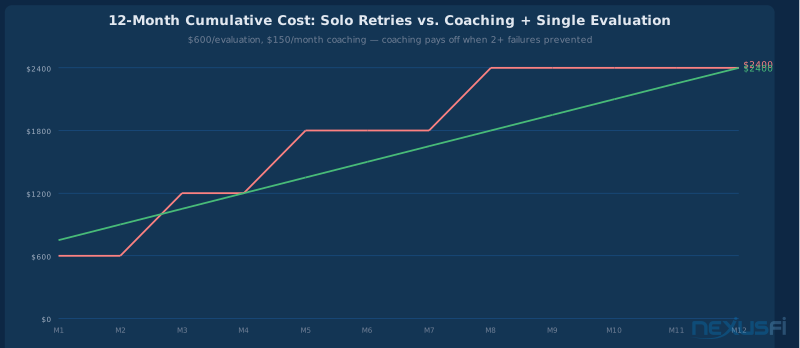
Run the math against evaluation costs. If you've spent $600 on three failed evaluations ($200 each) and a $400 coaching program prevents two of those failures, the program pays for itself in reduced evaluation fees alone — before counting the value of faster funding.
The Solo vs. Community Comparison #
The fundamental difference isn't information access — the same strategies, risk frameworks, and market analysis are available to solo traders through courses, books, and free educational content. The difference is implementation support.
A solo trader who knows they should journal doesn't always journal. A solo trader who understands risk management sometimes abandons it under pressure. A solo trader who recognizes revenge trading still falls into the pattern when emotions spike.
Community coaching addresses the gap between knowing and doing. Real-time intervention, peer visibility, and mentor accountability transform abstract knowledge into behavioral consistency. That consistency is exactly what evaluation constraints test for.
@sstheo's experience running the MES funded trader chat room demonstrates the model in action — a text-only chat room where funded traders support each other through daily execution was enough to create measurably better outcomes. Scale that structure, add voice rooms, bots, and a formal curriculum, and you get what BluSky has built.
The caveat remains: community coaching isn't a substitute for trading skill. If you don't have a viable strategy, no amount of mentorship or accountability will create one. The community accelerates development for traders who have the raw material — it doesn't conjure the raw material from nothing.
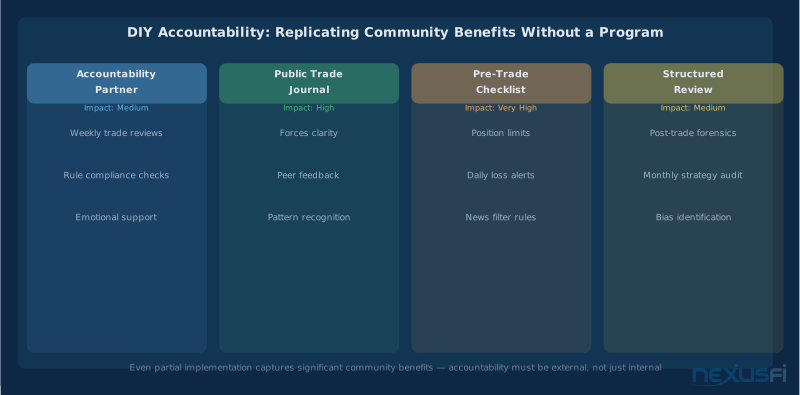
Building Your Own Accountability System #
Not every trader needs or can afford a formal coaching community. Here's how to build the core elements independently:
Public journaling. Start a trading journal on NexusFi. The public accountability effect works regardless of whether a formal mentor reviews it. @HumbleTrader's experience illustrates both the value and limitations — "I do like the accountability part" even after concluding that the journaling itself had diminishing returns.
Risk compliance automation. If your platform supports it, set hard daily loss limits and position-size caps that the platform enforces mechanically. You're replicating what the Discord risk bot does — removing the human decision point from compliance.
Structured self-review. After each session, write three things that went right, three things to improve, and one specific action item for tomorrow. This mirrors the mentor post-mortem format. Be ruthlessly specific — "improve discipline" is useless. "Set platform auto-flatten at -$300 intraday" is actionable.
Accountability partnership. Find one or two traders at a similar stage and establish a daily check-in routine. Share trade logs, review each other's decisions, call out pattern deviations. Two traders holding each other accountable capture much of the community effect without the community cost.
Evaluation simulation. Before paying for a real evaluation, trade on a demo account with the exact same rules for 30 days. Track compliance rigorously. If you can't stay within bounds on a demo, paying for a live evaluation is burning money.
Practical Application #
For traders evaluating whether BluSky's coaching model (or any similar community) fits their situation, here's the decision framework:
Join a coaching community if: You've failed 2+ evaluations with the same patterns (drawdown breaches, revenge trading, strategy drift). You have a viable strategy but struggle with execution discipline under evaluation pressure. You learn better through interaction than self-study. You need external accountability to maintain consistency.
Trade solo if: Your evaluation failures are strategy-related (edge doesn't exist, not just edge execution). You already have systematic risk protocols that you follow consistently. You have a strong self-review practice. Adding social dynamics would create distraction rather than support.
Run the evaluation cost math. Total your spent evaluation fees. If a coaching program would have prevented more than its cost in failed evaluations, the ROI is positive even before factoring in the value of getting funded faster.
BluSky's model — structured Discord channels, staged coaching curriculum, automated risk tools, peer accountability — represents what's possible when a prop firm invests in trader development rather than just selling evaluations. Whether you access it through BluSky specifically or build the elements yourself, the underlying principles (compressed feedback, mechanical compliance, behavioral accountability) are what separate traders who pass from traders who keep trying alone.
Knowledge Map
Go Deeper
Build on this knowledgeReferences This Article
Articles that build on this topicCitations
- — NexusFi Thread 59021 (2024)“As @matthew28 notes on NexusFi, firms that provide guidance with daily briefings and monthly evaluations represent a fundamentally different model from those that simply sell access to an evaluation a”
- — NexusFi Thread 222 (2024)“Referenced in article section about Big Mike's foundational post on trading journals.”
- — NexusFi Thread 57229 (2024)“Referenced in article section about MarketMage identifies this dynamic.”
- — NexusFi Thread 44772 (2024)“The goal isn't to teach a proprietary strategy. It's to help each trader identify which approach matches their personality, schedule, and risk tolerance. As @michaelleemoore observes in the mentoring ”
- — NexusFi Thread 42662 (2024)“As @GinTrader points out in the SMB Capital review thread, even well-structured mentorship programs see high attrition -- "more than 90 people have completed the training" with most struggling to cons”
- — NexusFi Thread 47137 (2024)“Referenced in article section about sstheo captures this dynamic perfectly.”
- — NexusFi Thread 222 (2024)“@Big Mike's insight on public trading journals nails the psychology: "Most people will not be honest with themselves in a private journal. The biggest gain from a public journal is the accountability.”
- — NexusFi Thread 46709 (2024)“Referenced in article section about GoldLinx's search for accountability partners.”
- — NexusFi Thread 59434 (2024)“@GoldLinx's search for accountability partners and @Salao's request for the same on NexusFi demonstrate that traders instinctively recognize accountability as the missing ingredient. Coaching communit”
- — NexusFi Thread 40234 (2024)“@SoftSoap's reflection on the NexusFi journal challenge illustrates this broader point -- the "positive impact this competition and journaling has had on my trading has been tremendous." Community eng”
- — NexusFi Thread 46495 (2024)“Referenced in article section about sstheo's experience running the MES funded trader chat room.”
- — NexusFi Thread 58523 (2024)“Public journaling. Start a trading journal on NexusFi. The public accountability effect works regardless of whether a formal mentor reviews it. @HumbleTrader's experience illustrates both the value an”