



Managing Tilt and Revenge Trading: Breaking the Spiral Before It Breaks You
You knew what you were doing was wrong. You did it anyway. That's tilt.
Overview #
Every futures trader knows the feeling. A loss hits. Then another. Something shifts — the rational part of your brain goes offline and a different version of you takes the controls. Position sizes double. Rules get abandoned. Stops get widened or removed entirely. You're not trading anymore. You're fighting the market, and the market always wins that fight.
Tilt and revenge trading have destroyed more accounts than any flawed strategy ever could. The brutality isn't in the initial loss — it's in the cascade that follows. @blew documented one of NexusFi's most raw and honest accounts of the spiral: going from $7k to $70k over five months of disciplined trading, then giving it all back in three days of revenge trading. "I knew it while I was doing it and I know it now. So why didn't I stop?" [1] That question — knowing the right thing and doing the opposite — is the defining feature of tilt.
This article breaks down how tilt develops, why knowing better doesn't prevent it, and the specific circuit breakers and recovery protocols that interrupt the spiral before it reaches the account-killing stage.
What Tilt Actually Is #
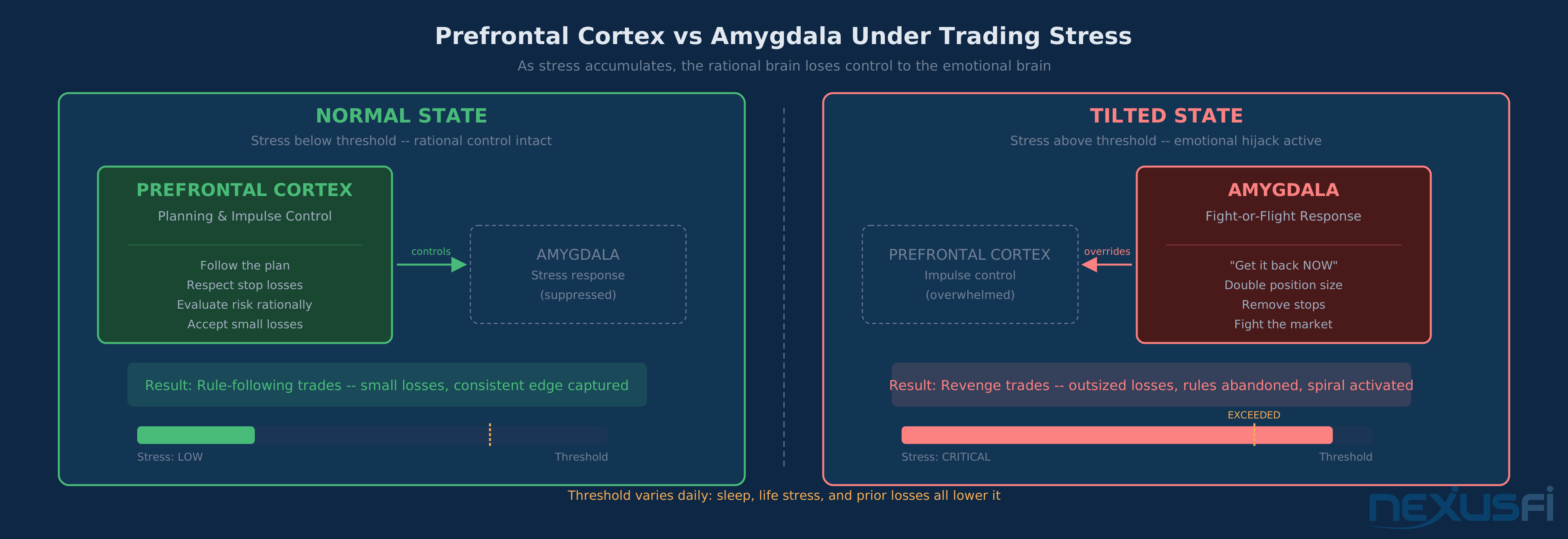
Tilt isn't just "being emotional." It's a specific neurological state where the prefrontal cortex — the part of your brain responsible for planning, impulse control, and rational decision-making — gets overwhelmed by the amygdala's stress response. Under normal conditions, these two systems work together. Under accumulated trading stress, the emotional system hijacks the controls. Research by neuroscientist Amy Arnsten at Yale has mapped these pathways in detail — even mild uncontrollable stress causes a rapid and dramatic loss of prefrontal cognitive abilities, while simultaneously strengthening the amygdala's emotional responses [9]. The net effect is exactly what tilted traders experience: rational analysis goes dark and emotional reactivity takes over.
@FuturesTrader71 — a former prop shop owner — explained the mechanics: "There is a limited tolerance to stress and then we, as humans, default back to our emotional mind to handle stressful situations. So, your life situation, how you feel about yourself, other stressers in your life are all contributors to revenge trading for most people. The part of you that intellectualizes trading and behaves rationally gets weaker when you are tired and already have stress present." [2]
This is why tilt hits harder on certain days. The threshold isn't fixed. Sleep deprivation, relationship stress, financial pressure outside of trading — all of these lower the tipping point. A two-loss day that you handle fine on Tuesday becomes the trigger for a $10k meltdown on Friday because you were already running on empty.
The Anatomy of a Revenge Trading Spiral #
Revenge trading follows a predictable escalation pattern. Understanding the stages makes them easier to interrupt.
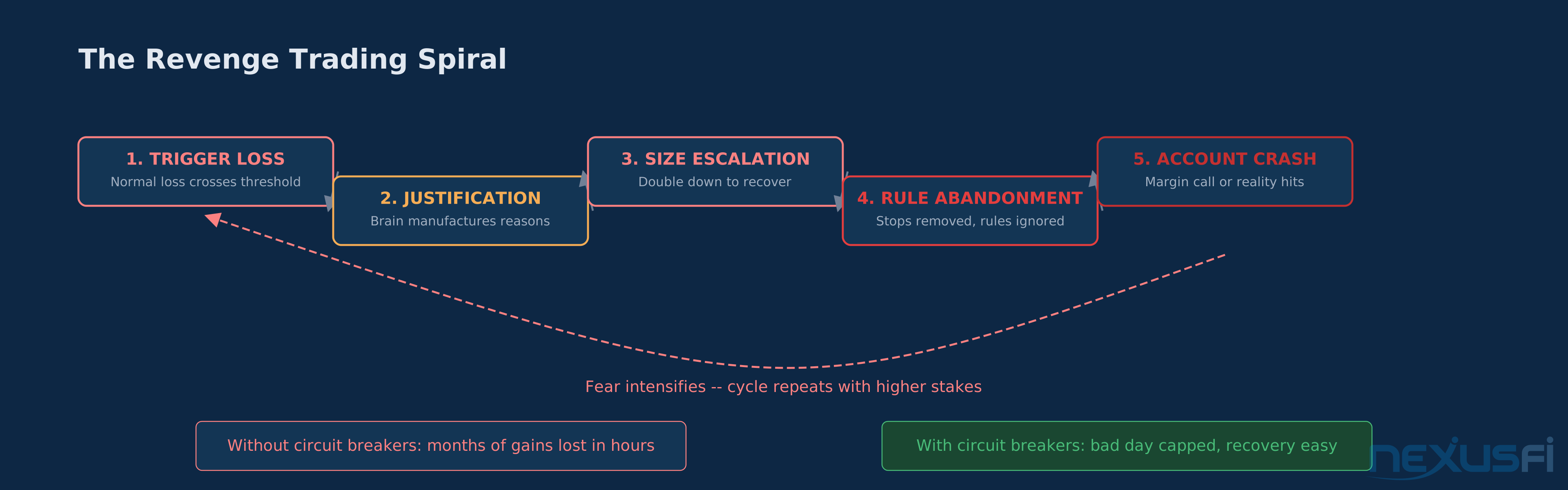
Stage 1: The Trigger Loss. A normal loss, or a sequence of small losses, that crosses your emotional threshold. Often it's not the size that triggers the spiral — it's the context. Losing after a winning streak hurts more than losing from a baseline, because prospect theory means traders fixate on the drawdown from their equity high.
Stage 2: The Justification. Your brain starts manufacturing reasons to take another trade immediately. "I'll just get back to breakeven." "The market owes me one." "I can see the setup clearly now." These rationalizations feel logical in the moment. They're not. They're your emotional brain constructing post-hoc reasons for a decision it already made.
Stage 3: Position Size Escalation. The defining move of revenge trading. You increase size to "make it back faster."
The next attempt lost $10k. "Full tilt activated and I basically kept getting back in the same trades with huge sizes, full on emotional revenge trading." [4]
Stage 4: Rule Abandonment. Stops get widened or removed. Time-of-day restrictions get ignored. Setup criteria get loosened to "almost qualifies." You're not following any system anymore. You're gambling.
Stage 5: The Crash. The account hits a level of damage that finally breaks through the tilt. Sometimes this is a margin call. Sometimes it's the daily loss limit (if you have one). Sometimes it's looking at the P&L number and the reality finally registers. @Fade recorded the aftermath: "Starting account balance: $10,248.56. Ending account balance: $390.16. Loss: -96.19%. It was like a switch just flipped, and everything was panic." [5]
Why "Just Stop" Doesn't Work #
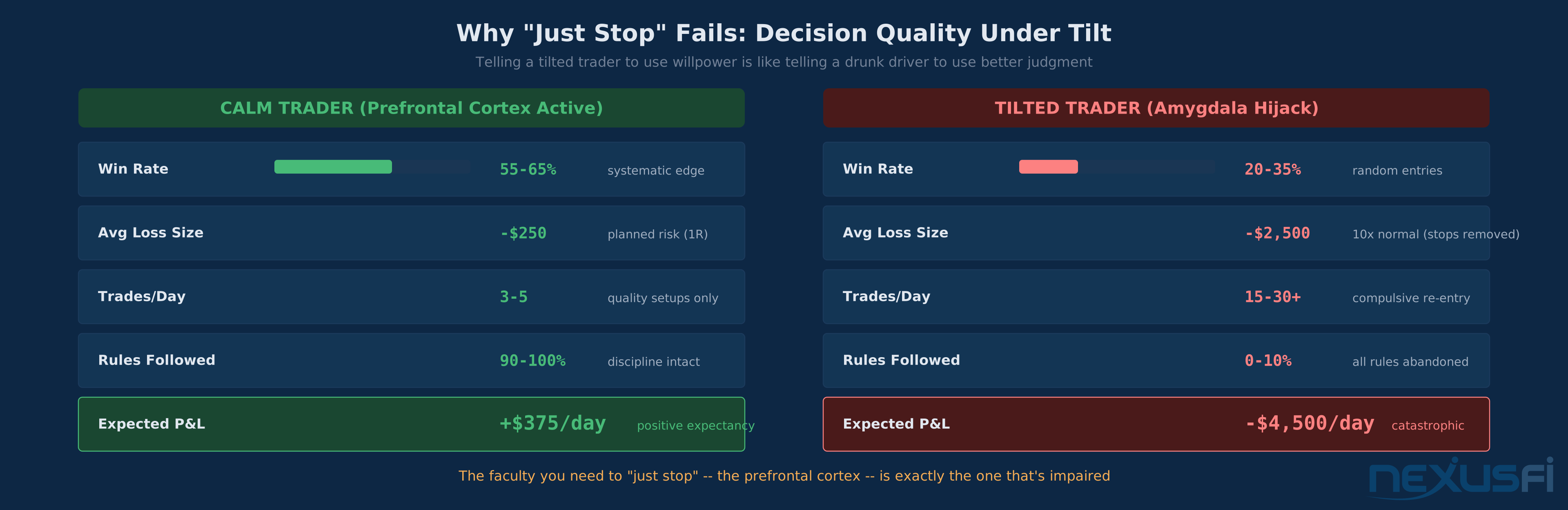
The standard advice for revenge trading — "just walk away" — misunderstands what's happening neurologically. By the time you recognize you're in a spiral, the prefrontal cortex is already compromised. Telling a tilted trader to use willpower is like telling a drunk driver to use better judgment. The faculty you're asking them to deploy is exactly the one that's impaired. Dr. Brett Steenbarger, a clinical psychologist and active trader, documented this dynamic extensively — traders under emotional stress literally lose access to the cognitive resources needed to implement their own rules. The problem isn't discipline, it's that stress has chemically disconnected the brain region responsible for discipline [10].
@rubyslippage drew this exact parallel: "Revenge trading is like driving drunk. Your judgment is totally impaired, yet you have no idea just how badly. Just as a drunk driver is likely to run red lights, drift into oncoming traffic, and even black out completely, a trader under the influence of pure raw emotion will chase entries at levels where they'd normally be taking profits, will average down, will move stops farther away or remove them altogether, will fight a raging trend." [6]
The solution isn't better willpower. It's building systems that act before willpower is needed.
The Overtrading Pipeline #
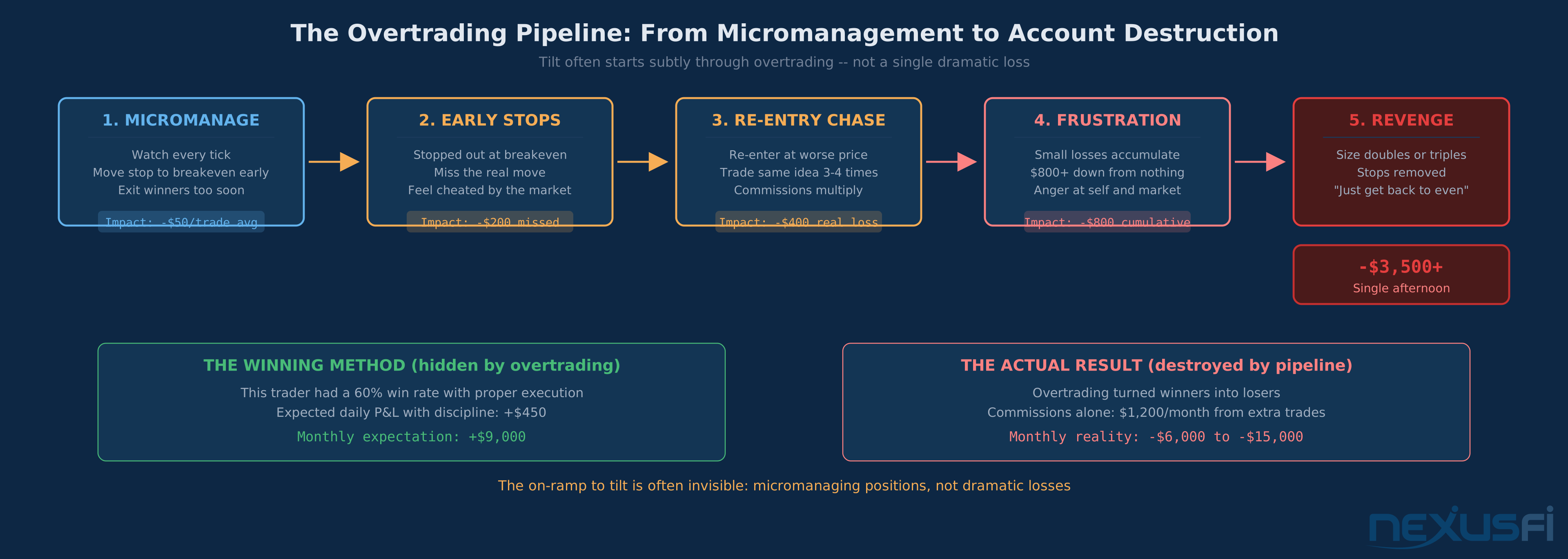
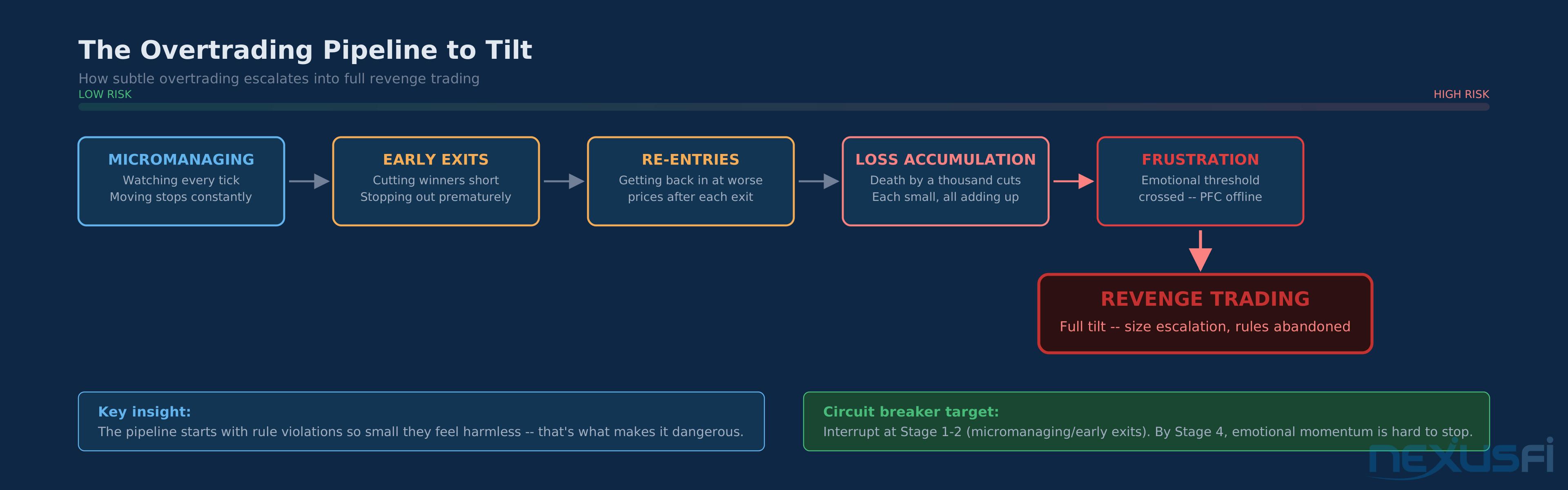
Tilt doesn't always start with a dramatic loss. Often it builds through a more subtle channel: overtrading.
The progression: micromanaging a position leads to early stops, which leads to re-entries at worse prices, which creates small losses, which accumulate into frustration, which triggers revenge trading. The trader she analyzed had a winning method but was losing money because he couldn't let trades work.
Breaking the rules of a trading plan — hesitating and missing out, chasing entries, micromanaging trades — these are the on-ramps to the tilt highway.
The Ego Problem #
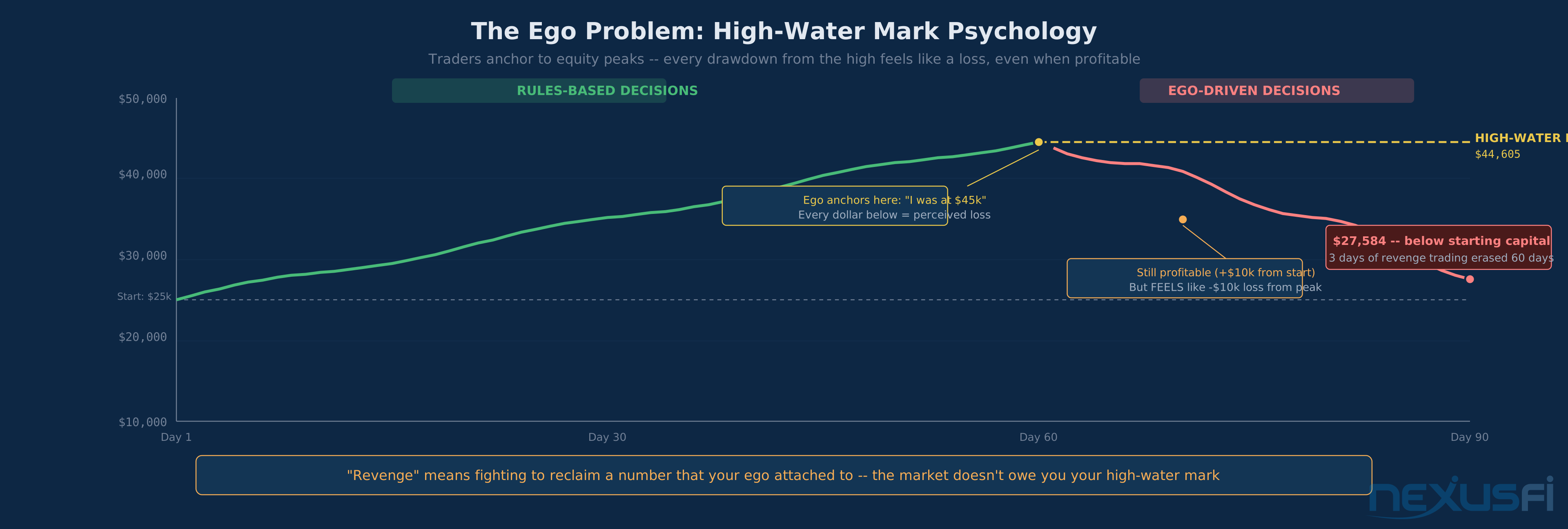
The word "revenge" tells the whole story. You're treating the market as an adversary who wronged you and needs to be punished. The market is indifferent. It doesn't know you exist. But the ego can't accept that a loss was just statistical variance — it needs to turn it into a battle, and battles require escalation.
The ego also fuels the reluctance to take the initial loss. @matthew28 diagnosed the core pattern: "Sounds like your problem is looking at your high water mark of profit and trying to revenge trade back from losing trades. Trade losses happen, you can't predict whether an individual trade is going to work or not." [8]
Circuit Breakers That Actually Work #
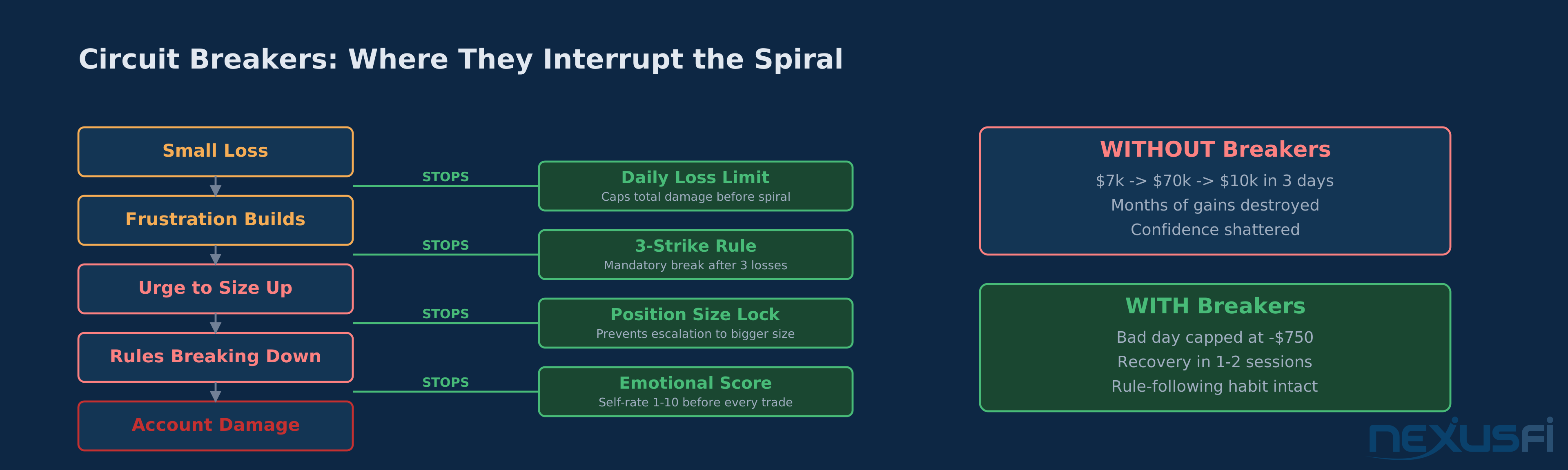
Circuit breakers are mechanical rules that fire before the prefrontal cortex needs to make a decision. They remove choice from the equation at the exact moment when your choices are worst.
1. Hard Daily Loss Limit #
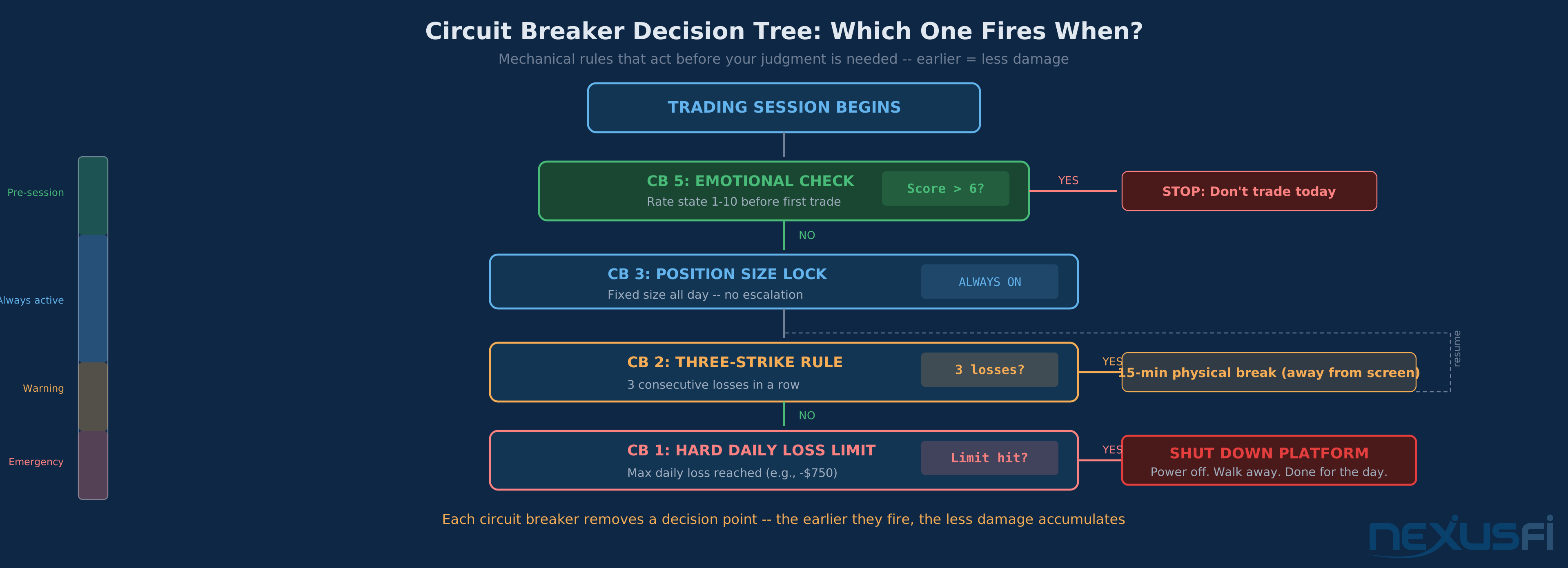
The single most effective anti-tilt tool. Set a maximum dollar loss for the day that, when hit, shuts down your trading. Not "consider stopping." Shut down. Power off the platform. Walk away.
The math: if your average winning day produces $500, set your daily loss limit at -$750 to -$1,000. That's a survivable bad day. Without a limit, a tilted trader can compress weeks of gains into a single afternoon of losses.
Some platforms (Sierra Chart, NinjaTrader) support automated daily loss limits that actually prevent order submission. Use them. Don't rely on your own judgment to enforce the limit when you're tilted — that's the whole point.
2. The Three-Strike Rule #
Three consecutive losses triggers a mandatory 15-minute break from the screen. Not a break where you sit there staring at the chart on your phone. A physical break — walk outside, do pushups, make coffee. The purpose is to interrupt the escalation before Stage 3 (position size increase) engages.
@rubyslippage proposed the simplest version: "Implement a rule that if you violate your trading rules twice, you're cut off for the day." [6]
3. Position Size Lock #
Your position size is fixed for the day. Period. No "just this one trade." No "the setup is so good it deserves more size." The math on revenge trading size escalation is devastating: doubling down after a loss means your next loss wipes out four winning trades instead of one.
4. The Emotional Plan #
@Ming80 developed a complete framework: "As important as it is to form the trading plan, I found it equally as important to establish a plan to identify all the emotions associated with trading — pain from losses, pain from drawdowns, boredom, and over-excitement. I also recognized other subtle things such as too many market ladders and news feeds creating an adverse feedback loop causing over-stimulation and picking up unnecessary trades before revenge trading." [3]
The emotional plan identifies your specific triggers (not generic ones from a book — YOUR triggers), establishes your threshold (at what P&L or loss count do YOU start tilting?), and pre-commits to specific responses for each trigger.
5. Real-Time Self-Assessment #
Rate your emotional state on a 1-10 scale before every trade. Write it down. If you're above a 6, you don't trade. Simple, mechanical, removes the decision.
@FuturesTrader71 connected this directly to prevention: "The more you learn about yourself and are aware of your triggers, the more likely you will remain stable through the trading session. Meditation and regular exercise are key destressers and have always been a must for my prop shop." [2]
Recovery Protocol #
After a tilt episode, the path back matters as much as the prevention. Coming back too fast almost always produces a second spiral.
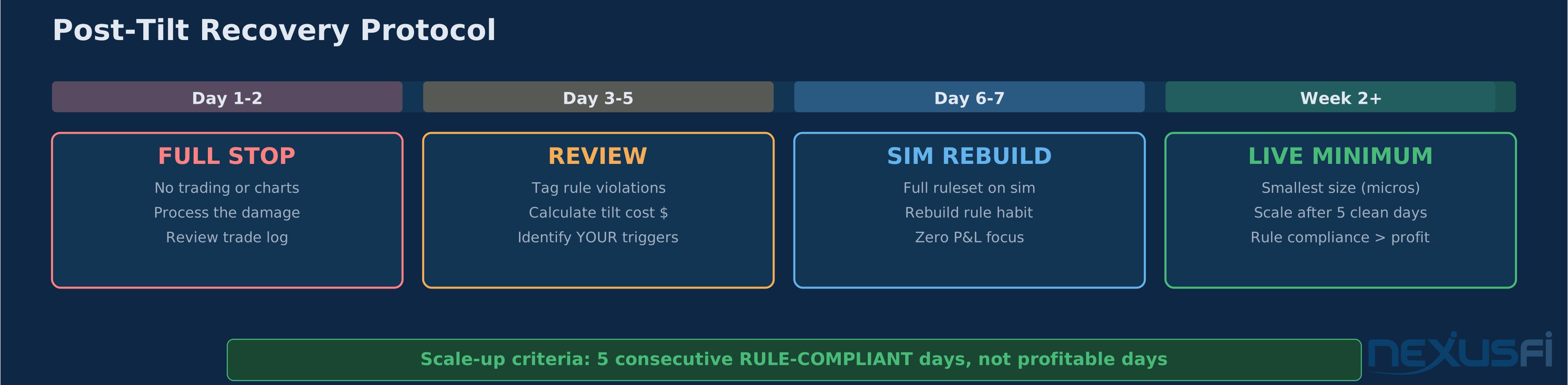
Day 1-2: Full stop. No trading. No watching charts. Process the damage — review what happened, calculate the actual loss, and sit with it. This is uncomfortable and that's the point.
Day 3-5: Review mode. Go through the trade log for the tilt session. Tag every trade that violated your rules. Calculate win rate and average P&L on rule-following trades vs. rule-violating trades. This data creates visceral accountability — you'll see exactly how much the tilt cost in concrete dollars.
Day 6-7: Sim with real rules. Trade sim with your full ruleset, including daily loss limits and circuit breakers. The purpose isn't to rebuild confidence in the strategy. It's to rebuild the habit of following rules.
Week 2+: Live with minimum size. Start back with the smallest position size available (micros if you trade futures). Scale back up only after 5 consecutive days of rule-compliant trading. Not profitable days — rule-compliant days.
When Tilt Points to a Bigger Problem #
Recurring tilt episodes that resist circuit breakers often signal issues beyond trading technique:
If recurring tilt episodes resist every circuit breaker you build, the problem is almost never psychology alone. Look deeper — the root cause is usually structural.
Under-capitalization. If every loss threatens your ability to continue trading, the stress baseline is too high for rational decision-making. Fix the capital before fixing the psychology.
No actual edge. @Fade arrived at this conclusion honestly: "No Edge + Poor Psychology = Blow Up. I had a string of random luck in the SIM account." [5] If the strategy doesn't work, no amount of psychological work will make it profitable. Tilt in this case is your brain correctly identifying that something is wrong.
Life stress contamination. Trading amplifies existing stress. If you're going through a divorce, financial emergency, health crisis, or any other major life stressor, your tilt threshold drops dramatically. Professional traders know this and reduce size or sit out during high-stress personal periods.
Addiction patterns. If tilt episodes have an escalation pattern that mirrors other compulsive behaviors — inability to stop despite clear harm, lying to others about the extent of losses, "chasing the high" of the winning trade — consider that trading may have crossed from activity into compulsion. A therapist who specializes in behavioral addiction can help distinguish the two.
Knowledge Map
Prerequisites
Understand these firstGo Deeper
Build on this knowledgeReferences This Article
Articles that build on this topicCitations
- — I finally blew up an account (2021) 👍 81“So I just need to get this off my chest. I just gave away all my gains on the year. I went from 7k -> 70k -> 10k. I blew most of it revenge trading and taking too big of position sizes.”
- — Best Trading Psychology course for dealing with Tilt and Revenge trading (2014) 👍 11“Good reco. The prevention of revenge trading is all about being self-aware of the state of mind and thoughts you are having.”
- — Best Trading Psychology course for dealing with Tilt and Revenge trading (2014) 👍 10“Hi Shredder, I totally empathize with you as all traders have perhaps undergone this emotional state before.”
- — I finally blew up an account (2021) 👍 15“Yeah I feel like just taking my money and saying I'm done, but then the other part of me knows I was solidly trading there for a while so I just need to get back to that. Extreme overconfidence for sure.”
- — Cattywampus Ramblings with Extra Cheese (2024) 👍 15“January 16, 2024 Well... I did it. I blew up the account (again) last Friday. Starting account balance on 1/12/24: $10,248.56. Ending account balance on 1/12/24: $390.16. Loss ($): ($9,858.40). Loss (%): -96.19%.”
- — Dear Ruby (2013) 👍 12“I once had a brief conversation with a struggling trader and he seemed to have a decent grasp of price action and a workable basic trading plan, yet he complained that he kept losing money.”
- — The Beast Slayer, Lance's NQ Trading Journal (2021) 👍 10“It's a tough balance and almost a conundrum: it's helpful to be able to zoom out and see the big picture (seeing the forest, rather than only the trees), but also necessary to not focus too much on the past (what's to the left on the chart, because,...”
- — I finally blew up an account (2021) 👍 26“So you went from a $7k starting balance to $70k in the account and are now back at $10K. I hope you at least withdrew some profit and paid yourself for your effort as you went along. Unfortunately it sounds like you didn't though.”