



Consistency Rules in Funded Trading: The Hidden Layer That Decides Whether You Get Paid
Overview #
What Consistency Rules Actually Are #
Every funded evaluation has the obvious rules: hit a profit target, don't exceed maximum drawdown, don't blow past the daily loss limit. Consistency rules are the layer underneath those — additional constraints that measure how you produced your profits, not just whether you produced them.
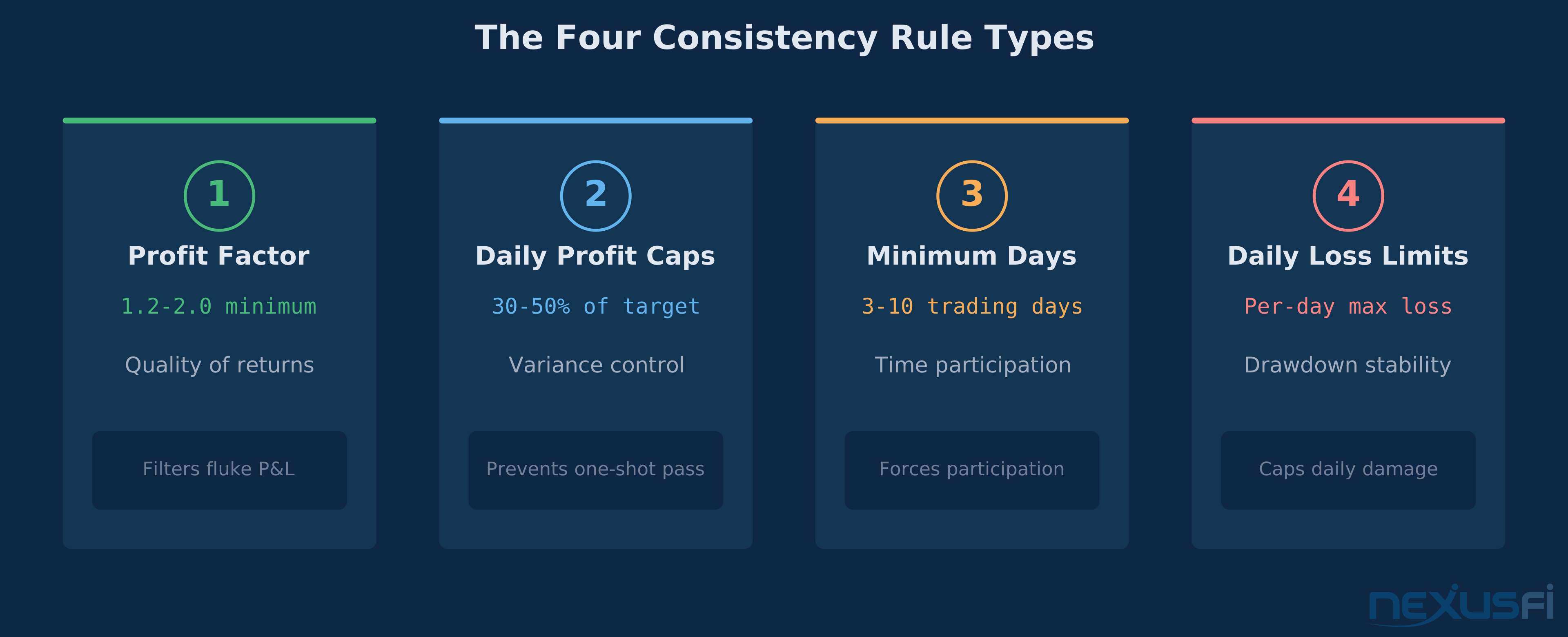
The rules typically target four dimensions: statistical quality (profit factor), time participation (minimum trading days), variance control (daily profit caps), and drawdown stability (daily loss limits that function as consistency proxies).
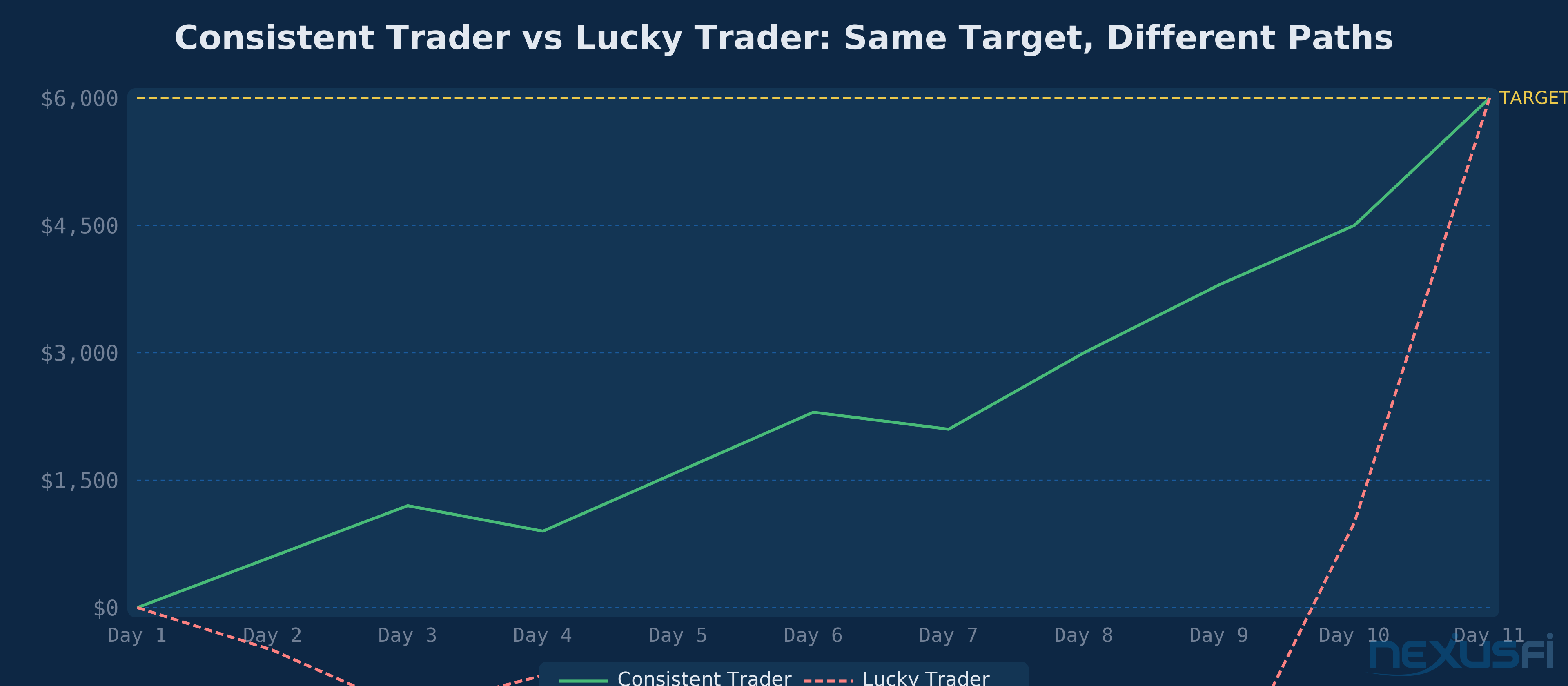
Think of it this way. Two traders both pass a $6,000 profit target on a 50K evaluation. Trader A made $800-$1,200 per day across 7 trading days with controlled drawdowns. Trader B lost $2,000 on 4 of 5 days, then made $14,000 on a single Friday afternoon scalping CL during an inventory report. Both hit the number. Only one demonstrated a repeatable edge.
Consistency rules exist to distinguish between these two outcomes. They introduce path dependency — your evaluation isn't just a terminal P&L check, it's a full audit of how your equity curve behaved across days, trades, and market conditions. The rules typically target four dimensions: statistical quality (profit factor), time participation (minimum trading days), variance control (daily profit caps), and drawdown stability (daily loss limits that function as consistency proxies).
Why Firms Enforce Them -- And Why You Should Care #
Funded evaluation firms are making an underwriting decision. They're allocating capital to traders, and they need the evaluation to predict future performance, not just capture a lucky streak. Consistency rules are the statistical filter that separates signal from noise.
Five reasons firms implement them:
Anti-fluke protection. Without consistency constraints, a trader can "one-shot" an evaluation — max leverage on a single directional bet, hit the target, walk away. The firm funds them, and they immediately regress to mean. Consistency rules force proof of repeatability.
Underwriting model risk. Every funded trader represents capital exposure. If 30% of funded traders blow up in month one, the business model collapses. Consistency metrics improve the predictive validity of the evaluation — they're not obstacles, they're actuarial tables.
Behavioral risk filtering. Static drawdown rules catch the obvious blowups, but consistency rules catch the behavioral patterns that precede blowups: martingale scaling, revenge trading, excessive leverage concentration, and gambling-style variance.
Operational standardization. If firms can codify "quality" criteria into rules, they reduce discretionary human review. Scalable evaluation means lower costs per funded trader.
Incentive alignment. The firm wants traders who produce steady returns because steady returns scale. A trader who makes $5,000/month with a 1.8 Sharpe ratio is more valuable to the firm than a trader who makes $15,000 one month and loses $12,000 the next — even if the second trader's average is higher.
The Four Rule Types You'll Encounter #
Profit Factor Requirements
Profit factor (PF) = gross profit divided by gross loss. A PF of 1.5 means you made $1.50 for every $1.00 you lost. Some firms require minimum PF thresholds (1.2 to 2.0 depending on the program) across the evaluation period.
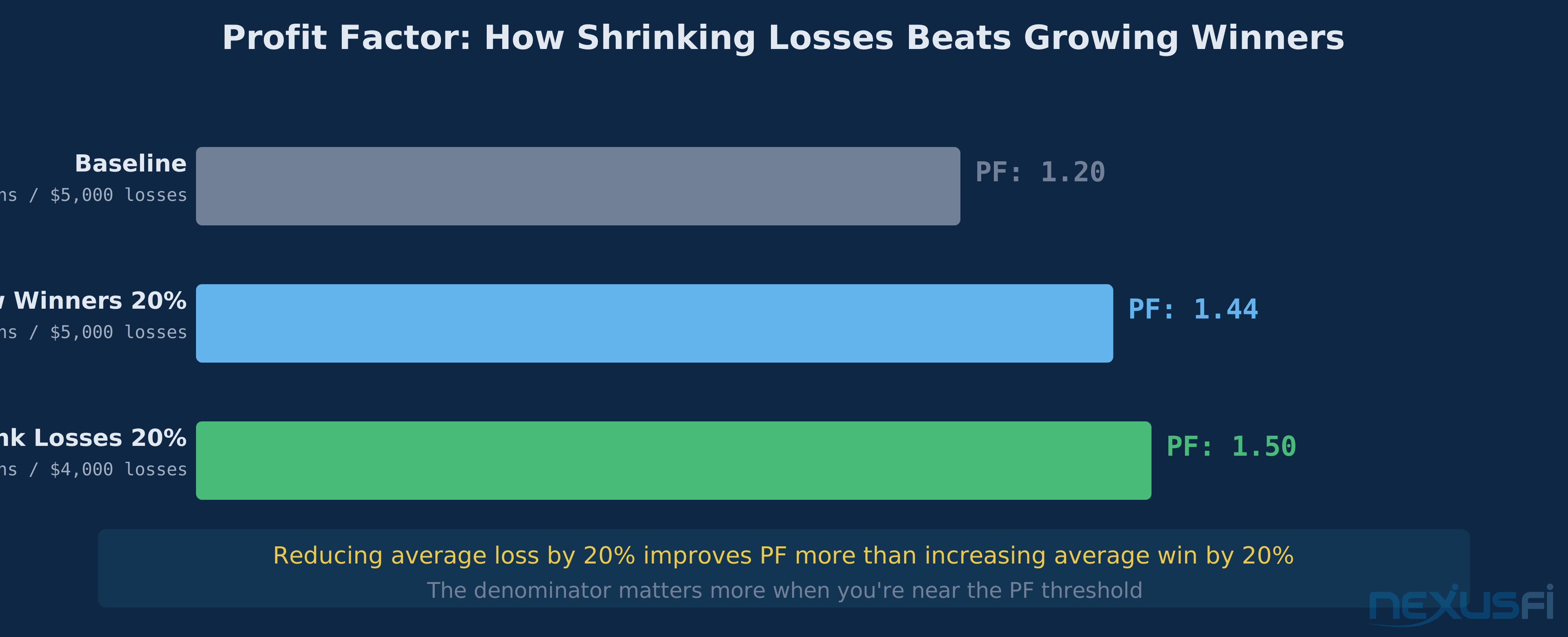
PF requirements penalize a specific failure mode: strategies that rely on one massive winner to cover dozens of small losses. That pattern can produce positive terminal P&L but terrible forward-looking reliability. A trader with a 1.1 PF scraped by on variance. A trader with a 2.0 PF demonstrated structural edge.
The practical impact on your trading: reduce your average loss size. If your PF is marginal, tightening stops by even 2-3 ticks on losing trades can push you above threshold without changing your entry logic. The math is straightforward — PF improves faster by shrinking losses than by growing winners, because the denominator matters more when you're near the boundary.
Maximum Daily Profit Caps
This is the rule that confuses traders the most. Why would a firm cap how much you can make in a day?
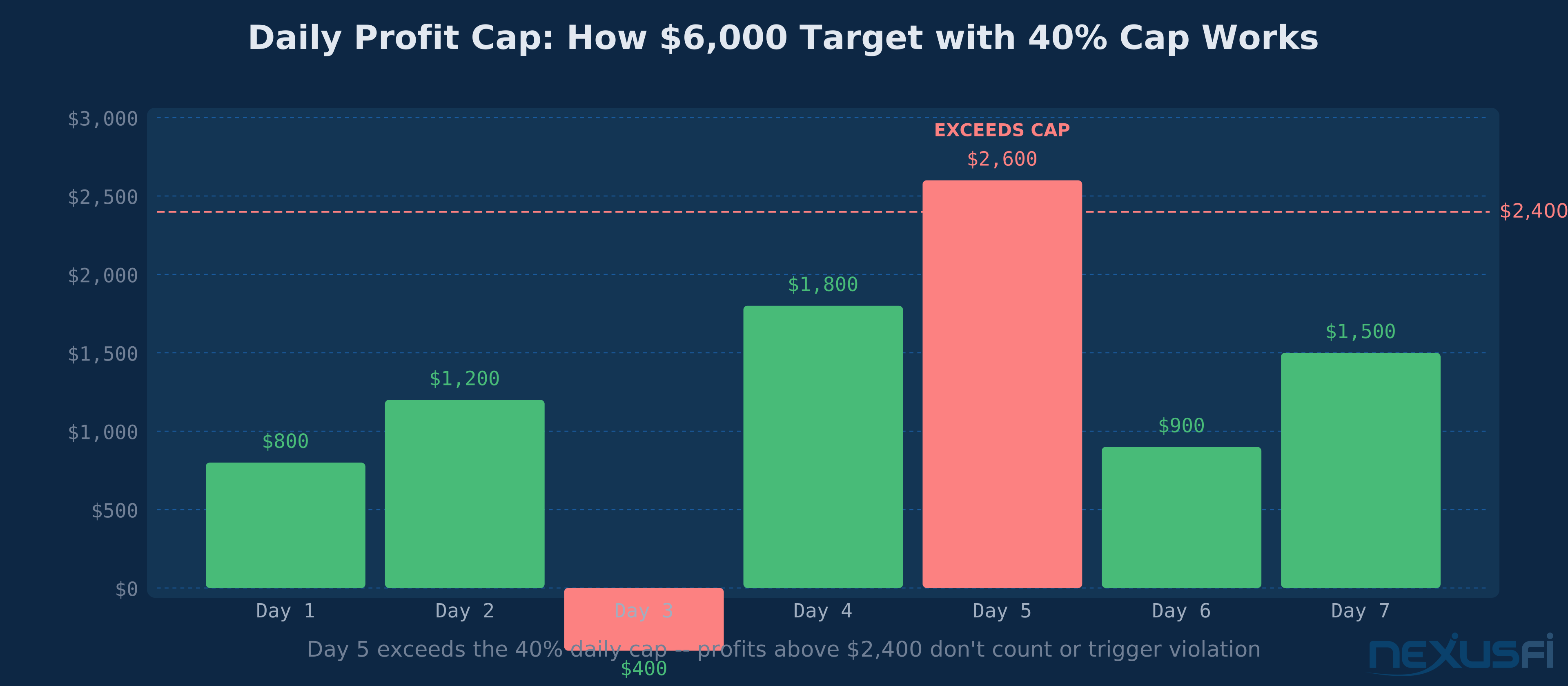
The typical cap is 30-50% of the total profit target. On a $6,000 target with a 40% daily cap, no single day can contribute more than $2,400 toward your goal. As matthew28 documented on NexusFi, Apex once structured their Step 2 so that "the largest day can be a maximum of 40% of the profit target. So both steps could be done in ten days."
The logic: daily caps prevent "goal-by-gamble." Without them, a trader can max out leverage on a volatile day, hit the entire profit target in one session, and pass the evaluation without demonstrating any consistency whatsoever. The cap forces you to produce profits across multiple days, which is a proxy for repeatability.
The counterintuitive part: you might need to stop trading on your best day. If you're up $2,300 and the cap is $2,400, another winning trade risks pushing you into cap violation territory. This is where discipline matters more than P&L.
Minimum Trading Days
Most firms require 3-10 trading days depending on account size and program structure. The rationale is identical to daily profit caps — it prevents single-session passing and ensures the evaluation captures behavior across varying market conditions.
The trap here is subtle. Minimum day requirements can incentivize artificial trading — placing low-conviction trades just to check the "active day" box. If your strategy only generates signals 3 days a week but the minimum is 5, you're forced to choose between taking bad trades or waiting for setups that don't exist.
The smart play: plan your trade schedule around liquidity windows that naturally produce signals. If you trade ES during the opening drive (9:30-10:30 ET), you'll generate signals most days without forcing participation. If you trade CL around inventory reports (Wednesday 10:30 ET), you need a secondary session plan for the other days.
Daily Loss Limits as Consistency Proxies
Every evaluation has a maximum daily loss limit, but this rule functions as a consistency enforcer beyond its obvious risk-management purpose. A $1,250 daily loss limit on a 50K account means one bad session can't create a hole that takes three good sessions to climb out of.
The behavioral impact is real. As sstheo documented during their OneUp funded account path, the daily loss limit directly shaped their trading approach — knowing the exact boundary prevented the "one more trade to recover" instinct that blows up undisciplined traders.
Daily loss limits also interact with the other rules. If your daily loss limit is $1,250 and your profit target is $3,000, you need a minimum reward-to-risk ratio of 2.4:1 across your evaluation — meaning two winning days must cover one losing day. That's not aggressive math, but it constrains your approach.
How Consistency Rules Reshape Your Trading #
Consistency rules don't just constrain what you can do — they at the core alter how you approach every session. Understanding these behavioral effects is the difference between fighting the rules and using them.
Lower variance, less skew chasing. PF requirements and daily caps discourage strategies that rely on occasional large winners with heavy drawdowns between them. If your approach is "lose small 8 times, win big twice," you'll struggle with PF thresholds and potentially violate daily loss limits during the losing clusters. Consistency rules favor strategies with moderate win rates and controlled payoff distributions.
Early pacing pressure. If minimum trading days and profit targets interact (which they always do), you face implicit daily pace requirements. A $6,000 target across 10 minimum days means you need $600/day average. Fall behind early, and the pressure to increase size or force trades intensifies — which is exactly the behavior that violates other consistency rules.
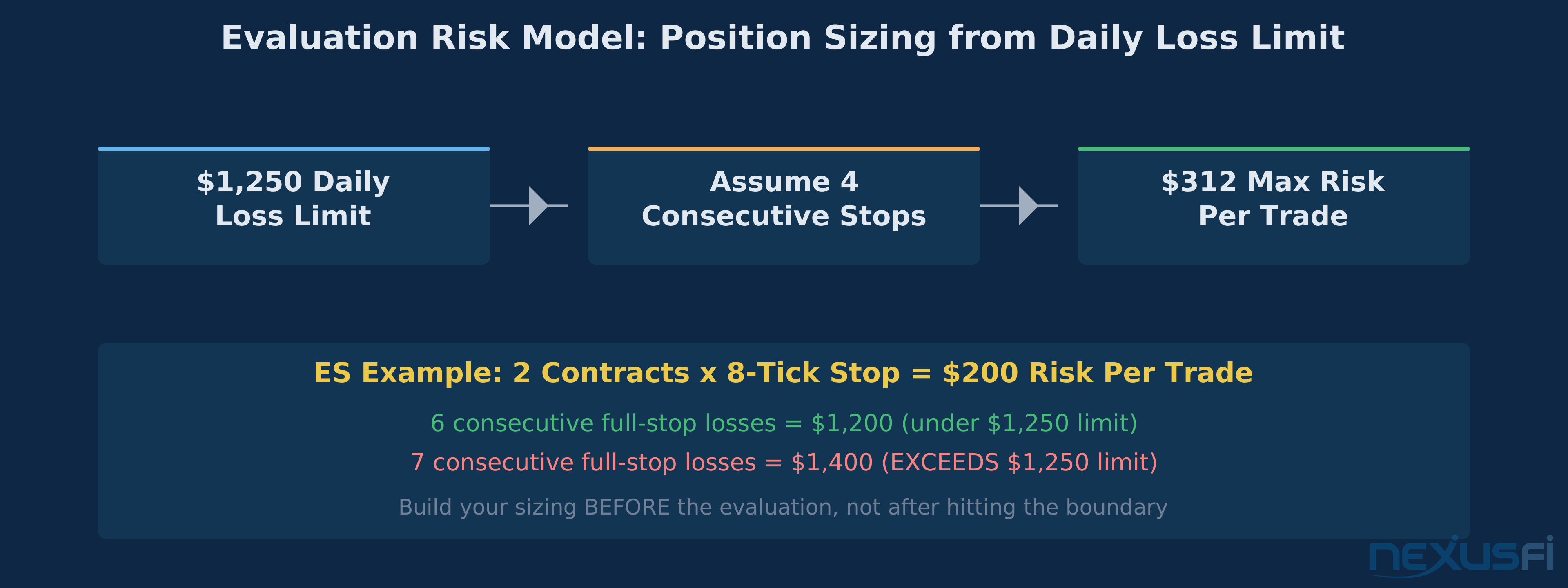
Position sizing adapts to constraints. In a 50K account with a $1,250 daily loss limit, your maximum position size is defined by your stop distance, not your conviction. Two ES contracts with an 8-tick stop risk $200. That gives you six full-stop losses before hitting the daily limit. Most traders should work with that math before starting the evaluation, not after hitting the boundary.
The "stop after you're up" discipline. Daily profit caps create a genuinely counterintuitive requirement. You might need to walk away during your best trading session of the month. This is psychologically brutal but mathematically correct. The alternative — pushing through the cap and having the excess not count (or worse, having it flag your account) — is pure downside.
How Major Firms Implement Consistency (Directional Guide) #
Rules change by product version, account size, and evaluation phase. Always confirm the current rulebook before starting an evaluation. This comparison is directional, not definitive.
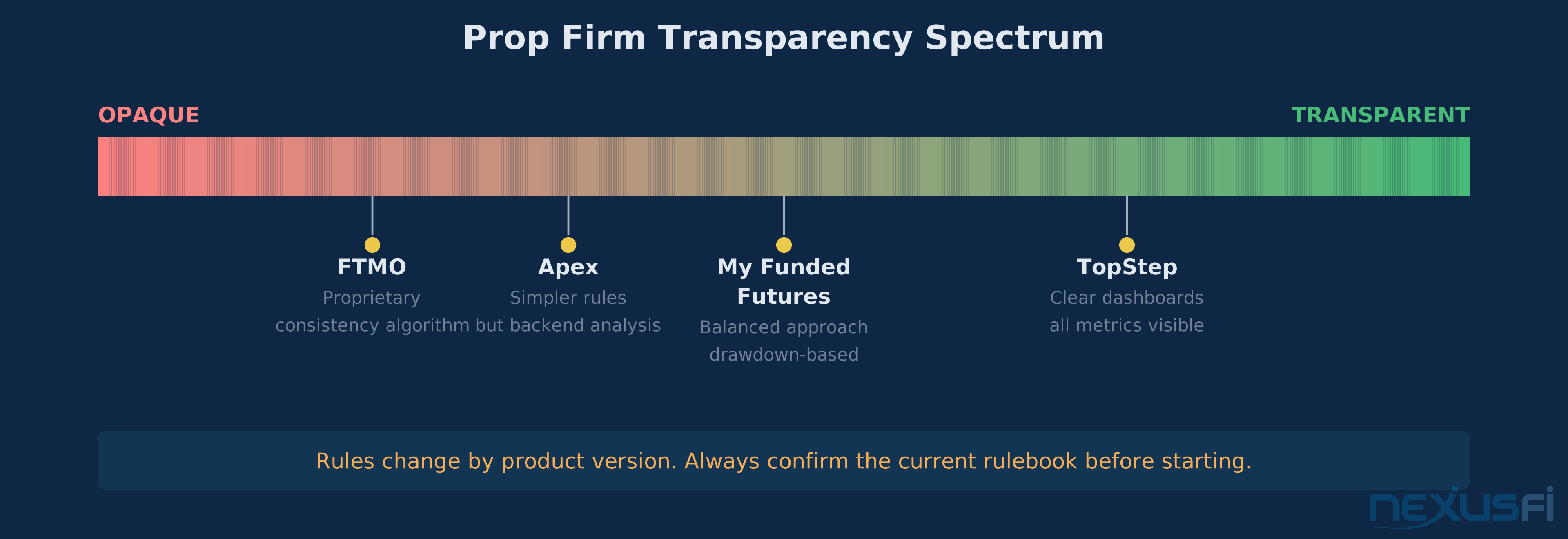
Apex Trader Funding emphasizes loss limits and behavioral stability. Their evaluation structure historically includes daily loss limits and account-level drawdown, with some programs applying equity curve constraints to prevent spiky performance. The rule set is simpler than most competitors, which is a conversion advantage. The 626+ post Apex thread on NexusFi documents extensive community experience with their evolving rule structure, including the DCA rule controversy and periodic changes to funded account terms.
TopStep is generally regarded as the most transparent. Their evaluation uses prop-like phases with clear daily and overall drawdown limits, minimum trading day requirements (typically 5 days), and well-documented progression criteria. TopStep's own AMA on NexusFi outlined their rule simplification: "Trade a minimum of..." days with clear, published thresholds. Their compliance dashboards show all tracked metrics in real time — the benchmark other firms should match.
FTMO uses structured challenge parameters (daily loss, overall loss, profit goal, minimum trading days varying by account size). Their reputation challenge is a proprietary "consistency algorithm" that many traders perceive as a black box. If you satisfy the published rules, you generally pass — but the algorithm monitoring trading quality beyond those rules generates frustration when it produces unexpected failures.
My Funded Futures takes a balanced approach with daily profit caps (typically 50%), minimum trading days (3-5), and controlled drawdown requirements. Traders report that the program penalizes unstable behavior — large equity swings even when total P&L stays within limits — which is consistency enforcement through drawdown mechanics rather than explicit PF requirements.
Six Strategies for Meeting Consistency Requirements #
1. Improve Distribution, Not Terminal P&L
The single biggest mindset shift: you're not trying to maximize profit. You're trying to produce a stable distribution of returns that satisfies multiple simultaneous constraints. A smooth equity curve with moderate gains passes every consistency test. A jagged curve with the same terminal value fails half of them.
Practically: maintain consistent position sizing throughout the evaluation. Don't start with 1 contract and scale to 5 when you're near the target. Don't halve your size after a losing day. Consistency rules measure behavioral stability, and erratic sizing is the easiest thing to detect.
2. Build an Evaluation-Specific Risk Model
Before you take a single trade, model the math. Define maximum dollar risk per trade such that a worst-case sequence of 3-4 consecutive losses still fits within the daily loss limit. For a $1,250 daily loss limit, that means maximum $312 risk per trade if you assume 4 consecutive stops — which happens more often than traders expect.
Use ATR-based or range-based sizing so your strategy scales consistently across volatility regimes. A fixed 2-contract position on ES is conservative in a 40-point range day but aggressive in a 15-point chop session. Let volatility determine your size, not habit.
3. Plan Trading Frequency Around Minimum Days
If the evaluation requires 5 minimum trading days and your strategy generates signals 4 days a week, you need a plan for day five. Options: add a secondary market (if rules allow), add a secondary timeframe on your primary market, or accept one "maintenance day" where you take a small, high-probability setup just to log activity.
Whatever you choose, don't let the minimum day requirement degrade your overall trade quality. One mediocre trade per week to satisfy a rule is fine. Five mediocre trades per week because you're anxious about activity counts destroys your PF.
4. Implement Hard Process Stops
Pre-commit to session rules and remove discretion from enforcement:
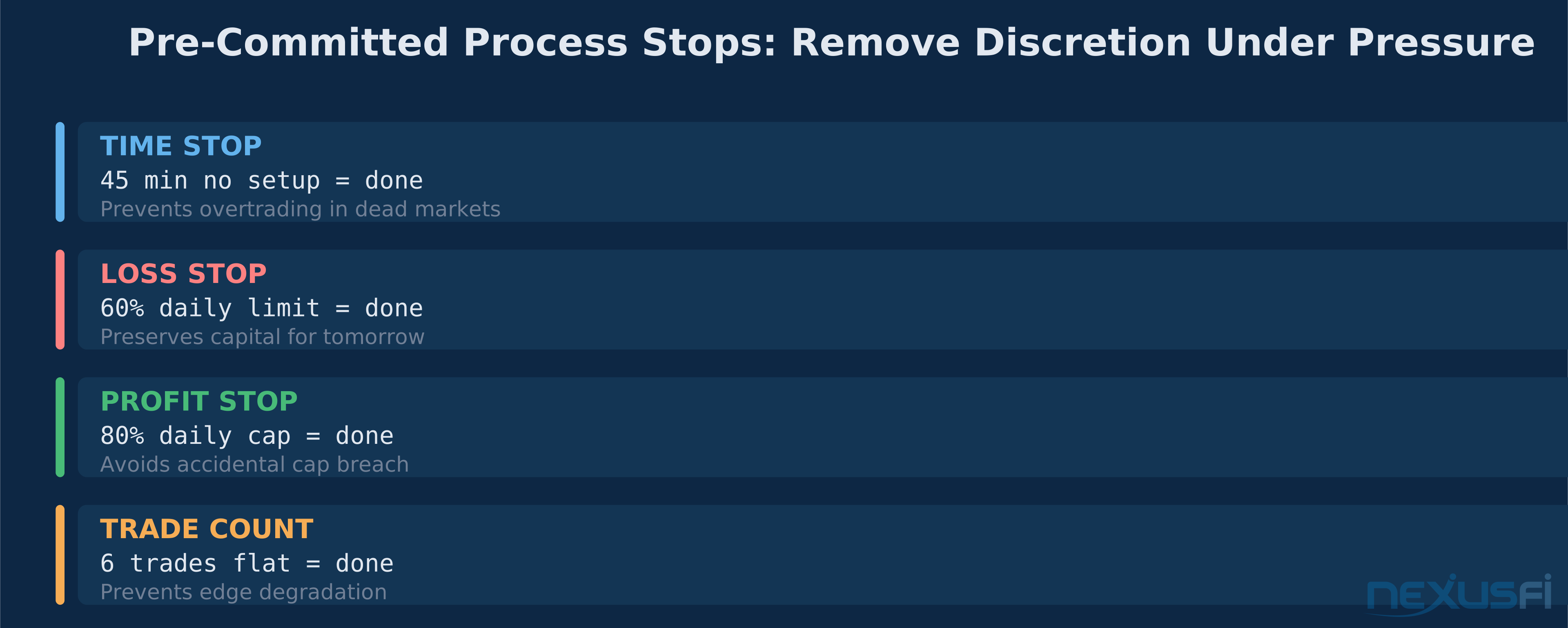
- Time stop: If no setup within 45 minutes of your session open, you're done for the day
- Loss stop: Hit 60% of daily loss limit = session over, no exceptions
- Profit stop: If daily cap exists, stop at 80% of cap to avoid accidental breach
- Trade count: Maximum 4-6 trades per session. If you've taken 6 and you're flat, the edge is gone today
These aren't constraints — they're consistency generators. Every rule you pre-commit to is one fewer discretionary decision under pressure.
5. Improve Execution Quality
This is the most overlooked consistency lever. Better fills directly improve profit factor and reduce drawdowns without changing your strategy. Trade during optimal liquidity windows (ES: 9:30-11:30 and 14:00-15:30 ET). Use limit orders where possible. Avoid placing market orders during the first 60 seconds after the open when spreads are widest.
Slippage of half a tick per trade on ES is $6.25 per contract per trade. Across 20 trades, that's $125 — which can be the difference between passing and failing a tight evaluation.
6. Track Everything in Real Time
Don't rely on the firm's dashboard alone. Maintain your own spreadsheet tracking: daily P&L, rolling profit factor, daily P&L as percentage of target (to monitor cap proximity), trading day count, and equity curve smoothness. Silver Dragon's approach on NexusFi — creating a personal spreadsheet to track whether their trading met TopStep criteria — is exactly right.
Review these numbers before each session, not after. If you're at 85% of your daily cap from yesterday's rollover, you know today is a "protect gains" day, not a "push for more" day. That awareness prevents the rule violations that come from trading blind to your own metrics.
The Evaluation Paradox #
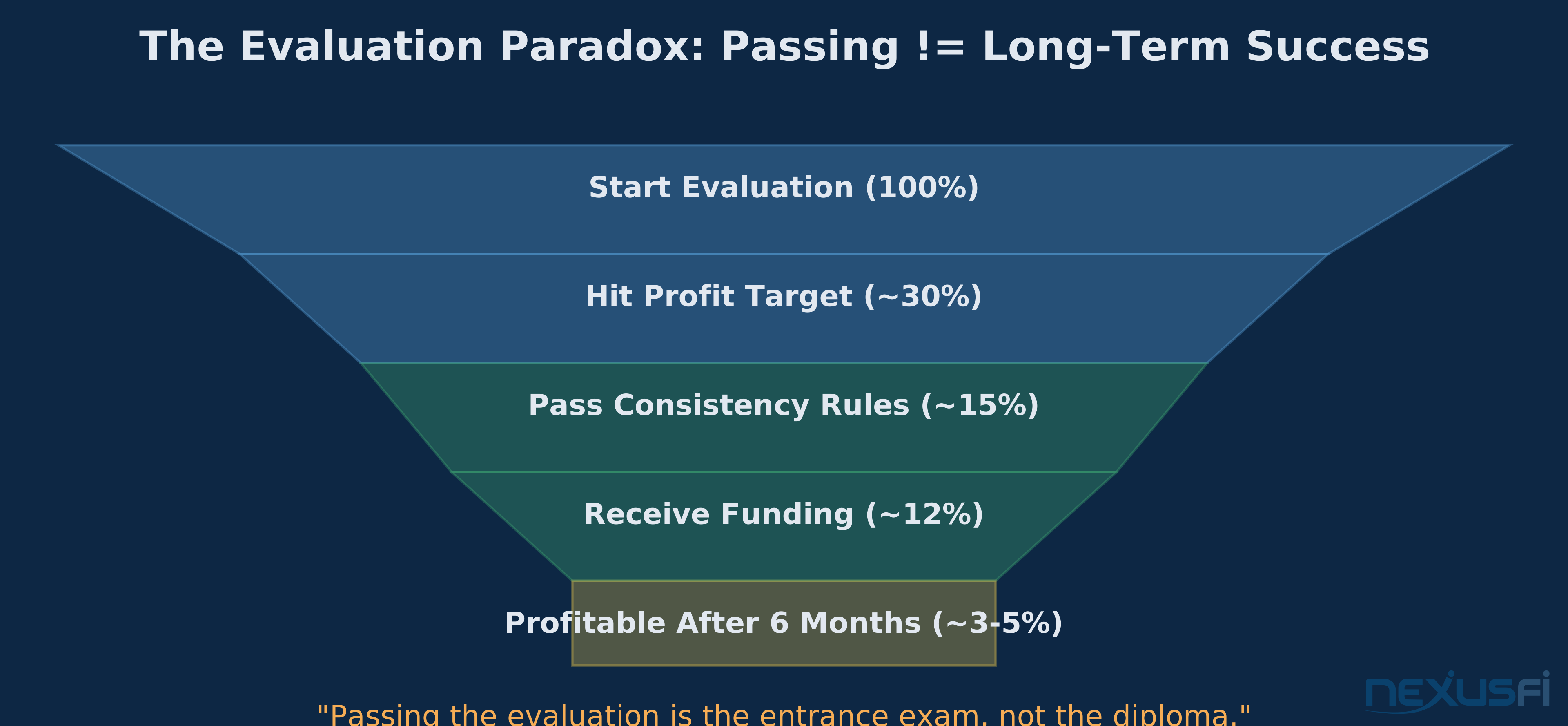
Here's the tension nobody in the industry wants to acknowledge: consistency rules improve for evaluation passage, which may not perfectly predict long-term trading success.
A trader who learns to stay within daily caps, maintain PF above threshold, and trade the minimum days has learned to pass evaluations. Whether they've learned to trade profitably over 6 months is a different question. The skills overlap but aren't identical.
Howard Roark asked the community directly: "Any long term success stories from funded traders in these get-funded programs?" The 268-reply thread that followed reveals the gap between evaluation success and funded account survival. Passing the evaluation is the beginning, not the end.
bobwest put it plainly: "We're told that about 90% of all new traders fail when they are trading their own accounts. Why would it be a surprise that the same group of traders fail at the same rate when they try for a funded account?"
The practical takeaway: treat the evaluation as a framework for professional trading behavior, not as an obstacle to game and forget. The traders who do well after funding are the ones who internalized the consistency discipline during the evaluation, not the ones who gamed the metrics and reverted to old habits once funded.
Protecting Yourself: Due Diligence Before You Start #
Given the hidden rules controversy and the frequency of rule changes, due diligence before starting any evaluation is non-negotiable:
Document the rules at time of purchase. Screenshot every page of the rulebook, terms of service, and FAQ. If the firm changes rules after you've started, you have evidence of what you agreed to. The FundingTicks situation demonstrated why this matters — traders who couldn't prove the original terms had no recourse.
Read the NexusFi threads. Every major prop firm has an active discussion thread on NexusFi. The Apex thread (626+ replies), TopStep AMA (1,296+ replies), and Elite Trader Funding review contain years of real trader experiences — including payout denials, rule change documentation, and direct firm responses. VirtualMark's analysis of Elite Trader Funding showed how "payout rules are by far the worst" — information that's available before you spend money on an evaluation.
Test your strategy against ALL rules simultaneously. Don't just check whether you can hit the profit target. Model your typical trading pattern against daily caps, minimum days, loss limits, and any PF requirements. Run it on 6 months of historical data. If your strategy passes 60% of simulated evaluations, it's marginal. You want 80%+ before spending real money.
Start with the firm's smallest account. Learn the rule mechanics with minimum capital at risk. The $25K evaluation costs less than the $150K evaluation and teaches the same compliance lessons. Scale up after you've demonstrated you can work through the full ruleset.
The Bottom Line #
Consistency rules are underwriting tools disguised as trading rules. They exist to protect the firm's capital allocation by filtering for repeatable performance, and the firms that implement them transparently produce better outcomes for both sides of the transaction.
The rules boil down to four constraints: maintain quality (profit factor), participate across time (minimum days), don't spike (daily caps), and don't crater (daily loss limits). Every other variation is a flavor of these four.
Your job isn't to fight the rules. Your job is to engineer a trading approach where the rules are satisfied naturally — where your normal trading behavior produces the stable equity curve, controlled drawdowns, and distributed profits that consistency metrics demand. If satisfying the rules requires dramatically changing how you trade, either your trading isn't consistent enough for funding or the firm's rules don't match your style. Both are valuable information.
The firms that clearly publish their rules, provide real-time compliance dashboards, and avoid retroactive changes earn the community's trust. The ones that hide behind "proprietary algorithms" and change terms after traders have invested money earn the distrust that dominates forum discussions.
Choose your firm based on transparency first, then match the rule structure to your trading style. Document everything. And remember — passing the evaluation is the entrance exam, not the diploma. The consistency discipline you build during evaluation is what keeps you funded.
Knowledge Map
Prerequisites
Understand these firstGo Deeper
Build on this knowledgeReferences This Article
Articles that build on this topicCitations
- — ApexTraderFunding.com experience and review (2021) 👍 11“That's quite an essay:) Glad you're pleased with the company. Just a couple of points that I would mention.”
- — My MES Live Account Journal (OneUp) (2019) 👍 21“I successfully completed my $50k account 15 day trading evaluation with OneUp Trader , got funded with MES Capital, and just finished my second profitable week of live trading. Here is the graph from my OneUp evaluation account: https://nexusfi.”
- — ApexTraderFunding.com experience and review (2024) 👍 3“Just to clarify, I wasn't suggesting that they trade against us. My point was that they lose money when they pay us out, as our goals are not aligned. Which is why we see the numerous complicated rulesets these funded SIM firms seem to have.”
- — ApexTraderFunding.com experience and review (2024) 👍 7“I want to give a heads-up on the Apex DCA rule. My recent payout request of $22k was denied due to DCA. All my trades are logged on my journal at https://ticks-in-flow.blogspot.com/ where I have documented my entries, exits and trade reason.”
- — Most Funding Firms are a Scam (2022) 👍 5“on a separate note, i'm sure many of you have noticed that there has recently been a boom in these futures evaluation companies. in just a short timespan, we've had many new entrants like Elitetraderfunding, Apex, Bulenox, etc. and every. single.”
- — TST/OneUp/LeeLoo/Earn2Trade (2021) 👍 4“Yes, there was, and they were universally, and justly, condemned for it, at least in that thread. They retroactively applied a rule to deny someone payment they had coming under the rules at the time, a very bad thing in my view.”
- — Topstep didn't pay (2021) 👍 1“So it appears that the situation is what matthew28 surmised and what TraderAnna has confirmed, and which is also referenced in the emails.”
- — FundingTicks Faces Massive Backlash Over Retroactive Rule Changes (2026)“FundingTicks Faces Massive Backlash Over Retroactive Rule Changes Futures prop trading platform FundingTicks sparked a firestorm on December 17, 2025, after applying new trading rules retroactively to existing accounts.”
- — NexusFi Discussion
- — Topstep's Nick Dolby (Social Media and Community Coordinator) - Ask me Anything (AMA) (2016) 👍 11“Happy 2016! We're happy to announce that TopstepTrader® is simplifying the Trading Combine®, Funded Trader Preparation™, and the Funded Account™ rules. Less rules = even more funded traders! You spoke and we listened.”
- — 20 Day Combine at TST (2012) 👍 19“I wanted to be able to see if my trading met the TopStep criteria to get fully funded. So I created a spreadsheet to tracking my trading based on the criteria. If I missed something or have questions please let me know. Edit: Added blank spreadsheet.”
- — Any long term success stories from funded traders in these get-funded programs? (2021) 👍 5“Yes. That's the problem with this rule and it really makes no sense. I'm not sure what your EOD P&L actually was, but it's perfectly possible to actually blow an evaluation with LeeLoo / Apex on a NET PROFITABLE DAY, i.e.”
- — TST/OneUp/LeeLoo/Earn2Trade (2022) 👍 9“We are told that about 90% of all new traders fail, when they are trading their own accounts. Why would it be a surprise that the same group of traders fail at the same rate when they try for a funded account? There is a variety of blame-shifting tha...”
- — Elite Trader Funding, Avoid? (2024) 👍 2“I've been looking at different futures firms lately, and Elite Trader Funding stood out as one of the worst. At first glance they seem appealing with a decent variety of account sizes, rules and platforms to choose from.”