



Initiative vs Responsive Activity
The classification that separates reading profiles from trading them.
Overview #
Every price move in the futures market boils down to one question: is this activity initiative or responsive? Initiative activity drives price into new territory — beyond prior value, into unexplored levels where business hasn't been done recently. Responsive activity pushes price back toward established value — sellers stepping in above VAH, buyers appearing below VAL, the market voting that current value is correct and the probe was an overextension.
This isn't bullish vs bearish. Initiative can be buying or selling. Responsive can be buying or selling. The classification is about intent — is the market exploring new ground or defending old ground? Getting this distinction right changes everything about how you read a developing profile, where you place stops, and whether you fade or follow.
The concept traces directly to J. Peter Steidlmayer's original Market Profile work at the Chicago Board of Trade. In the CBOT framework, Other Timeframe (OTF) traders are the participants who "take initiative action to push the market into range extension" and "responsive action, pushing the market in the opposite direction" when prices diverge from perceived value. [6] That original distinction — are participants exploring new value or defending existing value? — remains the backbone of every profile read.
For the full methodology on how initiative and responsive activity fits into a Volume Profile trading framework, see Volume Profile Trading.
The Core Classification #
Initiative Activity #
Initiative activity is trade that pushes price away from established value. As @Private Banker explains, "Initiative activity is any buying above or within the previous session's value and initiative selling below or within the previous session's value." [1]
The key word is above and below. When price trades above yesterday's VAH and buyers continue to lift offers, that's initiative buying — participants making a directional bet that value belongs higher. When price drops below yesterday's VAL and sellers keep hitting bids, that's initiative selling.
What makes it initiative rather than just a probe? Acceptance. Initiative activity creates new structure in the developing profile. Volume builds at the new price levels. The developing VPOC starts migrating toward the move. The profile isn't just poking into new territory — it's setting up camp.
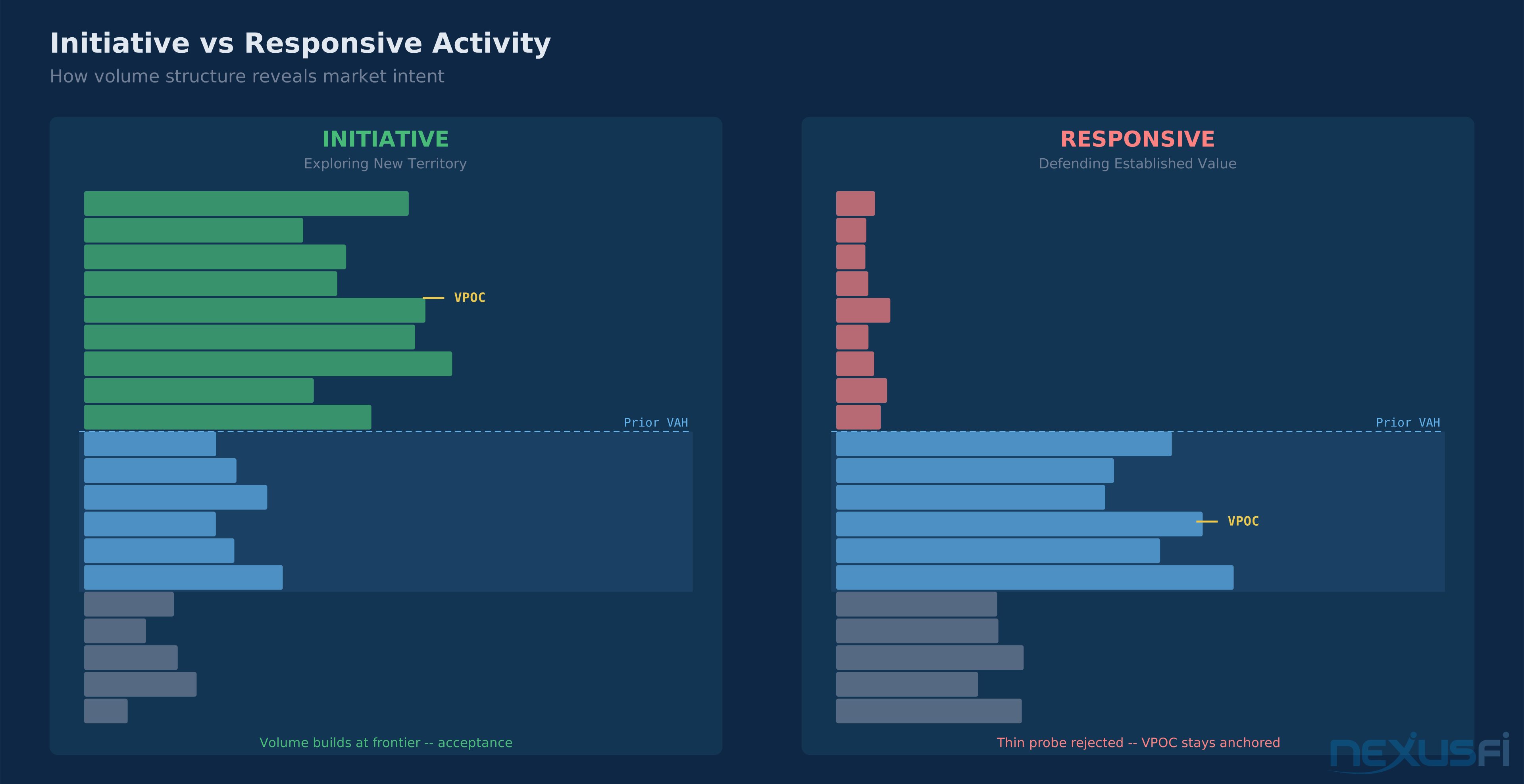
Signs of initiative activity:
- Opening outside prior value with immediate continuation (open drive)
- Price acceptance outside VAH/VAL — volume building, not just wicking
- POC migration in the direction of the move
- New HVN formation at previously unexplored levels
- Strong delta in the direction of the push (aggressive market orders leading)
Responsive Activity #
Responsive activity is the opposite — trade that pushes price back toward established value. Responsive buyers step in below the Value Area because they believe price is temporarily cheap. Responsive sellers appear above the Value Area because they believe the probe overshot fair value.
As @Private Banker puts it, "Responsive is simply buying below the previous session's value and selling above the previous session's value." [1] He illustrates this with a bracket market example: "For the last 5 days, the ES has been trading in a bracket/balance area. We are seeing responsive buying and selling at each extreme as noted by the buying and selling tails." [1]
Signs of responsive activity:
- Open inside prior value — expect rotations within the range
- Rejections at VAH/VAL with immediate reversion
- Absorption at range extremes — aggressive buyers getting absorbed by passive sellers (or vice versa)
- Failed breakouts that snap back into the balance area
- VPOC staying anchored in the prior range despite probes
The 30-Second Identification Check #
Here's a mechanical diagnostic you can run on any price move in about 30 seconds. Check three conditions — all three confirming gives you a high-confidence initiative classification. Two of three is a borderline case requiring the conflict resolution framework below. One or zero means responsive until proven otherwise.
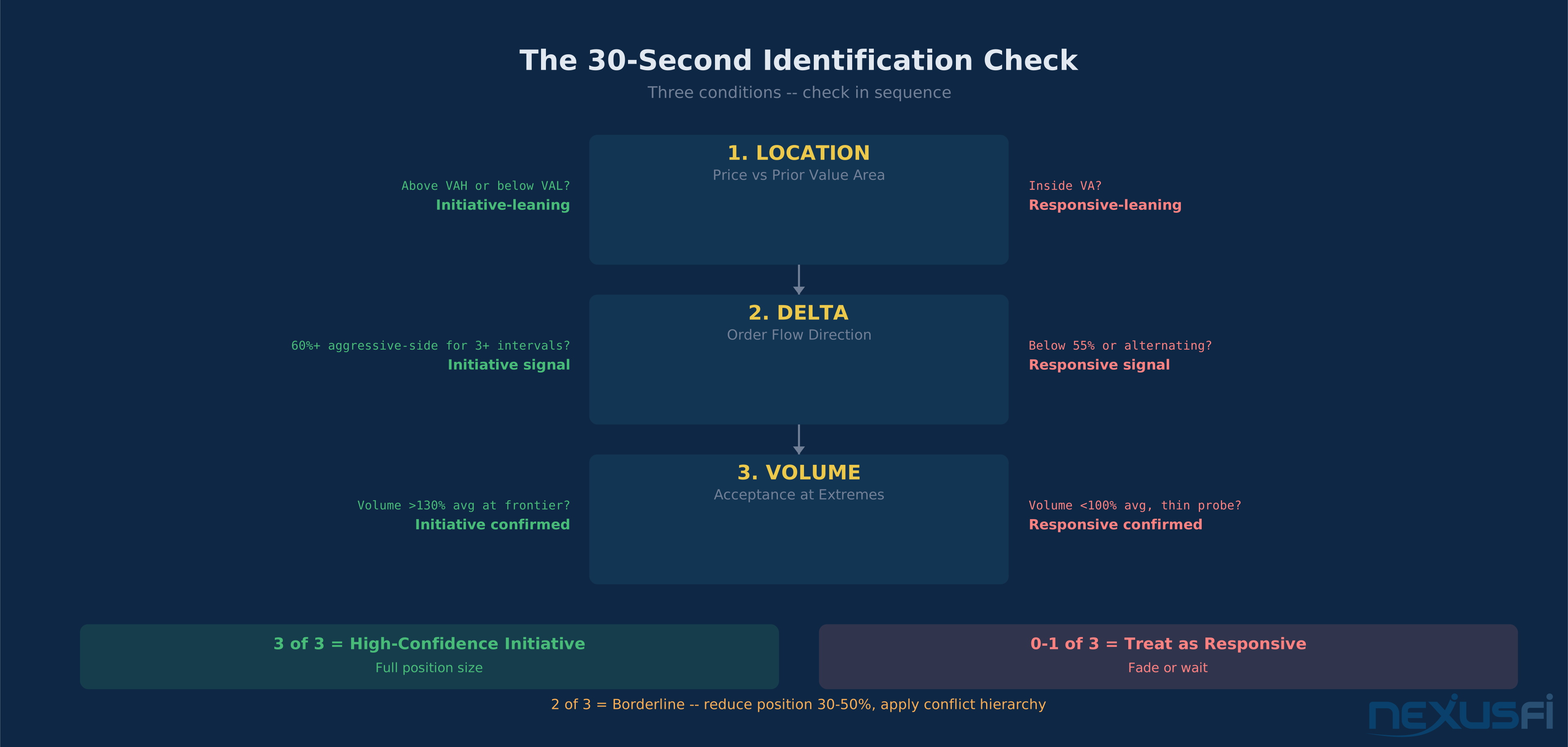
Condition 1: Location Relative to Prior Value #
Where is price relative to yesterday's Value Area?
- Above VAH or below VAL = initiative-leaning context
- Inside the Value Area = responsive-leaning context
This is the fastest filter. If price is rotating between yesterday's VAH and VAL, you're overwhelmingly looking at responsive activity regardless of how aggressive individual bars look.
Condition 2: Delta Behavior #
Is the order flow confirming the move?
- Initiative: Sustained delta in the direction of the move — meaning 60%+ of aggressive volume on the directional side for at least 3 consecutive 30-second intervals on ES/NQ, or 2 intervals on CL. On an upside push, you see persistent positive delta — aggressive buyers lifting offers without immediate absorption.
- Responsive: Delta is near-zero (aggressive-side dominance below 55%), alternating sign between intervals, or opposite-sign. Price pushes higher but delta flattens or turns negative — aggressive buying is being absorbed by passive sellers.
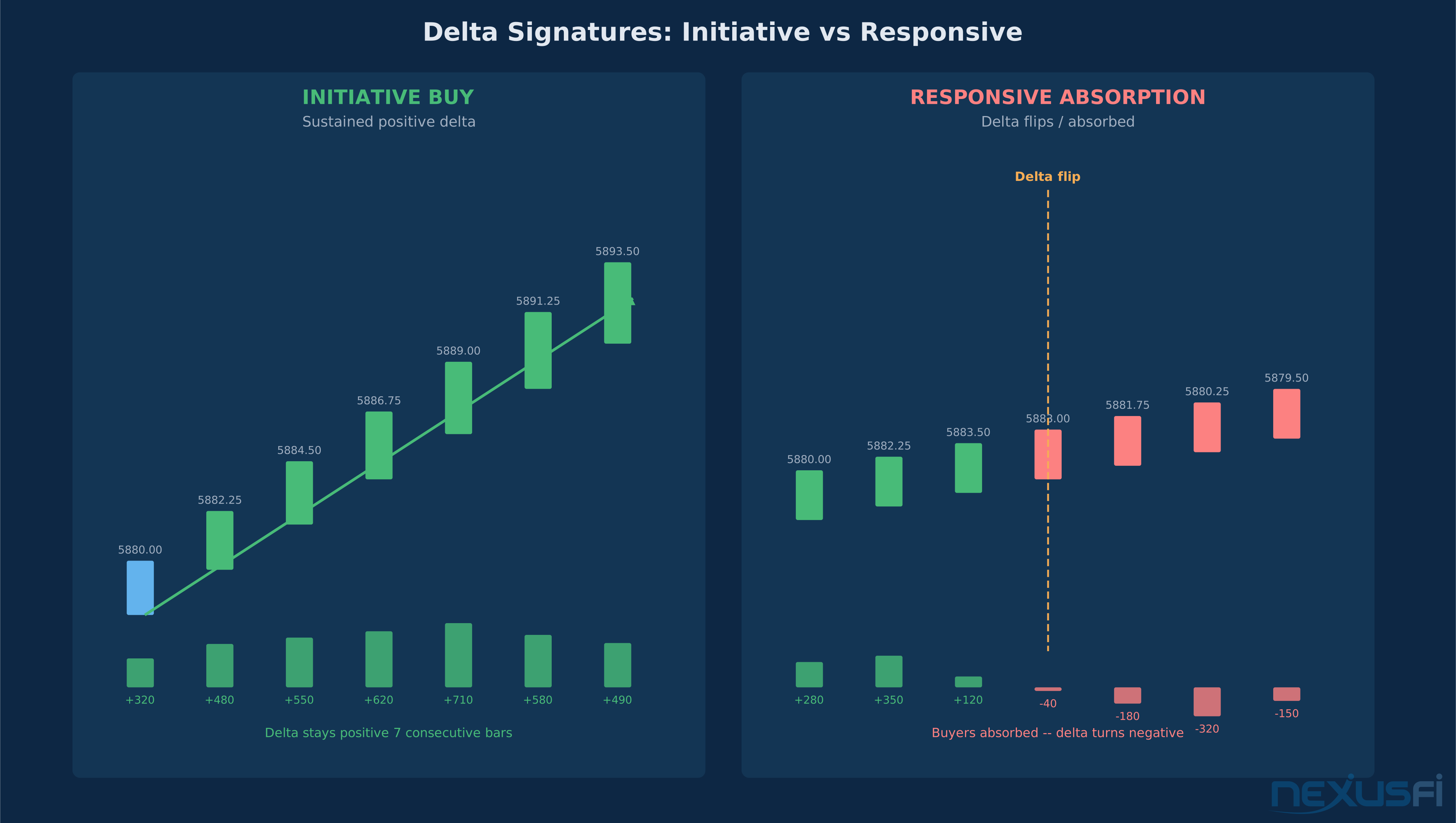
Condition 3: Volume at Extremes #
Is volume building at the new levels or only at the rejection point?
- Initiative: Volume accumulates at the frontier levels — the new highs or new lows. Specifically, volume at the new extreme should exceed 130% of the 20-bar average for that instrument. The developing profile is expanding, with new HVN structure forming outside the prior range.
- Responsive: Volume at the extreme stays below 100% of the 20-bar average. The probe leaves thin, wispy volume while the heaviest trading remains inside the prior Value Area. The market tested and rejected — a completed auction.
The quick version: Did the move create new HVN structure and pull the developing VPOC toward the new price? That's initiative. Did the move leave thin volume at the extreme while the VPOC stayed anchored in the prior range? That's responsive. Check the developing profile bins at the extreme — thick means initiative won, thin means responsive won.
When Conditions Conflict: The Resolution Hierarchy #
Markets rarely give unanimous signals. Here's how to resolve conflicting conditions, ordered by reliability:
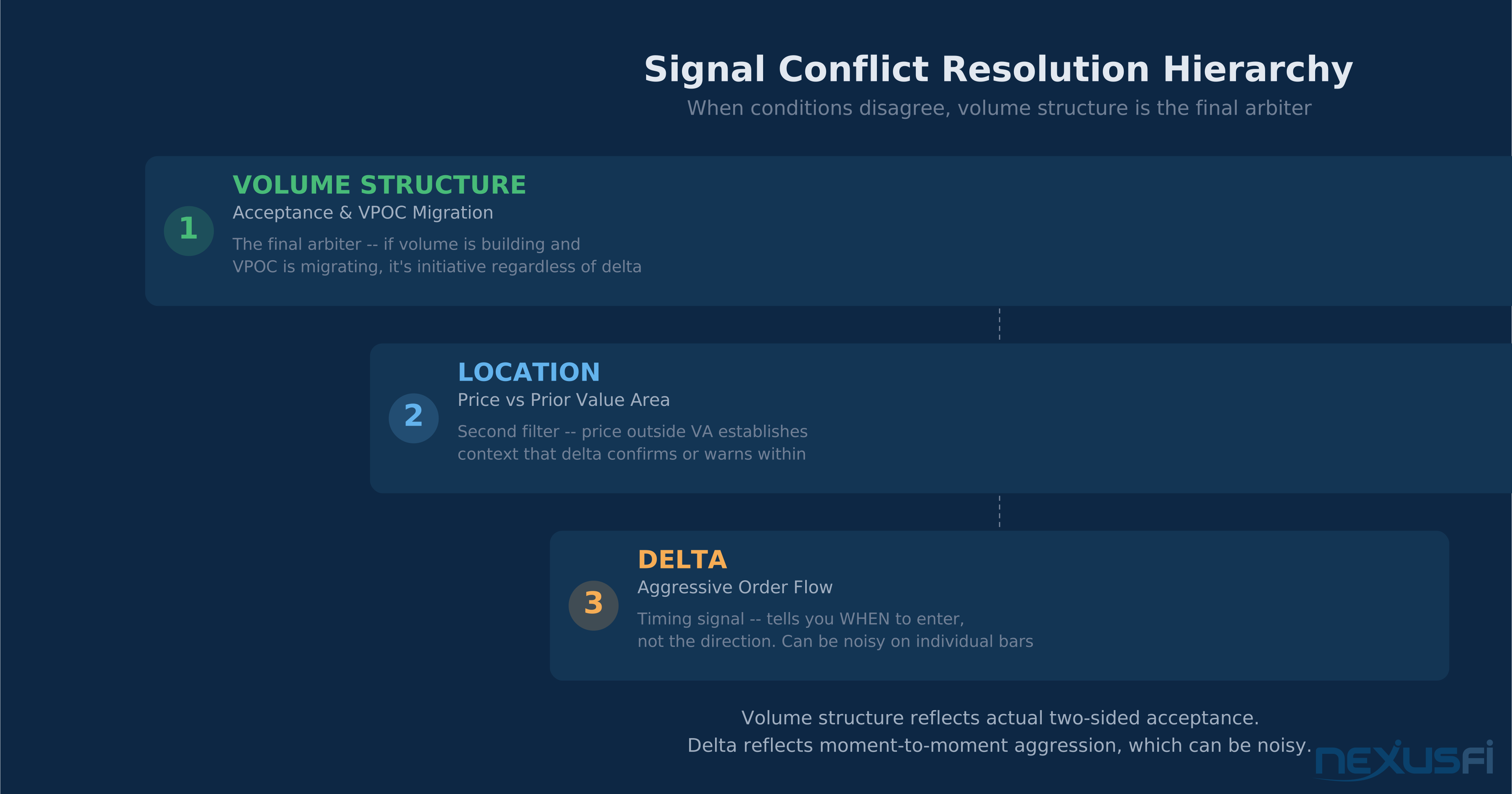
Acceptance (Volume Structure) > Location > Delta
- Volume structure migration is the final arbiter. If the developing profile shows volume building and VPOC migrating to new levels — that's initiative regardless of what delta does in a single bar. Volume structure reflects actual two-sided acceptance. Delta reflects moment-to-moment aggression, which can be noisy.
- Location relative to value is the second filter. Price trading 2+ points outside yesterday's VA on ES with structure building there overrides a single-bar delta flip. Location establishes the context — delta confirms or warns within that context.
- Delta is the timing signal, not the direction signal. Delta tells you when to enter and when the move is losing steam. It doesn't override structural acceptance.
Practical conflict scenarios:
- Location says initiative + delta says responsive + volume building: This is a pullback within initiative. The aggressive side is resting, but acceptance continues. Treat as initiative with patient entry — wait for delta to resume rather than fading.
- Location says responsive + delta says initiative + volume thin: This is a stop-run or liquidity sweep. Strong delta inside the VA that doesn't produce volume acceptance is not initiative — it's noise. Treat as responsive.
- 2 of 3 conditions confirm initiative: Classify as initiative but reduce position size by 30-50% compared to a 3-of-3 confirmation. The incomplete signal warrants conviction but not full commitment.
Probability Framework #
No systematic backtesting exists for initiative/responsive classification across all instruments and market regimes. However, based on community observation and practitioner experience documented across NexusFi:
- When all 3 conditions confirm initiative above VAH, price continues to build value at the new level roughly 65-75% of the time in balanced-to-trending market regimes on ES
- When only 2 of 3 conditions confirm, continuation drops to roughly 45-55% — barely better than a coin flip, which is why position sizing matters
- Responsive fades at VAH/VAL with confirmed absorption work roughly 60-70% of the time during balanced sessions, but drop below 40% on trend days
- The CL liquidity sweep (false initiative at prior session highs/lows) occurs on roughly 1 in 4 breakout attempts during RTH, making confirmation patience more important in energy futures than in indices
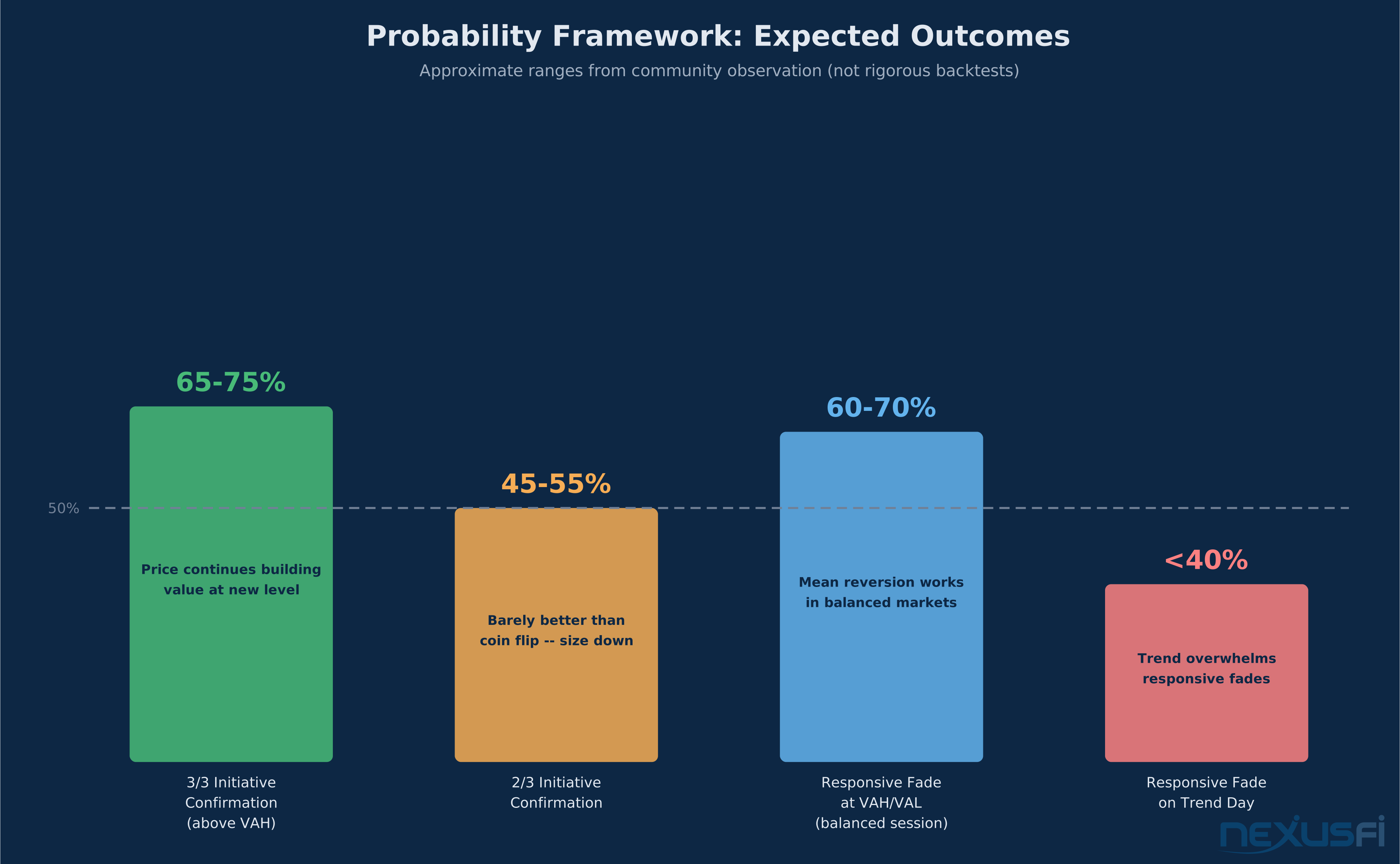
These are approximate ranges from community experience, not rigorous backtests. Use them for expectation-setting and position sizing, not as trading signals. The edge comes from combining this classification with the broader Volume Profile methodology.
Reading It in the Developing Profile #
The developing profile is where initiative and responsive activity becomes visible in real-time.
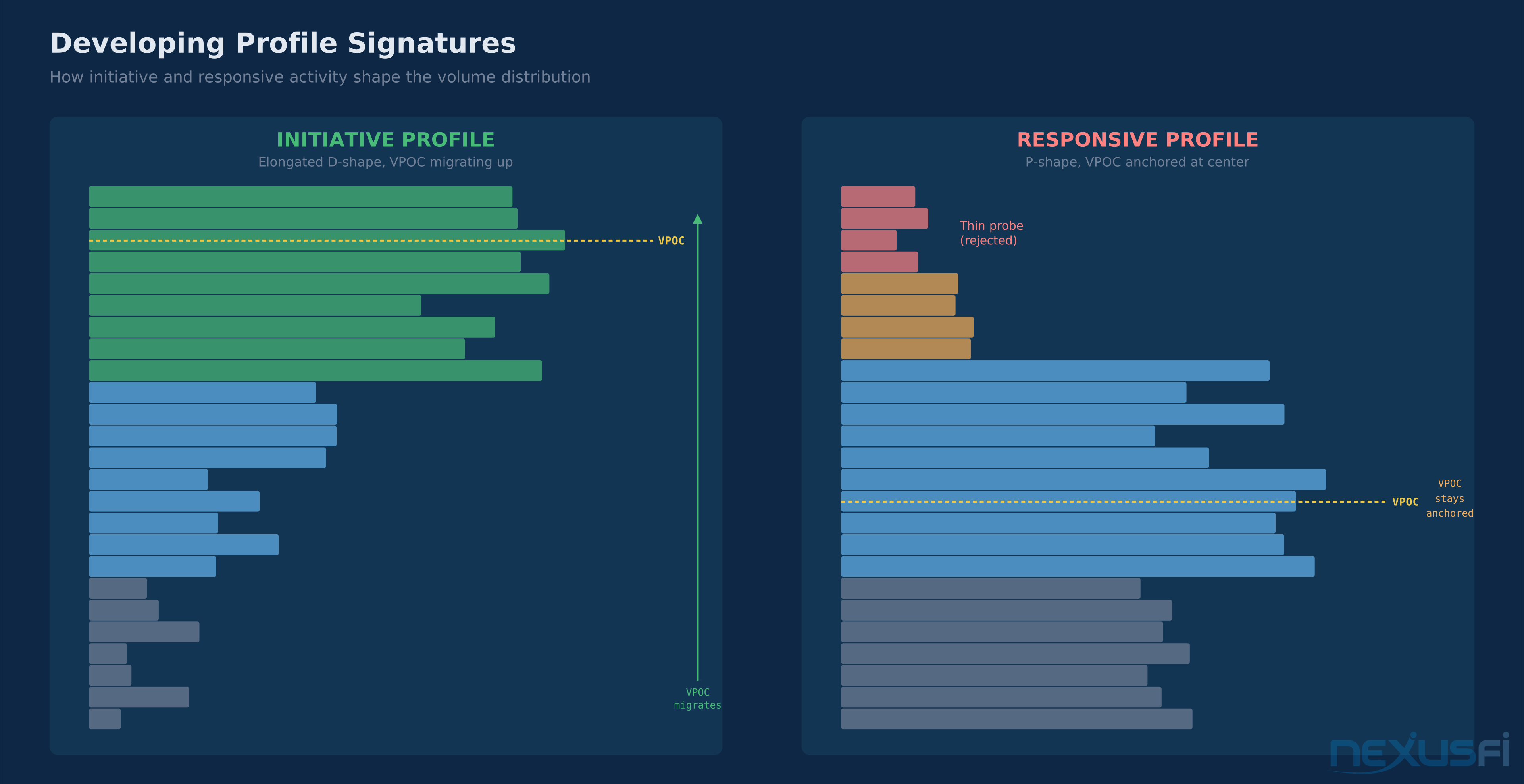
Initiative Profile Signatures #
When initiative activity dominates, the developing profile shows:
- Expanding outer edge: The histogram grows outward as volume builds at new price levels. Instead of a bell curve centered on the prior range, the profile starts stretching in one direction.
- VPOC migration: The highest-volume price level starts moving toward the new territory. This is the strongest confirmation — when the VPOC leaves the prior range and migrates to the new levels, initiative participants have established new value.
- Tails becoming structure: What started as a thin probe (tail) fills in with volume and becomes a full leg of the profile. Single prints get filled as the market returns to accept those levels.
- Elongated, directional shape: The profile develops a "D-shape" skewed in the direction of initiative activity rather than a balanced bell curve.
Responsive Profile Signatures #
When responsive activity dominates:
- P-shape or b-shape profile: Volume plateaus at one extreme (responsive sellers capping the top, or responsive buyers supporting the bottom) while the other extreme gets probed but rejected.
- VPOC stays anchored: Despite price probes, the developing VPOC remains in or near the prior session's range. The market tests new levels but can't establish value there.
- Rejected tails: The extremes show thin volume — price visited but nobody stayed. These single prints mark the boundary where responsive participants stepped in and rejected further exploration.
- Expanding volume at the center: The VA widens slightly but stays centered. Two-sided trade fills in the middle of the range as both sides find agreement on value.
Order Flow Mechanics: Delta and Footprint #
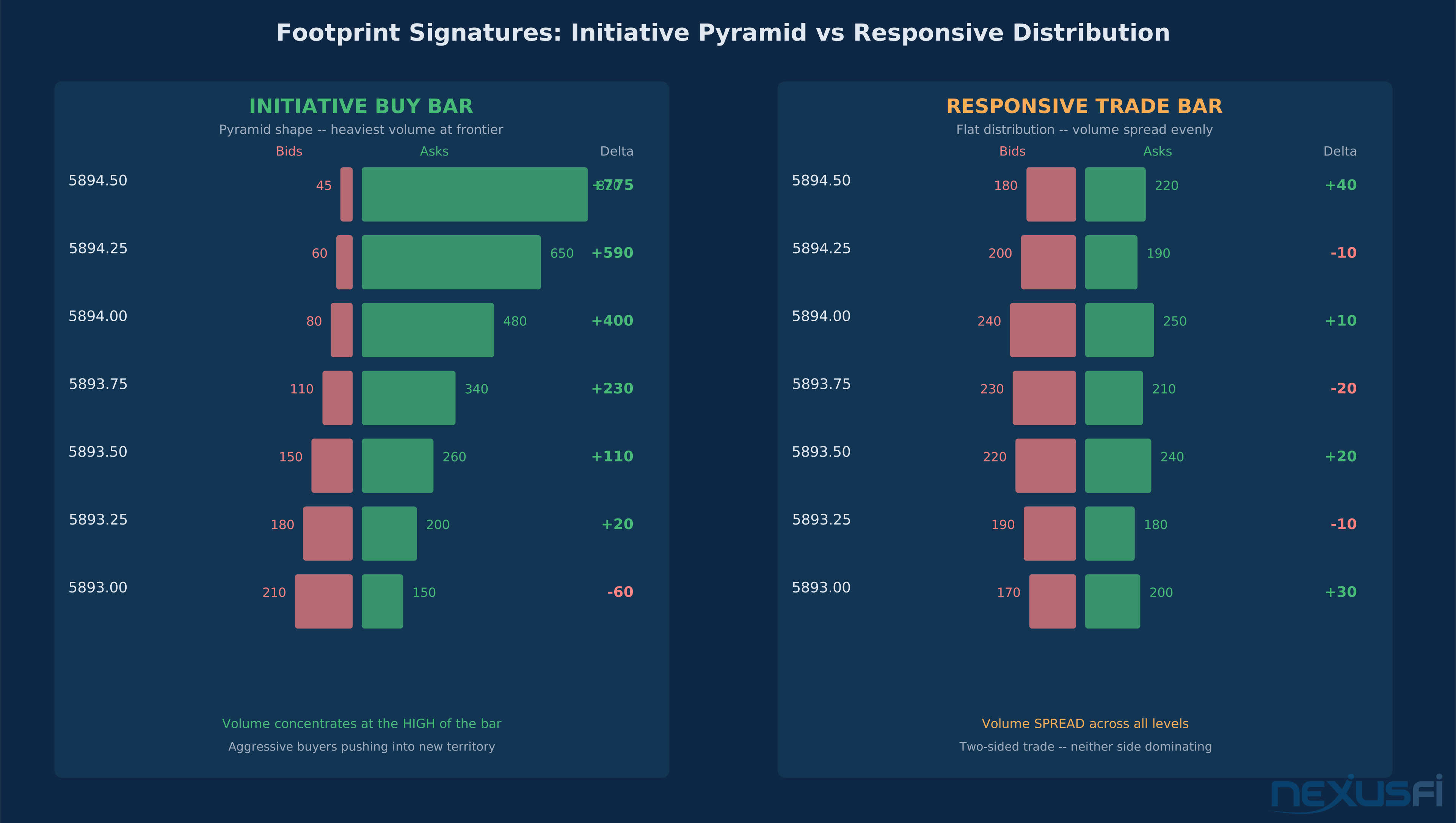
The footprint chart shows you initiative vs responsive at the microscopic level — individual price levels, individual aggressive orders.
Initiative in the Footprint #
- Pyramid shape: One price level dominates the bar's volume, with the aggressive side clearly winning. On an initiative buy bar, the highest delta sits at or near the high of the bar — buyers are pushing price up and the heaviest volume is at the frontier.
- Sustained aggressive-side dominance: Buy-side delta stays positive bar after bar without getting immediately absorbed. Each new bar extends the move.
- Speed: Price covers ground quickly — 2+ ticks per second with sustained delta. This speed is itself a signal. Responsive participants can't get in front of it.
Responsive in the Footprint #
- Flat distribution: Volume is spread across many price levels within the bar. No single level dominates. This "filled" look means both sides are actively participating — the hallmark of two-sided responsive trade.
- Delta divergence: Price may still be pushing in one direction, but delta is fading or flipping. Higher highs with declining positive delta on ES signals that responsive sellers are absorbing the aggressive buying.
- Absorption at extremes: Large passive orders (limit sells at resistance, limit buys at support) absorb the aggressive market orders without price breaking through. As @Grantx describes: "As price moves into support, sellers find passive buyers in the form of limit long orders. As soon as buyers turn responsive, ie buyers start lifting offers, sellers back off and start unwinding positions." [3]
Practical Application: The Trading Workflow #
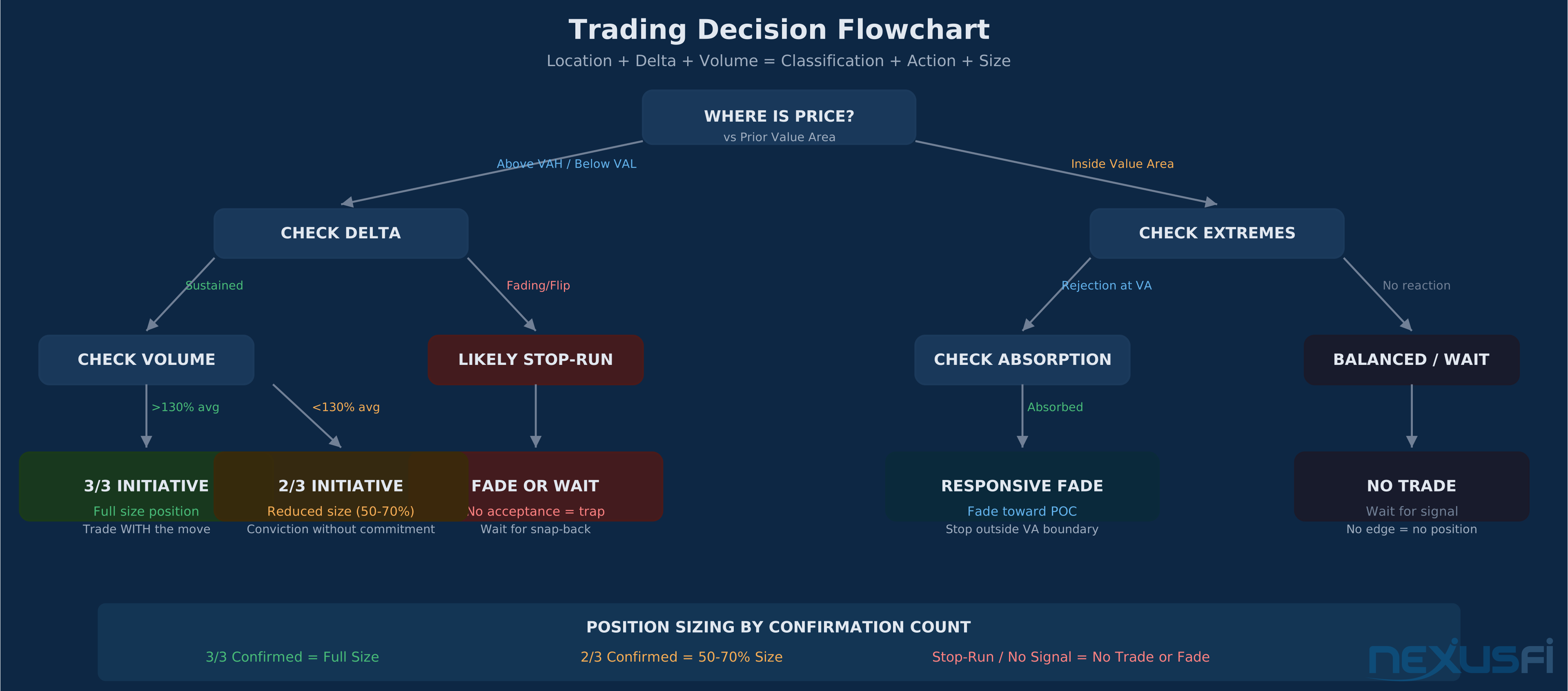
The initiative/responsive classification isn't just academic — it drives specific trading decisions. As one thorough guide to Dalton's methodology puts it, initiative vs responsive is "the core filter" for Market Profile traders — "responsive fades toward value in balance, initiative buys above/sells below value creating imbalance." [7]
Trading Initiative Activity #
When you've confirmed initiative:
- Trade with the move, not against it. Don't fade an initiative breakout above VAH with confirmed acceptance. As @Private Banker warns about initiative opening drives: "You do not fade this. You will get crushed." [2]
- Stop placement: Use the initiative structure itself. Place stops below the buying tail on a long initiative move, or above the selling tail on a short. "On an opening drive/initiative move, that buying tail should be good. If it failed then you'd want to get out as the initiative attempt failed." [2]
- Target identification: After initiative activity, @trendisyourfriend suggests using custom profiles to identify targets: "For identifying the most likely place price will want to test after some initiative activity there is nothing that beats a custom profile for the ease of use and learnability." [5]
Trading Responsive Activity #
When you've confirmed responsive:
- Fade the extremes. Responsive activity at VAH = sell. Responsive activity at VAL = buy. Target the POC or the opposite side of the Value Area.
- Wider stops relative to the Value Area. Responsive trades are mean-reversion plays — the stop goes outside the VA boundary (beyond where responsive activity should hold), not at some arbitrary tick distance.
- Expect rotation, not trending. In a responsive regime, the market is rotating within value. Take profits at realistic targets — don't hold for a trend that the market structure is telling you won't develop.
When This Analysis Fails #
The Stop-Run Trap #
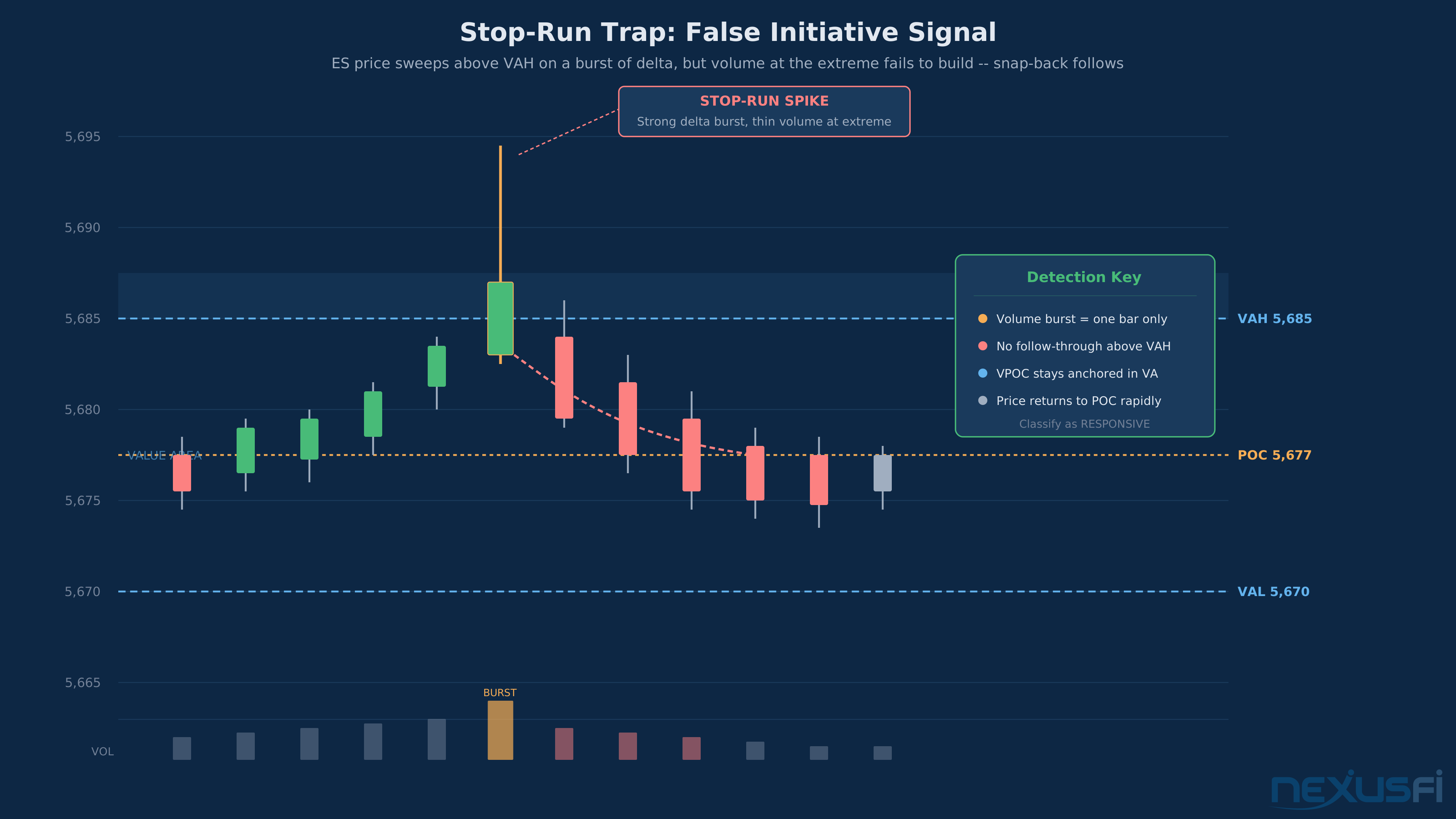
A single aggressive burst creates initiative-looking delta and pushes price briefly outside the VA. The 30-second check would say initiative — delta is strong, volume is high, price is beyond value. But no acceptance follows. The developing profile shows a thin spike that immediately gets absorbed, and price snaps back inside the range.
Detection: Watch the follow-through. Initiative needs acceptance — volume building at the new levels over multiple bars, not just one aggressive burst. If volume at the spike level drops below 120% of the recent average after the initial push, treat it as responsive (a stop-run or liquidity sweep) rather than genuine initiative.
The Trend-Continuation Paradox #
In a strong trend, pullbacks look responsive. Price drops back toward the prior session's VA, responsive buyers step in, and the move looks like mean-reversion. But the larger structure is still initiative — price is accepting progressively higher (or lower) value on the daily and weekly timeframe.
Detection: Check the higher-timeframe developing profile. If value is still migrating in the trend direction on the daily composite, that "responsive" pullback is just a rest within a larger initiative regime. The pullback is real responsive activity — but trading it as a full mean-reversion play back to the prior week's POC will get you crushed when the trend resumes.
News and Macro Event Distortion #
During FOMC, CPI, or similar high-impact events, delta signatures become unreliable. Liquidity gaps make everything look like initiative — massive delta, rapid price movement, volume spikes. But much of this is stop-loss cascades and liquidity withdrawal, not genuine directional conviction.
Detection: If price moves more than 2x the recent ATR within the 30-second check window, the delta/volume signals are distorted. The safest approach during macro events is to wait for the dust to settle and re-classify once two-sided trade resumes.
The CL Liquidity Sweep #
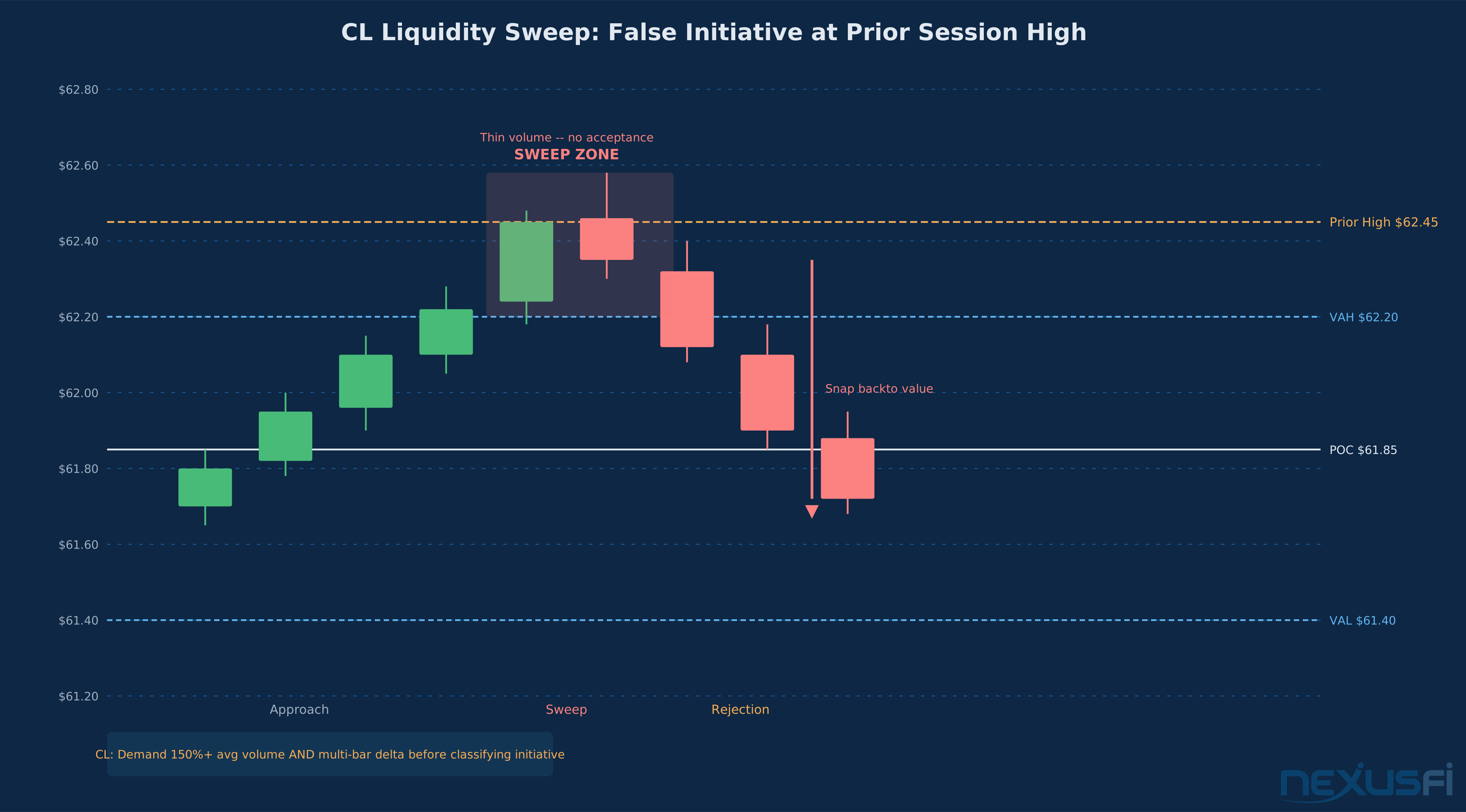
CL (crude oil) is notorious for this. Price sweeps beyond a previous day's high (initiative appearance) then immediately reverts because the volume at the extreme didn't support a new value area. CL's relatively thin order book compared to ES makes these false initiative signals more common.
Detection: For CL specifically, demand stronger confirmation before classifying a move as initiative. Look for volume at the extreme that exceeds 150% of the 20-bar average and sustained positive delta over multiple bars, not just one. Single-bar initiative signals in CL fail more often than in ES.
Timeframe Mismatch #
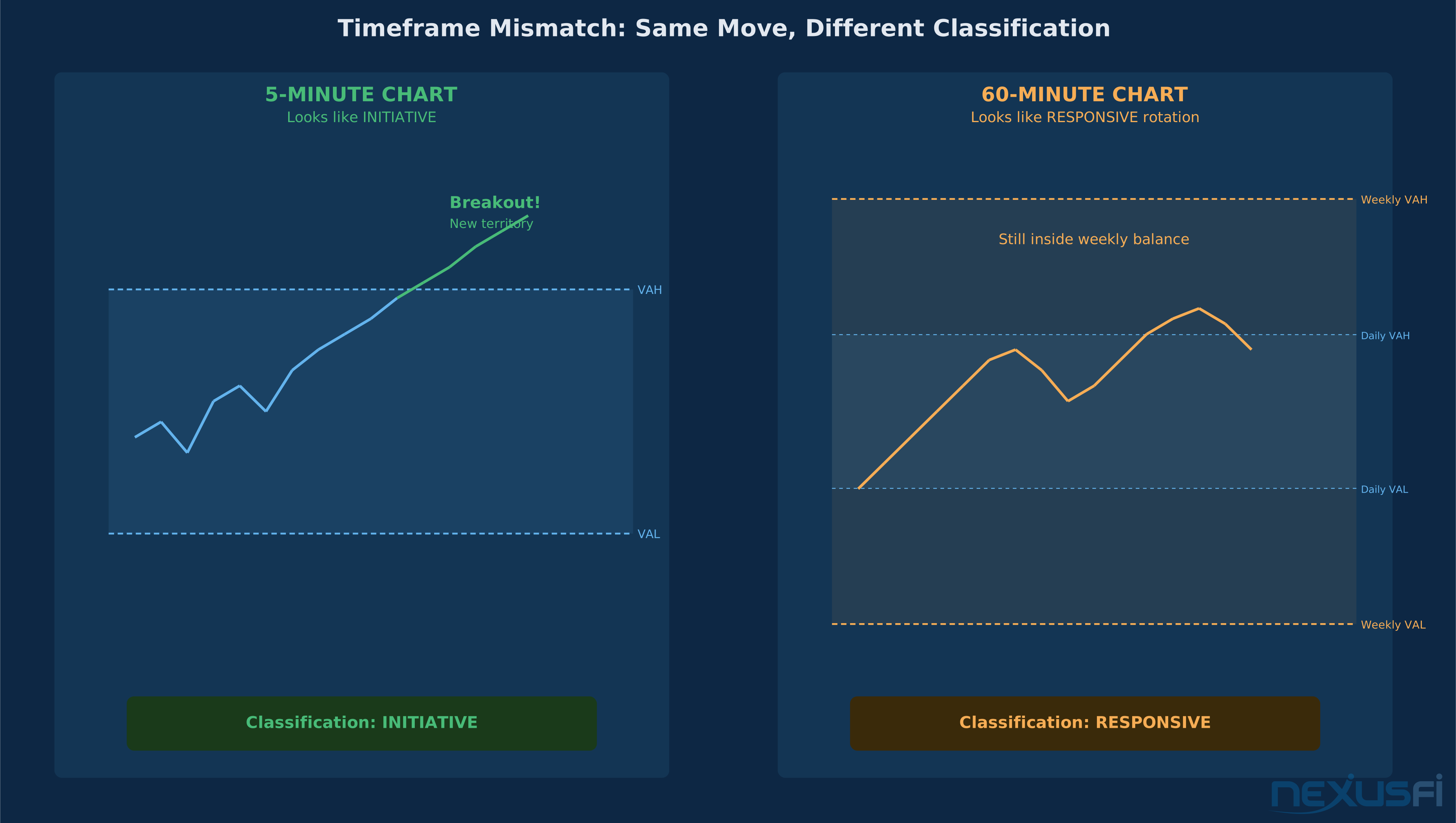
Initiative on a 5-minute chart might be responsive on a 60-minute chart. A move that looks like new territory exploration on the shorter timeframe might just be a rotation within the larger balance area.
Detection: Always anchor your initiative/responsive classification to a specific timeframe and value reference. State explicitly: "Initiative relative to yesterday's VA" or "responsive within the weekly composite." Mixing timeframes without declaring your reference point leads to contradictory classifications that paralyze decision-making.
Instrument-Specific Notes #
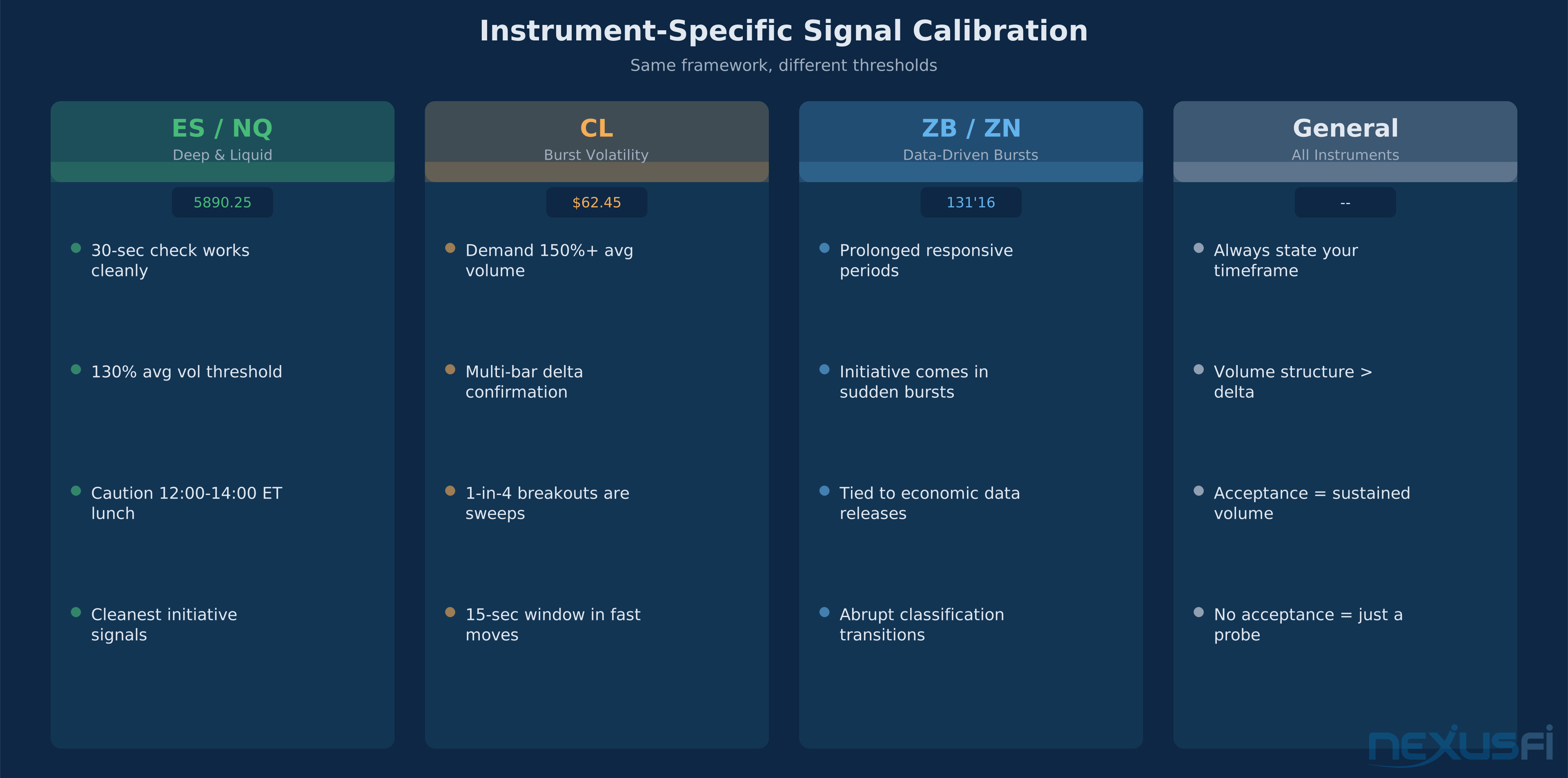
ES and NQ: These are deep, liquid markets where initiative and responsive signals tend to be clean. The 30-second check works well during RTH, especially the first hour. Be careful during the lunch session (12:00-14:00 ET) where thin volume can create misleading initiative signals.
CL: Burst volatility and thinner order books make CL's initiative signals noisier. Responsive rotations can be longer-lived in CL. Calibrate the 30-second check to CL's pace — during fast markets, you may need a 15-second window.
Treasury futures (ZB, ZN): These often show prolonged responsive activity around key levels, with initiative moves coming in sudden bursts tied to economic data. The classification works but the transitions are more abrupt.
Initiative vs responsive isn't about direction — it's about intent. Initiative explores new value, responsive defends established value. The 30-second check (location + delta + volume) gives you a mechanical diagnostic, and the conflict resolution hierarchy (acceptance > location > delta) settles ambiguous signals. Get this classification right and you know whether to follow or fade every move on the profile.
Knowledge Map
Prerequisites
Understand these firstReferences This Article
Articles that build on this topicCitations
- — Volume Profile and Footprint discussion (2012) 👍 65“Since Big Mike has added the Footprint/Volume Ladder to the discussion in this thread, I'd like to contribute the way I view the ladder and it's aid in monitoring the market's auction process.”
- — CL Light Crude Analysis TPO/MP/VWAP/VPOC (2013) 👍 44“Here's a quick video I put together on what I saw today. Nothing special but figured rather than a drawn out written piece, I'd make a video in lieu for some added perspective.”
- — Understanding Footprint Charts / Number bars (2020) 👍 21“Responsive means the market reaches a level on increasing volume, the market is starting to respond but not react just yet. Initiative means the buyers or sellers turn from passive orders to market orders.”
- — Jigsaw DOM - What am I missing??? (2022) 👍 10“Thanks for the input, Cordoba. I agree that QT's pulling and stacking visual is unhelpful. I find that I'm able to monitor the 'pulling' of orders reasonably well because all I'm really looking for on the Bid and Ask is unusually big orders.”
- — EdgeProX from Edge Clear (2022) 👍 15“Hi, I am currently testing out Edge Pro X and I am looking for some features that I either can't find or maybe don't exist currently.”
- — Trenddaytrading.com (2024)
- — Algostorm.com (2025)
- — Volume Profile and Footprint discussion (2012) 👍 11“Initiative and responsive activity is simply in reference to the previous session. Responsive is simply buying below the previous session's value and selling above the previous session's value.”
- — Volume Profile and Footprint discussion (2012) 👍 18“So, if a market breaks out of a balance area and fails and moves back within the balance area, my expectation is that the market will test the low of the balance area. Sometimes the market needs to go higher before it can go lower.”