



Value Area: Where the Market Accepts Price and How to Trade Around It
Overview #
What the Value Area Actually Tells You #
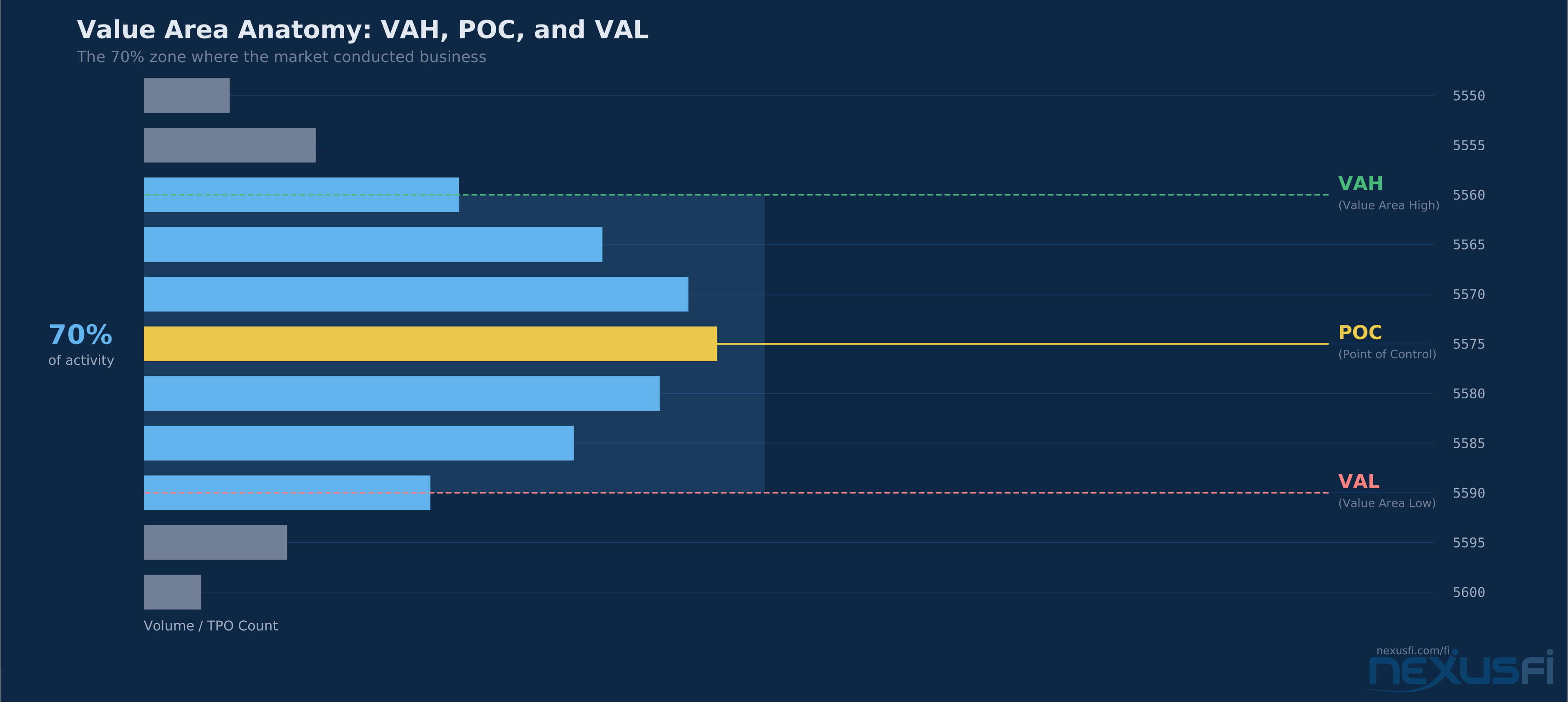
The Value Area is the price range where the market conducted roughly 70% of its business during a given session. That's not a technical indicator. It's a structural map of where participants agreed on price.
Every futures session produces a distribution of activity across price levels. Some prices get heavy traffic — contracts changing hands, time spent, orders absorbing. Other prices get touched once and abandoned. The Value Area captures the zone where the bulk of that activity concentrated. It's the market's answer to a simple question: where was price accepted?
Time price opportunities were taken from 30-minute bars."[2] The 70% threshold is convention -- not physics -- but it's been the standard since Steidlmayer introduced Market Profile, and it maps roughly to one standard deviation of a normal distribution.
Three reference levels define the Value Area:
- POC (Point of Control) -- the single price with the highest activity. Maximum consensus. The strongest expression of fair value for that session.
- VAH (Value Area High) -- the upper boundary of the 70% zone. Above this, price was exploring, not accepting.
- VAL (Value Area Low) -- the lower boundary. Below this, same story -- exploration, not acceptance.
[1] That's the whole idea. No mysticism. Just a statistical boundary around where business actually got done.
The power of Value Area isn't prediction — it's classification. When you know where price accepted yesterday, you can instantly assess whether today's price action is inside accepted value (rotational, balanced) or outside accepted value (initiative, trending). That distinction drives everything that follows.
How the Value Area Is Calculated #
The calculation follows a consistent logic regardless of method: start at the Point of Control and expand outward until you've captured 70% of total activity.
The TPO Method (Market Profile)
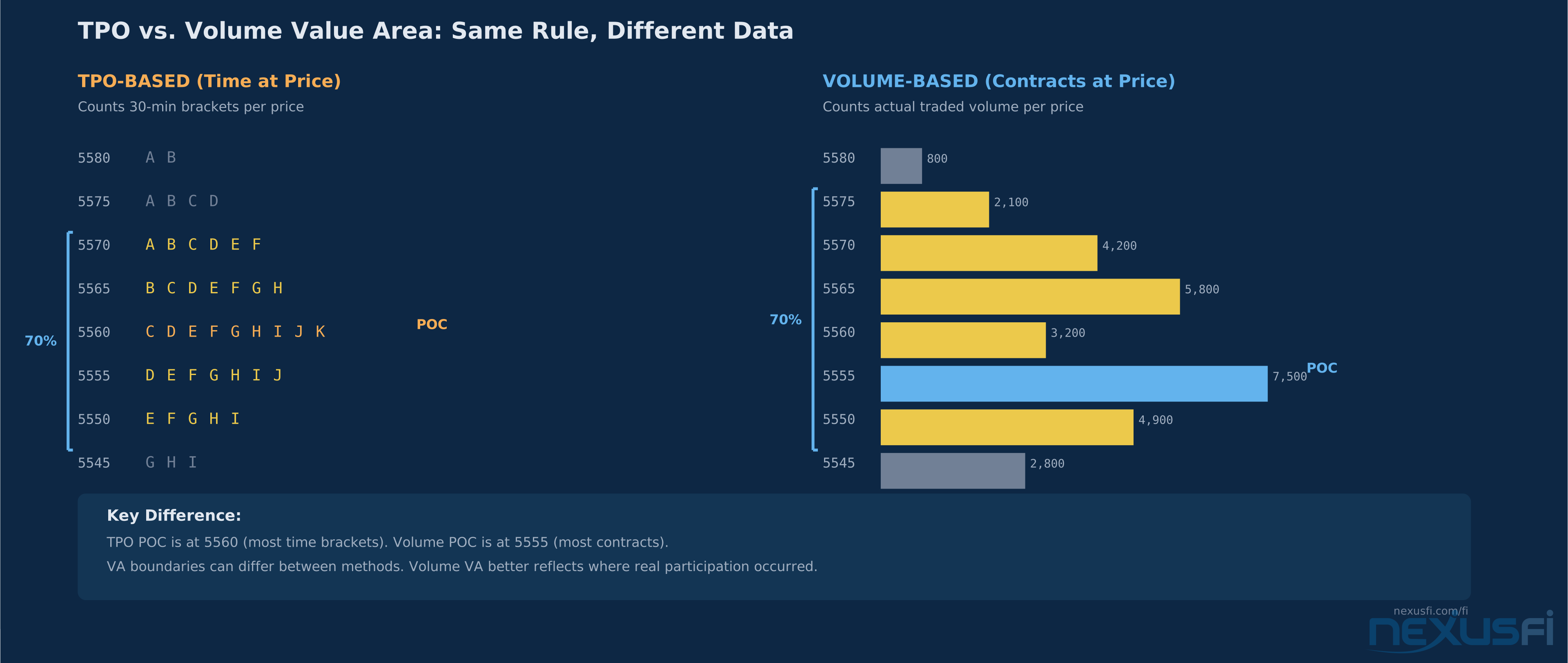
The original Value Area calculation comes from Market Profile, developed at the CBOT. It uses Time Price Opportunities — the count of 30-minute time brackets that traded at each price level.
Construction steps:
- Identify the POC -- the price with the most TPO letters.
- Look one price above and one price below the POC. Whichever side has more TPOs, add it.
- Keep expanding, always choosing the side with higher TPO count at the next price level.
- Stop when the cumulative TPO count reaches approximately 70% of the session's total TPOs.
[2] The 70% threshold is convention — not physics — but it's been the standard since Steidlmayer introduced Market Profile, and it maps roughly to one standard deviation of a normal distribution.
The Volume Method (Volume Profile)
Volume Profile calculates the Value Area using actual traded contracts at each price level instead of time brackets. Same 70% rule, same expansion logic from the POC outward — but weighted by real participation rather than time spent.
@Fat Tails built a developing value area indicator to visualize this in real time: "To better understand the concept of the value area, I have tried to visualize the developing value area by coding an indicator which displays it."[3]
The practical difference matters. In a session where price parks at one level for two hours on light volume before ripping through another level on heavy volume in 10 minutes, the TPO method weights the parking zone while the volume method weights the rip zone. Neither is wrong — they answer different questions. TPO asks "where was price accepted over time?" Volume asks "where did real money change hands?"
Most futures day traders lean toward volume-based Value Areas because electronic markets make tick-level volume data readily available, and volume reflects actual liquidity consumption rather than idle time at price.
Why 70%?
For a perfectly normal (Gaussian) distribution, one standard deviation captures approximately 68.2% of the data. The 70% Value Area is a practical rounding of that statistical property.
Balanced markets tend to produce bell-shaped distributions where the 70% boundary aligns with statistically meaningful edges. Trending markets produce skewed or multi-modal distributions where the 70% zone still identifies the core acceptance range, but the boundary takes on different meaning — it marks where initiative activity begins rather than where rotation should reverse.
POC, VAH, and VAL as Decision Zones #
Point of Control: The Equilibrium Price
The POC is the session's center of gravity. In balanced conditions, price drifts toward it. When price leaves the POC and the market isn't trending, there's a magnetic pull back.
@Fat Tails used POC as a core component of directional bias: "I always go into the session with a directional bias, which is based on the value areas of the prior day and the value area of the current day as determined by either the pivot range or the VWAP."[5] The POC anchors that assessment — it's the starting point for asking whether today's price is above, below, or at yesterday's equilibrium.
Use the POC as:
- A mean reversion target when fading moves at VA boundaries
- A decision point -- does price accept at the POC (balance continues) or reject through it (new trend developing)?
- A reference for developing value -- the current session's POC migrates as new volume prints
VAH and VAL: Where Acceptance Ends
These aren't support and resistance lines. They're boundaries of accepted business. The distinction matters: support/resistance implies mechanical reaction. Value Area boundaries describe where the market's behavioral regime shifts between responsive and initiative.
When price approaches VAH from below in a balanced market, the question isn't "will it bounce?" The question is: "will the market accept price above this level, or reject it back into value?" Acceptance means initiative buyers are taking control. Rejection means responsive sellers see prices as too high relative to value.
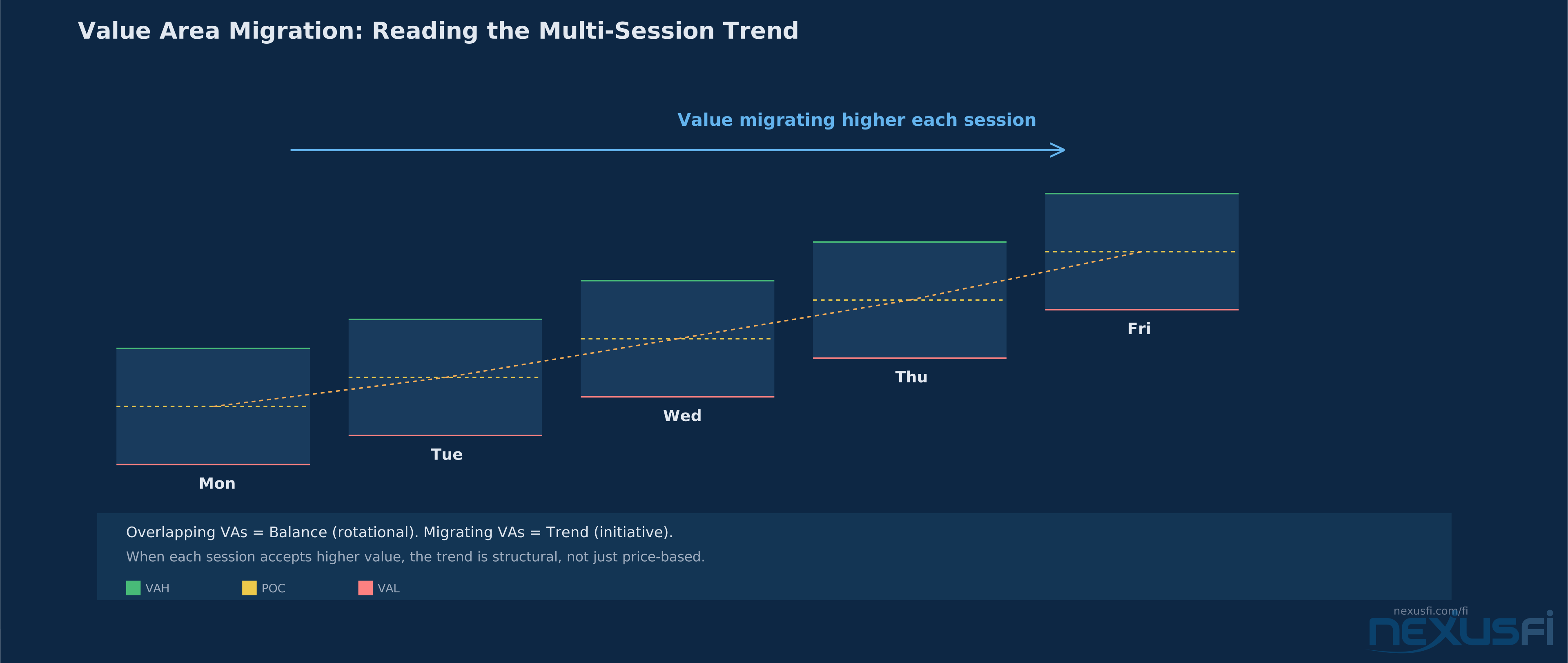
[6] When value migrates — when today's VA is noticeably higher or lower than yesterday's — the market is repricing. When it's stable, the game is rotational.
Responsive vs. Initiative: The Two Modes #
Value Area trading reduces to one binary question: is the market responsive (rotating within value) or initiative (leaving value to establish new acceptance)?
Responsive Trading
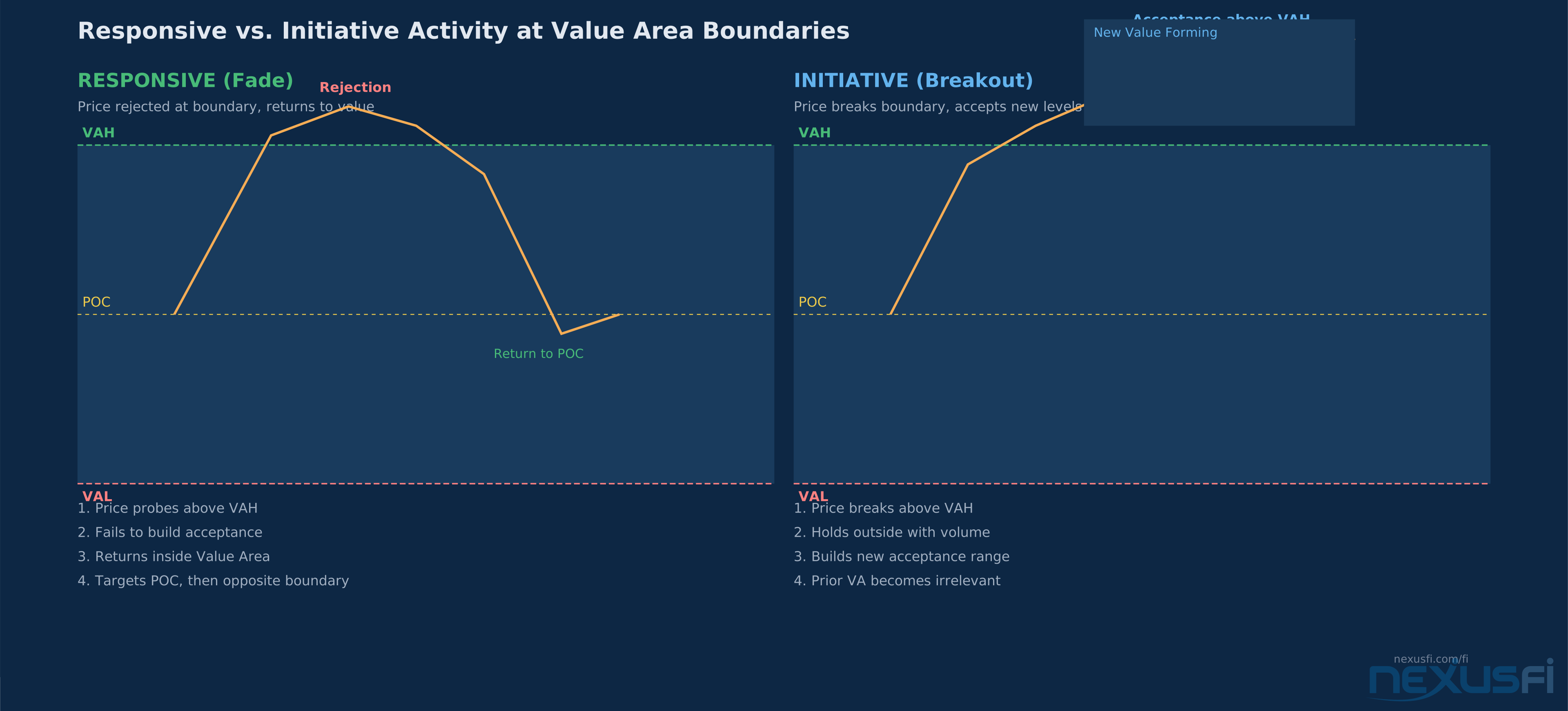
Responsive activity means fading moves toward VA extremes and expecting price to return toward the center. The market is balanced. Buyers and sellers agree on the general range. Excursions beyond VAH or VAL attract participants who see those prices as unfair — too high or too low relative to accepted value.
Classic responsive setup:
- Price trades above VAH (or below VAL)
- Fails to build volume or spend time outside value
- Returns inside the VA
- Entry on the re-entry, targeting POC first, then the opposite VA boundary
[7] Rotational days are the bread and butter of responsive trading — price bounces between VAH and VAL with POC as the anchor.
Best conditions for responsive trades: balanced market context, overlapping value areas across sessions, low-to-moderate volatility, no pending catalysts, prior session had a clear bell-shaped distribution.
Initiative Trading
Initiative activity means price is leaving established value and the market is accepting new price levels. This is trend behavior. Buyers are willing to pay above VAH and hold, or sellers are willing to sell below VAL and not cover.
The critical distinction: a brief pop above VAH isn't initiative. The market has to show acceptance — sustained time and volume outside value.
Initiative trading setup:
- Price breaks above VAH (or below VAL) with volume
- Holds outside value -- builds new TPOs, prints new volume at those levels
- Entry on breakout continuation or on retest of the broken boundary
- Target: next structural reference (prior swing high/low, composite POC, single prints)
[9] The reference point matters — initiative is always measured against a prior session's value.
Value Area Rotation: How Balanced Markets Move #
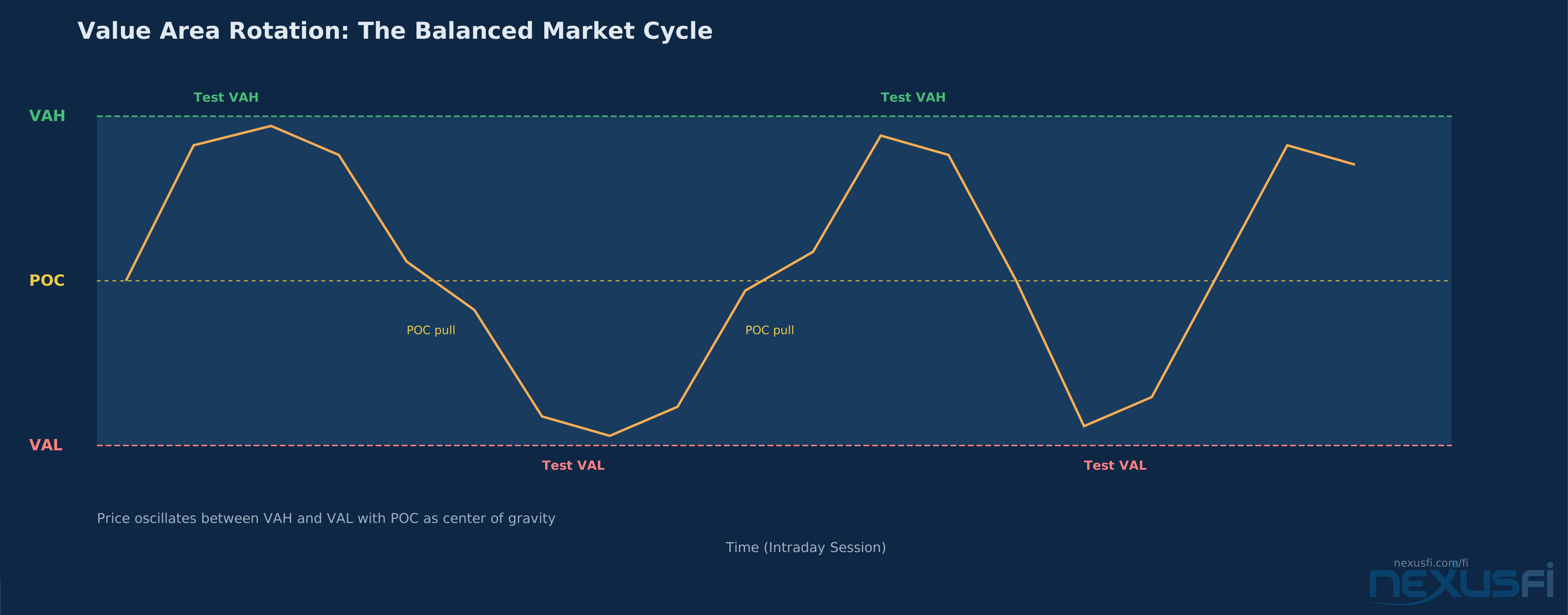
In balanced conditions, price doesn't sit still at the POC. It rotates — swinging from one side of the Value Area to the other, touching VAH, pulling back toward POC, pushing toward VAL, recovering.
Rotation has a rhythm:
- Phase 1: Price opens, typically moves toward the nearest VA boundary
- Phase 2: Boundary test -- acceptance (breakout) or rejection (rotation)
- Phase 3: If rejected, price rotates toward POC and often through it toward the opposite boundary
- Phase 4: Second boundary test -- another decision point
[11] That's the textbook rotation pattern — POC to VAL, rejection, rotation to VAH.
Rotation is strongest when:
- Volume is contracting (no new information forcing repricing)
- The prior session's profile is bell-shaped with a clear POC
- No major economic releases or catalysts pending
- Value areas from the last 2-3 sessions overlap heavily
Rotation weakens and potential breakout increases when value areas start migrating — each session's VA shifts higher or lower than the previous one. That's the market building a trend through incremental repricing.
Overnight vs. RTH Value Areas #
Futures markets with active overnight (Globex) sessions produce two distinct Value Areas per 24-hour period: the overnight VA and the regular trading hours (RTH) VA. They tell different stories.
Overnight Value Area
The overnight session typically runs with thinner liquidity, a different participant mix (more global macro, less domestic institutional), and higher sensitivity to headlines. The overnight VA represents acceptance during off-peak hours.
@Private Banker was explicit about the limitations: "I'm not a fan of using a 24-hour session value area and POC. The volume changes so drastically from the ON session into the RTH session."[12] The overnight VA is useful as context, not as a primary trading framework. It tells you where the global market found equilibrium before domestic institutions show up.
RTH Value Area
RTH value is where the heavy lifting happens. Higher volume, more diverse participants, cleaner auction behavior. For most day traders, the prior session's RTH VA is the primary structural reference.
Using Both Together
The relationship between overnight and RTH value areas reveals the day's likely character:
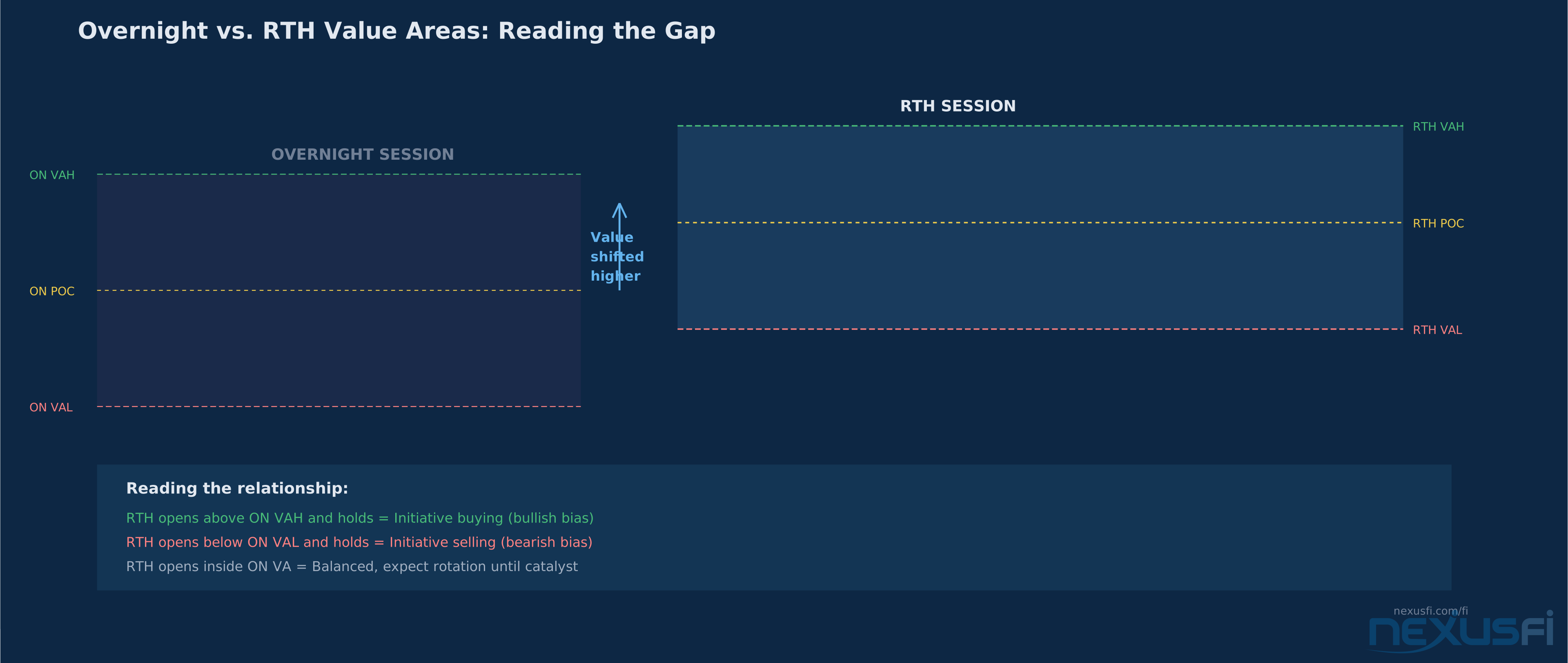
- RTH opens inside overnight VA: Market hasn't moved overnight. Expect rotational behavior until a trigger or volume surge forces a direction.
- RTH opens above overnight VAH: Overnight repricing higher. If RTH accepts these levels (builds volume, spends time), the move is initiative. If RTH quickly drops back into overnight VA, the overnight move was rejected.
- RTH opens below overnight VAL: Opposite scenario. Overnight sold off. Watch for acceptance or rejection.
- Overnight VA and prior RTH VA overlap heavily: Market is in balance across time frames. Rotational conditions likely.
- Overnight VA migrates much from prior RTH VA: Repricing underway. Initiative conditions more likely.
The Day Trader's Value Area Workflow #
Here's a practical workflow for using Value Area in daily preparation and execution.
Pre-Session Preparation
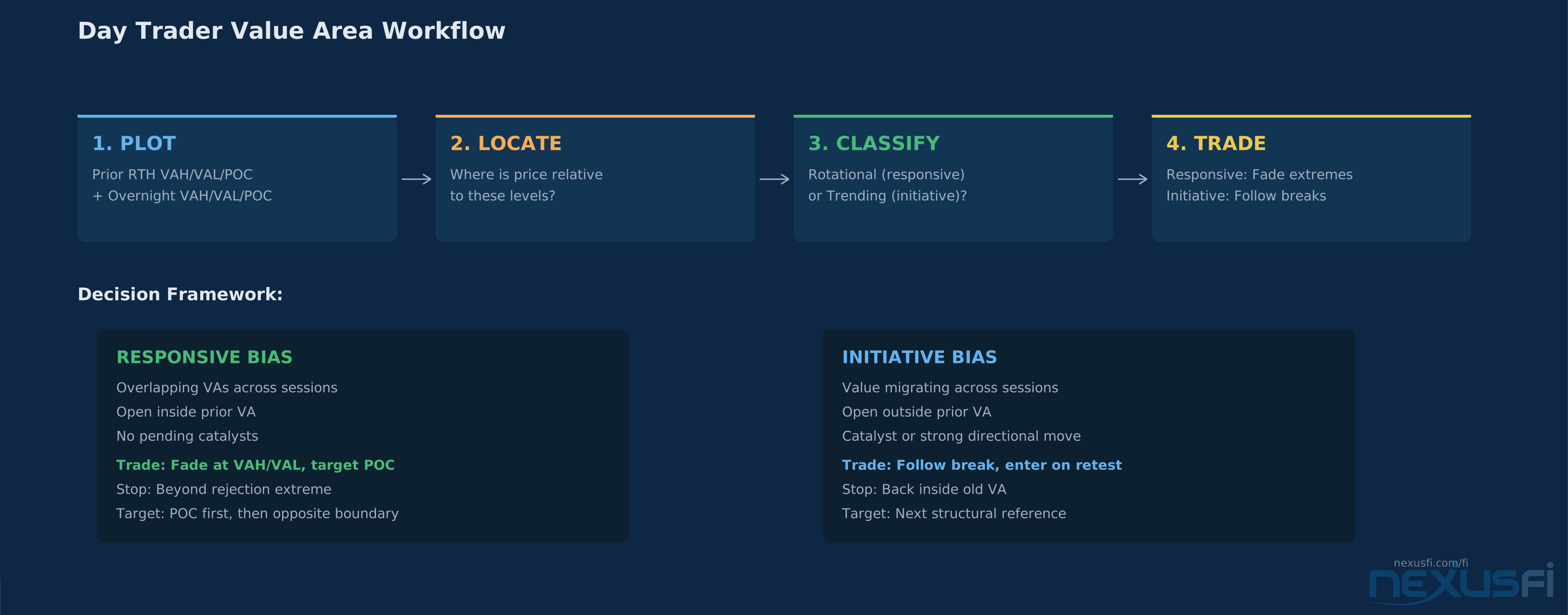
- Plot prior RTH VA: Mark yesterday's VAH, VAL, and POC on your chart. These are today's primary structural references.
- Plot overnight VA: Mark the Globex session's VAH, VAL, and POC. These frame the pre-open context.
- Assess the open location: Where does the current price sit relative to these levels? Inside yesterday's VA? Above it? Below overnight VA?
- Classify the likely session type: Overlapping value areas + inside open = rotational bias. Migrating value areas + outside open = initiative bias.
Intraday Execution
If the market is rotating (responsive bias):
- Fade moves toward VAH and VAL when rejection signals appear
- Target POC first, then the opposite boundary
- Use tight stops beyond the rejection extreme -- if the fade fails, the regime is shifting
- Watch for delta exhaustion, absorption, or waning aggression at the boundaries
If the market is trending (initiative bias):
- Trade with the direction of the break from value
- Wait for acceptance outside value before committing
- Use retests of broken VA boundaries as entry opportunities
- Stop back inside the old VA -- if price re-enters, the initiative failed
Targets and Risk Management
In rotational environments:
- First target: POC (the center of gravity)
- Second target: Opposite VA boundary
- Risk: Stop beyond the rejection extreme, typically 2-4 ticks past the boundary where you faded
In initiative environments:
- First target: Prior swing high/low or composite reference
- Second target: Projected move equal to the VA height
- Risk: Stop back inside the old VA, or below the retest low if entering on a pullback
VA width serves as a quick volatility gauge. Narrow VA (compressed value) often precedes expansion. Wide VA suggests the market already covered a lot of ground and may consolidate.
Value Area Migration: Reading the Trend #
Individual sessions' Value Areas tell you about daily balance. But the relationship between consecutive sessions' Value Areas reveals the trend.
[6] Value migration means each day's VA is shifting progressively higher or lower. The market isn't just trending in price — it's repricing in value. Each session's participants accept a new range as fair.
Reading migration:
- Overlapping VAs (3+ sessions): Balance. The market has found a range and isn't moving. Expect rotation until a trigger forces repricing.
- Migrating VAs upward: Bullish trend. Each session accepts higher prices as fair. Buy dips into the prior session's VAH (yesterday's ceiling becomes today's floor).
- Migrating VAs downward: Bearish trend. Each session accepts lower prices. Sell rallies into the prior session's VAL.
- Gap between VAs: Strong repricing event. The new session's entire VA is above or below the prior session's. Usually driven by news or fundamental shift.
Common Mistakes That Kill Value Area Trades #
Value Area is conceptually simple, which makes it easy to misuse. Here are the patterns that consistently destroy accounts:
Treating VAH/VAL as exact lines. They're zones, not levels. A 1-tick break of VAH isn't a breakout. A 3-tick hold above VAH doesn't guarantee acceptance. Look for behavior — time, volume, delta — not a single tick crossing a line.
Fading a trend because price is "extended from value." This is the most expensive mistake in VA trading. When the market is in a genuine initiative move, prior value becomes irrelevant. Yesterday's VAH doesn't matter when today's market is repricing 50 points higher. Context determines whether extension from value is a fade opportunity or a continuation signal.
Confusing brief excursions with acceptance. Price pops above VAH, you jump long on the "breakout." Thirty seconds later it's back inside value. That wasn't acceptance. Acceptance requires time, volume, and inability to return. Wait for confirmation before declaring initiative activity.
Using mismatched timeframes. Trading off a 5-day composite VA when you're scalping 2-minute charts creates noise, not edge. Match the VA horizon to your trading horizon. Day traders should primarily use the prior session's RTH VA.
Ignoring the developing VA. Yesterday's VA is a reference, but today's VA is building in real time. The current session's developing POC, developing VAH, and developing VAL shift as new volume prints. If you're fading toward yesterday's POC while today's developing POC has migrated 20 ticks away, you're fighting the current session's auction.
Putting It All Together #
Value Area is a framework for reading the market's structural story. It answers three questions that matter for every trade:
- Where did the market accept price? The VA tells you. Inside value = fair. Outside value = exploration.
- What is the market doing right now? Rotating within value (responsive) or leaving value with acceptance (initiative).
- What should I trade? Responsive setups inside value (fade extremes, target POC). Initiative setups outside value (trade with the break, target new structural references).
The 70% zone isn't magic. POC isn't a magnet with physical force. VAH and VAL aren't walls. They're descriptions of where the auction spent its energy. The edge comes from reading whether current price action is repeating that pattern (responsive) or breaking it (initiative) — and positioning so.
For a deeper understanding of the auction theory underpinning Value Area, see Auction Market Theory. For detailed coverage of the profile tools used to visualize value, see Market Profile (TPO Charts) and Volume Profile.
Knowledge Map
Prerequisites
Understand these firstGo Deeper
Build on this knowledgeReferences This Article
Articles that build on this topicCitations
- — Crude Oil trading (2012) 👍 21“VAL and VAH is the range where the 70% of the action happened in the session. Three important things about Market Profile: VAL (Value Area Low), VAH (Value Area High), POC (Point of Control).”
- — Volume Profile Value Area Definition? (2017) 👍 15“The concept was only applied to the regular trading hours. Time price opportunities were taken from 30-minute bars. The value area was calculated from time price opportunities.”
- — Volume Profile and Footprint discussion (2012) 👍 25“To better understand the concept of the value area, I have tried to visualize the developing value area by coding an indicator which displays it.”
- — Volume Profile and Footprint discussion (2015) 👍 14“When a market is in balance, the profile will often be very Gaussian/normal/bell shaped. In this situation, the VAH/VAL represent a meaningful boundary.”
- — Directional Bias (2013) 👍 18“I always go into the session with a directional bias, which is based on the value areas of the prior day and the value area of the current day as determined by either the pivot range or the VWAP.”
- — Spoo-nalysis ES e-mini futures S&P 500 (2012) 👍 14“I keep an eye on the migration of value and how price reacts to it. During a rotational day, the value area should remain relatively stable.”
- — Trading Futures with Context (2014) 👍 16“CL gave us a classic rotational day within yesterday's value. Easy trading for singles and doubles if you keep your context in line.”
- — Starting Fresh (2025) 👍 2“If buyers accept above the value area high, then activity is initiative bias = long, look for trend continuation. If buyers can't hold and price falls back into value, then activity is responsive.”
- — Volume Profile and Footprint discussion (2012) 👍 11“Initiative and responsive activity is simply in reference to the previous session. Technically, initiative buying is buying above the previous day's value area high.”
- — Trading Futures with Context (2013) 👍 17“The market is a two-way auction with different time frame participants. The market will rotate between value boundaries as responsive participants react to price extension.”
- — dctrade69 Daily Context Journal (2014) 👍 9“Price strongly respected the value areas starting at POC, working down to VAL and then rotating back up.”
- — Volume Profile and Footprint discussion (2012) 👍 16“I'm not a fan of using a 24-hour session value area and POC. The volume changes so drastically from the ON session into the RTH session.”
- — The Elusive Price Action: How to Trade (2010) 👍 7“I look at the previous session value area range - Y-VAH, Y-VAL, and Y-POC - and project the range plus some expansion above and below for potential move.”