



CME Group: The Exchange That Runs the Futures World
The Exchange That Runs the Futures World #
CME Group is where the money trades. Four exchanges
The ES, NQ, CL, GC, ZB, ZC, 6E
This article covers what a futures trader needs to know about CME Group specifically: how the organization is structured, what Globex does under the hood, how products are organized across the four exchanges, what you're actually paying for market data, how clearing works at CME, and where the system breaks down. Not general futures knowledge
Four Exchanges, One Company #
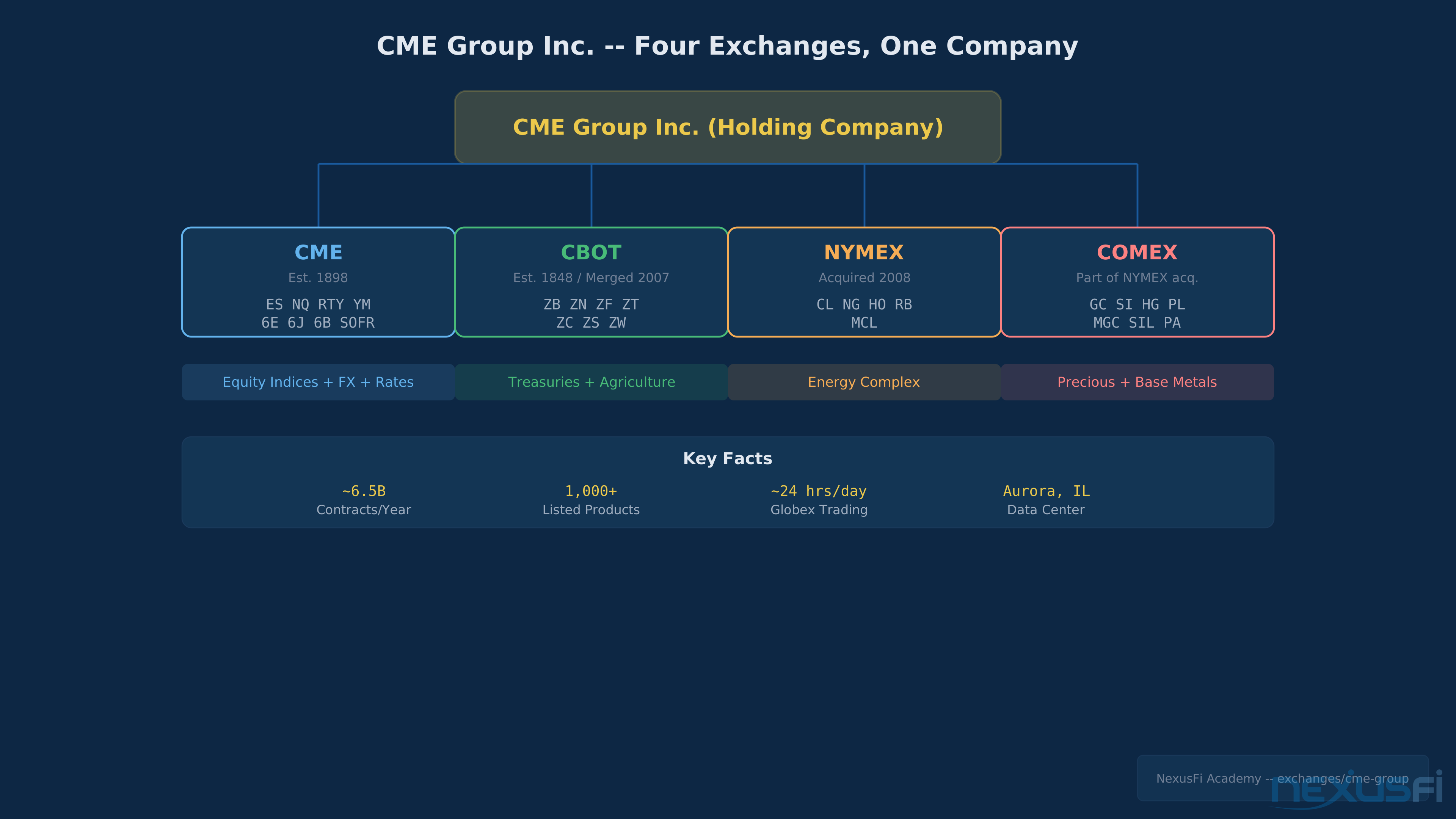
CME Group Inc. is a holding company that owns four designated contract markets (DCMs), each with its own product lineage, rulebook, and history. The mergers that created this structure matter because they explain why products are organized the way they are
Chicago Mercantile Exchange (CME)
Chicago Board of Trade (CBOT)
New York Mercantile Exchange (NYMEX)
Commodity Exchange (COMEX)
The practical implication: when your broker lists "exchange fees," they vary by which of these four exchanges your product trades on. When you subscribe to market data, CME charges separately for each exchange's data feed
Globex: The Matching Engine Behind Every Trade #
CME Globex is the electronic trading platform that matches virtually all CME Group futures and options orders. Launched in 1992 as one of the world's first electronic futures trading systems, Globex now processes the vast majority of CME Group's volume. Open outcry pit trading still exists for some options contracts, but for futures, Globex is the game.
How Globex matches orders. Globex uses a central limit order book (CLOB) with price-time priority
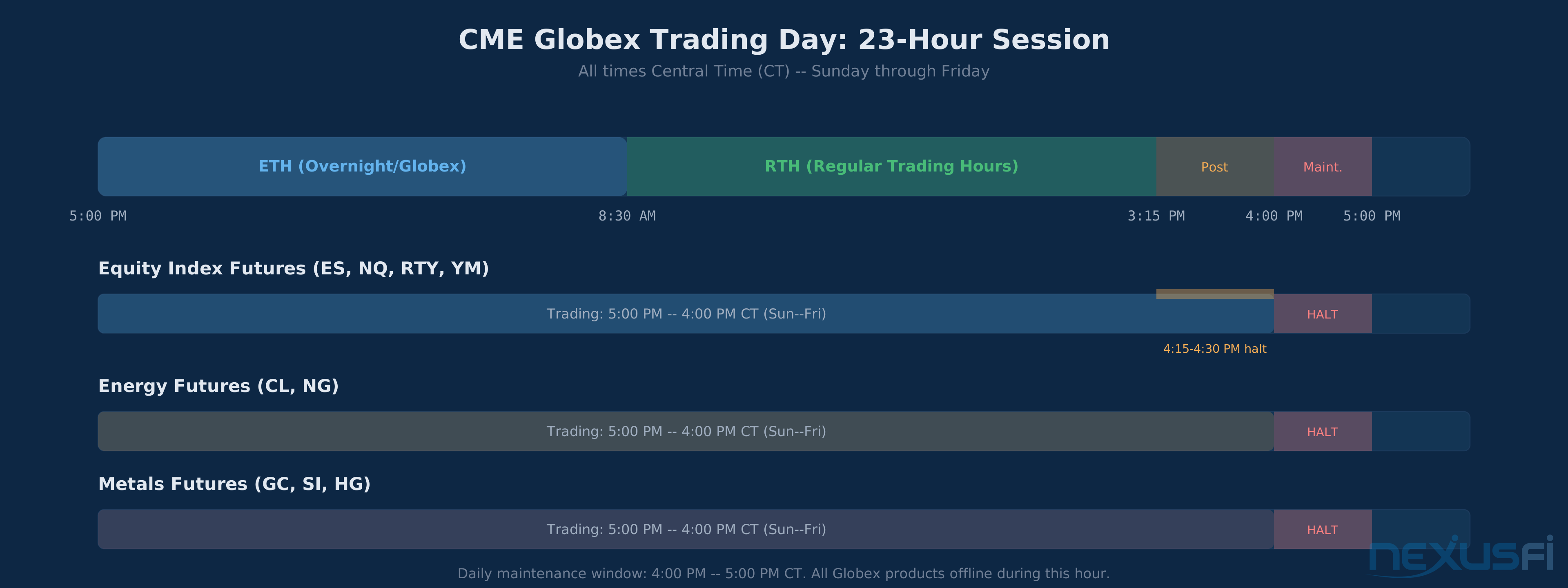
Trading hours. Globex runs nearly 24 hours per day, Sunday through Friday. Most products trade from 5:00 PM CT Sunday to 4:00 PM CT Friday, with a daily maintenance window from 4:00 PM to 5:00 PM CT. Equity index futures have an additional 15-minute halt from 4:15 PM to 4:30 PM CT. As @Fat Tails noted on NexusFi, "In 2012 the trading hours for index futures traded on CME GLOBEX were changed. The trading day now does not end at 3:15 PM Central but at 4:15 PM Central." [1] That shift matters for how daily highs, lows, and settlements are calculated.
In late 2025, CME Group expanded toward near-continuous 24/7 operation for certain event-based contracts, signaling the exchange's direction toward eliminating weekend gaps entirely for some products. [2]
Connectivity and latency. For retail traders connecting through a broker and data provider (CQG, Rithmic, or the broker's own feed), Globex latency is effectively invisible
Message throttling. CME enforces a Messaging Efficiency Program (MEP) that limits the ratio of messages (orders, modifications, cancellations) to fills. If you send too many messages per fill
Product Suite: What You Can Trade #
CME Group lists over 1,000 futures and options products across six asset classes. Most traders touch a fraction of these, but understanding the full environment matters for diversification, correlation analysis, and knowing what tools are available.
Equity Index Futures (CME)
Interest Rate Futures (CBOT)
Energy Futures (NYMEX)
Metals Futures (COMEX)
Agricultural Futures (CBOT)
Currency Futures (CME)
Product symbology. CME uses a standard naming convention: product code + month code + year. The month codes are F(Jan), G(Feb), H(Mar), J(Apr), K(May), M(Jun), N(Jul), Q(Aug), U(Sep), V(Oct), X(Nov), Z(Dec). So ESH26 is the March 2026 E-mini S&P 500 contract. Globex product codes sometimes differ from legacy pit codes
Market Data: What You Pay and What You Get #
CME Group charges for real-time market data, and this is one of the most misunderstood costs for new futures traders. You don't pay CME directly
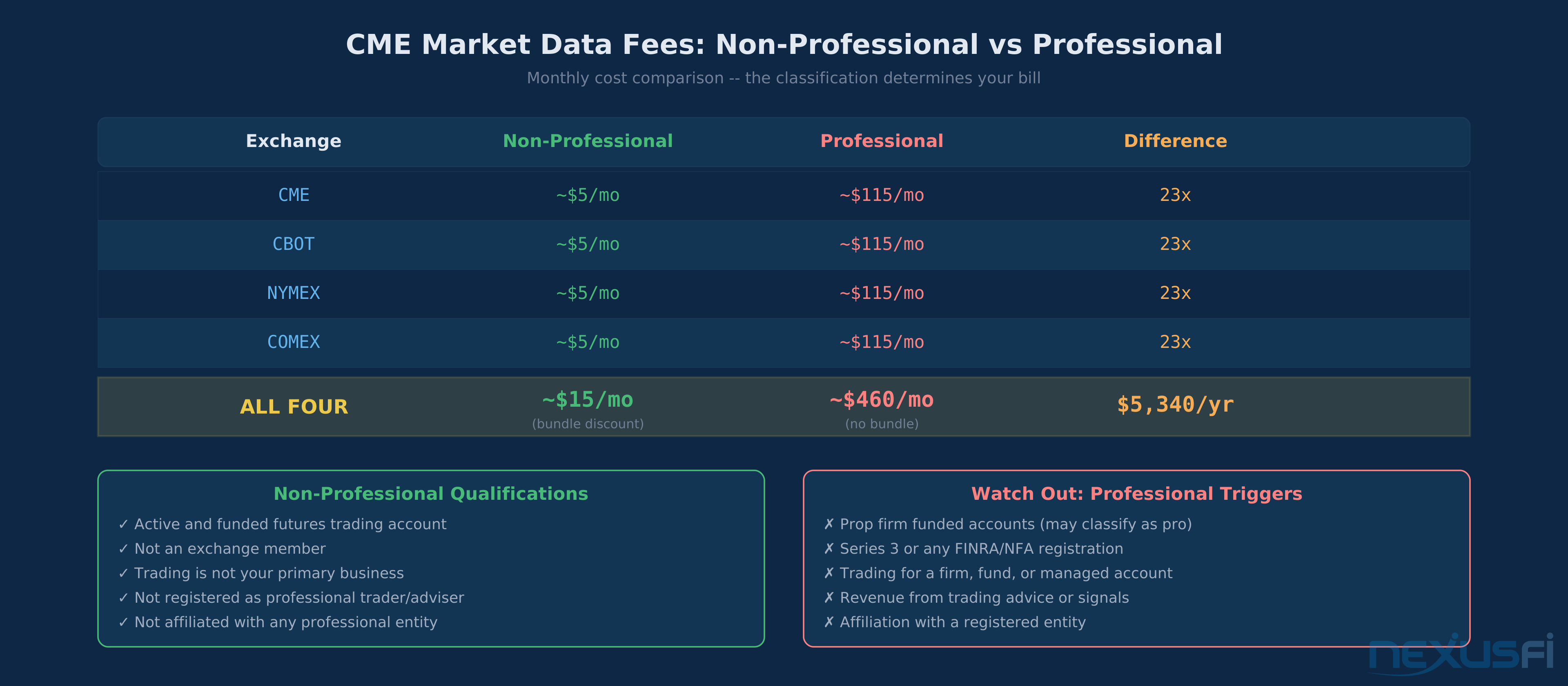
Non-Professional vs. Professional. This classification determines your data fees and is defined by CME, not your broker. To qualify as non-professional, you must meet all of these criteria: you have a funded trading account, you're not an exchange member, trading isn't your primary business, you're not registered as a professional trader or investment adviser, and you're not affiliated with any professional entity. As @CannonTrading documented when CME first introduced retail data fees in 2014, the non-professional classification requires meeting specific criteria including an active funded account and no professional registration or affiliation. [3]
Current fee structure. Non-professional subscribers pay approximately $5 per exchange per month, or roughly $15/month bundled for all four exchanges (CME, CBOT, NYMEX, COMEX). Professional subscribers pay much more
Prop firm implications. If you trade with a funded trading evaluation firm, your data fee classification matters. Some prop firms classify their traders as professional users, which means $85-115 per exchange instead of $5. Verify this before signing up
Depth of market data. CME offers multiple tiers of market data. Level 1 (top of book
The non-professional data classification is all-or-nothing. Miss any one criterion — like trading in a prop firm account — and you pay professional rates. At $85-115 per exchange vs $5 retail, that can mean $340-460/month for the same four-exchange bundle. Check your classification before you assume you qualify for retail rates.
CME DataMine. For backtesting and historical analysis, CME DataMine provides historical tick data, end-of-day data, and alternative datasets directly from the exchange. Pricing is separate from real-time data fees and varies by dataset and delivery method. Third-party providers like Kinetick, dxFeed, and Databento also resell CME historical data, sometimes more affordably.
Clearing and Risk Management #
CME Clearing acts as the central counterparty (CCP) for every trade executed on CME Group exchanges. When you buy one ES contract and someone else sells it, CME Clearing steps between you
SPAN margining. CME developed the Standard Portfolio Analysis of Risk (SPAN) system, which has become the industry standard for calculating futures margin requirements worldwide. SPAN doesn't just look at individual positions
Performance bonds (margin). CME sets minimum margin requirements, but your broker can (and often does) require more. CME publishes its margin schedule on cmegroup.com and updates it based on market volatility. When volatility spikes
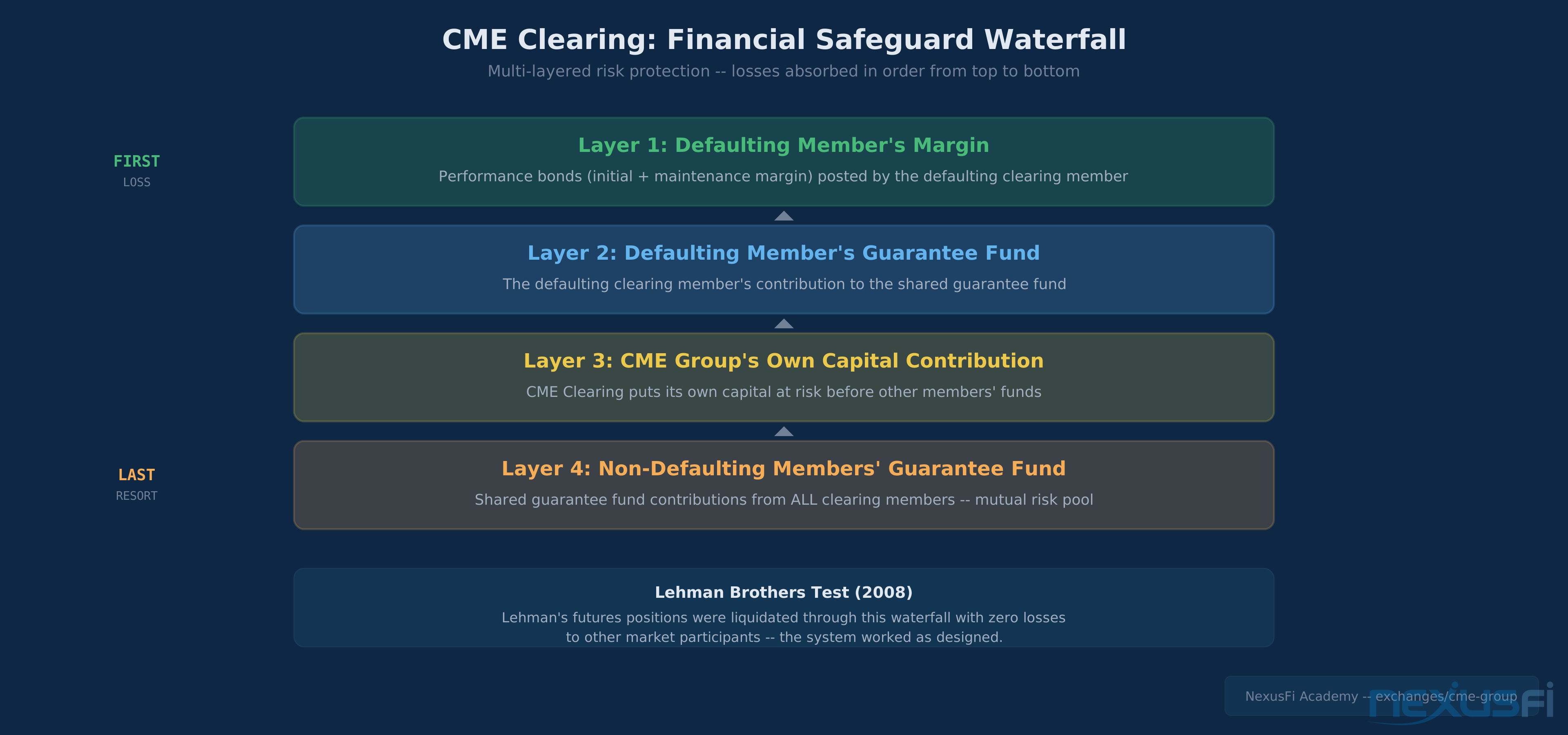
The guarantee fund. Behind SPAN margins, CME maintains a multi-layered financial safeguard system: the clearing member's margin, the clearing member's guarantee fund contribution, CME's own capital contribution, and a shared guarantee fund from all clearing members. This waterfall structure has survived every market crisis since CME Clearing was established
When Globex Breaks: Outages, Halts, and What Happens to Your Orders #
Globex is reliable but not infallible. Outages happen, and understanding how CME handles them protects you from the worst surprises.
@SMCJB, a longtime NexusFi member and professional trader, documented a February 2026 Globex outage in detail: natural gas and metals went dark during the trading session, with NG going offline around 12:11 CT on expiration day. The metals markets didn't resume trading until 1:30 PM CT. As SMCJB explained, "There are literally Billions of dollars of derivatives that reference that price one way or another." [5] The settlement process during that outage highlighted a real operational risk: CME's published settlement procedures say one thing, but the exchange ultimately exercised discretion and settled based on prices from before the posted settlement window. [6]
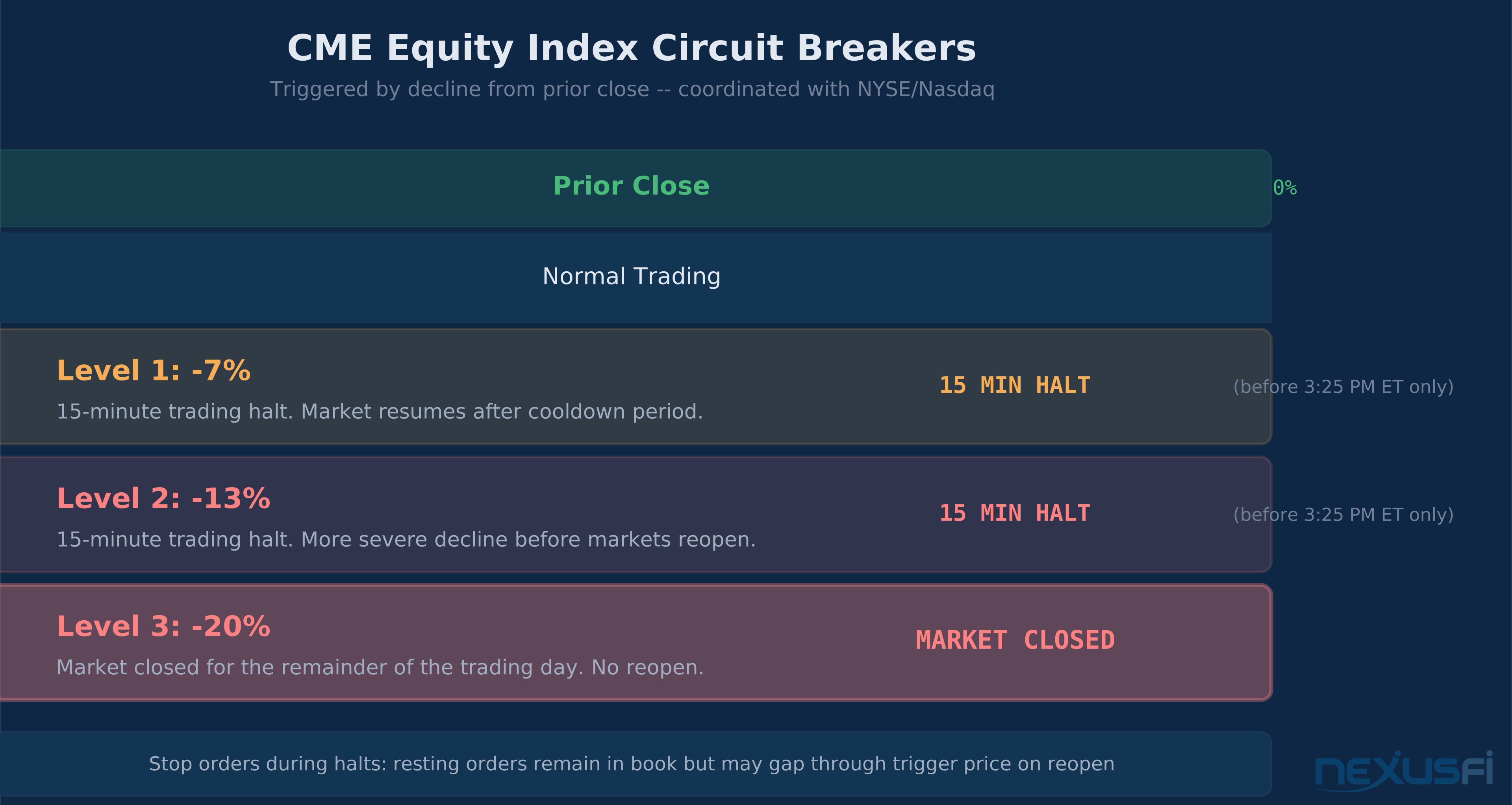
Circuit breakers and price limits. CME implements exchange-wide circuit breakers on equity index futures (coordinated with NYSE/Nasdaq) and product-specific price limits on commodities and other contracts. For ES, a 7% decline from the prior close triggers a Level 1 halt (15 minutes), 13% triggers Level 2 (15 minutes), and 20% triggers Level 3 (market closed for the day). Energy and agricultural products have daily price limits that vary by product
What happens to your orders during a halt. When Globex halts a product, all resting orders remain in the book (they're not canceled). When trading resumes, there's typically a pre-open period where orders can be entered and modified but not executed, followed by a reopening. Stop orders that would have triggered during the halt may gap through their trigger prices on the reopen. This is one of the most dangerous scenarios for stop-dependent risk management: your stop at 4500 can fill at 4470 if the market gaps through your level on the reopening. Maintenance windows. The daily 4:00 PM to 5:00 PM CT window is scheduled maintenance. During this time, Globex is offline for all products. Don't assume this window is always exactly 60 minutes
The Real Cost of Trading on CME #
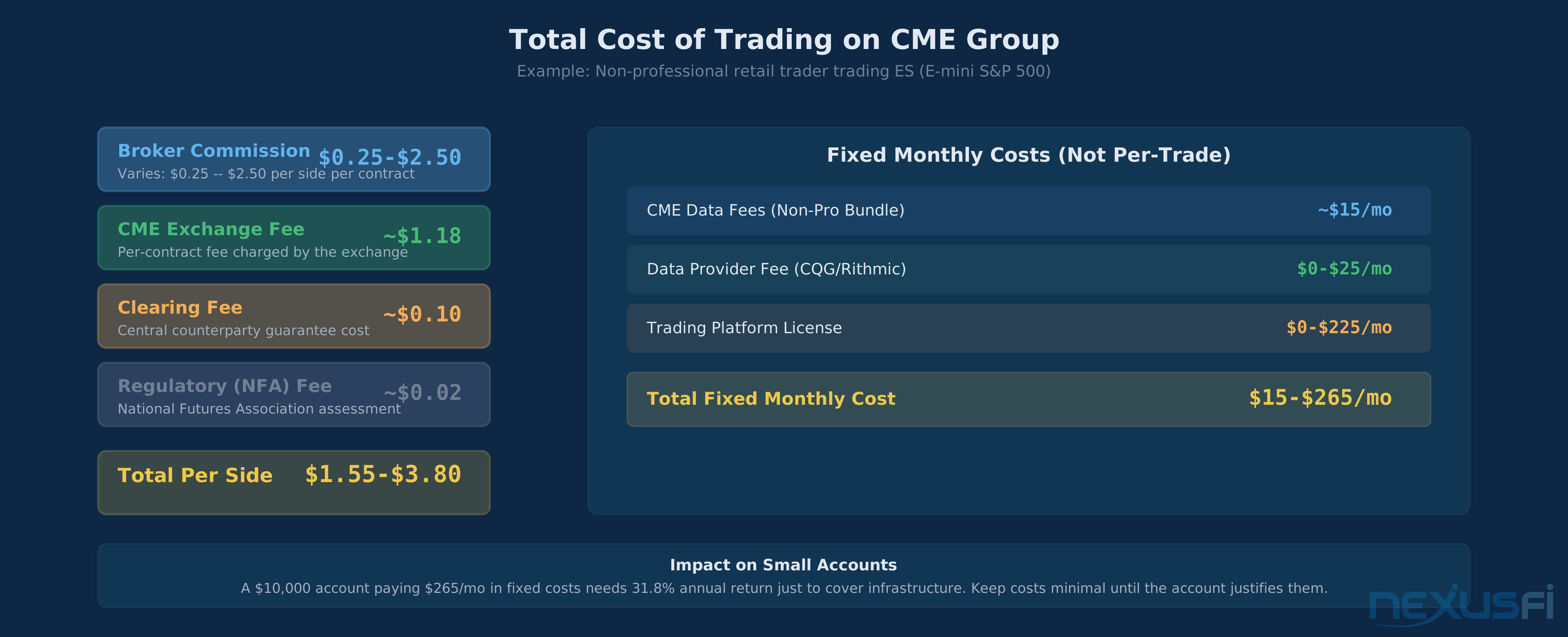
The total cost of trading CME Group products is more than commissions. Here's the full picture:
Exchange fees. CME charges per-contract exchange fees on every trade, separate from your broker's commission. These vary by product, account type (member vs. non-member), and order type. For a non-member retail trader, exchange fees on ES are typically $1.18-$1.28 per side (per contract). Your broker often bundles this into their quoted commission rate, but it's worth breaking out
Data fees. As discussed above, $15-31/month for non-professional all-exchange bundle, or $340-460+/month for professional. This is a fixed cost that doesn't scale with trading volume
Market impact. For retail-sized orders (1-10 contracts in liquid products like ES), market impact is negligible. For larger orders or less liquid products (platinum, grains in non-peak hours), the bid-ask spread and your order's impact on the book become meaningful costs. CME's implied pricing engine helps tighten spreads on spread products, but don't assume a tight screen quote means zero slippage on execution.
Clearing fees. Separate from exchange fees, clearing fees cover the cost of CME Clearing guaranteeing your trade. These are typically small (fractions of a dollar per contract) and passed through by your broker, but they add up for high-frequency strategies.
What Traders Get Wrong About CME #
Assuming all products trade the same way. An ES contract and a NG contract are both CME Group products, but they behave completely differently in terms of liquidity profiles, price limit rules, delivery mechanics, and settlement procedures. ES is cash-settled with enormous liquidity around the clock. NG has physical delivery, volatile expiration dynamics, and thinner overnight liquidity. Don't apply one product's behavior to another without checking the contract specifications.
Ignoring first notice day. Physically delivered contracts (CL, GC, ZC, ZS, and many others) require attention to first notice day
Underestimating data fee complexity. A trader who trades ES and CL needs data from both CME and NYMEX
Not checking contract specs before trading a new product. Every CME product has a contract specifications page on cmegroup.com listing tick size, tick value, contract size, trading hours, settlement method, first notice day, last trading day, and position limits. Trading a product without reading this page is like driving a car without checking the controls. The specs page is your pre-flight checklist.
CME in Context: How It Compares #
CME Group dominates U.S. futures trading but isn't the only exchange. ICE (Intercontinental Exchange) competes directly in energy with Brent crude (BZ), and in interest rates with Euribor. Eurex in Frankfurt handles European equity index and fixed income derivatives. CBOE Futures Exchange lists VIX futures.
For most U.S. retail futures traders, CME Group products are the default
Knowledge Map
Go Deeper
Build on this knowledgeReferences This Article
Articles that build on this topicCitations
- — Overnight Session-Exact Time (2015) 👍 4“In 2012 the trading hours for index futures traded on CME GLOBEX were changed.”
- — CME Group Launches 24/7 Futures Trading - December 5, 2025 (2025) 👍 2“CME Group has announced the expansion of Globex trading hours to near-continuous 24/7 operation.”
- — CME Fee changes 2014, significant impact (2014) 👍 6“Non-Professional Traders $5 per Exchange or $15 monthly bundle for all four.”
- — 2022 CME Group Market Data Fees Increase (2021) 👍 7“CME Bundle for Non-Pros is going up from $30 to $31.25.”
- — CME Globex Goes Dark on Expiry Day (2026) 👍 2“There are literally Billions of dollars of derivatives that reference that price.”
- — CME Globex Goes Dark on Expiry Day (2026) 👍 3“CME specifically address what happens in a situation like this and now arbitrarily decide to do something different.”