



Market Profile (TPO Charts)
Overview #
Market Profile is a framework for organizing price data by time. Developed by J. Peter Steidlmayer at the Chicago Board of Trade in the 1980s, it assigns a letter or block representing each 30-minute period to every price level traded during that bracket. Stack those letters vertically and the profile emerges — a visual distribution of where the market chose to spend its time during a session.
The core insight is simple: time spent at a price level represents acceptance. If the market spends six 30-minute periods trading at 5080 and only one period at 5095, the market is telling you it found value near 5080 and rejected 5095. That information is different from what volume alone tells you — it answers the question of agreement rather than just activity.
The Auction Framework #
Market Profile is built on Auction Market Theory (AMT) — the idea that markets are continuous two-way auctions seeking a price that facilitates trade between buyers and sellers.
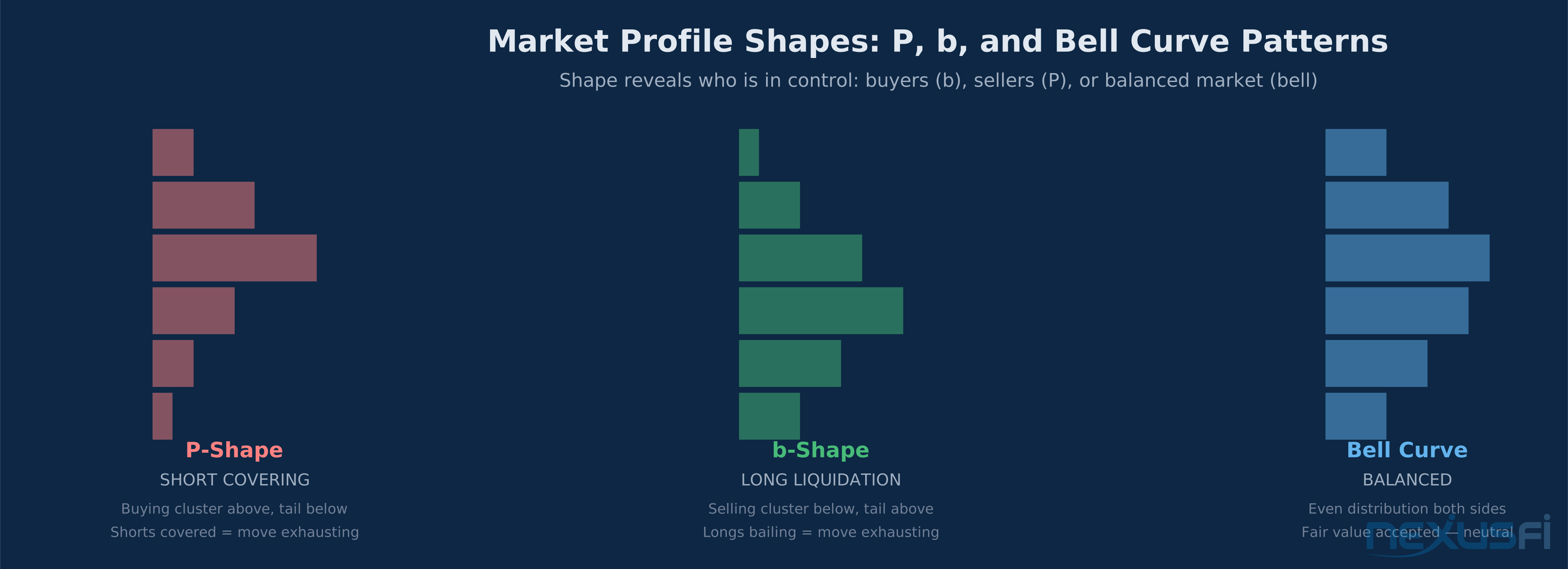
Every trading session unfolds as a two-way auction. Buyers probe higher until sellers respond. Sellers push lower until buyers step in. The result is a bell-shaped distribution when the market finds equilibrium, and a stretched or skewed distribution when one side dominates. The key binary is balance vs. imbalance. In a balanced market, price oscillates around a central point and the profile looks like a D-shape — a single bell curve centered on the Point of Control. In an imbalanced market, price moves directionally and the profile looks like a P (upper distribution) or b (lower distribution) shape with a skewed tail indicating one-sided conviction.
Key Concepts #
TPOs (Time Price Opportunities) #
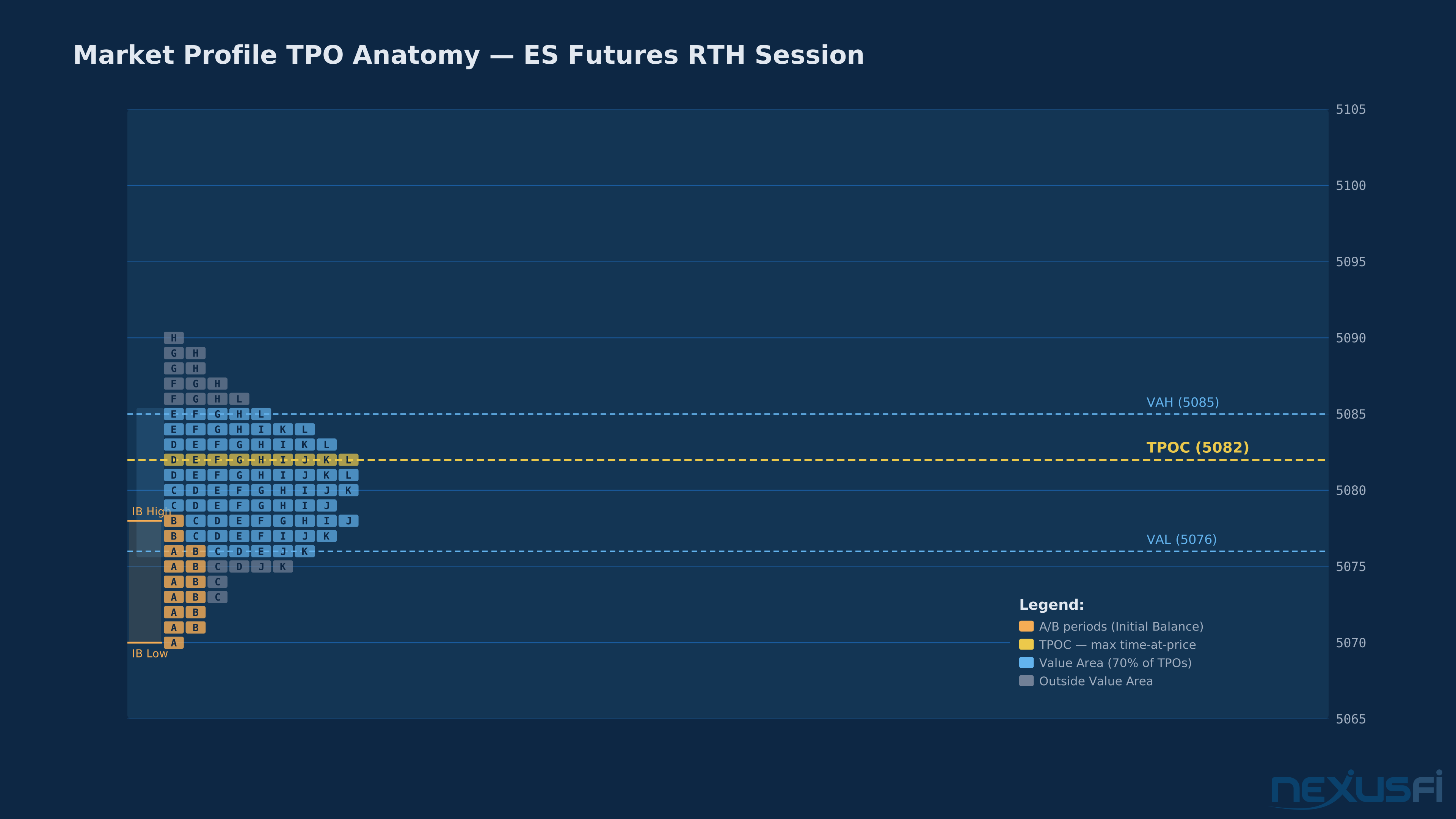
A TPO is a single block or letter representing that a specific price was traded during a specific 30-minute bracket. The first half hour of RTH gets letter "A," the second gets "B," and so on through the session. Each price level accumulates TPOs as the session progresses.
The TPO count at each price level measures time-at-price. A price with 8 TPOs means the market revisited that level across eight different 30-minute periods. A price with 1 TPO was touched once and never came back. The distribution of TPO counts across price levels is the profile.
TPO vs. Volume Profile #
Market Profile (TPO) and Volume Profile are cousins — both reveal where the market spent its session, but they measure different things. TPO counts time-at-price. Volume Profile counts contracts-at-price. The two can diverge meaningfully.
In a session where heavy volume concentrates in the first and last 30 minutes but the middle hours are quiet, the Volume Profile POC might land at a price that saw aggressive bursts of activity, while the TPO POC lands where the market spent the most time rotating. Both are valid reference levels, but they can diverge.
[3] Most traders today use both — TPO structure for session classification and day type identification, Volume Profile for specific entry/exit reference levels.
POC and Value Area #
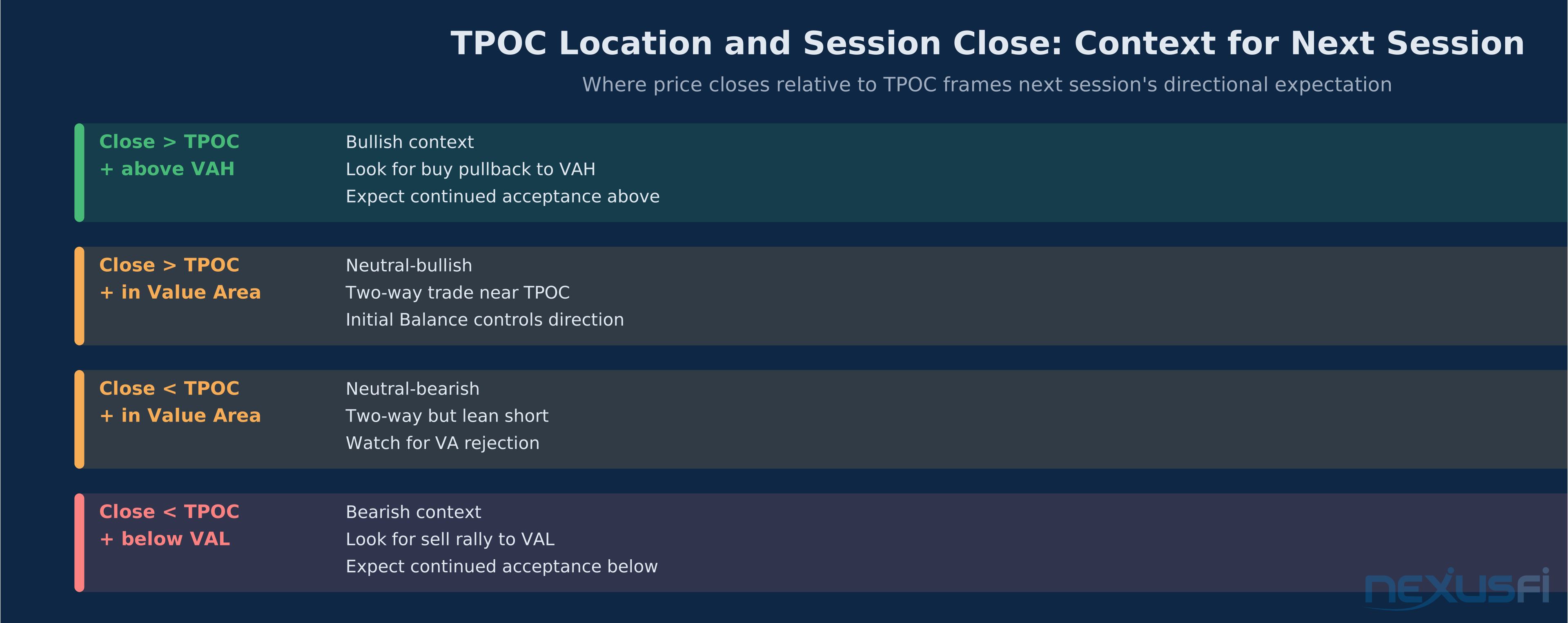
The TPO Point of Control (TPOC) is the price with the most TPOs — the mode of the distribution. The Value Area is the range containing approximately 70% of all TPOs for the session, bounded by the Value Area High (VAH) and Value Area Low (VAL).
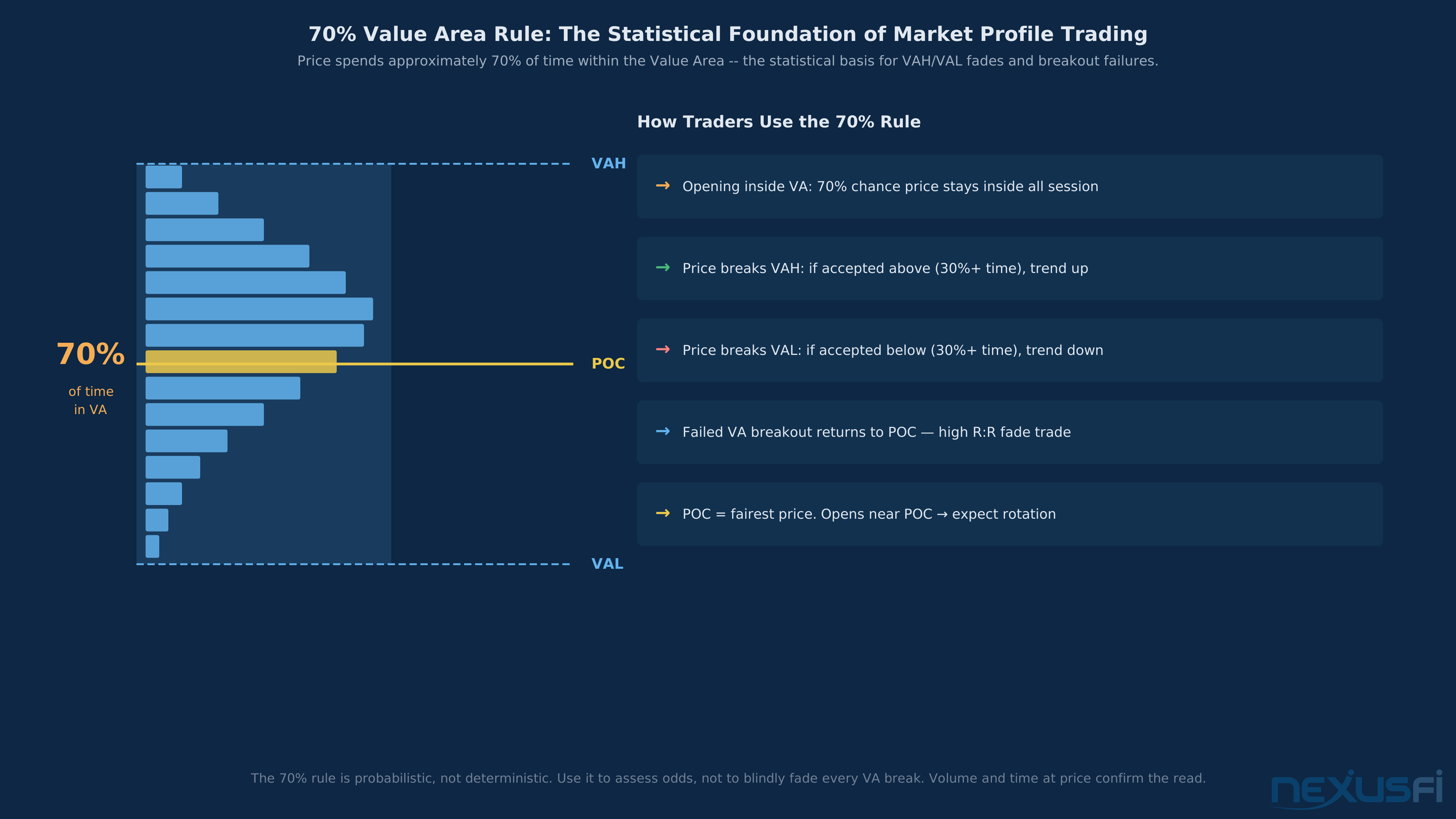

For deep education on POC mechanics, naked POCs, and developing VPOC migration, see Point of Control (POC). For Value Area construction, VA trading, and the 80% rule, see Value Area (VAH & VAL).
Initial Balance #
The Initial Balance (IB) is the price range established during the first hour of regular trading hours — the A and B brackets (9:30--10:30 ET for US equity futures). The IB defines the reference range against which the rest of the session is measured.
The IB range is a diagnostic tool. A wide IB suggests strong conviction early and price is more likely to stay within range. A narrow IB signals uncertainty and is more likely to be broken in subsequent brackets. Range extension — when a new bracket trades outside the IB — is the event that changes day type classification.
For a complete guide to Initial Balance mechanics, IB ratios, and range extension statistics, see Initial Balance (IB).
Day Types #
Day type classification is Market Profile's framework for categorizing how a session's auction unfolds. Identifying the day type early — ideally by the C or D bracket — gives you the context needed to trade subsequent setups with the right tactical approach.
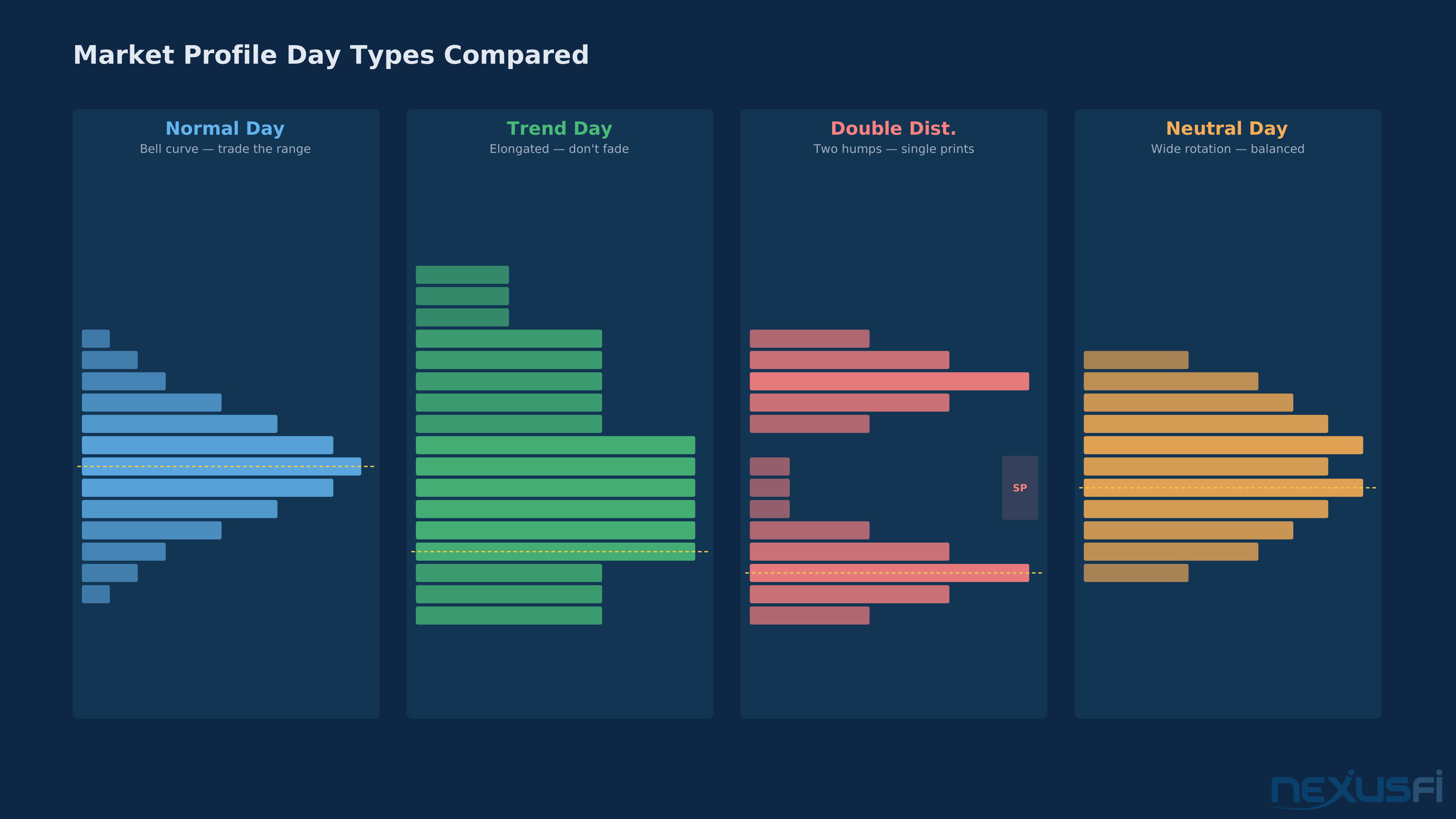
Normal Day: Prices auction between two extremes established in the opening hour, creating a wide IB. Prices then rotate without upsetting that balance. Profile is a single broad bell curve with excess on both ends. Trade approach: fade moves toward IB extremes once excess forms. Failure signal: C period extends aggressively beyond IB and does not quickly return.
Normal Variation Day: Similar to Normal but IB is narrower until an OTF participant extends the range during the morning session. One side develops a dominant bell curve; the auction does not fully rotate back. Trade approach: trade pullbacks into the developing value shelf on the dominant side.
Trend Day: Buyer or seller remains in control the entire day. Prices do not return to the opening. The IB is typically narrow, broken early, and never reclaimed. After the IB break, >70% of subsequent brackets remain outside the IB boundary. Trade approach: continuation entries from controlled pullbacks — never fade the walking TPOC. Statistical context: a true trend day (RTH range >21 ES points, close within 25% of extreme) occurs approximately 13-14% of sessions. [5]
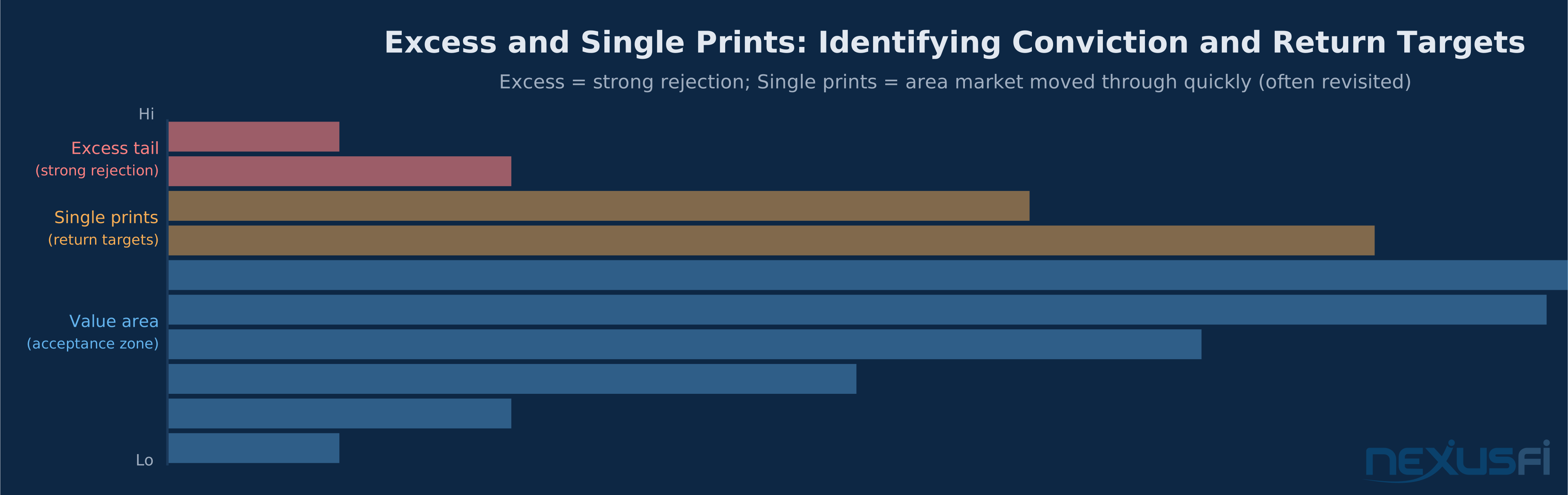
Double Distribution Trend Day: A quiet morning establishes a first distribution, then strong participants enter later and drive price to a distinct second value cluster. Two separate bell curves appear, separated by a low-volume transition zone of single prints. Trade approach: trade first distribution with balance tactics; recognize the POC handoff and trade the second mode as the dominant auction.
Non-Trend Day: Low confidence causes prices to remain choppy with no direction. Usually occurs before significant news. IB breakout attempts fail within 2-3 brackets and price returns inside repeatedly. Trade approach: pure mean reversion — fade IB extremes toward the developing TPOC.
Neutral Day: Both sellers and buyers are present with similar price opinions. Both IB sides get broken but the session closes near center. Trade approach: early breakout momentum is fragile — fade extensions back toward center.
As @runner: "70% (more or less) = rotational / balance days, 30% = trending days." He also notes that when price opens inside the prior day's range, it becomes a balance/rotational day 80% of the time. [6] A detailed ES study covering 455 sessions confirmed that ~28% of days are Neutral or Neutral Extreme, with true Trend days at approximately 13-14%. [10]
The operational implication: default to balance/rotation tactics unless multiple confirming signals support a trend classification — sustained acceptance outside IB, TPOC migration in the trend direction, and (preferably) delta confirmation.
Opening Types #
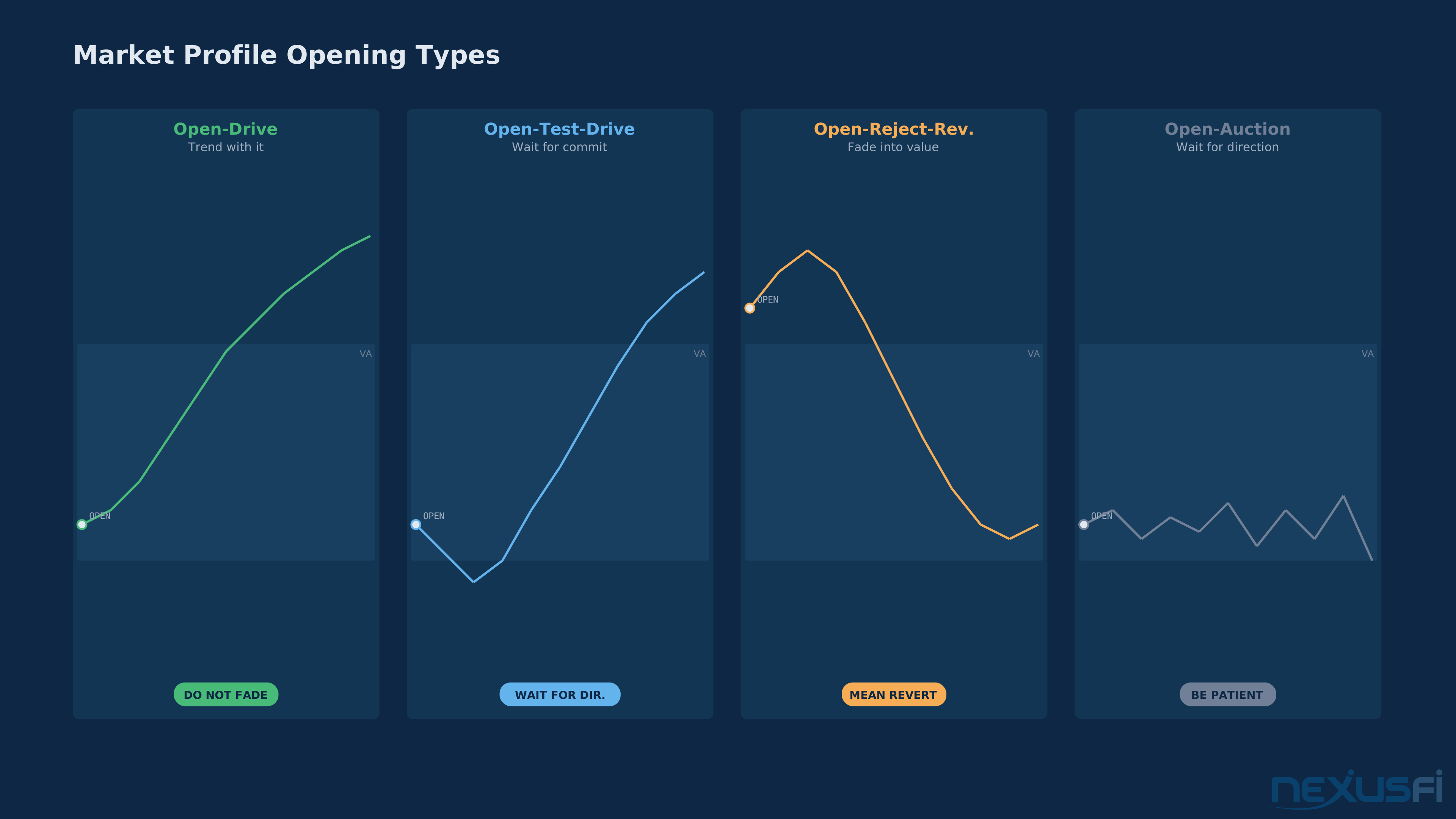
How the market opens relative to prior value tells you what kind of session to expect. Opening type classification is based on the first 30-90 minutes of RTH behavior and predicts day type with meaningful probability.
Open-Drive: The highest-confidence opening, generally caused by OTF participants who committed before the bell. The market opens and aggressively auctions in one direction without returning back through the opening range. Day type bias: Trend or Normal Variation. Trade approach: join the momentum after the first controlled retracement, not the initial impulse.
Open-Test-Drive: Opens and tests beyond a known reference (prior VA boundary, POC, overnight extreme) to confirm no new business in that direction, then reverses and drives aggressively through the open.
— the key difference is whether price tests a specific reference vs. hits organic opposing volume. [8] Day type bias: Normal, Normal Variation, or Trend.
Open-Rejection-Reverse: Market opens, trades in one direction, then meets opposing activity strong enough to reverse price back through the opening range. Lower-confidence opening where initial extremes hold only about half the time. Day type bias: Non-Trend, Neutral, or rotation-heavy Normal.
Open-Auction: Neither OTF buyer nor seller is present. Market rotates within the opening range. Two variants: Open-Auction Inside Value (within prior VA — highest balance probability) and Open-Auction Outside Value (opens outside prior VA — higher directional potential). Day type bias: Non-Trend or Neutral for Inside Value; higher directional potential for Outside Value.
Bracket Analysis #
Bracket analysis examines how TPO periods relate to each other. When a new period (say, "E") trades entirely within the range of the previous period ("D"), that's an inside period — a sign of rotation and slowing momentum. When "E" prints new extremes beyond "D," that's range extension — a sign of continuing acceptance.
The sequence of period-over-period extensions tells you whether the trend is accelerating (extensions getting larger), stalling (shrinking), or reversing (extension in the opposite direction). A trend day shows consistent extensions in one direction. A non-trend day shows failed extensions — price probes beyond the IB extreme then immediately returns.
Early classification checklist (monitor each new 30-minute bracket):
- IB extension status: still inside vs. outside vs. reclaimed
- TPOC migration: walking toward trend extreme vs. stalling vs. returning to IB midpoint
- VA boundary expansion: growing directionally vs. compact/rotational
- Overlap behavior: increasing overlap between brackets signals rotation risk
- Delta at profile levels: confirming acceptance vs. contradicting it
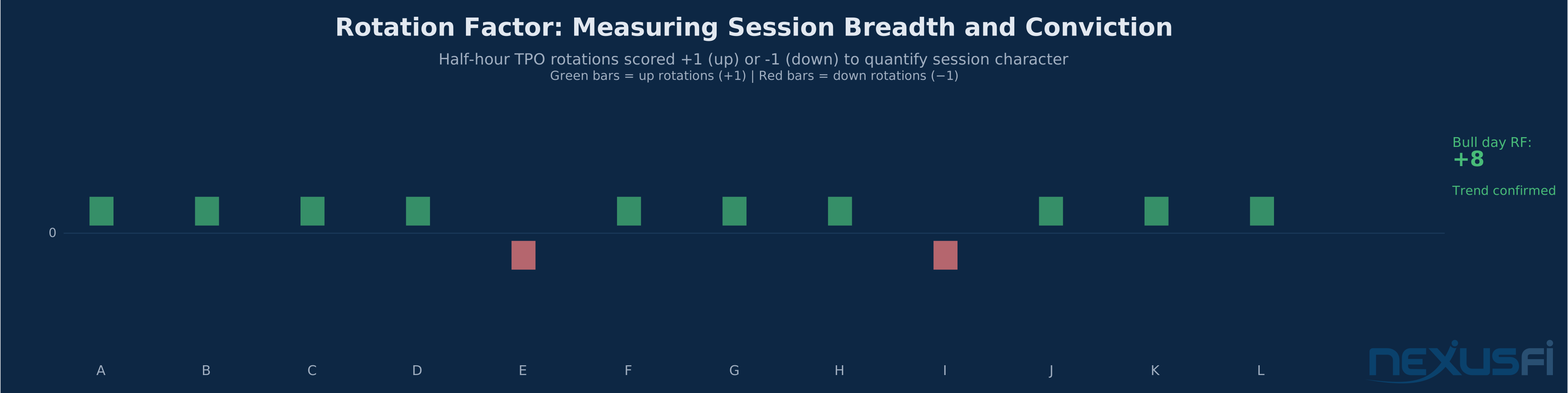
By the C period (roughly 90 minutes into RTH), you should have a working hypothesis. If IB was narrow, one side was broken in B, and C extends further without reclaiming — lean Trend or Normal Variation. If C rotates back inside IB after B's extension — lean Normal. If neither side has broken by C — lean Non-Trend.
One-Time Framing (OTF) #
One-time framing is the clearest real-time confirmation of sustained directional conviction. When each successive 30-minute period makes a higher high than the prior period without any overlap, the market is in a sustained buyers' auction. Each successive lower low without overlap confirms a sellers' auction.
OTF is not just a descriptive label — it is a filter. When a period fails to make a new extreme beyond the prior period's range, the one-time framing has been broken. That break is often the first structural signal of a rotation or correction before price actually moves. The trend persists until OTF breaks, not until a specific number of periods elapses.
During a developing uptrend, watch whether the E period exceeds the D period's high. If it does, the uptrend has OTF. If E fails to exceed D's high, OTF is broken — even if price hasn't pulled back yet. The structural warning comes before the price action confirms it.
Tempo as a Leading Indicator #
Tempo measures the rate at which TPOs accumulate at new price levels during a bracket. Fast tempo — multiple new prices explored per bracket with minimal overlap — signals aggressive OTF participation and is a leading indicator of trend continuation. Slowing tempo — increasing overlap between successive periods, fewer new prices explored — warns of session exhaustion before the completed profile shape reflects it.
A bracket that extends 15 ticks in the first 10 minutes of a period and then rotates back has different tempo than one that grinds 15 ticks over the full 30 minutes — the first signals aggressive OTF entry, the second signals slower acceptance. Tempo is most powerful when used during the C-D period transition to confirm or invalidate the developing day type.
Rules of Balance and Imbalance #
The transition from balance to imbalance is the most consequential event in any trading session.
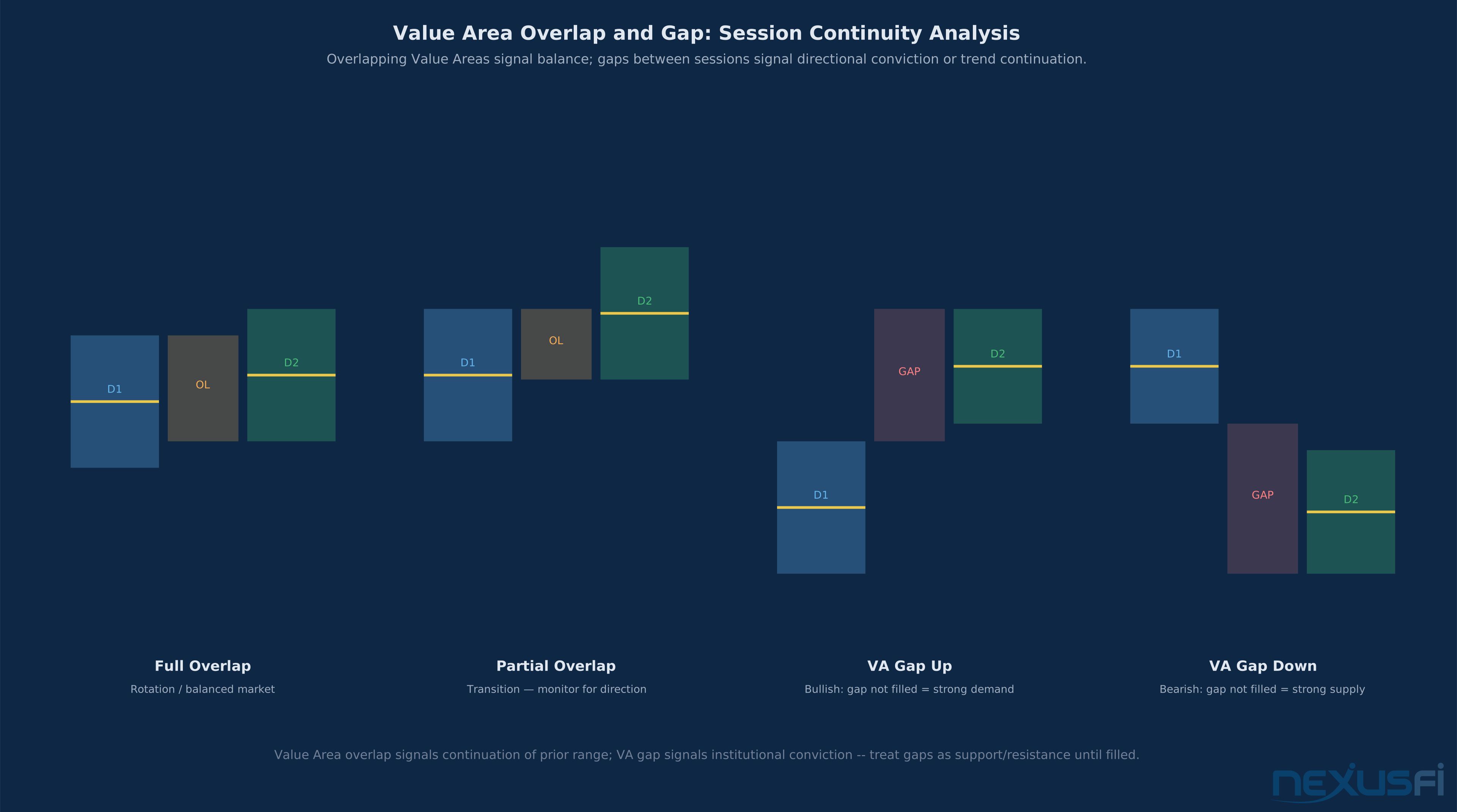
Balance is confirmed when: price oscillates within a range and the TPO distribution is roughly symmetric around the POC. Both IB sides are touched. The Value Area of consecutive sessions overlaps much. TPOC stays near the midpoint.
Imbalance begins when: a period closes and holds beyond the IB extreme. The TPOC begins migrating directionally. Subsequent periods do not reclaim inside the IB range. Value Area begins shifting toward the new extreme.
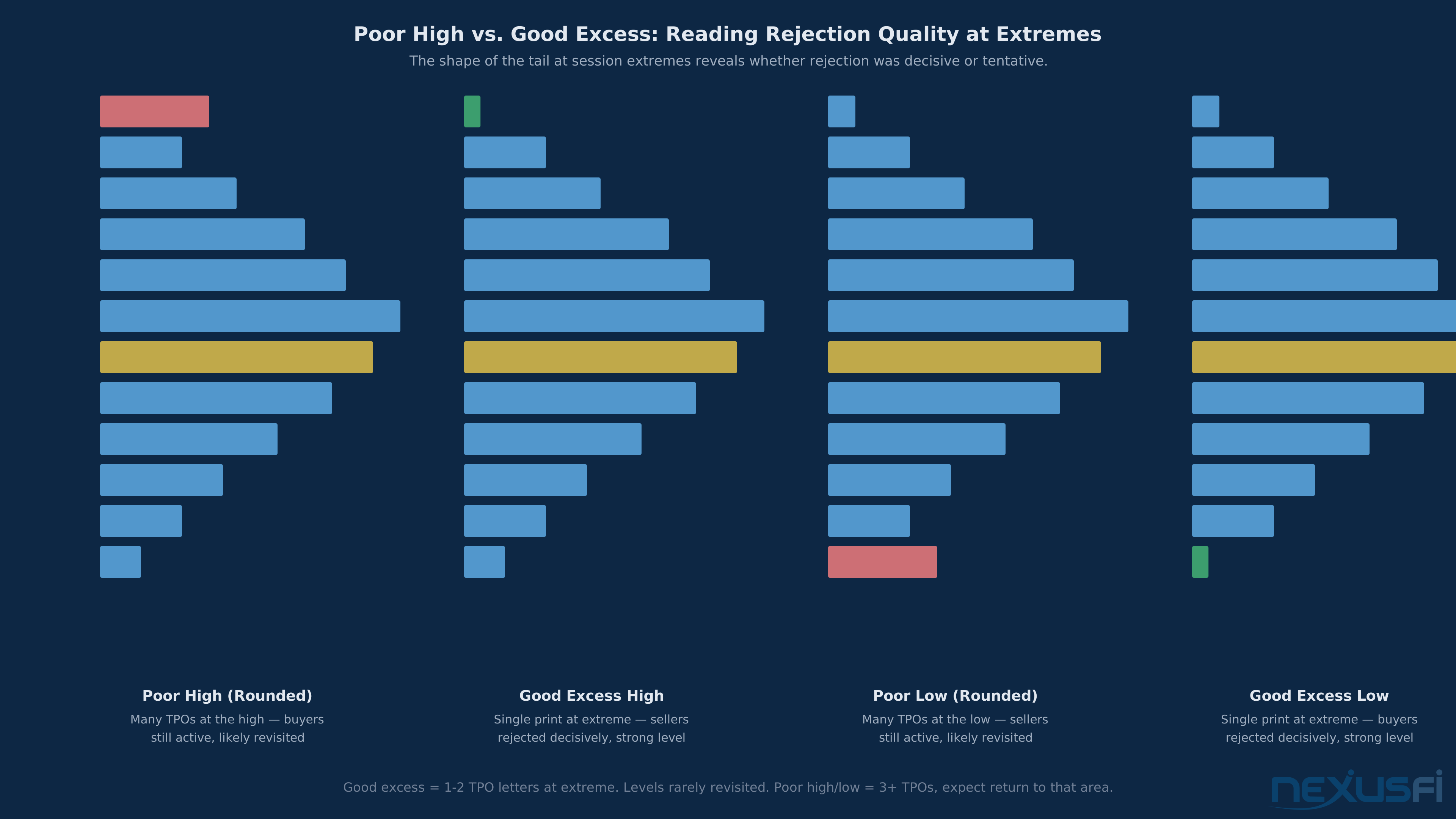
Return to balance is signaled when: the extended side is rejected decisively (good excess forms at the extreme), subsequent periods begin overlapping toward center, and TPOC migration stops.
The single most common mistake traders make is treating a single period's extension as imbalance when it is actually just rotation within a balanced range. The confirmation requirement is sustained acceptance outside the IB, not one period of range extension.
See Balance vs Imbalance for the complete structural rules.
Decision Framework: Signal Priority Hierarchy #
When Market Profile signals conflict, use this priority hierarchy:
1. Day Type Filter (highest priority): Once classified (usually by C-D periods), the day type determines your tactical approach. A developing trend day overrides all mean-reversion signals. A confirmed balance day overrides breakout signals unless the breakout holds for two full brackets.
2. Opening Type Confirmation: The opening type sets the initial bias before day type is confirmed. An Open-Drive into prior overnight resistance is a higher-confidence read than a narrow IB with uncertain opening.
3. IB Width Condition: Narrow IB (below 20-day average) biases toward eventual extension but not necessarily trend. Wide IB biases toward Normal Day rotation. IB width relative to ATR is a calibration tool, not a direction signal.
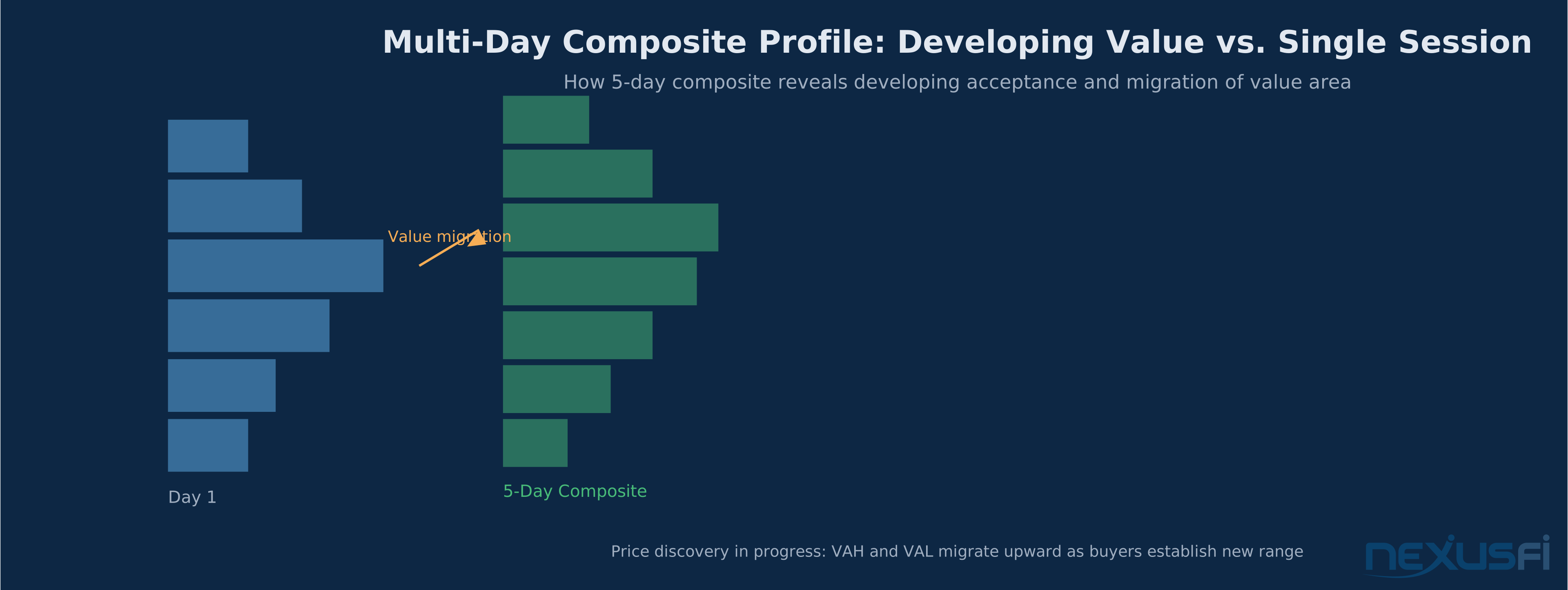
4. Composite Profile Context: Single-session profiles exist within a multi-session composite. If the composite shows value migrating upward but today's session is showing local balance, you're likely in consolidation within a larger uptrend — composite wins for directional bias.
5. Confirmation Tools (lowest priority): Order flow, delta divergence, and VWAP provide confirmation at specific levels but cannot override the structural classification above them.
When signals conflict directly: Day type always wins.
Trade Setups #
Setup 1: Initial Balance Breakout #
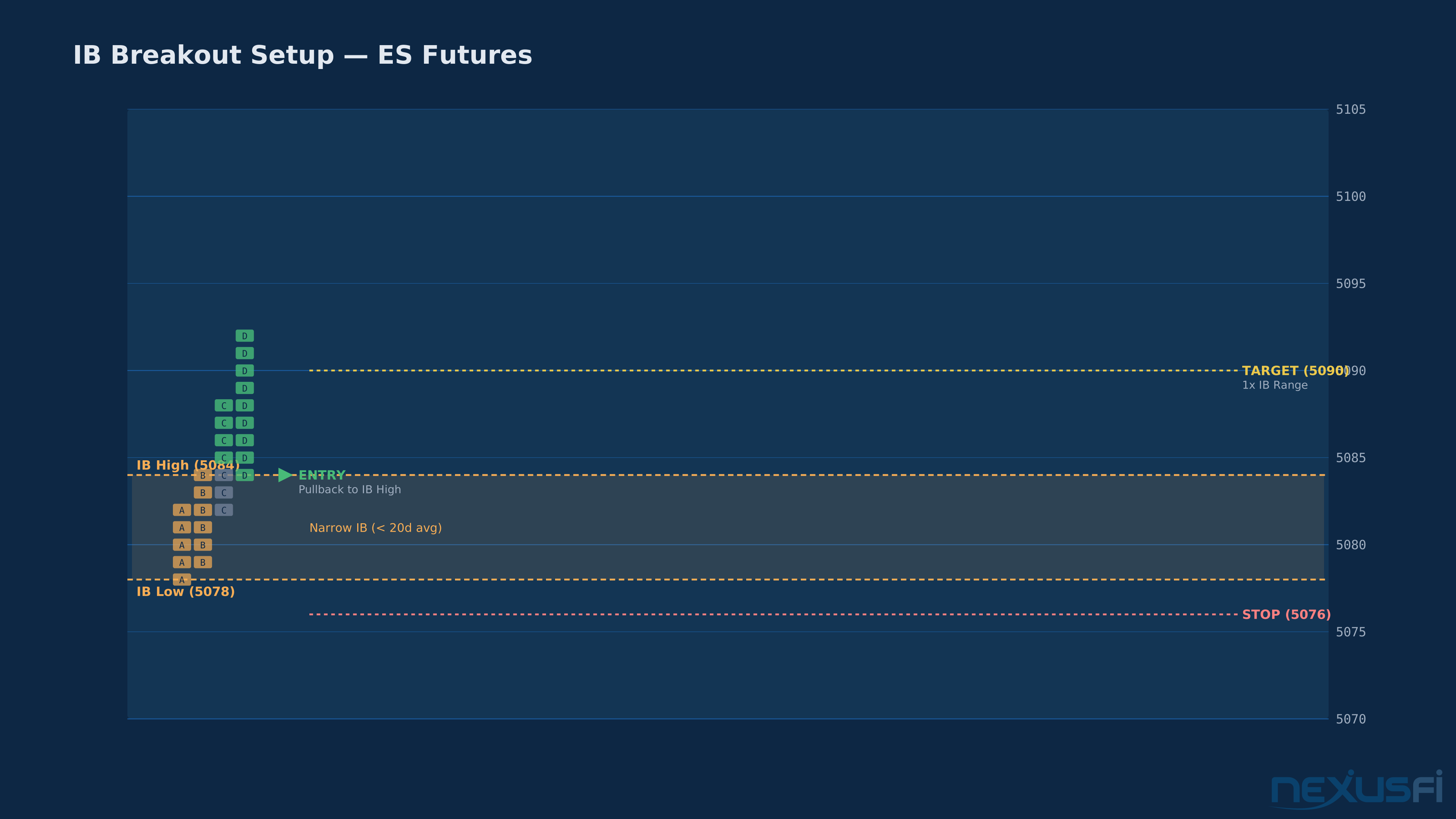
Context: Narrow IB (below the 20-day average IB range), open type is Open-Auction or Open-Test-Drive, price has been rotating near a multi-day value area boundary.
Required conditions (all must be true):
- IB range is less than 75% of the 20-day average IB range
- The C period prints at least 2 ticks beyond the IB extreme
- A 30-minute close prints beyond the IB high (longs) or IB low (shorts)
- Composite profile shows value migrating in the breakout direction
Entry: After the 30-minute close beyond the IB extreme, wait for the first pullback. Enter when price retests the broken IB extreme and holds.
Stop: Below the broken IB extreme by 2-3 ticks. If price returns fully inside the IB, the thesis is dead — exit immediately.
Target: First target at 1x the IB range from the breakout point. If D period extends further, trail the stop to each new period's low toward 1.5x-2x IB range.
Invalidation: Price returns to the IB midpoint within one 30-minute period after the breakout.
Setup 2: Open-Rejection-Reverse (Mean Reversion) #
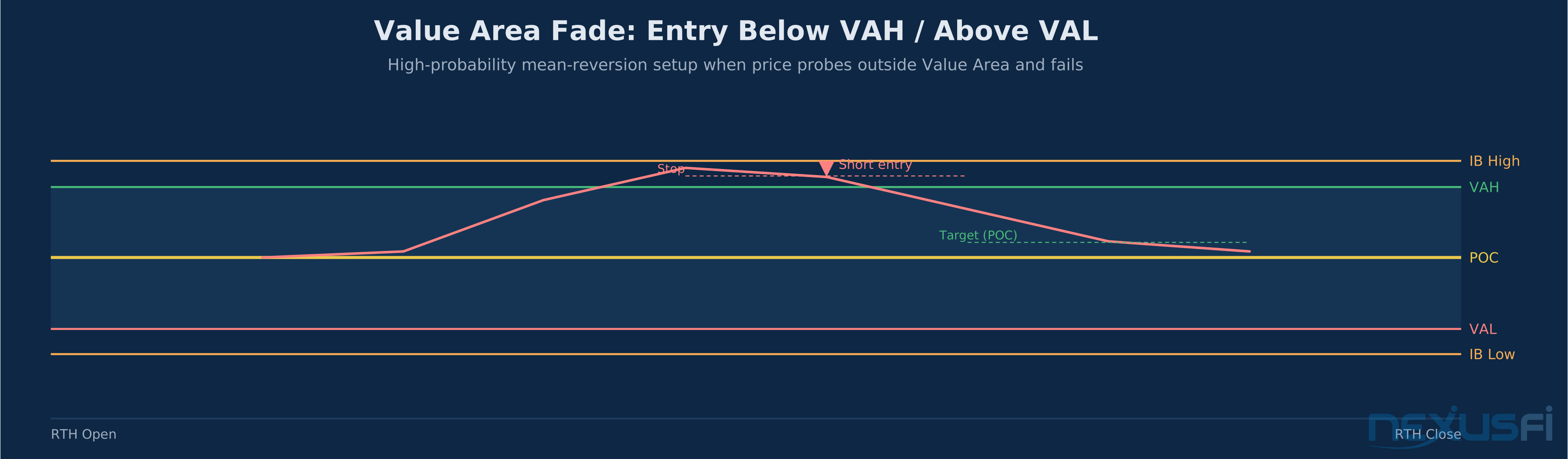
Context: Market opens outside prior session's value area. Early periods test away from value but fail to attract follow-through.
Required conditions (all must be true):
- Price opens outside the prior session's Value Area (above VAH or below VAL)
- The A period fails to extend more than 50% of the prior session's IB range away from value
- The B period prints TPOs back toward the prior Value Area boundary
- The day type hypothesis is NOT trending
Entry: Enter when price crosses back inside the prior session's Value Area. Use a limit order at the VA boundary.
Stop: Beyond the session's extreme plus 2-3 ticks. If the market retests and closes a 30-minute period beyond the extreme, exit.
Target: Prior session's TPOC as the primary target. The 80% Rule applies: once price enters the Value Area and spends two consecutive 30-minute periods inside it, there is approximately an 80% probability it will traverse the entire Value Area to the opposite boundary.
Invalidation: If A and B periods extend aggressively away from value, reclassify as a trend day and exit.
Setup 3: Double Distribution Fade (After the Trend Move) #
Context: A quiet morning session (narrow range, low TPO count) is followed by a sharp directional move establishing a second distribution. The move has stalled — the last 2-3 brackets print inside the new distribution without extending.
Entry: Once the trend move stalls and at least 2-3 periods print within the new distribution, fade back toward the gap between the two distributions.
Stop: Beyond the second distribution's extreme.
Target: The single prints between the two distributions. These act as a magnet — the market's decisive movement through that zone created an unfinished auction that will seek completion.
When Market Profile Doesn't Work #
Market Profile is a framework, not a signal generator. Here's where it breaks down:
Overnight range exceeds 60% of prior RTH range. When the overnight session has already covered most of the prior day's range, the RTH Initial Balance becomes less meaningful. Use overnight high and low as primary reference levels instead.
Low-volume sessions (holiday, half-day, rollover). Profiles built on thin participation produce irregular distributions. Reduce position size by 50% or stand aside entirely.
Scheduled news events (FOMC, NFP, CPI). A rate decision can convert a developing Normal Day into a Trend Day within a single 30-minute period. Flatten positions 15 minutes before the announcement and wait for one full TPO period after the event before reclassifying.
TPOC diverges from VPOC by more than 5 ticks. When time-acceptance and volume-acceptance disagree much, treat the zone between them as an equilibrium range.
Per @tigertrader: "Trend days are the exception rather than the rule. They probably occur about once every 6-7 days." [9]
Practical Application #
Pre-Market Prep #
Before RTH opens, build your context:
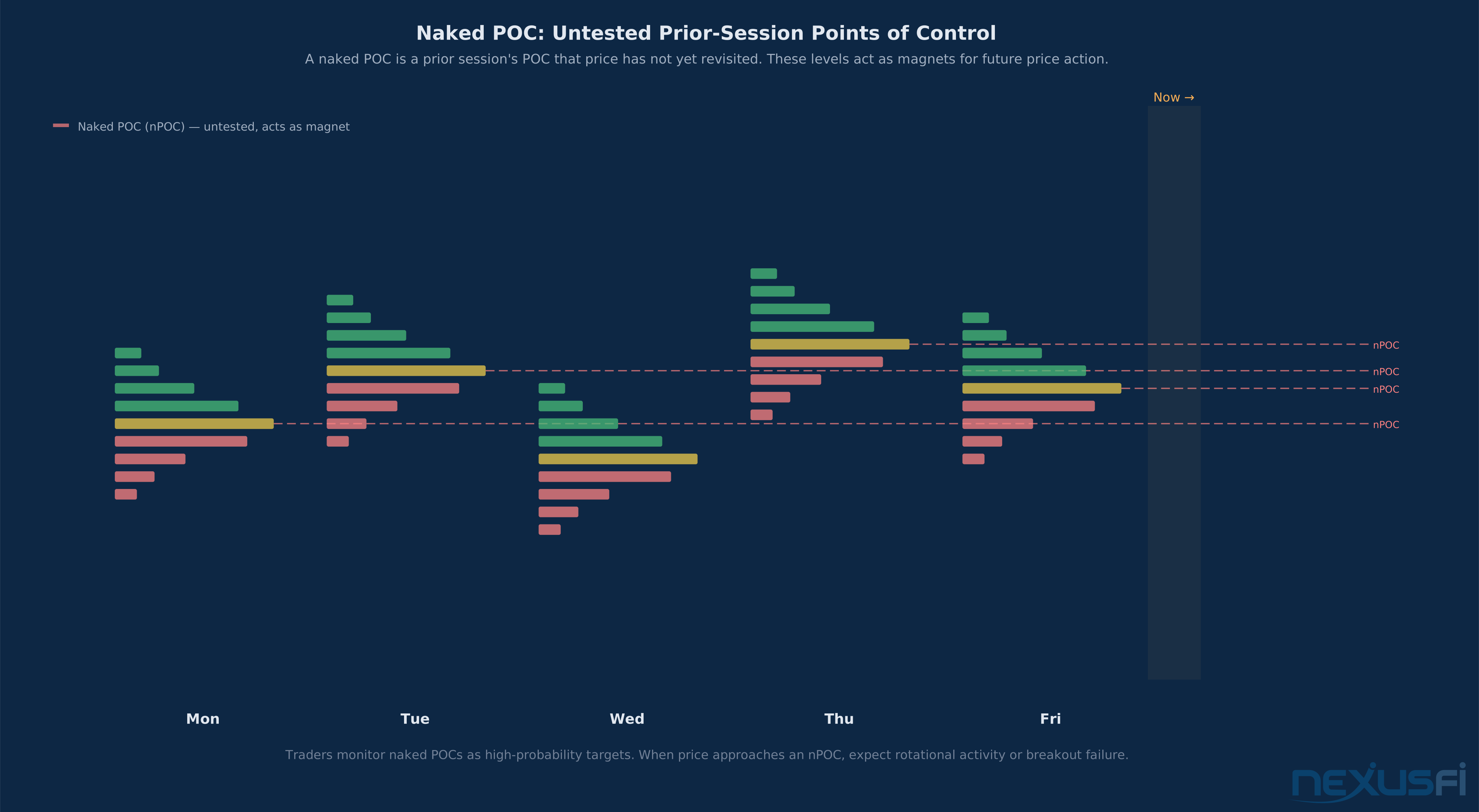
- Plot prior session profiles — the prior RTH session plus the prior 3-5 day composite. Mark the prior TPOC, VAH, and VAL as key reference levels.
- Measure the IB context — calculate the 20-day average IB range. If today's IB comes in below 75% of this average, IB extension setups become primary candidates.
- Check composite profiles — a 5-day or 20-day composite profile reveals the larger accepted value area.
- Note overnight activity and inventory — a busy Globex session with range exceeding 60% of prior RTH range means the IB framework is compromised. Check overnight inventory bias (long vs. short positioning relative to settlement) before the open.
- Note yesterday's afternoon reference points — the high and low established in the last period of the prior RTH session represent the most recent OTF conviction before the close. These unfinished auctions frequently act as magnets or rejection points the following session.
Execution Framework #
As the session unfolds, use this decision tree:
First 30 minutes (A period): Don't trade. Watch where the open prints relative to prior value. Classify the open type.
B period (30-60 min): The IB completes. Measure the range. Compare to the 20-day average. Begin forming your day type hypothesis.
C-D periods (60-120 min): Range extension or rotation? If C extends beyond IB, note which direction. If both C and D rotate inside IB, lean toward Normal or Neutral day type.
E period onward: Your hypothesis should be firming up. For balance days, trade the value area edges. For developing trend days, trade pullbacks in the direction of extension.
Risk Management #
Position size to the day type. On identified balance days, use standard size — setups are higher frequency but gains per trade are smaller. On trend days, use 1.5x-2x standard size for the primary continuation setup — but only after the first pullback confirms the trend is intact.
Use IB as your risk anchor. On balance days, risk to the opposite side of the IB. On trend days, risk to the most recent period's low (for longs). The IB creates a natural structure for stop placement that adapts to each session's volatility.
Respect the composite. If you're fading a move within a single session but the composite says value is migrating against you, reduce your expectations. The composite wins long-term.
Integration with Other Tools #
Market Profile works best alongside complementary analysis. Professional traders never use one tool alone.
Volume Profile: When TPOC and VPOC align, you have genuine market consensus — both time acceptance and execution intensity agree on fair value. This convergence produces the highest-quality mean-reversion setups. When they diverge by more than 5 ticks, treat the zone between them as an equilibrium range. Use VPOC for precise entry/exit levels and TPO structure for session classification.
Order Flow / Delta Analysis: Delta tells you how the market traded at a level — whether buyers or sellers were aggressive. At a developing VA boundary: if price tests the VAH and delta shows repeated selling exhaustion, the VAH is holding and the mean reversion long is valid. If price tests the VAH with expanding sell delta on each test, the level is being actively attacked — stand aside or wait for a break. Require multiple consecutive brackets of delta divergence before acting — single-bracket spikes are noise.
VWAP: When VWAP and TPOC align, they create a "gravity zone" amplifying mean-reversion setups. Entries near this convergence have tighter stops and higher completion rates.
Beyond the Basics: Building a Complete Trade Plan #
The framework above covers Market Profile's structural components. Building a workable trade plan requires integrating several additional practitioner concepts that professional MP traders use daily.
Overnight Inventory and Pre-Market Context #
Overnight inventory — the net positioning built during the Globex session relative to the prior RTH settlement — is the directional bias heading into the open. If the settlement price sits near the bottom of the overnight range and Globex activity was predominantly above it, inventory is long and early RTH selling pressure is statistically likely as traders reduce overnight exposure. If below settlement, short inventory biases toward early buying.
The practical application: before classifying the open type, check where the current Globex price sits relative to the prior RTH settlement. A gap above prior VAH with short overnight inventory and no clear trigger for continuation is a lower-confidence Open-Drive than one with aligned overnight inventory.
See Overnight Inventory and Globex Sessions and The Globex and Overnight Futures Session for complete coverage of overnight mechanics.
Yesterday's Final Period: The Most Recent OTF Reference #
The last 30-minute period of the prior RTH session carries the most recent evidence of institutional commitment before the overnight session — the traders who were still active in the final 30 minutes were willing to hold positions through the close, which signals conviction.
When the last period of the prior session establishes a notable extreme (a spike beyond the established VA, or a sharp pullback from a new high/low), that level frequently acts as a reference point the following session. A spike high printed in the last period that gets revisited the next morning often produces either a successful test (acceptance above = bullish continuation) or a rejection that fades back inside prior value.
30-Minute Bar Volume at Key Levels #
The 30-minute OHLCV bar is a separate data stream from the TPO profile, and integrating volume at key levels sharpens entry timing. When price approaches a structural level — TPOC, VAH, VAL, or overnight extreme — the volume on the confirming bar tells you whether the level is being accepted or rejected.
High-volume acceptance at VAH suggests the level holds as resistance. Low-volume acceptance followed by large-volume rejection suggests the level is about to break. A 30-minute bar that closes near its high with expanding volume at structural resistance is a completely different signal than the same close with contracting volume — the first confirms OTF conviction, the second may be a one-off print the next period fades.
Prior Session Afternoon Reference Points #
Beyond the overall POC/VAH/VAL, experienced traders specifically track the afternoon pullback extremes — the high and low established after the initial range extension but before the session close. These are the OTF conviction levels that survived into the Globex session.
The afternoon high is the level where buyers who were willing to hold through the close stopped probing higher. If the overnight session holds above that level, the buyers' conviction carried through. If price opens and immediately tests below it, the overnight session has already done work the RTH session hasn't acknowledged yet.
For a complete treatment of the full reference hierarchy for day trading, see Key Reference Levels in Futures Day Trading.
Knowledge Map
Prerequisites
Understand these firstReferences This Article
Articles that build on this topicCitations
- — TPO Market Profile (2018) 👍 15“Many traders have tried to convince me that TPO Market Profile doesn't work. It is old, it is outdated. The HFT's will eat your lunch... It still works as well as the day it was introduced.”
- — VPOC indicator (2011) 👍 5“Market profile refers to all trades which have occurred during the referenced session. A market profile depicts those trades by distributing them along the price axis. The original market profile was based on time price opportunities (TPOs) calculated from 30 min price bars.”
- — Is Volume Profile worth learning? (2020) 👍 2“The one on the left is a traditional Market Profile chart, which uses one block/letter (TPO) at each price traded per 30 minute interval. The one on the right is a Volume Profile, which has no notion of time but instead sums the volume traded at each price.”
- — Searching for Day types and Opening types (2020) 👍 5“Day type classification for ES: Normal Day (neither IB side broken), Normal Variation (1 IB side broken), Trend Day (RTH range > 21 points, close within 25% of extreme), Non-trend Day, Neutral Day, Neutral Extreme.”
- — MWG86's Price Action Journal (2020) 👍 15“ES Volume Profile Day and Open Type Study across 455 sessions 2019-2020. Trend days occur approximately 13-14% of sessions.”
- — Trading Futures with Context (2014) 👍 13“70% (more or less) = rotational / balance days. 30% = trending days. OAIR (open inside range) = balance/rotational day 80%. OAOR (open outside range) = trending days 80%.”
- — Searching for Day types and Opening types (2020) 👍 5“Opening types: 1) Open-Drive (highest confidence, OTF participant before bell), 2) Open-Test-Drive (tests reference then reverses), 3) Open-Rejection-Reverse (opens, meets opposite activity), 4) Open-Auction inside/outside value (no OTF conviction).”
- — Webinar: Private Banker's Perspective on Risk Management Presentation (2013) 👍 2“Identifying the day type early is the key. Based on market open with respect to previous day's value, you have day type expectation. Open out of range: expect trend day in direction of gap or open test drive.”
- — I have no edge - Should I throw in the towel? (2020) 👍 25“Trend days are the exception rather than the rule. They probably occur about once every 6-7 days or 3-4 times a month. Most of the gains and the linear moves in /ES occur overnight in the ETH session.”
- — MWG86's Price Action Journal (2020) 👍 15“There is only a 2% historical probability that neither side of the IB will be broken. Once the IB is in and broken to one side there is a 72% historical probability that the other side won't be broken. 455 ES sessions 2019-2020.”