



Open Type Classification
Reading the first 30 minutes to set your session bias
Overview #
How the market opens relative to prior value is one of the most actionable reads you can make all day. The open type tells you whether other timeframe (OTF) participants have already made their decision, whether they're probing for direction, or whether nobody has conviction yet. That distinction determines everything downstream: whether to trade with the move, against it, or wait.
Open type classification comes from Market Profile theory, originally codified by Peter Steidlmayer [8] and refined by practitioners like Jim Dalton [7]. The framework maps directly to Volume Profile — the developing profile during the first 30-45 minutes of RTH confirms or invalidates the open type you're observing on price alone.
This article covers the four primary open types, how to identify each one in real time, and — critically — how to use VP confirmation signals to distinguish a real open drive from a false start. For the broader methodology that ties open types into a complete trading framework, see Volume Profile Trading.
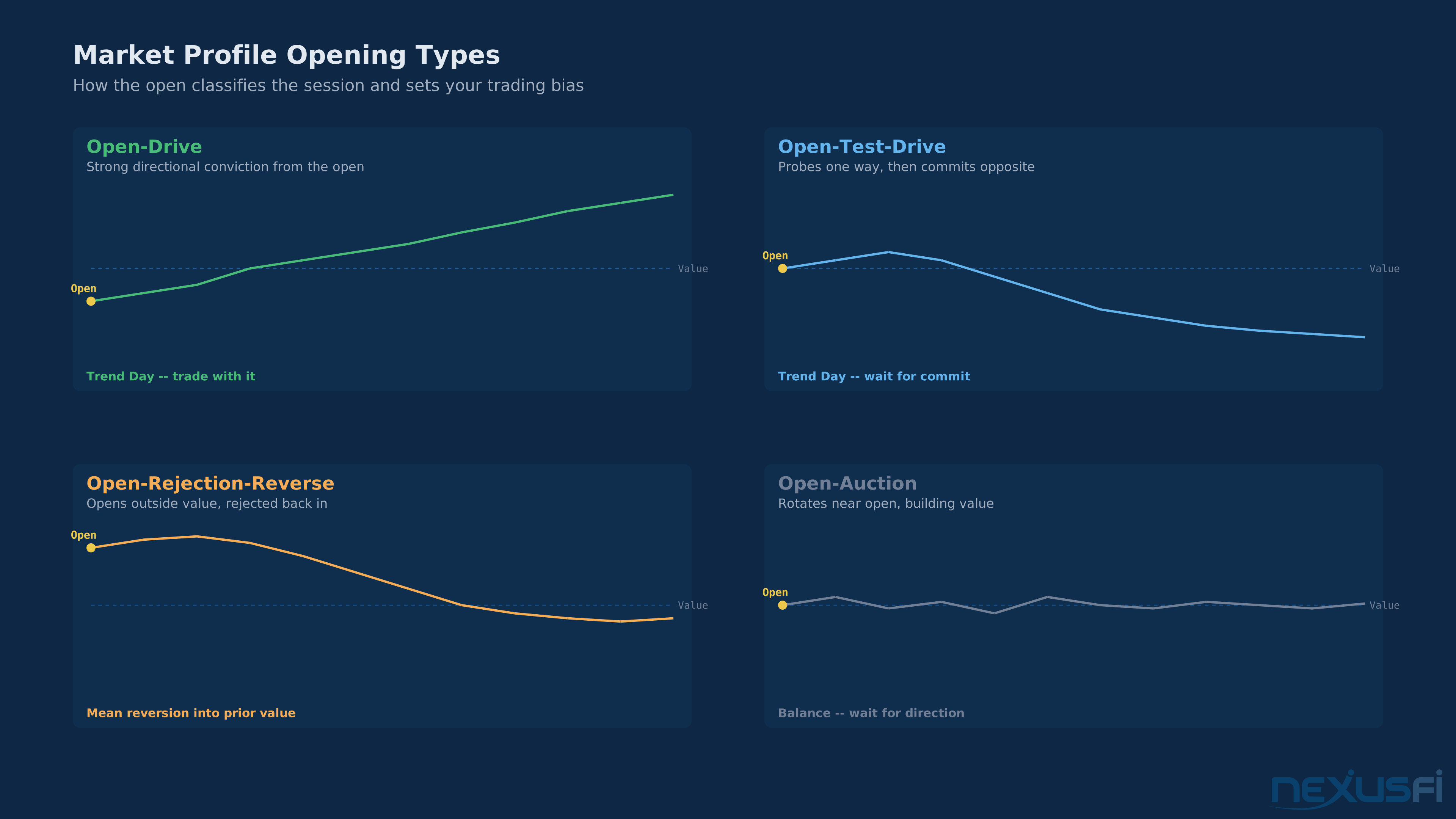
Classify the open within the first 30-45 minutes. The open type, combined with where price opens relative to prior value, gives you an actionable session framework before most traders have formed an opinion.
The Four Open Types #
Open-Drive #
The highest-conviction opening. The market opens at or near one extreme and moves aggressively in a single direction without returning to the opening price. OTF participants have already made their decision — they're not probing, they're executing.
@JonnyBoy explains the key distinction: an open drive that moves toward prior value is responsive (the market is correcting an overshoot), while one that moves away from prior value is initiative (the market is establishing new territory). [1] Both are strong — but the initiative version has higher trend day potential because the market isn't just returning to equilibrium, it's leaving equilibrium behind.
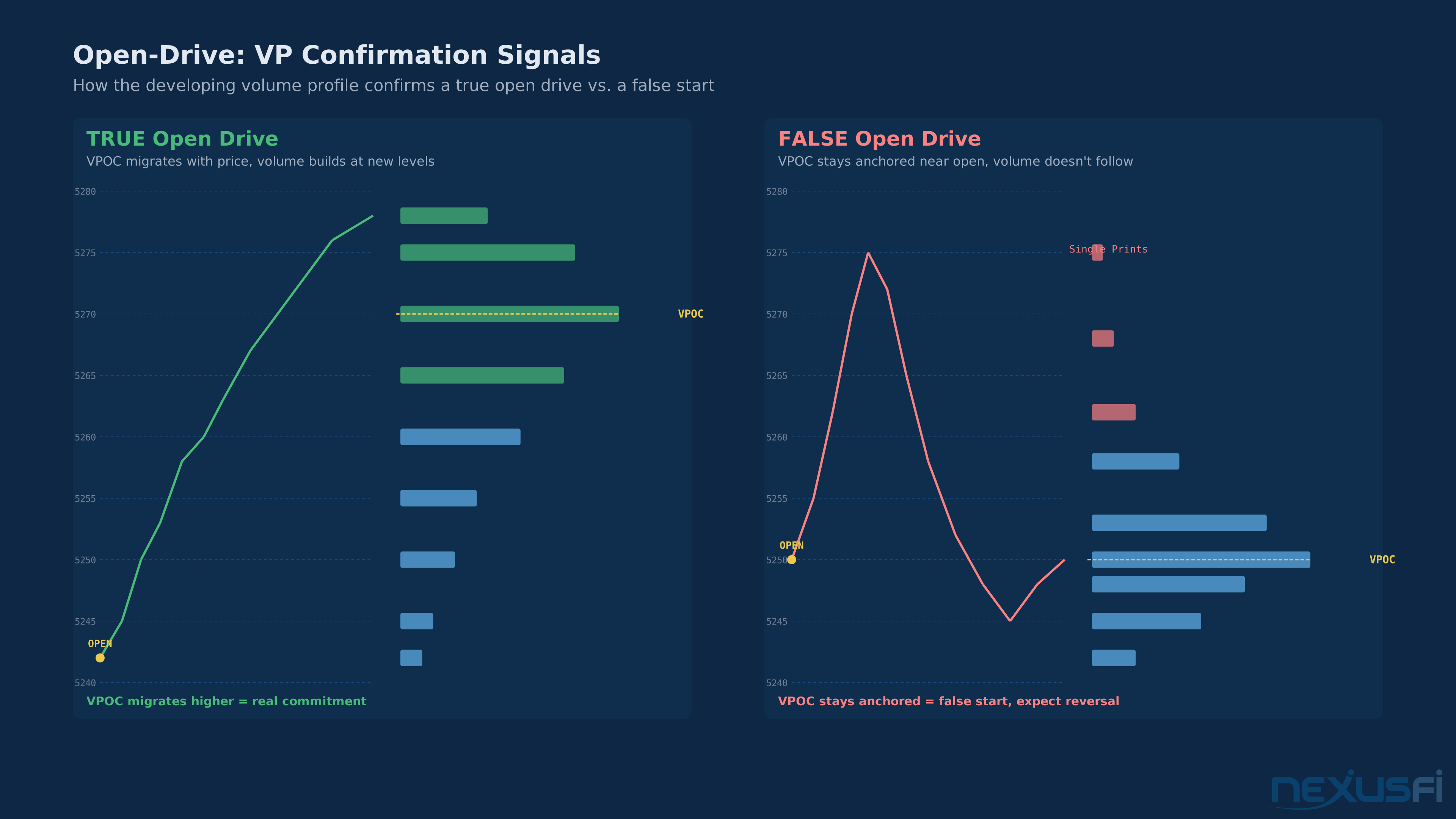
VP confirmation signals for Open-Drive:
- The developing VPOC migrates in the same direction as price
- Volume builds at the new price levels, not near the open
- The first 30-minute profile is elongated with the POC at the leading edge
- Single prints appear behind the move — price isn't revisiting levels it already traded through
- IB width is often narrow relative to the eventual day range because the first hour is just the beginning of the directional move
What invalidates it: If the developing VPOC stays anchored near the opening price while price extends, the volume isn't following. That's a probe, not a drive. Expect mean reversion.
@runner demonstrated this in practice, noting a session that opened as "a typical Open Drive Type on the upper yesterday Value Area and immediately out of that on the upper side" with a 70% probability of becoming a directional day. [2] His multiple-scenario approach — 70% directional, 30% rotational — is how you should frame the read, not as certainty.
[3] The IB ratio (IB range divided by total session range) below 50% confirmed the IB was small relative to the eventual move — a hallmark of genuine open drives.
Trading approach: Don't fade the initial move. Look for pullback entries in the direction of the drive. The first meaningful pullback to the developing VPOC or to a thin-volume zone on the developing profile is your entry opportunity.
Open-Test-Drive #
The second-highest conviction opening. The market opens, tests one direction — usually probing a known reference level — then reverses and drives the other way. The test is the market checking whether there's business to be done in that direction. When it finds there isn't, it commits in the opposite direction.
@JonnyBoy describes the underlying logic: OTF participants weren't ready to commit at the open. They needed to see one side tested first. [1] The test direction fails — volume doesn't follow the probe, the profile shows thin participation at the tested extreme — and then the real move begins.
VP confirmation signals for Open-Test-Drive:
- The initial probe leaves thin volume (often single prints) at its extreme
- The developing VPOC doesn't migrate toward the probe direction
- Once the reversal begins, the developing VPOC starts migrating in the new direction
- Volume builds aggressively on the drive side, not the test side
- The tested extreme's profile is thin; the drive side's profile is thick
What invalidates it: If the "test" side starts building volume and the VPOC migrates toward it, the probe isn't a test — it's the real move. The test-drive classification was wrong. Reassess.
Trading approach: The failed test is your entry signal. Once price reverses through the open and the developing profile confirms (VPOC migrating, volume building on the new side), enter with the drive. Stop placement goes above/below the test extreme — that level has already been rejected by the market. 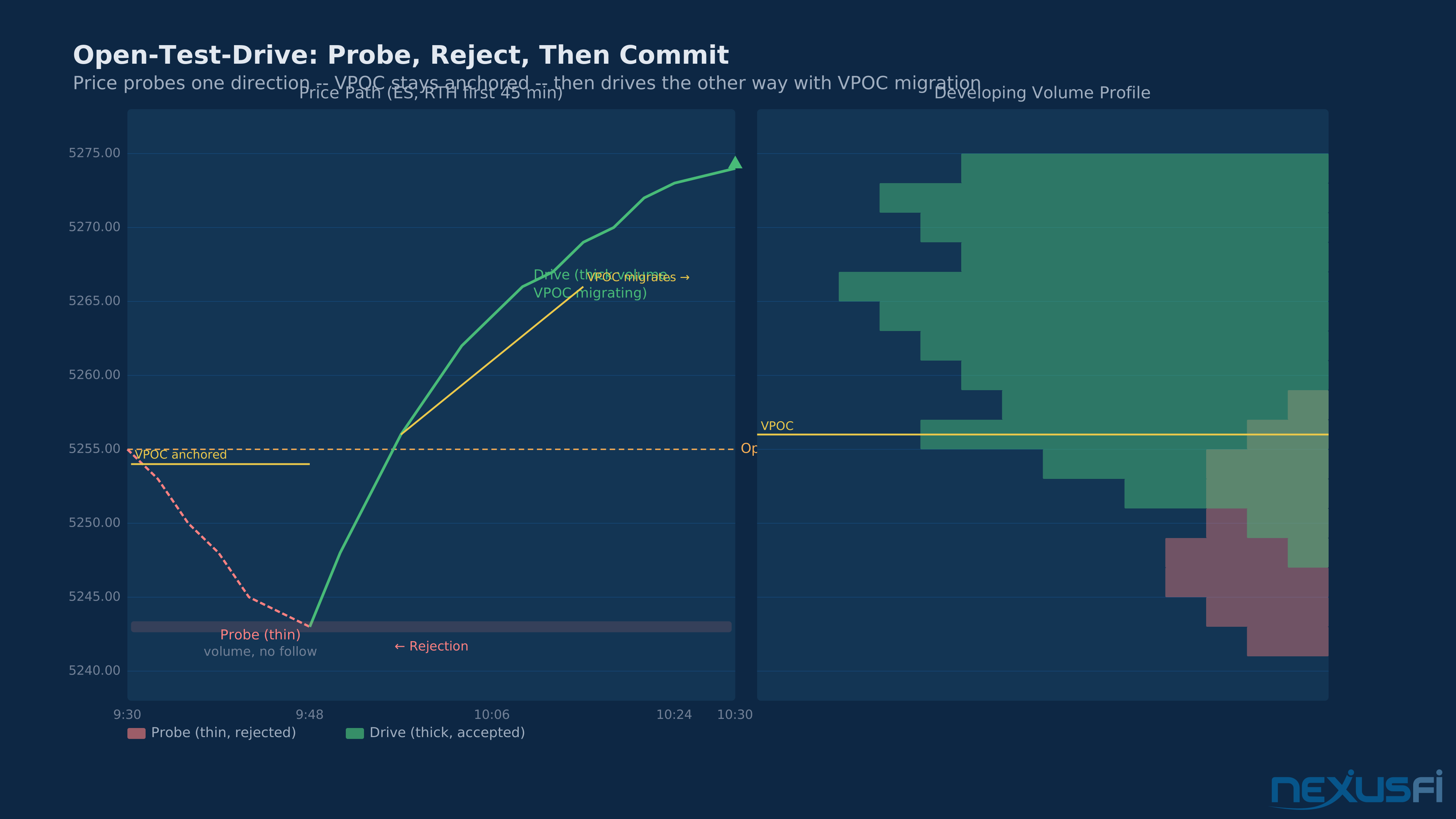
Open-Rejection-Reverse #
The market opens outside prior value, extends further away, then meets fierce opposing activity and reverses back through the opening price. This is stronger than a simple failed breakout because the market opened in an extended position and got driven back.
@Deetee's characterization highlights an important nuance: the initial extreme "only holds about half the time." [4] This means the ORR is a lower-conviction signal than the Open Drive or Open Test Drive. The reversal might be a genuine change of direction, or the market might reverse again. VP confirmation is especially important here.
VP confirmation signals for Open-Rejection-Reverse:
- Volume at the extended extreme is thin — a probe, not acceptance
- As price returns through the opening price, the developing VPOC moves back toward or past the open
- Prior value area levels start attracting volume again — the market is returning to accepted value
- The developing profile shifts from an elongated shape toward a more balanced structure
What invalidates it: If the market reverses back through the open but then stalls without building volume inside prior value, the rejection may be weak. Watch for a double distribution forming — the market might be creating new value in the gap between the extreme and prior value rather than simply returning to prior value.
Trading approach: The reversal through the opening price is the signal. Enter in the direction of the reversal, targeting prior value area levels (POC, opposite VA edge). Stop above/below the rejected extreme. Because ORR has lower conviction, consider using smaller position size than you would for an open drive. 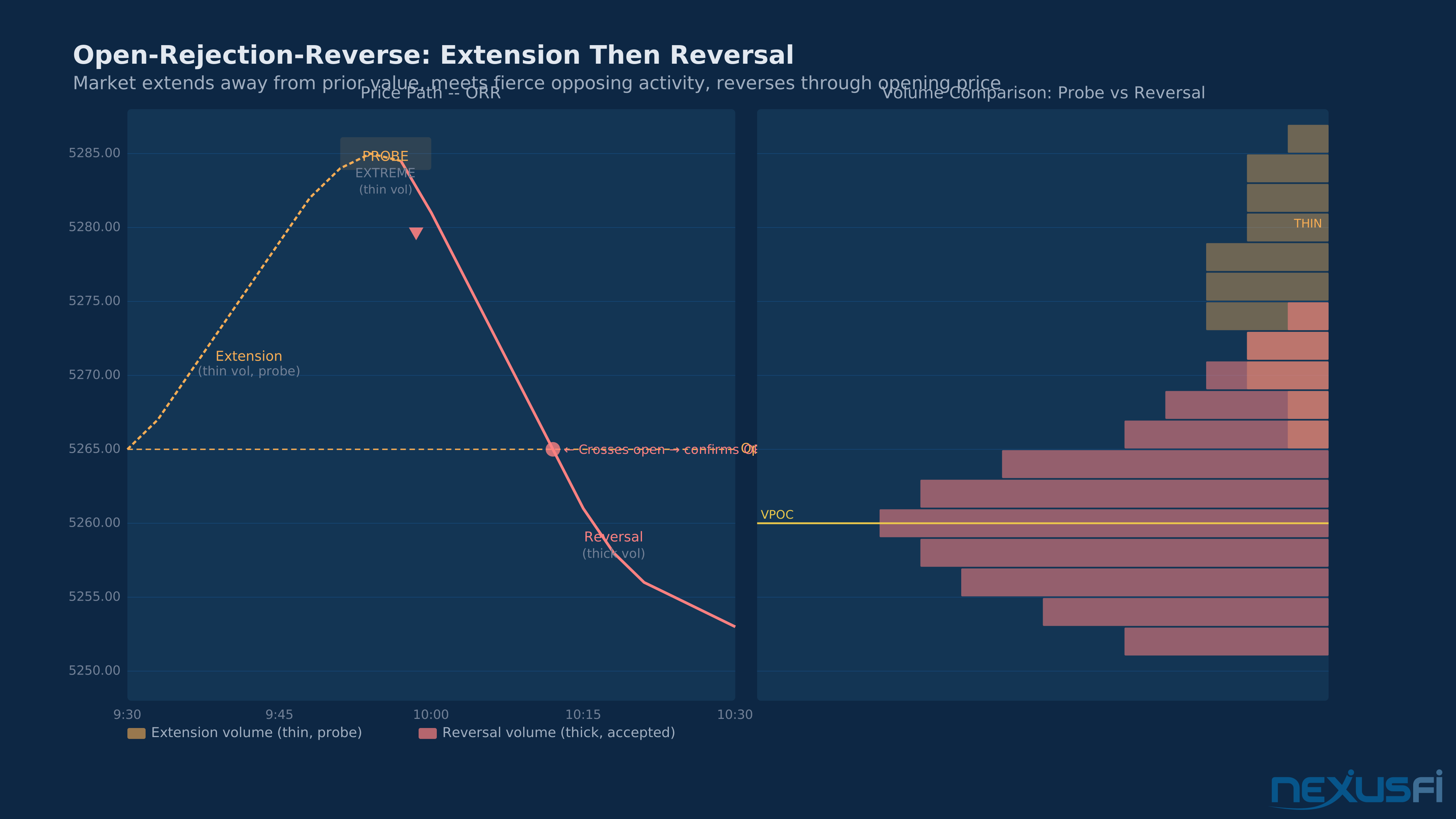
Open-Auction #
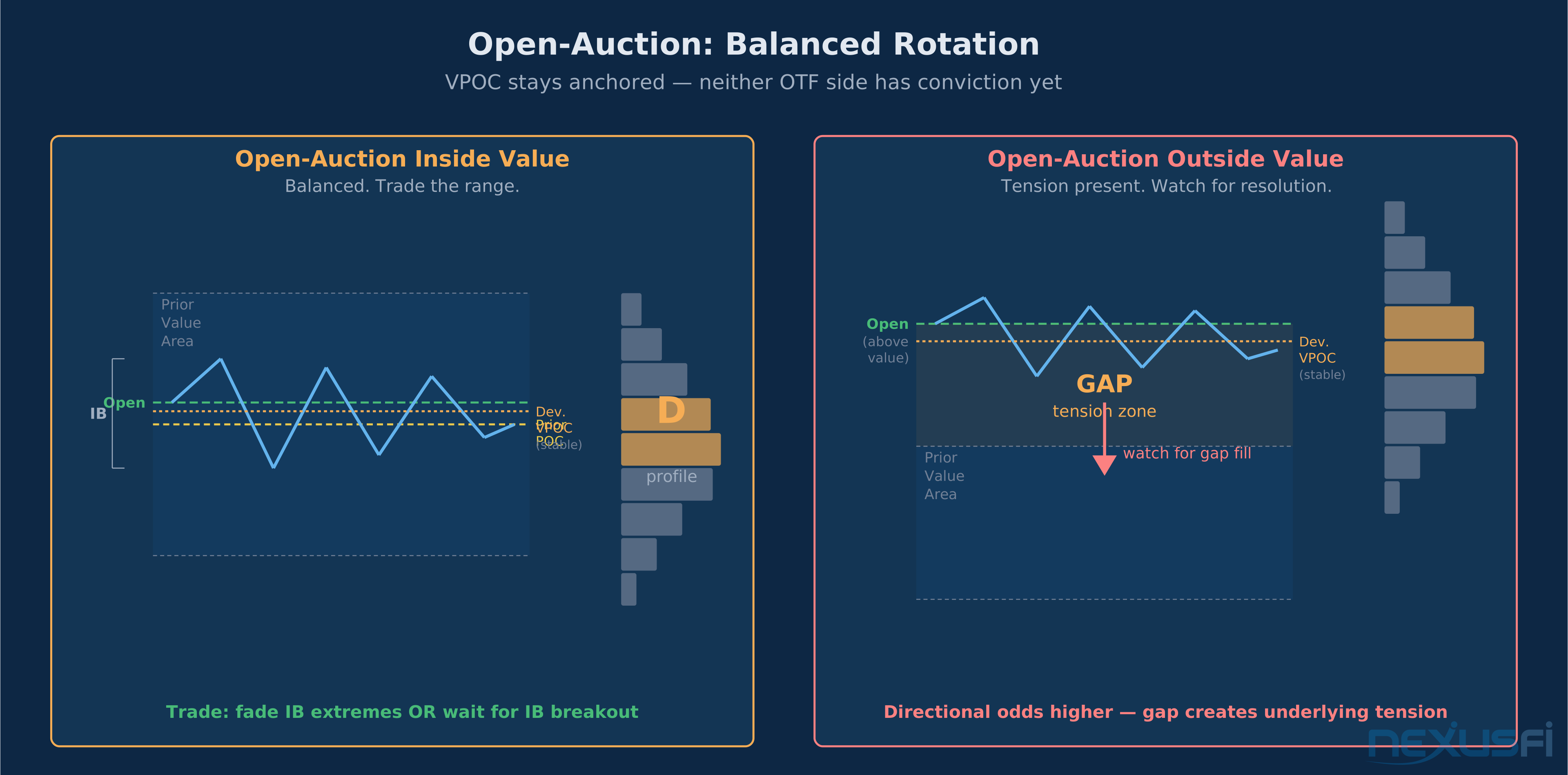
The lowest-conviction opening. The market opens and rotates back and forth near the opening price without clear directional commitment. Neither OTF buyers nor sellers are pressing. The developing profile builds a D-shaped (balanced) structure around the opening range.
@Deetee distinguishes between two Open Auction variants: inside value (rotational, balanced) and outside value (directional potential despite the auction behavior). [4] When the market opens outside value but auctions rather than driving, the directional odds are higher than for an inside-value auction — the displacement from value creates an underlying tension even when the open itself lacks conviction.
VP confirmation signals for Open-Auction:
- Developing VPOC is stable, not migrating
- Volume builds symmetrically around the open — the profile looks D-shaped early
- IB width is moderate to wide because the market is testing both sides
- No single prints forming — the market revisits levels multiple times
- The VA develops around the opening area with balanced TPO distribution
What changes the read: An open auction can resolve into a directional move after the IB completes. If the market breaks IB to one side and the developing VPOC begins migrating, the auction is over — reclassify the session as directional. The open auction just means the first 30-45 minutes were inconclusive, not that the entire day will be.
Trading approach: Wait. Don't force direction when the market hasn't shown any. Let the IB complete (first hour), then trade the IB extension if it occurs, or fade the range edges if the balance holds.
Where the Open Occurs Matters More Than You Think #
The open type alone is only half the picture. Where the market opens relative to prior value — inside or outside the previous session's value area — at the core changes the interpretation of each open type.
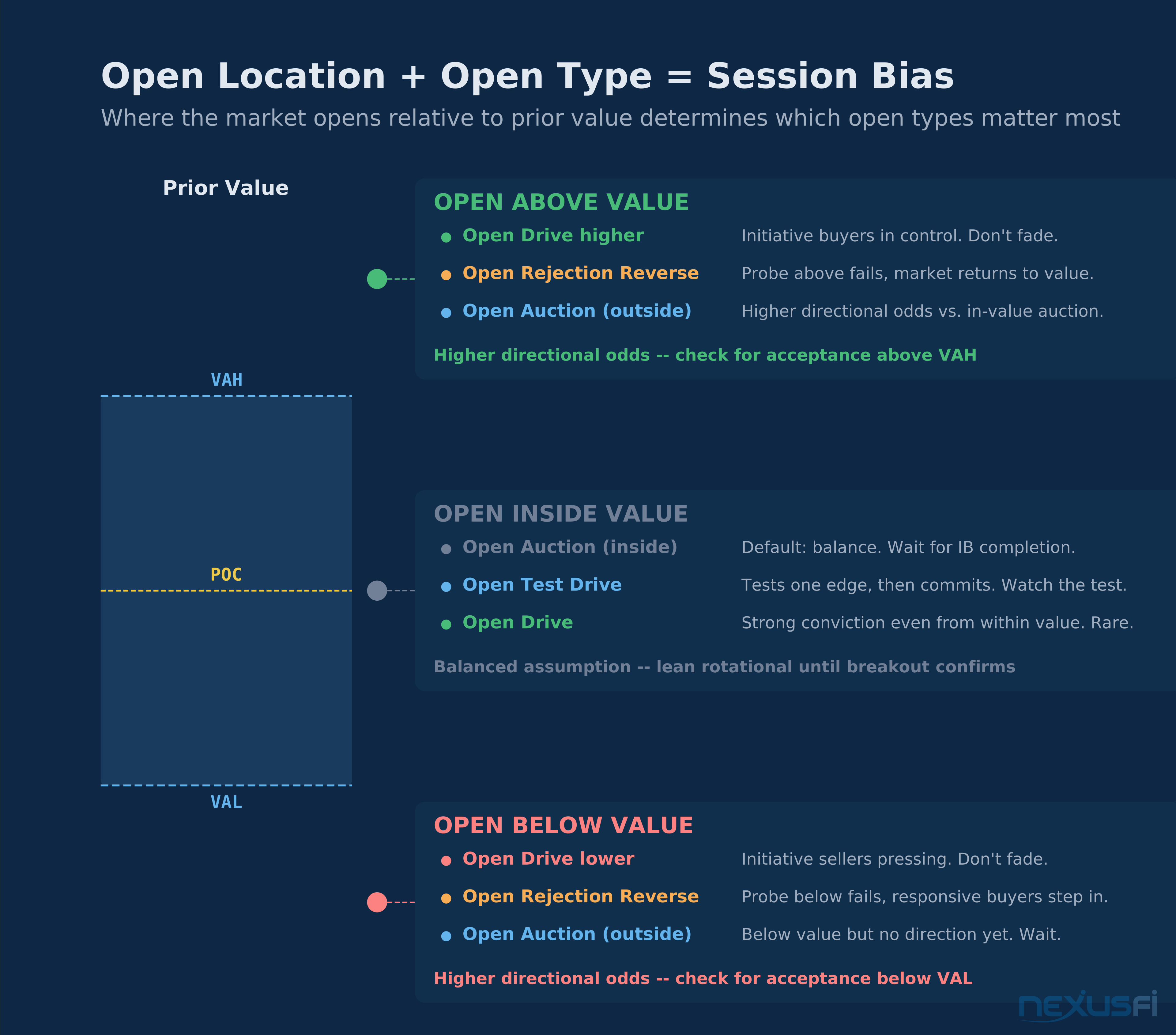
@sloth makes this precise: "Perhaps the biggest clue as to what type of day may unfold is where the open occurs relative to either the prior day's distribution or a composite distribution. If you are opening outside of value the odds greatly increase that you get some sort of drive or impulse because the market is not in the balance area." [5]
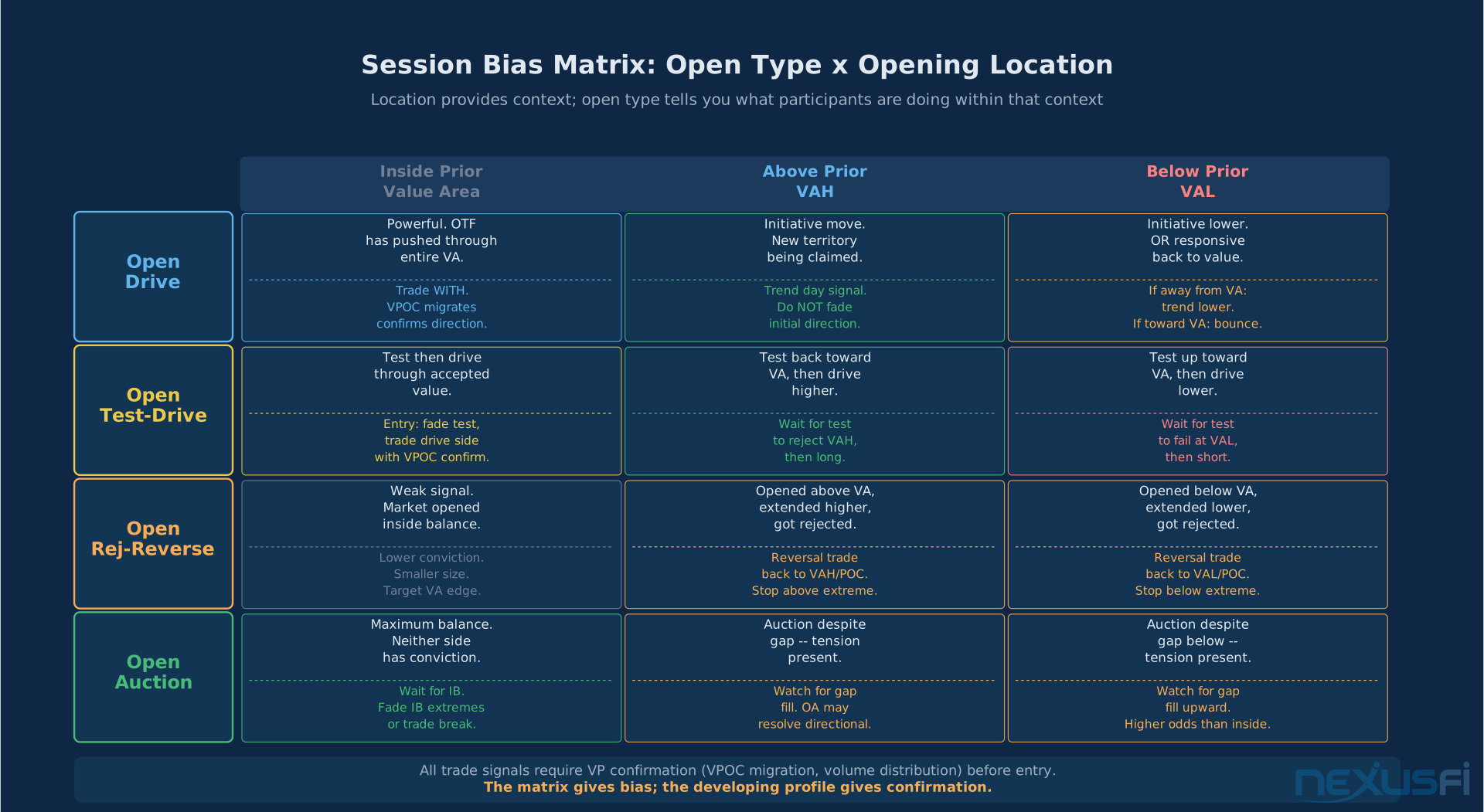
Open above prior value: The displacement creates tension. An open drive higher is initiative — new territory being claimed. An open drive lower (back toward value) is responsive — the market correcting an overshoot. An ORR here means the gap above value failed.
Open inside prior value: The default is balance. An open auction inside value is the most neutral setup possible — trade the range until the market shows you otherwise. An open drive from inside value is rare and powerful because it means OTF participants have enough conviction to push through the value area.
Open below prior value: Mirror of opening above value. Drives lower are initiative; drives back toward value are responsive. Monitor whether the gap below gets filled or creates a new distribution.
The combination of location and type narrows your framework. An open drive from outside value is a different animal than an open drive from inside value. Location provides the context; the open type tells you what participants are doing within that context.
The Statistical Reality #
Before treating open types as predictive signals, consider what the data actually shows. @MWG86 studied 455 ES sessions from 2019-2020, classifying each by day type and open type:
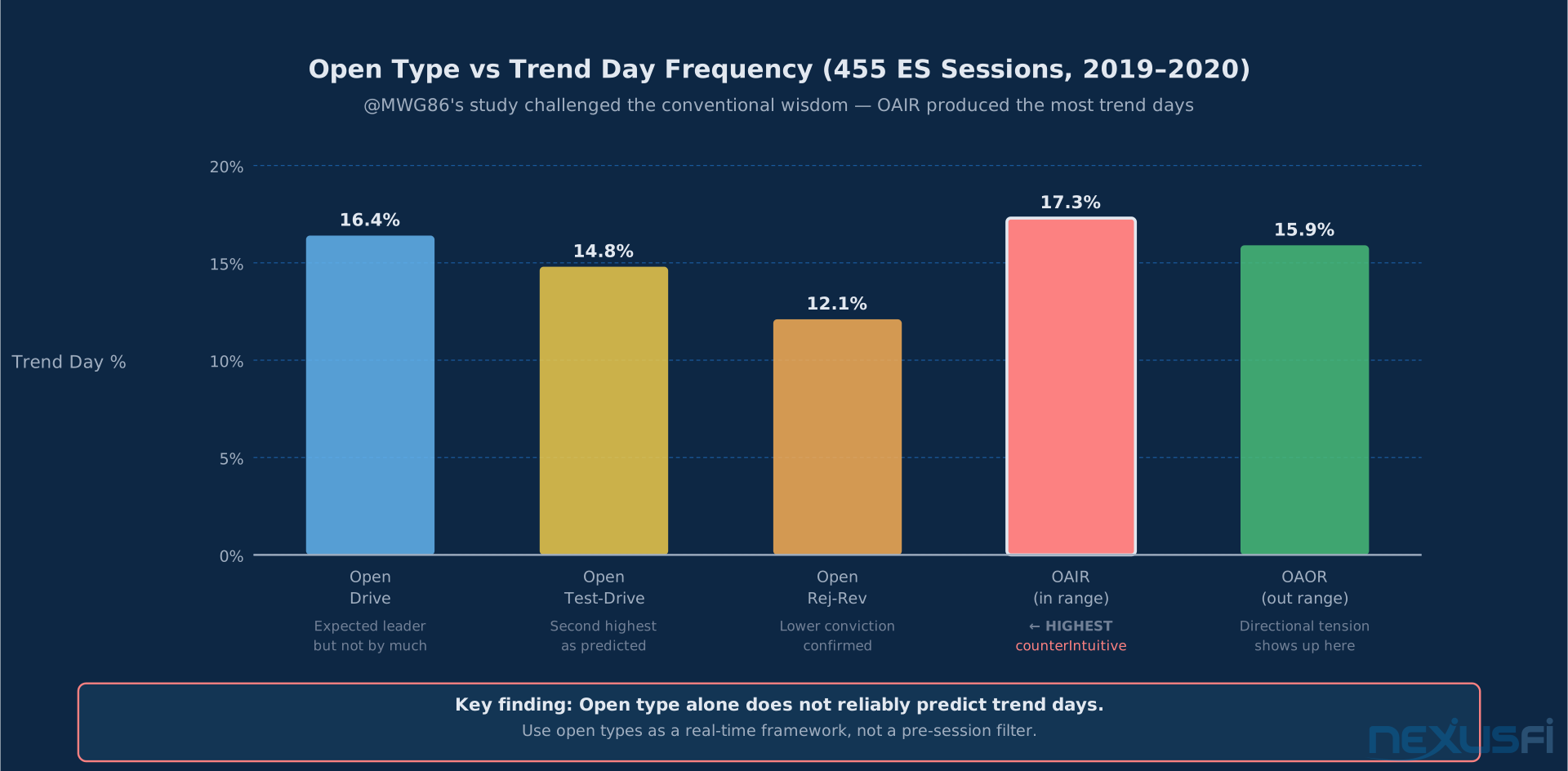
His findings challenge common assumptions. [6] Specifically:
- OAIR (Open Auction in Range) produced slightly more trend days than the supposedly higher-conviction open types — the opposite of what Market Profile theory predicts
- Prior day type had minimal predictive value for the current day — the common belief that markets rest after trend days wasn't supported (13% followed by another trend day vs. 14% base rate)
- Open location (in range vs. out of range) didn't strongly predict open type — there was roughly equal probability of each opening type regardless of where price opened
This doesn't mean open types are useless. It means they aren't standalone predictive signals. Their value is as a real-time framework for reading the market as it unfolds — not as a predictive filter you apply before the open.
The practical takeaway: Use open types to organize what you're seeing in the first 30-45 minutes. Combine the open type read with VP confirmation signals, IB analysis, and multi-session context. Don't trade open type classifications mechanically — trade the confirmation that follows them.
Open type classification without VP confirmation is pattern recognition without validation. The developing profile distinguishes a genuine open drive from a failed probe — don't skip the confirmation step.
Practical Checklist: Reading the Open #
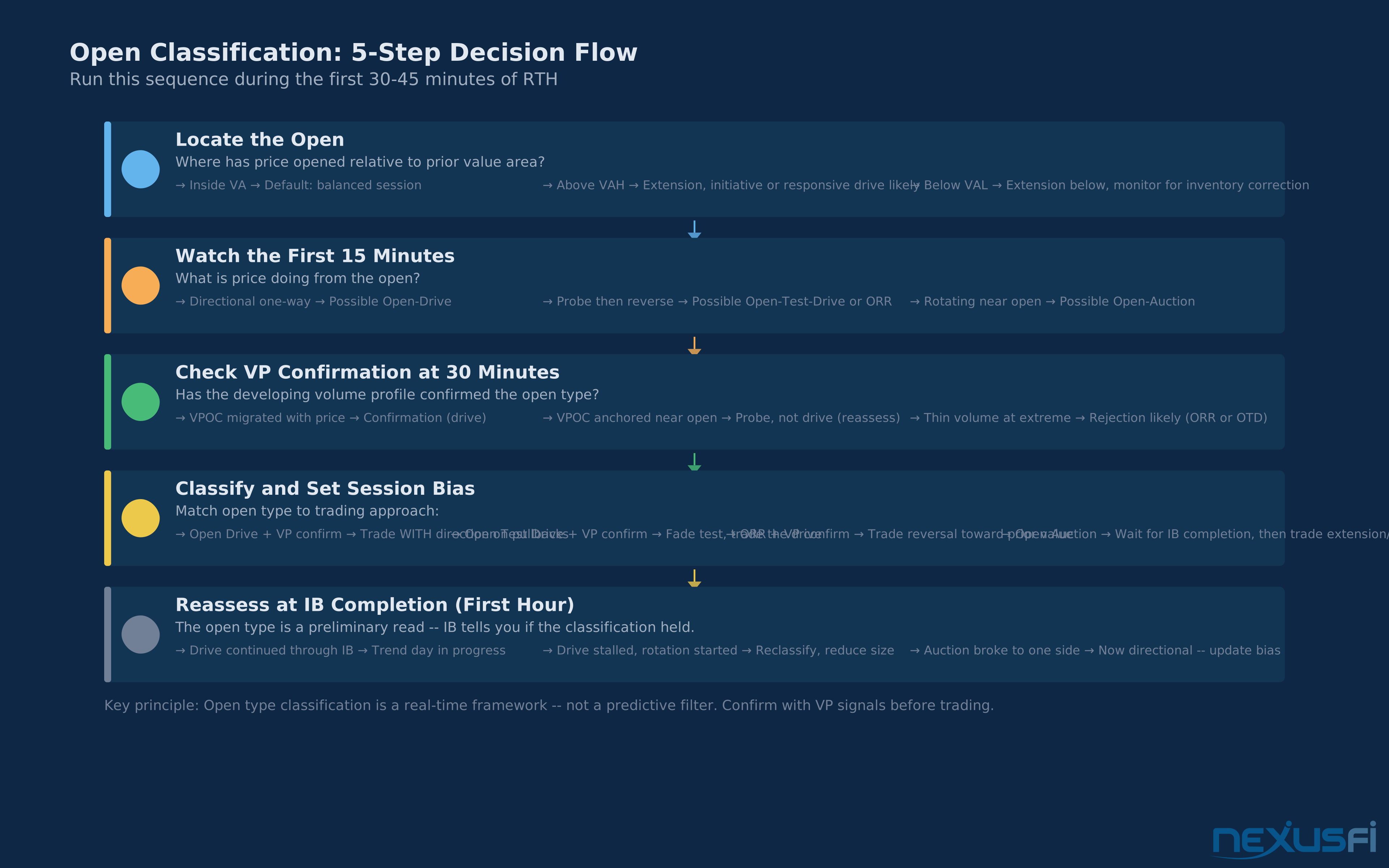
Run this sequence during the first 30-45 minutes of RTH:
Step 1 — Locate the open. Where has price opened relative to prior value? Inside VA, above VAH, or below VAL? This sets your baseline context.
Step 2 — Watch the first 15 minutes. Is price moving directionally from the open (drive)? Testing one direction then reversing (test-drive or ORR)? Or rotating near the open (auction)?
Step 3 — Check VP confirmation at 30 minutes. Where is the developing VPOC? Has it migrated from the opening price, or is it anchored? Is volume building at the current price or back near the open? Are single prints forming behind the move?
Step 4 — Classify and set your bias.
- Open drive with VP confirmation = trade with the direction on pullbacks
- Open test drive with VP confirmation = fade the test, trade the drive
- ORR with VP confirmation = trade the reversal toward prior value
- Open auction = wait for IB completion, then trade the breakout or fade the range
Step 5 — Reassess at IB completion (first hour). The open type is a preliminary read. The IB tells you whether the initial classification held. If the market drove for 30 minutes then started rotating, the session character is changing. Update your read.
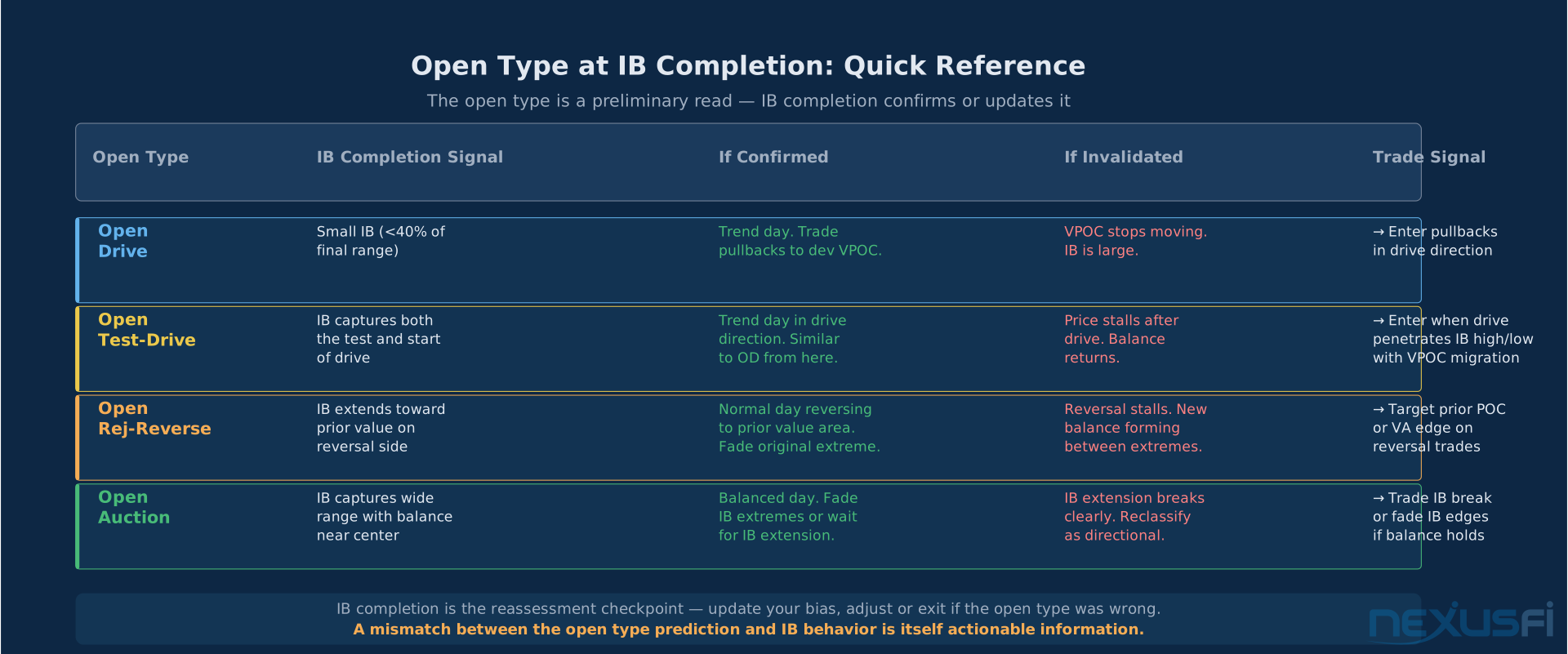
Open type classification is a real-time framework, not a predictive filter. Identify the type, confirm with VP signals, then trade the confirmation — not the classification itself.
Knowledge Map
Prerequisites
Understand these firstGo Deeper
Build on this knowledgeReferences This Article
Articles that build on this topicCitations
- — Anyone have data on trending versus reversal days on ES? (2019) 👍 7“Open Drive: OTF is highly active and is accumulating/distributing aggressively. Open Test Drive: OTF waited for a test and has stepped in to execute in a fixed direction.”
- — Trading Futures with Context (2014) 👍 12“Today Open swing has been a typical Open Drive Type on the upper yesterday Value Area and immediately out of that on the upper side. Probabilities are: directional day (70% prob), rotational day (30% prob).”
- — Harmonics With Volume Trade Journal (2021) 👍 2“Open Location: Out of Value & Out of Range. Open Type: Open Drive. Initial Balance Ratio: 20/54 = 37.0%. Anticipated Day Type: Trend.”
- — Searching for Day types and Opening types (2020) 👍 5“Open-Rejection-Reverse: Is characterized by a market that opens, trades in one direction, and then meets opposite activity strong enough to reverse price. Lower confidence opening where initial extremes only hold about half the time.”
- — Day type identification (2021) 👍 3“Perhaps the biggest clue as to what type of day may unfold is where the open occurs relative to either the prior day's distribution or a composite distribution.”
- — MWG86's Price Action Journal (2020) 👍 15“I went back to the beginning of 2019 and classified all day types according to widely accepted profile definitions. 455 sessions. Overall, I don't see any historical edge in using either day types or opening types.”
- Jim Dalton, Eric T. Jones, Robert B. Dalton — Markets in Profile: Profiting from the Auction Process (2007)
- Chicago Board of Trade — CBOT Market Profile (Handbook) (1984)