



Initial Balance: The First Hour That Defines Your Entire Trading Day
Overview #
Initial Balance: The First Hour That Defines Your Entire Trading Day
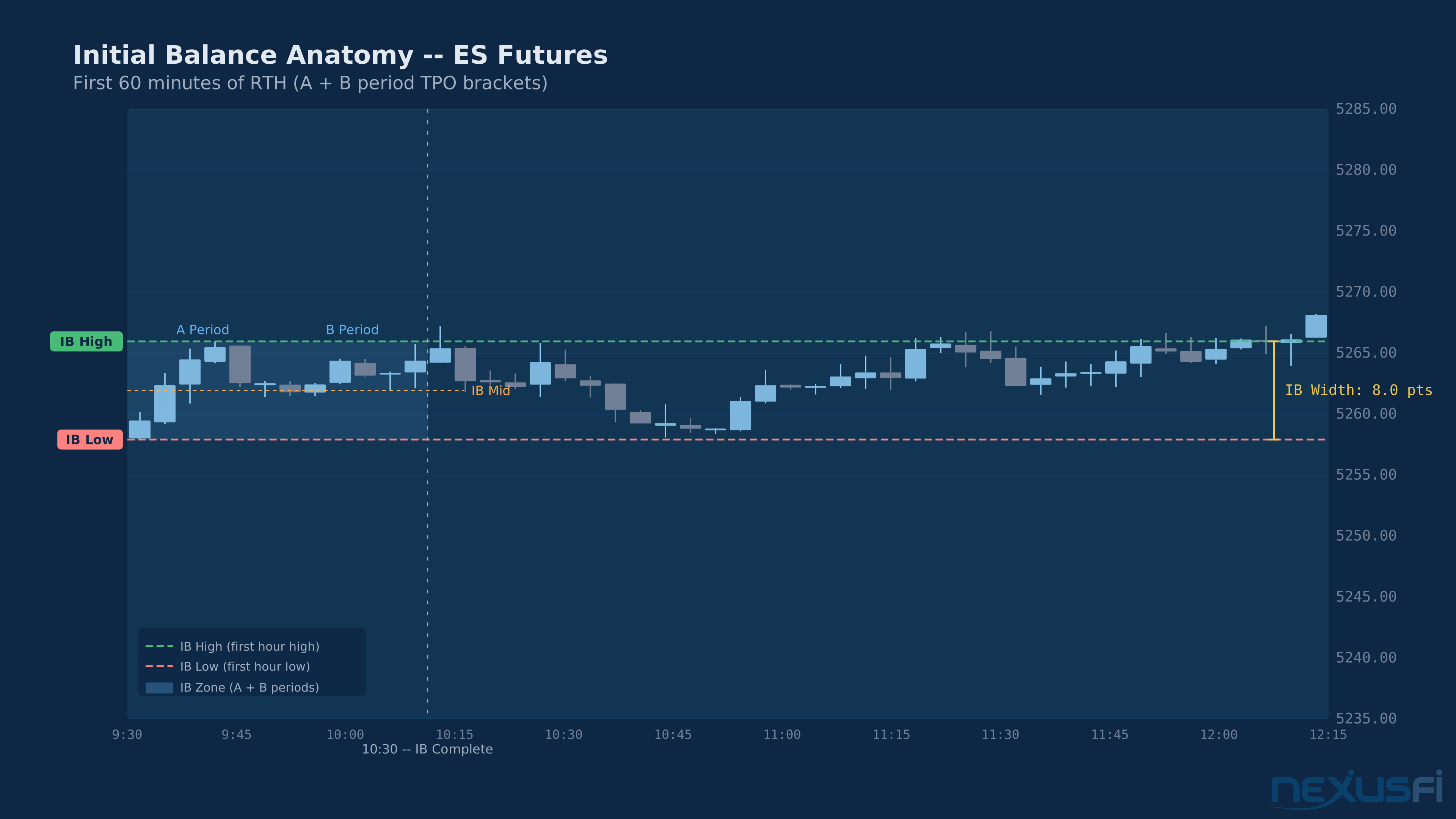
The first 60 minutes of regular trading hours (RTH) establish a price range that professional futures traders obsess over. That range is the Initial Balance (IB)
The IB is the structural backbone of Market Profile analysis. It tells you what kind of day is developing before most traders even finish their morning coffee. Wide IB? Narrow IB? Break above it or below it? Each scenario maps to a different playbook with different risk parameters, different targets, and different probabilities.
Here's the thing: the IB isn't just another indicator slapped on a chart. It's a framework for reading the auction process in real time. Developed by Peter Steidlmayer at the Chicago Board of Trade (CBOT) as part of his Market Profile methodology, the IB captures the critical price discovery phase where institutional participants establish the session's initial value.
Key Concepts #
Before diving into setups and strategies, here's the vocabulary you need:
- Initial Balance (IB): The price range (high to low) established during the first 60 minutes of Regular Trading Hours (RTH). For ES and NQ, that's 9:30 AM to 10:30 AM ET. In Market Profile, this corresponds to the first two 30-minute TPO periods, labeled 'A' and 'B'.
- IB High: The highest price traded during the IB period.
- IB Low: The lowest price traded during the IB period.
- IB Width (or IB Range): IB High minus IB Low. This is your primary volatility gauge for the session.
- IB Mid: The midpoint of the IB range
- Range Extension (RE): When price moves beyond IB boundaries later in the session. A break above IB High is upside range extension; below IB Low is downside range extension.
- Single Print: TPO periods with only one letter at a given price, often occurring during range extension. These represent fast, one-directional movement with little two-way trade.
- Excess: The tail at the extremes of a profile, showing aggressive responsive activity that rejected price. Strong excess at IB boundaries signals conviction.
How the IB Is Calculated #
The calculation itself is dead simple:
- Identify the RTH start time for your instrument (9:30 AM ET for US equity index futures like ES and NQ)
- Record all traded prices during the first 60 minutes
- IB High = maximum price during that window
- IB Low = minimum price during that window
- IB Width = IB High - IB Low
As @Fat Tails notes in the NexusFi IB Range Bands discussion, calculating the exact IB range requires minute bars
One important nuance from
While the traditional definition uses 60 minutes, some experienced traders extend this to 120 minutes
IB Width: Your Early-Session Volatility Gauge #
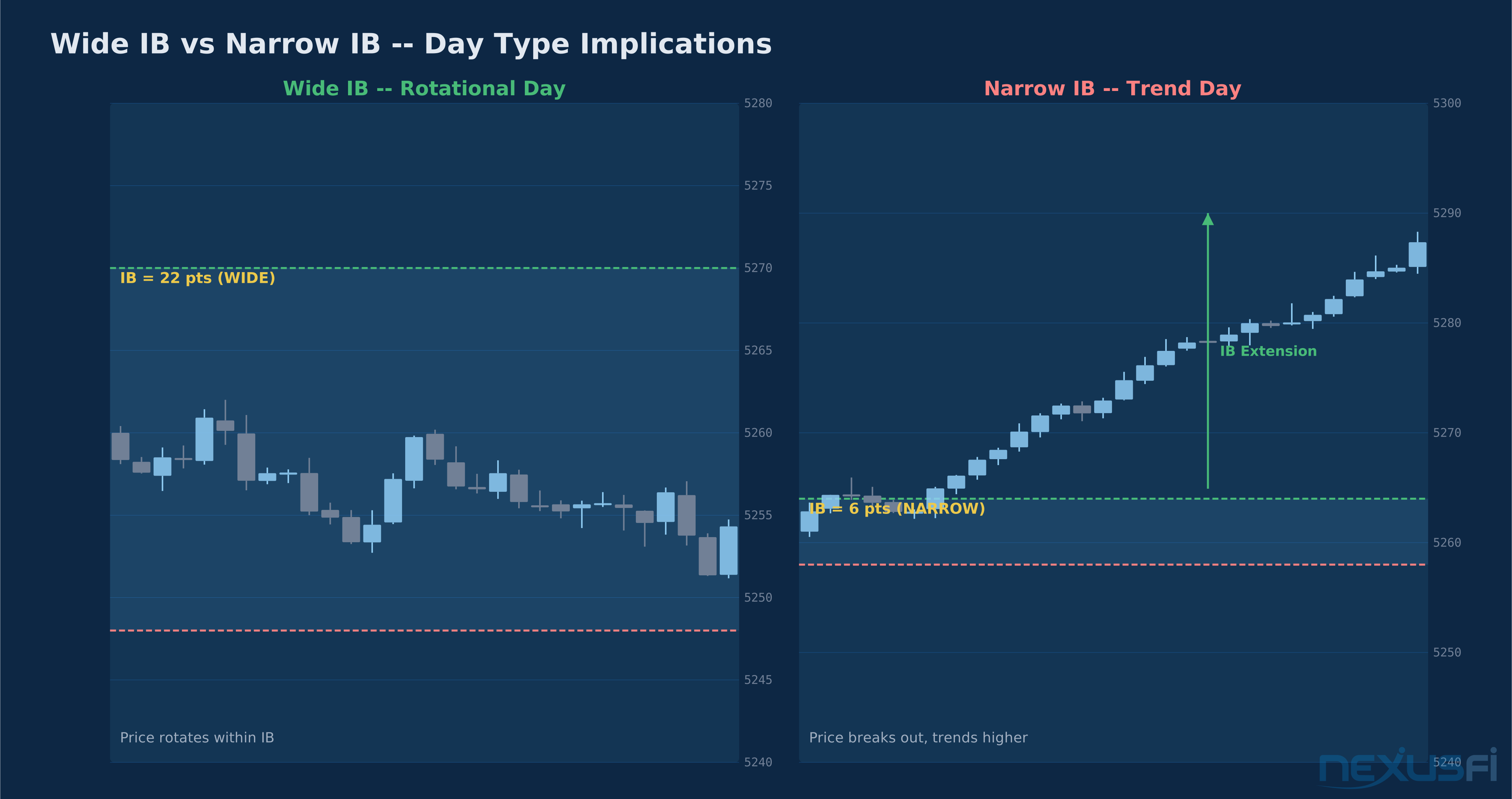
IB Width is the first piece of actionable intelligence the session gives you. It tells you how much the market moved during the discovery phase, and that has direct implications for what happens next.
Narrow IB (Bottom Quartile Historically) #
A narrow IB means the market didn't go anywhere in the first hour. The auction found temporary balance in a tight range, but nobody made a strong statement. The coiled spring is loaded.
What to expect: Higher probability of significant range extension later in the session. The energy that wasn't expressed in the first hour tends to express itself after. Breakout strategies work best here because when price finally commits to a direction, the expansion can be dramatic.
The math: If average IB width for ES is around 10 points and today's IB is 4 points, you're in the bottom quartile. That 4-point range isn't going to be the day's range. Something's coming.
Wide IB (Top Quartile Historically) #
A wide IB means the market already made its move. Institutional players drove price hard in the first hour, and a significant chunk of the day's volatility has already been expressed.
What to expect: Mean reversion. The IB boundaries become the session's walls. Fade strategies
@greenroomhoo shared ES IB data spanning 351 trading days, showing the average IB range around 5.4 points
How to Rank IB Width #
Don't eyeball it. Build a rolling distribution:
- Track IB width for the last 20-60 trading days
- When today's IB completes (10:30 AM ET), compute its percentile rank
- Below 20th percentile = narrow. Above 80th percentile = wide. Everything between = normal.
This percentile ranking turns IB width from a subjective observation into an objective filter that determines which strategy you deploy.
Day Types: What the IB Tells You About the Rest of the Session #
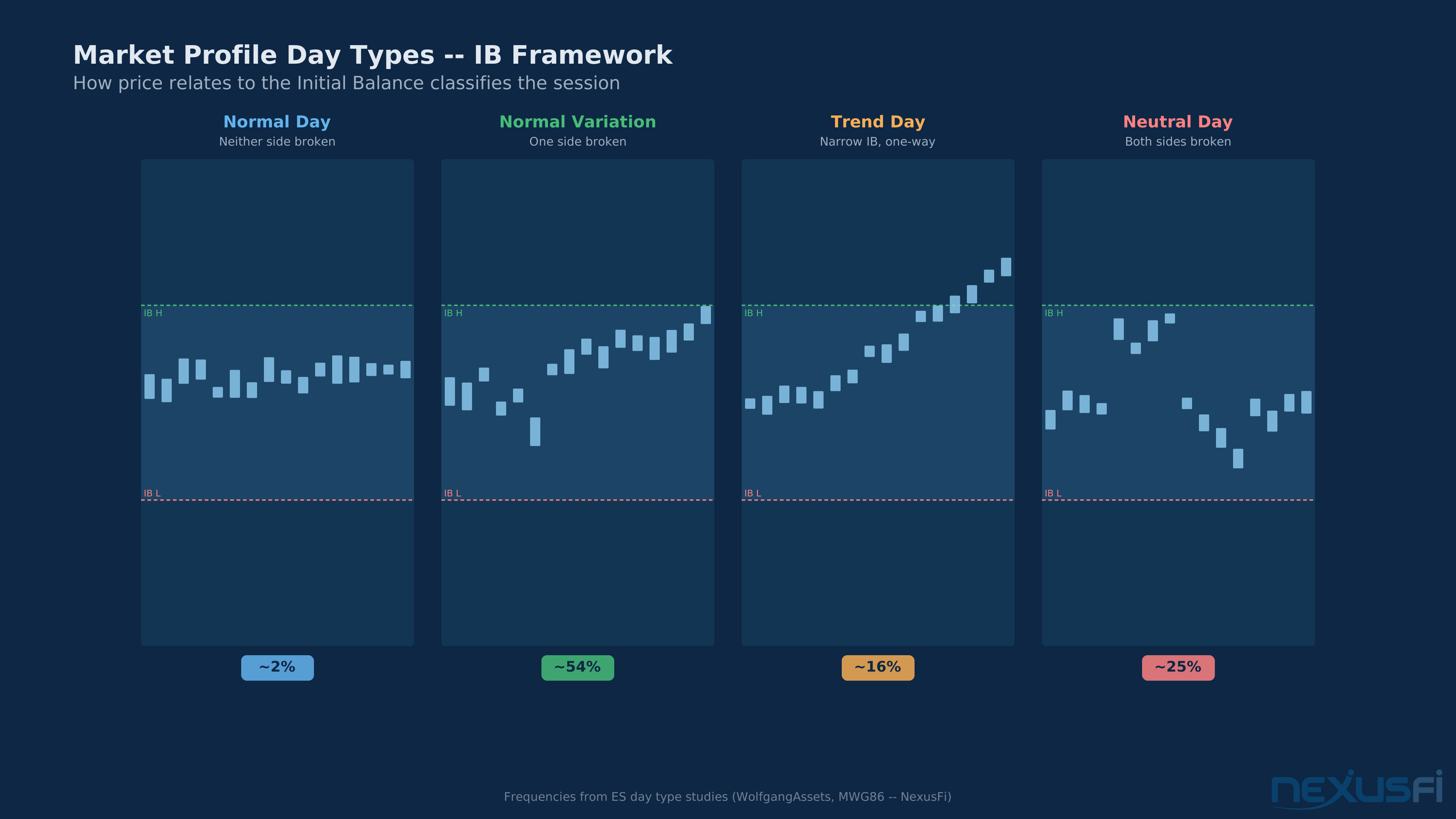
The relationship between the IB and the rest of the day's action classifies the session into distinct types. This framework, central to Market Profile theory, gives you a roadmap before the day is half over.
Trend Day #
Trend days break one side of the IB early and never look back. Price accepts beyond the boundary and continues in one direction with minimal retracement. These are the days traders dream about
IB signature: Price breaks IB High (or Low) with conviction, holds beyond it, and builds value in the extension zone. The IB boundary becomes support (for upside breaks) or resistance (for downside breaks). Pullbacks are shallow and brief.
Frequency: Roughly 15-20% of all sessions. Rare, but they produce outsized moves.
@tigertrader breaks this down further in the NexusFi community
Recognizing which trend variant is developing matters for trade management.
Normal Day #
Normal days see the IB contain most of the session's range. Price may test the IB boundaries but doesn't sustain a breakout. The auction finds value within the initial discovery zone and stays there.
IB signature: The IB is relatively wide (often top quartile), and range extensions are modest
Neutral Day #
Neutral days extend beyond the IB on both sides before settling near the middle. The market breaks out of the IB upward, reverses through the range, breaks out below, and ends up somewhere in between. Maximum frustration for directional traders.
IB signature: Both IB High and IB Low get breached during the session, but neither side builds acceptance. The profile ends up looking like a bell curve centered near the IB midpoint.
Normal Variation Day #
A hybrid between normal and trend. Price extends meaningfully beyond one side of the IB but doesn't achieve the single-direction conviction of a true trend day. The extension represents value exploration but the market eventually rotates back toward the IB.
IB signature: Range extension of 0.5x to 1.5x IB width on one side. The move is genuine but contained.
@MWG86 conducted a detailed ES Volume Profile Day and Open Type Study, going back through market data to categorize sessions by day type and opening pattern
Opening Patterns and What They Signal #
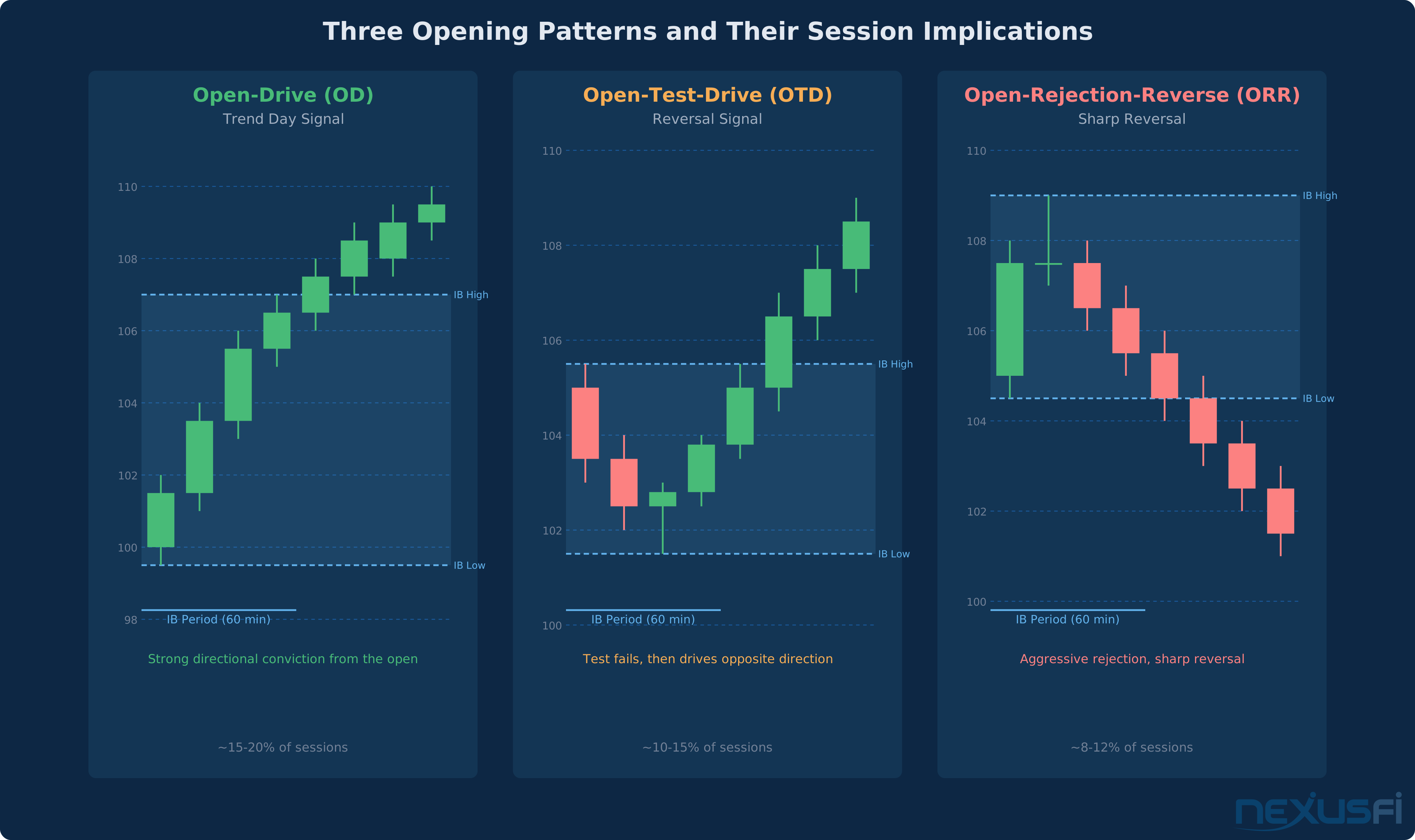
How price behaves during and immediately after the IB period tells you which day type is most likely developing. Two patterns dominate:
Open-Drive (OD) #
Price launches from the open in one direction with minimal overlap between bars. The first 15-30 minutes establish clear direction, and the IB forms with price clustered near one extreme.
What it signals: High probability of trend day. The aggressive directional move indicates that a party (buyers or sellers) has conviction and is executing.
How to trade it: Enter on the first 2-3 bar pullback after the IB completes. Stop at the opposite IB extreme. Target 1.5-2x IB extension. Open-Drive days have the lowest failure rate for IB breakout trades because the initial directional conviction is genuine, not a stop-run.
Open-Test-Drive (OTD) #
Price probes one direction initially (the "test"), finds rejection, reverses through the opening price, and drives in the opposite direction (the "drive"). The test is a fake-out; the drive is the real move.
What it signals: The eventual trend direction is opposite the initial test. This creates the strongest risk/reward setup because the test sweeps stops in the wrong direction before the real move begins.
How to trade it: Wait for the IB to complete and lock in. Trade the IB break in the drive direction (opposite the initial test). The test high/low becomes your stop, and the fact that it was already probed and rejected adds confidence to your entry. These setups take patience but reward it.
Open-Rejection-Reverse (ORR) #
Price tests one direction, gets aggressively rejected, and reverses sharply. The IB ends up skewed toward the rejected side, with the rejection extreme acting as the anchor.
How to trade it: Enter on the IB break in the reversal direction. The rejection extreme is your stop. Target the opposite IB boundary first, then extension targets if the move develops.
IB Trading Strategies: The Playbook #
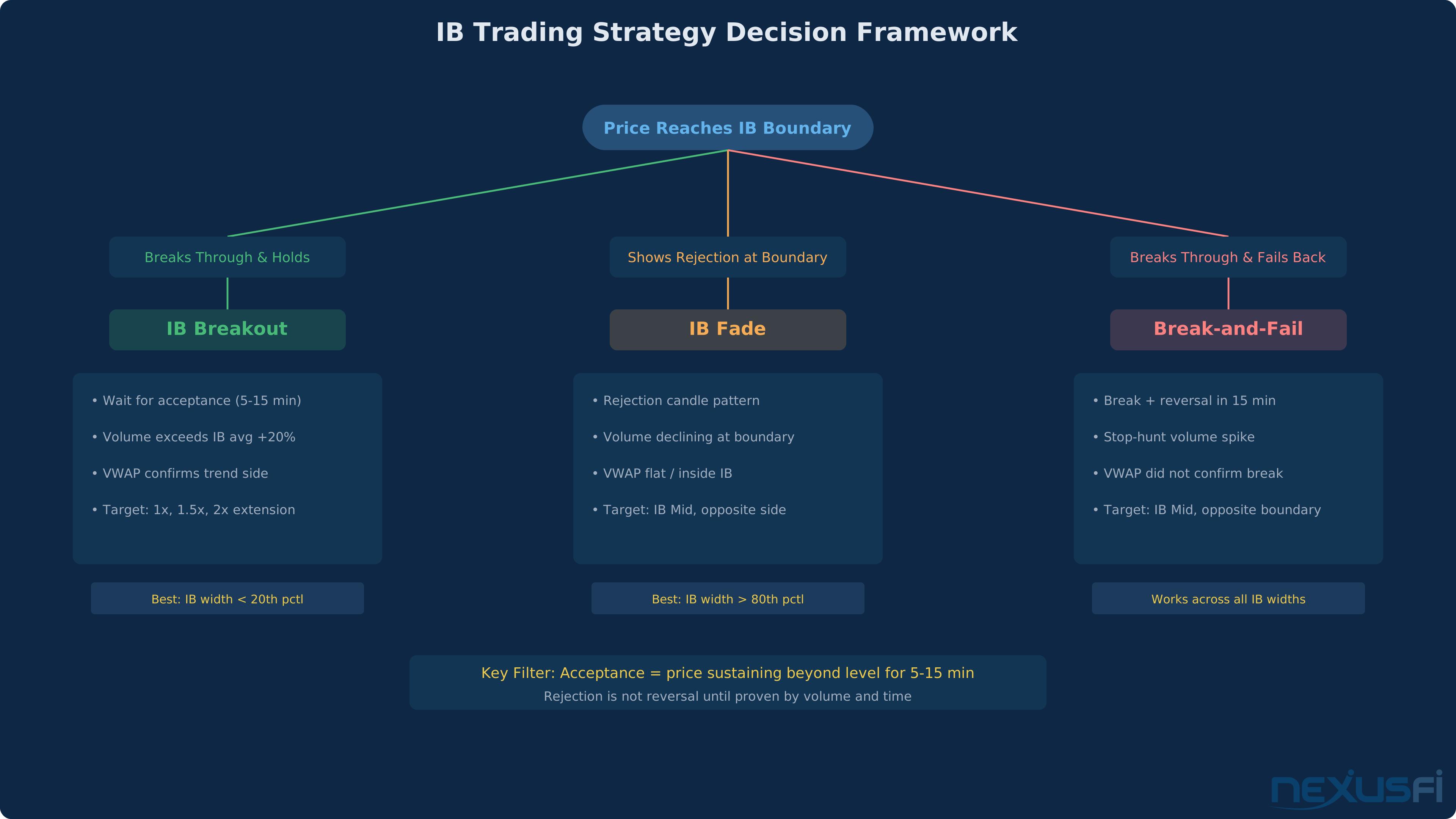
Strategy 1: IB Breakout with Acceptance #
This is the bread-and-butter IB trade. Price breaks beyond the IB boundary and you get long (break above IB High) or short (break below IB Low).
The critical filter: Acceptance. Not every break is a breakout. Liquidity sweeps blast through IB levels all the time, grab stops, and reverse. The difference between a real breakout and a stop-run is acceptance
Entry criteria:
- Price trades through IB High (longs) or IB Low (shorts)
- Price holds beyond the level for 5-15 minutes without re-entering the IB
- OR: Price retests the broken level and holds (the IB boundary becomes support/resistance)
- Volume on the breakout exceeds the IB-period average by 20%+
- VWAP confirms: price stays on the trending side
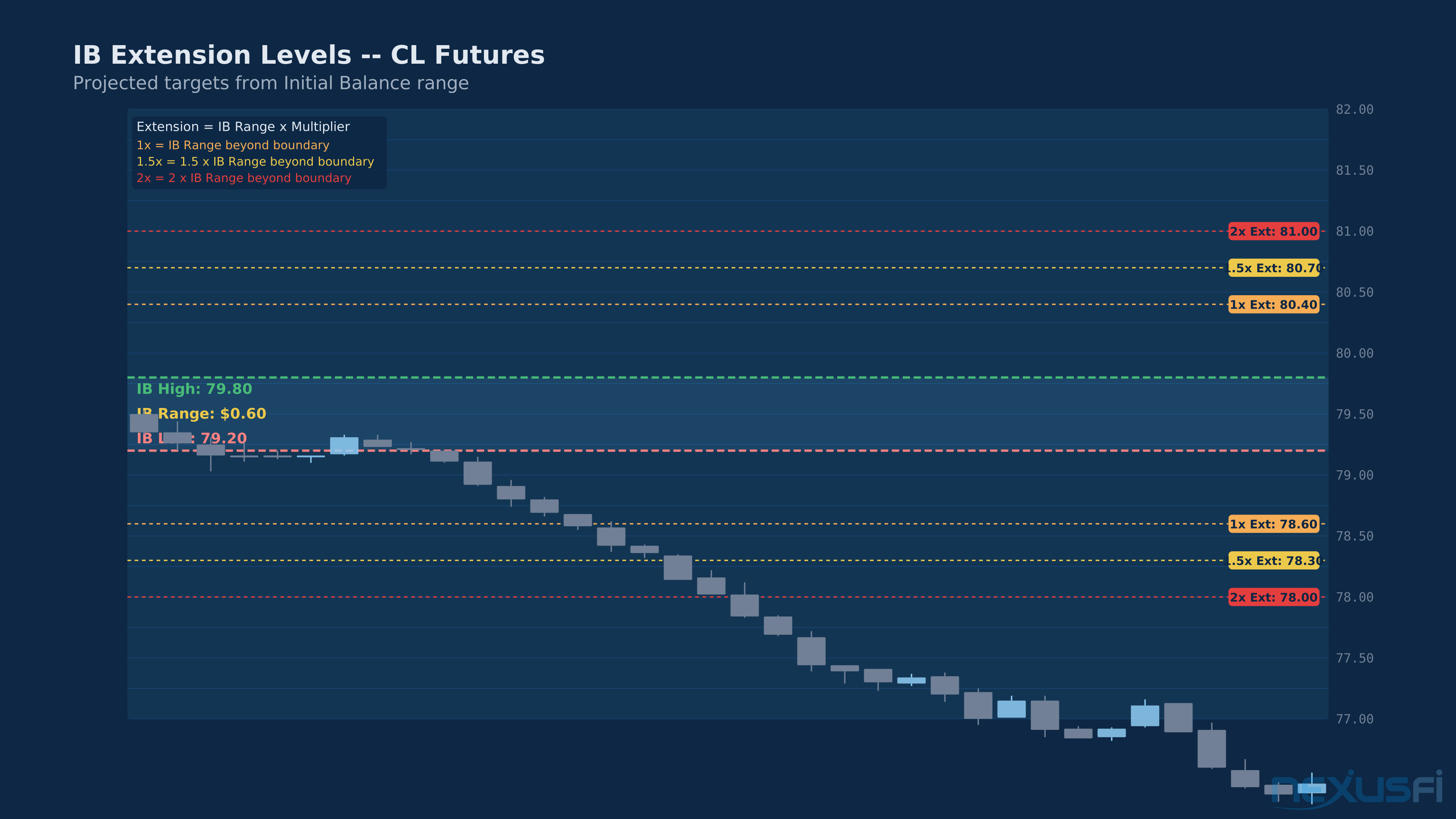
Targets using IB extensions: If IB Range (R) = IB High - IB Low:
- 1x target: IB High + R (longs) or IB Low - R (shorts). The most common profit target, achieved roughly 60-70% of the time on genuine breakouts.
- 1.5x target: IB High + 1.5R. Achieved roughly 35% of the time. This is where you trail the second half.
- 2x target: IB High + 2R. Trend day target, achieved roughly 15-30% of the time. Only hold for this if price remains on the trend side of VWAP with continued acceptance.
Scaling plan:
- Take 50% at the 1x extension
- Move stop to breakeven (or to a structural level
- Trail the remainder with VWAP or 0.5x IB distance as a trailing stop
- Exit runner at 1.5x or 2x, or at session end
Strategy 2: IB Fade (Mean Reversion) #
When the IB is wide or a breakout fails to find acceptance, fading IB boundaries becomes the higher-probability trade.
Entry criteria:
- Price reaches IB High/Low and shows rejection (bearish engulfing at IB High, bullish rejection at IB Low)
- Volume declines as price approaches the boundary (exhaustion, not acceleration)
- VWAP is flat or contained within the IB (no trend)
- Best when IB width is in the top quartile (above 80th percentile)
Targets:
- First target: IB Mid (the midpoint is a magnet)
- Second target: Opposite IB boundary
- Exit if the boundary breaks with acceptance (this means your thesis was wrong)
Stop: 2-4 ticks beyond the IB boundary you're fading. Keep it tight
@Private Banker suggests starting simple
Solid advice. The IB framework works with three levels on a chart. You don't need complexity to extract value.
Strategy 3: IB Break-and-Fail (Liquidity Sweep Fade) #
The sneakiest setup. Price breaks through the IB boundary, triggers stops from breakout traders, then reverses and re-enters the IB. You're fading the failed breakout.
Entry criteria:
- Price breaks IB High/Low
- Within 5-15 minutes, price reverses and closes back inside the IB
- Volume spike on the break (stops being triggered) followed by aggressive reversal volume
- VWAP didn't confirm the break (price didn't sustain on the trend side of VWAP)
Targets: Same as the fade strategy
Stop: Beyond the failed breakout extreme (the spike high/low). This gives you a tight stop with a strong structural level behind it.
Why it works: The traders who bought the breakout are now trapped long above IB High. When price reverses back inside the IB, their stops become fuel for the move in your direction. That's the game.
Combining IB with Volume Profile and VWAP #
IB levels alone are useful. IB levels combined with Volume Profile and VWAP are powerful.
Confluence Zones #
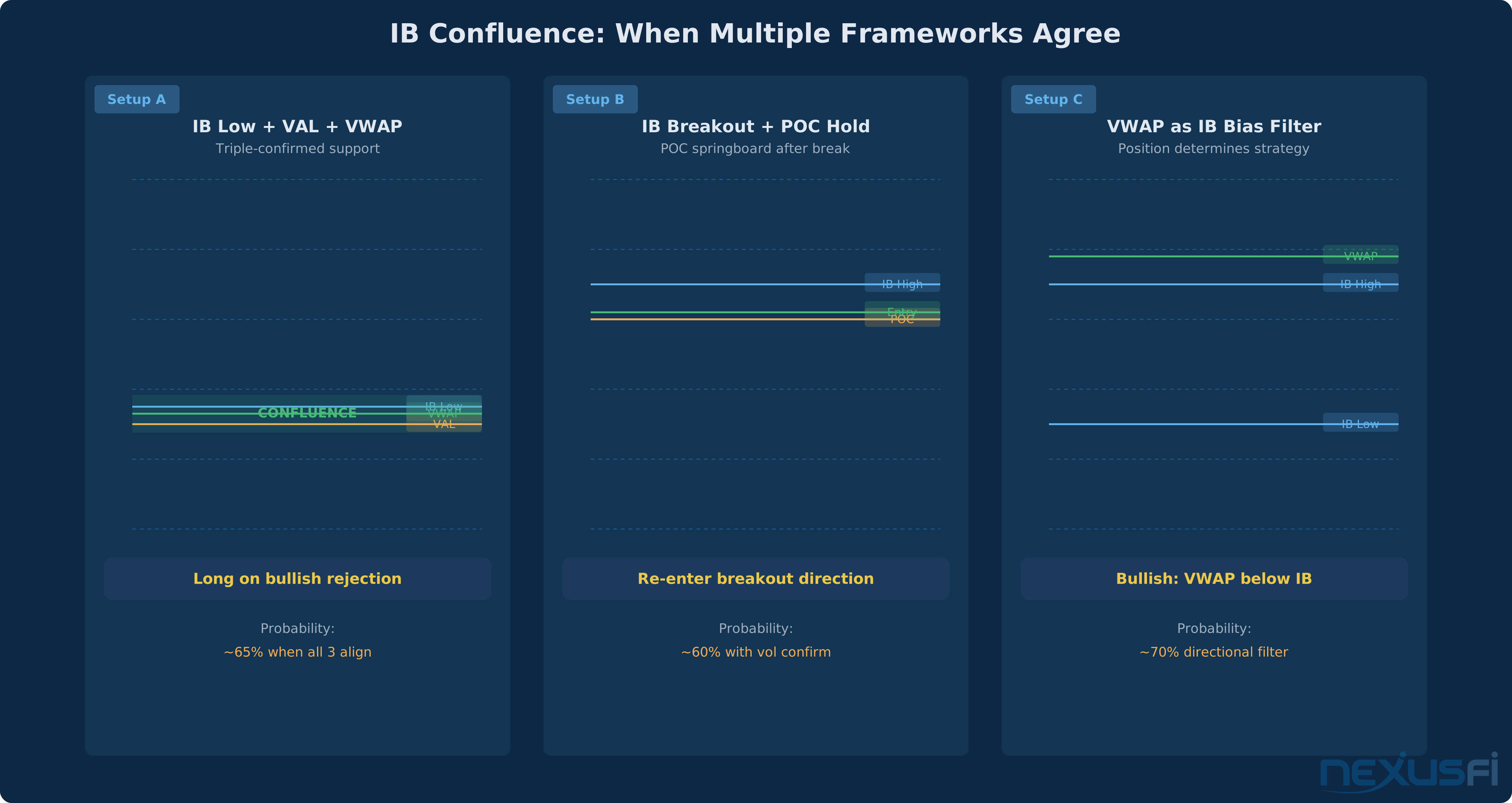
The highest-probability IB trades occur when multiple independent frameworks agree. Look for:
Setup A: IB Low + Value Area Low + VWAP Support When the IB Low aligns with the prior session's Value Area Low (VAL) and VWAP is below price with an upward slope, you have a triple-confirmed support zone. Enter long on a bullish rejection at the confluence. Stop below the lowest level. Target IB Mid, then IB High, then POC.
Setup B: IB Breakout + POC Confirmation After an IB breakout, if price pulls back to the Point of Control (POC) and the POC holds as support/resistance, re-enter in the breakout direction. The POC acting as a springboard after an IB break is one of the cleanest continuation signals in market structure analysis.
Setup C: VWAP as IB Bias Filter
- IB forms above VWAP = bullish session bias. Buy IB Low tests.
- IB forms below VWAP = bearish session bias. Sell IB High tests.
- VWAP sits inside the IB = range-bound session. Fade both extremes toward VWAP.
This VWAP filter alone eliminates a large percentage of losing IB trades by aligning your entries with the session's dominant auction direction.
Overnight Range and the IB #
In the era of 23-hour electronic trading, the IB doesn't exist in a vacuum. The overnight session establishes price levels, fills orders, and creates liquidity zones that directly influence how the IB forms and what happens after.
Key Relationships #
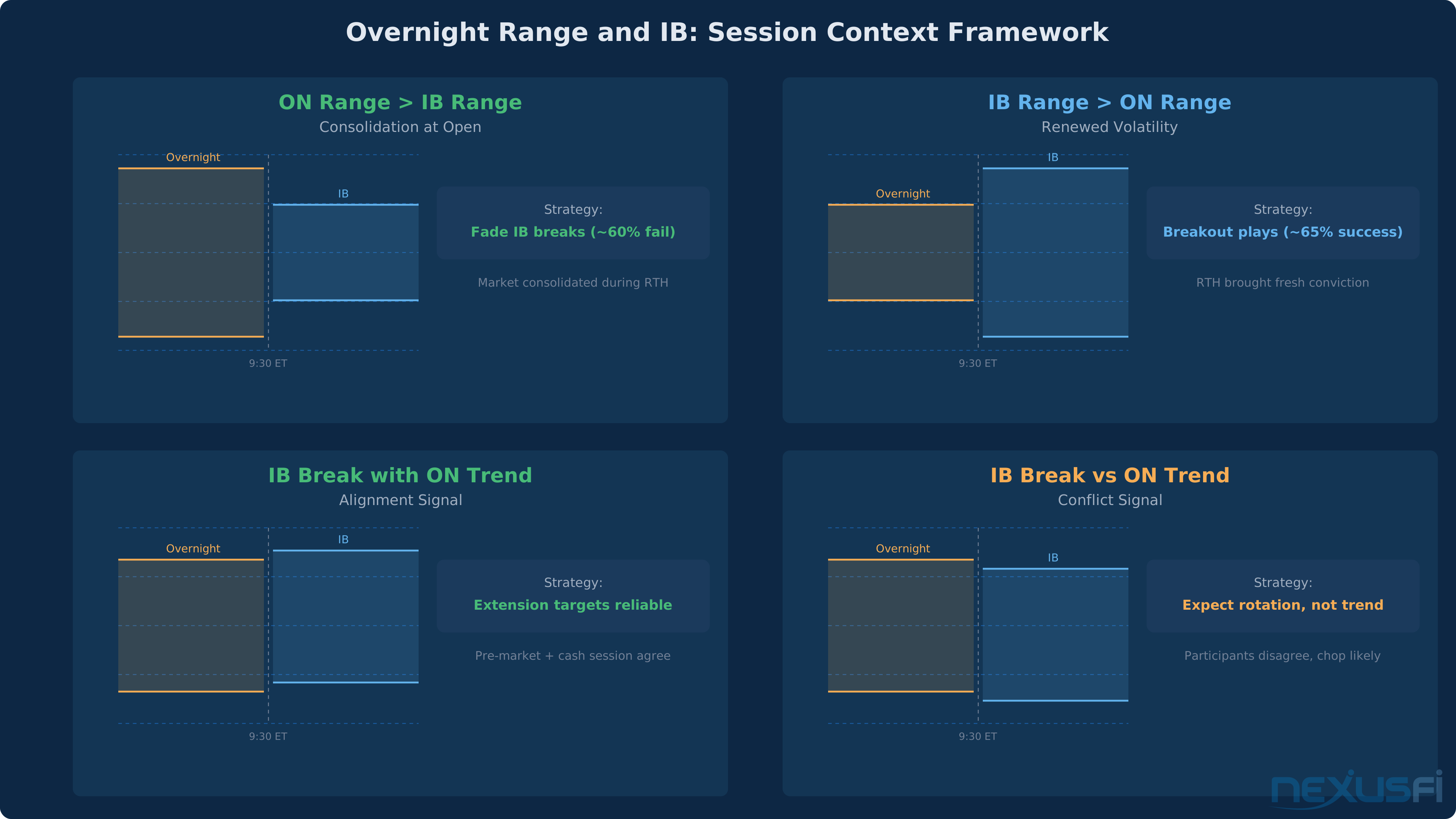
Overnight Range Exceeds IB: When the overnight range is wider than the IB, the market consolidated during RTH's first hour. This typically means: expect range-bound behavior within the IB. Fade IB breaks
IB Range Exceeds Overnight Range: When the IB is wider than the overnight range, the RTH open brought renewed volatility and conviction. Breakout plays work better here (roughly 65% success rate) because real participants are driving the expansion.
IB Break in Overnight Trend Direction: The strongest signal. If the overnight session trended higher and the IB breaks above its high with acceptance, you have alignment between pre-market and cash session participants. Extension targets become more reliable.
IB Break Against Overnight Trend: Caution. When the IB break opposes the overnight drift, expect reversion back toward overnight value. The overnight participants and the RTH participants disagree
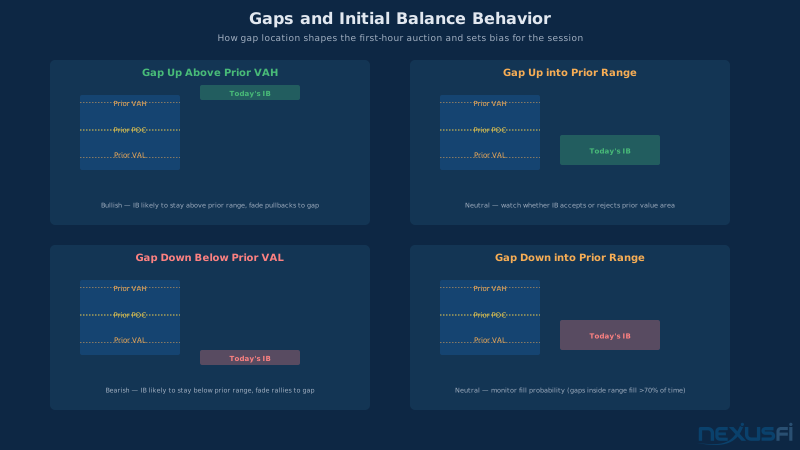
Gaps and IB Behavior #
Gaps create unique IB dynamics because they represent an imbalance between the prior close and the current open.
Large Gap + Narrow IB: The gap created imbalance, but the first hour didn't resolve it. Gap fill probability is elevated (roughly 70% for gaps >1% on ES). Trade the IB break in the gap-fill direction.
Small Gap + Wide IB: The IB absorbed the gap's energy and then some. The range is likely set for the day. Fade IB extremes.
Gap + IB Extension in Gap Direction: This is continuation. The gap expressed institutional conviction, and the IB breakout confirms it. Enter on pullbacks to the IB boundary. Target 2x extension.
Statistical Reality: What the Numbers Show #
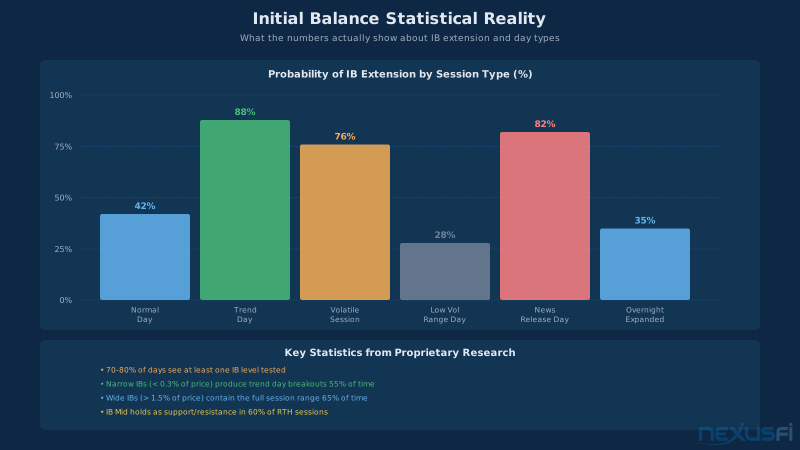
The IB's relationship to the daily range is well-documented across the NexusFi community. @greenroomhoo exported 1,408 trading days of ES IB data, providing one of the most complete retail-accessible datasets for IB analysis.
Key statistical relationships:
- IB width is correlated with daily range, but the correlation isn't perfect. The IB serves as an early estimate of session activity, not a predictor of the exact daily range.
- On average, the IB captures roughly 40-60% of the day's total range for ES. On trend days, it captures less (the extension dwarfs the IB). On range days, it captures more (the IB effectively IS the day's range).
- Narrow IB sessions (bottom 20th percentile) produce range extension roughly 70-80% of the time. The extension averages 1.2-1.5x the IB width.
- Wide IB sessions (top 20th percentile) contain the day's range roughly 60% of the time. When they don't, extensions are typically modest (less than 0.75x IB width).
@homerus ran similar analysis on the DAX (2,829 trading days from 2011-2022), using a 30-minute IB (XETRA cash session 09:00-09:30 CET), confirming that the IB-to-daily-range relationship is consistent across instruments and venues.
The conditional probability framework: Rather than asking "will the IB break?", ask "given this IB width percentile AND this opening pattern AND this overnight relationship, what is the probability of range extension exceeding 1x?" That layered conditional approach is where edge lives. Single-factor IB analysis will always underperform the combined framework.
Instrument-Specific Calibration #
The IB concept is portable across futures contracts, but the numbers change:
ES (S&P 500 E-mini): The reference instrument for IB trading. Deep liquidity, tight spreads. IB behavior is clean and well-studied. RTH: 9:30 AM - 4:00 PM ET.
NQ (Nasdaq 100 E-mini): Higher beta than ES, so IB ranges are typically wider in point terms. Requires wider stops for the same percentage risk. Breakouts tend to be more volatile
CL (Crude Oil): IB is heavily influenced by EIA inventory reports (released at 10:30 AM ET
ZB/ZN (Treasury Futures): Different session dynamics with rates often driven by economic data releases during the IB window. Align your IB window with the most liquid RTH segment.
Gold (GC) and Forex Futures (6E, 6J): Session liquidity and trend propensity differ much from equity index futures. Build instrument-specific IB distributions before trading these
The bottom line: for any instrument you trade, build your own IB width distribution over at least 60 trading days. Compute average width, percentile ranks, and conditional breakout/fade success rates. Without instrument-specific calibration, you're guessing.
Risk Management for IB-Based Trades #
Position Sizing #
Risk per trade should vary with IB width percentile:
- Narrow IB sessions: Reduce to 0.75% of account. Stops need to be wider (through the IB) and expansion risk means the move could be fast.
- Normal IB sessions: Standard 1% risk per trade.
- Wide IB sessions: Can increase to 1.25%. The range is well-defined, so stops are precise.
Formula: Position Size = Account Risk ($) / (Entry to Stop distance in ticks x Tick Value per tick)
Stop Placement #
Hard stops. Always. No mental stops, no "I'll get out if it looks bad." Price acceptance in the opposite direction is your invalidation.
For breakout trades: Stop below the retest swing (preferred) or below the broken IB boundary plus a 2-4 tick buffer on ES.
For fade trades: Stop beyond the IB boundary you're fading by 2-4 ticks. If the level breaks with conviction, you're wrong and need to be flat.
For break-and-fail trades: Stop beyond the spike extreme (the failed breakout's high or low). This is your tightest stop scenario
Time Stops #
This is the overlooked edge in IB trading. If your thesis doesn't play out within a reasonable timeframe, the market is telling you something.
- Range trades: Exit if no meaningful movement within 30-60 minutes
- Breakout trades: If no follow-through within 15-25 minutes of acceptance, reduce risk or exit
- Trend trades: Exit if the IB boundary is reclaimed against your position
Daily Limits #
- Maximum 2-3 failed IB trades per session
- Daily loss cap: 2-3% of account value
- Maximum 2 simultaneous IB-based positions
These limits exist because IB strategies can cluster losses on neutral/choppy days. Discipline in cutting sessions short prevents giving back a week's profits in one afternoon.
Practical Implementation #
Here's the daily workflow for IB-based trading:
Pre-market (before 9:30 AM ET):
- Note the overnight range high and low
- Identify any unfilled gaps
- Mark prior session's POC, Value Area High, and Value Area Low
IB Formation (9:30-10:30 AM ET):
- Watch the opening pattern (Open-Drive, Open-Test-Drive, or Open-Rejection-Reverse)
- At 10:30, mark IB High and IB Low on the chart
- Compute IB Width and its percentile rank vs. your rolling distribution
- Compute extension targets: 1x, 1.5x, and 2x in both directions
Post-IB (10:30 AM onwards):
- Classify the likely day type based on IB width and opening pattern
- Select your strategy (breakout, fade, or wait-and-see)
- Wait for your trigger (acceptance, rejection, or confluence)
- Execute with predefined stops and targets
- Scale out at targets. Don't move stops too fast. Let the trade work.
@bobwest puts it well: the IB is
That's the honest answer. The IB is a framework, not a crystal ball. It gives you structure and context for making better decisions
The Modern Context #
One critical caveat: the IB was developed when futures traded primarily during floor hours. In Steidlmayer's era at the CBOT, the IB truly represented the start of daily price discovery. Today, with 23-hour electronic trading, the overnight session handles significant price discovery before the RTH open.
This doesn't invalidate the IB
Treat the IB as a structural guide that sits within the larger overnight-to-RTH auction context. Use it as your tactical anchor for RTH trading decisions, but never forget that the auction didn't start at 9:30 AM. It's been running all night.
Knowledge Map
Prerequisites
Understand these firstGo Deeper
Build on this knowledgeReferences This Article
Articles that build on this topicCitations
- — AMA: FuturesTrader71 (FT71) / Morad Askar - Ask Me Anything (2018) 👍 3“The purpose of the Initial Balance (IB) is to capture the time in which many of the biggest participants get their business done for the day.”
- — Volume Profile and Footprint discussion (2012) 👍 10“If we have a wide IB, we'll most likely have a rotational day. Any break outs above or below the IB can end up moving back into balance.”
- — Statistically, How Often Do Trends, Range, and choppy days occur? (2018) 👍 6“Normal Variation at 54%. Trend Days have been happening about 16% of the time while the Neutral Days (Both IB sides broken) accounted for roughly 25%.”
- — Definition of a trending day (2012) 👍 3“The market will open near its low price for the day session and build its way higher through the day, closing near its high price.”
- — Trading Futures with Context (2014) 👍 13“70% (more or less) = rotational / balance days. 30% = trending days.”
- — MWG86's Price Action Journal (2020) 👍 15“Once the IB is in and broken to one side there is a 72% historical probability that the other side won't be broken.”
- — Market Profile Initial Balance Setup (2022) 👍 1“The Initial Balance is the pre-cash session. It is a period where it is unlikely to see bigger timeframe participants.”