



Profile Shapes
What the auction's volume distribution tells you about the session — and what to trade next.
Overview #
Every trading session leaves a volume footprint. Profile shape is the visual summary of that footprint — and the starting point for determining whether to fade, follow, or wait.
The shape of a volume profile boils down to one question: where did volume concentrate relative to the session's range? A symmetric bell curve means two-sided trade and equilibrium. A skewed distribution means one side dominated. A flat, stretched profile means nobody agreed on value and the market walked directionally without looking back. This entire framework rests on auction market theory — the principle that markets continuously seek fair value through the two-way interaction of buyers and sellers [10].
Shape is a starting point, not a conclusion. It describes what happened. Turning that description into a trade requires pairing shape with POC location, Value Area width, single-print behavior, and the broader composite context. This article covers how each shape forms mechanically, what trading decisions change based on shape, and when shape analysis misleads you.
This is a component article of Volume Profile Trading.
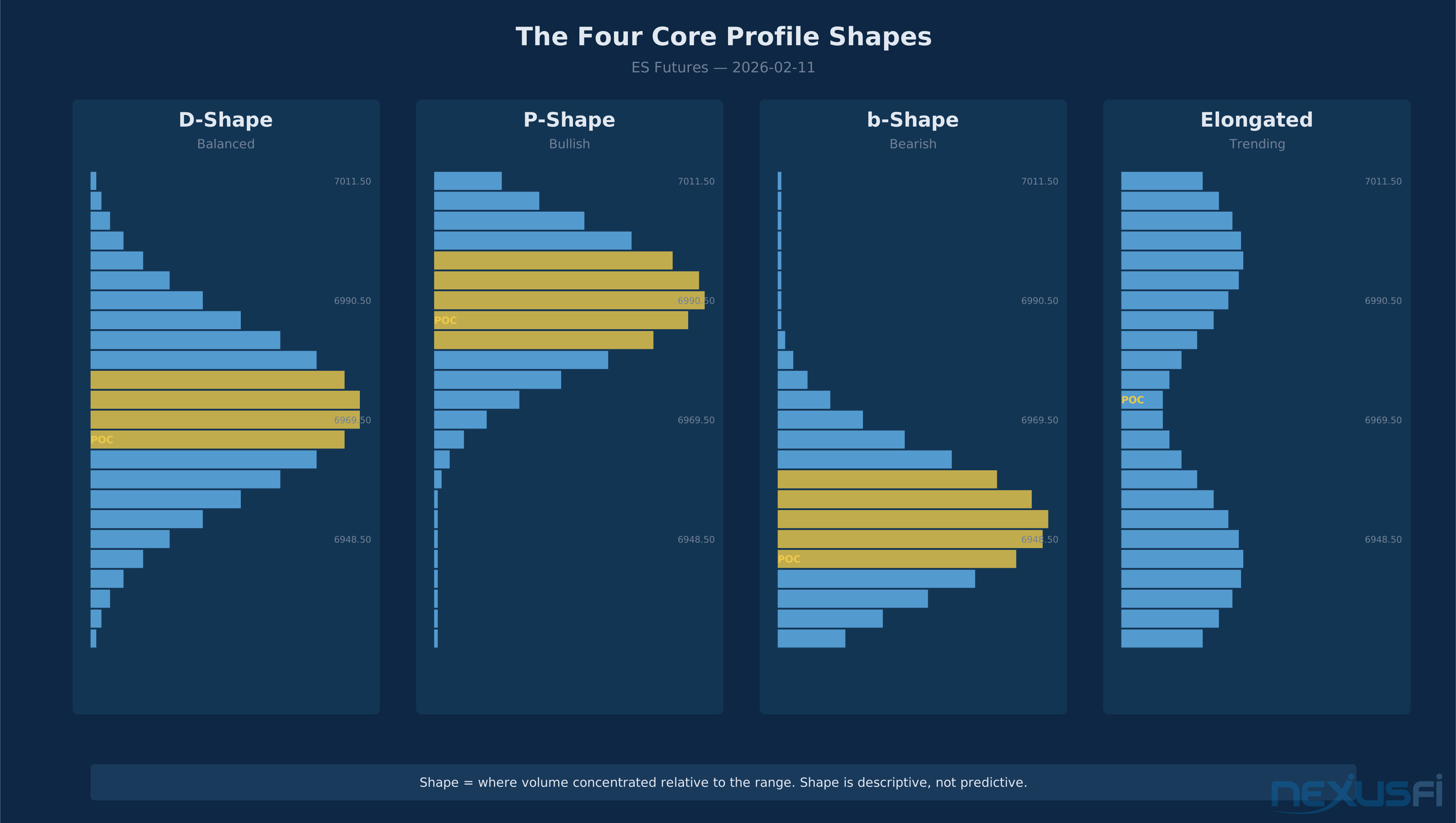
The Core Shapes #
D-Shape (Balanced / Bell Curve) #
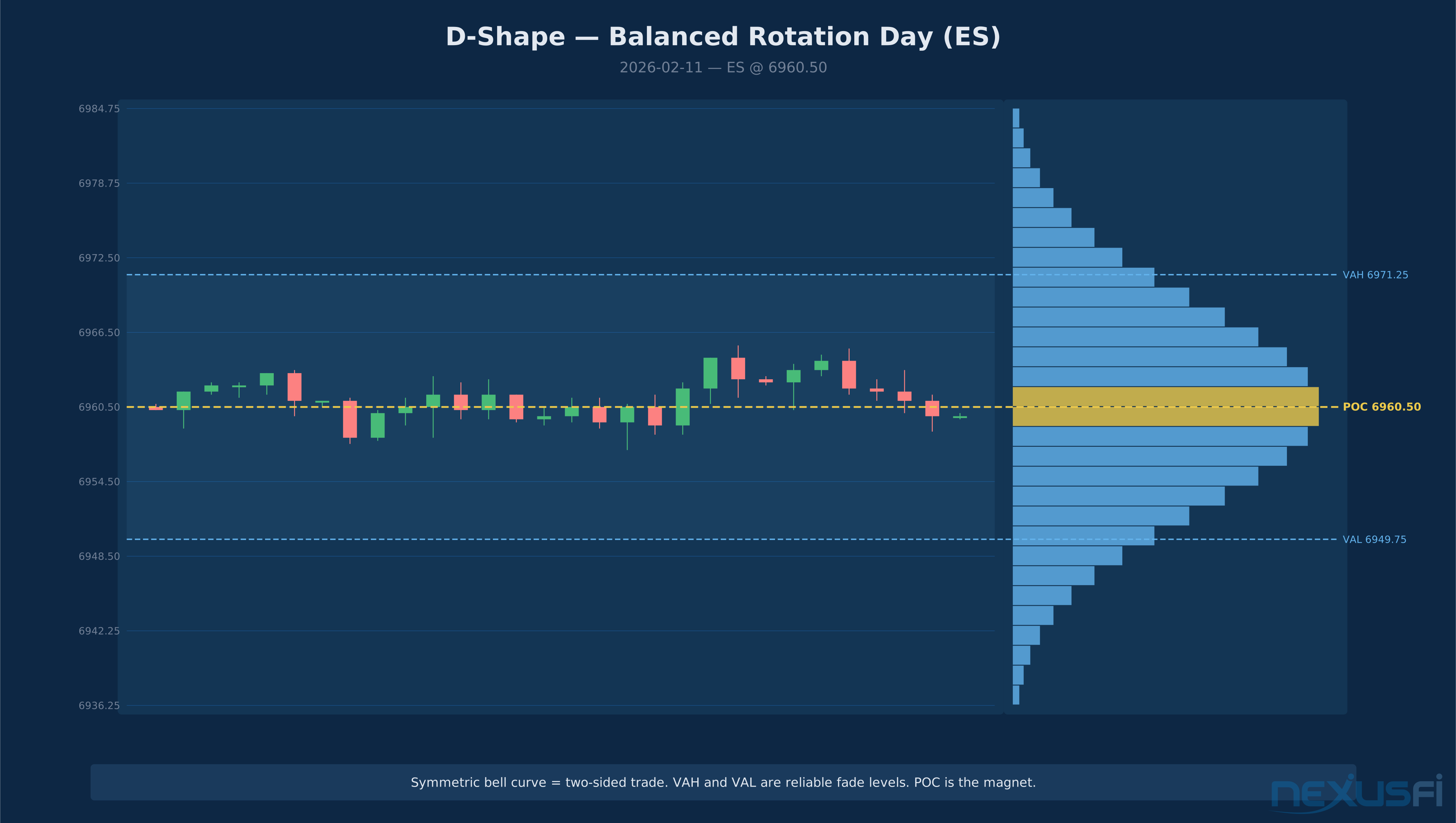
The D-shape is the textbook balanced profile — a symmetric bell curve where volume concentrates around the center and tapers at the extremes.
How it forms: Buyers and sellers repeatedly rotate around a central price. Neither side can sustain a directional extension. The Initial Balance sets a range, and the session spends most of its time cycling between the extremes without breaking out. Each rotation adds volume to the center, building the characteristic bulge.
As @1LotTrader describes it, "As price cycles up and down to the extremes the most amount of trades tend to accumulate around the centre... The profile in this situation very much resembles a standard bell curve or D shape." [1]
[2] In other words, the VAH and VAL are most trustworthy when the profile is D-shaped — a concept central to Dalton, Jones, and Dalton's Markets in Profile, where they detail how balanced distributions signal institutional acceptance of value [9], because the bell-curve distribution means value boundaries represent genuine statistical extremes rather than arbitrary cutoffs on a skewed distribution.
VAH and VAL are most trustworthy when the profile is D-shaped — this is when mean-reversion setups have the highest probability. The bell-curve distribution means value boundaries represent genuine statistical extremes, not arbitrary cutoffs on a skewed distribution.
What it tells you operationally:
- The market found equilibrium. No dominant participant is showing.
- Mean-reversion setups work: buy near VAL, sell near VAH, target the POC.
- Don't chase breakouts unless a higher-timeframe trigger appears.
- The POC acts as a magnet — price deviating from the POC in a balanced session tends to get pulled back toward it.
Trap: A D-shape can form inside a larger trend if the session happens to consolidate. Three days of D-shapes with overlapping value areas is genuine balance. A single D-shape session sandwiched between two trend days is a pause, not equilibrium. Check the composite.
P-Shape (Upper Concentration) #
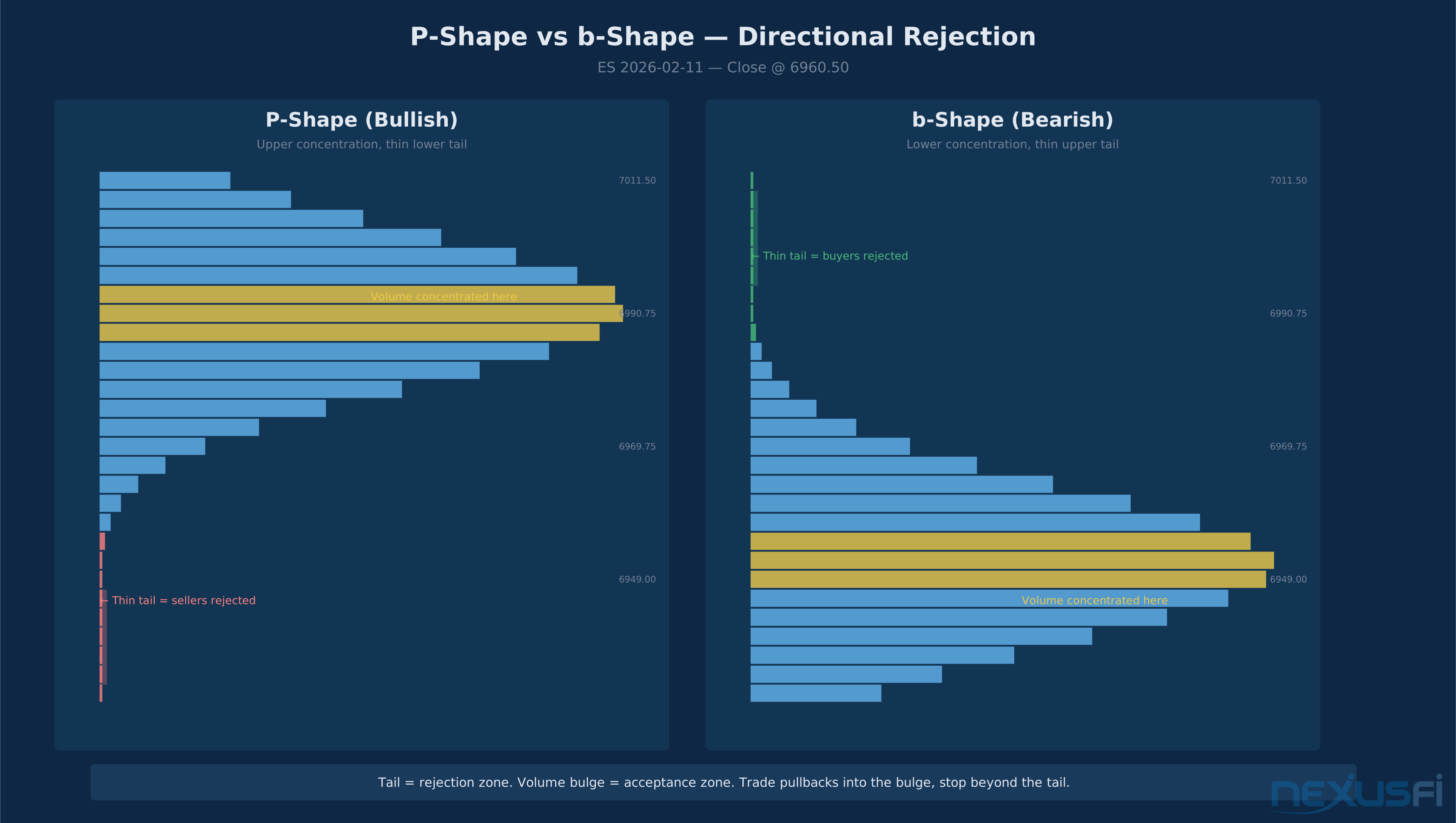
The P-shape shows volume concentrated in the upper portion of the range with a thin tail extending downward. The profile looks like a capital "P" rotated sideways — the bulge sits at the top and the tail drops below.
How it forms: The session starts with downside exploration — sellers push price lower early in the session. Responsive buyers step in at the lower extreme, rejecting those prices, and the market migrates upward. Volume builds in the upper zone as participants accept the higher price level, leaving a thin tail below where the rejection occurred.
@trendisyourfriend offers a mnemonic: when the profile shows a "b" shape (lowercase), think of the verb to "buy" — the volume concentration at the bottom signals that buyers absorbed and rejected lower prices. Conversely, a "P" can remind you of "put" or selling pressure rejected at the top. The shapes and their directional implications are mirrors of each other.
What it tells you operationally:
- The market attempted lower prices and was rejected. Bias is upward.
- Buy pullbacks toward the upper HVN if the lower tail is clean (thin, decisive rejection).
- A failed retest of the lower tail confirms the rejection and gives a long entry with the developing trend.
- Stop placement goes below the tail. If the market breaks back through the rejection zone and volume builds there, your thesis is dead.
Trap: A P-shape in a downtrend doesn't automatically mean reversal. The upper concentration could be a temporary short-covering squeeze inside a larger move. Always pair shape with POC migration direction and the broader composite context.
b-Shape (Lower Concentration) #
The b-shape is the mirror of the P — volume sits in the lower portion of the range with a thin tail extending upward, signaling downside acceptance after rejecting higher prices.
How it forms: The session starts with upside exploration — buyers push price higher early on, but initiative sellers reject those levels. The market migrates downward and volume builds in the lower zone as participants accept the lower price level, leaving a thin upper tail where the rejection occurred.
What it tells you operationally:
- The market attempted higher prices and was rejected. Bias is downward.
- Sell rallies back toward the upper tail if the rejection was clean.
- A failed retest of the upper tail is a short signal.
- Stop above the tail. If the market reclaims the tail zone and starts building volume there, the rejection thesis is over.
Trap: Same caveat as the P-shape in reverse — a b-shape in an uptrend doesn't automatically mean reversal. The lower concentration could be a temporary profit-taking dip inside a larger move. Always pair shape with POC migration direction and the broader composite context.
Elongated / Trending Profile #
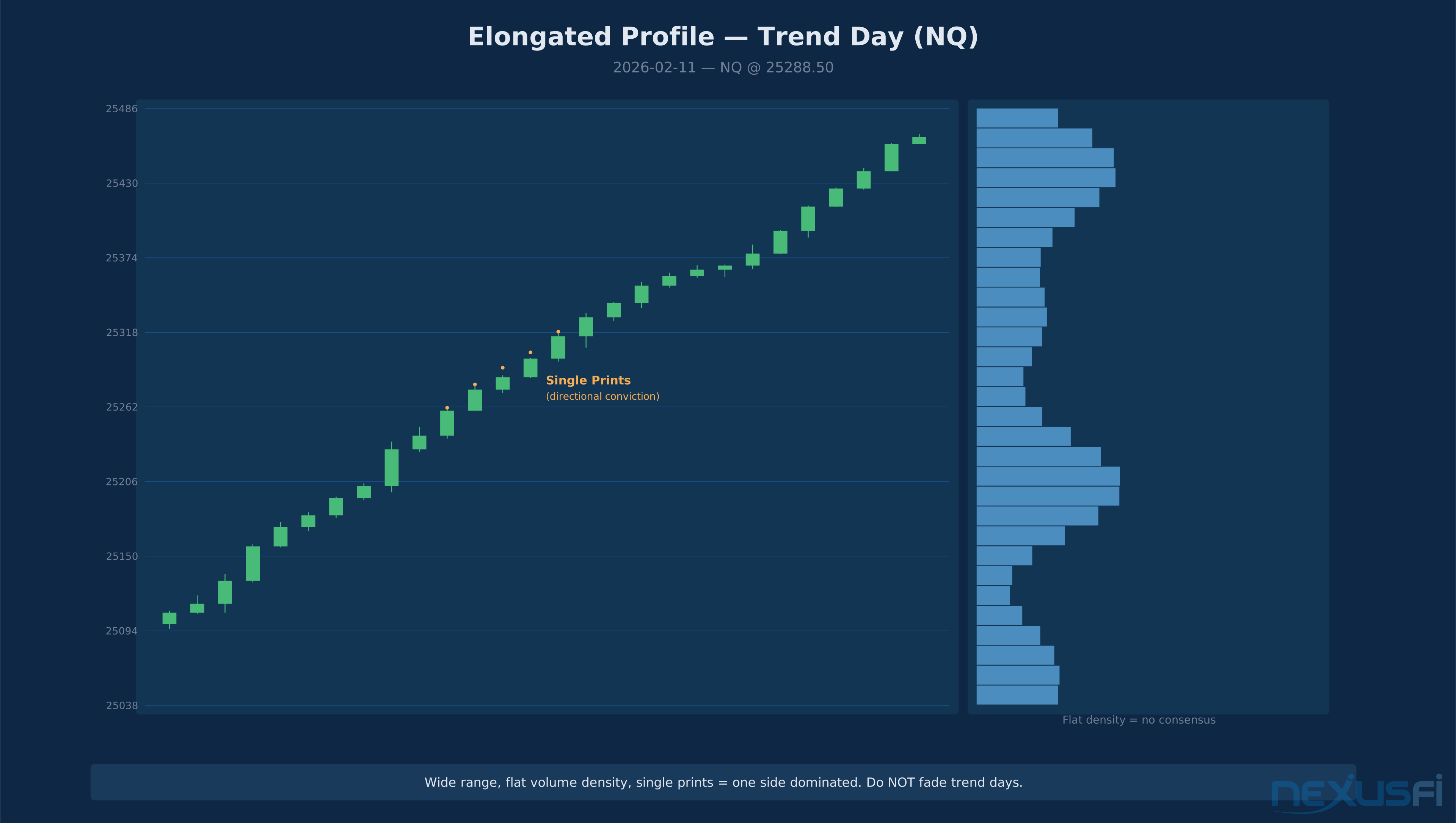
The elongated profile is vertically stretched with relatively flat volume density across a wide range. No clear bell curve. No single dominant HVN. The POC may sit at one extreme or hop between multiple thin peaks.
How it forms: One side dominated the auction from the opening bell. Buyers (or sellers) established directional control and never relinquished it, pushing price steadily in one direction throughout the session. There's no meaningful two-sided rotation — price doesn't revisit levels it already passed through, leaving single prints in its wake.
[4] Single prints scattered through the profile are the hallmark of the elongated shape — they mark areas where the market moved through price levels without building acceptance.
What it tells you operationally:
- Don't fade this. Mean-reversion logic breaks down when value is migrating.
- Trade pullbacks into the developing HVN (wherever volume is building) with trend confirmation.
- Use single prints as targets for retracement plays only after clear exhaustion signals.
- The profile tells you the trend is real. It doesn't give you a clean entry. Use VWAP bands or order flow for pullback timing on trend days.
Double Distribution (Multi-Modal) #
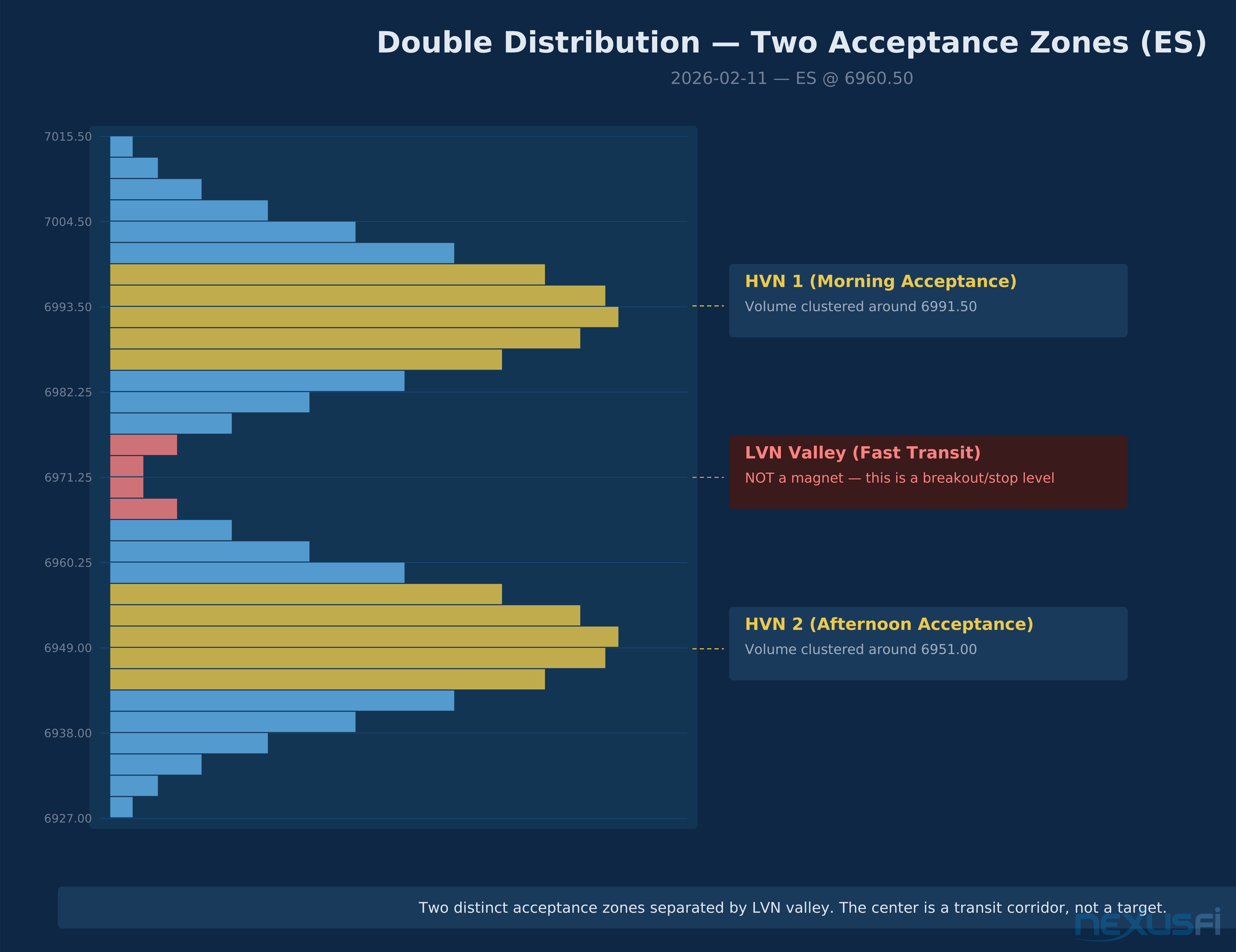
The double distribution shows two distinct HVN clusters separated by a low-volume valley. The market accepted prices in two separate zones with a fast-pass corridor between them.
How it forms: The session establishes acceptance in one zone (first HVN), then breaks through to a second level and establishes acceptance there (second HVN). The middle became a transit zone — price moved through it quickly without building volume, creating the characteristic LVN valley between the two acceptance areas.
[5] The connection to Steidlmayer's original Market Profile work matters — he formalized these distribution patterns in his foundational text Steidlmayer on Markets, showing how the transition between single and multiple distribution modes reveals the auction's directional character [8] because it shows how multi-session value discovery creates recognizable distribution patterns that repeat across different timeframes and instruments.
The LVN valley is NOT a magnet. It is a fast-transit zone — do not expect price to return to center. Traders who buy the valley expecting a pullback to the "middle" are fighting the structural reality of a split market.
What it tells you operationally:
- The center (valley) is NOT a magnet. Don't assume the POC pulls price back to the middle.
- Identify which HVN is currently "active" by monitoring where volume is building in real time. The active HVN is where the market is accepting price now.
- Use the LVN valley as a breakout/stop level. If price crosses the valley and volume builds on the other side, the regime has shifted.
- Monitor whether the center LVN is getting filled (new volume building in the valley). If it is, the double distribution is collapsing into a single-mode D-shape, and your directional bias should shift to neutral.
Shape and Day Type #
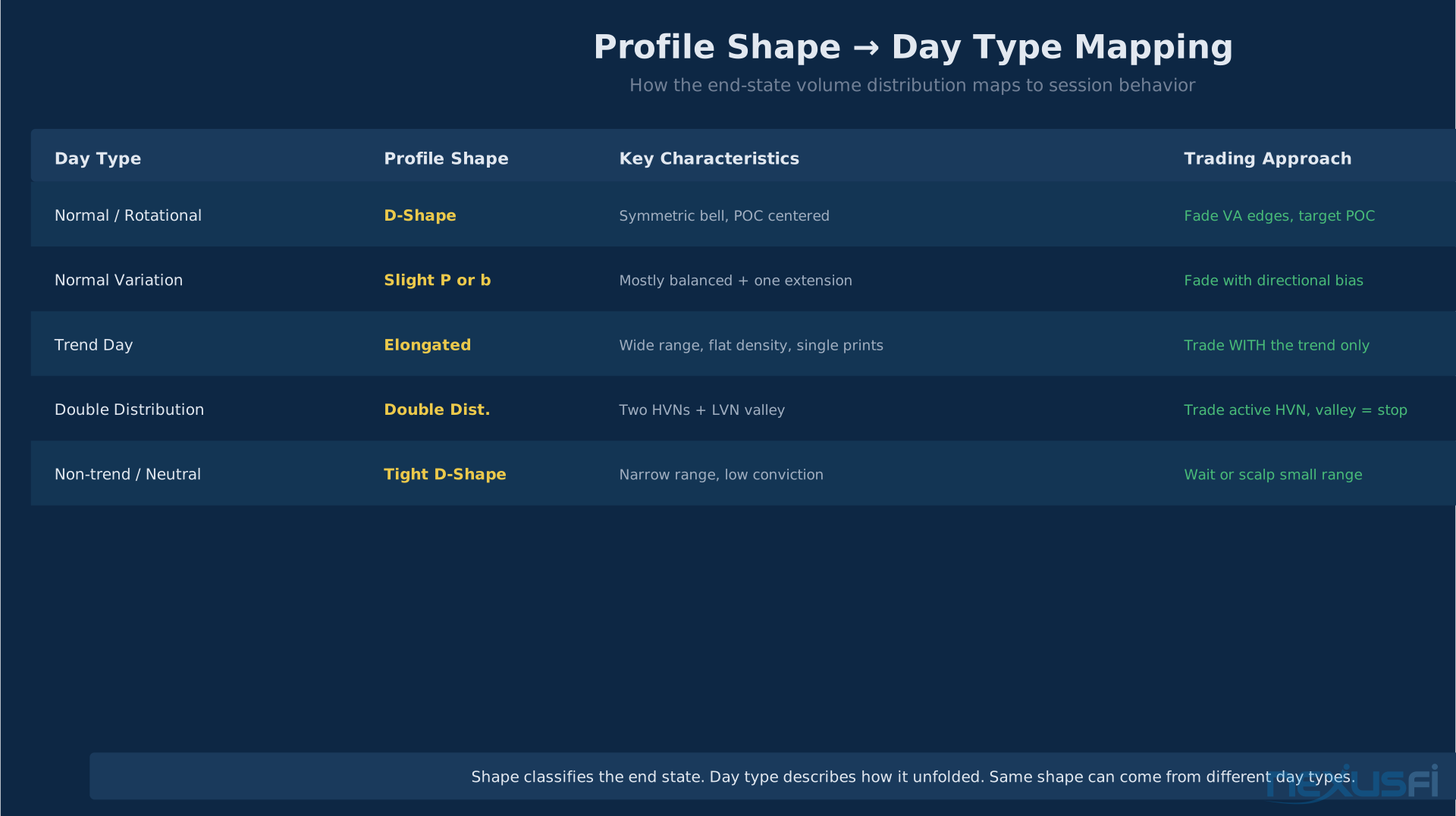
Profile shape and day type are related but not identical. Shape is the end-state volume distribution. Day type is the behavioral pattern that unfolded over time. They correlate, but the same shape can come from different day types depending on context.
@mfbreakout catalogues the classic day types: Normal Day (auction between two extremes, wide IB), Normal Variation (similar but narrower IB that gets extended), Trend Day (one side in control all day), Double Distribution Trend Day (quiet morning then directional breakout), Non-trend Day (choppy, no direction), and Neutral Day (balanced rotation). [6]
Here's the typical mapping:
| Day Type | Expected Profile Shape | Key Profile Characteristics |
|---|---|---|
| Normal / Rotational | D-shape | Symmetric bell, POC centered, multiple rotations |
| Normal Variation | Slight P or b skew | Mostly balanced but one extension creates asymmetry |
| Trend Day | Elongated | Wide range, flat density, single prints, migrating POC |
| Double Distribution Trend | Double distribution | Two HVNs with LVN corridor between them |
| Non-trend / Neutral | Tight D-shape | Narrow range, narrow VA, very little conviction |
The mapping breaks down when sessions evolve. A session can start as a D-shape and morph into an elongated profile after a mid-day trigger. A P-shape at 10:30 AM might become a D-shape by the close if the market rebalances. Don't classify too early — wait for enough data to establish whether the shape is genuine or still developing.
When Shape Analysis Fails #
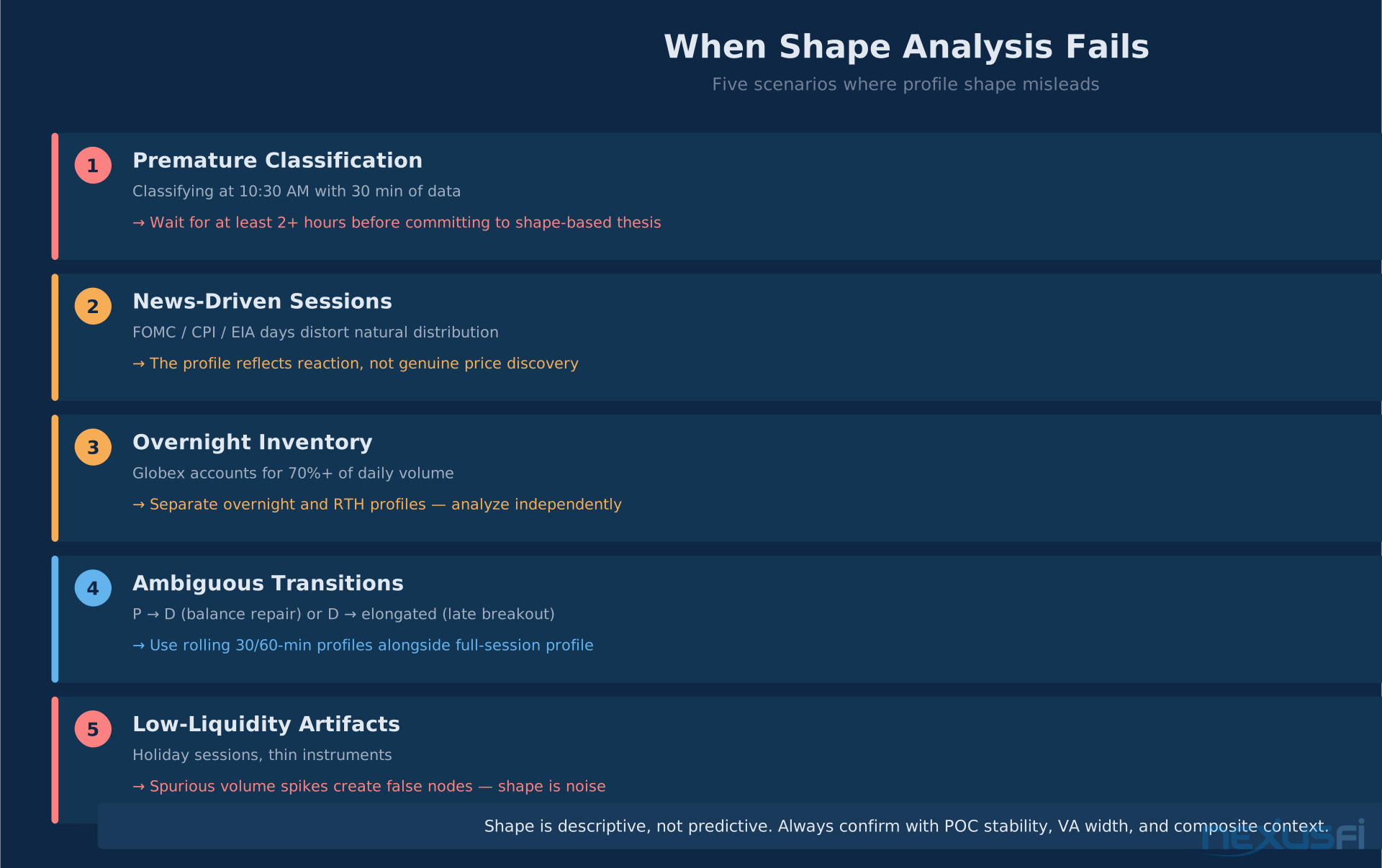
Shape is descriptive, not predictive. Here's when it misleads:
Never classify a profile before noon. A P-shape at 10:30 can become a D-shape by the close. Wait for enough data before committing to a shape-based thesis.
Premature classification. A profile at 10:00 AM is built from 30 minutes of data. That's a developing profile, not a shape classification. The "P" you see at 10:30 might become a "D" by noon if the market rebalances. Don't act on shapes that haven't stabilized.
News-driven sessions. FOMC days, CPI releases, EIA inventory reports — these events inject sudden directional moves that distort the profile shape. The resulting distribution reflects the news reaction, not genuine two-sided price discovery. A "trend day" profile on FOMC day tells you what the reaction was, not what value is.
Overnight inventory distortion. If the overnight session accounts for 70%+ of daily volume, the RTH profile shape reflects inventory correction rather than institutional price discovery. Separate overnight and RTH profiles and analyze them independently.
Ambiguous transitions. Many real sessions evolve through multiple shapes: P → D (balance repair) or D → elongated (late breakout). A static label lags the reality. Use rolling profiles (30-min, 60-min windows) alongside the full-session profile to spot transitions as they happen.
Low-liquidity artifacts. On thinly traded instruments or during holiday sessions, spurious volume spikes create false nodes that distort the apparent shape. If the market didn't trade enough contracts to produce statistically meaningful clusters, shape classification is noise.
Integration with Other VP Concepts #
Shape doesn't exist in isolation. Here's how it connects to the rest of the Volume Profile toolkit:
POC location: A centered POC supports the D-shape read (balance). A POC near one extreme supports the P/b-shape read (directional). A POC that hops between multiple levels supports the elongated or fragmented read.
Value Area width: Narrow VA + D-shape = strong balance, potentially coiling for a breakout. Wide VA + elongated = value expansion, imbalance in progress. Wide VA + P-shape = biased balance after a directional impulse.
Single prints: In D-shapes, edge single prints tend to get repaired as the auction rebalances — they represent brief excursions that the balanced market pulls back to fill. In elongated profiles, single prints mark directional conviction and are less likely to get repaired quickly.
HVN/LVN rails: In a D-shape, HVNs cluster around the POC and LVNs act as boundaries for rotation trades. In a b-shape or P-shape, HVNs sit on the dominant side and LVNs mark the rejected zone. In double distributions, the LVN valley is the critical structural level.
[7] Shape is the visual representation of that balance/imbalance state.
Practical Examples #
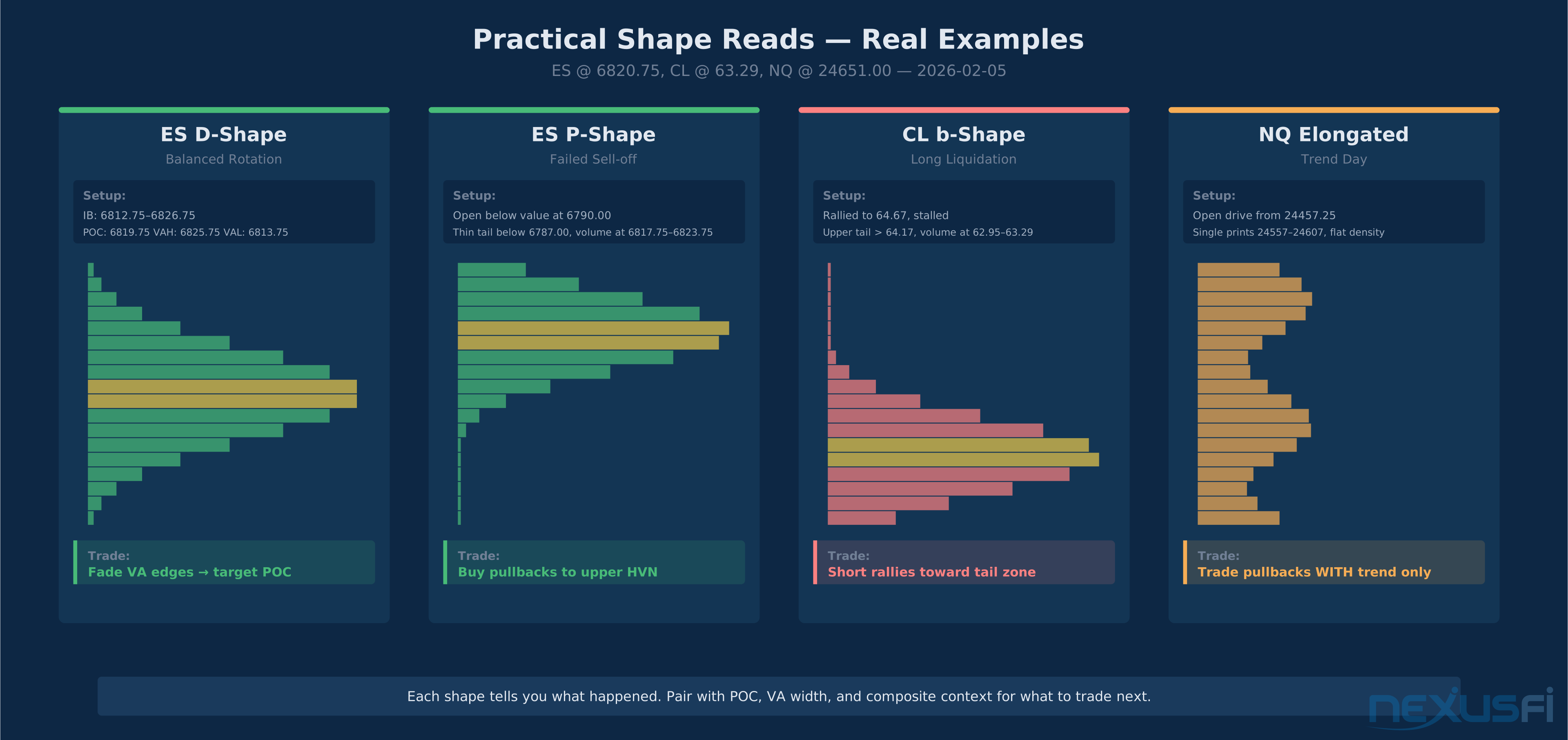
ES: D-Shape (Balanced Rotation) #
Prior day value: 5240-5260. Today's RTH opens at 5248, inside value. The first hour sets an IB of 5242-5256 (14 points, a relatively narrow range for ES). Price rotates between the IB extremes for the rest of the session, building a textbook bell curve with the POC at 5249. The VAH sits at 5255, VAL at 5243.
Read: Balanced auction. Fade at VA edges, target the POC. Stop beyond the IB extremes. If the POC starts migrating, reassess.
ES: P-Shape (Short-Covering After Failed Sell-off) #
Today opens at 5220, below prior value (5235-5255). Early selling pushes to 5208, but responsive buying appears. Price climbs back through the session. By 14:00, the developing POC has migrated from 5212 to 5232. The profile shows a clean lower tail below 5215 and volume concentrated in the 5225-5238 range.
Read: Failed downside auction. Buy pullbacks to the 5225-5228 zone. Stop below 5210 (under the rejection tail). Target: prior session POC.
CL: b-Shape (Failed Rally, Long Liquidation) #
CL opens at 78.40, rallies to 79.10 on early momentum. The rally stalls as offers stack up above 79.00. Long liquidation kicks in and price drifts back through 78.60 to settle near 78.20. The profile shows a clean upper tail above 78.80 and volume concentrated in the 78.10-78.50 range.
Read: Upside rejected. Short rallies back toward 78.55-78.70 (approaching the rejected zone). Target 78.15 (POC). Stop above 79.15 (above the failed high).
NQ: Elongated Profile (Trend Day) #
NQ opens at 18640 with an open drive higher. Price stair-steps to 18780 by 14:00 with only shallow pullbacks. Single prints appear between 18700-18720, marking the zone where price blew through without pausing. The developing POC sits at 18745 with volume spread thinly across the full 140-point range.
Read: Initiative buyers in control. Don't fade. Trade pullbacks to the developing HVN (18745 area) with momentum confirmation. Single prints below are targets only after clear exhaustion.
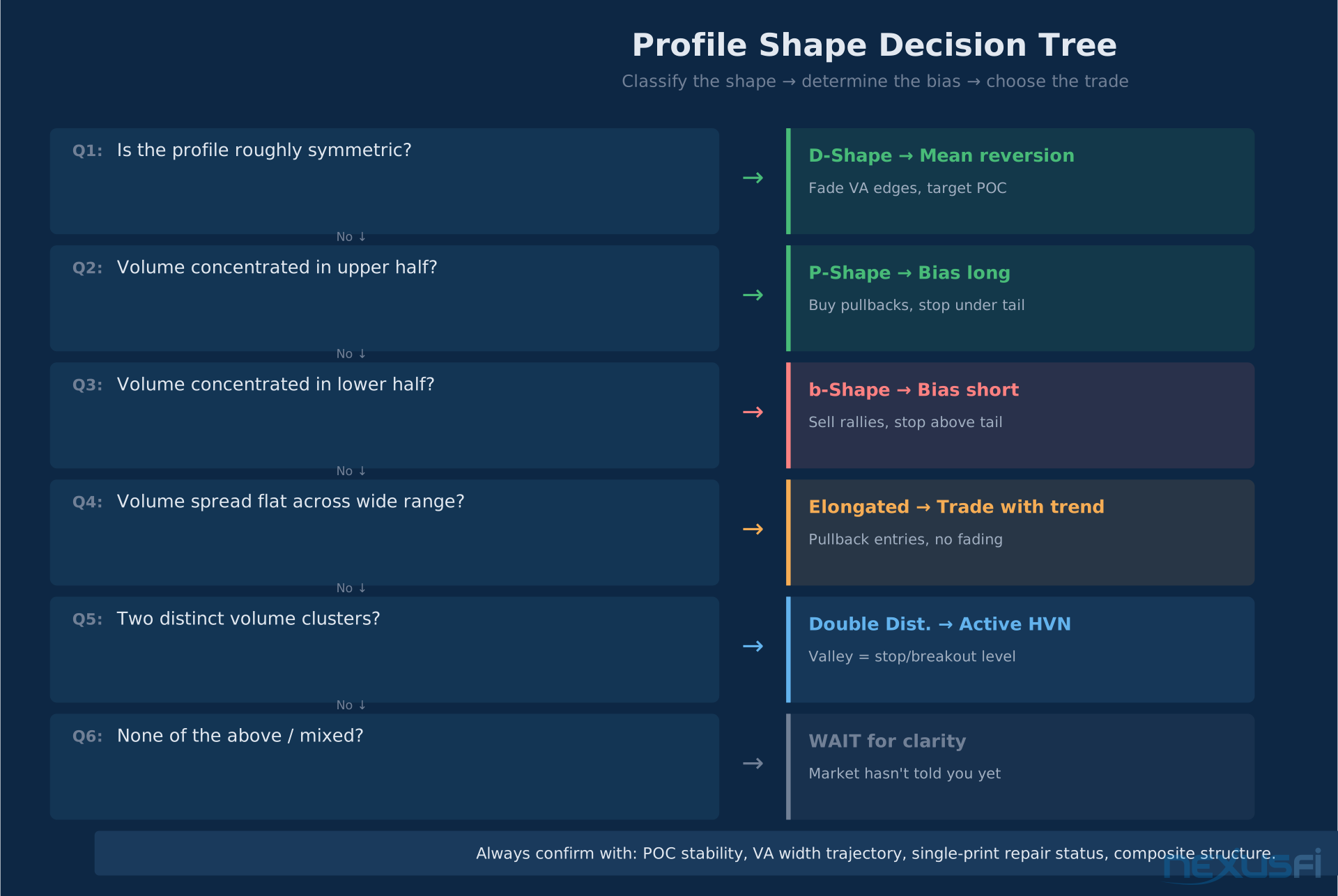
Quick Reference: Shape Decision Tree #
- Is the profile roughly symmetric? → D-shape → Mean reversion, fade edges, target POC
- Is volume concentrated in the upper half? → P-shape → Bias long, buy pullbacks, stop under tail
- Is volume concentrated in the lower half? → b-shape → Bias short, sell rallies, stop above tail
- Is volume spread flat across a wide range? → Elongated → Trade with the trend, pullback entries
- Are there two distinct volume clusters? → Double distribution → Trade the active HVN, use the valley as stop/breakout level
- None of the above / mixed? → Wait for clarity. The market hasn't told you what it is yet.
Always confirm with: POC stability, VA width trajectory, single-print repair status, and higher-timeframe composite structure.
Knowledge Map
Prerequisites
Understand these firstGo Deeper
Build on this knowledgeReferences This Article
Articles that build on this topicCitations
- — Ninja Trader Custom Order Book - 1LDom - Source Code (2012) 👍 8“As price cycles up and down to the extremes the most amount of trades tend to accumulate around the centre... The profile in this situation very much resembles a standard bell curve or D shape.”
- — Volume Profile and Footprint discussion (2015) 👍 14“When a market is in balance, the profile will often be very gaussian/normal/bell shaped. In this situation, the VAH/VAL represent a meaningful representation of one standard deviation.”
- — Market Profile (2017) 👍 4“When the profile at the end of the day has a 'b' shape you can think of the verb to buy as investors have started to buy, when the profile has a 'P' shape, think about the verb to Perish as in all ascending trends Perish over time.”
- — Spoo-nalysis ES e-mini futures S&P 500 (2015) 👍 4“A trend day will leave naked single prints in the profile as it evolves showing directional conviction.”
- — Day type identification (2021) 👍 3“These composite distributions end up evolving into p's and b's that resemble the 'Steidlmayer Distribution'.”
- — Trading Futures with Context (2012) 👍 19“MARKET PROFILES STRUCTURE: 1. Normal Day - profile structure in which prices auction between two extremes... 3. Trend day - Buyer or seller remains in control the entire day.”
- — Volume Profile and Footprint discussion (2014) 👍 12“An imbalanced market will see price rejecting value while a balanced market will see price trading inside value with sellers being dominant at the upper extreme of value while buyers will be dominant at the lower extreme of value.”
- J. Peter Steidlmayer — Steidlmayer on Markets: Trading with Market Profile (2003)
- Jim Dalton, Eric T. Jones, Robert B. Dalton — Markets in Profile: Profiting from the Auction Process (2007)
- CME Group — Introduction to Auction Market Theory (2024)