



Cosmos (ATOM): The Internet of Blockchains and What It Means for Traders
Overview #
Cosmos isn't trying to be the one blockchain to rule them all. The entire design philosophy runs the opposite direction. Cosmos is an interoperability protocol — a framework for building sovereign blockchains that can talk to each other directly, without bridges, wrapped tokens, or centralized custodians.
Jae Kwon and Ethan Buchman launched the Cosmos whitepaper in 2016 with a simple observation: crypto wasn't going to stay on one chain. Bitcoin does one thing. Ethereum does another. There would be thousands of specialized chains, each optimized for a specific use case. The question wasn't which chain would win — it was how they'd communicate. That's the problem Cosmos was built to solve.
The ATOM token sits at the center of the Cosmos Hub, which is the first and primary blockchain in the Cosmos network. ATOM holders stake their tokens to secure the Hub and participate in governance. In return, they earn staking rewards and — increasingly — fees from consumer chains that use Interchain Security to borrow the Hub's validator set.
The single most important thing to understand before trading ATOM: Cosmos is an ecosystem of hundreds of chains. ATOM is the token of one specific chain — the Cosmos Hub. Success of the broader ecosystem does not automatically translate into ATOM price appreciation. That structural disconnect is the central tension in trading ATOM.
What Cosmos Is: The Internet of Blockchains #
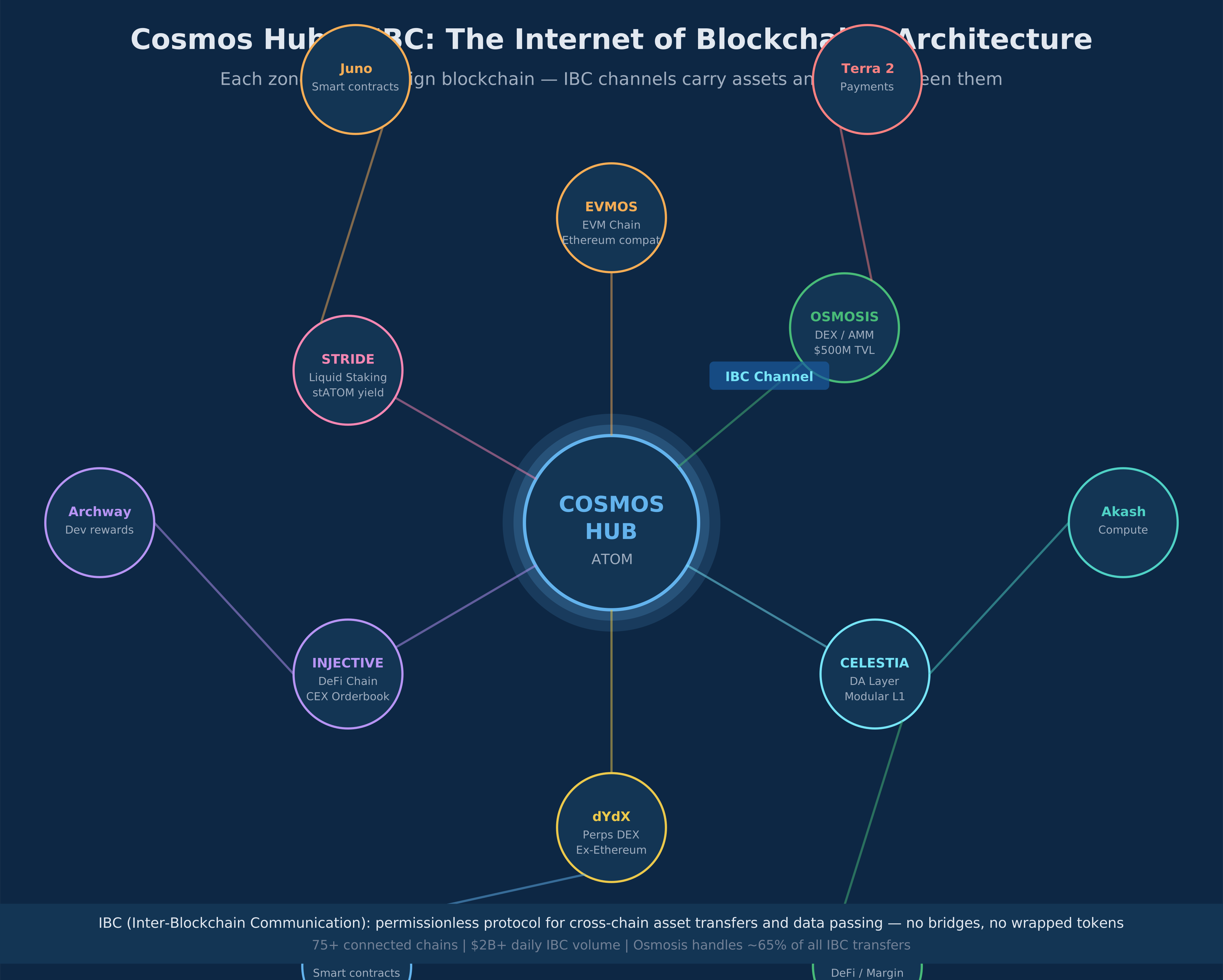
The "Internet of Blockchains" tagline isn't marketing — it's an accurate technical description. Cosmos is a network of sovereign blockchains connected by IBC, the Inter-Blockchain Communication protocol. Think of IBC as TCP/IP for blockchains. Just as TCP/IP lets computers on different networks exchange data with a standardized protocol, IBC lets blockchains on different validator sets transfer assets and data with a standardized packet format.
Sovereign is the operative word. Each Cosmos chain — called a zone — runs its own validator set, its own governance, and its own token economy. An Osmosis validator isn't securing the Cosmos Hub. A Celestia staker isn't exposed to Cosmos Hub governance decisions. Sovereignty is intentional. Each chain can improve its parameters without waiting for hub-level governance approval.
This contrasts sharply with Ethereum's design philosophy. On Ethereum, all applications share the same base layer security and fee market. During periods of high demand, a gaming application competes for block space with a trillion-dollar DeFi protocol. Cosmos's answer is to give each application its own chain — its own dedicated block space, fee market, and validator economics.
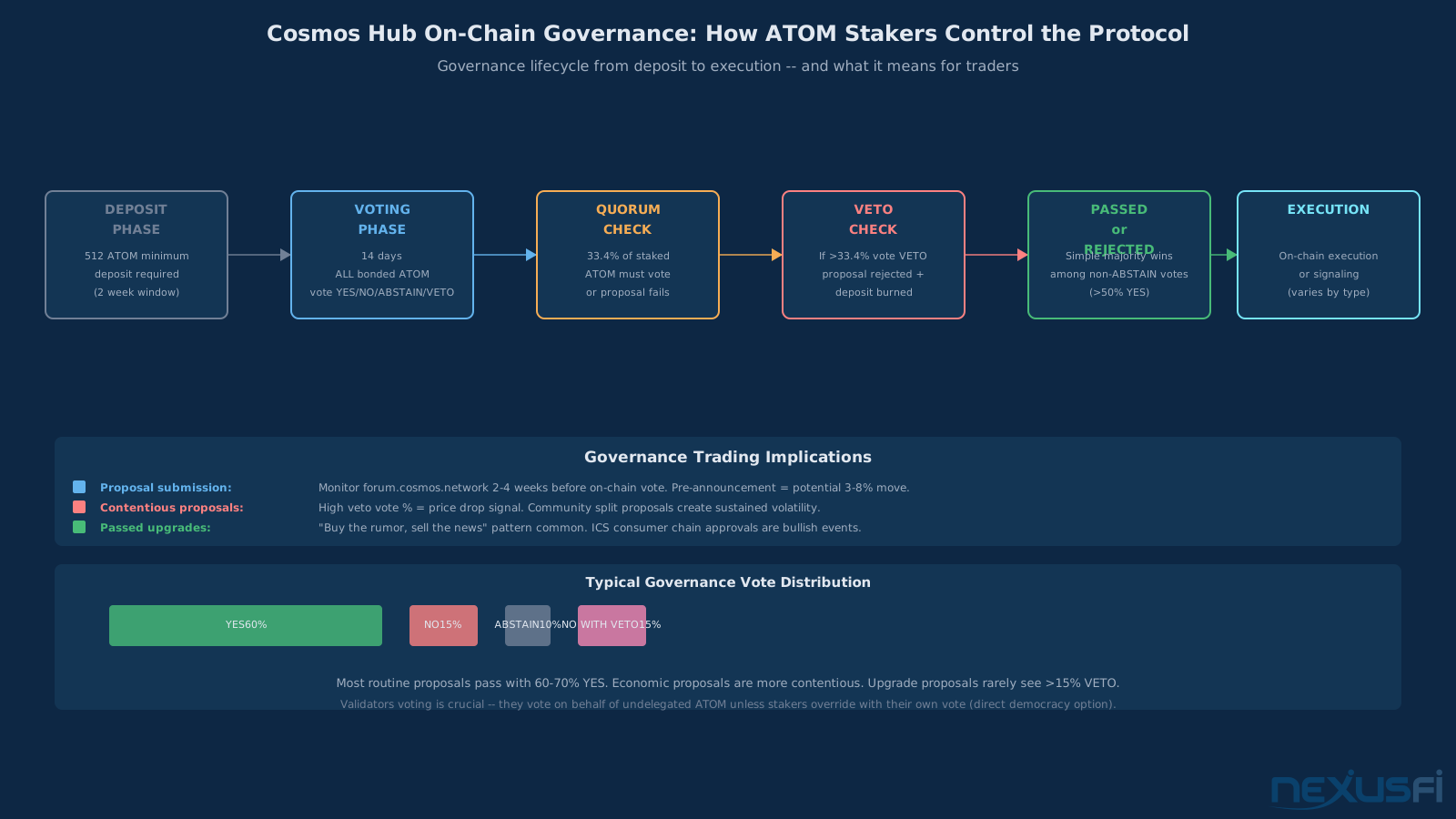
CometBFT (formerly Tendermint) is the consensus engine underneath most Cosmos chains. It's a Byzantine Fault Tolerant consensus protocol that offers instant finality — transactions are final after two rounds of voting, typically within 1-3 seconds. No probabilistic finality. No "wait six confirmations." Once a Cosmos block is committed, it's irreversible. This makes IBC transfers fast and reliable: a cross-chain packet is settled as soon as both chains confirm their respective transactions.
The Cosmos SDK is the toolkit for building Cosmos-compatible chains. It handles the boilerplate — networking, consensus, governance modules, staking — so chain developers focus on application logic. This is why so many major projects have built on Cosmos SDK: Binance Chain, dYdX v4, Celestia, Injective, Osmosis. The SDK handles the infrastructure. The application team customizes the economics and functionality. See our cryptocurrency trading fundamentals guide for broader context on evaluating blockchain infrastructure.
Technical Architecture: SDK, IBC, and CometBFT #
Understanding the three-layer architecture is necessary for understanding where ATOM value flows — and where it doesn't.
Layer one is CometBFT. It handles peer-to-peer networking and block consensus. CometBFT uses a delegated proof-of-stake model where validators are chosen proportionally to their bonded stake. Validators vote on blocks in two rounds — pre-vote and pre-commit — and a block is finalized when 2/3 of voting power commits. The validator set size is configurable per chain; the Cosmos Hub runs 175 validators by default.
Layer two is the Cosmos SDK. It provides modular building blocks: the staking module handles validator delegation and slashing, the governance module handles on-chain proposal voting, the bank module handles token transfers, the IBC module handles cross-chain communication. Chains built with the SDK inherit all of these modules and can add custom modules for their specific application logic.
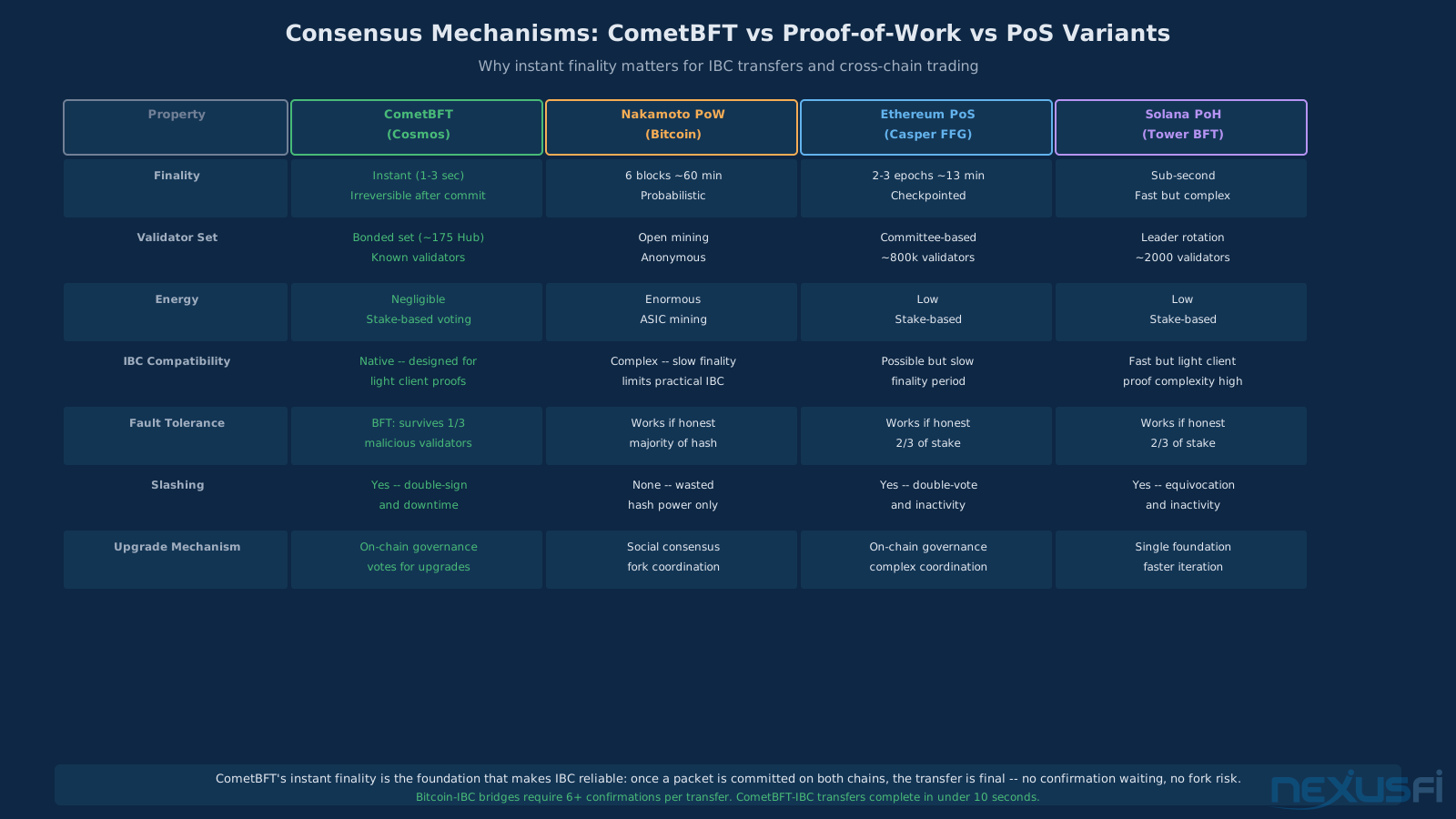
Layer three is IBC itself. IBC is a permissionless, trustless protocol for passing packets between blockchains. To open an IBC channel, two chains need a light client of each other — a way to verify the other chain's block headers without running a full node. Once channels are open, any asset can be transferred.
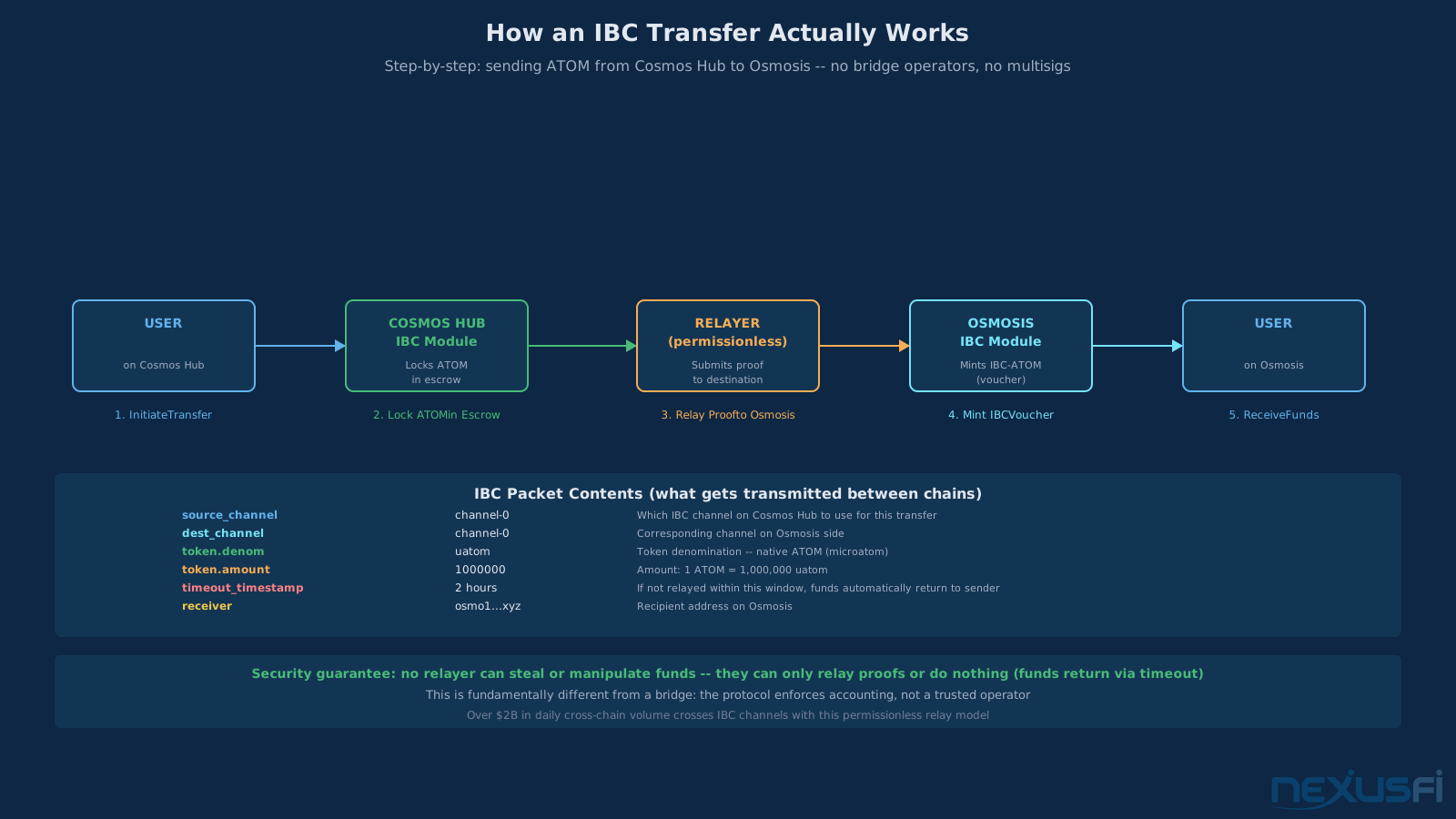
The practical implication: when you send ATOM from Binance to Osmosis via IBC, you're not depositing into a bridge contract controlled by a multisig. The IBC module locks ATOM on the Cosmos Hub and mints an IBC-denominated representation on Osmosis. When you send it back, the Osmosis representation burns and the original ATOM unlocks. The math is enforced by the protocol, not by humans.
IBC timeout protection: Every IBC packet has a timeout parameter (typically 2-4 hours). If the relayer fails to deliver the packet before the timeout, your funds automatically unlock on the source chain. There's no "stuck in bridge" scenario — the protocol handles recovery automatically.
The App-Chain Thesis: Why Sovereign Blockchains Win #
The app-chain thesis is Cosmos's central bet against the world. It says: sovereign application-specific blockchains will outperform shared general-purpose L1s for the same reason that dedicated hardware outperforms general-purpose servers for specific workloads.
A DeFi protocol on Ethereum is a tenant in a high-rise. It shares block space with every other application. When NFT mints spike fees to $200, your DeFi transaction gets priced out. Ethereum upgrades affect your protocol whether you want them to or not. You can't customize the execution environment — you get what the L1 gives you.
An app-chain is a freehold property. The DeFi team controls their own validator incentives, their own fee parameters, their own governance timeline, and their own execution environment. When their chain needs to upgrade, they upgrade it. None of that requires asking permission from a L1 governance process.
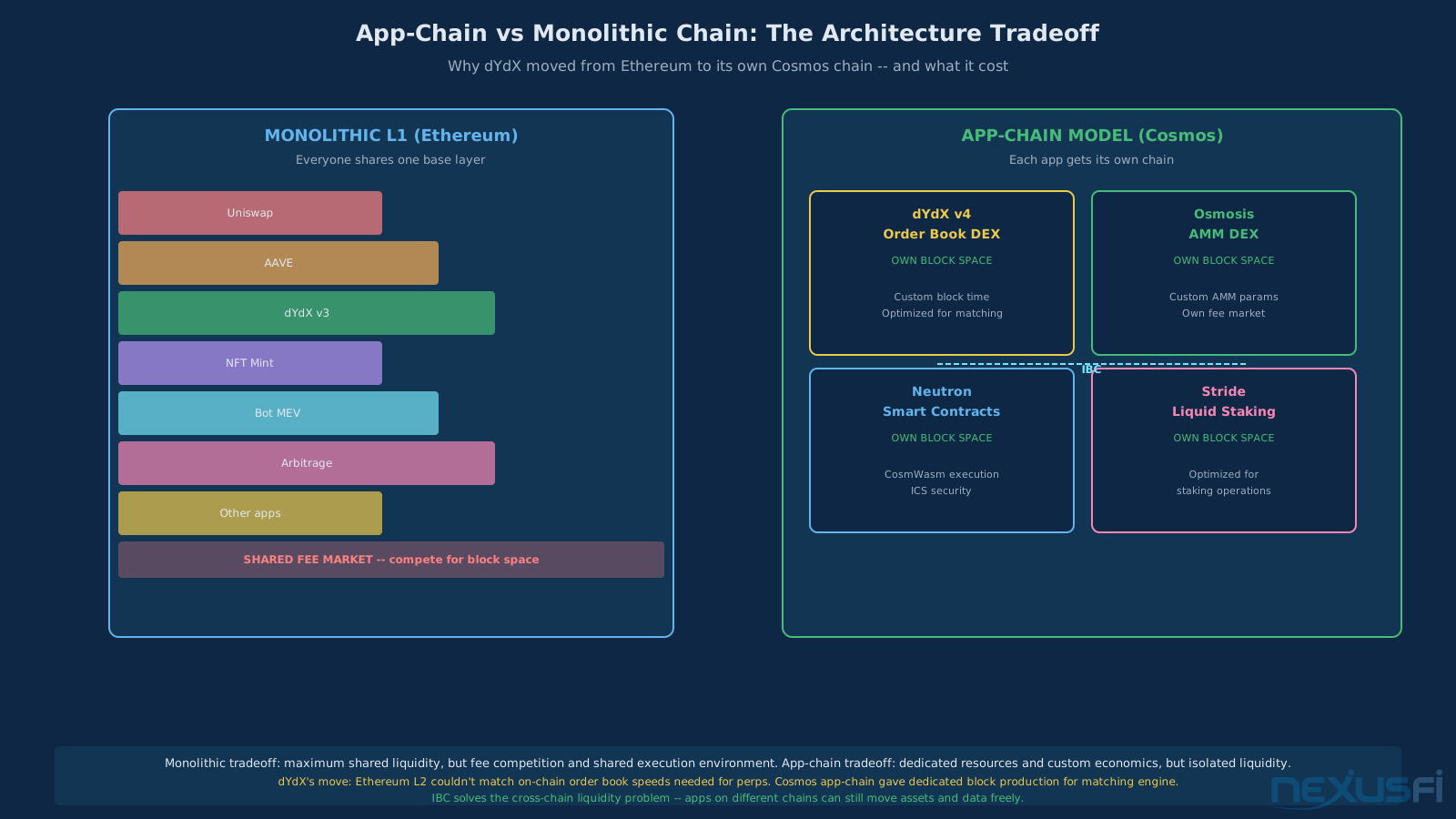
The app-chain thesis has found its most compelling validation in dYdX v4. dYdX is the largest decentralized perpetuals exchange by volume. Version 3 ran on a StarkWare L2 on Ethereum. Version 4 is its own Cosmos chain. The reason: an on-chain order book requires matching speed that Ethereum L2s couldn't consistently provide. As a Cosmos chain, dYdX v4 controls its own block time, can improve specifically for order matching, and can distribute trading fees to its own validators — creating a sustainable economic flywheel that purely on-chain Ethereum applications couldn't access.
The counterargument to app-chains is fragmented liquidity and bootstrapping cost. A new Cosmos chain needs to attract and retain its own validator set. It needs to build its own liquidity from zero. IBC solves the asset transfer problem. Interchain Security (ICS) solves the validator bootstrapping problem for new chains willing to use the Cosmos Hub's validator set. Compare this approach to Polkadot's shared security model — both tackle the sovereign chain bootstrapping problem but from different architectural directions.
Cosmos Ecosystem: The Chains That Matter for Traders #
The Cosmos ecosystem spans 50+ IBC-connected chains. For traders, the ones that matter are the ones that either (1) drive IBC volume through the Hub, (2) adopt ICS and pay fees to ATOM stakers, or (3) represent large enough value that their success creates speculative premium for ATOM.
Osmosis is the largest DEX in the Cosmos ecosystem and handles roughly 65% of all IBC volume. It's an AMM (automated market maker) built with the Cosmos SDK, featuring concentrated liquidity pools, cross-chain swaps, and deep liquidity for ATOM, OSMO, and IBC-connected assets. Osmosis is where most on-chain ATOM liquidity lives. It's also where stATOM trades against ATOM, providing an arbitrage signal for liquid staking premiums and discounts.
Celestia is a modular blockchain that provides data availability — it stores and orders transaction data but doesn't execute transactions. Execution is handled by separate rollup chains that post their data to Celestia. It's built with the Cosmos SDK and connected via IBC, but it's emphatically not a Cosmos Hub consumer chain. Celestia's TIA token has no direct relationship to ATOM's value. The connection is narrative-level: Celestia's success validates Cosmos SDK as a credible framework for building novel blockchain architectures.
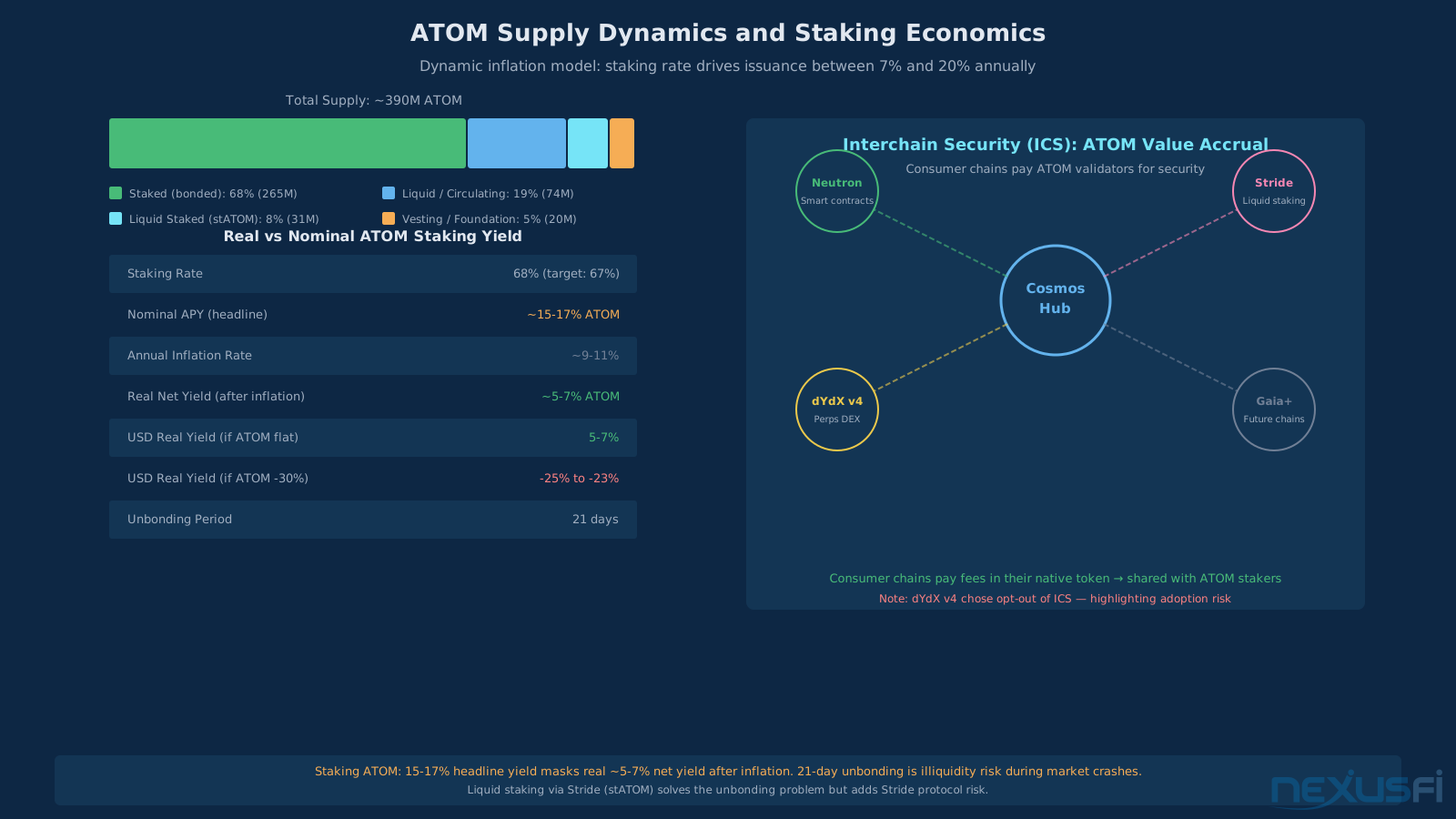
dYdX v4 is the clearest example of the ICS opt-out problem. dYdX chose to run its own validator set rather than using Cosmos Hub ICS. The reason is understandable — dYdX generates real fee revenue and chose to distribute it to DYDX stakers rather than sharing it with ATOM validators. For the Cosmos Hub, this represents a large ecosystem win (Cosmos SDK is credible enough for a billion-dollar DEX) but a value capture miss (none of dYdX's fee revenue flows to ATOM stakers).
Stride is the most important ICS consumer chain for ATOM holders. Stride is a liquid staking protocol that issues stATOM in exchange for staked ATOM, allowing holders to receive staking yield while maintaining liquidity. Stride is a Cosmos Hub ICS consumer chain — its security is provided by ATOM validators, and Stride pays fees back to ATOM stakers.
Neutron is the other major ICS consumer chain. It's a smart contract platform (CosmWasm) secured by the Cosmos Hub. DeFi applications on Neutron pay fees that flow back to ATOM stakers. Neutron demonstrates ICS working — but two chains alone aren't enough to make the ATOM value capture thesis overwhelming.
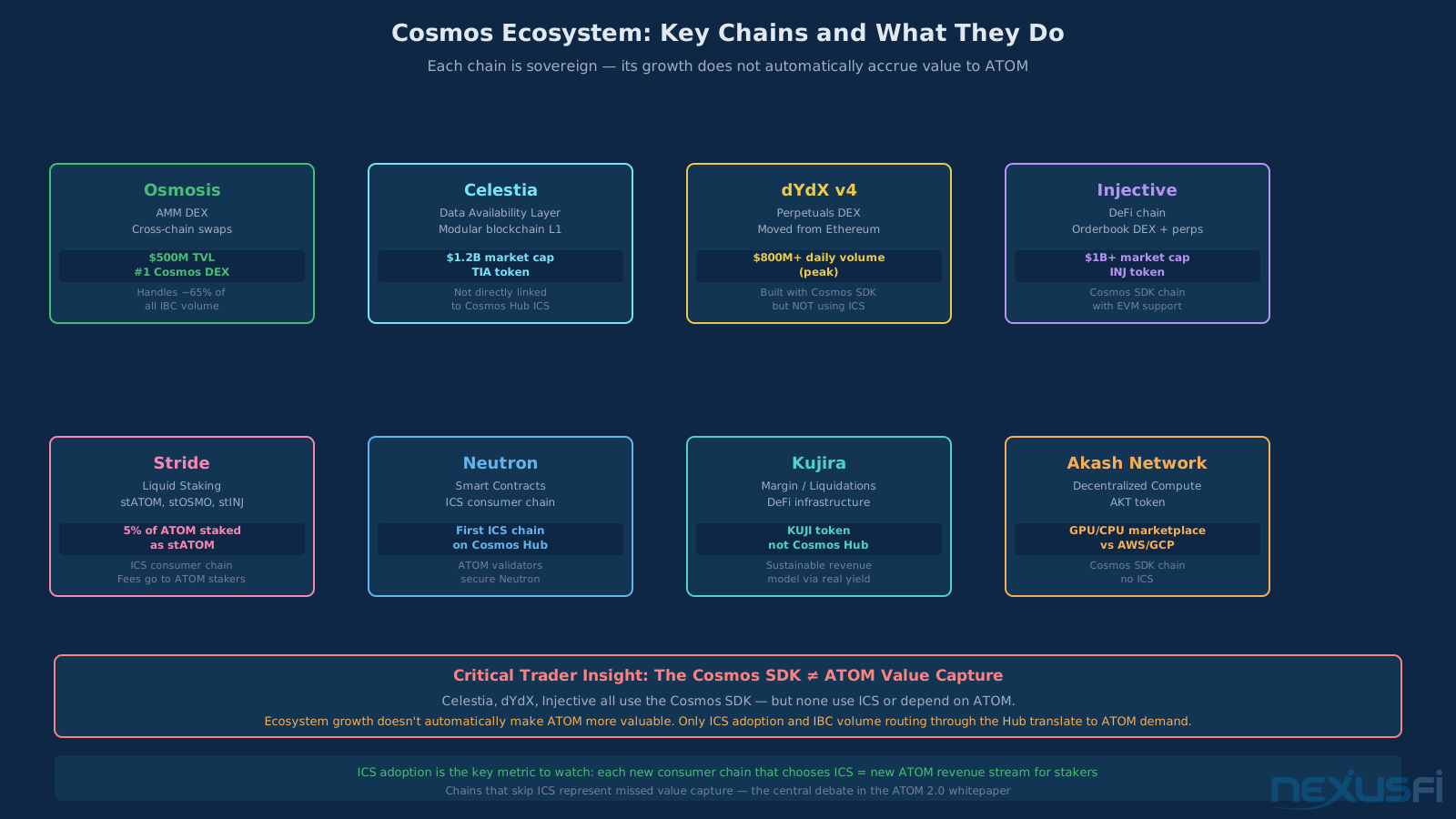
Critical for ATOM traders: Success of the Cosmos SDK ecosystem does NOT automatically accrue value to ATOM. Celestia, dYdX, and Injective all use Cosmos SDK without using ICS or routing fees through the Hub. Track ICS consumer chain adoption specifically — not overall Cosmos ecosystem growth — as the primary ATOM fundamental indicator.
What Drives ATOM Price #
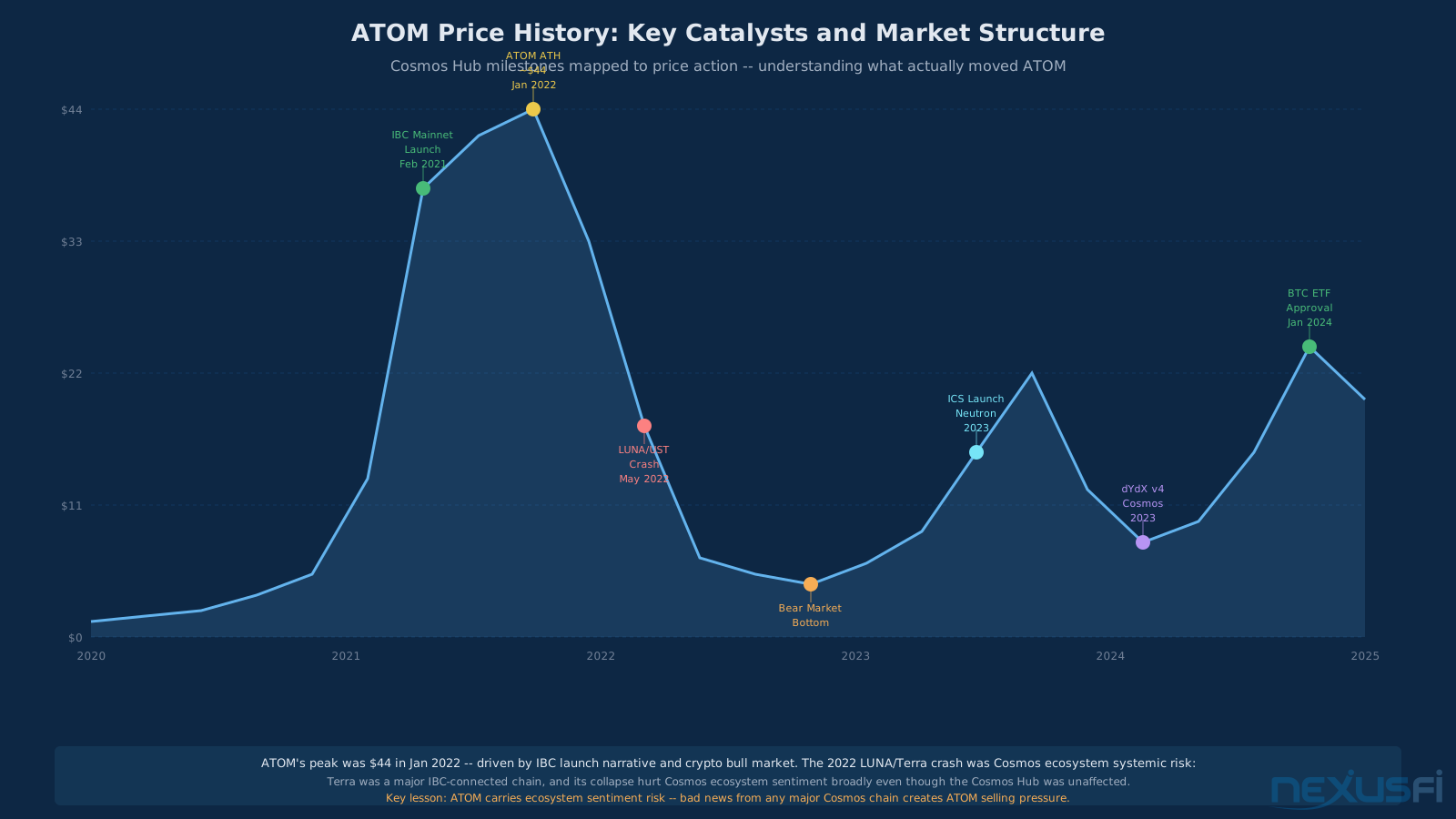
ATOM's price is driven by four factors, roughly in order of real impact during different market regimes.
First: Bitcoin beta and macro. ATOM has a BTC beta of approximately 1.1-1.3x. In practice, this means when BTC rallies 10%, ATOM is likely up 12-15%. When BTC drops 20%, ATOM frequently falls further. In macro risk-off environments — Fed rate hikes, financial system stress, crypto regulatory fear — ATOM trades as a higher-beta risk asset. Getting the macro direction right matters more than getting ATOM-specific thesis right in most market conditions. This is a feature of every altcoin, not a unique ATOM risk. See our guide on AVAX for comparison — another L1 with similar macro beta characteristics.
Second: IBC volume and ecosystem growth. Higher IBC transaction volume signals growing cross-chain activity. New chain launches add IBC connections. Major protocol migrations from Ethereum to Cosmos SDK (like dYdX) create significant narrative momentum. These factors don't directly increase ATOM cash flows in the short term, but they drive speculative premium.
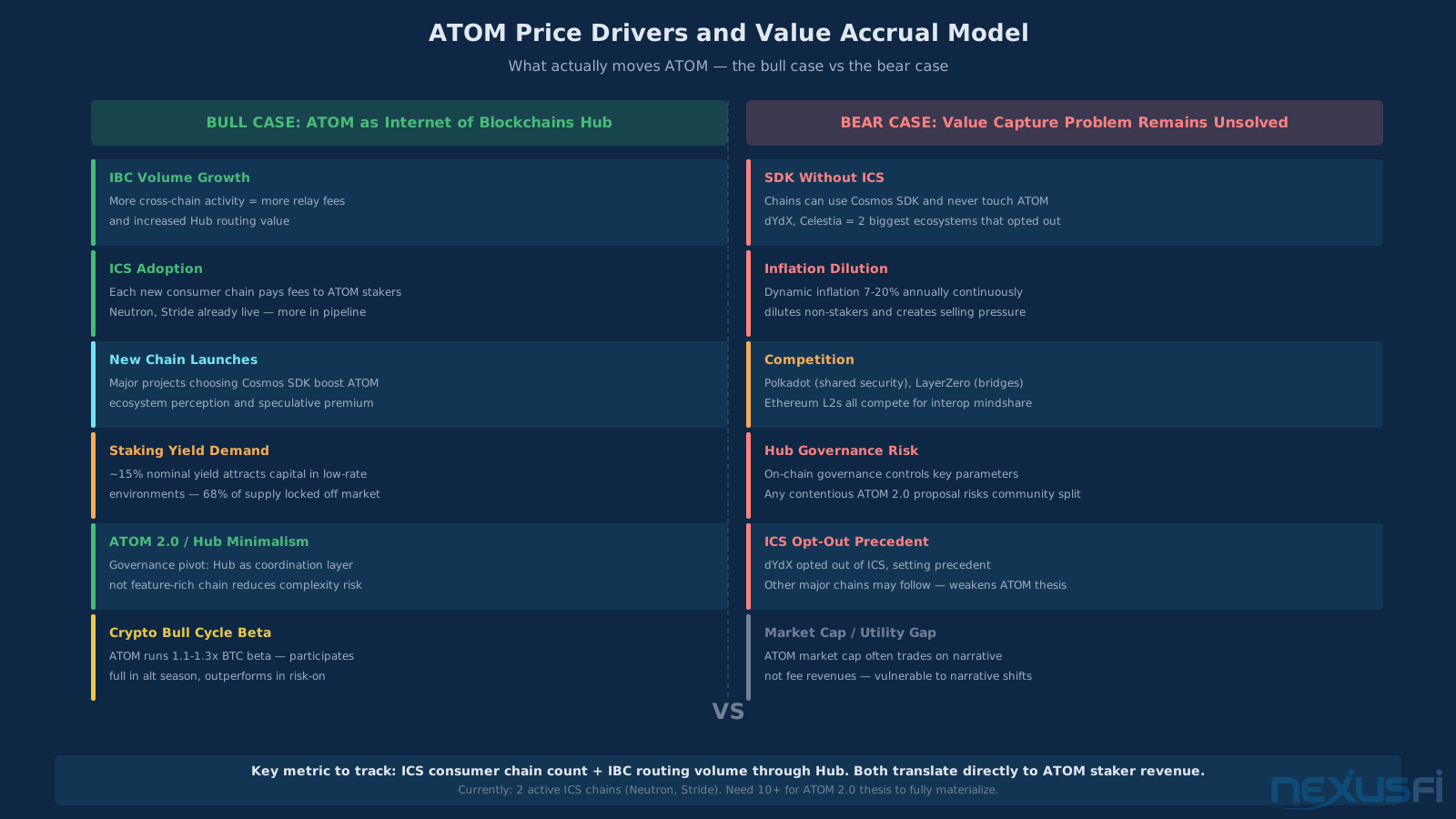
Third: ICS adoption and staking yield. The structural bull case for ATOM rests on ICS: consumer chains pay fees to ATOM validators, creating real cash flow that supports a higher staking yield. Currently, two ICS chains (Neutron, Stride) contribute modest fees. As ICS adoption grows, the yield premium from ICS fees becomes more significant. Watch the ICS consumer chain count as a leading indicator. Every new ICS chain is a structural positive for ATOM fundamentals.
Fourth: ATOM tokenomics and staking supply dynamics. With 68% of ATOM supply bonded, only about 32% of the supply is freely circulating. The dynamic inflation rate adjusts to maintain approximately 67% staking — when staking drops below the target, inflation increases to incentivize more bonding. In bear markets, a declining staking rate triggers higher inflation, creating selling pressure that can accelerate downside.
Trading ATOM: Venues, Setups, and Staking Mechanics #
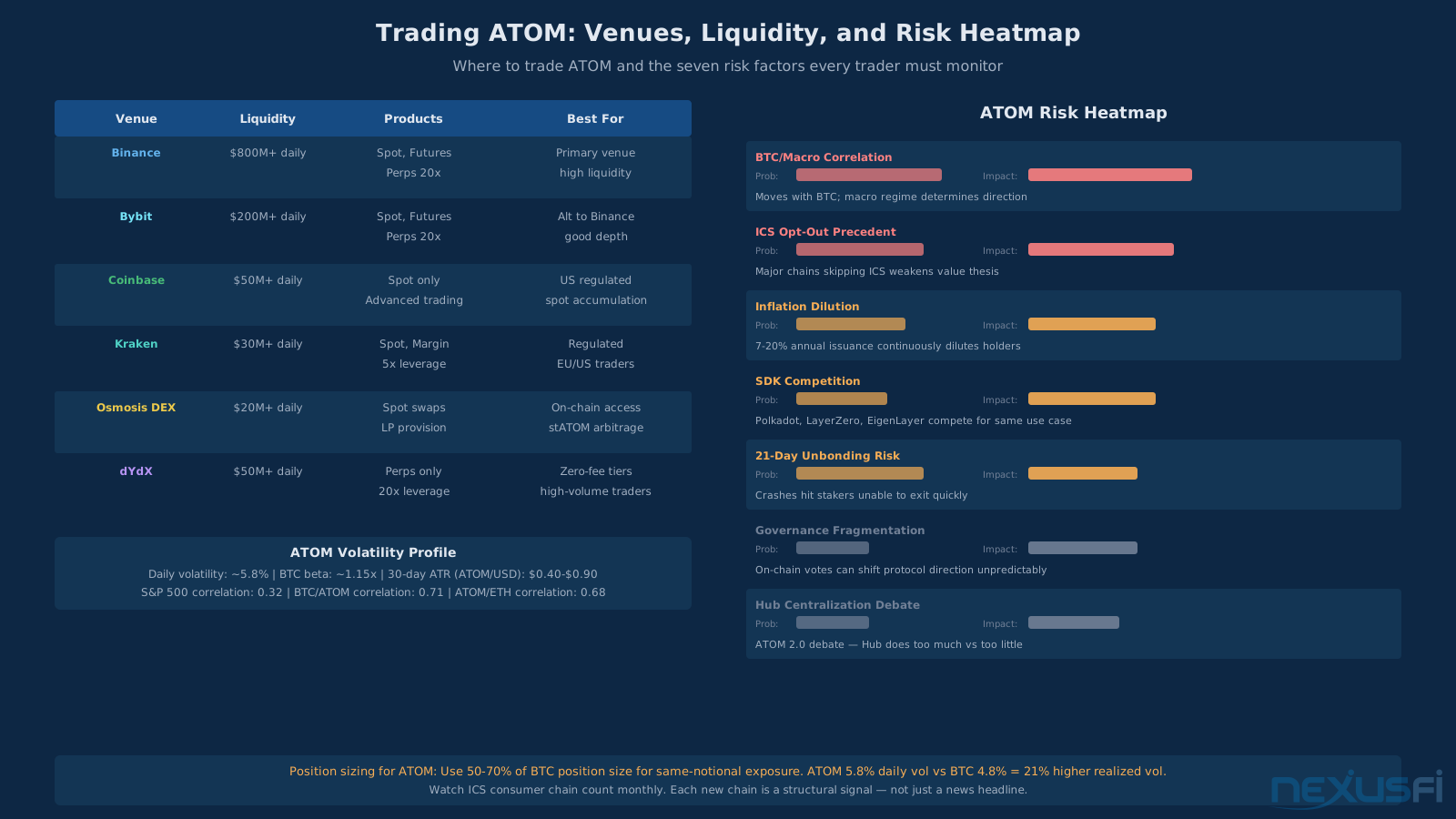
ATOM trades across every major centralized exchange and most Cosmos-native DEXs. Binance is the primary venue — it runs $800M+ in daily ATOM volume across spot and perpetuals. Bybit, Coinbase, and Kraken are the secondary venues for both execution and hedging.
For directional spot trading, Binance ATOM/USDT has the tightest spreads and deepest order books. The ATOM perpetual contract is available on Binance and Bybit with up to 20x leverage. Standard warnings about leverage apply — ATOM's 5-8% daily volatility means a 5x leveraged position can hit 100% drawdown on a 20% adverse move, which happens in a single session during liquidation cascades.
Osmosis is the on-chain execution venue. The primary reasons to use Osmosis over a CEX for ATOM: liquid staking operations (converting ATOM to stATOM and back), on-chain yield from LP positions, and access to ATOM pairs with Cosmos ecosystem tokens that don't list on CEXs.
@The execution reality of crypto venue selection is something every serious trader has to grapple with. As @MarketT noted in a detailed NexusFi analysis of crypto order-book execution: "Venues that advertise 0% fees often compensate with unstable or artificially widened spread conditions, which can be even worse than paying a normal explicit commission." This applies directly to ATOM trading — Osmosis liquidity can look attractive on paper but spreads widen significantly during low-volume periods. For ATOM perpetuals, Binance's deep book consistently outperforms zero-fee venues on total execution cost.
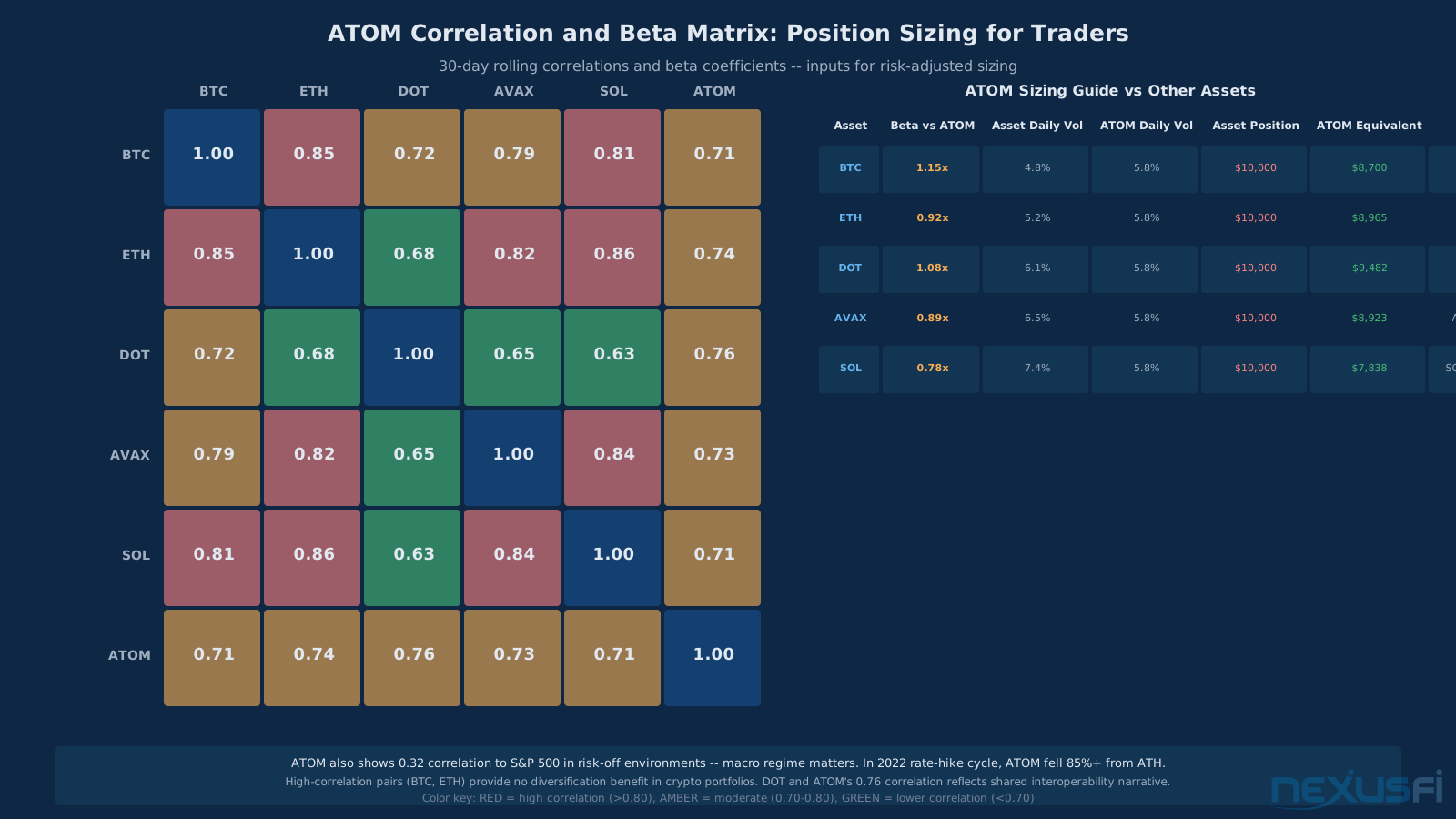
Position sizing for ATOM should account for its higher realized volatility versus BTC. At ~5.8% daily volatility versus Bitcoin's ~4.8%, same-notional ATOM carries roughly 21% more annualized risk than BTC. If your risk budget allows a $10,000 BTC position, a comparable-risk ATOM position is around $8,700. Most traders undersize ATOM relative to their BTC positions — but the ones who size correctly capture the asymmetric upside during Cosmos ecosystem growth cycles without overexposing to the downside.
The trigger calendar for ATOM is less structured than Polkadot's parachain auction schedule, but several recurring events create tradable edges: ICS consumer chain launches (announced months in advance on the Cosmos Hub governance forum), major Osmosis upgrades (track Osmosis governance proposals), and new Cosmos SDK chain launches for large projects. Each of these creates a narrative-driven period where ATOM reprices higher before the event, then often consolidates after. "Buy the rumor" dynamics are pronounced in Cosmos.
@Crypto trading infrastructure is still catching up to TradFi standards. @SMCJB raised the practical question about CME's 24/7 crypto futures expansion: "But will your broker and your trading software support it? Last time I asked — the answer were no and no, but we are thinking about it." The same infrastructure gap applies to ATOM: many TradFi-oriented brokers still don't support ATOM perpetuals or on-chain Cosmos access, limiting who can execute the full suite of ATOM strategies described in this article.
The governance forum edge: ICS consumer chain proposals are discussed on forum.cosmos.network weeks before hitting on-chain voting. Reading governance proposals early gives you 2-4 week advance notice of catalysts before they move price on the broader market.
Liquid Staking with Stride: stATOM, Yield, and the Trade-Offs #
Stride is the dominant liquid staking protocol in the Cosmos ecosystem. It works by accepting ATOM deposits, staking them across a diversified validator set on the Cosmos Hub, and issuing stATOM tokens in return. stATOM is a rebasing token — its ATOM redemption value increases continuously as staking rewards accrue.
The headline stATOM APY is approximately 15-17% annually in ATOM terms (not USD). Accounting for ATOM's ~10% annual inflation rate, the real net yield is closer to 5-7% ATOM per year. Whether that compounds into USD gains depends entirely on ATOM's price direction.
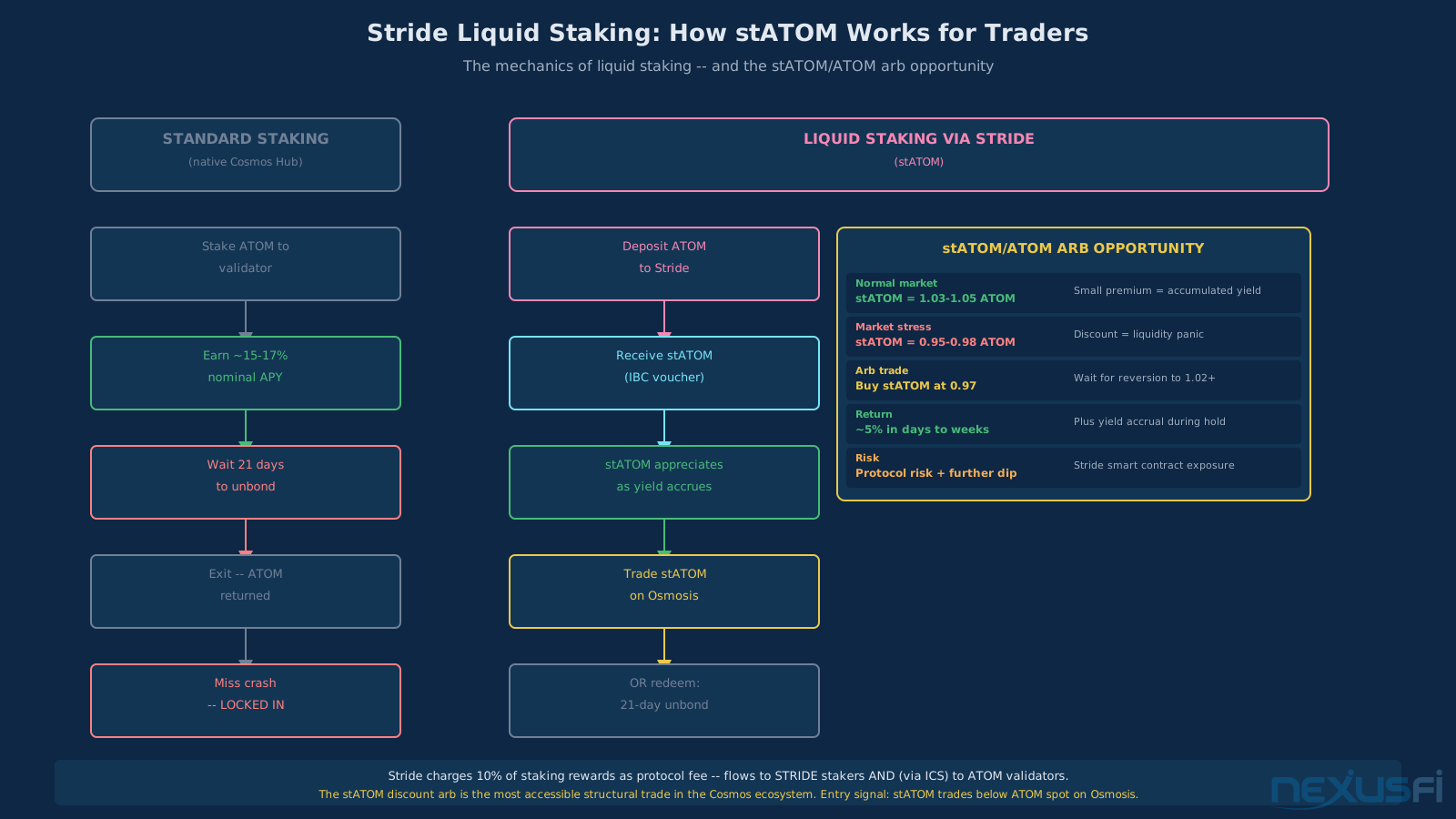
The stATOM arbitrage is the most technically interesting ATOM trade. Stride's stATOM should trade at a slight premium to ATOM (reflecting the accumulated staking yield). When market fear spikes, stATOM can trade at a discount to ATOM — meaning you get ATOM-equivalent exposure plus accruing staking yield for less than ATOM's spot price. The discount closes as the market stabilizes. This trade has historically offered 3-8% risk-adjusted returns during market dislocations, with the main risk being Stride protocol risk and the 21-day unbonding delay if you want to convert back to regular ATOM.
Liquid staking fees are Stride's primary revenue source. Stride charges 10% of staking rewards. Those fees flow back to STRIDE token stakers — and through ICS, a portion flows to Cosmos Hub (ATOM) validators. This makes Stride the clearest current example of ICS value accrual working as designed.
stATOM/ATOM monitoring: Add the Osmosis stATOM/ATOM pool to your standard watchlist. A ratio below 1.0 is a distress signal and a structural arbitrage entry. A ratio above 1.10 signals overvaluation of yield expectations and a potential mean-reversion short.
The ATOM Value Accrual Debate #
The most important intellectual debate in Cosmos isn't about technology — it's about whether ATOM should be valuable at all given how many high-profile ecosystem projects have chosen to not use ICS.
The problem statement is crisp: the Cosmos SDK is free, open-source software. Any team can use it to build a chain without any relationship to ATOM. Celestia built one of the most significant data availability layers in the ecosystem using Cosmos SDK — and TIA has no connection to ATOM. dYdX built the highest-volume decentralized derivatives protocol using Cosmos SDK — and DYDX has no connection to ATOM. If Cosmos SDK continues to win market share for chain building while ICS adoption stagnates, the ecosystem grows and ATOM fails to capture that growth.
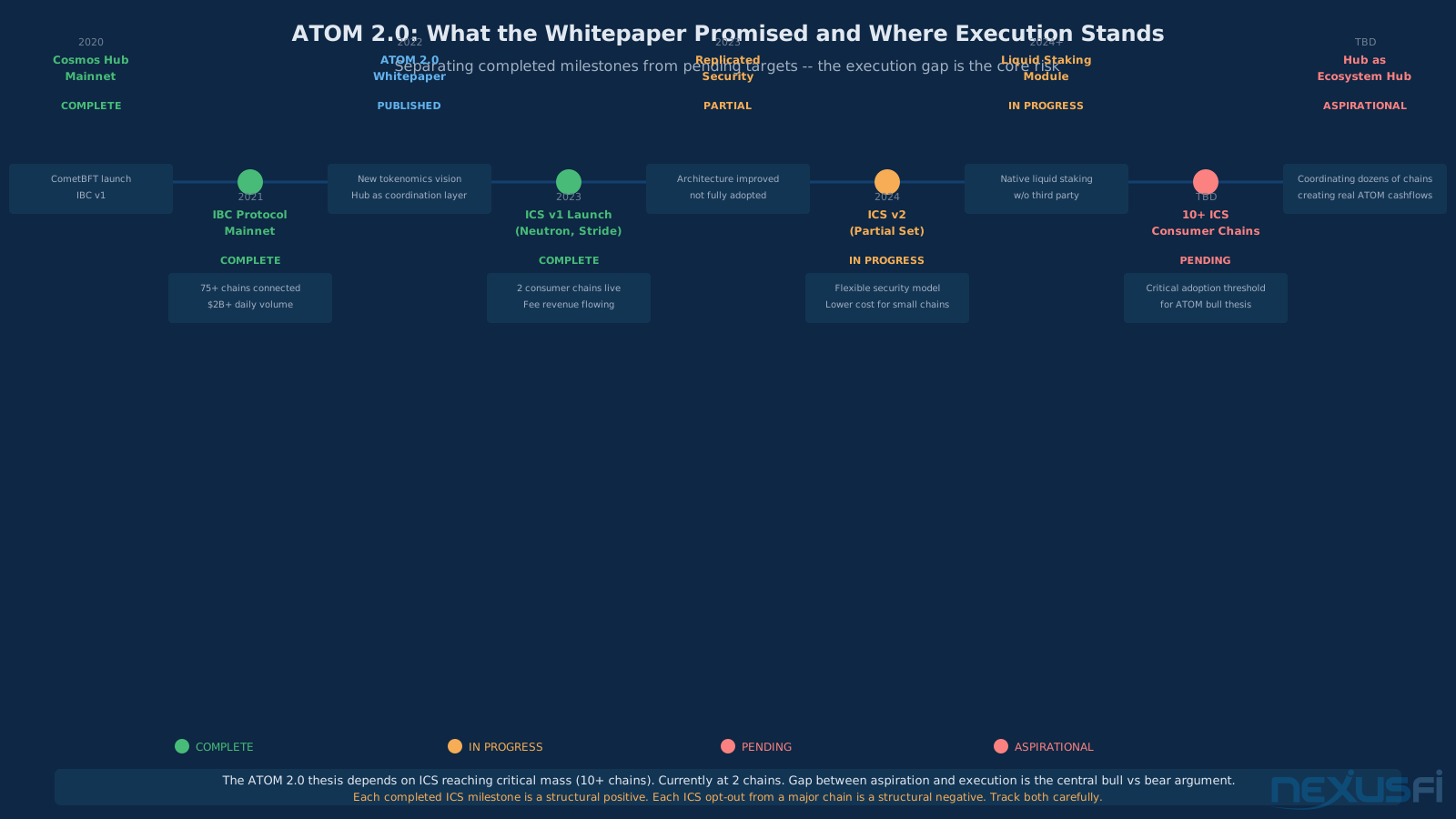
The bull case response is ICS and ATOM 2.0. Interchain Security was designed specifically to solve this problem. Consumer chains that want to skip the expensive and slow process of bootstrapping their own validator set can pay ATOM validators to secure them. In return, fees flow to ATOM stakers. As more consumer chains launch and ICS matures, ATOM becomes a cash-flowing staking asset rather than a pure governance/security token.
@When evaluating any new blockchain infrastructure choice, @jlabtrades framed the core question traders should always ask: "What's the competitive advantage of using this versus the others? Faster clearing? Lower fees? Lower integration costs? Why would a company choose them over the alternatives?" Apply this to ICS: consumer chains choose ICS when the security bootstrapping cost savings outweigh the fee-sharing obligation. When the chain is large enough to attract its own validators cheaply — as dYdX was — the ICS cost-benefit calculation flips. That's the precise mechanism behind the opt-out precedent.
The execution risk is real. ICS has attracted two significant consumer chains (Neutron, Stride) and a handful of smaller ones. It has not attracted the multi-billion-dollar protocols that would make the thesis overwhelming. dYdX chose to run its own validators. Each opt-out is a data point against the ICS adoption thesis materializing at scale.
The pragmatic trader position: treat ATOM as a beta play on the Cosmos ecosystem narrative, with an embedded option on ICS adoption. The narrative beta is reliable — Cosmos ecosystem growth cycles reliably create ATOM speculation. The ICS option is real but uncertain — it's worth something, but pricing it precisely is difficult without seeing ICS adoption accelerate.
Risk Factors: Where the ATOM Thesis Breaks Down #
Trading ATOM without mapping the specific risk factors is how positions become painful learning experiences rather than profitable ones. Here are the seven risks worth monitoring continuously.
BTC/macro correlation is the dominant risk in most market conditions. ATOM has an 0.71 correlation with BTC and a 1.15x beta. In a BTC bear market, ATOM underperforms. In a macro risk-off environment (VIX spike, Fed tightening, credit events), ATOM gets sold alongside everything else. No ATOM-specific thesis survives if BTC drops 40%. Manage it through position sizing and stop management rather than trying to predict macro.
ICS opt-out precedent is the structural risk specific to ATOM. When major ecosystem projects consistently choose to run their own validators rather than adopt ICS, it's a signal that the ICS value proposition isn't compelling enough. dYdX's opt-out set a precedent. Future chains making the same choice weaken the ATOM 2.0 thesis progressively. Track this by monitoring new Cosmos SDK chain launches and their security choices.
21-day unbonding illiquidity creates asymmetric downside risk for stakers. In a fast-moving bear market, staked ATOM holders are trapped. They can't exit. They watch prices fall while their tokens are in unbonding limbo. This risk materialized during the 2022 bear market. Liquid staking (stATOM) solves the immediate liquidity problem but adds Stride protocol risk.
@The crypto margin and collateral landscape is still evolving in ways that matter for ATOM stakers. As @SMCJB noted in a NexusFi discussion about crypto as futures margin: "For FCMs to consider it collateral they will surely require you to actually send them the crypto, just like they require you to send them the money/cash. Which means they will have to have wallets and processes in place for this. I personally do NOT see this happening anytime soon." The same custody and collateral limitations mean ATOM stakers can't typically use their bonded ATOM position as margin — it's a genuinely illiquid asset class during the unbonding period, not just theoretically illiquid.
Inflation-driven dilution is a subtle but persistent headwind. ATOM's dynamic inflation between 7% and 20% means non-stakers face continuous purchasing power erosion. In a sideways market, inflation creates a structural ceiling on ATOM's price appreciation from non-staking positions.
Competition from Polkadot, LayerZero, and Ethereum L2s. Polkadot's parachain model with shared security is the most direct competitor to Cosmos's ICS model. LayerZero and other interoperability protocols compete with IBC for cross-chain communication mindshare. Ethereum L2s reduce the app-chain advantage by making it possible to build application-specific rollups on Ethereum without leaving Ethereum's liquidity and ecosystem.
Governance fragmentation risk is underappreciated. Every parameter change — inflation rate, block time, validator set size, ICS adoption policies — goes through on-chain governance. Contentious governance proposals can create temporary price pressure as the community debates direction.
Hub centralization debate is the philosophical risk. Some Cosmos contributors argue the Hub has gotten too complex and should remain minimal — a routing layer for IBC packets, nothing more. Others argue the Hub needs to become a full DeFi platform to remain relevant. This ambiguity affects which ICS chains launch and how aggressively ATOM value capture is pursued.
Cosmos Trading Methodology #
The traders who consistently profit from ATOM combine three approaches: macro timing, trigger trading, and structural arbitrage.
Macro timing means waiting for BTC to establish a direction before adding ATOM exposure. ATOM's 1.15x BTC beta means you get better risk-adjusted returns by buying ATOM in confirmed BTC uptrends than by picking ATOM entries while BTC is trending down. This is consistent with principles in the cryptocurrency trading fundamentals guide — BTC as the market regime indicator before altcoin positioning.
Trigger trading means building positions ahead of announced Cosmos ecosystem events: ICS consumer chain launches, major Osmosis upgrades, new SDK chain launch announcements, Cosmos governance proposals with meaningful economic implications. The pattern is consistent: ATOM rallies on announcement, consolidates during the build period, and either continues higher if the event exceeds expectations or reverses if it disappoints.
Structural arbitrage means monitoring the stATOM/ATOM ratio on Osmosis for dislocations and the staking rate versus ICS fee revenue for mispricing. The stATOM discount trade is the most accessible version — when stATOM trades below ATOM's spot price, you're getting staking yield free. The main requirement is Osmosis access and the willingness to hold through a potential further dislocation before the mean reversion.
The ATOM trading framework in three rules: (1) Get BTC direction right before sizing ATOM exposure. (2) Build positions on ICS consumer chain announcements, not after launches. (3) Monitor stATOM/ATOM ratio on Osmosis — discount below 1.0 is a structural arb entry with hard theoretical floor.
Knowledge Map
Go Deeper
Build on this knowledgeReferences This Article
Articles that build on this topicCitations
- — Is there any realistic non-standard path to near-zero taker cost for a live crypto order-book strategy (2026) 👍 1“Venues that advertise 0% fees often compensate with unstable or artificially widened spread conditions, which can be even worse than paying a normal explicit commission.”
- — CME Goes 24/7 on May 29 -- Crypto Futures, Options, and Event Contracts (2026) 👍 1“But will your broker and your trading software support it? Last time I asked -- the answer were no and no, but we are thinking about it.”
- — Gemini Completes Full-Stack CFTC Licensing With DCO Approval (2026) 👍 2“What's the competitive advantage of using this DCO to the others? Faster clearing? Lower fees? Lower integration costs? Why would a company choose them over the alternatives?”
- — CFTC Expands Digital Asset Margin Rules -- Your Crypto Can Now Back Your Futures Position (2026)“For FCMs to consider it collateral they will surely require you to actually send them the crypto, just like they require you to send them the money/cash. I personally do NOT see this happening anytime soon.”
- — Cosmos.network (2016)
- — Docs.stride.zone (2024)
- — Hub.cosmos.network (2024)
- — Github.com (2024)
- — Dydx.foundation (2023)