



Avalanche (AVAX): The Layer-1 Blockchain Every Crypto Trader Needs to Understand
Overview #
Avalanche launched its mainnet in September 2020. In 14 months, AVAX went from $4 to $147. Then it gave back 90% in the crypto winter. In 2024, it recovered to $58. As of May 2026, AVAX is trading near $9 — one of the bigger pullbacks from the 2021 peak among top-10 L1s.
That price action tells you most of what you need to know about AVAX as a trading asset: volatile, momentum-driven, heavily correlated with BTC, but with its own ecosystem catalysts that create significant idiosyncratic moves. It's a high-risk, high-reward asset that requires you to understand what you're actually trading.
This guide covers the real mechanics — how Avalanche works, why the three-chain architecture matters for throughput, what Snowman consensus does differently, and how 720 million hard-capped tokens plus 100% fee burns create a unique supply dynamic. Then the practical stuff: key price levels, DeFi TVL as a leading indicator, staking mechanics, and the specific mistakes that get AVAX traders wrecked.
What Is Avalanche and Why Traders Should Care #
Avalanche is a Layer-1 blockchain built by Ava Labs — founded by Cornell professor Emin Gun Sirer alongside Kevin Sekniqi and Maofan Yin. It launched mainnet September 21, 2020, after a $42 million public token sale. For traders, Avalanche matters for several reasons that don't exist in the same combination anywhere else:
Hard supply cap like Bitcoin. 720 million AVAX maximum. No exceptions. Most Layer-1 blockchains have no hard cap — ETH, SOL, DOT all have unlimited issuance. AVAX is one of the few major L1s where "they can't just mint more" is actually true.
100% transaction fee burns. Every transaction fee is permanently destroyed, not paid to validators. During periods of high network activity, the burn rate can exceed new staking emissions, making AVAX net deflationary. It's a real mechanism, not marketing.
Sub-2 second finality. Bitcoin takes 60 minutes for high-confidence confirmation. Ethereum takes ~12 seconds. AVAX finalizes in under 2 seconds. For DeFi protocols and payment applications, this is a genuine competitive advantage that drives ecosystem adoption and AVAX demand.
Institutional legitimacy milestone. CME Group launched AVAX futures on May 6, 2026 — same day as Solana futures. For institutions running regulated derivative strategies, this is the threshold. CME futures mean prime brokers can hedge, funds can express directional views, and AVAX enters the institutional allocation conversation.
As @Fluid Fox noted in a NexusFi trading journal, evaluating crypto assets requires assessing their "real world utility" not just price momentum — a framework that applies directly to understanding AVAX's multi-chain enterprise thesis (2021).
The Three-Chain Architecture: X-Chain, C-Chain, P-Chain #
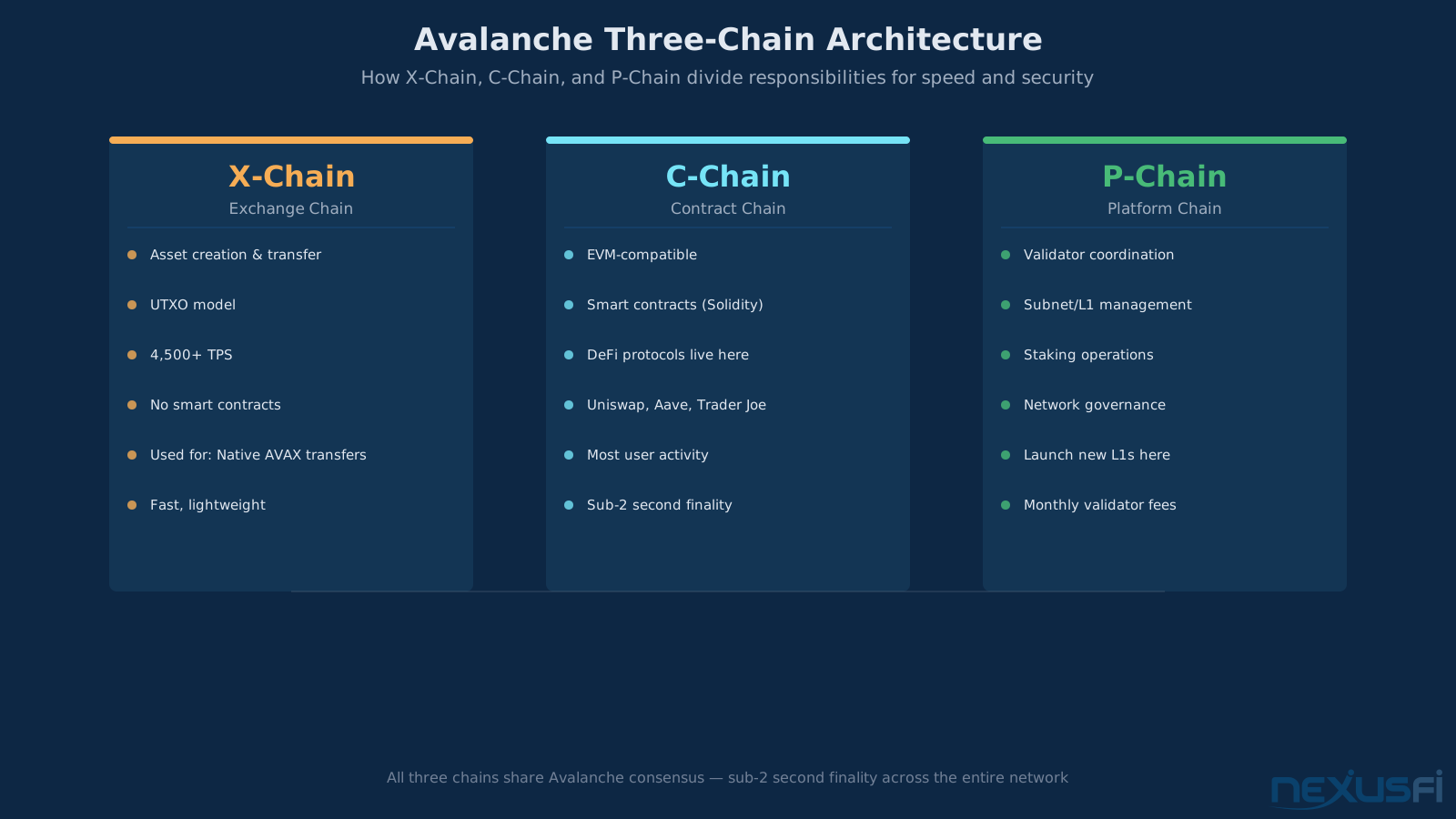
Most blockchains try to do everything on one chain. Avalanche splits responsibilities across three specialized chains operating simultaneously. This is how it achieves 4,500+ TPS with sub-2 second finality without the congestion problems that plague single-chain designs.
X-Chain (Exchange Chain) handles asset issuance and native AVAX transfers. It uses a UTXO model — same architecture as Bitcoin — and doesn't support smart contracts. When you send AVAX directly between wallets at the protocol level, you're on the X-Chain.
C-Chain (Contract Chain) is where all DeFi happens. It's fully EVM-compatible — any Solidity contract that runs on Ethereum runs on C-Chain. Trader Joe, BENQI, Aave V3, GMX, Stargate — every DeFi protocol on Avalanche lives here. This is where most users interact with the network.
P-Chain (Platform Chain) coordinates validators and manages the ecosystem of sovereign chains now called Avalanche L1s. If you want to launch a new L1, stake AVAX as a validator, or participate in governance, you're working with the P-Chain.
For traders: when you buy AVAX and use it in DeFi, you're almost always on C-Chain. High P-Chain activity means new L1s launching and staking operations — both drive AVAX demand directly.
Snowman Consensus: How AVAX Finalizes in Under 2 Seconds #
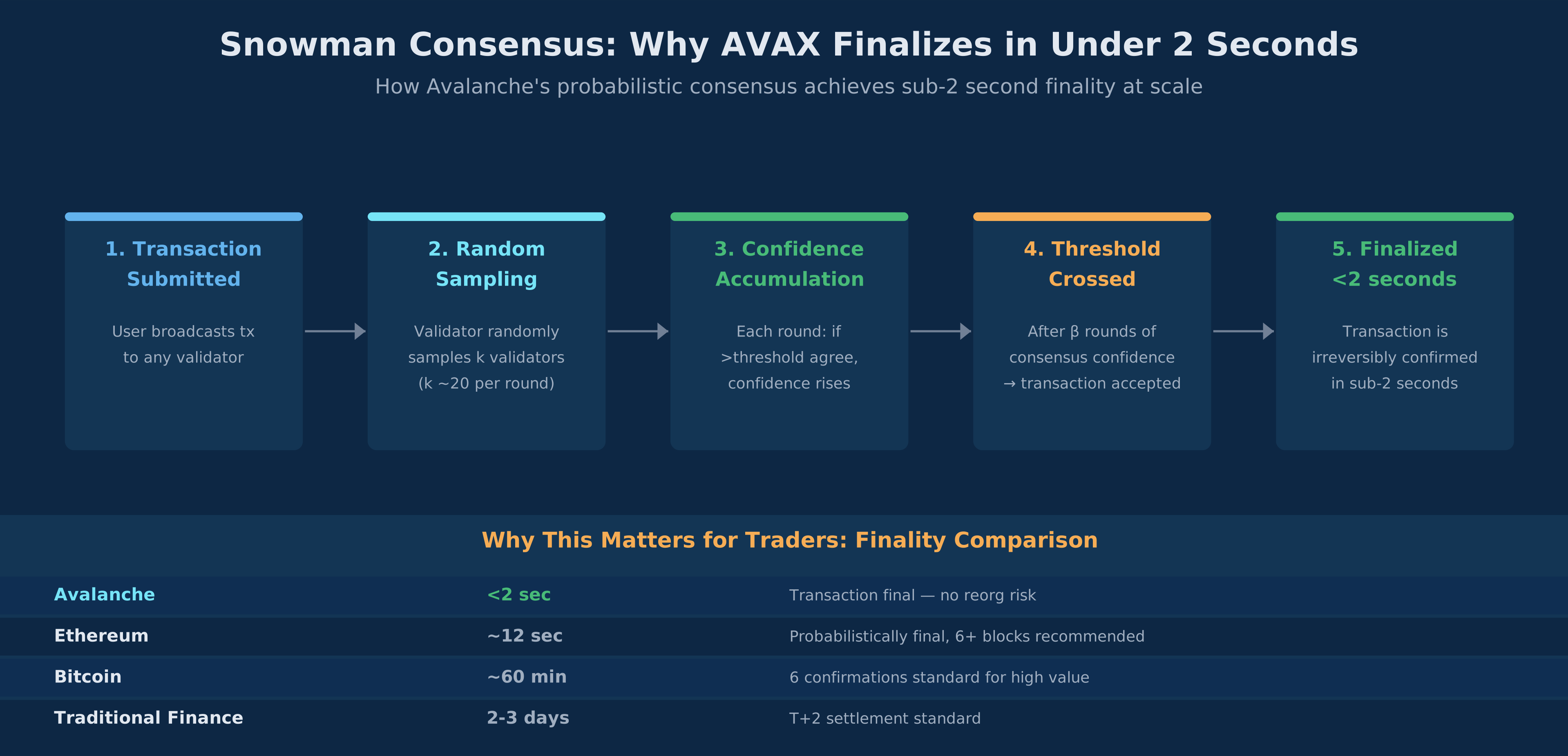
Snowman consensus is why Avalanche finalizes in under 2 seconds at scale. Traditional Nakamoto consensus (Bitcoin) requires every node to wait for enough blocks. BFT systems like Tendermint require 2/3 of validators to vote on each block. Both have hard scalability limits.
Snowman works differently through probabilistic gossip:
- A transaction hits any validator on the network
- That validator randomly samples ~20 validators and asks "is this valid?"
- If threshold agreement is reached, confidence in the transaction increases
- After enough consecutive rounds of threshold-crossing agreement, the transaction finalizes
- Entire process completes in under 2 seconds under normal conditions
The key insight: you don't need every validator to vote. You need a random sample to repeatedly agree. Statistical guarantees emerge from the sampling process. Adding more validators doesn't slow the network — it increases Sybil resistance.
Sub-2 second finality isn't marketing. On Avalanche DeFi, transaction confirmation speed is genuinely different from Ethereum mainnet — you stop second-guessing whether your trade went through.
AVAX Tokenomics: The Fixed Supply Story #
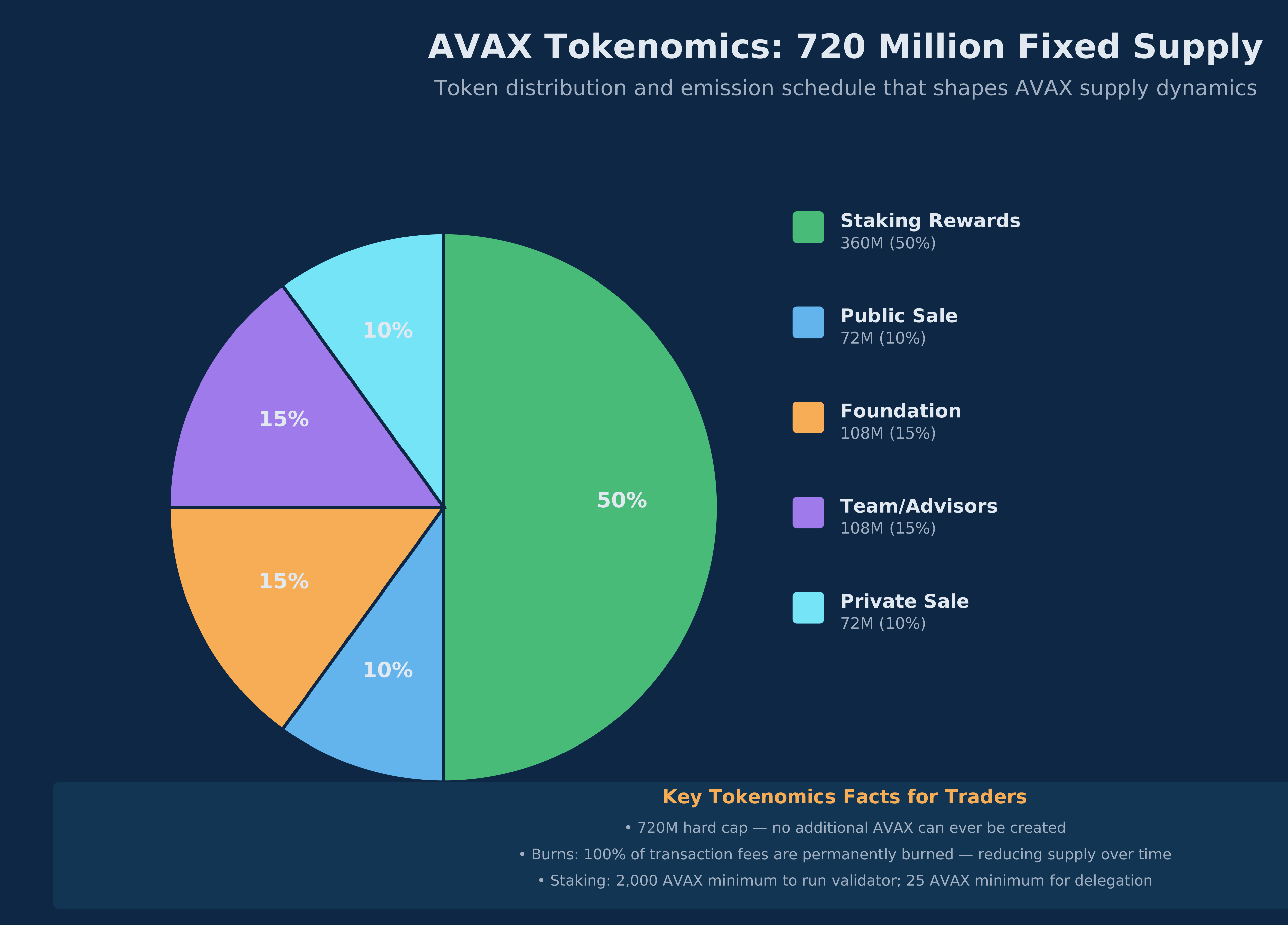
The 720 million hard cap is the most important number in AVAX tokenomics. Nobody can ever issue more than 720 million AVAX. Initial distribution:
- 50% (360M AVAX) -- Staking rewards, distributed over time
- 15% (108M AVAX) -- Avalanche Foundation, for ecosystem development
- 15% (108M AVAX) -- Team and advisors, vesting schedules
- 10% (72M AVAX) -- Public sale participants
- 10% (72M AVAX) -- Private sale participants
The burn mechanism is the bullish case's core argument. Every transaction fee on every chain is permanently destroyed — not paid to validators, not sent to a treasury. Burned. When network activity is high enough that burns exceed new emissions, AVAX becomes net deflationary. As @vmodus discussed in a NexusFi forum thread, position sizing for altcoin plays requires understanding the underlying supply dynamics — the burn mechanism creates at the core different supply math than inflationary L1s (2021).
Minimum staking requirements: Run a validator: 2,000 AVAX (~$18,000 at $9). Delegate: 25 AVAX (~$225). Liquid staking (BENQI sAVAX): No minimum. Lock-up periods run 2 weeks to 1 year — once staked, AVAX cannot be unstaked early.
Avalanche L1s: The Multi-Chain Explosion After Avalanche9000 #
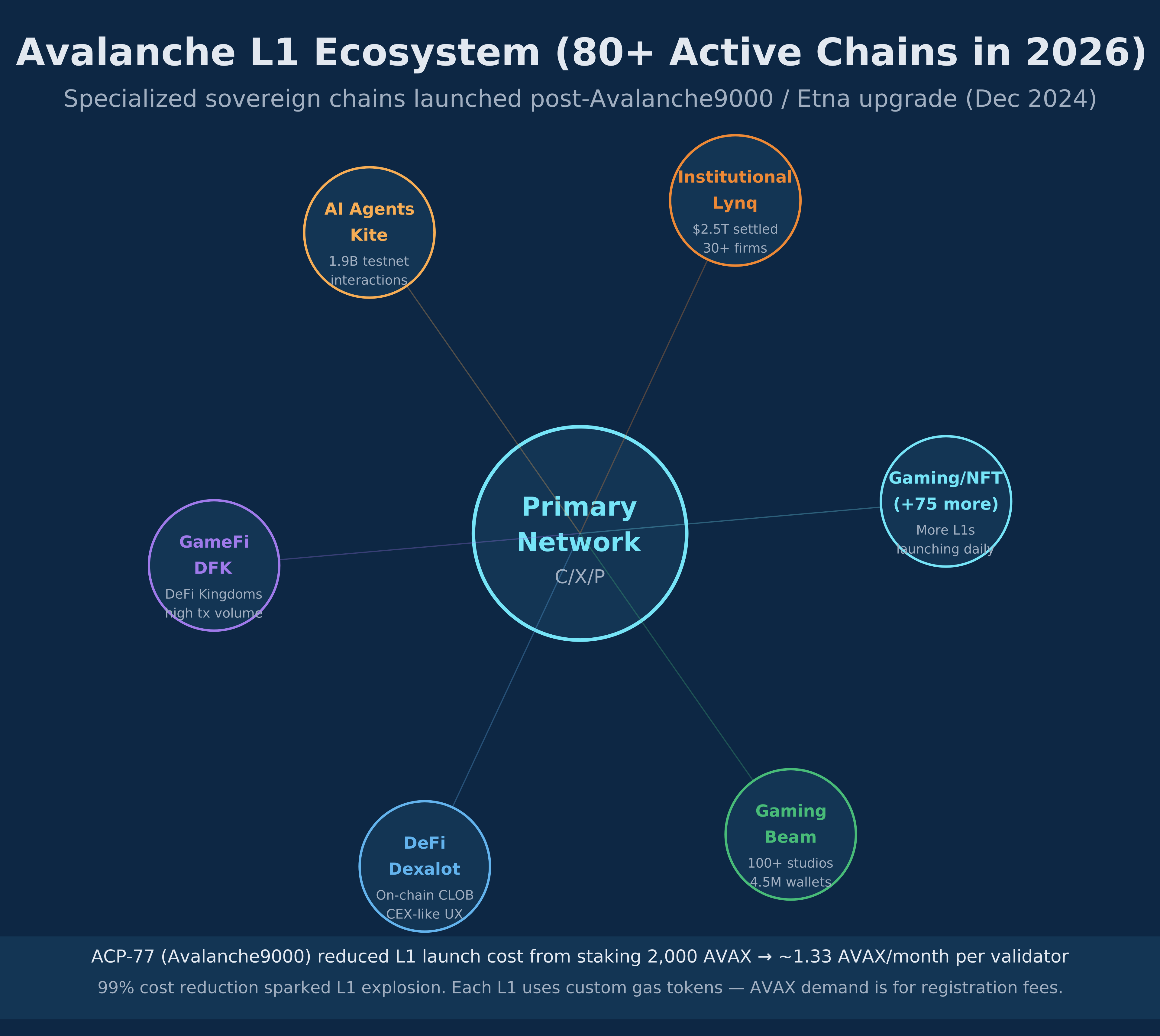
The Avalanche9000 upgrade activated December 16, 2024, with the Etna hard fork. Before this, launching a subnet required validators to continuously stake 2,000 AVAX — a $20,000+ barrier. ACP-77 replaced this with ~1.33 AVAX per validator per month. A 99% cost reduction. The result: over 80 interconnected Avalanche L1s are active by mid-2026.
Beam (gaming): Launched by Merit Circle DAO. Supports over 100 game studios and 4.5 million unique wallet addresses. Gaming requires high throughput and custom gas tokens — exactly what an Avalanche L1 provides.
Kite (AI agents): Launched mainnet April 28, 2026. An execution and settlement layer for autonomous AI agents. Processed 1.9 billion agent interactions on testnet before launch. Daily peaks reached 30 million calls.
Lynq by Tassat (institutional settlement): Upgraded to a dedicated Avalanche L1 on April 29, 2026. Over 30 institutions using it including B2C2, Crypto.com, FalconX, Fireblocks, Galaxy, and Wintermute. Historical volume: over $2.5 trillion in transactions.
For traders: each new L1 that succeeds increases AVAX demand — validators pay registration fees in AVAX, applications need AVAX for cross-chain messaging, and ecosystem growth drives speculative interest. Track at subnets.avax.network.
DeFi on Avalanche: The Protocols That Matter #
All DeFi on Avalanche runs on C-Chain. Gas fees are paid in AVAX. Transactions confirm in under 2 seconds. The protocol contracts are often identical or near-identical forks of Ethereum protocols.
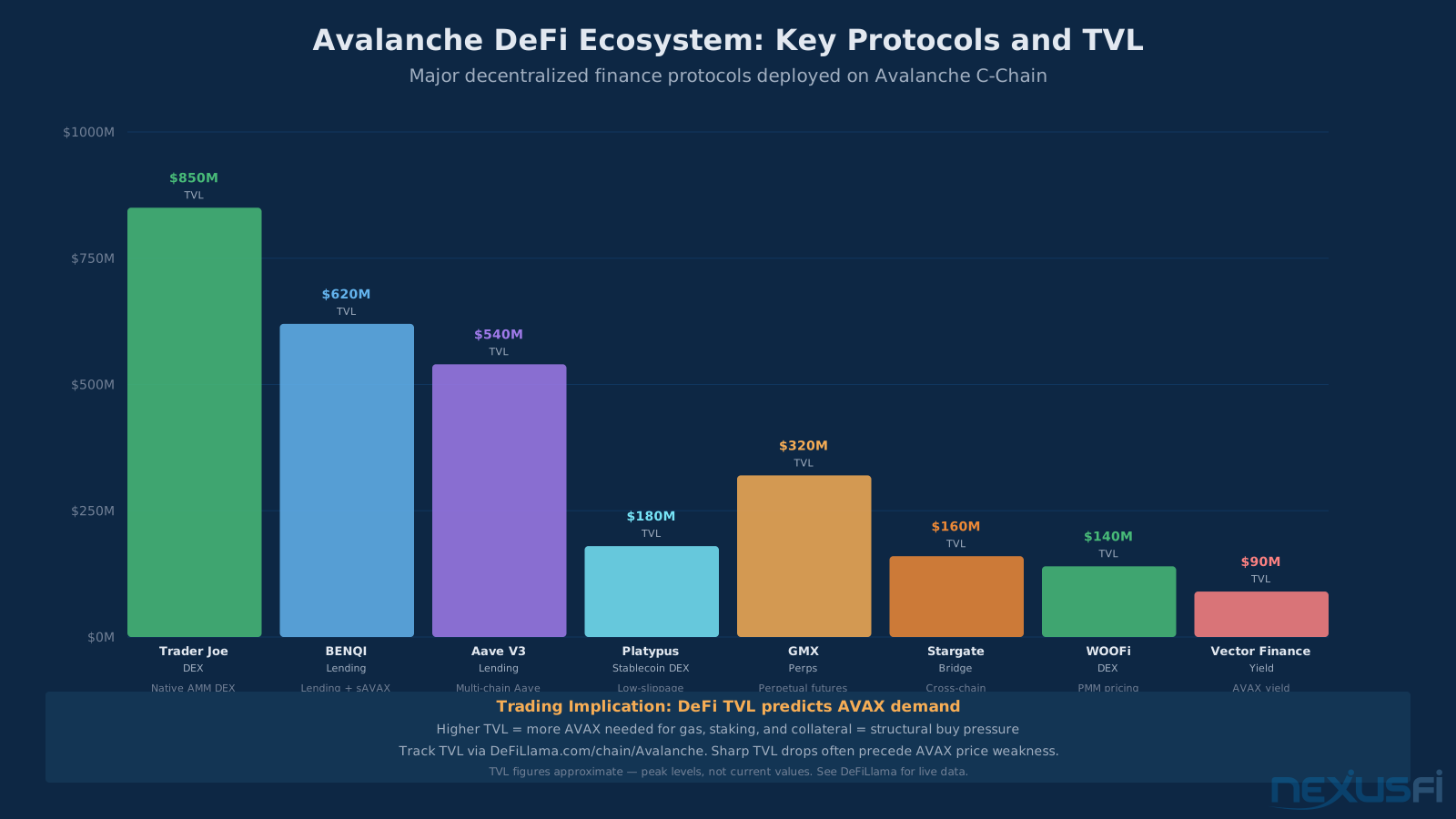
Trader Joe is the dominant native DEX. Built specifically for Avalanche, it pioneered the Liquidity Book AMM design — concentrated liquidity that provides better capital efficiency than traditional constant-product AMMs. Most AVAX spot trading happens through Trader Joe. TVL peaked around $850M.
BENQI serves two functions: lending market and liquid staking. On the lending side, deposit assets to earn yield or borrow against AVAX collateral. On the staking side, BENQI's sAVAX token appreciates against AVAX as staking rewards accrue, while remaining tradeable on DeFi. TVL peaked around $620M.
Aave V3 brought the dominant Ethereum lending protocol to Avalanche. The V3 deployment includes efficiency mode (e-mode) for correlated assets. For traders who want lending with Aave's battle-tested security profile, this is the choice.
GMX lets you trade BTC, ETH, AVAX, and other assets with up to 50x leverage using a GLP liquidity pool model. Liquidity providers earn trading fees and liquidation income. For crypto-native traders who want on-chain perps exposure, GMX is legitimate infrastructure.
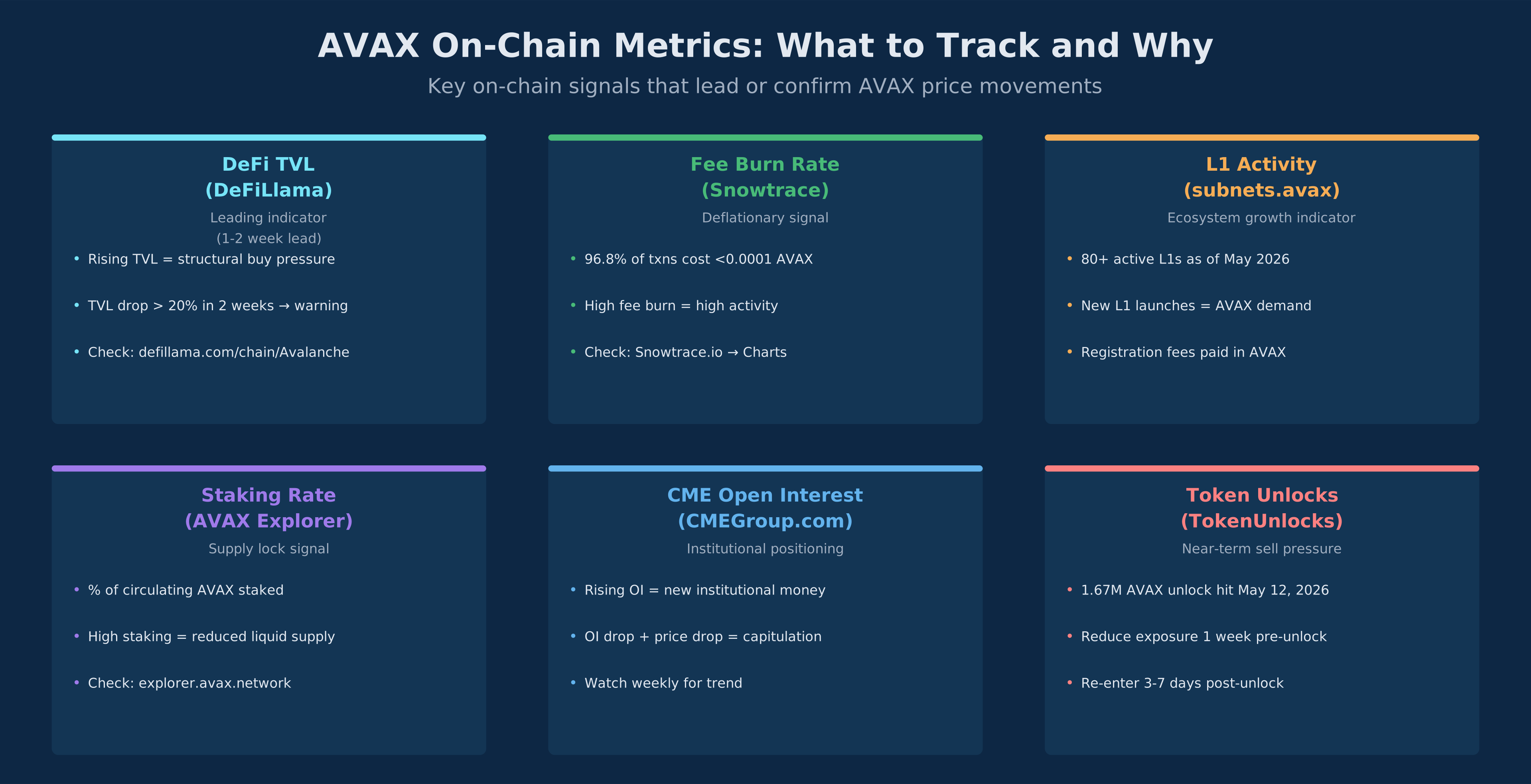
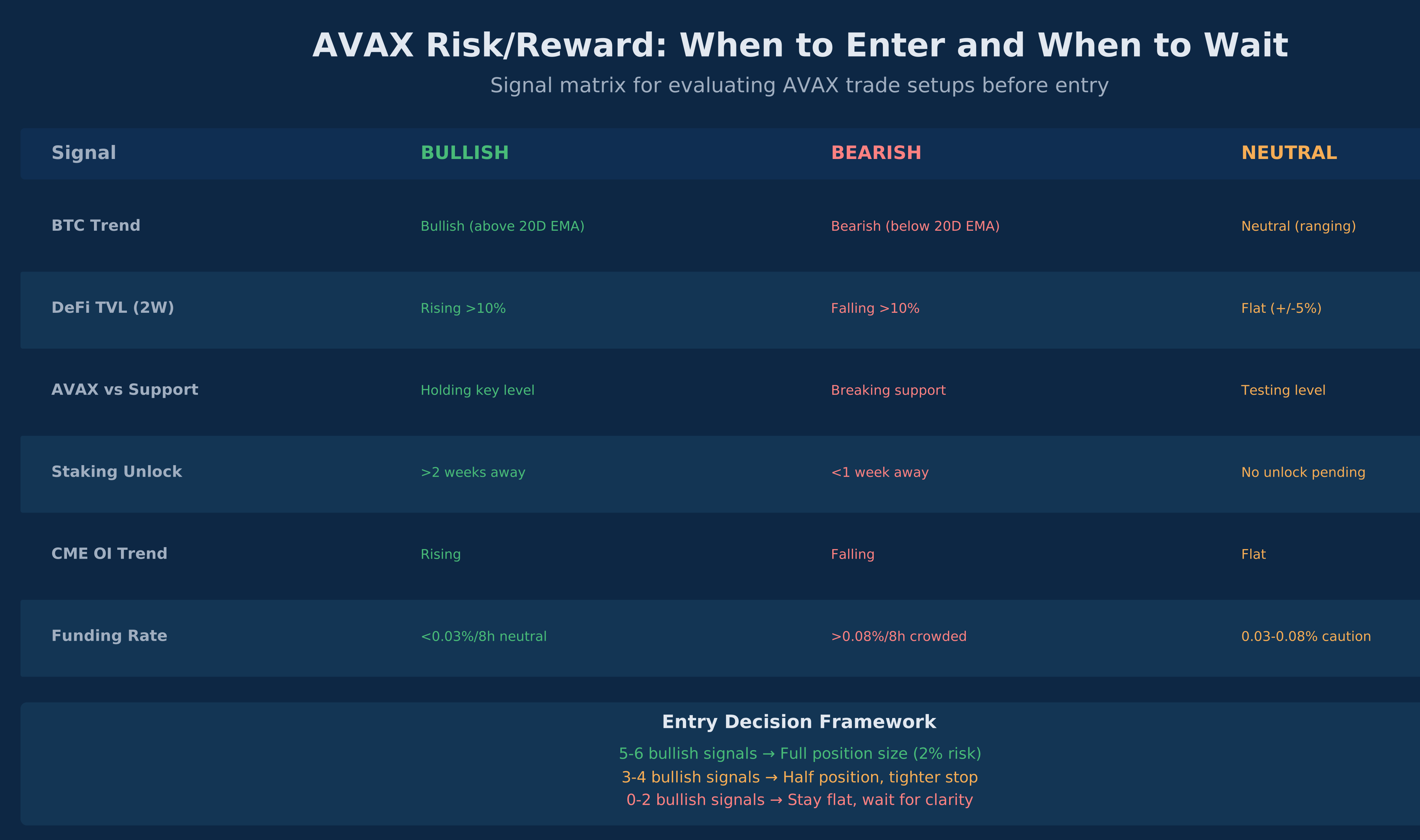
TVL is a leading indicator for AVAX price. Watch defillama.com/chain/Avalanche. When TVL rises, more AVAX is locked in protocols — less liquid supply, more gas demand, structural buy pressure. Sharp TVL drops often precede AVAX price weakness by 1-2 weeks.
As @AlexMD1 showed in a NexusFi Cryptocurrency forum post on volume-based altcoin strategies, on-chain activity metrics are among the most reliable leading indicators for crypto price movements when used systematically (2018).
Institutional Adoption: CME Futures, JPMorgan, and Enterprise Deployments #
The institutional AVAX story accelerated much in 2025-2026:
CME AVAX Futures (May 6, 2026). Standard contracts are 5,000 AVAX, micro contracts are 500 AVAX. Cash-settled to CF Benchmarks Reference Rates. As @SMCJB tracked in a NexusFi Cryptocurrency discussion, CME's expansion of crypto reference rates has been the essential precursor to each new futures contract launch — "without more reference rates the CME can not launch more crypto futures" — and AVAX was a prime candidate from the start (NexusFi, 2022, 3 thanks). For US traders, CME crypto futures qualify for Section 1256 tax treatment: 60% long-term / 40% short-term capital gains regardless of holding period. That's a meaningful advantage over CEX perpetuals.
Bitwise Avalanche ETF (April 2026). The BAVA ETF launched targeting 5.4% yield through in-house staking. An ETF that automatically stakes AVAX and passes yield to shareholders creates structural buy pressure as AUM grows.
Avalanche Treasury Co. announced a $675 million business combination targeting a $1 billion ecosystem treasury for high-scale subnet pilots.
JPMorgan Onyx and Citi have piloted Avalanche infrastructure for institutional settlement. These aren't buying AVAX in size yet, but they're creating the institutional familiarity that precedes larger commitment.
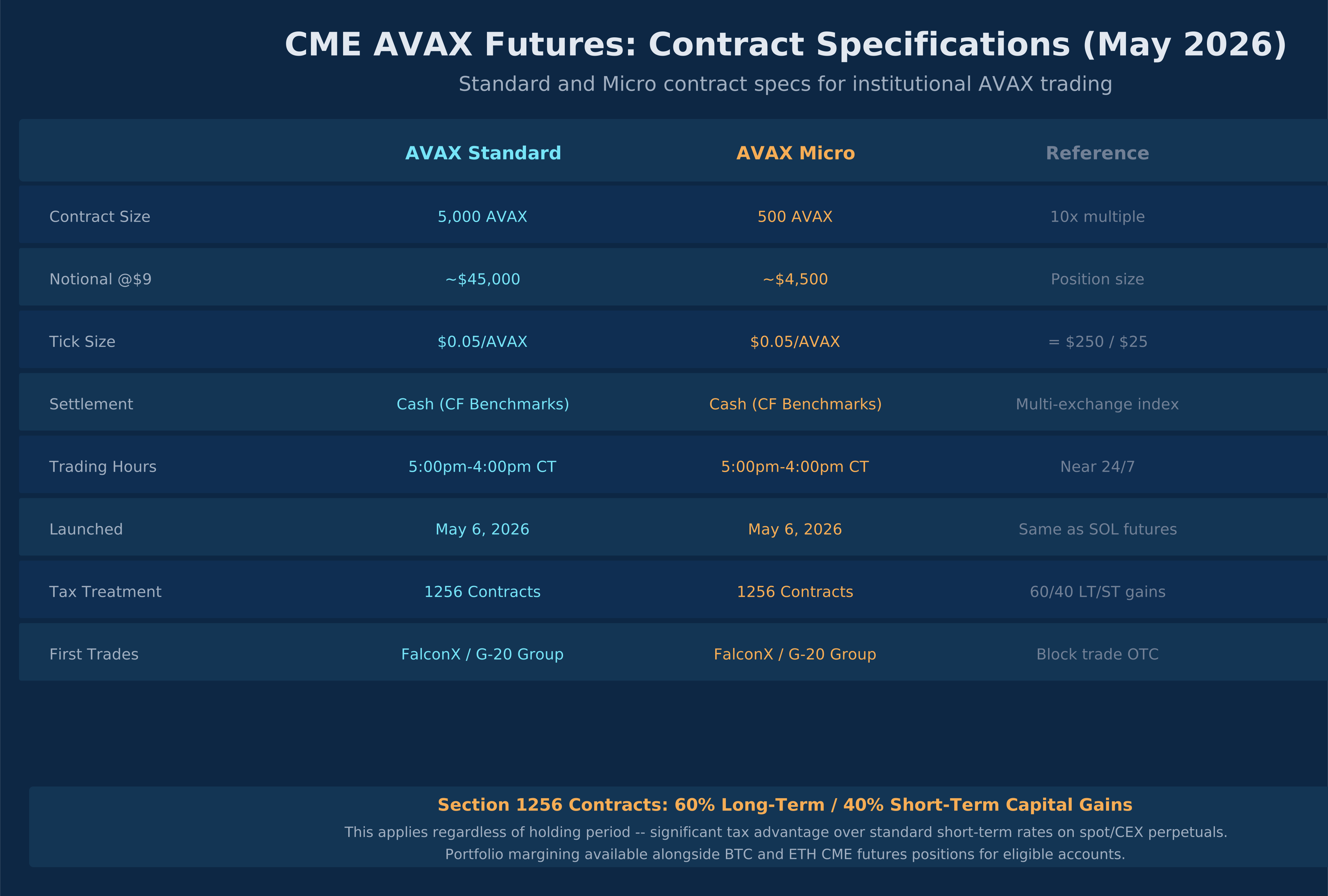
CME futures don't mean institutions are buying AVAX — they mean institutions CAN trade AVAX with regulated instruments. Watch actual ETF inflows and OI growth for evidence of real institutional buying versus narrative.
AVAX Price History: From $4 Launch to $147 ATH and Back #
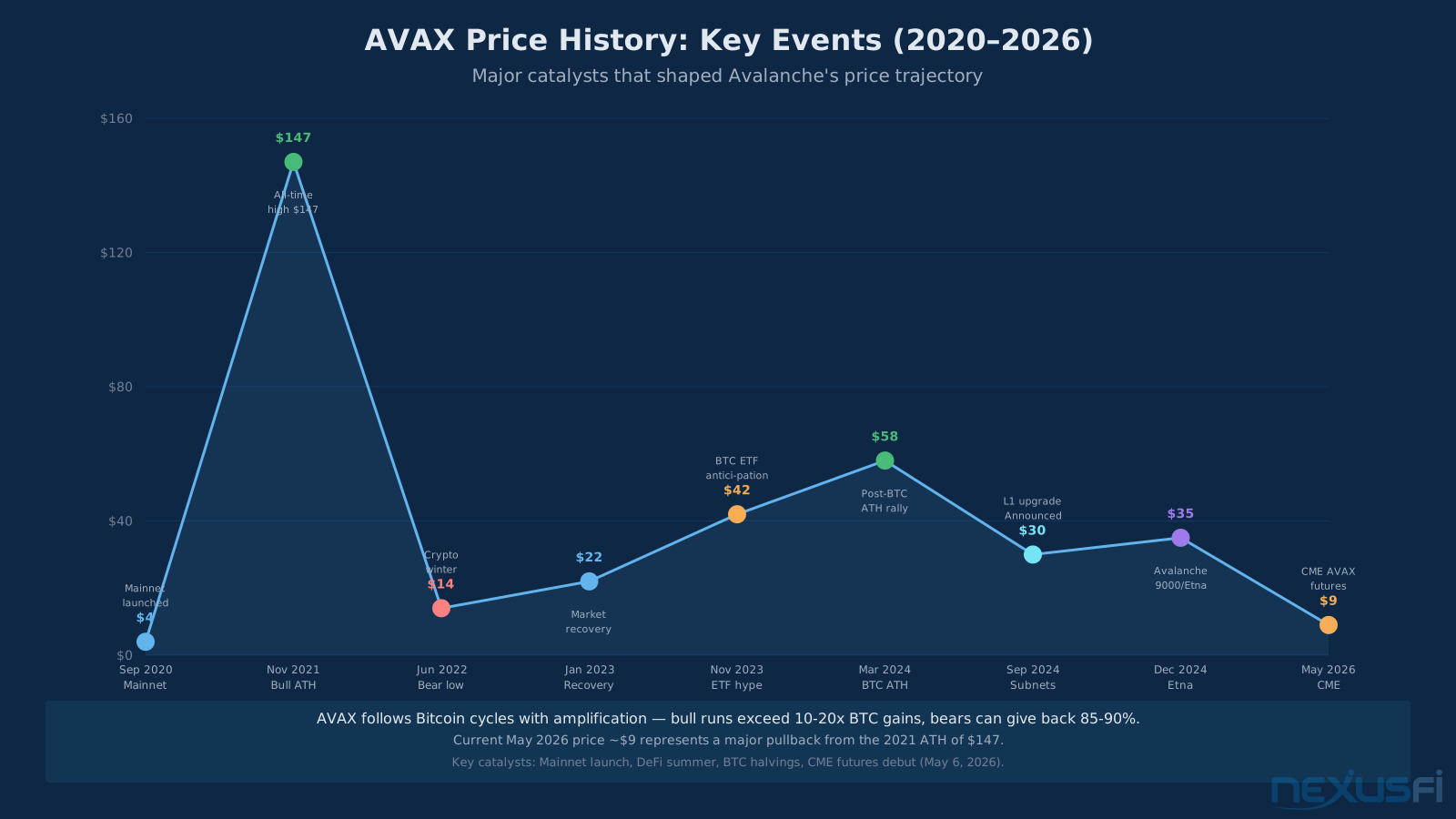
AVAX launched at around $4 in September 2020. By November 2021 — peak DeFi mania — it hit $147. That's a 36x move in 14 months. Then crypto winter hit. By June 2022, AVAX was back around $14. A 90% drawdown from ATH.
The 2022-2023 bear market saw stability between $10-$25, with BTC ETF anticipation lifting AVAX to around $42 in late 2023. Post-BTC ATH in early 2024, AVAX ran to $58. Then came consolidation. The Avalanche9000 upgrade in December 2024 was a genuine technical milestone but didn't produce a sustained price breakout. CME futures launched May 2026 with AVAX sitting near $9.
Key pattern recognition for AVAX trading:
- AVAX follows Bitcoin cycles with amplification -- bull runs exceed BTC gains 2-3x, bears match or exceed BTC losses
- DeFi TVL changes lead price by 1-2 weeks in both directions
- Major ecosystem announcements create 20-40% short-term moves
- AVAX has historically underperformed Solana in the same cycle -- worth noting for relative value trades
Technical Analysis: Key Price Levels to Watch in 2026 #
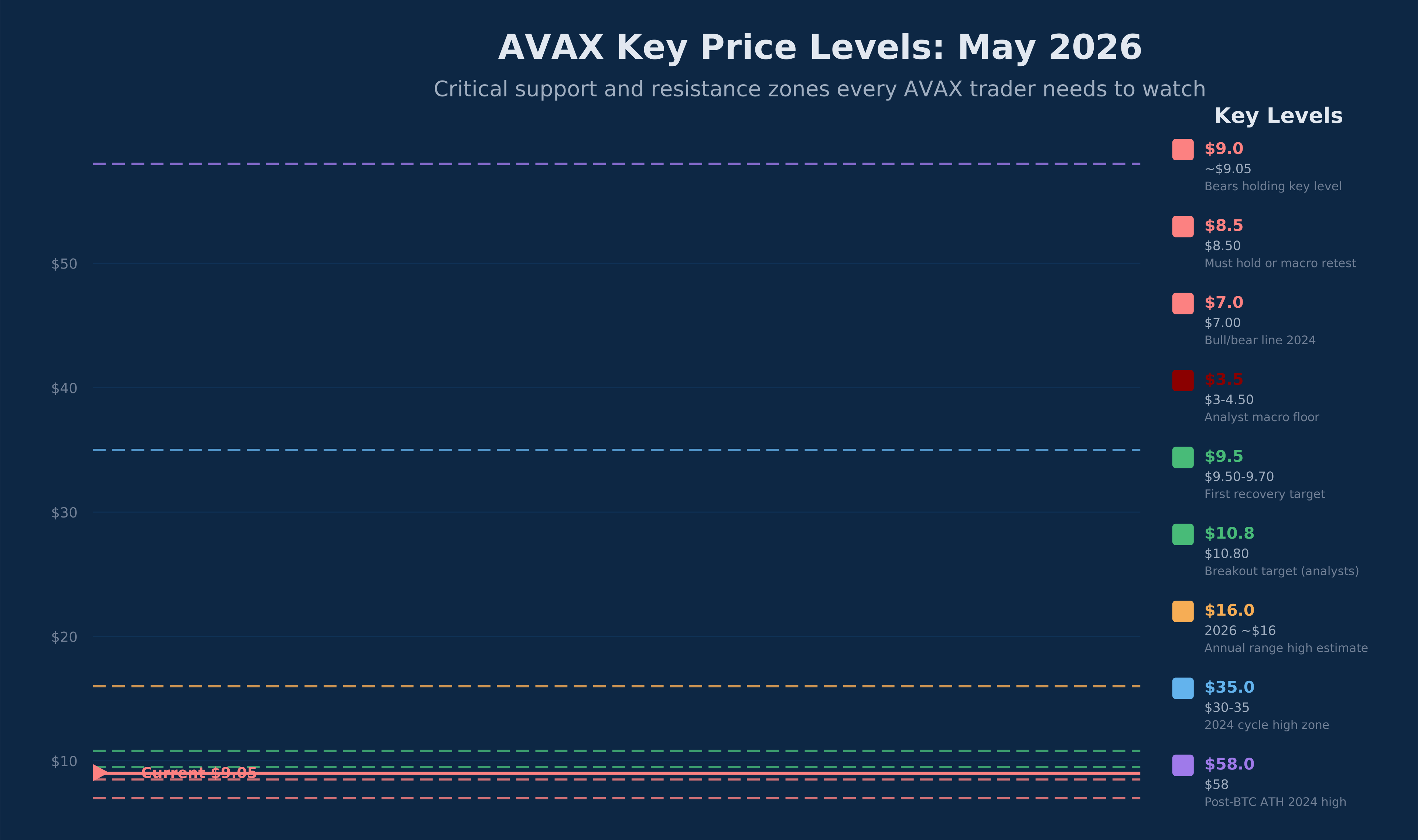
As of May 19, 2026, AVAX is trading near $9.05 — down 2.32% in the prior 24 hours, testing the lower end of its range.
Support levels:
- $9.00: Current critical zone. Clean loss of $9 opens the floor much.
- $8.50: First meaningful support below $9. The $9.00-9.10 area has been defended multiple times.
- $7.00: The 2024 bull/bear line. A break here would be technically severe.
- $3.00-$4.50: Macro support from analyst technical analysis -- the floor where long-term buyers step in at scale.
Resistance levels:
- $9.50-$9.70: First resistance. AVAX must reclaim this before the recovery case becomes convincing.
- $10.80: Key breakout target highlighted by multiple technical analysts. Clearing this with volume confirms buyers are taking control.
- $16: Analyst consensus range top for 2026 (InvestingHaven forecast: $8-$16 range).
- $30-$35: 2024 cycle high zone. Medium-term resistance requiring a sustained crypto bull market.
Avalanche's average transaction fee efficiency is at record lows — 96.8% of all transactions cost less than 0.0001 AVAX. Low fees support usage; usage supports TVL; TVL supports price. The fundamental case is intact even with weak price action.
Trading AVAX: Practical Strategies That Work #
AVAX is a high-beta, momentum-driven asset. Approaches that work:
BTC-correlated breakout trading. AVAX amplifies BTC moves by 1.5-3x. When BTC breaks out of a compression range, AVAX typically follows with amplification. Trade AVAX with BTC as your directional guide. Risk management is critical — the amplification works both ways.
DeFi TVL divergence trades. If AVAX price is flat or declining while DeFi TVL is rising, that's a setup. Rising TVL with flat price often means institutional accumulation that hasn't been priced in. Monitor DeFiLlama weekly. A 20%+ TVL increase over 2 weeks that doesn't reflect in price is a signal worth examining.
Trigger-event positioning. Avalanche has a roadmap with known catalysts. CME futures (May 6, 2026), Etna upgrade (December 2024) — these were known weeks to months in advance. Position in advance of confirmed catalysts with defined downside risk.
Relative value vs. Solana. AVAX and SOL are often compared. When AVAX/SOL ratio compresses much (AVAX underperforms SOL by 40%+ in the same cycle), it creates a potential mean-reversion trade. SOL has structurally outperformed AVAX in recent cycles, but the ratio has historically shown mean-reversion tendencies at extremes.
Trying to scalp AVAX on 5-minute charts without significant capital is a losing game for most traders. Bid-ask spread on smaller exchanges, funding rates on perpetuals, and high volatility make tight intraday scalping unprofitable. AVAX rewards patient positioning around catalysts and trend-following on confirmed breakouts.
AVAX Staking: Earning Yield While You Hold #
If you're holding AVAX for 3+ months, not staking it is leaving money on the table. Three options:
Run a validator. Minimum 2,000 AVAX (~$18,000 at $9). Typical APR: 8-11%. You choose your lock-up period (2 weeks to 1 year). Requires dedicated node infrastructure. Highest yield option for large holders.
Delegate to a validator. Minimum 25 AVAX. Typical APR: 7-9% minus the validator's commission (2-10%). Same lock-up structure as validators. The sweet spot for holders with $250-$20,000 in AVAX exposure.
Liquid staking via sAVAX (BENQI). No minimum. Yield: 5-8%. The key advantage: sAVAX is liquid — you can trade it or use it as DeFi collateral without unlocking. The risk: smart contract exposure to BENQI's protocol.
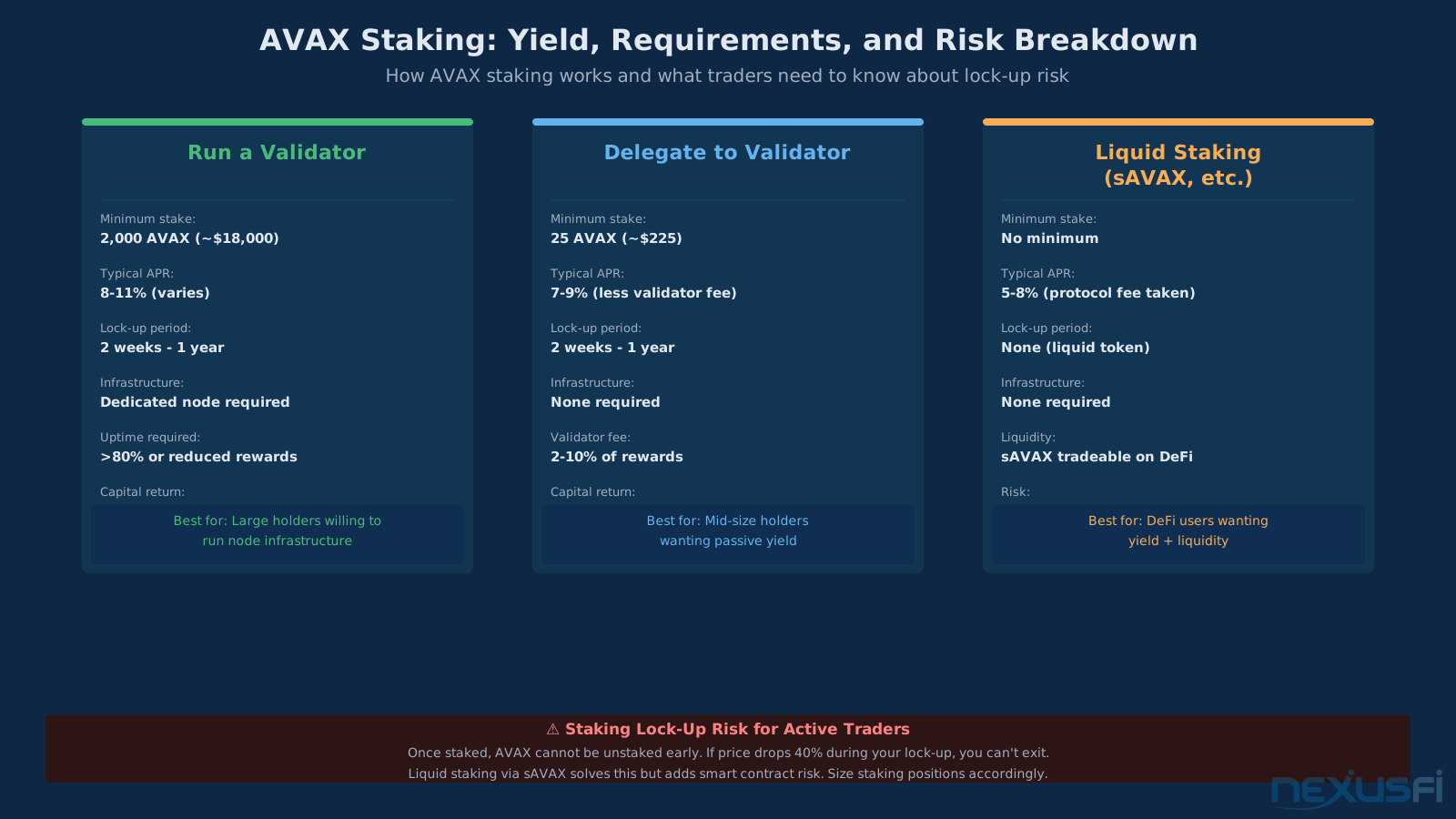
Once staked, AVAX cannot be unstaked early. If AVAX drops 50% during your lock-up, you can't exit. Size your staked positions to what you can hold through a full drawdown without being forced to sell at a loss.
Risk Management for AVAX Traders #
AVAX is not a "set it and forget it" position. It's a high-volatility asset that can lose 80% in a bear market.
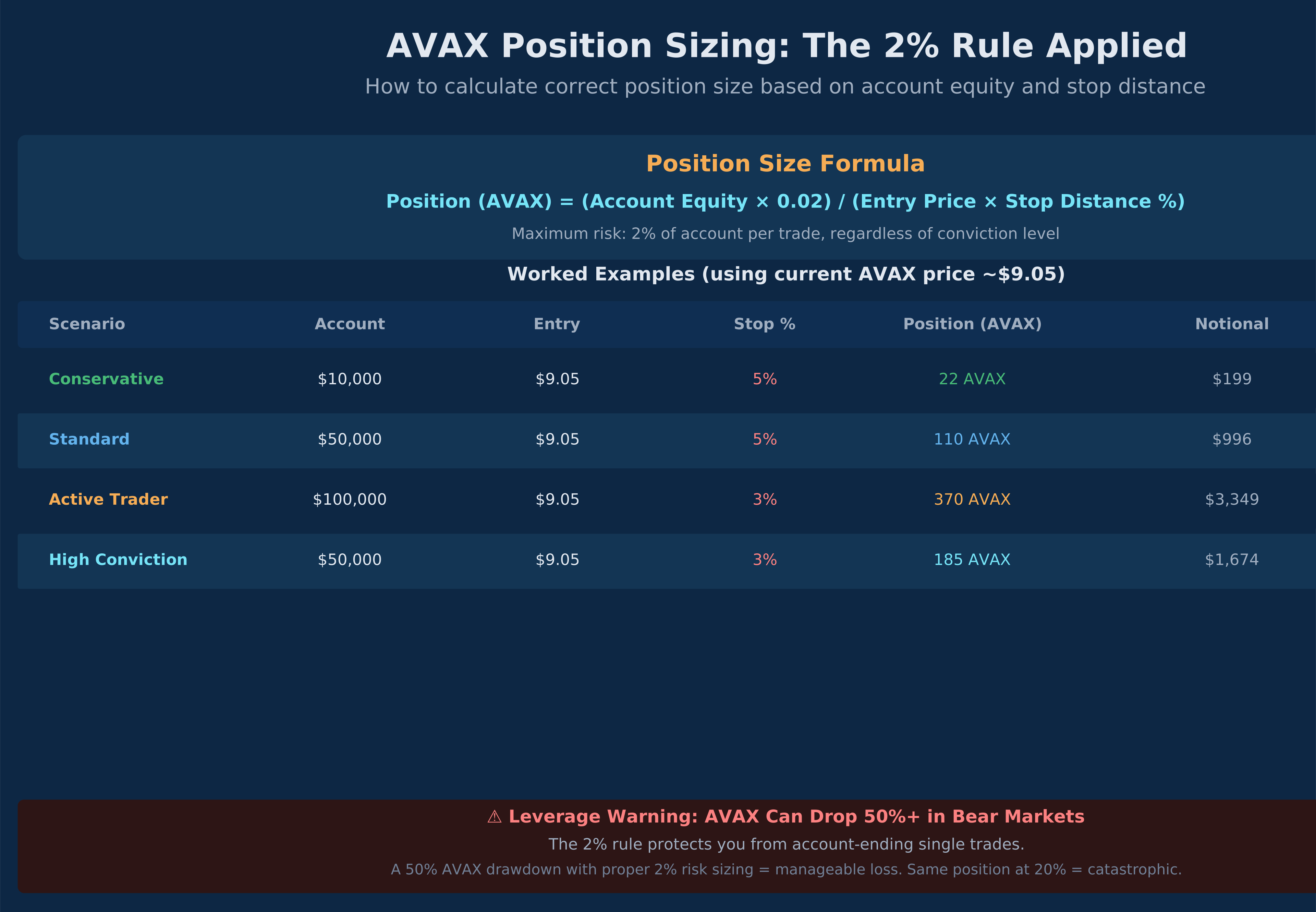
Position sizing. AVAX should represent no more than 20-30% of your crypto portfolio for most traders. The 2% account risk rule: never risk more than 2% of account equity on a single AVAX trade. Calculate from your stop distance, not from conviction level.
Position calculation: Position (AVAX) = (Account Equity x 0.02) / (Entry Price x Stop Distance %). With $50,000 account, $9.05 entry, 5% stop: Position = $1,000 / ($9.05 x 0.05) = 220 AVAX. Notional: ~$2,000.
Correlation risk. A "diversified" crypto portfolio with BTC, ETH, SOL, and AVAX is not as diversified as it looks — all four move together in major market events. When correlation is 0.9+, position sizing across all crypto assets matters more than which specific assets you hold. As @Fat Tails explained in a NexusFi discussion on diversification, "in case of a major financial crisis the negative or weak correlation may turn into a strong positive correlation, which effectively invalidates the concept when it is needed most" — a warning that applies directly to crypto portfolios where BTC drawdowns drag everything down in lockstep (NexusFi, 2012, 3 thanks).
Staking lock-up risk. Don't stake more than you can afford to hold for the full lock-up period regardless of price.
Token unlock awareness. The May 12, 2026 unlock of 1.67 million AVAX was known in advance and created selling pressure. Check the unlock schedule before sizing in.
AVAX vs Competitors: What Traders Actually Need to Know #
The comparison that matters isn't which blockchain is technically "better" — it's which ecosystem is winning users and capital.
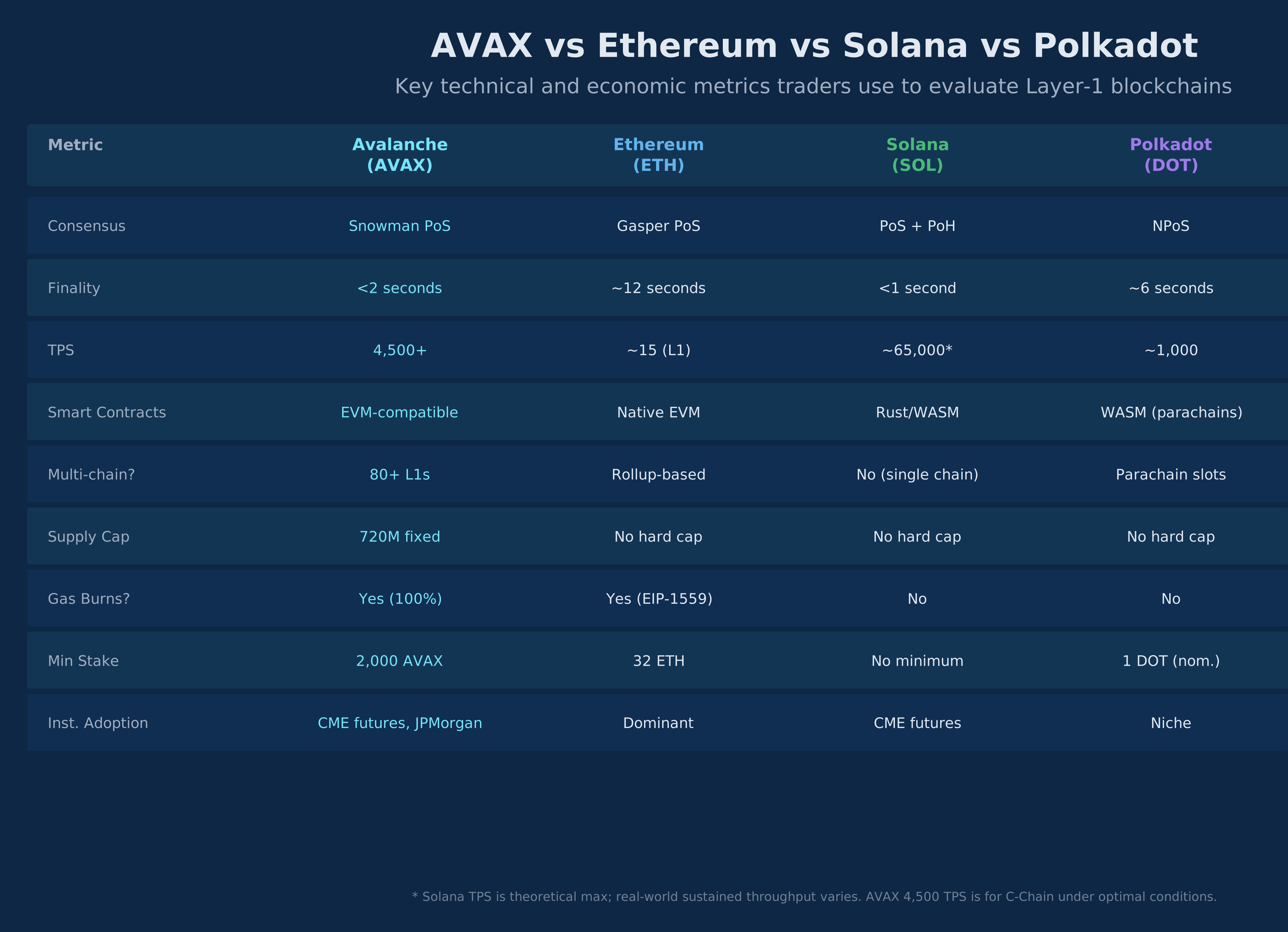
AVAX vs Solana: SOL has dramatically outperformed AVAX in the 2024-2025 cycle. Solana's consumer DeFi and memecoin activity generated massive fee revenue and ecosystem growth. Both got CME futures in May 2026, but SOL has larger DeFi TVL and more active users. Current momentum clearly favors SOL, though the valuation gap may create AVAX mean-reversion opportunities.
AVAX vs Ethereum: Not really competing for the same users right now. Ethereum's L2 rollup ecosystem handles consumer DeFi at lower fees. Avalanche is competing in the enterprise/institutional space and the gaming/L1 launch space.
AVAX vs Polkadot: Both use multi-chain architecture, but they've diverged. Polkadot's parachain slot auction system has struggled to attract sustained developer activity. Avalanche's L1 model with monthly fees has produced 80+ active chains vs. Polkadot's more modest parachain ecosystem.
How to Buy and Trade AVAX #
AVAX is available on every major centralized exchange: Coinbase, Binance, Kraken, Gemini. For US traders, Coinbase is the most straightforward entry point.
For on-chain access:
- Buy AVAX on a CEX
- Withdraw to a wallet that supports Avalanche (Core wallet -- Avalanche's native wallet, or MetaMask with C-Chain RPC added)
- Ensure you withdraw to the C-Chain address if using DeFi protocols
- Connect to DeFi protocols via Core or MetaMask
For perpetuals and leverage: AVAX perps are available on dYdX, GMX, Hyperliquid, and major CEX perpetuals desks (Binance, Bybit, OKX). CME AVAX futures are available through institutional prime brokers.
Tracking tools: CoinGecko for price; DeFiLlama for TVL; Snowtrace (C-Chain explorer) for on-chain activity; subnets.avax.network for L1 ecosystem metrics.
Common Mistakes AVAX Traders Make #
Treating it like a stable DeFi yield play. AVAX staking yields 7-10%. That sounds safe. But AVAX can drop 50% in a month. A 9% annual yield on a 50% drawdown still loses you 41%.
Ignoring ecosystem metrics. Price alone doesn't tell you if Avalanche is gaining or losing ground. Check DeFiLlama TVL, active L1 count, and transaction volumes monthly. Rising TVL with flat price is opportunity. Falling TVL with rising price is warning.
Confusing institutional interest with institutional buying. CME futures and ETFs are legitimacy signals. They mean institutions CAN trade AVAX. Watch actual ETF inflows and OI growth for evidence of real buying.
Staking amounts you need liquid. The lock-up period is real. People have staked large amounts, had financial emergencies, and been unable to access funds.
Ignoring token unlocks. The May 12, 2026 unlock created selling pressure. Avalanche's unlock schedule is public — know the upcoming dates and size so.
Knowledge Map
Prerequisites
Understand these firstGo Deeper
Build on this knowledgeReferences This Article
Articles that build on this topicCitations
- — Becoming A Better Trader (2021) 👍 3“I invest in cryptos more than I trade them, so I factor in use-case (real world utility), potential return on investment, circulating supply relative to the current price and performance of the asset.”
- — Becoming A Better Trader (2021) 👍 5“Think about what you are doing with the lesser known coins... it is really a form of arbitrage, especially if you are trading the cryptos against themselves.”
- — Systematic Altcoin Trading Strategy using Trading Volumes (2018) 👍 2“Findings suggest highly profitable trading strategies can be developed which use volume shocks and past returns to form portfolios which are re-balanced daily.”
- — 11 New CME Crypto Reference Rates = More Futures Soon? (2022) 👍 3“CME is launching 11 new crypto reference rates. Without more reference rates the CME can not launch more crypto futures. I suspect that in the next year we will see CME announce several more crypto futures based upon these reference rates.”
- — Diversification (2012) 👍 3“In case of a major financial crisis the negative or weak correlation may turn into a strong positive correlation, which effectively invalidates the concept when it is needed most.”
- Eco Protocol — What Is Avalanche? AVAX, L1s, and Subnets in 2026 (2026)
- Brave New Coin — AVAX Price Prediction: AVAX Slips Near $9 (2026)
- CryptoNews — What Happened on Avalanche in the Past 30 Days? (2026)
- InvestingHaven — Avalanche (AVAX) Price Prediction 2026-2030 (2026)
- Capital.com — What is Avalanche and how to trade it (2026)