



Real World Assets (RWA) in Crypto: Tokenized Treasuries, Bonds, and the TradFi-DeFi Bridge for Futures Traders
Overview #
The biggest quiet story in crypto right now isn't a new blockchain or a meme coin. It's Wall Street putting its financial infrastructure on-chain.
Real world assets — tokenized representations of off-chain financial instruments — have gone from a theoretical DeFi concept to a $15+ billion institutional market in under four years. BlackRock launched BUIDL, the world's largest asset manager's first tokenized fund, in March 2024. Franklin Templeton's BENJI has been accumulating on-chain assets since 2021. Ondo Finance made tokenized US Treasuries accessible to anyone who can pass KYC. By 2026, this isn't fringe crypto — it's legitimate infrastructure that institutional capital is actively building on.
For futures traders, this matters in a specific and practical way. You're not here to speculate on token prices. You're here to answer one question: how can on-chain yield-bearing instruments improve your capital efficiency as an active trader?
The honest answer is that RWA tokens are portfolio infrastructure, not trading vehicles. The liquidity profile, redemption mechanics, and transfer restrictions make them at the core different from BTC futures or ES contracts. But for idle capital that would otherwise sit in stablecoins earning nothing, they're potentially significant — especially as exchange collateral integration approaches.
This article covers what RWA tokenization actually is, how the major protocols work, what the yields look like versus alternatives, and the practical blueprint for futures traders who want to use this. If you're already trading Bitcoin basis trades or managing futures margin and leverage, this is the infrastructure layer that sits beneath your trading capital.
Key Concepts #
Real World Asset (RWA): An off-chain financial instrument — Treasury bills, bonds, corporate credit, commodities, real estate — represented as a token on a blockchain. The token derives its value from the underlying asset, typically held by a regulated custodian.
Tokenized Treasury: An on-chain token backed by US Treasury bills or other short-duration government securities. The token tracks the value of the underlying T-bills and passes through yield to token holders, either via rebasing (token supply increases) or appreciation (token price rises).
Net Asset Value (NAV): The per-token value of an RWA fund, calculated from the underlying assets minus fees. Most RWA tokens trade near NAV, but deviations can occur due to secondary market illiquidity or redemption delays.
Primary issuance: Buying RWA tokens directly from the protocol at NAV, typically requiring KYC verification and meeting minimum investment thresholds.
Secondary market: Trading RWA tokens on decentralized or centralized exchanges. Prices may deviate from NAV. Liquidity is often thin.
Redemption window: The time it takes to convert an RWA token back to cash or stablecoins. Ranges from same-day (T+0) to multiple business days (T+3+), depending on the protocol and underlying asset.
Permissioned token: An RWA token that can only be transferred to wallets that have passed KYC/AML requirements. Most institutional RWA products are permissioned — they're not freely tradeable like ETH or USDC.
DeFi composability: The ability to use a token as collateral, in lending protocols, or in liquidity pools. Some RWA tokens have limited composability due to transfer restrictions, while others are integrating more broadly.
The Core Distinction: RWA tokens are yield infrastructure, not trading vehicles. The moment you start thinking about them as assets to speculate on, you've missed the point — and probably accepted risks (illiquidity, NAV basis) you didn't intend to take. They belong in the "parking lot" portion of your capital, not the trading allocation.
The RWA Market in 2026: What Actually Grew #
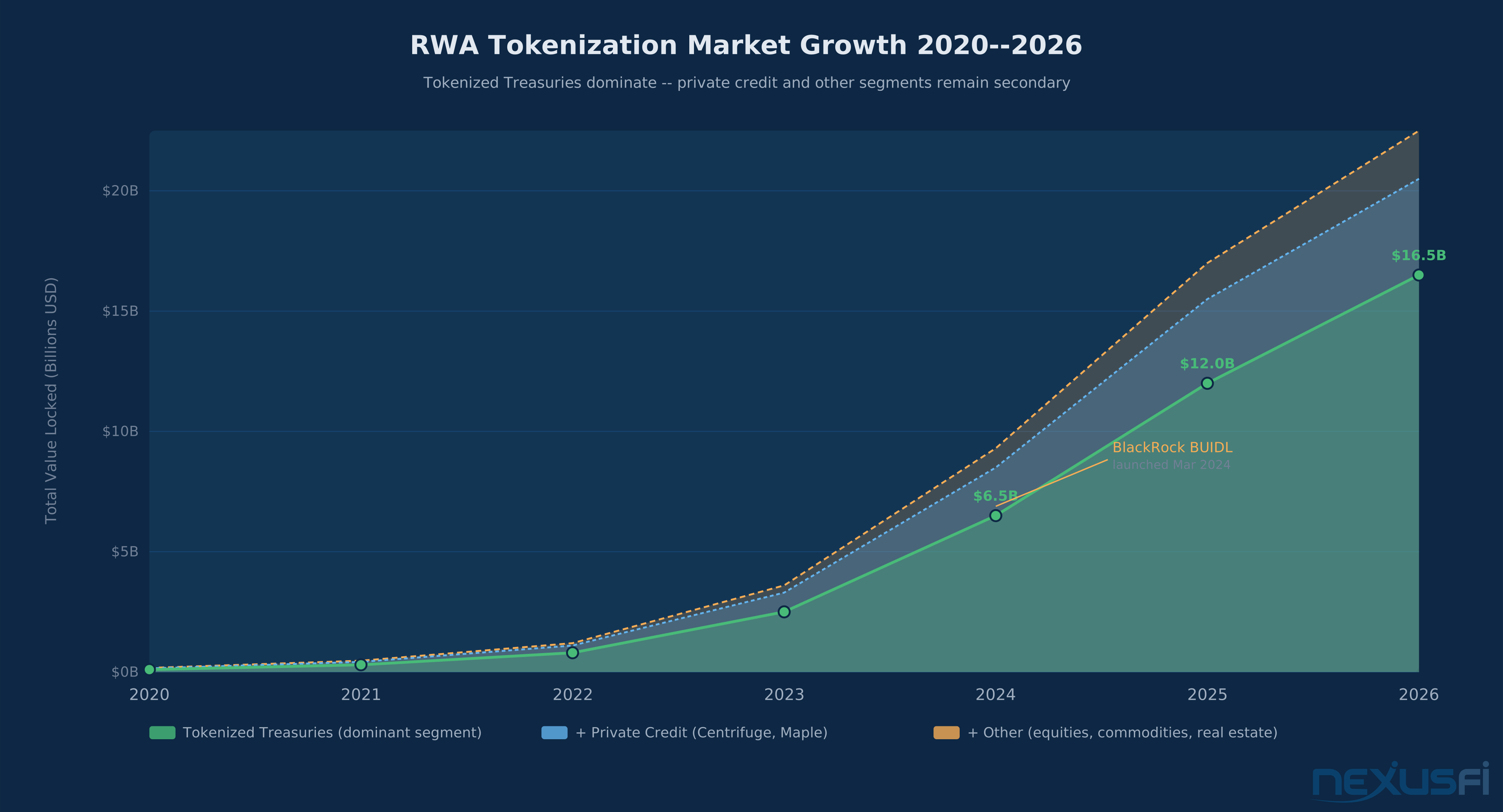
The RWA tokenization market has evolved through three distinct phases since 2020.
2020-2022 (Experimental phase): Early experiments with tokenized debt instruments, mostly in DeFi-native protocols like MakerDAO accepting tokenized real-world collateral. Total market size measured in hundreds of millions. Limited institutional participation. Yields on crypto-native instruments were high enough that Treasury-level returns weren't interesting.
2022-2024 (Rising rate trigger): The Fed's aggressive rate hiking cycle changed the equation entirely. DeFi yields collapsed as the bull market ended. Suddenly, 5% on tokenized Treasuries looked competitive against 2% in Aave or 3% in Compound. Capital started flowing. Franklin Templeton's BENJI surpassed $300M in AUM. Ondo launched OUSG and USDY. Total market grew from under $1B to $3-4B.
2024-2026 (Institutional legitimacy): BlackRock's BUIDL launch in March 2024 changed the narrative. When the world's largest asset manager puts tokenized fund infrastructure on Ethereum, it signals that this isn't a DeFi experiment — it's a distribution channel. By 2026, the market has grown to an estimated $15-20B across tokenized Treasuries, money market funds, private credit, and structured products.
The breakdown matters. Tokenized Treasuries and money market equivalents dominate at roughly 60-65% of total market — these are the products futures traders actually care about. Private credit (Centrifuge, Maple) accounts for maybe 20-25%. Tokenized equities, commodities, and real estate remain small and largely illiquid.
The growth driver isn't crypto speculation — it's capital efficiency. Asset managers, market makers, and institutional traders want yield on capital that would otherwise sit idle. On-chain Treasury exposure solves that problem while keeping assets within the crypto ecosystem and available for rapid redeployment into crypto opportunities.
How Tokenized Treasuries Work: The Mechanics #
Understanding the mechanics is essential before allocating any capital here. These aren't assets you can just buy on Coinbase and treat like BTC.
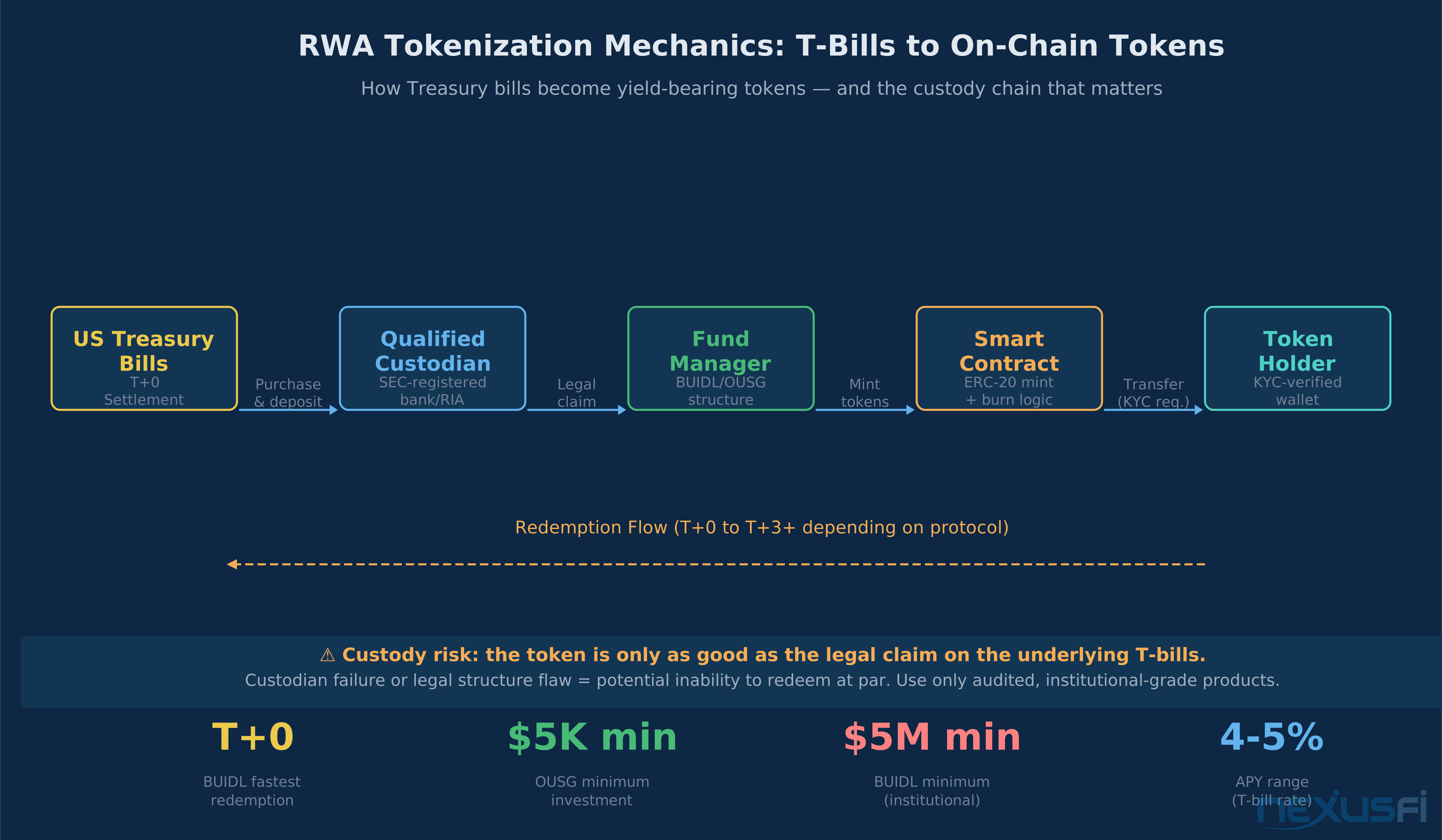
The basic structure: A regulated entity (typically a US fund manager or offshore structure) buys short-term Treasury bills or holds them via a money market fund. They then issue tokens representing fractional ownership of that fund. Token holders receive yield either through daily rebasing (token supply increases proportionally) or price appreciation (each token becomes worth more over time).
Custody chain: The actual T-bills sit with a qualified custodian — a bank or registered investment advisor. The custodian is the critical link between the on-chain token and the off-chain asset. If the custodian fails or the legal structure breaks down, the token may not be redeemable at par.
KYC and transfer restrictions: Almost every institutional RWA product requires KYC verification before you can receive tokens. Once you hold them, transfers are typically restricted to other verified wallets. You can't just send tokenized Treasuries to any Ethereum address the way you can with USDC.
Redemption: To exit, you submit a redemption request to the issuer. Your tokens are burned and you receive stablecoins or USD via wire transfer. Redemption speed varies dramatically — BUIDL uses Circle's instant liquidity feature for same-day USDC exit, while some products take T+3 or longer.
Yield accrual: Most tokenized Treasury products don't pay yield as a separate token. The fund NAV increases daily as yield accrues. If you hold 1,000 tokens at $1.00 and yield is 5% annualized, your position grows to approximately $1,050 over a year through NAV appreciation or rebasing. No separate interest payments.
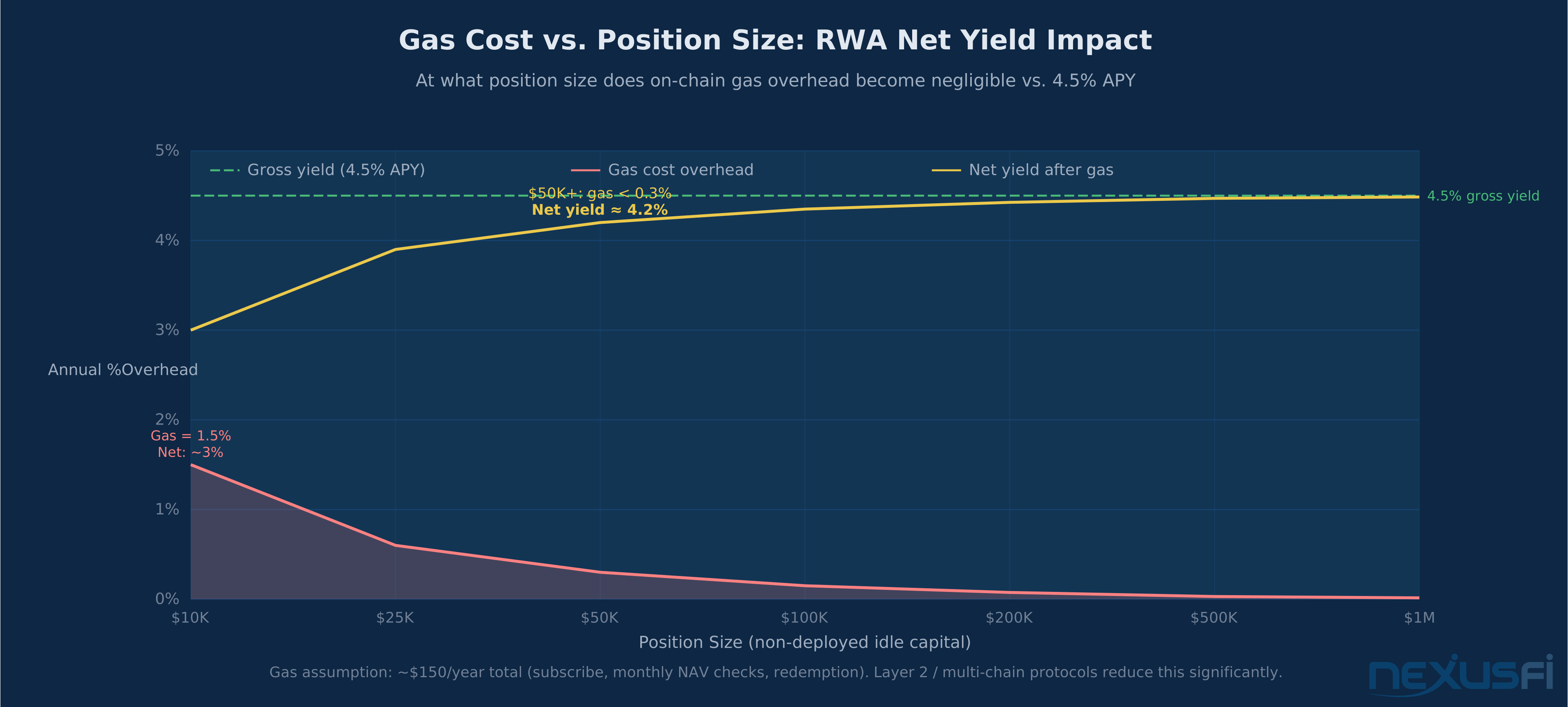
Gas costs: Every interaction with an ERC-20 token on Ethereum costs gas. For small positions, gas costs can eat much into yield. This is a real friction for positions under $50,000 where gas can represent 0.5-1% of position value per year in overhead costs.
Liquidity Mismatch is the #1 Trap: The T+2 redemption window on most products sounds manageable until you need capital for a margin call right now. Never allocate capital to RWA tokens that you might need within 48 hours. Maintain a separate liquid stablecoin buffer that covers 1-2x your typical daily margin variation. The stablecoin buffer isn't idle — it's insurance against a forced RWA exit at the worst possible moment.
The Major RWA Protocols: A Trader's Assessment #
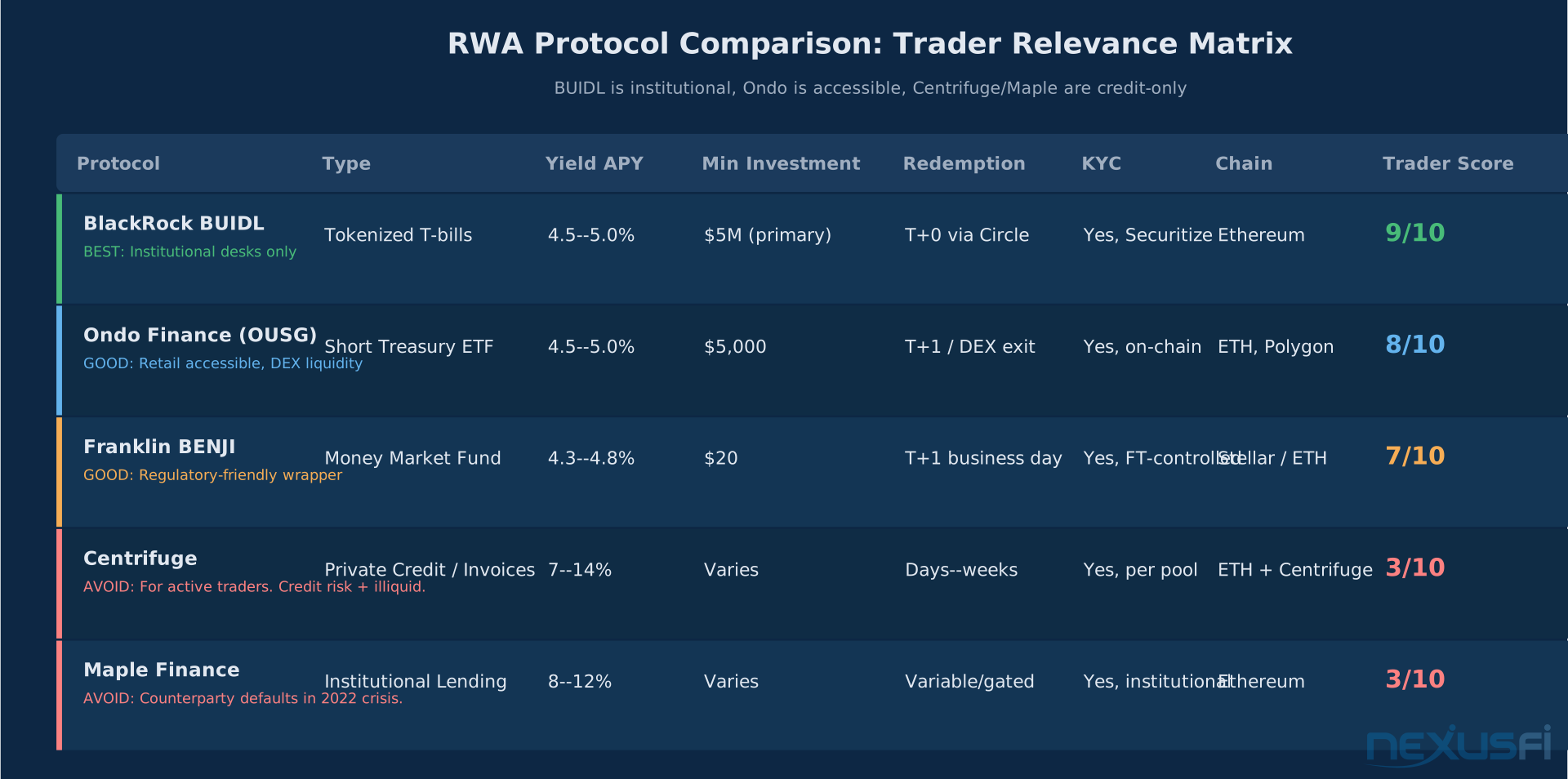
BlackRock BUIDL (USD Institutional Digital Liquidity Fund): The product that made institutional players pay attention. Launched March 2024, quickly grew past $500M in AUM. The underlying fund invests in US Treasury bills, repurchase agreements, and cash — effectively a money market fund on-chain. The key differentiator is Circle partnership enabling T+0 liquidity — BUIDL holders can redeem for USDC basically instantly through a Circle-operated liquidity pool. For active traders, this matters more than anything else. Minimum $5M for primary subscription on Securitize. This is an institutional product, full stop.
Ondo Finance (OUSG, USDY): The most retail-accessible of the institutional-grade RWA protocols. OUSG (Ondo Short-Term US Government Bond Fund) is backed by BlackRock's iShares Short Treasury Bond ETF (SHV), with a $5,000 minimum. USDY is a yield-bearing stablecoin alternative with even lower minimums. Both have moderate DEX liquidity on Ethereum and several other chains. For traders in the $100K-$1M range outside the US, this is the most practical entry point. Secondary market liquidity is thin — slippage on $100K+ positions can be 0.5-1%.
Franklin Templeton BENJI (FOBXX): The pioneer in institutional tokenized funds — Franklin Templeton first registered FOBXX with the SEC in 2021. Uses a proprietary blockchain (initially Stellar, expanding to others) controlled by Franklin Templeton. This means "on-chain" is more custody tracking than true decentralization. For compliance-conscious institutional investors, this is actually a feature (familiar legal wrapper, known counterparty). For DeFi-native traders looking for composability, it's a limitation. Minimum investment is low but the product is more fund-like than crypto-native.
Centrifuge (Tinlake, Centrifuge Prime): Infrastructure for tokenized real-world credit — invoice financing, trade finance, structured credit. Instead of holding US Treasury bills with near-zero default probability, you're holding claims on pools of corporate invoices, equipment loans, or real estate debt with real credit risk. Yields are higher (potentially 8-14%+) to compensate. For futures traders: largely irrelevant to active trading operations. Illiquid, complex to value, and carries credit risk that requires ongoing monitoring. Avoid unless you have significant idle capital, a long time horizon, and dedicated credit risk management capability.
Maple Finance: Institutional on-chain lending and credit infrastructure. Maple pools connect institutional lenders and borrowers, with yields reflecting credit risk premiums above risk-free rates (typically 8-12%). Historical context matters here: Maple experienced significant loan defaults during the 2022 crypto crash when borrowers including Three Arrows Capital-adjacent entities couldn't repay. The protocol survived and rebuilt with tighter credit standards, but the event is a useful reminder that "on-chain lending" doesn't eliminate credit risk. Useful only as a higher-yield parking alternative for capital you won't need quickly.
Yield Comparison: The Full Picture #
Here's what matters in the current rate environment:
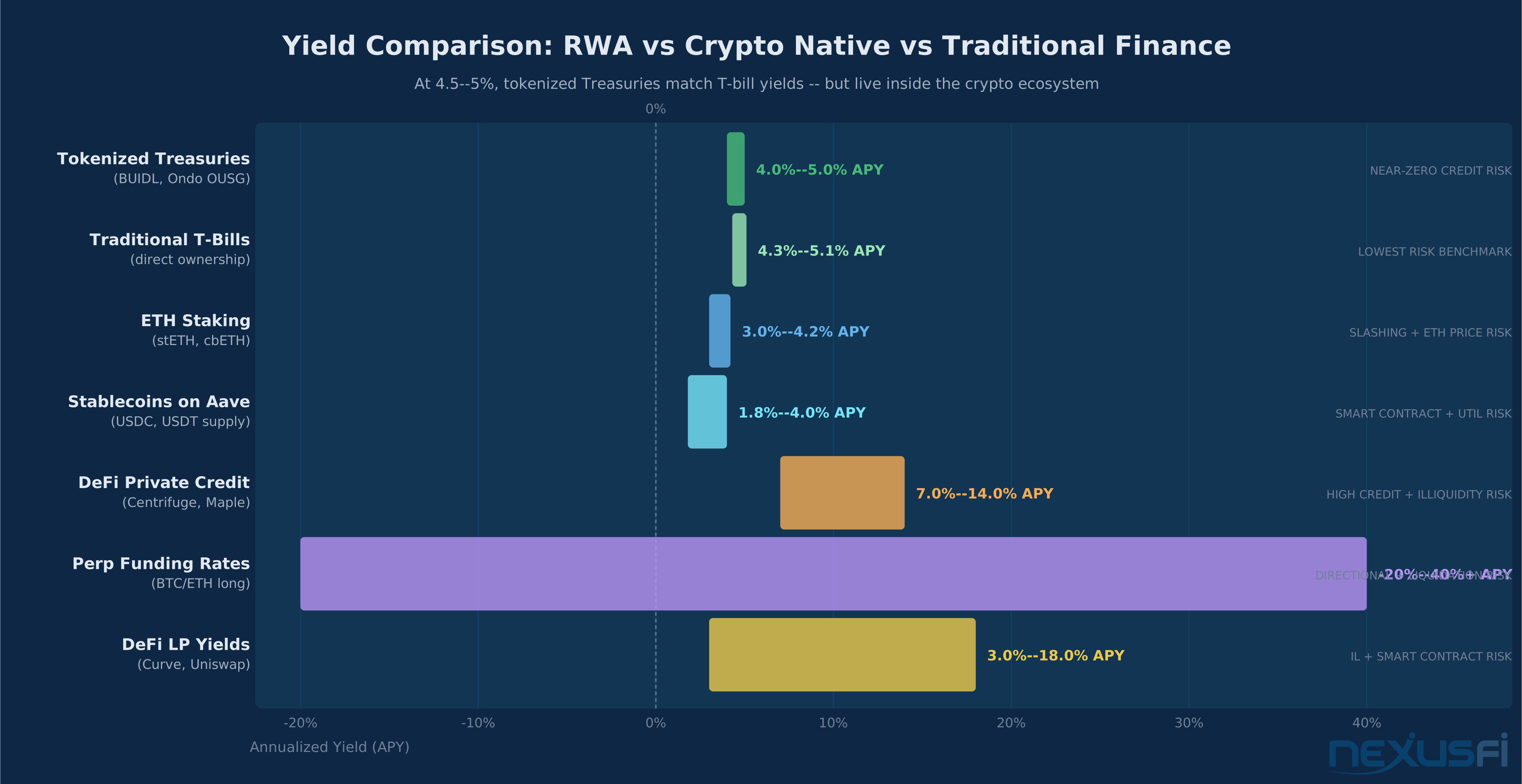
Tokenized US Treasuries (BUIDL, OUSG): 4.0-5.0% APY. Near-zero credit risk backed by US government obligations. T+0 to T+3 liquidity depending on product. NAV-anchored, extremely stable.
Traditional T-Bills (direct ownership): 4.3-5.1% APY. Lowest available credit risk. Excellent liquidity via broker. The benchmark everything else is measured against.
ETH Staking (stETH, cbETH): 3.0-4.2% APY with slashing risk, protocol risk, and direct ETH price exposure. Returns affected by ETH price changes — this isn't a yield instrument, it's yield plus a directional equity bet.
Stablecoins on lending protocols (Aave, Compound): 1.8-4.0% APY, variable based on utilization. Smart contract risk and liquidation dynamics. Instant withdrawal if utilization allows. Yield fluctuates much with market conditions.
Crypto perpetual funding rates (BTC/ETH long): -20% to +40% annualized, highly variable. The range tells you everything — this isn't yield, it's a bet. Can flip from positive to negative rapidly. Not comparable to Treasury products.
DeFi private credit (Centrifuge, Maple): 7-14%+. Meaningful credit risk, illiquidity, and model risk. Higher potential yield but at the core different risk profile.
The comparison is instructive. Tokenized Treasuries provide near-equivalent yield to holding actual T-bills, with slightly more complexity and slightly less liquidity, but with the advantage of staying within the crypto ecosystem. If your capital needs to be positioned for crypto opportunities, earning 4.5% on idle capital is dramatically better than earning 0% in USDC.
The yield advantage over stablecoins: 1.5-3% annually. On a $500,000 account with 40% sitting idle in stablecoins, that's $3,000-$6,000 per year of additional return from capital that was previously dead weight. Over five years with compounding, this compounds to $17,000-$37,000 in additional return. That's not a rounding error — it's a material improvement in trading economics.
@SMCJB on FCM-level crypto collateral, NexusFi Cryptocurrency forum, Feb 2026:
SMCJB's skepticism about near-term FCM adoption is well-founded. The operational integration timeline for traditional clearing firms is longer than the optimistic 2026-2027 estimates you'll see in RWA marketing. The CFTC's Staff Letter 25-39 provided the regulatory green light, but that's the beginning of the process, not the end. Build your RWA allocation around what's available today (yield on idle capital), not what's hypothetical tomorrow (exchange collateral integration).
How Futures Traders Actually Access RWA Tokens #
The access question is where most traders run into friction. The reality is more constrained than the marketing suggests.
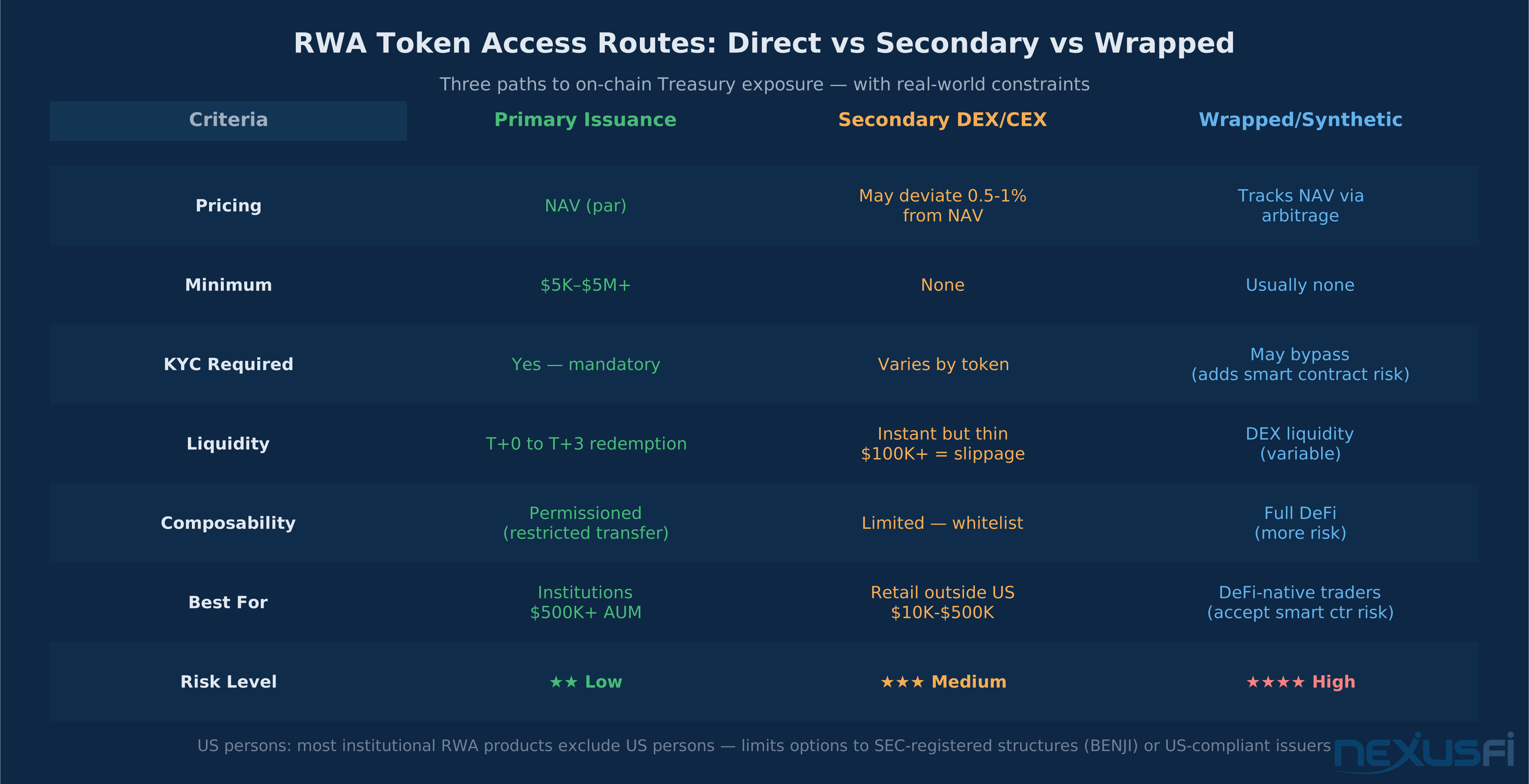
Route 1: Direct primary issuance. Go to the protocol's website, complete KYC, meet minimum investment requirements, and subscribe. You receive tokens in a whitelisted wallet. Best pricing (NAV), but subject to minimums ($5K-$5M+), jurisdictional restrictions, and redemption delays.
Route 2: Secondary DEX/CEX markets. Some RWA tokens have secondary market liquidity on Curve, Uniswap, or centralized exchanges. No minimum investment required, but thin liquidity, potential slippage, and possible deviation from NAV. You may not be able to receive tokens without whitelisting even if you can buy them.
Route 3: Wrapped/synthetic exposure. Some DeFi protocols offer wrapped versions of RWA tokens that are more composable and tradeable, at the cost of additional smart contract risk and potentially reduced yield.
The US person problem: Most institutional RWA products explicitly exclude US persons due to securities regulations. Non-US futures traders have much more options. US-based traders are largely limited to on-chain protocols with specific US-compliant structures or products like BENJI with SEC registration. This constraint doesn't get enough attention in the RWA marketing narrative.
Practical starting point: For traders in the $100K-$500K range who aren't US persons, Ondo's USDY is the most accessible entry point. It's available on multiple chains, has reasonable DEX liquidity, and the minimum is low. For US traders, options are more limited and legal guidance is worth getting before proceeding.
Capital Efficiency: The Only Real Use Case #
Strip away the marketing hype and there are exactly two use cases for RWA tokens in a futures trading context.
Use Case 1: Earning yield on idle capital. Every active futures trader has capital sitting idle between trades. If you're running a $300,000 account with $180,000 in margin requirements, you've got $120,000 sitting in stablecoins earning nothing. Put that in USDY or OUSG and earn 4.5%+ annually — that's $5,400/year on capital that was previously dead weight.
This doesn't change your trading approach. It doesn't require you to learn DeFi inside out. It's better cash management. The math is straightforward: $500,000 account with 50% deployed as futures margin, 50% idle. Previous approach: idle capital in USDC earning 0-1%. New approach: idle capital in tokenized Treasuries earning 4.5%. Annual difference: approximately $8,750-$16,250 depending on exact rates. On a five-year horizon with compounding, that's $50,000-$100,000 in additional return from capital that was doing nothing.
Use Case 2: Collateral posted as margin (future state). This is the structural development that doesn't fully exist yet. When major futures exchanges accept tokenized Treasuries as margin collateral, you'll be able to post yield-bearing assets as margin instead of non-yielding stablecoins. Understanding the cost of carry in futures makes this development even more significant — yield-bearing margin at the core improves your economics.
Currently: Post $100,000 in USDC as margin. Earn 0%. Future state: Post $100,000 in tokenized Treasuries as margin. Earn 4.5% on your margin requirement. For a trader posting $500,000 in margin, the difference is $22,500 annually. On a trading operation generating 30-40% returns, adding 4.5% risk-free on the entire margin base is meaningful alpha from infrastructure, not strategy.
Hedging RWA Exposure with Rate Futures #
For traders who want to hold tokenized Treasuries and manage yield risk actively, rate futures become relevant.
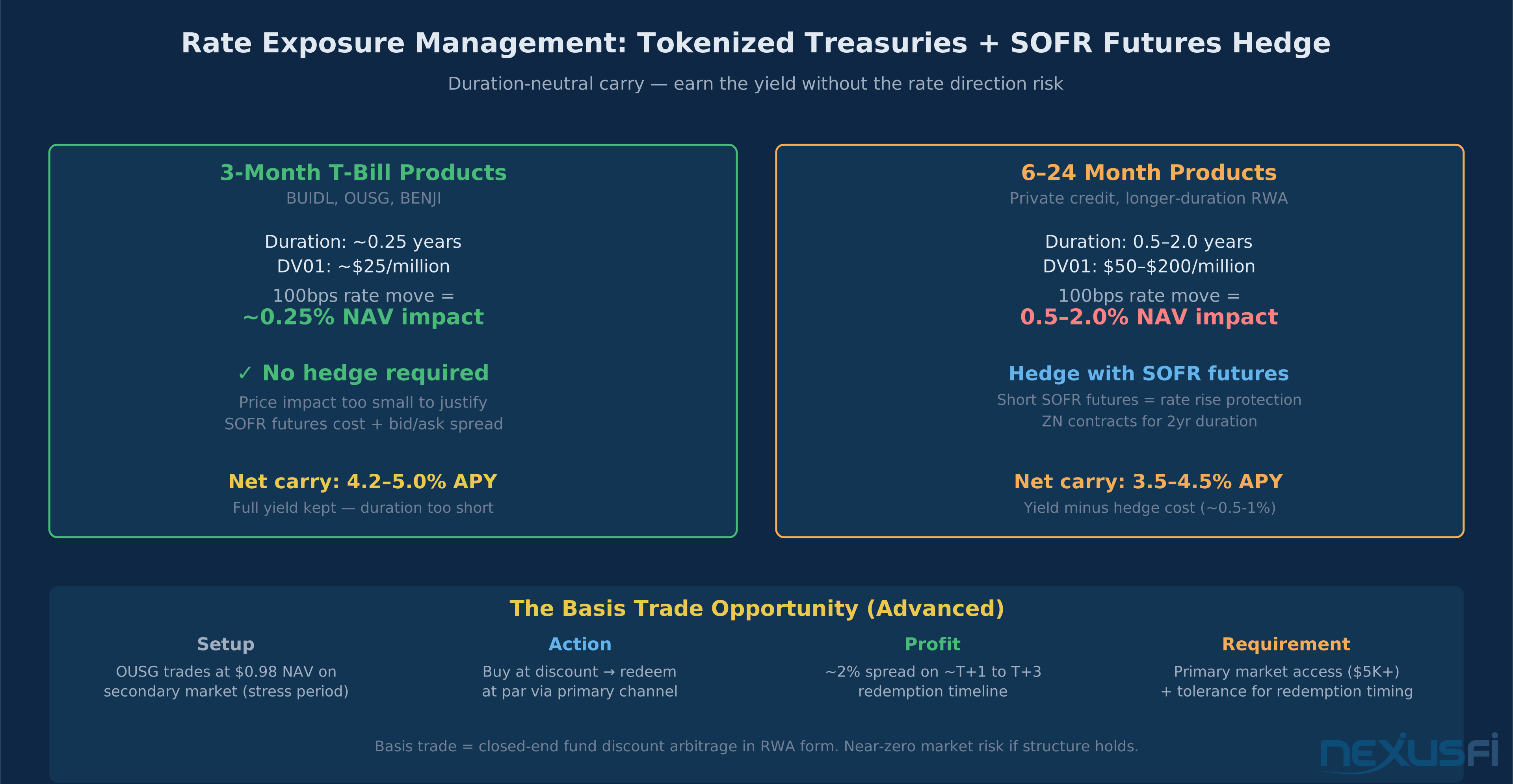
Tokenized short-duration Treasuries (3-month T-bills) have minimal duration risk — their price sensitivity to rate changes is very small. But if you're holding longer-duration products, rising rates cause NAV losses that offset yield.
The duration-neutral carry trade: hold tokenized T-bills for yield exposure while using SOFR futures to hedge any duration if needed. For 3-month products, no hedging is required. For any product with duration beyond 6 months, a short position in SOFR futures or ZN can neutralize rate direction risk while preserving the yield carry. This is effectively "free rate exposure management" once you have the futures capability. The basis risk in futures concepts apply here — the spread between NAV and secondary price is a form of basis you need to manage.
For private credit RWA products: credit spread widening is the risk, not rate changes. Hedging requires CDS index exposure or high-yield bond futures — instruments most retail futures traders don't use. This is another reason to stick to Treasury products unless you're a credit specialist.
The basis trade opportunity: for larger traders with primary market access, there's occasionally a basis opportunity between NAV and secondary market prices during stress periods. If OUSG trades at $0.98 while NAV is $1.00, you can buy at discount and redeem at par (pending redemption window). This is the RWA equivalent of closed-end fund discount arbitrage. Requires primary market access and tolerance for redemption timing risk, but the spread can be 1-2% for basically zero market risk.
The Risk Stack #
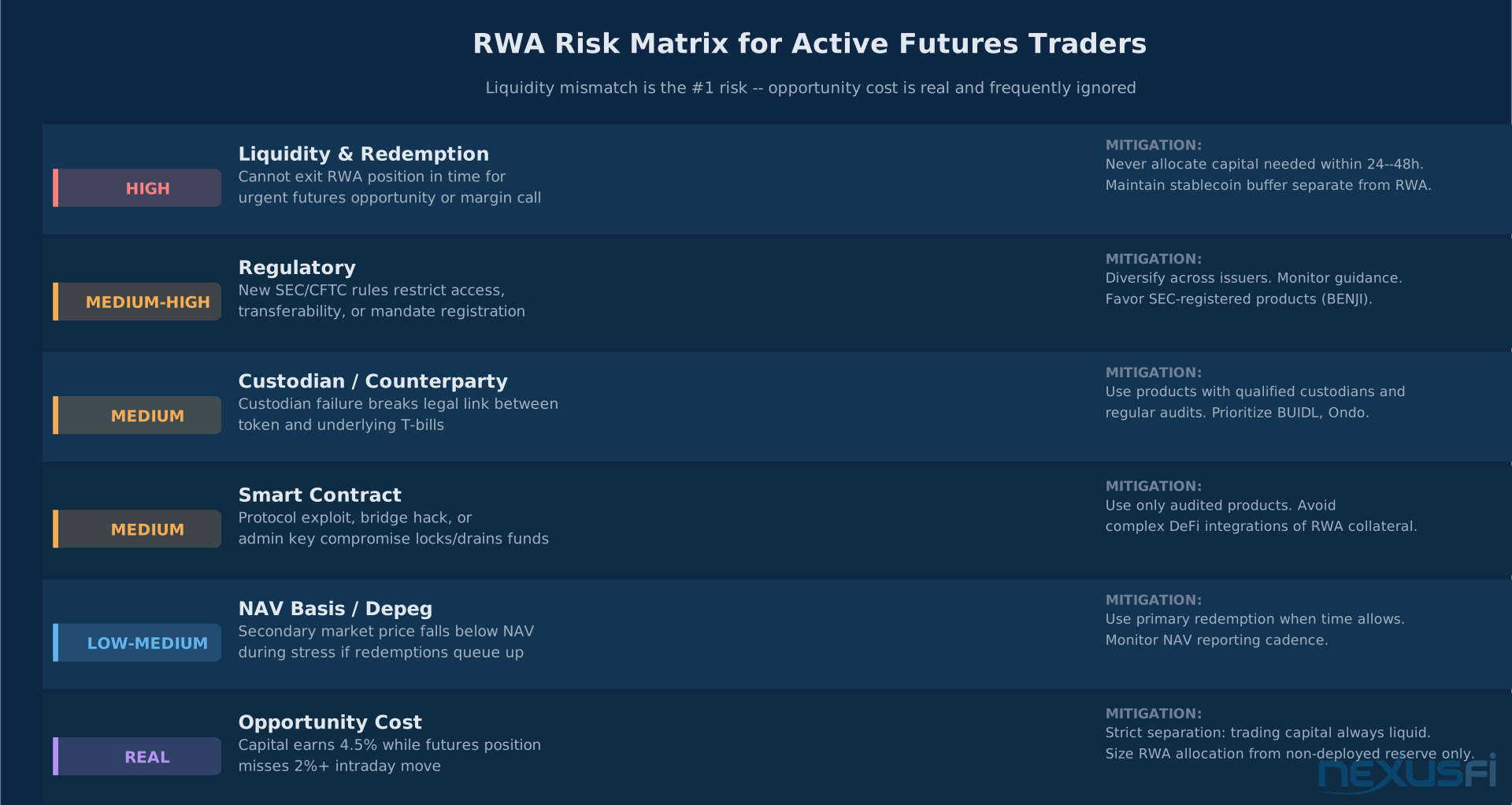
Liquidity risk (HIGH): The #1 risk for active traders. RWA tokens are designed for capital parking, not rapid deployment. If you need capital immediately for a futures position and your RWA redemption takes T+2, you've missed the trade. The liquidity mismatch between RWA product design and active trading needs is real and structural — not something that will be fixed anytime soon. Never allocate capital you might need within 24-48 hours. Maintain a liquid stablecoin buffer for immediate trading needs.
Regulatory risk (MEDIUM-HIGH): The regulatory status of tokenized securities is evolving. Products that operate today under specific exemptions could face new restrictions. Frameworks for tokenized funds are clearer than 2022-2024, but enforcement risk remains. Mitigation: diversify across issuers and structures. Favor SEC-registered products (BENJI) for the most conservative approach.
Custodian/counterparty risk (MEDIUM): The token is only as good as the legal claim it represents. If the custodian holding the T-bills fails or the fund structure has flaws in the legal separation between on-chain tokens and off-chain assets, redemption at par may not be possible. Use only products with qualified custodians, regular audits, and established track records. BlackRock BUIDL and Franklin Templeton BENJI have the clearest institutional backstops.
Smart contract risk (MEDIUM): Token contracts, wrapper contracts, and any DeFi integrations all introduce smart contract vulnerability. An exploit in any layer could result in loss of funds or inability to redeem. Use only audited, institutional-grade products. Avoid complex DeFi integrations until they have extended track records.
NAV basis/depeg risk (LOW-MEDIUM): During stress periods, RWA token prices can trade below NAV on secondary markets if redemption queues form. You might not be able to exit at par if you need to sell quickly through secondary markets. Use primary redemption channels when time allows. Size positions so a 1-2% NAV deviation doesn't cause meaningful portfolio damage.
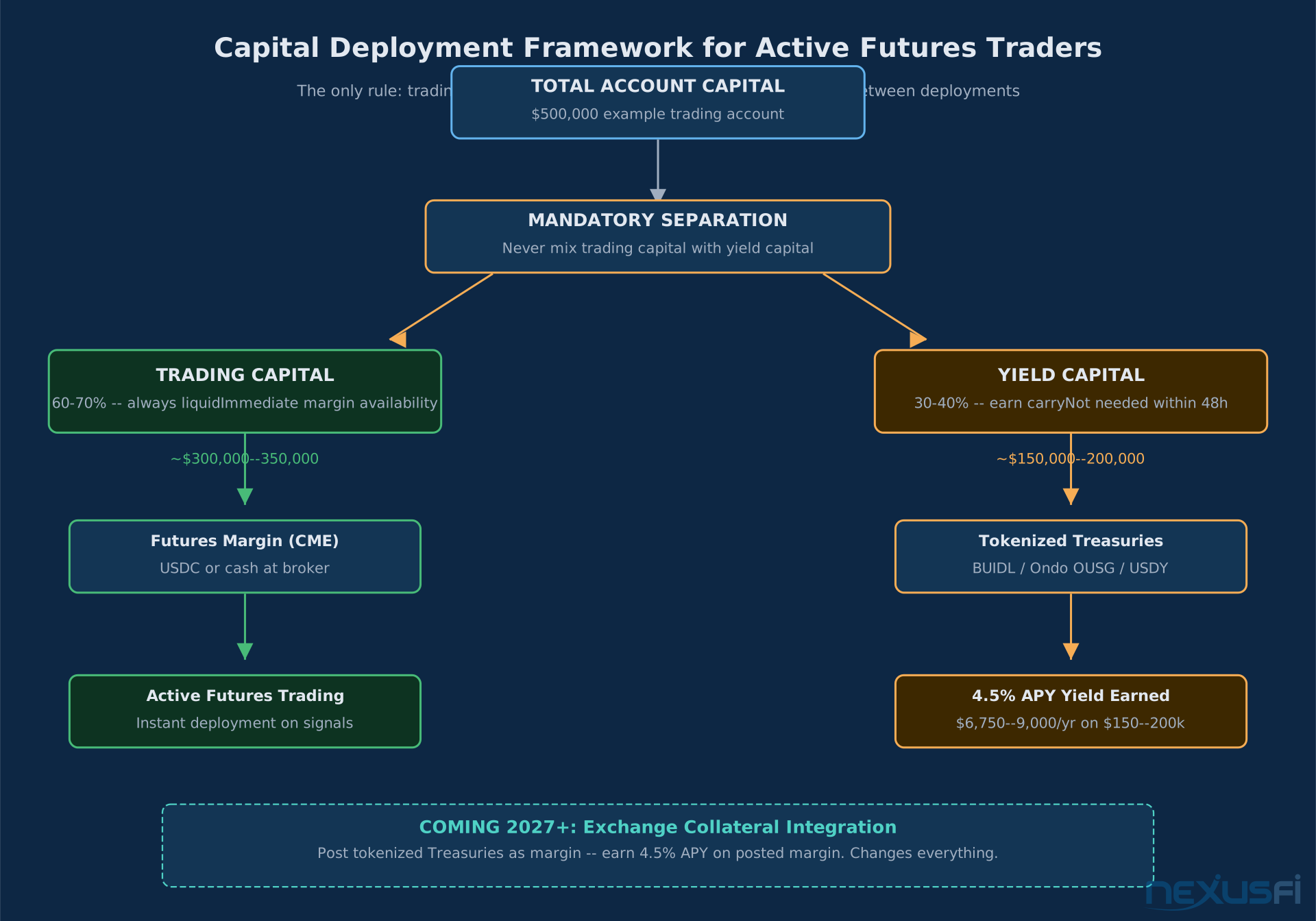
Opportunity cost risk (real, often ignored): If you have $200,000 in tokenized Treasuries earning 4.5% and ES rips 2% while your capital is tied up in a T+2 redemption window, you've earned $9,000 annualized on your RWA position but missed a single-trade opportunity. The math can go either way depending on trading frequency and market conditions. Mitigation: maintain strict separation between trading capital (always liquid) and yield capital (RWA, earning carry between deployments).
The Collateral Integration Thesis #
The structural development for futures traders is exchange-level collateral integration — major futures exchanges accepting tokenized Treasuries as native margin collateral. Here's why this is the development to watch.
Currently, when you post margin at a futures broker, that capital earns nothing or minimal interest at the broker's discretion. The daily mechanics of futures trading — initial margin requirements, variation margin calls, settlement — are all handled in cash or stablecoins that don't yield. This is where understanding futures margin mechanics becomes relevant: the non-yielding nature of margin is a hidden cost of operating a futures book.
When tokenized Treasuries become accepted collateral at the exchange level, your margin requirement earns 4.5% while posted. On a $1M futures operation with $500,000 in margin requirements, that's $22,500 annually in yield on capital that was previously dead. More importantly, it structurally improves the economics of running a leveraged futures book — your cost of carry goes from "margin cash earns nothing" to "margin cash earns risk-free rate."
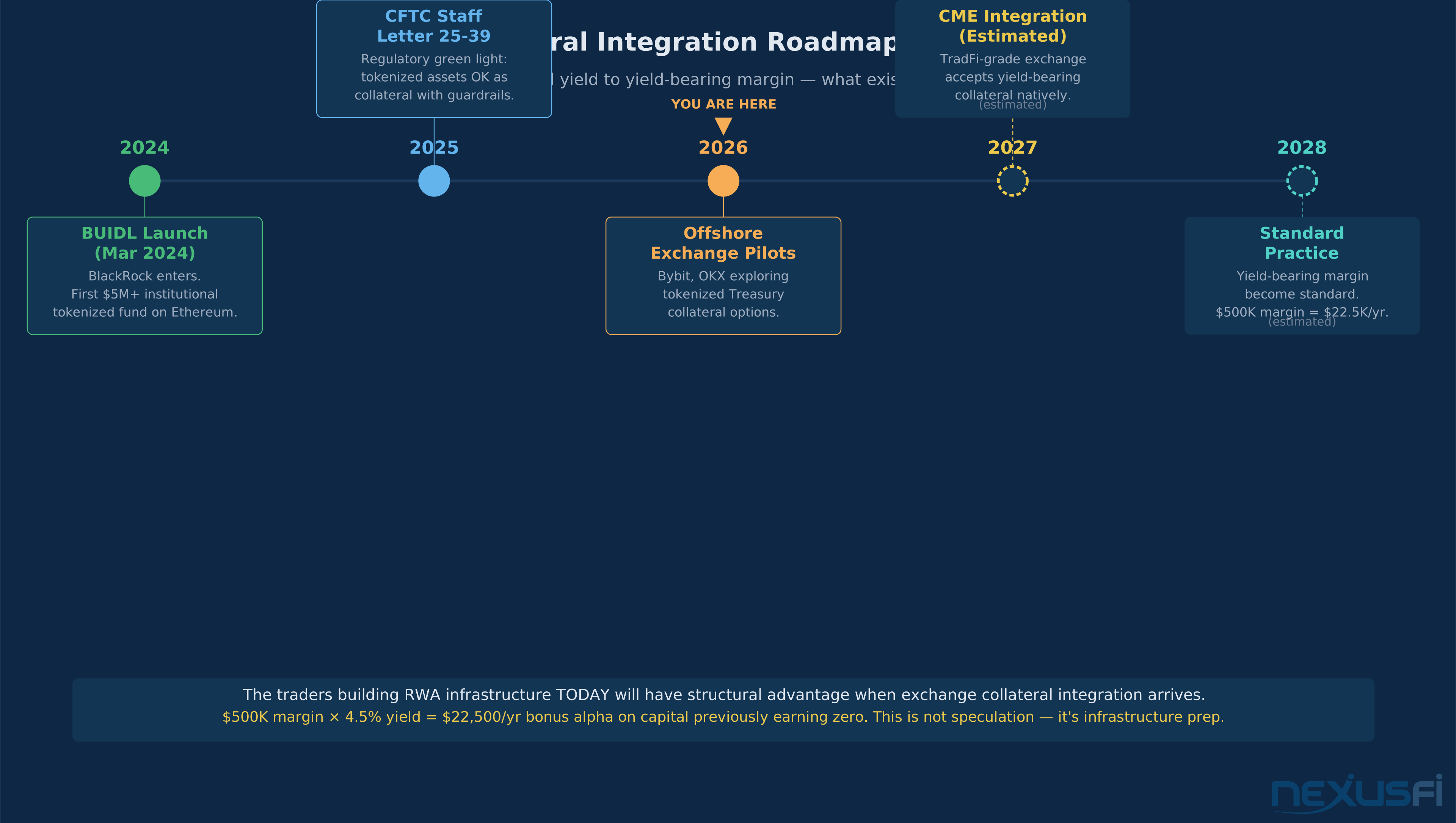
Progress as of 2026: Some offshore exchanges (Bybit, OKX) have explored tokenized collateral options. CME's work on repo and secured lending infrastructure is directionally relevant. The CFTC's December 2025 guidance (Staff Letter 25-39) explicitly addressed tokenized assets as eligible collateral for futures and swaps positions — the regulatory framework exists, the operational integration remains ahead. The timeline to mainstream adoption is real but uncertain — regulatory approval, operational integration, and risk management framework development all take time. Best current estimate: mainstream exchange collateral integration arrives 2027-2028 for major venues.
Why it matters now: if you believe this becomes standard within 24-36 months, there's an argument for building familiarity with RWA infrastructure today. The operational learning curve — wallet setup, KYC, redemption mechanics — is real, and doing it before the time pressure of exchange integration makes sense. The traders who have already established RWA infrastructure will have a structural advantage when collateral integration becomes available.
Trading Blueprint by Account Size #
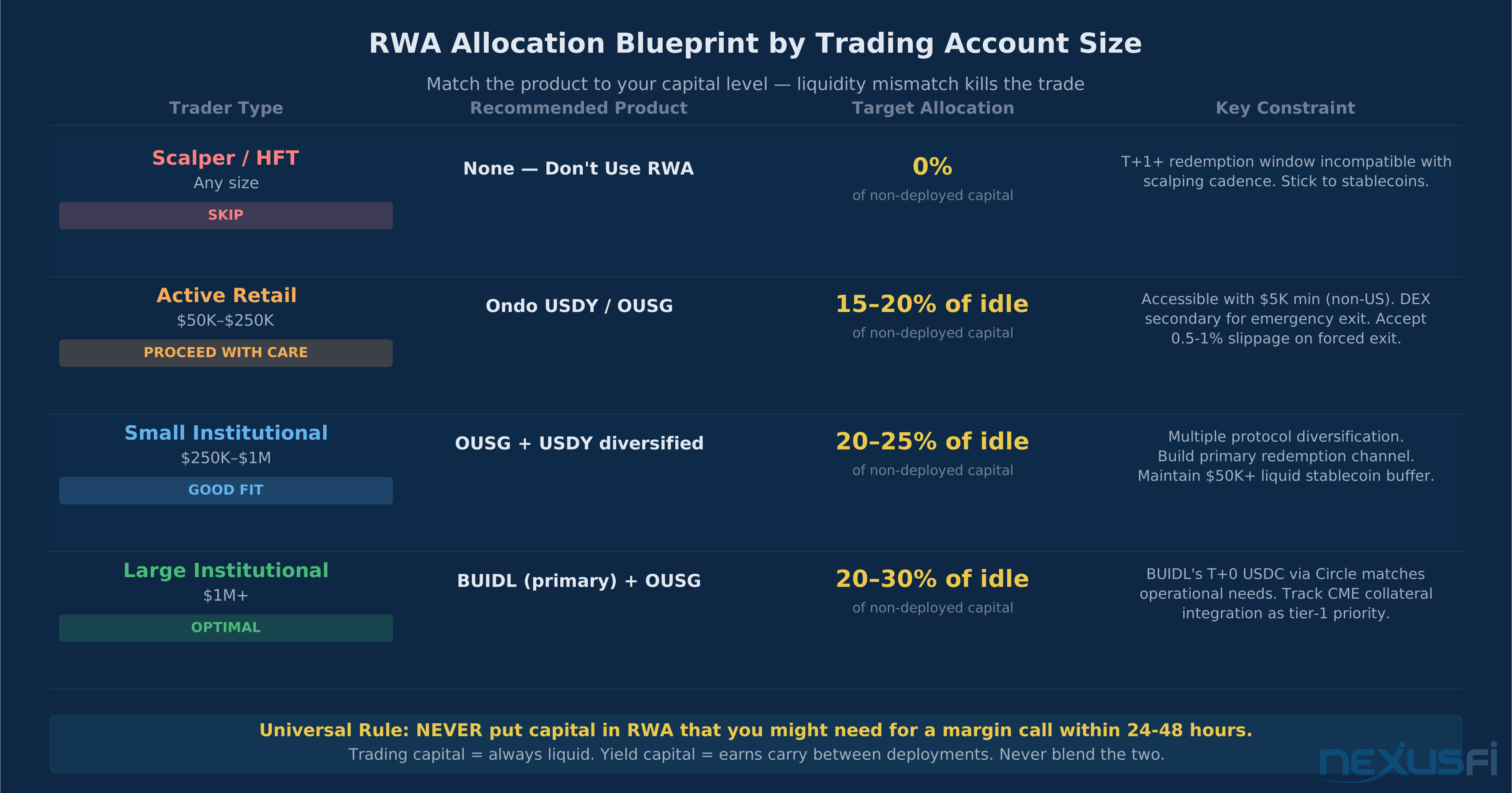
Large institutional ($1M+ in futures operations): Allocate 15-25% of non-deployed capital to BUIDL or equivalent institutional-grade products. Use Circle's USDC integration for T+0 liquidity when needed. Track collateral integration developments at CME and major venues closely — this changes your economics substantially when it arrives. The math is simple: on $500,000 in non-deployed capital earning 4.5%, you're looking at $22,500 annually from capital that was previously idle. That's real money that compounds.
Active retail/small institutional ($100K-$1M): Ondo's USDY is the most accessible starting point if you're outside the US. Allocate 15-20% of non-deployed capital. Maintain DEX familiarity for secondary market exits if formal redemption is too slow. Accept that you're paying 0.5-1% in slippage on secondary exits as the cost of liquidity. Don't put capital here that you need for margin calls — the liquidity mismatch will hurt you at the worst moment.
Scalpers and high-frequency traders (any size): Don't bother. The liquidity mismatch between RWA redemption timelines and your trading cadence makes this economically non-viable. A T+1 redemption window is an eternity when you're scalping for 2-4 ticks. Stick to stablecoins and improve execution quality instead. Your edge comes from speed, not from yield on idle capital.
The universal rule: Separate trading capital from yield capital. Trading capital is always liquid. Yield capital earns carry in RWA products. Never blend the two. The moment you're counting on RWA liquidity for a margin call is the moment the system breaks down.
What to Monitor in 2026 #
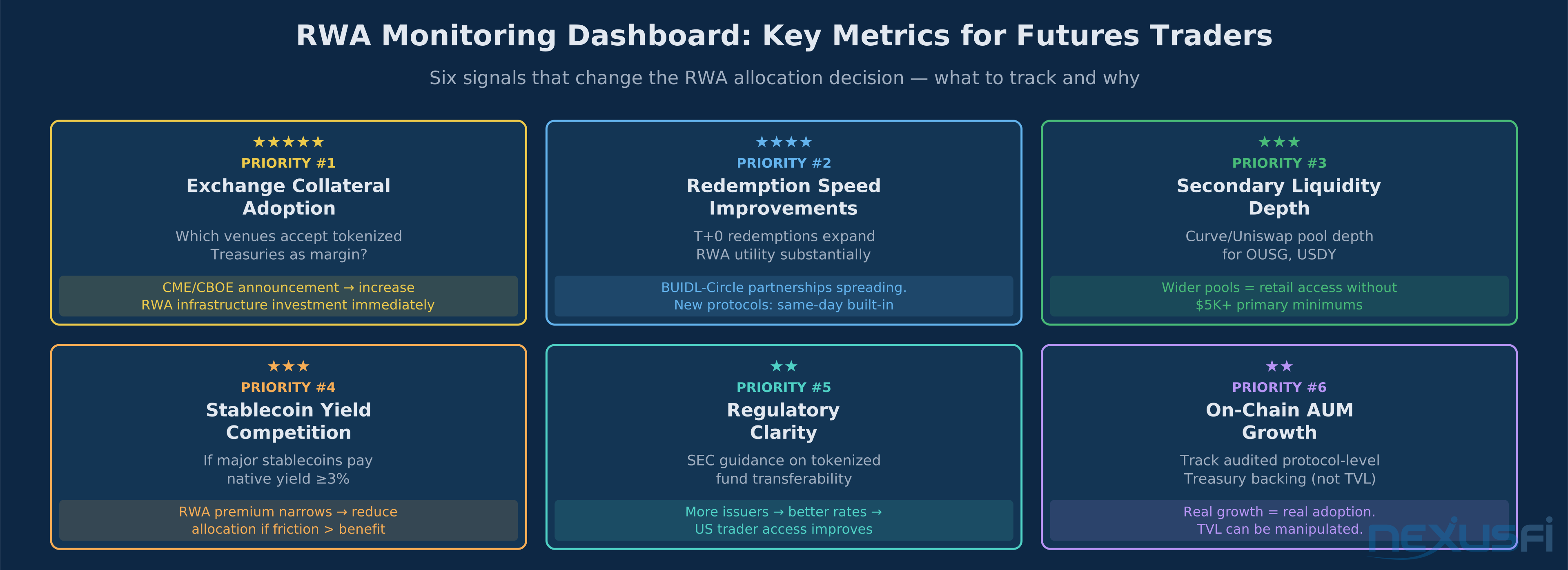
For futures traders who allocate to RWA products, these are the metrics worth tracking:
Exchange collateral adoption: Which major futures exchanges accept tokenized Treasuries as margin. This is the single biggest structural shift that could make RWA directly relevant to futures trading mechanics. When CME or a major crypto exchange announces this, it's the signal to increase RWA infrastructure investment much.
Redemption speed improvements: T+0 redemptions would substantially increase RWA utility for active traders. Watch for BUIDL-Circle type partnerships spreading to other protocols, and for new products launching with same-day redemption built in. The redemption speed is the binding constraint — everything else is secondary.
Secondary liquidity depth: Track Curve and Uniswap pool depth for major RWA tokens. Improving secondary liquidity reduces the exit friction that currently limits practical allocations. When secondary liquidity deepens sufficiently, smaller traders gain access to meaningful positions without needing primary market minimums.
Regulatory clarity: Especially SEC guidance on tokenized fund transferability and accredited investor requirements. Clearer rules mean more issuers, more products, better rates, and importantly — wider access for US-based traders who are currently largely excluded from institutional products.
Fee compression: As the market matures and competition increases, protocol fees on tokenized Treasury products should compress toward zero. Lower fees mean higher net yield passed to token holders. The spread between the underlying T-bill yield and the net token yield should narrow as competition increases.
Stablecoin yield competition: If major stablecoins start offering meaningful native yield, the competitive advantage of RWA tokens over stablecoins narrows. The friction of managing separate RWA positions is only worth it if the yield premium is meaningful. Watch this dynamic closely.
On-chain T-bill AUM growth: Real capital migration into tokenized cash products is the leading indicator of institutional adoption. Protocol-level, audited on-chain asset backing tells the real story — not headline TVL which can be manipulated.
RWA tokenization in 2026 is the most important structural development in crypto for capital efficiency — not for speculation. Tokenized US Treasuries are now legitimate, institutionally-backed instruments offering T-bill equivalent yields within the crypto ecosystem. For futures traders, the practical case is clear: idle capital earns much more than in stablecoins. The coming structural change is exchange-level collateral integration. Treat RWA tokens as a better savings account for your trading capital — nothing more, nothing less, but that's quite a lot.
Knowledge Map
Go Deeper
Build on this knowledgeCitations
- — Is Bitcoin done? take a look... (2025) 👍 1“The real asymmetry? Institutional adoption just started. BlackRock IBIT is pulling $2-3B daily. Spot ETF AUM combined: ~$85.5B holding 1.26M BTC (6.4% of total supply).”
- — CFTC Expands Digital Asset Margin Rules -- Your Crypto Can Now Back Your Futures Position (2026) 👍 1“For FCMs to consider it collateral they will surely require you to actually send them the crypto, just like they require you to send them the money/cash. Which means they will have to have wallets and processes in place for this. I personally do NOT see this happening anytime soon.”
- — CFTC Issues Guidance on Tokenized Assets as Futures/Swaps Collateral (2025)“CFTC Staff Letter No. 25-39 providing detailed guidance on using tokenized assets as collateral for futures and swaps positions. Must satisfy existing margin requirements: minimal credit, market, liquidity risk. Appropriate haircuts and segregation rules still apply.”
- — Is Bitcoin done? take a look... (2026) 👍 1“CME crypto futures changed the game - institutional grade without the exchange risk. CME vs Crypto Exchanges: No counterparty risk (CME clearing), Cash settled (no wallet headaches), Regulated reporting (legitimate tax docs), Micro contracts now (1/50th size for retail).”
- BlackRock — Blackrock.com (2024)
- Ondo Finance — Ondo.finance (2024)
- Franklin Templeton — Franklintempleton.com (2024)
- CFTC — Cftc.gov (2025)
- RWA.xyz — Rwa.xyz (2026)
- Maple Finance — Maple.finance (2024)
- Centrifuge — Centrifuge.io (2024)