



Futures Margin and Leverage: The Capital Mechanics Behind Every Trade
Overview #
Futures margin is not a loan. That's the single most important thing to understand before reading another word.
If you're coming from equities, unlearn everything you know about margin. Stock margin is borrowed money — your broker lends you cash to buy shares, and you pay interest on that loan. Futures margin works completely differently. It's a performance bond, a good-faith deposit proving you can cover potential losses on a contract you've agreed to fulfill. The CFTC's Futures Market Basics guide [8] makes the distinction explicit: futures are cleared through a clearinghouse that guarantees both sides, and margin exists to ensure contract performance — not to extend credit.
This distinction matters because it completely reshapes how leverage works in futures. You're not borrowing $250,000 to buy an ES contract. You're posting ~$13,000 as a security deposit while controlling $250,000 in notional exposure. The mechanics, the risks, and the position sizing math all flow from this one concept.
This article covers the complete margin framework — how initial and maintenance margins function, why mark-to-market settlement matters, how day trading margin creates hidden traps, and how professionals size positions to survive both drawdowns and margin hikes simultaneously.
Key Concepts #
Performance Bond — The formal exchange terminology for futures margin. Unlike stock margin (a loan), a performance bond is collateral guaranteeing you'll honor the contract. No interest, no borrowing, no debt. You're putting skin in the game, not taking out a credit line.
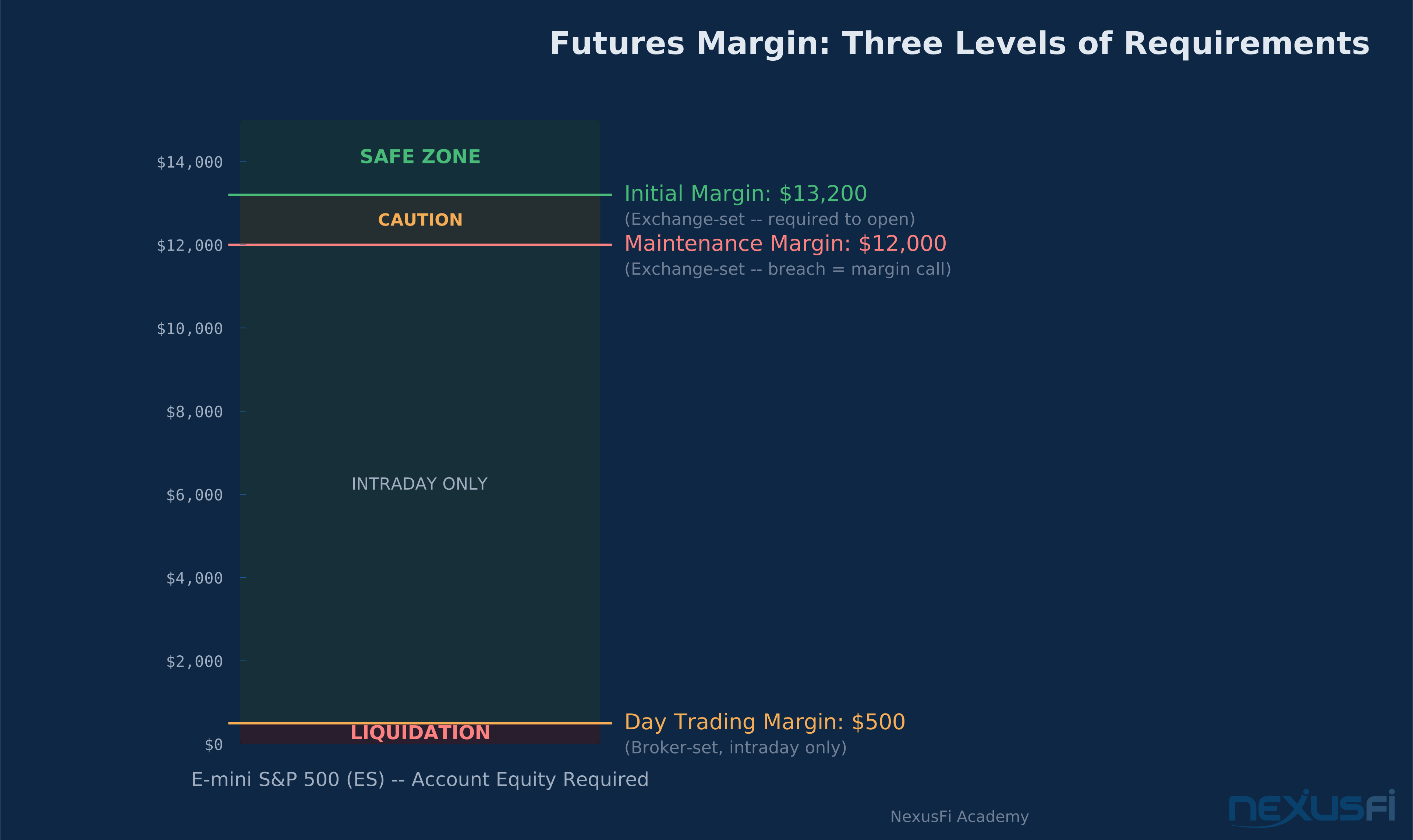
Initial Margin (IM) — The deposit required to open a new futures position. Set by the exchange using SPAN risk models and adjusted based on realized and implied volatility. Your broker may require additional margin above the exchange minimum as a risk buffer.
Maintenance Margin (MM) — The minimum account equity required to keep a position open. Typically 75-90% of initial margin. Breach this level and you face a margin call or immediate forced liquidation, depending on your broker's policy.
Mark-to-Market (MTM) — Daily settlement where the clearinghouse credits gains and debits losses from every open position at the session's official settlement price. Cash moves between accounts every single day — not just when you close the trade.
Notional Value — The total economic exposure of a futures contract, calculated as contract price multiplied by the contract multiplier. For ES at 5,500, that's 5,500 x $50 = $275,000 of market exposure controlled by a fraction of that amount in margin.
SPAN Margin — Standard Portfolio Analysis of Risk. The CME's algorithm evaluates your entire portfolio across 16 risk scenarios to calculate margin requirements. Hedged positions get margin credits; correlated directional bets don't. It's portfolio-level risk math, not per-contract arithmetic.
Day Trading Margin — Reduced margin rates offered by brokers for positions opened and closed within the same trading session. Can be as low as 1/26th of overnight requirements, creating extreme leverage that many retail traders don't fully grasp until it bites them.
How It Works #
The Performance Bond Framework #
Every futures trade involves the clearinghouse standing between buyer and seller. The clearinghouse guarantees both sides of the trade — if the buyer defaults, the seller still gets paid, and vice versa. Margin is how the clearinghouse manages this risk.
Here's what makes it structurally different from stock margin:
- No interest charged. You're not borrowing money.
- Both sides post margin. Longs and shorts both put up collateral. In equities, only short sellers and margin buyers do.
- Daily settlement. Gains and losses move through your account every day, not just when you close.
- Exchange-set minimums. The clearinghouse determines the baseline, not your broker's credit department.
([NexusFi post] [1]). That framing — good faith deposit, not borrowed capital — is the foundation everything else builds on.
Initial Margin: The Gate #
Initial margin is the amount you need in your account to open a new position. The exchange calculates it using risk models (primarily SPAN) based on each contract's volatility profile. Your broker may add a buffer on top — sometimes 10-20% above the exchange minimum.
Current approximate initial margins for major contracts:
| Contract | Exchange | Approx. IM | Notes |
|---|---|---|---|
| ES (E-mini S&P 500) | CME | ~$13,200 | Changes with volatility |
| NQ (E-mini Nasdaq-100) | CME | ~$17,600 | Higher due to volatility |
| CL (Crude Oil) | NYMEX | ~$8,900 | Event-sensitive |
| MES (Micro E-mini S&P) | CME | ~$1,320 | 1/10th of ES |
| MNQ (Micro E-mini Nasdaq) | CME | ~$1,760 | 1/10th of NQ |
These numbers shift constantly. The exchange recalculates based on realized and implied volatility — CME Group publishes updated performance bond requirements [9] that reflect current market conditions. Before major events — FOMC announcements, employment reports, geopolitical crises — exchanges often pre-emptively raise margins. Check your broker's margin schedule daily if you're running anywhere near full utilization.
Maintenance Margin: The Tripwire #
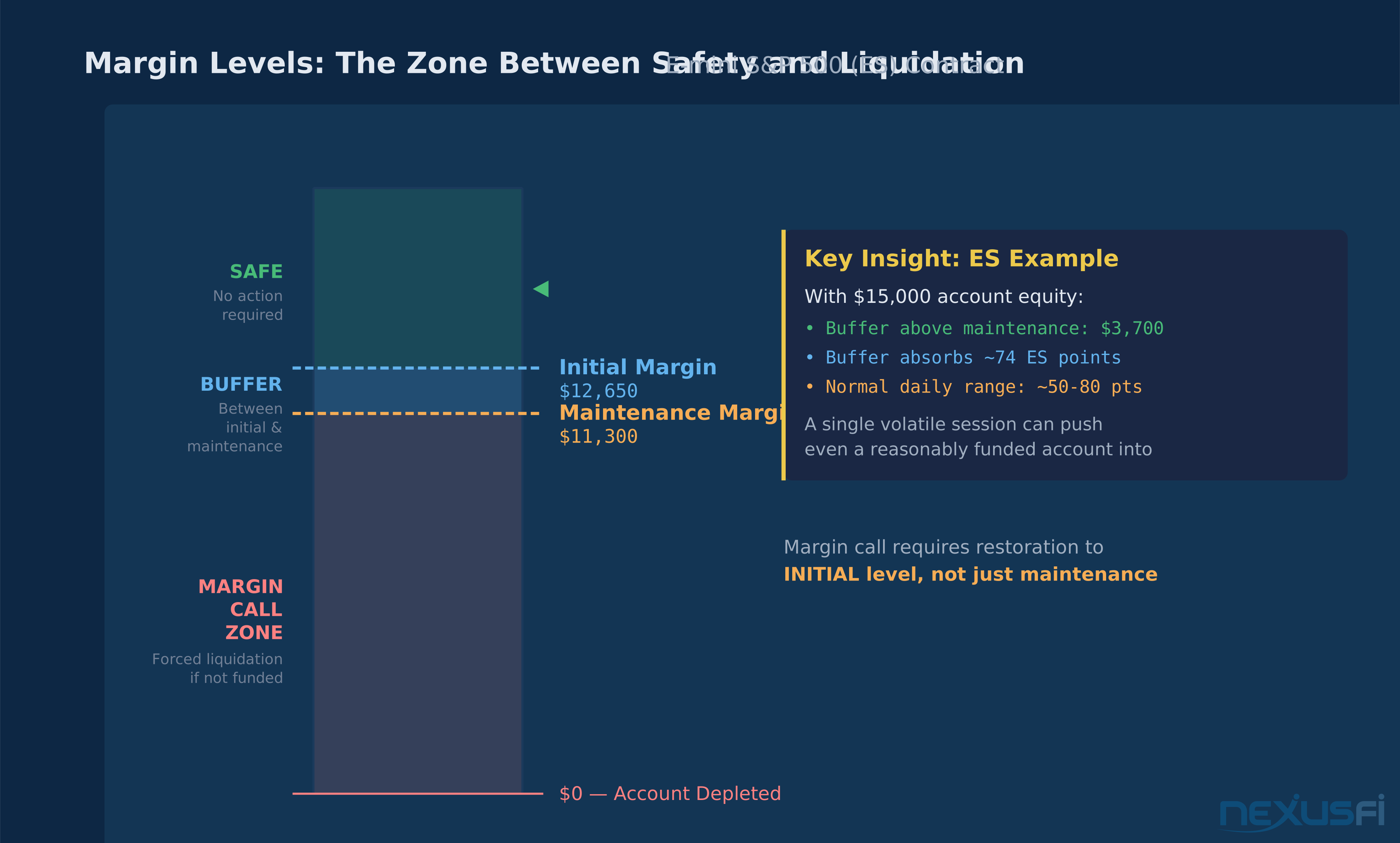
Maintenance margin is typically 75-90% of initial margin. Once your account equity drops below this level, you're in trouble.
If initial margin for ES is $13,200, maintenance might be $12,000. The math is straightforward: if your equity (cash plus unrealized P&L) falls below $12,000 per contract, you've breached maintenance. What happens next depends on your broker's policy — and most retail traders don't read the fine print until it's too late.
Some brokers issue a formal margin call with a deadline (usually the next morning) to deposit funds or reduce positions. Many retail brokers skip the courtesy call entirely and auto-liquidate immediately when you breach. Read your account agreement carefully.
(NexusFi post, 2011, 1 thanks [11]). Treat maintenance margin as a hard boundary, not a gentle suggestion.
Mark-to-Market: Daily Reality Check #
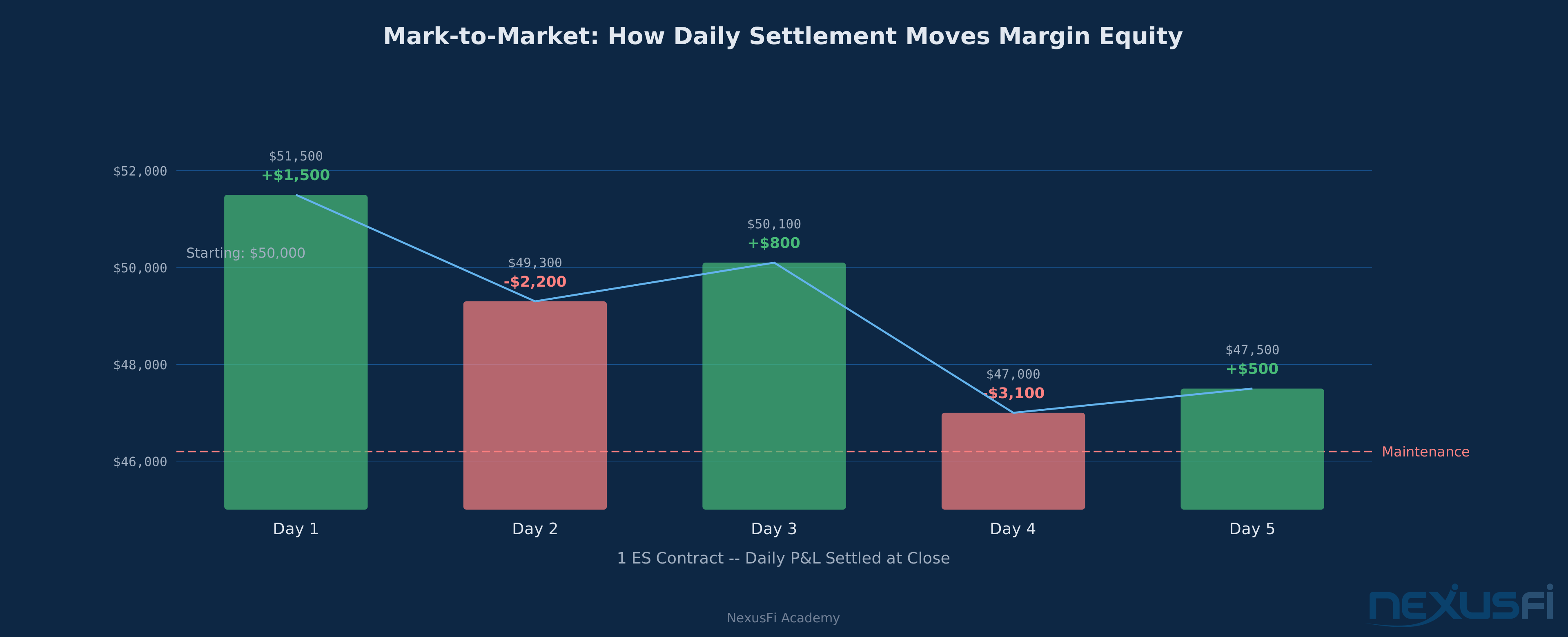
Futures use daily mark-to-market settlement. At the end of each trading session, the clearinghouse marks every open position to the official settlement price. Gains are credited to your account. Losses are debited. Cash physically moves between counterparties through the clearing system.
For ES, the multiplier is $50 per index point. If you're long one ES contract and the settlement price drops 20 points from your entry:
Daily P&L = 20 points x $50 = $1,000 loss
That $1,000 is deducted from your margin equity immediately. It doesn't wait for you to close the trade. This is why futures drawdowns erode your margin cushion in real time — unlike stocks where unrealized losses are just paper numbers until you sell.
([NexusFi post] [4]). The daily settlement cycle resets the clock on your margin calculation every session.
Margin Calls: What Actually Happens #
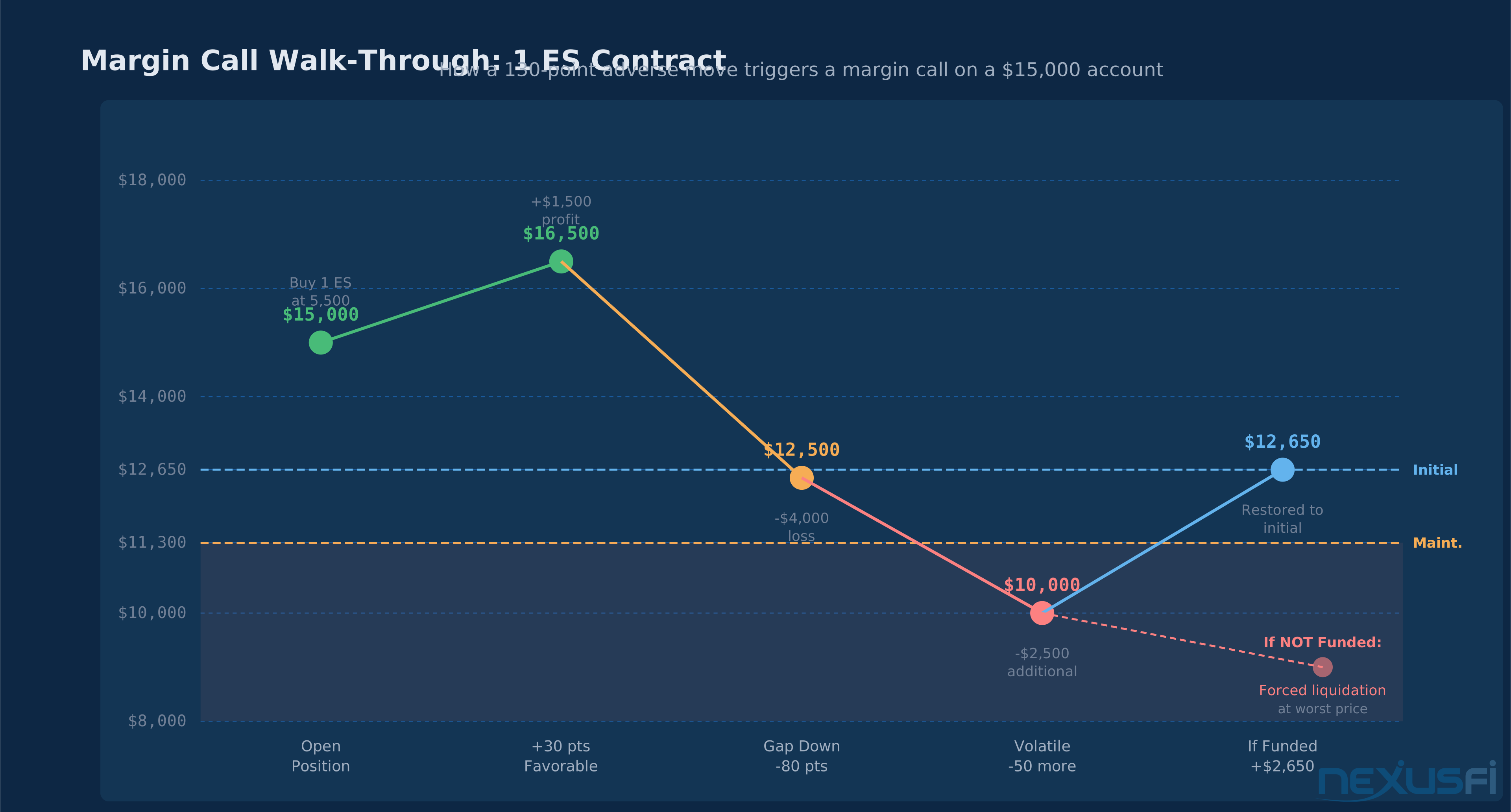
When your account equity falls below maintenance margin, the sequence typically goes:
- Breach detected — Your account equity drops below maintenance margin during daily settlement or intraday monitoring. The clock starts ticking immediately.
- Call or liquidation — Your broker either issues a formal margin call with a deposit deadline (usually the next morning) or skips straight to auto-liquidation. Many retail brokers don't call — they liquidate. Read your agreement.
- Restoration target — Here's the part that catches people off guard: you don't just need to get back above maintenance. You need to restore equity to the full initial margin level. If IM is $13,200 and you breach maintenance at $11,500, you owe $1,700 — not just the few hundred to clear maintenance.
- Forced liquidation — If you miss the deadline or your account keeps deteriorating, the broker closes your positions at market. No limit orders, no waiting for a bounce. Market order, done. And you're still liable for any deficit.
The critical detail: the restoration target is initial margin, not maintenance. If you barely breach maintenance and get called, you need to deposit enough to get back to IM — the higher number.
In fast-moving markets, brokers liquidate at the worst possible price. They don't care about your stop level or your exit plan. They're managing their own risk exposure, and they'll hit the market order button to flatten you if equity drops far enough.
(NexusFi post [7]). Plan for this before it happens, not during.
Day Trading Margin vs. Overnight Margin #
This is where more retail futures traders get blindsided than anywhere else in the margin system.
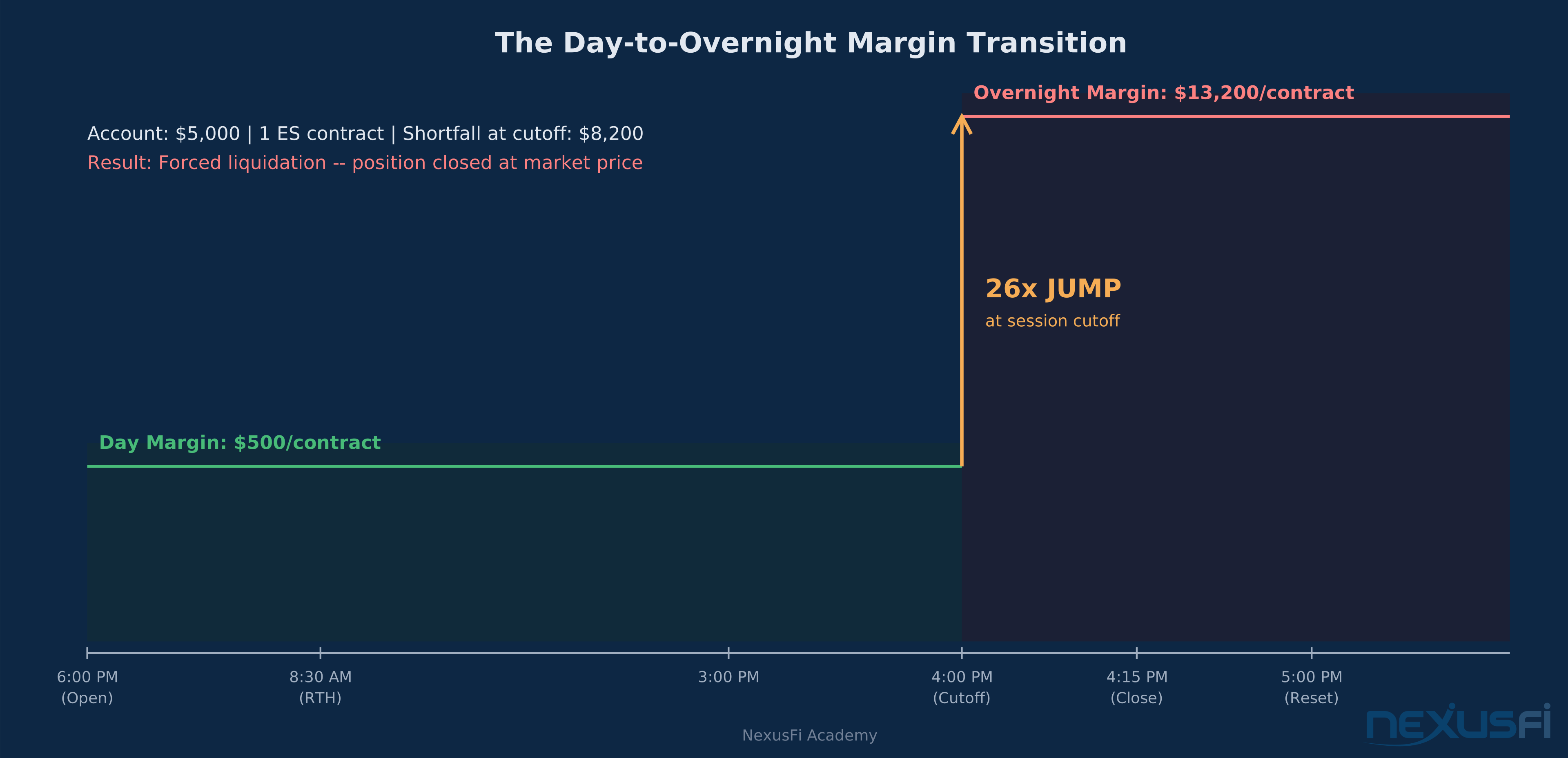
Day trading margin is a broker-provided incentive to attract active intraday traders. It's not regulated by the exchange — brokers set these rates competitively, sometimes as low as $500 per ES contract. The catch is that these reduced rates only apply during regular trading hours for positions that will be closed before the session ends.
Some numbers that illustrate the gap:
If you hold past the session cutoff (typically 4:00-5:00 PM ET, but varies by broker), your position is instantly reclassified from day trading to overnight. Your margin requirement can jump from $500 to $13,200 per contract — a 26x increase — with zero warning. If your account can't cover the overnight rate, you're force-liquidated at whatever price the market gives you.
| Contract | Overnight IM (Exchange) | Typical Day Margin (Broker) | Ratio |
|---|---|---|---|
| ES | ~$13,200 | $500-$2,000 | 7x-26x lower |
| NQ | ~$17,600 | $500-$2,000 | 9x-35x lower |
| CL | ~$8,900 | $500-$1,500 | 6x-18x lower |
| MES | ~$1,320 | $50-$200 | 7x-26x lower |
([NexusFi post] [2]). That's professional-grade advice.
SPAN Margin: Portfolio-Level Risk #
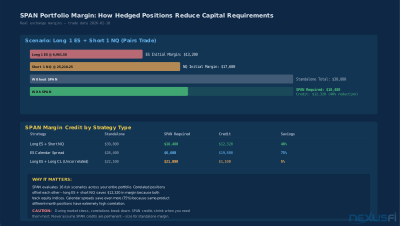
SPAN (Standard Portfolio Analysis of Risk) is how the CME and other exchanges actually calculate margin requirements. As described in CME Group's SPAN methodology overview [10], rather than simply requiring a fixed dollar amount per contract, SPAN evaluates your entire portfolio across 16 different risk scenarios — combining price moves of varying magnitude with volatility shifts — to determine the worst reasonable loss in a single day.
The practical implication: hedged positions require less margin than naked ones. If you're long ES and short NQ (a pairs trade), SPAN recognizes the correlation and reduces total required margin because the positions partially offset each other's risk. Calendar spreads (same product, different expiration months) get even larger reductions.
But there's a catch. SPAN's correlation assumptions are based on recent historical data. During market stress events, correlations break down — assets that normally offset each other can move in the same direction. The exchange responds by raising margins across the board, which is exactly when you can least afford it.
Exchange Margin vs. Broker Margin #
Two layers of margin requirements exist, and traders must meet the stricter of the two:
Exchange/clearinghouse margin is the regulatory minimum. The CME calculates this using SPAN for each product and publishes updated schedules regularly. This is the floor — no broker can require less than the exchange minimum for overnight positions.
Broker (house) margin is the additional buffer your broker adds. A broker like Interactive Brokers might require $14,300 for ES when the exchange minimum is $13,200. This isn't price gouging — brokers are protecting themselves from client defaults that they'd have to cover out of their own capital.
For day trading, brokers have complete discretion. The exchange sets no minimum for intraday positions — that's entirely a broker-level decision. This is why you see firms advertising $500 day margins for ES. They're competing for order flow from active retail traders.
([NexusFi post] [5]).
Practical Application #
Notional Value and Leverage Math #
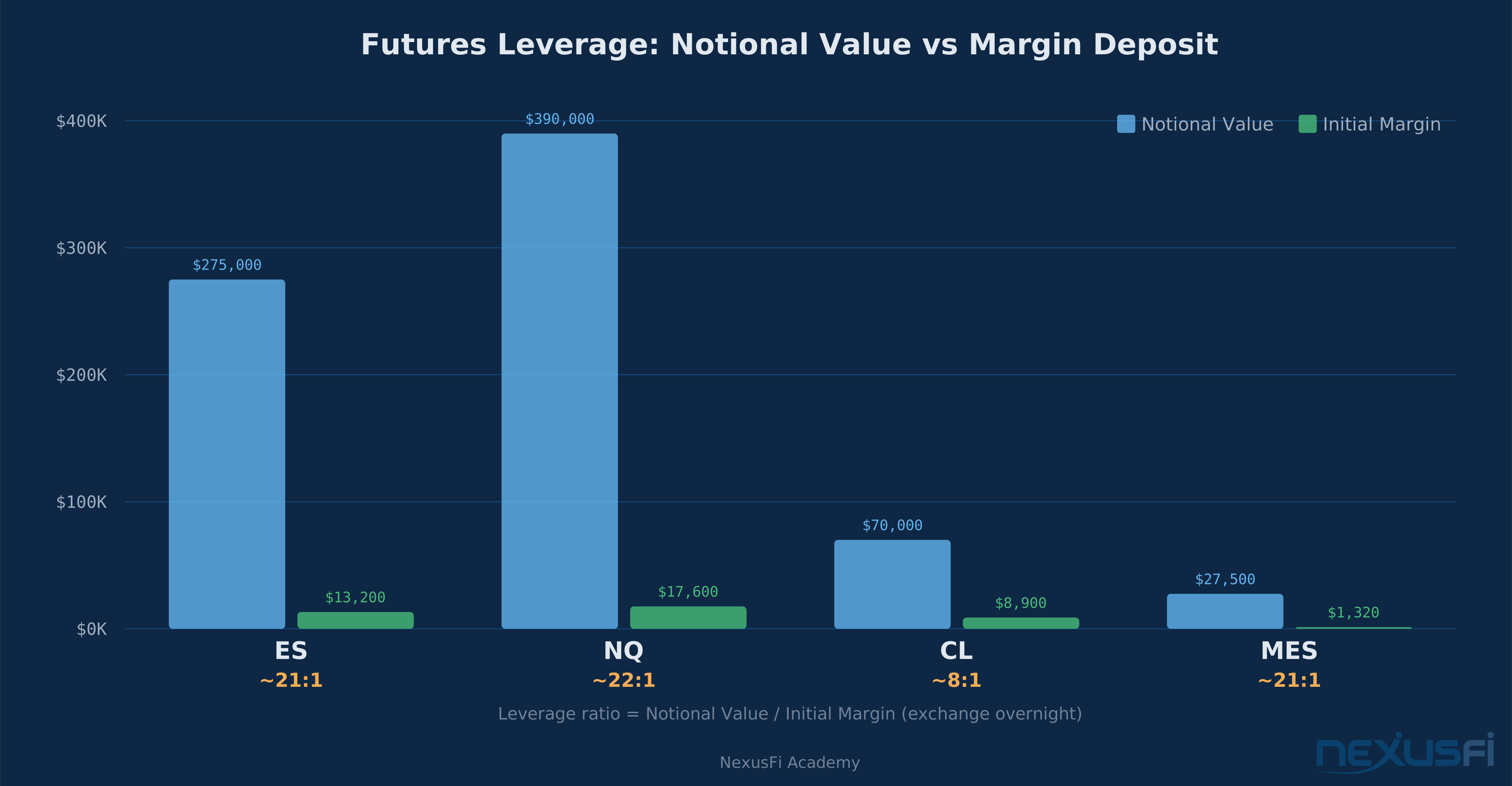
Leverage in futures isn't something you choose — it's embedded in the contract design. The ratio between your margin deposit and the notional value you control determines your effective leverage.
Notional Value = Contract Price x Multiplier
Here's what the math looks like for major contracts:
| Contract | Price | Multiplier | Notional Value | IM | Leverage |
|---|---|---|---|---|---|
| ES | 5,500 | $50 | $275,000 | $13,200 | ~21:1 |
| NQ | 19,500 | $20 | $390,000 | $17,600 | ~22:1 |
| CL | $70 | $1,000 | $70,000 | $8,900 | ~8:1 |
| MES | 5,500 | $5 | $27,500 | $1,320 | ~21:1 |
With exchange overnight margin, leverage runs 8:1 to 22:1 depending on the product. That's already significant. But with broker day trading margins of $500 per MES contract, the math gets extreme:
$27,500 notional / $500 margin = 55:1 leverage intraday
And for traders who push it further with minimal accounts:
$275,000 ES notional / $500 day margin = 550:1 leverage
The NexusFi community has extensively discussed this phenomenon.
([NexusFi post] [6]).
The Distance-to-Liquidation Framework #
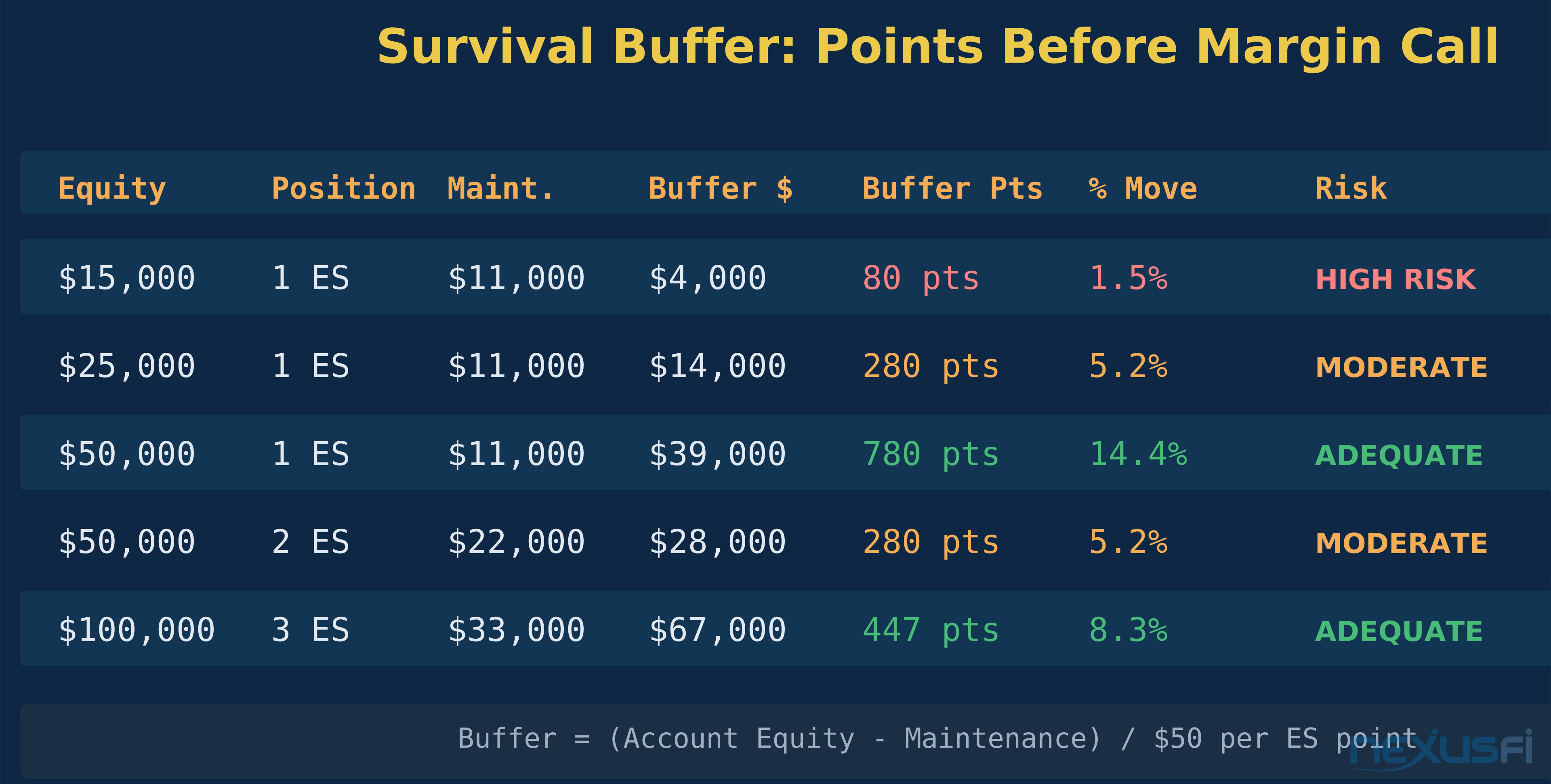
Leverage ratios are abstract. What matters operationally is: how many ticks against you before you breach maintenance margin?
Here's a concrete example. Trader has $5,000 in their account. They open 1 ES contract with $500 day margin:
- Notional exposure: $275,000
- Available equity above margin: $4,500
- ES tick value: $12.50 per tick (0.25 points)
- Ticks to breach: $4,500 / $12.50 = 360 ticks (90 points)
That sounds like a lot of room — until you remember what happens at the session boundary:
- Overnight IM: $13,200
- Account equity: $5,000
- Shortfall: $8,200 — instant forced liquidation
This is the exact scenario that burns retail traders. The day margin gives a false sense of security because the account can technically survive a large intraday move. But the transition to overnight margin creates an instant crisis.
Position Sizing Discipline #
Professional traders approach position sizing through margin-to-equity ratios, not maximum available leverage. The formula:
Margin Utilization = (Total Required Margin / Account Equity) x 100
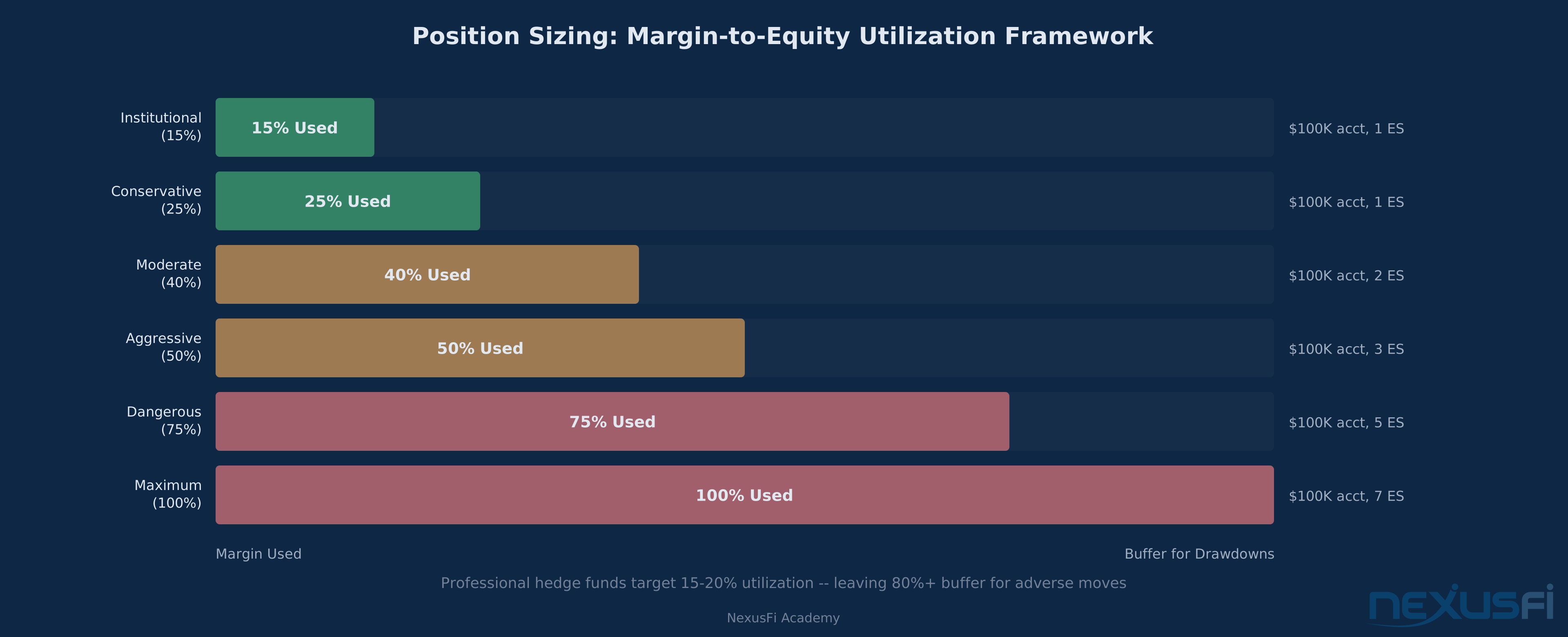
Institutional traders at hedge funds typically keep margin utilization between 15% and 20% of total capital. If you're running above 50%, you're in the danger zone where a single adverse day plus a margin increase could trigger forced liquidation. The research on trader blowups is clear — over-leverage kills more accounts than bad entries ever will. The math behind risk of ruin shows exactly how fast account wipeout probability climbs when utilization exceeds 50%.
([NexusFi post] [3]). That 15-20% utilization rate is the benchmark.
Practical sizing example with a $100,000 account trading ES (broker IM $14,300):
| Utilization | Max IM Used | Contracts | Buffer for Drawdown |
|---|---|---|---|
| 15% (institutional) | $15,000 | 1 | $85,000 |
| 25% (conservative) | $25,000 | 1 | $75,000 |
| 50% (aggressive cap) | $50,000 | 3 | $50,000 |
At 50% utilization with 3 contracts, a 200-point adverse move in ES costs $30,000 (200 x $50 x 3). That's a 30% equity hit — survivable, but uncomfortable. At 15% utilization with 1 contract, the same move costs $10,000 (10% of equity). Night and day difference in stress level.
The Dual Stress Test #
The professional approach to position sizing accounts for two simultaneous risks:
- Adverse price movement — The market moves against your position, reducing equity
- Margin requirement increase — The exchange raises margin, increasing required collateral
These two risks tend to hit simultaneously. When markets crash, exchanges raise margins. Your equity drops from losses while your required margin rises from volatility. The squeeze hits from both directions at the worst possible time — and this is exactly when most traders discover their position sizing was too aggressive.
Example: you hold 5 ES contracts with $66,000 of margin against $150,000 equity (44% utilization). Market drops 100 points while CME raises ES margin from $13,200 to $16,500:
- Loss: 100 points x $50 x 5 = $25,000
- New equity: $125,000
- New required margin: $16,500 x 5 = $82,500
- New utilization: 82,500 / 125,000 = 66%
You went from comfortable (44%) to stressed (66%) from a single event. If the move continues, you're heading for a margin call. This is why professionals keep utilization well below 50% — proper drawdown management means building in a buffer for the double squeeze of losses plus margin hikes.
When Margins Change #
Exchanges don't wait for calm conditions to adjust margins. They raise them during volatility — exactly when it hurts most. Notable examples:
- COVID crash (March 2020): CME raised ES margins repeatedly during the selloff, with some increases exceeding 30% in a single adjustment
- 2022 rate hike volatility: Repeated margin increases across equity and fixed income products as realized volatility surged
- Geopolitical events: Crude oil margins can spike ahead of OPEC meetings or Middle East developments
Margin changes typically take effect within one business day of the announcement. If you're fully deployed when the notice hits, you have hours to deposit funds or reduce positions. Traders who habitually run high utilization get caught in this squeeze regularly.
Citations #
Forum discussions and external sources referenced in this article:
- @NinjaTrader on margin types and definitions ([NexusFi] [1])
- @shodson on leverage and overnight margin discipline ([NexusFi] [2])
- @Fadi on hedge fund margin utilization practices ([NexusFi] [3])
- @bobwest on intraday margin mechanics ([NexusFi] [4])
- @EdgeClear on broker day trading margin policies ([NexusFi] [5])
- @josh on micro contract leverage dangers ([NexusFi] [6])
- @SMCJB on broker margin requirements and liquidation policies ([NexusFi] [7])
- @ron99 on margin call mechanics and restoration targets (NexusFi [11])
External sources:
- CFTC Futures Market Basics — performance bond framework and clearinghouse role (CFTC [8])
- CME Group Performance Bond Requirements — current margin schedules (CME Group [9])
- CME Group SPAN Methodology Overview — portfolio risk analysis framework (CME Group [10])
Related Academy Pages #
- Position Sizing Methods for Futures Trading
- Risk Management for Futures Trading
- Risk of Ruin
- How to Choose a Futures Broker
- Drawdown Management
Knowledge Map
Go Deeper
Build on this knowledgeReferences This Article
Articles that build on this topicCitations
- — Margin: initial vs maintenance vs day trading (2017) 👍 7“Futures are a highly leveraged trading product. Margins are good faith deposits that a trader must maintain in order to trade a particular product.”
- — understanding margin & leverage in emini and futures (2017) 👍 3“Please don't trade with real money until you first understand the leverage ramifications of the instrument you are trading. The amount of leverage allowed does depend on your broker. So ask them.”
- — Correct margin level for ES (2013) 👍 11“A good practice that I see in use at hedge funds that allow margin trading in the first place; is to never let margin requirement exceed 15% to 20% of total capital.”
- — Why are NinjaTrader initial margins so low? (2022) 👍 3“If you hold a position past the daily close, you will have to meet the CME exchange initial margin. For intra-day trades, the exchange doesn't care and the brokers can require any margin they want. Some are below $1,000.”
- — Margin and maintenance requirement at different brokers (2020) 👍 1“Hi Koenigsac The purpose of margins is, first, margins provide leverage to trade futures products, and second, margin requirements try and ensure that whoever is trading has enough money in their account to cover adverse market moves.”
- — Trading the new CME E-Micro's (2019) 👍 6“A bit off-topic, but, anyone who has $500 margin on an emini should call your broker and immediately have them raise it to something sensible like $2000 at a minimum, at least for your own protection in case you accidentally put the wrong quantity in...”
- — Futures Margin Leniency (2023) 👍 3“The consensus opinion is that IB have some of the highest margin requirements and some of the most aggressive liquidation policies.”
- — Futures Market Basics - Education Center
- — Performance Bond / Margin Requirements
- — SPAN Methodology Overview
- — Futures margin explained (2011) 👍 1“Maintenance Margin is the amount that if you go below it you will be on the dreaded margin call. You will then need to get your account to above the Initial Margin level to get off of margin call.”