



Basis Risk in Futures Trading: The Gap Between Cash and Futures That Every Hedger Must Manage
Overview #
Basis is the difference between the cash (spot) price of an asset and the price of its futures contract. On any given day, ES futures trade at a different price than the S&P 500 cash index. Corn futures trade at a different price than corn at your local elevator. Gold futures trade at a different price than spot gold. That difference — the basis — is not random noise. It has structure, it follows rules, and it matters enormously for anyone using futures to hedge.
Basis risk is the risk that the basis changes unexpectedly between when you establish a hedge and when you close it. A perfect hedge would have zero basis risk — the futures contract and the cash position would move in perfect lockstep. In practice, no hedge is perfect. Basis moves. Sometimes it moves in your favor; often it doesn't.
Understanding basis is the difference between a hedge that actually transfers risk and one that substitutes basis risk for price risk. For equity traders shorting ES to hedge a stock portfolio, basis risk explains why the hedge doesn't perfectly offset losses in a market selloff. For commodity producers locking in prices with futures, basis determines whether the hedge delivers the price they expected or something materially different.
This article covers how basis forms, what drives it, how it changes over a contract's life, and what it means for traders and hedgers who rely on futures contracts to manage risk.
What Is Basis and How It Forms #
Basis has a precise definition: Basis = Cash Price — Futures Price
For financial futures: Basis is almost always negative — futures trade above cash because of net carry cost. For commodity futures where convenience yield dominates: Basis can be positive (backwardation). Knowing which direction is "normal" for your market tells you immediately whether basis is strengthening or weakening when you check the spread.
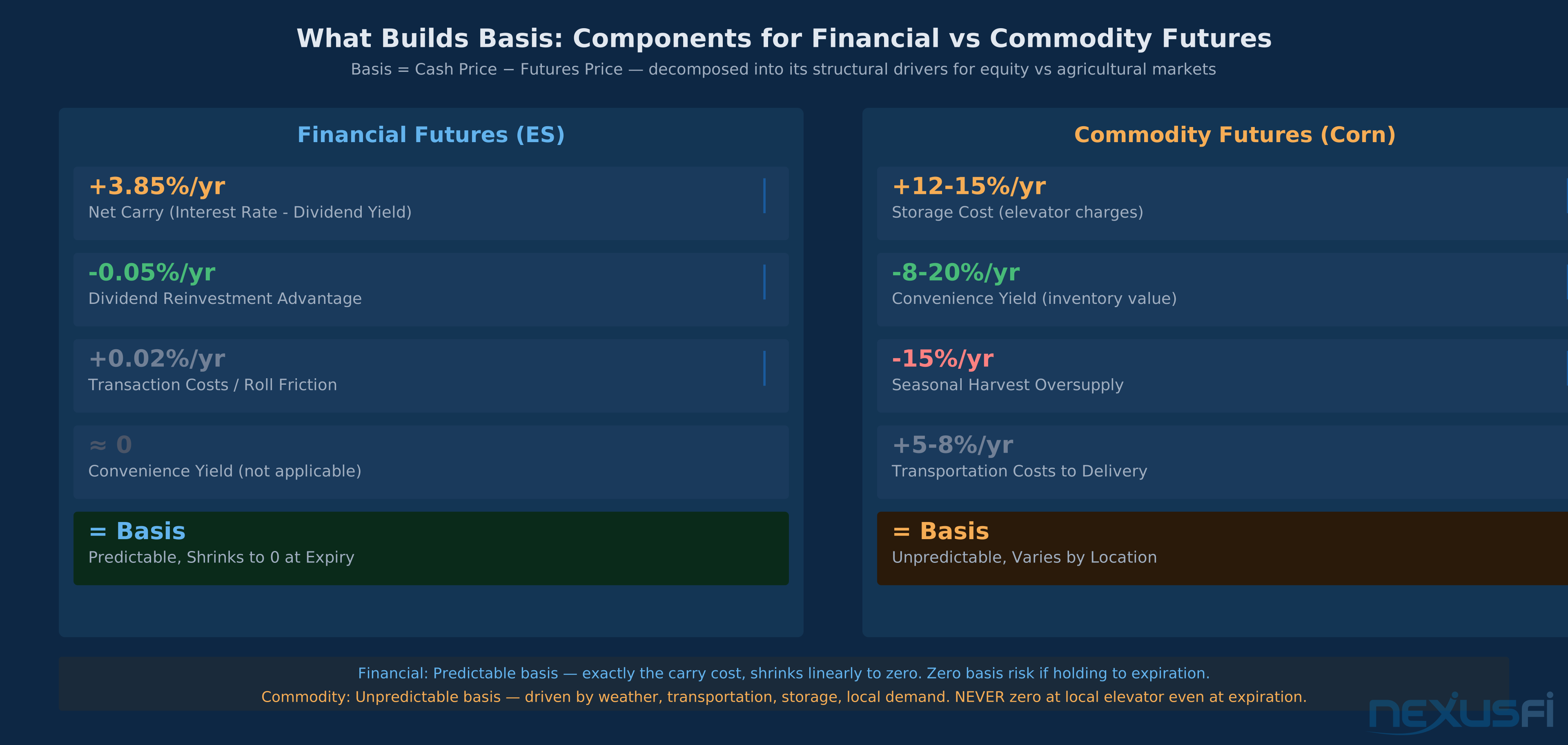
In normal markets, this produces a negative number for most financial futures. ES futures on a given day trade slightly above the S&P 500 index value — the futures price reflects the cost of carrying a stock portfolio forward to expiration: you pay interest on the capital you would have tied up, and you forgo the dividends you would have received. For a market with dividend yields below short-term interest rates (the typical environment since 2022), futures trade above spot: the basis is negative.
For commodity futures, the relationship flips in many cases. Corn in the cash market can trade above or below the futures price depending on local supply and demand, storage availability, transportation costs, and harvest timing. A farmer selling corn in November doesn't sell at the CME December price — she sells at that price plus or minus the local basis, which reflects what's happening in her specific region.
The components that build basis:
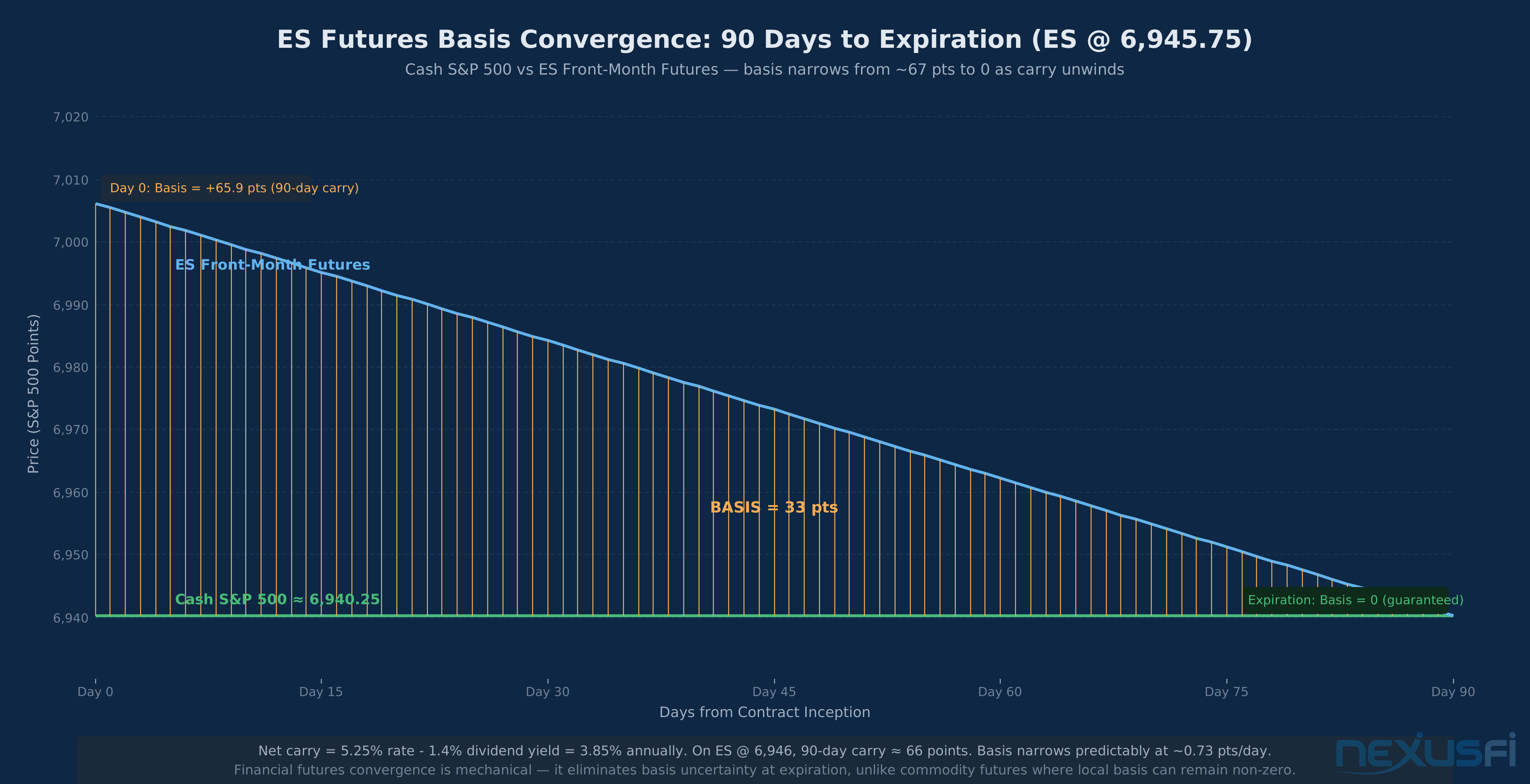
Cost of carry is the primary driver for financial futures. If the risk-free rate is 5.25% and the S&P 500 dividend yield is 1.4%, the annualized carry cost is approximately 3.85%. A futures contract expiring in 90 days trades approximately 0.96% above the cash index (3.85% x 90/365). This is why ES futures always converge to the cash index at expiration — the carry cost decreases to zero as expiration approaches.
Convenience yield matters for commodity futures. Physical commodities have a "convenience yield" — the value of having inventory on hand when needed. When corn inventories are tight before harvest, the convenience yield of holding physical corn is high, which can push cash prices above futures prices (backwardation). After harvest, when storage is full and supply is ample, futures trade above spot (contango).
Local vs exchange basis is the additional layer commodity traders deal with. CME grain futures reflect prices at specific delivery locations (Chicago for corn). A trader in Kansas faces "local basis" — the difference between Kansas cash prices and Chicago futures. Local basis reflects transportation costs, regional supply conditions, and local elevator storage charges. It varies by location, by season, and by local events entirely unrelated to the national market.
A worked example — ES futures basis:
On a day when the S&P 500 index closes at 5,420.75 and the front-month ES futures close at 5,426.50:
- Basis = 5,420.75 — 5,426.50 = -5.75 points
- This reflects approximately 12 days to expiration with a net carry cost of roughly 0.47 points per day
- As each day passes, the futures price converges toward the cash index
- At expiration (Friday afternoon settlement), ES converges to the final settlement value of the S&P 500 — by definition, basis = 0
Basis Strengthening and Weakening: What Direction Matters #
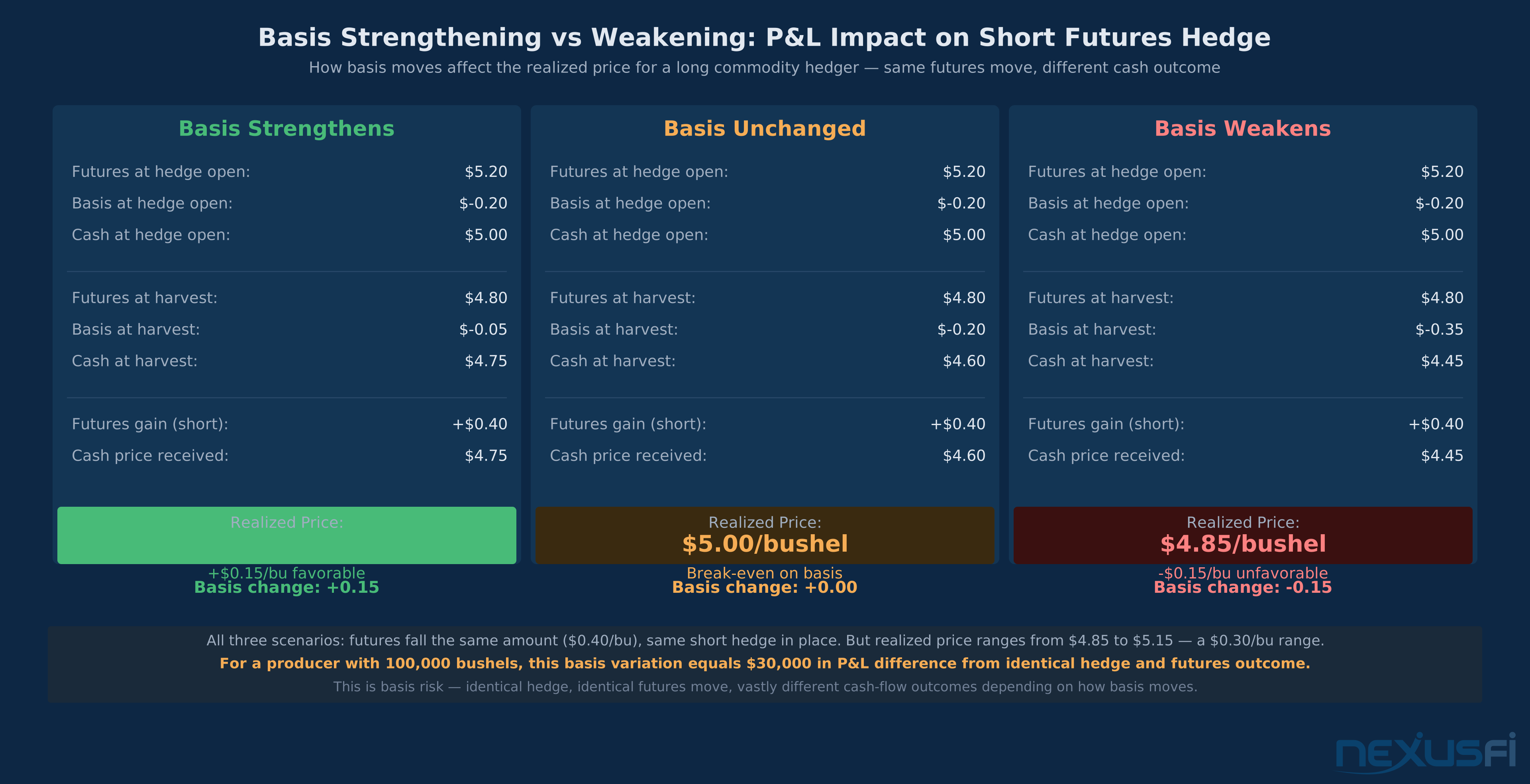
Basis either strengthens (moves toward zero or positive) or weakens (moves away from zero, or more negative). Which direction is favorable depends entirely on your position.
For someone short futures to hedge a long cash position (the most common hedging structure):
- Basis strengthening is favorable — the cash position gains relative to the futures hedge
- Basis weakening is unfavorable — the hedge underperforms; you paid more with the futures loss than you gained on the cash position
For someone long futures to hedge a short cash position (a processor, buyer, or short seller):
- Basis weakening is favorable
- Basis strengthening works against you
This asymmetry is why commodity producers and processors watch basis obsessively. A grain elevator with a target selling price of $5.00/bushel doesn't just watch the CME price — they watch local basis. If they sell corn futures at $5.20 with a local basis of -$0.20 (cash is $0.20 below futures), they expect to net $5.00. If basis weakens to -$0.35 by the time they deliver, they net only $4.85. The corn price didn't change. Basis moved against them.
Basis patterns over a contract's life:
For financial futures (ES, NQ, YM), basis follows a predictable path:
- At contract inception (~90 days before expiration), basis equals the full carry cost
- Basis narrows linearly toward zero as expiration approaches
- At expiration, basis = 0 by settlement mechanics
This predictability makes financial futures well-suited for short-term hedging. A trader hedging a stock portfolio with ES futures for 30 days knows approximately how the basis will behave — it will narrow by roughly 0.3 points per day as carry accretes, reducing the futures premium.
For commodity futures, basis patterns are more complex:
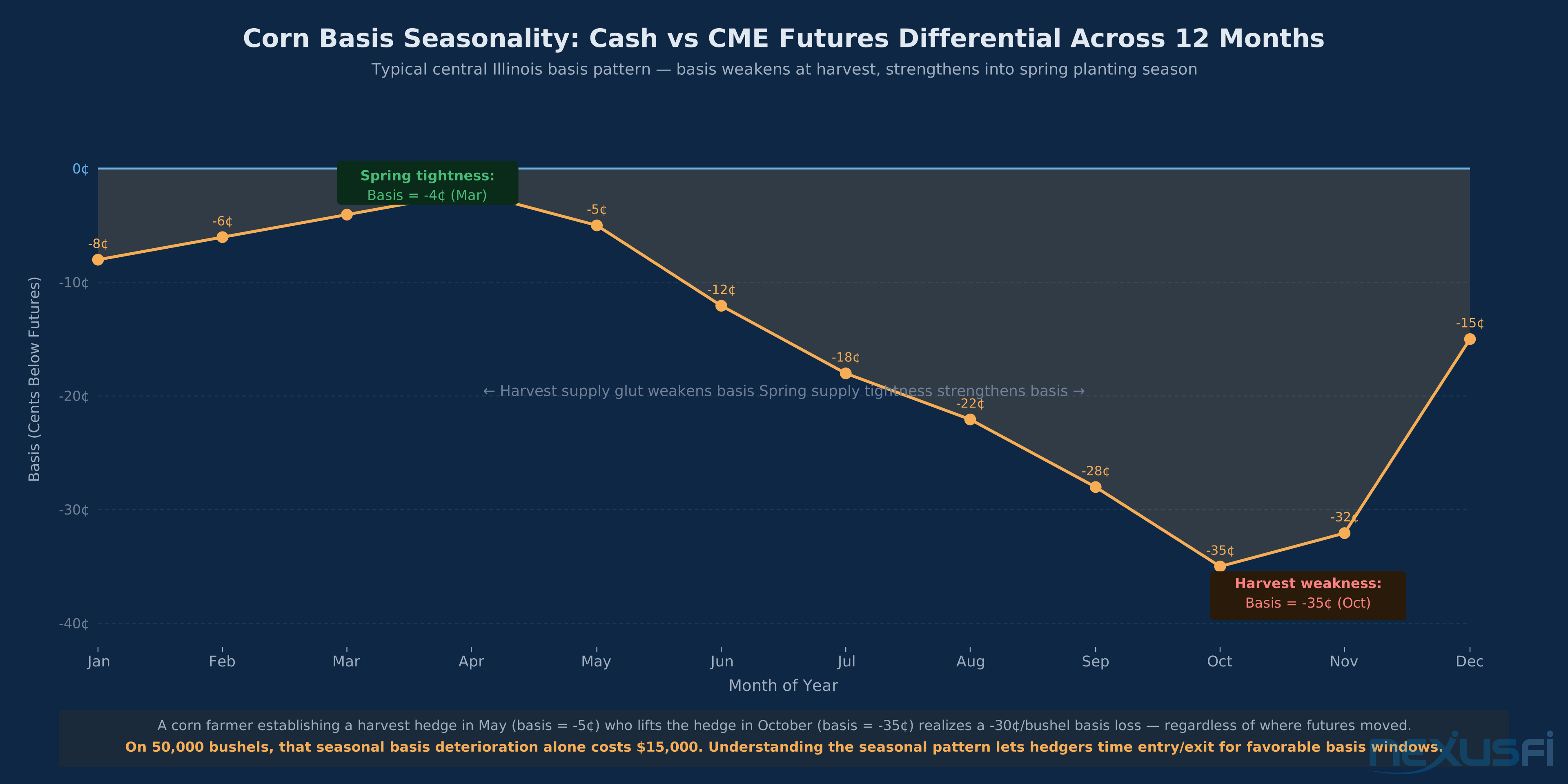
- Seasonal patterns dominate: grain basis often weakens (becomes more negative) during harvest when supply overwhelms local storage, then strengthens into spring planting as nearby supply tightens
- Basis at expiration may not be zero — commodity futures settle against specific grades and delivery locations, and if you're not positioned at those locations, basis at your location reflects local conditions even at contract expiration
- Extreme basis moves happen during supply disruptions, transportation bottlenecks, or regional weather events
Basis Risk in Equity Futures Hedging #
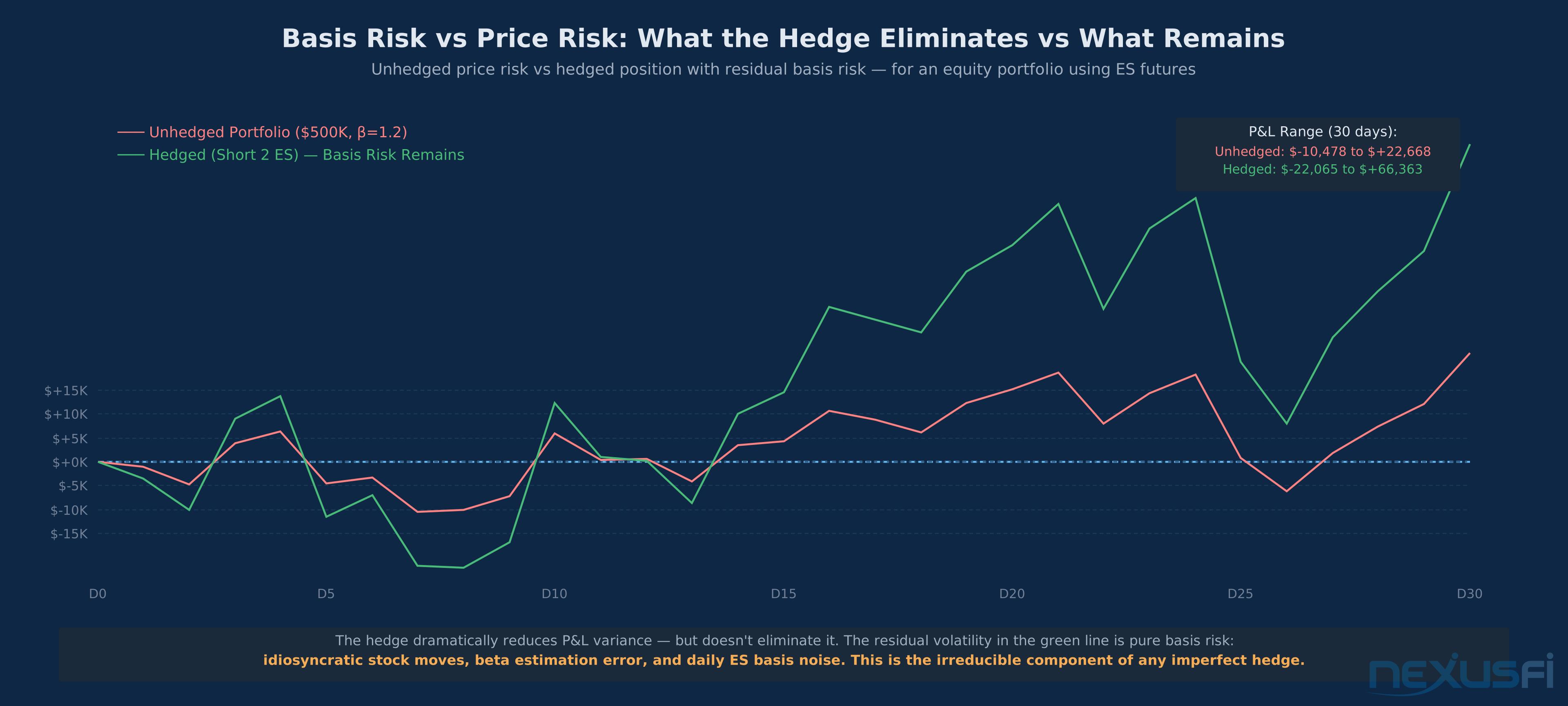
Shorting ES futures to hedge a stock portfolio is one of the most common uses of financial futures for retail traders. The hedge looks straightforward — short enough ES contracts to offset your portfolio's market exposure. But several forms of basis risk lurk beneath the surface.
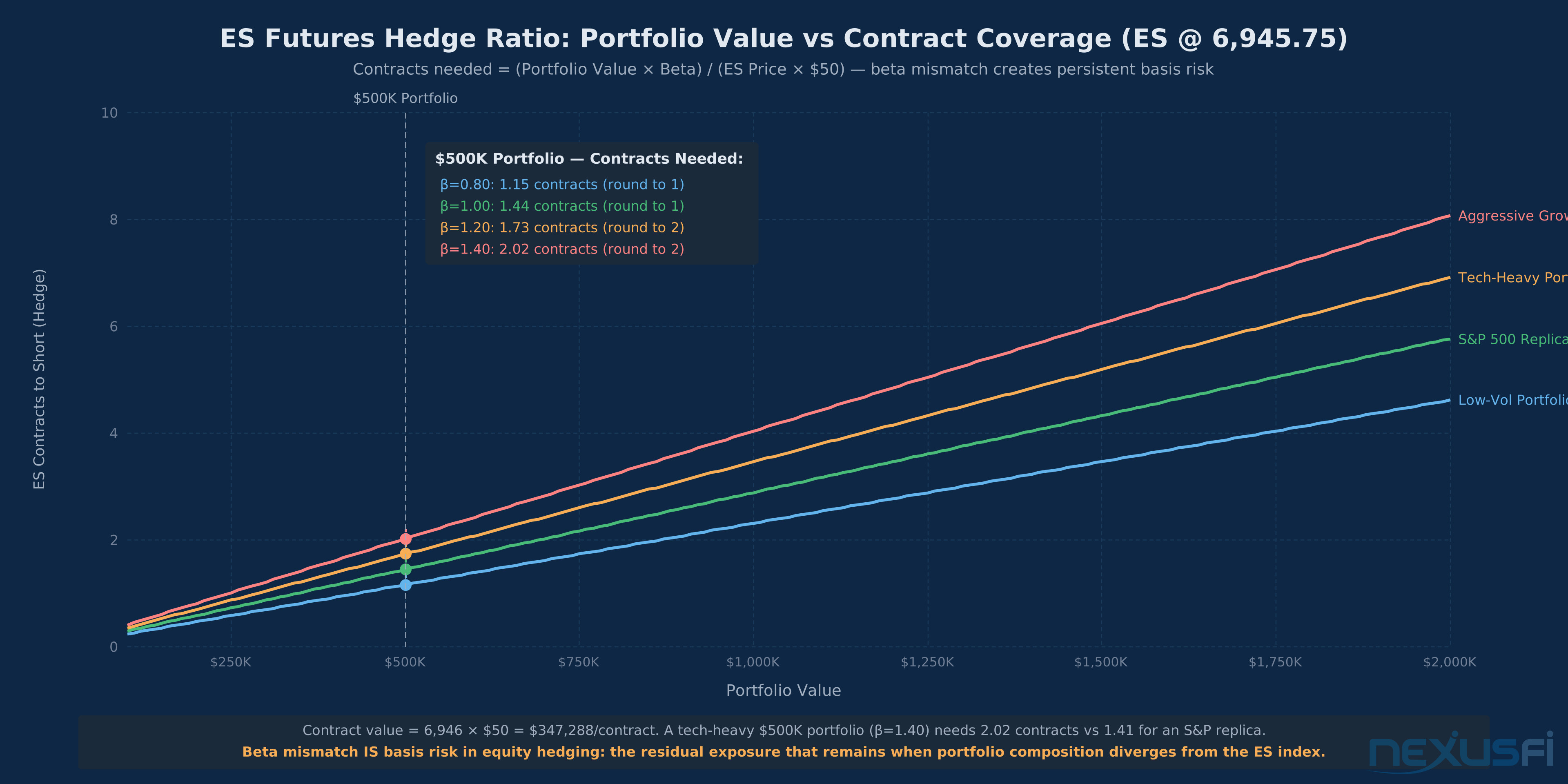
Beta mismatch is often underestimated. Most retail traders use a beta of 1.0 as a rough hedge — one contract per $356,000 of portfolio value at ES 7,100. But if your portfolio has a trailing 12-month beta of 1.25 to the S&P 500, you're leaving 25% of your market exposure unhedged. Recalculate beta at least quarterly, and after major portfolio composition changes.
Beta mismatch creates persistent basis risk. The ES futures contract tracks the S&P 500 index. If your portfolio holds concentrated positions in technology stocks, healthcare names, or any collection that diverges from the S&P 500's composition, your portfolio won't move dollar-for-dollar with ES. On days when growth stocks underperform value stocks by 1.5%, a technology-heavy portfolio falls more than the S&P 500 while ES only falls in line with the broad index. This difference — your portfolio's beta to the S&P 500 multiplied by the market move — is basis risk in equity hedging.
The hedge ratio calculation:
Contracts needed = (Portfolio Value × Portfolio Beta) / (ES Futures Price × $50 multiplier)
Example: $500,000 portfolio, beta = 1.15, ES at 5,400: = ($500,000 × 1.15) / (5,400 × $50) = $575,000 / $270,000 = 2.13 contracts → short 2 contracts
The 0.13 contract rounding error is basis risk. The beta estimate is itself an error source — beta changes over time, and using a historical beta for an ex-post hedge creates tracking error.
Index composition and single-stock events: The S&P 500 rebalances quarterly, holds 500 names, and weights by market cap. A portfolio concentrated in 20 names can diverge dramatically from the index on earnings days, analyst upgrades, sector rotations, or news events affecting specific holdings. When NVIDIA reports earnings and moves 15% while the rest of the market is flat, an ES hedge provides zero protection for NVIDIA exposure — and actually creates basis risk if the NVIDIA move pulls the S&P up and your short ES position loses while your portfolio's other names don't benefit.
Dividends and corporate actions: ES futures don't pay dividends. If your portfolio contains high-dividend stocks that trade ex-dividend during your hedge window, the dividend is cash in your portfolio but doesn't reduce your ES short value. This creates a predictable favorable basis movement for the equity hedger — a small structural advantage of hedging equities with ES.
Basis risk from stock/index divergence is the residual risk that persists even with a well-calibrated hedge. The quote captures the intent; the gap between that intent and reality is what this article addresses.
NQ as an alternative for tech-heavy portfolios: Traders holding concentrated technology or growth stock positions often find NQ futures (Nasdaq-100) provides a tighter hedge than ES. NQ's weighting toward large-cap technology creates a tighter correlation with a tech-heavy portfolio, reducing basis risk from sector mismatch. The tradeoff: NQ has different option structures, different liquidity characteristics at certain times, and its own basis dynamics distinct from ES.
Basis Risk in Commodity Futures Hedging #
For commodity producers, processors, and commercial traders, basis risk is the central concern of every hedging decision. Unlike financial futures where basis is largely driven by known carry costs, commodity basis is driven by local supply and demand conditions that can diverge sharply from the national exchange price.
The corn farmer's hedge: A corn farmer plants in April expecting to harvest in October. She wants to lock in a selling price now. CME December corn futures are trading at $4.80/bushel. Her local elevator is currently bidding $4.55 — 25 cents below the December futures, or a basis of -$0.25.
She sells December corn futures at $4.80, expecting to net $4.55 when she delivers in October (futures price minus the -$0.25 basis).
By October, suppose CME December corn has fallen to $4.40 — she's down $0.40 on the cash corn but up $0.40 on the futures short. Perfect offset.
But what if local basis has weakened to -$0.40 by October? Her elevator now bids $4.00 (futures $4.40 minus $0.40 basis). She closes the futures short at $4.40, gaining $0.40. But sells cash corn at $4.00. Net price: $4.40 (cash proceeds $4.00 + futures gain $0.40). She expected $4.55. Basis risk cost her $0.15/bushel.
Conversely, if basis strengthened to -$0.10, she'd net $4.70/bushel — better than expected. Basis moved in her favor.
Sources of commodity basis variability:
Transportation and logistics: When rail car availability tightens in the Midwest during peak harvest, local elevators can't move grain efficiently to delivery points. Cash bids widen relative to futures. Basis weakens dramatically. This is entirely regional — national futures prices don't move while local basis collapses.
Storage constraints: After a bumper crop, local storage fills. Elevators charge storage, which effectively weakens the local basis. The national futures price might be stable while local basis deteriorates as elevators price in their storage cost and limited space.
Quality differentials: CME corn futures specify No. 2 Yellow corn at par, with substitutions allowed at premiums/discounts. Corn that doesn't meet delivery specifications trades at basis discounts. Drought-affected corn with low test weight may trade at a significant discount to CME regardless of the national price.
Export demand: In regions with river access or port proximity, export demand creates strengthening basis. When Asian buyers aggressively bid for Gulf export corn, the cash-to-futures premium compresses or flips positive at river terminals. Inland elevators benefit from improved barge rates as grain moves toward export channels.
The cross-hedge problem: Most farmers don't grow crops deliverable against CME contracts. Kansas wheat farmers hedge with CME Chicago wheat (CBOT), but their wheat is Hard Red Winter while CBOT deliverable is Soft Red Winter. The basis between these two classes varies by demand, protein content, and export markets. This cross-hedge adds an additional layer of basis risk beyond location — the correlation between Hard Red Winter and Soft Red Winter prices is high but not perfect.
Cross-Hedging and Hedge Ratio Optimization #
Cross-hedging occurs when the futures contract doesn't precisely match the asset being hedged. Every equity portfolio hedge with ES futures is technically a cross-hedge. Every commodity producer using a related-but-not-identical futures contract cross-hedges. Managing cross-hedge basis risk requires calibrating the hedge ratio carefully.
Minimum variance hedge ratio:
The theoretical optimal hedge ratio minimizes the variance of the hedged position. It's calculated as:
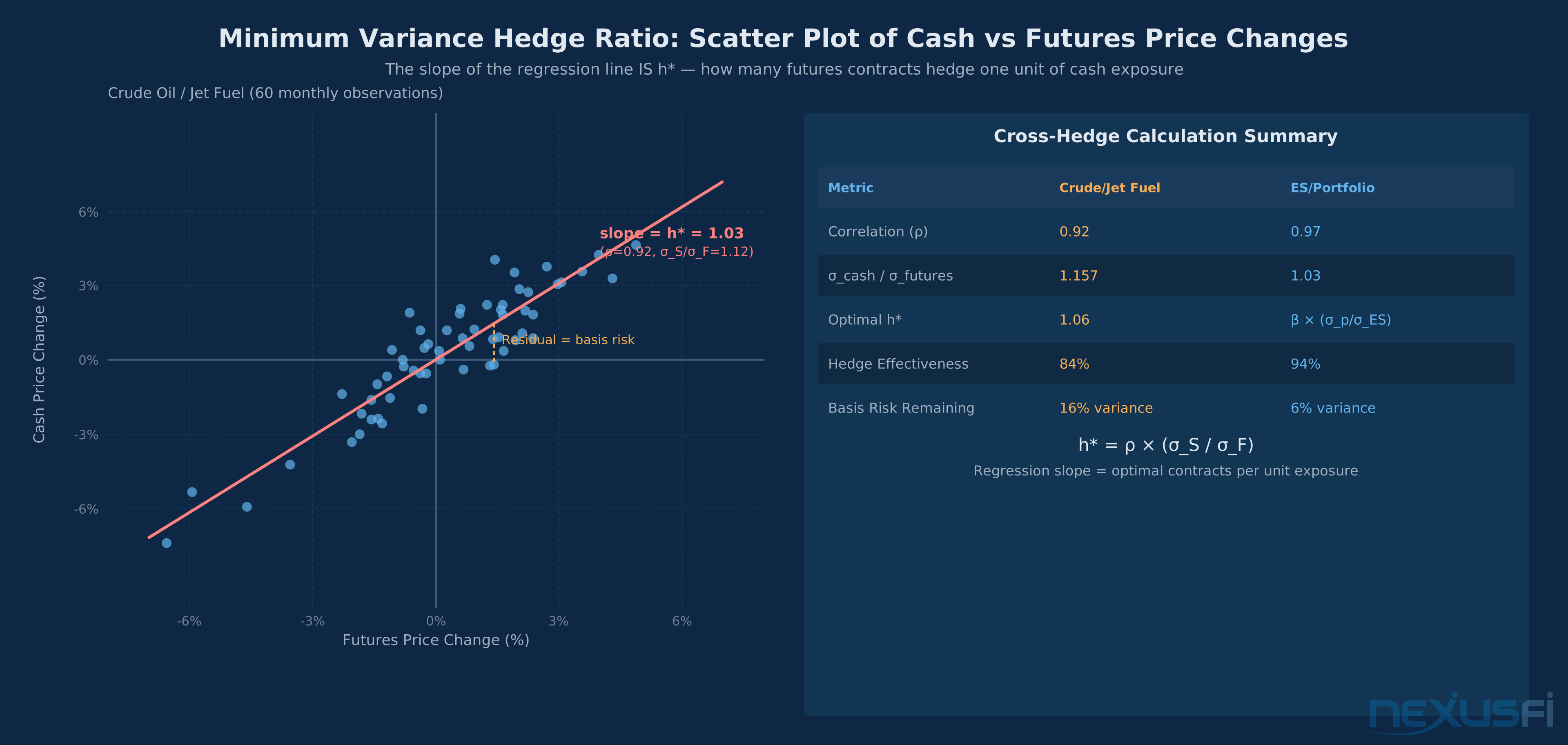
h* = ρ × (σ_S / σ_F)
Where:
- h* = optimal hedge ratio (contracts per unit of cash exposure)
- ρ = correlation between changes in cash price and futures price
- σ_S = standard deviation of changes in cash price
- σ_F = standard deviation of changes in futures price
When ρ = 1 and both prices have equal volatility (h* = 1), you need one futures contract per unit of cash exposure — no adjustment needed. This is the ideal case.
When cross-hedging, ρ < 1 and the volatilities may differ. For an airline hedging jet fuel with crude oil futures:
- Historical ρ between jet fuel and WTI crude: ~0.92
- σ_jet fuel monthly moves: 12.5%
- σ_crude oil monthly moves: 10.8%
h* = 0.92 × (12.5 / 10.8) = 0.92 × 1.157 = 1.06
The airline needs to short 1.06 barrels of crude futures for every 1 barrel of jet fuel exposure. The 6% overcoverage compensates for the higher volatility of jet fuel relative to crude.
Hedge effectiveness is the key output:
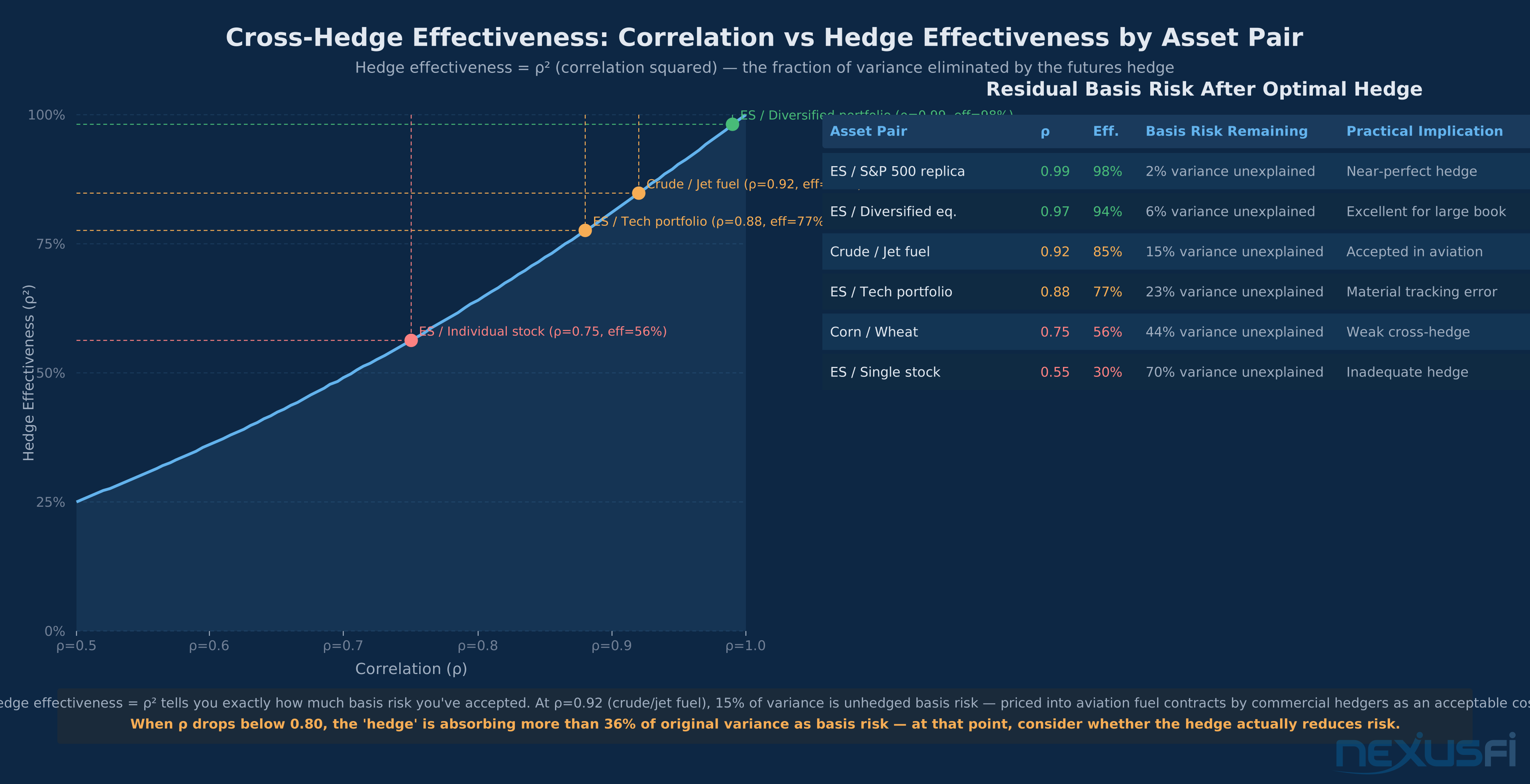
Hedge effectiveness = ρ²
If the correlation between your cash asset and the futures contract is 0.92, hedge effectiveness = 0.84 (84%). This means the futures hedge eliminates 84% of the variance in your cash position. The remaining 16% is basis risk — variance you accepted when you chose an imperfect hedge.
For ES futures hedging a diversified equity portfolio: ρ is typically 0.95-0.99, giving 90-98% hedge effectiveness. For ES futures hedging a concentrated tech portfolio: ρ might be 0.85-0.90, giving 72-81% effectiveness. For crude oil hedging jet fuel: ~84% effectiveness as above.
Dynamic hedge adjustment: Hedge ratios are calculated from historical data, but correlations and volatility ratios shift over time. A hedge ratio calculated from 12-month data may become stale during regime changes — when correlations between assets change due to macro events, policy shifts, or sector dynamics. Active hedgers recalculate hedge ratios periodically (quarterly is common) and adjust contract counts as their portfolio composition changes.
Basis Convergence at Expiration #
One of the most important facts about financial futures is that basis converges to zero at expiration. This convergence is guaranteed by the settlement mechanism — the final settlement price is calculated directly from the cash index (for equity index futures) or physical delivery (for commodity futures). This convergence has practical implications for every hedger.
Cash settlement convergence (ES, NQ, YM, bonds):
ES futures settle to the Special Opening Quotation (SOQ) of the S&P 500 on the third Friday of the contract month. The SOQ is calculated using the opening transaction prices of the 500 component stocks — not the regular S&P 500 market price. This creates the phenomenon where ES can settle at a price different from where you'd expect based on Thursday's close.
The key insight for hedgers: if you maintain an ES short position to expiration, the basis risk goes to zero. The futures price and the cash settlement value converge by definition. You lose the flexibility of choosing your exit price, but you eliminate the uncertainty of the basis at the time you close.
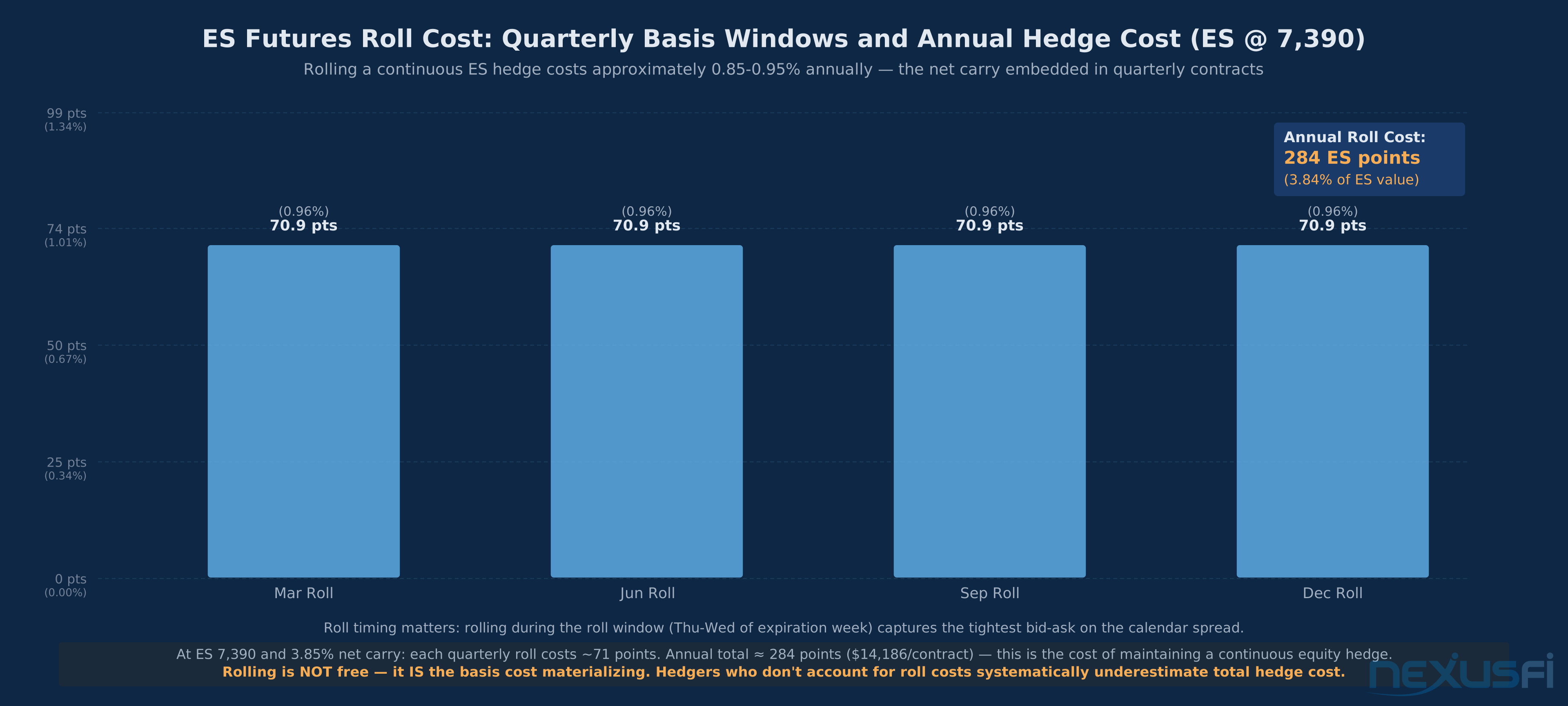
For equity index hedgers, this means rolling positions (closing the expiring contract and reopening in the next quarterly contract) is a decision with basis implications. The roll basis — the difference between the expiring contract's price and the next contract's price — adds a small, predictable cost to maintaining a continuous hedge. The roll spread is approximately equal to one quarter's carry cost (about 0.9% annually on ES in a 5% rate environment, roughly 4 quarterly rolls × 0.22% each).
Physical delivery convergence (agricultural, energy, metals):
For physically delivered contracts, convergence works differently. The futures price converges to the delivery-point cash price at expiration — not the nationwide average price. A corn farmer in Nebraska doesn't deliver to the Chicago Board of Trade. She delivers to her local elevator. Her local basis at expiration may be -$0.20 or -$0.50 depending on local conditions, regardless of what CME December corn does.
This is why commercial hedgers often choose to offset futures positions before expiration rather than deliver physically. They're managing the local basis, not fighting the exchange's delivery mechanism.
Roll timing and basis windows:
Sophisticated commercial hedgers watch basis calendars carefully. They know that basis in grain markets typically:
- Weakens (more negative) in October-November as harvest supply floods local markets
- Strengthens (less negative) in spring planting season as nearby supply tightens
- Follows predictable patterns that vary by region
Timing when you establish a hedge — and when you close it — affects your realized basis. A farmer who establishes a harvest-time short position in May (when basis is -$0.15) and closes it in October (when basis is -$0.35) accepts a $0.20/bushel basis hit in addition to whatever happened to the futures price. Understanding the seasonal basis pattern allows hedgers to enter and exit at more favorable basis windows.
Managing Basis Risk: Practical Approaches #
Basis risk cannot be eliminated — only managed. The approaches below range from simple monitoring to sophisticated active management.
1. Track basis, not just futures price
The most basic step is calculating and recording your actual basis at every hedge adjustment. If you're hedging an equity portfolio with ES, track daily:
- Portfolio value change
- ES futures daily P&L
- Implied hedge basis = (portfolio change / portfolio value) - (ES change / ES value × beta)
Persistent tracking reveals whether your beta estimate is accurate, whether sector drift is creating growing basis risk, and whether your hedge is performing as expected.
2. Strip positions for commodity hedgers
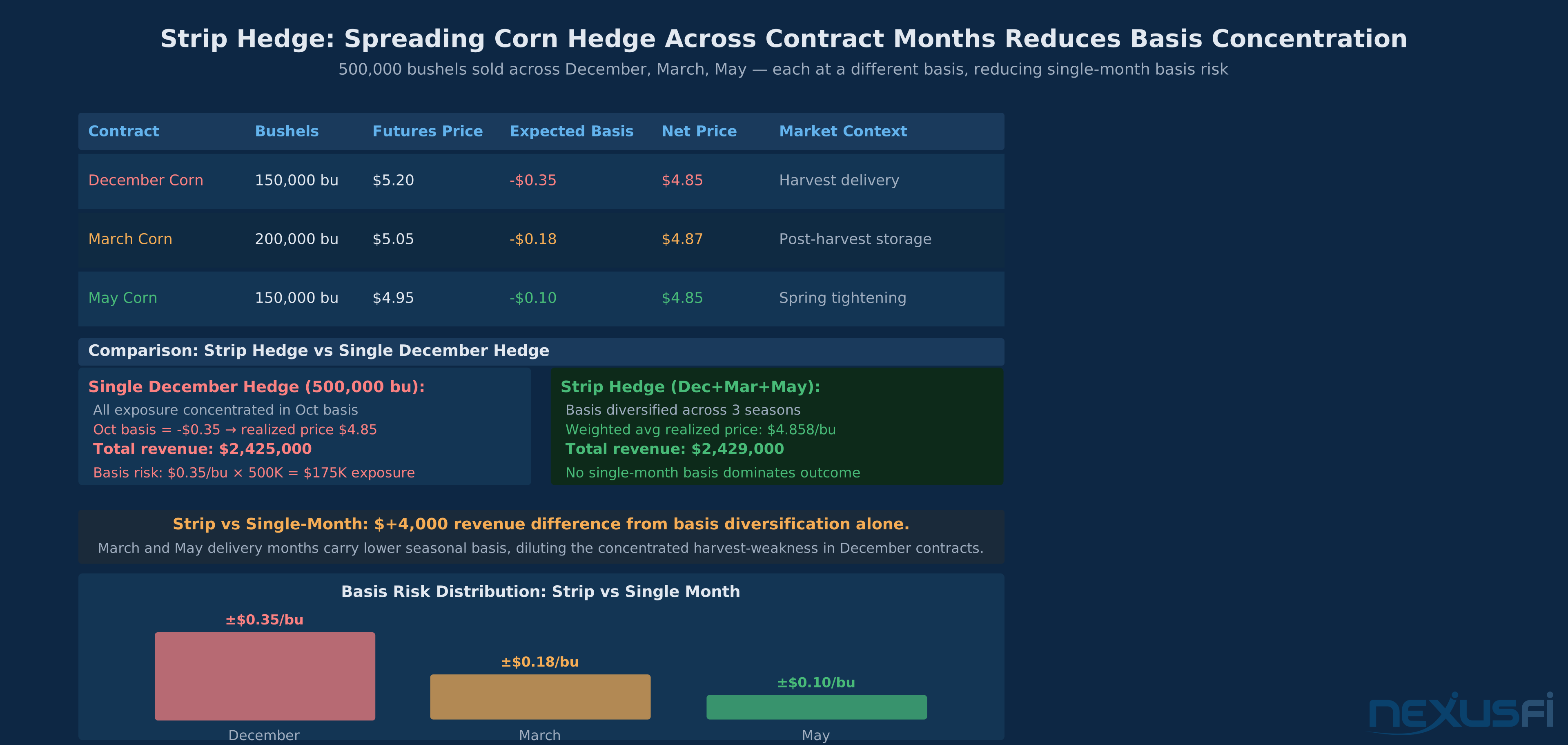
Rather than hedging all production with a single contract month, spreading hedges across multiple contract months reduces basis concentration risk. A corn farmer with 500,000 bushels to sell might hedge:
- 150,000 bushels December corn (harvest delivery)
- 200,000 bushels March corn (post-harvest storage window)
- 150,000 bushels May corn (spring tightening window)
This spreads basis exposure across three different basis environments, reducing the impact of any one month's basis deterioration.
3. Selective hedging windows
Rather than maintaining a continuous hedge, some commercial hedgers only hedge when basis is historically favorable — within the top quartile of basis readings for that time of year. This means sometimes carrying unhedged price risk while waiting for better basis. The tradeoff: you reduce average basis drag but accept periods of unhedged exposure.
4. Basis contracts and fixed-price contracts
For commercial commodity hedgers, an alternative to self-managing basis is to use basis contracts directly with elevators or processors. A basis contract locks in the basis (the local differential relative to futures) while leaving the futures price component open. This lets the producer separate the two risks:
- Price risk (managed via futures if desired)
- Basis risk (fixed via the basis contract)
This structure is common in agricultural markets where elevators actively bid for basis, and it transfers basis risk to the elevator or merchandiser who is better positioned to manage it.
5. Using options to bound basis risk
Buying put options on ES futures instead of shorting futures outright limits downside from basis moves. If basis strengthens (ES falls faster than your portfolio), the option's cost is fixed — you don't face unlimited upside loss on the short futures. The tradeoff is the option premium, which is a direct cost of the hedge versus the synthetic cost embedded in futures basis.
The five tools for managing basis risk: (1) Track realized basis after every hedge to detect beta drift. (2) Strip positions across contract months to diversify basis exposure. (3) Enter hedges during historically favorable basis windows, not blindly at inception. (4) Use basis contracts when available to separate price risk from basis risk. (5) Consider options when unlimited losses from basis strengthening are unacceptable. No single tool eliminates basis risk — they reduce and manage it.
Basis Risk for Retail Futures Traders #
Most retail futures traders don't think of themselves as hedgers — they're speculators taking directional positions. Basis risk still affects them, but in different ways.
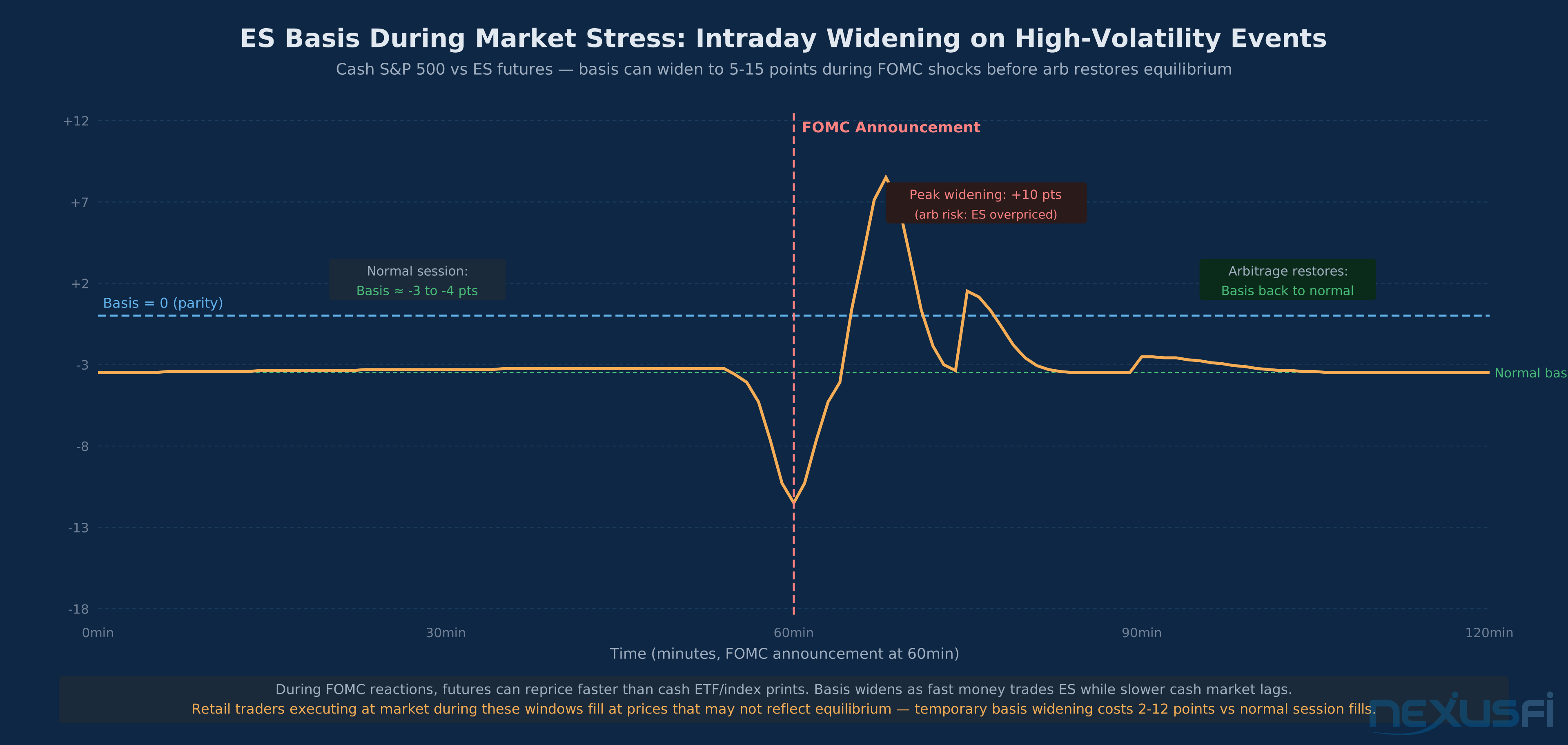
Intraday basis during fast markets: During high-volatility events (FOMC announcements, major economic releases, geopolitical shocks), the basis between futures and the cash index can widen dramatically. ES futures may temporarily trade at a significant premium or discount to the cash S&P 500 as different market participants have different information and different access speeds. Retail traders who execute during these windows may fill at prices that don't accurately reflect the cash index level — a temporary basis effect that resolves within seconds to minutes but affects execution quality.
Cross-asset basis for relative value traders: Traders who trade the spread between ES and NQ, or between CL and RB (reformulated gasoline), or between ZC (corn) and ZS (soybeans) are explicitly trading basis. The spread reflects the relative value of the two assets, and they profit when their assessment of fair value proves correct. This is speculative basis trading — taking a view on whether corn/soybean ratios will converge or diverge.
The implied futures carry trade: Traders who understand financial futures basis can sometimes exploit mispricing between the ETF market and the futures market. The SPY ETF and ES futures are nearly perfect substitutes (adjusting for leverage, dividends, and carry), but brief mispricings occur during market stress, at the close, and during overnight sessions. Sophisticated traders arbitrage these differences — this is cash-and-carry basis trading at its most mechanical.
Calendar spreads as basis bets: When you buy a December corn contract and sell a March corn contract simultaneously, you're trading the basis between the two delivery months — the storage cost embedded in the spread. If you believe corn storage will be undersupplied (corn will be scarce in December relative to March), you buy the near-dated contract. If you believe harvest will overflow storage, you sell it. This is the commercial grain trader's core activity, and retail commodity traders can participate in the same structural trade through calendar spreads.
Knowledge Map
Go Deeper
Build on this knowledgeReferences This Article
Articles that build on this topicCitations
- — Reminiscences of a Bean Trader (2014) 👍 15“Backwardation is when futures prices are below the expected spot price and the implication is that price will rise. spot price making contracts converge.”
- — Spoo-nalysis ES e-mini futures S&P 500 (2014) 👍 21“Futures term structure -- one of the most overlooked and misunderstood aspects of trading futures is the shape of the futures curve.”
- — Spoo-nalysis ES e-mini futures S&P 500 (2014) 👍 11“Not ameliorating risk through diversification when they are negatively correlated and positioned in the same direction.”
- — Expectations vs Reality: Trading Profitability (2019) 👍 10“The short /ES gives me downside exposure, meaning that when stocks go down, the short ES goes up, effectively hedging my long stock exposure.”
- — Spoo-nalysis ES e-mini futures S&P 500 (2022) 👍 9“SPX options are the global, go-to product for hedging equity exposure (even when hedging non-US markets). While ES is king of the futures world.”
- — why do large institutions invest in the ES (2024) 👍 1“If the value of their stock portfolio declines, the short in ES will make it up. This is the general reason that there is a futures market, to offload market risk from those who don't want it.”
- — Futures and Wash Sales? (2017) 👍 2“The IRS Wash Trade rule applies to futures when they are used in a context indistinguishable from securities for tax purposes.”
- — Why did apple mini calls lost so much although price went higher? (2013) 👍 5“The basis simply reflects what it costs to replicate holding the index minus the dividends you don't receive in the futures position.”
- — CL spike on 5/16 at 23:00:02 Pacific (2013) 👍 9“If you do your homework, you should know the release times for all scheduled news that affect the markets.”
- — Cumulative Delta Volume Trading (2015) 👍 2“I have been starting to look at cumulative delta. The behavior of the cumulative delta on trend days wasn't what some analysis suggested.”