



Electronic vs Open Outcry Futures Trading: How Markets Evolved and What the Shift Means for Modern Traders
Overview #
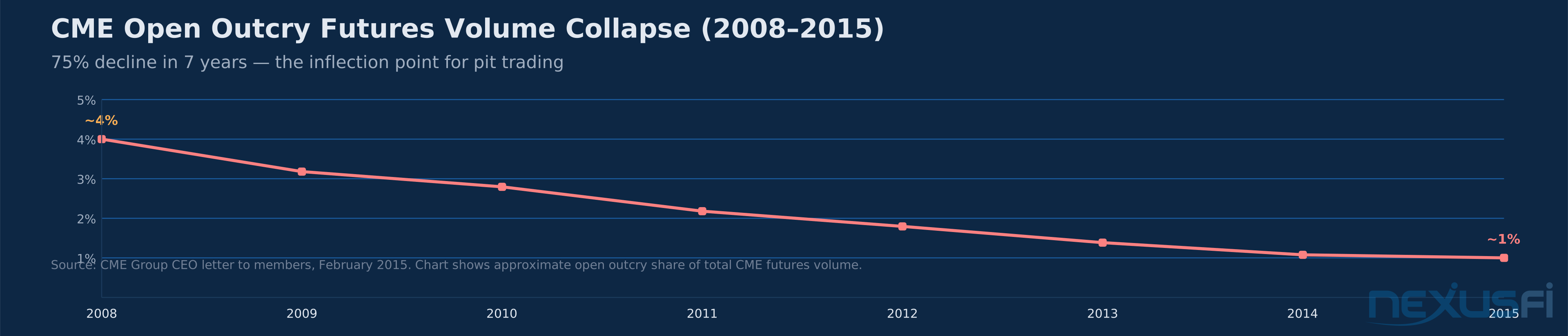
On July 2, 2015, CME Group closed most of its open outcry futures trading pits in Chicago and New York. Equity index futures pits had already shuttered on June 19, following the June 2015 contract expiration. A letter from CME CEO Phupinder Gill to exchange members noted that open outcry futures volume had decreased by 75% since 2008 and now accounted for just 1% of overall futures volume. The pits, some of which had operated for over a century, were done.
The transition from open outcry to electronic trading is the single most consequential structural change in futures markets since the standardized contract was invented. It reshaped who trades, how they trade, what information they have access to, and who makes money doing it. If you trade ES, NQ, CL, GC, or any other major futures contract today, you\'re operating in a market whose microstructure was at the core rebuilt between roughly 1992 and 2015.
Understanding what changed — and why — isn\'t just history. It\'s the foundation for understanding modern market behavior: why the bid-ask spread in ES is one tick 99% of the time, why locals no longer exist, why HFTs dominate the intraday grind, and why large orders are harder to fill at size than they were in the pit era. The game changed. Completely.
Key Concepts #
Open outcry: A trading method where exchange members transact by shouting bids and offers across a trading pit, using standardized hand signals to communicate price, quantity, and buy/sell direction. Buyers and sellers physically face each other.
Local trader: A pit trader who traded for their own account, typically a market maker buying the bid and selling the offer. Locals provided liquidity to commercial order flow and made money on the spread and informational advantages.
Electronic trading: Order matching via computerized systems where bids and offers are submitted electronically and matched by algorithm. In futures markets, CME\'s Globex platform is the primary electronic venue.
CME Globex: CME Group\'s electronic trading platform, launched in 1992 as an overnight trading system. It gradually absorbed pit volume across all product lines until it became the primary and eventually exclusive trading venue.
Market maker: An entity that posts two-sided quotes (bid and offer simultaneously), profiting from the spread while providing liquidity to other participants. In pits, this was the local. Electronically, this function has been largely taken over by high-frequency traders.
High-frequency trading (HFT): Algorithmic trading strategies that profit from extremely short holding periods, submitting and canceling thousands of orders per second. HFTs have become the primary liquidity providers in most electronic futures markets.
Order flow: The stream of market orders arriving from customers and commercial traders. See Order Flow Analysis for how modern traders exploit this information. In pits, locals had direct visibility into order flow and could position so. Electronically, order flow is invisible — you see the order book, not who is behind it.
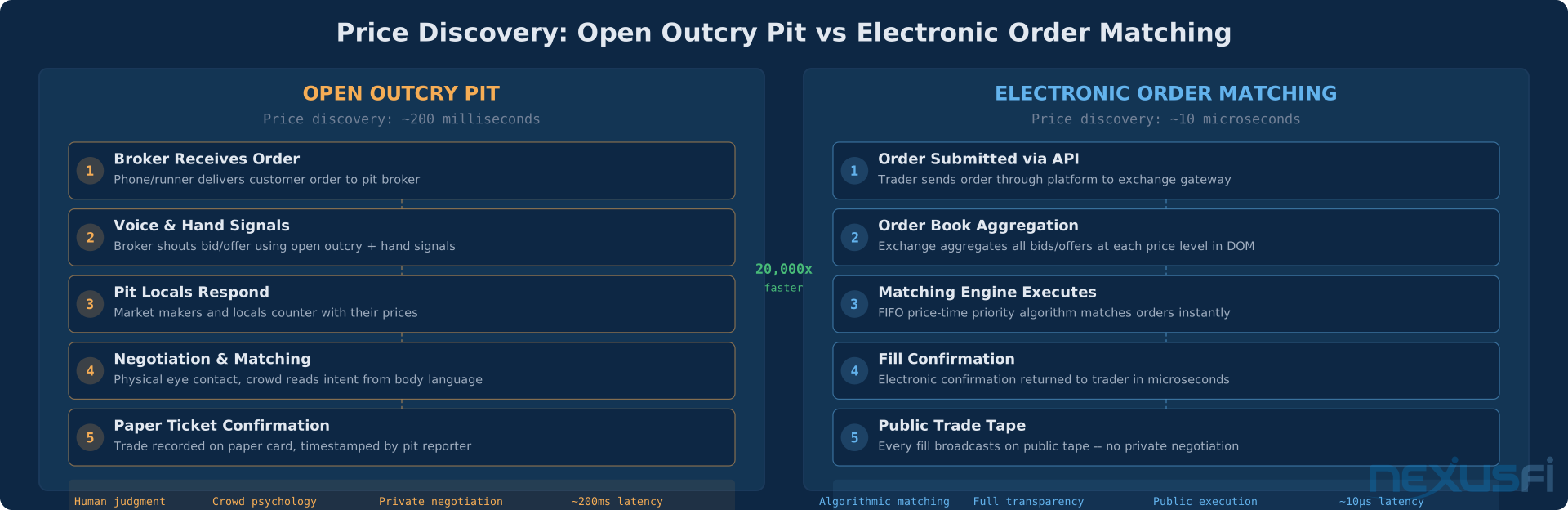
Price discovery: The process by which market prices reflect information. In pits, this happened through the visible interaction of buyers and sellers. Electronically, it happens through the order matching algorithm aggregating dispersed bids and offers.
DOM (Depth of Market): The electronic display showing resting limit orders at each price level. The DOM provides information that pit traders never had — full transparency of the order book depth. But it lacks information pit traders did have: identity, body language, and the auditory signals of urgency.

The Pit Era: How Open Outcry Actually Worked #
The futures trading pit was a physical arena — octagonal, tiered like bleachers, with specific spots for specific contracts. CME\'s S&P 500 pit, CBOT\'s Treasury pit, NYMEX\'s crude oil pit: these weren\'t abstract concepts. They were rooms full of shouting humans, and they functioned as the world\'s most sophisticated price discovery engines for most of the 20th century.
The Mechanics of a Pit Trade #
Every transaction in a futures pit required three elements: voice, hands, and paper. When a floor broker received a customer order, they entered the pit and shouted their intent. A local on the opposite side responded. Hand signals communicated price and quantity: fingers vertical for the price level, horizontal for contracts, palm facing in to buy, palm facing out to sell. Floor clerks recorded the transaction on paper time-stamped cards.
The physical geography of the pit mattered. Prime spots — where order flow concentrated — were occupied by senior locals who defended their positions. Being in the right spot meant hearing big orders first, seeing who was sweating, knowing when a commercial hedger was working a large position. This informational asymmetry was the local\'s edge.
A local trader in a futures pit was basically a market maker. As NexusFi\'s @tigertrader, a veteran pit trader, described it: "The MM [market maker] made a 2 sided market, where he was willing to buy-the-bid and \'sell the offer\'. In essence, the MM was a liquidity provider to the customer order flow when initiating a trade, and a liquidity taker, when he was exiting a trade. The MM\'s goal was to profit on the B/A spread when making a market."
This was not a charitable enterprise. Locals extracted a toll from every customer order that crossed their desk. But in exchange, they provided genuine liquidity. When a commercial hedger needed to sell 500 contracts of crude, there were humans on the other side willing to absorb the risk, take the position on their own book, and work it off over time.
The Local\'s Advantages #
The informational and structural advantages locals had were significant:
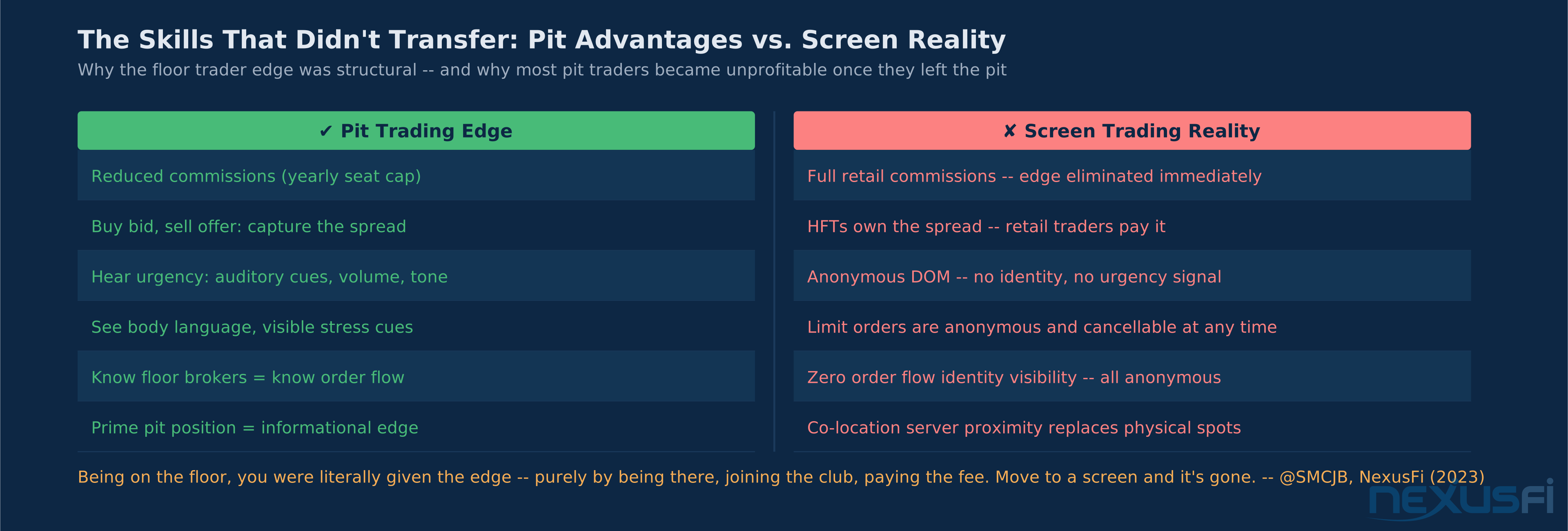
Reduced commissions with a yearly cap. Seat ownership (or lease) entitled locals to exchange member rates — a fraction of retail commissions and often capped annually. This made high-frequency scalping economically viable.
Real edge on the spread. A local buying at the bid and selling the offer captured the spread on every turn. In a market where the spread was 1-2 ticks, a local doing 500 round-turns per day was printing 500-1,000 ticks in spread capture alone — before any directional profit.
Auditory and visual cues. This is the one no electronic platform has ever replicated. In a pit, you could hear urgency. You could see a large broker sweating, working a 1,000-lot order, trying to stay calm. You could see which locals were already long and needed to sell. Body language, volume of voice, the pattern of who was buying and selling — all of this constituted real information. It was asymmetric information, yes, but it was information the market was producing organically.
Knowledge of order flow. Floor brokers weren\'t anonymous. Locals knew which brokers worked which institutional clients. When Goldman\'s broker stepped into the pit, experienced locals had a good guess about what was coming. This wasn\'t insider trading — it was the normal operation of a system where information was semi-public by necessity.
The Seat Price as a Proxy for Pit-Era Value #
CME trading seat prices reached their peak in the early-to-mid 2000s, with some membership categories trading above $1 million. The seat price was the market\'s estimate of the present value of the pit edge. As electronic volume grew and pit volume shrank, seat prices collapsed. By the late 2010s, some categories had fallen 90%+ from peak. The market knew the pits were over before the pits acknowledged it.
The Electronic Revolution: Globex and the Volume Migration #
CME launched Globex in 1992 — not to kill the pits, but to capture after-hours volume that the pits couldn\'t serve. At launch, Globex was a curiosity. The pit was where real price discovery happened. Globex was for overnight hedging, European commercial players who couldn\'t reach Chicago by phone.
The institutional path from 1992 to 2015 follows a predictable curve: slow initial adoption, then accelerating volume migration as the electronic system improved, then an inflection point where electronic liquidity exceeded pit liquidity, making the pit structurally inferior, at which point the remaining volume migrated and the pit was empty.
Key Milestones in the Electronic Transition #
1992: Globex launches as an overnight futures trading system. The pit handles all regular trading hours volume.
1997: CME launches E-mini S&P 500 (ES) — a smaller-sized contract designed for electronic trading. Locals can\'t trade it in the pit. It starts small but is purely electronic from day one.
Late 1990s to mid-2000s: Electronic volume grows as institutional participants adopt algorithmic execution. Bid-ask spreads in electronic markets begin compressing as competition among electronic market makers intensifies.
2007: CME-CBOT merger consolidates exchange ownership and electronic infrastructure.
2008: CME-NYMEX merger extends Globex to energy and metals markets. Open outcry futures volume begins its 75% decline from this point.
2015: Open outcry futures volume falls to 1% of total. CME announces closure of most futures pits effective June 19 (equity index) and July 2 (all others).
Post-2015: Options pits continue at CME (consolidated to single floor) and actively at CBOE, where open outcry serves genuine purposes for complex multi-leg options strategies.
Why ES Outcompeted the Standard S&P 500 Contract #
The E-mini S&P 500 (ES) is the definitive case study in electronic displacement. The standard S&P 500 futures contract (SP) was CME\'s flagship product — five times the size of ES, traded exclusively in the pit.
As ES electronic volume grew, the liquidity dynamics flipped. By the early 2000s, ES had better liquidity than SP in most conditions. Spreads were tighter. Fills were faster. Institutional participants migrated. The SP pit became a venue for institutional block trades requiring price negotiation — but even that function migrated over time. ES eventually became the primary price discovery vehicle for US equity index futures, with the standard contract fading to irrelevance.
This pattern repeated across every product class. Electronic contracts — whether separate e-mini versions or the original contract moved to Globex — outcompeted pit-traded contracts on execution quality and spread. The pit had advantages pit traders valued; the market valued what the electronic platform offered.
The Microstructure Shift: What Changed for Traders #
When the pits closed, what changed wasn\'t just the mechanism of execution. The ecology of who provides liquidity, how information is distributed, and how profits are allocated was rebuilt from scratch. For a deep dive into the mechanics of order matching and liquidity provision, see Market Microstructure.
The Disappearance of Locals #
The local trader\'s business model was entirely pit-dependent. The reduced commissions, the spread edge, the informational advantages — none of these translated to the screen. As @tigertrader analyzed: "Change venues to the screen, and all the advantages that a pit trader enjoyed on the floor are gone. He immediately becomes an uninformed trader, who gives up the edge, pays higher transaction costs, has to deal with execution slippage, and loses all the visual and auditory feedback he enjoyed in the pit. He goes from making the market, to reacting to the market."
The consequence: "In effect, the HFTs have supplanted the local trader/market maker, and inextricably tilted the playing field to their advantage. Now they own the grind."
This is a structural observation, not a moral one. The business model of buying the bid and selling the offer is the same. The equipment is completely different.
Bid-Ask Spread Compression #
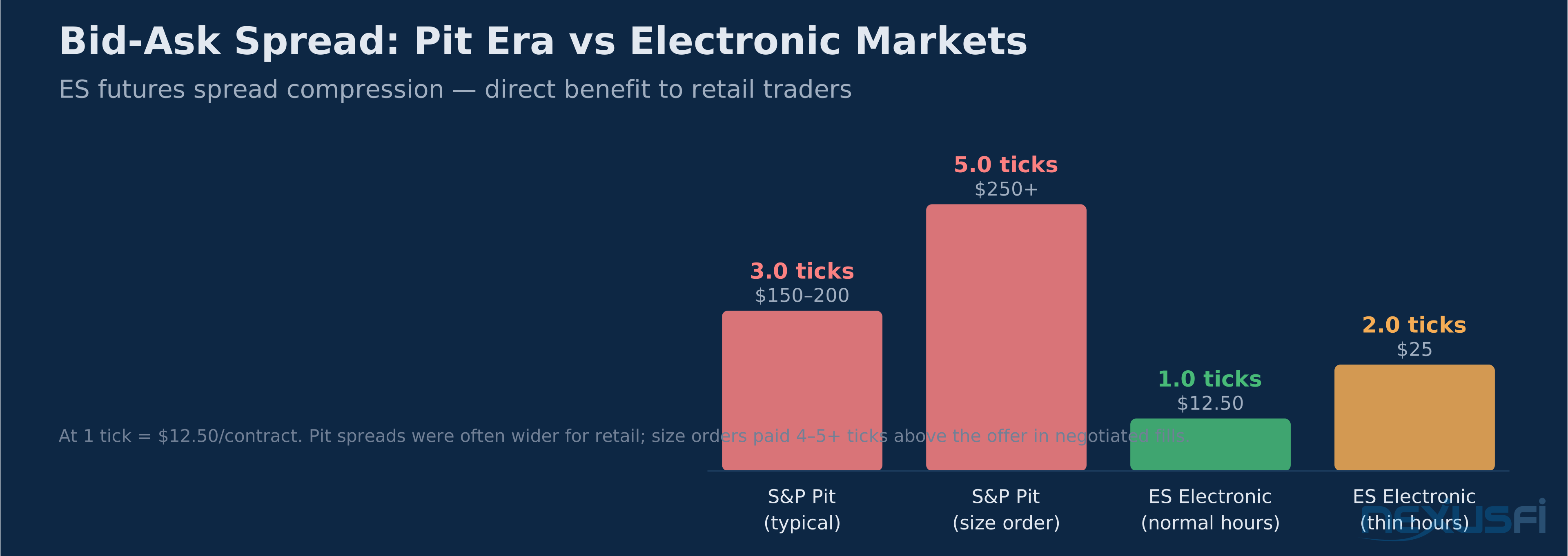
One tangible improvement from the electronic transition is bid-ask spread compression. In the pit era, the S&P 500 futures spread was routinely 2-4 ticks for retail-sized orders, and wider for size. The spread was the local\'s toll.
Electronically, with HFTs competing to post the best quote, the ES spread is 1 tick (0.25 points, $12.50 per contract) in nearly all conditions during regular trading hours. A retail trader executing 10 contracts today pays $125 in spread cost. The same trade in the pit era might have cost $250-500 in spread before commissions.
Depth and Transparency: The DOM Tradeoff #
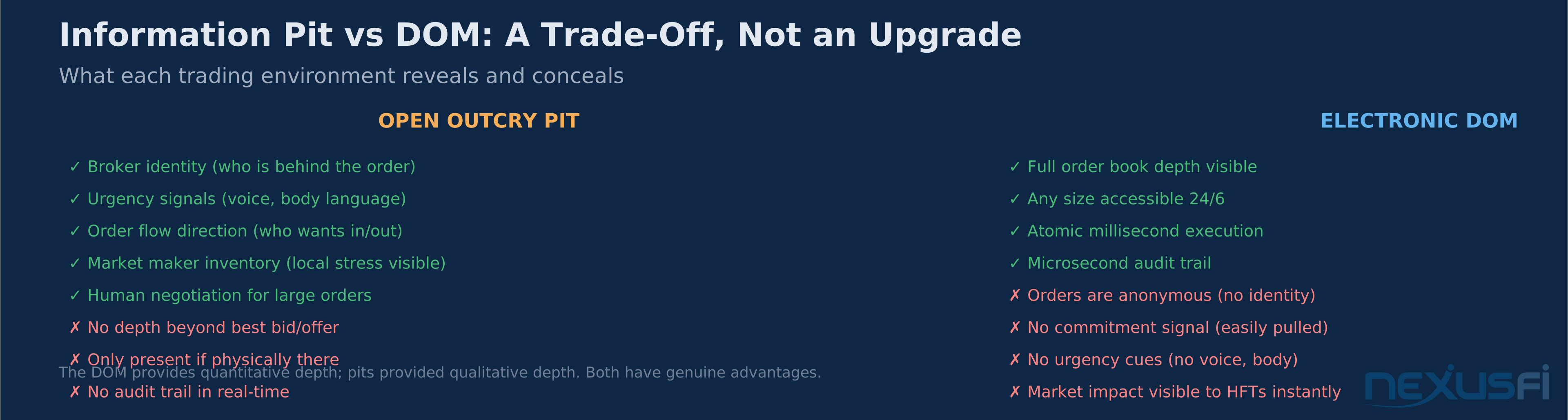
The DOM is a genuinely new information source that pit traders never had: full order book depth. In the pit, you knew what was being bid and offered at the best price, but you had no systematic visibility into resting orders 2-10 ticks away. The DOM shows this.
What the DOM doesn\'t show: who is behind those orders, how committed they are, and whether those orders will be pulled if the market moves toward them. In the pit, a seasoned local could infer this from context — whose broker placed the order, how urgently the market was moving. On screen, limit orders are anonymous.
This creates a classic information trade-off. The DOM provides quantitative depth; pits provided qualitative depth. Many pit traders who transitioned to screen trading felt "blind" — more data, less actionable information for their style of trading.
Large Orders: Electronic Markets Are Harder #
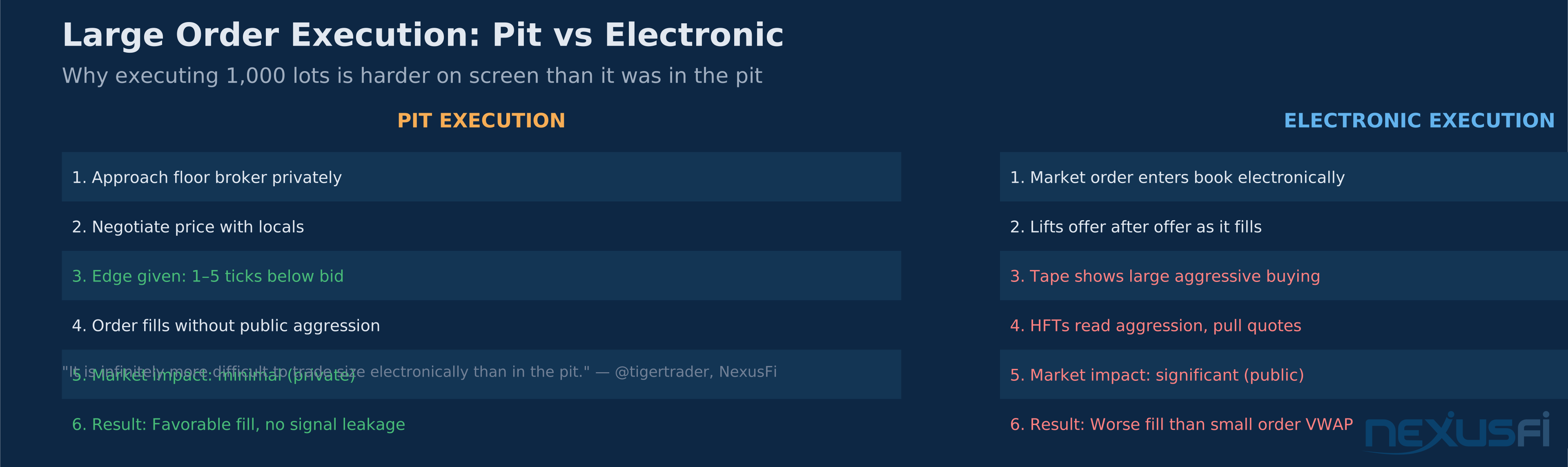
For commercial participants executing large orders, the pit-to-electronic transition was a genuine downgrade. In the pit, a commercial hedger needing to buy 1,000 lots of crude could approach a floor broker who would work the order with discretion, negotiating price with willing locals. Information was managed. A skilled broker could often fill the whole order at better prices than mechanical execution would imply.
Electronically, a large aggressive order walks the order book publicly. Every fill shows in the tape. HFTs read the aggression and pull quotes or reprice away from the aggressive buyer. Market impact is worse because the negotiation is public rather than private.
This is why institutional electronic execution evolved into a discipline: VWAP algorithms, TWAP, implementation shortfall optimization, dark pools, block trading facilities. These all exist to solve the problem that electronic markets, for large orders, are structurally worse than pits were.
HFTs: The New Locals #
The structural parallel between pit locals and modern HFTs explains why electronic markets behave as they do, and where the edge has migrated.
The Functional Equivalence #
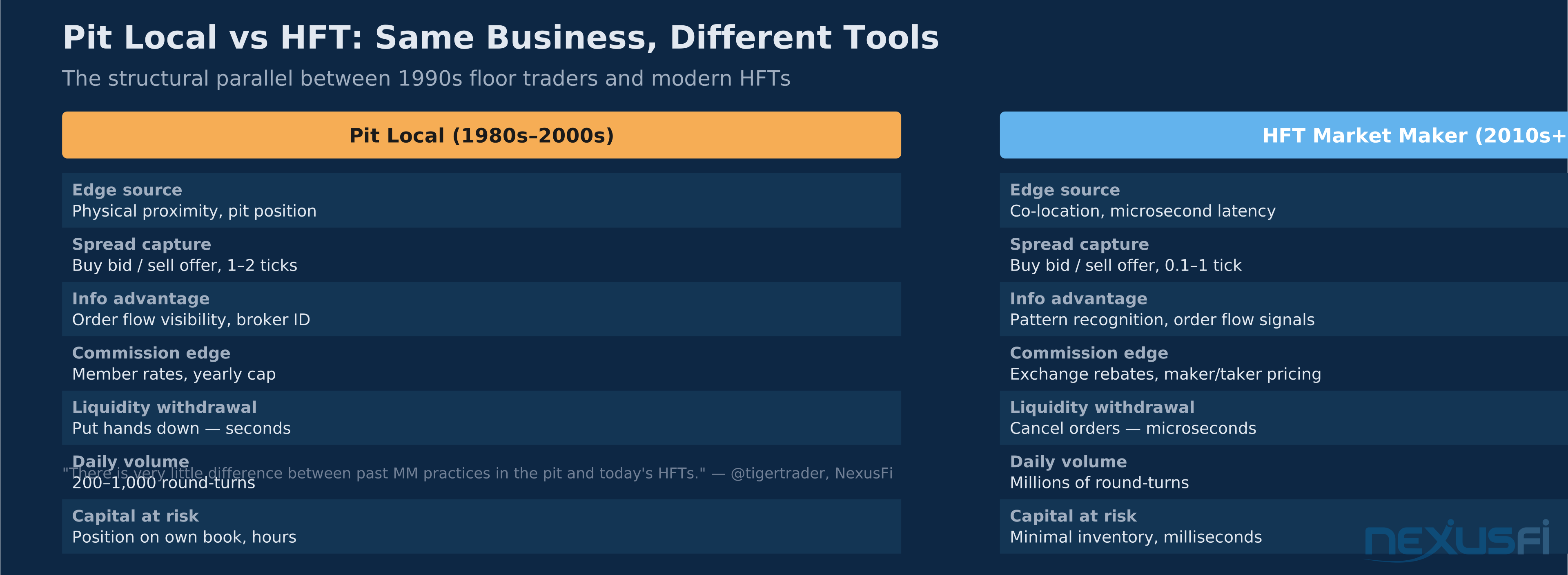
Both locals and HFTs function as market makers: they post two-sided quotes, profit from the spread, manage inventory risk, and pull liquidity when conditions are toxic.
The key passage: "A MM had an informational advantage over an outside trader because of his direct access and direct knowledge of the order flow. The more information a trader had, the more confident, and the more aggressive he could be in providing a market. No one was putting a gun to the MM\'s head — he could put his hands down, and not make a market anytime he perceived the market was \'toxic\' and the risk was too high. HFTs pull liquidity in the very same way."
The structural difference is speed and capital efficiency. A local doing 500 round-turns per day at 1-2 ticks of edge was a profitable business. An HFT firm doing millions of round-turns per day at fractions of a tick, with lower per-unit risk, is a more profitable business at scale.
The Structural Parallel Pit locals and HFTs perform the same economic function: buy the bid, sell the offer, capture the spread, manage inventory. The only difference is the timescale (seconds vs. microseconds) and the source of edge (physical proximity vs. co-location). Neither had a moral claim to the advantage — they both exploited whatever the technology of their era made possible.
Market Data: HFT\'s Version of a Pit Spot #
In the pit, physical proximity in a prime spot gave locals informational advantages. HFTs have replaced this with co-location: servers physically housed in the same data centers as exchange matching engines. Co-location reduces round-trip latency to microseconds. The difference between 10 microseconds and 50 microseconds in latency determines whether you see the price change before or after you\'re filled on your quote.
This is not meaningfully different from the pit local who stood in the prime spot where order flow concentrated. Technology has changed; the fundamental business of exploiting informational and structural proximity has not.
The Liquidity Quality Debate #
One contested claim about electronic market liquidity: it\'s "hot" — present in normal conditions, absent in stress. During the 2010 Flash Crash, as the market dropped violently, HFTs pulled quotes in milliseconds. The order book thinned dramatically. Prices at aberrant levels briefly.
Pit locals also pulled liquidity during crashes — they physically stopped trading. But the physical process was slower. Whether electronic liquidity withdrawal is more destabilizing than pit liquidity withdrawal is genuinely contested in market structure research. The crashes happened faster electronically; pit crashes could also be severe.
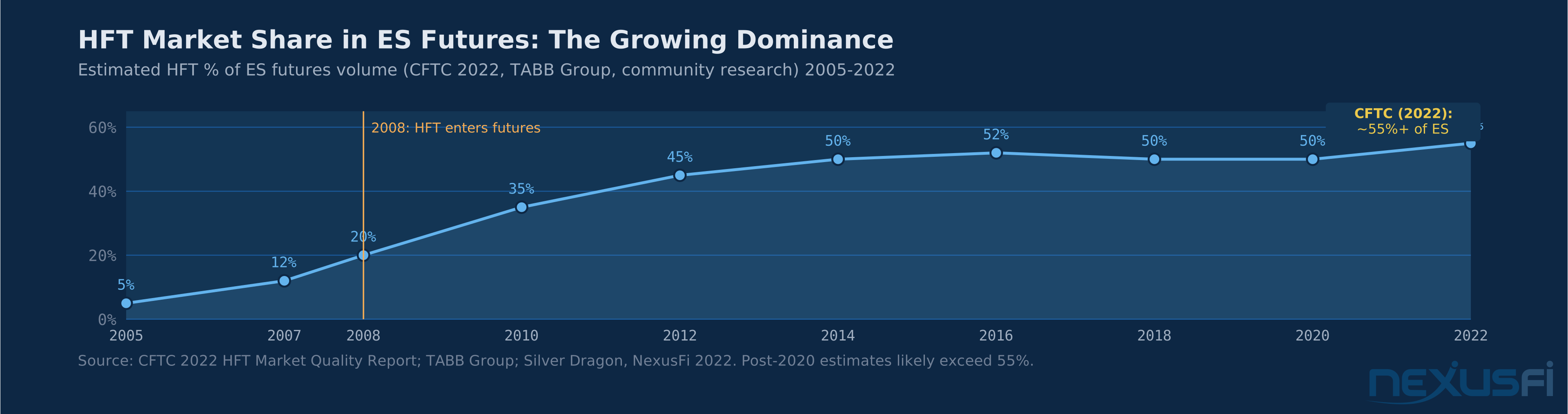
According to TABB Group\'s 2012 US equity market structure analysis — presented in Larry Tabb\'s testimony to the US Senate Committee on Banking, Housing, and Urban Affairs — HFTs accounted for approximately 56% of NYSE volume by 2012. In futures, estimates range from 50-70% of volume in liquid contracts — as @Silver Dragon noted on NexusFi, the CFTC estimated nearly 50% of ES volume was HFT by 2020. Subsequent CFTC research by Coughlan and Orlov ("High-Frequency Trading and Market Quality," Journal of Futures Markets, 2023) confirmed that greater HFT participation is broadly associated with improvements in market quality metrics like tighter spreads and faster price discovery, though aggressive directional HFT strategies produce a partially offsetting negative effect. "Decimalization eliminated the majority of market makers willing to provide liquidity in the equity arena, while the end of open outcry and the migration to electronic trading eliminated futures market makers. The majority of liquidity is now being supplied by [HFTs]."
Time-of-Day Structure: Electronic Markets Changed the Clock #
Electronic access changed time-of-day dynamics in meaningful ways.
Overnight: From Thin to Real #
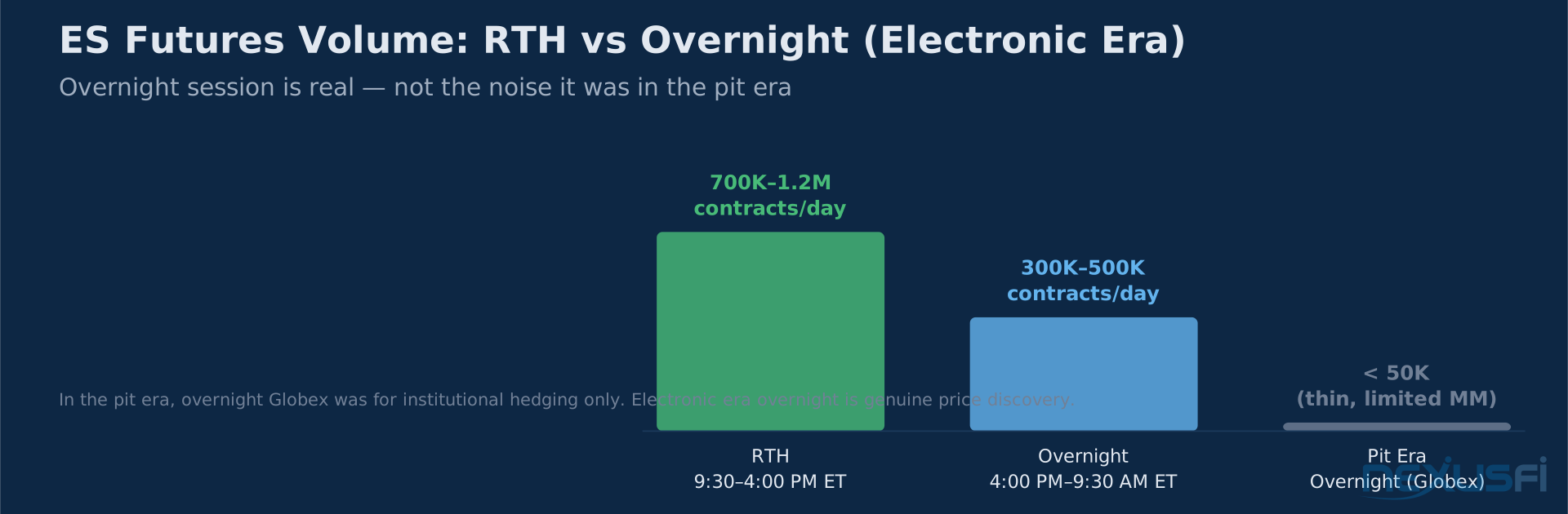
During the pit era, the overnight Globex session was genuinely thin. There were few locals or market makers working it. Large gaps at the open were common because overnight was where institutional hedging happened with minimal two-sided liquidity. When the pit opened at the regular trading hours start, that was where price discovery began.
Today, overnight ES averages 300,000-500,000 contracts on a normal day. That\'s a meaningful fraction of the 700,000-1.2 million RTH ADV. The overnight session is real price discovery: economic releases, geopolitical events, macro flows from Asian and European participants during their business day — all of these register in overnight ES pricing that genuinely influences the RTH open.
The practical implication: overnight levels matter in ways they didn\'t in the pit era. Overnight high/low, the relationship between overnight close and RTH open, the position of price relative to the prior day\'s range as of the open — these are inputs that modern traders use routinely. Pit-era traders could largely ignore overnight Globex moves. Electronic-era traders can\'t.
The Cash Open: Still the Volatility Spike #
One feature that survived the transition: the 9:30 AM ET equity market open produces a volatility spike in ES. The 30 minutes after the cash open tend to have higher volume and more significant price moves than any other 30-minute period except the 3:30-4:00 PM close.
The mechanism is different from the pit. There\'s no floor-open rotation, no specialists filling imbalances. Instead, the cash open concentrates institutional flows, options market activity (delta hedging as implied volatility realizes), and retail market-on-open orders. The effect is similar — elevated volatility and volume — but the cause is different.
Remaining Open Outcry: The CBOE Options Pits #
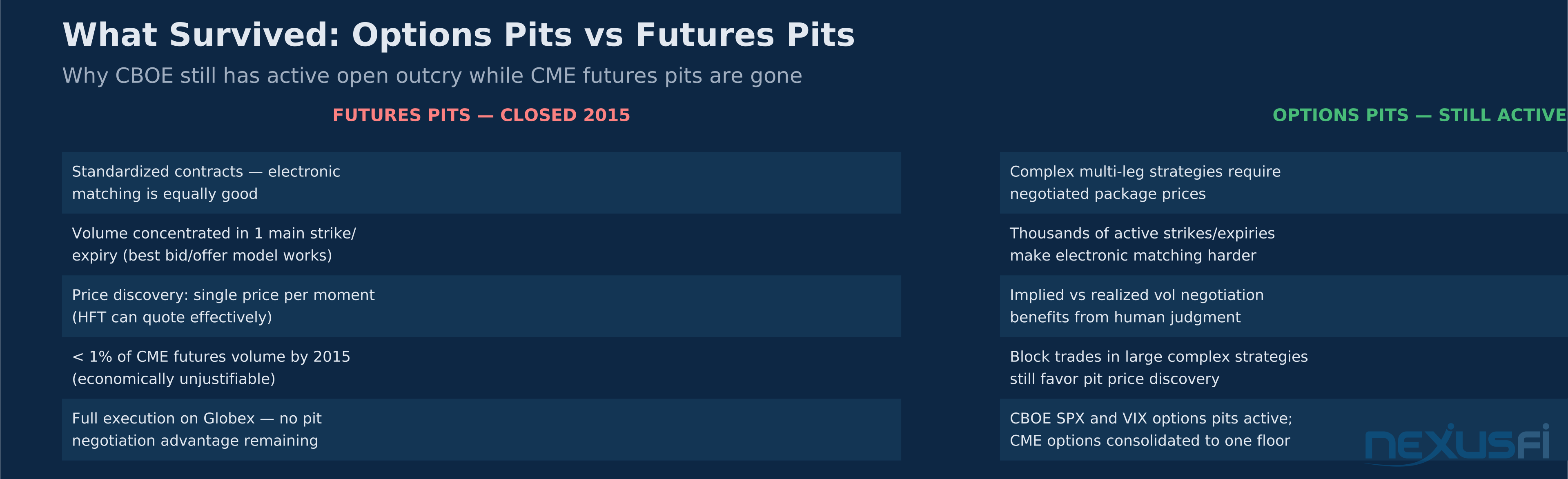
Open outcry didn\'t die entirely. The CBOE (Chicago Board Options Exchange) operates active options pits for equity index options, including SPX (cash-settled S&P 500 options) and VIX options. CBOE\'s options floor represents the largest remaining open outcry operation in US financial markets.
The reason is functional: complex multi-leg options strategies benefit from price negotiation that electronic order matching handles poorly. When a pension fund wants to execute a large risk reversal or collar — simultaneously buying one strike and selling another, with a specific net debit — the negotiation of the package price is genuinely easier with human market makers who can commit to the whole package at a negotiated net price.
Electronic markets match individual legs independently. This creates legged-in risk: you get your first leg filled, the market moves before your second leg fills, and your "hedge" has actually increased your exposure. For standardized strategies, this risk is manageable. For large complex positions, it\'s significant.
CME also maintained its options pits after closing futures pits in 2015, though they were consolidated to a single floor in Chicago. The persistence of options pits is not nostalgia — it\'s a rational response to the functional advantages open outcry provides for complex multi-leg negotiation.
What This Tells Us About Algorithmic Options Trading #
The persistence of options pits also reflects the current limits of electronic matching for complex strategies. As electronic options platforms improve — better crossing networks, better multi-leg matching, better block trading facilities — the advantage of face-to-face negotiation will diminish. Options pits will likely follow futures pits eventually. The timeline depends on how quickly the electronic infrastructure can replicate the negotiation function that human market makers provide.
Practical Implications for Modern Traders #
Understanding the structural transition isn\'t academic. It explains specific features of the market you trade every day.
The Intraday Grind Is an HFT Game #
The mean-reverting, range-bound behavior that dominates most trading days — the chop, the constant back-and-fill within a range — is now predominantly driven by HFT activity. HFTs buy the dip to the bid, sell the rally to the offer, continuously cycling inventory within the day\'s range. This behavior creates a mechanical pressure toward mean reversion in range conditions.
For retail traders, attempting to scalp the intraday grind — entering and exiting for 1-2 ticks of profit — means competing directly with firms that operate at microsecond timescales with infrastructure advantages that can\'t be replicated. The edge for retail is not in the grind.
Trend Days Concentrate the Edge #
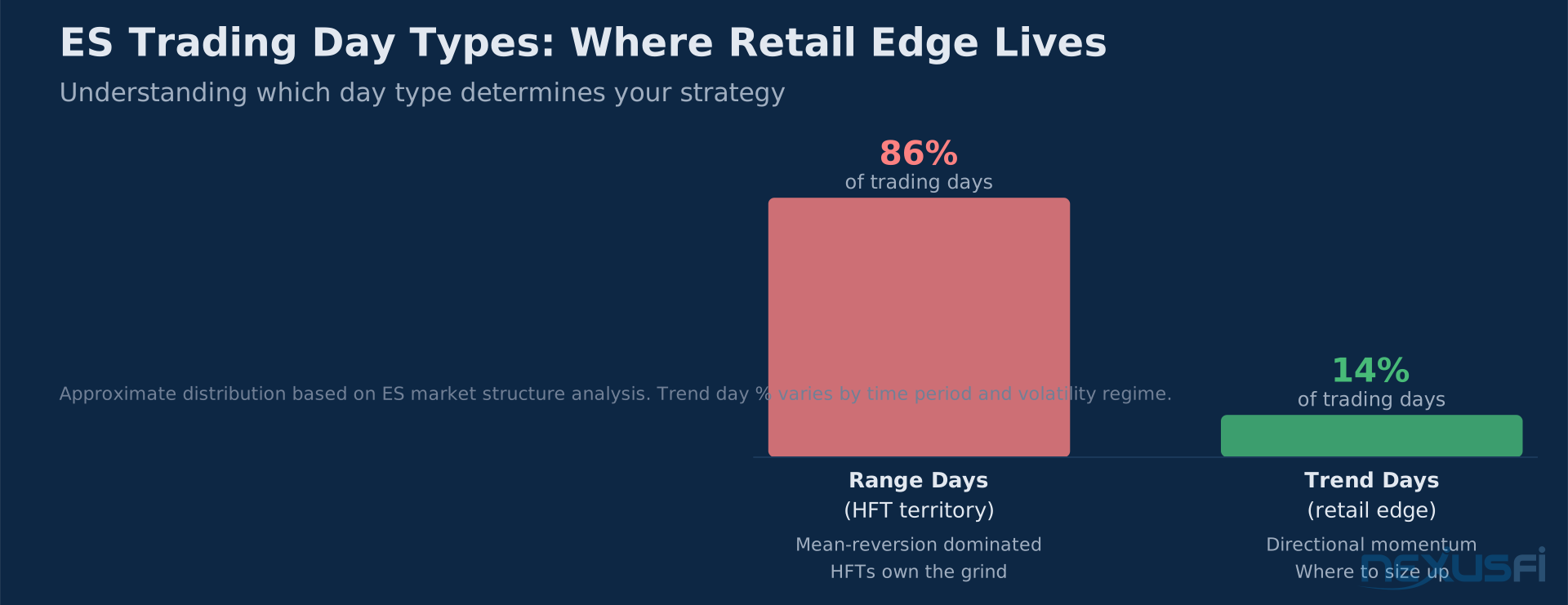
Market structure analysis consistently shows that approximately 14% of trading days in ES are true trend days — sessions where directional momentum is sustained enough that trend-following generates positive expected value. On these days, HFTs providing liquidity in the direction of the trend get "picked off" — their quotes are hit by informed directional flow, and they lose money providing liquidity.
The implication: strategies that correctly identify trend days and avoid the grind on range days are exploiting a structural feature of electronic markets. This isn\'t about predicting the future; it\'s about adjusting size and strategy to conditions. Trade smaller or stay out on range days. Size up on trend days when a directional move is developing.
For Active Traders The intraday grind (the mean-reverting chop within a day\'s range) is HFT territory. Competing for 1-2 tick scalps against co-located algorithms is structurally disadvantaged for retail. Focus your edge on the ~14% of days that develop directional momentum — that\'s where HFT liquidity providers get picked off, and where retail directional strategies generate positive expected value.
The 24/6 Market Requires Awareness #
The electronic era made futures trading genuinely 24 hours a day, 6 days a week. This has two practical consequences:
Overnight levels are input data. The overnight high and low in ES, the position of price relative to prior session ranges, the presence of gap fills or unfilled gaps — these matter because overnight is real trading with real institutional flows, not noise.
Position management doesn\'t stop at the close. A position held overnight in ES, CL, or any other major futures contract is exposed to real price moves during overnight sessions. Risk management must account for this. Stop placement on overnight holds needs to accommodate overnight volatility that didn\'t exist (meaningfully) in the pit era.
Size Relative to the Book #
In the pit era, large orders were accommodated by negotiation with locals. Electronically, your order size should be calibrated to the contract\'s typical DOM depth. ES, NQ, and CL are liquid enough that retail sizes (1-20 contracts) don\'t move markets. But in less liquid contracts — smaller commodity futures, specific options strikes — the DOM is thin enough that even modest retail positions can generate meaningful market impact.
Know your instrument\'s typical depth profile and time your entries to avoid thinly traded periods (overnight, around economic releases when liquidity temporarily withdraws).
Summary #
The transition from open outcry to electronic trading, completed for most CME futures contracts by July 2015, was the defining structural event in modern futures markets. The pits operated through local traders who served as market makers, using physical presence, auditory and visual information, and order flow knowledge to profit from the bid-ask spread. Electronic trading replaced locals with HFTs, compressed spreads, introduced 24/6 liquidity, and created a market where retail participants have better execution costs but face a more sophisticated competitive environment.
Key facts:
- Open outcry futures volume fell 75% from 2008 to 2015, reaching just 1% of CME total volume before pit closure
- Most futures pits closed July 2, 2015; equity index pits closed June 19, 2015
- CME Globex launched in 1992; ES launched in 1997 as the first major purely electronic index futures contract
- ES bid-ask spread: 1 tick ($12.50) electronically vs. 2-4 ticks in pit era
- HFTs now account for an estimated 50-70% of volume in liquid futures contracts
- CBOE options pits remain active because complex multi-leg strategy negotiation favors open outcry
For active traders:
- The intraday grind (mean reversion on range days) belongs to HFTs; competing for it at retail is structurally disadvantageous
- Trend days represent approximately 14% of trading days and concentrate the edge available to retail directional traders
- Overnight sessions in ES and other major contracts are genuinely liquid and produce price levels that matter for RTH trading
- Large orders require algorithmic execution to manage market impact; this is institutional infrastructure that retail trading platforms approximate but don\'t fully replicate
- Options pits survive because electronic multi-leg matching is still inferior to human negotiation for complex strategies
Knowledge Map
Prerequisites
Understand these firstGo Deeper
Build on this knowledgeCitations
- — Floored, But Back On My Feet! (2011) 👍 154“I had morphed into a predatory algorithm programmed to take advantage of my knowledge of, and access to, the customer order flow. Electronic trading has made me a smarter and better trader.”
- — CME Group to Close Most Open Outcry Futures Trading in Chicago and New York by July (2015) 👍 7“open outcry futures volume has decreased by 75 percent since 2008, and now accounts for just one percent of our overall futures volume”
- — Floored, But Back On My Feet! (2014) 👍 14“the HFTs have supplanted the local trader/market maker, and inextricably tilted the playing field to their advantage”
- — Spoo-nalysis ES e-mini futures S&P 500 (2012) 👍 7“There is very little difference between past MM practices in the pit and today HFTs”
- — Are futures dying? Volume drying up (2012) 👍 3“The majority of liquidity is now being supplied by unregulated high-frequency traders, who according to the TABB Group, are responsible for 56 percent of the NYSE volume”
- — Floored, But Back On My Feet! (2011) 👍 2“The pits were rendered extinct as business migrated to the screen”
- — NYMEX Seat Prices (2016) 👍 7“In the last 2.5 years my NYMEX seat lease has dropped from 900/month to 500/month... seats no longer represented their ownership value as the importance of the pits has declined”
- — Becoming an Exchange Member (Leasing Seat) (2010) 👍 7“With the migration to e-trading the former reason all but ceased to exist, but the latter has not. If there was not a member discount, and hence an economic justification for leasing a membership, it would not command any rent.”
- — Why do many successful floor traders fail to make the transition to screen trading? (2018) 👍 6“many floor traders were profitable because of the advantages being in the pit gave them and not necessarily because they were good traders. So it is easy to see how they failed as soon as they lost those advantages.”
- — Is anyone actually making money? (2023) 👍 5“Being on the floor, you were literally given the edge, purely by being there, joining the club, paying the fee.”
- — Does the market know your positions? (2022) 👍 9“HFTs have taken over the market-maker role in many futures markets. As of 2020 nearly 50% of ES is HFT. Would assume it is beyond 50% mark now. -- CFTC 2022 HFT Market Quality Report”