



Futures Options Trading: The Complete Strategy Guide
Overview #
Options on futures give you something the underlying contract can't — defined risk with unlimited reward, or steady income from premium decay. They're the only instrument that lets you profit from being right about direction, volatility, time, or all three simultaneously.
But here's the catch: the same complexity that creates opportunity also creates a graveyard of blown accounts. Futures options aren't equity options with a different underlying. The margin mechanics (SPAN vs. Reg-T), the expiration behavior (you get assigned a futures position, not shares), and the volatility surface (commodity skew doesn't behave like equity skew) create a at the core different trading environment. Understanding these differences is the price of admission.
This guide covers the framework for trading futures options — from isolating the risk you actually want to take, through the core strategies that work in practice, to the data-driven tools (gamma exposure, options flow) that inform positioning.
The Framework: Risk Isolation #
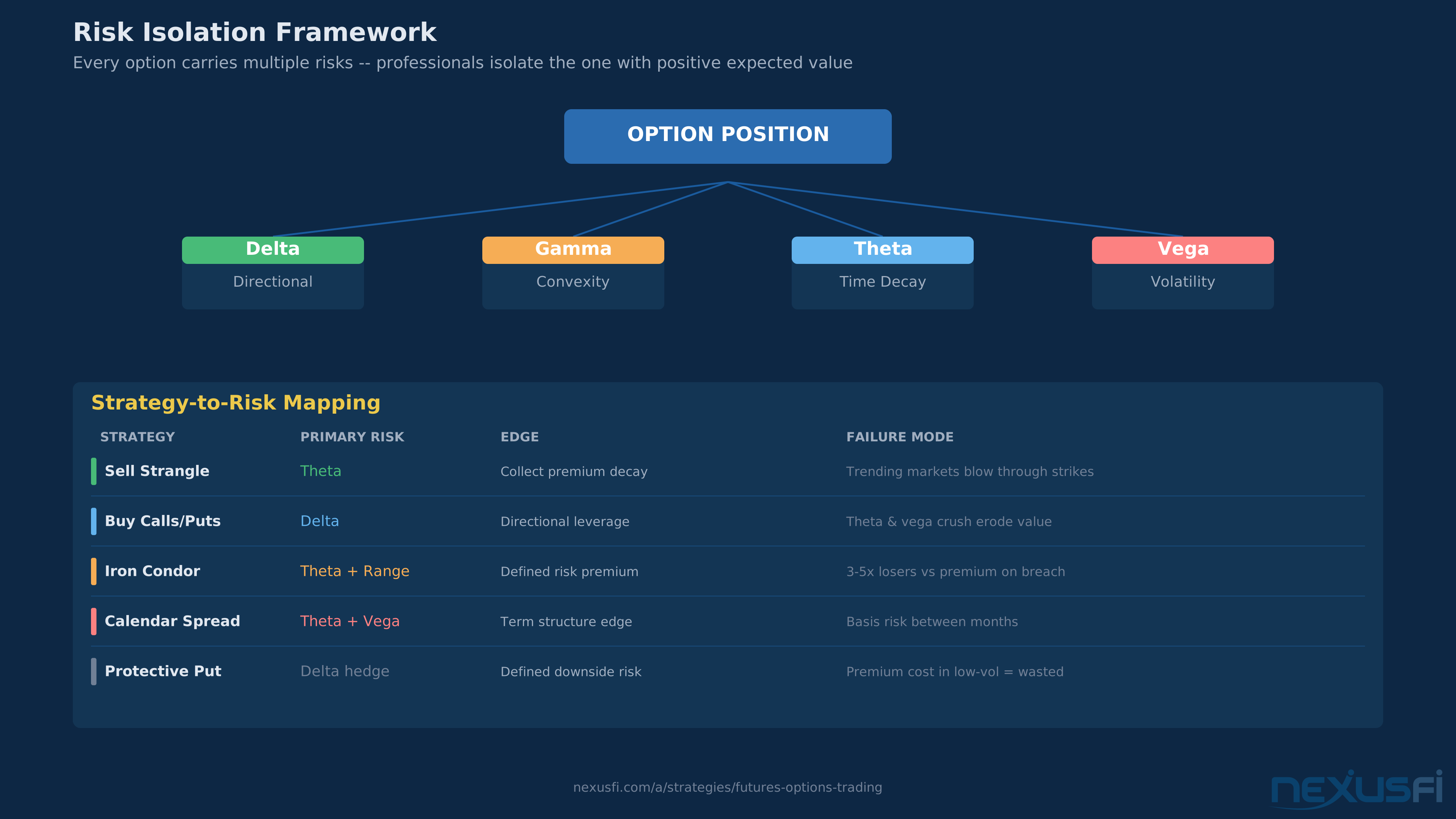
The core principle of professional futures options trading is risk isolation — choosing exactly which risk you want exposure to and eliminating everything else.
Every option position carries multiple risk dimensions simultaneously: directional risk (delta), convexity risk (gamma), time decay (theta), and volatility risk (vega). Retail traders typically sell a spread and hope it works. Professional traders identify which risk carries a positive expected value and structure their position to isolate that specific edge.
As @PeterOhlson explains, "if your goal is to make theta, you isolate your theta and eliminate all other risks — that means actively delta-hedging and keeping your vega neutral. The higher the theta/gamma ratio and theta/vega ratio you have, the better structured your theta-portfolio is." [1]
This risk isolation framework applies to every strategy in this article. Before entering any position, ask: which risk am I getting paid to take? Then structure the trade to maximize exposure to that risk and minimize everything else.
How Futures Options Differ from Equity Options #
Before diving into strategies, the structural differences matter for every trade decision.
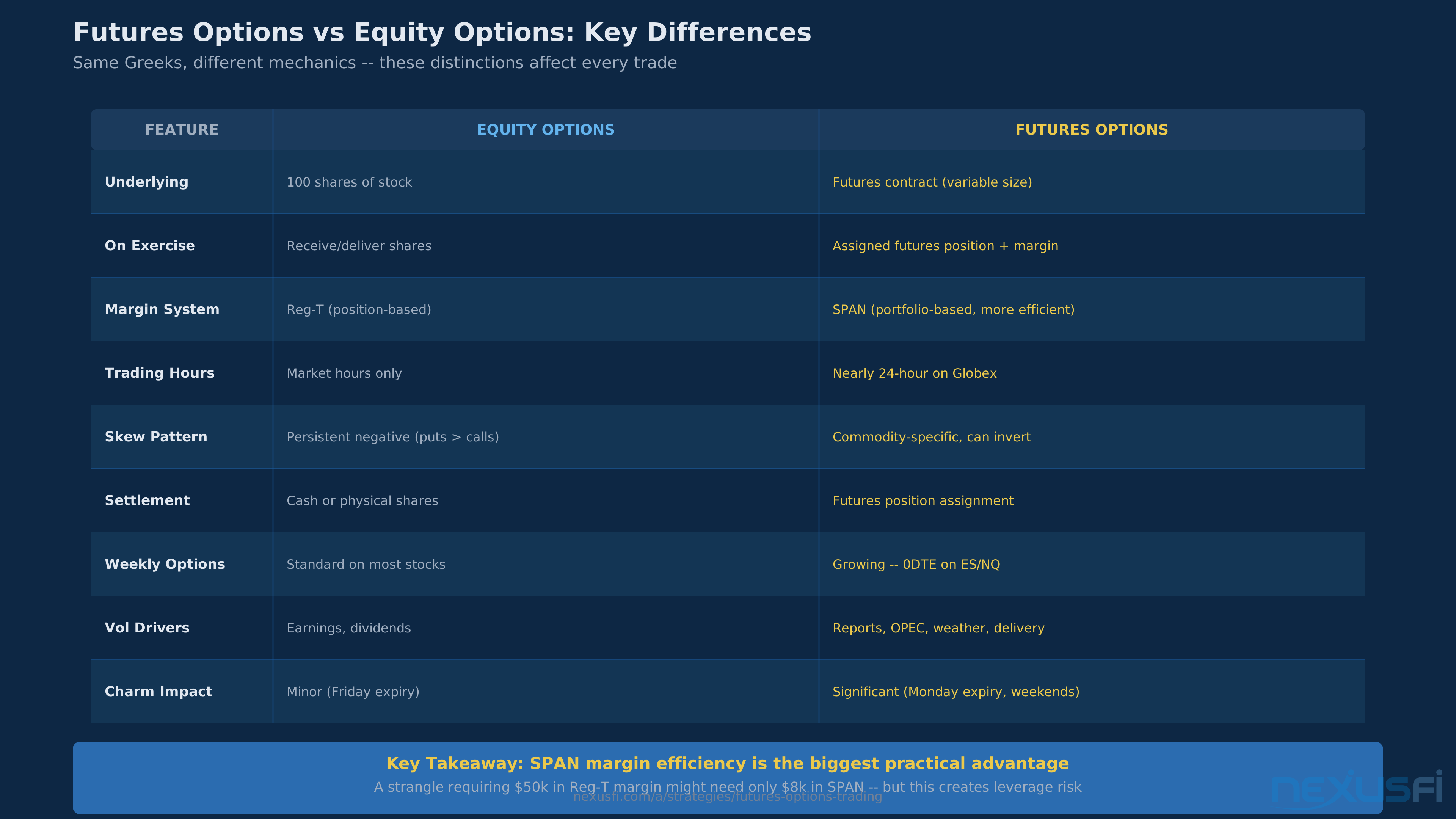
Settlement creates a futures position. When an ES call option is exercised, you don't receive shares — you receive a long ES futures position at the strike price, complete with margin requirements. This means assignment carries ongoing risk until you close the resulting futures position. In fast markets, getting assigned overnight can mean waking up to significant losses if price moved against you.
SPAN margin is portfolio-based. Futures options use SPAN (Standard Portfolio Analysis of Risk) margining, which evaluates total portfolio risk rather than individual positions. A strangle that would require $50,000 in Reg-T equity margin might require $8,000 in SPAN margin because the system recognizes the legs offset each other's risk. This capital efficiency is a major advantage — and a major source of over-leverage for undisciplined traders.
Nearly 24-hour trading. Most futures options trade on Globex alongside their underlying futures, meaning overnight volatility events hit your position in real time. There's no "gap open" protection from closing your platform at 4pm.
Commodity-specific volatility patterns. Equity options have a persistent negative skew (puts cost more than calls). Commodity options can swing from negative to positive skew depending on supply/demand dynamics. Natural gas puts might be cheap in winter when the market fears upside spikes, while crude oil puts might be expensive during geopolitical tension. Understanding the instrument's characteristic skew is mandatory before trading any strategy.
The Greeks in Futures Context #
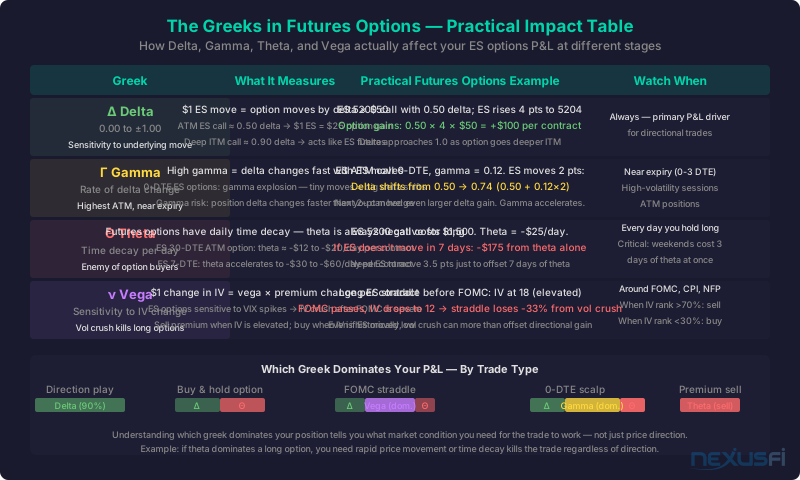
The Greeks measure how your option position responds to changes in the underlying, time, and volatility. The math is identical to equity options, but the practical implications differ.
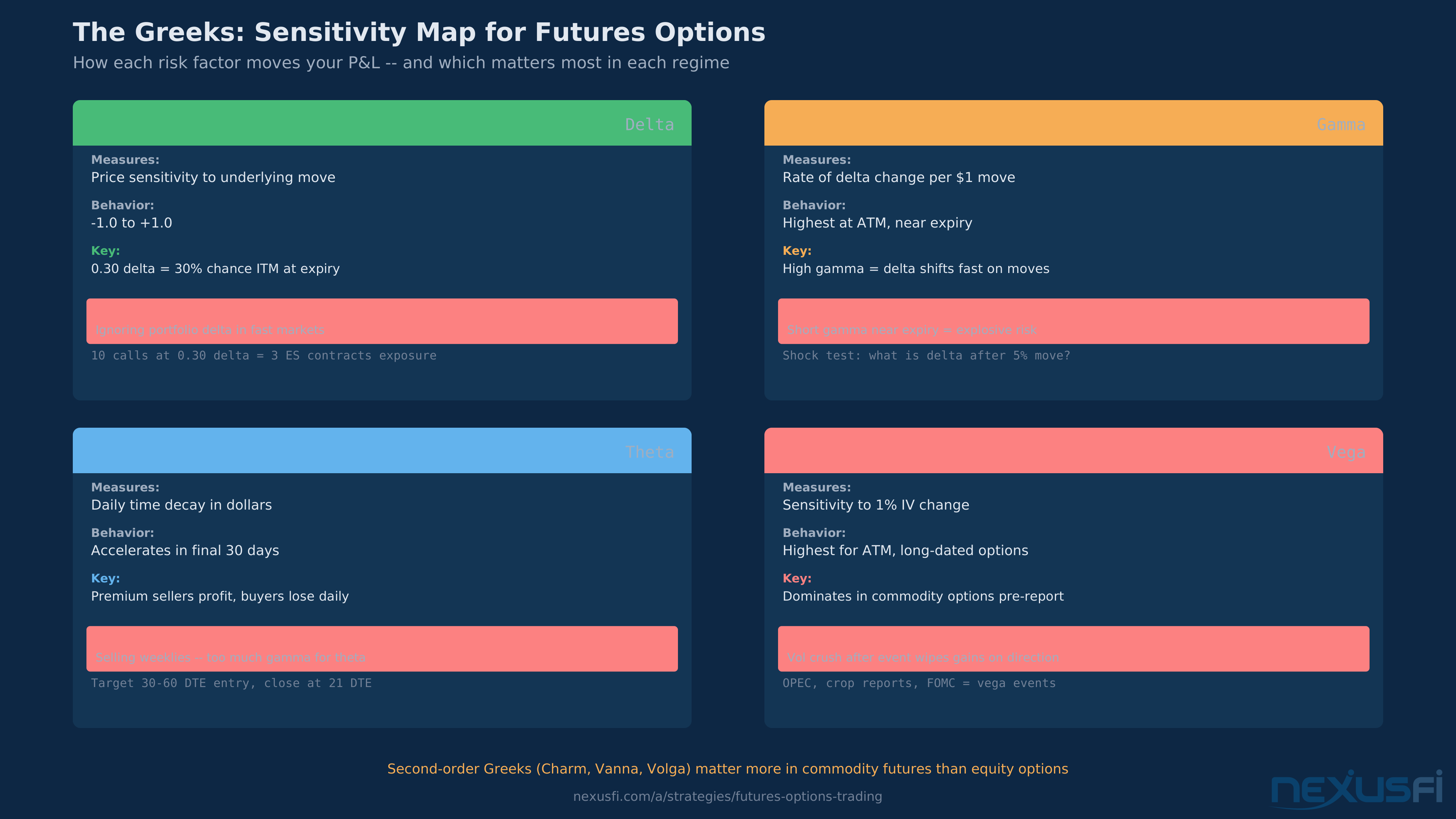
Delta tells you your equivalent futures exposure. Ten ES calls at 0.30 delta give you the same directional exposure as three ES contracts. In futures, this translation is direct and immediate — there's no share-count conversion. Monitoring portfolio delta is the single most important risk management task.
Gamma measures how fast your delta changes. This is where futures options get dangerous. @SMCJB emphasizes that "when you shock a portfolio with a 5% underlying price and volatility move, everybody knows what the PnL effect is, but few know what their new risk profile looks like." [2] On a fast move, a position that started delta-neutral can become heavily directional within minutes. Gamma risk is amplified in futures markets because the underlying can move 2-3% intraday during major events.
Theta is the daily premium decay that option sellers collect. In futures, theta is most relevant in the 30-45 DTE window where decay accelerates but you still have enough premium to justify the risk. Most professional option sellers on futures target 30-60 DTE entries and close at 21 DTE or 50% of max profit, whichever comes first.
Vega measures sensitivity to implied volatility changes. This is where commodity options diverge most from equity options. As @SMCJB notes, "Charm probably isn't that important in equity options, where most options expire Friday, but it can be far more important in commodity options, when expiry is Monday, and weekend volatility isn't just the same as a normal business day." [3] Crude oil options before an OPEC meeting, agricultural options before a crop report — vega can dominate all other Greeks in commodity futures.
Charm (DdeltaDtime) — a second-order Greek that most traders ignore — matters much in futures options. It measures how delta changes as time passes. In commodity options with Monday expirations, weekend charm effects can create unexpected delta shifts that catch traders off guard.
Core Strategy: Selling Premium with Strangles #
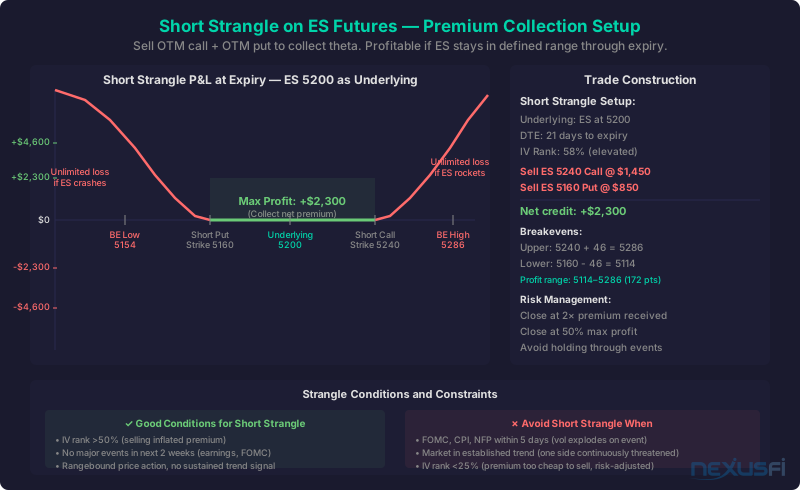
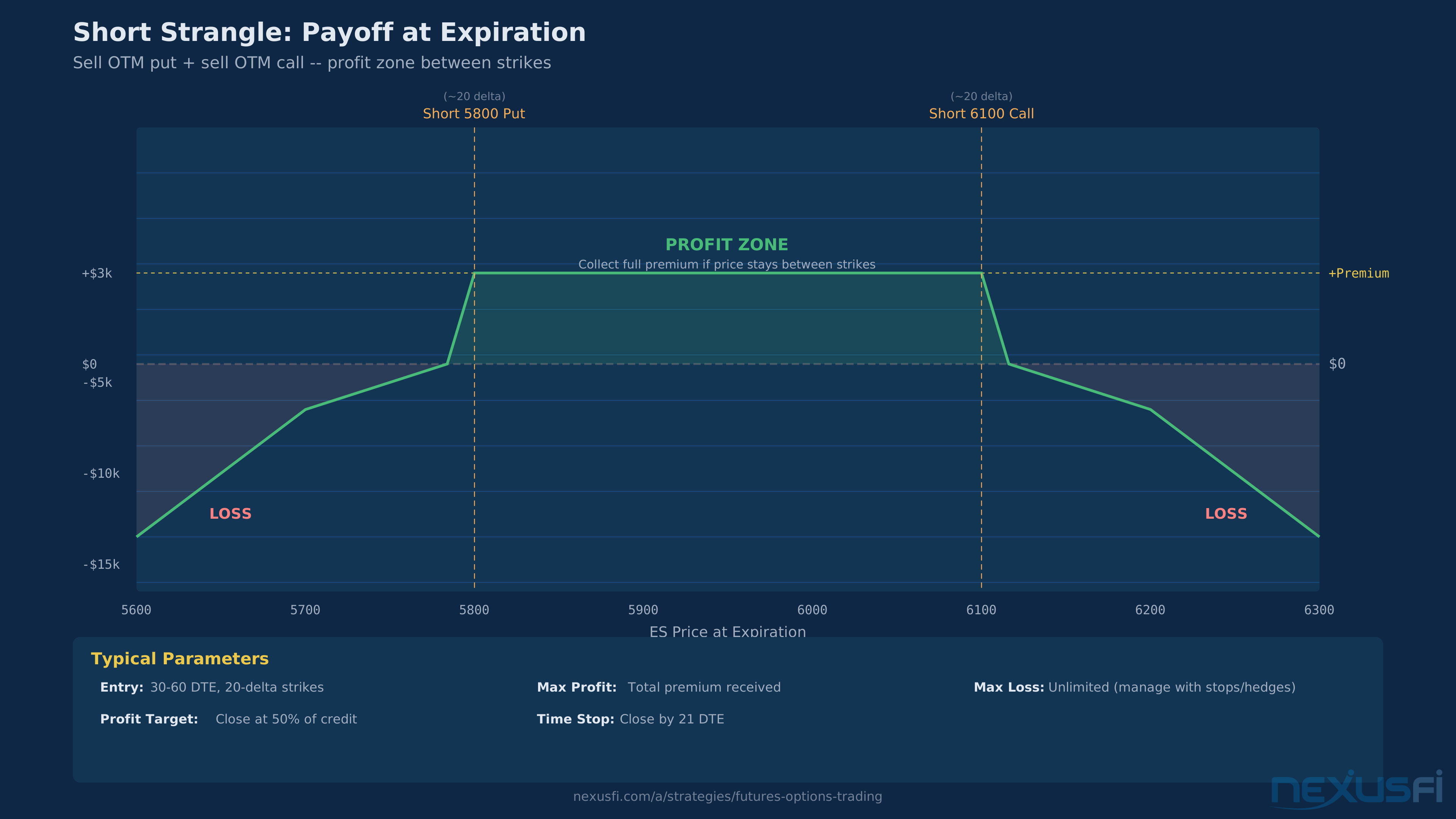
Selling strangles — short an out-of-the-money call and an out-of-the-money put — is the most common professional futures options strategy. You collect premium from both sides and profit when the underlying stays within a range.
The setup:
- Entry: Sell calls and puts at approximately 20 delta (one standard deviation out-of-the-money), 30-60 DTE
- Profit target: Close at 50% of max credit received
- Time stop: Close by 21 DTE regardless of profit
- Delta management: If one side gets tested and position delta exceeds comfort zone, roll the tested side out (e.g., from 50 delta to 30 delta) and sell additional contracts on the untested side to recapture some cost
When this strategy fails: In trending or high-volatility environments, one side gets blown through and the premium collected doesn't cover the loss. During the 2018 crude oil collapse, @dynoweb managed this by "selling a /CL contract to give me enough negative delta. The profits on /CL offset the losses on the short puts." [4] This highlights that strangle sellers must be comfortable managing the underlying futures as a hedging tool, not just options.
The tail risk problem:
[5] Gamma scalping locks in losses and generates commission. Defined risk strategies (iron condors) still leave you with 3x to 5x losers relative to premium. There's no free lunch.
Strategy: Reverse Double Diagonal Spreads #
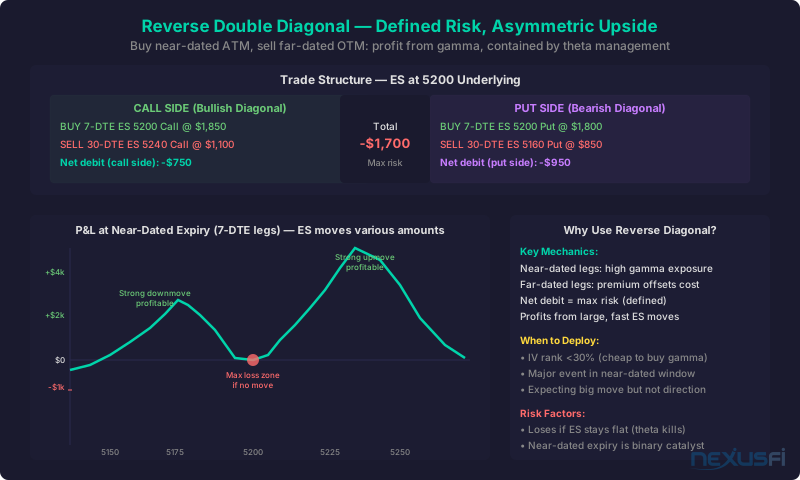
For traders who want the premium income of strangles with better risk-defined structures, the reverse double diagonal spread offers an advanced alternative.
Practical example from @Homerjay's CL trade:
- Sell 30 x June 108 Calls, Buy 30 x May 110 Calls
- Sell 30 x June 83 Puts, Buy 30 x May 80 Puts
- Result: ~$30k premium on ~$17k margin
Key element — tail risk protection: "I usually do the spreads as equal numbered initially and then right after I'm filled, pick up an extra few calls and puts on the long side for black swan protection." [6]
When this strategy fails: Calendar-based spreads carry basis risk — the relationship between near-month and far-month futures can shift unexpectedly during contango/backwardation transitions, report weeks, or delivery month dynamics. Commodity futures with seasonal patterns (natural gas, grains) are especially susceptible.
Strategy: Options as Futures Hedge #
Options aren't just standalone income instruments — they're the primary hedging tool for futures positions.
Common hedging configurations:
- Protective put: Long futures + long put = defined downside, unlimited upside. Cost: the put premium. This is the "insurance" hedge.
- Covered call: Long futures + short call = income generation at the cost of capping upside. Works in range-bound to mildly bullish markets.
- Synthetic positions: Combine futures with options to create risk profiles that don't exist in either instrument alone. A long futures position + long put creates a synthetic call. Short futures + long call creates a synthetic put.
When hedging fails: The most common failure is hedging too late — buying puts after volatility has already spiked, paying inflated premium that eats into the hedge's effectiveness. The 2020 crash taught this lesson brutally: @SMCJB notes that many traders "bought puts, and even though oil dropped from $350 to $100 range, many of them lost money because the drop in volatility/vega was bigger than the drop in price/delta." [8]
The lesson: hedge before you need to, or don't hedge at all. Panic-buying options in a vol spike is usually the wrong trade.
Using Options Data for Futures Trading #
Even if you never trade an option, options data can inform your futures trading. Three key metrics matter.
Gamma Exposure (GEX) #
Gamma exposure measures the aggregate delta-hedging obligation of options market makers. When GEX is positive, market makers are long gamma — they buy dips and sell rallies, dampening volatility. When GEX is negative, they're short gamma — they must sell into declines and buy into rallies, amplifying moves.
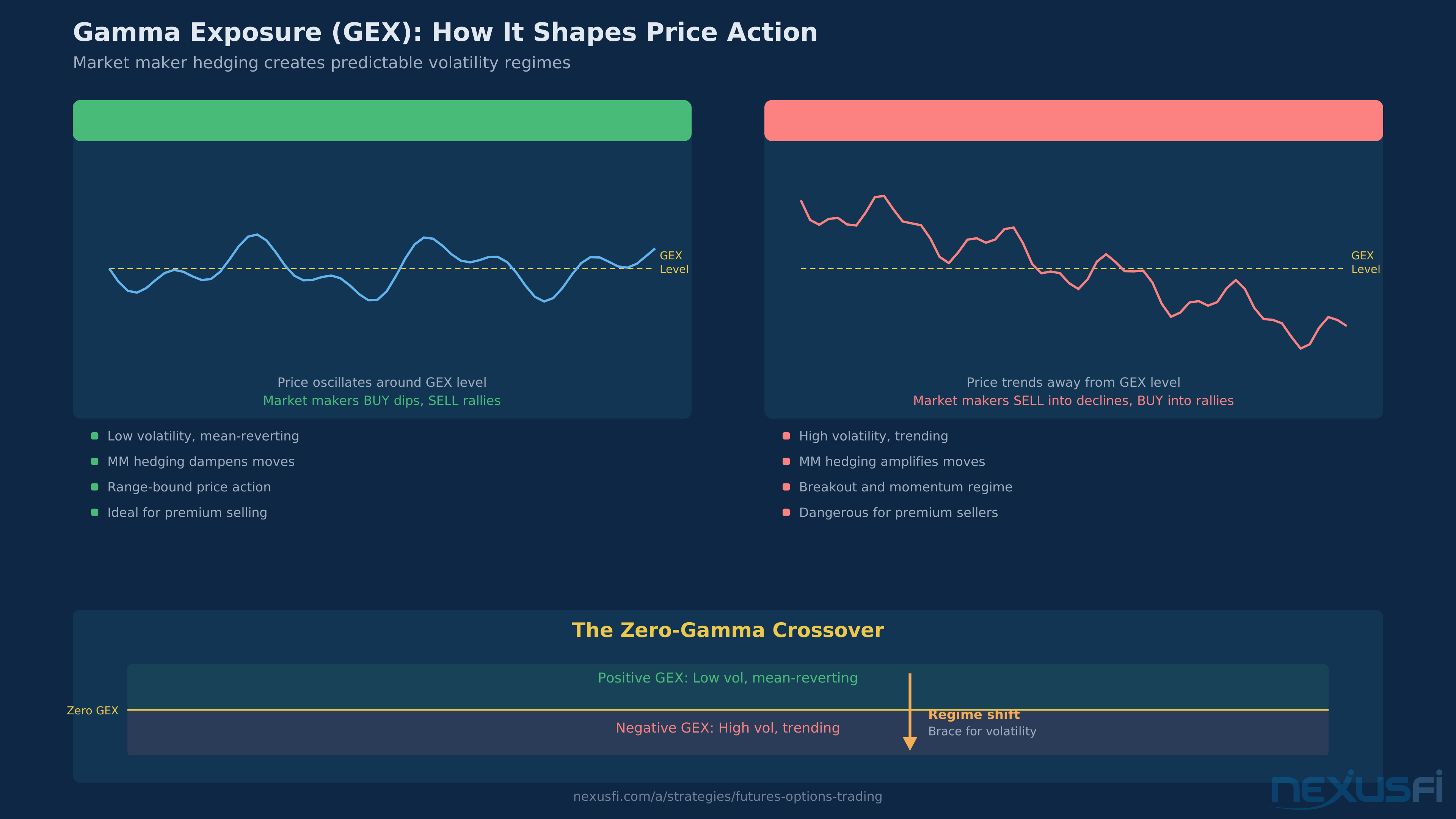
Practical application: Monitor the zero-gamma line. When price crosses from positive to negative GEX territory, @SpotGamma warns to "brace for volatility expansion as soon as price heads into negative gamma territory." [9] This structural shift often precedes the largest intraday moves.
Options Flow #
Large options transactions — block trades, sweeps, and unusual volume relative to open interest — reveal institutional positioning. A surge of put buying on crude oil before an OPEC meeting signals hedging activity. Heavy call sweeps in ES on a pullback may indicate institutional buying of the dip.
The key distinction: is the flow opening or closing positions? Is it hedging or speculative? Volume relative to open interest helps answer these questions. High volume with low open interest change suggests speculative new positions. High volume with decreasing open interest suggests position liquidation.
Max Pain #
Max pain identifies the strike price where total outstanding options value is minimized — the price at which options writers collectively lose the least. While not a guaranteed magnet, expiration-day settlement in liquid index futures options gravitates toward max pain frequently enough to be a useful reference level, especially in the final 24-48 hours before expiration.
Position Sizing and Risk Management #
Futures options amplify both opportunity and risk through leverage. Position sizing is the difference between a sustainable edge and an account-destroying drawdown.
The SPAN advantage and trap: SPAN margin requirements can be dramatically lower than the notional risk of a position. A 20-delta strangle on ES might require only $3,000-5,000 in margin while having a worst-case loss of $25,000+. Never size positions based on margin requirements alone. Size based on max loss as a percentage of total account equity.
The 2% rule for futures options: Risk no more than 2% of total account equity on any single trade's max loss scenario. For a $100,000 account, that's $2,000 max loss per position. This means many premium-selling strategies require scaling down from what margin allows.
Correlation kills: Selling strangles across multiple correlated commodities (CL, NG, HO simultaneously) doesn't provide diversification — it concentrates energy sector risk.
[5] Diversify across truly uncorrelated sectors: energies, grains, metals, financials, and currencies.
When Futures Options Don't Work #
Futures options strategies fail systematically in specific conditions:
Sustained trending markets destroy premium sellers. A month-long trend in crude oil or natural gas will blow through both sides of a strangle. The premium collected never compensates for the directional loss. If your edge depends on mean reversion, don't trade during trending regimes.
Vol crush after purchase destroys option buyers. Buying calls before earnings or reports is a classic retail mistake in futures too. If implied volatility is already elevated, the post-event vol crush can erase your gains even when you're right on direction.
Liquidity gaps in far-OTM options create execution risk. The bid-ask spread on deep OTM commodity options can be 30-50% of the option's value. Your theoretical edge evaporates in execution costs.
Holiday weeks and expiration convergence create unpredictable theta and gamma behavior. Weekly expirations have introduced gamma risk that didn't exist when only monthlies traded. 0DTE options on index futures have made expiration-day dynamics a daily event rather than a monthly one.
Getting Started: A Decision Framework #
If you're a futures trader exploring options, start with this framework:
If you want defined-risk directional exposure: Buy calls or puts outright. Accept that theta works against you. Size small (1-2% risk max), target 2:1 reward-to-risk, and use expiration dates 45-90 DTE to minimize time decay impact.
If you want consistent income from premium: Start with defined-risk spreads (vertical credit spreads, iron condors) before graduating to naked strangles. Use 20-30 delta short strikes, 30-60 DTE, and always close by 21 DTE or 50% profit.
If you want to hedge existing futures positions: Protective puts are simplest. Buy them when volatility is low (before you need them), with 30-60 DTE, and accept the premium cost as insurance.
If you want to use options data without trading options: Monitor GEX levels for ES/NQ, track unusual options flow through open interest changes, and reference max pain levels during expiration weeks.
Knowledge Map
Prerequisites
Understand these firstGo Deeper
Build on this knowledgeReferences This Article
Articles that build on this topicCitations
- — Selling Options on Futures? (2013) 👍 8“if your goal is to make theta, you isolate your theta and eliminate all other risks”
- — Selling Options on Futures? (2018) 👍 4“when you shock a portfolio with a 5% underlying price and volatility move, everybody knows what the PnL effect is, but few know what their new risk profile looks like”
- — Selling Options on Futures? (2018) 👍 4“Charm probably isn't that important in equity options...but it can be far more important in commodity options”
- — Selling Options on Futures? (2019) 👍 8“I usually sell strangles in /6E, /CL, /GC, /ZW, /ZC, /ZS, /NG. Typically they are 30-60 DTE with short strikes around the 20 delta”
- — Selling Options on Futures? (2020) 👍 6“Removing some of that negative skew risk is something I have been thinking about”
- — Selling Options on Futures? (2013) 👍 8“Reverse double diagonal is doing 2 reverse diagonal spreads -- one above the market with calls, and one below the market with puts”
- — Using futures options to hedge entry timing (2022) 👍 5“There are countless possibilities to hedge futures with options and vice versa”
- — Selling Options on Futures? (2021) 👍 8“bought puts, and even though oil dropped...many of them lost money because the drop in volatility/vega was bigger than the drop in price/delta”
- — SpotGamma AMA - Ask Me Anything About Options Flow & Gamma Analysis (2026) 👍 1“ES and NQ traders should be watching gamma exposure for the underlying index”