



Futures Exchanges: Understanding Where and How Futures Trade
Overview #
Futures Exchanges: Understanding Where and How Futures Trade
Every futures contract you trade — every ES tick, every CL rip, every ZB grind — exists because an exchange created it, listed it, and guarantees its settlement. The exchange isn't just a venue. It's the engine that makes the entire futures market work.
Most traders spend years studying indicators, setups, and risk management without ever understanding the infrastructure beneath their trades. That's a mistake. Knowing how exchanges operate gives you practical edge: you understand why margins change, why certain hours matter more than others, why your fill quality varies, and why some contracts die while others thrive.
Key Concepts #
Futures exchange — a regulated marketplace where standardized derivatives contracts are listed, traded, and cleared. Unlike stock exchanges that match buyers and sellers of shares, futures exchanges create and manage contracts on underlying assets that may never change hands. The exchange sets contract specifications (size, tick, hours, delivery terms), provides the matching engine, and partners with a clearinghouse to guarantee performance.
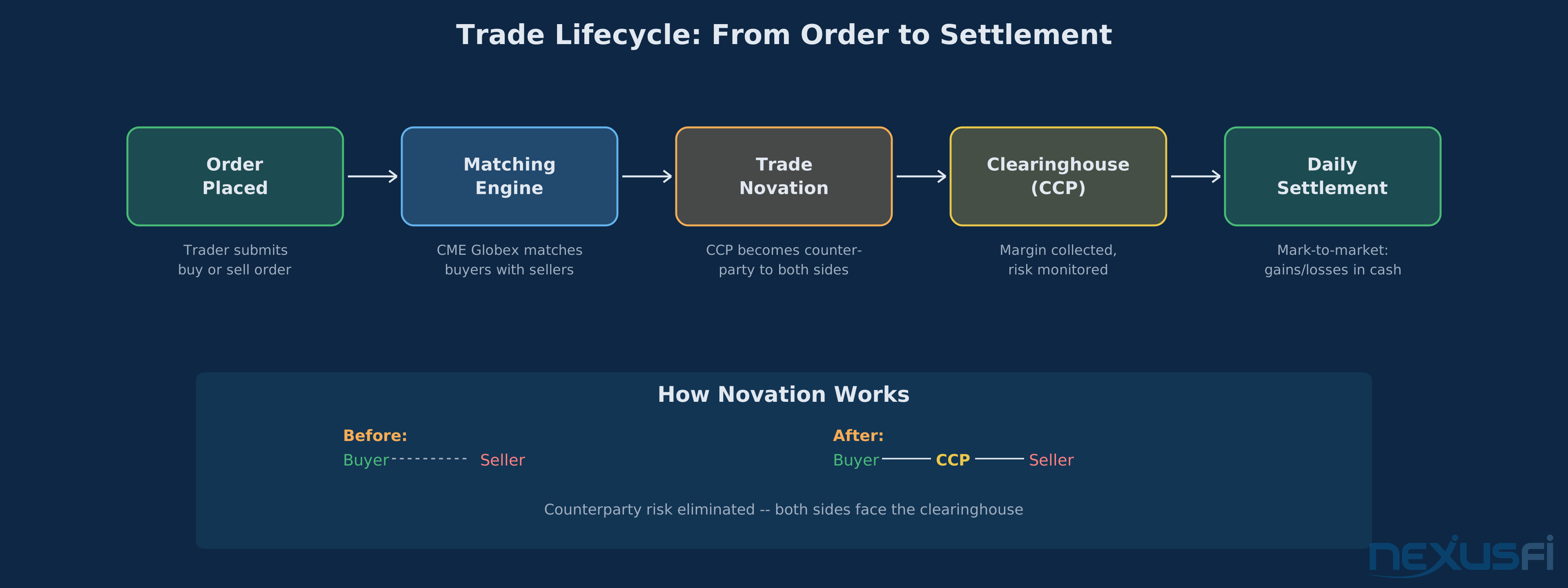
Clearinghouse — the entity that sits between every buyer and every seller after a trade is matched. Once your order fills, you don't have a position with the person on the other side. You have a position with the clearinghouse. It becomes the buyer to every seller and the seller to every buyer, eliminating counterparty risk entirely.
Central counterparty (CCP) — the technical term for what the clearinghouse does. By novating every trade (substituting itself as counterparty to both sides), the CCP ensures that if one participant defaults, the system absorbs the loss through its financial safeguards waterfall — not through cascading failures.
Performance bond (margin) — the good-faith deposit required to hold a futures position. This isn't a down payment. You don't own anything. It's collateral that the clearinghouse holds to cover potential losses. Typically 3-12% of the contract's notional value, depending on volatility.
Contract specifications — the standardized terms that define every futures contract: underlying asset, contract size, minimum price increment (tick size), tick value, delivery months, trading hours, settlement method (physical or cash), and position limits.
Mark-to-market — the daily (and sometimes intraday) process where the clearinghouse settles all gains and losses in cash. If ES moves 10 points against you, that $500 per contract leaves your account today. Not at expiration. Today. This prevents the accumulation of unrealized losses that could threaten the system.
Contract specifications — the standardized terms that define every futures contract: underlying asset, contract size, minimum price increment (tick size), tick value, delivery months, trading hours, settlement method (physical or cash), and position limits.
The Major Global Exchanges #
CME Group — The Center of Gravity #
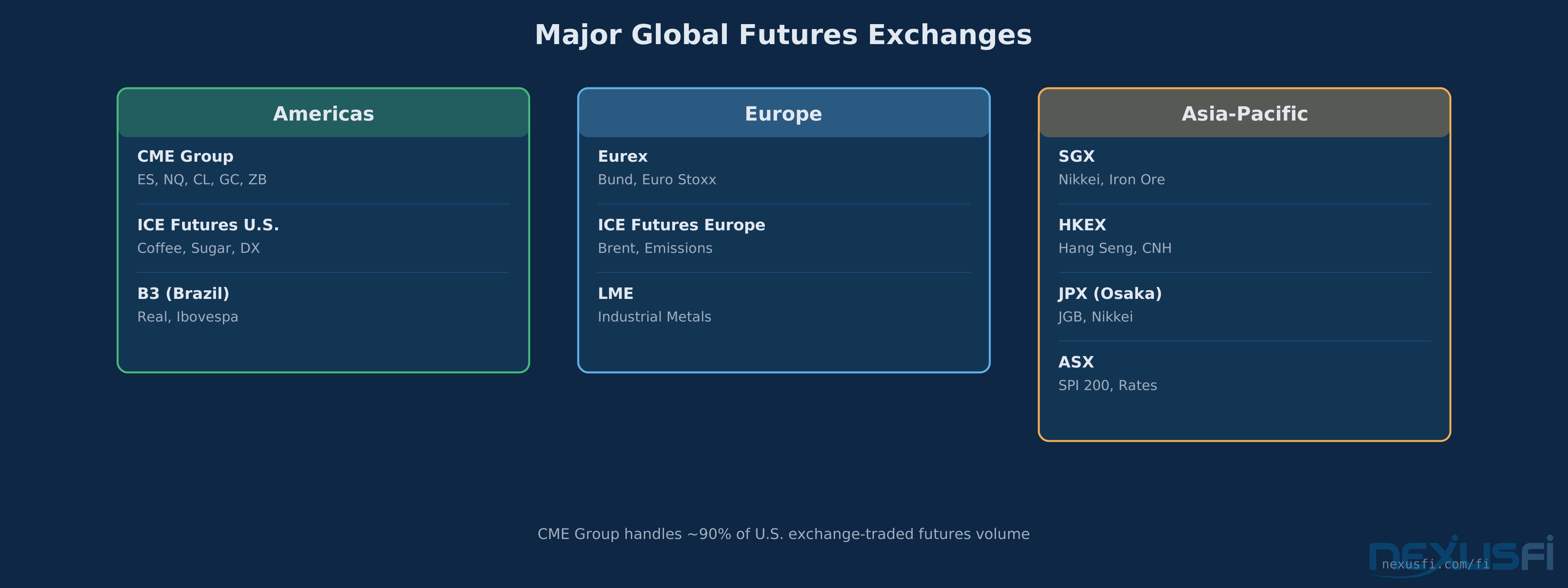
CME Group dominates global futures trading. Formed through the 2007 merger of the Chicago Mercantile Exchange (CME) and the Chicago Board of Trade (CBOT), it later acquired NYMEX and COMEX. Together, these four exchanges cover the most actively traded contracts in the world:
- CME — equity index futures (ES, NQ, RTY), FX futures (6E, 6J, 6B), livestock
- CBOT — Treasury futures (ZB, ZN, ZF, ZT), grains (ZC, ZW, ZS), Dow futures (YM)
- NYMEX — energy (CL, NG, RB, HO)
- COMEX — metals (GC, SI, HG)
Everything trades electronically on CME Globex, the matching engine that runs nearly 24 hours a day, Sunday evening through Friday afternoon. As one NexusFi community member [noted] [1], "Most CME futures products, ES included, are open 23 hours a day called Globex M-TH less a small trading halt for 15 minutes."
The open outcry pits — where traders once stood shoulder-to-shoulder shouting orders — are largely history. CME closed most futures trading pits in 2015, though some options pits remain. As a NexusFi [discussion captured] [2], the S&P 500 Standard Futures pit stayed open primarily to support the options on futures contract, but the volume had already migrated to screens.
ICE (Intercontinental Exchange) #
ICE operates multiple exchanges globally:
- ICE Futures U.S. — soft commodities (coffee, sugar, cotton, cocoa), the U.S. Dollar Index (DX)
- ICE Futures Europe — Brent crude oil (the global benchmark), European natural gas, emissions
- ICE Futures Singapore — Asian energy derivatives
ICE built its empire by going electronic before competitors. The transition from NYMEX's floor-based energy trading to ICE's electronic platform is one of the most significant structural shifts in futures history. As discussed [on NexusFi] [3], "ICE proved electronic energy trading worked, volume migrated, NYMEX tried to compete with open outcry Brent (failed)."
Eurex #
Europe's dominant derivatives exchange, owned by Deutsche Börse. Eurex lists the most actively traded European fixed income futures (Bund, Bobl, Schatz), Euro Stoxx 50 index futures, and a growing range of equity derivatives. It pioneered fully electronic derivatives trading in Europe and operates its own clearinghouse, Eurex Clearing.
Other Major Exchanges #
- SGX (Singapore Exchange) — Asian equity index futures (Nikkei 225, MSCI Asia), iron ore
- HKEX (Hong Kong Exchanges) — Hang Seng futures, China-linked derivatives
- ASX (Australian Securities Exchange) — SPI 200, Australian interest rate futures
- B3 (formerly BM&FBOVESPA) — Brazilian real, Ibovespa index futures
- JPX (Japan Exchange Group) — JGB futures, Nikkei 225 (Osaka Exchange)
How Clearing Works #
Clearing is the reason futures markets have never experienced a participant default that cascaded into systemic failure. Here's the mechanism:
The Trade Lifecycle #
- Execution — your order matches with a counterparty on the exchange's matching engine (Globex for CME, ICE's matching engine for ICE products)
- Novation — the clearinghouse steps in and replaces the single trade with two trades: one between you and the clearinghouse, and one between the clearinghouse and the other side. Your counterparty is now the clearinghouse — always.
- Margining — both sides post performance bonds (initial margin). The clearinghouse calculates requirements using risk models like CME's SPAN (Standard Portfolio Analysis of Risk) or the newer SPAN 2 framework.
- Daily settlement — at the end of each trading day (6 PM CT for CME), all positions are marked to the settlement price. Gains are credited, losses are debited. Cash actually moves between accounts every day.
- Offset or delivery — most contracts are closed before expiration by taking the opposite position. For physically delivered contracts, the delivery process follows exchange-specific procedures.
The Financial Safeguards Waterfall #
If a clearing member defaults, the clearinghouse doesn't just hope for the best. There's a structured order of financial resources:
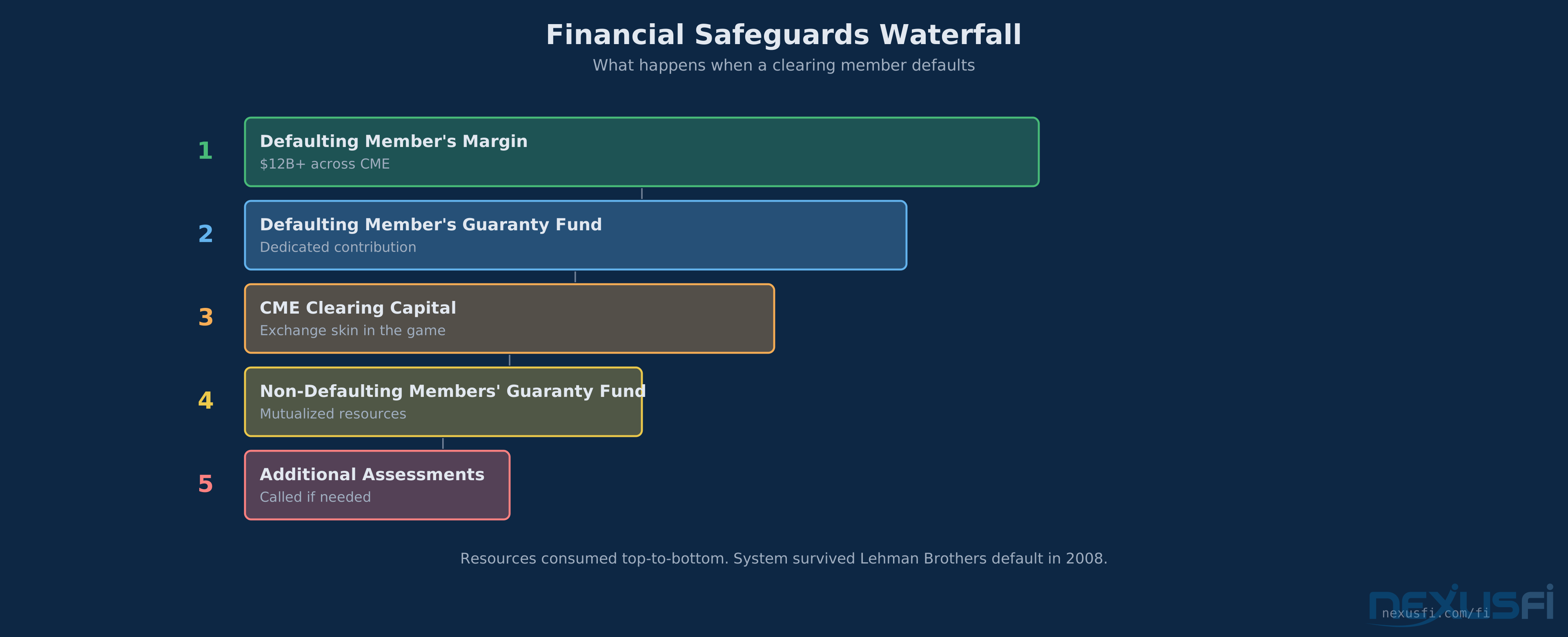
- Defaulting member's margin deposits — consumed first
- Defaulting member's guaranty fund contribution — next
- Clearinghouse's own capital contribution — the clearinghouse has skin in the game
- Other clearing members' guaranty fund contributions — shared mutualized resources
- Additional assessments — clearing members may be called for more capital
This waterfall has been tested in real crises. During the 2008 financial crisis, Lehman Brothers' massive futures positions were liquidated through CME Clearing without any customer losses. The system worked because margin was already collected, positions were marked to market daily, and the waterfall provided layers of protection.
Margin: What You Actually Need to Know #
Margin in futures is at the core different from margin in stocks. In equities, margin is a loan — you borrow money to buy shares. In futures, margin is a performance bond — a good-faith deposit that ensures you can cover potential losses.
Three Types of Margin #
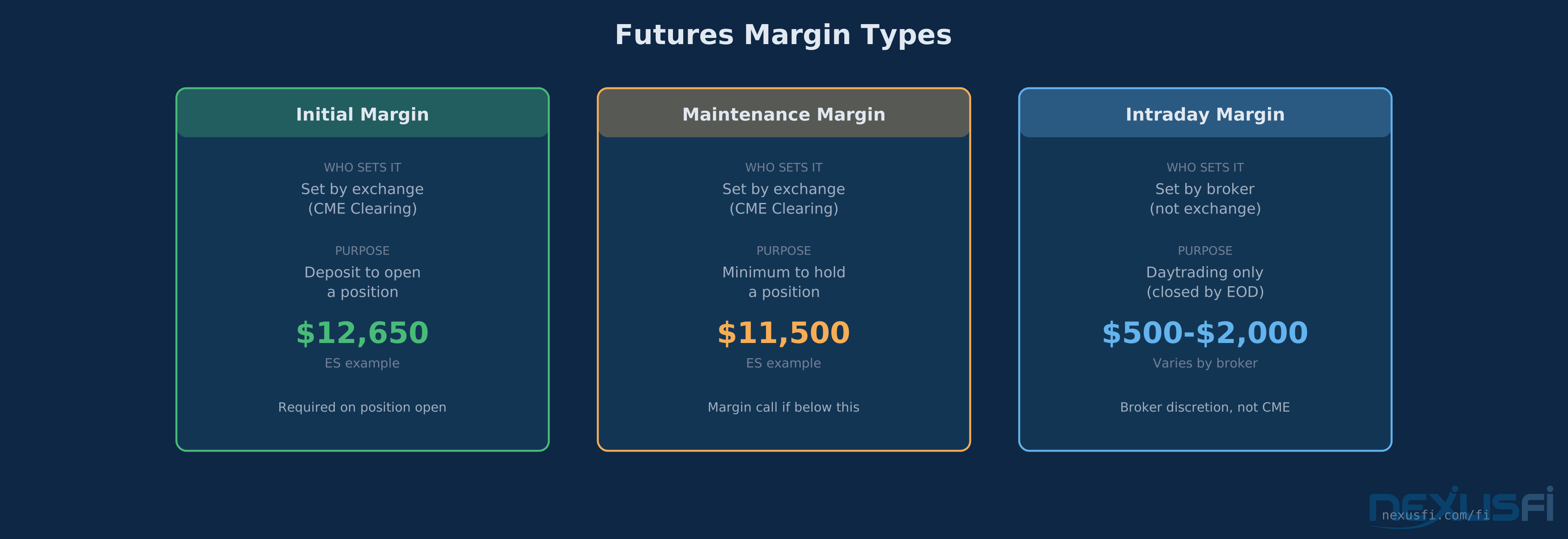
Initial margin — the amount required to open a position. CME Clearing sets the exchange minimum, but your broker almost certainly requires more. For ES, the exchange initial margin might be around $12,000-14,000 per contract, but your broker's overnight requirement could differ.
Maintenance margin — the minimum equity you must maintain while holding a position. If your account drops below this level, you get a margin call. You must deposit additional funds to bring the account back to the initial margin level — not just back to maintenance.
Intraday margin — set by your broker, not the exchange. Many futures brokers offer reduced intraday margins, sometimes as low as $500 for ES during regular trading hours. As a NexusFi community member [explained] [4], brokers "can set margins wherever they like. Many set margins at around $500 or even $400 for contracts like the ES. What matters is when the exchange sets the close and open of the trading day."
How Margin Changes #
CME Clearing uses VaR-based models with multiple lookback periods to set margin levels. When volatility spikes, margin goes up. When volatility subsides, margins come back down — but not immediately. CME applies volatility floors and benchmark buffers specifically to reduce procyclical margin calls (raising margin right when markets are crashing and traders can least afford it).
The margin model incorporates both historical volatility (multiple lookback windows from 3 months to 10 years) and implied volatility from options markets. This forward-looking component means margin can increase before a known event — like a Federal Reserve decision or election — even if recent historical volatility is calm.
Trading Hours and Sessions #
Modern futures trade nearly around the clock, but not all hours are created equal.
CME Globex Schedule #
Markets open Sunday at 5:00 PM CT and trade almost continuously through Friday at 4:00 PM CT. There's a daily maintenance halt from 4:00 PM to 5:00 PM CT (Monday-Thursday) and a brief 15-minute reset.
The concept of "Regular Trading Hours" (RTH) is a holdover from the pit era. For equity index futures like ES, RTH runs 8:30 AM to 3:15 PM CT — the hours when the underlying cash market is open. As traders on NexusFi [have noted] [5], "the RTH hours are a hangover from when everything traded in the pits. Those were the hours the pit was open."
But RTH still matters. Volume concentrates during RTH. The opening 30-60 minutes sees the highest volume and volatility. The official settlement price is typically calculated during RTH. And market profile concepts like Initial Balance are defined by RTH boundaries.
Why Different Sessions Matter #
- Globex/overnight session — thinner liquidity, wider spreads, more susceptible to gap moves on international news
- Pre-market (6:00-8:30 AM CT for ES) — economic data releases, European market influence
- RTH open (8:30 AM CT) — highest volume, most significant price discovery
- RTH afternoon — often lower volatility, institutional position adjustments
- Settlement period — critical for market-on-close orders and next-day margin calculations
Contract Expiration and Rollover #
Every futures contract has an expiration date. When that date approaches, traders must either close their position or roll it forward to the next contract month.
Contract Month Codes #
Futures use a standardized letter system for months:
| F | G | H | J | K | M | N | Q | U | V | X | Z |
|---|---|---|---|---|---|---|---|---|---|---|---|
| Jan | Feb | Mar | Apr | May | Jun | Jul | Aug | Sep | Oct | Nov | Dec |
So ESH6 means E-mini S&P 500, March 2026. CLK6 means Crude Oil, May 2026.
When to Roll #
The key isn't expiration day — it's when volume shifts to the next contract month. As community member @Fat Tails [explained on NexusFi] [6], the critical dates include "a last trading date, an expiry date and a first notice date," and the practical rollover happens when "liquidity has shifted to the new front month contract."
For equity index futures (ES, NQ, YM), rollover typically happens 8 calendar days before expiration, which falls on the third Friday of each quarter month (March, June, September, December). For crude oil, which trades every month, rollover follows a different schedule — roughly 3 business days before the 25th of the prior month. Each product has its own rhythm.
The Dangers of Not Rolling #
If you hold a physically delivered contract past first notice day, you may be assigned delivery. For financial futures (ES, NQ), settlement is cash — you just get the cash difference. But for commodities like crude oil or corn, you could theoretically be on the hook for physical delivery. Your broker will almost certainly force-close your position before that happens, but the spreads widen dramatically as expiration approaches, and you don't want to be trading a contract with no liquidity.
Price Discovery and the Matching Engine #
Exchanges don't set prices. They provide the infrastructure for price discovery — the process by which buyers and sellers collectively determine fair value through competitive bidding.
How Orders Match #
Modern exchanges use price-time priority (FIFO — first in, first out) for most contracts. If two limit orders sit at the same price, the one placed first gets filled first. CME Globex processes millions of messages per second with microsecond-level latency.
Some contracts use pro-rata matching instead of FIFO, especially in interest rate markets like Eurodollar (now SOFR) futures. In pro-rata, orders at the same price are filled proportionally based on size rather than time. This changes the dynamics much — size matters more than speed.
Settlement Prices #
The daily settlement price isn't just the last trade. Exchanges use complex algorithms that consider trading activity during a defined settlement window. For most CME products, this window is the final seconds of the regular trading session. The settlement price determines:
- Daily mark-to-market P&L
- Margin requirements for the next session
- Option exercise and assignment values
- Index values for cash-settled contracts
Regulation: Who Watches the Exchanges #
In the United States, futures markets are regulated by the Commodity Futures Trading Commission (CFTC), an independent federal agency. The CFTC oversees:
- Exchange registration and compliance
- Clearing organization (DCO) registration
- Futures Commission Merchant (FCM) registration
- Market surveillance and enforcement
- Position limits and reporting
The National Futures Association (NFA) is the self-regulatory organization for the futures industry. All FCMs, introducing brokers, commodity trading advisors, and commodity pool operators must be NFA members.
Exchanges themselves also perform regulatory functions — they monitor trading for manipulation, enforce position limits, and investigate suspicious activity. CME's Market Regulation department operates independently from the commercial side of the business.
Position Limits and Reporting #
The CFTC sets speculative position limits on certain contracts to prevent manipulation. Large traders must report their positions daily. The CFTC publishes the Commitments of Traders (COT) report weekly, breaking down open interest by commercial hedgers, managed money, and other categories.
What This Means for Your Trading #
Understanding exchange infrastructure isn't abstract knowledge. It has direct practical implications:
Margin awareness — when VIX spikes, expect margin increases within days. If you're running tight, reduce position size before the increase hits, not after.
Session selection — if you're scalping ES, RTH open gives you the tightest spreads and deepest book. If you're trading CL around OPEC announcements, expect Globex session volatility that RTH traders never see.
Rollover planning — mark your rollover dates. Spreads widen, volume shifts, and continuous contract charts can create false signals around the roll. [NexusFi traders track rollover dates] [7] carefully because the volume transition period requires attention.
Clearinghouse confidence — your money is safer in futures than most traders realize. Daily mark-to-market, the financial safeguards waterfall, and strict regulatory oversight mean the system is designed to survive individual firm failures.
Contract selection — not all contracts at the same exchange trade identically. Pro-rata vs. FIFO matching, physical vs. cash settlement, quarterly vs. monthly expiration — these details affect your execution and strategy.
The exchange is the foundation. Every indicator, every setup, every risk model you use rests on the infrastructure these institutions provide. Understanding that infrastructure makes you a more complete trader.
For specific contract details and trading strategies, see the instrument guides for E-mini S&P 500 (ES), Crude Oil (CL), and Treasury Futures (ZB/ZN). For how the order book works at the micro level, see Market Microstructure and Depth of Market (DOM).
Knowledge Map
Prerequisites
Understand these firstGo Deeper
Build on this knowledgeReferences This Article
Articles that build on this topicCitations
- — NinjaTrader 7 My tracking system“Most CME futures products, ES included, are open 23 hours a day called Globex M-TH”
- — CME Group to Close Most Open Outcry Futures Trading in Chicago and New York by July;“CME Group to Close Most Open Outcry Futures Trading”
- — CME Globex Goes Dark on Expiry Day -- Metals and Natural Gas Trading Halted as Systems Fail Aga“ICE proved electronic energy trading worked, volume migrated”
- — What's this confusion with margins?“Brokers can set margins wherever they like”
- — Trading hours help - Gold/E6/ZB“RTH hours are a hangover from when everything traded in the pits”
- — Rollover Days - some Quick Facts about“a last trading date, an expiry date and a first notice date”
- — Rollover Days - some Quick Facts about“Rollover Days - some Quick Facts”
- — CME Clearing Market Structure
- — CME Margin: Know What's Needed
- — ICE Clearing Margin Models