



Cboe Global Markets: The Exchange That Owns Volatility
Overview #
Cboe Global Markets is the exchange that invented listed options and built the VIX — the single most-watched number in risk management. Founded in 1973 as the Chicago Board Options Exchange, Cboe created the infrastructure for trading standardized equity options, and then spent the next five decades turning volatility itself into a tradeable asset class. If CME runs the futures world, Cboe runs the volatility world. Different domains, different liquidity pools, and if you trade options or anything vol-related, Cboe is the center of gravity.
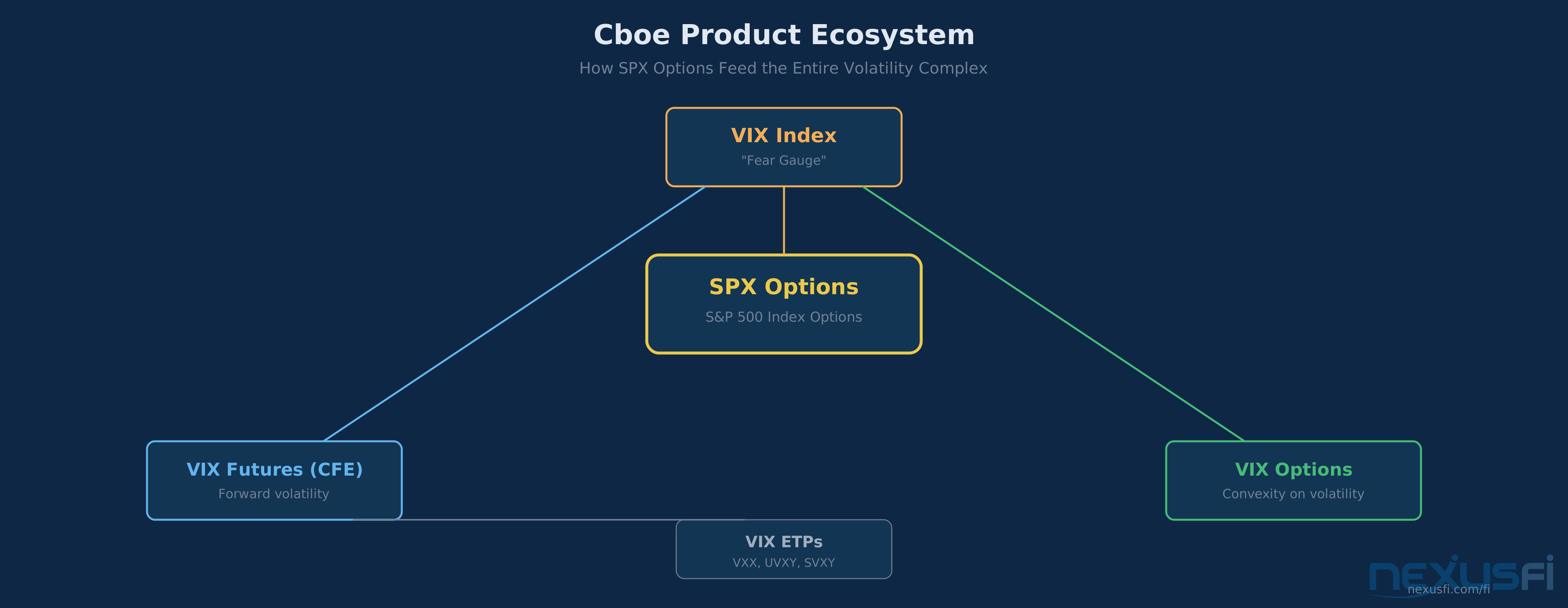
The exchange operates multiple venues covering options, futures, equities, and digital assets. But its identity — and its edge — comes down to three things: SPX options, the VIX index, and the derivatives built on top of VIX. Everything else is secondary. For futures and options traders, understanding Cboe means understanding how volatility gets priced, traded, and hedged at institutional scale.
Key Concepts #
VIX Index (Volatility Index): Cboe's flagship product, introduced in 1993. Measures the market's expectation of 30-day forward volatility on the S&P 500, calculated from real-time bid/ask quotes of SPX options. Called the "fear gauge" because it spikes when markets sell off and fear takes hold. The VIX is an index — you can't trade the index itself directly. As NexusFi member
SPX Options: European-style, cash-settled options on the S&P 500 index. These are the raw inputs that feed the VIX calculation. SPX options are the backbone of Cboe's product ecosystem — massive institutional liquidity, favorable tax treatment under Section 1256, and no early assignment risk. The notional value traded in SPX options dwarfs most futures markets.
VIX Futures: Traded on the Cboe Futures Exchange (CFE). These let you take a position on where the VIX will be at a future date. They don't track VIX spot 1:1 — the futures embed expectations plus a volatility risk premium.
VIX Options: Options on the VIX index itself (not options on VIX futures — an important distinction). The settlement mechanics differ from standard futures options, which matters for calendar spreads and strategies that hold through expiration.
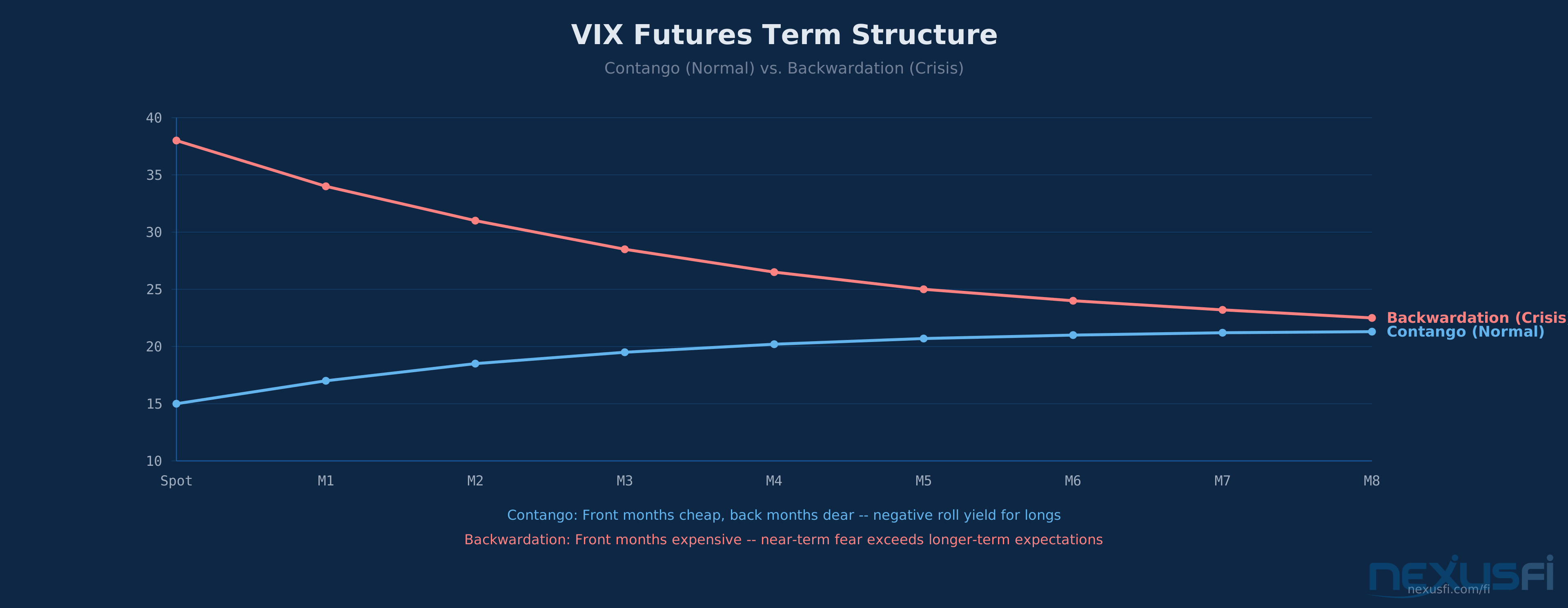
Contango and Backwardation: The VIX futures term structure is normally in contango — front months cheaper than back months, because the market prices in a "normal" level of volatility further out. During crises, the curve flips to backwardation as near-term fear spikes above longer-term expectations. This term structure behavior drives some of the most systematic vol strategies in the market.
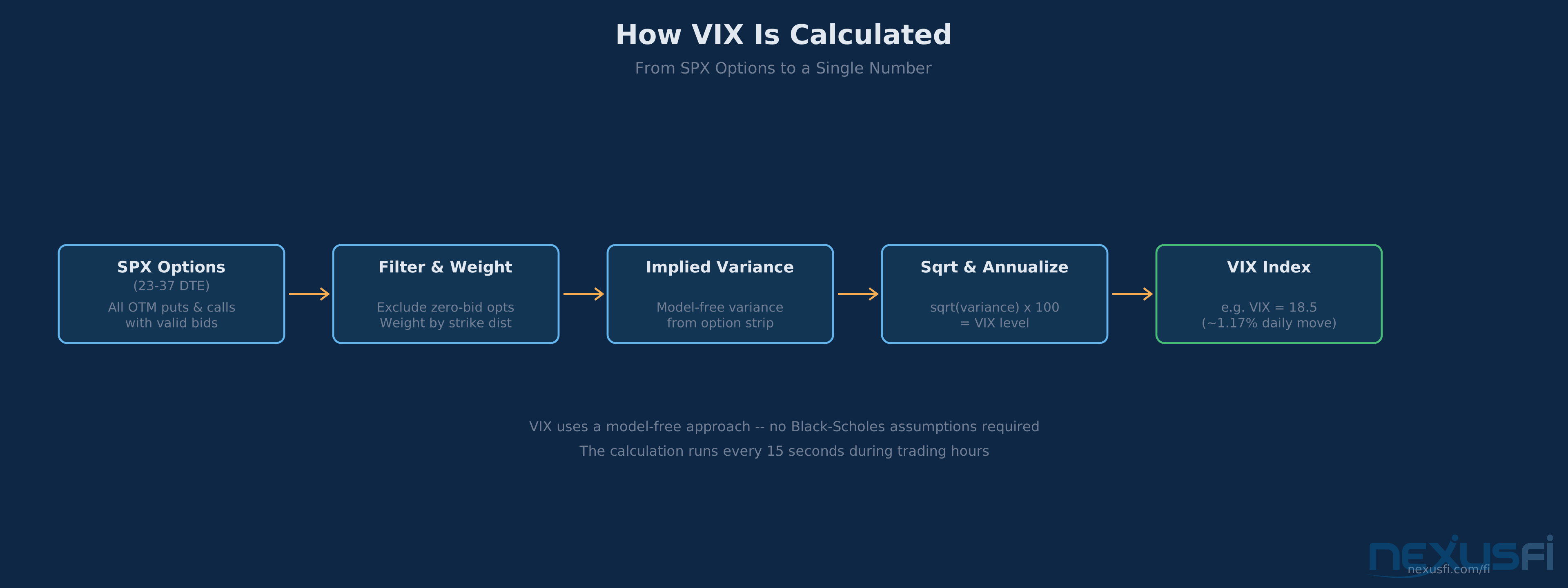
Implied Variance: The mathematical basis of VIX. Cboe calculates VIX using a weighted strip of out-of-the-money SPX options with 23 to 37 days to expiration, applying an implied variance methodology. The VIX number you see on your screen is the square root of this expected variance, annualized to a percentage.
History: How Cboe Built the Volatility Market #
The story starts in 1973, when the Chicago Board Options Exchange became the first exchange to list standardized, exchange-traded stock options. Before that, options were traded over-the-counter in an opaque, illiquid market. Cboe brought transparency, standardization, and centralized clearing to options — and the market exploded.
Key milestones that shaped what Cboe is today:
1973 — Founded as the Chicago Board Options Exchange. Listed the first standardized equity options. The options market went from a niche OTC product to a mainstream trading instrument.
1983 — Launched SPX options (S&P 500 index options). This was the move that turned Cboe from a stock options exchange into the dominant venue for index derivatives. SPX options became the most liquid equity index option contract in the world.
1993 — Introduced the VIX index, originally designed by Professor Robert Whaley. The first version used S&P 100 options (OEX). The concept was simple but powerful: create a single number that captures the market's expectation of near-term volatility.
2003 — Revamped VIX methodology to use S&P 500 options (SPX) instead of OEX, and switched from a narrow strike-based calculation to the model-free implied variance approach. This is the VIX we know today.
2004 — VIX futures launched on the Cboe Futures Exchange (CFE). For the first time, traders could take direct positions on forward volatility without constructing synthetic positions from options.
2006 — VIX options listed. This completed the vol product ecosystem: you could now trade spot vol (via SPX options), forward vol (via VIX futures), and convexity on vol (via VIX options).
2017 — Cboe completed its acquisition of BATS Global Markets, adding four U.S. equity exchanges and expanding into European markets. The combined entity rebranded as Cboe Global Markets.
2020s — Expanded into digital assets, launched 0DTE (zero days to expiration) SPX options that exploded in popularity, and continued developing the volatility product suite.
The through-line across 50+ years: Cboe didn't just list products — it created entirely new asset classes. Options in 1973. Volatility in 1993. Each creation spawned its own ecosystem of strategies, products, and market participants.
How VIX Works -- The Mechanics #
Understanding VIX requires understanding what it actually measures and what it doesn't.
What VIX is: A measure of implied variance derived from SPX option prices. Specifically, Cboe selects all out-of-the-money SPX puts and calls with 23 to 37 days to expiration, weights them by strike distance from the forward price, and computes an aggregate expected variance. The square root of that variance, annualized, is the VIX.
What VIX isn't: A measure of realized volatility. VIX is forward-looking — it tells you what the options market expects volatility to be over the next 30 days. Realized volatility tells you what actually happened. These two numbers can diverge dramatically. As NexusFi member
The calculation flow:
- Select all eligible SPX options (23-37 days to expiration, out-of-the-money)
- Filter for valid bid/ask quotes (options with no bid are excluded)
- Calculate the midpoint price for each option
- Apply the model-free implied variance formula — each option contributes to total variance proportional to its strike distance from the forward
- Interpolate between the two nearest expiration months to target exactly 30 days
- Take the square root and annualize
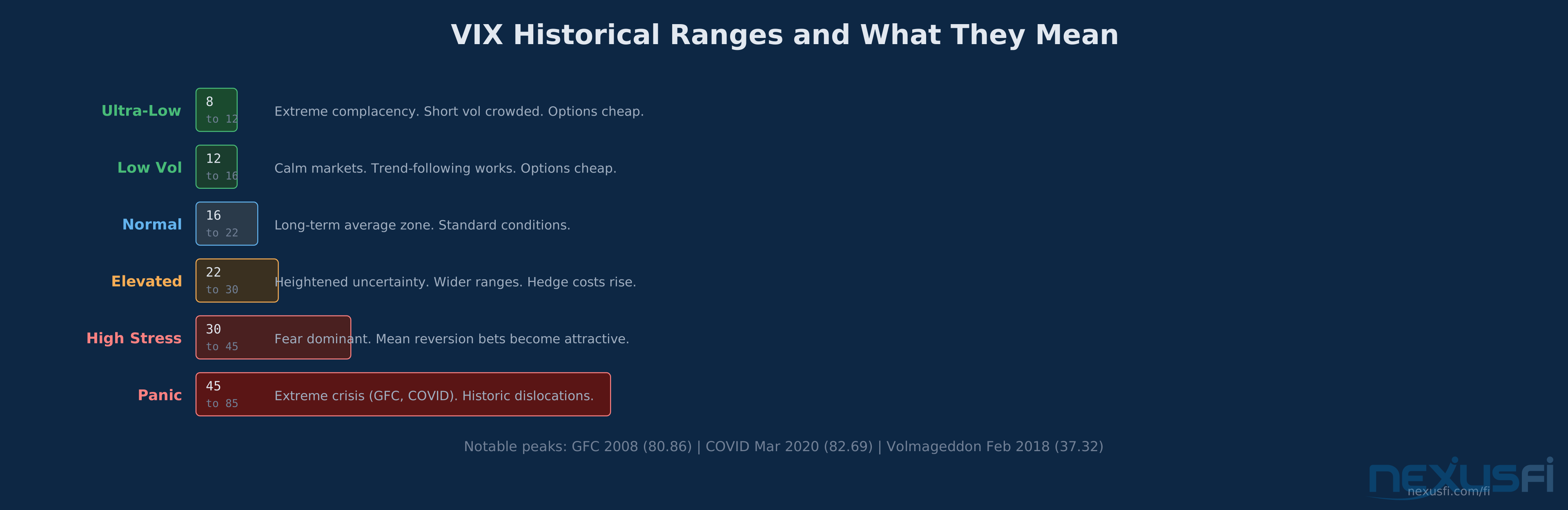
The result: a number typically ranging from 10 to 80, though it briefly hit 82.69 on March 16, 2020. A VIX of 20 implies the market expects the S&P 500 to move roughly 1.26% per day (20 / sqrt(252) = 1.26%). A VIX of 40 doubles that expected daily move to 2.52%.
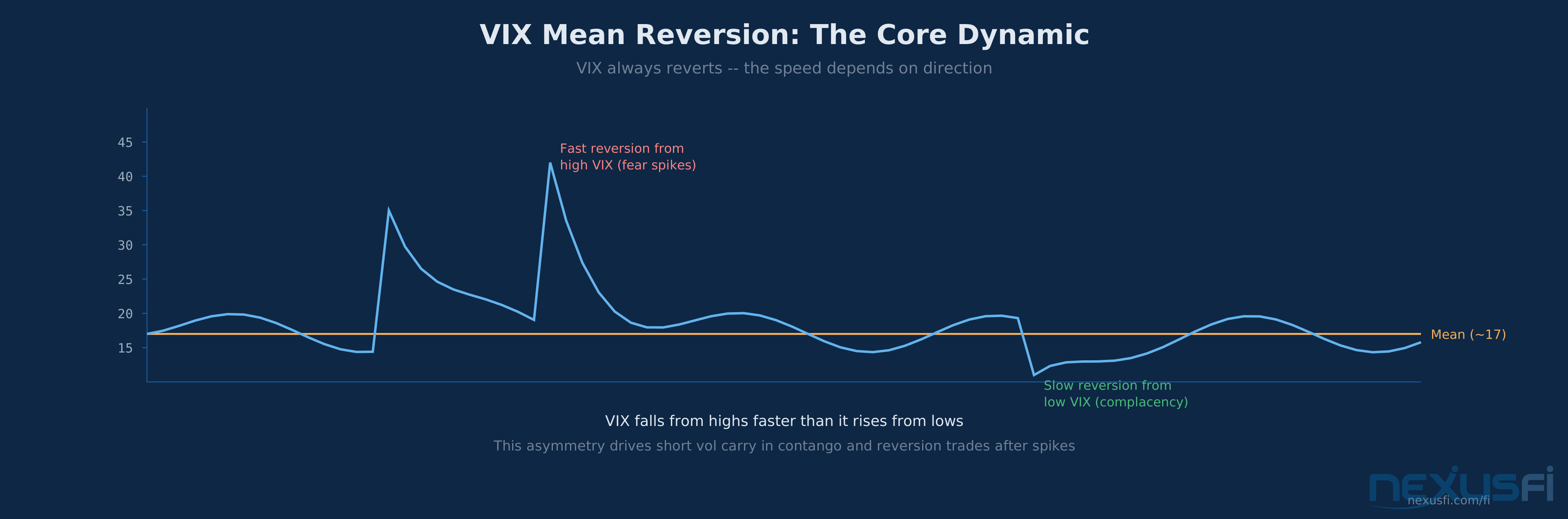
VIX cannot stay elevated indefinitely. After every major volatility spike — 2008, 2010, 2015, 2018, 2020 — VIX reverted to its 15-20 long-run average within weeks to months. This mean-reversion property is what makes short-volatility strategies viable as a long-run carry trade, and why VIX spikes are often better bought as hedges than held as long-term positions.
Mean reversion: VIX has a strong tendency to revert to its long-term average, which sits in the 15-20 range depending on the measurement window. Extreme readings — below 10 or above 40 — don't persist. This mean-reverting behavior is the foundation for many systematic volatility strategies and is one reason VIX products are better suited for tactical trading than buy-and-hold.
VIX Futures: The Term Structure Game #
VIX futures trade on the Cboe Futures Exchange (CFE) with standardized monthly expirations. They settle to the VIX Special Opening Quotation (SOQ) — a calculation performed on settlement morning using opening prices of SPX options.
Here's what makes VIX futures different from most futures contracts: they don't converge to a "spot" price the way commodity or equity index futures do. There is no deliverable underlying. VIX is a calculation, not a tradeable spot instrument. VIX futures represent the market's expectation of where VIX will be at expiration, plus a volatility risk premium.
Term structure mechanics: In normal markets, the VIX futures curve sits in contango — the second month trades above the front month, which trades above spot VIX. This happens because the market tends to price in a slightly higher level of vol further out as insurance against uncertainty. During market stress, the curve inverts (backwardation) because near-term fear spikes above longer-term expectations.
This term structure creates two major trading dynamics:
Roll yield: If you're long VIX futures in contango, you're bleeding money as time passes — the futures roll down toward spot. This "negative roll yield" is why instruments like VXX (which holds rolling VIX futures) decay over time. For short vol traders, that roll yield is the profit source.
Term structure trades: Calendar spreads between VIX months let you trade the shape of the curve without taking a direct view on VIX direction. When the curve is steep, there's more roll yield; when it's flat, less opportunity for carry.
@suko on NexusFi provided a clear framework: "VIX futures are based on SPX options, not on the VIX index directly. They trade in their own pit at the CBOE and are their own little ecosystem."
Trading VIX Options: What You Need to Know #
VIX options have quirks that trip up traders who treat them like standard equity options.
They're options on the index, not options on futures. VIX options settle to the VIX SOQ on expiration morning — the same settlement as VIX futures. But the "underlying" for pricing and Greeks is the VIX index level, not a VIX futures contract. This distinction affects put-call parity calculations and impacts strategies that span multiple expirations.
Settlement risk: VIX options expire on Wednesday mornings (typically), and the settlement process uses the SOQ calculation, which can gap much from the prior day's VIX close. Holding positions through settlement introduces basis risk that doesn't exist when you close before expiration.
Common VIX option strategies:
Tail hedging: Buying out-of-the-money VIX calls as portfolio crash protection. When markets collapse, VIX spikes and these calls can return 500-1000%+. The tradeoff: they bleed premium every day that nothing catastrophic happens. The cost of carry is real — but the payoff structure is highly convex.
Vol spread trades: VIX call spreads let you cap the cost of a vol-up bet.
Mean reversion plays: When VIX spikes above 30-35, selling VIX call spreads or buying puts to capture reversion back toward 15-20. Research shows VIX mean-reverts faster from high levels than it mean-reverts upward from low levels.
Trading Hours and Sessions #
Cboe provides near-continuous trading for its core volatility products. Note that these hours are product-specific — other Cboe-listed products may trade on different schedules. Always verify the current session times on Cboe's contract specifications page for the exact product you're trading:
| Session | Time (Central) | Products |
|---|---|---|
| Regular Trading Hours | 8:30 AM - 3:15 PM CT | VIX futures, VIX options, SPX options |
| Global/Extended Hours | 7:15 PM - 8:25 AM CT | VIX futures, select products |
| SPX 0DTE Regular | 8:30 AM - 4:00 PM CT | Zero-days-to-expiration SPX options |
The extended session means you can trade VIX futures almost around the clock. Liquidity in the extended session is thinner than regular hours, and spreads widen — but it's there if you need to hedge overnight exposure.
One operational note: if a major market event happens overseas during the extended session, VIX futures will move before SPX options open. This can create dislocations between VIX futures and the spot VIX calculation when regular hours begin.
Fee Structure #
Cboe's fee model has several layers:
Exchange fees: Per-contract charges that vary by product and participant type. Market makers and proprietary trading firms face different rate schedules than customer orders. Cboe uses a maker-taker model for some products, where posting liquidity earns rebates and taking liquidity pays fees.
Clearing fees: Passed through from the Options Clearing Corporation (OCC). These apply to every trade regardless of exchange fees.
Regulatory fees: SEC and FINRA pass-through assessments. Small on a per-contract basis but add up at scale.
Market data fees: Separate subscriptions for real-time quotes, depth-of-book, and index data. If you want streaming VIX levels and SPX option quotes, you're paying for data separately from trading.
The practical takeaway for most traders: exchange and clearing fees matter less than execution quality. A 1-tick improvement in fill price on SPX options is worth more than the exchange fee on most trades. Focus on execution, not nickel-and-dime fee optimization.
Cboe vs. CME: Different Engines, Different Markets #
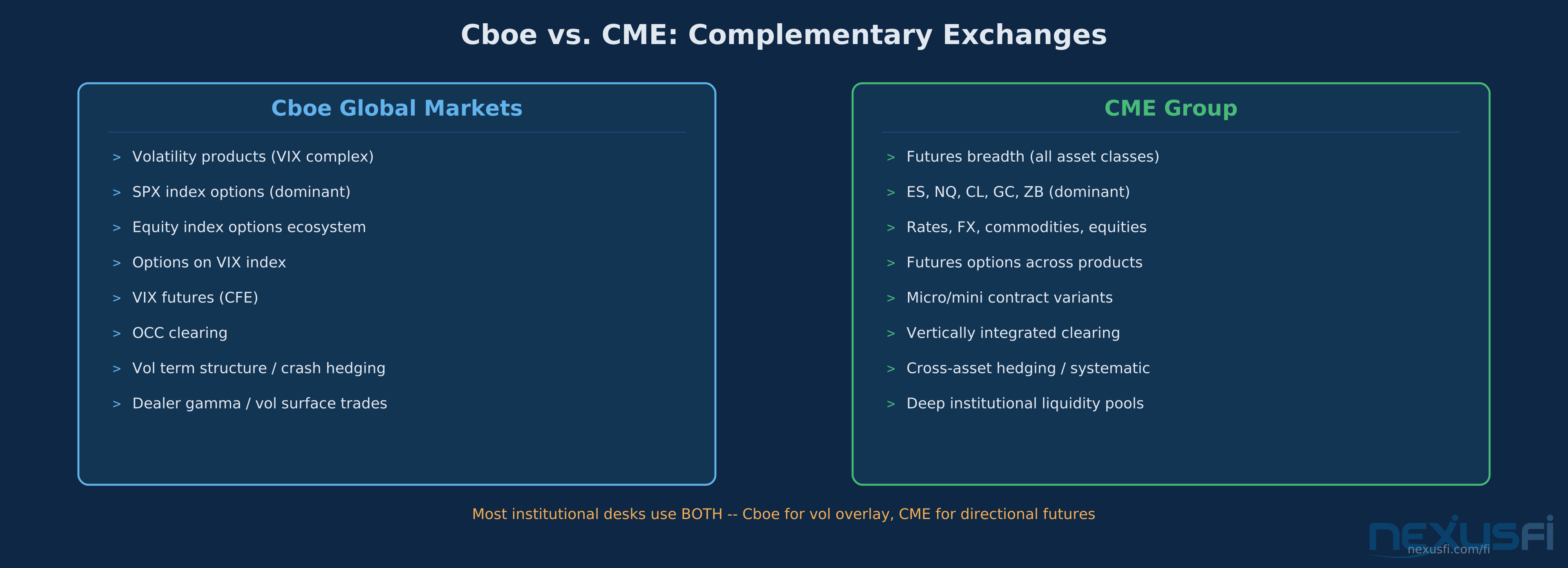
The comparison between Cboe and CME comes up constantly, and the answer is simple: they serve different functions and most active traders use both.
| Dimension | Cboe | CME |
|---|---|---|
| Core strength | Volatility products, index options | Futures breadth across all asset classes |
| VIX products | Industry standard, deep liquidity | Limited volatility products |
| Options dominance | SPX options, equity index options | Futures options across commodities, rates, FX |
| Participant base | Options dealers, vol traders, portfolio hedgers | Cross-asset hedgers, systematic futures traders |
| Clearing | OCC (Options Clearing Corporation) | CME Clearing |
| Strategy focus | Vol term structure, crash hedging, gamma management | Systematic futures, cross-asset hedging, rate/FX/commodity exposure |
When Cboe is your primary venue: Your strategy centers on volatility — VIX trading, SPX options strategies, portfolio tail hedging, vol surface trading, or anything where implied/realized volatility is the primary signal.
When CME is your primary venue: You trade futures across asset classes — ES, NQ, CL, GC, ZB, 6E — and your options exposure is mostly futures options rather than index options.
When you use both: You manage a portfolio that includes both directional futures exposure (CME) and volatility overlays (Cboe). This is standard for institutional desks and increasingly common among sophisticated retail traders.
NexusFi members frequently discuss using VIX as a filter for futures strategies.
And @Jeff65 described the practical application: using VIX levels to time market exposure, with elevated VIX readings indicating both higher risk and higher opportunity.
Practical Considerations for Traders #
VIX products are not buy-and-hold. The mean-reverting nature of volatility and the negative roll yield in VIX futures make these instruments tactical by design. The February 2018 XIV event is the definitive case study — the inverse VIX ETN's daily rebalancing mechanics combined with a sudden volatility spike triggered termination thresholds, wiping out roughly $1.5 billion in investor value in a single session. Ignoring the structural dynamics of these products is catastrophic.
These are complex instruments. VIX futures and options carry risks that differ at the core from equity or standard futures trading. The interaction between term structure, roll mechanics, settlement rules, and extreme volatility events creates scenarios where positions can move against you faster than in almost any other market. Position sizing and risk management are non-negotiable.
Understand settlement before trading. VIX futures and options settle via the SOQ, which is calculated from opening SPX option prices on settlement morning. The SOQ can differ much from the prior close's VIX level. If your strategy involves holding through settlement, you need to model this basis risk explicitly.
Watch the term structure. The shape of the VIX futures curve — steep contango, flat, backwardated — tells you about market regime. Steep contango = complacency, carry opportunities for short vol. Backwardation = stress, mean reversion bets from the long side become more attractive.
Market data matters. Cboe offers top-of-book quotes for free through most brokers, but depth-of-book and full option chain data requires paid subscriptions. For discretionary traders watching a few strikes, free data works. For systematic strategies scanning the full SPX surface, you need the paid feed.
Section 1256 tax treatment. SPX options receive favorable Section 1256 treatment — 60% long-term / 40% short-term capital gains regardless of holding period. This is a real edge for active traders compared to equity options taxed at short-term rates. Verify this benefit with your tax professional — it applies specifically to broad-based index options.
Leverage the VIX as a signal, not just a product. Many futures traders on NexusFi use VIX as a regime filter even if they never trade VIX products directly. When VIX is below 15, trend-following strategies perform differently than when VIX is above 25. Understanding what VIX is telling you about market conditions makes you a better trader even if you only trade ES.
Knowledge Map
Go Deeper
Build on this knowledgeReferences This Article
Articles that build on this topicCitations
- — Trading the VIX (2012) 👍 5“Note that you can't actually trade the index itself. It's trivial to design a strategy that would make you a billionaire if you could -- VIX exhibits extremely strong mean reversion.”
- — VIX and Volatility General Discussion (2020) 👍 12“Options prices and VIX are probability. The VIX is a measure of implied volatility -- it is the market's collective estimate of how much the S&P 500 will move over the next 30 days.”
- — VIX and Volatility General Discussion (2020) 👍 7“VIX futures are based on SPX options, not on the VIX index directly. The settlement value of VIX futures (VRO) is calculated from a special opening rotation of SPX options on expiration morning.”
- — VIX (2018) 👍 1“The cheapest way to get some long exposure when VIX is low is via long VIX call spreads. We were long VIX 1x2s and UVXY calls going into Feb 5 -- the Feb VIX spike showed how these behave.”
- — Using VIX as a strategy filter (2024) 👍 3“The VIX is going to open up larger price movement when it spikes -- using VIX level as a strategy filter changes whether you trade breakouts vs mean reversion.”
- — Using VIX To Time The Markets (2012) 👍 8“Would you like to see a timing method that is 75% correct and consistently pulls money from the S&P 500 market since 1997? The VIX has been a reliable signal for market timing since its inception.”