



E-mini S&P 500 (ES) Futures: The Complete Trading Guide
Overview #
The E-mini S&P 500 — ticker ES — is the most actively traded futures contract on the planet. Over 1.5 million contracts change hands on a typical day, representing roughly $750 billion in notional value. Every hedge fund managing equity exposure, every prop desk running systematic strategies, every retail trader looking for leveraged access to the S&P 500 — they all converge in the same order book.
ES exists because the full-sized S&P 500 futures contract (ticker SP) became too large for most participants. CME launched the E-mini in 1997 at one-fifth the size of SP, and it swallowed the parent contract whole. Today, ES is the benchmark. When institutions hedge, they hedge in ES. When algorithms arbitrage equity index exposure, they do it through ES. As @josh noted on NexusFi, "ES is the global, go-to product for hedging equity exposure — even when hedging non-US markets."
That institutional dominance creates specific trading characteristics. ES doesn't move like crude oil or Treasury futures. It has its own rhythm — driven by sector rotation, options gamma exposure, index rebalancing flows, and the constant repricing of macro risk across 500 underlying stocks. Understanding what makes ES different from other futures is the prerequisite to trading it well.
Key Concepts #
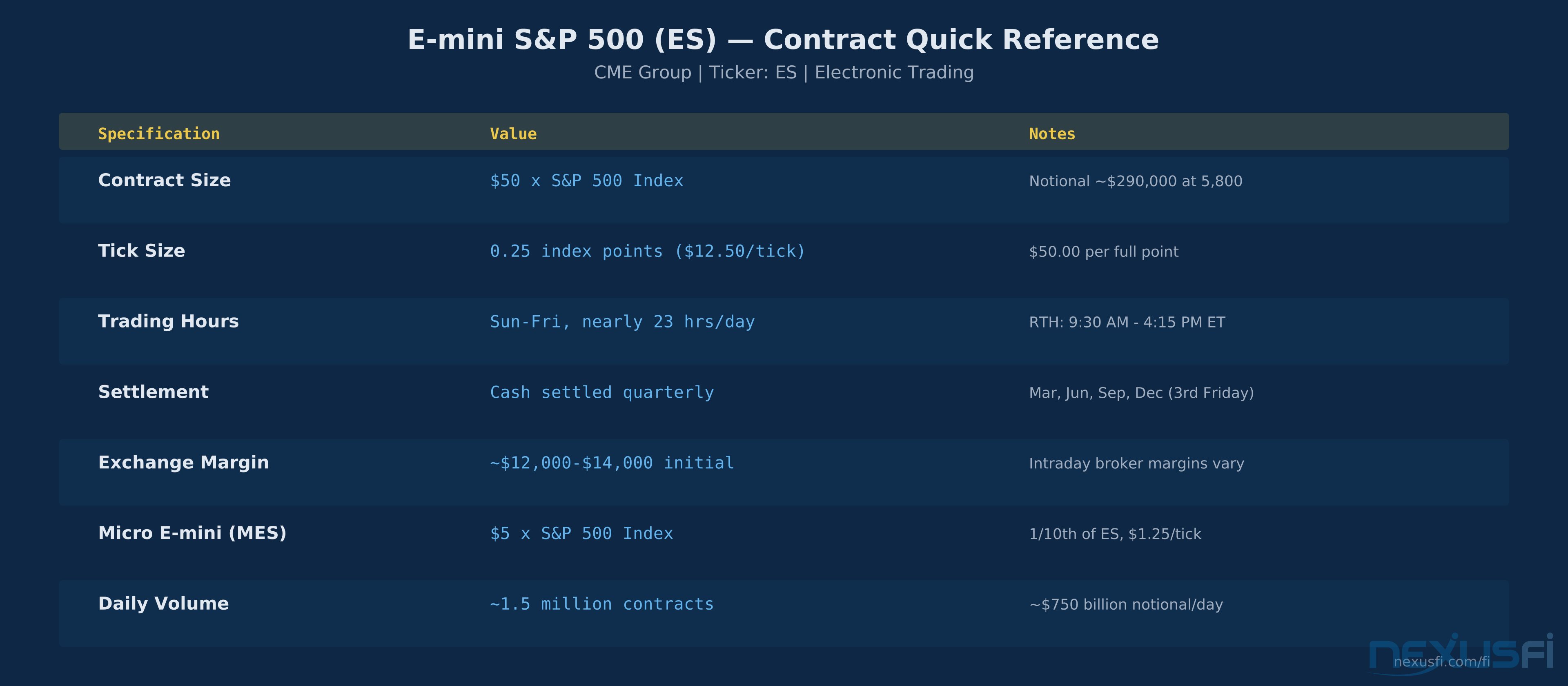
Contract Specifications — One ES contract represents $50 times the S&P 500 Index. With the index at 5,800, one contract controls $290,000 in notional value. The minimum tick is 0.25 index points, worth $12.50 per tick ($50.00 per point). ES trades on CME Globex nearly 23 hours per day, Sunday through Friday.
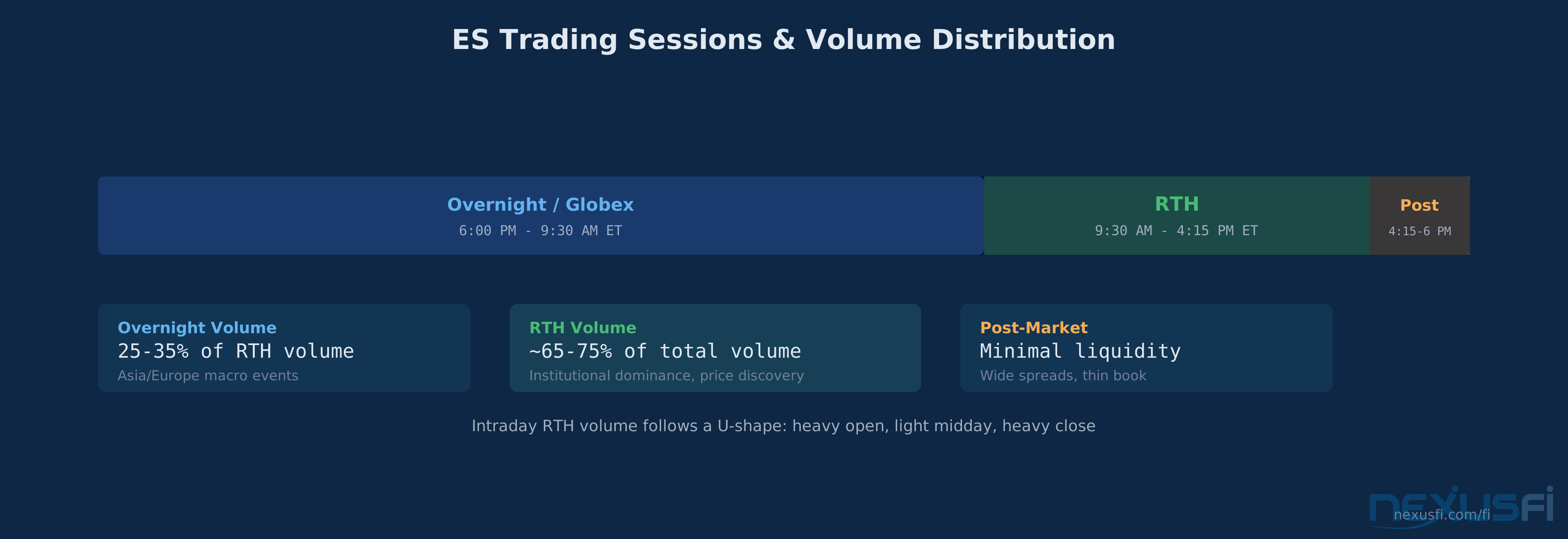
Trading Sessions — ES has three distinct session personalities. The overnight/Globex session (6:00 PM - 9:30 AM ET) typically runs on 25-35% of RTH volume and responds to Asian and European macro events. Regular Trading Hours (RTH, 9:30 AM - 4:15 PM ET) carry the dominant volume and institutional participation. The post-market session (4:15 PM - 6:00 PM ET) is a brief window with minimal liquidity. As @bobwest explained, "For ES, European trading accounts for significant volume in the overnight session, but the higher RTH volume soon has much more weight."
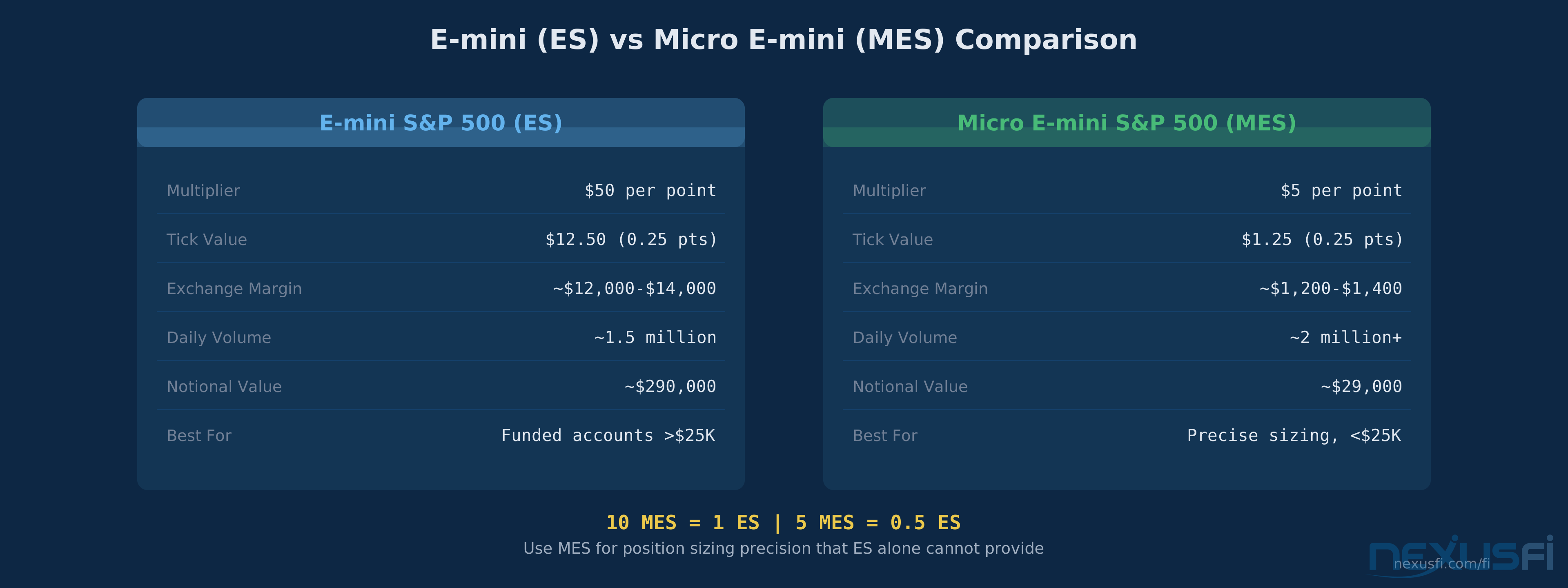
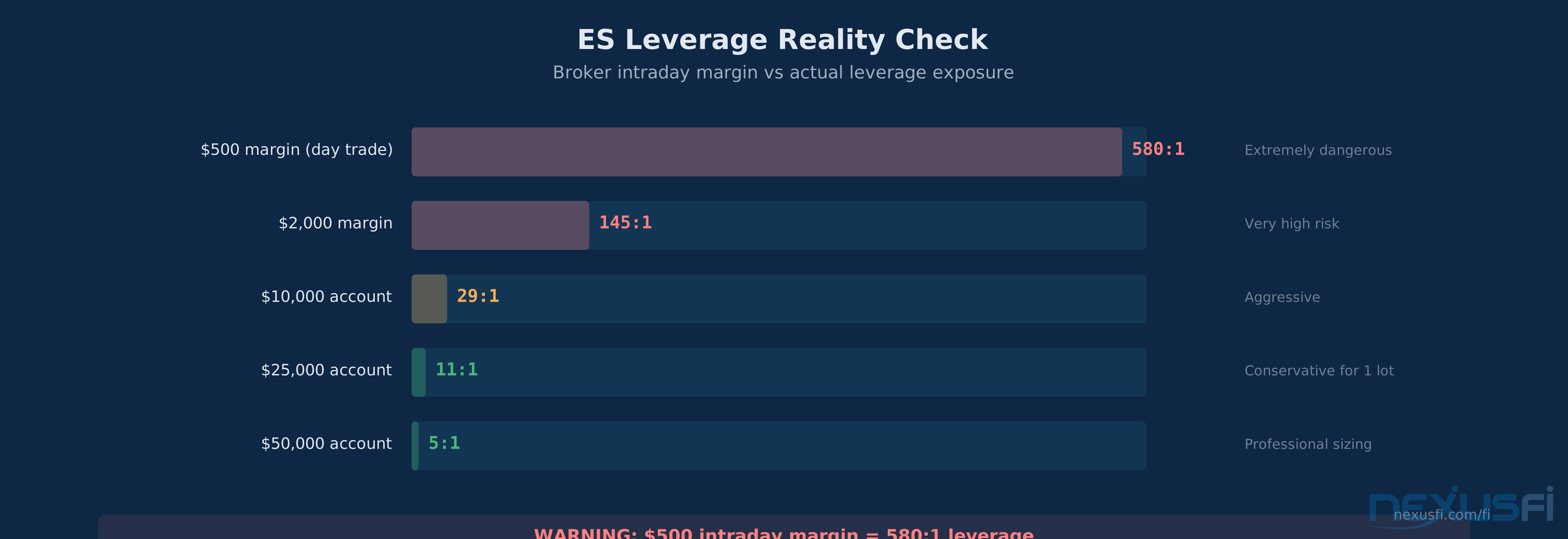
Margin Requirements — CME sets initial margin (currently around $12,000-$14,000 per contract for outright positions) and maintenance margin (typically 10-15% lower). Brokers often offer intraday margins as low as $500 per contract for day traders, but this is broker-specific leverage, not exchange-mandated. The gap between intraday and overnight margin is where new traders blow accounts — holding a position past the session close triggers the full exchange margin requirement.
Quarterly Rollover — ES contracts expire on the third Friday of March, June, September, and December. The conventional roll date falls on the second Thursday of the expiration month — or the first Thursday if the month starts on a Friday. As @max-td documented on NexusFi, "volume shifts to the new contract at market open on the roll date." In practice, volume migration starts 1-2 days before and completes 1-2 days after, spanning a 3-5 day window.
The mechanics matter for active traders. During the roll period, front-month liquidity thins progressively while back-month liquidity builds. @bobwest's practical advice: "you change over when the volume has moved, so you're in the higher-volume contract." Don't rely on the calendar alone — monitor volume in both contracts and switch when the back month clearly leads. The spread between contracts reflects the carry cost (S&P 500 dividend yield minus financing rate) and fluctuates with interest rate expectations. When rates are high relative to dividends, the back month trades at a larger discount to the front month.
For chart users, rollover creates artificial gaps on continuous contracts. Volume Profile levels, VWAP calculations, and support/resistance zones computed across contract boundaries can generate misleading signals. Use the current contract's data for precision intraday work; reserve back-adjusted continuous charts for multi-month structural analysis only.
Settlement — ES settles to cash, not physical delivery. The final settlement price is determined by a Special Opening Quotation (SOQ) calculated from the opening prices of each S&P 500 component stock on expiration Friday. This SOQ methodology occasionally produces settlement values that surprise traders because individual stocks can open at prices that differ from their prior close.
Micro E-mini (MES) — CME launched Micro E-mini S&P 500 futures (MES) in 2019 at one-tenth the size of ES: $5 per point, $1.25 per tick. As @Big Mike noted, "the Micro ES will trade at 1/5th the size" of the E-mini. MES has become enormously popular for position sizing flexibility and account building. As @bobwest advised, "5 lots of MES equals half an ES contract" — it allows precise risk calibration that ES alone can't provide.
How It Works #
Market Structure and Participants #
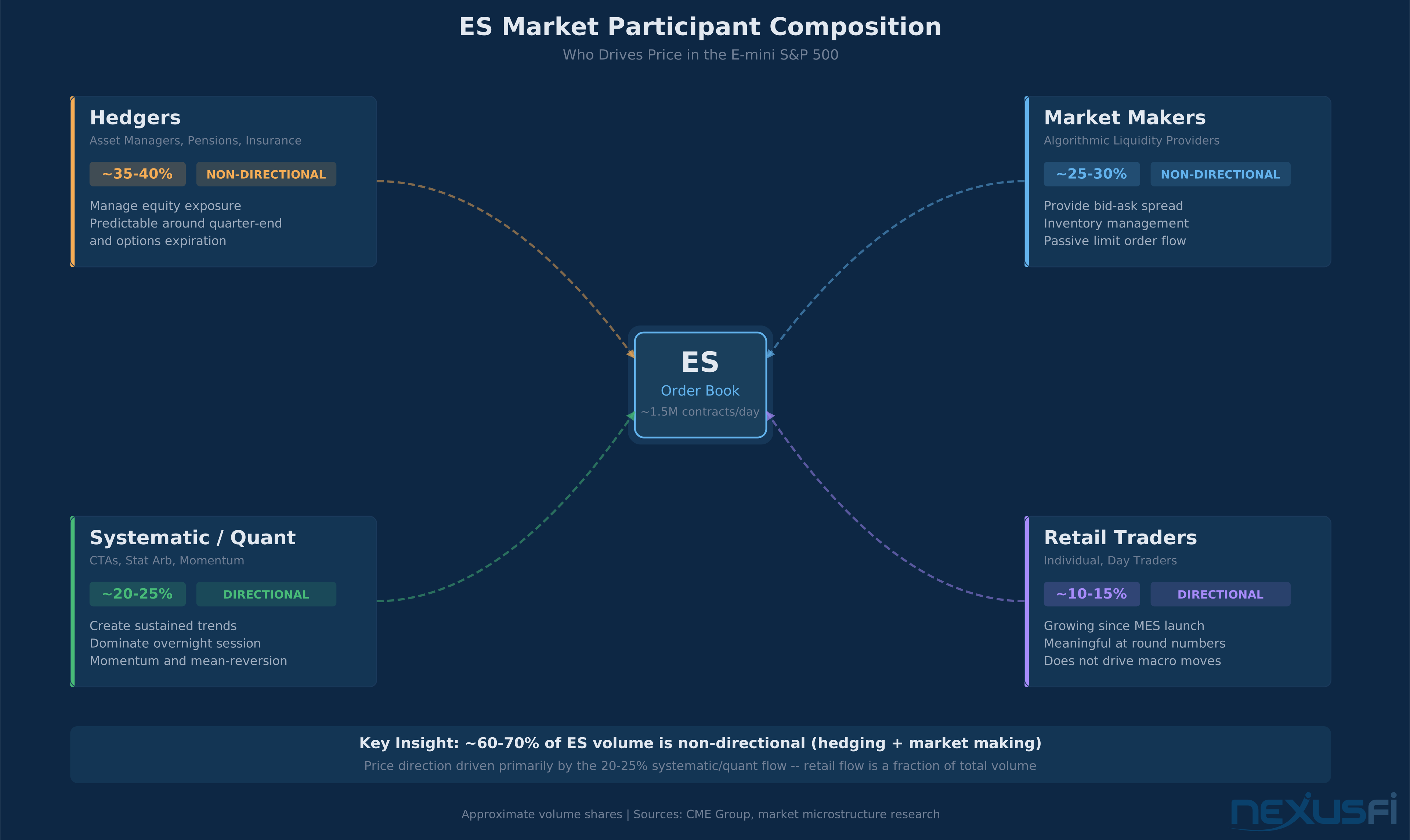
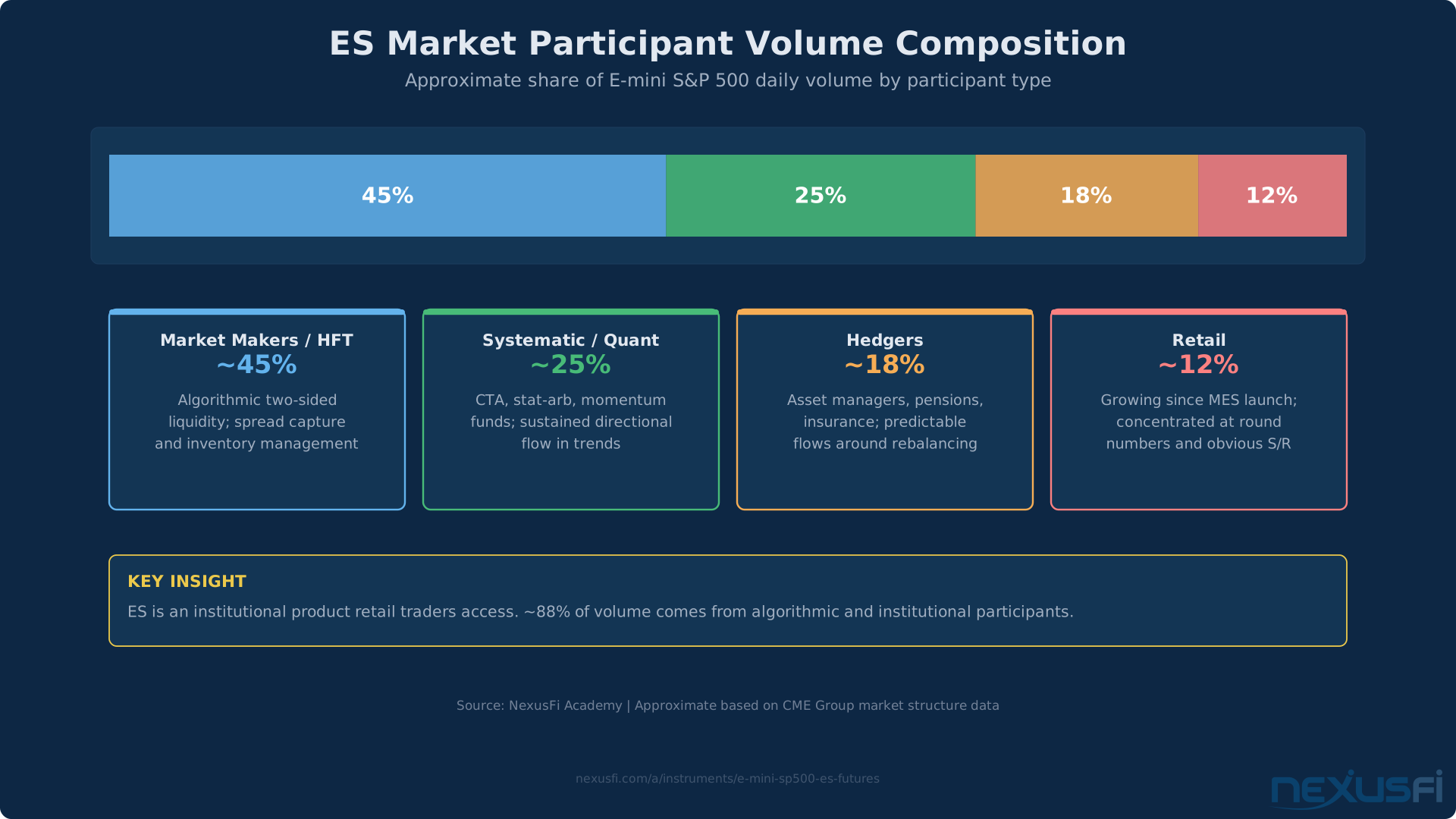
ES is an institutional product that retail traders access. Understanding who drives price is fundamental to reading ES correctly.
@tigertrader's analysis on NexusFi provides the framework: "the importance of who is driving price in any market is key to understanding current market structure." In ES, the primary participants include:
- Hedgers: Asset managers, pension funds, and insurance companies use ES to hedge equity portfolios. They're not speculating on direction — they're managing exposure. Their flows are often predictable around quarter-end, rebalancing dates, and options expiration.
- Market makers: Algorithmic firms that provide continuous two-sided liquidity. As @josh explained, "the market makers are playing for the spread and inventory management." They're not directional — they profit from the bid-ask spread and earn rebates.
- Systematic/quantitative funds: CTA strategies, statistical arbitrage, and momentum funds that generate sustained directional flow. These participants create the trending moves and the overnight sessions they dominate.
- Retail traders: A growing segment since MES launched, but still a fraction of total volume. Retail flow is meaningful at specific price levels (round numbers, obvious support/resistance) but doesn't drive macro moves.
@Jigsaw Trading's Peter Davies observed that ES is "a market that is VERY OFTEN driven by limit orders" — passive institutional flow at key levels creates the absorptive, range-bound behavior ES shows for large portions of each session.
Liquidity Profile #
ES liquidity is deep but not uniform. The top-of-book typically shows 200-500 contracts at the best bid and offer during RTH, but this "resting liquidity" is largely algorithmic and can evaporate instantly. The real liquidity picture requires looking at executed volume, not displayed depth.
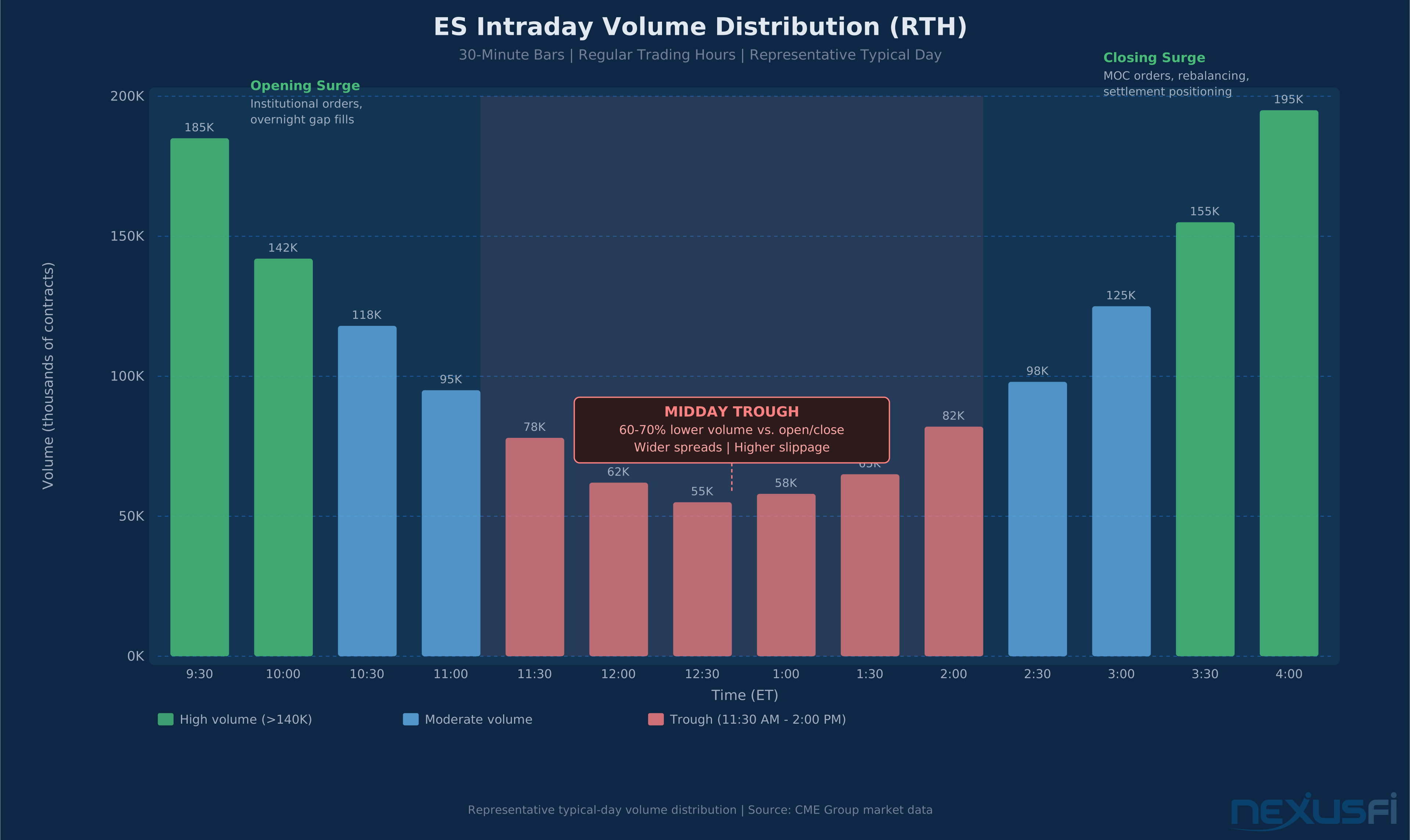
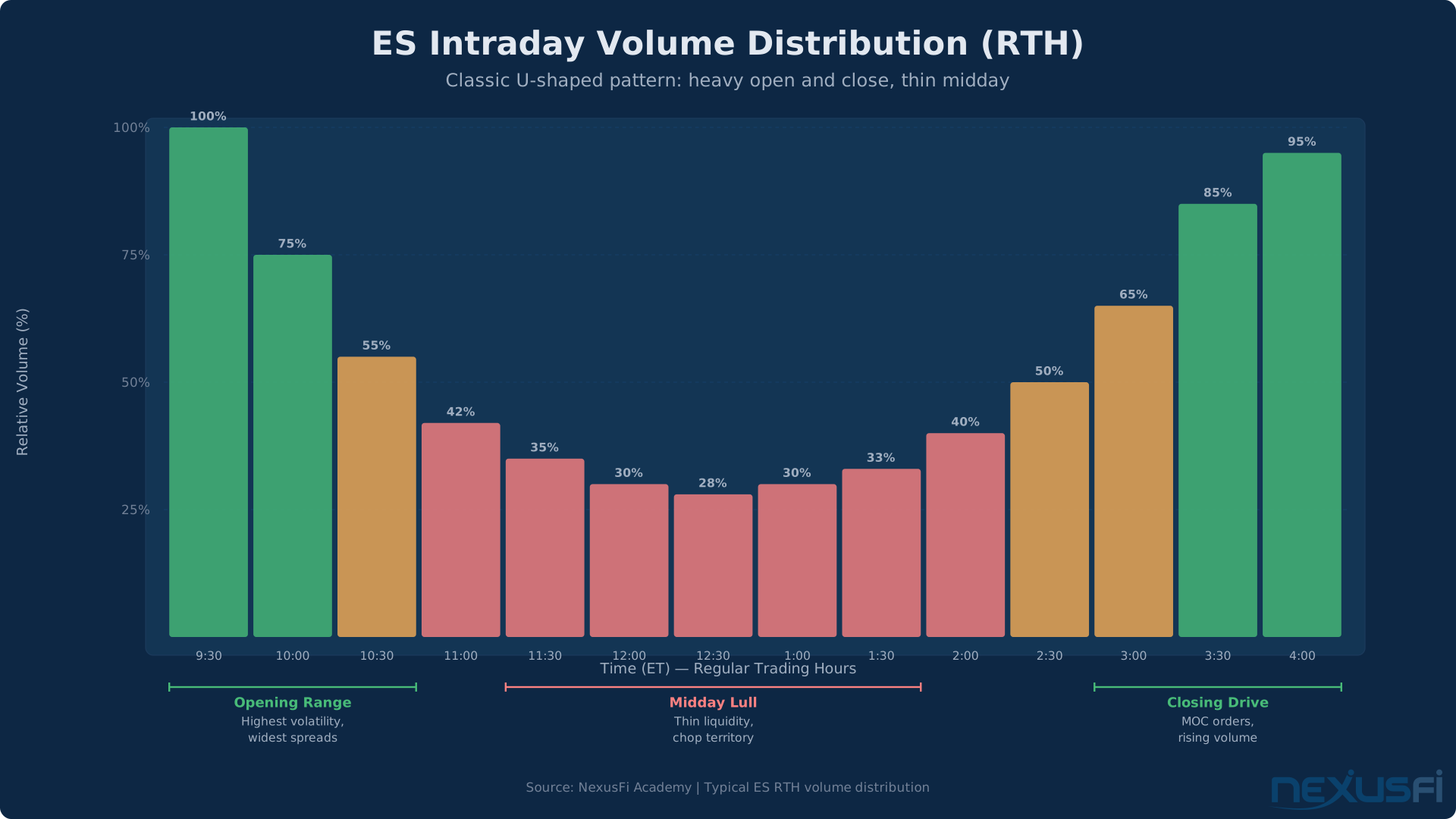
Intraday volume follows a U-shaped pattern: heavy at the open (9:30-10:30 AM ET), light during midday (11:30 AM - 2:00 PM ET), and heavy again into the close (3:00-4:15 PM ET). This pattern matters because spreads widen and slippage increases during the lunchtime lull. @josh noted that during low-volume RTH sessions, "the earmarks of the old regime" appear with larger ranges on fewer contracts — price can move fast on thin volume.
Price Discovery Mechanics #
ES price discovery doesn't happen in isolation. The S&P 500 index, SPY ETF, ES futures, and SPX options all participate in a continuous arbitrage loop. When ES trades at a premium or discount to fair value (the index level adjusted for dividends and financing), arbitrageurs step in. This means ES almost never deviates much from its theoretical fair value for more than a few seconds.
The practical implication: ES doesn't trend because of "momentum" in the retail sense. It trends because the 500 underlying stocks are collectively repricing, and ES reflects that repricing with near-zero lag. Understanding this prevents the mistake of fighting a move because "ES is overbought" — ES isn't overbought if the underlying stocks are legitimately repricing higher.
Market Internals: TICK, ADD, and TRIN #
ES traders live and die by market internals — the breadth indicators that reveal what's happening under the surface of the index. Three matter most.
$TICK measures the number of NYSE stocks ticking up minus those ticking down at any given moment. It's the single most important real-time breadth tool for ES scalpers. As @veggen explained on NexusFi, "the TICK is my most important tool when scalping the ES. It can give me a bias, as well as giving a clear picture of how strong each push up or down is."
Key TICK levels for ES trading:
| TICK Reading | Interpretation | Action Bias |
|---|---|---|
| +1000 or higher | Euphoric buying — nearly all NYSE stocks ticking up | Potential short-term exhaustion if aligned with trend; fade with caution |
| +600 to +800 | Strong buying pressure | Trend continuation likely if aligned with prevailing direction |
| -200 to +200 | Neutral/balanced | No clear directional edge from internals alone |
| -600 to -800 | Strong selling pressure | Trend continuation likely if aligned with prevailing direction |
| -1000 or lower | Panic selling — broad capitulation | Potential short-term exhaustion if aligned with trend; fade with caution |
But context determines everything with TICK. @josh nailed this: "TICK extremes are not created equal and must be treated very differently depending on the context." A -1100 reading during a sustained downtrend is often a capitulation signal worth fading — the sellers have exhausted themselves. But when TICK has been below zero all morning and suddenly prints +800, that's a sentiment shift, not something to fade. @josh continued: "When tick is below 0 all day and then makes a new high of ~800 or so, it usually signals a change in sentiment/trend, and is rarely something to fade."
@hotdog's 20-thanks NexusFi post laid out the practitioner's framework: "1000 is a magic number, primarily due to a self-fulfilling prophecy. If TICK hits +964, there will be nowhere near the reaction to one of +1005. This is because many people have automated alerts at the 1000 levels." His additional rules are gold for ES scalpers: plot a 50-period moving average of TICK and watch its trend relative to zero. If the 50MA stays below zero for more than an hour, the session's trend has likely turned bearish. Watch for TICK divergences with price — "if price is continuing down and TICKS are showing 3-4 higher lows, watch for confirmations of a market turn." And critically: "If TICKS are trading in a 300-400 range around the zero line for more than two hours, STOP trading. You will only get chopped up."
$ADD (Advance-Decline) counts the running net of advancing minus declining NYSE stocks throughout the session. While TICK gives instantaneous snapshots, ADD tells the cumulative story. When ES is rising but ADD can't hold positive territory, the advance is narrow and fragile. @tigertrader flagged this dynamic in real time: "$ADD has been unable to stay in positive territory today, along with $TRIN being unable to travel below 1.00, indicating that volume is concentrated in declining stocks."
$TRIN (Arms Index) measures the ratio of advancing/declining stocks to advancing/declining volume. TRIN below 1.0 means up-volume dominates — bullish. TRIN above 1.0 means down-volume dominates — bearish. Extreme TRIN readings above 2.0 signal severe selling pressure that historically precedes a reversal the following session — @hotdog noted this as a "Crescendo" signal worth positioning for in after-hours trading.
The power move is using all three together: TICK for real-time entry timing, ADD for session-level trend confirmation, TRIN for gauging whether the volume supports the price action. When all three align — TICK making higher lows, ADD solidly positive, TRIN below 0.8 — the ES long setup has institutional wind at its back.
Reading the DOM in ES #
ES is unique among futures because its price discovery frequently happens through passive absorption rather than aggressive market orders. As @Jigsaw Trading's Peter Davies documented on NexusFi, ES is "a market that is VERY OFTEN driven by limit orders." Large resting orders at key levels eat incoming flow without moving price — and that absorption pattern IS the signal.
The ES DOM (Depth of Market) shows 200-500+ contracts at the best bid and offer during RTH, but this displayed liquidity is largely algorithmic and can vanish in milliseconds. The real information comes from watching what happens when those levels get tested:
- Absorption: A price level holds despite heavy selling. Contracts fill at the bid but the bid doesn't drop. This signals institutional buying at that level. @Private Banker described the mechanics: "either buyers or sellers cutting off the opposing traders." When you see 500+ contracts absorbed at a single price level in ES, that's a significant commitment.
- Pull and stack: Visible liquidity shifts from one side to the other. Contracts disappear from the offer and reappear at the bid, or vice versa. This telegraphs the dominant side's intentions before price moves.
- Iceberg orders: The displayed size at a price level refreshes repeatedly after being consumed. This is institutional size hiding behind small visible clips. In ES, icebergs are common at round numbers (5800.00, 5850.00) and prior session reference levels (VAH, VAL, POC).
- Spoofing artifacts: Large visible orders that pull before being hit. While illegal, recognizing this pattern helps avoid entering on false signals. If a 1,000-lot bid appears and disappears repeatedly, it's not real support.
For new ES traders, the DOM looks like noise — numbers flashing faster than any human can process. The learning curve is measured in months, not days. As @veggen advised, "screen time — watch it for weeks, months, just like you would when learning to read the DOM." Start by watching a single price level for an entire session: how does it behave when tested from above versus below? That single observation beats most indicator signals. Footprint charts (which visualize executed volume at each price level by aggressor side) offer a structured way to learn DOM reading without staring at raw order flow.
Practical Application #
Intraday Scalping #
The most common retail approach to ES is intraday scalping — capturing 2-8 points per trade using tight risk management. @jwdixon's well-known NexusFi thread documents a systematic approach: "Over the next few weeks I will attempt to show, educate, and teach how I scalp the ES for 2 points a day." The key insight from his method is that "the ES likes to trap traders by fast moves" — quick reversals off key levels are a defining characteristic of ES microstructure.
Effective ES scalping requires:
- Session awareness: The first 30 minutes of RTH and the last 60 minutes generate the most reliable setups. The midday session is notorious for chopping scalpers to pieces.
- Volume confirmation: Moves on declining volume are suspect. As @Fat Tails noted, "I usually do not count the number of 4-range bars for ES, but instead look at the total volume and the total range of each period."
- Level identification: Volume Profile POC, Value Area boundaries, and prior session levels provide the reference structure. ES respects volume-based levels more reliably than indicator-based signals.
Example: Opening Range Breakout (Scalp) #
The Opening Range Breakout (ORB) is one of the most researched ES scalping setups. As @AlphaBetaDelta documented on NexusFi, testing "an opening range breakout style strategy in ES" using the 5-minute opening range produces consistent edge during high-volume RTH opens. Here's the framework:
Setup: Wait for the 9:30-9:35 AM ET candle to close, establishing the 5-minute opening range (OR high and OR low).
Entry (long): Price breaks above the OR high AND the breakout bar's volume exceeds the average of the prior 3 bars. Enter at the break or on a pullback to the OR high that holds.
Stop: Below the OR low. On a typical day with a 2-3 point opening range, this puts risk at roughly 2-3 points ($100-$150 per ES contract).
Target: Prior session's Value Area High (VAH) or a minimum of 4 points, whichever comes first. On wide-range opens (OR > 5 points), scale the target proportionally.
Invalidation: If price retreats back through VWAP within 2 minutes of breaking the OR, the setup is dead — exit immediately. The institutional flow isn't supporting the breakout.
When to skip it: Non-farm payrolls days, FOMC announcement days, and any session where the opening range exceeds 8 points. Wide ORs mean the move already happened pre-market.
Swing Trading and Position Holding #
Holding ES positions overnight or for multiple days requires a at the core different risk framework than scalping. Overnight gap risk is real — ES can open 30-50 points away from the prior close on significant news events. The reduced overnight margin requirement makes it tempting to hold large positions, but the gap risk makes it dangerous.
Swing traders typically use the Globex session range as context for RTH positioning. The overnight high and low create the initial reference frame, and the RTH open relative to that range provides the first directional signal — a concept formalized in the Open Type Classification framework.
Example: Globex Range Breakout (Swing) #
The overnight Globex range is one of the most reliable reference frameworks for ES swing trades. @Pa Dax's extensive NexusFi journal documents this approach across hundreds of sessions — using the Globex range as the structural anchor for RTH directional bias.
Setup: Identify the overnight Globex high and low before the 9:30 AM ET open. Note where the RTH open prints relative to this range.
Entry (long): ES opens within the Globex range, then breaks above the overnight high on above-average volume within the first 30 minutes of RTH. Enter on the breakout or on the first pullback that holds above the overnight high.
Stop: Below the 30-minute RTH low. This typically runs 4-8 points depending on the morning's volatility.
Target: Overnight high + (overnight high minus overnight low). This is a measured move projection using the Globex range width. For example, if the overnight range was 5,780-5,800 (20 points wide), the target above is 5,820.
Trail: Once price reaches 50% of the target distance, move stop to breakeven. If holding into the afternoon session, trail the stop to the developing session's Value Area Low.
When to skip it: If ES gaps above the Globex high on the open, the breakout already happened — you're chasing. Also skip when the Globex range is unusually narrow (< 8 points), as this often precedes a range-expansion day that can whipsaw both directions.
Position Sizing and Stop-Loss Framework #
The math on ES position sizing is unforgiving. At $50 per point, even a modest 4-point stop costs $200 per contract. The table below maps stop distances to account risk across common account sizes — the numbers that actually matter for survival:
| Account Size | Stop (pts) | Risk per Contract | % of Equity | Max Contracts (2% rule) |
|---|---|---|---|---|
| $10,000 | 4 | $200 | 2.0% | 1 ES (at limit) |
| $15,000 | 4 | $200 | 1.3% | 1 ES |
| $25,000 | 4 | $200 | 0.8% | 2 ES |
| $25,000 | 8 | $400 | 1.6% | 1 ES |
| $50,000 | 4 | $200 | 0.4% | 5 ES |
| $50,000 | 8 | $400 | 0.8% | 2 ES |
For MES (Micro E-mini), divide the risk per contract by 10: a 4-point stop on MES costs $20, making it accessible for accounts as small as $2,000-$5,000. As @Fat Tails noted on NexusFi, leverage at $10,000 per ES contract means "ES moves 4.8% against you, your account will be completely wiped out." The formula is straightforward: Account Risk ($) / (Stop Distance in ticks x $12.50) = Max Contracts. With a $25,000 account risking 2% ($500) and a 16-tick (4-point) stop, that's $500 / (16 x $12.50) = 2.5, so 2 contracts max.
The critical takeaway: match your stop width to your account, not the other way around. If your preferred setup requires an 8-point stop and your account only supports 4 points of risk at 2% — trade MES until the account grows.
ES-Specific Trading Characteristics #
Several behaviors distinguish ES from other futures:
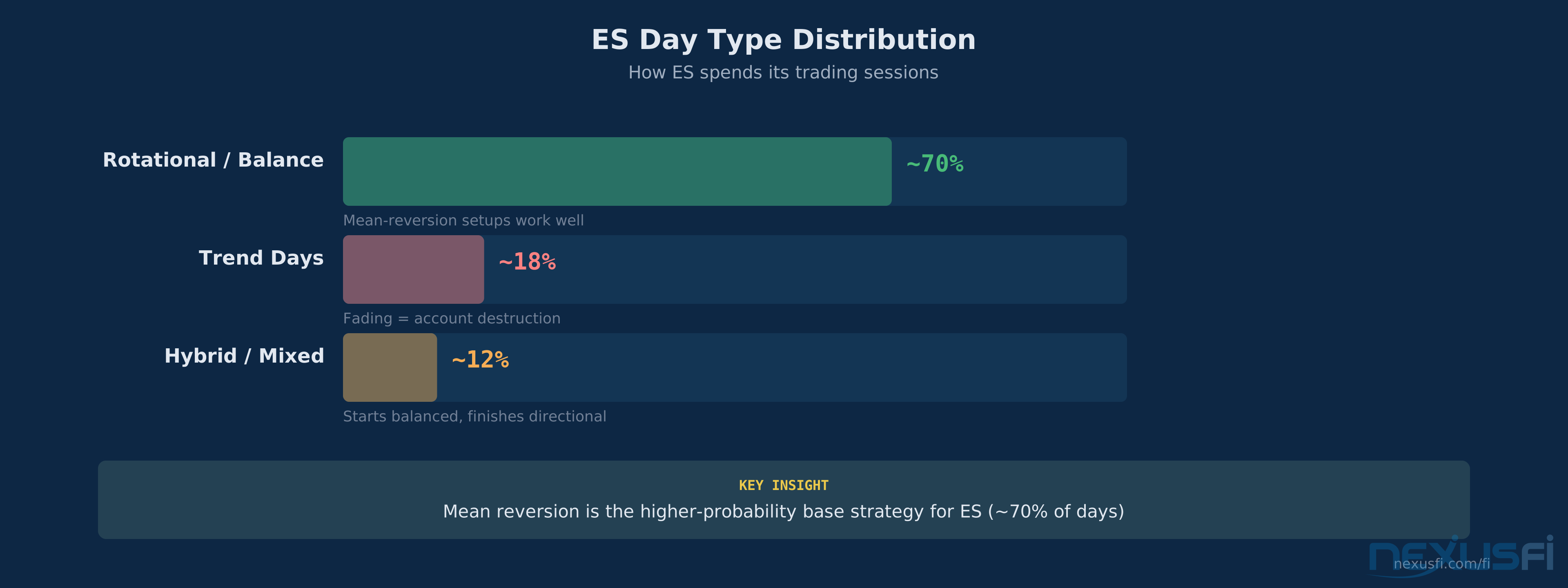
- Mean reversion during balance: ES spends roughly 70% of trading days in rotational behavior, oscillating between the Value Area high and low. Trend days (single-direction moves consuming the full session) occur approximately 15-20% of the time. This ratio makes mean-reversion the higher-probability base strategy.
- VIX regime and trend day frequency: The VIX (CBOE Volatility Index) directly shapes ES trading character across three distinct regimes. Historical analysis shows the relationship is consistent and tradeable:
| VIX Regime | Range | ES Behavior | Trend Day Frequency |
|---|---|---|---|
| Low volatility | Below 16 | Tight ranges, clean breakouts, mean-reversion dominant | ~10-12% of sessions |
| Elevated volatility | 16-25 | Choppier action, wider overnight gaps, mixed day types | ~18-22% of sessions |
| High volatility | Above 25 | Large ranges, gap risk, correlation spikes across assets | ~30-40% of sessions |
VIX below 16 captures roughly the bottom 40% of historical readings since 1990. The 16-25 band covers the middle 40%. Above 25 is the top 20%, where realized volatility tends to overshoot implied. The practical takeaway: when VIX sits below 16, ES is a scalper's market — tight stops work, mean-reversion dominates, and trend days are rare enough to surprise. When VIX climbs above 25, the game changes entirely — daily ranges expand 3-4x, overnight gaps widen, and trend days become common enough that counter-trend strategies get destroyed. Position sizing should scale inversely: full size in low-vol, 60-75% in elevated, 30-50% in high-vol environments.
- Correlation regime changes: ES correlation with bonds (ZB/ZN), crude oil (CL), and the dollar index (DX) shifts with the macro regime. During risk-on environments, ES and oil tend to correlate positively; during inflation scares, ES and bonds may decouple. These regime shifts can persist for months and require traders to periodically re-evaluate their cross-market assumptions.
- Options-driven pinning: On weekly and monthly options expiration, ES price gravitates toward strikes with maximum open interest due to dealers' gamma hedging. This creates predictable suppression of volatility into expiration and potential explosive moves once the pin releases.
- FOMC and macro event response: ES processes macro data faster than any other instrument because it represents the broadest U.S. equity exposure. FOMC decisions can move ES 40-80 points in minutes, with the initial move frequently reversed.
Common Mistakes #
Over-leveraging with intraday margins. A broker offering $500 intraday margin doesn't mean you should trade one contract per $500. That's 580:1 leverage with the index at 5,800. One contract per $10,000-$15,000 of account equity is aggressive; one per $25,000+ is conservative. As @sstheo put it, "One Micro E-Mini on a $1000 account is like one ES contract on a $10,000 account" — use MES to calibrate your real comfort zone before sizing up.
Ignoring session context. Trading a 9:35 AM setup the same way you trade a 12:30 PM setup is a structural error. Volume, volatility, and participant composition change throughout the day. The lunchtime session in ES is a different market than the opening range.
Fighting institutional flow. When ES moves 20+ points in a direction on above-average volume, retail counter-trend entries are fighting institutional positioning. The market structure favors following these moves until volume exhausts, not fading them because they "look extended."
Continuous chart artifacts. Switching between quarterly contracts creates price gaps on continuous charts that aren't real price action. Volume Profile, VWAP, and support/resistance levels calculated across contract boundaries can generate misleading signals. Use the current contract for precision; use back-adjusted continuous data only for longer-term structural analysis.
Ignoring market internals. Trading ES purely from price charts while ignoring TICK, ADD, and TRIN is like driving with only your side mirrors. The chart shows you where price has been; internals show you the underlying buying and selling pressure driving the next move. A breakout that occurs without confirming TICK strength is far more likely to fail than one supported by TICK above +600 and rising ADD.
Knowledge Map
Prerequisites
Understand these firstGo Deeper
Build on this knowledgeReferences This Article
Articles that build on this topicCitations
- — Spoo-nalysis ES e-mini futures S&P 500 (2022) 👍 9“ES is the global, go-to product for hedging equity exposure -- even when hedging non-US markets.”
- — Start point for daily VWAP? (2018) 👍 5“For ES, European trading accounts for significant volume in the overnight session, but the higher RTH volume soon has much more weight.”
- — Spoo-nalysis ES e-mini futures S&P 500 (2015) 👍 34“The importance of who is driving price in any market is key to understanding current market structure.”
- — Is it correct to say ES is Institutionally driven (2025) 👍 5“The market makers are playing for the spread and inventory management.”
- — Cumulative Delta Volume Trading (2011) 👍 13“ES is a market that is VERY OFTEN driven by limit orders.”
- — Spoo-nalysis ES e-mini futures S&P 500 (2020) 👍 13“Today ES had the lowest RTH volume since ATHs, with all the earmarks of the old regime.”
- — My ES Scalping Strategy, 2+ pts/day (2011) 👍 72“Over the next few weeks I will attempt to show, educate, and teach how I scalp the ES for 2 points a day.”
- — ES 4 Tick Range Bars Histogram (2013) 👍 7“I usually do not count the number of 4-range bars for ES, but instead look at the total volume and the total range of each period.”
- — Trading the new CME E-Micros (2013) 👍 24“The Micro ES will trade at 1/5th the size of the E-mini.”
- — Excited and scared at the same time (2020) 👍 4“5 lots of MES equals half an ES contract -- it allows precise risk calibration.”
- — Micro E-mini Madness (1% per day) (2019) 👍 9“One Micro E-Mini on a 1000 account is like one ES contract on a 10000 account.”
- CME Group — Cmegroup.com
- CME Group — Cmegroup.com