



Exchange Order Protections and Price Banding: How Futures Exchanges Prevent Erroneous Trades
Understanding the invisible safety net that converts your market orders into constrained limits — and causes the "no fill" exits you've experienced during volatile sessions.
Overview #
Every time you submit a market order or trigger a stop in futures, the exchange runs it through a layer of automated checks you never see. CME Globex price banding, stop-with-protection conversion, self-trade prevention, and fat-finger controls aren't just technical plumbing — they directly determine whether your order fills, parks at a frozen price, or gets rejected outright during the moments you need an exit most.
Most futures traders have experienced it: you're short ES going into an FOMC announcement, price rips 15 points, your sell stop triggers — and nothing happens. Or you get a partial fill at a worse price than expected with "Stop With Protection" in the activity log. These aren't platform bugs or network issues. They're the exchange's risk management layer doing exactly what it was designed to do, just not what you were counting on.
This article covers what exchange order protections actually are, how they work mechanically, when they'll affect your trading, and how to structure your order flow to work with the system instead of against it.
Exchange protections are designed to preserve market integrity — not guarantee your individual fill. Once you internalize that distinction, every "failed stop" and "no fill" makes more sense.
Key Specifications #
The Three Layers of Exchange-Level Protection #
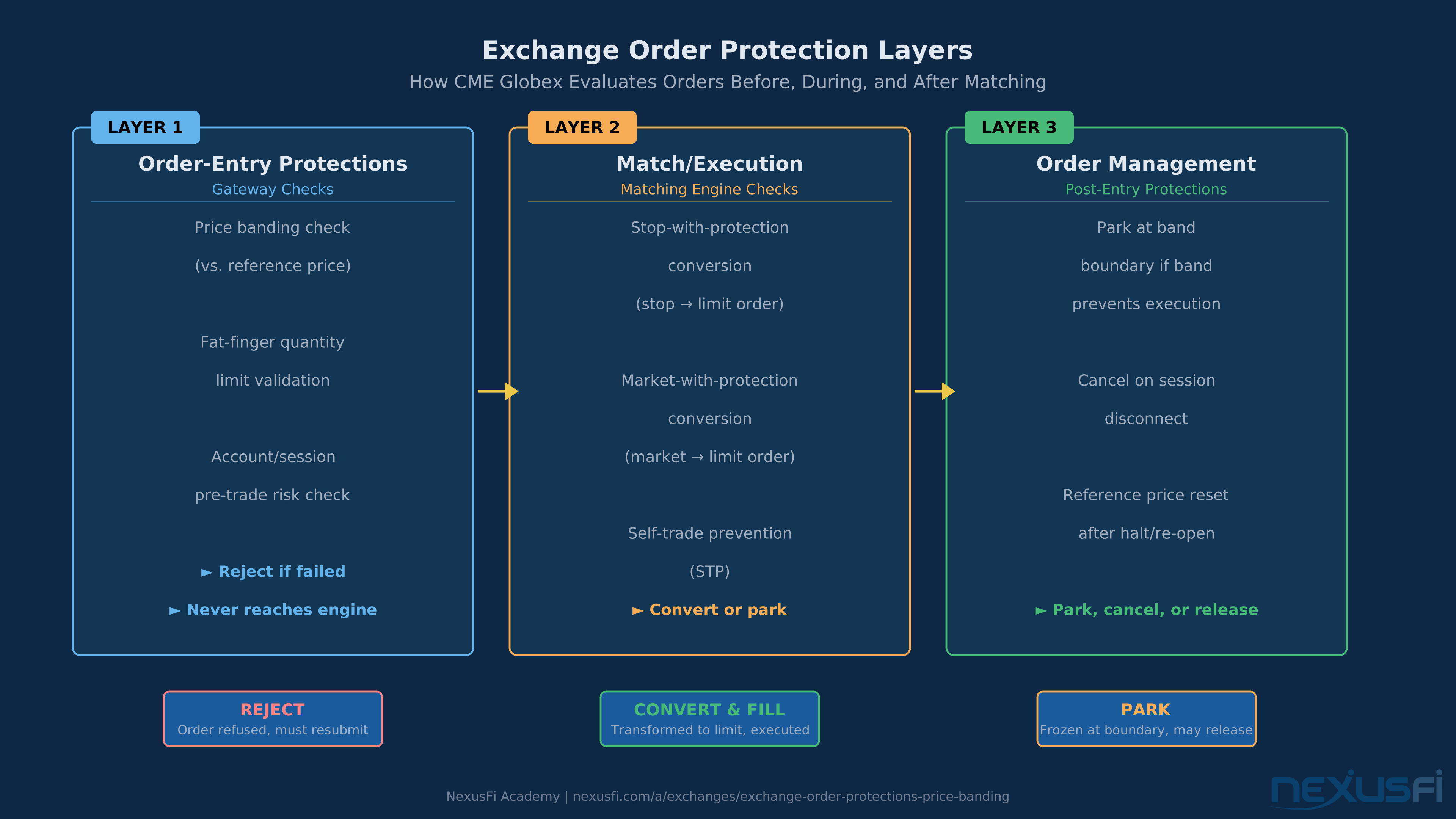
Exchange protections operate across three distinct points in the order lifecycle:
Order-Entry Protections (before matching): Price banding checks whether your submitted price is too far from the reference price. Fat-finger controls verify your quantity is within allowed bounds. If either check fails, the order is rejected before touching the matching engine.
Match/Execution Protections (during matching): Orders run through self-trade prevention (STP) and execution-level price checks. Stop-with-protection and market-with-protection conversions happen here — your market order is transformed into a limit order within a constrained range.
Order Management Protections (post-entry): If the market moves against your working order's constraints, the exchange can park the order at the band boundary, cancel it on session disconnect, or cancel it when conditions change — like a halt or re-open that resets the reference price.
Understanding which layer is acting on your order tells you whether to resend (rejected), wait (parked), or investigate your connection (cancelled-on-disconnect).
Non-Reviewable Range and Protection Buffers #
The most important number to know is the Non-Reviewable Range (NRR) for your product. Every protection parameter flows from it.
For ES (S&P 500 E-mini futures):
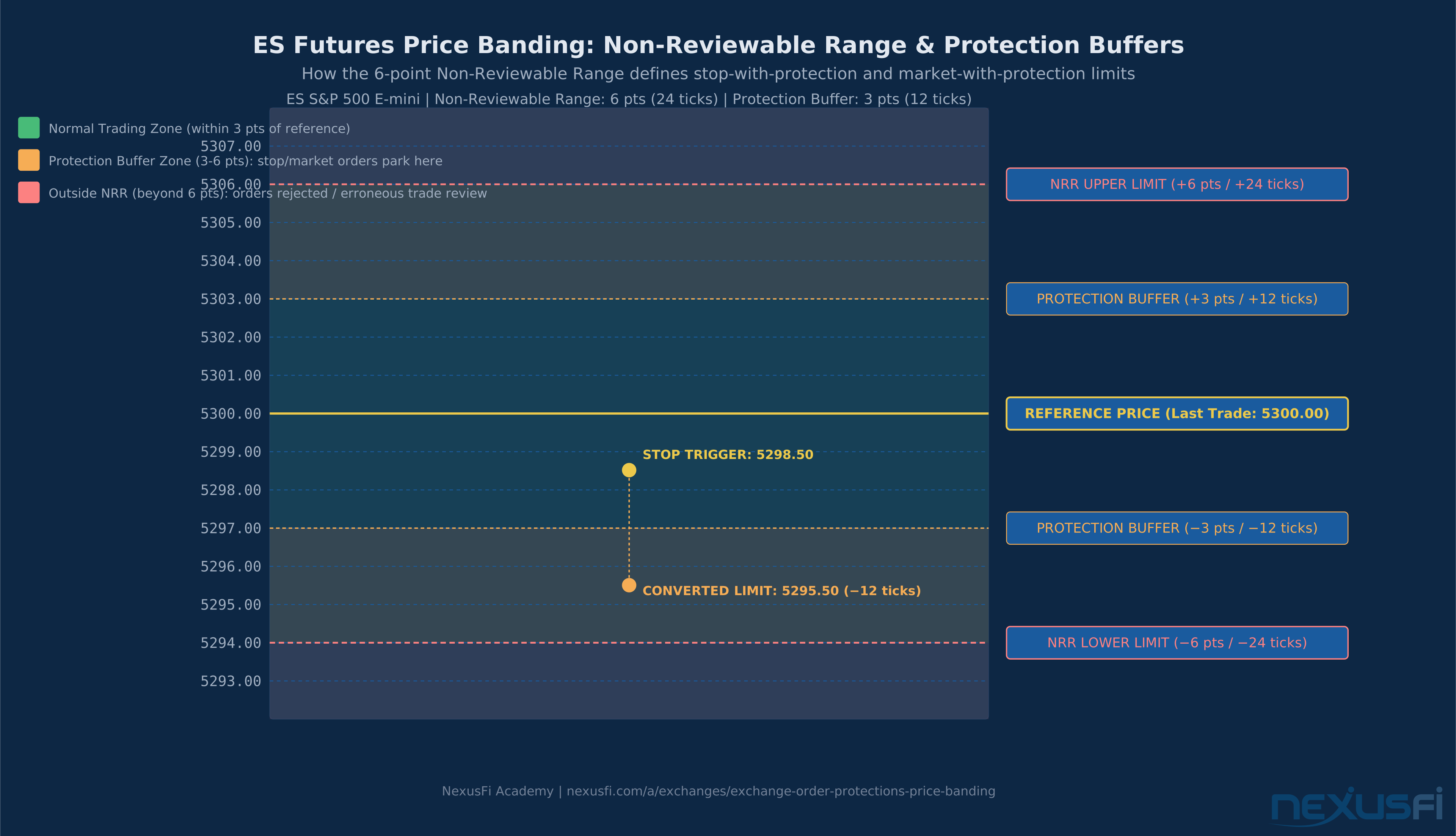
- Non-reviewable range: 6 points (24 ticks)
- Stop-with-protection buffer: 12 ticks = 3.00 points (half the NRR)
- Market-with-protection buffer: approximately 12 ticks from best bid/ask
The NRR defines what counts as a potentially erroneous execution — trades beyond it are subject to review and possible busting. Half the NRR becomes the protection buffer: CME's threshold for "acceptable slippage" versus "extreme execution."
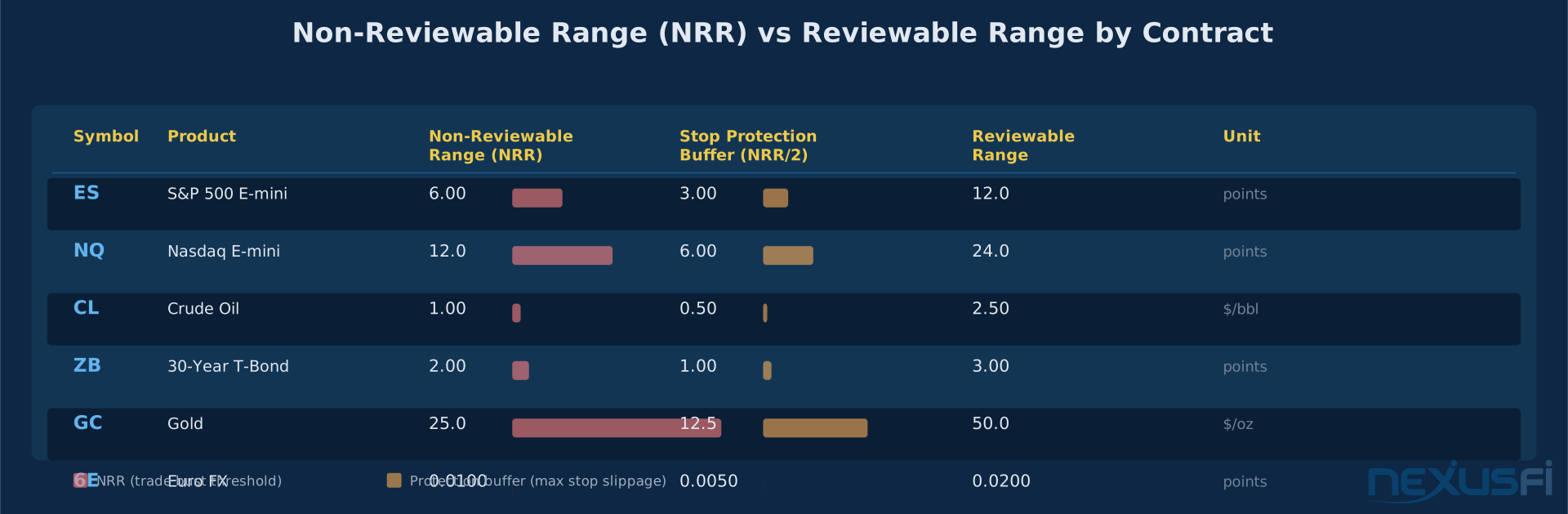
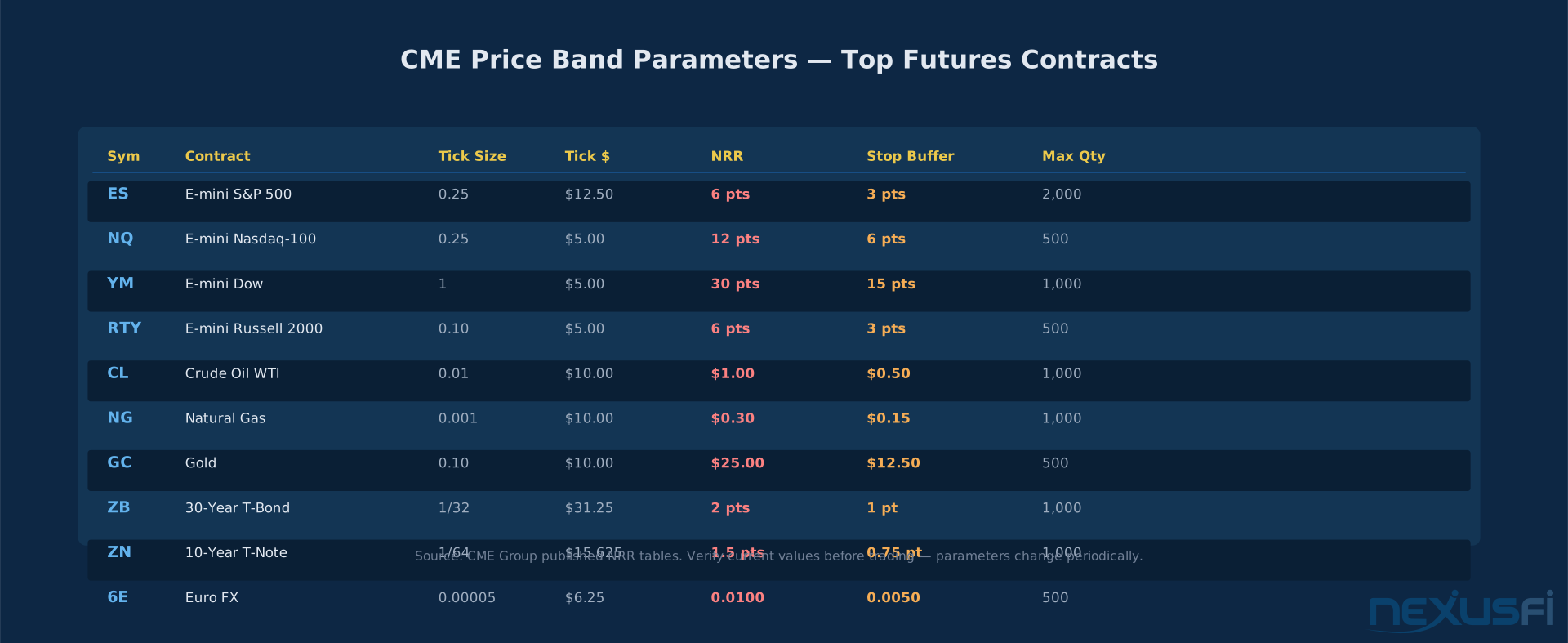
NRR varies by product: ES is 6 points, NQ is 12 points, CL operates on an absolute dollar-per-barrel basis, ZB uses 2 points. CME publishes the full NRR table as a downloadable spreadsheet — verify it before trading any new product.
The tick size conversion matters here. ES tick size is 0.25 points, so 12 ticks = 3.00 points = 12 x $12.50 = $150 per contract maximum protection buffer exposure. Know this number in dollar terms before placing any stop.
Price Reference Types #
CME Globex uses three distinct price sources as the band reference center, depending on market phase:
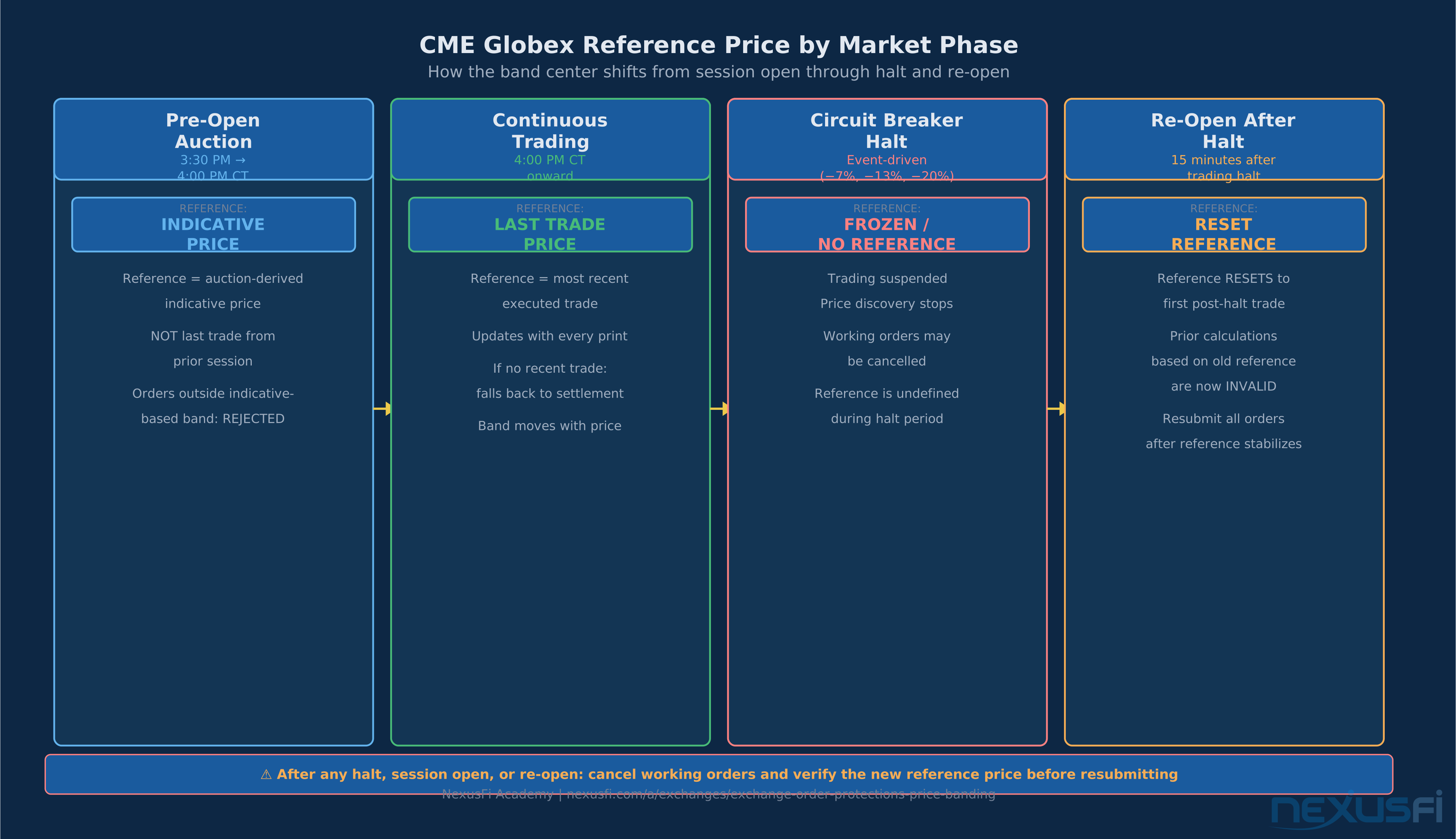
Last trade price: Used during continuous trading. Every time a trade prints, the reference updates to that trade price.
Settlement price: Used when the last trade is stale — during session transitions where the prior day's settlement anchors the reference until enough new trading activity establishes a fresh last-trade reference.
Indicative price: Used during pre-open auctions. CME calculates an indicative match price from resting buy and sell orders — this becomes the band reference, not the last trade from the overnight session.
This last point is where traders get caught. Your platform shows an overnight last price of 5,300.00 while CME's pre-open indicative is 5,312.50. You submit a limit to buy at 5,295.00 — which looks fine against the displayed last price — but the exchange calculates your deviation from the indicative (17.5 points away), flags it as out-of-band, and rejects the order.
During pre-market and at session open, verify the exchange's indicative price before placing orders, not just the last displayed trade. Most DOM platforms show indicative price separately — enable it if your platform offers it.
How It Works #
Market-with-Protection Mechanics #
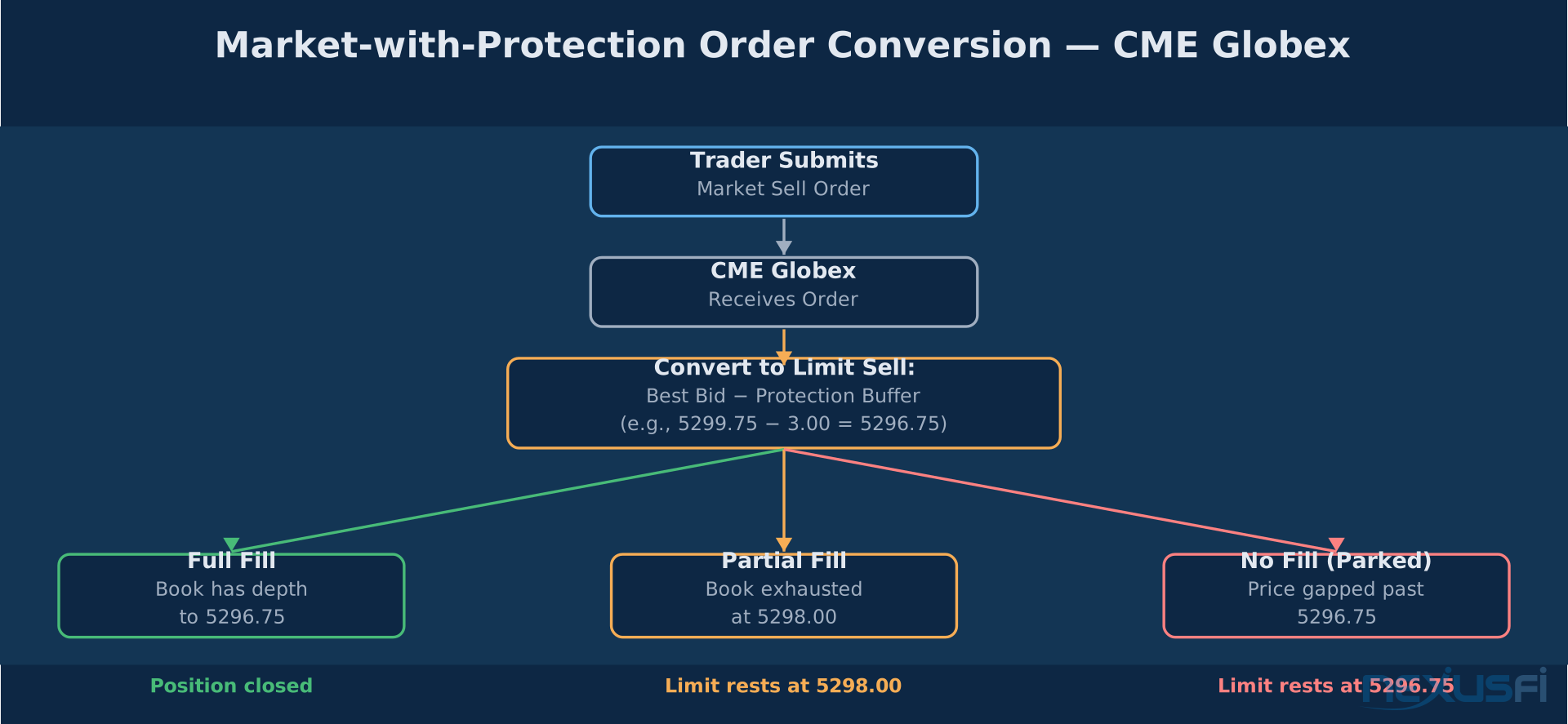
CME Globex does not offer a true unrestricted market order for futures. Every market order is executed as Market-with-Protection — a conversion that creates a constrained limit on your behalf.
When your market sell order arrives, CME converts it to a limit sell at the current best bid minus the protection buffer (12 ticks / 3 points for ES). You fill across whatever book depth exists within that range; the remainder rests as a limit at the boundary if the book is thin.
In a genuine gap where price jumps 10 points and there are no buyers within 3 points of where you submitted, your "market sell" becomes a limit order resting at the boundary. You are not filled. You are parked.
Stop-with-Protection Mechanics #
CME's stop-with-protection is a two-step order: trigger first, then convert.
Step 1 — Trigger: The stop waits for price to touch the stop level. Server-side stops wait at CME. Broker-managed stops wait at the broker's system and are submitted to CME when triggered.
Step 2 — Conversion: The activated stop becomes a limit order offset by the protection buffer. For a sell stop on ES, the converted limit is trigger price minus 3 points (12 ticks). The order executes at any available price between the trigger level and the limit — if price has already gapped below the limit, the order parks at that boundary and waits.
In normal market conditions, this protection works exactly as advertised — you get your stop filled within 12 ticks of your intended price. In a gap or during extreme volatility, the 12-tick buffer is no longer enough to reach where price actually is, and the stop fails to exit.
Self-Trade Prevention #
Self-trade prevention (STP) blocks orders from filling against other orders belonging to the same clearing entity. CME implements three modes: Cancel Resting (incoming order continues), Cancel Incoming (resting order stays), and Cancel Both (neither fills). For retail traders on a single account, STP rarely fires — it's primarily relevant for automated strategies sending both sides simultaneously. Test your strategy's order flow for STP interaction before going live.
STP can create unexpected behavior for automated strategies. If a hedging strategy is resting a buy limit while a closing strategy sends a market sell, and STP fires on both, you can end up with neither the hedge nor the exit filled.
Fat-Finger Controls #
Fat-finger controls are hard quantity limits enforced at the exchange level. CME maximums: ES 2,000 contracts, NQ 500, CL 1,000, ZB 1,000. Brokers typically add a second layer with lower limits (10-50 contracts at most retail brokers). Fat-finger rejects are hard rejects — the order is gone, not parked. Resubmit with a valid quantity.
Velocity Logic (Stop Logic) #
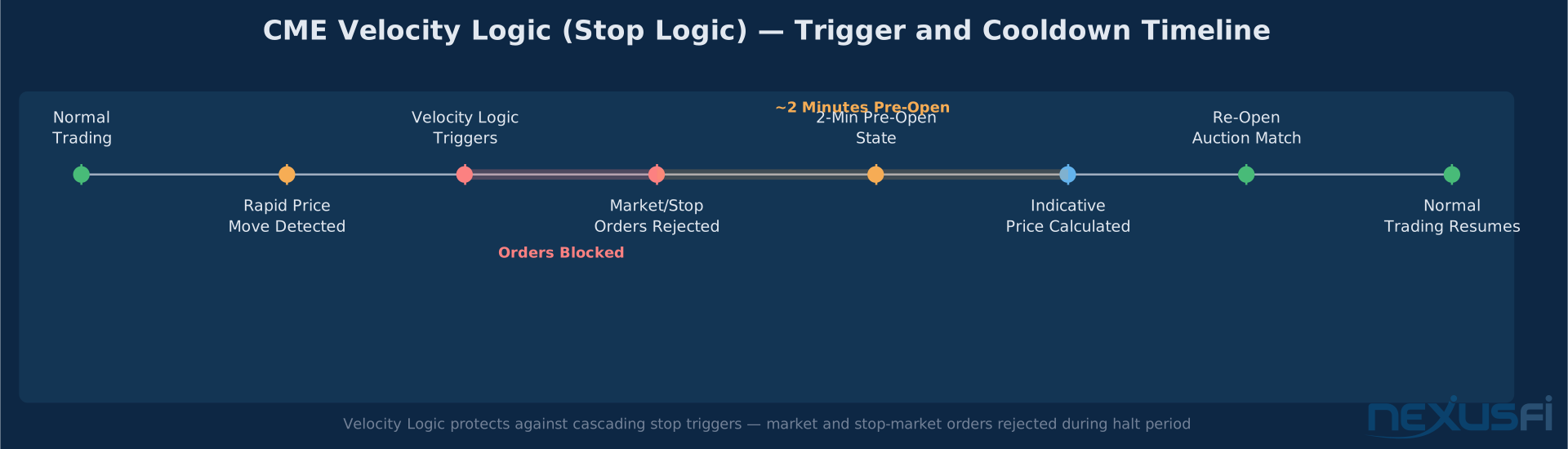
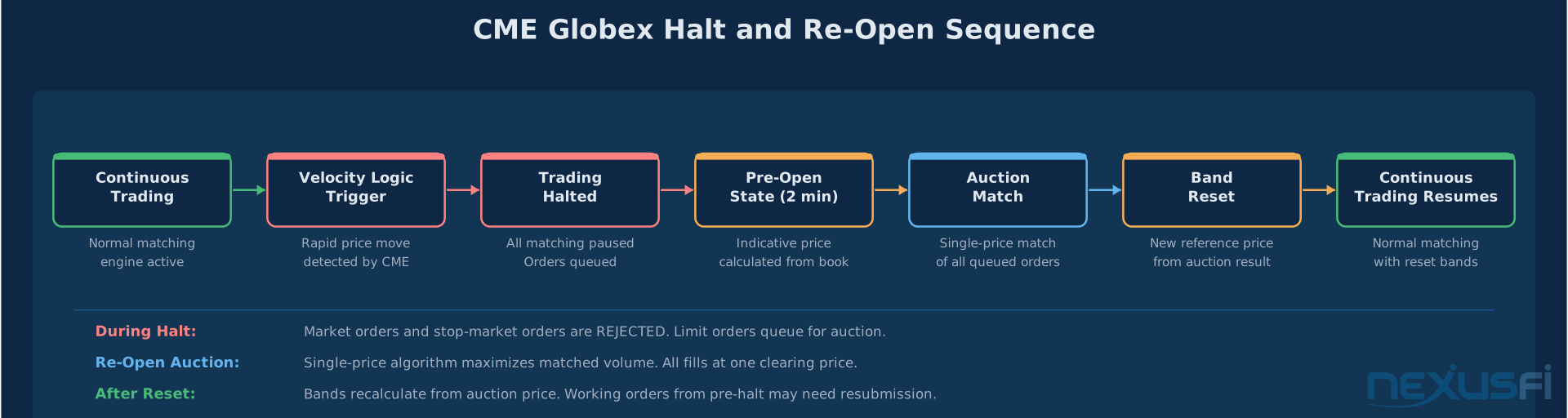
Velocity Logic — sometimes called Stop Logic — is CME's mechanism for interrupting cascading stop-triggered moves before they become runaway. When the matching engine detects a next match would breach a predefined velocity threshold, it pauses and transitions to a brief reserve state.
During a Velocity Logic event, the contract enters a pre-open state for approximately two minutes. Market and stop-market orders are rejected; only limit orders queue for the auction. The exchange runs a re-opening auction and continuous trading resumes with updated band references.
Price Banding Deep Dive #
Band Formation and Updates #
Price bands are maintained dynamically around the current reference price. The matching engine continuously recalculates the acceptable price range as trades print and the reference updates.
The band structure is:
- Center: current reference price (last trade in most cases)
- Lower boundary: reference minus the band width
- Upper boundary: reference plus the band width
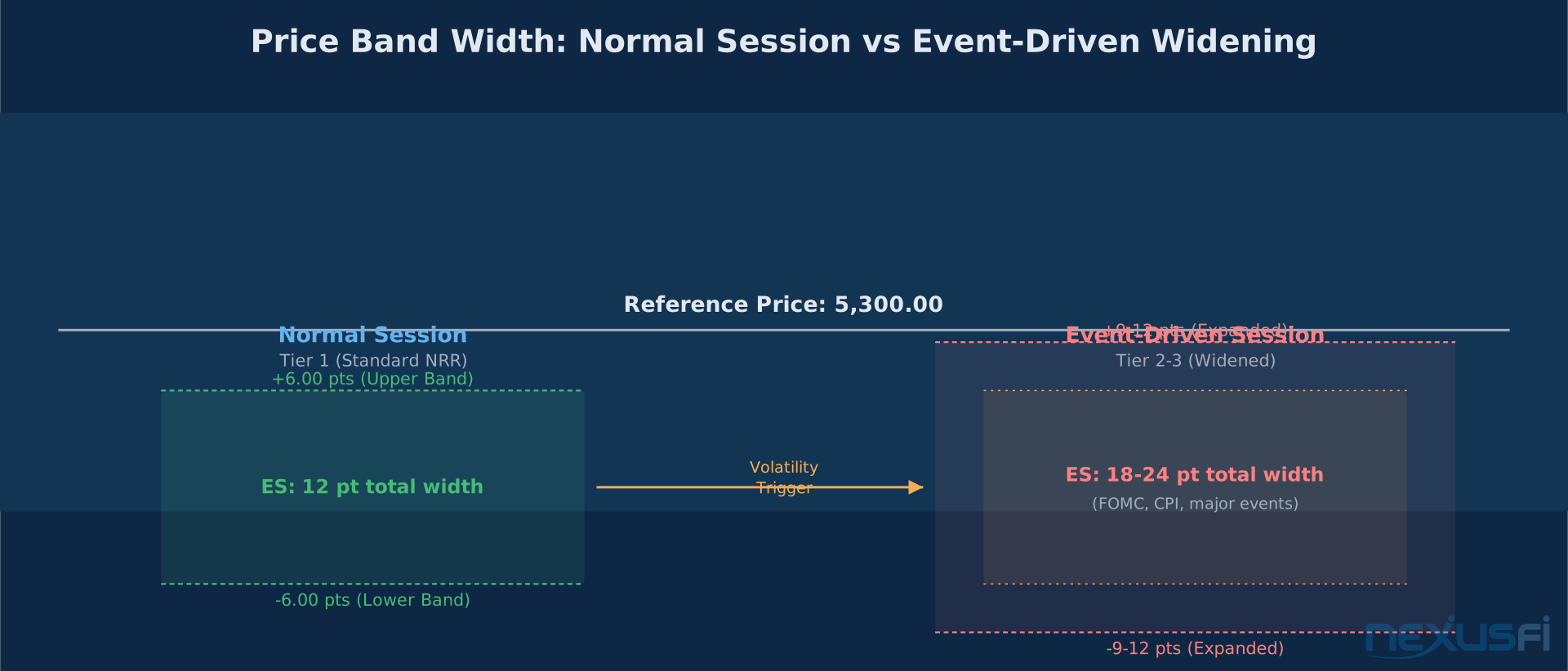
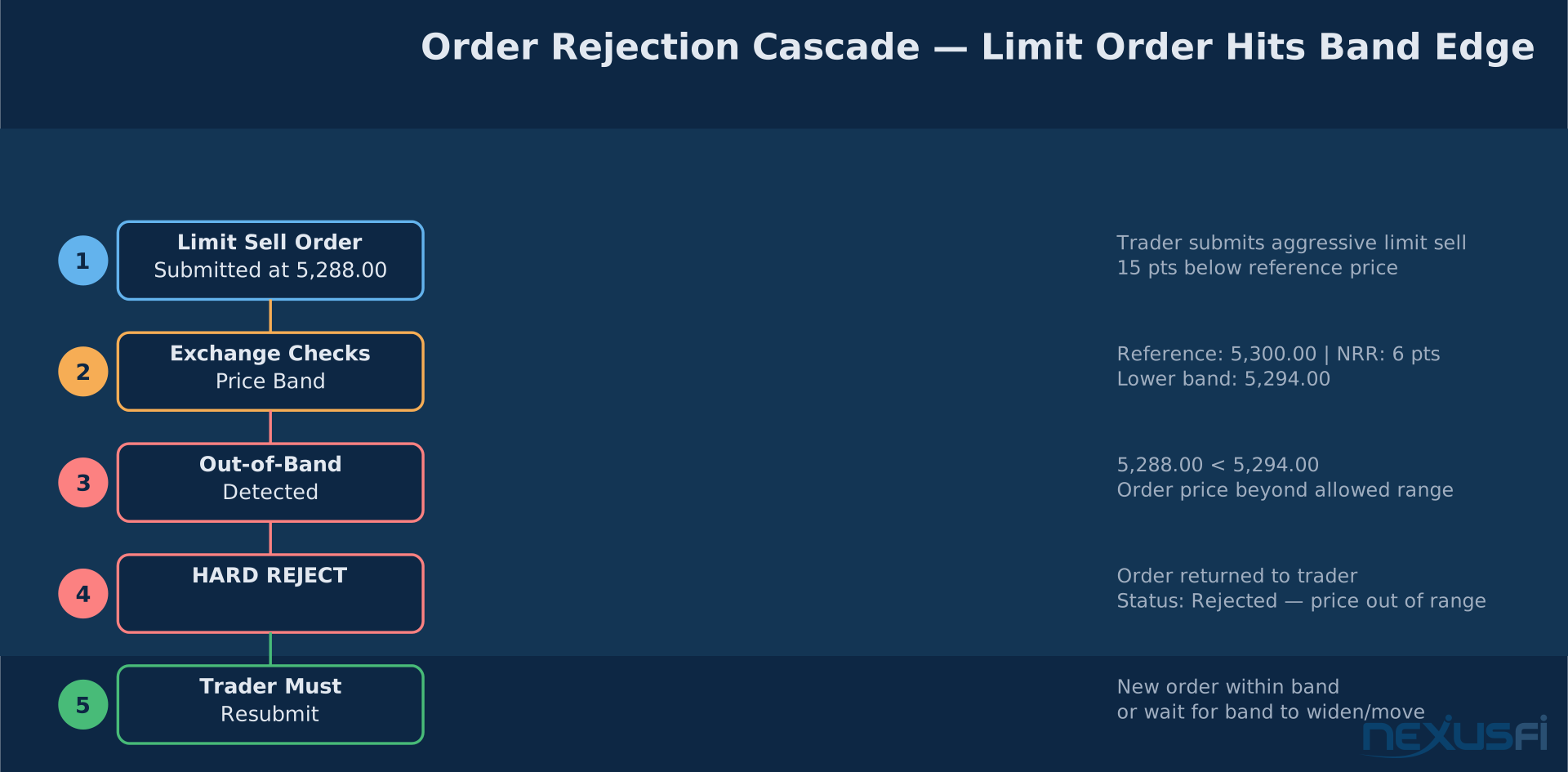
Under normal conditions, the band width equals the NRR for the product. Every new trade moves the center; the boundaries follow. An order submitted when reference is 5,300.00 on ES has allowable limits between 5,294.00 and 5,306.00 (6-point NRR each direction).
Tiered Widening #
During volatile periods, CME expands the bands in tiers rather than constant order rejections:
Tier 1 (Normal): Standard NRR applies. Orders outside NRR are rejected.
Tier 2 (Elevated volatility): CME widens to an expanded threshold. Orders are accepted at prices that would have been rejected under Tier 1. The exact widening factors are product-specific.
Tier 3 (Extreme volatility): Maximum allowed widening. Price discovery continues but within the widest allowed range.
The widening is triggered by velocity — how fast price is moving — and occasionally by exchange decision ahead of scheduled events. This creates a counterintuitive risk: the sessions when you most want tight slippage protection (FOMC, CPI, major news) are when the bands are most likely to be widening. Your stops will fill — but potentially at prices beyond what you'd expect from the standard NRR.
What Happens at the Boundary: Reject, Park, Fill #
The three outcomes when an order touches or breaches band limits:
Hard Reject: The order is refused and returned immediately. Most common for limit orders submitted with a price explicitly outside the current band. Requires a fresh submission to retry.
Park (Soft Prevention): The order is accepted but held at the band boundary, not executable. This happens for certain protected order types when the converted limit price lands at or near the boundary. The order shows as "working" in your platform but is frozen. It will release if the band widens or if liquidity appears at your parked price.
Convert and fill: The standard path for market-with-protection and stop-with-protection. The system accepts the order, converts it to a limit within the band, and fills whatever is available. Remainder rests at the limit if partial.
The "parked" state is the dangerous one. An order that shows as "working" in your platform but is actually parked at the exchange can give a false sense of security — you believe you have an active stop or exit working, but it's frozen at a price boundary. Always verify order status after major volatility events, not just order submission.
Exchange Comparison: CME vs ICE vs Eurex #
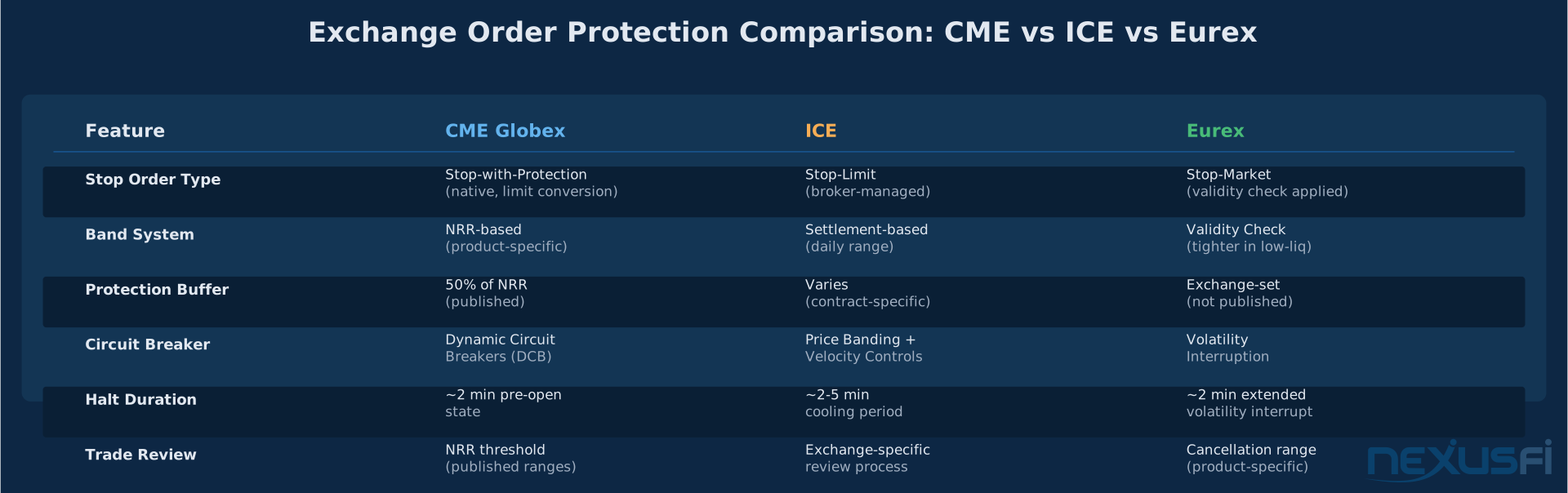
CME Globex: NRR-based system. Stop-with-protection is the native stop implementation — there is no true stop-market on CME. Protection buffer equals half the NRR.
ICE: Similar price banding but ICE energy contracts have their own widening logic tied to daily settlement ranges and ICE-specific review processes.
Eurex: Uses a "validity check" system with tighter band protections during low-liquidity periods. Verify specific thresholds before trading Eurex products.
Always confirm with your broker how stop orders are handled on non-CME products — conversion mechanics can differ from Globex.
Before trading any futures product for the first time, look up its Non-Reviewable Range. It defines the maximum slippage on stops and the effective protection window for market orders. Every product is different — ES, NQ, CL, ZB each have their own NRR.
When Protection Fails You #
The Stop Failure Cascade #
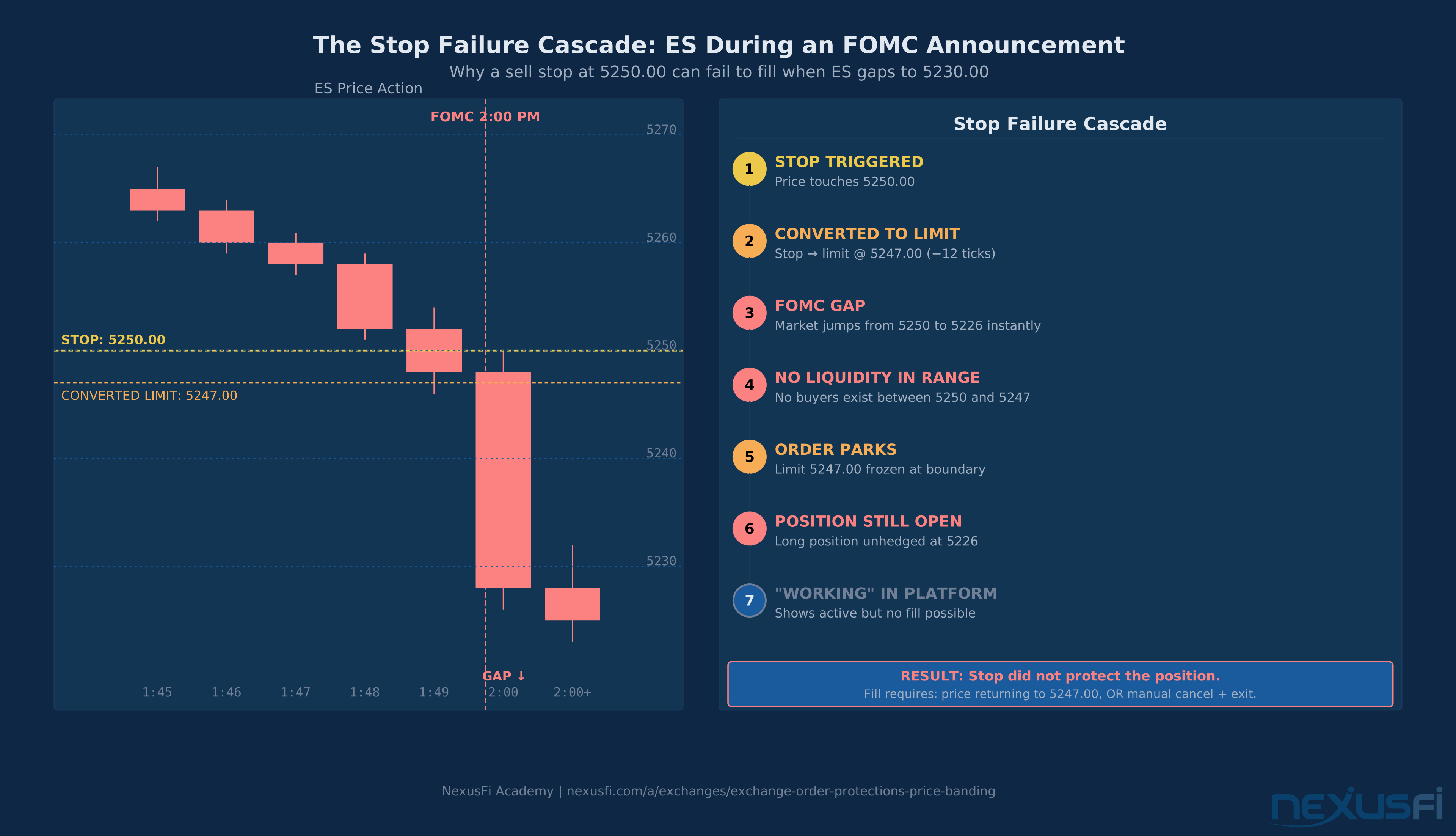
During fast markets, the protection system fails in a predictable sequence:
- You hold a futures position with a stop in place
- A major event triggers — FOMC announcement, geopolitical news, flash crash
- Price moves 10-20 points in under two seconds, gapping past your stop level
- Stop triggers; CME converts it to a limit at trigger minus 12 ticks (ES)
- Price has already gapped further — no buyers exist within 12 ticks of your trigger
- Your converted limit rests at the band boundary, waiting while price moves further away
- Eventually price may return and fill you, or the order remains open while your loss grows
This sequence is not a malfunction. Every step is the system working as designed. The protection buffer is sized for normal market volatility, not for binary events that cause step-function price moves.
FOMC and Event-Driven Cliff Effects #
Major macro announcements create conditions specifically hostile to stop orders:
30 minutes before: Liquidity providers begin reducing displayed size. ES spread may widen from 1 tick to 2-4 ticks. Book depth thins.
5 minutes before: Market makers pull most resting orders. The visible book shows only a few contracts at each level.
Announcement moment: Market moves 10-20+ points in under a second — a genuine gap with no prints at intermediate prices.
What happens to your stop: Triggers at the old level, converts to a limit at old level minus 12 ticks. No sellers exist within that range. Limit parks at boundary. Position remains open while ES is 15 points from your entry.
Market makers pull back during extreme events to avoid toxic flow. The exchange's protection mechanisms cannot create liquidity where none exists.
During FOMC, CPI, employment reports, and major geopolitical events, assume your stops will not protect you. Either exit before the announcement, accept holding through the event with no effective stop, or size your position so you can absorb the worst-case move. Planning around stops at specific prices during announcements is planning around a mechanism that routinely fails to function as expected.
Circuit Breakers vs Price Limits vs Velocity Logic #
These three mechanisms are distinct and each has different implications for your working orders:
Circuit breakers halt trading market-wide based on percentage declines from the prior day's settlement. Triggered by the S&P 500 cash index, CME futures halt slightly after. Extended halts measured in minutes to hours.
Daily price limits restrict how far a contract can move in a single session. Agricultural futures have hard limits where the contract is "locked limit" — no trading occurs beyond that price, and you may be unable to exit until the next session.
Velocity Logic is the fastest mechanism — catches cascading stop-triggered moves within seconds, pauses matching for ~2 minutes, runs a re-opening auction, then resumes. Market orders are rejected during the pause; limit orders queue for the auction. If you need to exit during a Velocity Logic event, use a limit order with enough offset to participate in the re-opening auction.
Market Phase Transitions #
Phase transitions are a common cause of "unexpected" order rejections:
Pre-open and opening: CME's band reference is the indicative auction price, not the overnight last trade. An order submitted based on the displayed last price may be out-of-band against the indicative and get rejected.
Post-halt re-open: After a halt, the exchange resets the band reference to the first trade after resumption. Orders working in the book before the halt may be cancelled and need resubmission.
Session close: The final minutes of the CME Globex session can produce reference price instability as volume thins. Orders near the boundary can park or reject in ways that don't occur during normal hours.
After any trading halt or session break, treat your entire order book as potentially invalid. Cancel working orders, assess the new reference price, and resubmit fresh orders based on current conditions.
Practical Considerations #
Choosing the Right Order Type #
Fill priority versus price control priority:
Stop-with-protection (default market stop on CME): Fill probability is high in normal conditions. The 12-tick buffer (ES) covers most normal volatility. In a gap, fill probability drops much. Use for: normal intraday trading without major scheduled events, position sizes where gap risk is acceptable within the 12-tick window.
Stop-limit with conservative offset: A 20-tick offset (5 points for ES) provides higher fill probability than the standard protection buffer while still controlling the worst case. A 40-tick offset gives reasonable fill probability even through moderate gaps. Use for: overnight positions, trading around scheduled events.
Market-with-protection: Appropriate for closing positions in liquid conditions where you need immediate exit at any reasonable price. In thin markets or during events, defaults to the same failure mode as stop-with-protection.
Limit order (not a stop): The only order type that guarantees price control at the expense of fill probability. Used by experienced traders who accept no-fill risk in exchange for absolute price control.
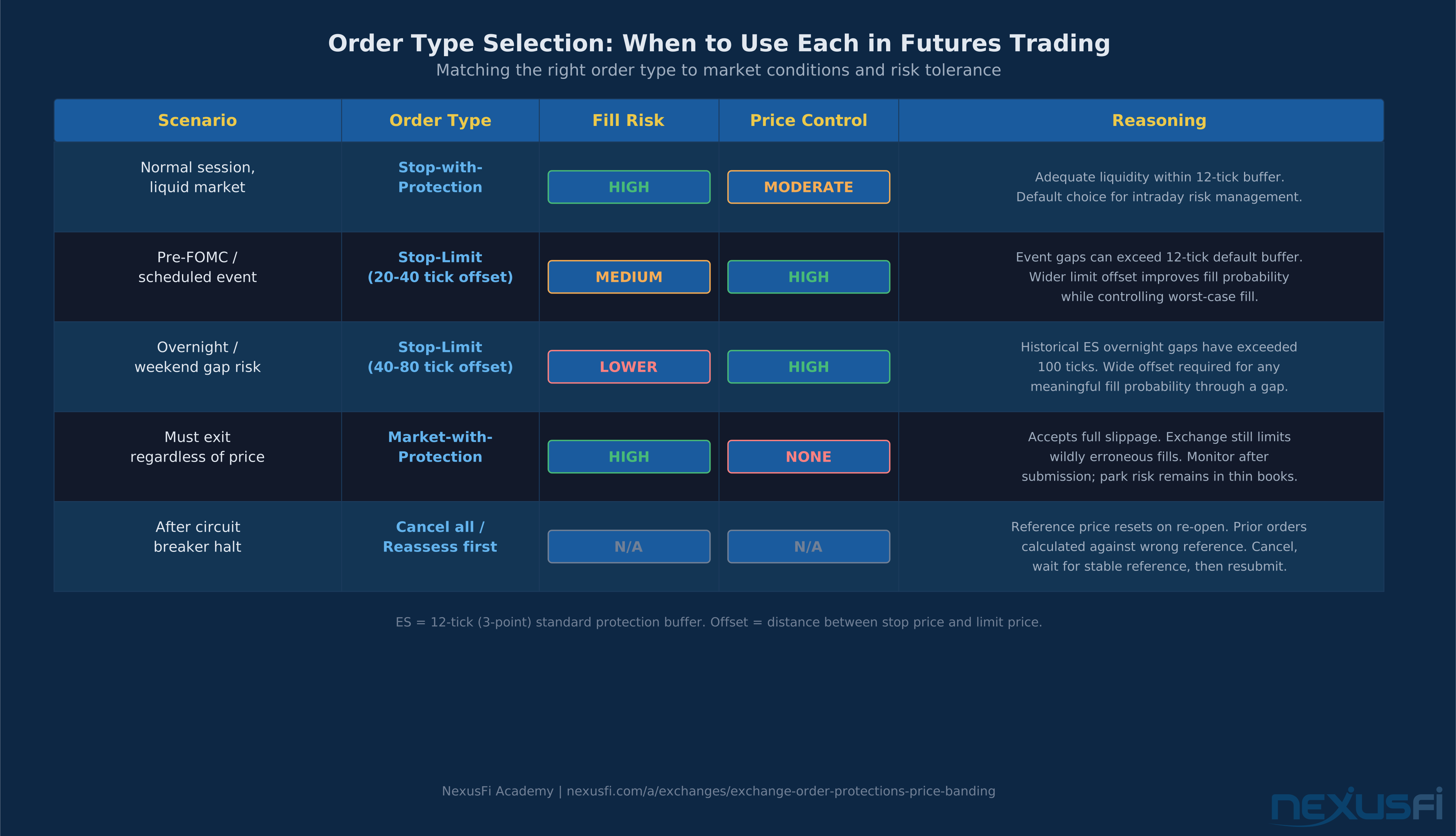
As @aquarian1 recommended: staggered OCA stop-limit orders at different price levels with OCO logic, so that if the market gaps through one, a deeper stop-limit can catch the fill.
Sizing for Protection Failure #
If stops can't be counted on during extreme events, position sizing becomes your primary backstop. Size positions so the maximum theoretical adverse move doesn't exceed your loss tolerance per trade. Position size is what the protection system was never designed to replace.
Exchange order protections work exactly as designed during normal market conditions. They are not designed to guarantee your exit during extreme events. Position size is the only protection mechanism that works regardless of market conditions.
Working with Platform Order States #
After a fast market event: check your order activity log for protection-related status codes; verify "working" orders are actually competing for fills; confirm stop prices are still within range of the market; cancel and resubmit if your position is unprotected.
Microstructure Implications #
Bands Create Mechanical Behavior #
Price bands don't represent fundamental supply and demand. There's no economic significance to the exact point that sits 6 points from the last ES trade. But they create observable mechanical behavior in the order book that can be misread as significant levels.
When price approaches the effective band boundary, liquidity providers pull quotes. The book thins. Price action stalls. A trader watching the DOM might read this as "strong support" or "significant resistance" — when it's actually the protection system creating friction by deterring aggressive order submission near the boundary.
After band widening or after the reference price updates, the constraint shifts. Liquidity returns. Price continues. The level that appeared significant for 10-20 seconds was never a real level — it was a mechanical boundary. This pattern drives the stair-step behavior in volatile sessions: sharp moves, brief pauses at protection boundaries, then continuation as bands widen or new orders appear.
Band boundary behavior in the DOM during a volatile session: watch for depth disappearing on one side as price approaches a constrained level. This is market maker withdrawal before the band forces a park or reject. It's predictive — of continuation (if the band widens) or brief stall followed by continuation (if the other side shows up). Don't fade these levels based on the stall alone.
Knowledge Map
Prerequisites
Understand these firstGo Deeper
Build on this knowledgeReferences This Article
Articles that build on this topicCitations
- — Limit Orders (2010) 👍 3“CME only offers market orders and stop orders with protection. CME limits slippage to 50% of the No Bust Range. For ES the No Bust Range is 6.00 points.”
- — Sierra vs. Ninja : why I chose ..... (2012) 👍 3“For ES it is 12 ticks. Non-reviewable range is 24 ticks, and the limit given to the stop is half of that.”
- — Flash proof stop limit orders (2018) 👍 2“If your order gets to the exchange and the price has fallen more than that it is rejected as too far off the market.”
- — Holding futures overnight (2021) 👍 2“The CME implements something called Stop Order with Protection, which involves protection points determined based on half of the Non-Reviewable Range.”
- — Buy stop not filled? (2013) 👍 3“Stop orders at CME Group are implemented using a Stop with Protection approach. The protected range is typically the trigger price, plus or minus 50 percent of the No Bust range.”
- — Managing risk with ES trading (2020) 👍 3“CME stop orders are actually stop with protection. There is a protection band, and for the ES it is +/- 3 handles. You will NOT get a fill unless someone takes your offer.”
- — CME Globex | Dynamic Circuit Breakers (2022) 👍 3“The CME Velocity Logic triggered today in all the Micro MES, MNQ and MYM (which means market and/or stop-market orders are not accepted during this velocity logic trigger halt period)”
- — CME Globex | Dynamic Circuit Breakers (2020) 👍 6“If triggered in the primary contract market (lead month), all associated contract markets immediately transition into a two minute pre-open state. There is no monitoring period.”
- — Limit Up Limit Down Question (2013) 👍 11“The limit moves were introduced to protect traders from large moves that are triggered by emotions and other positive feedback loops. Make a worst case scenario based on the most adverse occurrences over the last 10 years and prepare accordingly.”
- — Spoo-nalysis ES e-mini futures S&P 500 (2020) 👍 4“Circuit breakers and trading halts are not the same as limit up/down. Circuit breakers on the S&P 500 are 7%, 13%, and 20%, and were first put in place after the 87 crash. These are only to the downside.”