



Flash Crashes in Futures Markets: What Happens When the Market Breaks and How to Protect Your Account
Overview #
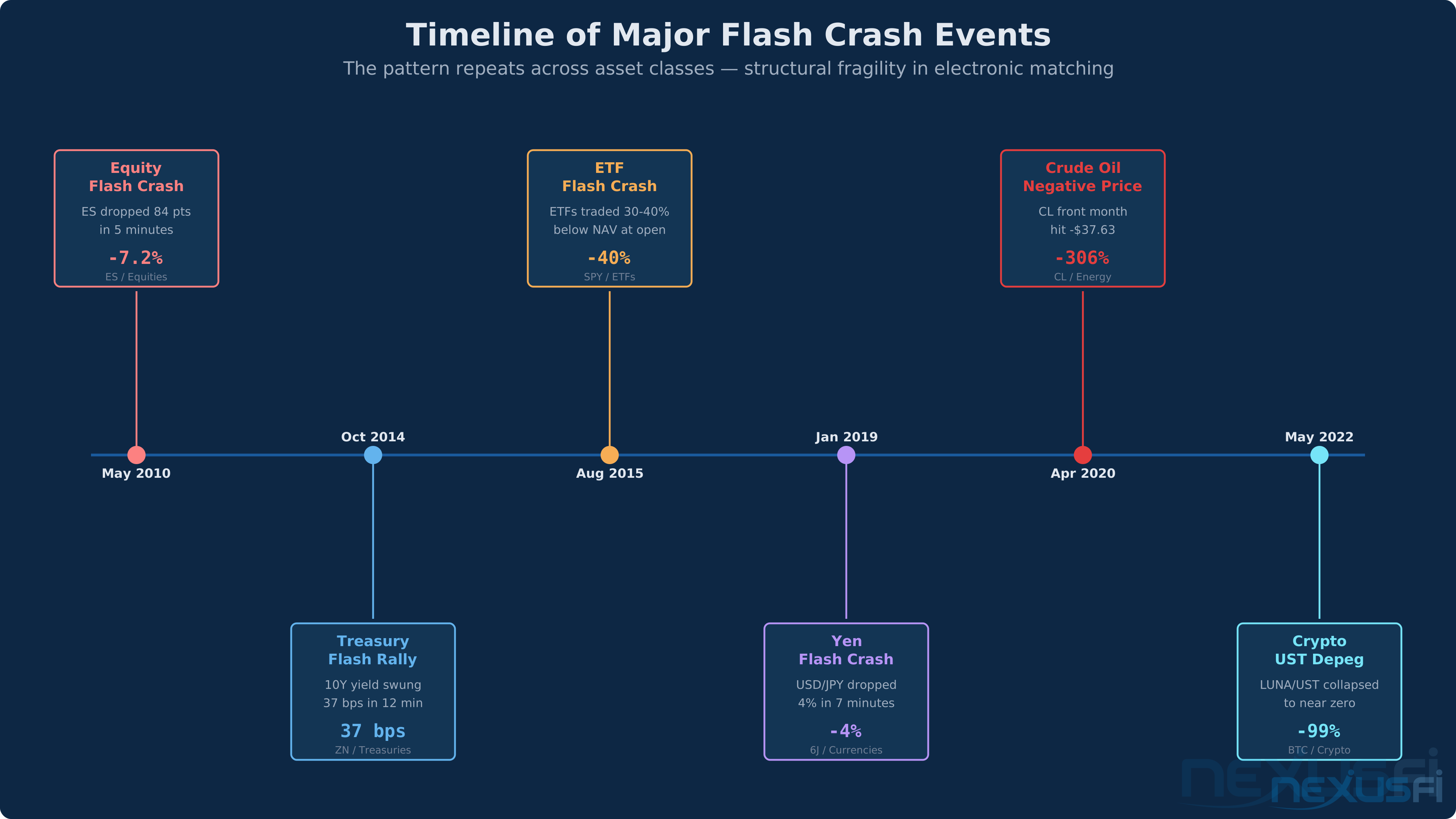
Flash crashes aren't theoretical. On May 6, 2010, the E-mini S&P 500 fell nearly 100 points in five minutes, then recovered most of that loss over the next 20 minutes — all on no fundamental news. On August 24, 2015, ES triggered price banding mechanisms multiple times in a single premarket session while retail traders watched their stops fill 40 handles below their expectations. On October 15, 2014, 10-year Treasury futures moved through a 7-year trading range in 12 minutes in what regulators described as the largest intraday swing in Treasury history. Crude oil on April 20, 2020 went to -$40. The futures market has broken in dramatic fashion multiple times in recent history, and it will break again.
Flash crashes in futures markets are not random acts of God. They follow a repeatable pattern — a sequence of microstructure events that look chaotic from the outside but are entirely mechanistic: market makers pull their quotes, stop orders cascade into a thinning book, HFT firms hit inventory limits and reverse hard, and the self-reinforcing feedback loop takes the price somewhere no one expected it to go. Seconds. Sometimes minutes. Occasionally sub-second.
The traders who lose the most have two things in common: they don't understand the mechanics, and they haven't thought through what their orders actually do under those conditions. A stop-market order in a crashed book doesn't behave like a stop-market order in a normal book. A limit-down market means your sell limit may not fill. Getting caught long through a circuit breaker trigger changes the rules of engagement completely.
This article explains what's actually happening from the inside — the liquidity mechanics, the exchange protection systems, the order-type behavior — and what you can do before, during, and after to keep your account intact.
Flash crashes are a features of futures markets, not bugs. The same leverage and liquidity dynamics that make futures efficient also make them capable of extreme dislocations when conditions align. Understanding this isn't pessimism — it's operational reality.
How Flash Crashes Unfold: The Microstructure Playbook #
Every flash crash in futures markets is different on the surface. Underneath, the same three-stage sequence plays out with near-perfect regularity.
Stage 1: The Setup — Liquidity Thins Before the Break #
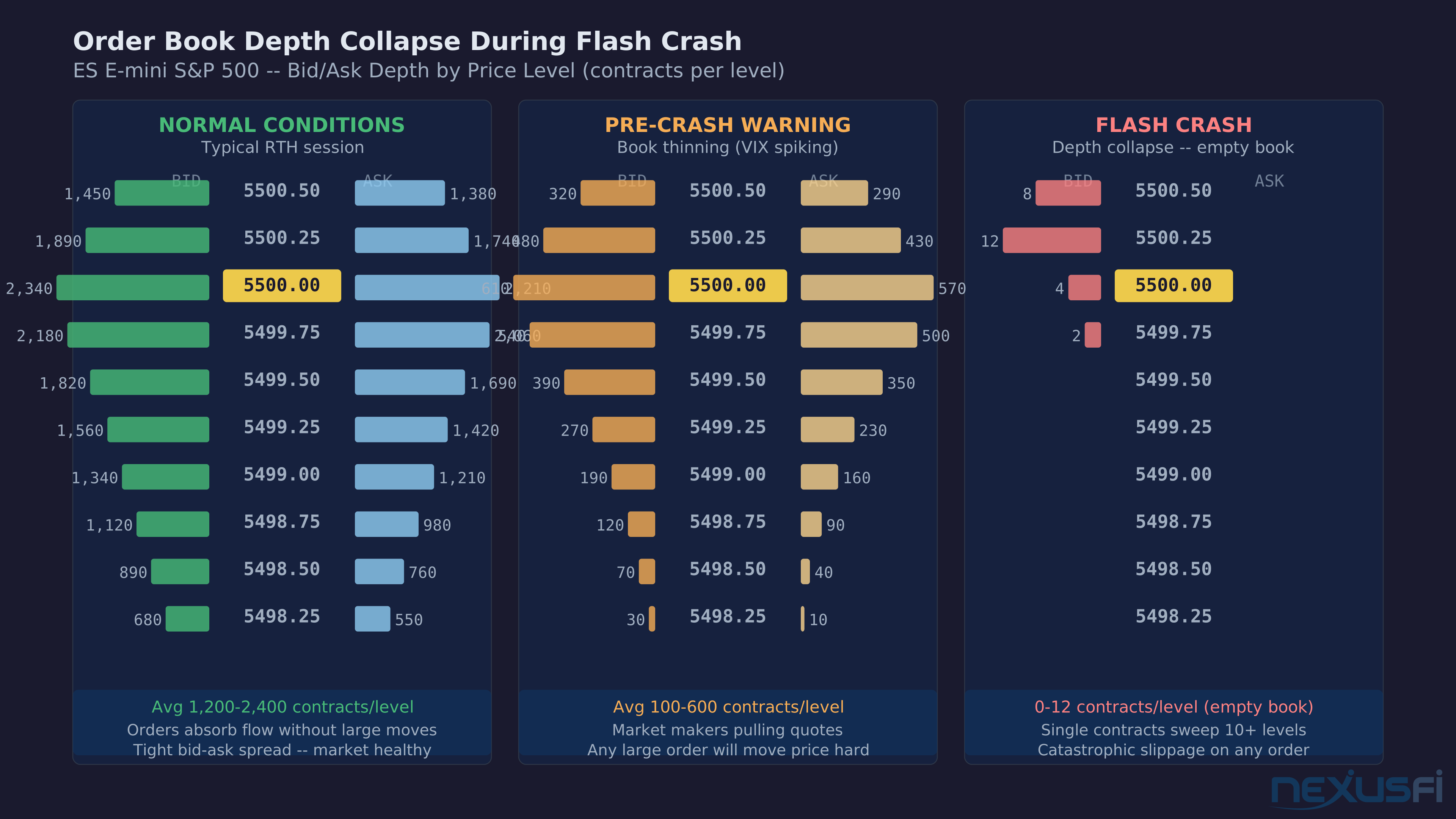
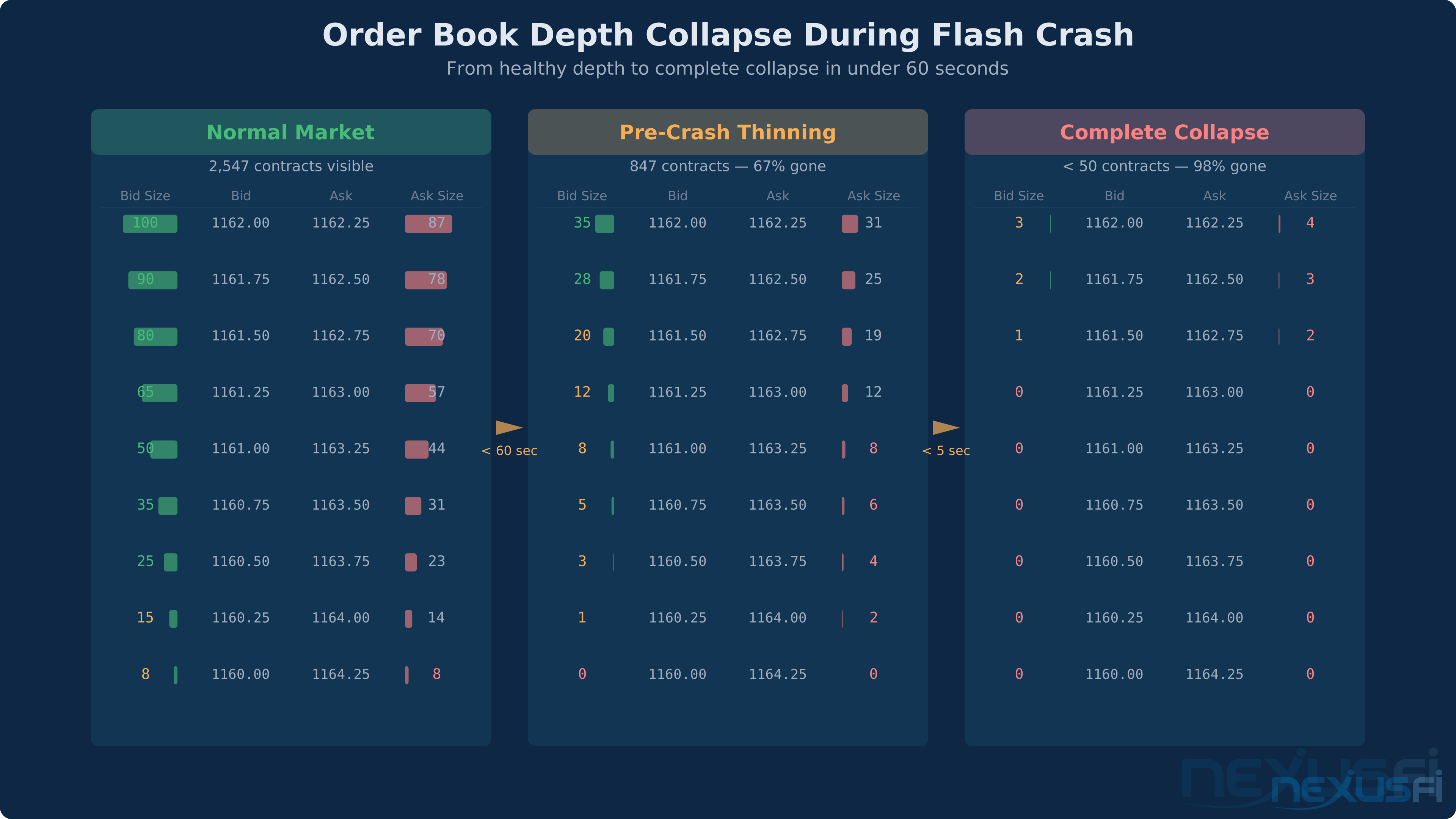
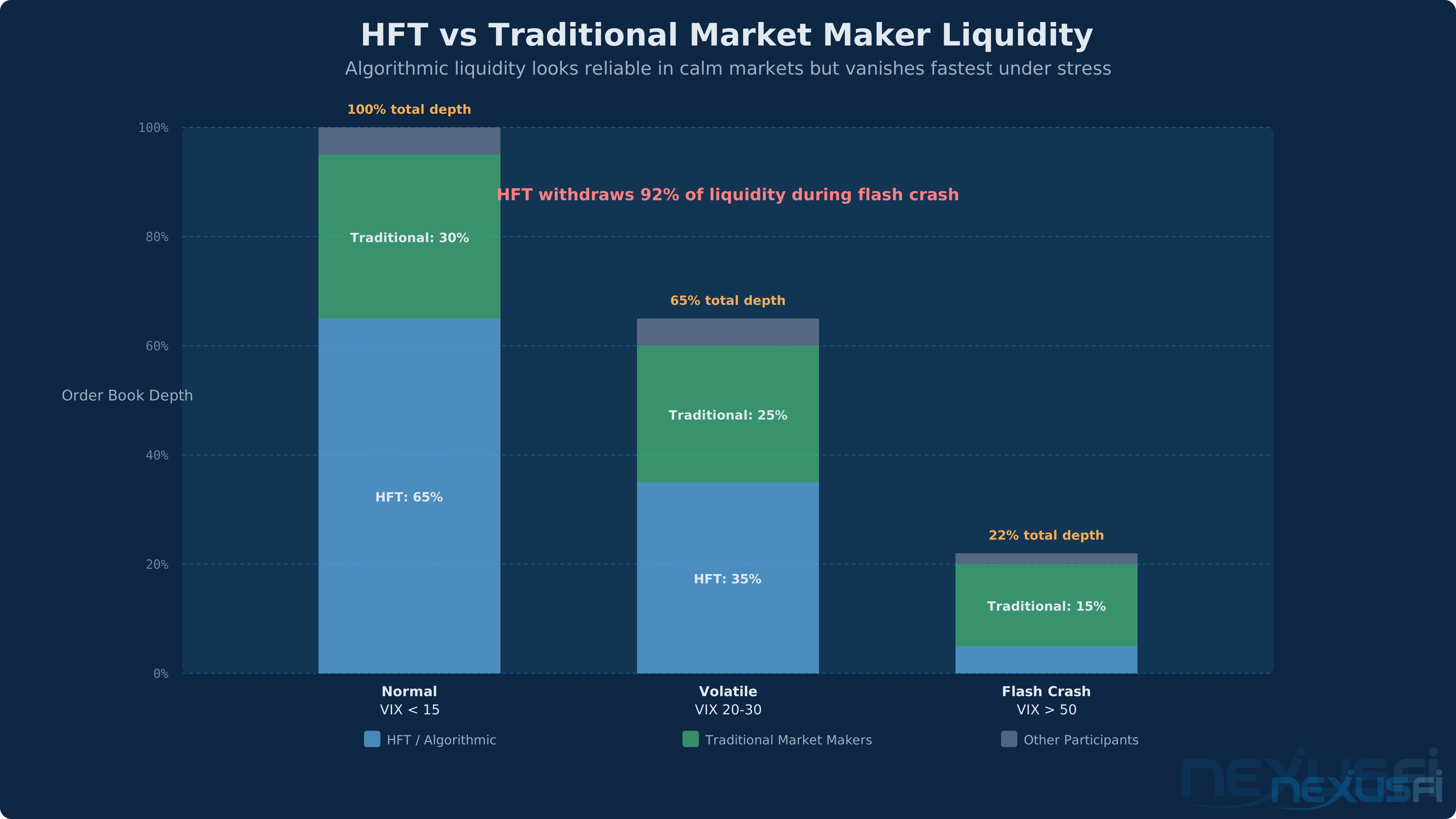
Flash crashes don't start with the crash. They start with a gradual, often invisible deterioration in liquidity depth that precedes the actual price break by minutes or hours. In normal markets, the ES order book has hundreds to thousands of contracts resting at each price level within a few handles of the inside market. That depth is what makes the market absorb order flow without dramatic price moves. When it's gone — when market makers pull their quotes because the risk of holding inventory in a volatile environment exceeds their expected edge — the book becomes a shell of itself.
[1]
The mechanism is straightforward. Market makers capture the bid-ask spread in exchange for carrying inventory risk. When expected volatility increases sharply — whether from VIX spiking, approaching a high-impact news event, or sensing unusual order flow — the risk side of that equation explodes while the reward stays constant. The rational response is to pull quotes or much reduce size. The aggregate result is a thin book that will move dramatically on any reasonable-sized aggressive order.
By the time most traders notice "the market is thin today," the setup for the crash is already in place.
Stage 2: Ignition — The Cascade Begins #
Something triggers the actual price break. It can be a large algorithmic order executed without regard to book depth, a stop-loss cascade where stops at a key level trigger and fill in a thin book pushing price to the next stop cluster, leveraged ETF rebalancing, or HFT inventory reversals when firms that were absorbing directional flow hit their position limits and flip from buyer to seller simultaneously.
As @tigertrader explains, the 2010 Flash Crash was "triggered by a $4.1 billion, 75,000 contract e-mini sell order" — and leveraged ETFs compound these events because "they are effectively short gamma, they are influenced by the same effect negative convexity has on fixed income portfolios. So when the market is going up they must adjust their portfolios by increasing exposure." [2]
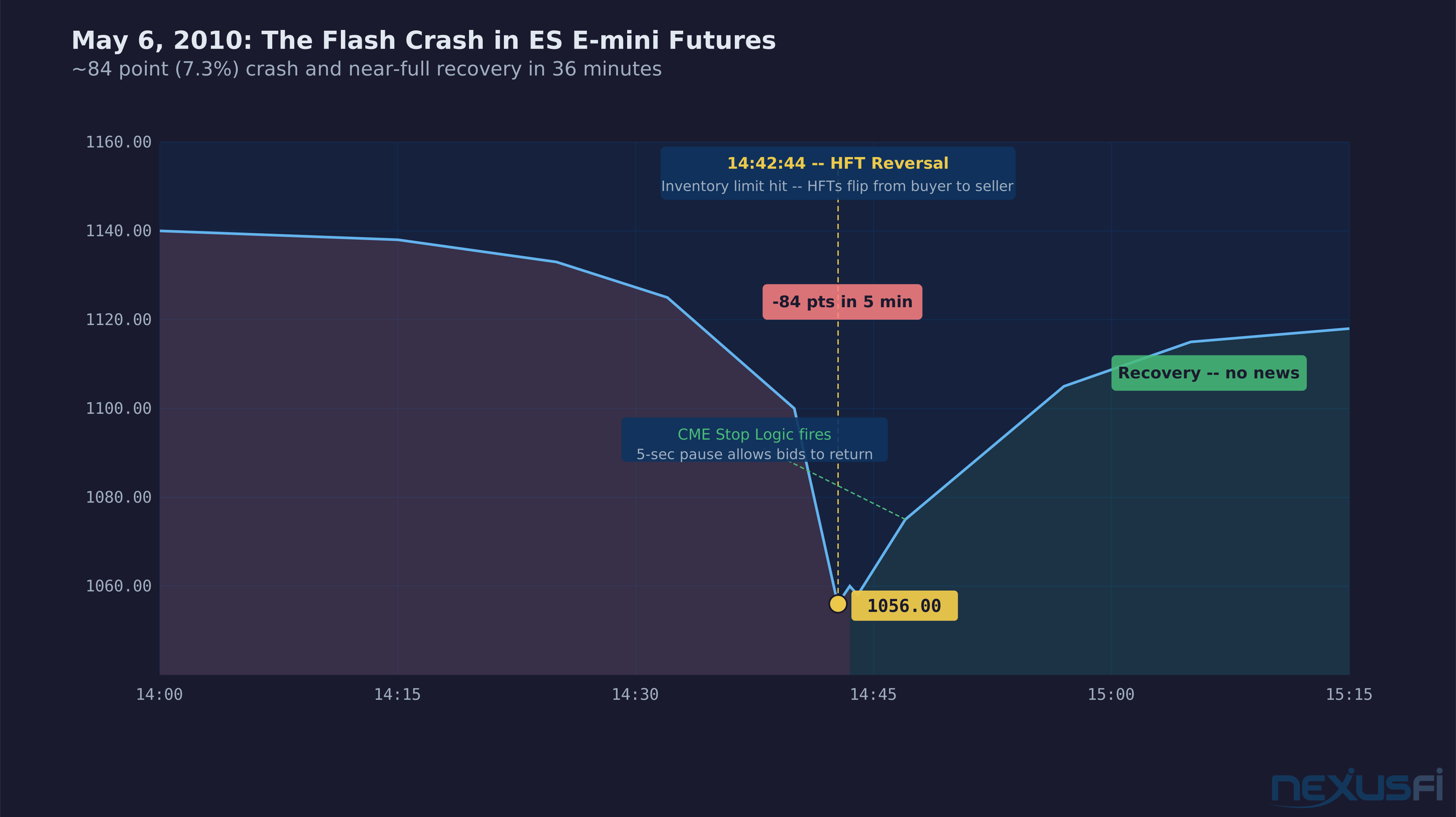
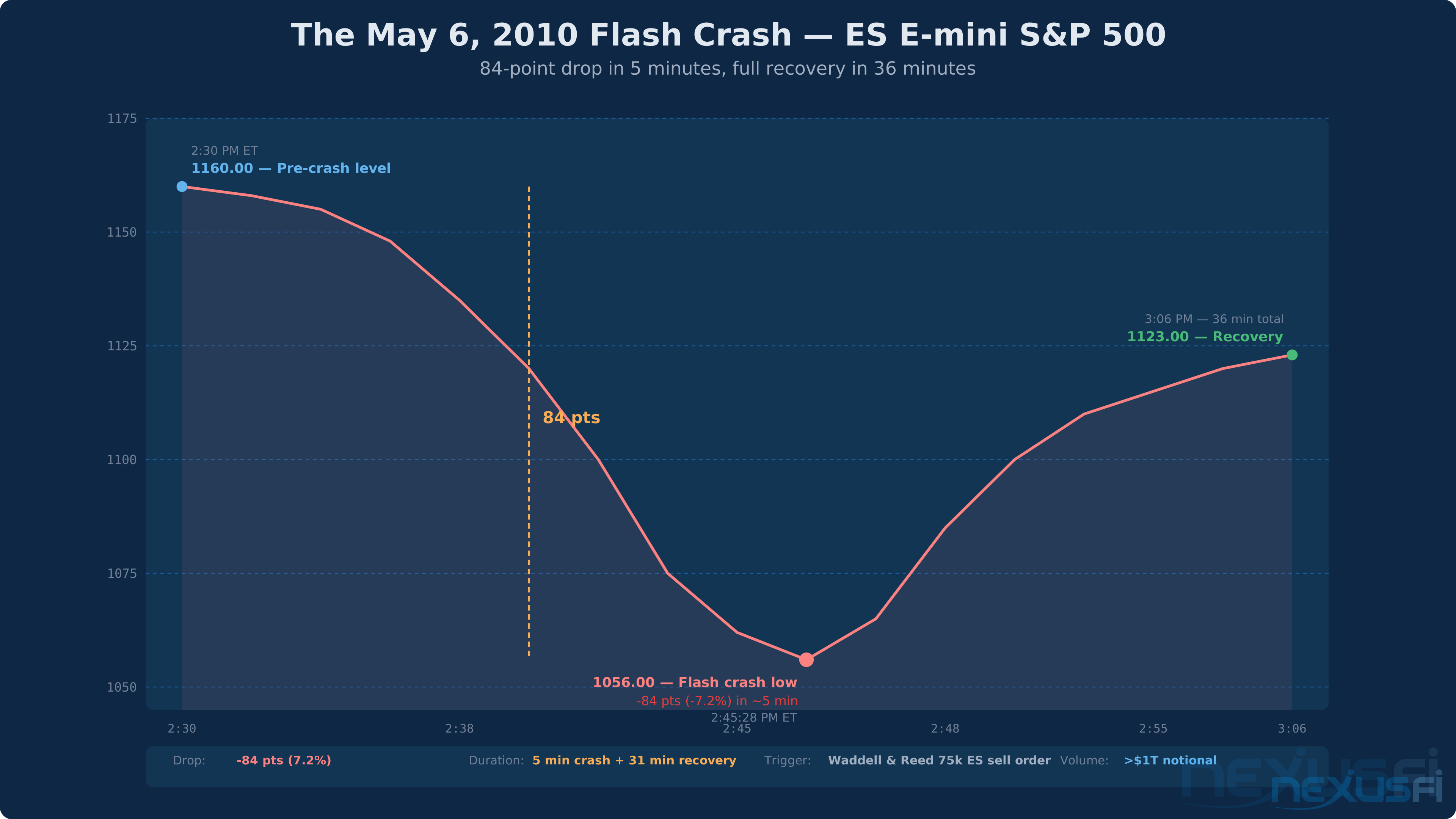
The critical insight from Nanex's post-crash analysis: the actual crash ignition point was precisely 14:42:44 on May 6, 2010 — the moment when "one or more large HFT market makers hit their limit of long positions in the eMini Futures and reversed out — 'readjusted their position.' Immediately. That aggressive act sucked out a significant amount of liquidity and caused thousands of trading instruments to reprice, which severely overloaded all trading systems processing market data." [3]
This is the "hot potato" phenomenon: HFT firms rapidly passing contracts back and forth, each trying to reduce their inventory, until the last one holding became a forced seller into no bid.
Stage 3: The Feedback Loop Goes Parabolic #
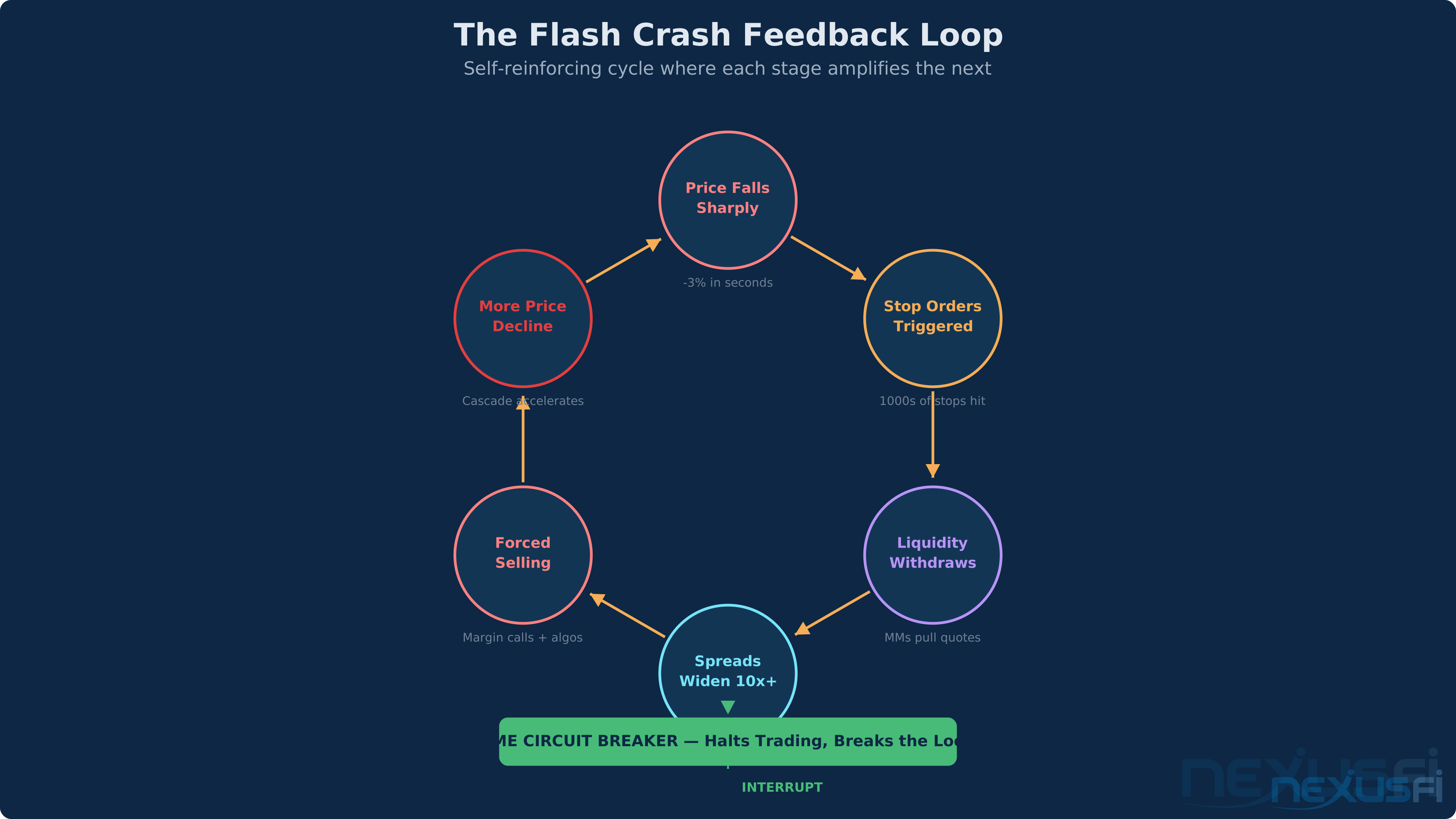
Once the cascade starts in a thin book, it's no longer about the original trigger. The self-reinforcing loop takes over:
- Price falls rapidly, triggering stop-loss orders at successive levels
- Stop orders convert to limit orders at the protection price, hitting what little bid depth remains
- Market makers who haven't already pulled quotes now pull the rest — holding inventory in this environment is catastrophically risky
- The book empties. As @josh documented during an extreme April 2015 event: "pretty amazing that in ES, even in HFT land, there is not one contract at the offer through 13 levels of depth." [4]
- Any remaining aggressive sell order — even a small one — sweeps through multiple levels of empty book
- Arbitrageurs eventually see ES at a massive discount to SPY and begin buying ES, which drives the recovery — but initially adds cross-market chaos as the dislocation propagates outward
At peak crash velocity, this entire sequence happens in seconds. Most retail traders don't know it's happening until they're looking at fills they don't recognize.
During the feedback loop phase, submitting a market order to "get out at any price" is often the worst decision. In a crashed book, a market order fills at the absolute worst prices of the event — and those prices may reverse within minutes. Understand what your stop orders actually do before placing them.

Historical Flash Crashes: What Actually Happened #
Understanding three major events gives you the pattern recognition to recognize the setup before the next one — and more importantly, to recognize the pre-conditions before the break.
May 6, 2010: The Original Flash Crash #
Instruments: E-mini S&P 500 futures (ES), propagating to equities, ETFs, and options Duration: ~5 minutes to trough, ~36 minutes to near-full recovery Magnitude: ES dropped approximately 84 points (7.3%) before recovering
The 2010 Flash Crash remains the defining case study. What made it interesting wasn't the drop itself — it was the cross-market contagion. The E-mini futures market was the epicenter, and the crash there propagated outward through cross-market arbitrage into equity ETFs (SPY) and individual stocks. Many individual stocks briefly printed at $0.01 or $100,000 — levels that got busted later.
At the futures level, the cascade went like this: Waddell & Reed's algorithm had been selling E-mini contracts to hedge equity positions, into a market where liquidity was already thin due to European sovereign debt concerns. HFT firms absorbed most of this flow initially — but once they hit inventory limits at exactly 14:42:44, they reversed aggressively, transforming from liquidity providers to liquidity takers. The book collapsed. Price found no support until the CME's Stop Logic mechanism triggered and briefly paused the market, allowing bids to return.
The lesson for retail traders: you can lose significant money even if you didn't have a position going into the crash. If you were trying to buy the dip at what looked like support, that "support" was printing and then trading through instantly. Stop-limit orders that would normally fill within 1-2 ticks of your limit became either extreme fills or no fills at all — leaving you exposed to the recovery move in the wrong direction.
October 15, 2014: The Treasury Flash Rally #
Instruments: 10-Year Treasury Note futures (ZN), 30-Year Bond futures (ZB) Duration: ~12 minutes Magnitude: ZN prices moved through a range that had taken 7 years to establish
This event deserves equal billing to the 2010 equity crash because it proves flash events move in both directions — and short sellers can experience the same catastrophic dynamics as longs. The regulatory post-mortem described price moves that "occurred in the absence of a clear fundamental cause" — the largest intraday range Treasury futures had printed in years.
The dynamics were identical to the equity flash crashes: thin book, automated buying cascading stops on short sellers, inventory limits being hit and positions flipped — just in the opposite direction. If you were short Treasury futures with tight stops, you experienced extreme slippage on stop-limit orders or complete non-fills if the market moved through your protection range.
The broader lesson: the flash crash playbook is instrument-agnostic. It applies to equity index futures, Treasury futures, energy futures, and currency futures. Anywhere algorithmic participation is high and liquidity can thin suddenly, the same three-stage sequence is possible.
August 24, 2015: The Premarket Crash #
Instruments: E-mini S&P 500, individual equity ETFs Duration: Multiple limit-down cycles across the premarket session Magnitude: ES fell approximately 120 handles (~6%) before RTH open
The 2015 event was especially instructive because it happened in the premarket Globex session, where liquidity is structurally thinner and CME's price banding rules operate differently. ES triggered price banding not once but multiple times — the market would halt, bids would reenter, price would stabilize briefly, and then another cascade would push it to the next limit level.
For traders caught long: if you held overnight into August 24, your stops may have triggered at the first limit-down price — or may not have triggered at all if the market halted at a level that jumped through your stop-limit range. This event also created massive dislocations in equity ETFs, where market makers gap-quoted to account for the uncertainty in the underlying futures price.
The practical lesson: premarket limit-down events behave differently than RTH events. Circuit breakers trigger more frequently, liquidity is thinner, and the halt/resume cycle can repeat multiple times before you get any useful price discovery. Overnight futures positions need to account for the possibility that your stops may not protect you as expected during premarket crashes.
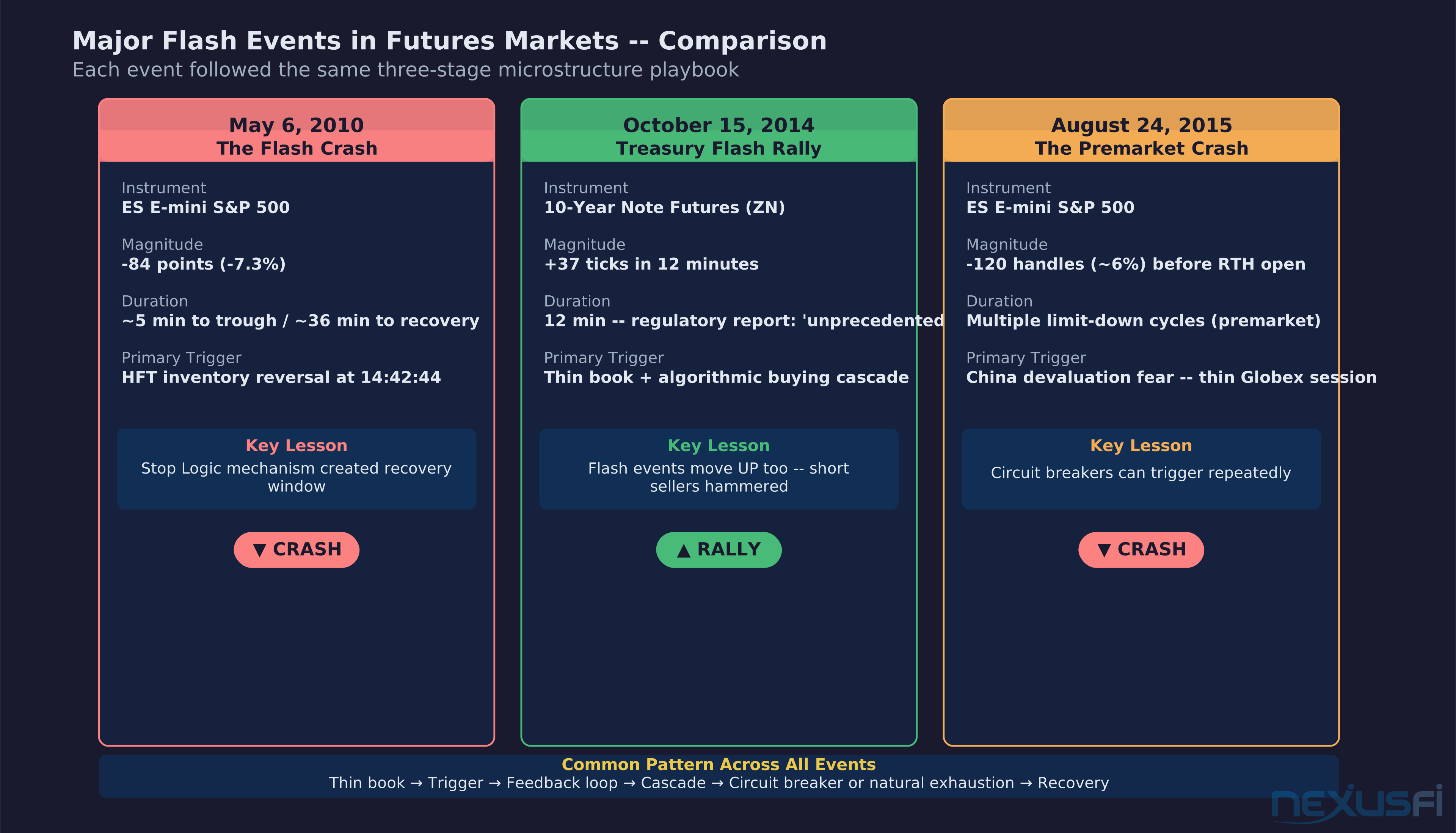
Three events, three instruments, three different directions — but one pattern. Thin book, ignition trigger, feedback loop, circuit breaker intervention, recovery. Recognizing the pre-conditions (thinning book, elevated VIX, approaching news events) matters more than reacting after the break.
Exchange Protection Mechanics: What CME Does (and What It Doesn't Do) #
Understanding what CME's protection mechanisms actually do is non-negotiable for futures traders. Many traders assume they provide more protection than they actually do.
CME Stop Orders with Protection #
CME does not have a traditional "stop market" order. What CME calls a "stop order" is actually a Stop Order with Protection — when your stop price is hit, your order converts to a limit order at your stop price, plus or minus a protection band.
For ES specifically, the protection band is +/- 3 handles (12 ticks). This means:
- You are long ES and have a sell stop at 5000.00
- The market crashes and trades at 5000.00, triggering your stop
- Your order converts to a sell limit at 4997.00 (3 handles below your stop price)
- If the market has crashed to 4985.00 in the time between trigger and placement, your limit order is sitting at 4997 with no bid above 4985
- You are not filled — you are now a seller in a crashed market with a resting limit order
[5]
[6]
The implications are severe: in a normal market, the 3-handle protection range is more than adequate. In a flash crash where price is moving 10-20 handles per second, that protection range can be inside-out before your order reaches the exchange. Your stop "fires" — and you have an unfilled limit order sitting in a market that may not return to your level for hours.
This also applies to CL and other contracts with different protection bands.
[8] The protection range varies by contract — know yours before you trade.
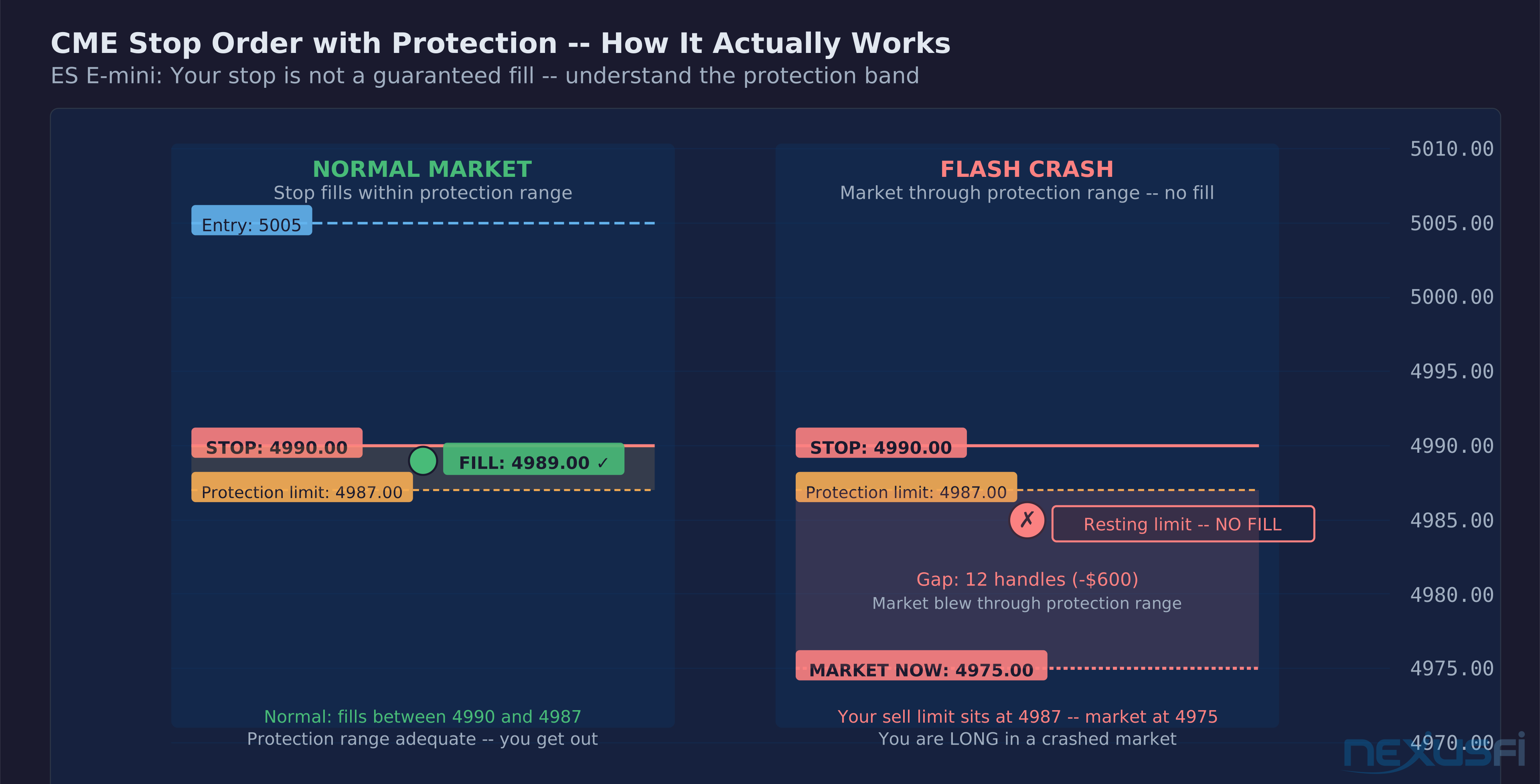
CME Stop Order with Protection (ES):
Stop triggers at price P → Converts to sell limit at P - 3.00 handles (P - 12 ticks) → Fills only if bid >= P - 3.00 handles → If market is below P - 3.00 handles: no fill, resting limit only
Non-Reviewable Range (ES): ± 6 handles from fair value If your fill is outside this range: contact broker immediately, trade may be busted
CME Stop Logic (Velocity Logic) #
CME's Stop Logic mechanism is designed to interrupt cascading stop orders before they drive markets to dislocated prices. When the matching engine detects that a sequence of stop orders is about to trigger that would move the market by a preset threshold within a very short window, it initiates a brief pause — typically 5 seconds — to allow additional liquidity to enter the market.
The practical effect: Stop Logic can briefly halt futures trading on the CME even during regular market hours when full circuit breakers aren't triggered. These pauses are short but create a window where bids can return to the book and the cascade can be interrupted.
The 2010 Flash Crash was partly recovered because Stop Logic triggered during the steepest decline, creating the brief pause that allowed arbitrageurs to begin buying ES versus SPY. The gap between the triggered stop cascade and the natural recovery was bridged by this mechanism.
Stop Logic thresholds vary by contract and are not published in full detail — CME treats the specific thresholds as proprietary to prevent gaming. What traders need to know: if the market halts briefly during a fast move and then resumes, Stop Logic likely fired. The resumption price may be much different from where the halt occurred.
CME Price Bands (Limit Up/Limit Down) #
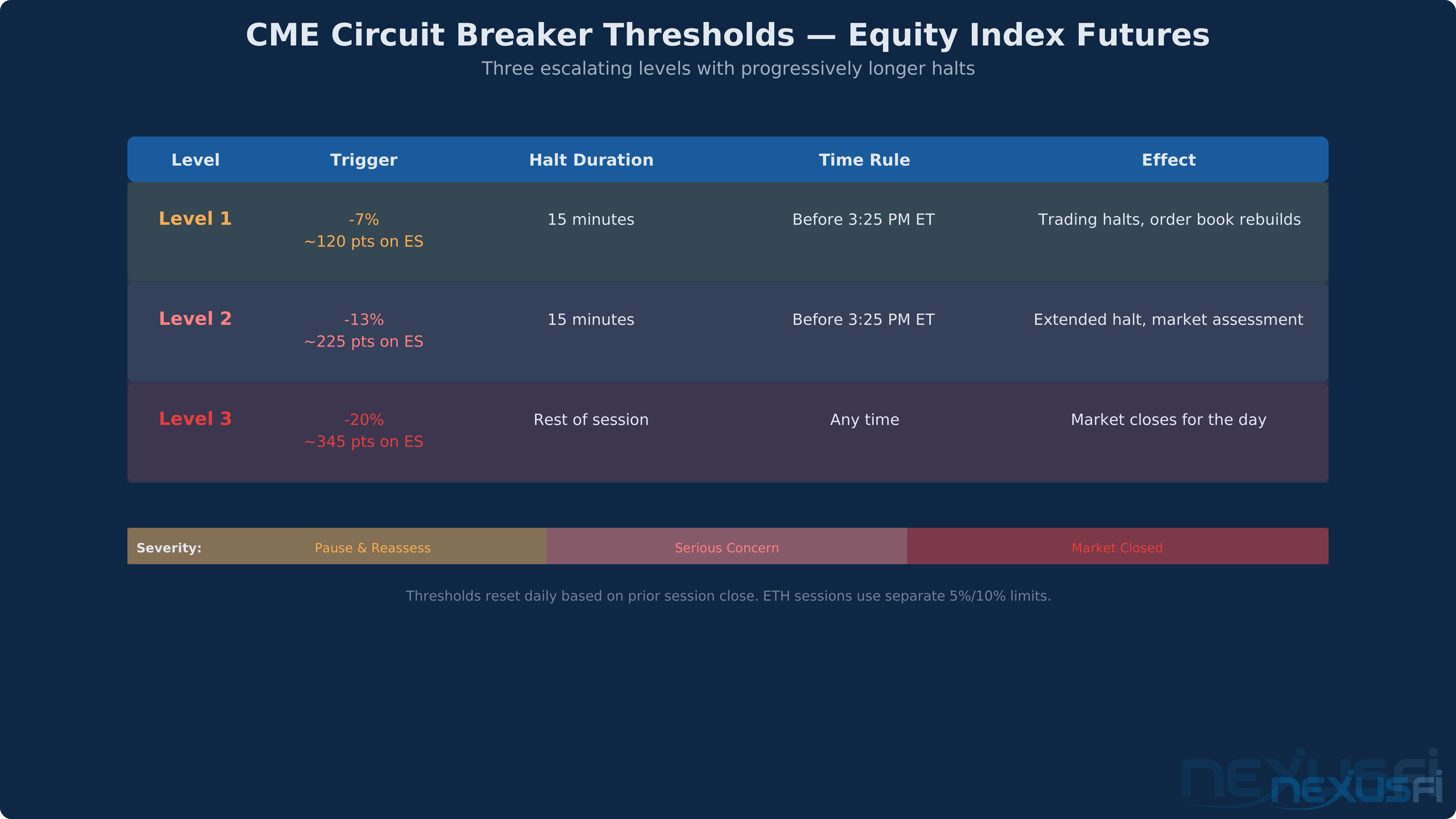
CME imposes daily price limits on futures contracts — absolute levels beyond which trading is halted or restricted. For E-mini S&P futures during regular trading hours, price can move 5%, 7%, and 10% from the prior settlement before trading is temporarily halted at each threshold. Extended trading hours limits are generally tighter.
When price hits a limit-down level, trading halts for two minutes (or until price trades back above the limit), then reopens. The August 2015 event showed this cycle can repeat: ES hit limit-down, halted, bids reentered, briefly stabilized, then fell to the next limit level. This cycle repeated multiple times before the premarket session ended.
As @artemiso observed during the March 2020 limit-down events: ES "hit limit down at 2567.25, so it is only allowed to uptick at 2567.50 and above. ES price discovery continued so no one wanted to buy above 2567.50, at some point 10.8k+ contracts for offer were piled up at that level." [7] This is the perverse dynamic of limit-down: supply concentrates at the first tradeable price, but no buyers want to pay it, creating a bizarre standoff.
When ES hits limit-down and halts, all resting orders at the limit price and below remain in the book — but no trades can execute through that price. The market resumes from a standing start with whatever bids re-enter during the halt. This is NOT equivalent to a normal price level with normal depth. The reopening book state is at the core different and can immediately cascade to the next limit.
Order Book Dynamics During a Flash Crash #
What you see on the DOM during a flash crash is different from anything in normal trading. Understanding these observable phenomena helps you recognize them in real-time.
Depth Collapse: The Core Observable #
The most dramatic observable is depth collapse. In normal ES trading, each level within 5-10 handles of the inside market shows hundreds to thousands of contracts on each side. As a crash develops:
- Pre-crash: Depth thins gradually — 2,000-3,000 contracts per level drops to 500-1,000 per level
- Crash onset: Inside market shows 50-100 contracts per level, outside levels sparse
- Peak crash velocity: The entire visible offer side of the book disappears. @josh documented during an extreme April 2015 event "there is not one contract at the offer through 13 levels of depth." [4] The entire visible bid side collapses symmetrically as sellers take every available bid.
At this point, a 10-lot market order doesn't fill at one price — it sweeps through 10-15 price levels finding the first available contracts anywhere in the book. A 50-lot order sweeps further.
Spread Widening and Quote Dynamics #
In normal conditions, ES trades at a 1-tick ($12.50) bid-ask spread. In a flash crash:
- Market makers quote 3-5 ticks wide to compensate for directional risk
- The inside spread shows 1 tick but with 1-5 contracts on each side, making effective spreads for any meaningful size much wider
- Latency between price levels increases as matching engine message traffic explodes
- Quote cancellation surges — visible depth on the DOM flickers rapidly as bids are placed and immediately cancelled when the offer approaches
The Hot Potato Phenomenon #
When HFT firms simultaneously reverse out of inventory positions, they create the "hot potato" effect. Each firm tries to reduce its net position by selling to other HFT firms, who then try to do the same. Contracts rapidly change hands without meaningful price discovery — but each hand-off adds to message volume and puts marginal downward pressure on price. Trading volume explodes, but none of it represents actual price discovery.
This is why crash volume can look extraordinarily high while actual market depth is zero. The 2010 Flash Crash had enormous notional volume, much of it HFT firms passing contracts between themselves at progressively lower prices.
Aggressor Imbalance: What Footprint Charts Show #
In a flash crash, the aggressor/passive ratio goes to extremes. Normally, roughly half of trades are initiated by buyers (hitting the offer) and half by sellers (hitting the bid). During a crash:
- Nearly 100% of trades are initiated by sellers hitting the bid
- Bid depth absorbs these trades until depleted, then the next bid level absorbs, and so on
- There are effectively no natural buyers willing to pay up into falling prices — only passive bids sitting in the order book get taken
Footprint chart traders who understand this can identify the shift: when delta goes extreme negative (all sellers, no buyers) and depth thins simultaneously, you're watching the pre-crash setup develop in real time.
The Survival Protocol: What to Do Before, During, and After #
This is the section that matters most. Understanding the mechanics is useless without a plan.
Before: The Preparation Protocol #
Know your order type protection range for every contract you trade
If you're trading ES, your stops are Stop Orders with Protection with a +/- 3-handle protection range. Your stop is guaranteed to trigger if price trades at your stop level — but not guaranteed to fill within 3 handles. Pre-calculate your worst-case fill for every stop you place. If your stop at 5000 triggers in a crash, your worst expected fill is 4997 — and if the crash has moved past that, you have no fill at all.
For CL, the protection range is different. For ZN (Treasury notes), different again. Know the protection band for whatever contract you trade, calculate it into your risk per trade, and size so.
Size for the non-reviewable range, not just your stop
CME's non-reviewable range for ES is 24 ticks (6 handles).
[5] Trades within the non-reviewable range will not be busted even at bad prices due to a technical event. Your position sizing should account for the maximum possible slippage event — not just your intended stop risk.
Reduce size before known volatility events
Flash crashes are much more likely when the book is already thin. Liquidity deteriorates dramatically before and during FOMC announcements, major economic releases (NFP, CPI), and geopolitical surprise events. Reduce position size — or step to the sideline entirely — in the 5-10 minutes surrounding these events. The reduction should be proportional to the increase in expected volatility.
Watch depth, not just price
Your DOM is an early warning system. Flash crash pre-conditions are visible before the break if you know what to watch:
- Inside-market depth falling below 50-100 contracts per level in ES (normal is 500-2,000)
- Asymmetric depth (bid side 5x the offer side, or vice versa)
- Quote cancellation storms — depth flickering rapidly in and out
- Your data feed struggling to keep up (unusual for ES during RTH)
Recognizing these signals doesn't require you to predict the crash — just to recognize that the book is fragile and adjust your stops and size so.
Never use market orders when the book is thin
During a thin-book condition, a market order is not a fill at the best available price — it's a sweep order that will rip through multiple price levels. Use limit orders when you see pre-crash book conditions. Accept that you may not fill immediately in exchange for defined slippage.
During: Real-Time Decision Protocol #
If you're in a position during a flash crash:
Don't chase a market order exit
If your stop hasn't fired yet and the market is crashing fast, resist the urge to submit a market order exit. In a crashed book, a market order is worse than your stop — your stop at least has a protection range. A market order has no protection and will fill at whatever the next available price is, which may be 10-20 handles below the current print.
If your stop fires but doesn't fill
You now have a sell limit order resting below market in a crashed environment. Your options: wait (if the crash recovers as 2010 and 2015 ultimately did, you may fill on the way back up) or cancel and resubmit at a lower limit. Submitting a new market order to "get out at any price" in a crashed book is often the worst possible decision — it fills at the absolute worst price of the event.
Know when you're stuck at limit-down
If the market hits limit-down, you cannot sell below the limit price. Your only exit options are: sell at the limit-down price if bids exist there, wait for the market to reopen and sell at the reopening price, or hedge with options during the halt if available and you have access. The 2015 August experience showed that limit-down events can repeat multiple times before the market stabilizes. Being stuck means accepting uncertainty about your ultimate exit price.
After: Post-Event Analysis #
Flash crashes are educational events. Every time one happens, spend time with the replay.
Check your fills against the timestamp
Flash crashes often produce fills that look wrong after the event. Review your trade confirms against the time and sales to understand exactly what happened — was your stop protection limit adequate, did you get filled within the protection range, or did the market blow through and leave you with a resting limit?
Trade busting: act immediately
CME will review and potentially bust trades that occurred outside the non-reviewable range during a flash crash. If you got an unusually bad fill, file a claim with your broker immediately — don't wait. The process is time-limited and the outcome depends on having prompt documentation.
Separate exchange behavior from platform behavior
Many "flash crash" experiences are partially or entirely caused by platform issues — delayed data feeds, order management system failures, or simulated OCO order failures.
[5] Understand what was exchange-level versus platform-level before drawing conclusions about your strategy.
Three non-negotiable flash crash survival rules: (1) Know the CME protection band for your contract before placing any stop — it's your actual fill range, not the price you set. (2) Monitor DOM depth as your early warning system — the book thins before the crash, not during it. (3) Never submit a market order into a crashed book — wait for the book to rebuild before executing any size.
When Flash Crash Mechanics Don't Apply #
Flash crash dynamics require specific conditions. Over-applying this framework leads to different errors.
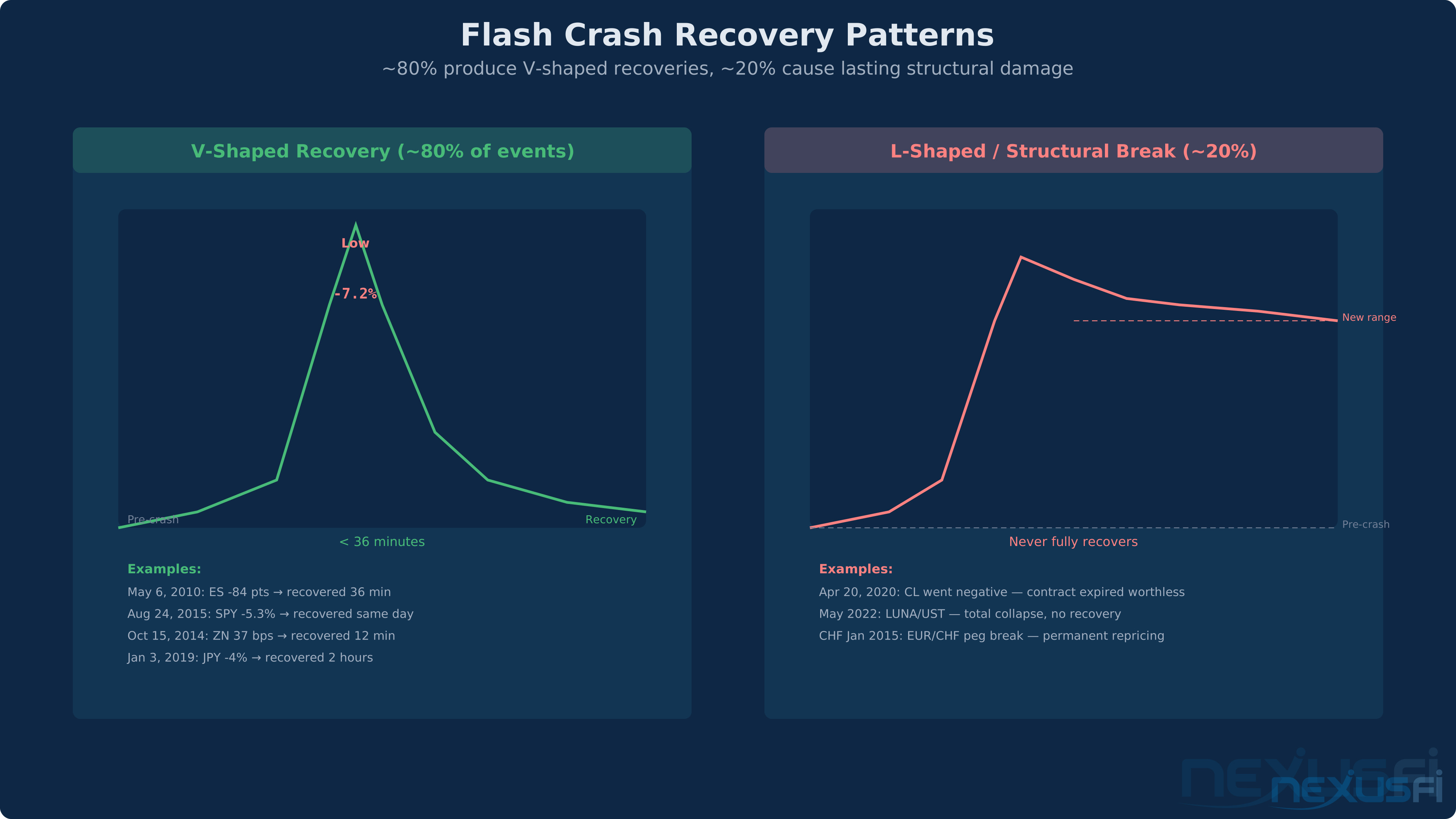
Fundamental repricing is not a flash crash: When ES falls 50 handles on a legitimate macro shock — earnings miss, major geopolitical event, unexpected Fed decision — price discovery is happening. The book is thin, but price is finding a new equilibrium, not cascading through a liquidity vacuum. These moves are often one-directional without the V-shaped recovery that characterizes true flash crashes.
Low-liquidity Globex sessions are not flash crashes: Thin books in overnight trading are structurally normal. A 5-handle move on 100 contracts at 2am doesn't mean you're seeing a flash crash. The HFT feedback loops that characterize true flash crashes require significant algorithmic participation, which concentrates in RTH.
Strong trend days can feel like flash crashes but aren't: A downside trend day where ES falls 60 handles over 6 hours with consistent selling is not a flash crash. There's directional intent and real selling at every level, not a liquidity vacuum cascade followed by recovery. The signal: flash crashes recover much within hours. Trend days don't.
Knowledge Map
Go Deeper
Build on this knowledgeCitations
- — Spoo-nalysis ES e-mini futures S&P 500 (2024) 👍 6“the book thins out greatly when volatility increases... self-reinforcing reflexive loop. Even just the potential for volatility increases leads market makers to be less willing to step in front of the train.”
- — Spoo-nalysis ES e-mini futures S&P 500 (2014) 👍 5“The Flash Crash was triggered by a $4.1 billion, 75,000 contract e-mini sell order. Leveraged ETFs are effectively short gamma -- when the market is going up they must adjust portfolios by increasing exposure.”
- — HFT High Frequency Trading (2013) 👍 4“High Frequency Trading caused the Flash Crash. That aggressive act sucked out a significant amount of liquidity and caused thousands of trading instruments to reprice, severely overloading all trading systems.”
- — Spoo-nalysis ES e-mini futures S&P 500 (2015) 👍 12“pretty amazing that in ES, even in HFT land, there is not one contract at the offer through 13 levels of depth.”
- — Managing risk with ES trading (2020) 👍 3“If your order is triggered and market conditions are such that the best available bid to sell into is below the protection limit, you will have a sell limit sitting in the book, and will NOT get a fill unless someone takes your offer.”
- — Limit Orders (2010) 👍 3“CME limits slippage to 50% of the No Bust Range. For ES the No Bust Range is 6.00 points, so a market sell order is automatically transformed to a limit order with a limit price = current best bid - 3.00 points.”
- — What caused the large difference between ES price and S&P price? (2020) 👍 3“ES hit limit down at 2567.25, so it is only allowed to uptick at 2567.50 and above. At some point 10.8k+ contracts for offer were piled up at that level.”
- — The CL Crude-analysis Thread (2019) 👍 3“A large sell order swept through 46 price levels -- anyone who was long and had a tight stop loss set would not have been able to get out of the trade. CME changes the stop market order to a limit order further down.”
- — Spoo-nalysis ES e-mini futures S&P 500 (2020) 👍 5“ES and NQ are limit down (5%) in response this evening. ES Circuit Breaker triggers for tomorrow RTH session: 7% = 2546.50, 13% = 2382.00, 20% = 2190.00. I am starting to wonder if the market is heading for a week or two closure.”
- — Spoo-nalysis ES e-mini futures S&P 500 (2020) 👍 4“Circuit breakers and trading halts are not the same as limit up/down. Circuit breakers on the S&P 500 are 7%, 13%, and 20%, and were first put in place after the 87 crash. Limit up/down on CME futures is in place from the open (18:00 ET) to the cash open (9:30 ET).”
- — Spoo-nalysis ES e-mini futures S&P 500 (2020) 👍 6“The limit down price is the maximum allowable decline in the price of a stock or commodity in a single trading day. The limits were introduced to forestall unusual market volatility and counteract the panic selling that tends to compound an initial price decline.”