



Circuit Breakers, Price Limits, and Trading Halts in Futures Markets
Overview #
Overview #
Circuit breakers, price limits, and trading halts are the guardrails that prevent futures markets from driving off a cliff during extreme volatility. They're the exchange's version of a controlled pause — when price moves too fast, the market stops to let participants catch their breath, reassess, and restore orderly two-sided trading.
Every futures trader needs to understand these mechanisms before they encounter one live. Discovering how circuit breakers work while your P&L is hemorrhaging and your orders aren't filling is the wrong time to learn. The mechanics differ by product group, the rules change periodically, and the practical implications for your open positions — margin, exits, hedging — are something no trading textbook adequately prepares you for.
This article covers the three major protective mechanisms in futures markets: market-wide circuit breakers for equity index futures, daily price limits for commodities, and dynamic circuit breakers (Velocity Logic) that protect individual contracts from price spikes. You'll learn what happens during each type of halt, what you can and can't do with your positions, and how experienced traders manage risk when the market locks them in.
The Three Protective Mechanisms #
Futures exchanges use three distinct systems to manage extreme price moves. Each works differently, applies to different products, and has different implications for your trading.
Market-Wide Circuit Breakers (Equity Index Futures)
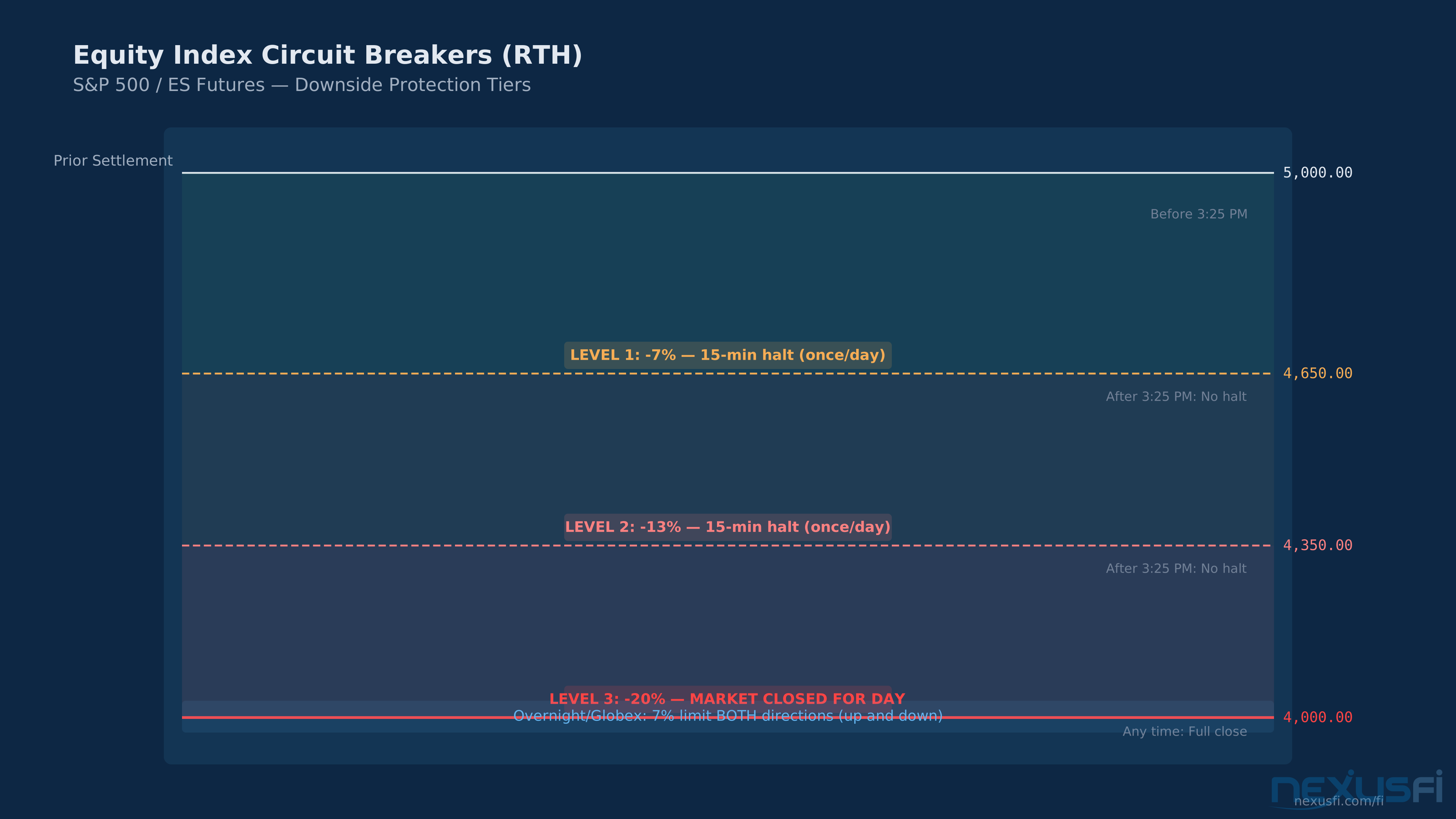
U.S. equity index futures — ES, NQ, RTY, YM, and their micro counterparts — use a tiered circuit breaker system coordinated with the NYSE. These limits exist only on the downside during regular trading hours (RTH), because the mechanism was designed to prevent cascading panic selling.
RTH Circuit Breaker Thresholds (9:30 AM - 4:00 PM ET):
- Level 1 -- 7% decline: Trading halts for 15 minutes. Triggered only once per day. If hit after 3:25 PM ET, no halt occurs.
- Level 2 -- 13% decline: Trading halts for 15 minutes. Triggered only once per day. If hit after 3:25 PM ET, no halt occurs.
- Level 3 -- 20% decline: Trading halts for the remainder of the day. No time restriction -- this one shuts the market down.
These thresholds are calculated from the prior day's fixing price (the settlement price). The fixing price is recalculated quarterly, and the actual dollar levels are published daily by the exchange.
Overnight/Globex Session Limits: During the overnight session (6:00 PM - 9:30 AM ET), equity index futures have a 7% price limit in both directions — up AND down. This is different from RTH, where only downside limits apply. If ES hits the 7% overnight limit, it can't trade beyond that level, but trading doesn't halt — it just can't move past the boundary. Orders that would execute beyond the limit are rejected.
[1] At the time, overnight limits were 5% — CME has since widened them to 7%.
There's also an intraday dynamic circuit breaker: a 3.5% move within a single hour triggers a brief pause across all equity index contracts. This catches fast moves that don't reach the 7% threshold but are still disruptive to orderly trading.
Daily Price Limits (Commodities)
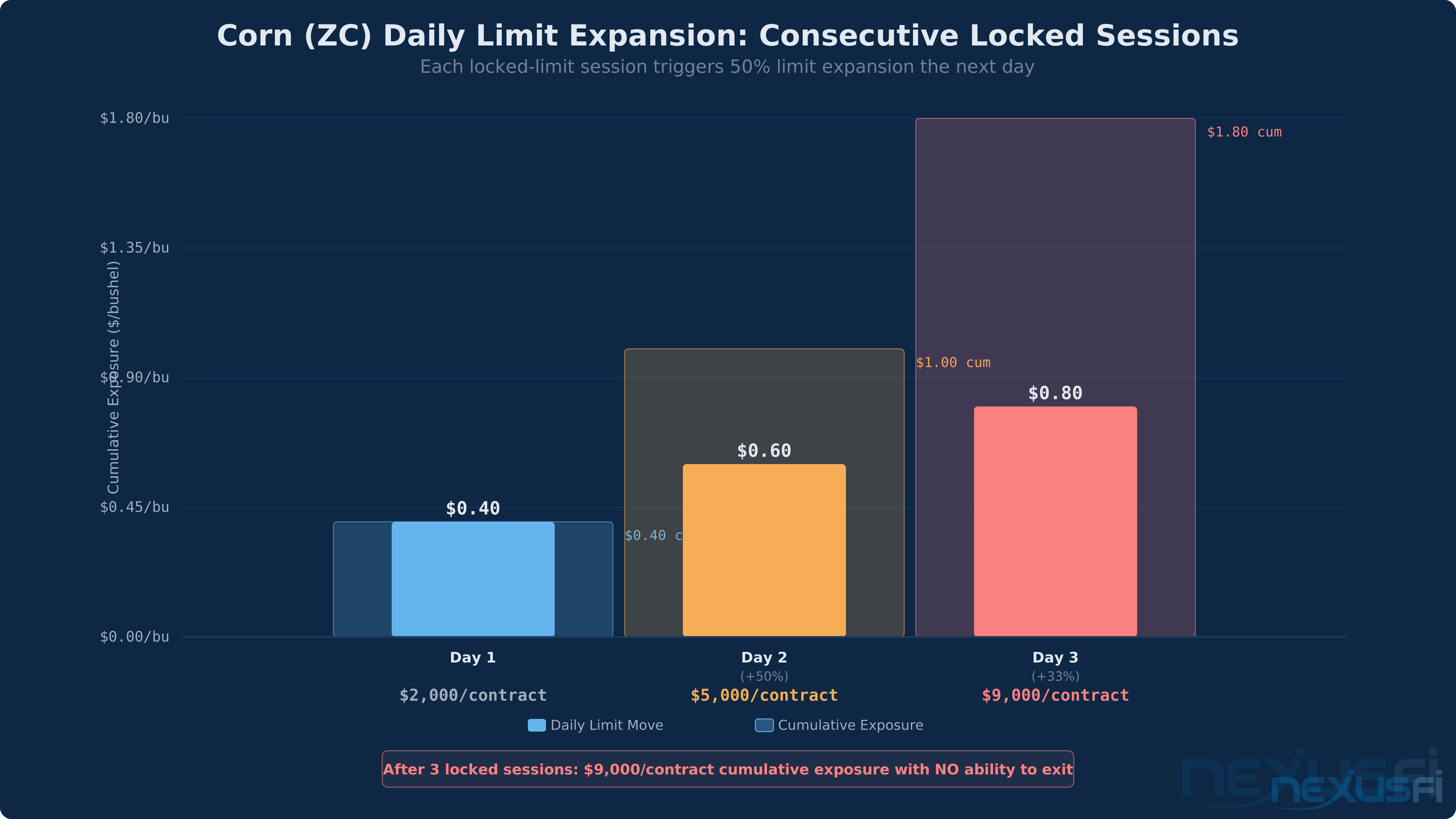
Agricultural futures use fixed daily price limits — a maximum range the contract can move from the prior settlement in either direction, up or down. These aren't circuit breakers (trading doesn't necessarily halt), but price movement beyond the limit is prohibited.
How Fixed Limits Work:
- Each product has a set daily limit (e.g., corn at $0.40/bushel, wheat at $0.45/bushel)
- If the limit is hit, the market can still trade AT the limit price but not beyond it
- If a contract settles at its limit price, the limit typically expands 50-100% for the next session
- The expansion can cascade -- multiple consecutive limit days mean progressively wider limits
As @Fat Tails documented in a complete analysis of ZC (corn) limit moves in 2012: six limit events occurred in a single year, "three of them triggered by USDA reports, two of them triggered by fears for a drought." [2] Knowing the calendar of major reports is essential risk management for commodity traders.
Dynamic Circuit Breakers and Velocity Logic
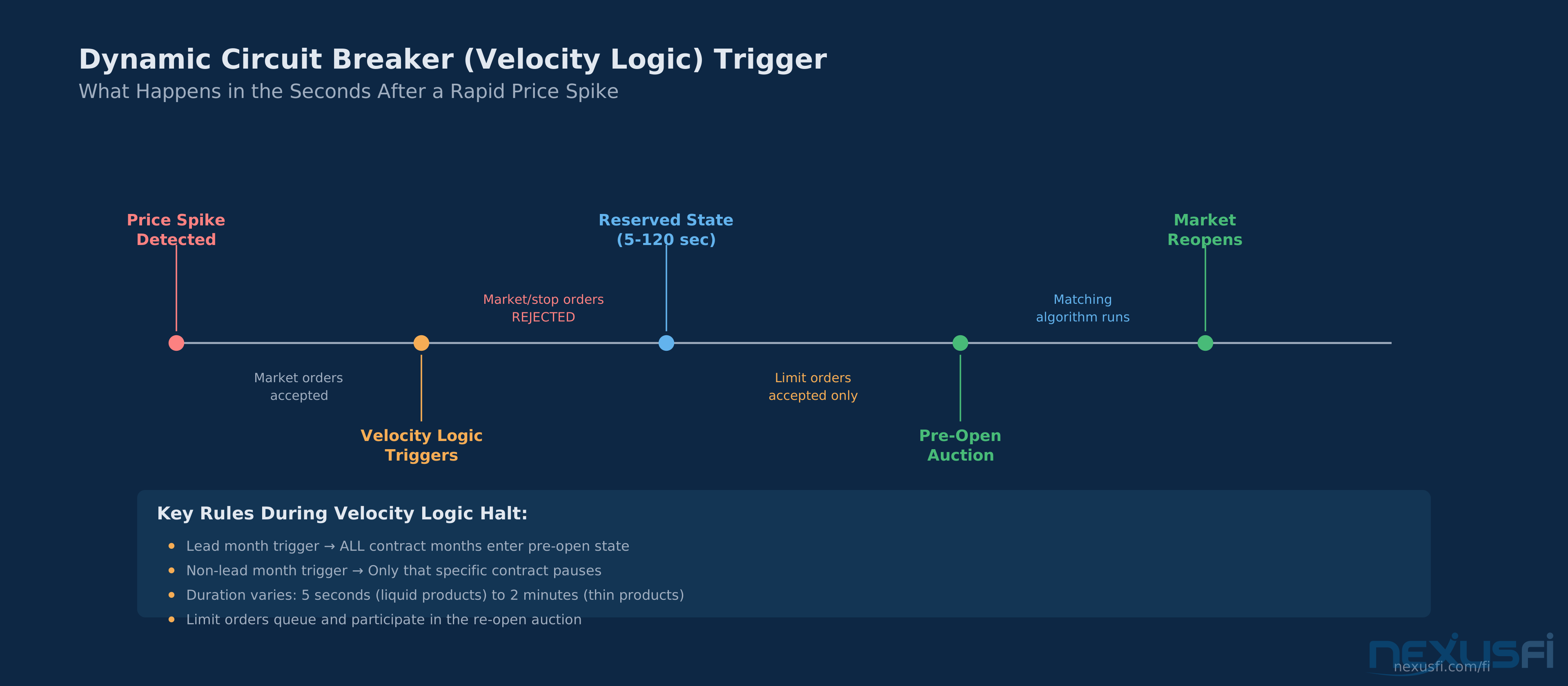
CME's Velocity Logic is an automated system that monitors for sharp price moves within short time windows. Unlike daily price limits or RTH circuit breakers, Velocity Logic operates at the individual contract level and can trigger at any time during the trading session.
When Velocity Logic detects a price move exceeding its threshold — typically a percentage move within a few seconds — it immediately transitions the contract into a brief "reserved" state (5-10 seconds for liquid products, up to 2 minutes for others). During this state:
- Market orders and stop-market orders are NOT accepted
- Limit orders can still be entered and participate in the re-open auction
- The contract re-opens through a matching algorithm similar to the regular open
If a DCB triggers in the primary (lead month) contract, all associated contract months immediately enter a pre-open state. If triggered in a non-primary month, only that specific contract pauses. [3]
During March 2020, CME dynamically widened DCB thresholds for several energy and metals products in response to extreme volatility: @SMCJB reported that "Palladium Futures (PA) from 5% to 10%, RBOB Gasoline Futures (RB) from 7% to 15%, Heating Oil (HO) Futures from 7% to 15%." [3]
Velocity Logic triggers are more common than most traders realize. They happen during fast markets, around major news releases, and occasionally during pre-open periods when order books are thin. CBOT fined Hertshten Group $95,000 in 2026 after their automated "looping" messages triggered Velocity Logic circuit breakers in Federal Funds and SOFR futures during pre-open sessions. [5]
Limit Up vs Locked Limit: The Critical Distinction #
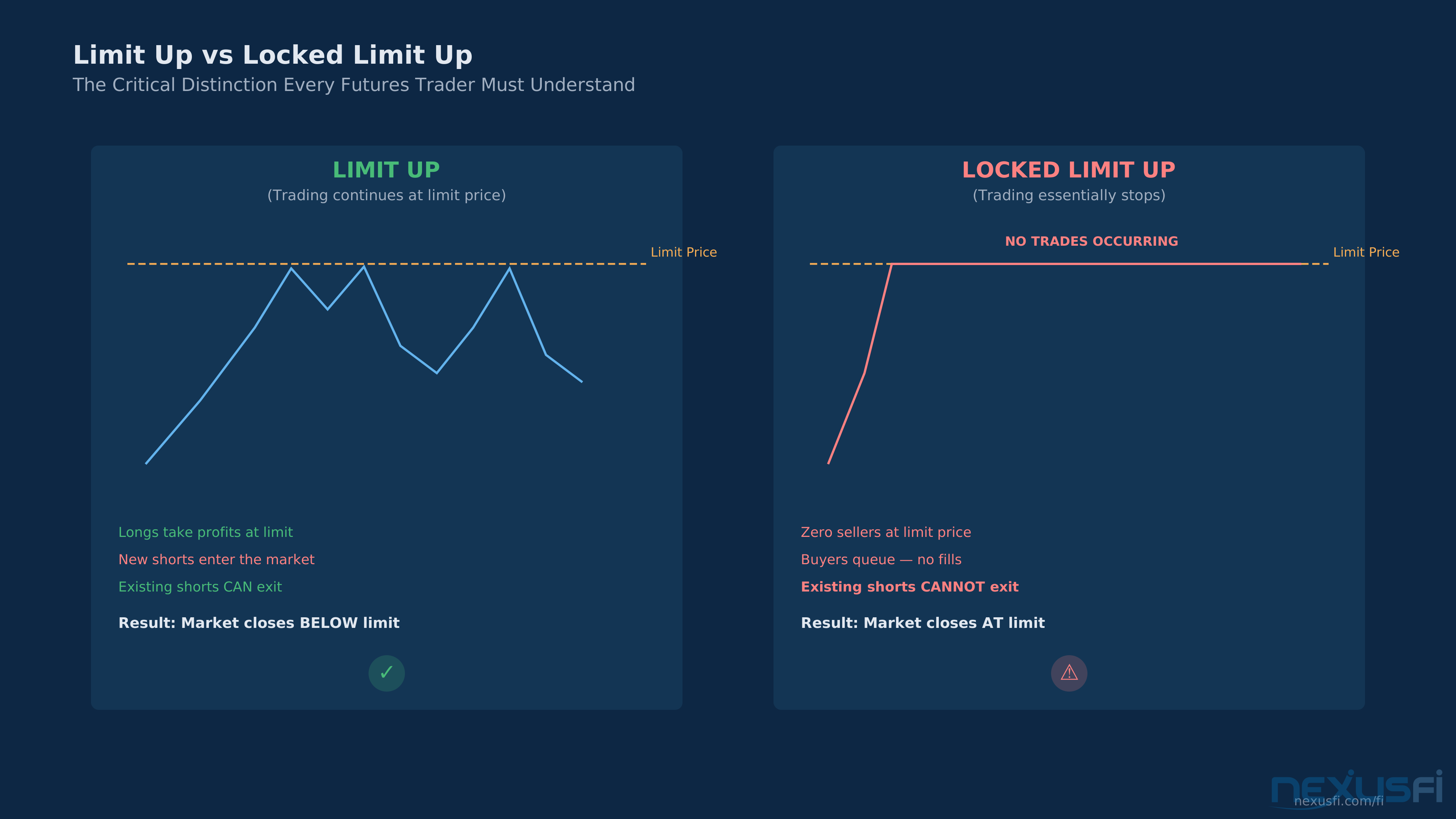
This is where confusion costs traders real money. "Limit up" and "locked limit up" describe very different situations with dramatically different implications for your positions.
Limit Up (or Limit Down): The market reaches the daily limit price, and trading continues AT or near that price. Sellers enter the market — some longs take profits, some new shorts step in — and transactions occur. You CAN exit positions. The market closes below the limit price.
Locked Limit Up (or Locked Limit Down): The market reaches the limit price and trading basically stops because there's a total imbalance — all buyers, no sellers (for locked limit up). You CANNOT exit a short position because nobody will sell to you at or below the limit price.
The locked limit scenario can persist for multiple consecutive sessions. Each day, the limit expands, but if the fundamental driver is strong enough — drought destroying a corn crop, a pandemic shutting down the global economy — the market can open at the new expanded limit and immediately lock again. This is the nightmare scenario: you're trapped in a losing position that gets worse every day, and you can't get out.
Getting Out of a Locked Limit Position #
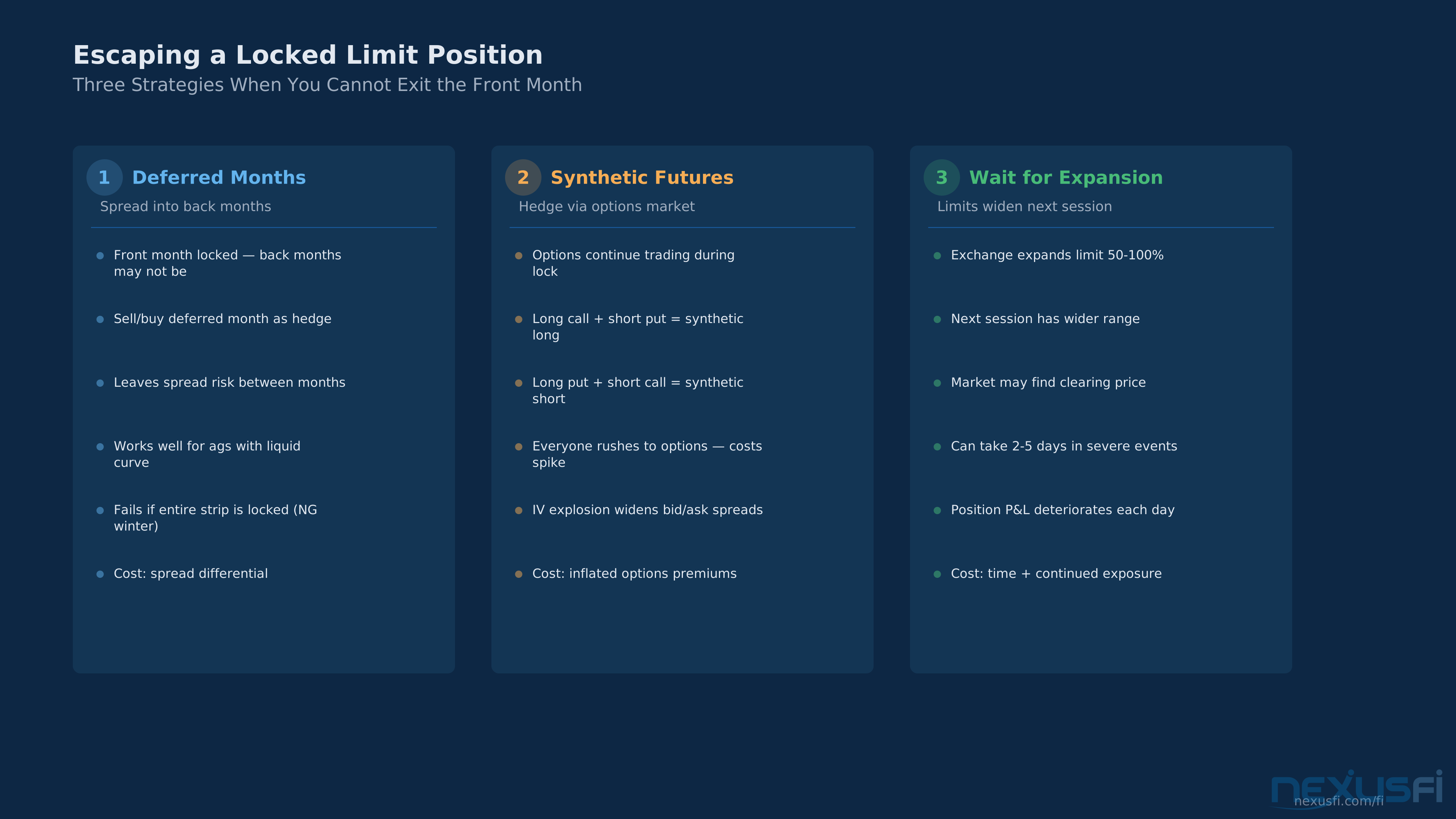
Experienced traders don't sit and watch their account evaporate during a locked limit event. There are three escape strategies, each with tradeoffs.
Strategy 1: Spread Into a Deferred Month
If the front month is locked limit, back months might not be. You can sell (or buy) a deferred month contract to create an approximate hedge.
[8] If the entire forward curve is locked, you're stuck until limits expand enough.
Strategy 2: Create a Synthetic Futures Position Using Options
Options on futures continue to trade even when the underlying futures contract is locked limit. You can construct a synthetic futures position to hedge: long 1 call + short 1 put at the same strike creates a synthetic long. Long 1 put + short 1 call creates a synthetic short.
The cost of synthetic hedging during a locked limit event can be extreme. Options implied volatility spikes, bid-ask spreads blow out, and market makers may reduce their participation. You'll pay up, but you'll cap your exposure.
Strategy 3: Wait for Expanded Limits
If a contract settles at its limit, the exchange typically expands the limit for the next session. For some products the expansion is 50% (corn goes from $0.40 to $0.60), for others it can double. After sufficient expansion, the market usually finds a clearing price within the wider range.
The risk: if the move is truly fundamental (think COVID shutdowns, a major crop failure, or an oil embargo), the market can keep locking limit at expanded levels for days. This is why position sizing must account for multi-day limit moves, not just a single session's limit.
What Happens to Your Account During a Halt #
The margin and P&L mechanics during circuit breaker events create nasty surprises for traders who haven't prepared.
Margin Calls Don't Wait: Your broker can issue margin calls based on the limit price, even though you can't exit the position. If your account equity drops below maintenance margin, the broker may attempt to liquidate other positions to free up capital — even profitable ones.
You Can Lose More Than Your Account:
[10] This is not theoretical — it happens.
Stops Don't Protect You: Your stop-loss order is meaningless during a locked limit or a gap through the limit. If corn opens at the expanded limit price and locks immediately, your stop at the original price never executes. You're filled at whatever price is available when the market finally unlocks — which could be far worse than your stop price.
Trade Cancellations: After a flash crash or halt, the exchange may cancel some trades that executed at "clearly erroneous" prices. If you got filled during the chaos, your fill might be busted after the fact, leaving you with an unintended open position.
Operational Risk Compounds Market Risk: System failures, network disruptions, and broker software crashes often coincide with extreme market events — exactly when you need your systems most.
[10] Redundancy isn't paranoia when the exchange goes dark.
Historical Examples Worth Studying #
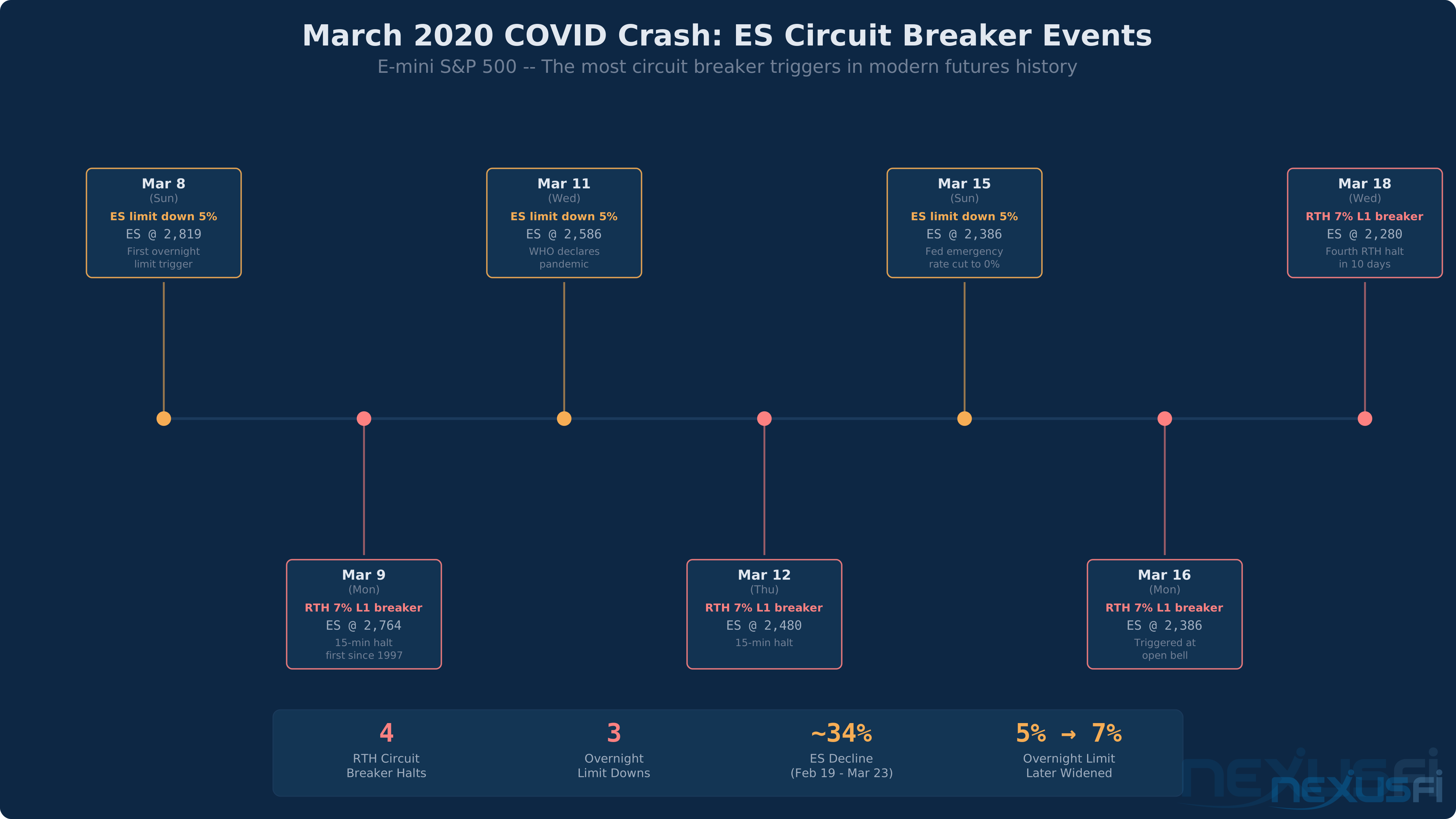
March 2020: COVID Crash
The COVID pandemic produced the most circuit breaker events in modern futures trading history. Between March 9-18, 2020, ES hit the 5% overnight limit down four times in a single week, RTH circuit breakers triggered at the 7% level multiple times, and CME dynamically widened circuit breaker levels for energy and metals products. The overnight limit was later increased from 5% to 7% to reduce the frequency of triggers.
March 2020 revealed a key liquidity dynamic: when ES is locked limit down overnight, price discovery effectively stops for equity futures while ETFs (like SPY) continue trading.
[11] The ES-SPY basis blew out to 50+ points because futures couldn't move lower to match where equities were actually trading.
Agricultural Limit Moves
Commodity limit moves are more frequent but typically less dramatic than equity index circuit breakers. They're driven by USDA reports, weather events, and geopolitical disruptions. The 2012 U.S. drought produced six limit events in corn alone within a single year. [2]
The practical lesson: if you trade agricultural futures, USDA report dates belong on your calendar. The Prospective Plantings report, WASDE, and the quarterly Grain Stocks reports are the catalysts that produce the most limit events.
2010 Flash Crash
The May 6, 2010 flash crash triggered a 9.2% intraday decline in ES in approximately 20 minutes. A joint SEC-CFTC investigation later determined that a single large sell order — 75,000 E-Mini contracts executed via an algorithm that targeted volume without regard to price or time — set off a cascading liquidity crisis that spread from futures to equities. [13] This event led to the creation of the modern circuit breaker system. Before 2010, circuit breakers existed but at much wider thresholds that couldn't provide meaningful protection against rapid cascading sell-offs.
Practical Preparation #
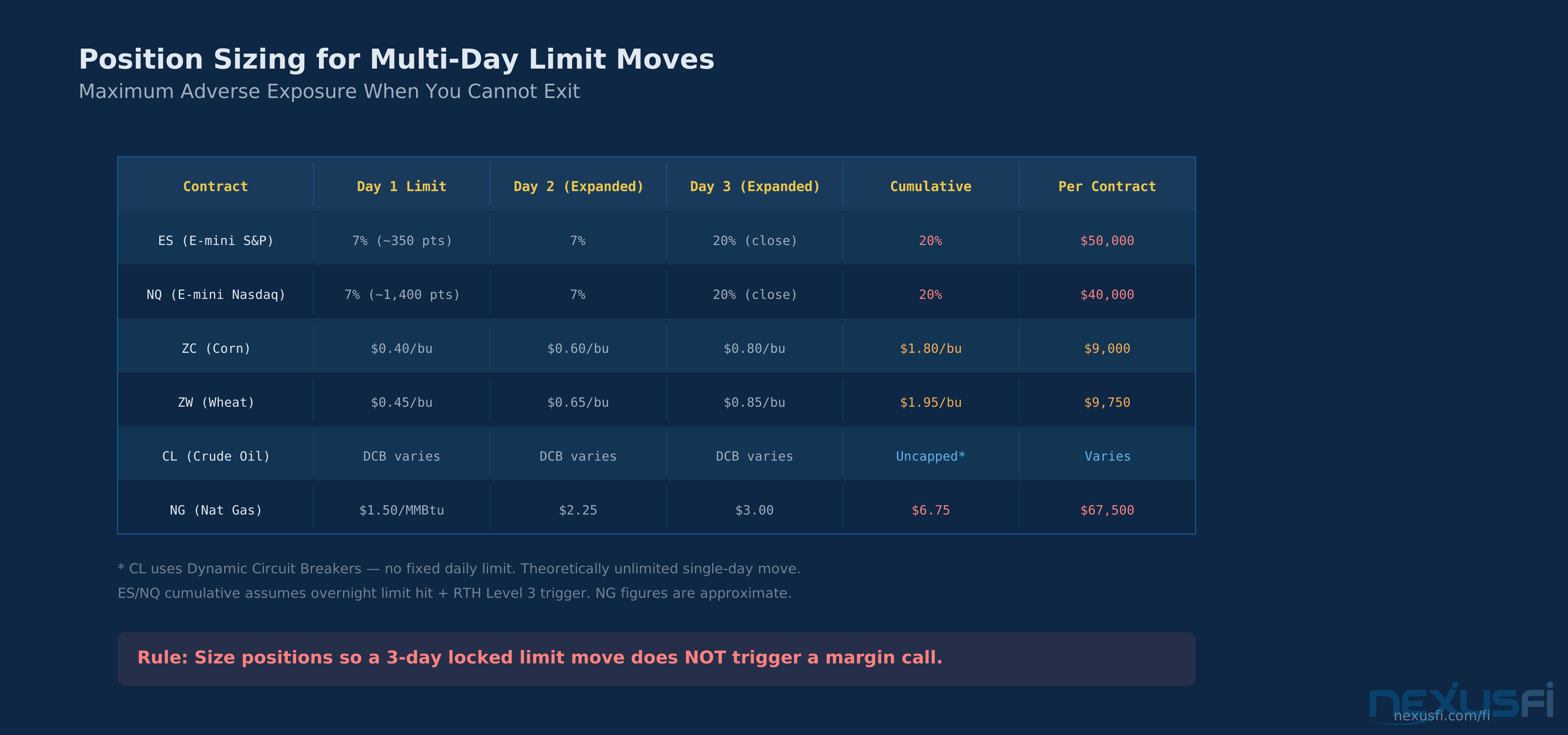
Position Sizing for Limit Risk
Your position sizing must account for the worst-case scenario: a locked limit move that persists for multiple sessions with expanding limits, where you cannot exit your position.
For agricultural futures, calculate the maximum multi-day loss assuming 3-5 consecutive limit moves with expanding limits. For corn at $0.40/bushel initial limit ($2,000 per contract), three expanding limit days could mean cumulative exposure of $0.40 + $0.60 + $0.80 = $1.80/bushel ($9,000 per contract) before you can exit.
For equity index futures, the overnight limit is 7%. On a single ES contract at 5,000, that's $17,500. If you're carrying overnight positions in ES, your account must absorb this move without triggering a margin call.
Know Your Product's Specific Limits
CME publishes current price limits daily at cmegroup.com/trading/price-limits.html. [12] These change quarterly for equity index products and can be adjusted dynamically for energy and metals during periods of elevated volatility. Don't assume yesterday's limits are today's limits.
Key product categories and their limit structures:
- Equity Index (ES, NQ, RTY, YM): 7% overnight both directions + 7%/13%/20% RTH downside circuit breakers + 3.5% hourly dynamic circuit breakers
- Agricultural (ZC, ZW, ZS): Fixed daily limits with expansion rules
- Energy (CL, NG, RB, HO): Dynamic circuit breakers (percentage-based)
- Metals (GC, SI, HG): Dynamic circuit breakers (percentage-based)
- Interest Rates (ZB, ZN, ZF): Dynamic circuit breakers
Pre-Event Checklist
Before USDA reports, FOMC decisions, NFP releases, and other high-impact events:
- Check current limit levels for your products at cmegroup.com
- Calculate your maximum exposure if locked limit (including margin implications)
- Verify you have alternative exit routes (options account, deferred months)
- Test your backup internet connection and secondary trading platform
- Consider reducing position size or flattening entirely before binary events
Knowledge Map
Prerequisites
Understand these firstGo Deeper
Build on this knowledgeReferences This Article
Articles that build on this topicCitations
- — Spoo-nalysis ES e-mini futures S&P 500 (2020) 👍 5“ES and NQ are limit down (5%) in response this evening. ES Circuit Breaker triggers for tomorrow's RTH session: 7% = 2546.50, 13% = 2382.00, 20% = 2190.00.”
- — Limit Up Limit Down Question (2013) 👍 11“That made 6 events per year, three of them triggered by USDA reports, two of them triggered by fears for a drought.”
- — CME Globex | Dynamic Circuit Breakers (2020) 👍 6“Palladium Futures (PA) from 5% to 10%, RBOB Gasoline Futures (RB) from 7% to 15%, Heating Oil (HO) Futures from 7% to 15%.”
- — CME Globex | Dynamic Circuit Breakers (2022) 👍 3“The CME Velocity Logic triggered today in all the Micro MES, MNQ and MYM.”
- — CBOT Fines Hertshten Group $95K for Pre-Open Looping That Triggered Circuit Breakers (2026)“Looping messages contributed to an aberrant Indicative Opening Price, triggering a Velocity Logic Dynamic Circuit Breaker.”
- — Limit Up Limit Down Question (2013) 👍 4“The total absence of sellers makes it impossible to buy or to exit an existing short position.”
- — Help needed on Locked limit (2014) 👍 4“You can spread out of the position in a deferred month or spread out of the position in the options market.”
- — The CL Crude-analysis Thread (2019) 👍 3“Sure the prompt month contract might be locked limit up, but the 2nd, 3rd, 4th etc might not be.”
- — Limit Up Limit Down Question (2013) 👍 4“When a market is locked-limit, everyone scurries to the options markets to find out where the synthetics are trading at.”
- — Flash crash and risk on capital (2012) 👍 13“You are responsible for your actions and losses, and if your account is depleted, it is obvious that you need to reimburse the broker.”
- — What caused the large difference between ES price and S&P price? (2020) 👍 3“ES lead month hit limit down at 2567.25, so it is only allowed to uptick at 2567.50 and above.”
- CME Group — Price Limits: Ags, Energy, Metals, Equity Index (2026)
- SEC-CFTC — Findings Regarding the Market Events of May 6, 2010 (2010)