



Williams Alligator and Awesome Oscillator: The Chaos Theory System That Identifies Trends Before They Mature
Overview #
Bill Williams wasn't building another oscillator. When he published Trading Chaos in 1995 and New Trading Dimensions in 1998, he was making a specific claim: markets are non-linear dynamic systems, and the tools built for linear systems fail because they're applying the wrong physics. The Alligator, the Awesome Oscillator, and Fractals are his attempt to build indicators that actually match how markets behave.
The idea has held up better than most. The Alligator's three-line structure identifies market regimes with a clarity that most single-period indicators can't match. The Awesome Oscillator measures momentum acceleration without the lookback biases baked into MACD. Fractals give you entry triggers rooted in actual price structure rather than arbitrary time periods. Used together, they form a system that tells you three things: what the market is doing right now (Alligator), whether momentum confirms it (AO), and exactly where to pull the trigger (Fractals).
At ES 6,881 and NQ 25,342, these tools are as relevant as they were in Williams' day. The three-layer confirmation structure filters out the noise that grinds down traders who try to trade every signal in every condition.
@"I spent some time studying Bill Williams work on fractals. I am currently working with the Fractals indicator and the Alligator. [It] requires that the lines all be properly aligned before a trade can be taken." — @vmodus, Attack of the Robots - An Algo Journal (2020)
The Components: Jaw, Teeth, Lips #
The Alligator is three smoothed moving averages of the median price (high + low / 2), each with a different period and each shifted forward in time by a different offset. That forward-shift is not cosmetic — it's the entire point.
Jaw (SMMA 13, offset 8): The slowest line, shifted 8 bars into the future. This is the Alligator's slow equilibrium — the baseline price level where slow money lives. When the Jaw is flat, the market has no directional conviction at the institutional time horizon. When the Jaw is sloping and all three lines are separating, something real is happening.
Teeth (SMMA 8, offset 5): The medium line, shifted 5 bars forward. This tracks intermediate swing direction. When the Teeth starts pulling away from the Jaw in one direction while the Lips leads both, that's the Awakening state — the early signal that a new trend is forming.
Lips (SMMA 5, offset 3): The fastest line, shifted 3 bars forward. This is the aggression indicator. It moves first. When Lips crosses above Teeth, that's the earliest structural signal that buying pressure is taking control. When all three lines are in order — Lips above Teeth above Jaw in an uptrend — the market is eating.
The SMMA (Smoothed Moving Average) matters here. Unlike an EMA, the SMMA applies its weighting differently, resulting in a smoother response that resists the noise spikes that wreck EMA-based signals. In fast futures markets, that smoothing prevents the Lips from whipsawing on every two-tick counter-move.
The forward offsets are the counterintuitive part. By shifting each line forward, the Alligator draws the "expected" position of each average at the current bar based on where it was several bars ago. This creates the visual spread-and-convergence pattern that makes the three states identifiable by eye. When the lines are tightly clustered and intertwined, the offsets are fighting each other — that's consolidation. When they're spread and ordered in the same direction, the offsets reinforce each other — that's trend.
Why the 13/8/5 ratio matters: Williams chose these periods deliberately. 5, 8, and 13 are consecutive Fibonacci numbers, and the ratio between consecutive Fibonacci numbers converges to the golden ratio (1.618). Williams believed this reflected natural market structure. You don't need to accept the mysticism to use the tool — but changing these periods breaks the harmonic relationship between the three lines. If you must adjust, scale all three proportionally rather than tweaking one in isolation.
The Three States: Sleeping, Awakening, Eating #
This is the core of the system. Rather than generating buy/sell signals continuously, the Alligator describes the market's state. You only trade in specific states.
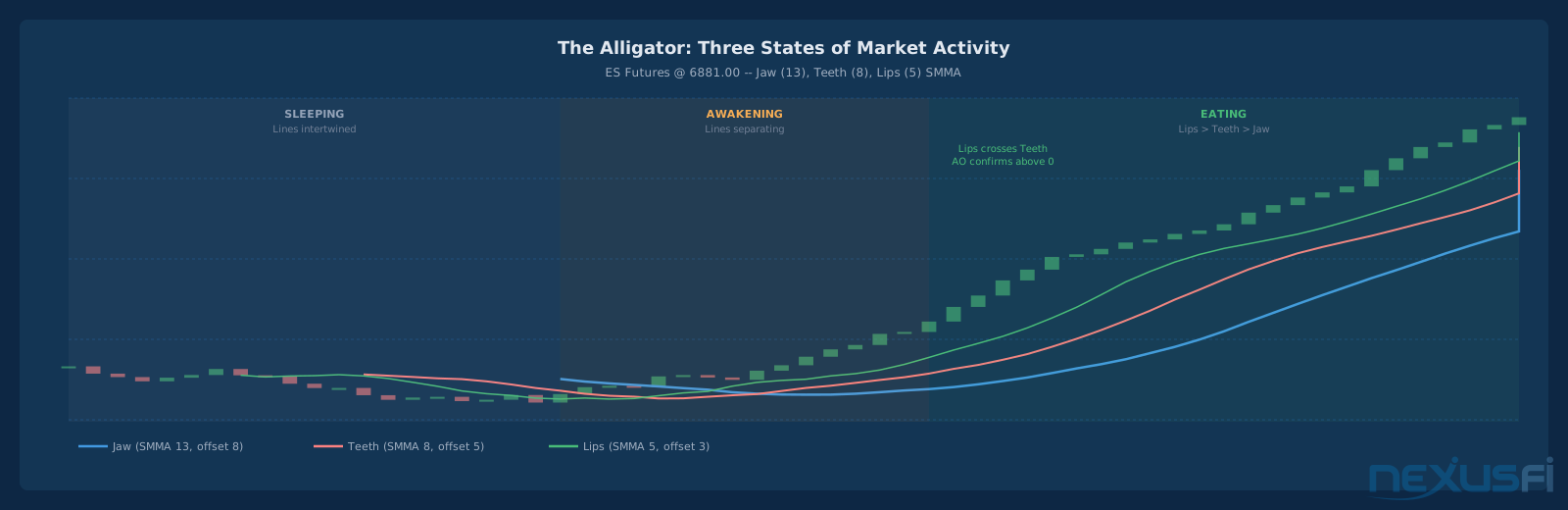
Sleeping: The three lines are intertwined, crossing each other frequently, with no persistent ordering. The Jaw, Teeth, and Lips are clustered together within a narrow range. The market is in price discovery within a range — testing values without committing to a direction. NexusFi member @vmodus, working through Bill Williams' books while building an automated system, found that "the Alligator and fractals together" gave frequent signals in this state that didn't follow through. That's exactly right — in the Sleeping state, fractal breaks mean nothing because there's no directional conviction behind them.
The Sleeping state is the most dangerous for discretionary traders because it generates false signals relentlessly. Every bounce looks like a breakout. Every dip looks like support. The system's answer to this is blunt: don't trade. The Alligator is sleeping. Wait.
Awakening: The lines start to separate. Typically the Lips moves first. The Lips may cross above the Teeth, which may still be close to the Jaw. AO starts moving away from zero in one direction. A fractal forms at the new swing point. This is the transition state — the market is gathering directional energy.
Not every Awakening leads to an Eating state. Some end with the lines reconverging. The key indicator for real Awakening vs fake Awakening is AO confirmation. If the Lips/Teeth cross is accompanied by AO moving decisively away from zero (not just crossing zero briefly and bouncing back), the odds improve substantially.
Eating: All three lines are clearly ordered — Lips above Teeth above Jaw in an uptrend, or Lips below Teeth below Jaw in a downtrend — and the separation between them is expanding. The market is trending. This is when the system runs. Price makes a series of higher fractals (or lower fractals in a downtrend), each one extending the structure. AO stays on the correct side of zero.
The eating state can persist for dozens of bars. The Alligator doesn't tell you when the trend will end — it tells you when it has ended, by the lines losing their order and convergence beginning. That's an exit signal, not a stay-flat signal.
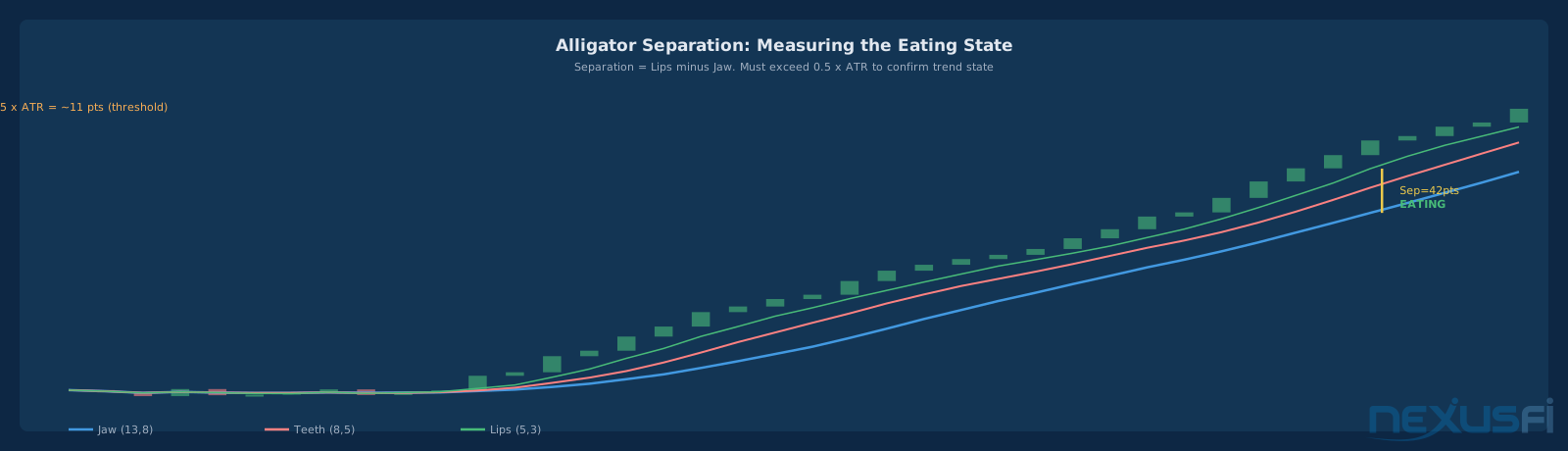
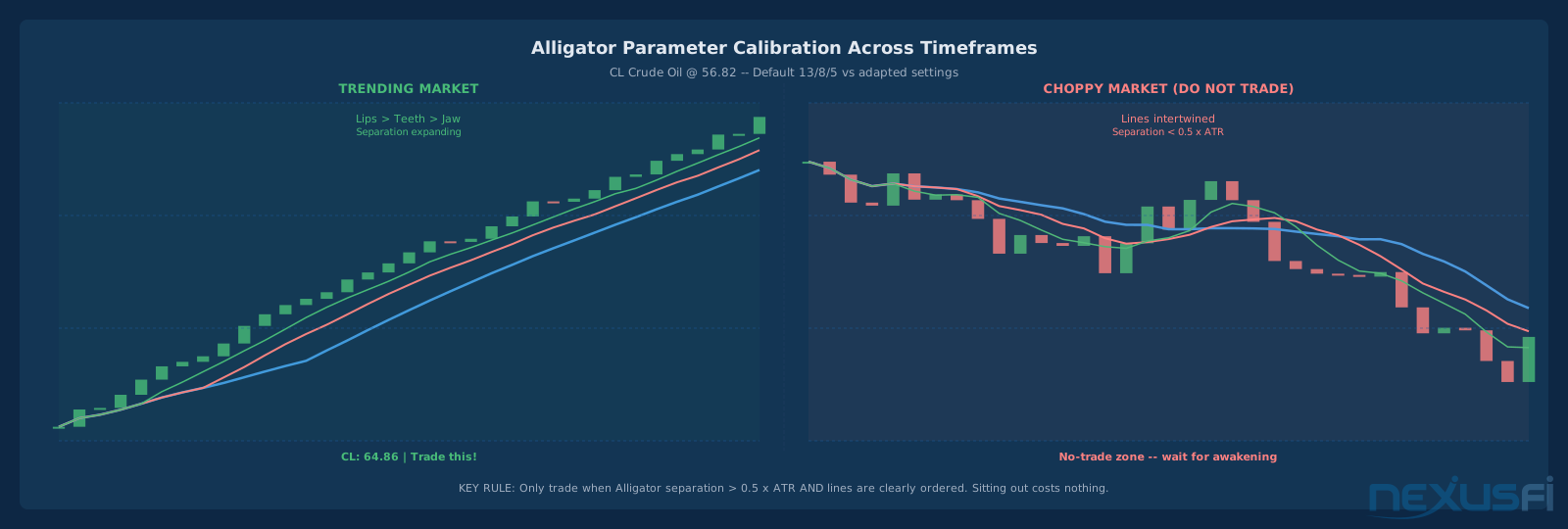
Operationalizing with separation threshold: A practical threshold that works across most liquid futures is separation (Lips minus Jaw) exceeding 0.5 times the 14-period ATR. Below that threshold, the lines may appear ordered visually but haven't separated enough to indicate real directional energy. This filter eliminates a large percentage of false entries from marginally-ordered lines in low-volatility conditions.
The Alligator's three-state framework is the entire system. Sleeping = stand aside. Awakening = watch. Eating = trade. If you only implement one rule from Williams' work, make it this: refuse all entries when the lines are intertwined. That single filter eliminates the majority of losing trades.
Awesome Oscillator: The Momentum Engine #
The Awesome Oscillator is the second layer of the system. The formula is deliberately simple: subtract the 34-period SMA of the median price from the 5-period SMA of the median price. Plot the result as a histogram around zero.
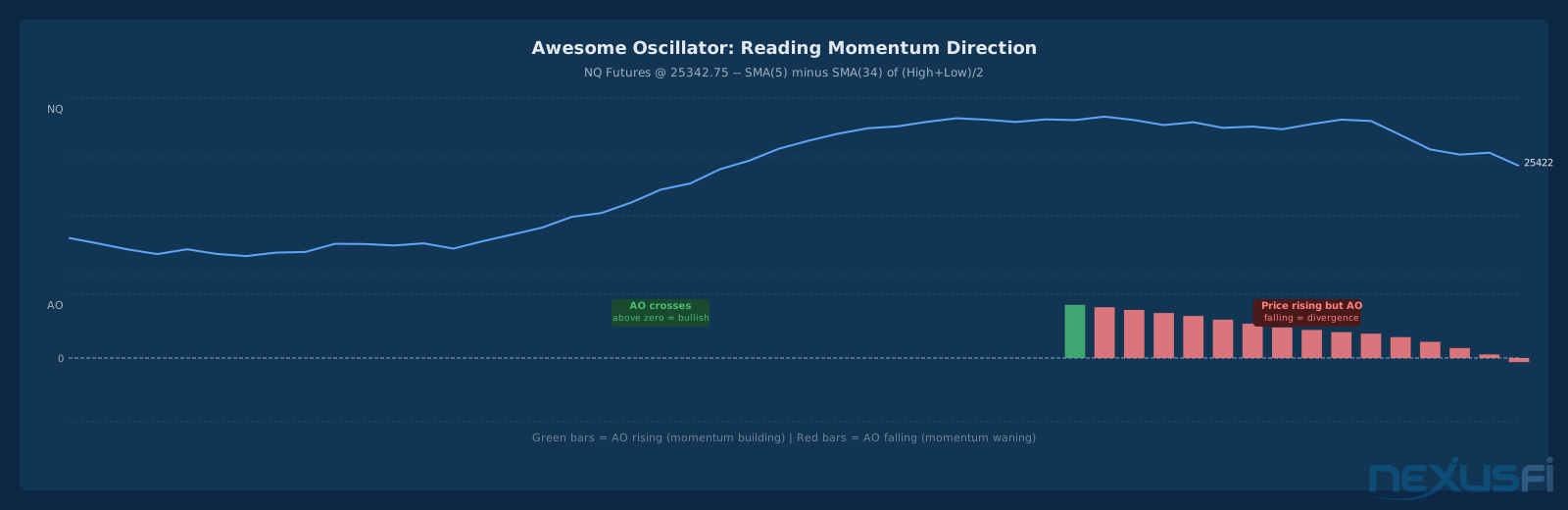
What this measures is acceleration. A rising histogram means the fast average (5-period) is pulling away from the slow average (34-period) — momentum is building. A falling histogram means the gap is narrowing — momentum is fading. The zero line represents the equilibrium point where both averages are equal.
AO above zero and rising: The clearest bullish signal. Momentum is positive and increasing. In an eating Alligator, this confirms the trend has real force behind it.
AO above zero and falling: Momentum is positive but decelerating. The trend may be maturing. This is an early warning to tighten stops rather than add to positions.
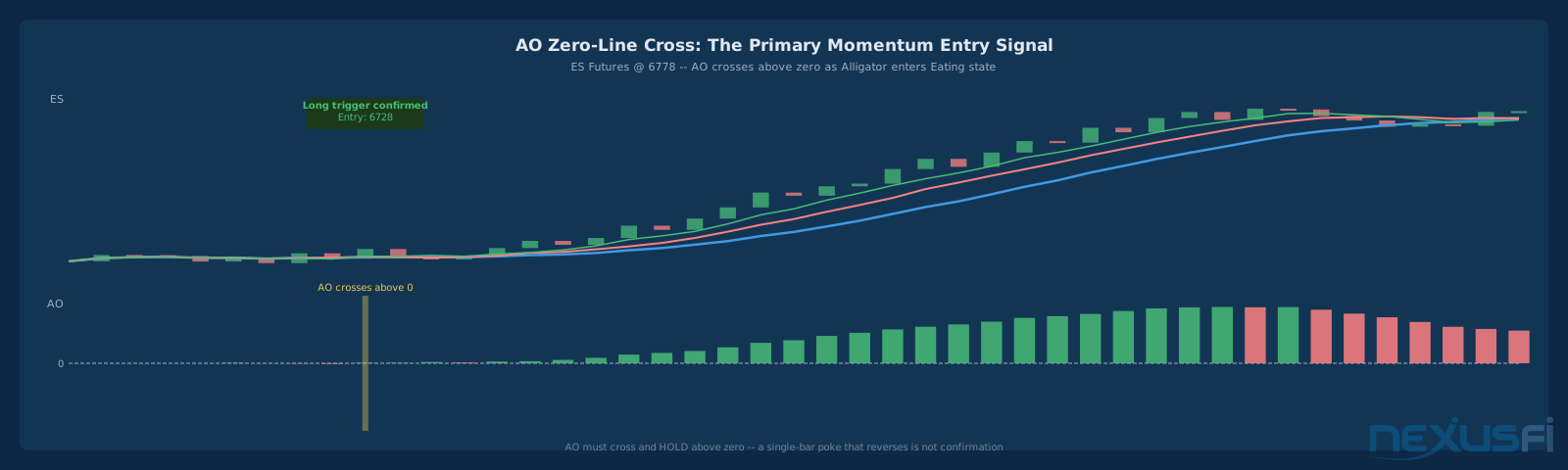
AO crossing from below to above zero: The momentum trigger. When AO crosses above zero while the Alligator is in Awakening or Eating state, the combination is the entry confirmation Williams' system requires.
— AO and the Alligator are designed to work together, not independently.
AO below zero: No longs. Even if the Alligator appears to be eating bullish, if AO is negative, the momentum isn't confirming the direction. Wait for resolution.
Histogram color: Each bar is typically colored based on whether it's rising (green) or falling (red) relative to the previous bar. This isn't about absolute value — a bar can be above zero but red if it's lower than the previous bar. The color tells you the direction of momentum change in real time.
The AO differs from MACD in one key way: MACD uses exponential moving averages, which weight recent price more heavily and respond faster. AO uses simple moving averages of median prices. The median price (rather than the close) dampens the effect of long wicks and outlier ticks, making AO less likely to spike on a single anomalous bar. For futures markets where large single-print moves happen during news events, this matters.
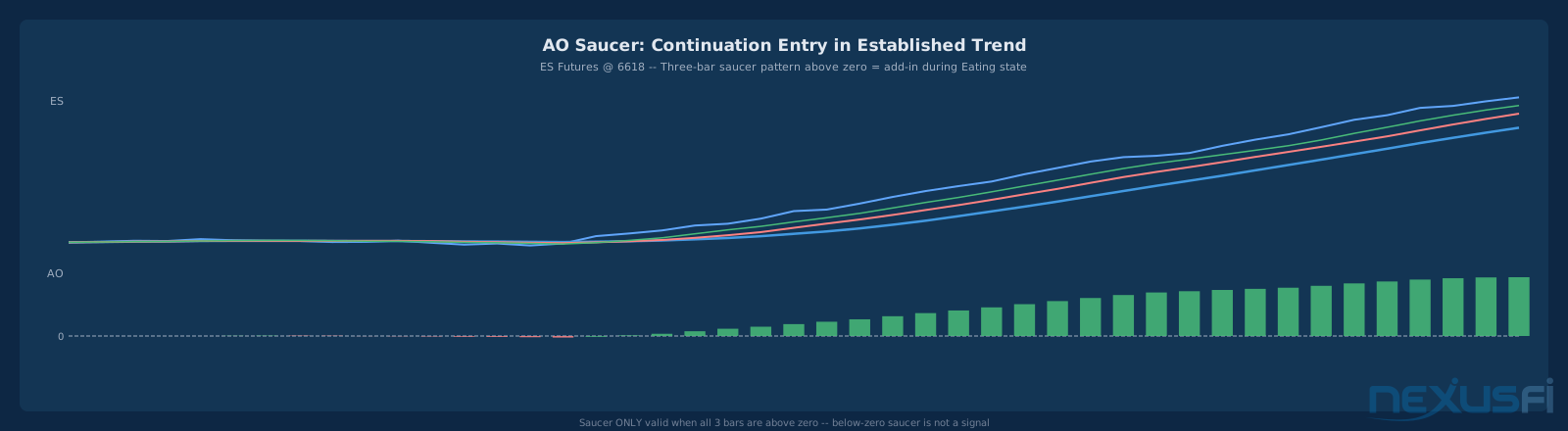
AO "Saucer" signals: A three-bar continuation pattern on the same side of zero — first two bars falling (red), third rising (green). Indicates a brief momentum pause, not a reversal. A continuation add-in entry when the Alligator is clearly eating.
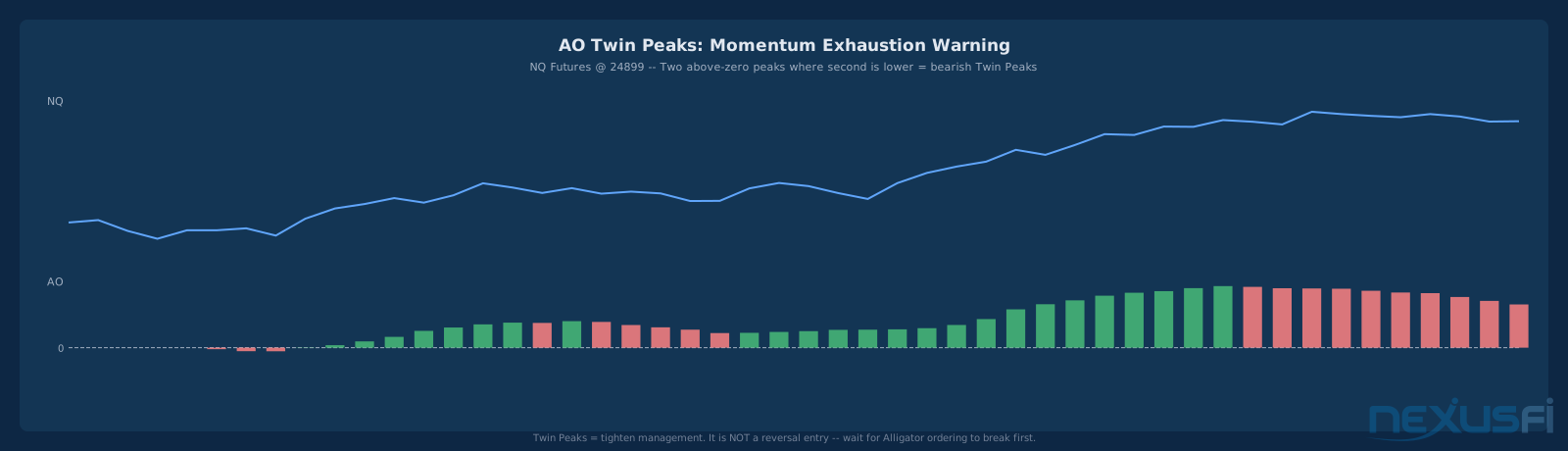
AO "Twin Peaks": Williams' reversal warning — two peaks on the same side of zero where the second peak is lower than the first (bearish variant, both above zero). This is the AO's divergence pattern indicating momentum exhaustion. Most reliable when the Alligator's ordering is also starting to break down. It's an exit signal and a warning to tighten risk, not an entry.
Fractals: The Precision Entry Trigger #
Williams' Fractals are the entry timing mechanism. They identify local swing highs and lows using a 5-bar pattern that removes arbitrary lookback periods from swing identification.
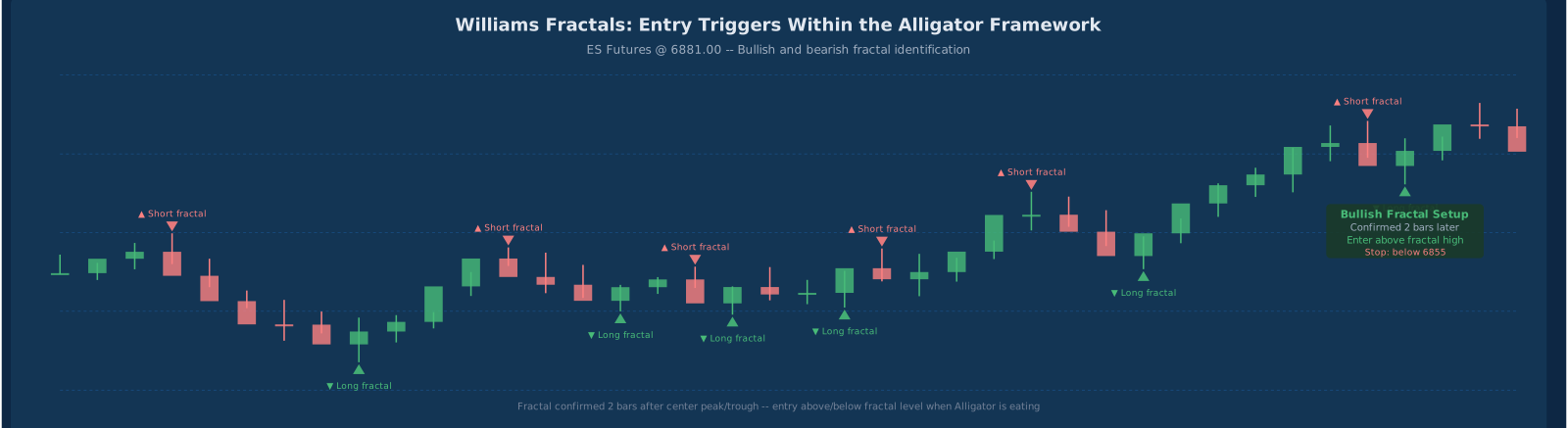
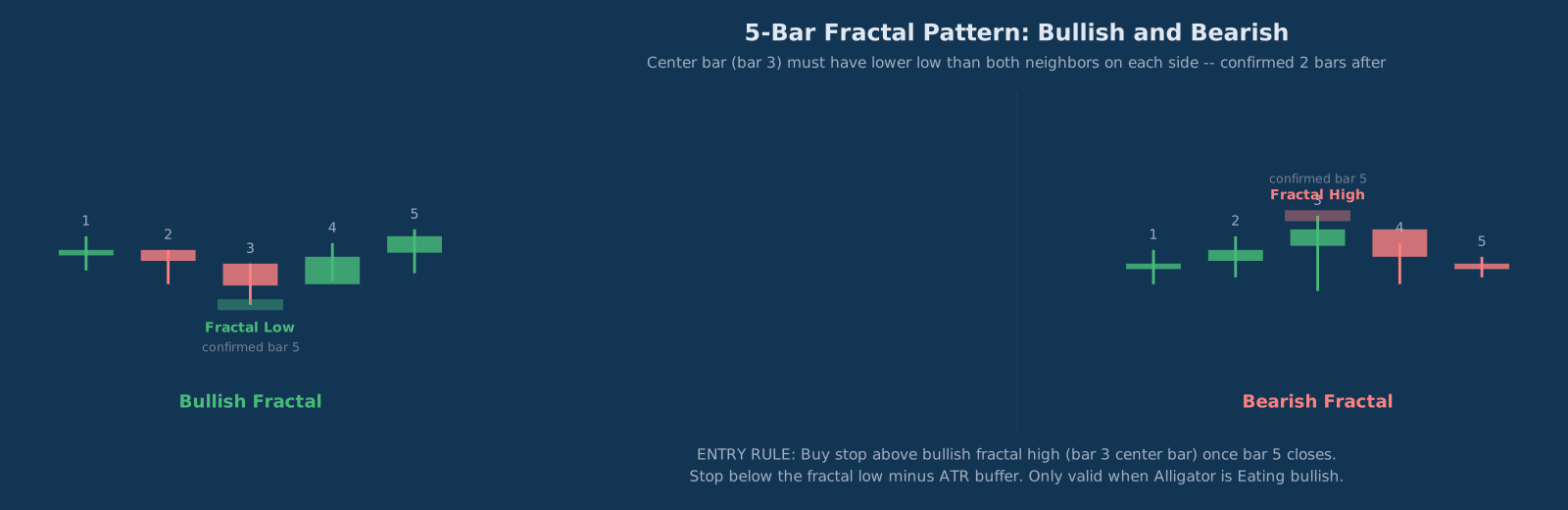
Bullish Fractal: A 5-bar pattern where the center bar has a lower low than both bars immediately to its left and both bars immediately to its right. The center bar marks a local swing low. Confirmed two bars after the center bar — you don't know you have a fractal until bar 5 completes.
Bearish Fractal: The mirror pattern — center bar has a higher high than the two bars on each side. Marks a local swing high. Also confirmed two bars after center.
The two-bar confirmation delay is intentional. Williams was specifically trying to prevent traders from entering on what looks like a swing but turns out to be a retracement midpoint. The delay requires actual follow-through bars before the fractal is valid. The cost is entries come slightly later. The benefit is fewer false triggers.
How Fractals integrate with the Alligator: In the Sleeping state, fractals are invalid — the market is just making local noise. In the Awakening state, watch for fractals forming at new swing highs (potential long) or swing lows (short). When the fractal is confirmed AND the Alligator is entering the Eating state, that's the setup.
The Alligator provides the context (trend), the fractal provides the level.
Two entry approaches:
Fractal breakout entry: Wait for price to break above the most recent confirmed bullish fractal (in a long setup). Works well in strong trends where price moves continuously without deep pullbacks. The risk is entering after a large gap through the fractal, which inflates stop distance.
Pullback entry: In an Eating state, wait for a pullback toward the Lips or Teeth line, then enter when price shows rejection and closes back in trend direction, while AO remains positive and hasn't crossed zero. This approach gets better prices and tighter stops. Most experienced Alligator traders prefer pullback entries because breakout entries after a long-running trend frequently have marginal risk/reward.
Which fractal to use: When multiple fractals have formed during an Eating trend, use the most recent fractal in the direction of the trade. This keeps your stop reference current and avoids using an ancient fractal whose distance from price would require an unworkably large stop.
@"If price touches a fractal high and the alligator is below the fractal high, then take a long position. Opposite for short positions (using fractal low). Coding it was trivial once the concept was understood." — @vmodus, Attack of the Robots - An Algo Journal (2020)
How to Identify Trend vs Consolidation #
This is where the system either makes you money or bleeds you. The Alligator's weakness is that it generates signals in consolidation that look exactly like trend signals but aren't.
Trend checklist — all must be met to trade:
- Line ordering is consistent — Lips above Teeth above Jaw for at least 3 consecutive bars (uptrend) or below for downtrend
- Separation is expanding — the gap between Lips and Jaw is growing, not shrinking
- Separation exceeds threshold — (Lips price minus Jaw price) exceeds 0.5 times the 14-period ATR
- AO is on the correct side of zero and rising
- Price structure is aligned — the most recent fractal was a higher low (uptrend) or lower high (downtrend)
Consolidation warning signs:
- Lines cross frequently — more than 2 line crossings in the last 15 bars
- Separation below threshold — (Lips minus Jaw) less than 0.5 times ATR
- AO oscillates around zero without sustaining one side
- Fractals cluster at similar price levels without one side making progress
The volatility filter: One of the most reliable additional filters for futures is requiring the current ATR to exceed its own 20-period moving average before taking entries. False awakenings almost always occur in low-ATR environments. Bollinger Bands squeezes often precede these false breakouts — the Alligator Awakening fires just as the squeeze resolves in both directions. If current ATR is below its average, the market doesn't have the energy for a trend.
The crossing frequency test: Count how many times any two of the three Alligator lines have crossed each other in the last 20 bars. If the count is 4 or more, the market is in consolidation regardless of the current line ordering. When the crossing frequency drops to 1 or fewer in a 20-bar window, that's a sign the market has found direction.
Putting It All Together: The Three-Layer Entry #
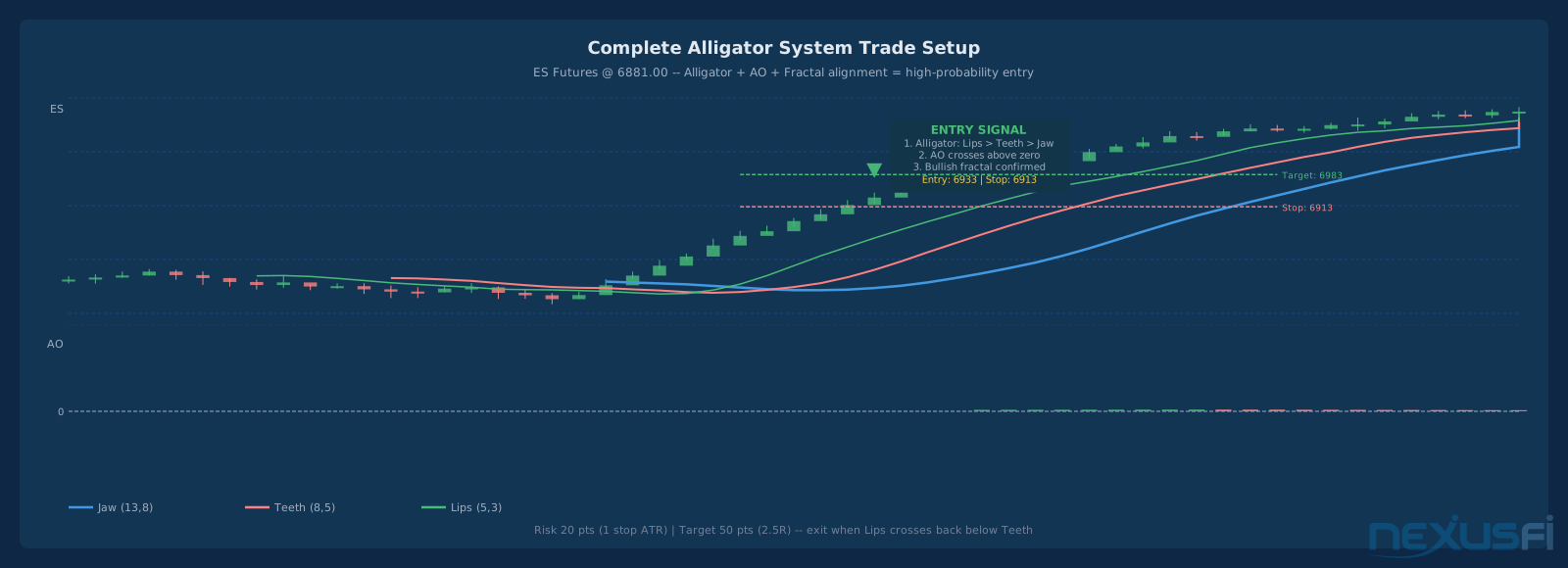
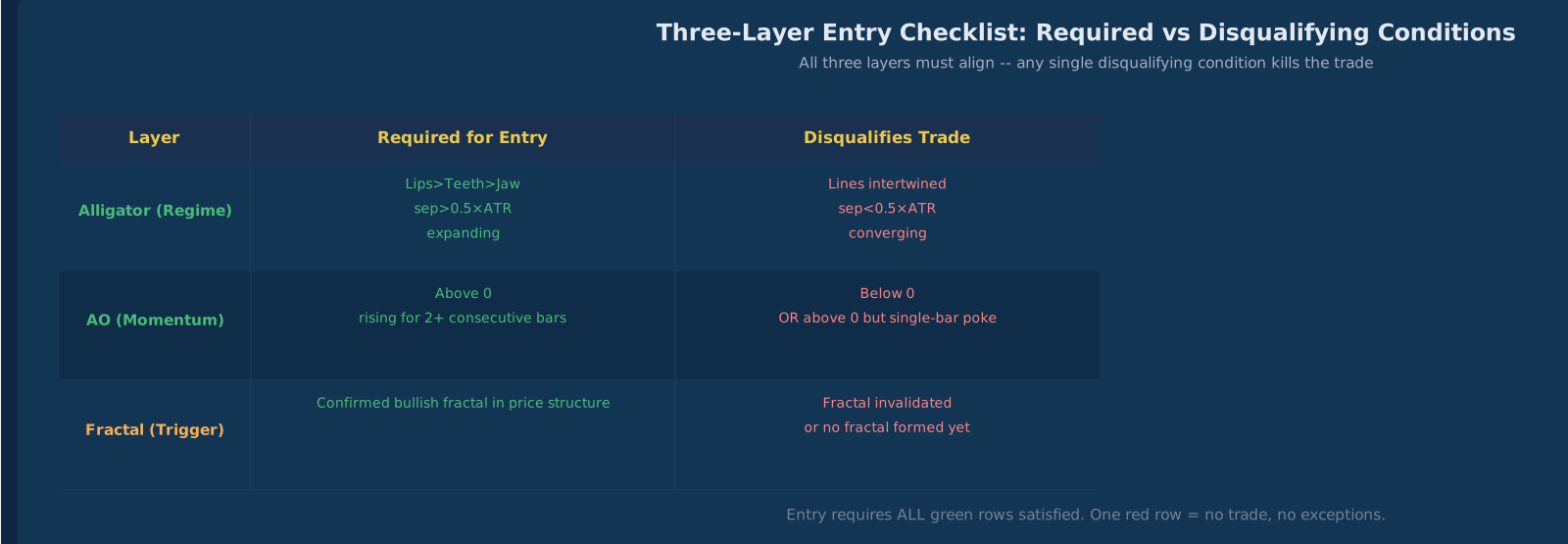
The complete Alligator system entry requires confirmation from all three layers. Each layer can independently disqualify a trade. None can independently confirm one.
Layer 1 — Regime (Alligator): Is the Alligator eating in the direction of your intended trade? Lips above Teeth above Jaw (long), separation greater than 0.5 ATR, separation expanding over the last 3+ bars. If not, no trade.
Layer 2 — Momentum (Awesome Oscillator): Is AO on the correct side of zero and rising? For a long, AO must be above zero, and ideally the histogram must show at least 2 consecutive green bars (rising). A brief single-bar AO tick above zero is not confirmation. You want AO committed — multiple bars above zero, histogram rising.
Layer 3 — Trigger (Fractal): Has a bullish fractal (for long) formed and been confirmed in the current sequence? Is the pullback to Lips or Teeth complete, and is price resuming in trend direction? This is the actual entry timing.
Long entry template:
- Regime: Lips > Teeth > Jaw, separation > 0.5 x ATR, expanding
- Momentum: AO > 0, histogram rising for 2+ bars
- Trigger: Either (a) price breaks above most recent confirmed bullish fractal, or (b) price pulls back to Teeth/Lips, shows rejection bar, closes back above Lips
- Entry: Market order at close of trigger bar, or limit at Lips plus small buffer
- Stop: Below most recent bullish fractal low minus 0.5 ATR buffer
- Target: 1.5R to 3R from stop distance, or exit when Lips crosses below Teeth
Short entry template: Mirror all conditions — Lips < Teeth < Jaw, AO < 0 and falling, bearish fractal confirmed, entry below Lips, stop above most recent bearish fractal high.
No-trade conditions: If the Alligator is Sleeping (lines intertwined, separation below threshold), there is no setup regardless of AO or fractals. If AO is on the wrong side of zero for the intended direction, no entry. This is similar to how RSI regime filters work — context-first, signal-second. If the last fractal was invalidated (price moved through it on the wrong side), the setup is dead — wait for a new one.
The typical risk-reward on well-structured Alligator entries is 1:2 to 1:3. The system keeps you out of the majority of low-quality setups (the Sleeping phase), which is where most losing trades happen. What you sacrifice is frequency. On an ES 15-minute chart, a well-run Alligator trader might take 2-4 entries per week. That's not a weakness — that's the point.
Stop Placement and Exit Discipline #
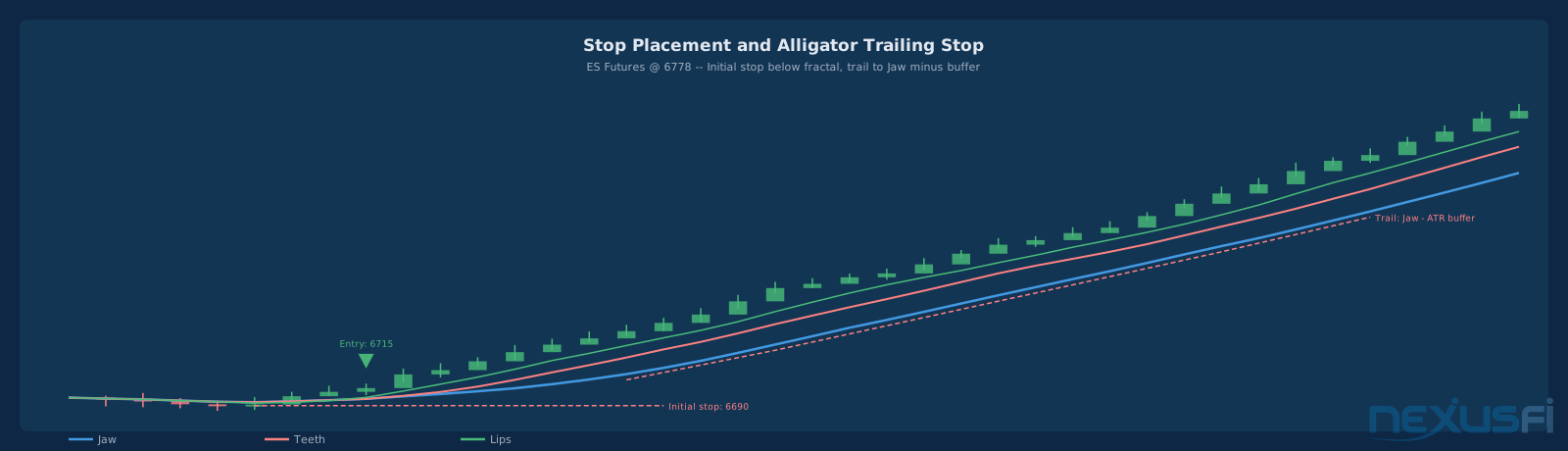
Initial stop: Place below the most recent bullish fractal low (for longs) plus an ATR buffer. On ES with a 14-period ATR of approximately 20-25 points on a 15-minute chart, a buffer of 8-12 points is appropriate. This ensures the stop is beyond routine noise while still reflecting fractal structure. Never use a fractal-only stop without the ATR adjustment — a fractal at 3 ticks below current price is not a legitimate stop.
Trailing stop using the Alligator: As the trend progresses and new fractals form, trail the stop to just below the most recent higher-low fractal (for longs). The Alligator itself — specifically the Jaw or Teeth — also functions as a trailing stop reference. A common approach is to trail the stop to Jaw minus 0.5 ATR, updating on each bar close.
Primary exit signal: The Alligator tells you to exit when Lips crosses back below Teeth (for longs) and this persists for at least one full bar close. A single-bar cross that immediately reverses is not an exit — it's noise. When the cross persists, the regime is changing. Get out.
AO zero-line cross as exit: If AO crosses below zero while you're long (or above zero while short), that's a strong exit signal independent of Alligator line order. AO crossing zero means momentum has changed sides. Even if the Alligator is still technically ordered, AO says the force is gone.
Profit-taking structure: Scale out, don't exit all at once. A common structure: take 50% off at 1R, let the remaining half run with a trailing stop. This locks in profit while keeping exposure to continuation. Traders who scale out earlier tend to hold runners longer and more calmly than traders who try to time a single exit.
Parameter Calibration for Futures #
The 13/8/5 periods and 8/5/3 offsets encode a specific harmonic relationship. The strong consensus among Alligator practitioners is to leave these alone and calibrate everything else.
What to calibrate:
Separation threshold: The minimum (Lips - Jaw) as a multiple of ATR. The 0.5 x ATR threshold works on liquid equity index futures. For CL at 56.82, where ATR is typically 0.8-1.2 per contract on a 15-minute chart, increase to 0.6-0.7 x ATR to account for crude's choppier intraday behavior. For GC at 4,335 where trends are more persistent, 0.4 x ATR can work.
AO confirmation requirement: The number of bars AO must stay above/below zero before treating it as a real momentum signal. On a 5-minute chart, 3 consecutive bars is minimum. On a 15-minute chart, 2 bars is sufficient.
ATR expansion filter: Require current ATR to exceed its 20-period SMA before entries. This prevents entering during dead-air conditions.
What not to calibrate:
Don't change the 13/8/5 periods unless you're scaling all three proportionally for a dramatically different timeframe. Don't change the AO periods. The 5/34 SMA combination has specific mathematical properties — the 34-period is a Fibonacci number, and the 34-period SMA of median price tracks an intermediate trend level that gives the indicator its momentum sensitivity. Changing to 5/20 produces something closer to MACD in behavior and loses the AO's characteristic responsiveness.
Timeframe considerations:
For intraday ES/NQ trading, the 15-minute chart is the primary setup chart with 5-minute for entry timing. For CL at 56.82, the 30-minute chart is the sweet spot — crude's intraday structure has a morning inventory-driven trend followed by afternoon consolidation, and the 30-minute Alligator captures this without over-trading mid-session noise. For GC at 4,335, hourly works well — gold trends on longer cycles.
Multi-timeframe approach: Use the daily chart to identify the macro regime, the 60-minute to identify the trading-day context, and the 15-minute for specific entries. A daily Alligator that's clearly eating bullish means only look for long entries on the 15-minute. This eliminates the majority of counter-trend trades that fail.
Divergences: Reading AO Exhaustion #
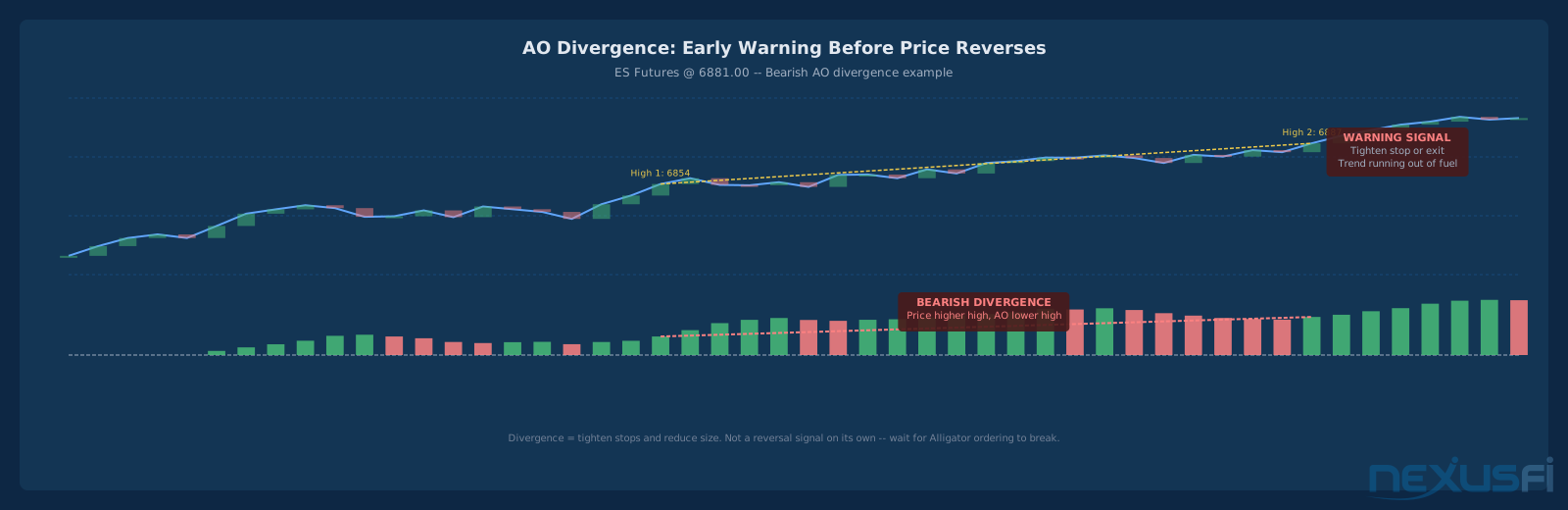
AO divergences are warning signals, not reversal entries. AO divergence by itself, without a corresponding Alligator ordering break, produces more losing reversal attempts than winning ones.
Bearish AO divergence: Price makes a new high, but the AO histogram fails to match the previous peak — lower high in AO while price makes higher high. This tells you momentum behind the rally is diminishing even as price extends. The trend may continue for a while — divergence is early — but the probability of sustained continuation has dropped.
When you see bearish AO divergence in a long position: tighten your trailing stop to the Teeth line rather than the Jaw, reduce position size by 25-50%, and treat any Lips/Teeth cross as immediate exit rather than waiting for confirmation.
What you don't do is immediately short. Divergence means "reduce risk and watch for reversal," not "price is about to drop immediately."
AO Twin Peaks: Two peaks above zero where the second is lower than the first (bearish variant). Williams treated this as a dedicated exhaustion signal. In practice, Twin Peaks with Alligator lines starting to converge is a legitimate partial exit trigger.
The confirmation requirement: A divergence becomes actionable only when you also see the Alligator ordering start to break. If AO diverges but the Alligator remains clearly eating bullish with full separation, the divergence is preliminary. If AO diverges AND the Lips crosses below the Teeth AND separation starts compressing, that's the exit signal.
Limitations in Choppy Markets #
The Alligator system fails specifically and predictably in one condition: low-volatility, range-bound consolidation. Understanding exactly how it fails lets you build effective defenses.
False awakenings: The most common failure mode. The three lines separate briefly — the market makes a 15-bar attempt at a trend — and then collapse back into consolidation. The AO crosses zero but reverses within 3-5 bars. Fractals form but are immediately violated.
The defense is the volatility expansion filter. False awakenings almost always occur in low-ATR environments. If current ATR is below its 20-period average, the market doesn't have the energy for a trend. No entries during below-average ATR, regardless of how tempting the Alligator pattern looks.
Session effects on futures: The first 30-45 minutes of RTH (Regular Trading Hours) for ES and NQ produce some of the worst Alligator signals. The opening range compression followed by directional expansion often looks like a perfect Awakening-to-Eating sequence — but it's frequently a two-directional whipsaw. Many experienced Alligator traders use a no-entry window for the first 30 minutes of RTH, waiting for the 10:00-10:15 AM EST timeframe.
Lunch hour (12:00-1:30 PM EST) is another consistent problem zone. Volume drops, the spread widens slightly, and the Alligator generates frequent line crossings that look like new trends but are just random drift. Either stand aside during lunch or require ATR much above-average to trade this period.
SMMA lag compound problem: The Eating state is confirmed after the trend has already begun. In trending markets this is a feature. In choppy markets, the confirmation comes so late the move is exhausted. Worst on 1-3 minute charts where Eating confirmation may come halfway through a short trend.
Contract roll effects: During the week before a futures contract rolls (ES, NQ roll quarterly in March, June, September, December), the front month contract's volume drops and spreads widen. The Alligator becomes less reliable because price discovery splits between expiring and new contract. Switch to the new contract 3-5 days before the formal roll date.
Mitigation protocol: ATR below its 20-period average means no entries. More than 3 line crossings in 20 bars means Sleeping. Avoid first 30 minutes of RTH and lunch hour. After two consecutive stops, wait for the next confirmed Awakening.
The most dangerous period for Alligator traders is the first 45 minutes of RTH on ES and NQ. The opening volatility spike triggers Awakening states that collapse back into consolidation within 20-30 minutes. Apply a time filter: no new entries in the first 30 minutes of RTH, and require ATR above its 20-period average before any signal during this window.
Common Mistakes and How to Fix Them #
Mistake 1: Trading every fractal regardless of Alligator state
Fractals form constantly. In a Sleeping market, fractals form every 5-10 bars. If you're entering every fractal break, you're trading noise. The Alligator state is not optional — it's the primary filter. Before every fractal entry, ask: what is the Alligator state? If the answer is Sleeping, the fractal doesn't exist as a trade setup.
Fix: Write the Alligator state assessment on a sticky note and place it by your monitor. Before any entry, note the state. No entry without an Eating or confirmed Awakening state.
Mistake 2: Using AO alone as the entry signal
AO crossing above zero does not mean buy. AO confirms momentum only when the Alligator regime is already in Awakening or Eating state. Out of context, AO is as useless as any oscillator in a trending market — it'll give you the correct direction but terrible timing.
Fix: The sequence must be Alligator state first, AO confirmation second, fractal trigger third. If you're thinking "AO just crossed zero, should I enter?" — you're starting from the wrong place.
Mistake 3: Moving stops too quickly to break-even
The Alligator's trail is based on the Jaw or fractal structure. Break-even stops hit by routine pullbacks before the Teeth line crosses are trades that should have been held. Exits are defined: Lips/Teeth cross, AO zero cross, fractal break.
Fix: Write exit criteria before entry. Follow them.
Mistake 4: Treating divergence as an entry signal
— zero-line cross, Saucer, and Twin Peaks. Twin Peaks is an exhaustion warning, not a reversal entry. Traders who short the first AO divergence in a bull trend get stopped out repeatedly.
Fix: Divergence tightens management of existing positions. It never initiates a new counter-trend position.
Mistake 5: Changing the indicator periods
The 13/8/5 and 5/34 periods encode harmonic relationships. Improve your filters (ATR threshold, separation threshold, time-of-day rules) but leave the core periods alone. If settings don't work, try a different timeframe first.
Knowledge Map
Go Deeper
Build on this knowledgeCitations
- — Attack of the Robots - An Algo Journal (2020) 👍 3“I spent some time studying Bill Williams work on fractals. I am currently working with the Fractals indicator and the Alligator.”
- — Attack of the Robots - An Algo Journal (2020) 👍 3“I performed analysis on our current ES contract, 1 minute, using a method of trading he calls the thumb trade.”
- — Attack of the Robots - An Algo Journal (2020) 👍 6“I have been trying to understand how the Awesome Oscillator can be used in trading. We are really looking for three different signals.”
- — FRACTALS... (2020) 👍 3“His second book introduced the awesome oscillator to help filter bad fractal trades. All the AO is a MACD built from a 5 SMA and a 34 SMA. He introduced the alligator as well.”
- — Williams Fractals for TradeStation (2019) 👍 4“Reference: Bill Williams PhD, New Trading Dimensions. This study works in Charting only. High and Low fractals.”
- — Attack of the Robots - An Algo Journal (2020) 👍 3“If price touches a fractal high and the alligator is below the fractal high, then take a long position. Opposite for short positions (using fractal low).”
- — The Scalper's Journey (2017) 👍 12“Generally, if the moving averages are pretty flat, it's choppy trading so I just don't trade much or at all.”
- — Detecting chop (2009) 👍 11“In my experience Range charts will show chop best. The markets are not always trending -- chop is real and you have to have a plan for it.”
- — the Avoid Chop Indicator? (2012) 👍 58“You will know you are out of chop when you miss the breakout. Most chop filters filter out as many good trades as they do bad trades.”
- — Attack of the Robots - An Algo Journal (2020) 👍 2“Can we trust our indicators? Going through this, it begs the question: can we trust our indicators/studies? I have three of his books.”