



Buying and Selling Pressure: How Aggressive Orders Move Futures Markets
Overview #
Most traders think price moves because of heavy buying or selling. That's only half the story. What actually moves futures prices is liquidity depletion — when one side runs out of ammunition before the other. Understanding the difference between pressure and conversion is the edge most retail traders never find. Heavy buying that goes nowhere? That's the sell side absorbing everything thrown at it. Heavy selling that can't push price down? Buyers are deeper than they look.
Key Concepts #
- Buying Pressure — Net aggressive demand entering the market. Created when market buy orders (or aggressive buy limits at/above the ask) consume resting sell-side liquidity. The more aggressively buyers lift offers, the stronger the pressure.
- Selling Pressure — Net aggressive supply entering the market. Created when market sell orders (or aggressive sell limits at/below the bid) consume resting buy-side liquidity.
- Aggressive Orders — Orders that cross the spread to execute immediately. Market buys that lift the ask. Market sells that hit the bid. These are the orders that actually move price.
- Passive Orders — Resting limit orders that provide liquidity. They don't move price on their own — they get consumed by aggressive flow.
- Delta — The net difference between aggressive buy volume and aggressive sell volume over a given period. Positive delta = more buying pressure. Negative delta = more selling pressure. Delta calculations on CME-listed futures rely on the exchange's AggressorSide classification (tag 5797), which identifies whether the buyer or seller initiated each trade.
- Cumulative Volume Delta (CVD) — A running total of delta across the session or a defined window. CVD trending up means buying pressure dominates. CVD trending down means selling pressure dominates.
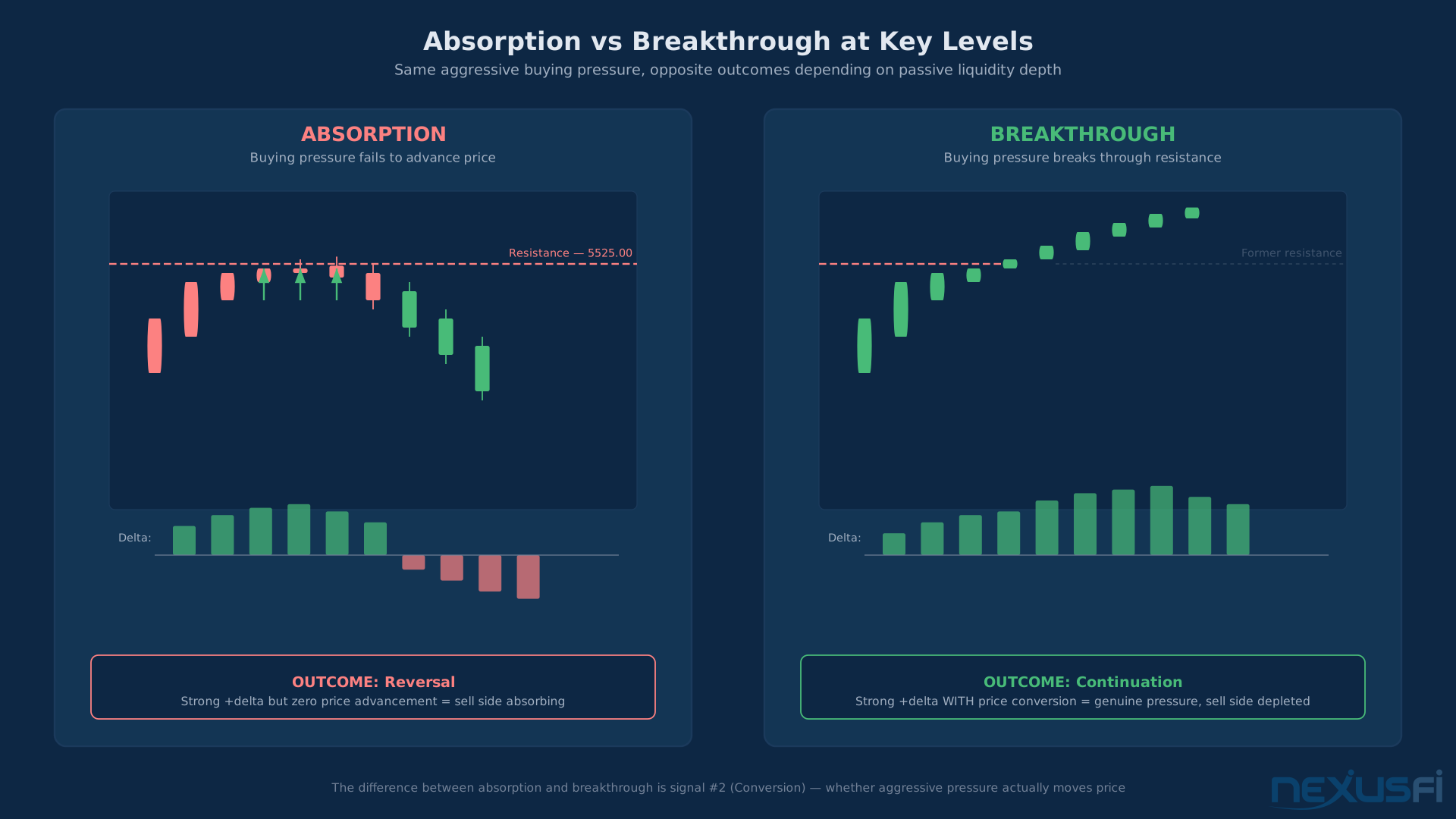
- Absorption — When aggressive orders fail to move price because the opposing side's resting liquidity keeps replenishing. Strong buying pressure that can't push price higher is being absorbed by sellers. This is one of the most important concepts in pressure analysis.
- Conversion — Whether pressure translates into actual price movement. Pressure without conversion is noise. Pressure with conversion is signal.
How Pressure Creates Price Movement #
Here's the fundamental mechanism: price doesn't "move" in the way most people think. Resting orders get consumed, and whatever liquidity remains defines new price levels. Buying pressure eats through sell-side liquidity. Selling pressure eats through buy-side liquidity. The side that runs out of ammunition first loses.
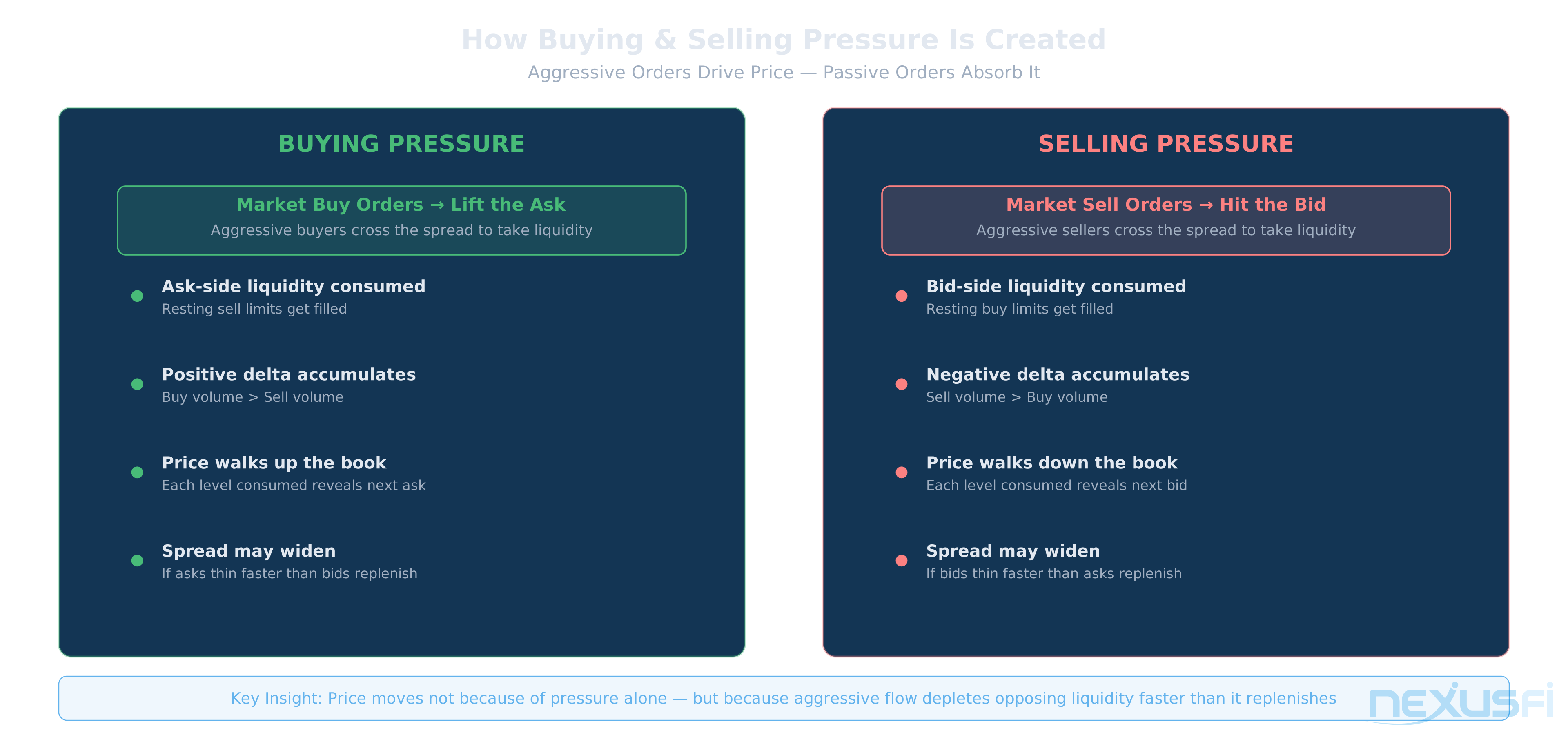
Think of it as a tug of war at the top of book. At any given moment, the best bid and best ask represent the battlefield's front line. When a trader sends a market buy order, it executes against the resting sell limit at the best ask. If that sell limit gets fully consumed and no replacement appears, the ask moves up one tick. That's price movement — not some abstract force, but literal liquidity depletion.
As @trepidation [1] explained on NexusFi: "There is a misconception that price moves because there's a lot of buying or selling pressure. That is only a half-truth. The reality is that prices move due to a lack of liquidity."
Measuring Pressure: Delta and CVD #
The most direct numerical measure of buying vs selling pressure is delta — the difference between volume traded at the ask (aggressive buys) and volume traded at the bid (aggressive sells).
Per-bar delta tells you who dominated a single time period. Positive delta in a green candle confirms buyers were in control. Negative delta in a red candle confirms sellers. But the interesting signals come from divergences — positive delta in a red candle (buyers fought hard but lost), or negative delta in a green candle (price rose despite net selling, suggesting a short squeeze or liquidity void).
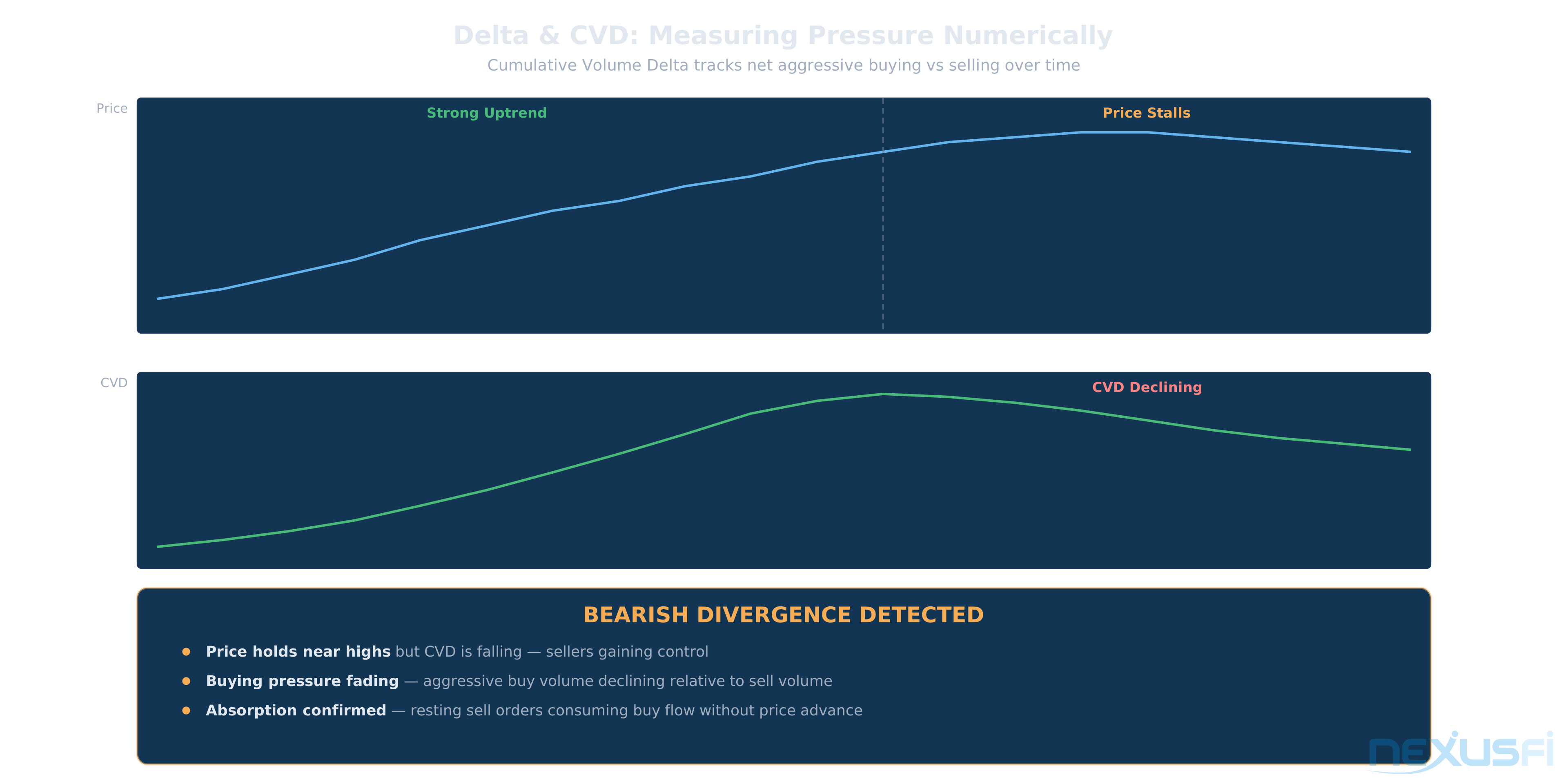
Cumulative Volume Delta (CVD) extends this across time. It's the running sum of per-bar deltas from the session open (or any starting point). CVD is the single most-watched order flow indicator for measuring sustained pressure.
How traders use CVD in ES and NQ:
- CVD rising with price rising — Healthy trend. Buying pressure is genuine and converting into price movement.
- CVD flat while price rises — Suspicious. Price is moving without aggressive buying. Likely driven by liquidity gaps or short covering, not real demand. Pullback risk is elevated.
- CVD falling while price holds — Bearish divergence. Sellers are gaining ground even though price hasn't dropped yet. This is absorption in action and frequently precedes a drop.
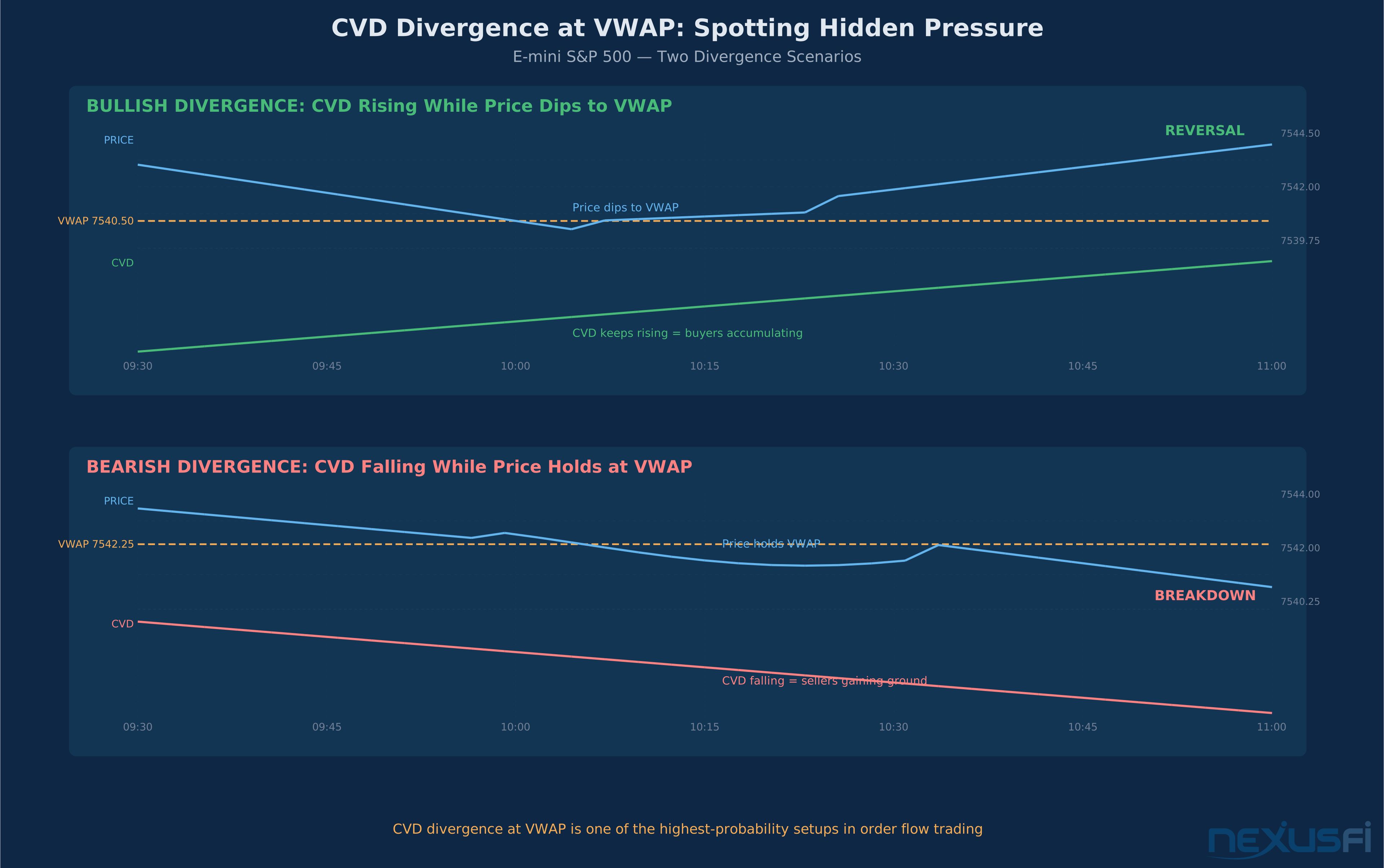
- CVD rising while price drops — Bullish divergence. Buyers are accumulating into the dip. Often seen at the end of sell-offs before a reversal.
As @Hulk noted on NexusFi [2]: "Aggressive vs passive orders is one of the most important concepts to understand. It is not always possible or easy to determine the aggressor." Products spanning multiple exchanges — like WTI crude on both Nymex and ICE — require custom calculations rather than relying solely on exchange-disseminated data, and understanding implied orders becomes critical for accurate aggressor determination. Treat delta as directional intelligence, not precise accounting.
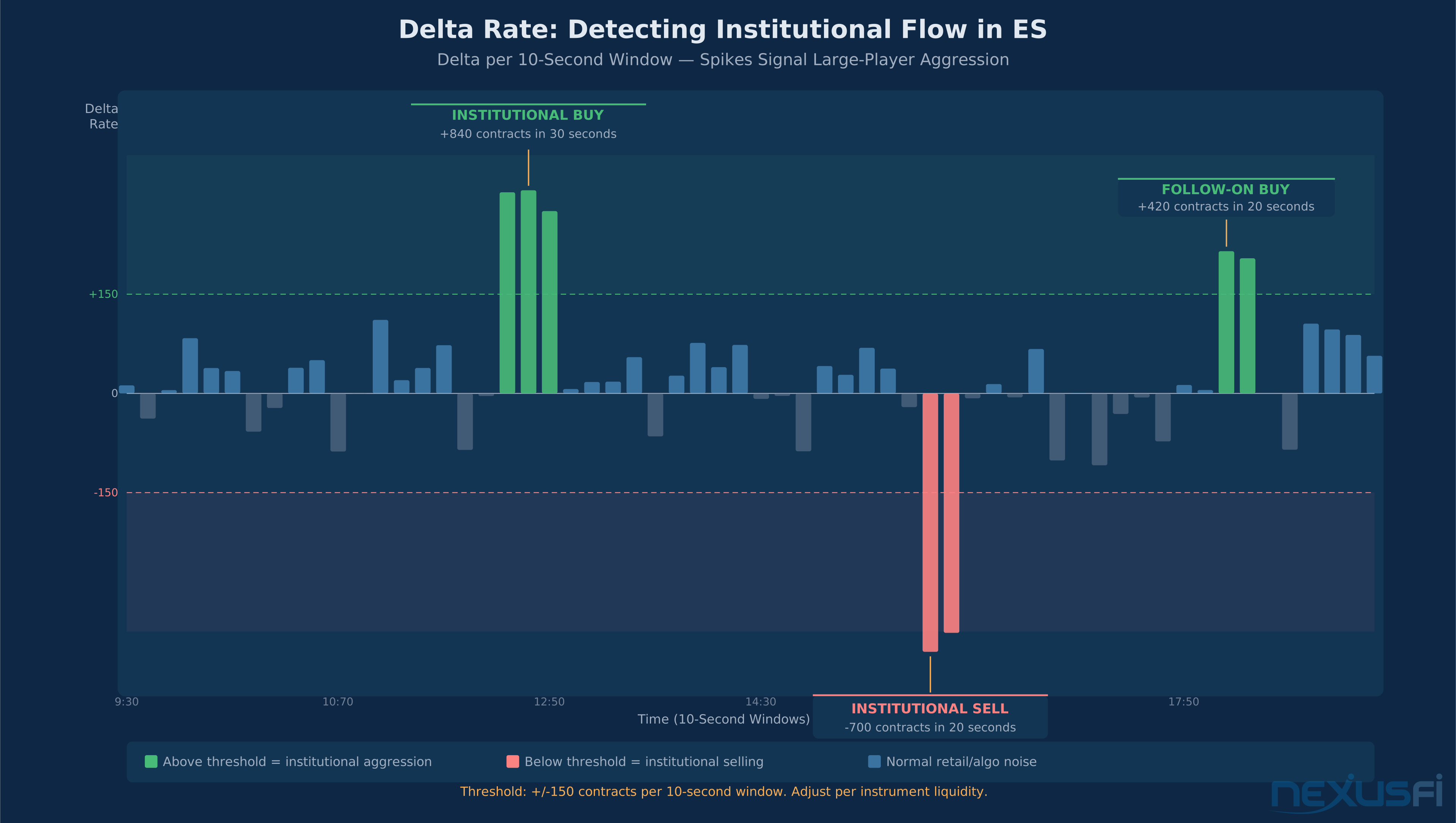
Delta rate adds a time dimension — how much delta accumulates per second or per 10-30 seconds. A sudden spike in delta rate signals institutional-scale aggression entering the market. A declining delta rate during a move suggests the pressure is fading.
Footprint Charts: Visualizing Pressure at Every Price #
Footprint charts (also called volume footprint, bid/ask volume charts, or number bars) display the actual volume traded at the bid and ask for every price level within each bar. They're the highest-resolution view of buying and selling pressure available to retail traders.
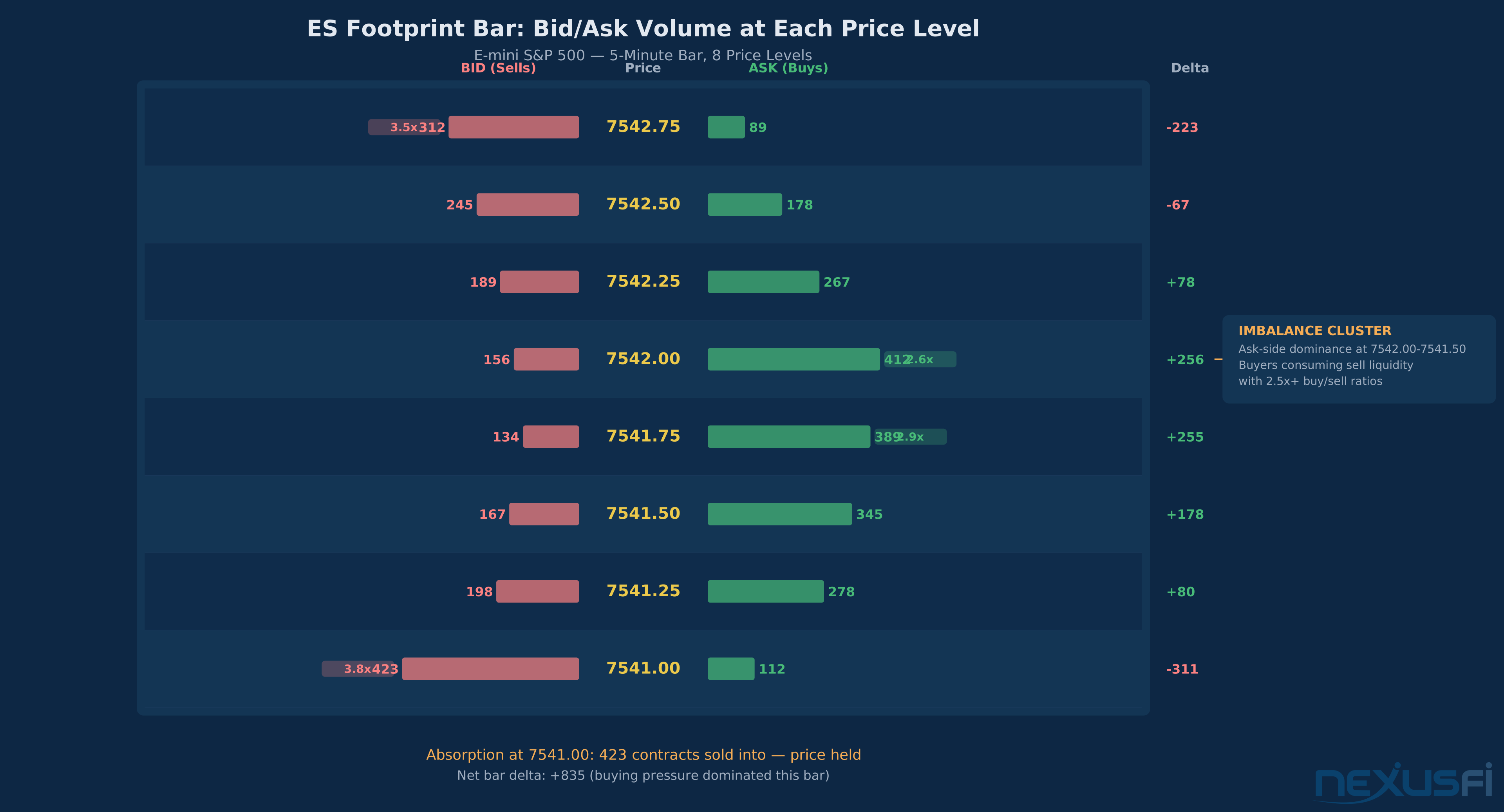
Each price level shows two numbers: bid volume (sells) on the left, ask volume (buys) on the right. The delta between them tells you who dominated at that specific price. Stack them vertically and you can see exactly where buyers won, where sellers won, and where the fight was most intense.
What footprint charts reveal that regular charts can't:
- Imbalance clusters — Several consecutive price levels where one side dominates by 3:1 or more. An ask-side imbalance cluster (heavy buying) at the bottom of a bar suggests aggressive accumulation.
- Point of control shift — The price level with the highest volume within the bar. If the POC shifts higher across consecutive bars, buying pressure is genuinely moving the auction.
- Finished auction signals — When a bar's high or low shows very low volume (single prints), it suggests the market tested that level and found no interest. The auction is "finished" in that direction.
- Absorption at specific levels — Heavy volume at a price level where price didn't advance. As @Private Banker described on NexusFi: "The way I look at absorption is when you see either buyers or sellers cutting off the opposing traders."
Worked example — ES footprint bar during a buying climax:
Imagine a 5-minute bar on ES where price ranges from 5896.00 to 5900.00. Here's what the footprint might show at each price level (bid volume x ask volume):
| Price | Bid Vol (Sells) | Ask Vol (Buys) | Delta |
|---|---|---|---|
| 5900.00 | 89 | 412 | +323 |
| 5899.75 | 156 | 587 | +431 |
| 5899.50 | 203 | 824 | +621 |
| 5899.25 | 347 | 1,120 | +773 |
| 5899.00 | 512 | 968 | +456 |
| 5898.75 | 489 | 741 | +252 |
| 5898.50 | 622 | 695 | +73 |
| 5898.25 | 710 | 583 | -127 |
| 5898.00 | 834 | 490 | -344 |
| 5897.75 | 1,245 | 302 | -943 |
| 5897.50 | 567 | 198 | -369 |
| 5897.25 | 312 | 87 | -225 |
| 5897.00 | 245 | 42 | -203 |
| 5896.75 | 118 | 29 | -89 |
| 5896.50 | 34 | 8 | -26 |
| 5896.25 | 12 | 3 | -9 |
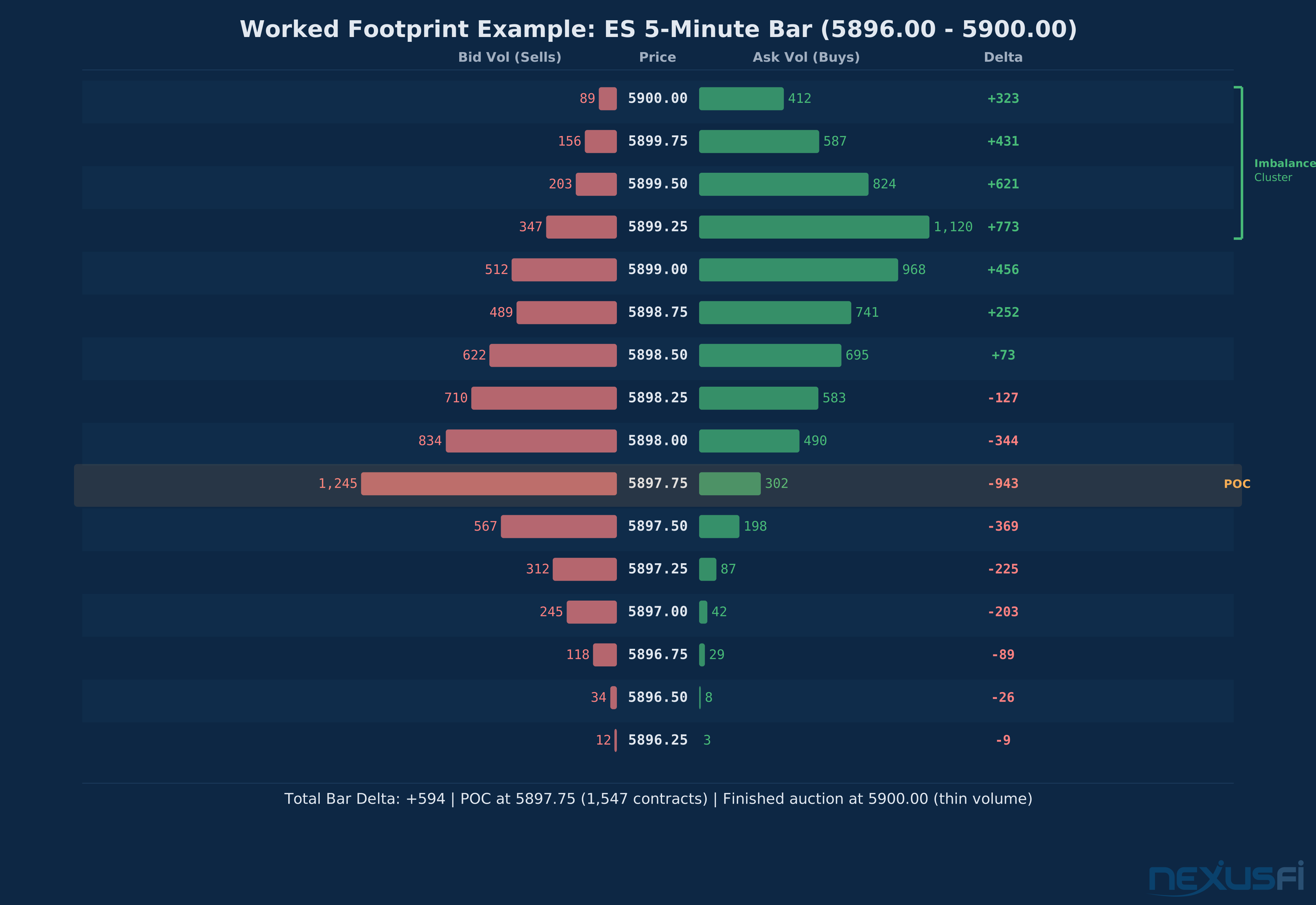
Reading this footprint: The bar's total delta is +594 (sum of all deltas) — net buying. But the real story is in the distribution. Ask volume clusters heavily at 5899.00-5900.00 (imbalance cluster with 2:1 to 4:1 ask dominance), showing aggressive buyers were lifting offers hard in those four ticks. The POC (highest total volume) is at 5897.75 where 1,547 contracts traded — but that level's delta is -943, meaning sellers actually dominated there. This is a classic pattern: sellers defended 5897.75, got overwhelmed, and buyers punched through to 5900.00. The thin volume at 5900.00 (501 total contracts vs 1,547 at POC) signals a finished auction — price explored higher but found little interest, suggesting 5900 may act as short-term resistance unless fresh buying enters.
Footprint analysis works best in liquid futures like ES, NQ, and CL where volume at each tick is meaningful. In thinner markets, the sample size at individual price levels can be too small to draw reliable conclusions.
Order Book Pressure: What the DOM Tells You #
The depth of market (DOM) shows resting limit orders at each price level — the passive side of the equation. While delta and CVD measure what already happened (executed trades), the DOM shows what's waiting to happen.
Bid-ask imbalance quantifies the balance of resting liquidity:
Imbalance = (Bid Size - Ask Size) / (Bid Size + Ask Size)
Computed across the top 5-10 levels of the book. A reading of +0.5 means bids are 3x larger than asks. A reading of -0.3 means moderate ask-side dominance.
What DOM pressure signals mean:
- Heavy bids, thin asks — Path of least resistance is up (less sell-side liquidity to consume). But verify: are the bids real or will they get pulled?
- Heavy asks, thin bids — Path of least resistance is down.
- Both sides thin — Low liquidity. Any aggressive order can move price several ticks. Volatile conditions.
- Both sides thick — High liquidity. Price is likely to stay rangebound until a trigger breaks the equilibrium.
The critical distinction: depletion vs replenishment. When aggressive buying hits a resting ask wall, watch what happens next. If the wall shrinks and doesn't refill, buying pressure is winning — the sell side is retreating. If the wall gets hit but immediately refills to the same size, that's absorption. The sell side is deeper than it looks, and buying pressure may exhaust itself.
Worked example — ES DOM during a breakout attempt at 5900:
Suppose ES is testing the 5900.00 level. Here's a snapshot of the top 5 levels on each side:
| Bid Price | Bid Size | Ask Price | Ask Size | |
|---|---|---|---|---|
| 5899.75 | 285 | 5900.00 | 1,840 | |
| 5899.50 | 192 | 5900.25 | 310 | |
| 5899.25 | 148 | 5900.50 | 175 | |
| 5899.00 | 420 | 5900.75 | 128 | |
| 5898.75 | 165 | 5901.00 | 95 | |
| Total | 1,210 | Total | 2,548 |
Imbalance = (1,210 - 2,548) / (1,210 + 2,548) = -0.36 (moderate ask-side dominance)
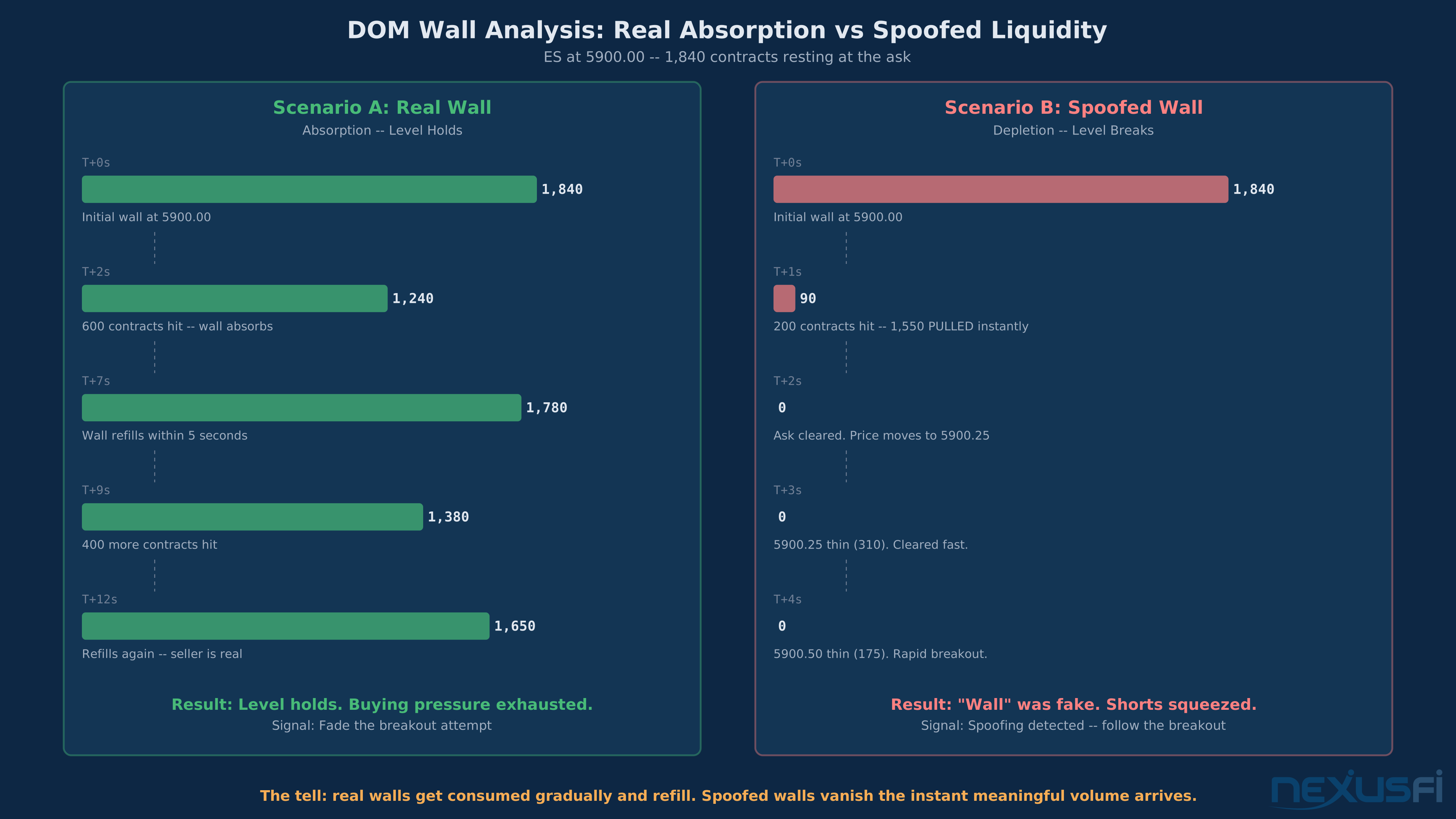
That 1,840-lot wall at 5900.00 is the story. Is it real? Watch what happens when aggressive buyers start hitting it:
Scenario A — Real wall (absorption): Buyers fire 600 contracts into 5900.00. The wall drops from 1,840 to 1,240. Five seconds later, it refills back to 1,780. More buying — 400 contracts hit it. Drops to 1,380, refills to 1,650 within 3 seconds. The seller at 5900 is actively replenishing. Buying pressure is being absorbed. This level is unlikely to break on this attempt.
Scenario B — Spoofed wall (depletion): Buyers fire 200 contracts into 5900.00. The wall instantly drops from 1,840 to 90 — the other 1,550 were pulled before they could fill. Now there's only 90 contracts left at the ask. Price rips through 5900.00, 5900.25, 5900.50 in rapid succession because ask sizes above were legitimately thin (310, 175, 128). The "wall" was never real. Traders who sold into it expecting resistance got squeezed.
The tell: real walls get consumed gradually and refill. Spoofed walls vanish the instant meaningful volume arrives.
ES has deep liquidity and small spreads. CL can be thinner and more volatile. The same DOM pattern means different things in different instruments.
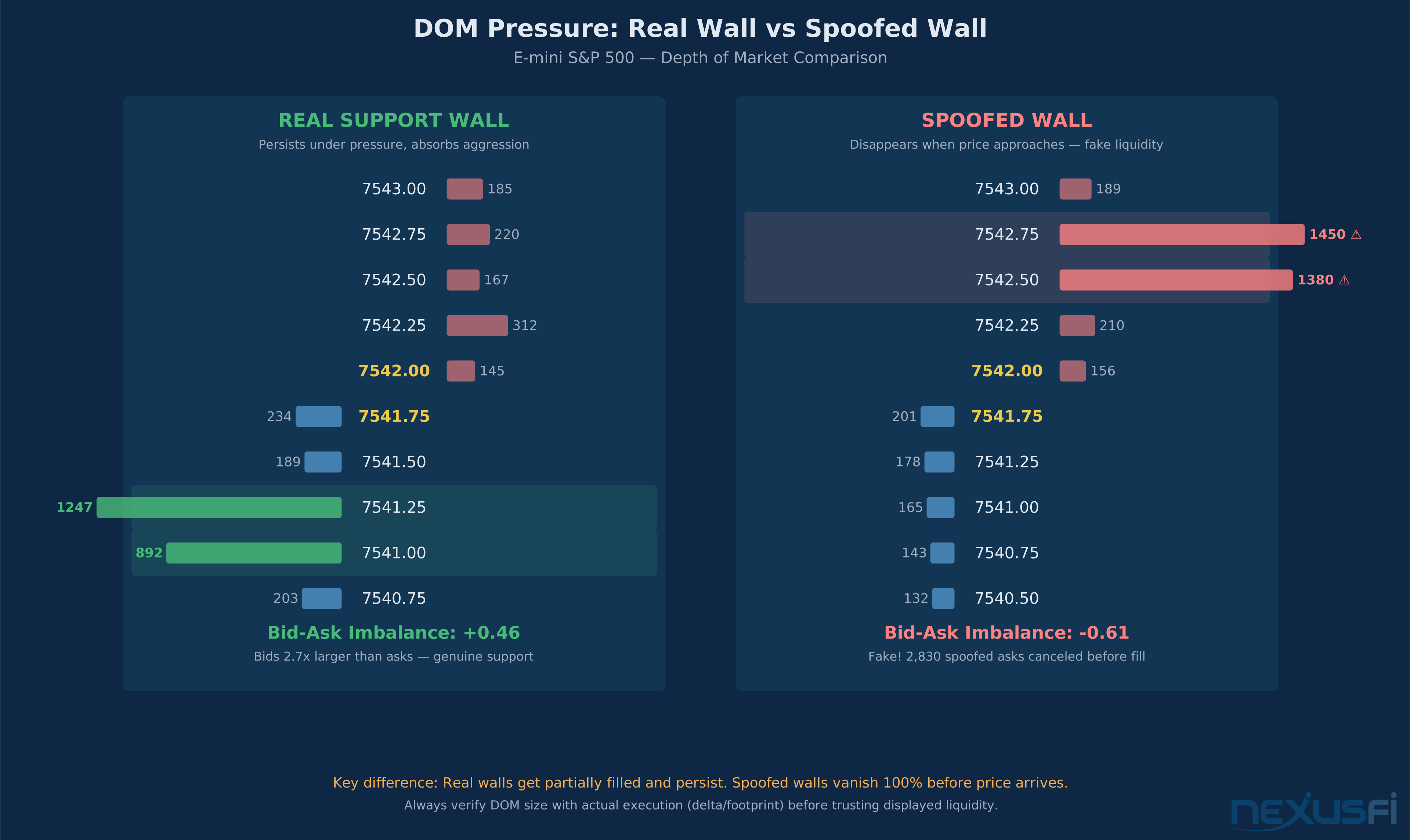
Spoofing warning: Not all displayed DOM size is real. Algorithmic traders routinely place and cancel large orders to create false pressure signals. Look for persistence (does the size survive multiple seconds?) and actual execution (do trades execute against it?) before treating a large DOM level as meaningful support or resistance.
The Pressure Confirmation Framework #
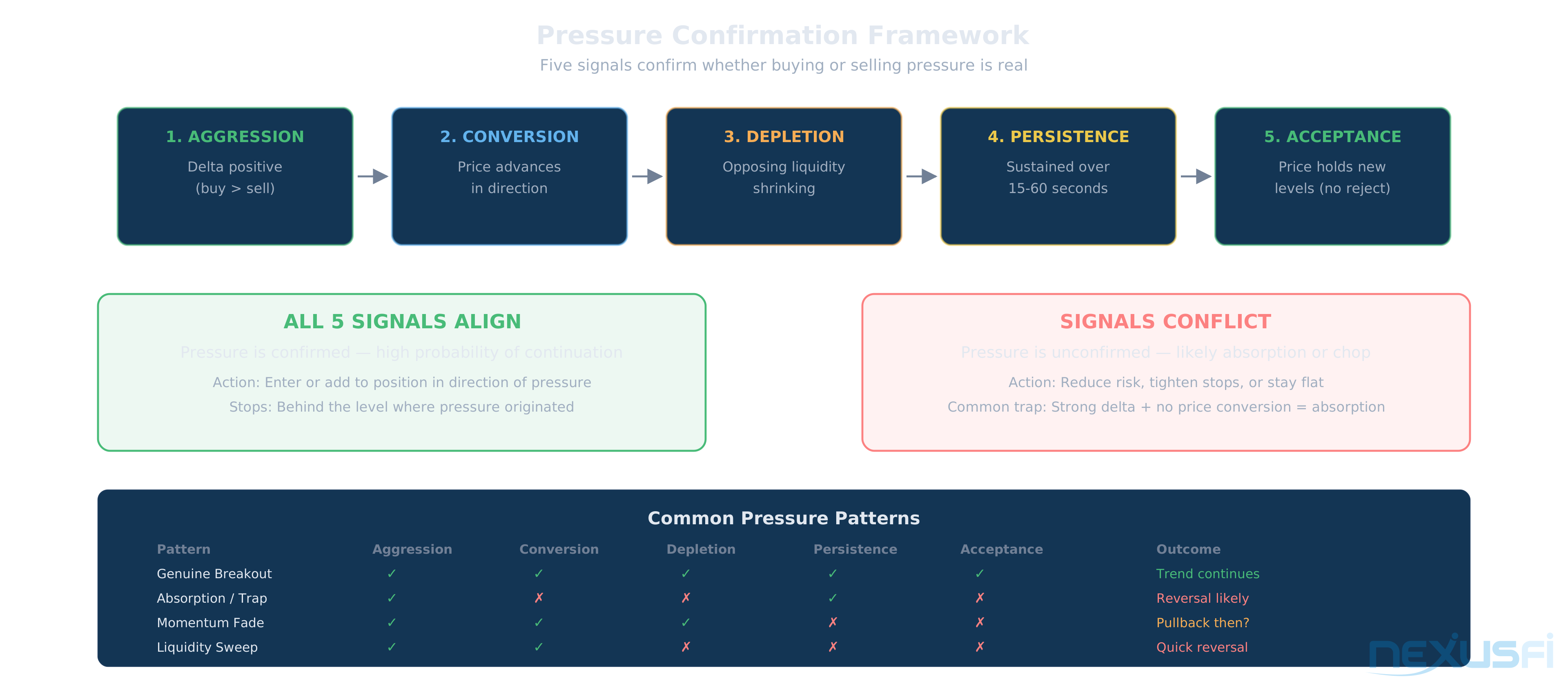
Individual pressure signals lie. Delta can be positive while the market is about to drop. The DOM can show heavy bids that disappear the moment price approaches. The only reliable approach is multi-signal confirmation.
Five signals that confirm genuine pressure (bullish example):
- Aggression — Delta is positive and accelerating. Buy-initiated volume exceeds sell-initiated volume. This is the necessary starting condition.
- Conversion — Price is actually advancing. This separates real pressure from absorption. Strong delta that produces no price movement is not confirmation — it's a warning.
- Depletion — Ask-side liquidity is shrinking. Sell walls are getting consumed without replenishment. The opposing side is retreating.
- Persistence — The pressure lasts. Not a 2-second spike, but sustained positive delta over 15-60 seconds. In ES, this time window catches institutional flow while filtering HFT noise.
- Acceptance — Price holds the new levels. No immediate rejection, no snap back. The market has "accepted" the new price as fair.
The five-signal rule: All five aligned is rare — that's exactly what makes it valuable. All five conditions met simultaneously at a key level (VWAP, prior day high/low, value area edge) is a high-confidence directional signal. Fewer than five means reduced confidence. The most common trap is signal 1 without signal 2: strong aggression that doesn't convert to price movement. Patience for full confirmation is the entire edge.
Fewer than five = reduced confidence. The most common trap is signal 1 without signal 2: strong aggression that doesn't convert to price movement. As @DarthDion referenced on NexusFi, pressure analysis aligns with Wyckoff's definition of a tape reader as "someone who identifies the immediate pressure and goes with it for the duration that that pressure exists — then moves on." The duration part is critical. Pressure that doesn't persist isn't pressure worth trading.
Practical Playbook #
Reading Pressure at Key Levels #
The best pressure reads happen at reference points where the market has to make a decision:
- VWAP: Price pulling back to VWAP with positive CVD divergence (CVD holding higher while price dips) suggests buyers are defending the average. Negative CVD divergence at VWAP warns the level may break.
- Prior day high/low: Heavy delta spike as price tests yesterday's high, with ask depletion visible on DOM = breakout setup. Same delta spike with ask walls refilling = fade setup.
- Opening range: The first 30 minutes of RTH establish the day's initial pressure balance. If CVD is strongly positive after the opening range and price is at the high, buying pressure is genuine. If CVD is flat despite price sitting at the range high, shorts may be the better play.
- Value area boundaries: Price exiting the value area needs confirmation from pressure signals. Initiative activity (moving away from value) with confirming delta is more likely to extend. Responsive activity (returning to value) with divergent delta suggests the breakout will fail.
Time Windows for Different Styles #
- Scalping (seconds to minutes): Use per-bar delta and DOM for entry timing. Read aggressive tape flow. Window: 5-30 seconds for pressure assessment.
- Intraday swing (minutes to hours): Use CVD trend and footprint imbalance clusters. Confirm with 15-60 second delta persistence. Window: 1-5 minutes for pressure assessment.
- Macro positioning: Use session CVD and multi-day delta trends. Less granular but captures structural pressure shifts.
What to Do When Pressure Conflicts #
When delta says "buy" but the DOM says "heavy sells" — wait. When CVD is rising but price is rejecting — reduce. When footprint shows absorption at your entry level — get out.
The market regularly generates conflicting signals. The disciplined response is always the same: when pressure signals conflict, reduce risk or stand aside. The edge comes from acting decisively when signals align, not from forcing trades when they don't.
Limitations and Pitfalls #
1. Trade classification is imperfect. Every delta reading depends on algorithms that classify each trade as buyer-initiated or seller-initiated based on whether it executes at the bid or ask. Trades that execute between the bid and ask (mid-point fills, dark pool prints routed to futures) get classified by heuristic rules that can be wrong.
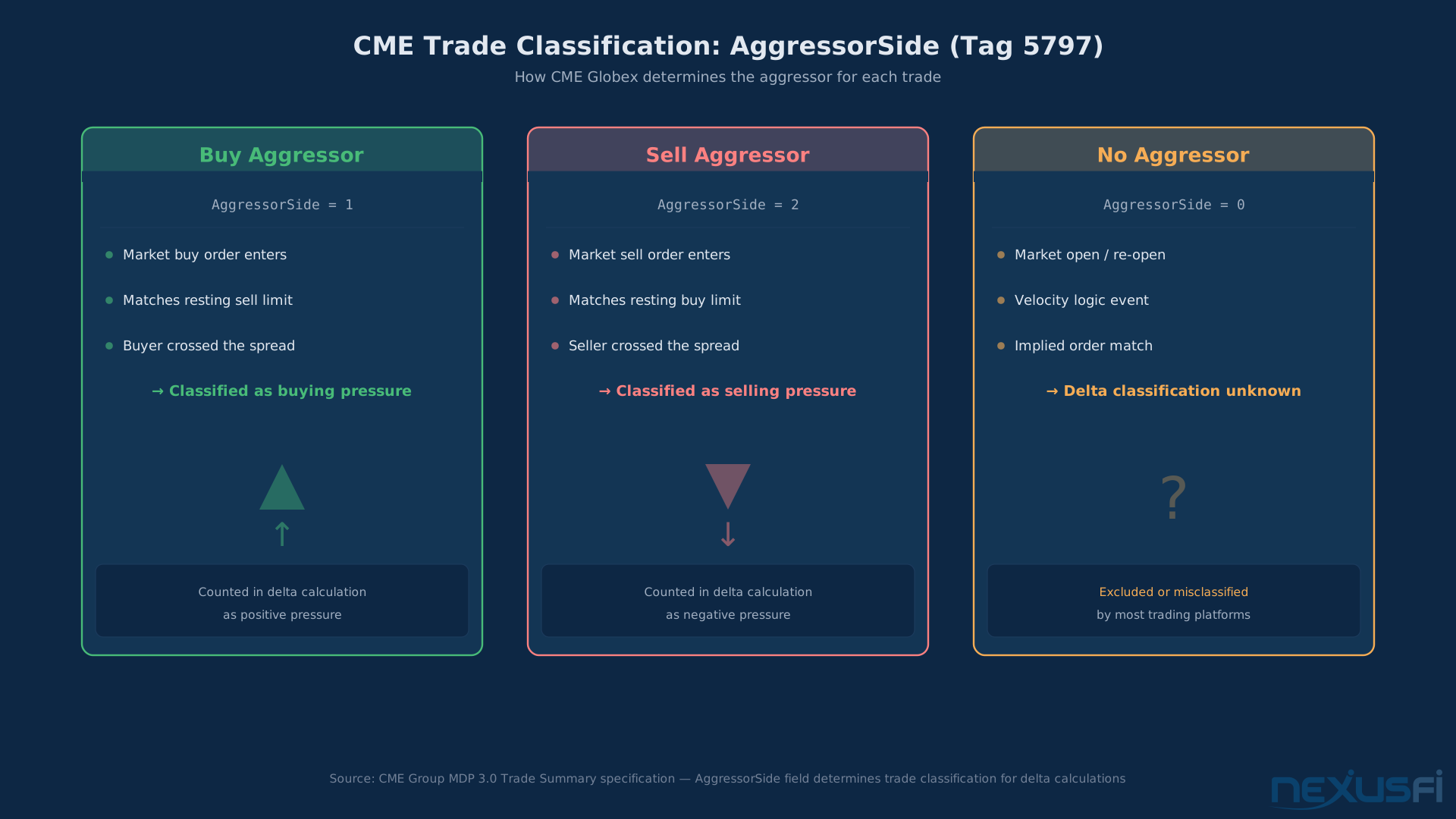
CME Group's own MDP 3.0 Trade Summary specification defines an AggressorSide field (tag 5797) that explicitly includes a "No aggressor" value — trades at market open, after velocity logic events, and implied order interactions all produce trades with no defined aggressor side. As @josh explained on NexusFi: when the last price was at the offer, a buyer crossed the spread and took liquidity. But edge cases exist, and delta should be treated as approximate, not exact. Easley, Lopez de Prado, and O'Hara's VPIN research (Review of Financial Studies, 2012) developed bulk volume classification specifically because standard tick-rule classification breaks down in high-frequency environments where trading speed outpaces quote updates. Hasbrouck's foundational work on measuring the information content of stock trades (Journal of Finance, 1991) further showed that the permanent price impact of a trade varies by its characteristics — not all buyer-initiated or seller-initiated trades carry the same signal, which means raw delta understates the complexity of what's actually happening at the match engine.
2. Spoofing distorts DOM pressure. Large displayed orders may never intend to execute. They're placed to influence other participants, then canceled before they fill. Real pressure is measured by what actually trades (delta, footprint), not just what's displayed (DOM).
3. News events break all models. At FOMC announcements, NFP releases, or earnings surprises, order flow can flip direction in milliseconds. Pressure signals generated in the seconds before a news release are meaningless for what happens after. Clear the slate and read fresh.
4. Trend vs range context matters. In strong trends, pressure signals tend to continue — buying pressure leads to more buying. In ranges, pressure signals tend to mean-revert — buying pressure at the top of a range often precedes selling. Know which regime you're in before interpreting pressure.
5. Pressure is short-horizon. Delta, CVD, and footprint data measure what's happening now and in the recent past. They don't predict what institutional desks will do tomorrow. A full session of buying pressure can be reversed by a single block trade at the close. Use pressure analysis for timing, not forecasting.
Knowledge Map
Go Deeper
Build on this knowledgeReferences This Article
Articles that build on this topicCitations
- — Understanding Footprint Charts / Number bars (2020) 👍 20“Everything can be explained with 1 simple graphic. This means is that sellers are aggressive hitting the bid or selling via market orders. Buyers are lifting the offer or placing market buys.”
- — Is Orderflow An Outdated Concept? (2020) 👍 14“Aggressive vs passive orders is one of the most important concepts to understand. It is not always possible or easy to determine the aggressor.”
- — Volume Profile and Footprint discussion (2012) 👍 21“The way I look at absorption is when you see either buyers or sellers cutting off the opposing traders.”
- — Order Flow Tools? Really? (2021) 👍 5“None of it is easy, and interpretation is highly dependent upon the basic personality of each futures market.”
- — Is Orderflow An Outdated Concept? (2021) 👍 9“A good starting point is that it's volume and liquidity that moves markets.”
- — Bid vs Ask clarification? (2021) 👍 6“When the last price was at the offer, a buyer crossed the spread and took liquidity.”
- — MDP 3.0 - Trade Summary Order Level Detail (2025)
- — Flow Toxicity and Liquidity in a High Frequency World (2012)