



Platinum Futures (PL): The Industrial Precious Metal That Trades Unlike Gold
How to approach a market where automotive demand, catalytic converter chemistry, and hydrogen fuel cell buildout determine price direction more than inflation expectations
Overview #
Platinum occupies a strange position in the futures environment. It trades on precious metals desks alongside gold and silver, gets grouped into "PMs" by most brokers, and shows up in the same commodities screens as GC and SI — but platinum's price drivers are at the core industrial, not monetary. A trader who approaches platinum with a gold-trading mindset will repeatedly get wrong-footed on the macro calls that work in GC.
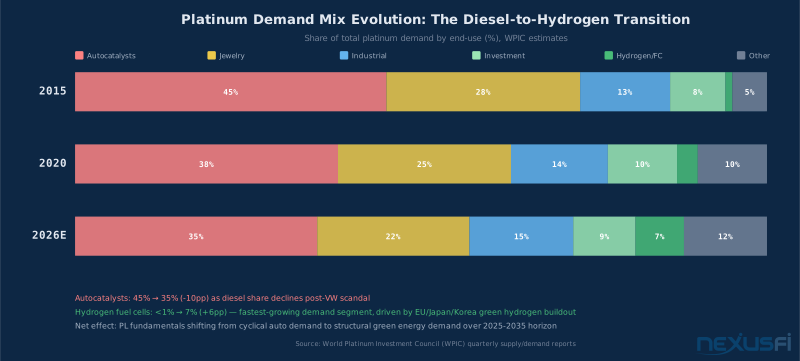
The dominant use of platinum is in autocatalysts — specifically in diesel-powered vehicles where platinum-based catalysts convert toxic exhaust emissions into harmless gases. This single end-use accounted for roughly 35-40% of total platinum demand before the global shift away from diesel accelerated. As diesel vehicle sales peaked and began declining in Europe post-2015, platinum's traditional demand base started eroding. The slack was partially picked up by jewelry demand (especially China), chemical production, glass manufacturing, and increasingly, hydrogen fuel cell catalysts where platinum is a key electrode material.
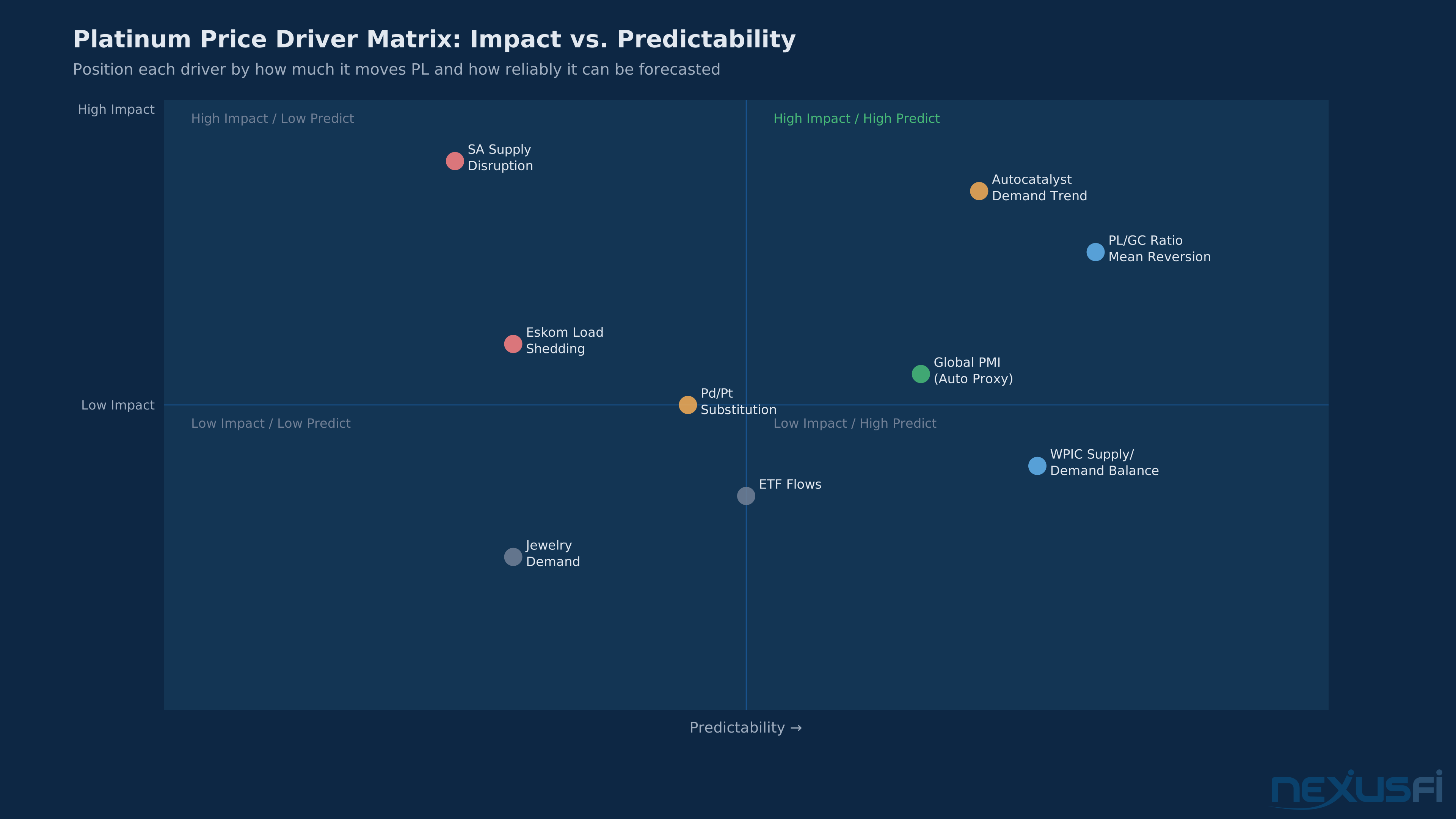
This demand structure means that platinum price direction is often determined by:
- The state of global auto production (not rate expectations)
- The diesel-to-EV transition timeline
- The pace of green hydrogen infrastructure buildout
- The platinum-palladium substitution dynamic (the two metals compete in gasoline catalysts)
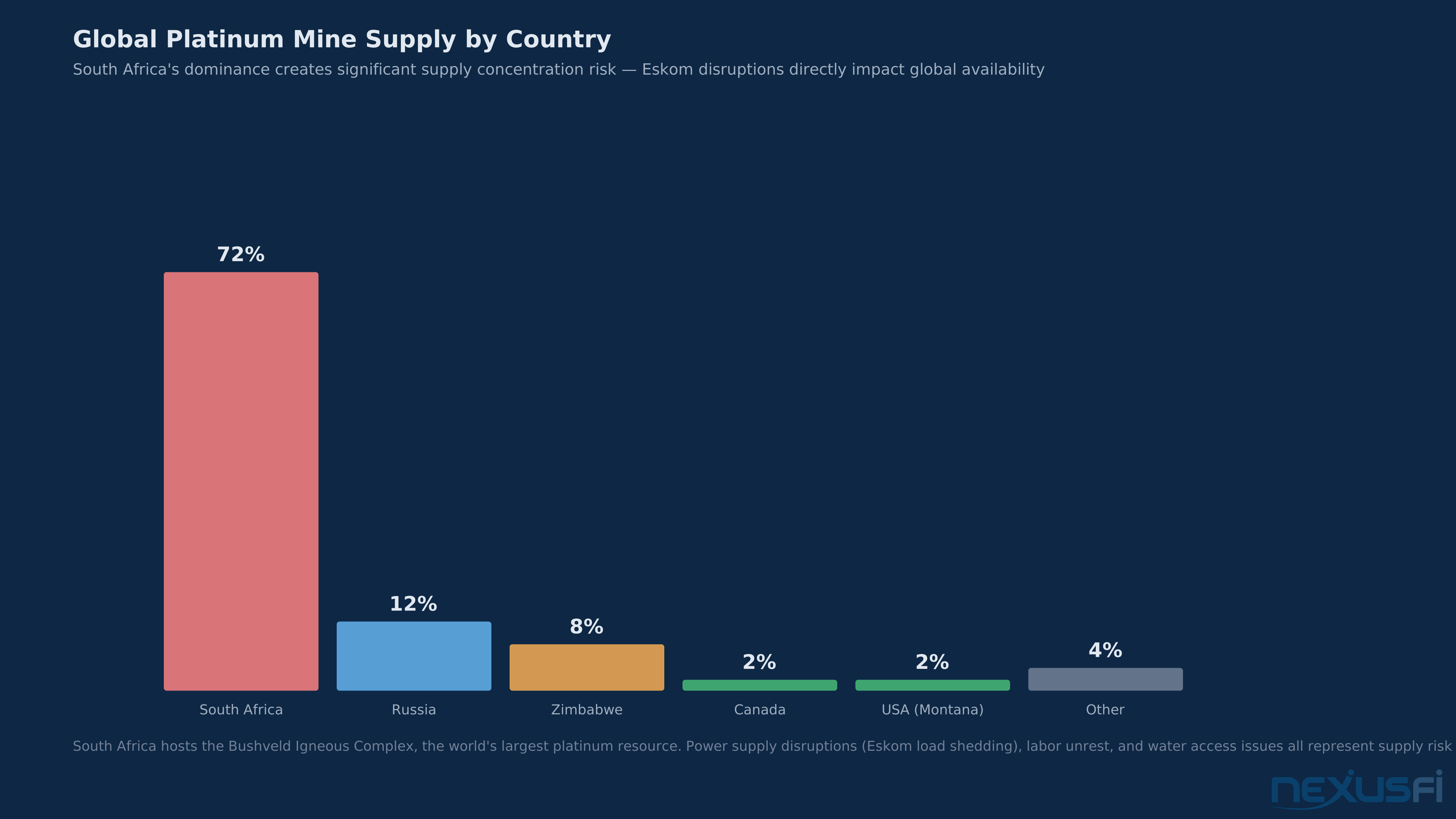
- South African supply constraints (the world's largest producer by a wide margin)
For futures traders, this creates a market with distinctive behavior. Platinum is genuinely sensitive to industrial cycle data — PMI readings, auto sales figures, South African mine supply disruptions, and hydrogen infrastructure announcements move PL in ways that don't always correlate with GC. Understanding this distinction is the baseline requirement for trading platinum well.
Platinum is primarily an industrial metal that happens to also function as a precious metal and monetary store of value. When GC trades on dollar weakness and inflation expectations, PL may or may not follow. If PL's industrial demand is weak, it can diverge sharply from gold even during periods of dollar weakness.
Contract Specifications #
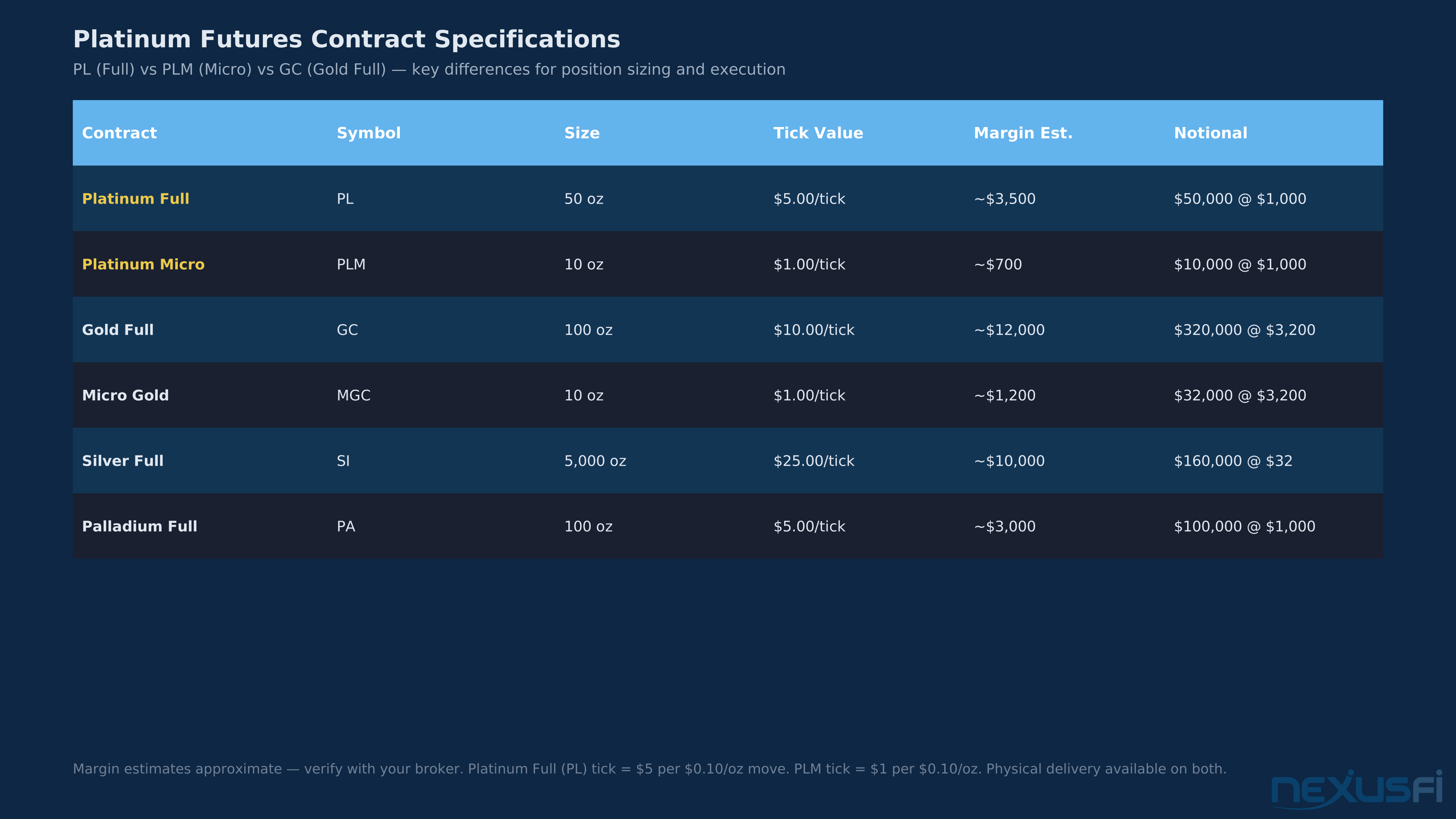
Two platinum futures contracts trade on NYMEX (CME Group), with full specifications published on the CME Group Platinum Futures page [10]:
Full Platinum Futures (PL)
- Symbol: PL
- Exchange: NYMEX
- Contract size: 50 troy ounces
- Tick size: $0.10 per troy ounce = $5.00 per tick
- Trading hours: Sunday through Friday, 6:00 PM — 5:00 PM ET (with 60-minute break at 5:00 PM)
- Settlement: Physical delivery (platinum plates, ingots, or sponge meeting exchange purity specifications)
- Contract months: Jan, Apr, Jul, Oct, plus spot month
- Last trading day: Last business day of the contract month (or preceding business day if holiday)
- First notice day: First business day of the delivery month
Micro Platinum Futures (PLM) — Launched March 13, 2023
As @SMCJB noted in the "Another new Micro - Platinum 3/13/2023" thread, CME launched the Micro Platinum contract effective March 13, 2023, following the success of Micro Gold and Micro Silver contracts. [1]
- Symbol: PLM
- Exchange: NYMEX (CME Globex)
- Contract size: 10 troy ounces (1/5th of full PL)
- Tick size: $0.10 per troy ounce = $1.00 per tick
- Settlement: Physical (same delivery specs as full contract)
- Same trading hours as full PL
Key Dollar Value Comparison:
| Contract | Size | Tick Value | Notional @ $1000/oz |
|---|---|---|---|
| PL (Full) | 50 oz | $5.00 | $50,000 |
| PLM (Micro) | 10 oz | $1.00 | $10,000 |
| GC (Gold Full) | 100 oz | $10.00 | ~$330,000 (at $3,300) |
| MGC (Micro Gold) | 10 oz | $1.00 | ~$33,000 (at $3,300) |
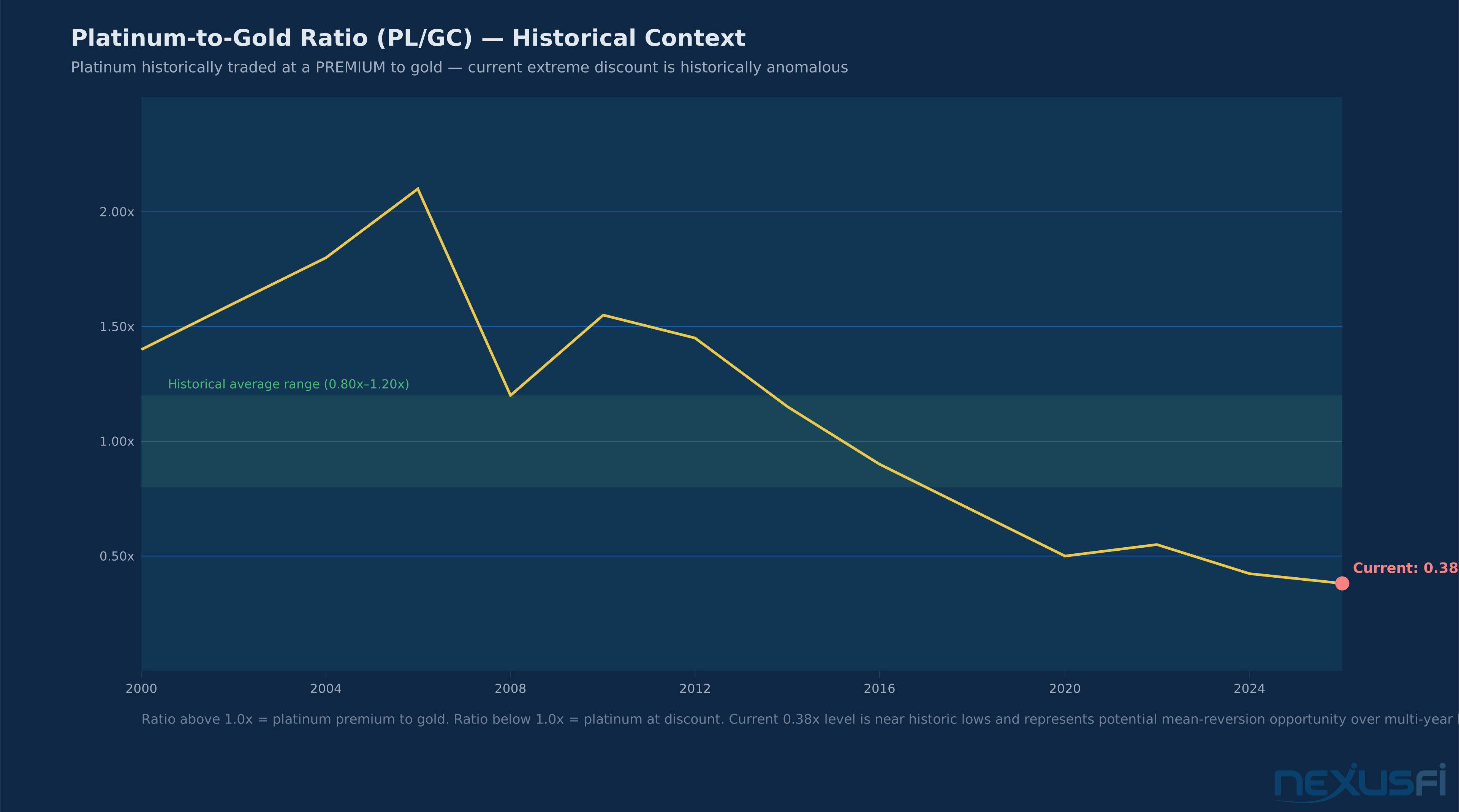
Platinum currently trades at a significant discount to gold — historically unusual. For most of the 20th century, platinum commanded a premium to gold due to its greater rarity and industrial scarcity. That relationship inverted after palladium substitution became common in autocatalysts, reducing platinum's industrial premium, while gold maintained its monetary bid.
What Drives Platinum Prices #
Understanding platinum's price drivers requires separating the metal from the precious metals complex. While GC responds predictably to real yields, dollar strength, and inflation expectations, PL operates on a different set of variables.
Primary Driver 1: Autocatalyst Demand #
Autocatalysts remain the largest single use of platinum globally, though the share has been declining. Platinum is required specifically in diesel catalytic converters (gasoline engines primarily use palladium). The long-term trend in diesel vehicle adoption has been negative since the Volkswagen emissions scandal in 2015 accelerated the regulatory shift away from diesel in Europe.
What this means for traders: European auto sector data, diesel vehicle registration statistics, and EU emissions regulation timelines directly affect PL demand forecasts. A broad PMI recovery with auto production increases is bullish for PL. A collapse in European auto sales or acceleration of diesel bans is bearish.
Primary Driver 2: Hydrogen Fuel Cell Expansion #
Platinum-based membrane electrode assemblies (MEAs) are a key component in hydrogen fuel cells. As green hydrogen infrastructure scales — especially in Europe, Japan, and South Korea — the platinum demand outlook from fuel cells improves. This is a multi-decade structural tailwind that occasionally shows up in shorter-term price moves when major hydrogen infrastructure announcements are made.
The hydrogen demand story is real but often over-hyped in short timeframes. Large-scale hydrogen demand for PL remains modest relative to autocatalyst demand as of 2026, though the trajectory is clearly positive.
Primary Driver 3: South African Supply #
South Africa accounts for approximately 70-75% of global platinum production. The country's mines — concentrated in the Bushveld Igneous Complex — are subject to power supply disruptions (load shedding from Eskom's chronic infrastructure problems), labor disputes, and water access issues. Any significant South African supply disruption sends an immediate bid into PL.
South African platinum supply disruptions are one of the most reliable bullish catalysts for PL. Load shedding cycles in South Africa have been chronic since 2019. When Eskom reports severe power cuts, experienced platinum traders watch for initial pops in PL as the market prices in potential mine supply constraints.
Primary Driver 4: Palladium-Platinum Substitution #
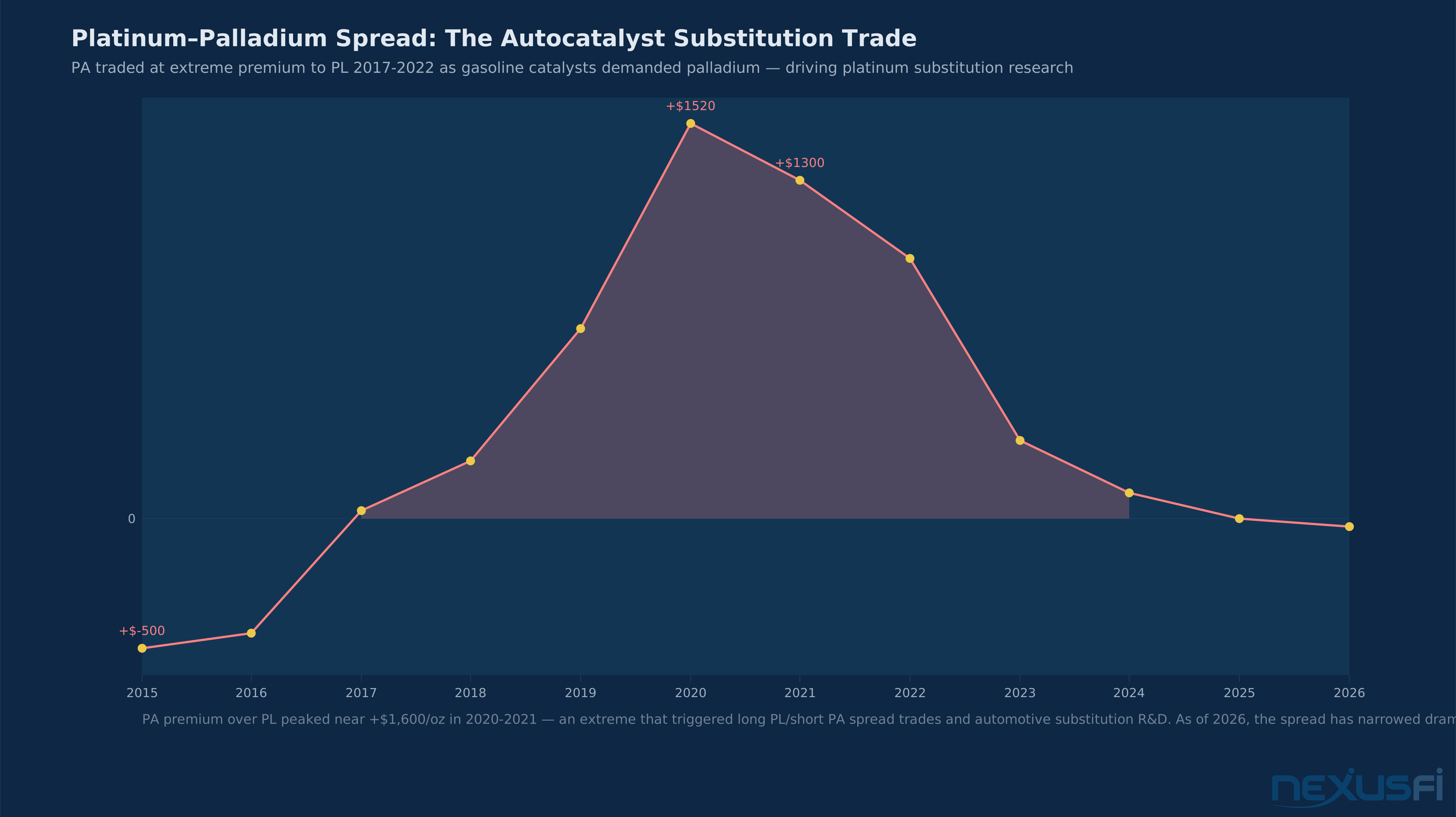
In gasoline autocatalysts, platinum and palladium are partial substitutes. When palladium becomes extremely expensive relative to platinum (as happened during 2018-2022 when palladium traded at historic premiums), automakers begin engineering projects to substitute platinum for some palladium usage. This creates a multi-year demand tailwind for platinum as the substitution projects complete.
The platinum-palladium spread is worth monitoring. Historically, platinum traded at a significant premium to palladium. The premium inverted between roughly 2017-2021, when palladium surged due to its gasoline trigger demand and its supply being more geographically concentrated in Russia and South Africa. As palladium prices have since corrected, the substitution dynamic has reversed, partially restoring platinum demand.
Secondary Drivers #
Investment and ETF demand: Physical platinum ETFs (principally the Aberdeen Standard Investments PPLT) hold platinum bars and represent discretionary investment demand. ETF inflows/outflows are published daily and can signal sentiment shifts.
Jewelry demand: China accounts for the largest share of platinum jewelry demand. Platinum jewelry consumption can be tracked through PGM consumption data from the World Platinum Investment Council (WPIC) quarterly reports.
Chemical industry: Platinum catalysts are used in nitric acid production (fertilizers), petroleum refining, and other industrial processes. This demand tends to be stable and grows slowly.
Platinum vs Gold: Understanding the Relationship #
The gold-platinum relationship is the most important comparative metric for platinum traders. For decades, the "platinum premium to gold" was considered a positive indicator: platinum's greater scarcity, higher industrial utility, and harder extraction meant the market priced it above gold.
Historical relationship:
- Pre-2000: PL typically traded at 1.0x-1.5x GC price
- 2000-2011: Wide swings, platinum occasionally reached 2x+ gold during commodity super-cycle
- 2011-2015: Premium narrowed as gold rallied on monetary concerns and PL industrial demand softened
- 2015-present: The relationship inverted, with GC trading above PL in dollar terms
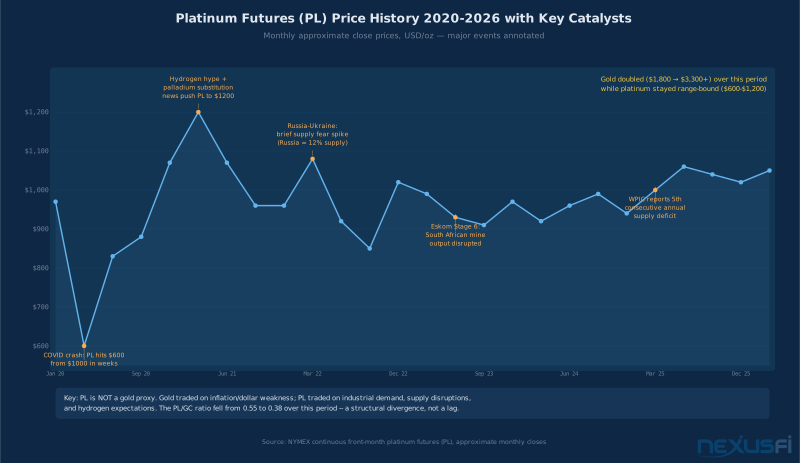
As of 2025-2026, with gold trading near or above $3,000/oz, platinum around $1,000-1,100/oz represents a historically wide discount. This spread has attracted structural long PL / short GC trades from sophisticated funds who believe the relationship will eventually normalize.
[2] Platinum adds another dimension — it takes its orders from industrial demand data as much as from spot precious metals markets.
The platinum-to-gold ratio (PL price / GC price) is tracked by precious metals analysts as a valuation metric. A ratio below 0.4 (platinum trading at less than 40% of gold price) has historically represented extreme undervaluation relative to the long-run average. As of 2025-2026, the ratio is near these levels.
Roll Mechanics #
Platinum rolls like other physical metals futures — not like agricultural contracts that represent different crop years with entirely different supply/demand dynamics.
[3]
The same logic applies directly to platinum:
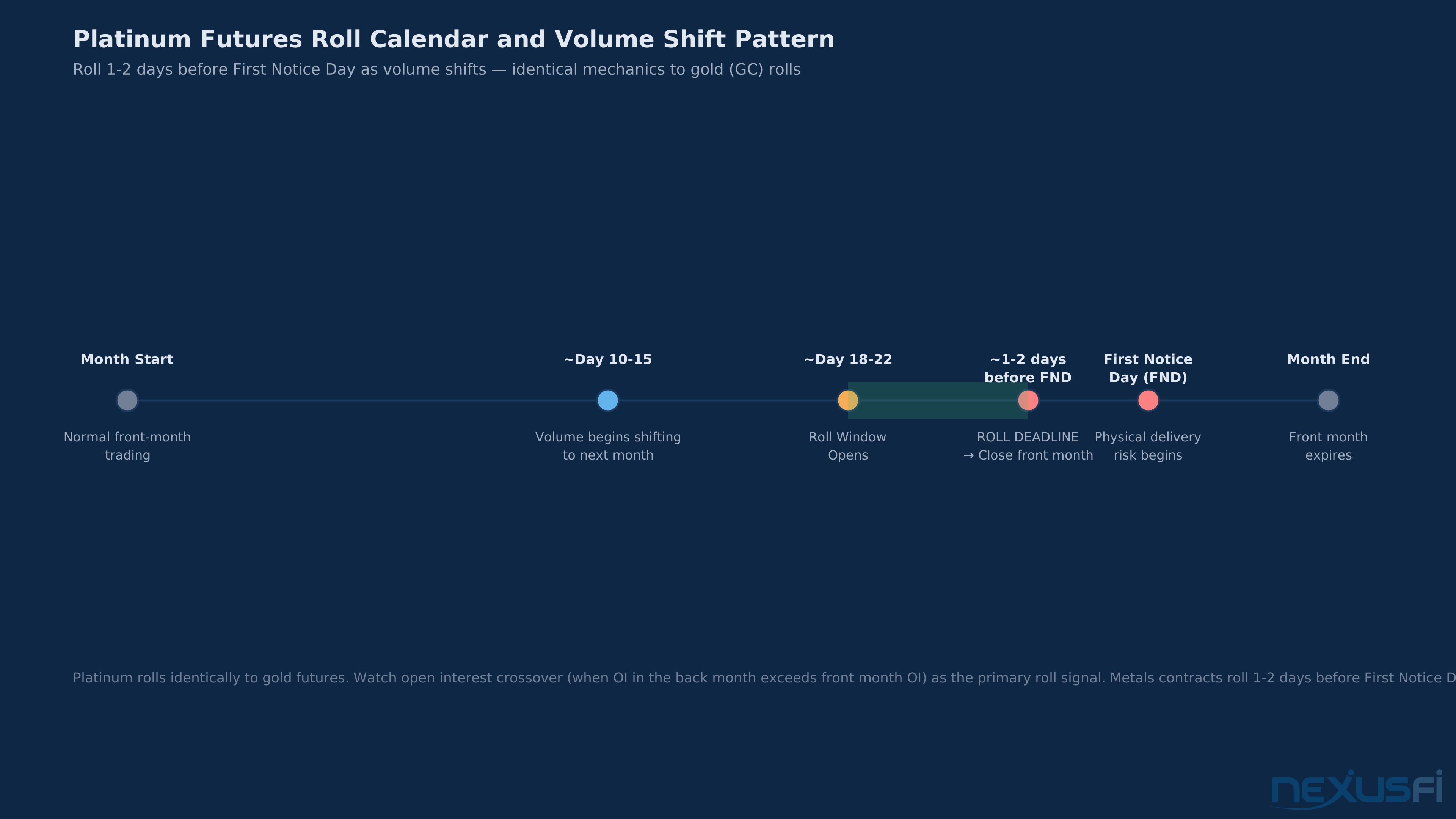
[7] For platinum, which rolls on the first business day of the delivery month (FND), this means completing your roll in the final 2-3 trading days of the preceding month.
PL Roll Protocol:
- Monitor volume crossover between front month and second month contracts
- Begin rolling 1-2 business days before first notice day of the front month
- Check open interest as a secondary signal — when OI drops sharply in front month, late rollers are moving
- For physical delivery, note that platinum can be delivered in plates, ingots, or sponge meeting 99.95% purity minimum
Roll Dynamics Unique to PL:
- PL has lower liquidity than GC, so roll spreads can widen in thin markets
- Active contract months are January, April, July, and October — expect volume to be concentrated in these four delivery months
- Micro PL (PLM) will typically roll in sync with the full contract but may have wider spreads due to its newer and smaller market
Practical roll mechanics:
- Watch first notice day dates (published on CME website) — @Fat Tails documented that for metals futures, "first notice day is usually during the last business days of the month preceding the contract month" and "volume shifts to the new contract on first notice day." [8] For platinum's active months (Jan, Apr, Jul, Oct), roll the last 2-3 trading days of December, March, June, or September respectively.
- Roll entry-to-exit before FND to avoid delivery obligations
- Use limit orders rather than market orders given lower liquidity vs GC
For traders who only use PL for directional speculation (not physical delivery), the key roll rule is simple: move to the second contract month when the front month's open interest is declining and volume has clearly shifted. Don't try to be the last one to roll.
Seasonal Patterns #
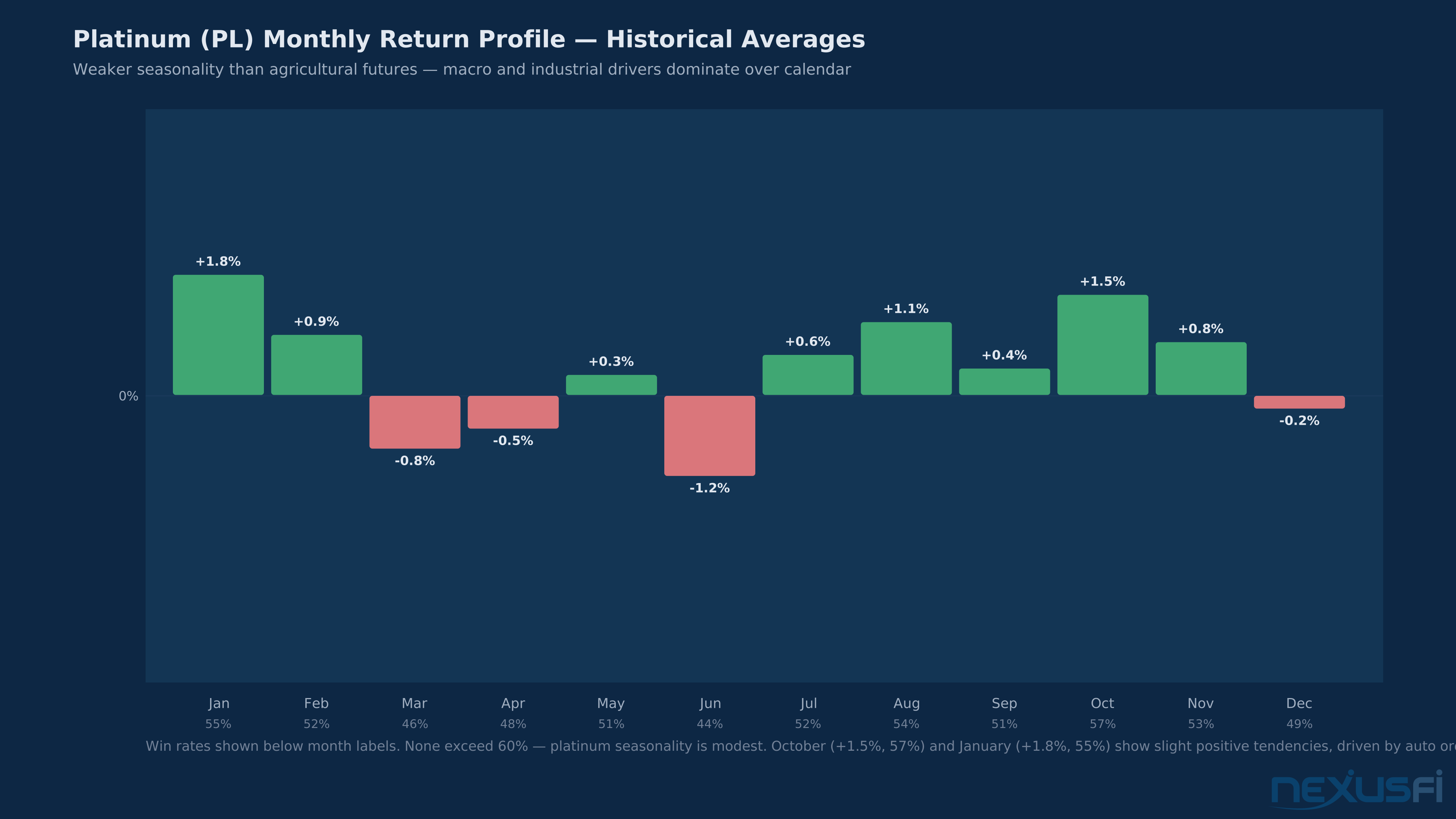
Platinum's seasonality is weaker than many physical commodity markets. Because autocatalyst demand is relatively stable year-round (cars don't stop needing emissions control in summer), the extreme agricultural-style seasonal patterns don't apply.
That said, some seasonal tendencies are worth understanding:
Q1 (January-March): Mildly positive. Post-holiday auto production restarts in January, and manufacturers begin placing spring orders for commodities including platinum. South African mines may experience mid-summer (Southern Hemisphere) operational patterns. Historically a slightly bullish window.
Q2 (April-June): Mixed to neutral. Auto production is seasonal in some markets, but the effect is modest for platinum. End of Northern Hemisphere fiscal year in March (Japan) can trigger PGM buying for balance sheet management.
Q3 (July-September): Mixed. Auto sales data for the prior model year starts coming in, influencing autocatalyst demand forecasts. Investment interest can be higher due to South African mid-year production reports.
Q4 (October-December): Tends to be positive seasonally. Auto manufacturers prepare for model year changeovers, and annual WPIC supply/demand reports create attention on platinum fundamentals. Some investment flows accompany year-end precious metals positioning.
The Substitution Trade: The largest seasonal influence on platinum is actually the palladium-platinum spread, which itself has seasonal patterns tied to auto production cycles. When palladium tightens in Q1 as autocatalyst orders are placed, the substitution premium for platinum's potential role gets priced in.
Overall, seasonal patterns in PL are best used as secondary considerations rather than primary trade triggers. The fundamental and macro drivers (autocatalyst demand, South African supply, palladium spread) dominate.
Trading Strategies #
Strategy 1: Macro-Fundamental Long or Short #
The most reliable platinum trades are macro plays on industrial demand expectations. The setup:
- Identify the economic cycle position: Are global PMIs improving or deteriorating? Is auto production recovering?
- Assess South African supply risk: Are Eskom power cuts escalating? Any labor unrest at major mines?
- Check the PL/GC spread: Is platinum at an unusual discount or premium to gold that might create mean-reversion flow?
- Layer in position: Given lower liquidity than GC, use limit orders. Build position over multiple days if conviction is high.
Macro Long Example:
- Global PMI improves above 52 after a contraction phase
- South Africa reports severe Eskom load shedding affecting mine output
- PL/GC ratio near historically extreme discount (below 0.4)
- Enter PLM or PL long with stop below recent swing low (2x 14-day ATR)
- Target: Mean reversion toward the PL/GC ratio historical average over 30-90 days
Strategy 2: Platinum-Palladium Spread #
The platinum-palladium spread (PL minus PA) is one of the more interesting commodity spreads because the two metals compete in autocatalysts but with different vehicle type exposure (platinum = diesel; palladium = gasoline). The spread tends to be mean-reverting over multi-year cycles.
Executing the spread:
- Long PL / Short PA: When palladium is at extreme premium to platinum (PA much more expensive than PL)
- Long PA / Short PL: When platinum is at premium (historically much rarer condition post-2017)
- Margin treatment: Verify with your broker whether the CME recognizes the inter-commodity spread for margin offsets (PL/PA spreads may receive partial margin credit)
Strategy 3: Precious Metals Divergence Trade #
Within the PM complex (GC, SI, PL, PA), divergences occur when one metal moves strongly while others lag. This can be exploited in both directions:
- If GC rallies sharply on a monetary inflation trigger but PL doesn't follow, PL may offer a lagged long opportunity (precious metals correlation catch-up)
- If PL rallies sharply on a South African supply shock but GC doesn't follow, the PL premium may be temporary; consider fading if fundamental confirmation is lacking
Strategy 4: Mean Reversion to PL/GC Ratio #
The gold-platinum ratio trade is most appropriate for patient, multi-week timeframes. The concept is straightforward: when the ratio is at an extreme, the market has likely overpriced one metal relative to the other on a structural basis.
Implementation:
- Monitor the PL/GC ratio daily
- When ratio is below 0.40 (platinum at extreme discount), consider PL long or PL long / GC short spread
- Use full PL contract for directional plays; add GC short for the spread version
- Target the historical mean (approximately 0.70-0.90 for the ratio, though this may take months to years to achieve)
This is a high-conviction, low-frequency trade. Don't size up based on the ratio alone — wait for a fundamental trigger to confirm the trade thesis.
Risk Management for Platinum #
Platinum's lower liquidity versus gold creates specific risk management requirements.
Liquidity Risk #
PL and PLM are less liquid than GC and MGC. In fast-moving markets, bid-ask spreads on PL can widen much. Never use market orders for size entries or exits. Always use limit orders, and account for potential slippage when sizing.
Practical liquidity guidelines:
- Full PL: Adequate for trades up to 20-30 contracts in normal markets
- PLM: Sufficient for retail-sized positions but verify current market depth
- During major macro events: Reduce size by 50% to account for wider spreads
Position Sizing #
Because PL notional value varies much with price moves (and platinum is more volatile than GC on a percentage basis), position sizing must account for the full $ risk, not just contract count.
Sizing formula:
- Determine dollar risk per trade (e.g., 1% of account = $5,000)
- Calculate stop distance in PL points (e.g., 30 points = $1,500 for a single PL contract)
- Max contracts = $5,000 / $1,500 = 3 PL contracts
For PLM (micro): 30 points = $300 per contract. Same $5,000 risk tolerance allows 16 PLM contracts. Use PLM for fine-tuning position sizing.
Correlation Risk #
Platinum's correlation to gold varies. In strong risk-off environments, PL often sells off with other risk assets despite being a precious metal. Don't assume PL will act as a safe haven in the same way as GC. Portfolio-level correlation should be calculated over multiple regimes, not just recent history.
If you hold both long GC and long PL positions, understand that in a liquidity crisis (sudden risk-off), both may sell off together. The "precious metals hedge" narrative fails in acute market stress when commodity liquidations correlate. Size the combined PM exposure so.
Delivery Risk #
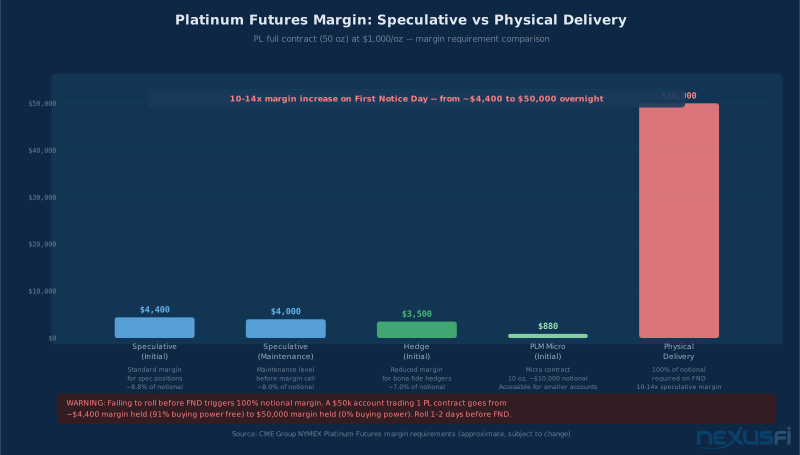
If trading full PL contracts, be alert to first notice dates. Accidentally holding through FND can result in delivery obligations that create significant logistics complications.
[6] For a full PL contract at $1,000/oz, that means $50,000 posted overnight — jumping from the normal $3,000-5,000 speculative margin. Physical platinum delivery also requires pre-arranged warehouse storage at an approved NYMEX depository meeting strict purity specifications. Most retail traders who accidentally hold past FND exit via Alternative Delivery Procedure (ADP), paying the matched counterparty to settle bilaterally outside the exchange — usually at a cost.
Set calendar reminders for FND dates. For most speculative traders, use PLM — and even with PLM, note that the contract is physically settled, so delivery obligations apply at 1/5th the scale.
Trade Vignette: The South African Supply Squeeze #
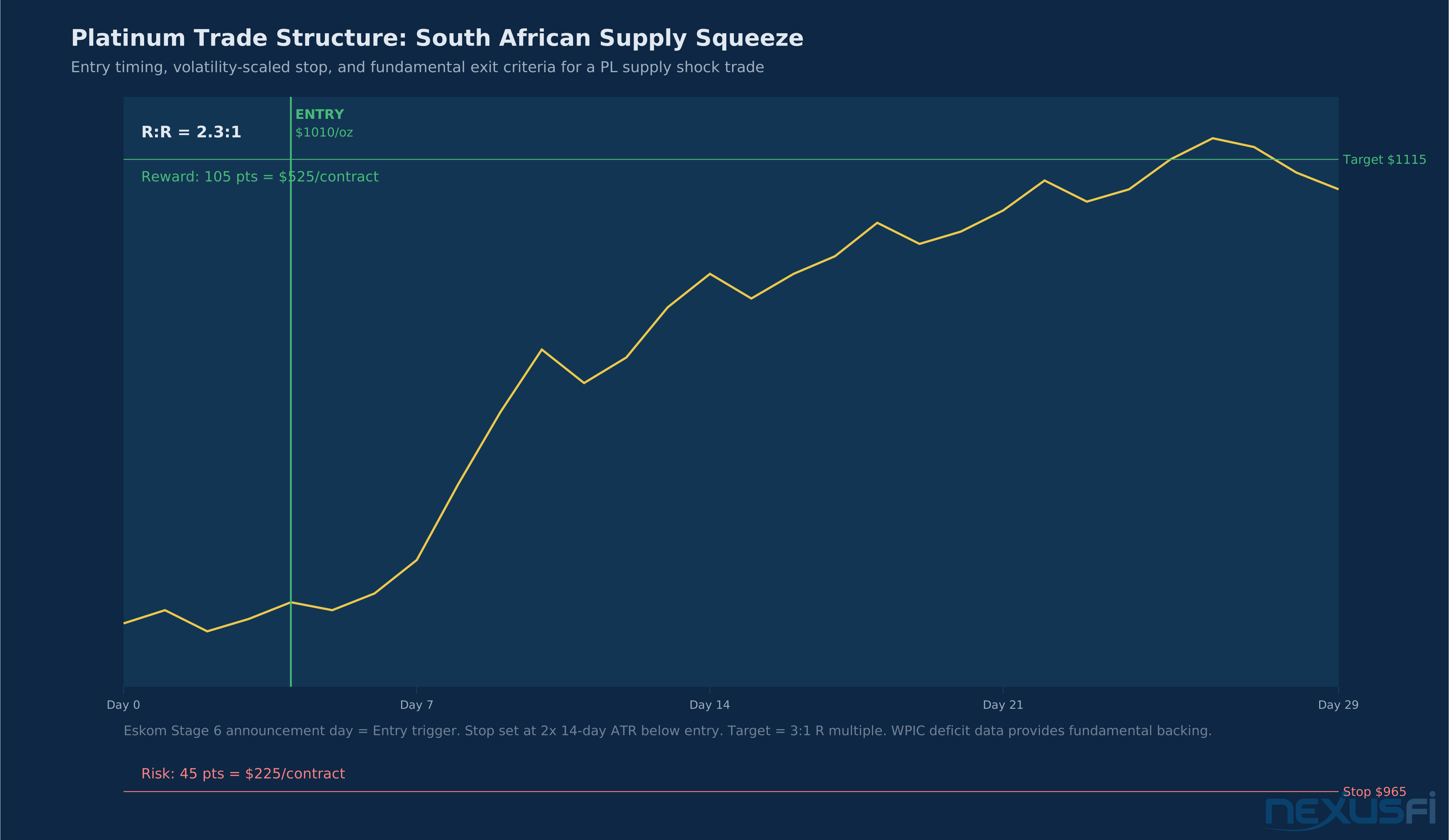
Context: South Africa's Eskom utility enters a period of "Stage 6" load shedding — the most severe power cuts, lasting 10+ hours per day. Reports from the major platinum mines indicate shaft downtime as pumps, ventilation, and hoists go offline. The Stillwater mine complex in Montana (secondary US source) has no issues.
Market observations:
- PL/GC ratio is at 0.38 — near multi-decade lows
- WPIC has estimated platinum market is already in a structural supply deficit
- Auto industry is reporting production ramp-up after supply chain normalization
- Palladium is trading at a premium to platinum (bullish for platinum substitution demand)
Trade setup:
- Entry: Long 2 PL contracts at market open after Eskom Stage 6 announcement, using limit order at best bid
- Stop: 2x 14-day ATR = approximately 45 PL points below entry = $2,250 risk per contract = $4,500 total
- Initial target: 3x ATR above entry for a 3:1 R multiple
- Fundamental thesis: Supply shock + existing deficit + substitution demand = multi-week bullish fundamental backdrop
Risk monitoring:
- Check daily whether Stage 6 is ongoing or downgraded (load shedding easing = consider reducing position)
- Monitor WPIC monthly supply data when released
- Watch palladium simultaneously — if PA rallies sharply, some platinum longs may rotate back to PA
Exit discipline:
- If load shedding is resolved within 5 days without meaningful PL price appreciation, close position (thesis not playing out)
- If PL reaches target quickly (1-2 days), take partial profit, move stop to breakeven, hold remainder for extended fundamental move
This vignette illustrates the fundamental-overlay approach that works best in platinum: identify the supply or demand trigger, verify the technical setup, execute with defined risk, and exit based on whether the fundamental thesis is proving out.
Building a Platinum Research Framework #
Traders serious about platinum benefit from monitoring a short list of high-signal data sources:
World Platinum Investment Council (WPIC): Publishes quarterly supply/demand forecasts through its Platinum Quarterly reports, annual reports, and monthly commentary [9]. The most complete public source of platinum fundamental data — the Q1 2026 Platinum Quarterly forecasts a fourth consecutive annual deficit of 297 koz, with above-ground stocks projected to fall below three months of demand by year-end 2026.
South African mine production data: Available via South African Minerals Council and individual mining company (Anglo American Platinum, Sibanye-Stillwater, Impala Platinum) quarterly reports. Anglo American Platinum dominates global production.
Eskom load shedding status: Eskom publishes current load shedding stage in real time. Stage 4+ is when mine operations are meaningfully impacted. Sustained Stage 6 for 7+ days is historically associated with PL supply disruption premium.
JMPB (Johnson Matthey PGM report): Annual report covering the entire PGM complex (platinum, palladium, rhodium, ruthenium, iridium). Available free from Johnson Matthey.
CME commitment of traders: Track managed money positioning in PL futures. Extreme net-short positions from speculative accounts have historically been contrarian bullish signals for multi-week recoveries.
WPIC Quarterly Supply-Demand Balance: Platinum is unique among commodities in having a single authoritative public data source (WPIC) that publishes detailed quarterly supply/demand estimates based on independent research by Metals Focus [9]. Trading with the WPIC annual supply/demand balance as a fundamental anchor is a reasonable approach. If WPIC forecasts a 300,000+ oz deficit for the year and the price is not reflecting scarcity, that's a potential long opportunity. The latest data shows exactly this pattern — consecutive deficits since 2023 with the 2025 shortfall exceeding 1 million ounces, yet PL remains at a historically wide discount to GC.
Execution Considerations #
Selecting between PL and PLM:
For smaller accounts and learning purposes, PLM (10 oz, $1/tick) is appropriate. The smaller size allows position sizing without needing to risk disproportionate capital on single contracts. Once comfortable with the market behavior, graduating to PL (50 oz, $5/tick) provides better fills and tighter bid-ask spreads relative to theoretical value.
Order types:
- Never use market orders for PL (liquidity risk)
- Limit orders at or inside the bid-ask are standard
- For exits under pressure, be willing to give the spread to get out; don't use limit orders that might not fill if PL is gapping
Data feeds:
- PL trades on NYMEX, so NYMEX data access is required
- For spread traders (PL/PA), ensure your platform calculates the spread without data gaps or construction errors
Knowledge Map
Go Deeper
Build on this knowledgeReferences This Article
Articles that build on this topicCitations
- — Another new Micro - Platinum 3/13/2023 (2023) 👍 8“CME listed the Micro Platinum Futures contract (PLM) effective March 13, 2023. Symbol PLM, size 10oz (1/5th of full size), tick $0.10/oz ($1 per tick), physical settlement.”
- — Gold Futures (GC) main discussion (2020) 👍 8“Gold is to hold. Silver is for trading. Gold and silver take their orders from the spot markets. Know the spot markets to know gold and silver.”
- — Rollover dates for GC, SI, ZC and ZS (2013) 👍 13“For metals the situation is much easier. For the gold contract there is a known first notice date. Gold futures typically roll 1 or 2 days prior to first notice day. The metal does not perish.”
- — Silver at recent highs - some execution considerations for futures traders (2026) 👍 5“BCOM and GSCI rebalance mechanics: precious metals that outperform their target weighting face selling pressure as index trackers rebalance.”
- — Gold Futures (GC) main discussion (2020) 👍 6“Comex Gold Futures trading at nearly $100/oz premium to spot gold due to Swiss gold refiner closures -- a supply squeeze caused by the bar size mismatch between Comex (100oz bars) and LME/European standard (400oz bars).”
- — What happens if your contract expires (2021) 👍 8“If you go to delivery, the first thing that happens is that you will be margined 100% of the notional value of the contract whether you are the buyer or the seller. So if you have 1 lot of crude, the margin requirement will go from $4,500 or whatever it currently is to $60,000 on the day of expiration.”
- — Contract Rollover, and what to do when (2015) 👍 4“You need to roll that position prior to first notice date and prior to contract expiry - whatever comes first. The risk is higher for older positions, as positions that were set up first will be assigned first for physical delivery.”
- — Rollover Days - some Quick Facts about (2010) 👍 12“Gold futures: Similar as interest rate futures. First notice day is usually during the last business days of the month preceding the contract month. So volume shifts to the new contract on first notice day.”
- — Platinum Quarterly - Supply & Demand (2026)
- — Platinum Futures Contract Specifications (2026)