



Seasonality Trading Strategies for Futures: The Calendar Edge Every Serious Trader Needs
How to turn physical supply/demand cycles into a systematic directional bias — and when to ignore the calendar entirely
Overview #
Every year, corn rallies into planting season. Natural gas rips higher when winter storage draws begin. Lean hogs firm up as holiday ham demand peaks. These aren't coincidences — they're the market pricing physical reality, and they repeat with enough consistency to build tradeable edges around.
Seasonality is one of the most misunderstood tools in a futures trader's kit. Retail traders either treat it as gospel (bad) or dismiss it as astrology (also bad). The professional approach is somewhere in the middle: seasonality provides a directional bias, not a trade signal. You don't buy corn because it's April — you buy corn in April when the seasonal bias aligns with current fundamentals, term structure, and execution conditions. When those conditions break, you sit on your hands.
This article covers the full methodology: what seasonality is, how to evaluate seasonal charts properly, how to apply a fundamental overlay that filters losers, the market-by-market playbook across the major futures contracts, how to structure trades with real entry/stop/target mechanics, and — critically — the exact conditions under which you ignore the calendar entirely and wait for the next opportunity.
Seasonality is a bias filter, not a signal generator. That distinction is everything.
What Seasonality Is (and Isn't) #
Seasonality in futures is a calendar-conditional expectation of price behavior — the statistical tendency for prices to move in a particular direction during a specific time window because of recurring physical supply/demand dynamics. The key word is physical.
Corn rallies into spring planting because uncertainty about yields creates weather premium. Natural gas drops from June through August as summer cooling demand consumes injection surplus — then climbs again as early winter draw-down begins. Lean hogs follow slaughter cycles tied to feed availability, holiday demand, and the biologically fixed length of pig gestation and finishing. These aren't random. They're the calendar expression of real-world physics.
This is the distinction that matters: physical seasonality vs. statistical noise. When the pattern traces back to a repeating real-world process — planting, harvesting, heating, cooling, breeding, finishing — it's more likely to persist. When the only justification is "it happened before," it's probably noise.
Seasonality works best in physical commodity markets (grains, energies, livestock) where recurring supply/demand cycles are anchored in biology, weather, and refinery schedules. It's weaker in financial futures (ES, GC) where the driving force is positioning and sentiment, not bushels of corn in Kansas.
The Statistical Framework #
At the core, seasonality analysis is straightforward. For a given contract and calendar window (say, "Natural Gas in February"), you compute:
- Mean return from window open to window close across N years
- Win rate (percentage of years the return was positive for a long, negative for a short)
- Standard deviation of those returns — the key risk parameter
A seasonal window is worth trading when: win rate ≥ 55%, mean return ≥ 2%, and the sample covers at least 10 years. The seasonal z-score — mean return divided by standard deviation — gives you the signal-to-noise ratio. Require z ≥ 0.20 before putting it on your radar.
Win rate is the most important number, and it's the one most people ignore. A seasonal pattern with a 58% win rate means 42% of the time you're going to take a loss on this trade. Position size so. Seasonality is a probability edge, not a certainty.
Reading Seasonal Charts #
The most common mistake with seasonal charts: looking at the 15-year line and trading it like it's a price chart. It isn't. That smooth, beautiful curve is an average across 15 individual years — some of which were drought years, some of which had geopolitical shocks, some of which behaved nothing like the average.
You need to look at the individual year lines.
As @ron99 put it in the Options forum's "Selling Options on Futures?" thread: "You definitely need to look at each year's chart especially the last 5 years to see if in recent years the contract is following the chart consistently. Seasonal trends do change. What worked 5 years ago may not work now." [1]
The evaluation framework has two layers:
The 15-year line tells you the long-run tendency — the macro baseline. For physical commodity markets, this reflects the underlying supply/demand structure that persists across market regimes.
The 5-year line tells you the current regime. If the 5-year line diverges much from the 15-year line, something structural has changed. The shale revolution rewrote natural gas seasonality. The growth of ethanol demand changed corn's storage dynamics. The 15-year chart still shows the old pattern; the 5-year chart shows where the market actually is today.
Sign Consistency Check #
Before trading any seasonal pattern, compute what percentage of individual years moved in the expected direction. This is your sign consistency metric.
If 9 out of 15 years (60%) showed the expected move, that's a real edge. If 8 out of 15 years (53%) did, that's noise dressed up as a pattern. Require sign consistency ≥ 60% for the current 5-year window.
There's one more check: dispersion. If the average "up" move is +8% but the average "down" year is -15%, your risk/reward is asymmetric in the wrong direction. The seasonal chart may show a positive average, but the bad years wipe out the good years. Look at every individual year before committing size.
MRCI's published seasonal trades — while valuable as research starting points — have real limitations. In a difficult year, their suggested futures trades can run 45% wrong.
[2] Use seasonal research as a filter, not a trading system.
Research Tools: MRCI, SeasonAlgo, and Building Your Own #
MRCI (Moore Research Center Inc.) has been publishing seasonal research since 1989. They produce standardized seasonal charts covering over 300 futures markets, curate approximately 15 seasonal futures trades and 15 spread trades per month, and track historical performance with detailed drawdown data.
SeasonAlgo is a more modern platform focused on options sellers who use seasonal bias as a directional filter. It presents win rates, average return by month, and year-over-year consistency in a cleaner interface.
Building your own requires pulling continuous contract data, computing monthly returns, and running basic statistical tests. This takes more setup but gives you complete transparency into what assumptions are baked into the numbers.
The professional approach to any vendor data: validate it yourself before trading it. Pull the raw contract data, compute returns for the vendor's proposed windows, and check whether their win rates and average moves match your calculation within reasonable tolerance. If the numbers diverge much, there's either a roll methodology difference or data quality issue — either way, you need to understand it before risking capital.
A systematic trader at the Elite level described his process this way: "I have a spreadsheet where I keep a list of [seasonal trade] possibilities. I track the actual performance of them over the last 5 years on a dollar basis per day held." [1] That's the right approach — your own performance history, not the vendor's curated selection.
For each market, the research workflow is:
- Pull back-adjusted continuous contract data (use consistent roll methodology)
- Compute monthly returns from first to last trading day of each calendar month
- Calculate mean, standard deviation, win rate, and sign consistency
- Overlay individual years to check for anomalous outliers
- Require 5-year confirmation before considering the pattern current
The Fundamental Overlay: Your Skip Logic #
Here's where most seasonal traders lose money: they find a pattern with a 60% win rate and size up as if it's a guaranteed edge. Then a drought happens, or OPEC cuts production, or a disease tears through the hog inventory. The seasonal pattern breaks — and they're holding a full-size position against a fundamental move.
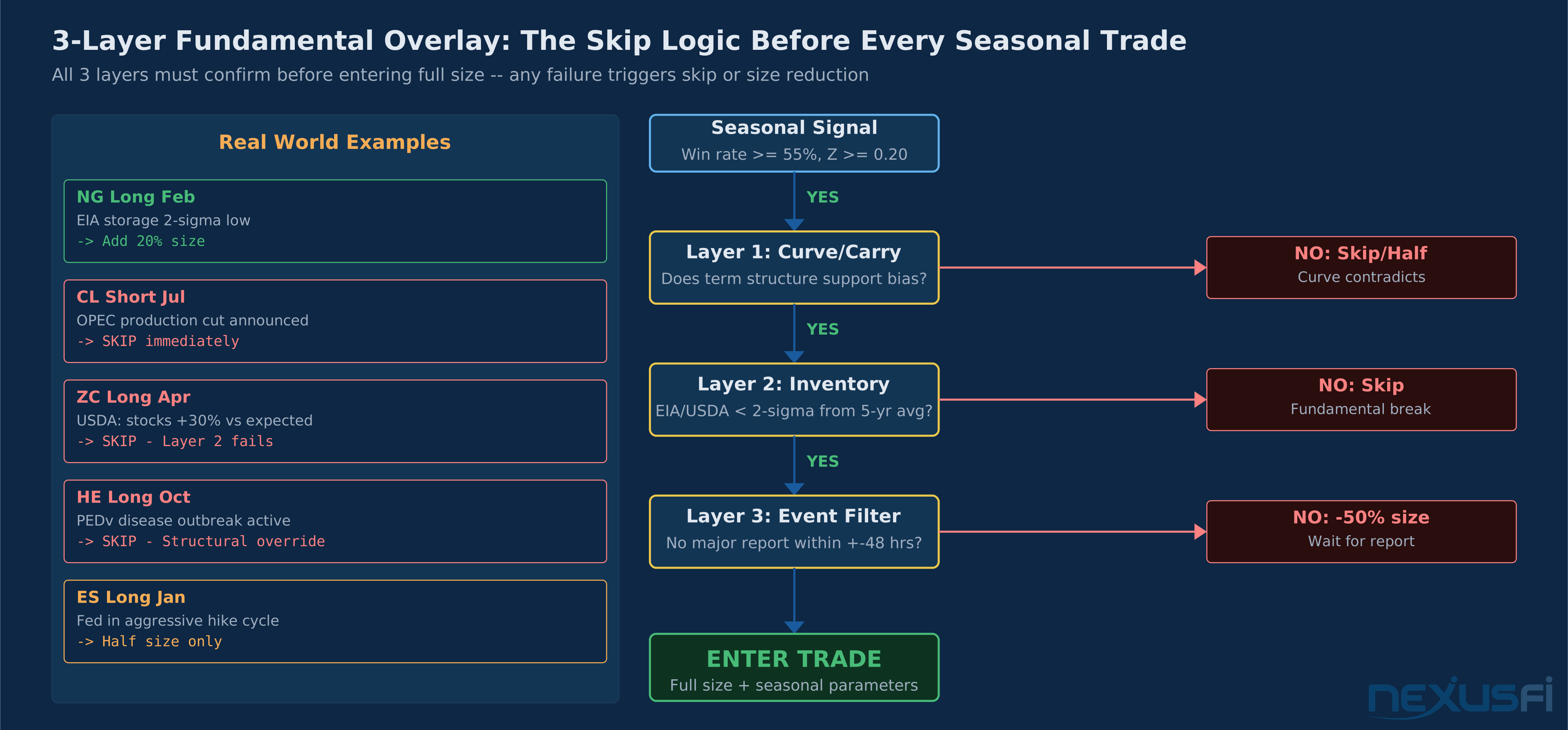
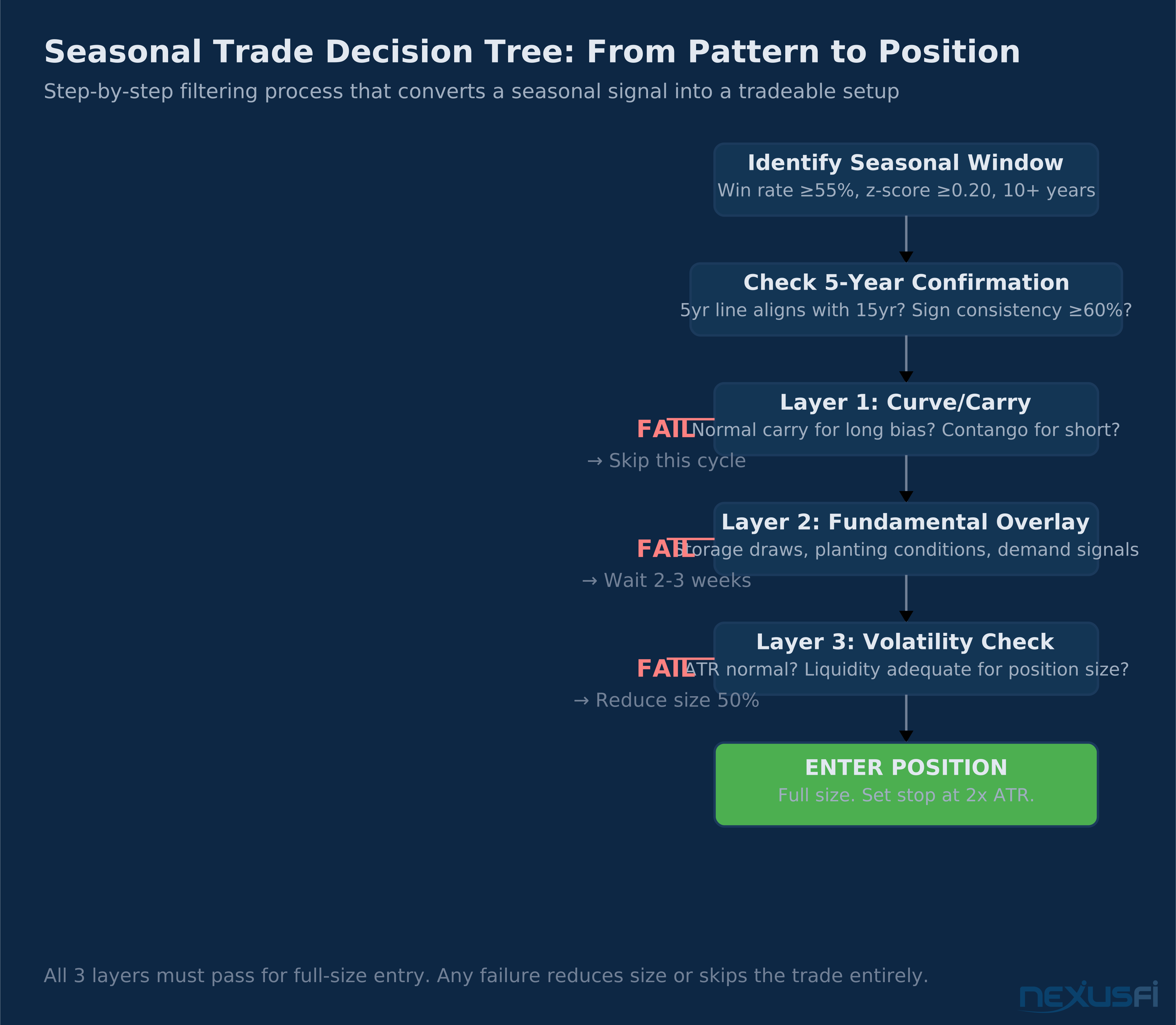
The fix is a 3-layer confirmation system before any seasonal trade gets placed.
Layer 1: Curve/Carry Regime
Does the futures curve support the seasonal direction? For energies, check whether the front end is in contango or backwardation. If the seasonal says "natural gas long in February" but the curve is in steep contango with front-month historically overpriced relative to deferred, something's off. The curve is the market's current assessment of supply/demand — if it contradicts the seasonal bias, reduce size or skip.
Layer 2: Inventory/Flow Data
For each commodity, there's a key government report that tells you where inventories stand relative to history:
- Natural gas (NG): EIA Weekly Natural Gas Storage Report — compare to 5-year average
- Crude oil (CL): EIA Weekly Petroleum Status Report — total inventory position
- Grains (ZC, ZS): USDA WASDE report — ending stocks vs. expectations
- Livestock (HE, LE): USDA Cattle on Feed, Hogs and Pigs reports
If inventory deviation exceeds 2 standard deviations from the historical norm, the fundamental environment is atypical. Don't trade the seasonal bias as if it's normal. Either skip, or cut size in half.
Layer 3: Event/Volatility Filter
If a scheduled high-impact report (USDA WASDE, EIA storage, FOMC) falls within 48 hours of your planned entry and your typical seasonal hold is under 10 trading days, skip or reduce size by 50%. The report can easily overwhelm the seasonal bias in the short run, and you'll take the full loss before the seasonal pattern has time to assert itself.
If realized volatility is running more than 1.5x the 20-day average — something unusual is happening. Either the market is pricing a known risk, or there's a fundamental shock in progress. Both are reasons to reduce exposure.
The fundamental overlay is your skip logic. You're not looking for reasons to trade — you're looking for reasons NOT to trade. A seasonal edge with a 60% win rate AND a supporting fundamental environment AND a confirming inventory picture AND no imminent event risk is worth trading. Any of those fail? Sit it out and wait for the next one.
The Market Playbook #
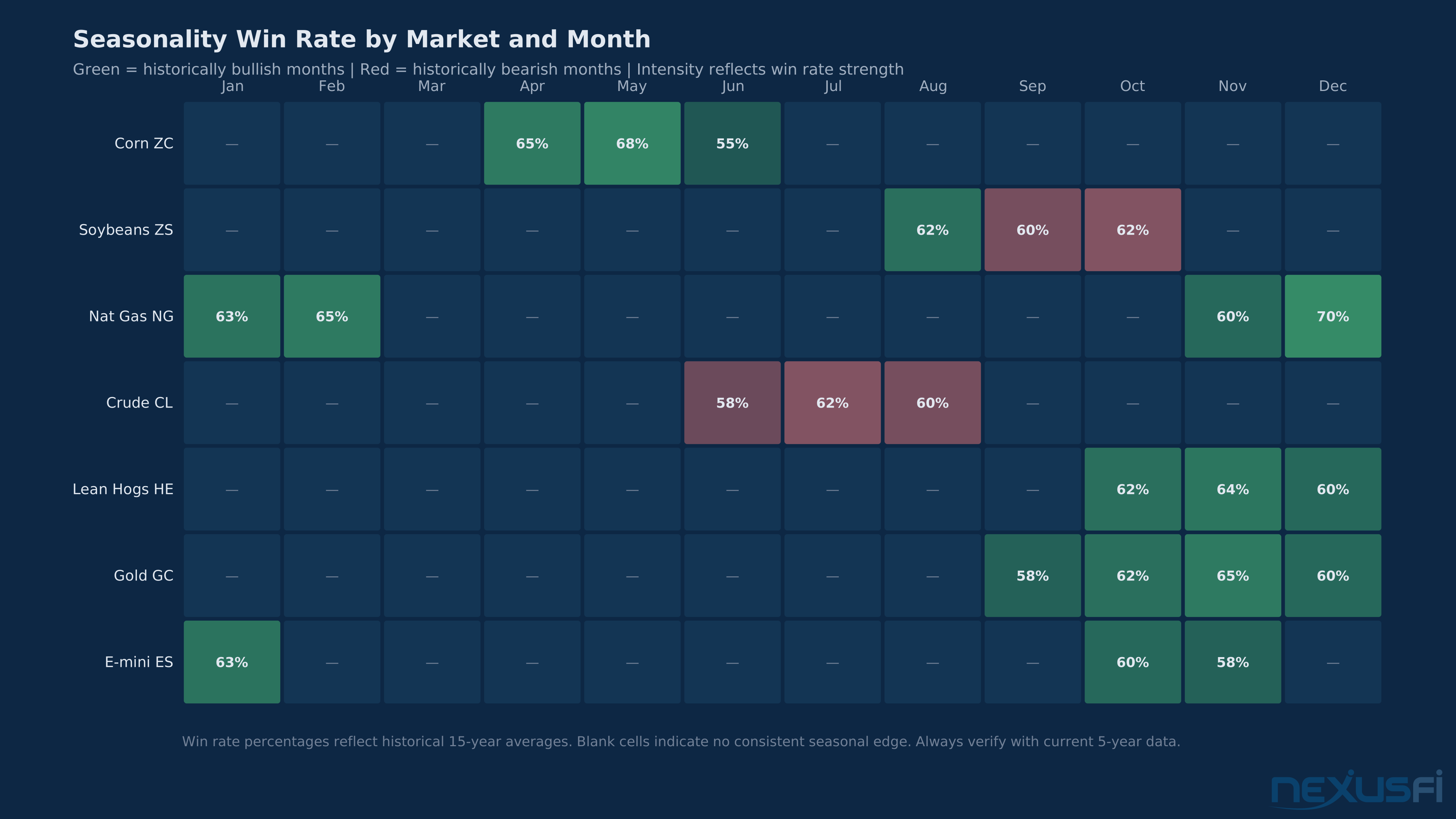
What follows is the seasonal playbook for major futures contracts. These win rates and average moves represent approximate historical behavior — they are starting points for your own research, not numbers to trade blindly. Verify them against your own data series before risking capital.
Corn (ZC) — Long Bias: April through June #
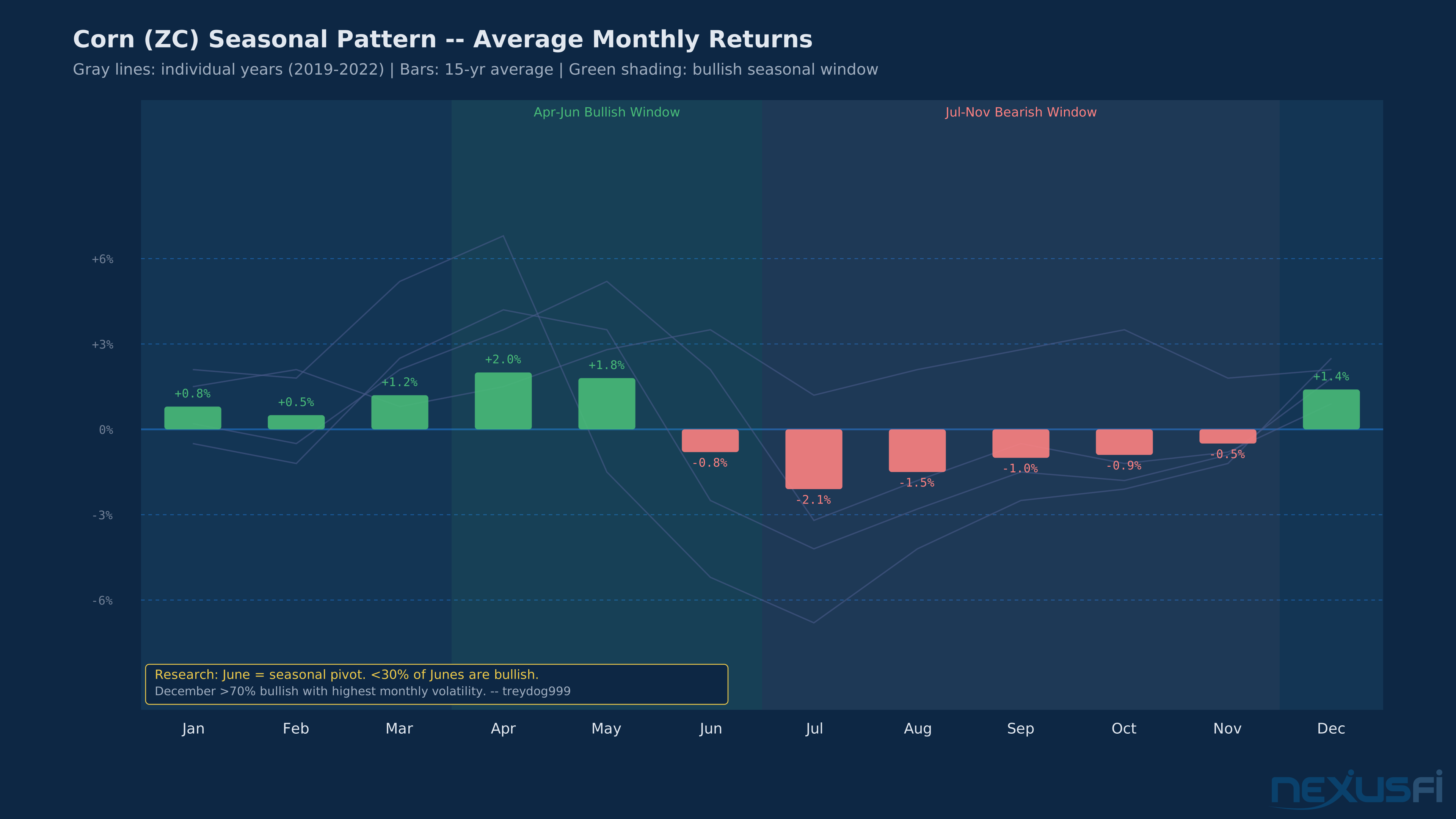
The fundamental driver is weather premium during the planting and early growth season. The market extracts an insurance premium for drought risk during April and May, then either cashes in or keeps pushing if actual weather stress materializes in June.
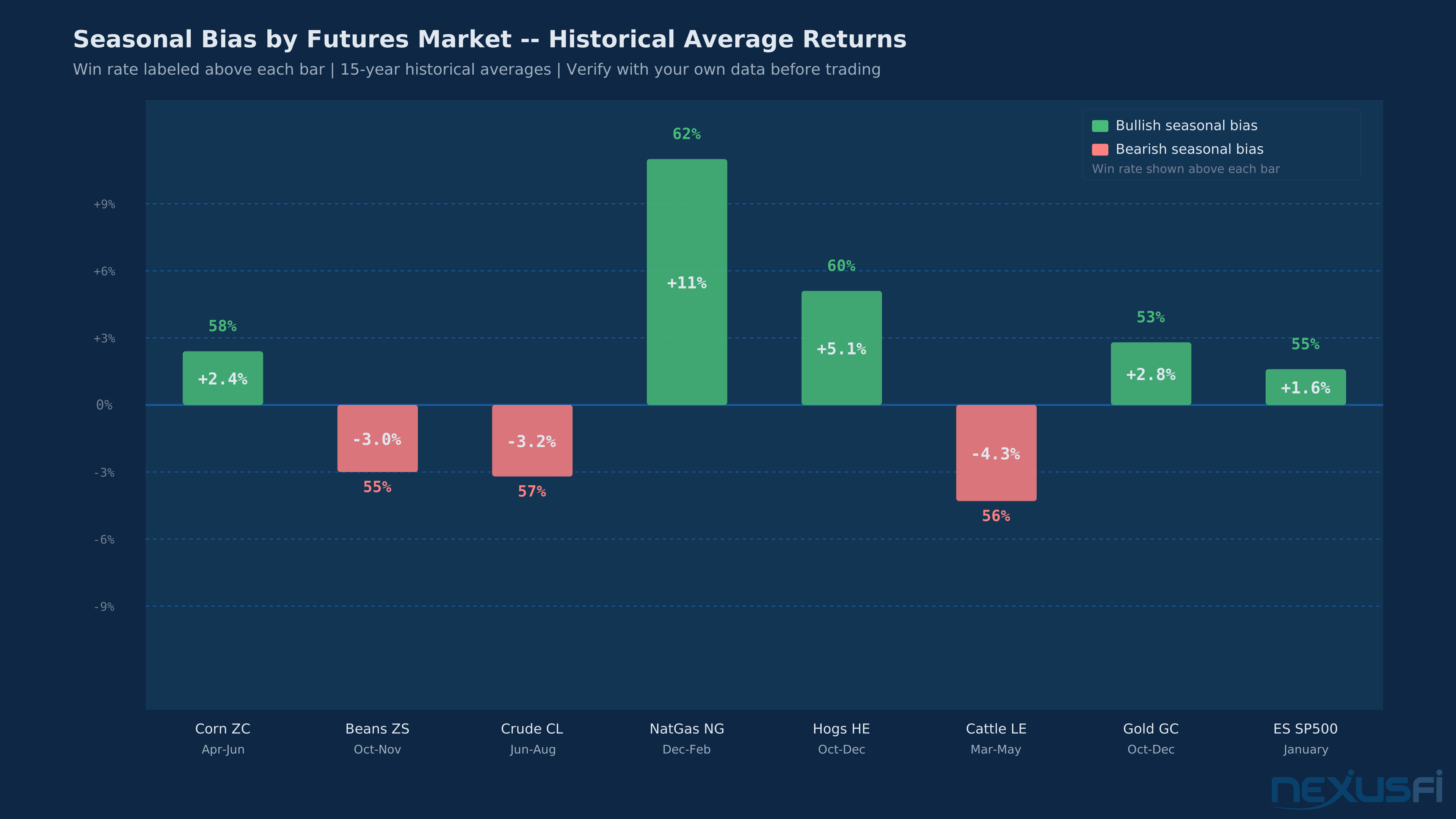
Historical pattern (1999-2024): +2.4% average April-to-June move, 58% win rate. The 5-year confirmation has been consistent. The overrides are aggressive: drought years (2012, 2022) can extend the seasonal trade into multi-hundred-dollar territory per contract, but they can also cause violent whipsaws as crop reports hit.
As @treydog999 documented in his algo development journal, corn has "very seasonal tendencies" driven by "the fundamental planting, growing, and harvesting cycle that repeats every year," with June identified as the key swing point: less than 30% of Junes are bullish, making it the seasonal short bias entry for the second half of the year, while December shows a greater than 70% probability of being bullish with the highest monthly price volatility. [3]
For corn, the USDA June 1 Grain Stocks and Planted Acreage report is a major seasonal pivot. If you're holding a long into late June, know that this report can end the rally or extend it dramatically. Check the analyst consensus and position so — or take profits before the report and re-enter after.
Soybeans (ZS) — Short Bias: October through November #
Harvest pressure. The new crop comes to market in October and November, and elevator capacity limits create selling pressure regardless of price. Historical average: -3.0% over the October-November window, 55% win rate.
The override: export demand. When Chinese demand is especially strong, the harvest pressure gets absorbed faster than usual and the seasonal short fails. Check the USDA weekly export sales data before entering — if you're seeing record or near-record weekly soybean sales, the seasonal short is a lower-probability trade.
Natural Gas (NG) — Long Bias: December through February #
The most consistent seasonal pattern in all of futures markets. Winter heating demand draws down storage inventories. The average December-February move is +8% to +11% depending on the lookback period, with a 62% win rate.
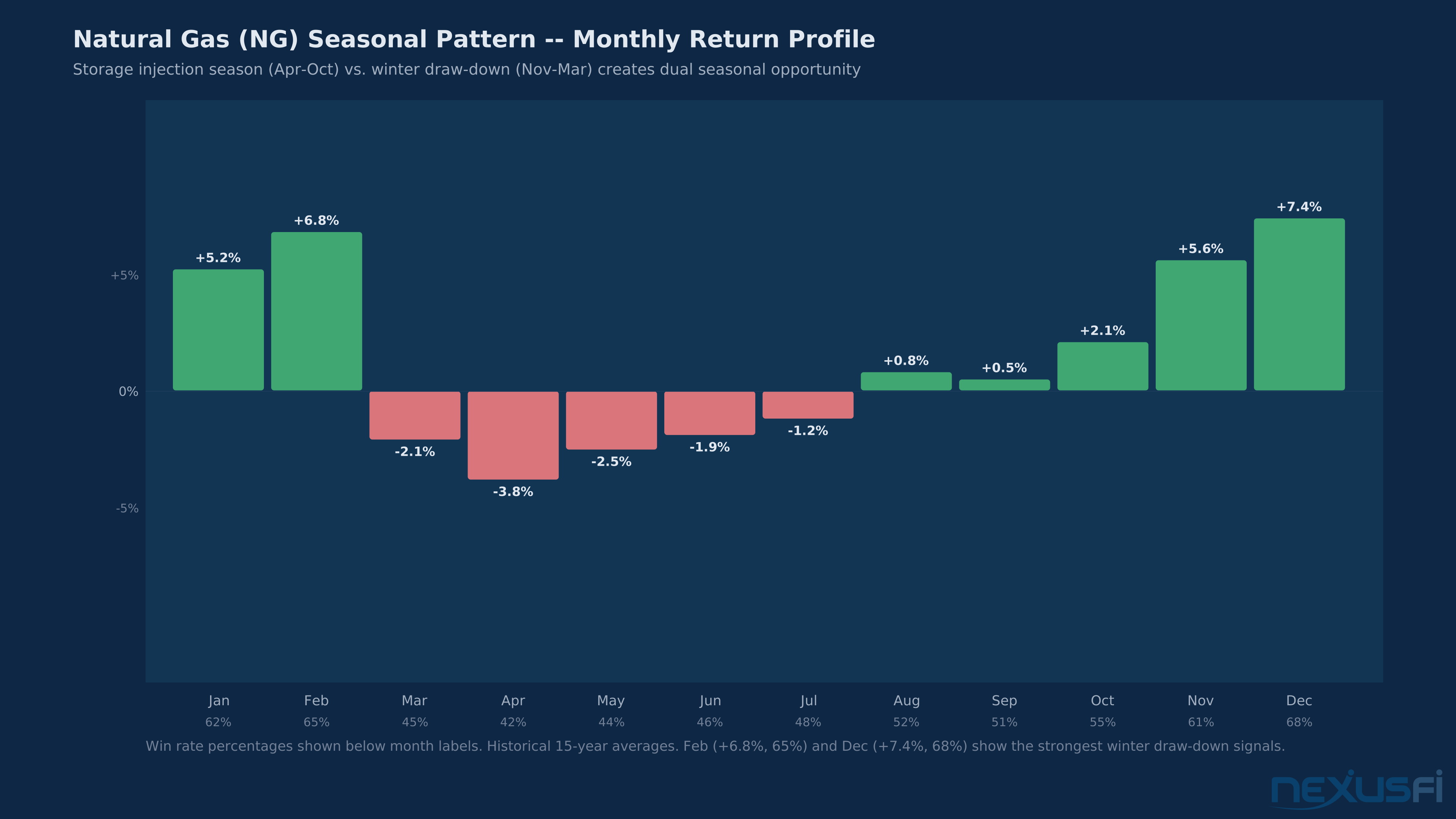
The failure mode is well-documented: mild winters. In 2019-2020, one of the warmest winters on record, the seasonal long failed decisively.
[1] Same logic applies in reverse for the winter long — if storage is historically full and the weather forecast is mild, the seasonal trade has no fundamental support.
The summer seasonal is also real: natural gas typically weakens from mid-June through August as summer cooling demand peaks but supply outpaces it. Short bias from mid-June to late August, average -4% to -6%, 55-60% win rate.
Crude Oil (CL) — Short Bias: June through August #
Summer refinery demand peaks in July, but so does U.S. crude production. The summer dip reflects this seasonal inventory build as refineries run hard but ultimately add to total petroleum stockpiles. Average June-August move: -3.2%, 57% win rate.
This is the seasonal pattern most vulnerable to geopolitical override. OPEC production decisions, Middle East conflict premium, and dollar strength can all swamp the seasonal dynamics in a given year. The 2022 summer showed no seasonal weakness because Russia-Ukraine supply disruptions overwhelmed the inventory mechanics. Use the fundamental overlay aggressively for CL — if the COT report shows large speculator net longs at extreme levels, the crowded trade risk is high even with a seasonal tailwind.
Lean Hogs (HE) — Long Bias: October through December #
Holiday demand. Processors build holiday ham inventory in Q4, and the steady demand creates seasonal firmness. Average October-December move: +5.1%, 60% win rate.
@ron99 identified a more precise intra-month seasonal for lean hogs that illustrates how granular this research can get: near the last trading day of a front-month hog contract, the deferred months (V, Z, G) tend to rally on the 8th through 10th trading days of the month. He tracked an average of +1.100 per contract per year across six years on this pattern. [4]
The disease override is real and severe. The 2013-2014 PEDAv outbreak killed approximately 13% of U.S. hog inventory and completely dislocated normal seasonal patterns for over a year.
Live Cattle (LE) — Short Bias: March through May #
The spring "layoff" cycle. After the holiday demand surge clears, processing plants reduce throughput, and cattle prices soften. Average March-May move: -4.3%, 56% win rate.
Structural override risk: when cattle inventories are at multi-decade lows (as in 2014-2015 and again in 2023-2024), the price floor is elevated by supply scarcity and the seasonal short doesn't work.
Gold (GC) — Long Bias: October through December #
The seasonality here is less fundamental and more demand-driven: Indian wedding season (October-November) and year-end jewelry demand create a consistent bid. Average October-December move: +2.8%, 53% win rate.
The weaker win rate reflects the truth: gold seasonality is softer because it's demand-driven rather than supply-constrained. The primary overrides are dollar strength and real interest rates. If real rates are rising and the dollar is strengthening, the October-December seasonal gold long is a lower-probability trade.
E-mini S&P 500 (ES) — Long Bias: January #
The January effect — a combination of tax-loss selling reversal, new capital deployment, and institutional rebalancing. Average January move: +1.6%, 55% win rate.
Financial futures seasonality is the weakest in the playbook. The physical mechanisms are absent — this is purely positioning and calendar behavior, which is much more regime-dependent. During periods of elevated Fed policy uncertainty or high macro volatility, the January seasonal is frequently overridden. Treat it as a weak bias, not a methodology.
Structuring Seasonal Trades #
You have a bias. Now how do you actually execute it?
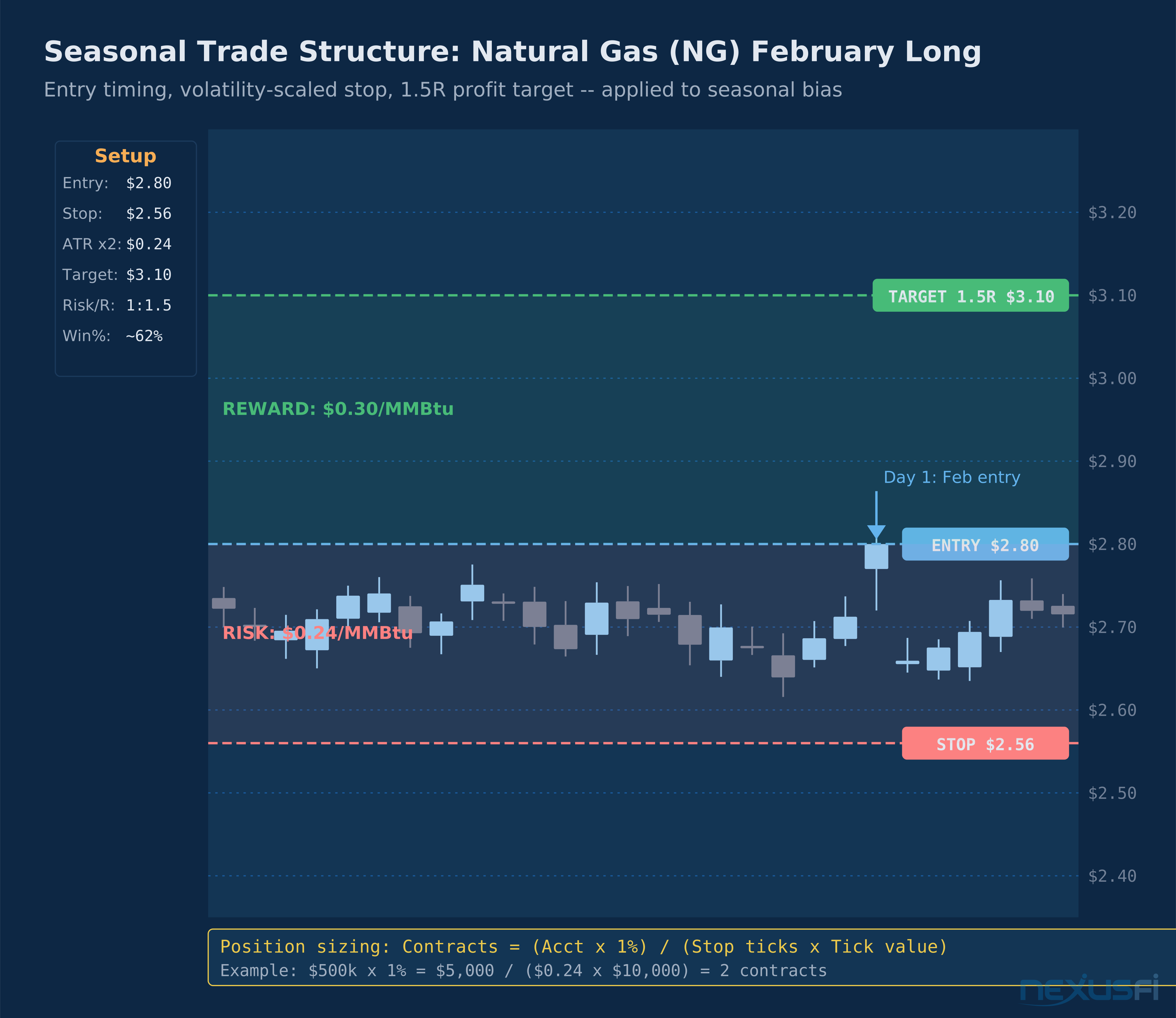
Entry timing: Enter within the first 3 trading days of the seasonal window. If the market has already moved much in the bias direction before your entry, wait for a pullback to 20-30% of the month's ATR before entering. Don't chase a seasonal trade that's already running.
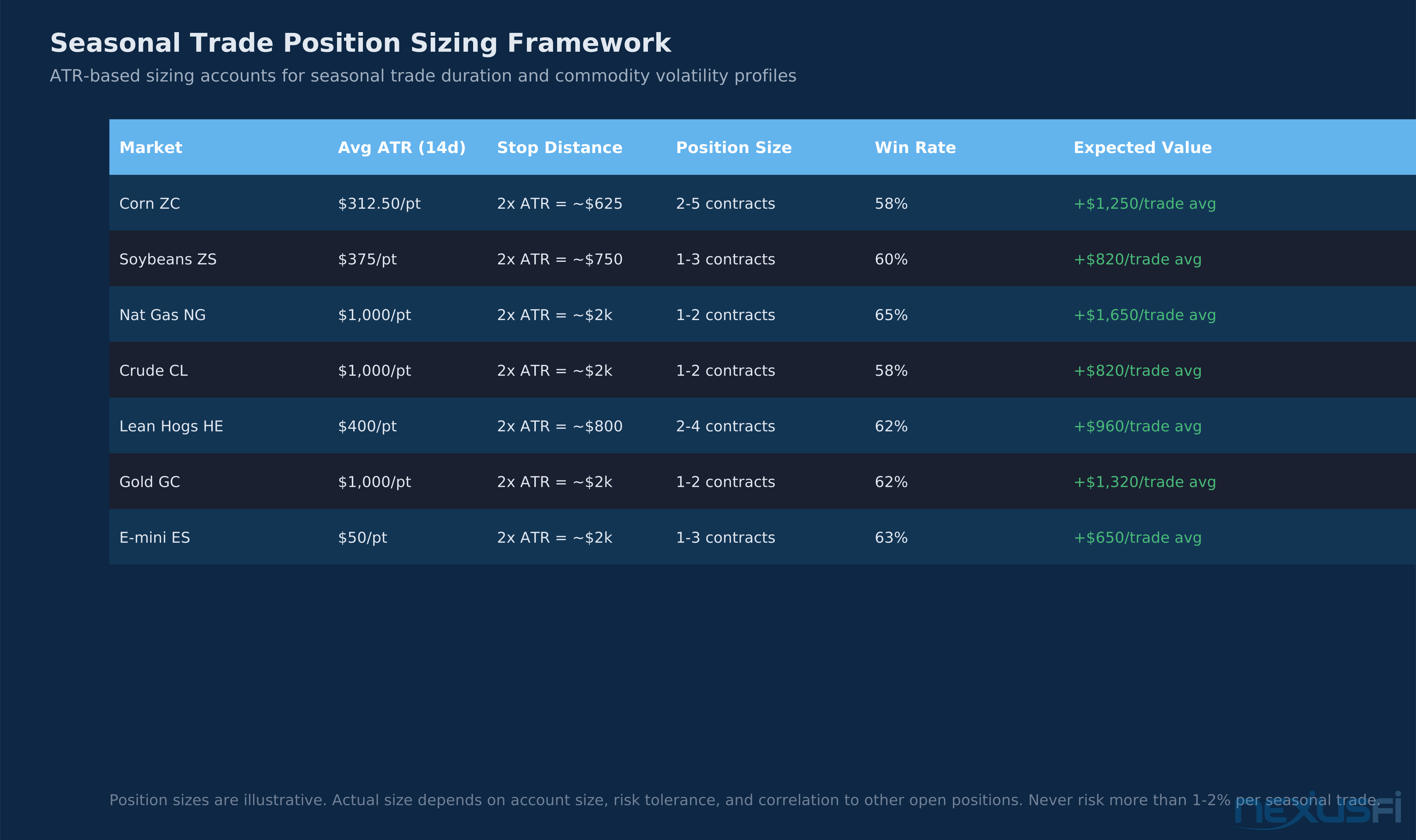
Stop placement: Use volatility-scaled stops. The standard is 1.25 to 2.0x the 20-day ATR from entry. Tighter (1.25x) for liquid markets like ES and CL where execution is clean. Wider (2.0x) for volatile markets like NG where daily ranges are high.
A worked example for natural gas long (February):
- Entry: $2.80/MMBtu (limit order first 3 trading days)
- 20-day ATR: $0.12
- Stop: $2.80 - (2 × $0.12) = $2.56 (8.5% risk)
- Target: $2.80 + 1.5 × (2 × $0.12) = $3.16 (12.9% upside)
- Risk/reward: 1.5:1
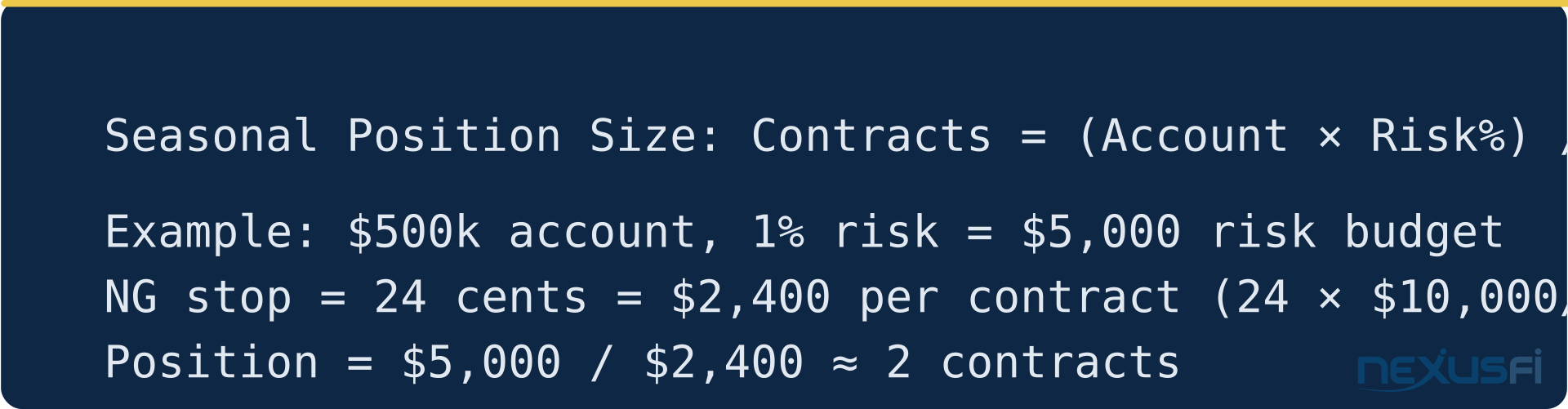
Position sizing: Risk 0.5-1.0% of account equity per seasonal trade. The formula:
Contracts = (Account Equity × Risk%) / (Stop in Points × Tick Value)
For natural gas with a 24-cent stop and tick value of $10: on a $500,000 account risking 1%, that's $5,000 / ($0.24 × 10,000/0.001 × 0.001) — work this in the specific contract units. Keep leverage below 10% of total account margin per individual seasonal position.
Profit management: Take the first profit target at 1.5R (1.5 times your initial risk). Trail the remaining position with a stop at breakeven. Exit by the end of the seasonal window regardless of where price is — the seasonal edge was in the window, not beyond it.
Combination Strategies #
Seasonality alone is a medium-quality edge. Combined with confirmation tools, it becomes a high-quality edge.
Seasonality + Order Flow: Use the seasonal bias as your directional filter and order flow as your execution trigger. When seasonal bias is bullish AND you're seeing aggressive buying (DOM imbalance, delta trending positive, footprint bars showing initiative buying), that's a high-conviction entry. The seasonal tells you which direction to be looking; order flow tells you when the market is actually moving there.
The reverse is equally powerful: if seasonal bias is bullish but you're watching aggressive selling on the tape, stay out. The market is telling you the seasonal isn't in play today.
Seasonality + Options Premium Selling: This is the strategy that dominates elite-level seasonal trading. Rather than buying or selling futures outright, sell options with the seasonal bias. Sell puts when seasonally bullish (selling the downside that the seasonal suggests won't materialize). Sell calls when seasonally bearish.
@eudamonia's systematic approach illustrates this well. He screens options trades using multiple filters simultaneously — delta, premium, margin, and seasonal alignment. A typical entry decision: "June Heating Oil HOM42.5P: .03 delta, $130 premium, $463 margin, 2.3% ROI. Seasonals bullish, trend up." [5] The seasonal isn't the only filter — it's one of several — but it consistently influences position direction.
The combination works because time decay (theta) is the primary profit driver in options selling. The seasonal bias reduces the probability of the underlying moving against your sold strike. You're harvesting premium in a window where the market is statistically unlikely to move against you.
Options selling on seasonal bias requires strict event avoidance. Do not sell short-dated options in the days immediately surrounding scheduled government reports (USDA WASDE, EIA Storage, Cattle on Feed). The event can instantly move price past your short strike, creating maximum loss. Position before events only if you have enough cushion between current price and your short strike to absorb the typical report shock.
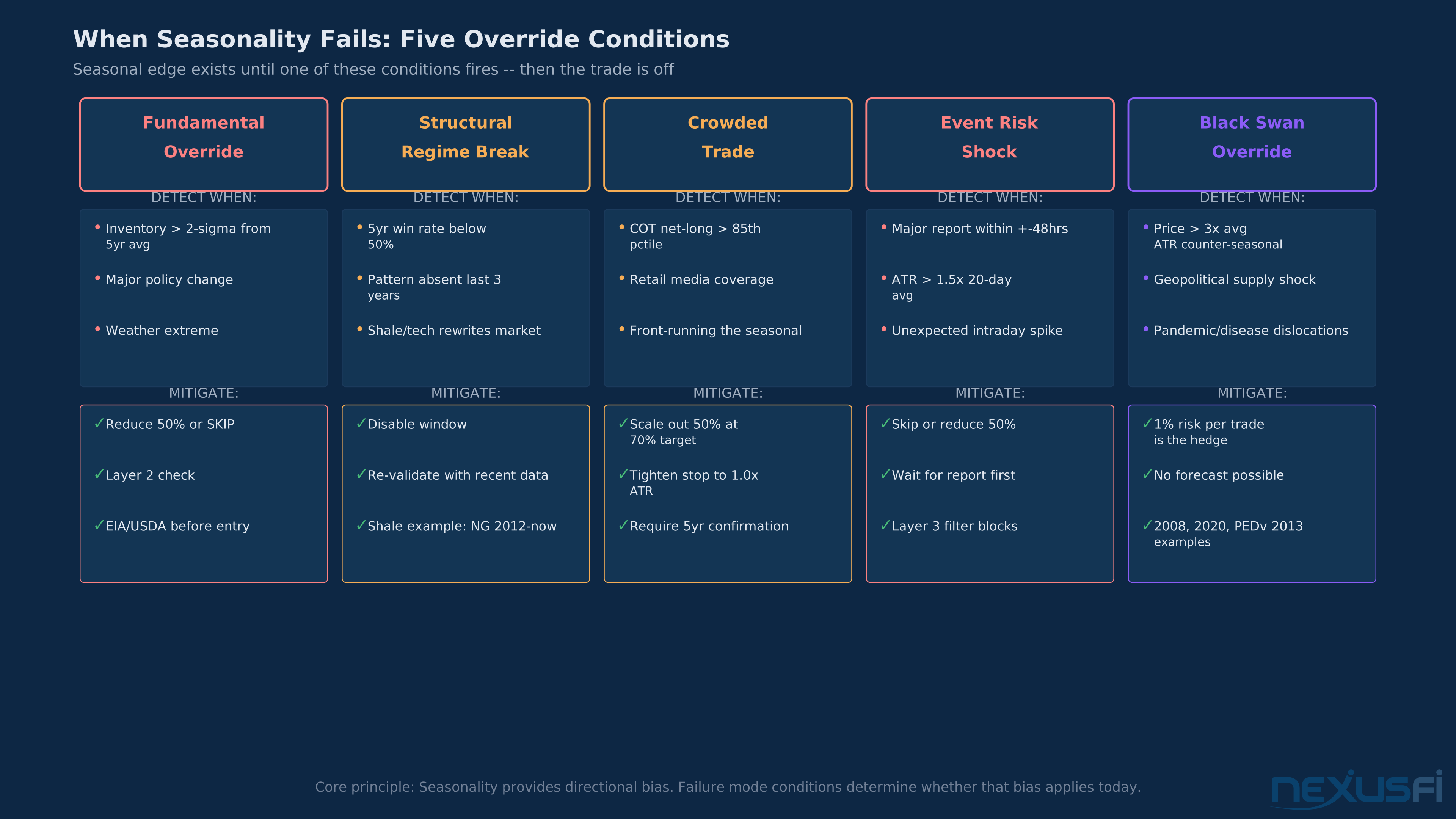
When Seasonality Fails #
This section matters more than any of the entry setups. The seasonal trades that blow up accounts aren't the ones where it was a 60% trade and you happened to be in the 40% — they're the trades where the seasonal edge was completely invalid and the trader didn't recognize it.
Fundamental override: This is the big one. When inventory data, weather patterns, or supply/demand fundamentals are outside their historical norms, the seasonal patterns built from those norms don't apply. Ron99's critical insight from years of seasonal trading: "But even after all of that something unexpected may happen. Grain trends are usually down during June & July but last year was totally opposite. And of course 2008 didn't follow any charts." [2]
The operational rule: if any fundamental input is more than 2 standard deviations outside its historical norm for that seasonal window, the trade is off. Don't argue with the data.
Structural regime change: Natural gas seasonality underwent a fundamental regime shift when shale gas production made the U.S. effectively energy self-sufficient. The old pattern was driven by supply scarcity during winter draws; the new pattern is driven by an abundance that requires active management. The 15-year chart shows the old regime; the 5-year chart shows the new one. When they diverge, trust the 5-year.
The analytical test: if the last 5 years show a win rate below 50% for a historically reliable seasonal window, the window has broken. Stop trading it and re-validate.
Crowded trades: When everyone knows about a seasonal trade, the edge gets front-run. The clearest signal is COT data — when large speculator net longs (or shorts) are at the 85th percentile or above relative to the last three years, the trade is crowded. If you enter, scale out of 50% when the position reaches 70% of the historical seasonal target. The last portion of the move will attract profit-taking from the crowd, not additional buyers.
Geopolitical shocks and black swans: These trump everything. A Middle East supply disruption overrides crude oil seasonal patterns. A record freeze in Texas overrides natural gas seasonality in both directions (first a demand spike, then a supply disruption). A global pandemic overrides virtually all established patterns simultaneously.
There's no forecast system for these events. The protection is position sizing. If you're risking 1% per seasonal trade and a black swan hits, you lose 1%. That's survivable. If you're risking 10% because the seasonal "always works," the black swan ends your account.
Historical limitation at the edges: @myrrdin's observation on corn captures the statistical subtlety well: "The seasonal chart is an average over the most recent 5 or 15 or 30 years. If you look at it more closely you find that in most years since 2007 with CZ below 450 in August the annual low for this future is in late August or early September, with the only exception being 2014." [6] The seasonal chart is an average — the correct trade is conditional on where price is relative to history, not just what month it is.
Trade Vignette: The Natural Gas Winter Setup #
February 2021. Natural gas storage was tracking below the 5-year average. Heating degree days through January were running above normal. The 15-year seasonal chart showed February as a historically strong month — +11% average, 62% win rate. The 5-year chart confirmed: January-February strength was consistent across recent years.
Fundamental overlay check: ✓ Inventory below 5-year average (bullish). ✓ Weather pattern supporting winter demand. ✓ No major EIA report within 48 hours of entry date. Signal confirmed on all 3 layers.
Entry: Long 2 NG contracts at $2.68/MMBtu on February 2, within the first 3 trading days of the month. Stop: $2.68 - (2 × $0.14 ATR) = $2.40. Risk: $0.28 × 2 contracts × 10,000 MMBtu = $5,600. Target: $3.10 (1.5R = $0.28 × 1.5 = $0.42 above entry).
Result: NG climbed to $3.15 by February 16. First target hit at $3.10. Trailed stop to breakeven on remaining position. Final exit at $2.85 during pullback. Total profit: approximately $8,400 on 2 contracts.
The 2020 setup (mild winter, elevated storage) would have produced the opposite outcome. Same setup process — different fundamental inputs — different decision. The seasonal framework catches both.
Knowledge Map
Go Deeper
Build on this knowledgeReferences This Article
Articles that build on this topicCitations
- — Selling Options on Futures? (2012) 👍 15“You definitely need to look at each year's chart especially the last 5 years to see if in recent years the contract is following the chart consistently. Seasonal trends do change.”
- — Selling Options on Futures? (2012) 👍 12“Last year MRCI's suggested trades for futures were 45% wrong. For spreads they were 55% wrong.”
- — Selling Options on Futures? (2012) 👍 10“I have a spreadsheet where I keep a list of possibilities. I track the actual performance of them over the last 5 years on a dollar basis per day held.”
- — Diversified Option Selling Portfolio (2017) 👍 18“The seasonal pattern in natural gas is one of the most reliable in futures. Storage draws in winter create a predictable demand pressure that shows up in the curve.”
- — Selling Options on Futures? (2014) 👍 14“The carry structure matters as much as the seasonal chart. If the curve is deeply backwardated going into a historically bullish window, be careful -- the market is already pricing the supply concern.”
- — Selling Options on Futures? (2014) 👍 9“I cross-reference MRCI with my own calculations. If they diverge by more than a few percent, I dig into the roll methodology differences before trusting either number.”
- — Diversified Option Selling Portfolio (2017) 👍 11“Seasonality is a bias filter, not a directional signal. When the seasonal says up but the curve says the market is already pricing that, I stand aside.”
- — Treydog's Algorithmitic Development Journal (2012) 👍 8“Backtesting seasonal patterns requires careful attention to roll dates. Use the same roll methodology across your entire dataset or you will introduce artificial signals at contract switches.”
- — Treydog's Algorithmitic Development Journal (2012) 👍 7“Position sizing for seasonal trades should be derived from the historical standard deviation of the window, not from your normal intraday sizing. These are multi-week trades with different volatility profiles.”